Zimbabwean Art Style
Explore Zimbabwean art style: Great Zimbabwe’s dry-stone architecture, soapstone birds, Shona sculpture, Matobo rock art, and sunlit savanna forms.
Instantly rendered in Zimbabwean — or transform a photo
Zimbabwean Gallery
Tap any artwork to explore it
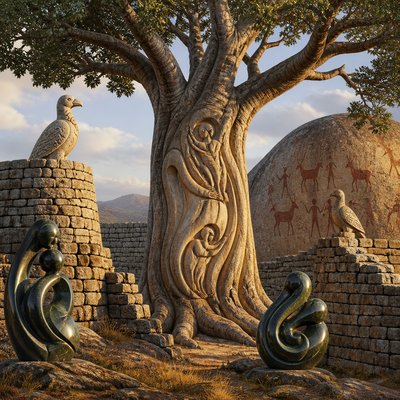
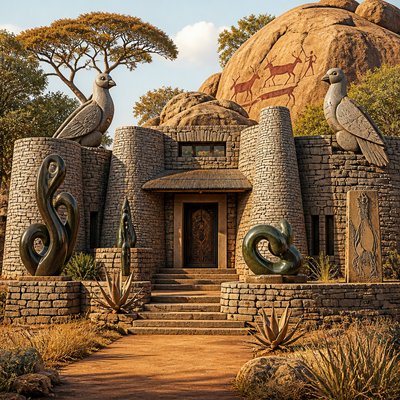
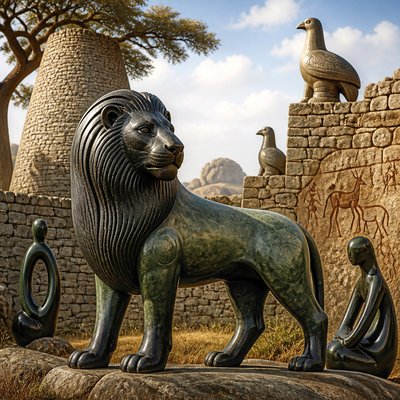
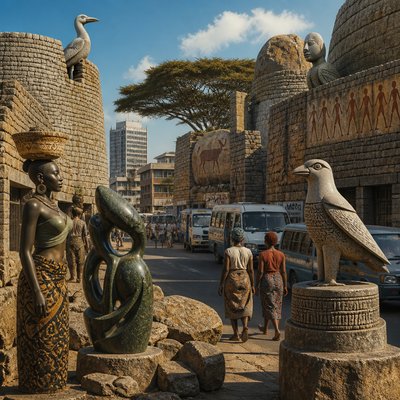
What is Zimbabwean Art Style?
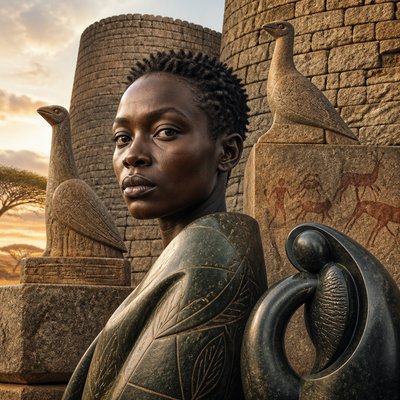
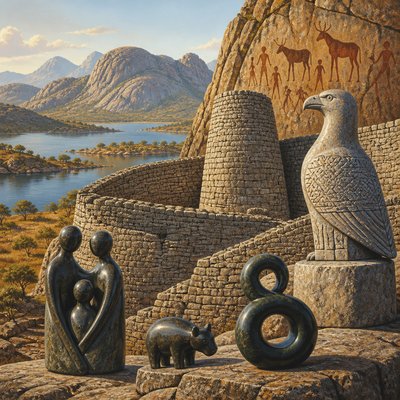
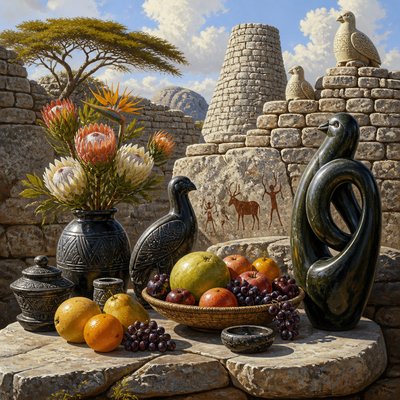
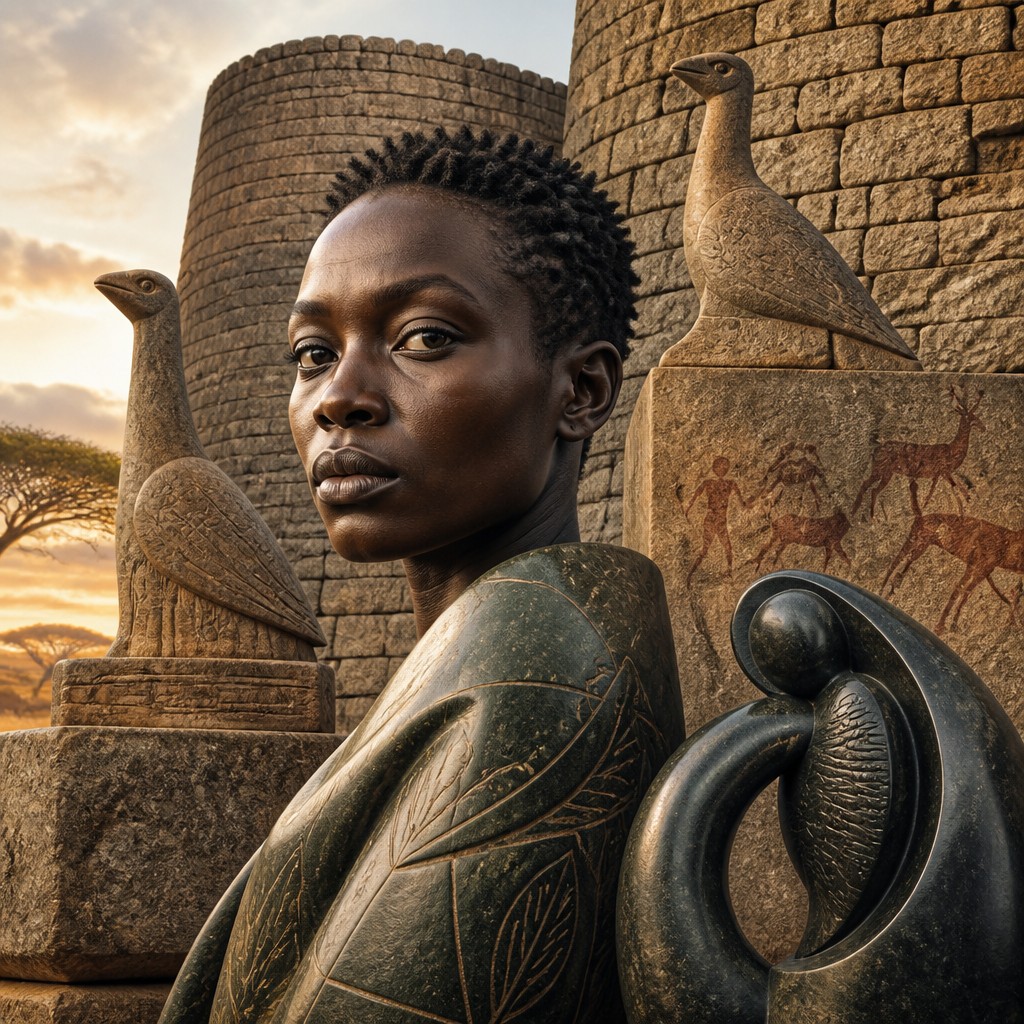
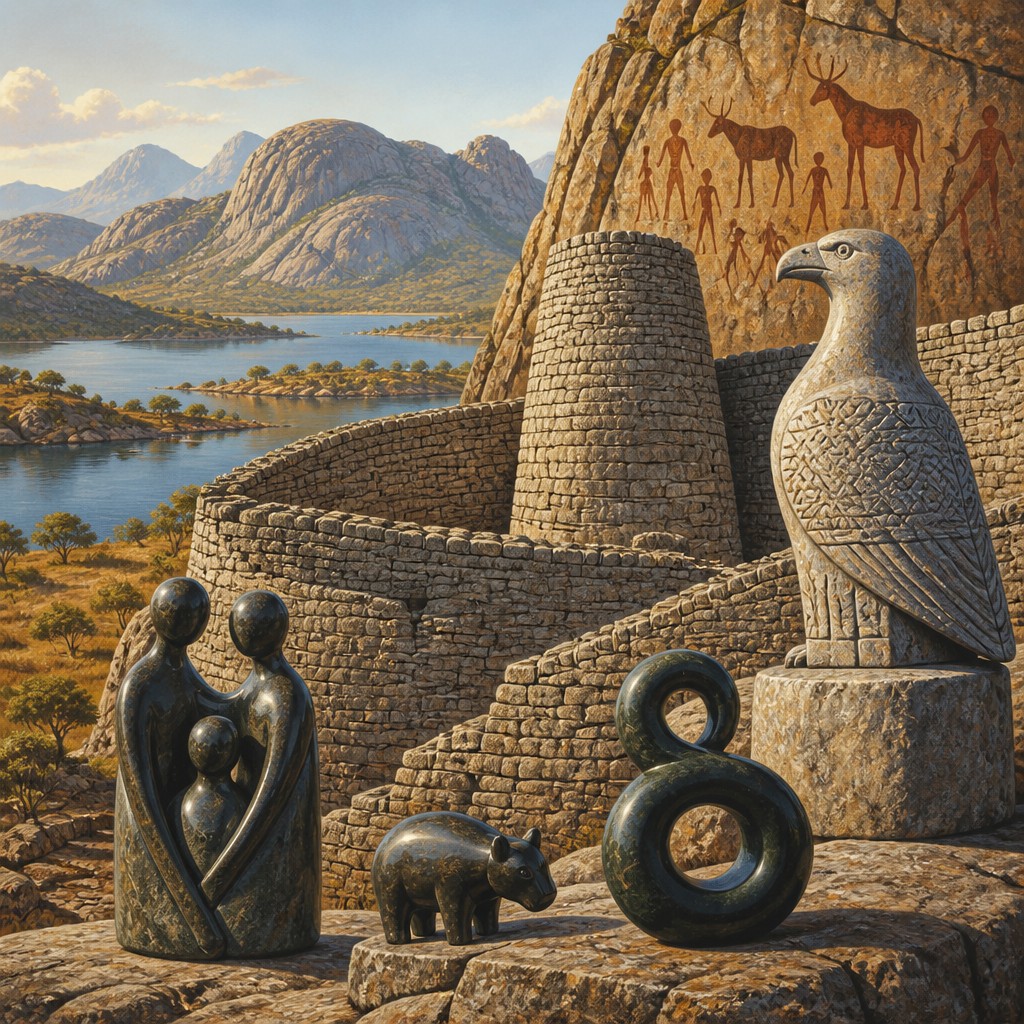
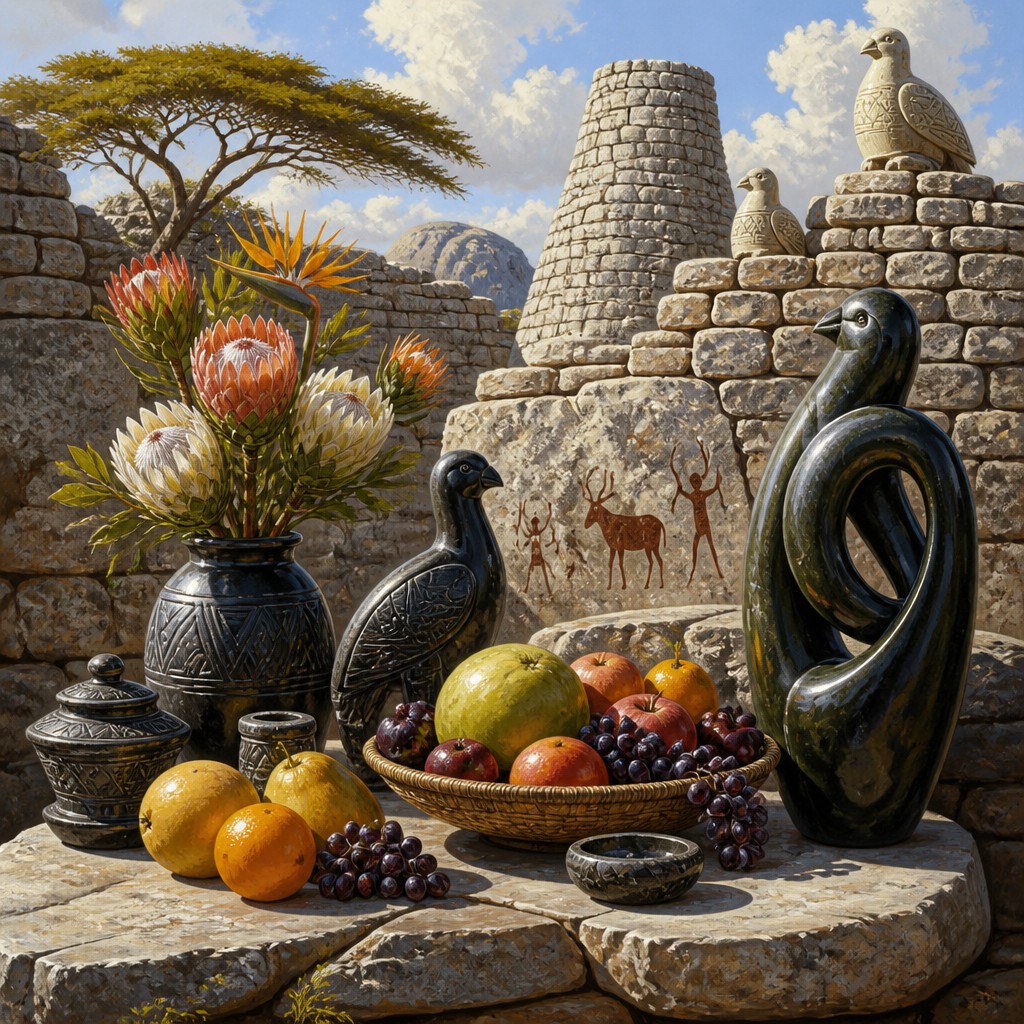
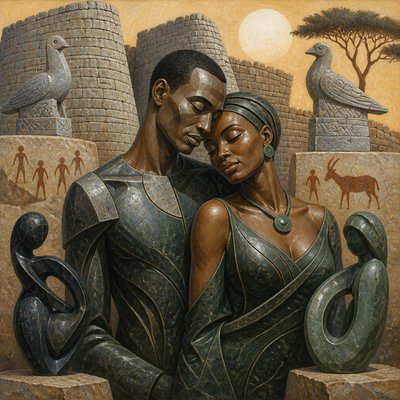
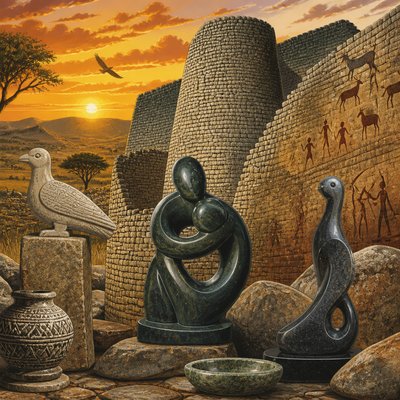
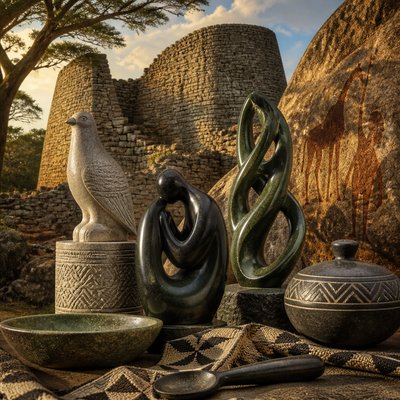
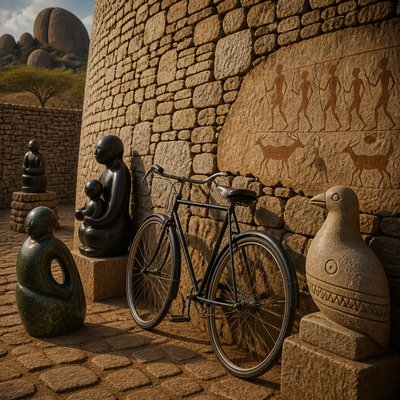
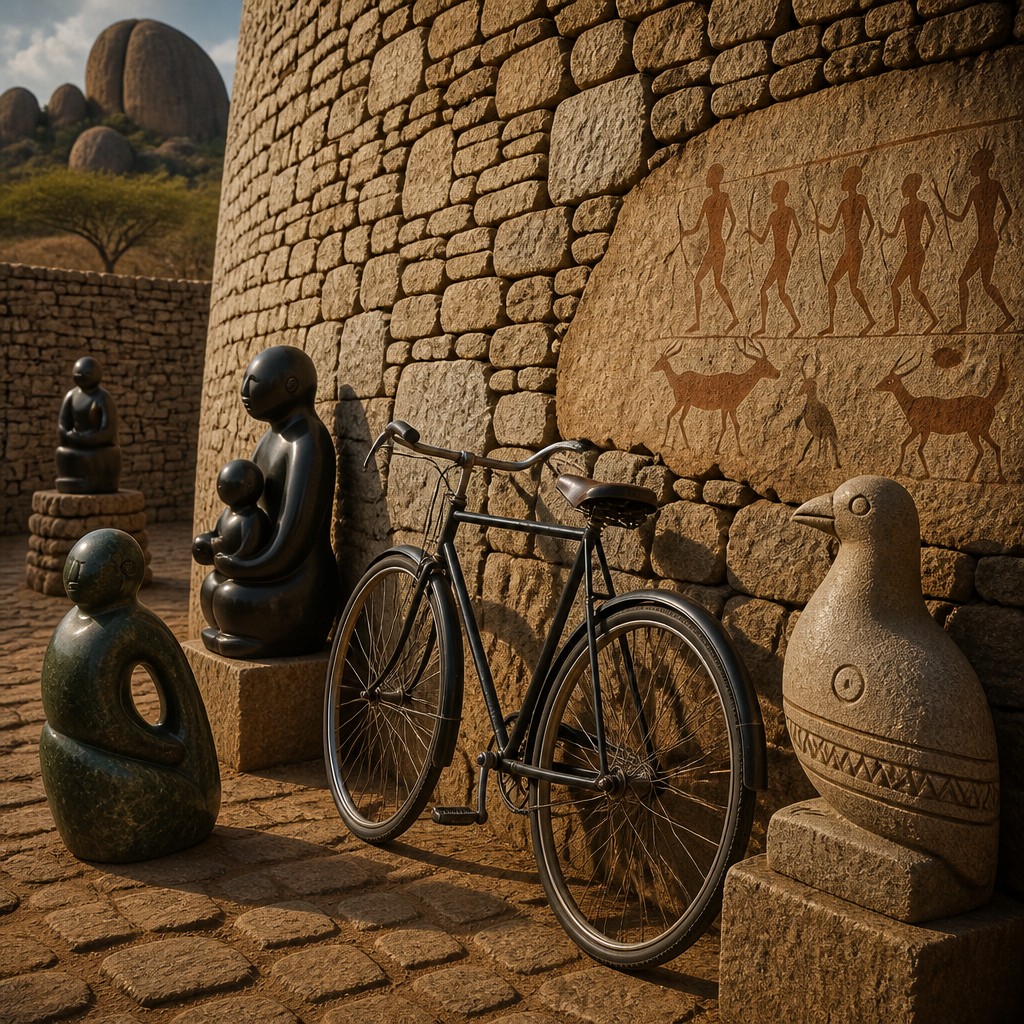
Zimbabwean art style is a contemporary aesthetic synthesis rooted in the visual heritage of present-day Zimbabwe. It combines the monumental geometry of Great Zimbabwe’s dry-stone enclosures, the elegant abstraction of carved soapstone Zimbabwe Birds, the polished surfaces of Shona stone sculpture, and the ancient silhouettes associated with rock art in the Matobo region. Warm granite, black and green serpentine, ochre earth, and clear savanna light establish its characteristic palette.
The style looks both architectural and tactile. Massive walls and rising stone forms suggest endurance, while simplified birds, animals, human figures, and rock-art marks introduce symbolic restraint. Rather than treating Zimbabwean visual culture as a single historical school, this approach brings several distinct traditions into dialogue through emphasis on material, monumentality, natural textures, and dignified abstraction.
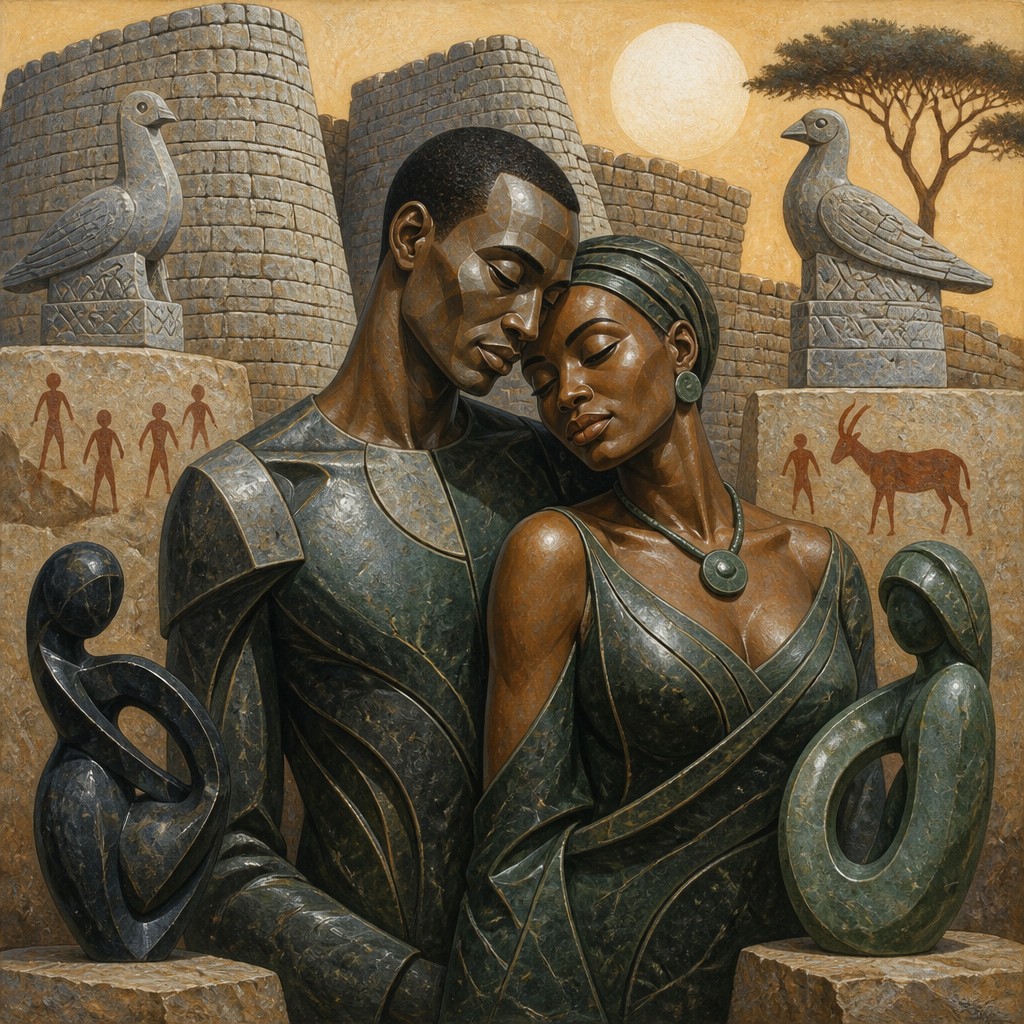
Try It On Your Photos
Upload any photo and convert it into Zimbabwean Art Style — drag the sliders to compare before and after.



What Defines Zimbabwean Art Style
The signature details, up close
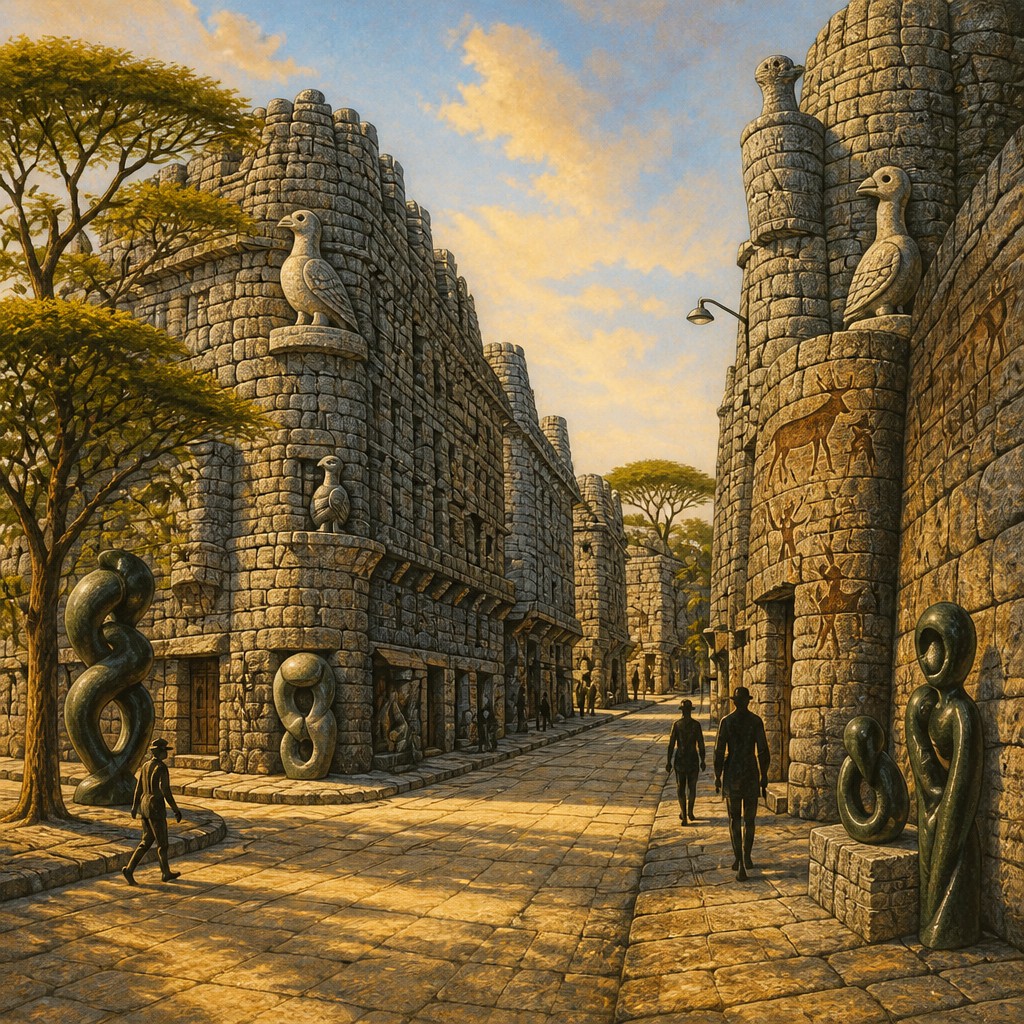
Dry-stone monumentality
Large coursed walls, enclosures, terraces, and rounded towers evoke the dry-stone architecture of Great Zimbabwe. Irregular granite blocks remain visibly stacked, with no obvious mortar and a strong sense of structural weight.
Soapstone bird symbolism
Tall, simplified bird forms recall the carved Zimbabwe Birds associated with Great Zimbabwe. Their long necks, poised bodies, and restrained silhouettes work as emblems of guardianship, ancestry, or observation without requiring literal realism.
Polished serpentine sculpture
Smooth black, dark green, and mottled stone surfaces suggest modern Shona sculptural traditions. Rounded human, animal, and abstract forms contrast with rough granite walls and invite close attention to touch and mineral grain.
Rock-art silhouettes
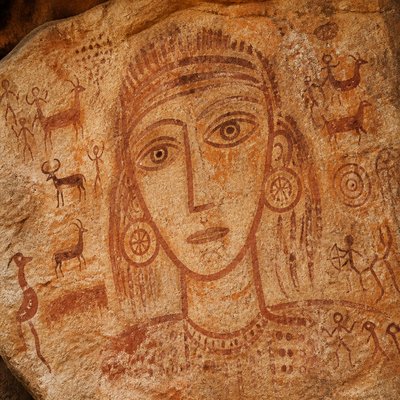
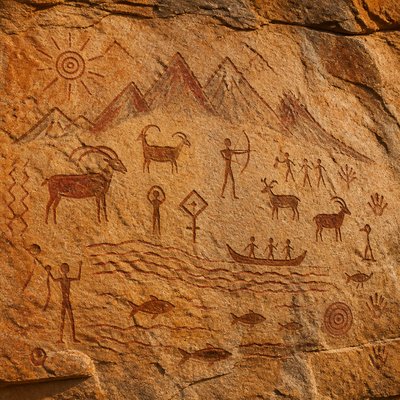
Minimal figures, animals, hunting gestures, and linear marks draw on southern African rock-art imagery, including traditions represented in the Matobo region. These references are most effective when kept spare and integrated into stone, wall, or ochre surfaces.
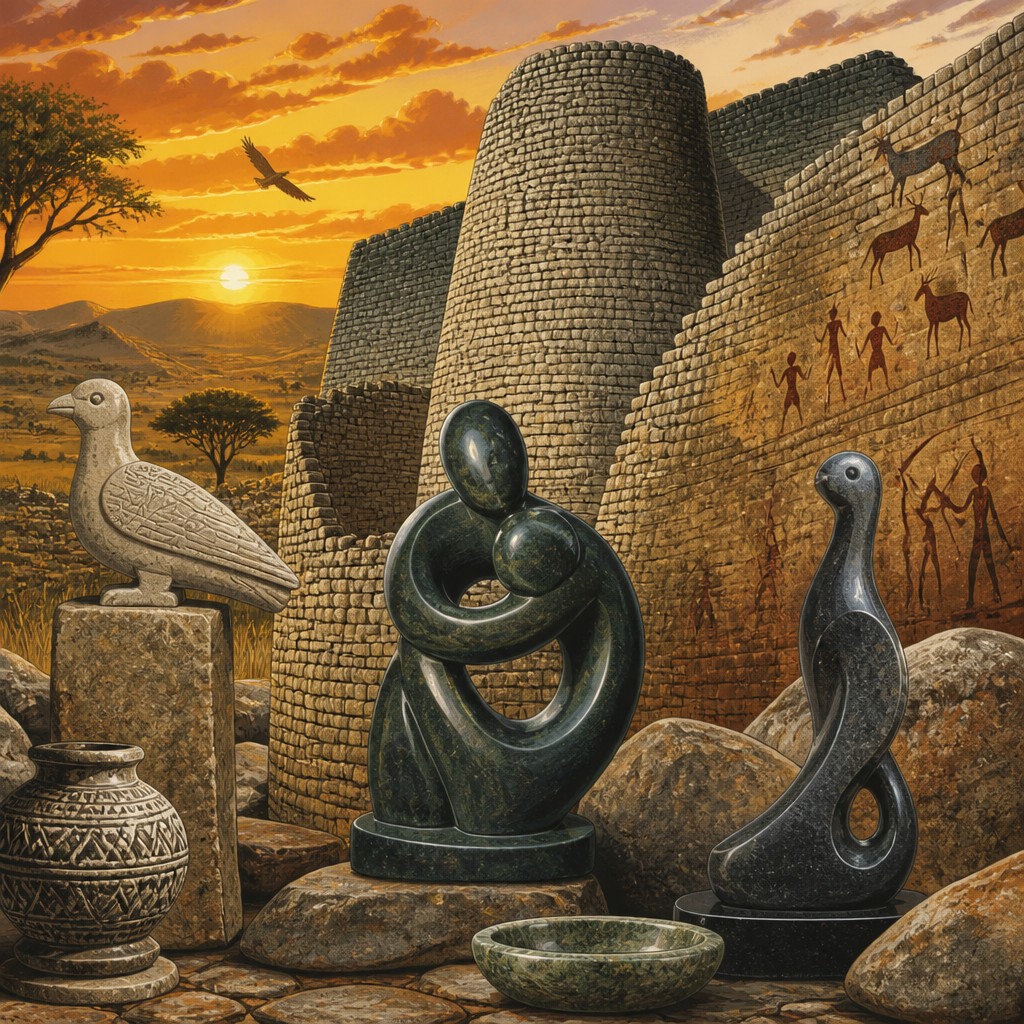
Granite and earth palette
Warm grey granite, sandstone beige, rust, umber, charcoal, muted green, and sun-baked ochre form the core palette. Saturated color is used sparingly so that mineral variation and sunlight remain prominent.
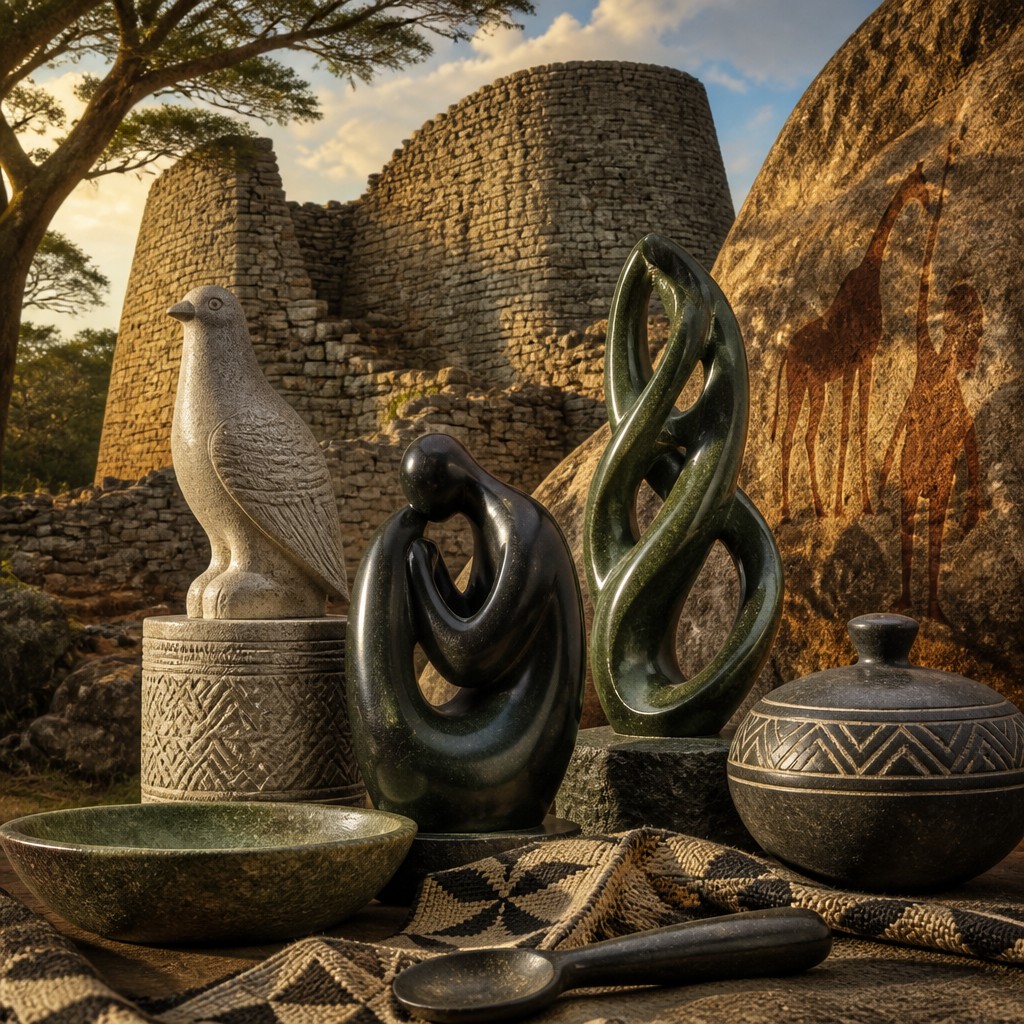
Sunlit savanna atmosphere
High, clear daylight, long shadows, dry grass, baobab-like silhouettes, and open horizons place the forms within a spacious southern African landscape. Atmospheric effects are generally restrained rather than misty or romanticized.
Symbolic abstraction
Bodies and animals are reduced to calm, legible masses, with emphasis on posture, contour, and carved dignity. The style favors durable-looking forms and visual balance over decorative excess or photographic naturalism.
Zimbabwean Prompt Ideas
Start from an idea — each one opens the generator with the style ready to go. See all 40 Zimbabwean prompts →
How to Create Zimbabwean Art
Master the craft step by step — or skip straight to creating. Read the full guide →
- 1
Build the structure first
Begin with a broad composition of stacked granite walls, circular enclosures, or monumental stone gateways. Use interlocking irregular blocks and slight variations in scale to avoid the appearance of modern brickwork.
- 2
Separate stone materials
Contrast rough, warm-grey granite with polished serpentine or soapstone. In digital work, use distinct roughness, reflectivity, edge wear, and color variation so that each material reads through both surface and lighting.
- 3
Simplify symbolic forms
Reduce birds, animals, and human figures to elongated silhouettes or smooth carved masses. Keep gestures calm and frontal or profile-based, avoiding generic fantasy ornament that obscures the references.
- 4
Use directional sunlight
Light the scene with strong high-angle sun, crisp contact shadows, and subtle warm bounce from dry ground. A low-saturation sky and distant savanna help the stone architecture remain the visual anchor.
- 5
Add marks with restraint
Introduce ochre lines, shallow incisions, or rock-art-like silhouettes as secondary details on boulders and walls. Avoid covering every surface; open stone areas preserve the style’s monumental quiet.
- 6
Write focused generation prompts
Specify the subject, dry-stone architecture, soapstone bird forms, polished black-and-green serpentine, ancient rock-art silhouettes, granite-and-ochre palette, and strong savanna sunlight. For image transformation, preserve the source subject while requesting carved materials, simplified contours, and an architectural southern African setting.
The Story
History & Origins of Zimbabwean
This is not a single historical movement with a fixed period or unified school. Its principal architectural reference is Great Zimbabwe, a major medieval stone-built center developed between approximately the 11th and 15th centuries by ancestors of Shona-speaking communities. Its dry-stone walls were constructed without mortar, and the site’s carved soapstone birds are among the most recognizable symbols associated with Zimbabwe’s cultural heritage.
The aesthetic also draws on much older southern African rock-art traditions, including imagery in the Matobo Hills, as well as modern and contemporary Shona stone-carving practices that became internationally visible during the 20th century. The resulting style is best understood as an interpretive lineage rather than a historically uniform Zimbabwean art movement; responsible use should distinguish medieval architecture, ancient rock art, and modern sculpture instead of presenting them as one continuous tradition.
Influences: Related visual traditions include the dry-stone architecture of Great Zimbabwe, soapstone carving associated with the Zimbabwe Birds, modern Shona stone sculpture, and southern African rock-art traditions represented in the Matobo Hills. It also shares qualities with African modernism, symbolic primitivist abstraction, land art, monumental architecture, and material-focused sculpture, although these comparisons should not erase the distinct historical contexts of the source traditions.
Frequently Asked Questions
What defines the Zimbabwean art style?
Its defining combination is monumental dry-stone architecture, carved soapstone bird imagery, polished serpentine sculpture, sparse rock-art silhouettes, and a warm granite-and-savanna palette. The style relies on simplified symbolic forms, strong sunlight, and a feeling of permanence.
Is Zimbabwean art style a single historical art movement?
No. The label describes a contemporary visual synthesis rather than one documented movement with a single origin. It brings together distinct references from medieval Great Zimbabwe, ancient rock-art traditions, and modern Shona stone sculpture.
What are the Zimbabwe Birds?
The Zimbabwe Birds are carved soapstone figures discovered at Great Zimbabwe and now important national and cultural symbols. They are generally represented as elongated, stylized birds with a poised, emblematic appearance rather than as naturalistic studies.
How does this style differ from generic African art?
It is more geographically and materially specific, emphasizing Zimbabwean stone architecture, soapstone birds, serpentine carving, and southern African rock-art references. Broad labels can obscure major differences among the continent’s many artistic traditions.
What materials work best for creating it traditionally?
Stone, clay, wood, iron oxide pigments, and textured plaster are suitable choices. Rough granite-like surfaces can be built through carving or layered aggregate, while smooth dark stone, simplified contours, and restrained incisions evoke serpentine sculpture and rock-art aesthetics.
Where is this style commonly used?
It suits architectural visualizations, sculpture studies, heritage interpretation, landscape scenes, editorial illustration, textiles, murals, and ceremonial or commemorative designs. Cultural sensitivity is important, especially when using national symbols or sacred-looking imagery outside its historical context.
Create your first Zimbabwean artwork
Describe anything — or upload a photo — and see it in Zimbabwean Art Style in seconds.
Related Styles
Discover similar art styles