Athens Art Style
Explore Athens Art Style: idealized marble, Greek columns, red-figure pottery, and sunlit temple architecture in balanced classical compositions.
Instantly rendered in Athens — or transform a photo
Athens Gallery
Tap any artwork to explore it
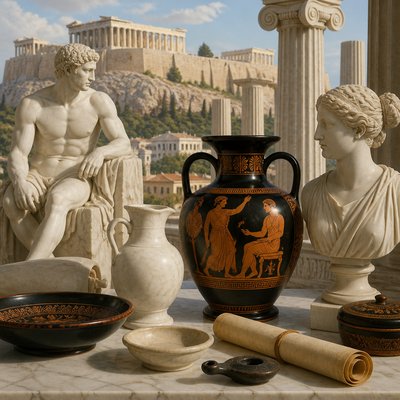
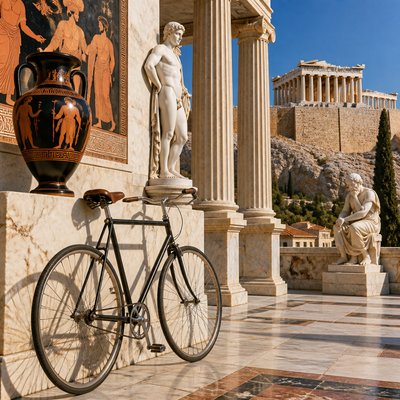
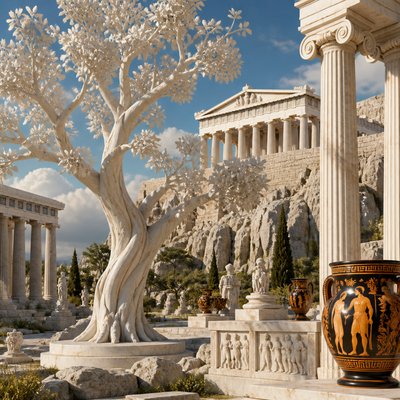
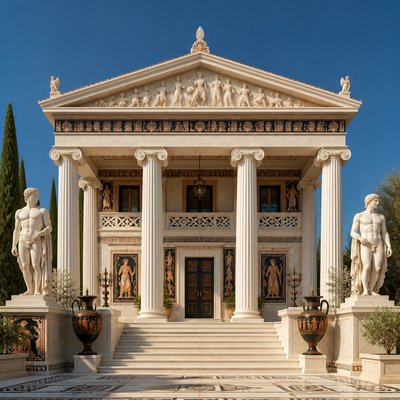
What is Athens Art Style?
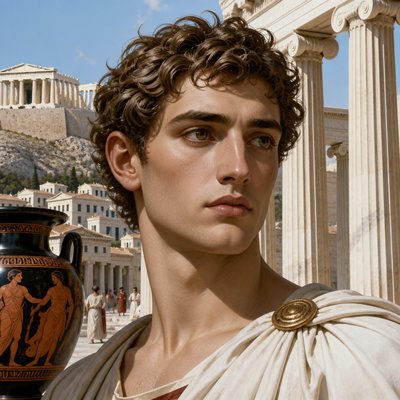
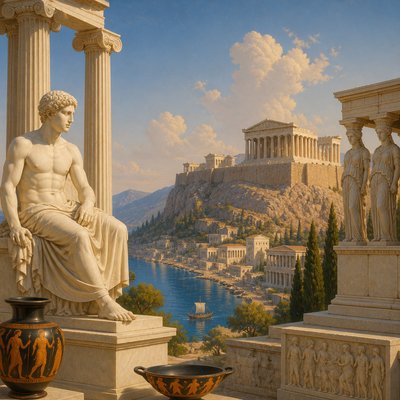
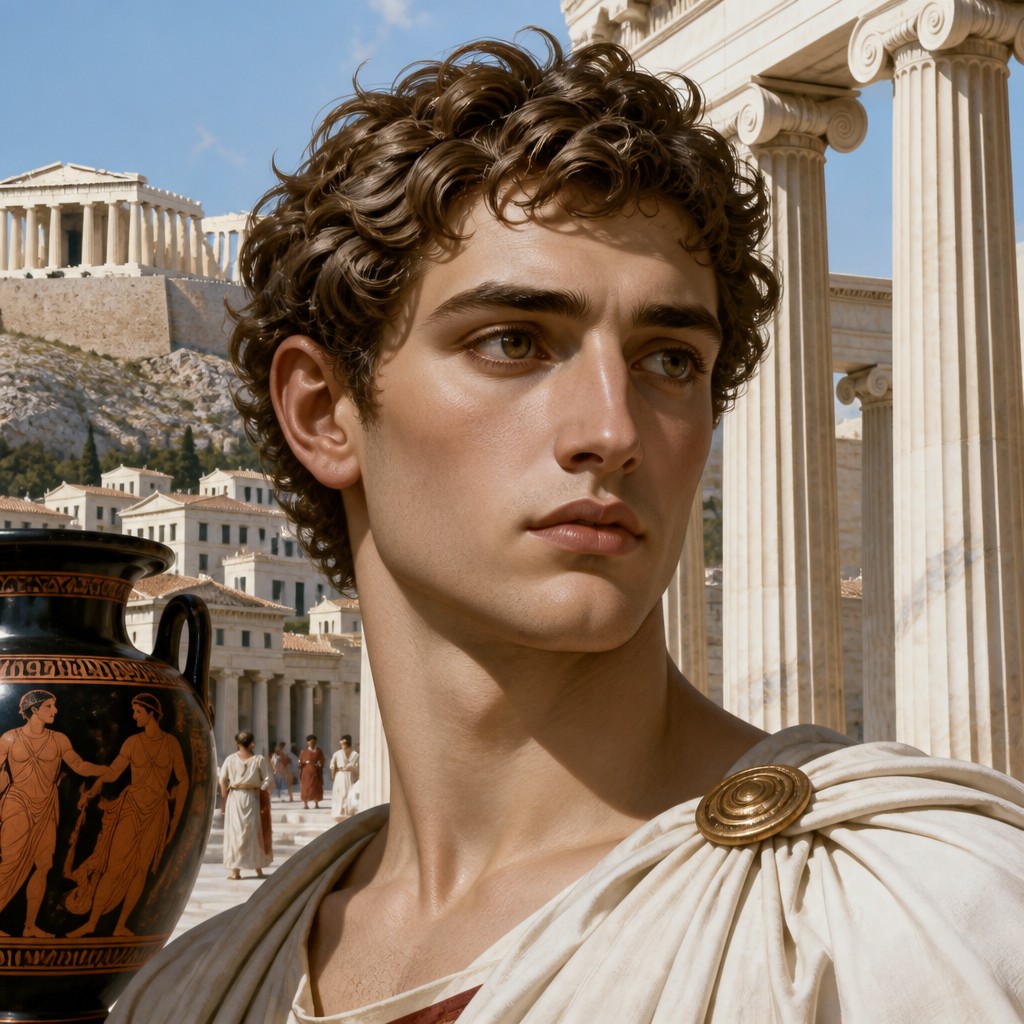
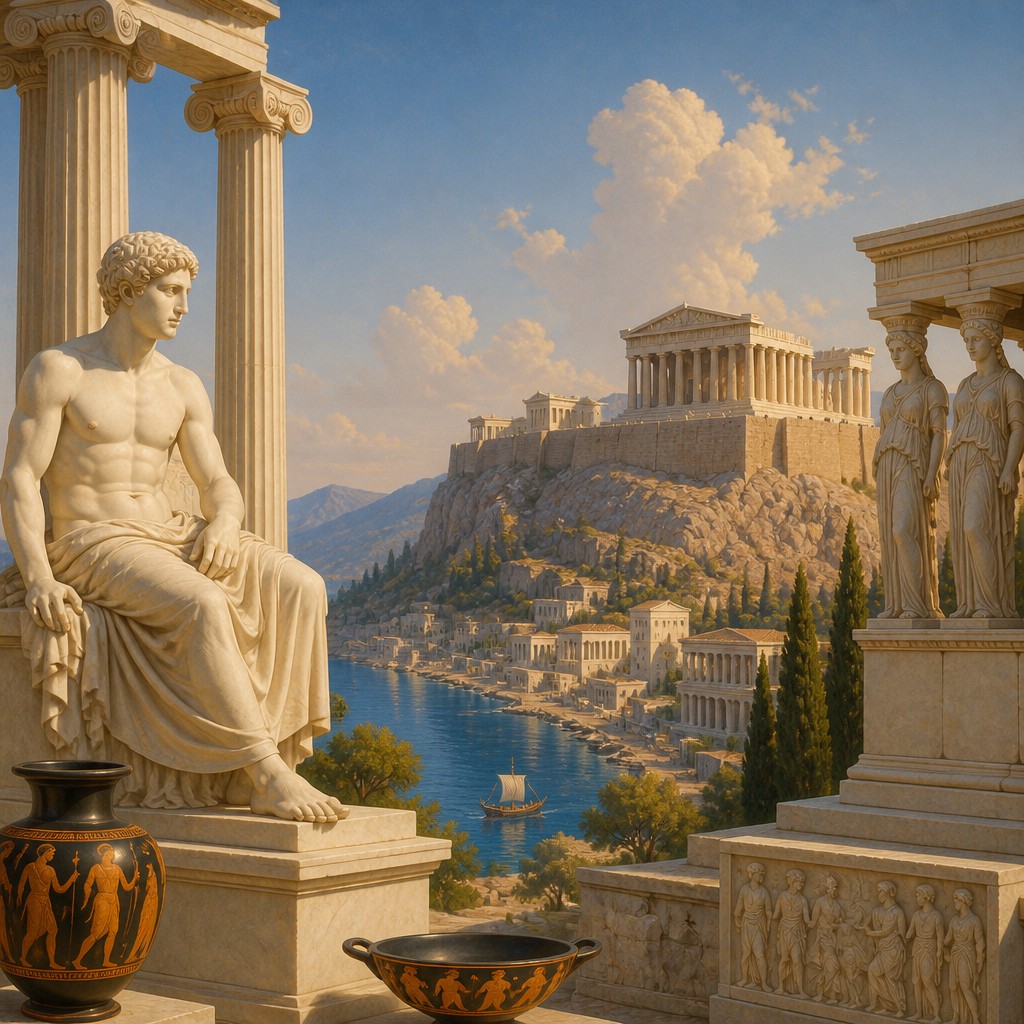
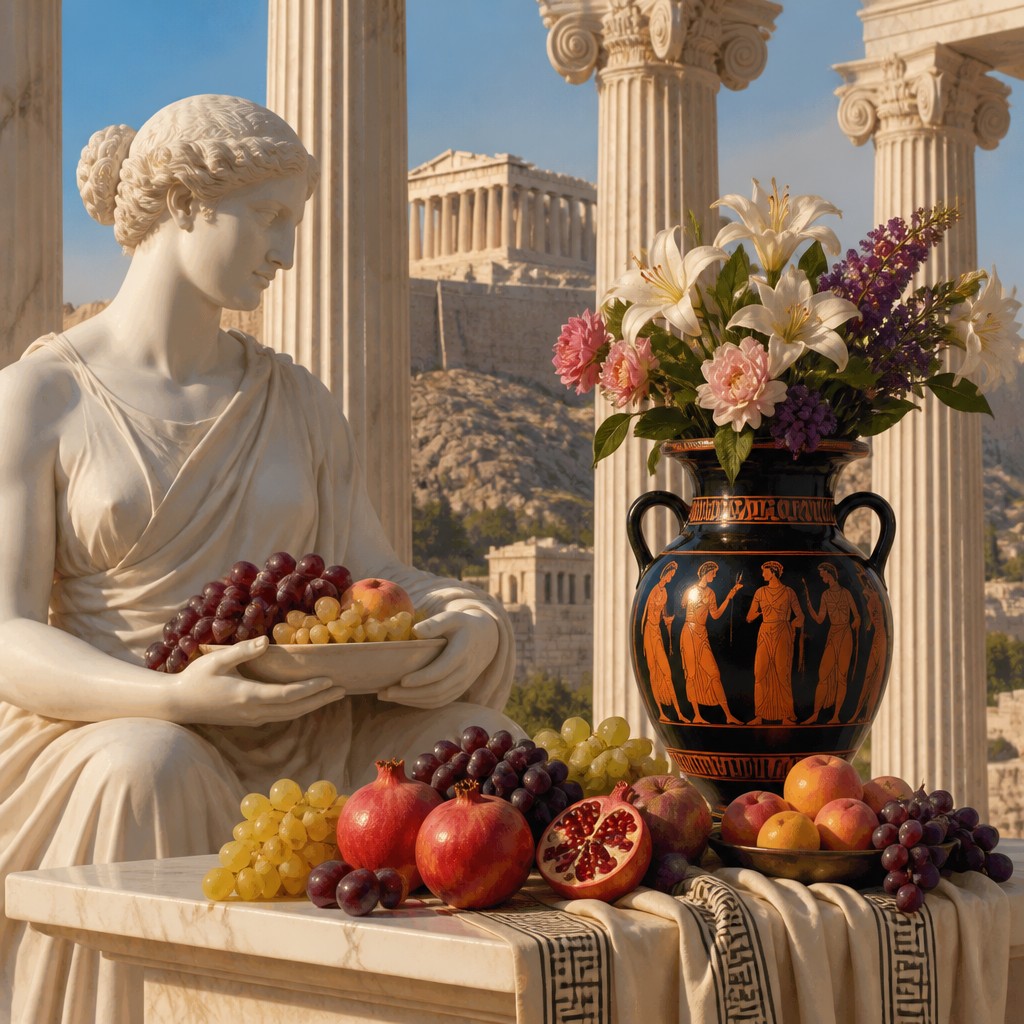
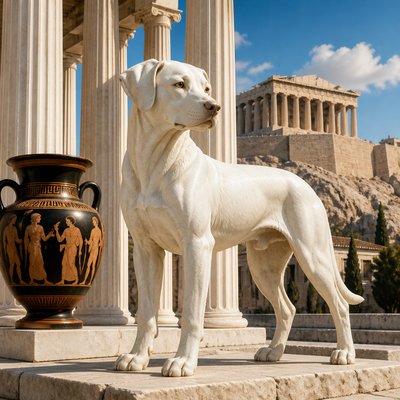
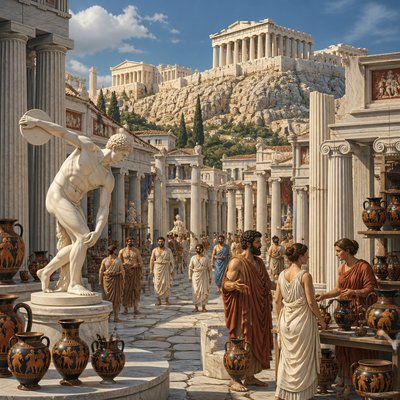
Athens Art Style is an invented contemporary style built from the visual vocabulary of Classical Greek art and architecture. It combines polished white marble bodies and sculptural forms, orderly Doric and Ionic columns, red-figure vase imagery, and sunlit limestone temples associated with the Athenian Acropolis. Its defining effect is poised, ceremonial, and highly structured rather than spontaneous or informal.
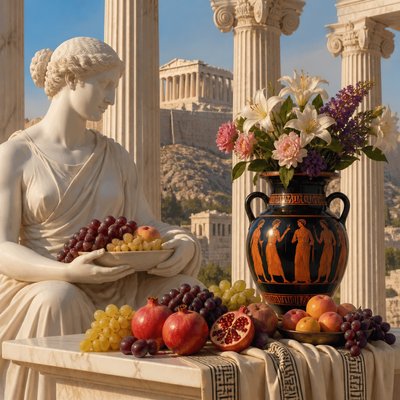
The style looks cohesive because every element is governed by classical proportion, measured spacing, idealized anatomy, and a restrained material palette. White marble, warm stone, terracotta, and glossy black ceramic create a strong contrast, while clear daylight reveals carved edges, column fluting, shallow relief, and the calm geometry of temple architecture.
Try It On Your Photos
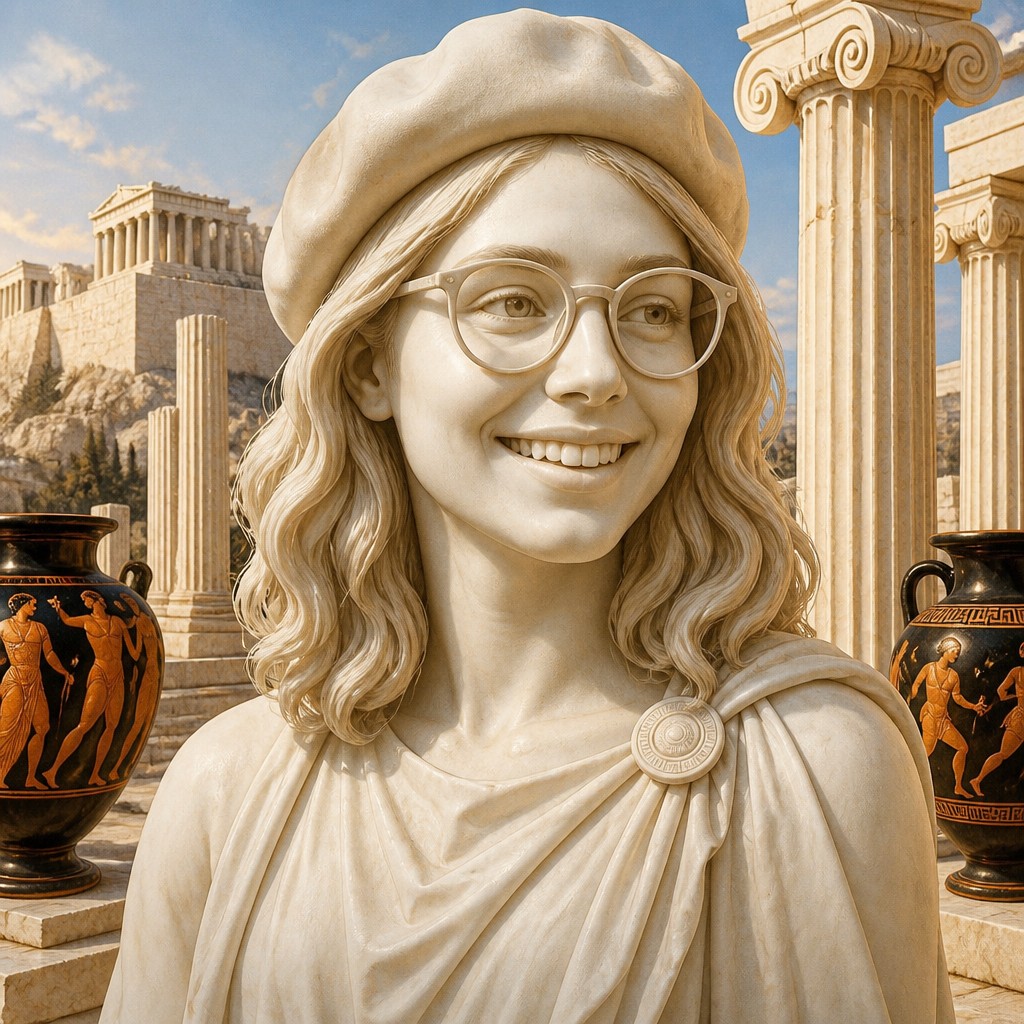
Upload any photo and convert it into Athens Art Style — drag the sliders to compare before and after.

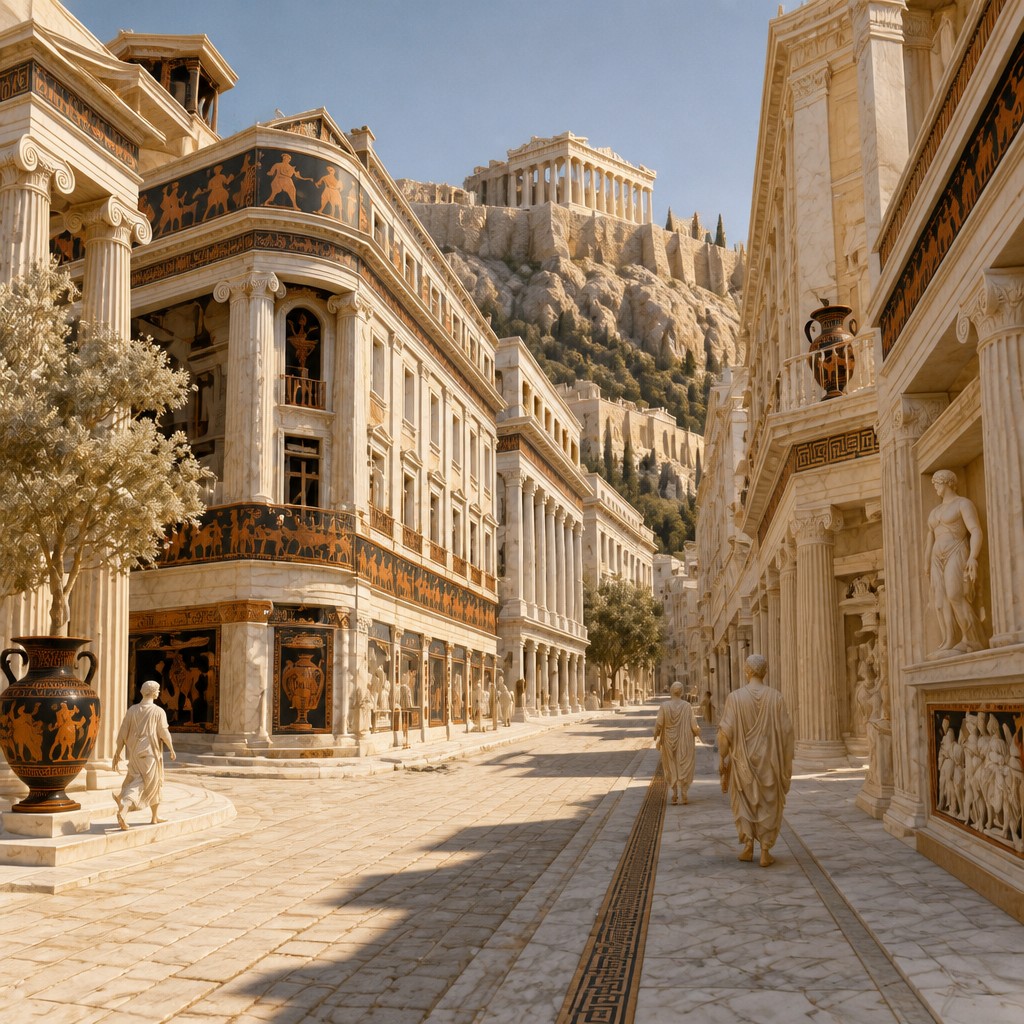

What Defines Athens Art Style
The signature details, up close
Polished white marble
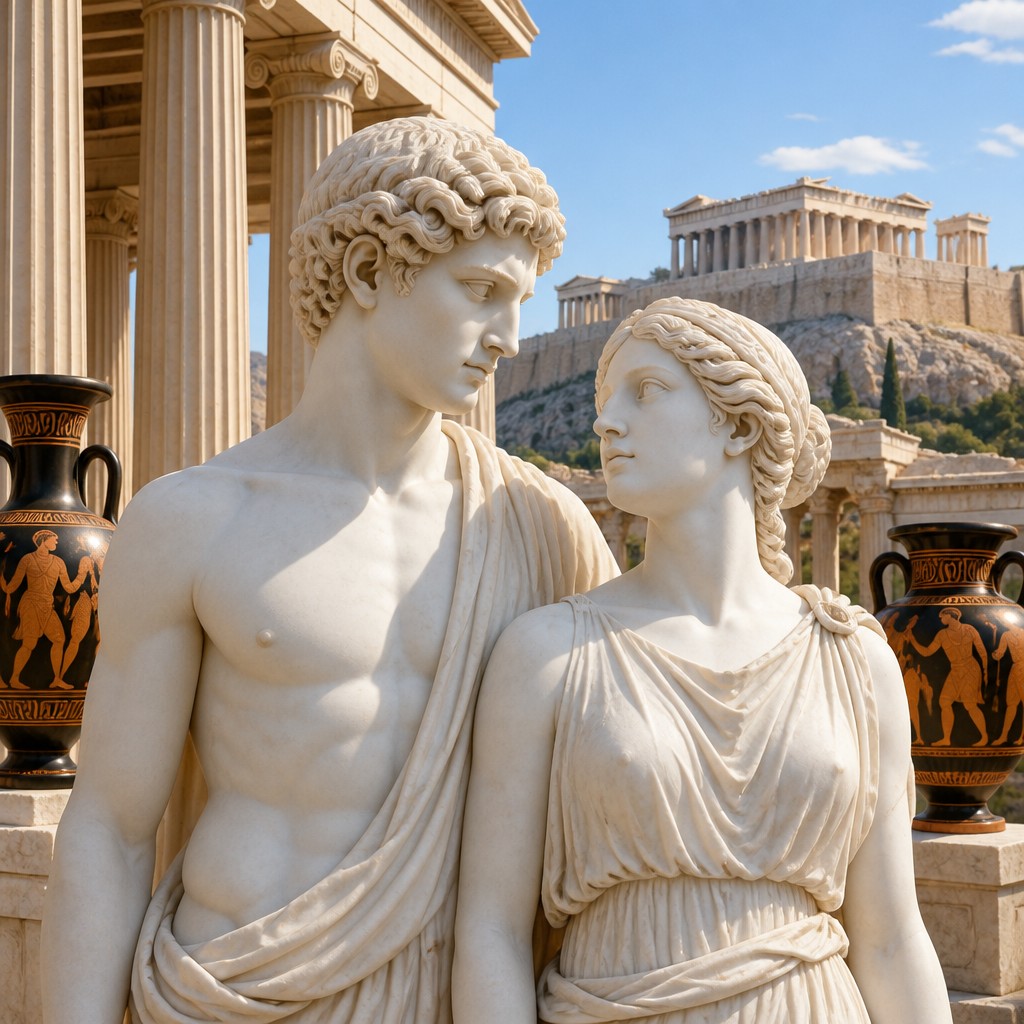
Figures and ornamental forms appear carved from luminous white marble, with smooth surfaces, controlled highlights, and selective emphasis on musculature, drapery, and facial planes.
Idealized anatomy
Bodies favor calm contrapposto, proportionate limbs, composed expressions, and an elevated sense of physical harmony rather than individualized realism or exaggerated gesture.
Fluted Doric and Ionic columns
Rows of columns provide rhythm and architectural order. Doric columns suggest austerity and weight, while Ionic details introduce scroll-like capitals and a more decorative profile.
Red-figure ceramic imagery
Terracotta figures appear in the red-figure method, where reddish-orange forms remain visible against a dark slip background and fine interior lines define anatomy, clothing, and movement.
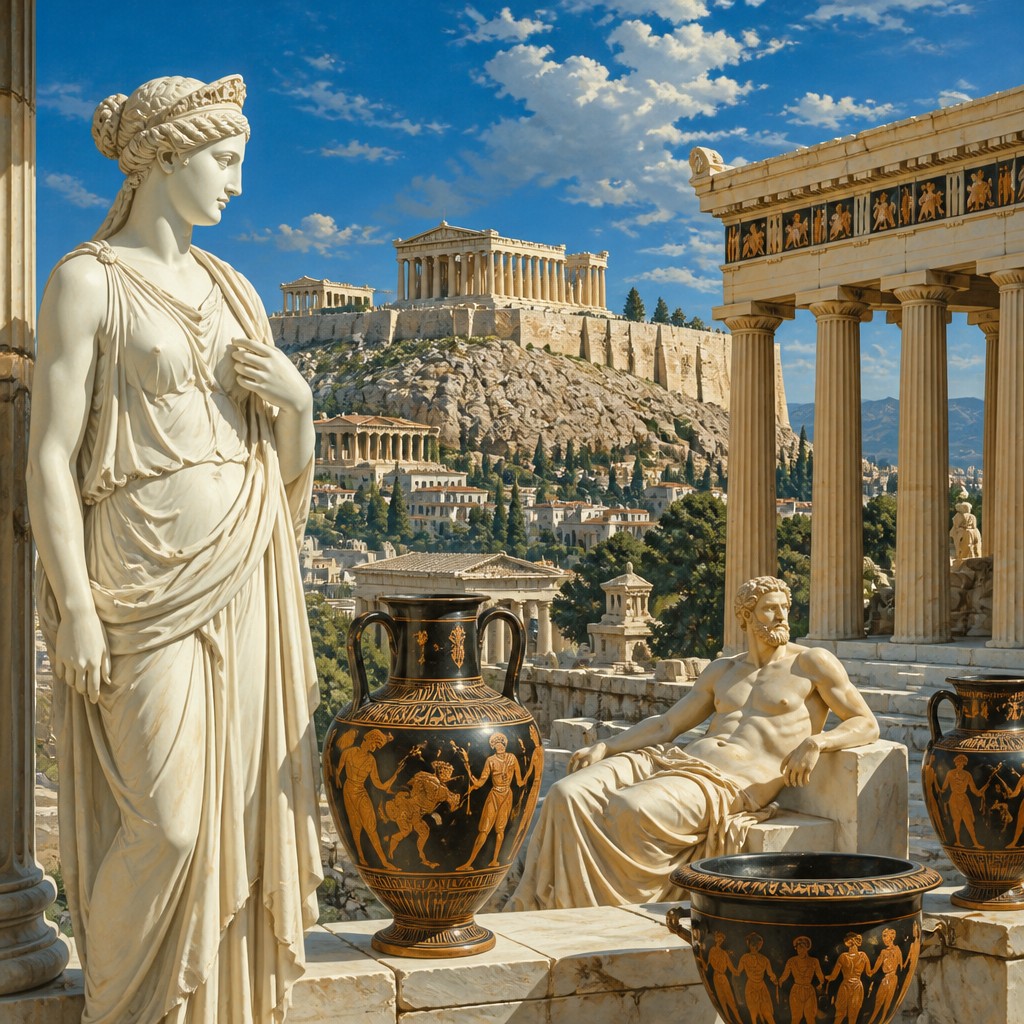
Sunlit limestone temples
Temple architecture is rendered in warm, weathered stone under clear daylight, with pediments, steps, colonnades, and elevated platforms creating a monumental setting.
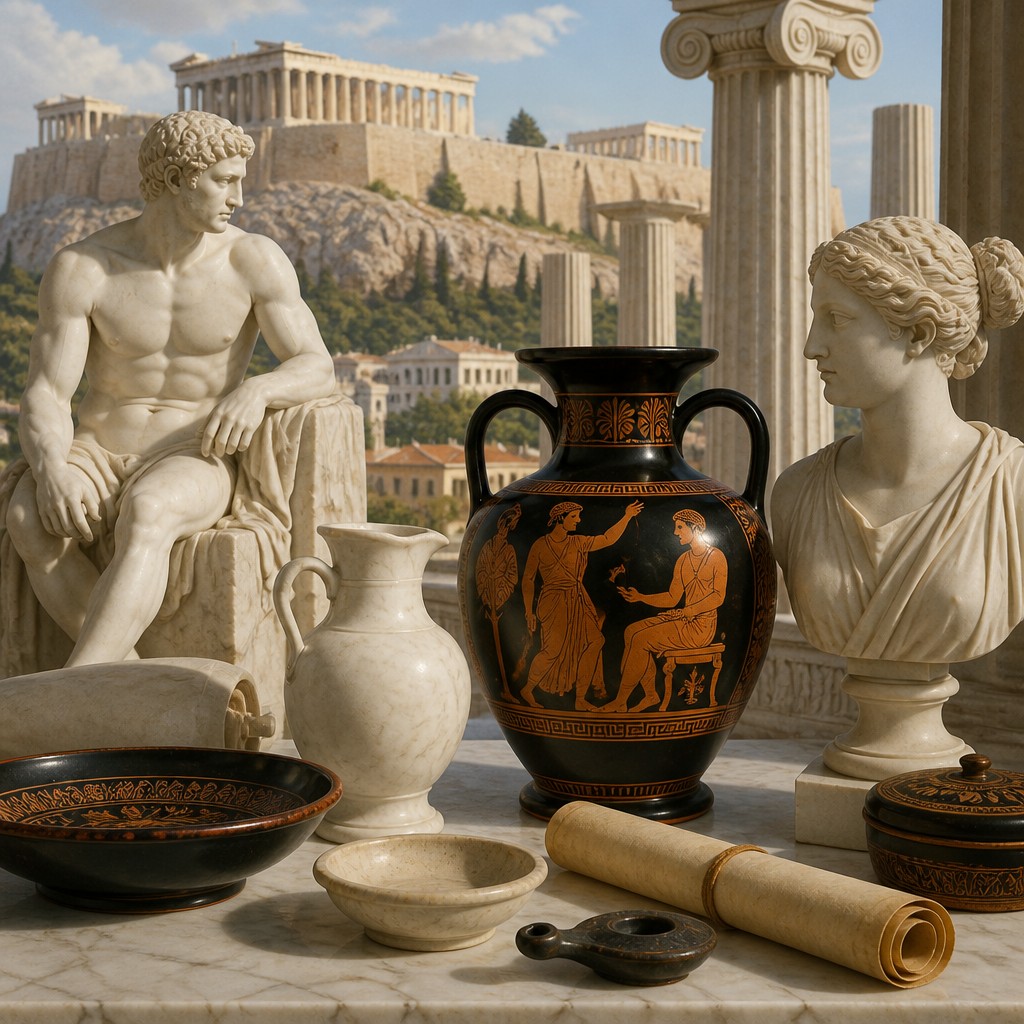
Classical proportion and symmetry
Compositions use balanced axes, measured repetition, stable horizontals, and deliberate negative space. Even complex scenes retain a sense of civic order and visual calm.
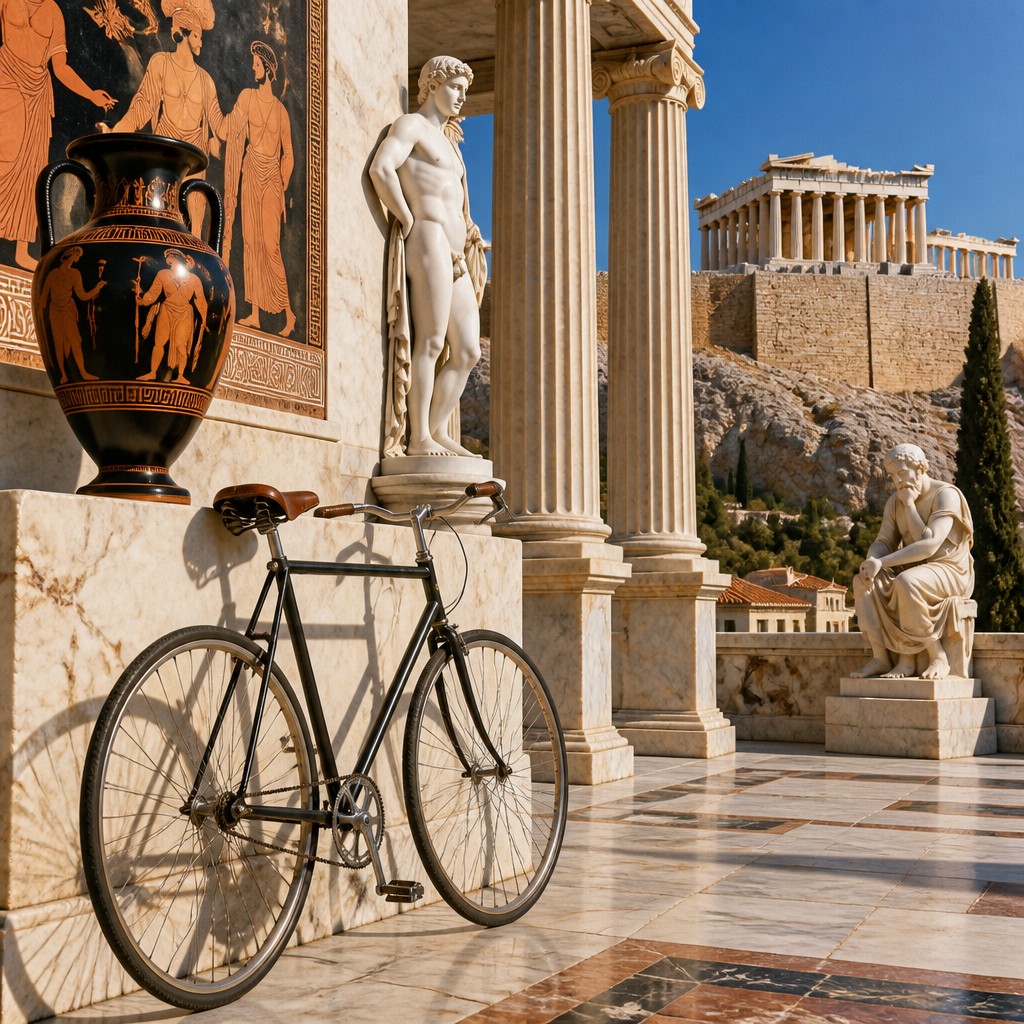
Restrained ancient-material palette
The dominant colors are marble white, limestone ochre, terracotta red, charcoal black, and muted blue sky. Metallic gloss and excessive saturation are generally avoided.
Athens Prompt Ideas
Start from an idea — each one opens the generator with the style ready to go. See all 40 Athens prompts →
How to Create Athens Art
Master the craft step by step — or skip straight to creating. Read the full guide →
- 1
Establish a classical silhouette
Begin with a stable frontal or three-quarter pose, clear weight distribution, and a strong vertical or triangular composition. Use measured proportions and avoid overly dynamic cropping.
- 2
Model marble surfaces
In traditional sculpture, refine the surface gradually from broad planes to delicate details, then use directional light to reveal carving. Digitally, combine smooth high-resolution forms with subtle stone grain and restrained edge wear.
- 3
Build architectural rhythm
Use repeated columns, steps, lintels, and pediments to create depth through serial perspective. Keep spacing regular, but introduce slight weathering or tonal variation so the architecture does not look mechanically flat.
- 4
Use pottery contrast
Add a red-figure vase, frieze, or ceramic panel against a near-black glossy ground. Define the figures with confident contour lines and simplified gestures rather than painterly shading.
- 5
Control light and color
Favor high, warm daylight that produces clean shadows across marble and limestone. Limit the palette to white, ochre, terracotta, black, and restrained sky tones to preserve the archaeological character.
- 6
Write precise generation prompts
Specify the subject first, then request idealized marble anatomy, fluted columns, red-figure ceramic details, balanced classical proportions, and sunlit temple architecture. For image transformation, describe which existing forms should become marble, pottery, or limestone while preserving the source composition.
The Story
History & Origins of Athens
Athens Art Style does not describe a documented historical movement or period. It is an aesthetic synthesis drawing primarily from the Archaic and Classical traditions of ancient Greek art, especially the marble sculpture, temple architecture, painted pottery, and proportional ideals associated with Athens and the wider Greek world.
Its visual lineage also reflects the later European fascination with antiquity known as Neoclassicism, which revived Greek and Roman forms through symmetry, archaeological references, and idealized bodies. The contemporary style compresses these sources into a single image language, often placing sculpture, architecture, and vase painting together in one carefully balanced scene.
Influences: The style draws on Classical Greek sculpture, Archaic and Classical temple architecture, red-figure and black-figure pottery, ancient relief carving, and the proportional systems associated with Greek art. It also relates to Neoclassicism, archaeological reconstruction, museum presentation, historical fantasy illustration, and contemporary digital sculpture that revisits antiquity through polished materials and idealized form.
Frequently Asked Questions
Is Athens Art Style a historical art movement?
No. Athens Art Style is an invented contemporary label rather than a documented movement from ancient Greece or modern art history. It combines recognizable features of Classical Greek sculpture, architecture, and pottery into a unified visual style.
What defines Athens Art Style?
Its main features are polished white marble, idealized anatomy, fluted Doric or Ionic columns, red-figure vase imagery, sunlit limestone temples, and balanced classical proportion. The style usually favors calm poses, clear geometry, and a restrained ancient-material palette.
How is it different from general Greek art?
Greek art covers many periods, regions, media, and approaches, including Archaic, Classical, Hellenistic, and later traditions. Athens Art Style selectively blends Classical Greek references with Neoclassical and digital-image conventions, often placing sculpture, pottery, and architecture together in one scene.
Can people or modern objects appear in this style?
Yes. Contemporary subjects can be reinterpreted as marble statues, painted ceramic figures, or occupants of a classical temple setting. The strongest results preserve the subject's identity while applying idealized proportions, carved surfaces, and orderly composition.
How can I create this look with traditional materials?
Work with clay, plaster, stone, or paint, using clear silhouettes and controlled proportions. For a two-dimensional interpretation, combine warm limestone backgrounds with white sculptural forms and terracotta figures outlined against dark ceramic fields.
Where is this style commonly used?
It suits historical fantasy scenes, monument concepts, museum-like portraits, educational illustrations, game environments, architectural visualizations, and decorative studies of antiquity. Its strong symmetry and material contrast also make it effective for posters and editorial compositions.
Create your first Athens artwork
Describe anything — or upload a photo — and see it in Athens Art Style in seconds.
Related Styles
Discover similar art styles