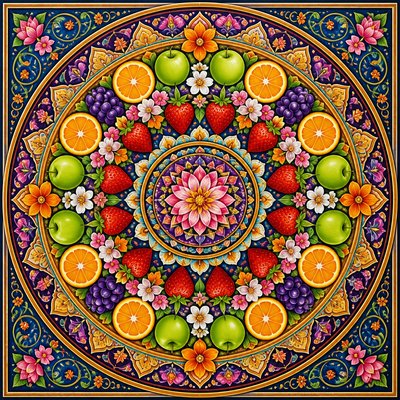
Porcelain Art Style
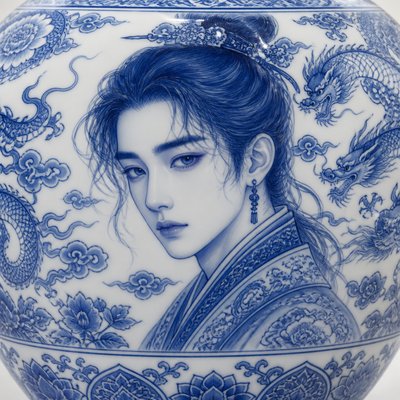
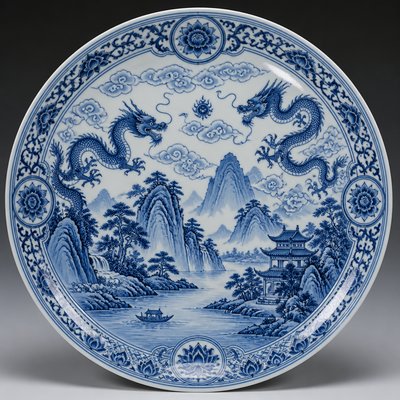
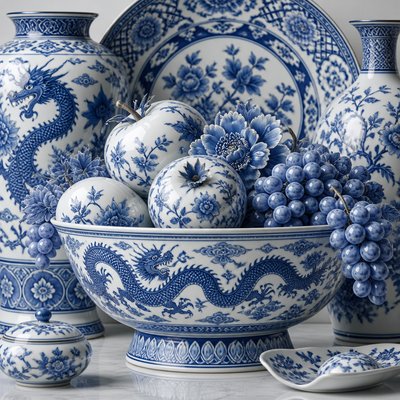
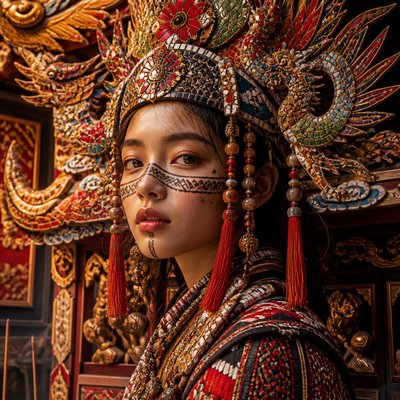
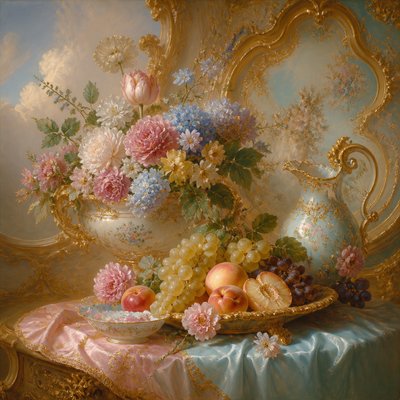
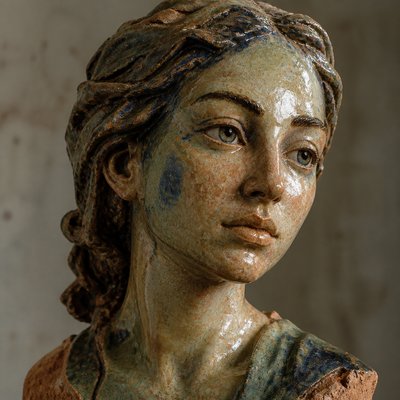
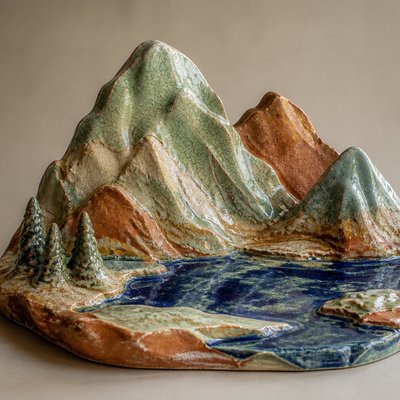
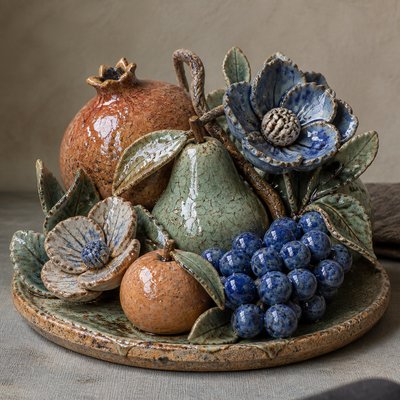
Explore porcelain art: translucent white ceramic, vivid hand-painted motifs, glossy crackle glaze, relief molding, and refined gilded details.
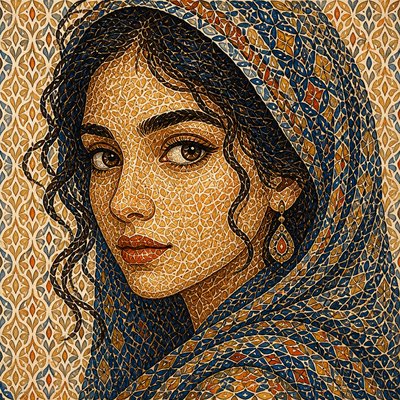
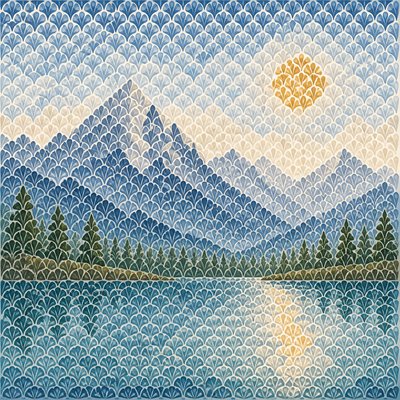
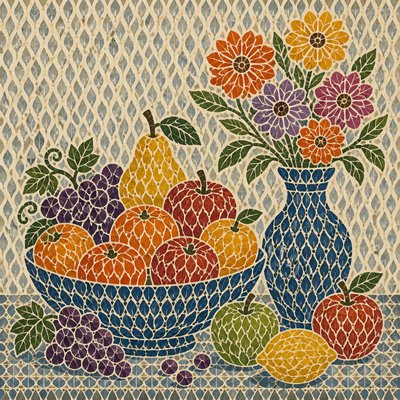
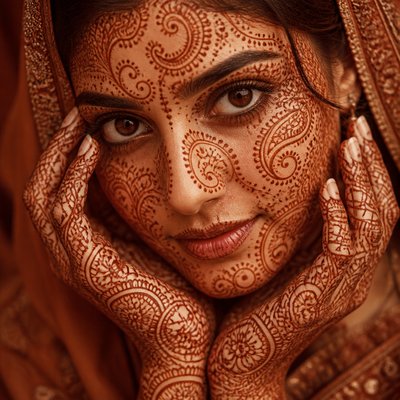
Instantly rendered in Porcelain — or transform a photo
Porcelain Gallery
Tap any artwork to explore it
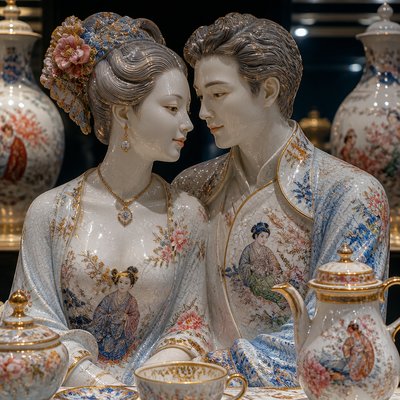
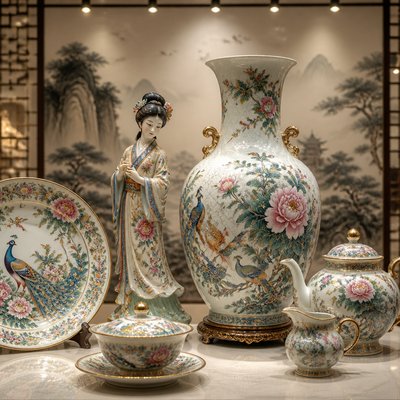
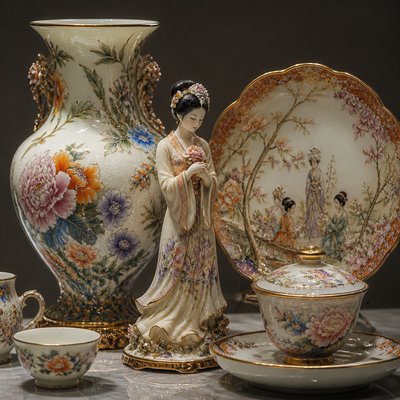
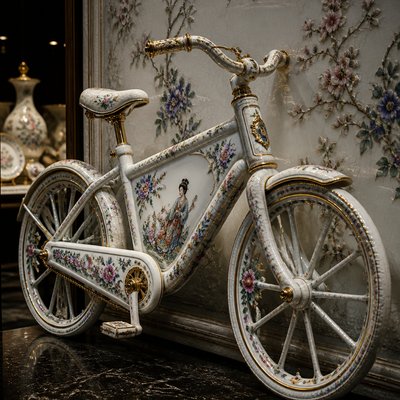
What is Porcelain Art Style?
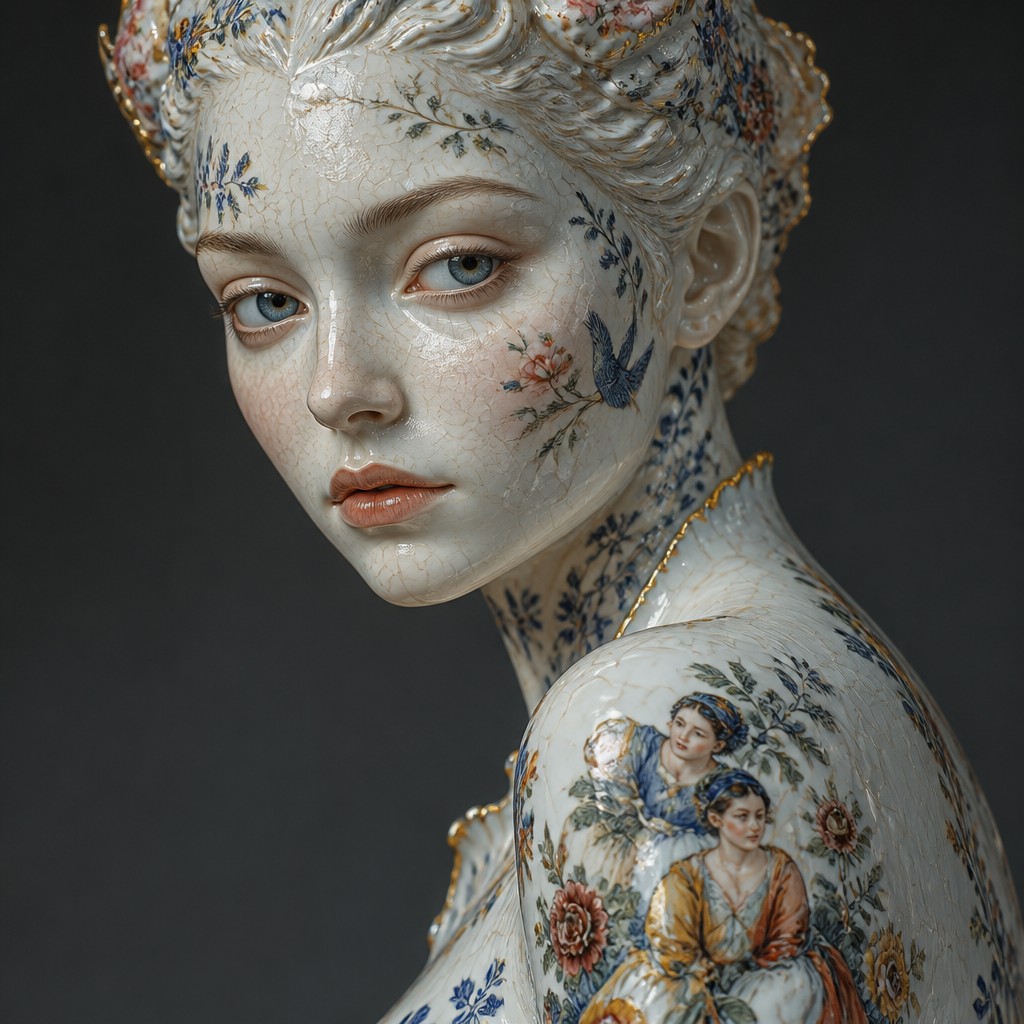
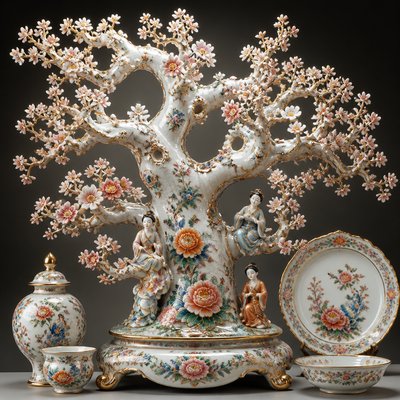
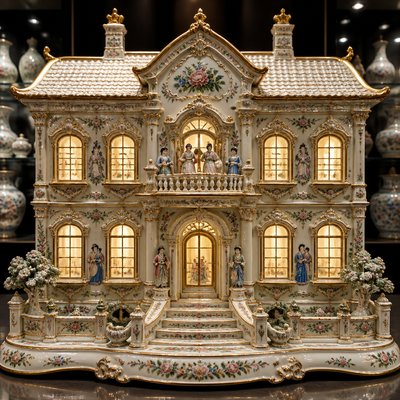
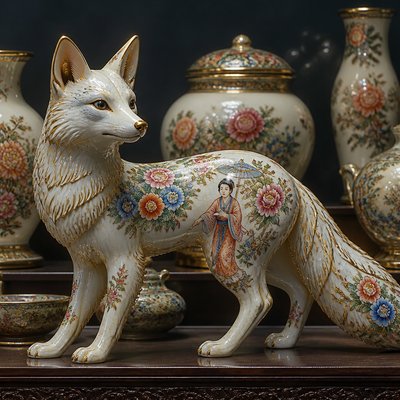
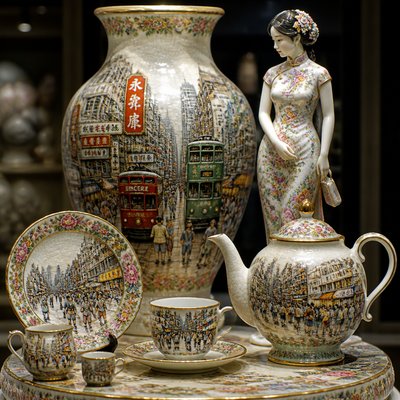
Porcelain art is defined by the luminous delicacy of porcelain combined with painted ornament, glossy glaze, sculptural modeling, and restrained gilding. Its characteristic surface appears almost weightless: a thin, translucent white body catches and diffuses light, while enamel colors, fine crackle lines, raised relief, and metallic rims provide detail and contrast.
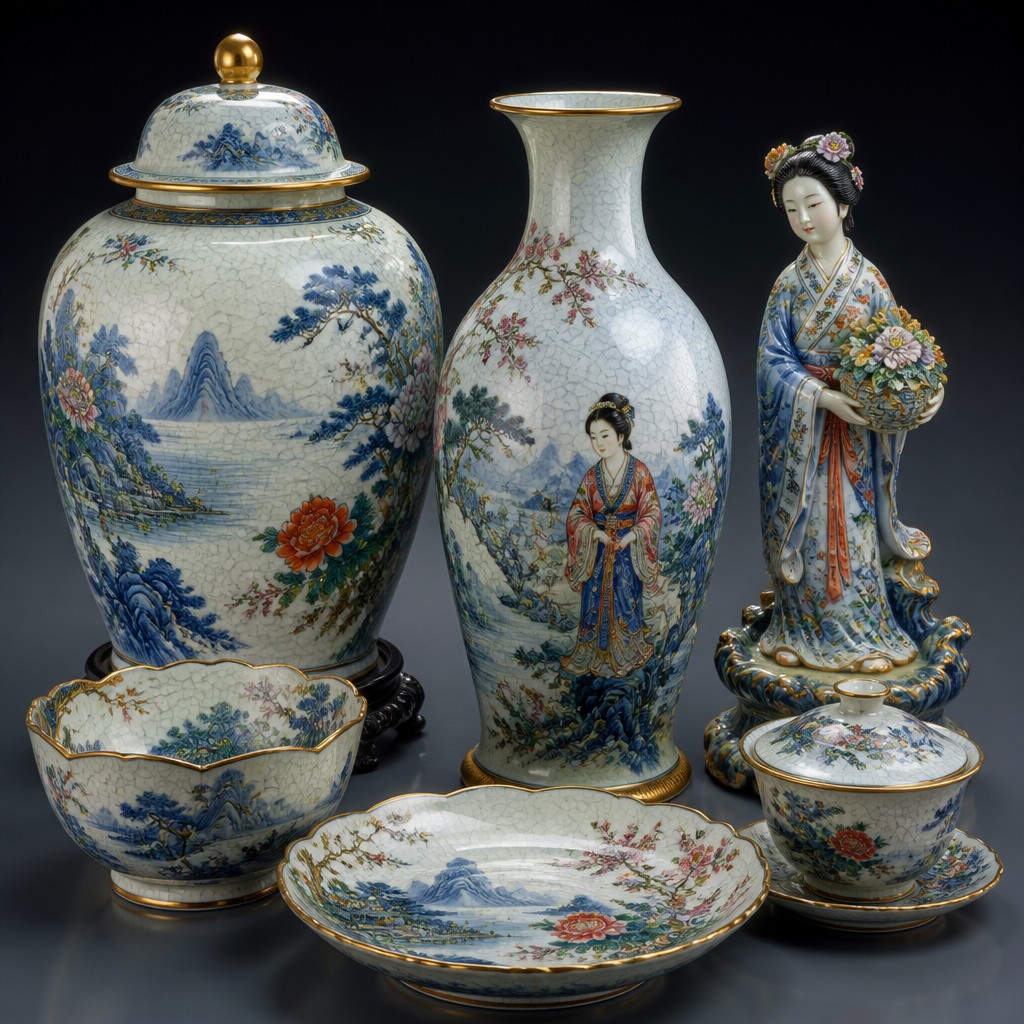
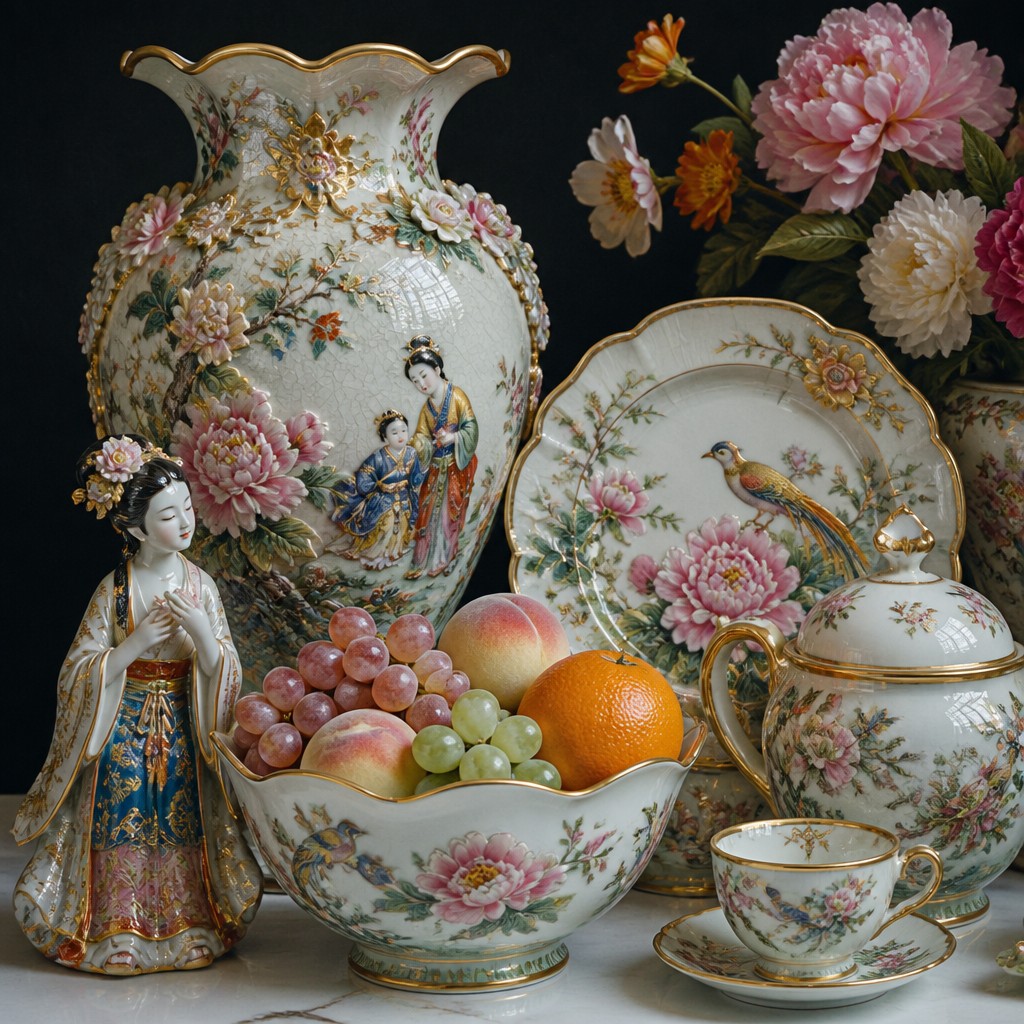
The style commonly presents vases, figurines, plates, teacups, decorative boxes, and other refined objects as gallery-lit artifacts. Floral sprays, birds, courtly figures, botanical studies, and ornamental borders are frequent subjects. The visual effect comes from the tension between porcelain’s fragile, polished materiality and the precision of its painted and molded decoration.
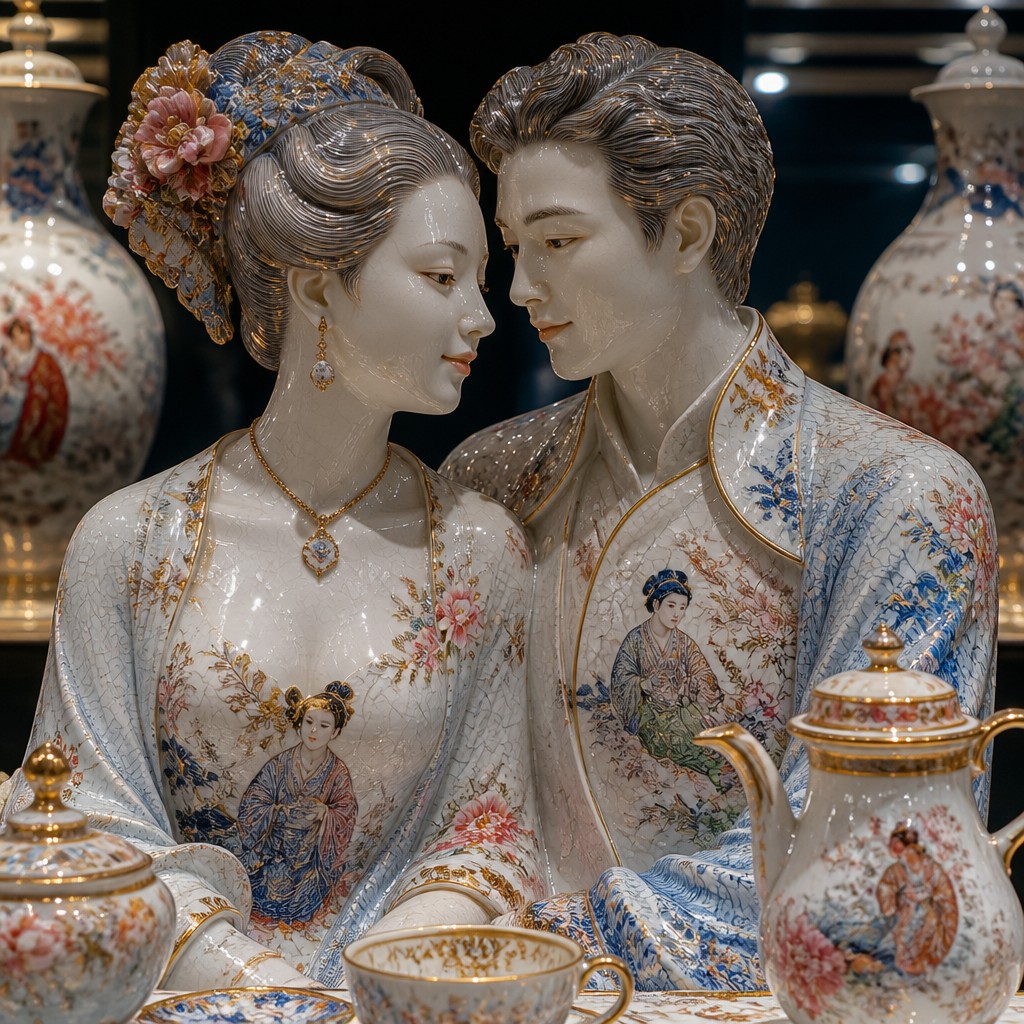
Try It On Your Photos
Upload any photo and convert it into Porcelain Art Style — drag the sliders to compare before and after.
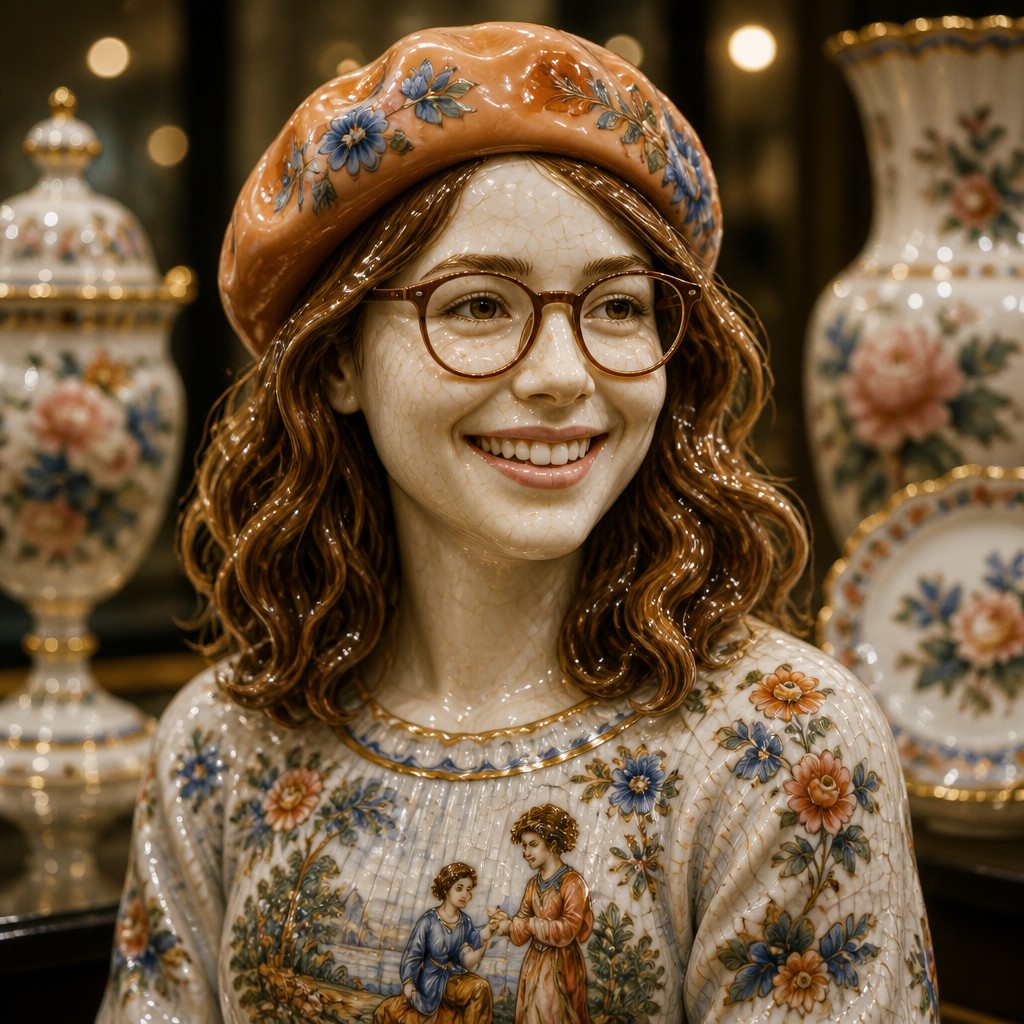

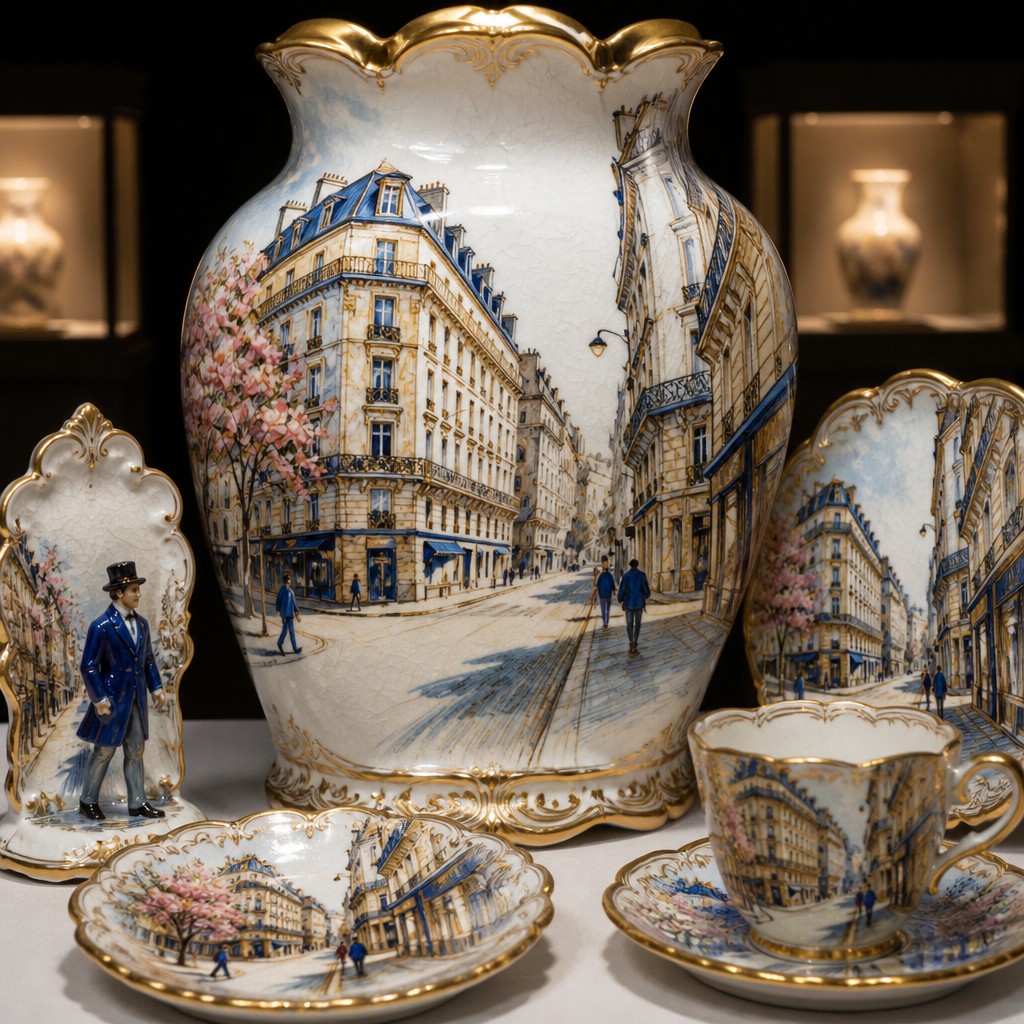

What Defines Porcelain Art Style
The signature details, up close
Translucent white body
Forms are built around a thin, pale porcelain body that appears slightly translucent when illuminated. The material should feel luminous, smooth, and delicately fragile rather than opaque or chalky.
Glossy glazed surface
A polished glaze creates clear highlights and soft reflections across the object. Fine crackle veining may be added as a controlled decorative effect, suggesting age and handcraft without making the surface look damaged.
Hand-painted enamel motifs
Floral sprays, birds, figures, scrolling vines, and botanical details are rendered in precise, saturated enamel colors. Small-scale brushwork and carefully spaced ornament are central to the style.
Gilded accents
Gold appears on rims, handles, borders, leaf tips, costume details, and selected relief edges. Gilding is used as a narrow highlight that catches light, not as a broad substitute for the porcelain surface.
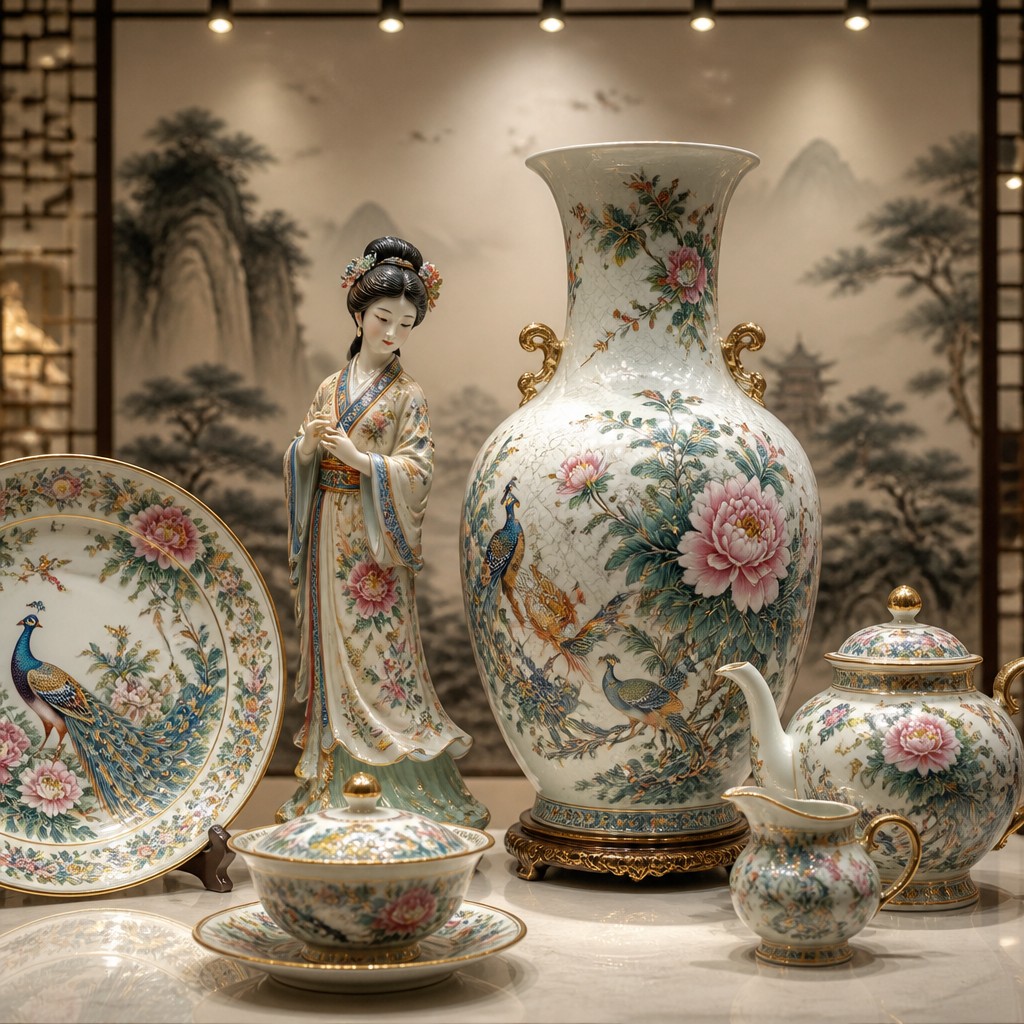
Relief molding
Raised flowers, shells, garlands, handles, and figurative elements give the object a tactile, sculptural profile. Relief should remain delicate and integrated with the overall silhouette.
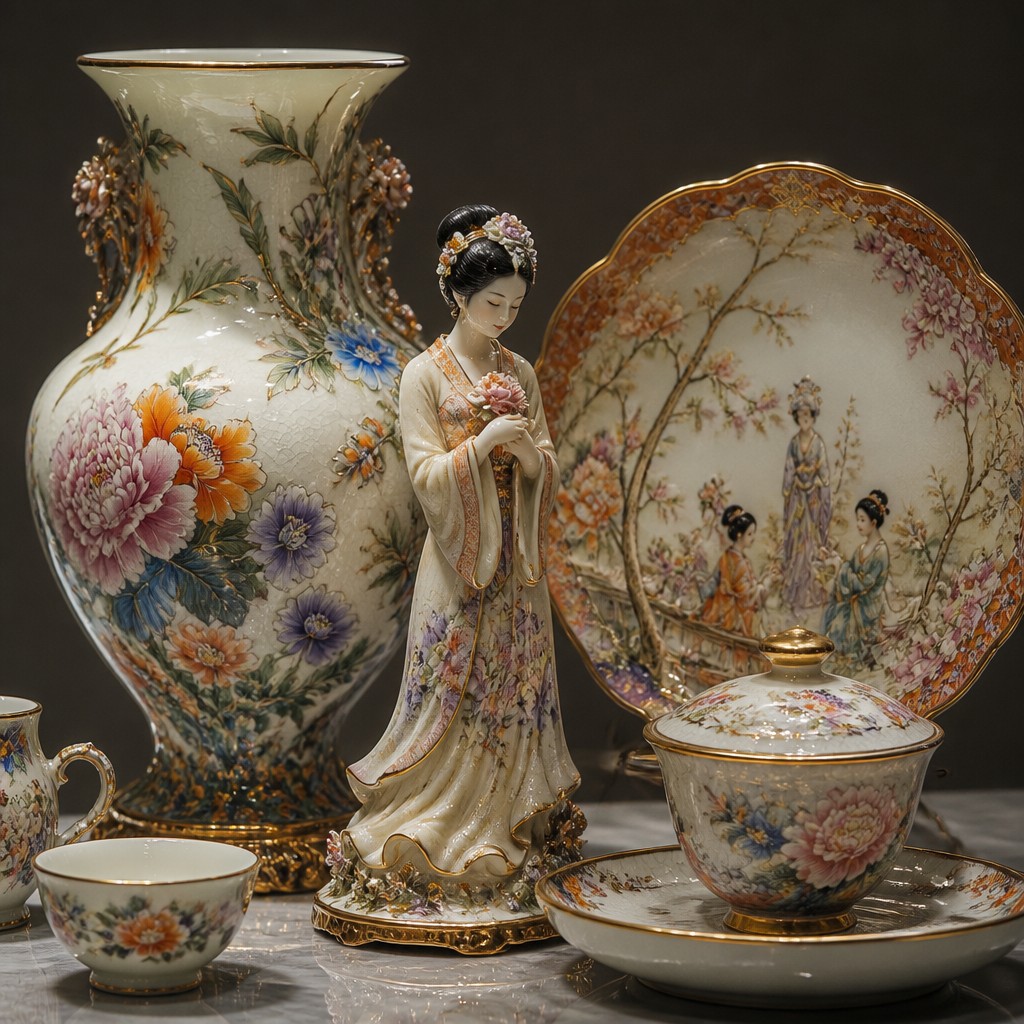
Decorative object forms
The visual language is especially suited to vases, urns, figurines, teaware, plates, boxes, and small display objects. Symmetry, graceful contours, and carefully framed ornament often organize the composition.
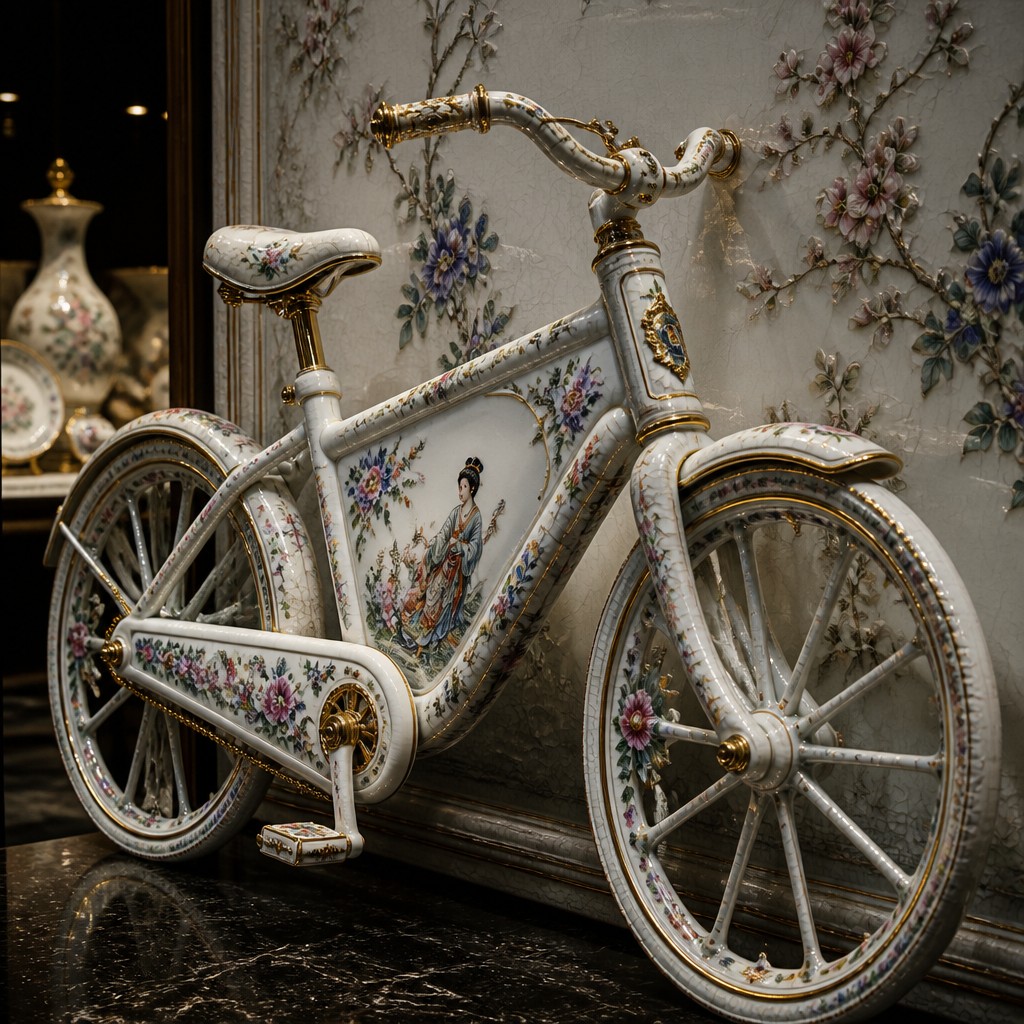
Gallery-lit refinement
Soft museum or cabinet lighting emphasizes translucency, glaze reflections, gilded edges, and subtle shadows beneath relief work. Clean backgrounds help the decorated object read as a collectible artifact.
Porcelain Prompt Ideas
Start from an idea — each one opens the generator with the style ready to go. See all 40 Porcelain prompts →
How to Create Porcelain Art
Master the craft step by step — or skip straight to creating. Read the full guide →
- 1
Plan the ceramic silhouette
Begin with a stable vase, figurine, vessel, or tableware form and establish its profile before adding ornament. Keep contours elegant and readable, since excessive complexity can obscure the porcelain material.
- 2
Build translucency and glaze
In traditional work, use a fine porcelain body and a carefully fired transparent glaze; in digital work, combine a milky subsurface effect with sharp specular highlights. Add subtle tonal variation so the object does not appear like plain white plastic.
- 3
Layer painted decoration
Apply floral or figural motifs as deliberate, fine-scale enamel brushwork with a limited but vivid palette. Digital artists can use crisp ornament masks, slight pigment variation, and controlled edge softness to suggest hand painting.
- 4
Use relief and gilding selectively
Model raised borders, petals, shells, or handles with shallow shadows and rounded highlights. Reserve gold for rims, ornamental edges, and focal details so it remains visually precise and believable.
- 5
Control the lighting
Use broad, soft illumination with a few focused highlights to reveal translucency, glaze, and crackle. A neutral museum display setting, gentle cast shadow, and uncluttered background usually produce the clearest result.
- 6
Write a material-specific prompt
Describe the subject, thin translucent porcelain, hand-painted enamel motifs, glossy glaze, fine crackle veining, gilded rims, delicate relief, and museum lighting. Specify the object’s shape and decorative subject rather than relying on a broad historical label alone.
The Story
History & Origins of Porcelain
Porcelain art belongs to a long tradition of ceramic craft rather than a single historical movement. Translucent porcelain was developed in China during the medieval period and became the basis for highly sophisticated painted and molded wares. Blue-and-white decoration, overglaze enamels, carved relief, and controlled glaze effects developed across East Asian ceramic traditions and later influenced global decorative arts through trade and collecting.
European manufacturers began producing hard-paste porcelain in the early eighteenth century, incorporating local Rococo ornament, floral painting, figurative modeling, gilding, and tableware design. The contemporary style described here is an aesthetic synthesis of these traditions, emphasizing museum presentation, pristine white forms, vivid enamel decoration, delicate relief, and intentionally visible crackle veining rather than representing one historically bounded school.
Influences: This aesthetic draws from Chinese and East Asian porcelain traditions, including blue-and-white wares, overglaze enamel decoration, molded relief, and controlled crackle glazes. It also reflects European hard-paste porcelain, Rococo tableware, courtly figurine traditions, nineteenth-century decorative arts, and Japonisme’s interest in asymmetrical botanical motifs and refined surface pattern. Contemporary product visualization and museum display photography contribute the clean lighting, pristine finish, and emphasis on material detail.
Frequently Asked Questions
What defines porcelain art?
Porcelain art combines a luminous white ceramic body with painted decoration, glossy glaze, sculptural modeling, and occasional gilding. Its defining qualities are translucency, precision, delicacy, and the close relationship between functional object design and ornamental art.
Is porcelain art a historical movement?
No, porcelain art is better understood as a medium-based decorative-art tradition and a broad aesthetic category. The contemporary visual style draws from many historical porcelain cultures and periods rather than belonging to one officially defined movement.
How is it different from ordinary ceramic art?
Porcelain is a specific fine-grained ceramic material known for its pale color, density, smoothness, and potential translucency. Ceramic art is a broader category that also includes earthenware, stoneware, terracotta, and experimental clay forms, which may have heavier bodies or more matte surfaces.
What subjects work best in this style?
Vases, urns, figurines, tea sets, plates, floral arrangements, birds, botanical scenes, and courtly or mythological figures are especially effective. Subjects with clear silhouettes and intricate surface areas allow the painted enamel, relief, and gilding to remain visible.
How can I make an image look convincingly porcelain?
Emphasize a thin translucent white body, smooth glossy glaze, restrained subsurface light, crisp specular reflections, and believable contact shadows. Add fine painted ornament and narrow gilded edges, while avoiding a uniformly white, plastic-like surface.
Where is porcelain art commonly used?
It appears in collectible vessels, tableware, figurines, decorative interiors, museum collections, product visualization, jewelry and ornament design, and still-life imagery. Its polished material language also works well for editorial objects and fantasy artifacts.
Create your first Porcelain artwork
Describe anything — or upload a photo — and see it in Porcelain Art Style in seconds.
Related Styles
Discover similar art styles