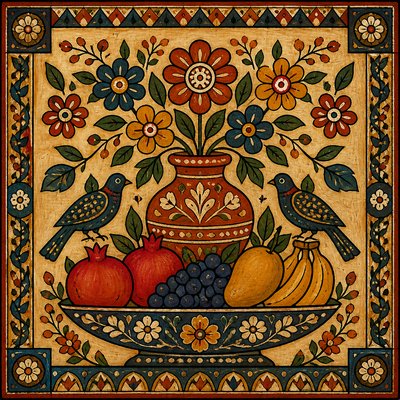
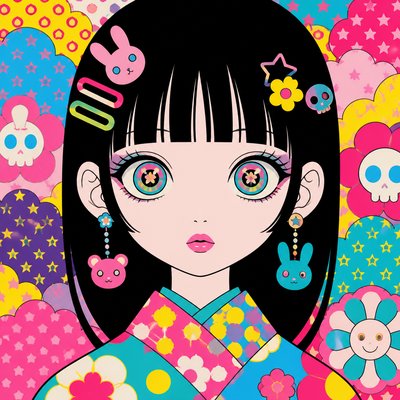
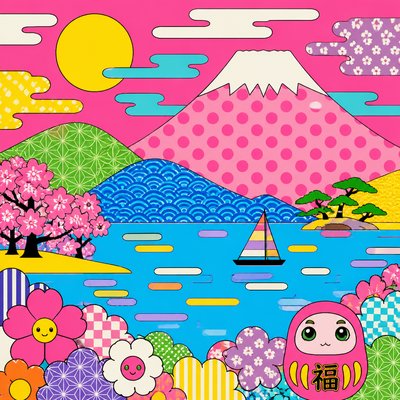
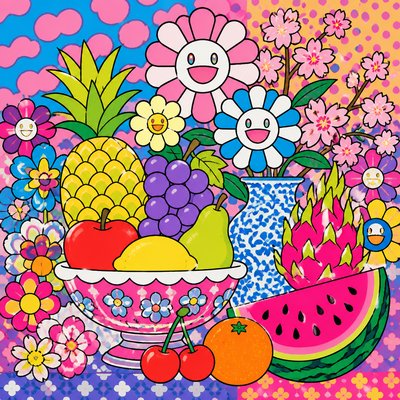
Ming Porcelain Art Style
Explore Ming Porcelain Art: cobalt dragons, cloud scrolls, lotus borders, and luminous white glaze inspired by China's Ming kilns.
Instantly rendered in Ming Porcelain — or transform a photo
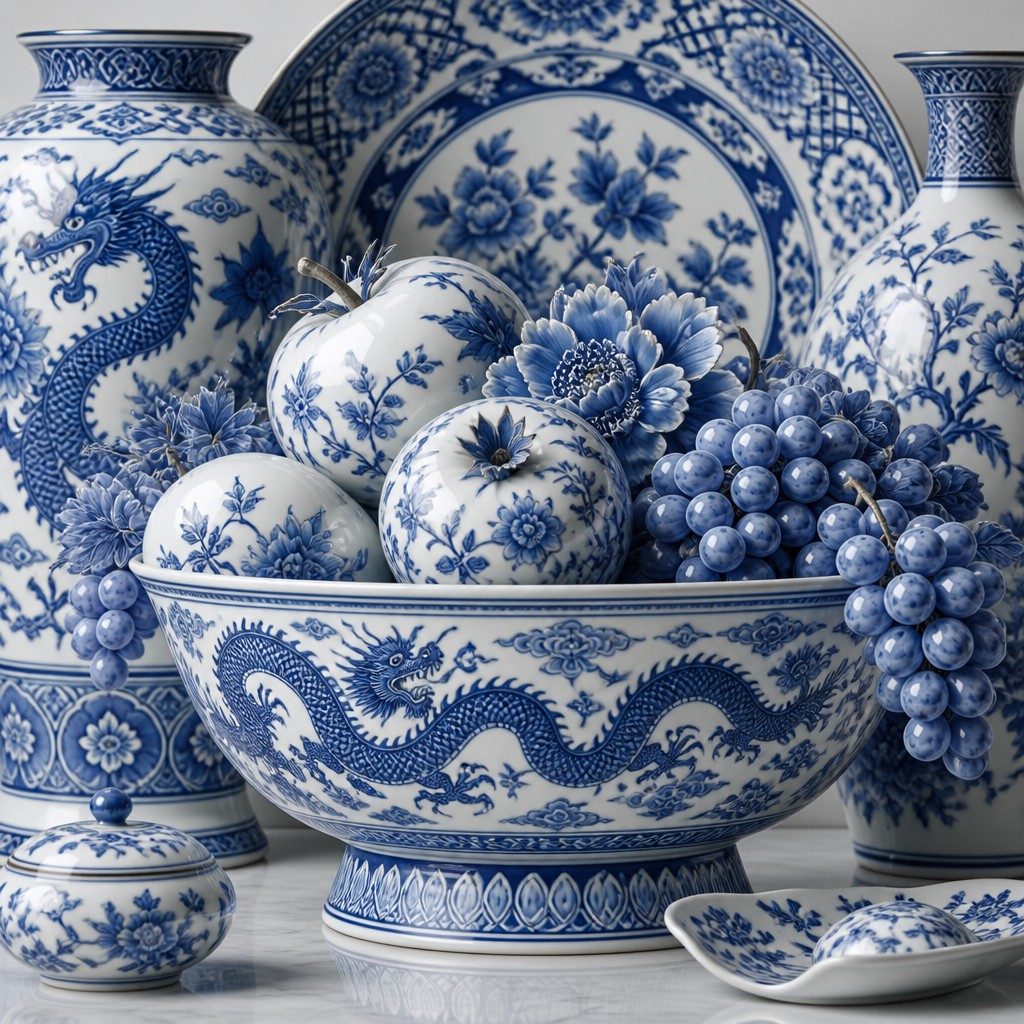
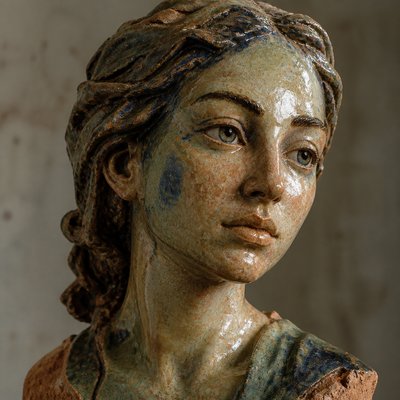
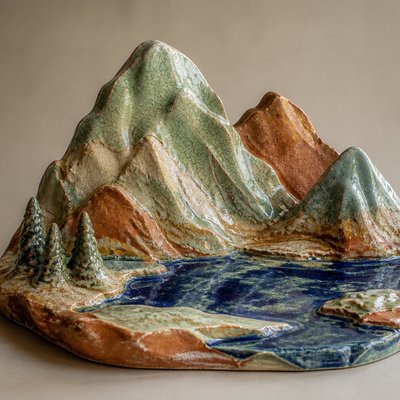
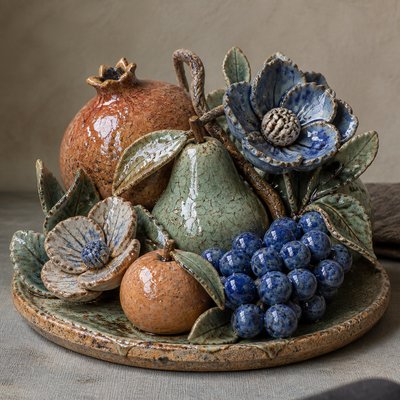
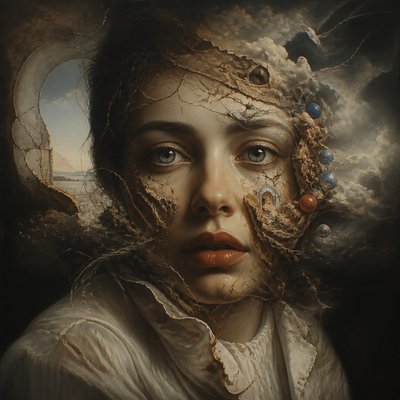
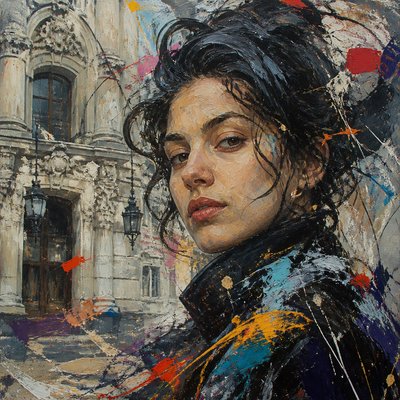
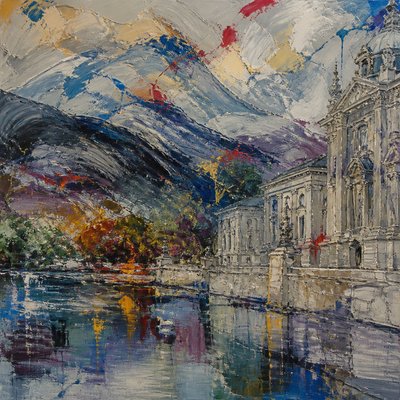
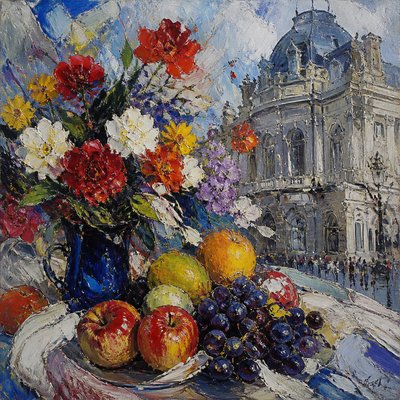
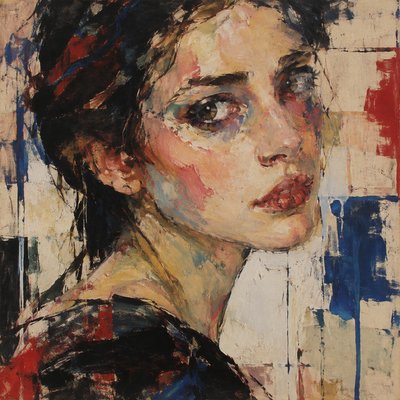
Ming Porcelain Gallery
Tap any artwork to explore it
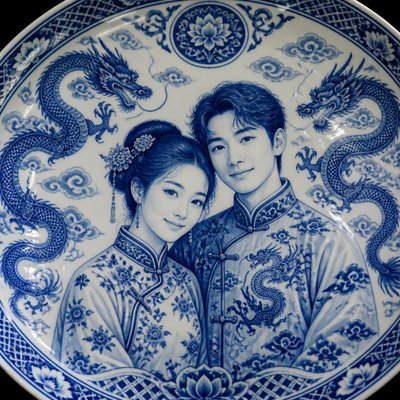
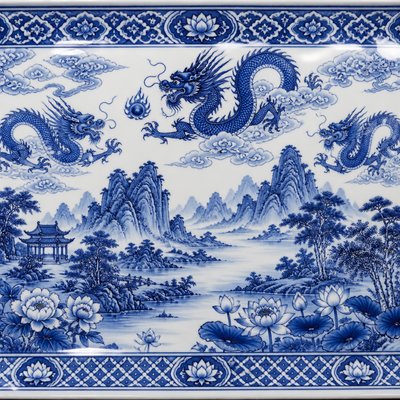
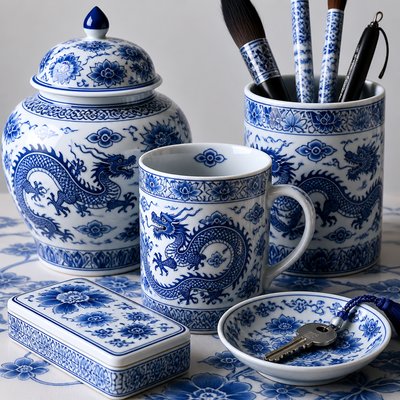
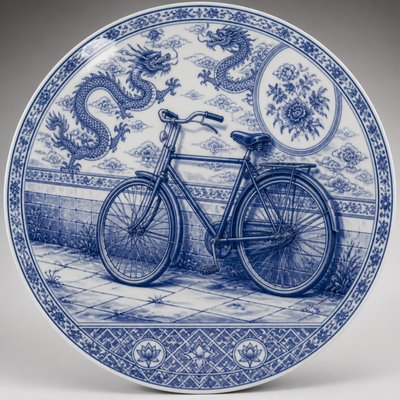
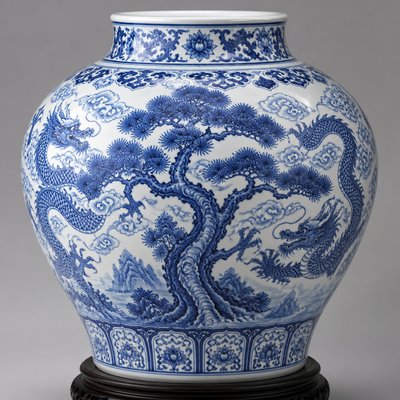
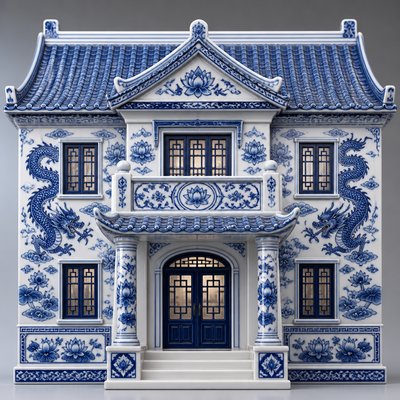
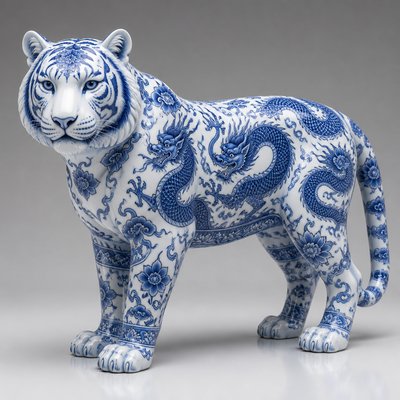
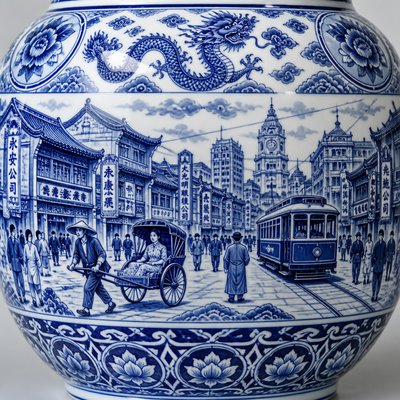
What is Ming Porcelain Art Style?
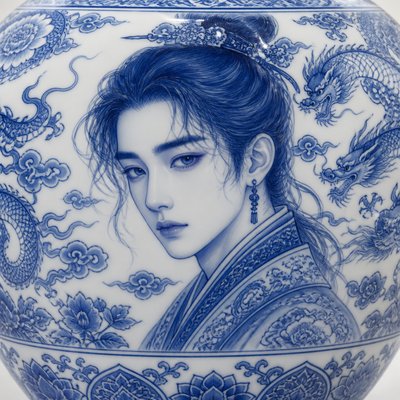
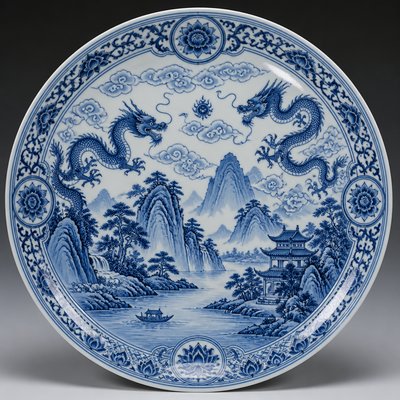
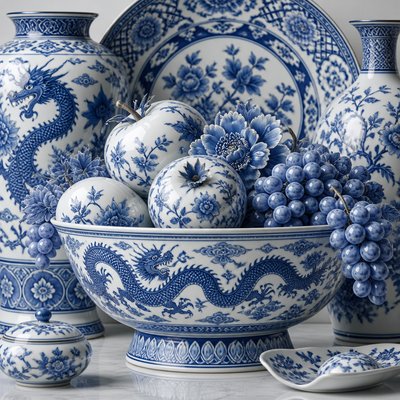
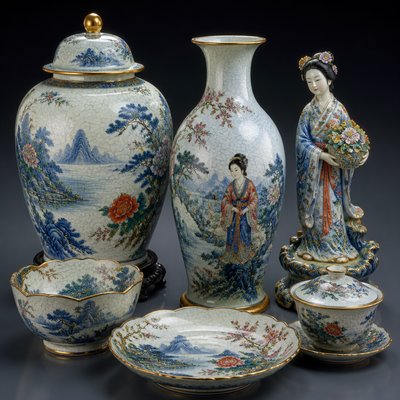
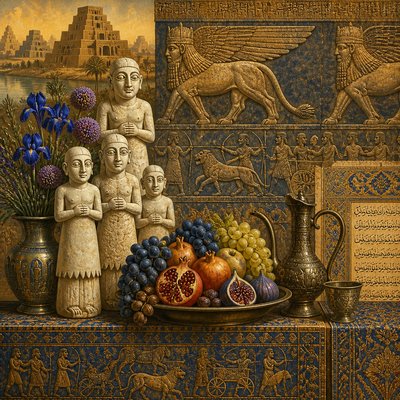
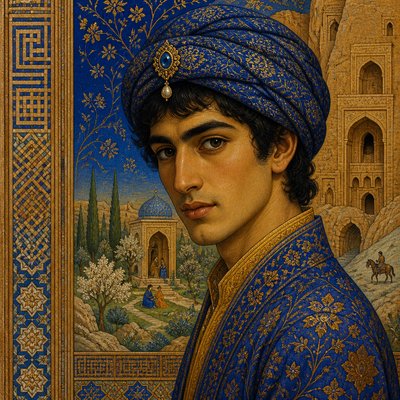
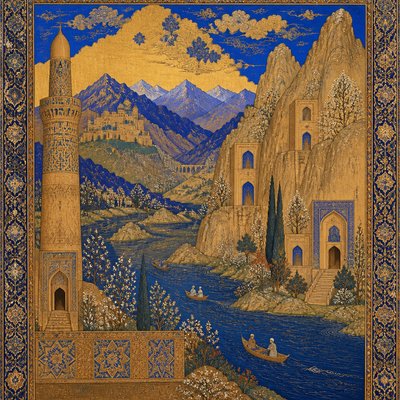
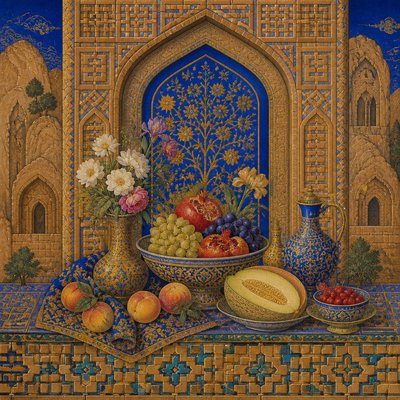
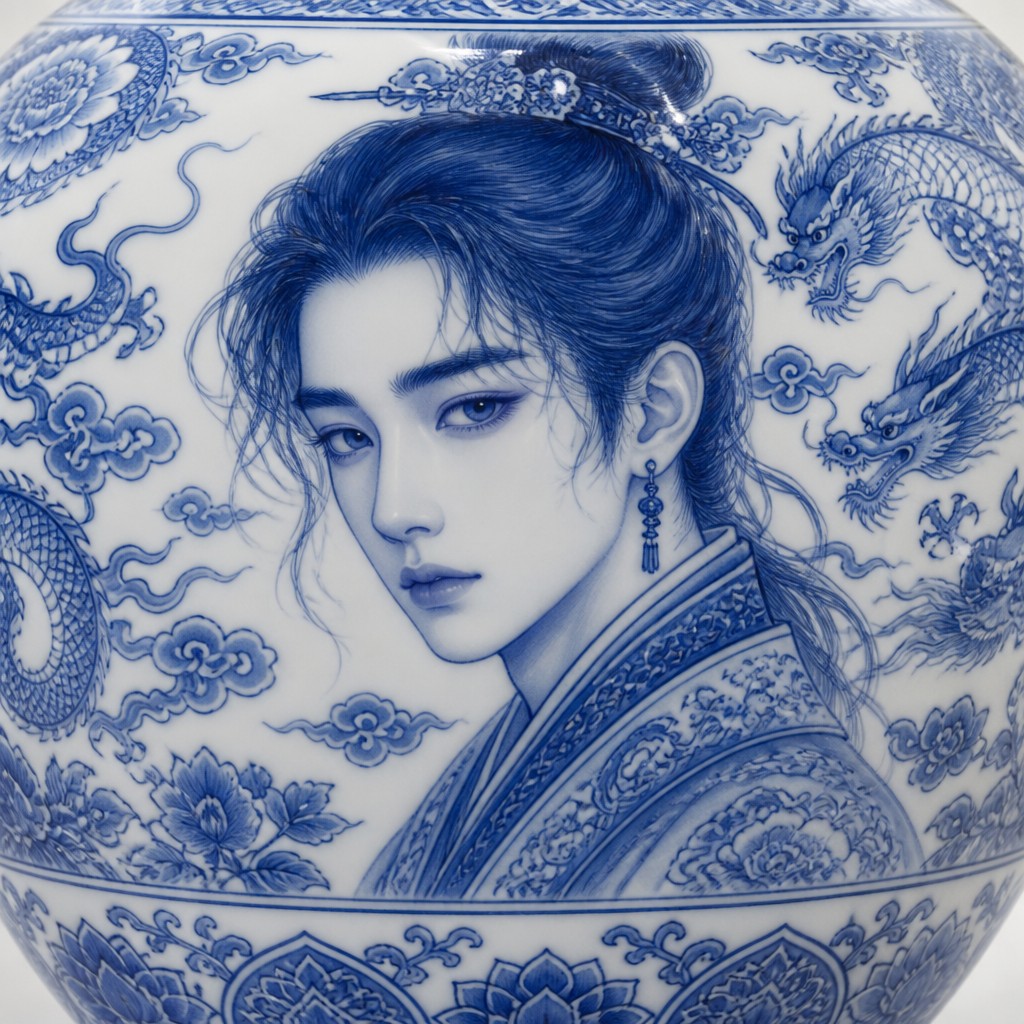
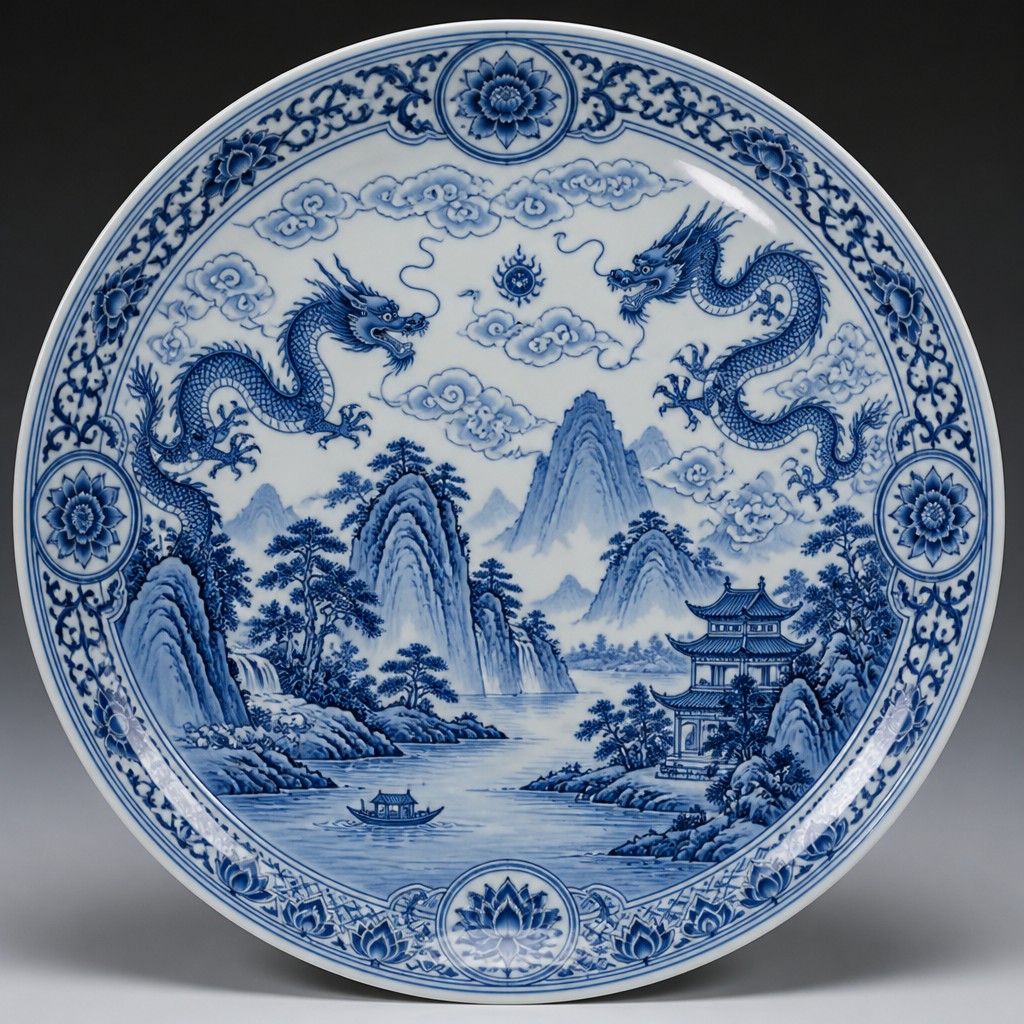
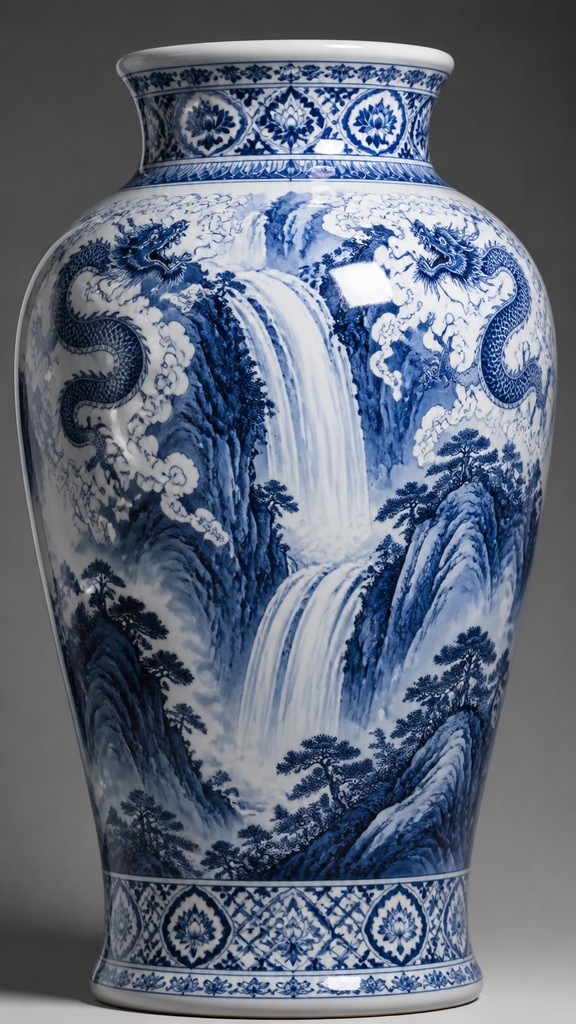
Ming Porcelain Art Style refers to the visual language of Chinese blue-and-white porcelain associated especially with the Ming dynasty (1368–1644). Its defining contrast is cobalt-blue decoration painted beneath a transparent glaze on a luminous white porcelain body. Dragons, phoenixes, flowering plants, lotus scrolls, cloud forms, waves, landscapes, and geometric borders are arranged across vessels and other ceramic surfaces with controlled outline work and carefully graded washes.
The style looks both graphic and material because its imagery was designed for ceramic production. Brushwork had to remain legible after firing, while cobalt pigment could spread, darken, or produce painterly variations beneath the glaze. The combination of crisp contours, soft blue tonal shifts, glossy reflections, and recurring ornamental bands gives the style its recognizable balance of narrative imagery and ordered decoration.
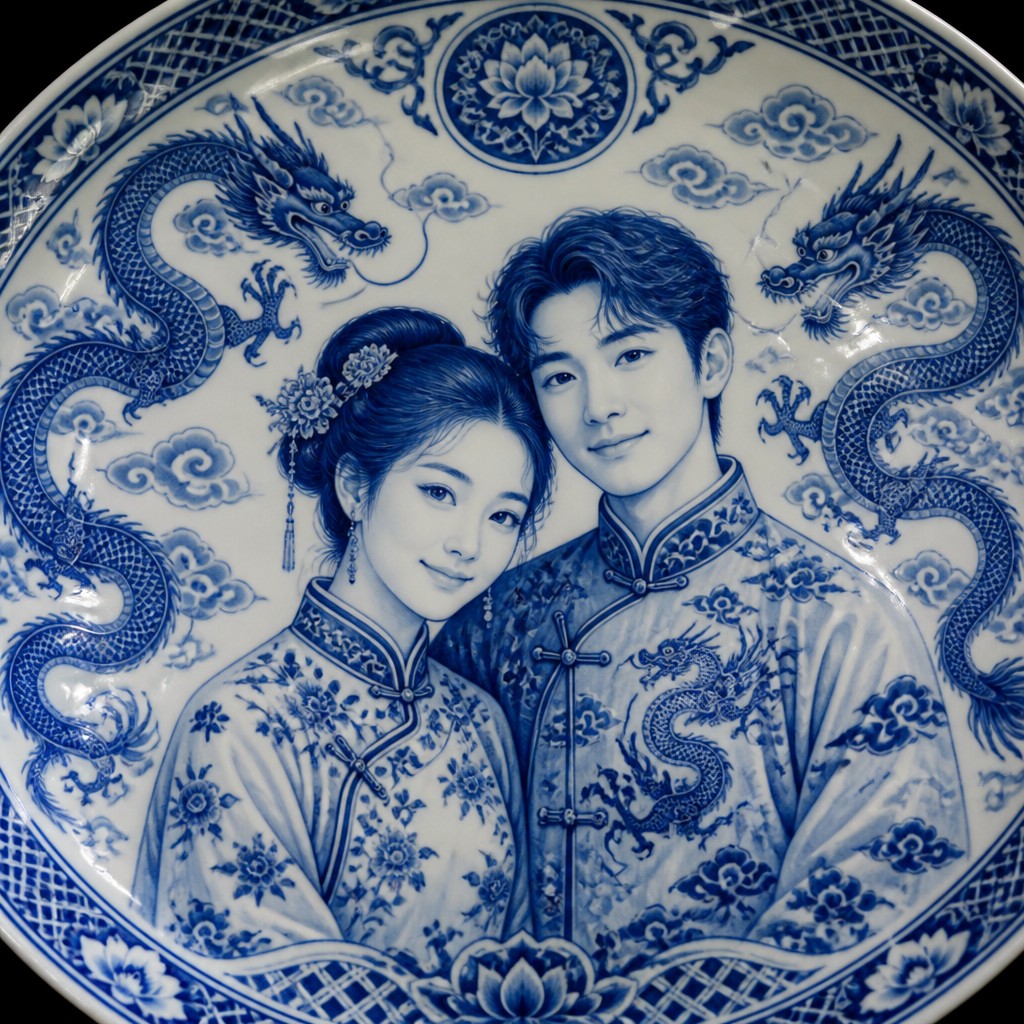
Try It On Your Photos
Upload any photo and convert it into Ming Porcelain Art Style — drag the sliders to compare before and after.
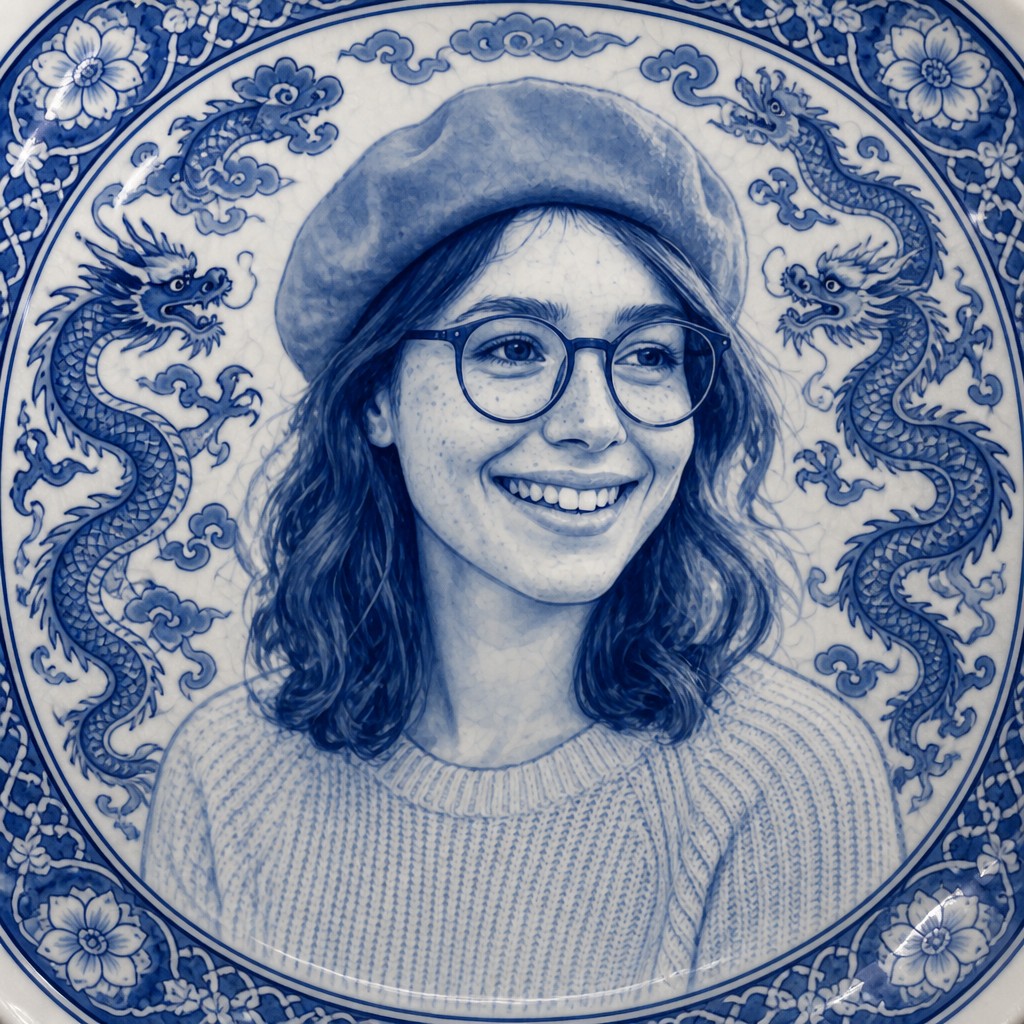

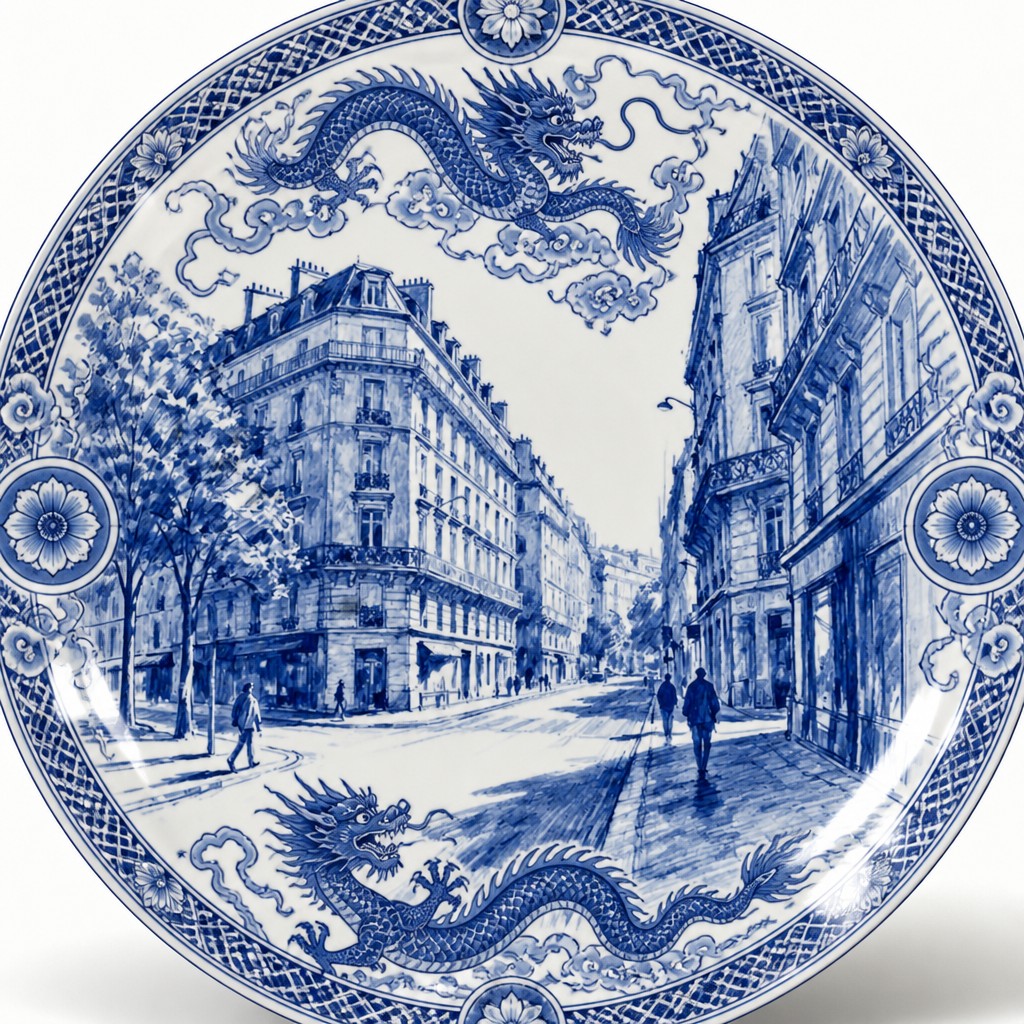

What Defines Ming Porcelain Art Style
The signature details, up close
Cobalt-blue and white contrast
Strong cobalt pigment stands against an uncolored porcelain ground and transparent glaze. This restricted palette creates immediate visual clarity while allowing subtle tonal variation within the blue.
Underglaze brushwork
Decoration is conceived as painted line and wash beneath the glaze, with fine contours, filled areas, and diluted passages working together. The firing process can soften edges and create natural tonal irregularities.
Dragons and auspicious creatures
Coiling dragons, phoenixes, qilin-like creatures, fish, and birds often animate the surface. These motifs carry symbolic associations with power, prosperity, imperial authority, harmony, or good fortune.
Cloud and wave scrolls
Stylized clouds, crashing waves, and curling vegetal scrolls create movement around the central subject. Their repeated, rhythmic forms connect separate areas of a vessel or image.
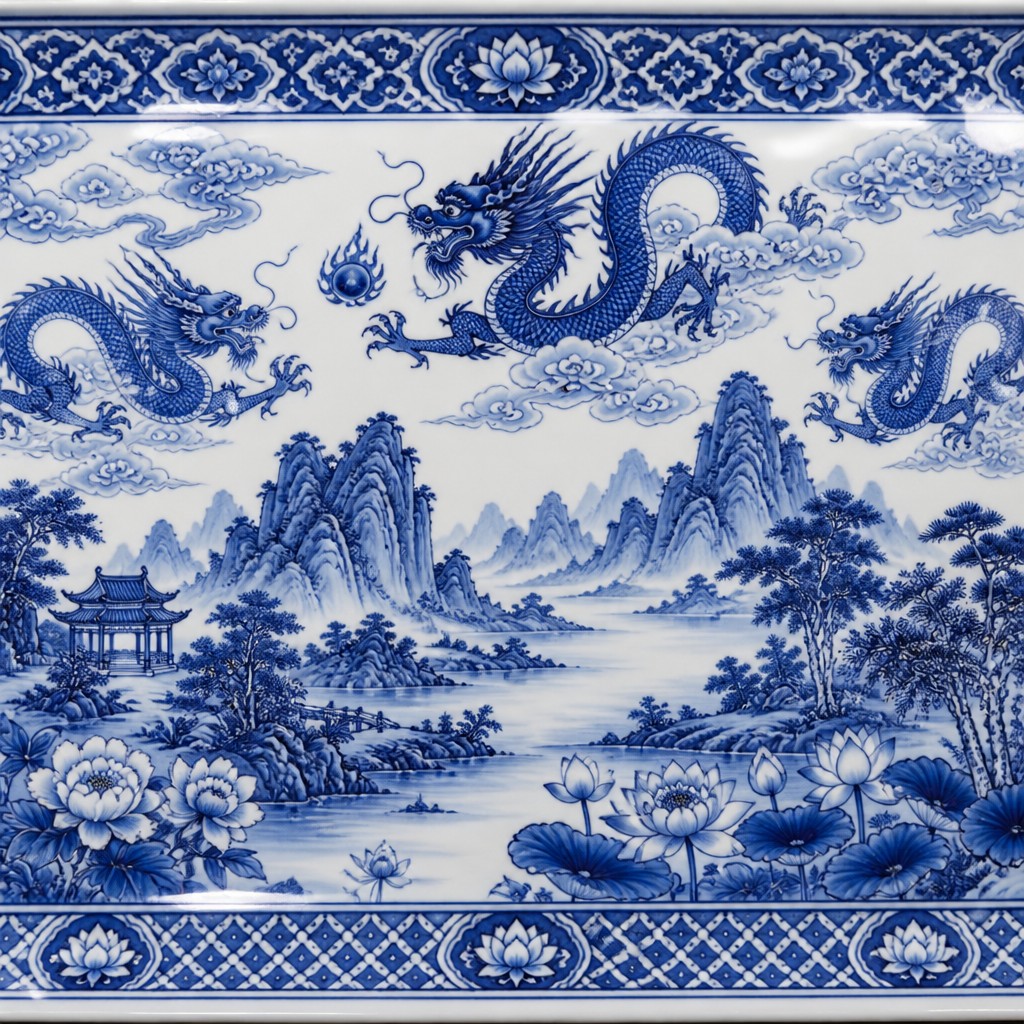
Floral and lotus ornament
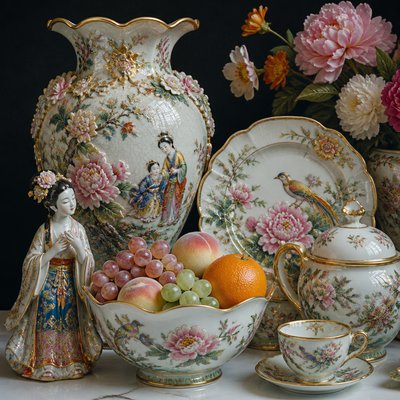
Lotus, peony, chrysanthemum, plum blossom, grapevine, and other botanical motifs appear as isolated blossoms, scrolling borders, or dense pattern fields. Floral imagery may be symbolic as well as decorative.
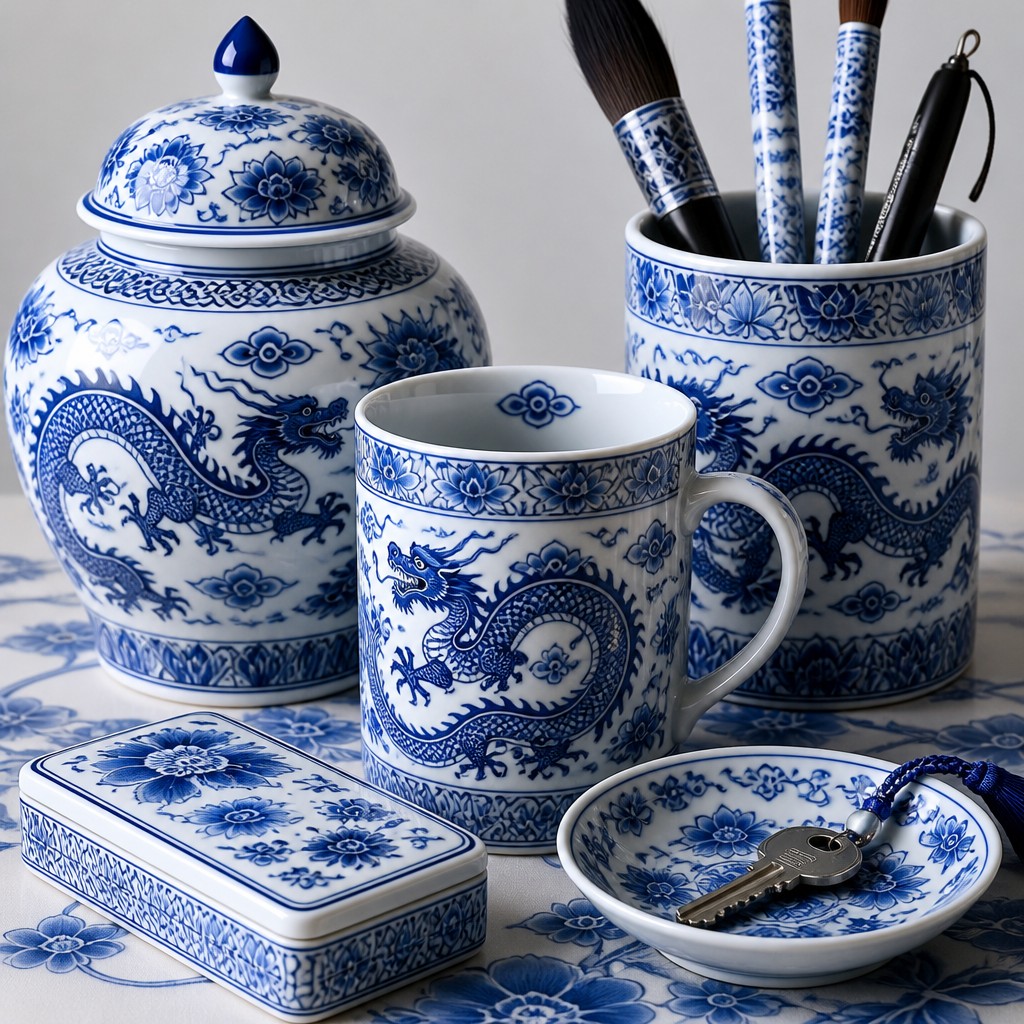
Structured borders and medallions
Neck bands, foot rings, panels, floral medallions, lattice patterns, and repeated geometric borders organize the composition. The layout often distinguishes a principal scene from secondary ornamental zones.
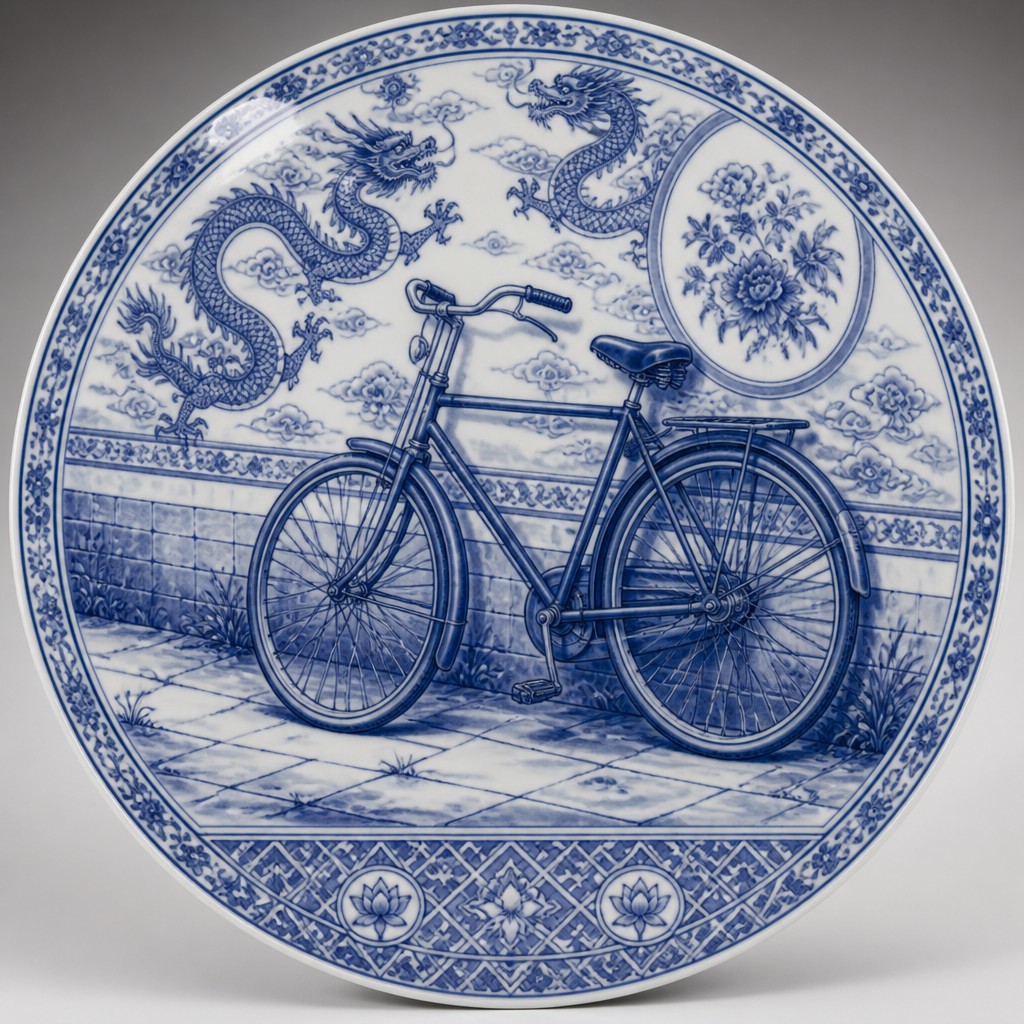
Glossy ceramic materiality
A transparent glaze produces a smooth, reflective surface over the painted design. In visual interpretation, soft highlights and gentle reflections help distinguish porcelain from flat blue-and-white illustration.
Try It
Create Videos in Ming Porcelain Art Style
Styles aren't just for stills — describe a scene or animate an image and get a short video rendered in Ming Porcelain. Press play to see this pond come to life.
Make a VideoMing Porcelain Prompt Ideas
Start from an idea — each one opens the generator with the style ready to go. See all 40 Ming Porcelain prompts →
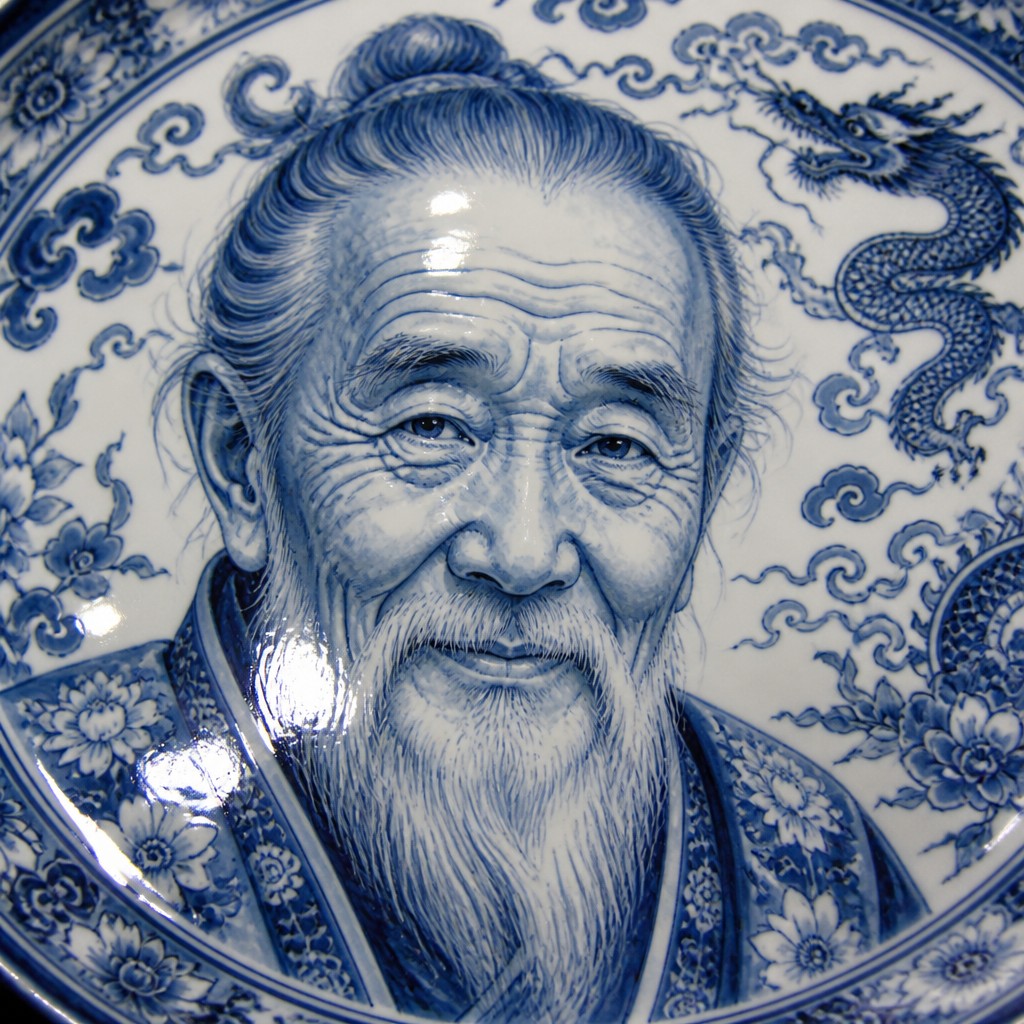
“close-up portrait of an elderly person with expressive weathered features”
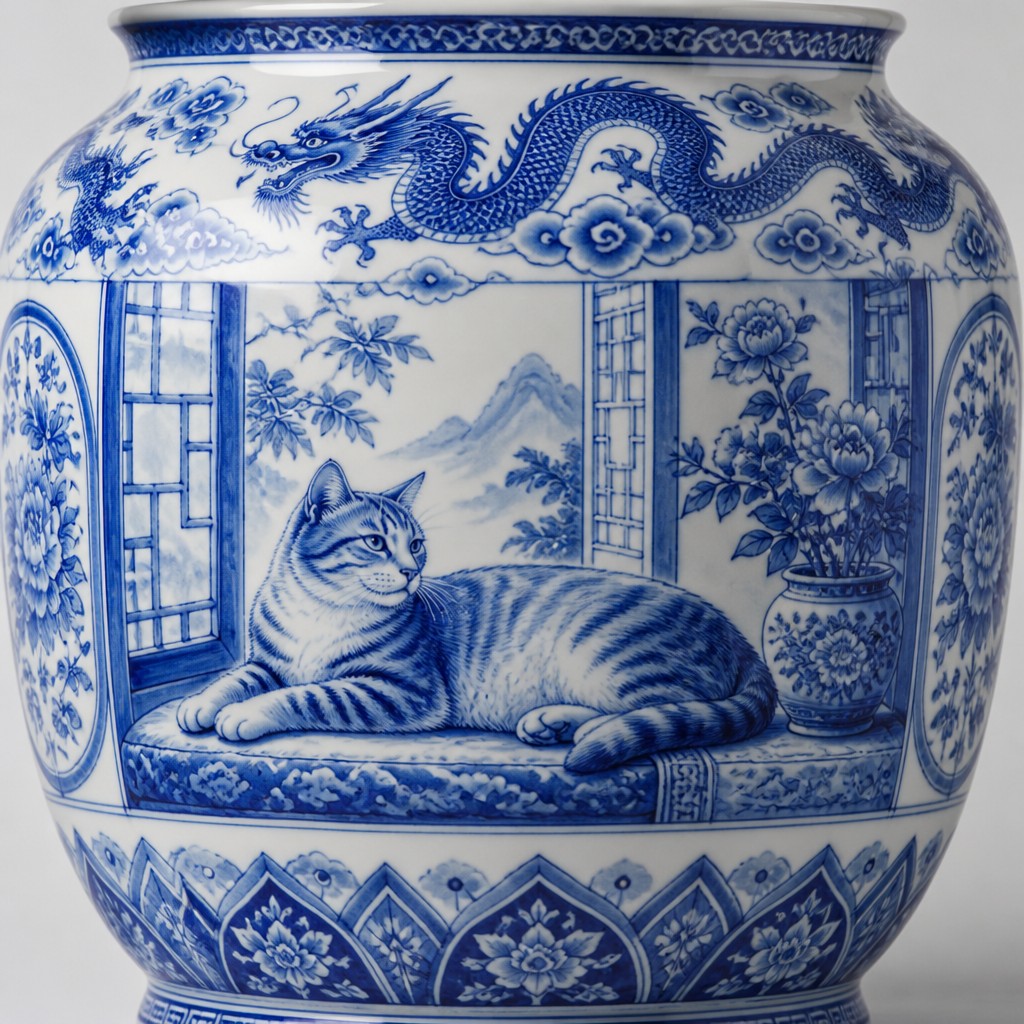
“a cat lounging in a sunlit window”
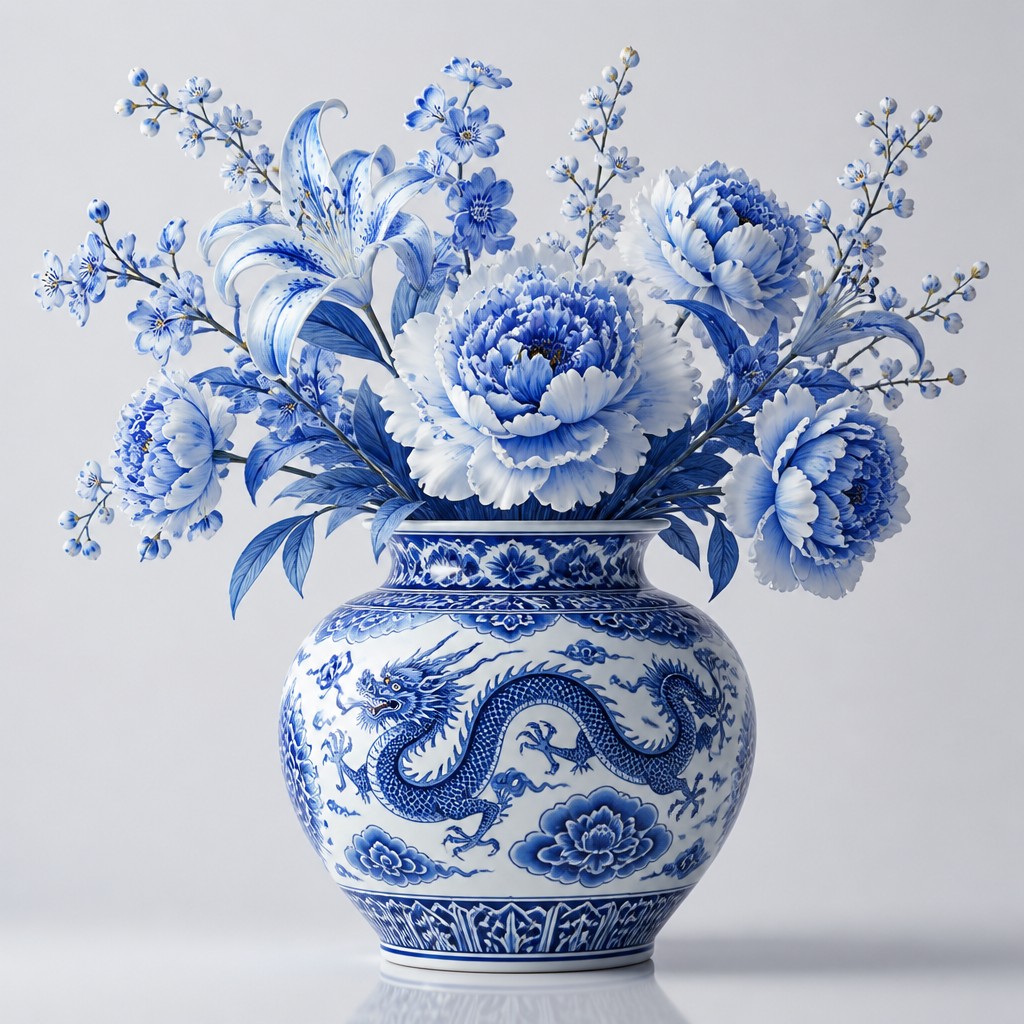
“bouquet of flowers in a glass vase”
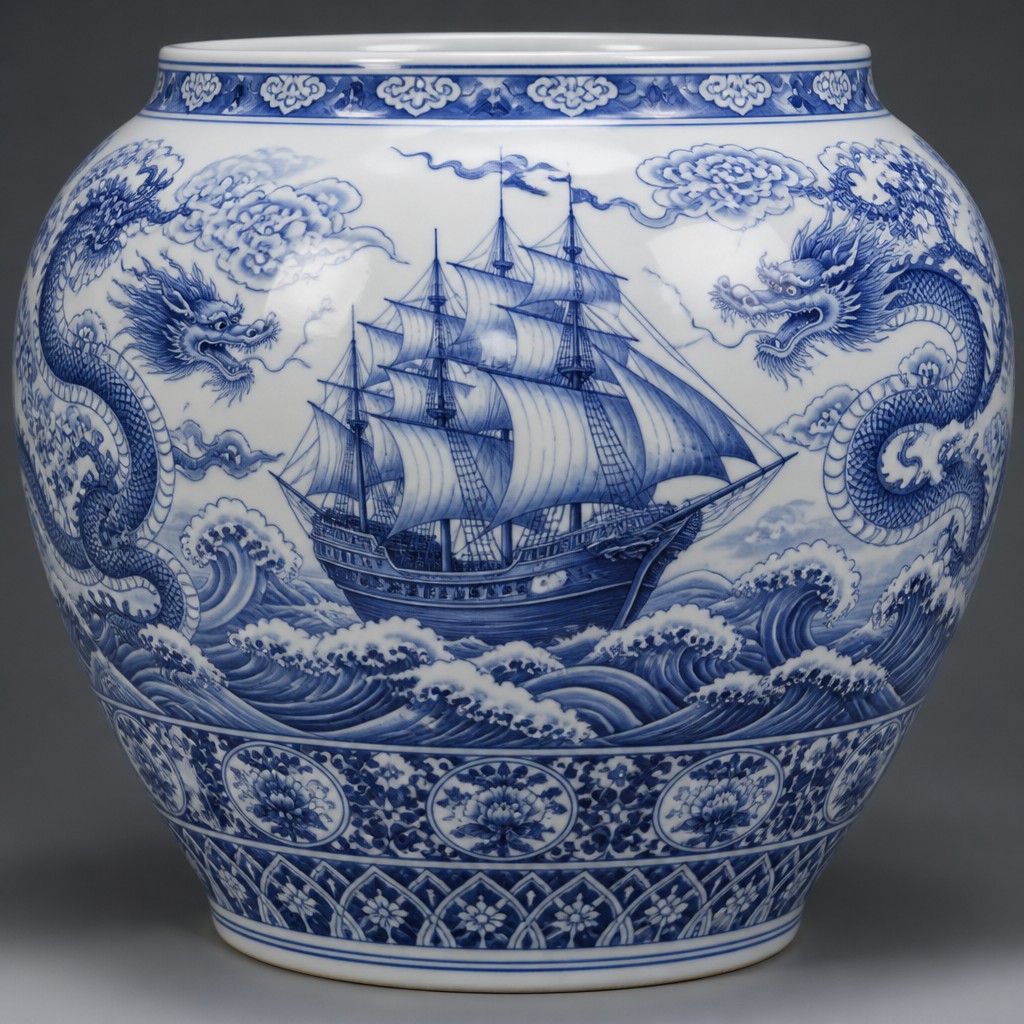
“sailing ship on a stormy sea”
How to Create Ming Porcelain Art
Master the craft step by step — or skip straight to creating. Read the full guide →
- 1
Plan the vessel-like composition
Begin with a clear silhouette or contained field, then divide it into a main scene, supporting motifs, and border bands. Keep the central subject readable and let repeated ornament follow the curvature or boundaries of the form.
- 2
Use a limited cobalt palette
Work primarily with white and several values of cobalt blue, reserving the darkest tone for contours and focal details. Add diluted washes for atmospheric depth, petal modeling, clouds, and overlapping scales.
- 3
Simulate underglaze behavior
In traditional media, use cobalt pigment on a smooth white ceramic surface before applying a transparent glaze and firing it appropriately. In digital work, combine crisp brush edges with slight pigment blooms, softened transitions, and restrained glaze reflections.
- 4
Build motifs from line rhythms
Practice controlled contour lines for scales, petals, whiskers, cloud curls, and wave crests, then repeat related shapes to create ornamental unity. Avoid random detail; Ming decoration depends on measured spacing and visual hierarchy.
- 5
Describe material and period cues in prompts
For prompt-based generation, specify cobalt underglaze, white porcelain, glossy transparent glaze, fine brush outlines, graded blue washes, cloud scrolls, floral borders, and a kiln-made ceramic surface. Add the subject, vessel type, composition, and lighting separately to control the result.
- 6
Use image transformation selectively
When adapting a photograph or existing image, preserve the original silhouette while simplifying colors into cobalt and white and replacing surface detail with scrolls, medallions, or lotus borders. Request restrained reflections so the ceramic finish supports rather than obscures the subject.
The Story
History & Origins of Ming Porcelain
Blue-and-white porcelain developed in China before the Ming period and became a major artistic and commercial tradition under the Ming dynasty, particularly at the imperial kilns of Jingdezhen in Jiangxi. Ceramic painters applied cobalt pigment to shaped porcelain before a transparent glaze was added and the vessel was fired at high temperature. Cobalt supplies varied in quality and origin, producing differences between sharply defined dark blue passages and softer, smoky or painterly marks.
Ming production changed substantially across the dynasty. Early and middle periods are associated with different vessel forms, decorative programs, cobalt tones, and degrees of imperial regulation, while later wares often feature more complex compositions and diverse subject matter. These ceramics circulated throughout East and Southeast Asia, the Middle East, and Europe, influencing subsequent porcelain traditions without making every blue-and-white object visually identical.
Influences: The style draws on Chinese ceramic traditions, especially underglaze blue-and-white porcelain from the Ming period and the production culture of Jingdezhen. Its imagery also relates to Chinese decorative painting, court symbolism, textile and lacquer ornament, Buddhist and Daoist auspicious motifs, and earlier East Asian cloud, wave, and floral conventions. Later export porcelain, Islamic-world ceramic traditions, and European chinoiserie further extended the influence of this visual language.
Frequently Asked Questions
What defines the Ming Porcelain Art Style?
It is defined by cobalt-blue decoration on a luminous white porcelain ground, usually beneath a clear glaze. Dragons, clouds, lotus flowers, floral scrolls, medallions, and structured borders are common, but the style also includes landscapes, animals, figures, and auspicious objects.
Is all Chinese blue-and-white porcelain from the Ming dynasty?
No. Blue-and-white porcelain existed before the Ming period and continued long afterward. The Ming dynasty is especially important because its Jingdezhen kilns developed large-scale, technically sophisticated production and established many designs that became widely influential.
How is the blue decoration made?
Cobalt pigment is painted onto an unfired porcelain body, after which a transparent glaze is applied and the object is fired at high temperature. Because the pigment is under the glaze, the finished image has a unified, smooth surface rather than a raised painted layer.
How does this style differ from ordinary blue-and-white illustration?
A convincing interpretation includes ceramic material cues as well as blue-and-white color. Glossy glaze, softened pigment edges, controlled ornament, vessel-like framing, and the visual logic of underglaze brushwork distinguish it from a flat drawing that merely uses two colors.
Can modern subjects be rendered in this style?
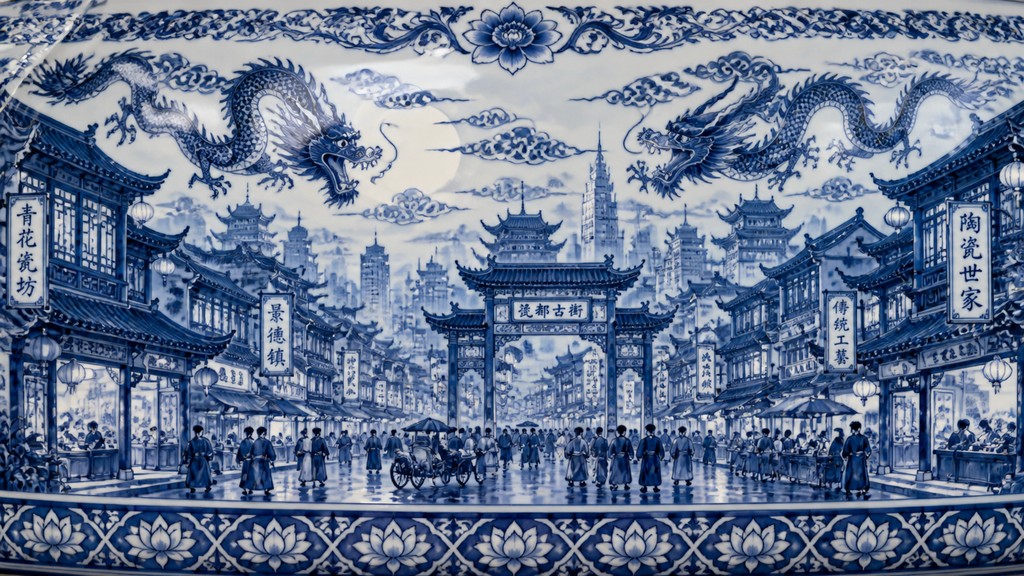
Yes. The traditional visual language can frame contemporary objects, portraits, animals, architecture, or fantasy scenes. For the strongest result, retain the restricted cobalt palette, ornamental borders, symbolic composition, and porcelain surface rather than adding unrelated colors or textures.
Where is Ming Porcelain Art commonly used today?
It appears in ceramic design, decorative arts, museum-inspired illustration, packaging, textiles, interiors, jewelry, and digital image-making. Contemporary uses often adapt its motifs without claiming that a modern work is an authentic historical artifact.
Create your first Ming Porcelain artwork
Describe anything — or upload a photo — and see it in Ming Porcelain Art Style in seconds.
Related Styles
Discover similar art styles