Venezuelan Art Style
Explore Venezuelan art style: colonial gilt, Timoto-Cuica ceramics, Amazonian petroglyphs, warm earth tones, and tropical highland light.
Instantly rendered in Venezuelan — or transform a photo
Venezuelan Gallery
Tap any artwork to explore it
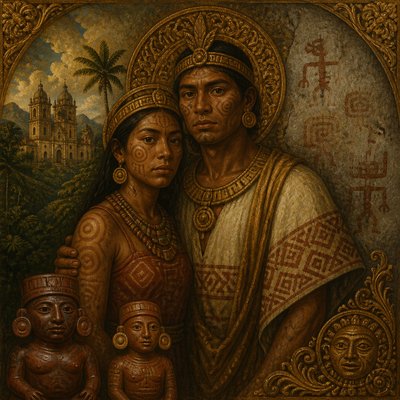
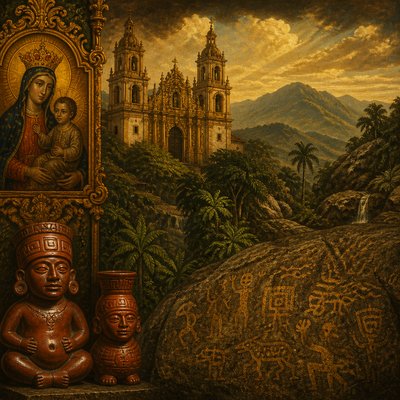
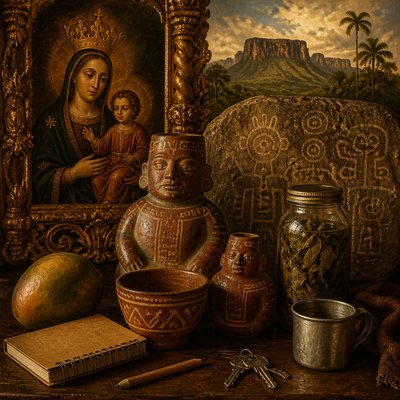
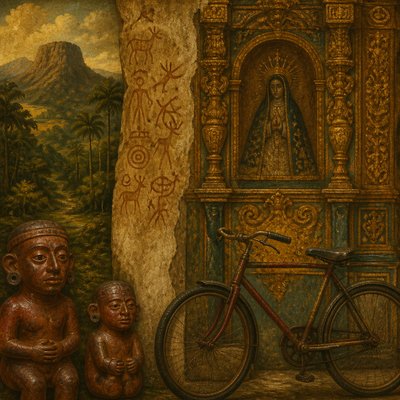
What is Venezuelan Art Style?
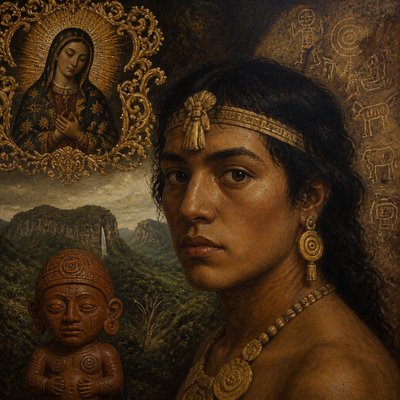
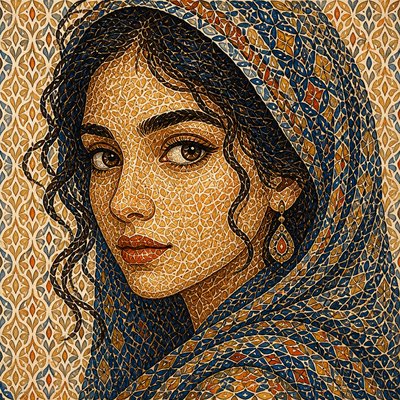
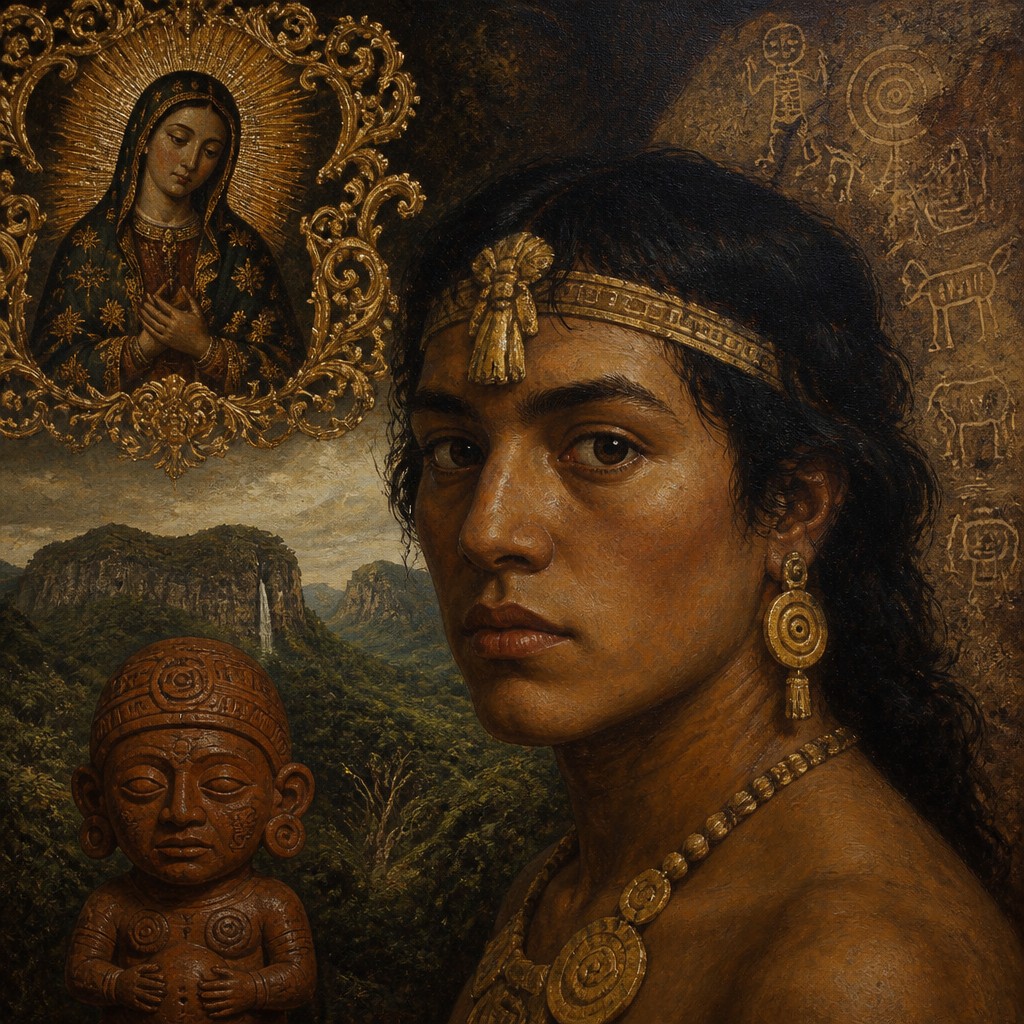
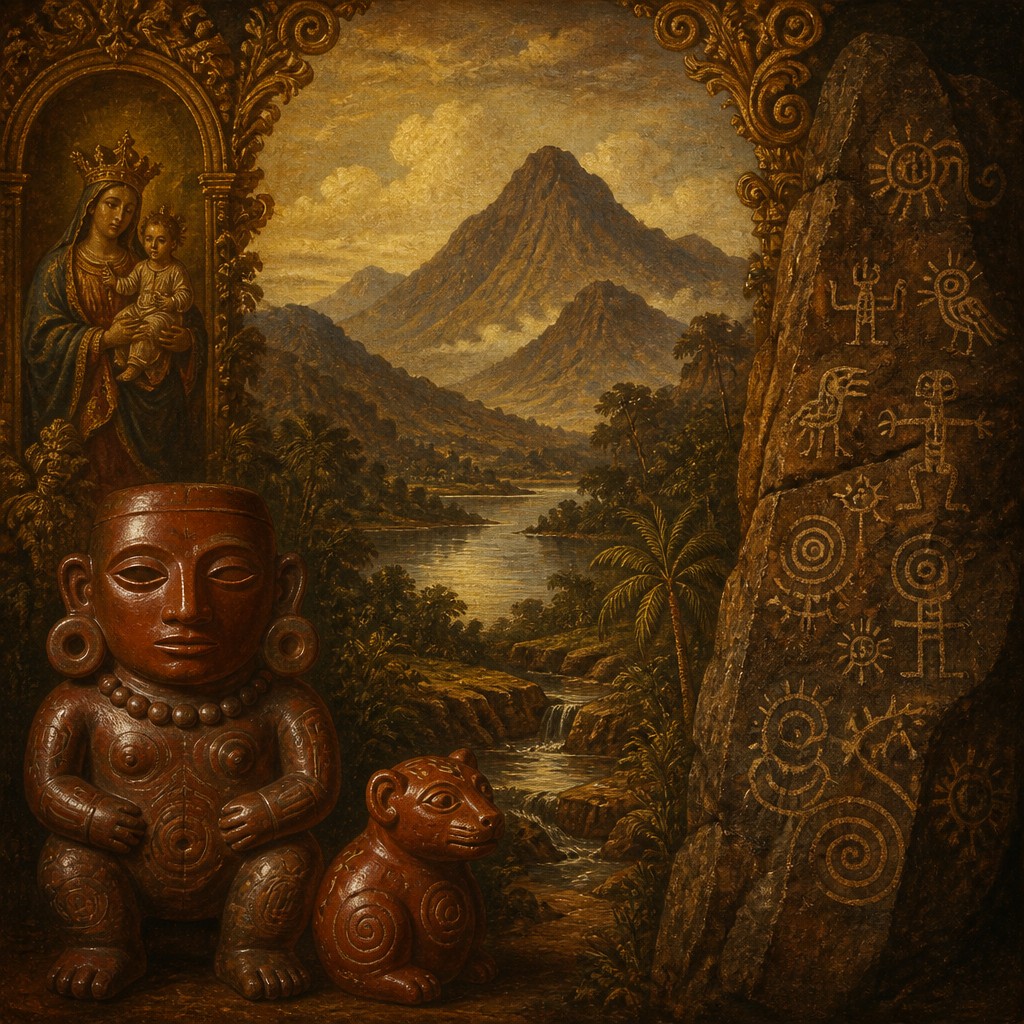
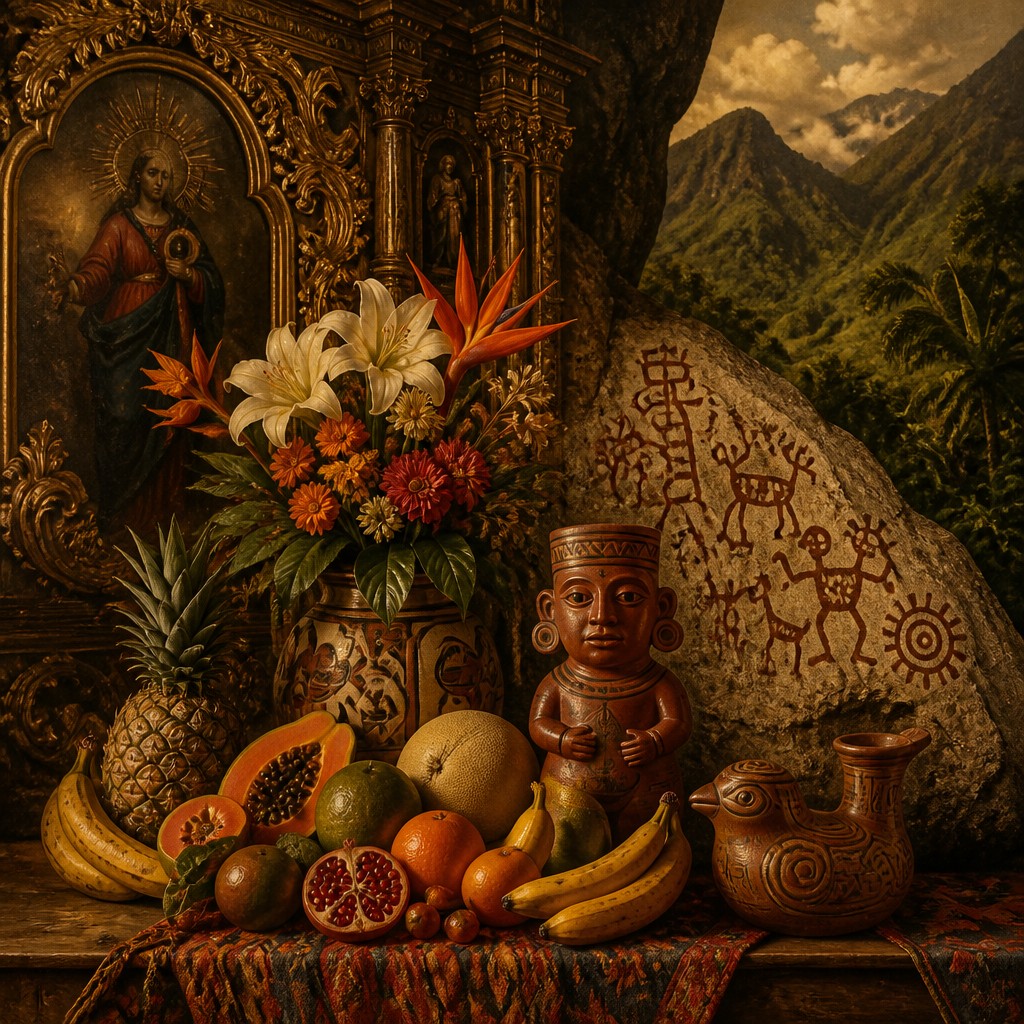
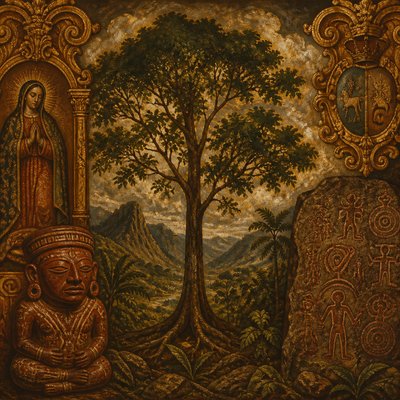
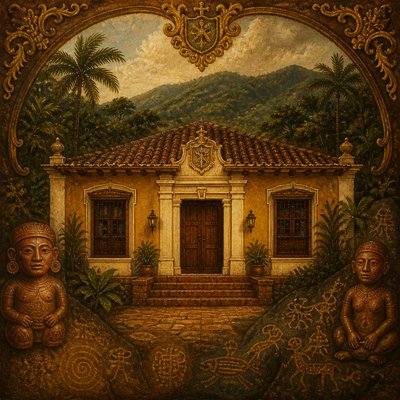
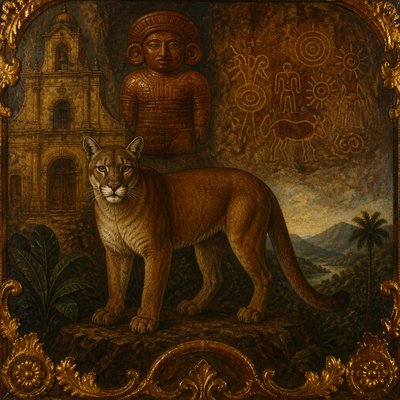
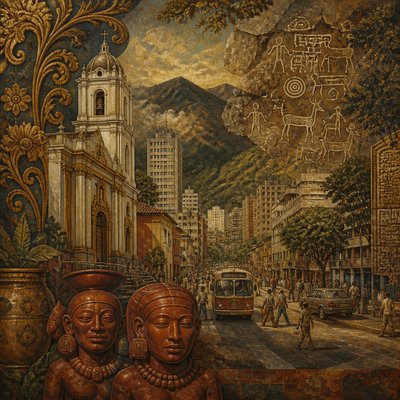
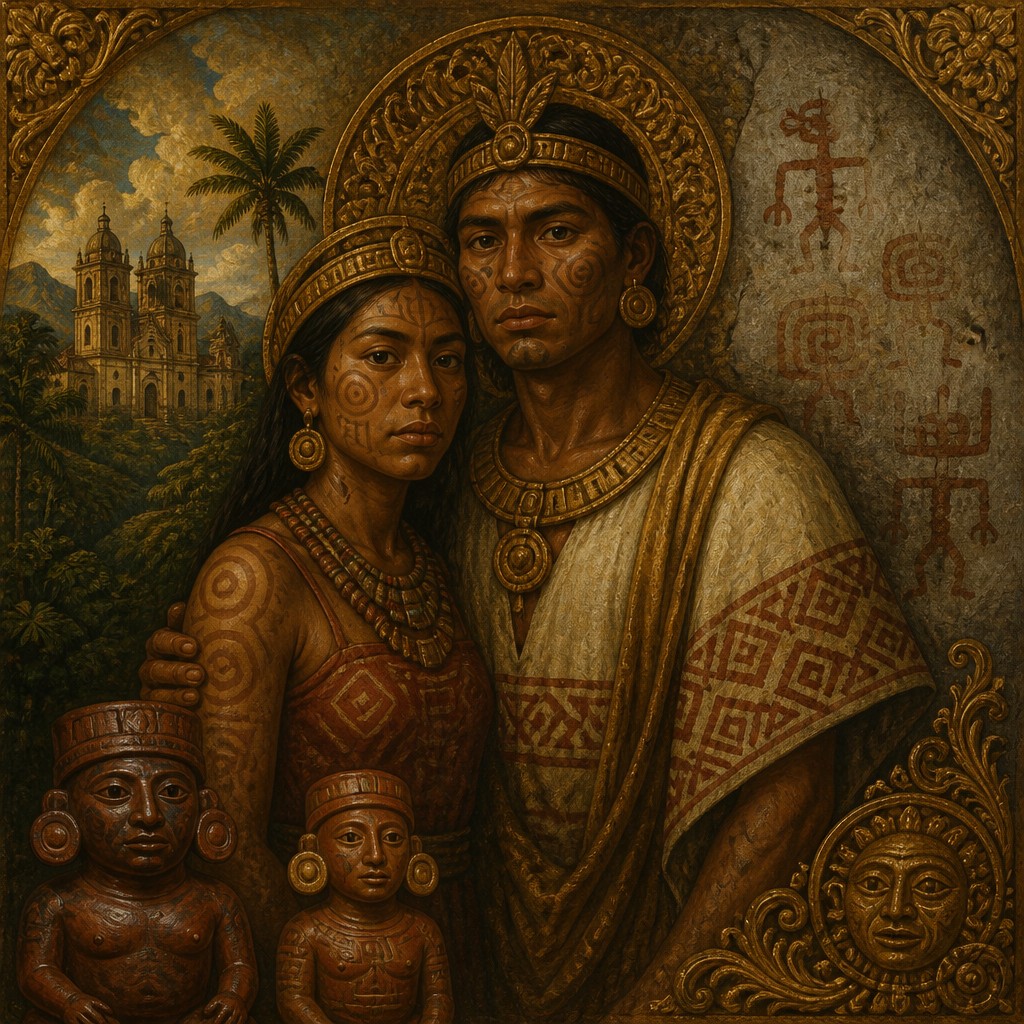
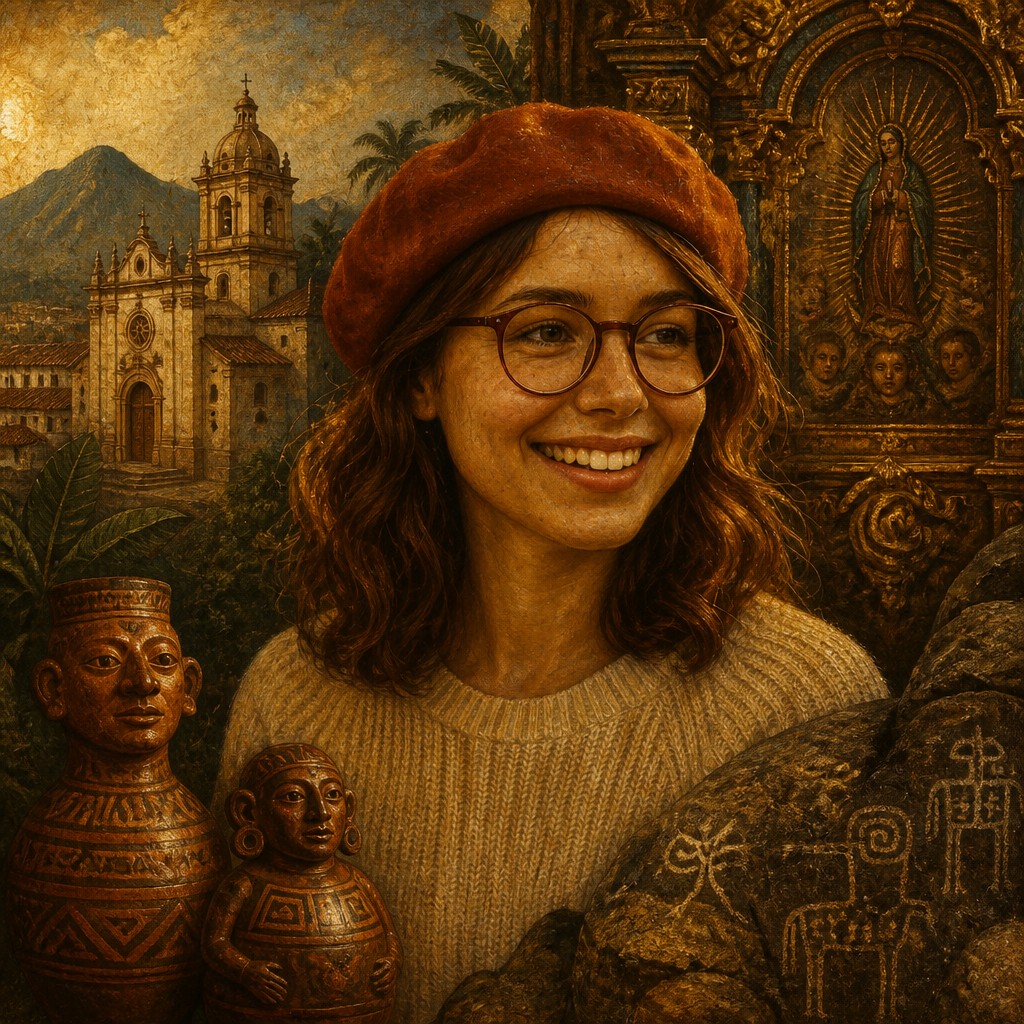
Venezuelan Art Style is an interpretive visual synthesis of several artistic traditions associated with Venezuela: colonial sacred painting and gilt ornament, pre-Columbian Timoto-Cuica ceramics, and ancient Amazonian rock art. It is not a single historical movement, but a contemporary style framework that brings these distinct sources into one warm, materially rich image language.
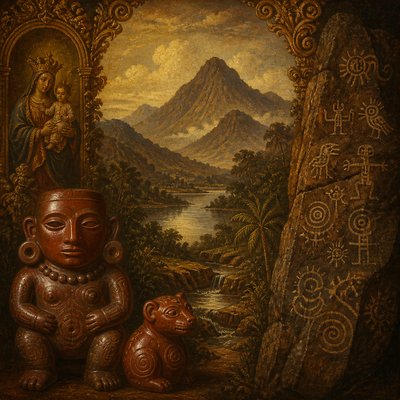
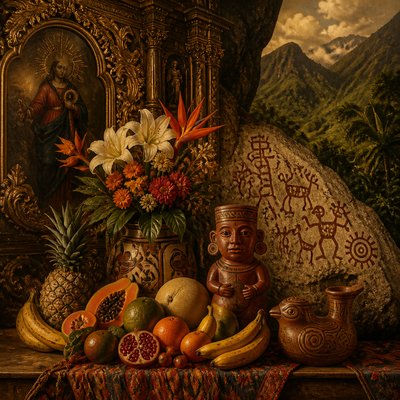
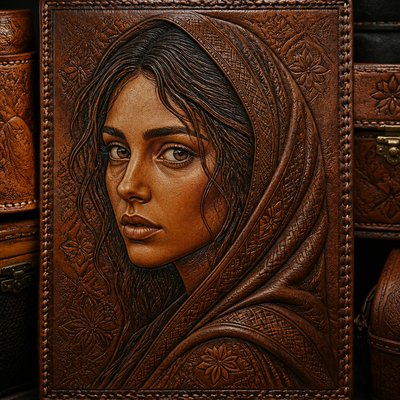
Its visual identity depends on burnished surfaces, darkened varnish, mineral reds, ochres, umbers, and subdued greens, often illuminated by gold accents and intense tropical highland light. Figurative subjects may appear solemn and frontal like devotional paintings, simplified and tactile like ceramic figures, or reduced to weathered signs and silhouettes inspired by petroglyphs. Jungle terrain, stone, clay, and aged wood provide a strong sense of place.
Try It On Your Photos
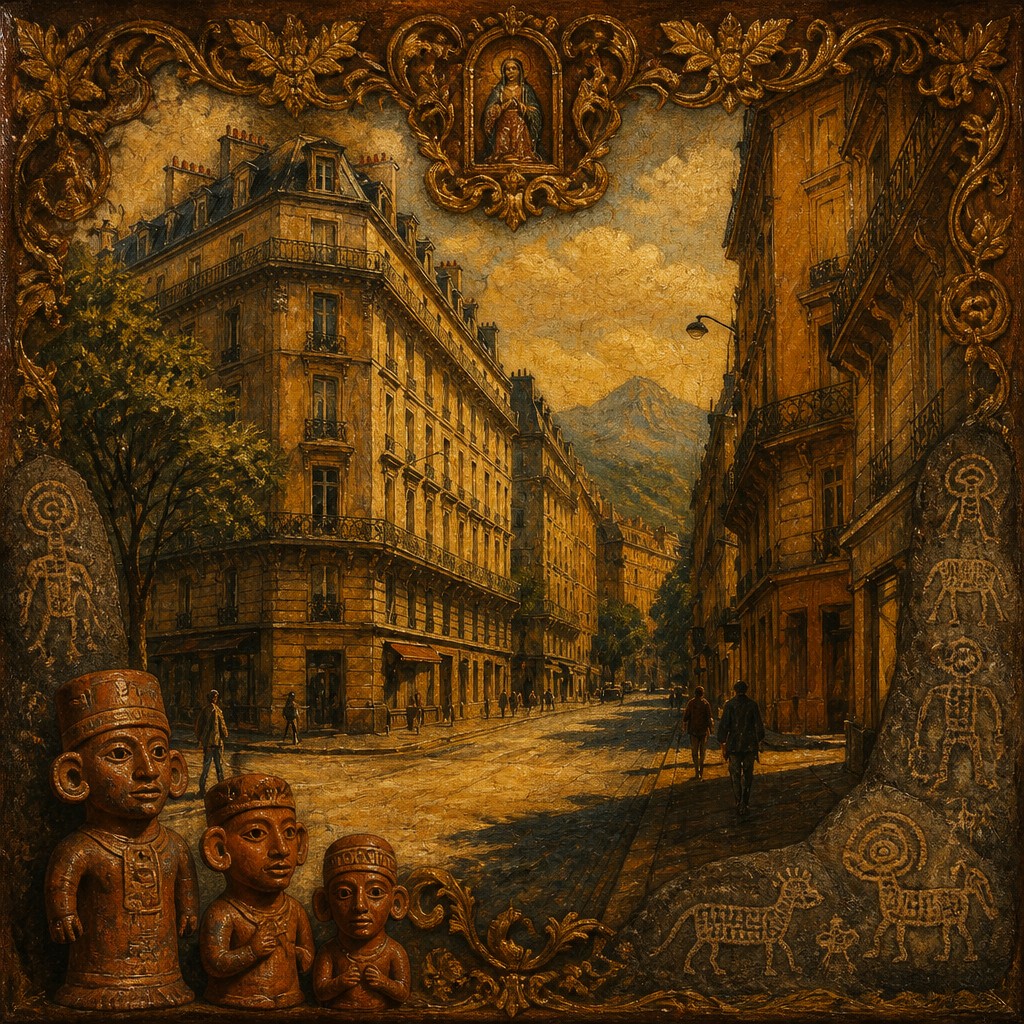
Upload any photo and convert it into Venezuelan Art Style — drag the sliders to compare before and after.


What Defines Venezuelan Art Style
The signature details, up close
Colonial chiaroscuro
Figures and interiors are modeled with deep shadows, restrained highlights, and a subdued, aged surface reminiscent of devotional church painting. Dark brown varnish effects can create visual depth and historical weight.
Gilded ornament
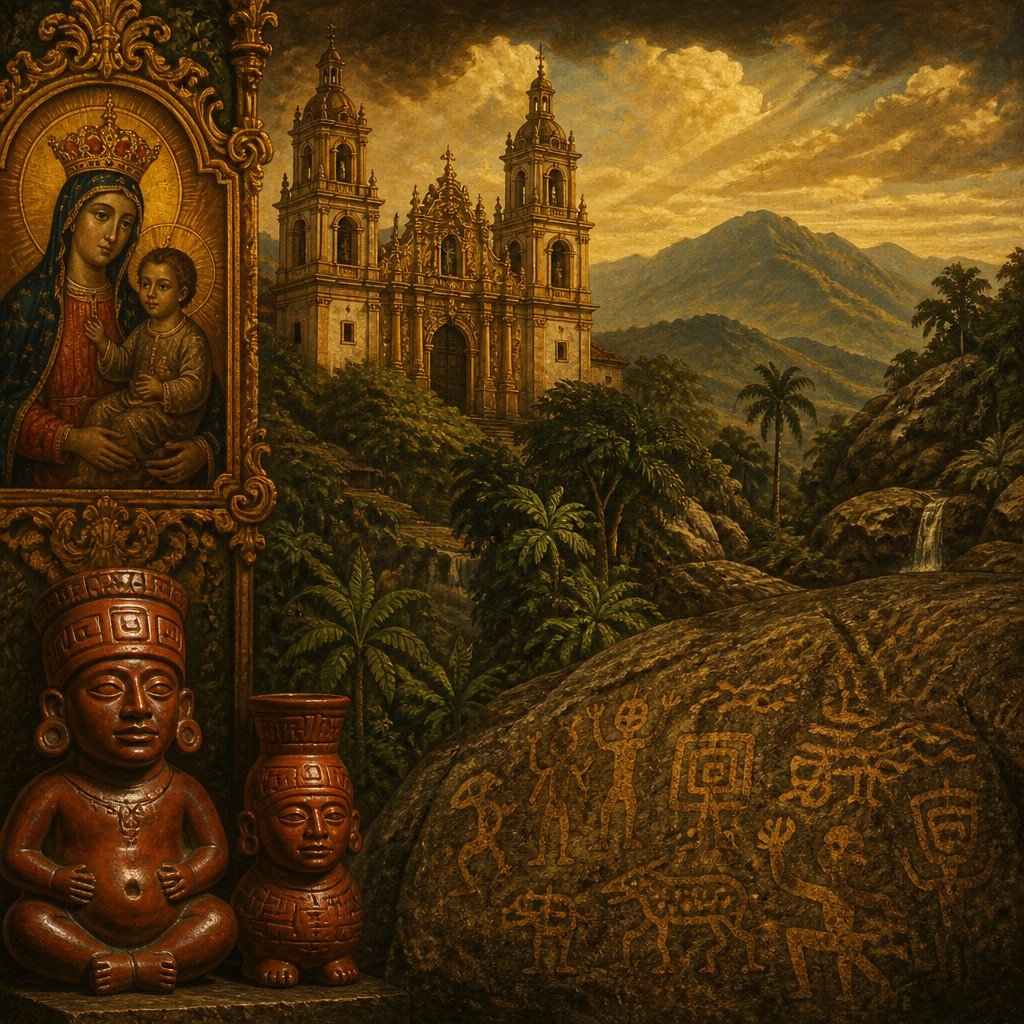
Gold leaf-like borders, halos, carved frames, rays, and architectural details introduce concentrated areas of warm brilliance. Gold is most effective when partially tarnished or uneven rather than uniformly metallic.
Timoto-Cuica ceramic influence
Human and animal forms may be simplified into compact, frontal, hand-shaped figures with incised details and quiet monumentality. Burnished red-brown clay, charcoal marks, and subtly irregular contours suggest fired ceramic rather than polished stone.
Amazonian petroglyph marks
Ancient-looking symbols, spirals, animal forms, hand signs, and linear cuts can appear on boulders, walls, vessels, or painted backgrounds. The marks should feel weathered and integrated into the surface, not like clean modern icons.
Warm earth palette
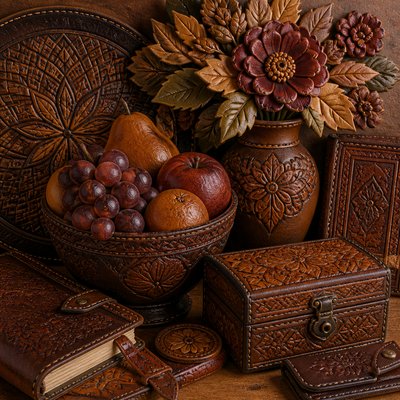
The dominant colors include terracotta, ochre, umber, sienna, muted green, charcoal, cream, and antique gold. Small areas of deep red or blue may provide contrast without displacing the earthy tonal range.
Tropical highland illumination
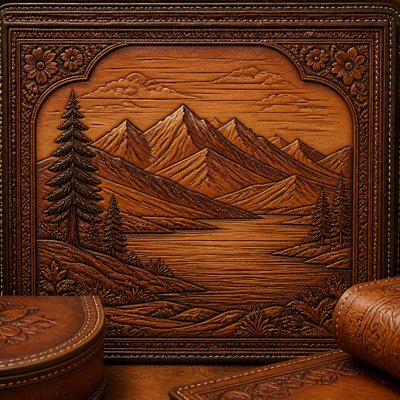
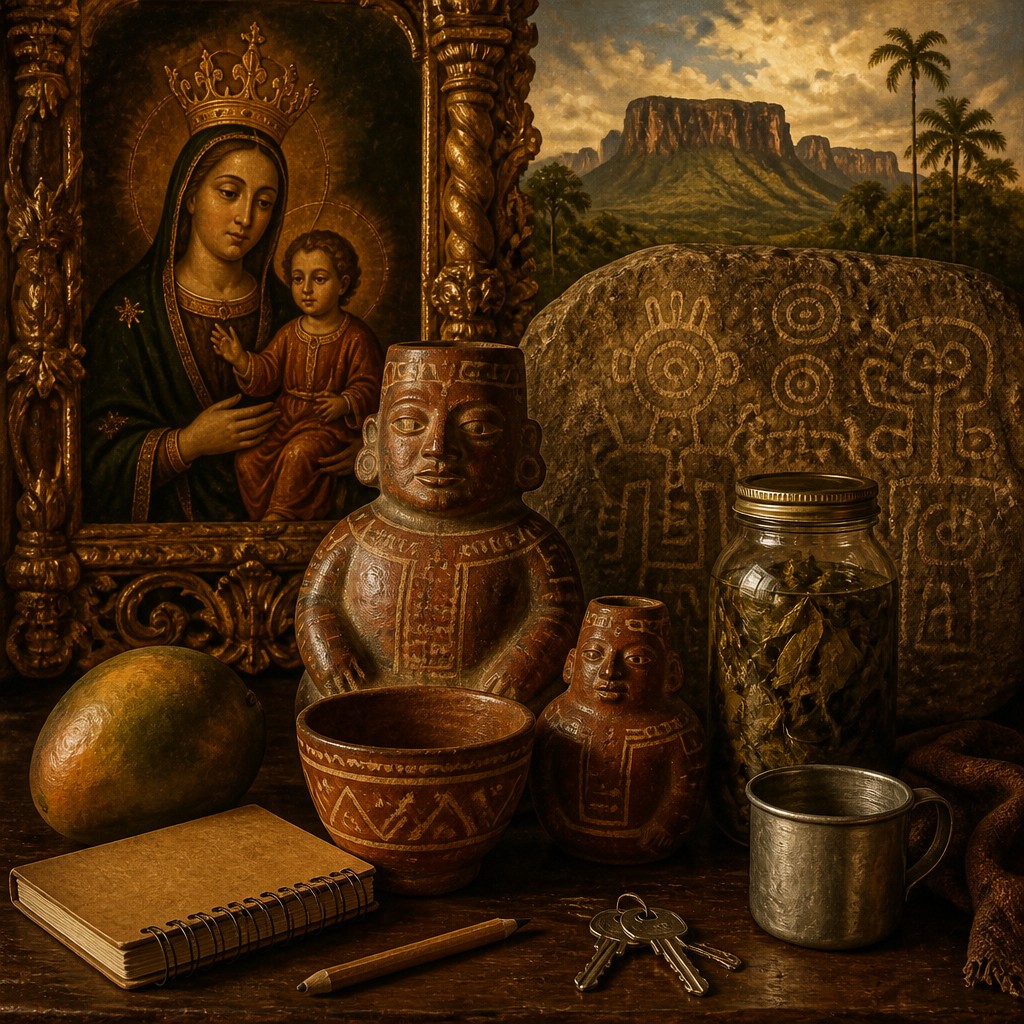
Strong filtered sunlight, humid atmospheric haze, and luminous green vegetation place the imagery in a mountainous jungle environment. Light may enter through foliage or a church opening, joining natural landscape with sacred interior space.
Materially aged surfaces
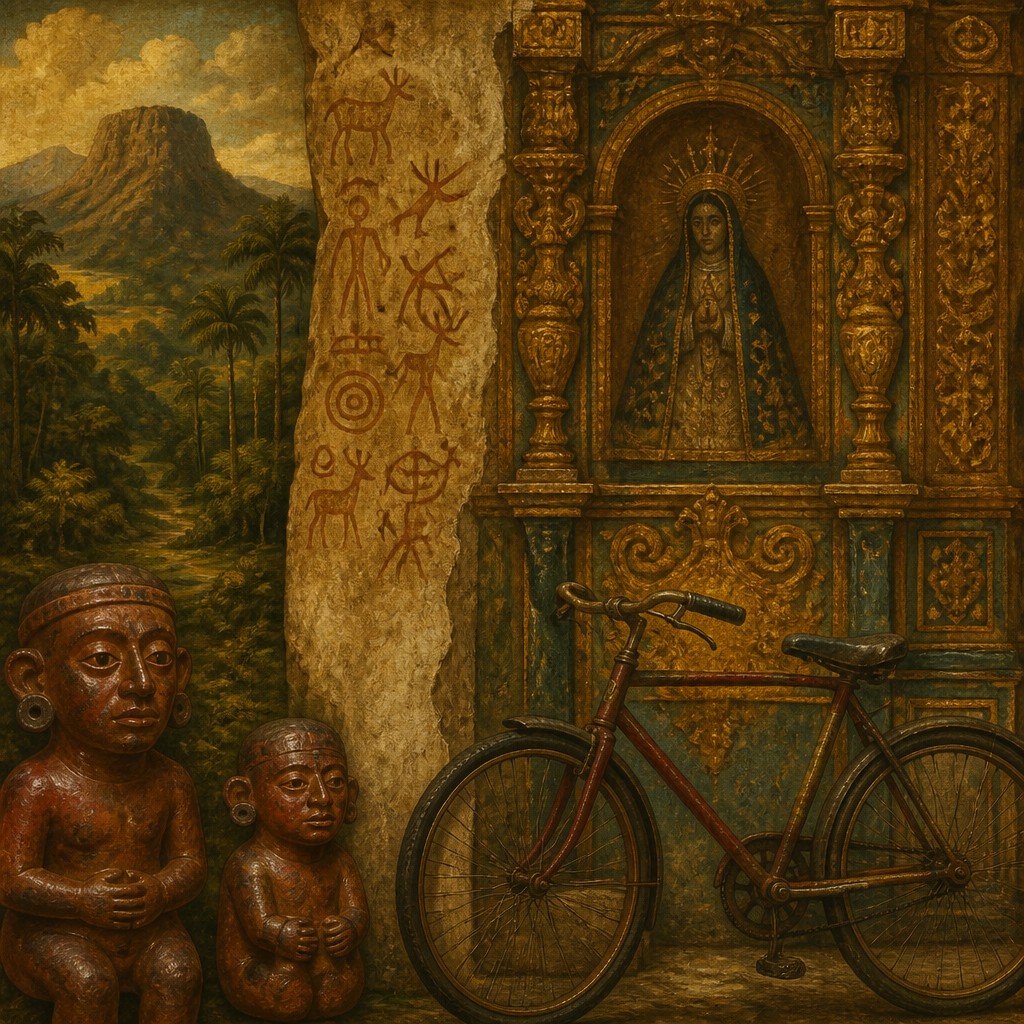
Craquelure, soot, chipped gilt, rubbed pigment, stone abrasion, clay pitting, and uneven brushwork reinforce the style's archaeological and devotional character. Texture should support the subject rather than obscure it.
Venezuelan Prompt Ideas
Start from an idea — each one opens the generator with the style ready to go. See all 40 Venezuelan prompts →
How to Create Venezuelan Art
Master the craft step by step — or skip straight to creating. Read the full guide →
- 1
Build the composition from material contrasts
Combine one smooth or shadowed painted area with tactile zones of clay, stone, carved wood, or aged plaster. Layering these surfaces prevents the image from becoming a generic tropical scene.
- 2
Use a controlled earth-tone palette
Start with umber, terracotta, ochre, charcoal, and muted foliage green, then reserve antique gold and cream for focal details. Lower saturation and add warm glazing to evoke varnished colonial interiors.
- 3
Shape figures with frontal simplicity
For traditional painting, block in solemn silhouettes and model them with a limited range of lights and darks. For ceramic-inspired forms, use compact proportions, incised lines, and slight asymmetry instead of anatomically elaborate realism.
- 4
Add marks as embedded history
Paint or digitally texture petroglyph-like symbols into stone, clay, or plaster, using abrasion and partial occlusion so they appear old. Avoid treating Indigenous signs as decorative filler or inventing specific sacred meanings.
- 5
Light the scene like a sanctuary and a mountain
Use a warm directional beam, deep interior shadow, and humid atmospheric light beyond the structure. In digital work, combine soft volumetric light with grain, glazing, and selective sharpness around the focal subject.
- 6
Write precise generation prompts
Specify the subject first, then request colonial gilt, burnished Timoto-Cuica-inspired clay, weathered Amazonian rock marks, tropical highland light, and an earth-and-gold palette. For image-to-image work, preserve the original pose or composition while directing the surface materials and lighting toward these references.
The Story
History & Origins of Venezuelan
This style draws from three different periods rather than emerging as a documented historical school. Colonial religious art in Venezuela developed within the broader Spanish American Catholic tradition, using church commissions, oil painting, gilded decoration, devotional iconography, and dark protective varnishes. Indigenous visual traditions, including Timoto-Cuica ceramic production in the Venezuelan Andes and rock imagery in Amazonian regions, predate colonization and have their own materials, symbols, and cultural contexts.
The modern synthesis is best understood as an art-direction concept rather than a continuous Venezuelan movement. It combines colonial chiaroscuro and ornament with the geometric simplification, fired-clay surfaces, and weathered mineral marks associated with Indigenous archaeological and rock-art traditions, placing them within landscapes shaped by tropical mountains, forests, and river systems.
Influences: The style relates to Spanish American colonial painting, Baroque chiaroscuro, gilded devotional art, Indigenous Venezuelan ceramic traditions, Amazonian rock-art imagery, archaeological illustration, and material-focused folk art. It also shares techniques with earth-tone mural painting, encaustic surfaces, weathered fresco effects, and contemporary mixed-media assemblage, while remaining distinct from any single historical school.
Frequently Asked Questions
Is Venezuelan Art Style a documented historical art movement?
No. The term describes a contemporary stylistic synthesis rather than a formally recognized movement with a fixed period or manifesto. It connects colonial Venezuelan visual culture with Indigenous ceramic and Amazonian rock-art references for creative use.
What visually defines this style?
Its main identifiers are dark colonial painting effects, worn gilt ornament, burnished red-brown ceramic forms, weathered petroglyph-like marks, and warm tropical highland illumination. Earth colors and tactile surfaces are more important than a single subject matter.
How is it different from Latin American colonial painting?
Colonial painting is a historical category rooted in European Catholic institutions and colonial societies across the Americas. This style borrows its chiaroscuro and gilt but deliberately combines them with pre-Columbian ceramic references and Amazonian stone imagery, creating a modern hybrid rather than a period reconstruction.
How can I make an image in this style traditionally?
Use oil or acrylic glazes for dark varnished depth, metallic leaf or restrained metallic paint for ornament, and textured grounds for plaster or stone effects. Ceramic studies, dry-brush abrasion, mineral pigments, and incised marks can supply the tactile Indigenous and archaeological elements.
What subjects work well with this aesthetic?
Sanctuaries, mountain villages, clay figures, jungle animals, ceremonial vessels, petroglyph-covered rocks, and landscapes joining the Andes with tropical forest are especially suitable. Quiet, frontal compositions often fit better than fast contemporary scenes.
Can the style be used for digital or image-to-image artwork?
Yes. Digital painting can reproduce glazing, craquelure, chipped gilt, clay grain, and carved stone through layered textures and selective masking. When transforming a photograph, keep the subject recognizable while changing the palette, surface aging, lighting, and background materials.
Create your first Venezuelan artwork
Describe anything — or upload a photo — and see it in Venezuelan Art Style in seconds.
Related Styles
Discover similar art styles