Lisbon Art Style
Explore Lisbon Art Style: cobalt azulejos, Manueline stonework, maritime ornament, glazed surfaces, and weathered Portuguese architectural character.
Instantly rendered in Lisbon — or transform a photo
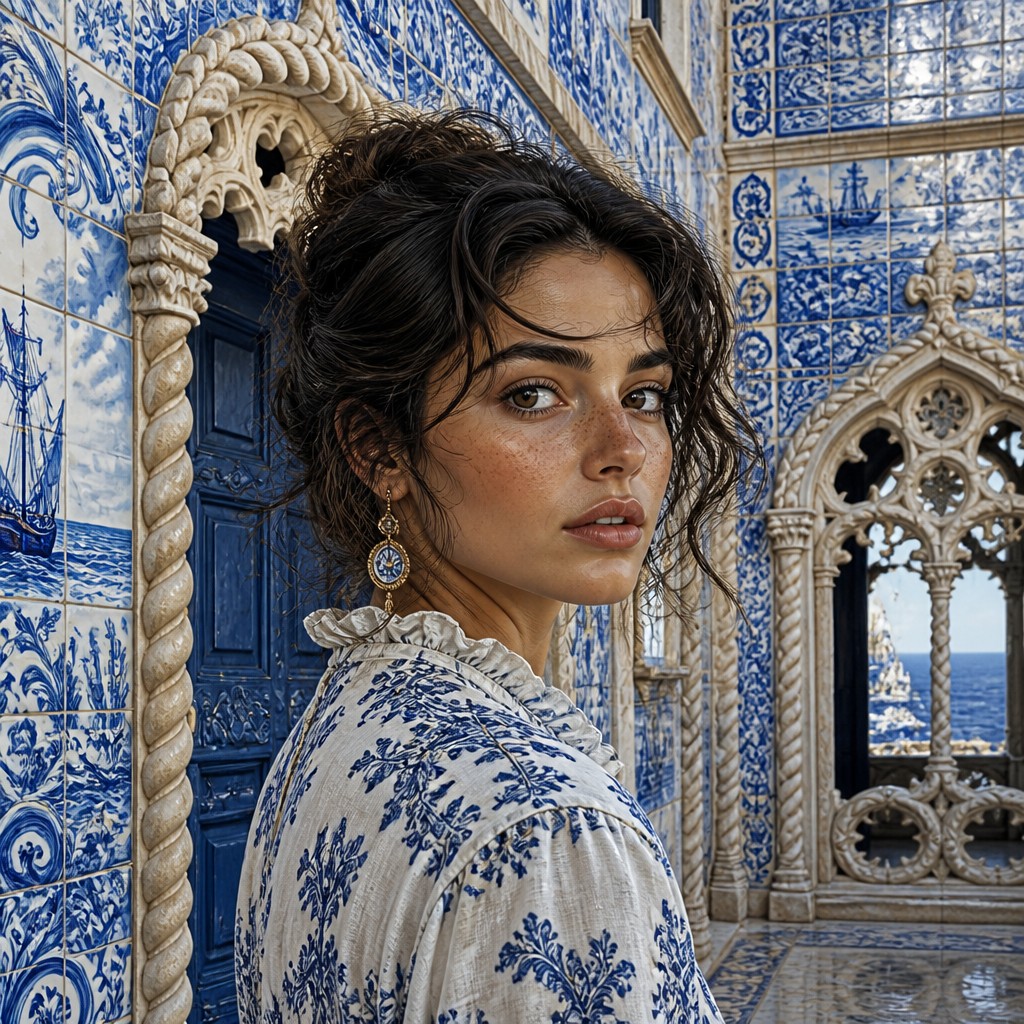
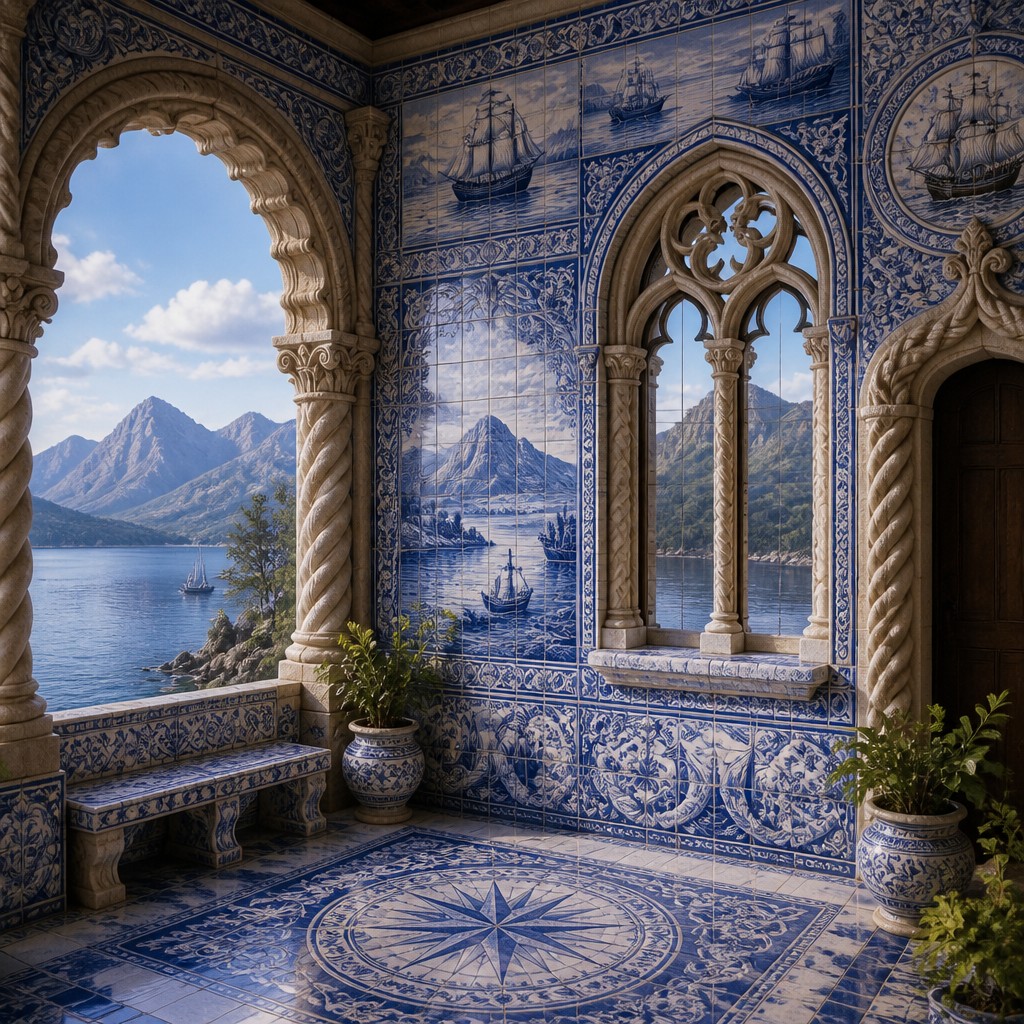
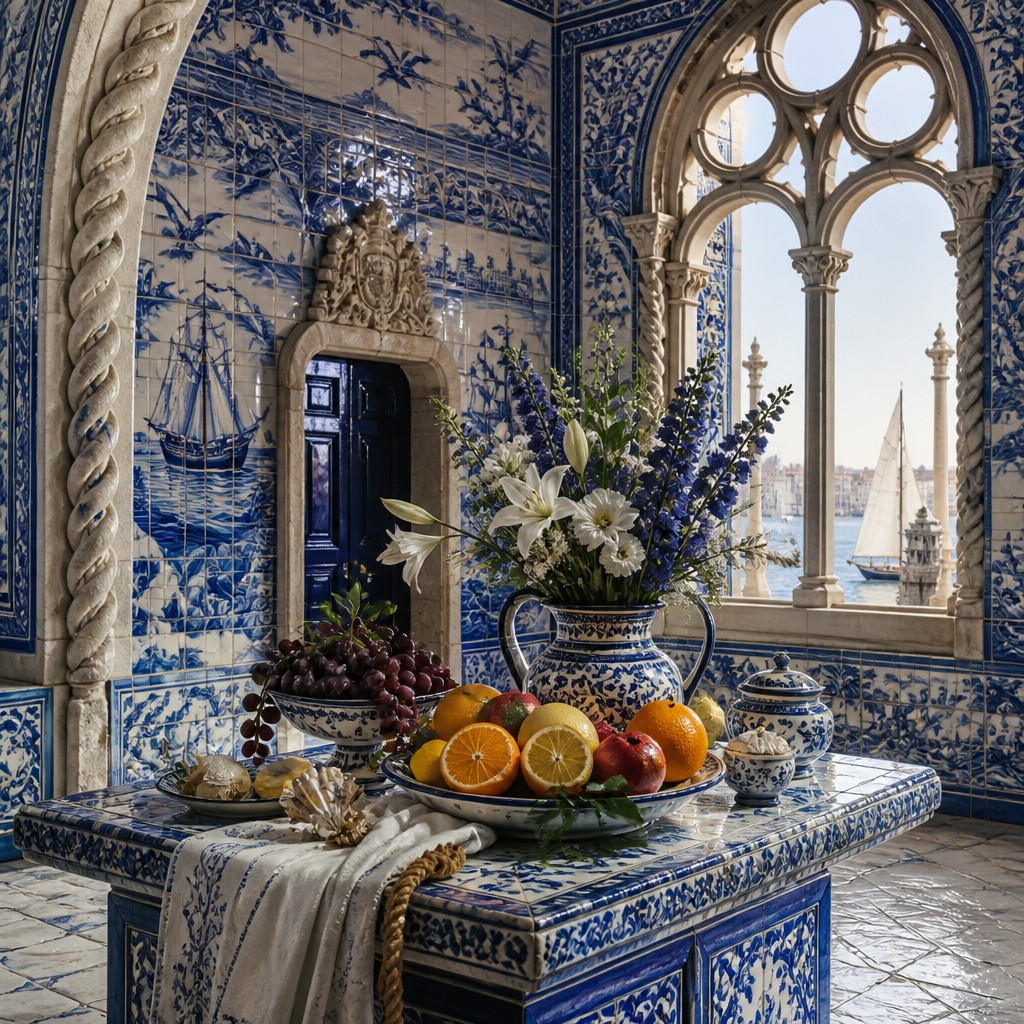
Lisbon Gallery
Tap any artwork to explore it

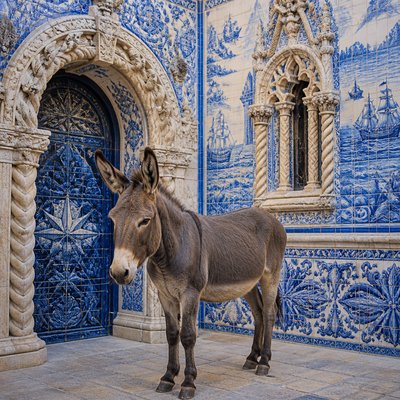
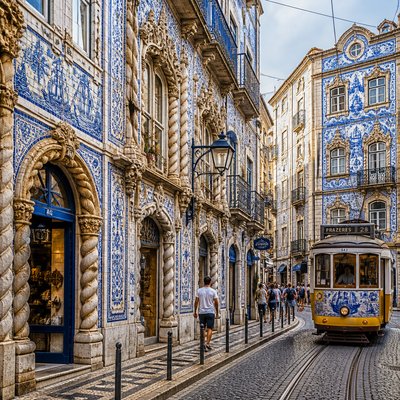
What is Lisbon Art Style?
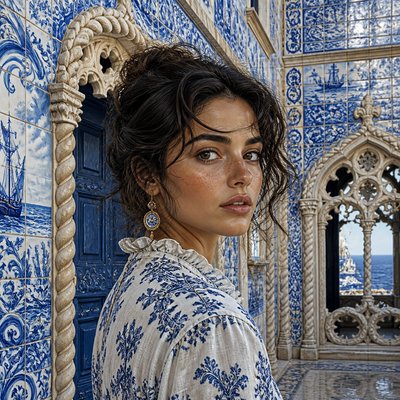
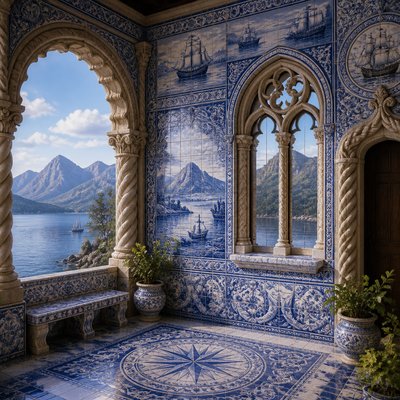
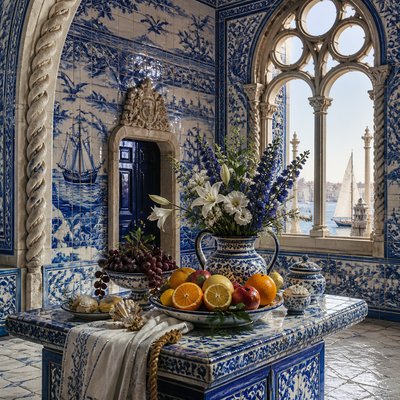
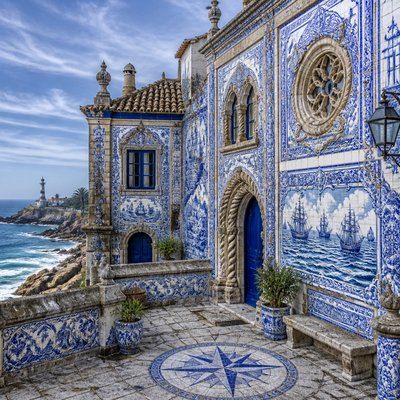
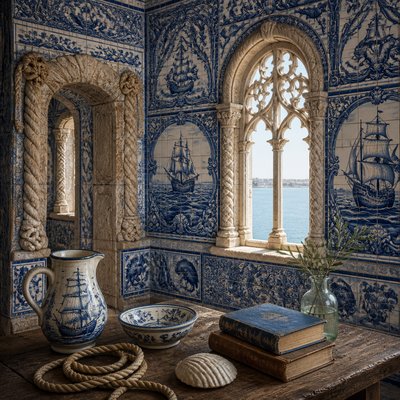
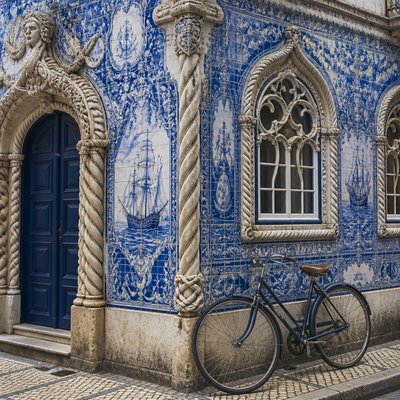
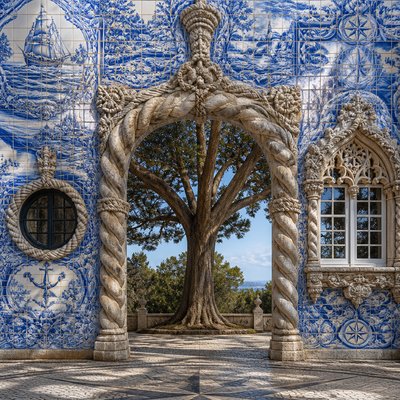
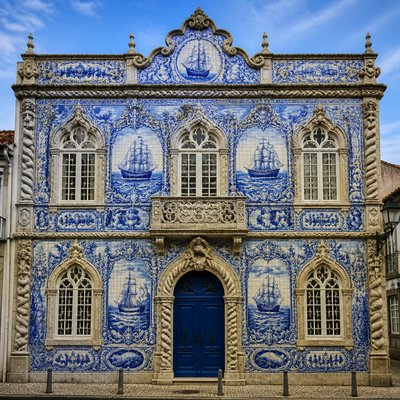
Lisbon Art Style is an invented contemporary aesthetic that reimagines Lisbon’s architectural character through a concentrated palette of cobalt blue, white, weathered stone, and glazed ceramic. Its signature image combines expansive azulejo tile panels with carved portals, sea-inspired window tracery, rope-like ornament, and façades marked by age, salt, and changing light.
The style looks both decorative and architectural. Repeated tile geometry supplies rhythm and surface pattern, while Manueline-inspired carving introduces twisted forms, shells, armillary-like structures, knots, coral, vegetation, and other maritime references. Glossy ceramic highlights contrast with porous limestone, chipped grout, shadowed recesses, and time-worn masonry, producing a balance between maritime wonder and historic patina.
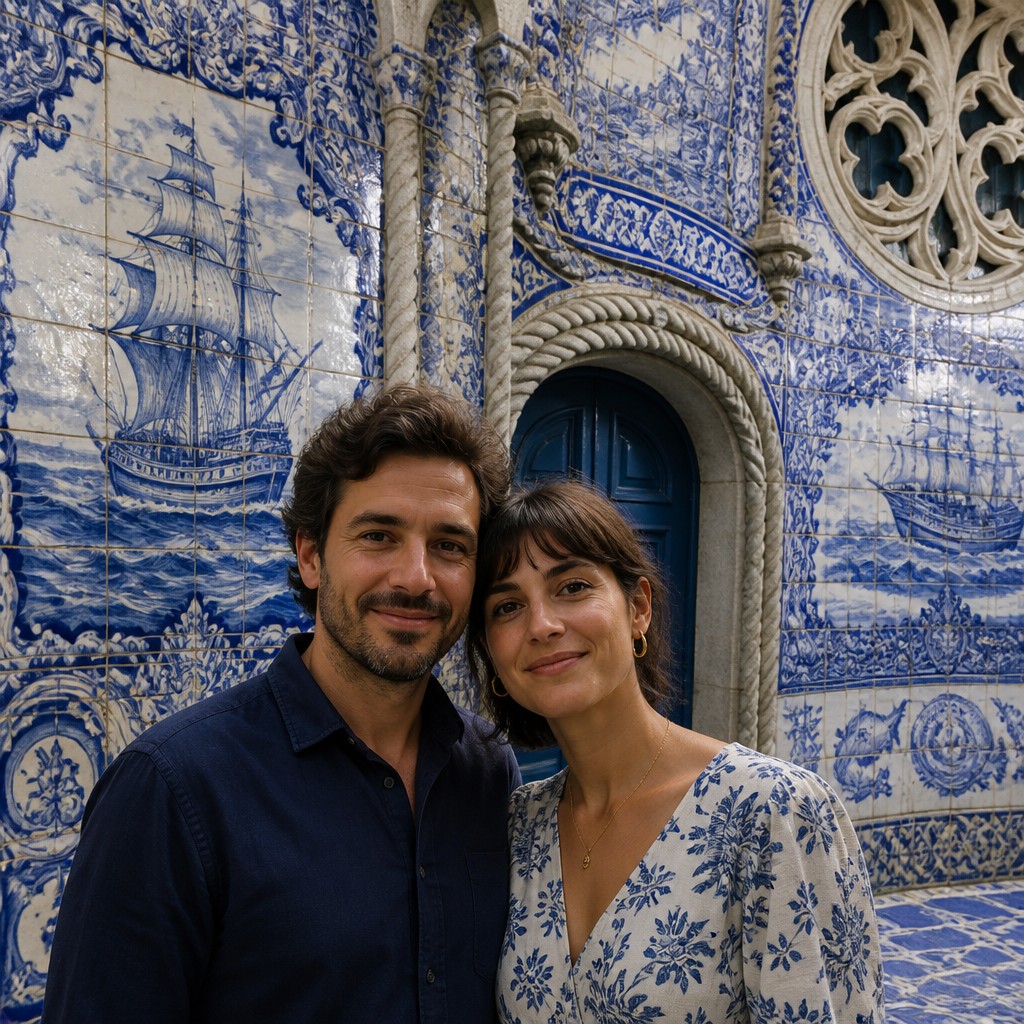
Try It On Your Photos
Upload any photo and convert it into Lisbon Art Style — drag the sliders to compare before and after.


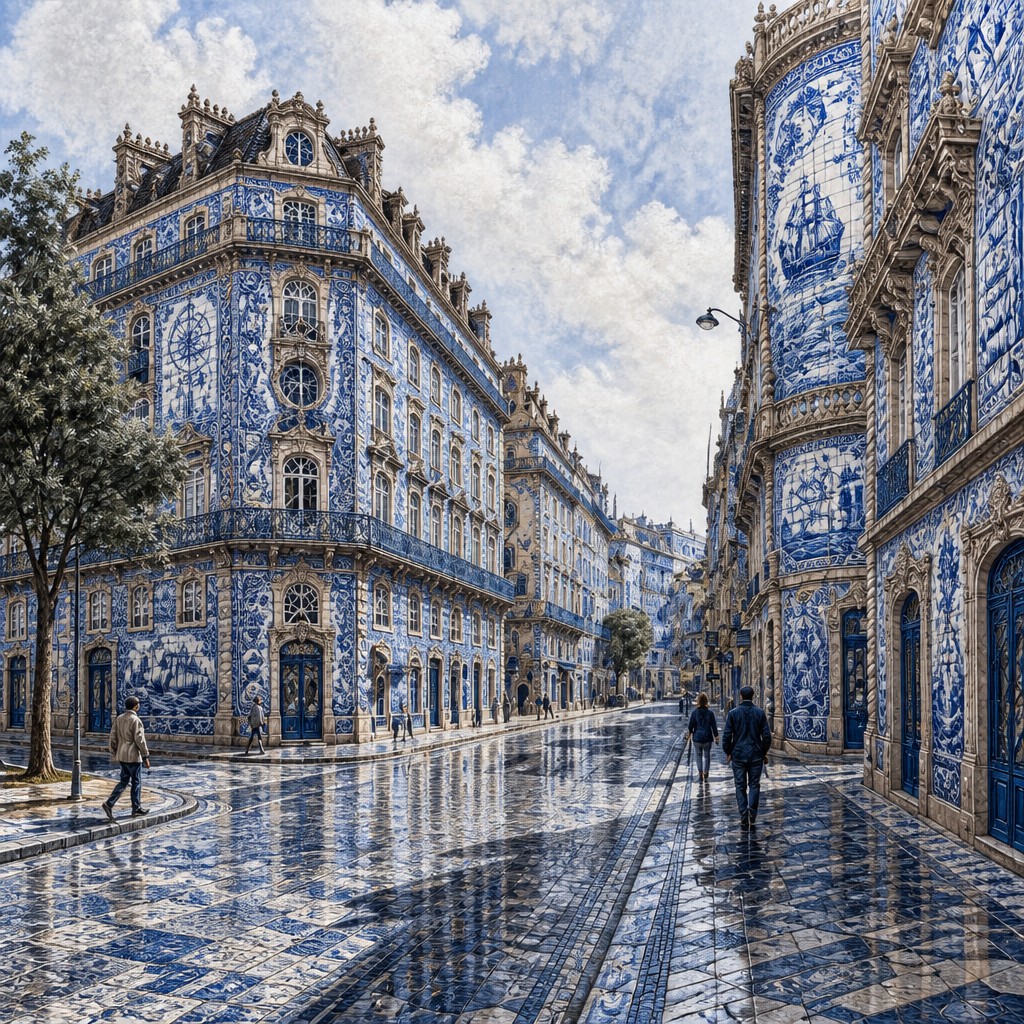

What Defines Lisbon Art Style
The signature details, up close
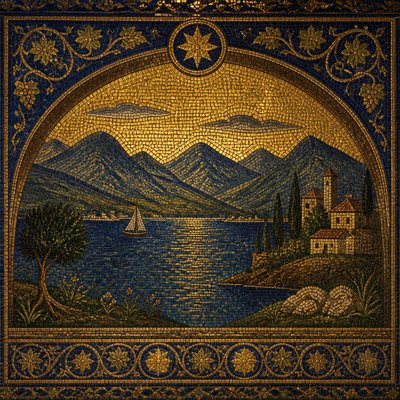
Cobalt-and-white azulejo surfaces
Walls, façades, stairways, and courtyards are organized as painted ceramic tile panels in deep cobalt, softened blue, and white. Repeating borders, figurative scenes, geometric grids, and irregularly aged tiles create both pattern and narrative.
Manueline-inspired stone carving
Portals, columns, balconies, and window surrounds use dense late Gothic maritime ornament. Carved ropes, knots, shells, foliage, coral-like details, and navigational motifs give the masonry a sense of movement.
Maritime architectural symbolism
Sea imagery is integrated into structural decoration rather than added as a separate illustration. Waves, ships, anchors, sea creatures, compass forms, and rigging-inspired lines may appear in tracery, reliefs, tile scenes, or ironwork.
Glazed ceramic sheen
Tile surfaces catch light with crisp specular reflections and subtle variations in glaze. Hairline cracks, chipped corners, uneven firing, and darkened grout prevent the finish from appearing uniformly manufactured.
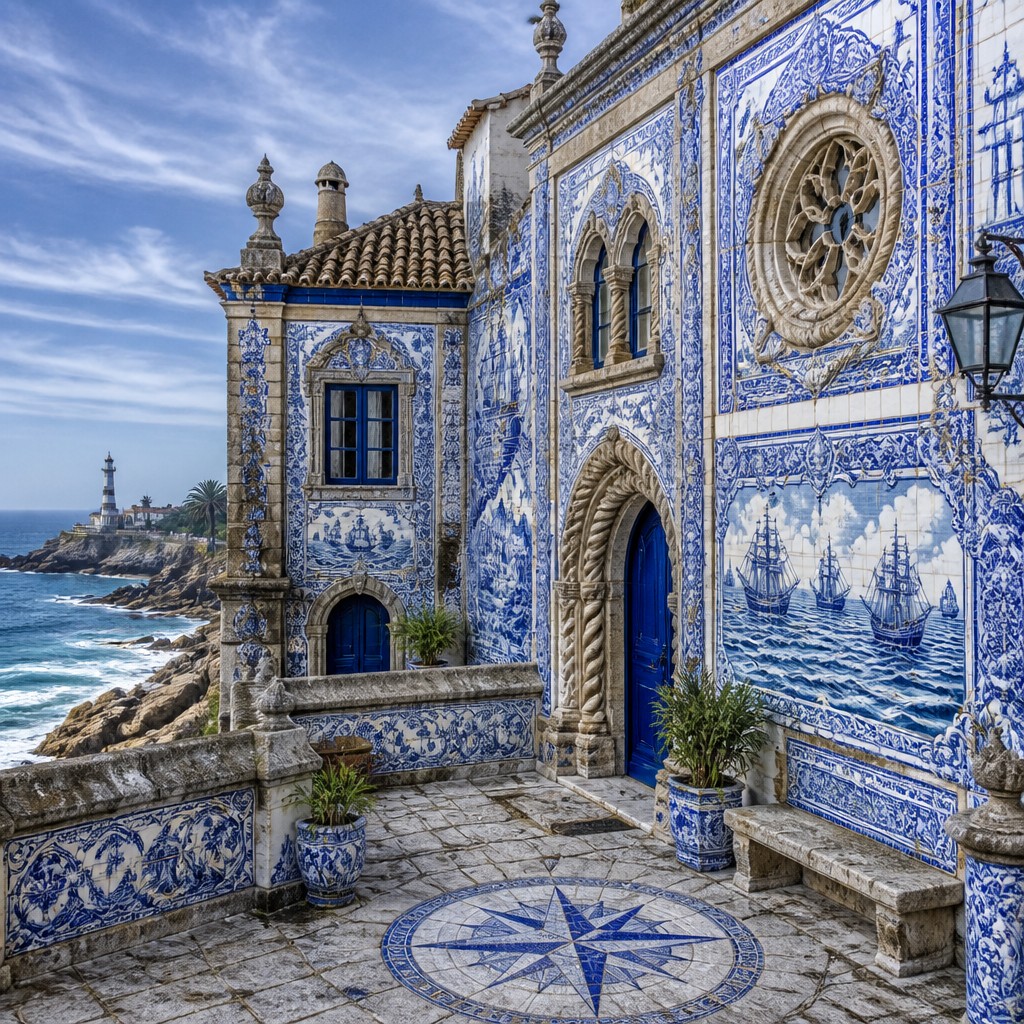
Weathered Lisbon façades
Aged limestone, worn plaster, oxidized metal, faded paint, and salt-stained surfaces provide a tactile counterpoint to the polished tiles. Patina should suggest prolonged exposure to sunlight, rain, sea air, and urban use.
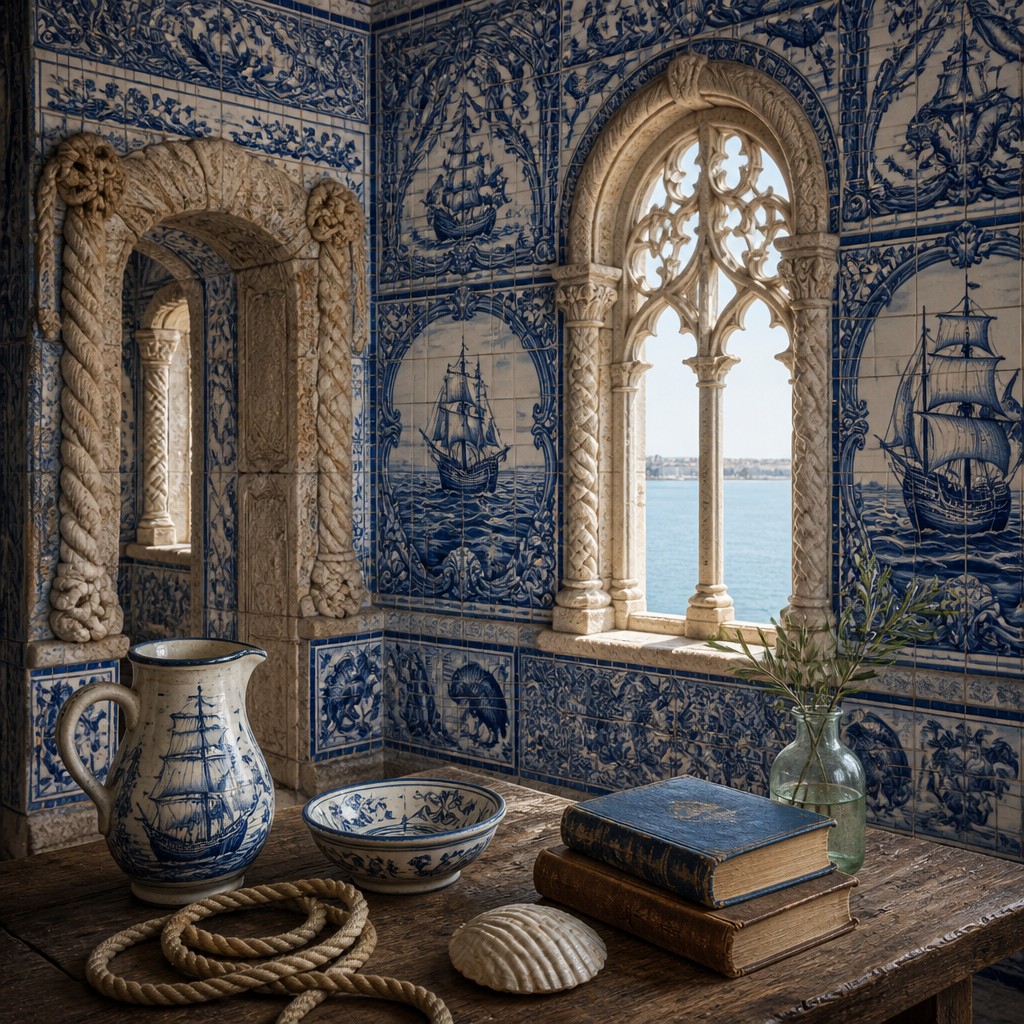
Dense ornamental framing
Windows, arches, doorways, and balconies are treated as focal frames with layered borders and intricate relief. The composition often contrasts a clear architectural silhouette with highly detailed close-up ornament.
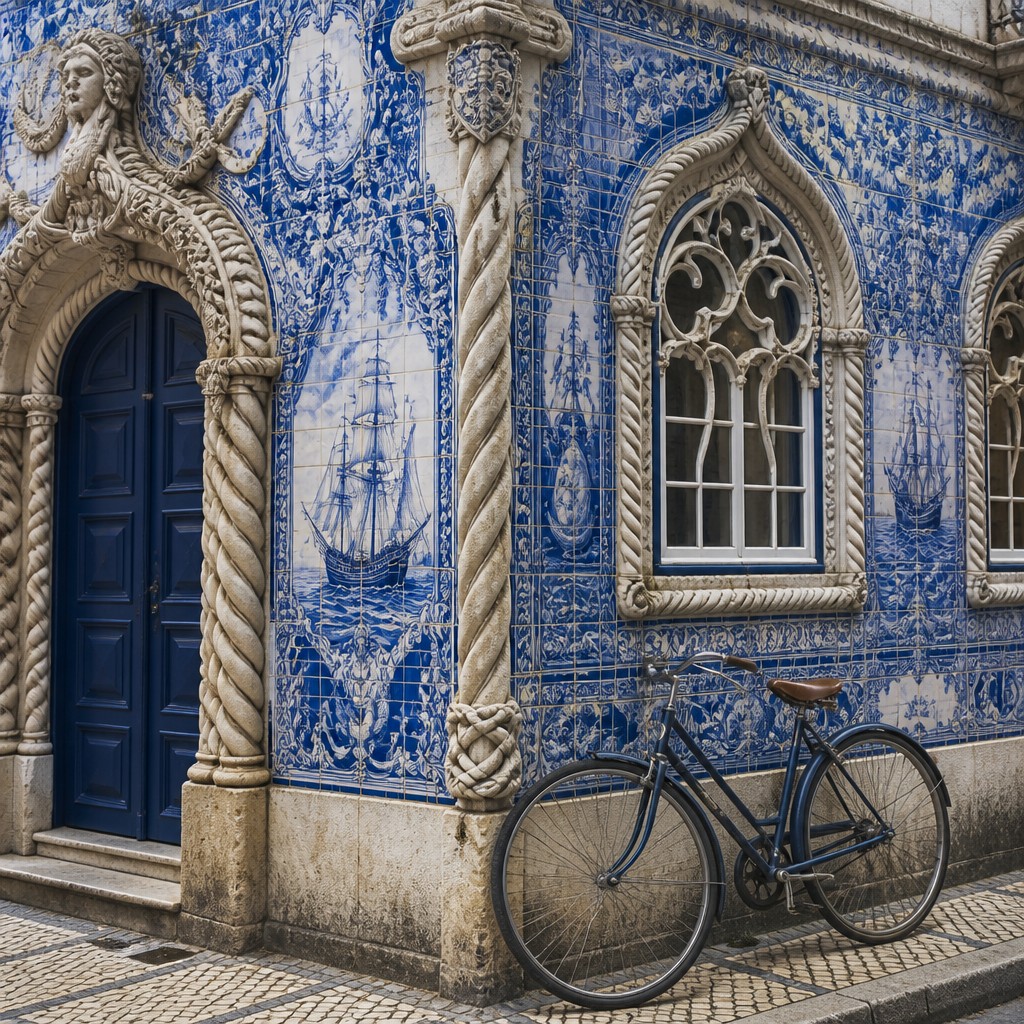
Blue atmospheric light
Bright Atlantic daylight, cool shadows, and reflected blue from ceramic surfaces establish the mood. Warm limestone, muted terracotta, and occasional vegetal green can be used as restrained supporting colors.
Lisbon Prompt Ideas
Start from an idea — each one opens the generator with the style ready to go. See all 40 Lisbon prompts →
How to Create Lisbon Art
Master the craft step by step — or skip straight to creating. Read the full guide →
- 1
Build the architectural structure first
Begin with a legible façade, courtyard, stairway, station, or coastal interior before adding ornament. Establish perspective, wall planes, openings, and light direction so the tile and carving remain integrated with the space.
- 2
Design tile panels as systems
Use repeated modules, border bands, corner transitions, and deliberate panel breaks rather than scattering blue patterns randomly. For traditional work, paint or print on ceramic tiles and use transparent glaze; digitally, simulate grout, firing variation, and edge wear.
- 3
Layer hard and reflective materials
Separate glossy glazed ceramic from matte limestone, plaster, wood, and oxidized metal through texture, roughness, and lighting. Small chips, uneven surfaces, and directional reflections make the material contrast convincing.
- 4
Use maritime ornament selectively
Place rope carving, shells, waves, navigational symbols, or botanical forms around portals, windows, balconies, and cornices. Repeating a small visual vocabulary creates historical coherence without turning every surface into visual noise.
- 5
Control age and restoration
Decide whether the scene is richly preserved, partially restored, or heavily weathered, then keep the patina consistent across tiles and masonry. Avoid applying identical dirt or cracks everywhere, since real aging follows exposure, drainage, contact, and material.
- 6
Guide prompt-based generation precisely
Specify the subject, architectural viewpoint, cobalt-and-white tile coverage, Manueline-inspired maritime carving, glazed ceramic reflections, limestone texture, and degree of weathering. Add terms such as orthographic façade, courtyard perspective, close architectural detail, or overcast Atlantic light to control composition.
The Story
History & Origins of Lisbon
Lisbon Art Style is not a documented historical movement or period style; it is a modern synthesis of Portuguese visual traditions. Its principal lineage comes from azulejo, the Iberian tradition of painted and glazed ceramic tile that became especially important in Portugal from the sixteenth century onward, with blue-and-white compositions becoming particularly prominent in later centuries.
Its architectural vocabulary also draws from Manueline, the late Gothic to early Renaissance style associated with Portugal in the late fifteenth and early sixteenth centuries. Manueline ornament frequently incorporates maritime imagery, botanical carving, twisted forms, and complex portal and window decoration. This invented style intensifies those references, extending them across walls, streets, interiors, and imagined coastal structures rather than reproducing any single historical building.
Influences: The style draws from Portuguese azulejo traditions, Manueline architecture, late Gothic and early Renaissance ornament, Iberian ceramic decoration, Atlantic coastal vernaculars, and the weathered limestone façades of Lisbon. It also relates to architectural photography, heritage illustration, decorative arts, and contemporary environment design that combines historical references with heightened material detail. Its blue-and-white palette can echo maritime charting and ceramic pattern traditions without being limited to literal historical replicas.
Frequently Asked Questions
Is Lisbon Art Style a historical art movement?
No. It is an invented contemporary style label rather than a recognized historical movement. It draws on real Portuguese traditions, especially azulejo tilework and Manueline architectural ornament, and combines them into a unified visual language.
What defines Lisbon Art Style?
Its core features are cobalt-and-white azulejo surfaces, carved stone inspired by Manueline maritime ornament, glossy ceramic reflections, and visibly weathered façades. The style is most recognizable when these elements are treated as parts of one architectural environment.
How is it different from traditional Portuguese azulejo?
Traditional azulejo refers to a broad and historically developed ceramic art tradition with many periods, techniques, colors, and subjects. Lisbon Art Style uses azulejo as a dominant surface language while freely combining it with intensified maritime carving, fantasy architecture, and deliberately unified blue-and-white scenery.
How can I make an image in this style?
Start with a clear architectural subject and specify tile coverage, cobalt-and-white colors, carved maritime ornament, glazed reflections, limestone, and controlled weathering. For physical work, ceramic tiles, underglaze or ceramic pigment, transparent glaze, and carved or modeled architectural details can produce related effects; digital and AI workflows can simulate these materials through texture and lighting instructions.
Does the style have to depict Lisbon?
No. Lisbon is the cultural and architectural reference point, but the visual language can be applied to interiors, coastal villages, imaginary palaces, transit spaces, monuments, or objects. The strongest results retain the tile, stone, maritime, and Atlantic-light relationships even when the setting is fictional.
What colors work best with Lisbon Art Style?
Cobalt, ultramarine, white, pale blue, and weathered gray form the essential palette. Warm limestone, muted terracotta, aged bronze, faded green, and small areas of ochre can add realism without weakening the dominant ceramic identity.
Create your first Lisbon artwork
Describe anything — or upload a photo — and see it in Lisbon Art Style in seconds.
Related Styles
Discover similar art styles