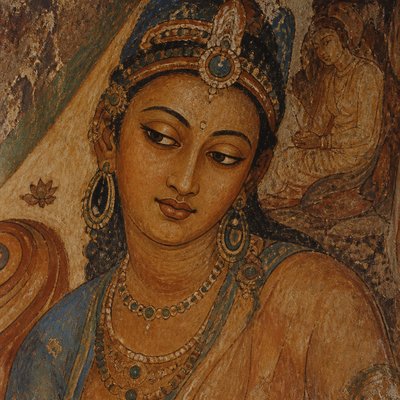
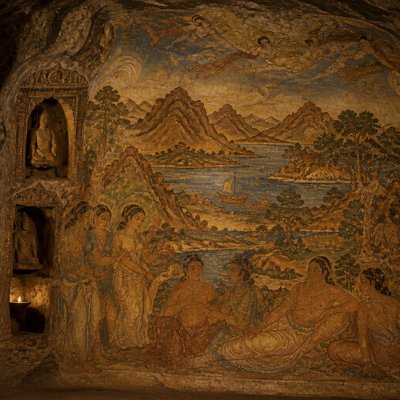
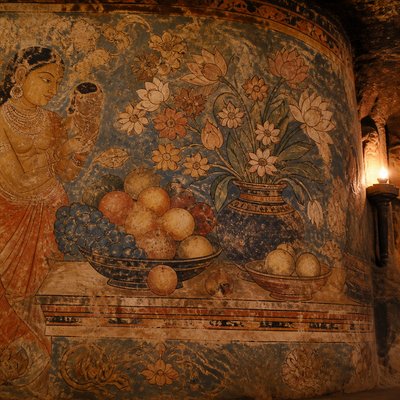
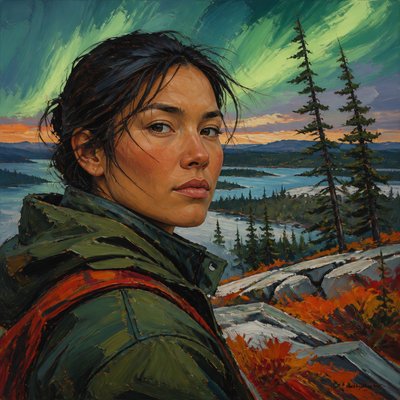
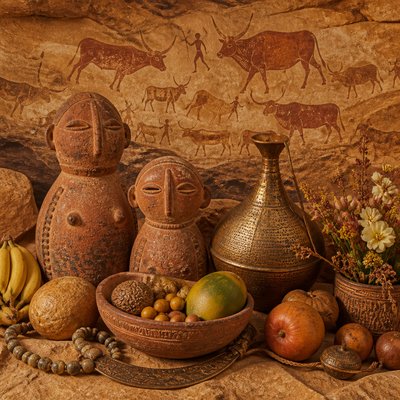
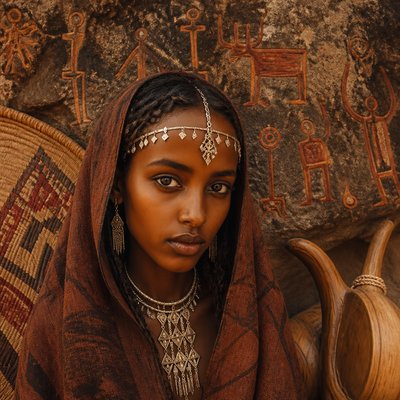
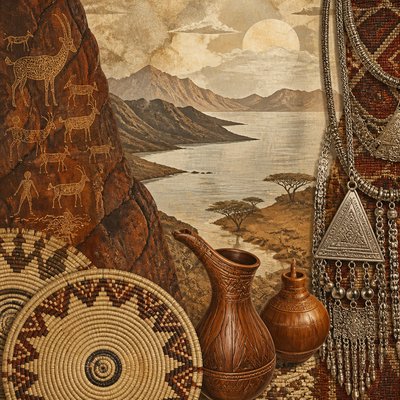
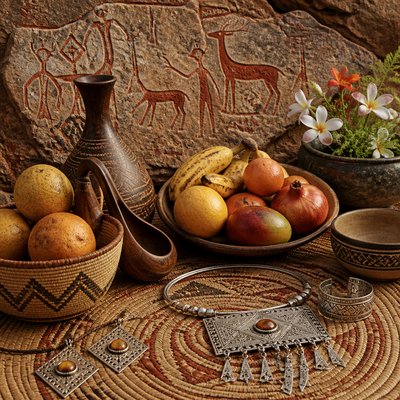
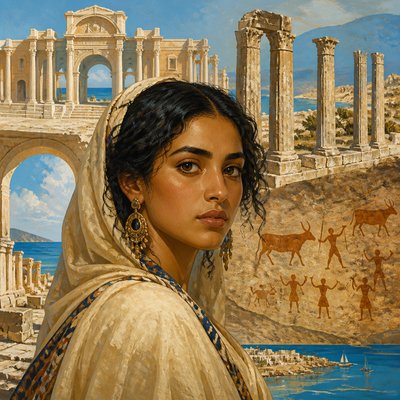
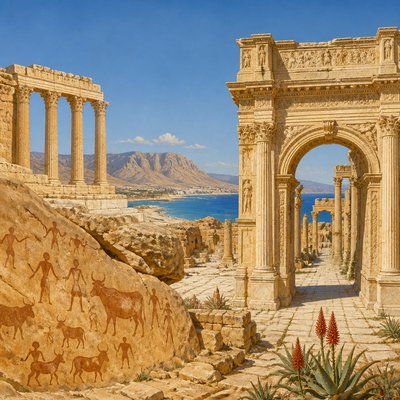
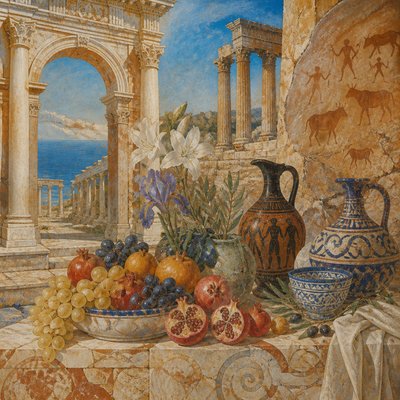
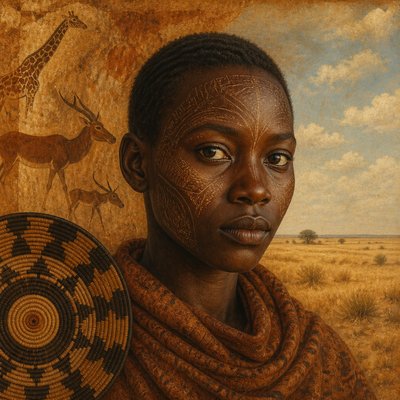
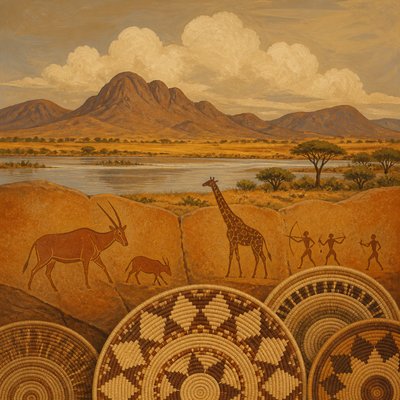
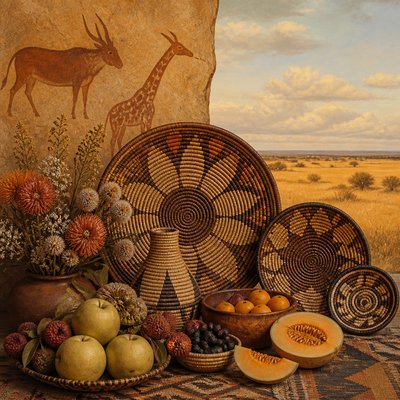
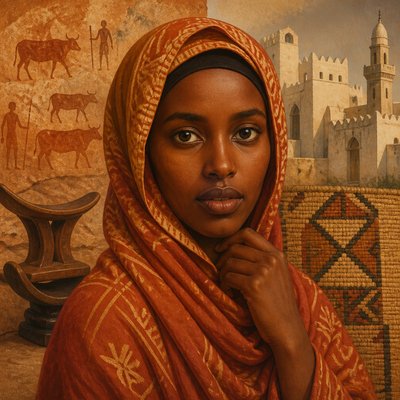
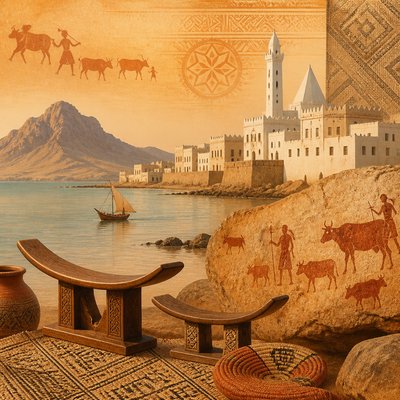
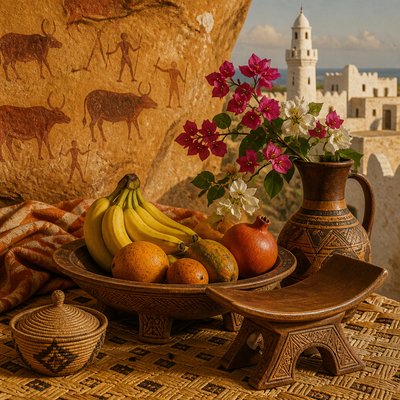
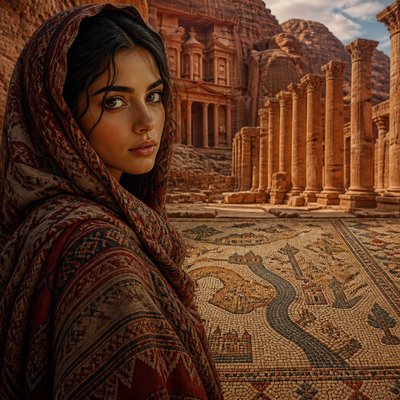
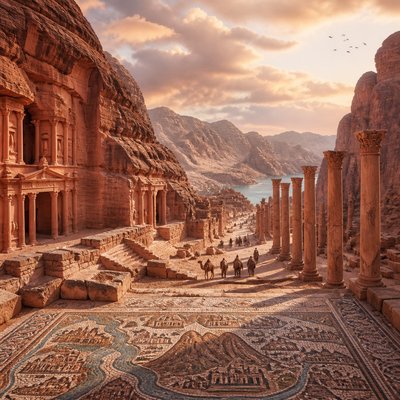
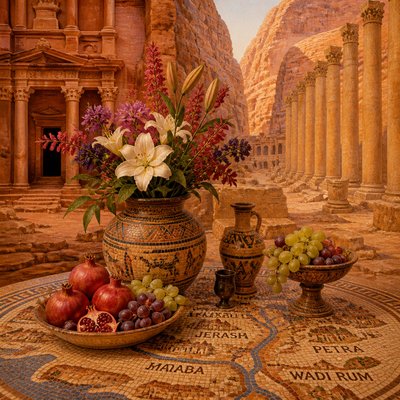
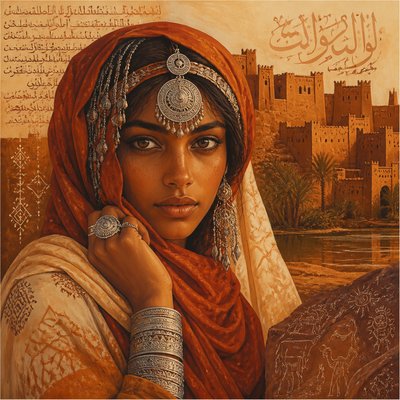
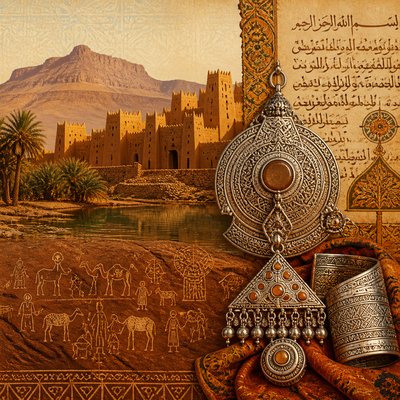
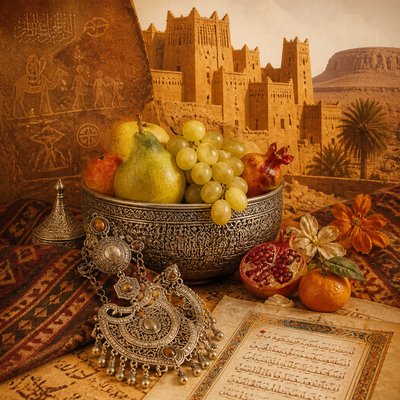
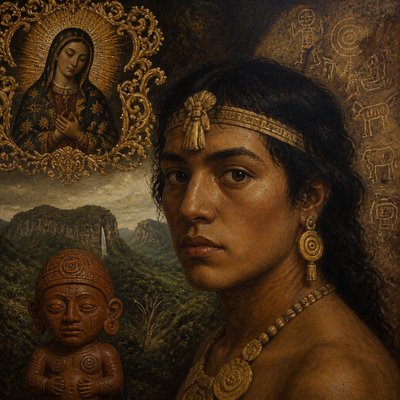
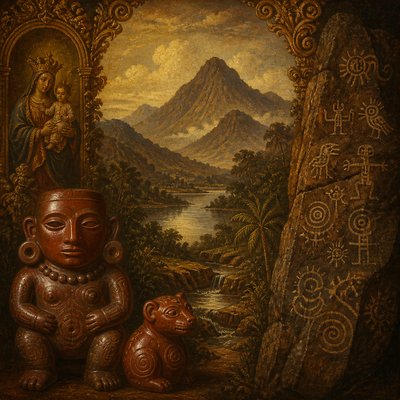
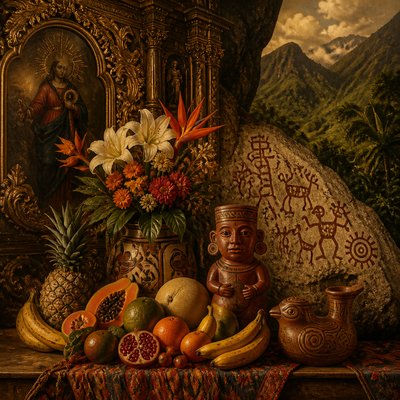
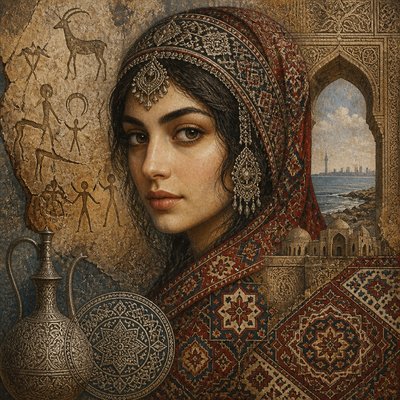
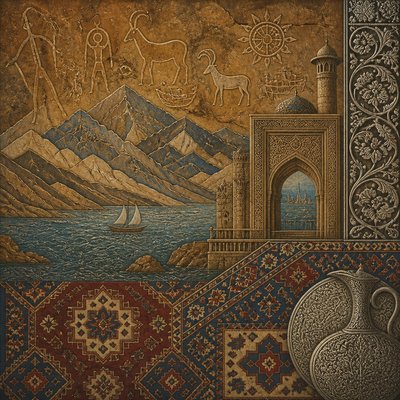
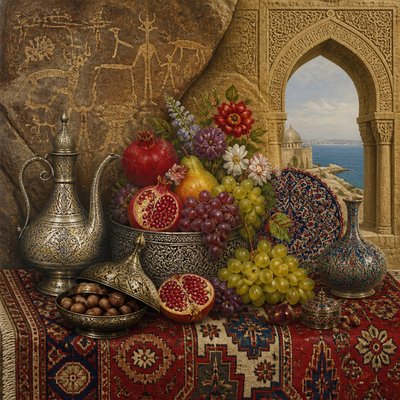
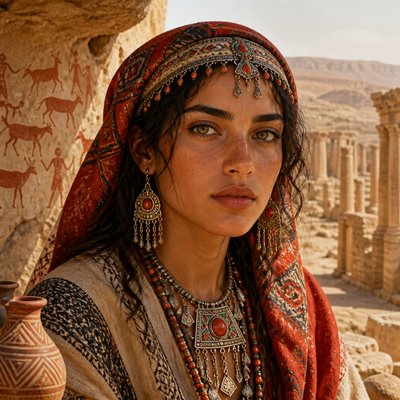
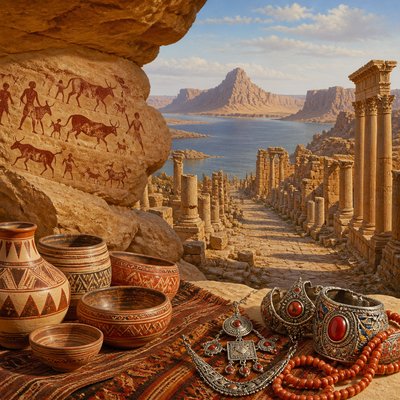
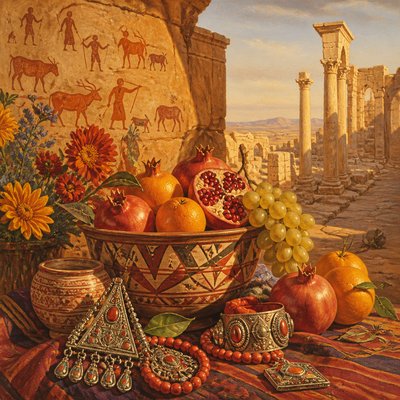
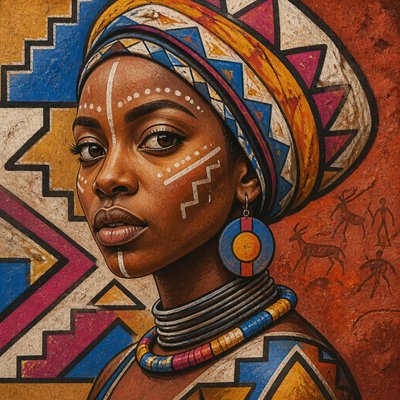
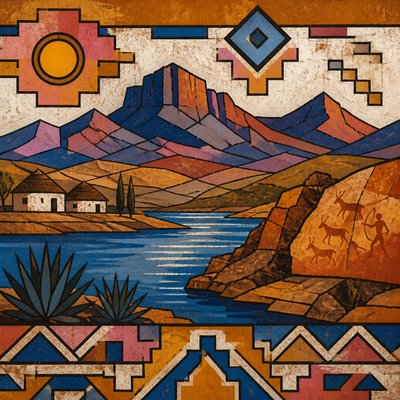
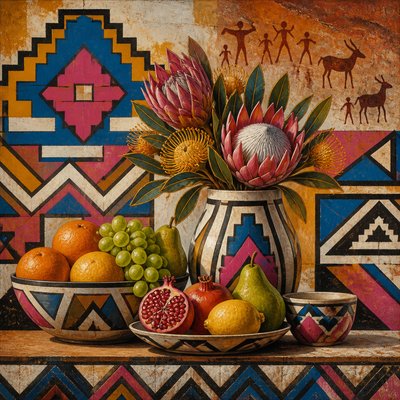
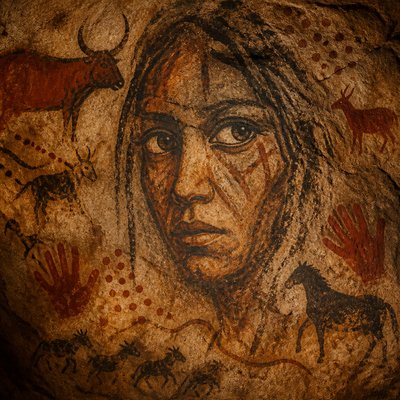
Explore Rock Art Style: ancient petroglyph lines, ochre pigments, simplified figures, weathered stone, and cave-wall textures.
Instantly rendered in Rock — or transform a photo
Rock Gallery
Tap any artwork to explore it
What is Rock Art Style?
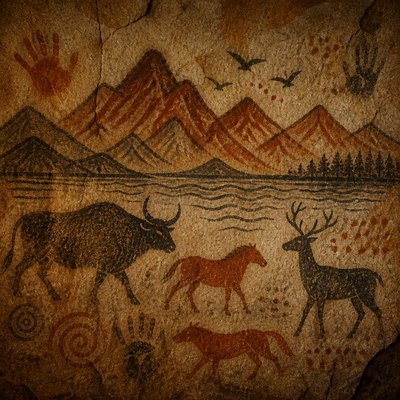
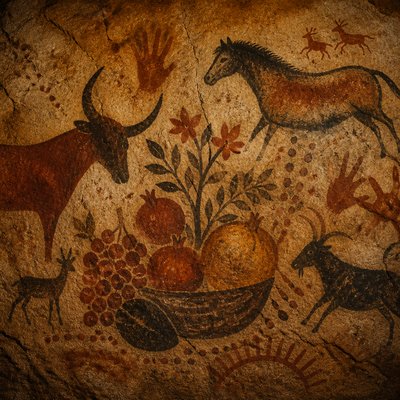
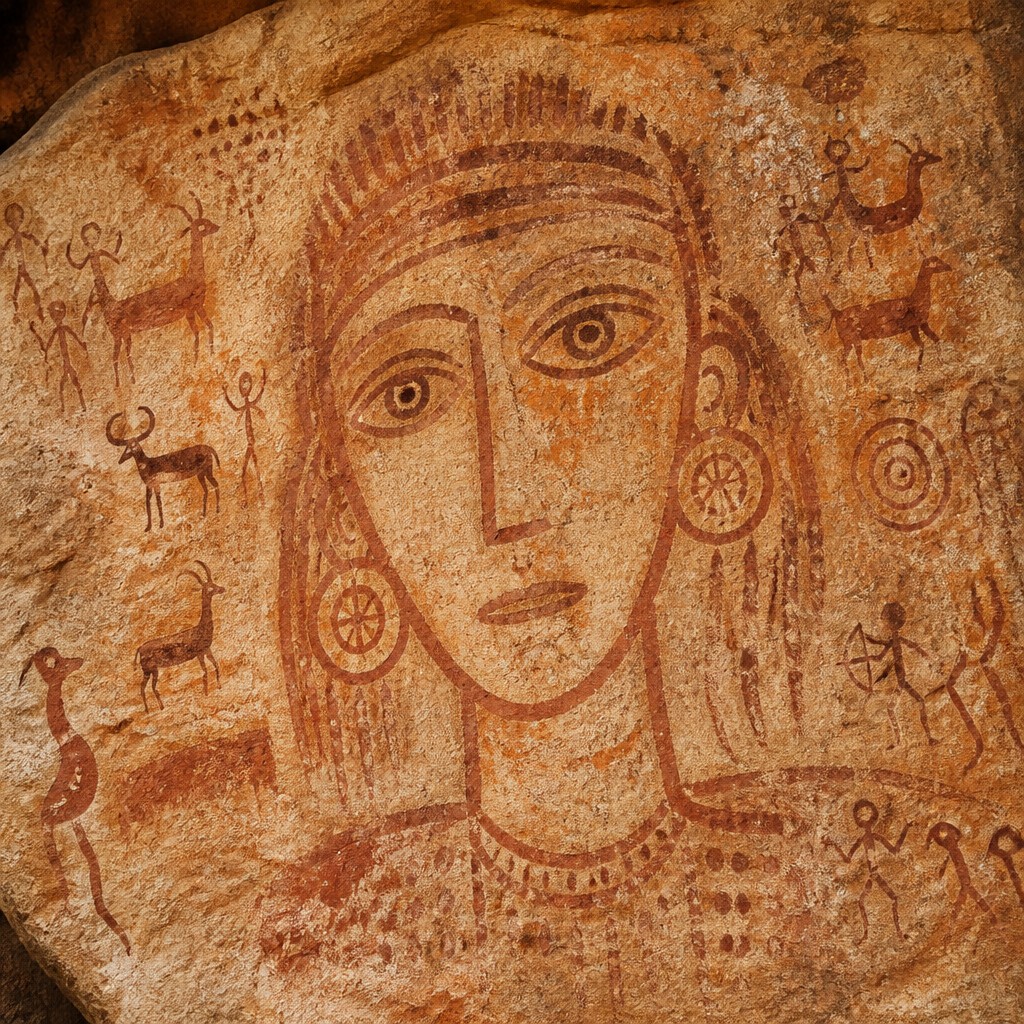
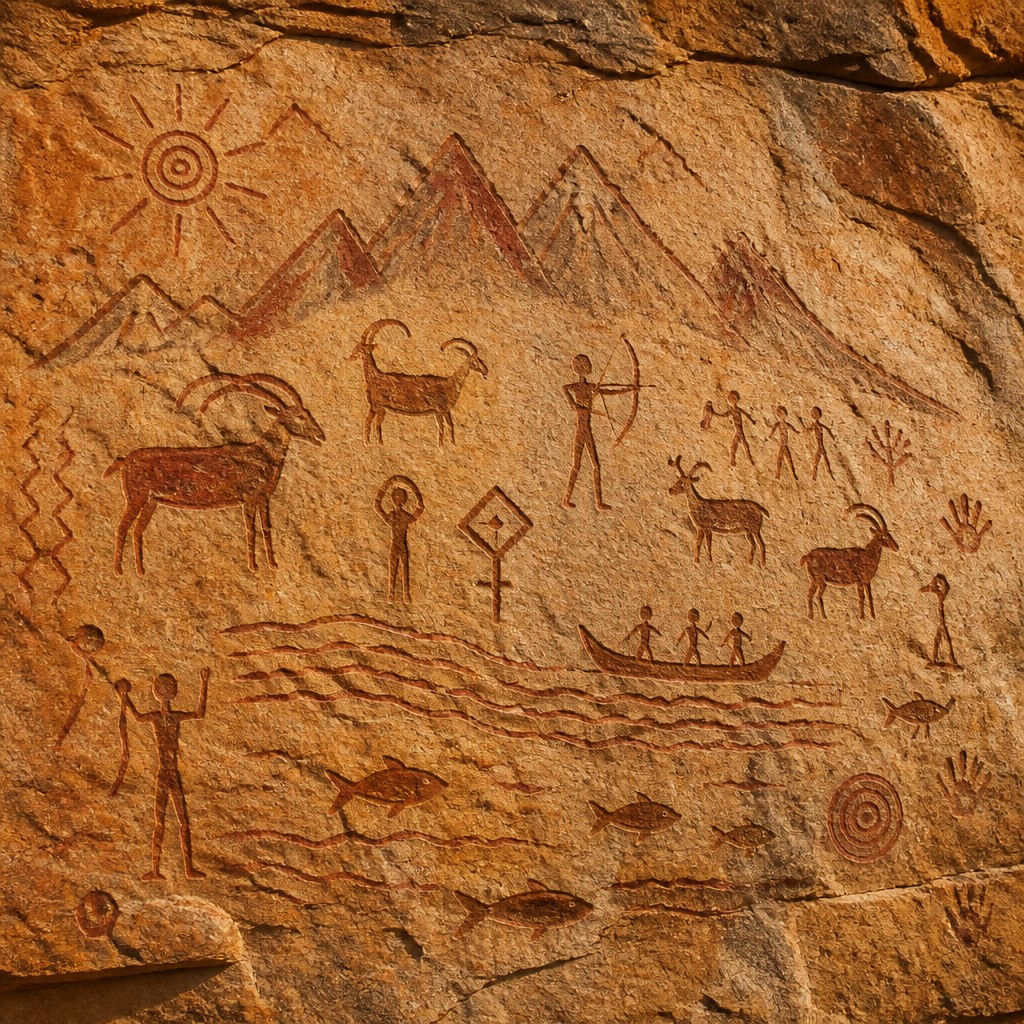
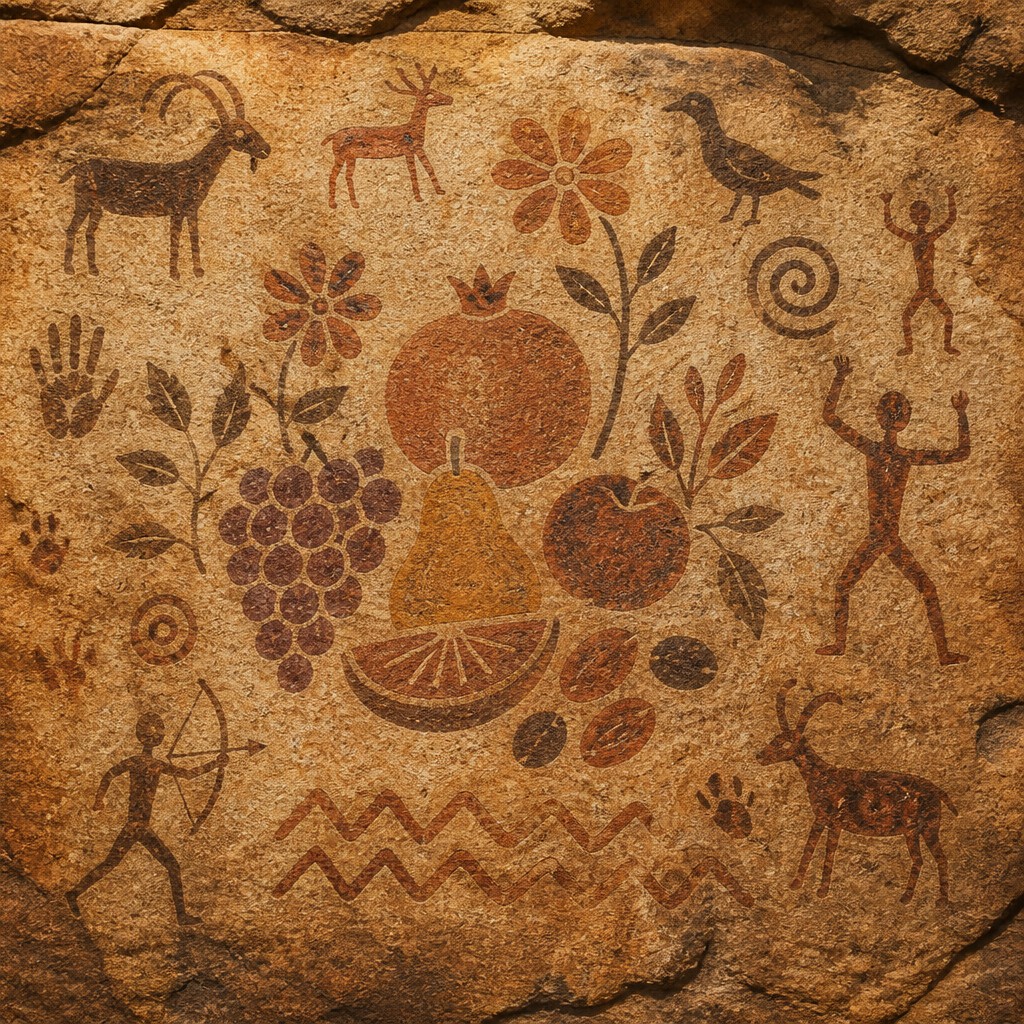
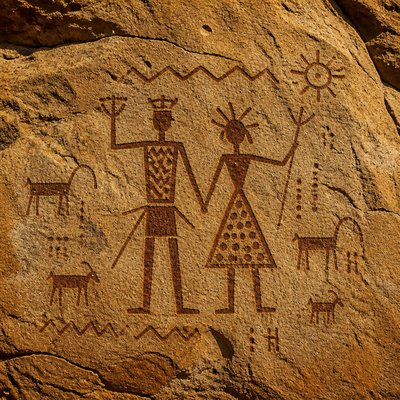
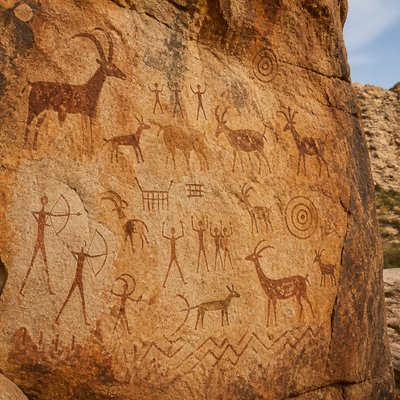
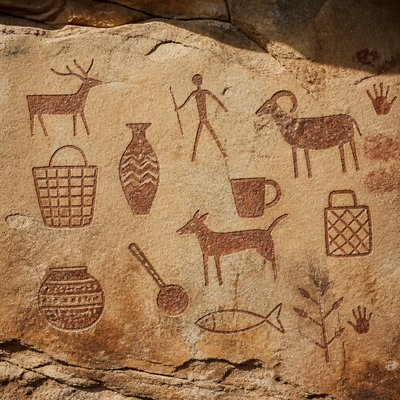
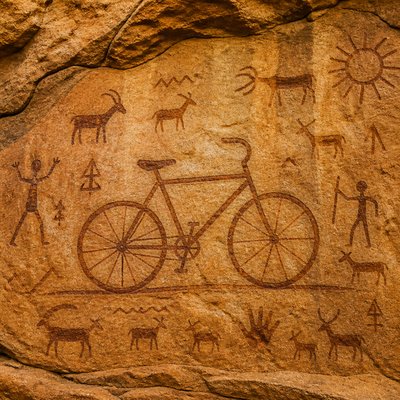
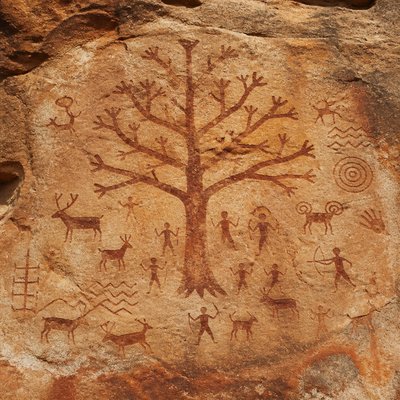
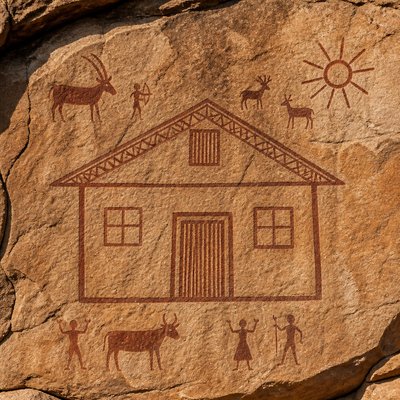
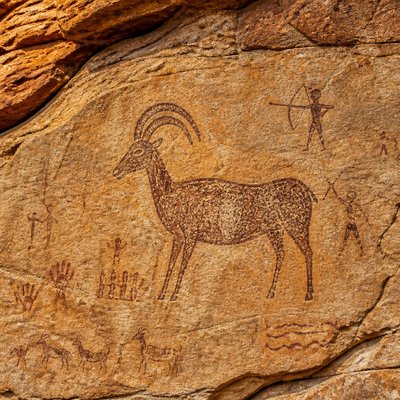
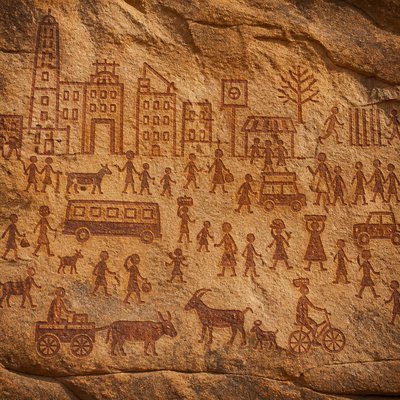
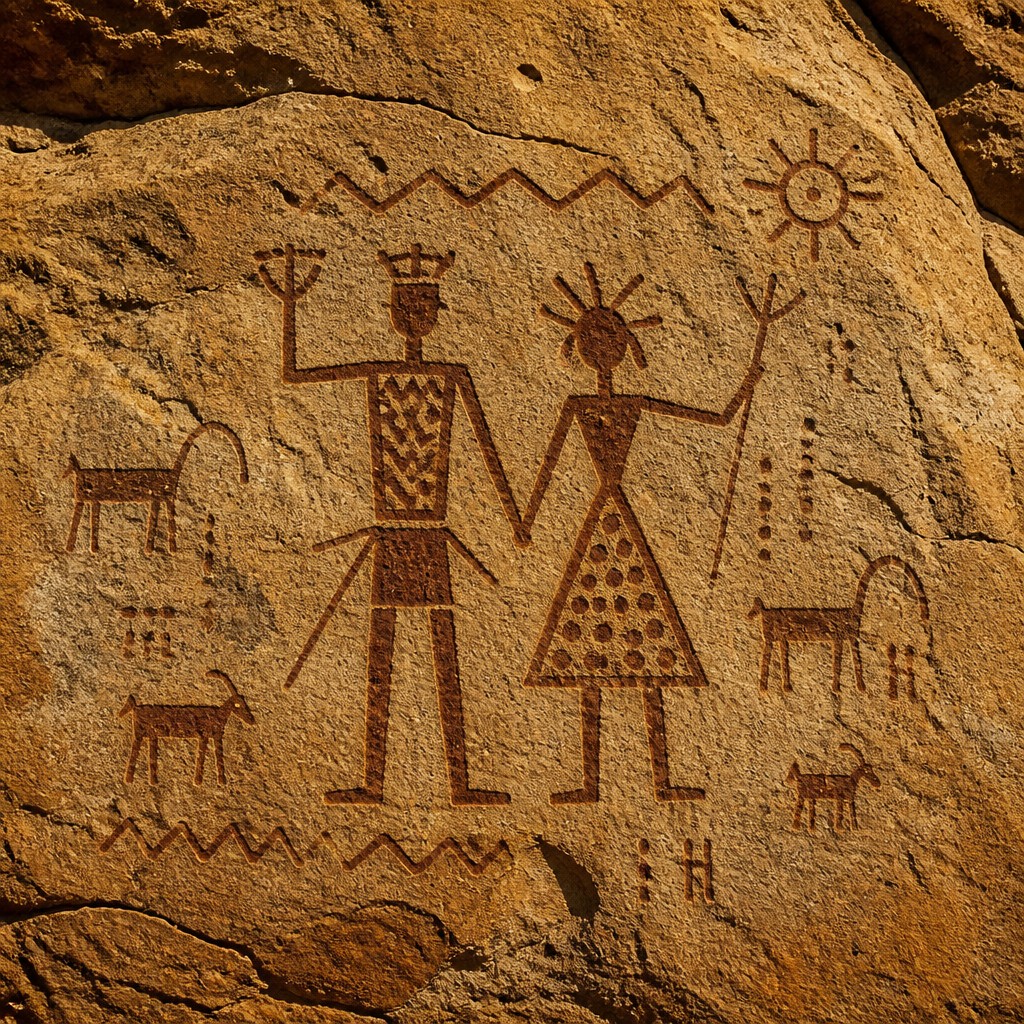
Rock Art Style evokes images made directly on or from stone: incised petroglyphs, painted pictographs, and the simplified silhouettes associated with prehistoric and Indigenous rock-art traditions. Its visual vocabulary favors animals, hunters, human figures, tracks, handprints, geometric signs, and repeated marks rather than naturalistic perspective or anatomical detail.
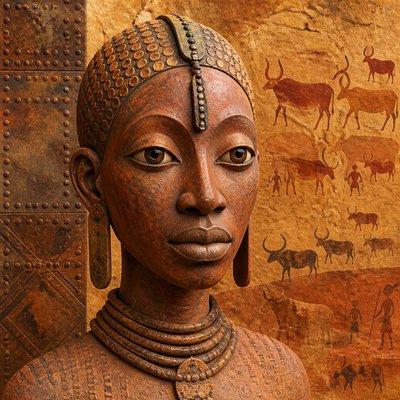
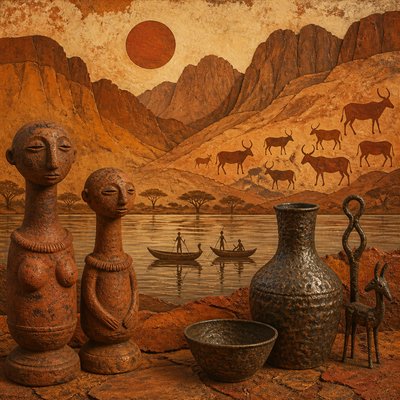
The style is defined by its material presence. Rough sandstone, cave walls, mineral staining, chipped edges, faded ochre, charcoal-like darkness, and weathered patina make every mark appear embedded in a geological surface. Figures are reduced to clear contours and symbolic gestures, reflecting both the limitations of stone-based tools and the communicative power of bold, durable forms.
Try It On Your Photos
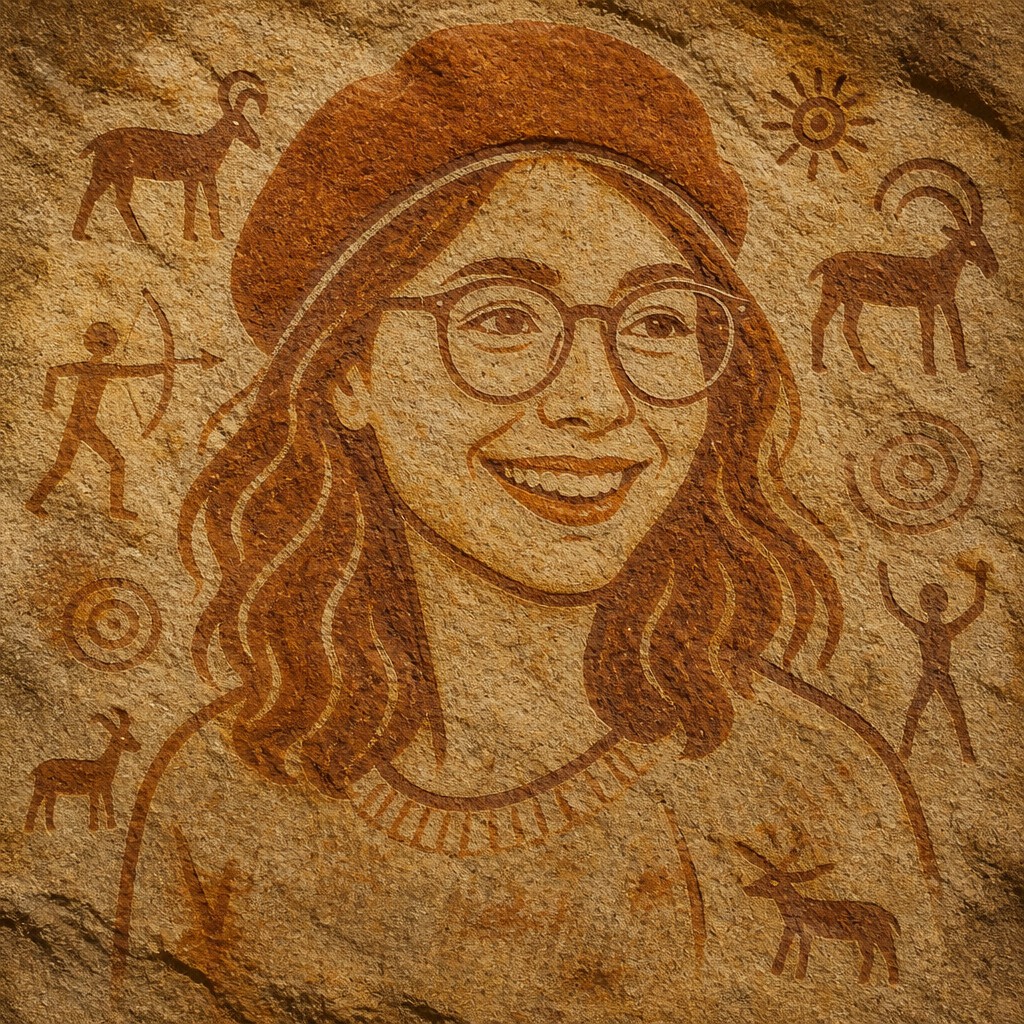
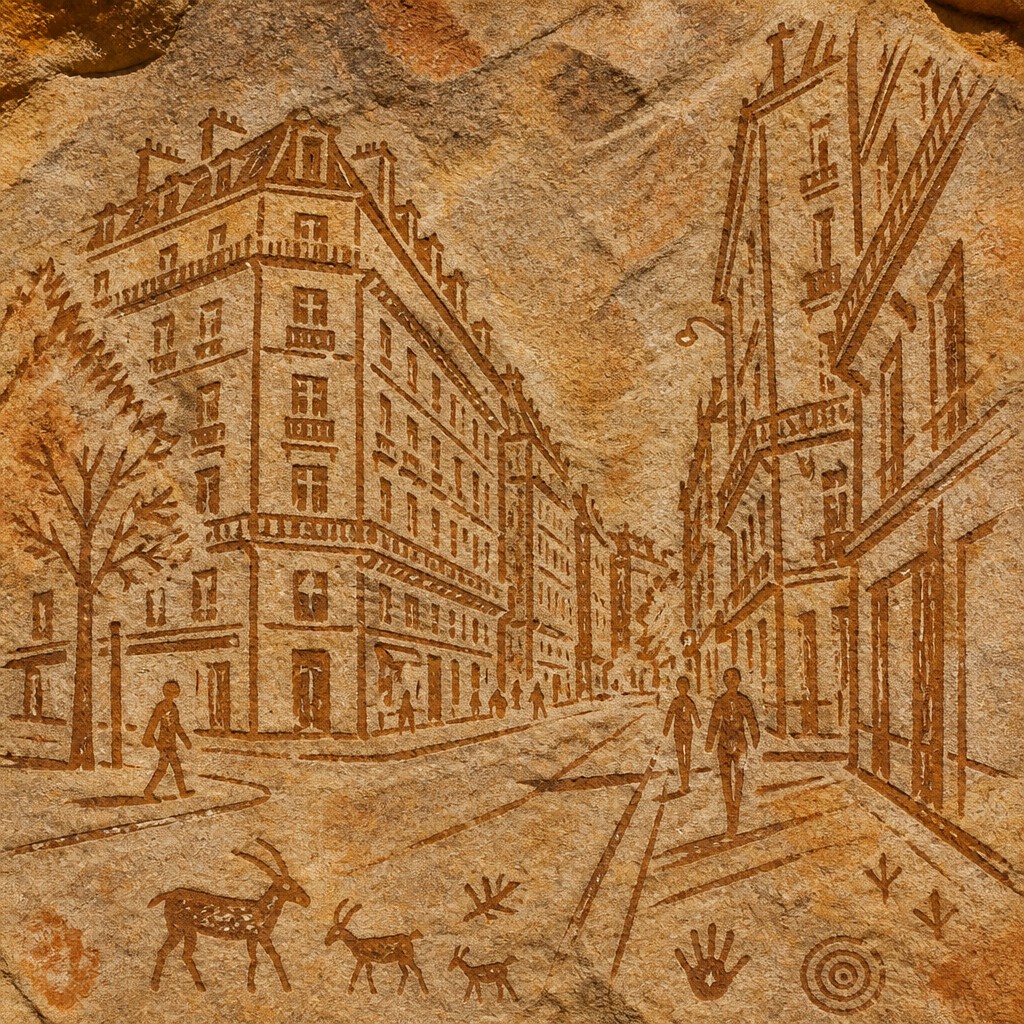
Upload any photo and convert it into Rock Art Style — drag the sliders to compare before and after.


Or use the free Rock photo filter
What Defines Rock Art Style
The signature details, up close
Stone-bound surface
Images appear on rough cave walls, cliff faces, boulders, or slab-like mineral surfaces. Cracks, pores, deposits, and uneven planes become part of the composition.
Incised and pecked marks
Deep grooves, chipped contours, scraped planes, and repeated hand-pecking suggest tools working directly into rock. Lines may look softened by erosion and centuries of handling.
Mineral pigment palette
Earth reds, ochres, iron browns, charcoal black, chalky white, and muted yellow dominate the palette. Pigment appears absorbed, patchy, powdery, or stained rather than glossy.
Simplified figures
Animals and people are reduced to strong silhouettes, angular contours, stick-like limbs, or geometric body shapes. Recognition depends on gesture and outline instead of realistic modeling.
Symbolic repetition
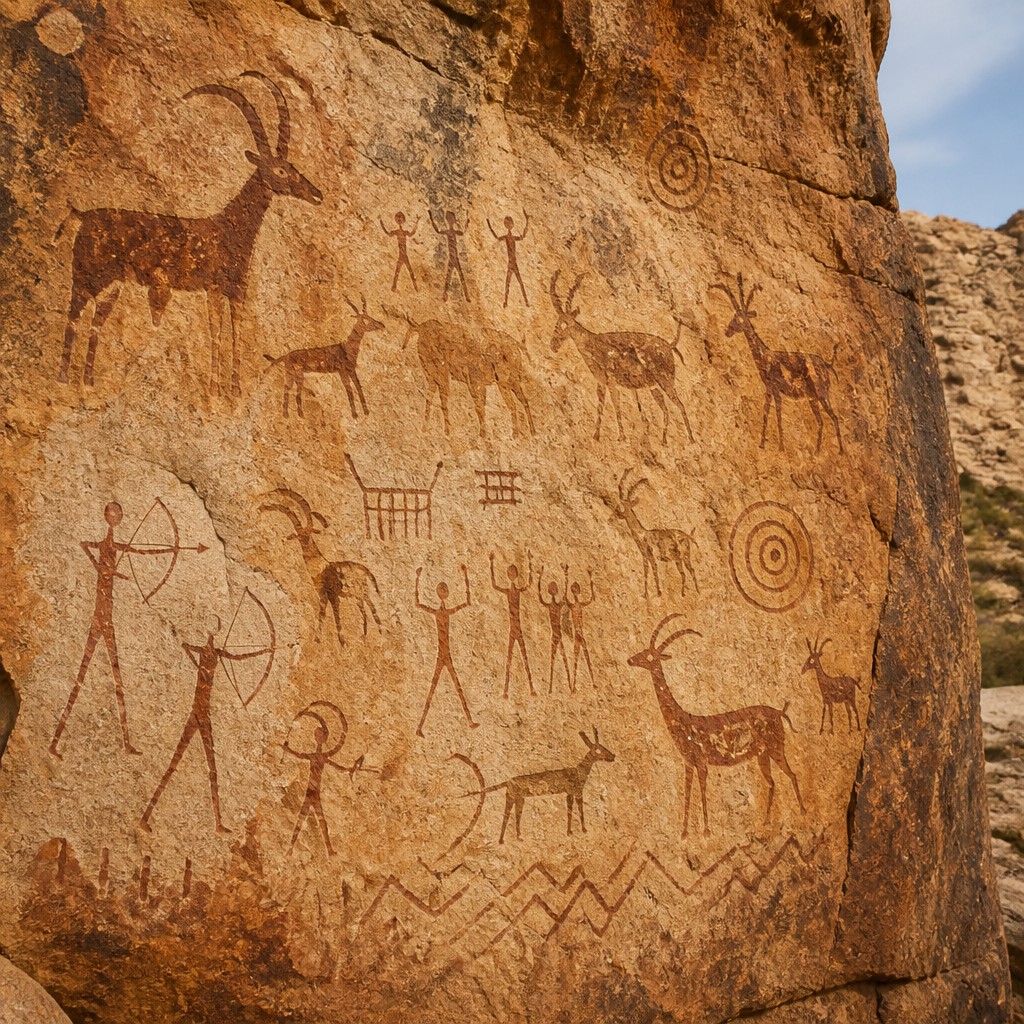
Tracks, dots, zigzags, spirals, handprints, radiating marks, and repeated animals create a visual language of signs and rhythms. The arrangement often feels cumulative rather than conventionally pictorial.
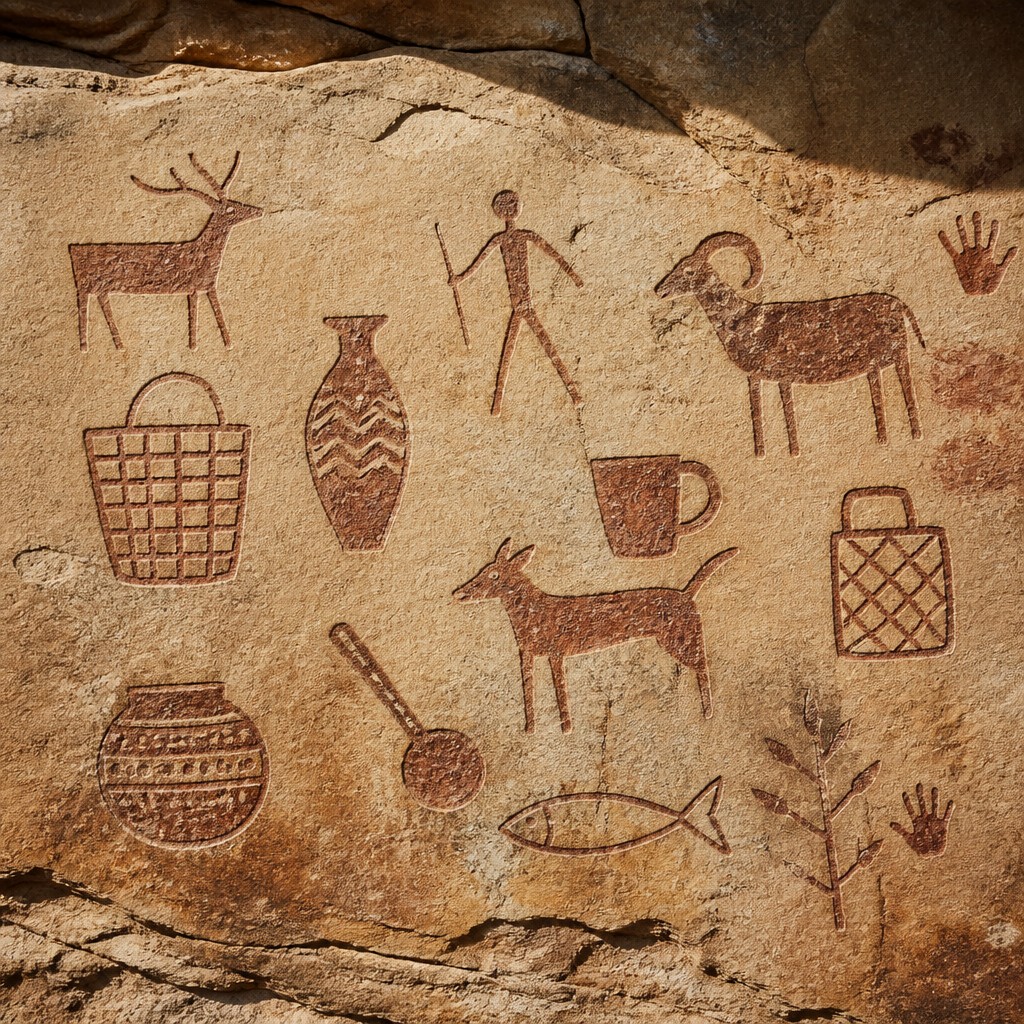
Weathering and patina
Fading, mineral veils, abrasion, lichen-like deposits, and tonal variation make the marks seem old and integrated with the stone. Wear should remain irregular rather than functioning as a uniform filter.
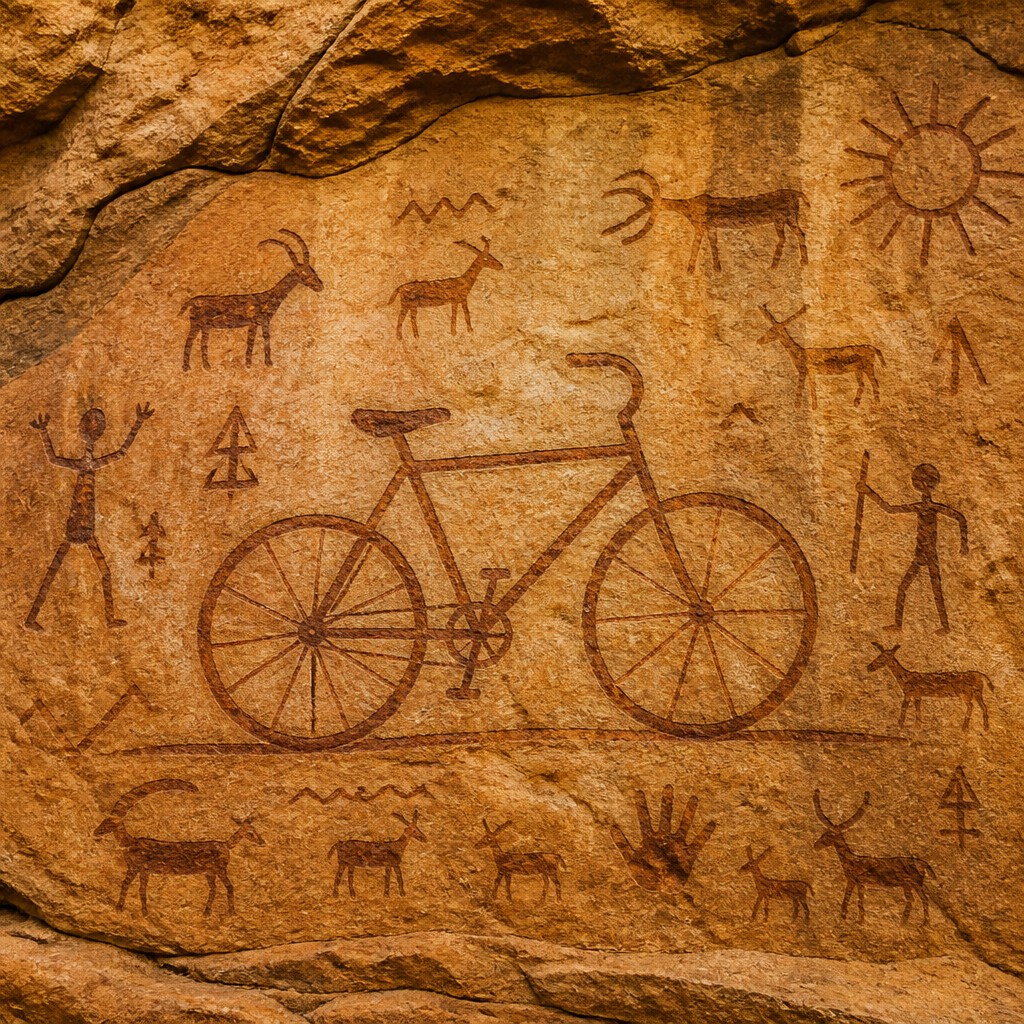
Flat spatial logic
Figures commonly overlap, float, or occupy the same plane without consistent horizon lines, shading, or linear perspective. Scale and placement can be symbolic instead of optically accurate.
Rock Prompt Ideas
Start from an idea — each one opens the generator with the style ready to go. See all 40 Rock prompts →
How to Create Rock Art
Master the craft step by step — or skip straight to creating. Read the full guide →
- 1
Choose a convincing ground
For physical work, use textured clay board, plaster, slate, or a prepared stone-like panel; for digital work, begin with a high-resolution sandstone or cave-wall texture. Keep the surface visible so the image feels embedded rather than pasted on.
- 2
Build marks mechanically
Simulate pecking with clustered dots, incision with broken hard-edged lines, and abrasion with dragged rough strokes. Vary depth, width, and density to avoid perfectly uniform digital contours.
- 3
Limit the palette
Work with iron red, ochre, umber, charcoal, bone white, and subdued stone tones. Apply pigments unevenly, then add translucent staining and abrasion so color appears mineral-based and weathered.
- 4
Simplify the subject
Reduce animals and people to recognizable silhouettes, profile views, angular limbs, and expressive gestures. Remove decorative detail, realistic shading, and modern visual clutter.
- 5
Compose as a wall of signs
Arrange several figures, tracks, dots, and geometric marks across the surface with loose spacing and occasional overlap. Let cracks, ledges, and natural discolorations influence placement.
- 6
Use precise generation directions
For prompt-based creation, specify the subject, rock type, mark-making method, pigment palette, degree of erosion, and lighting, such as “ochre animal silhouettes, deeply pecked contours, weathered sandstone, mineral staining, uneven cave-wall texture.”
The Story
History & Origins of Rock
Rock art is not a single historical movement but a worldwide group of image-making traditions with origins extending back tens of thousands of years. Petroglyphs were produced by pecking, cutting, scraping, or polishing a rock surface, while pictographs used mineral pigments such as red and yellow ochre, charcoal, manganese, and clay. Examples occur across Africa, Europe, Asia, Australia, and the Americas, with dates, meanings, and techniques varying substantially by region and culture.
Rock art continued long after the Paleolithic period, including in societies that maintained established ceremonial, territorial, narrative, or educational marking traditions. Contemporary Indigenous artists and communities also sustain and reinterpret rock-art imagery, making it important to distinguish respectful visual reference from assumptions that all ancient marks belong to one universal culture or symbolism.
Influences: Rock Art Style draws from prehistoric cave painting, global petroglyph and pictograph traditions, Indigenous mark-making practices, archaeological documentation, primitive-modernist simplification, land art, and contemporary mural work that uses distressed mineral surfaces. It also relates to stencil-based street art and gestural drawing through its reliance on direct, economical marks, while remaining distinct in its emphasis on geological material, symbolic figures, and weathered age.
Frequently Asked Questions
What defines Rock Art Style?
It combines rough stone surfaces with incised, pecked, scraped, or mineral-pigment marks. The imagery is usually simplified into animals, people, tracks, handprints, and geometric signs, with weathering and patina treated as essential visual elements.
Is rock art a single historical art movement?
No. Rock art is a broad category that includes many regional traditions created across different periods and cultures. A contemporary Rock Art Style image is best understood as an aesthetic synthesis rather than a reproduction of one specific archaeological tradition.
What materials are traditionally used for rock art?
Petroglyphs are made by pecking, engraving, scraping, or polishing stone. Pictographs commonly use ochre, charcoal, manganese, clay, and other mineral or organic pigments, sometimes applied with fingers, brushes, pads, or blown pigment.
How is Rock Art Style different from primitive or folk art?
Folk art refers to community-based traditions with their own regional materials, functions, and histories, while primitive art is an outdated and overly broad label. Rock Art Style specifically emphasizes marks on stone, ancient or Indigenous visual references, geological surfaces, and symbolic simplification.
How can I make a modern image look like rock art without copying a specific culture?
Use general material features such as ochre, pecked contours, eroded stone, and simplified silhouettes rather than reproducing sacred symbols or identifiable motifs from a particular community. Research the source tradition and credit it when making a culturally specific reference.
Where is this style commonly used today?
It appears in educational illustrations, museum graphics, archaeological reconstructions, environmental murals, book covers, games, concept art, and editorial design. Its bold silhouettes and limited palette also work well for icons, maps, and narrative scenes.
Create your first Rock artwork
Describe anything — or upload a photo — and see it in Rock Art Style in seconds.
Related Styles
Discover similar art styles