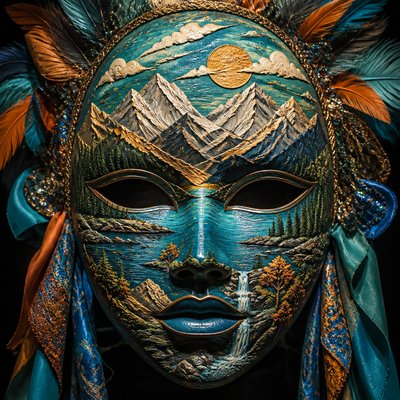
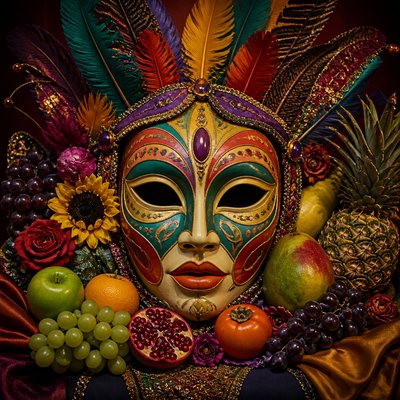
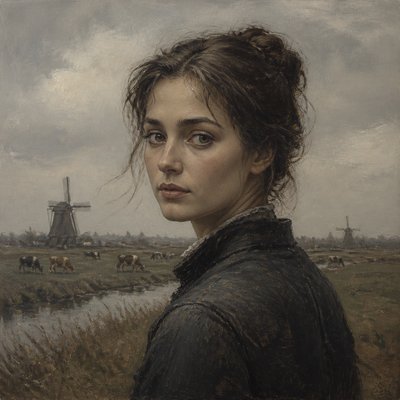
South African Art Style
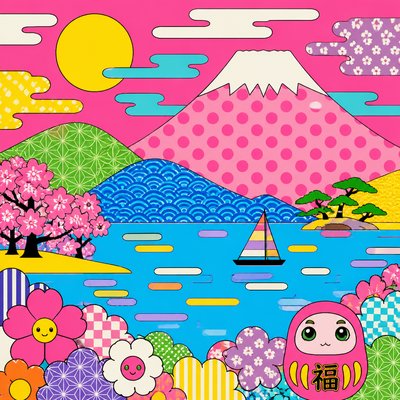
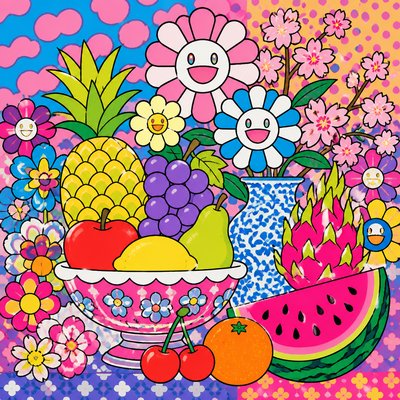
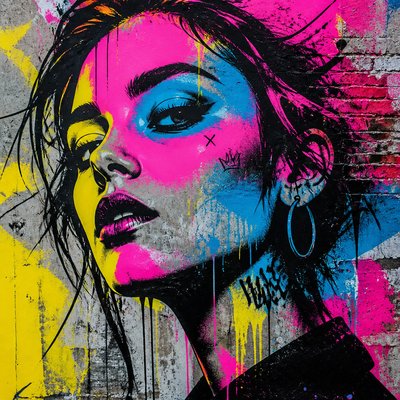
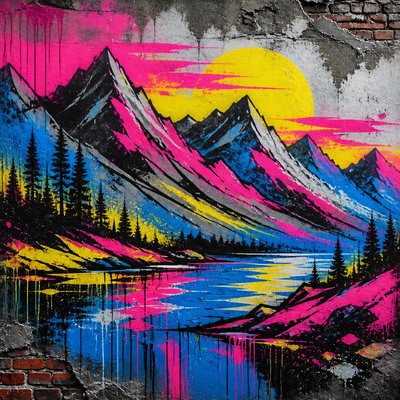
Explore South African art style: vivid geometric murals, black outlines, ochre earth, chevrons, and ancient rock-texture energy.
Instantly rendered in South African — or transform a photo
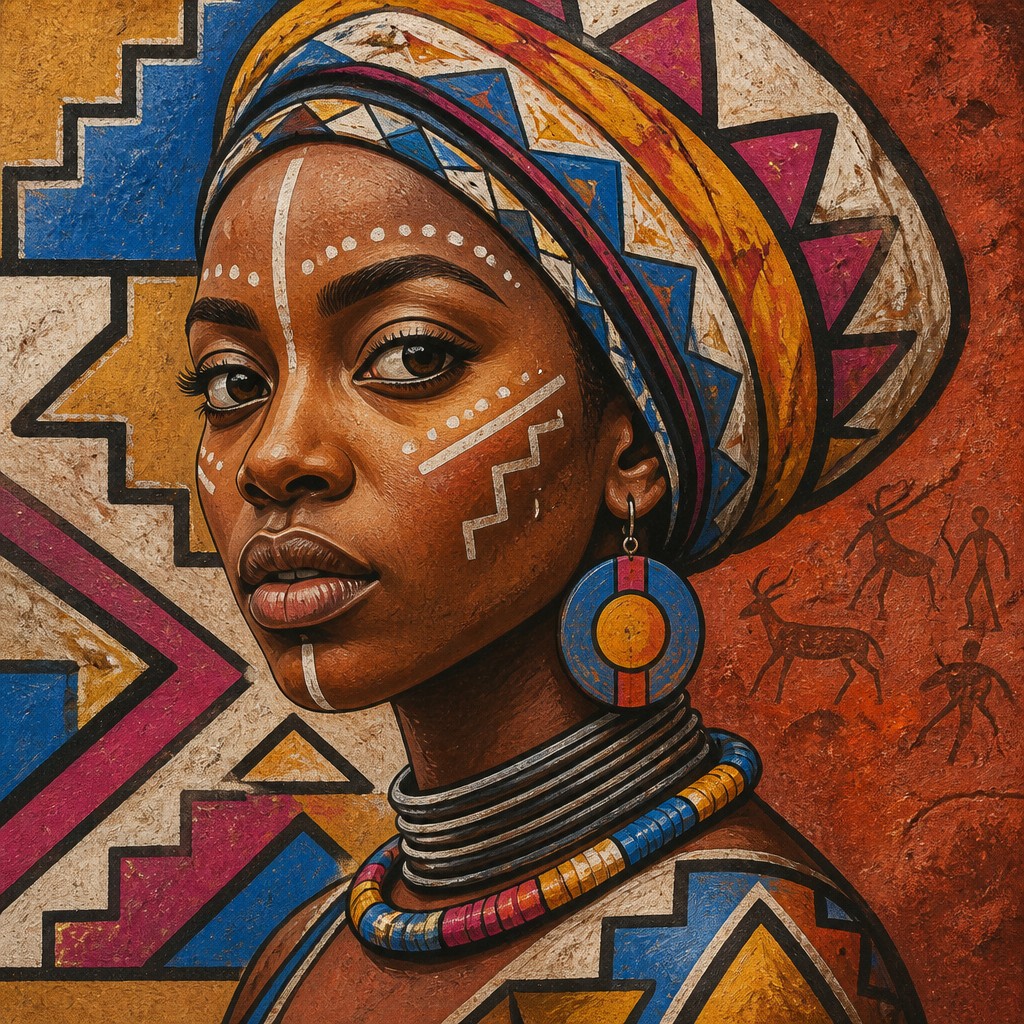
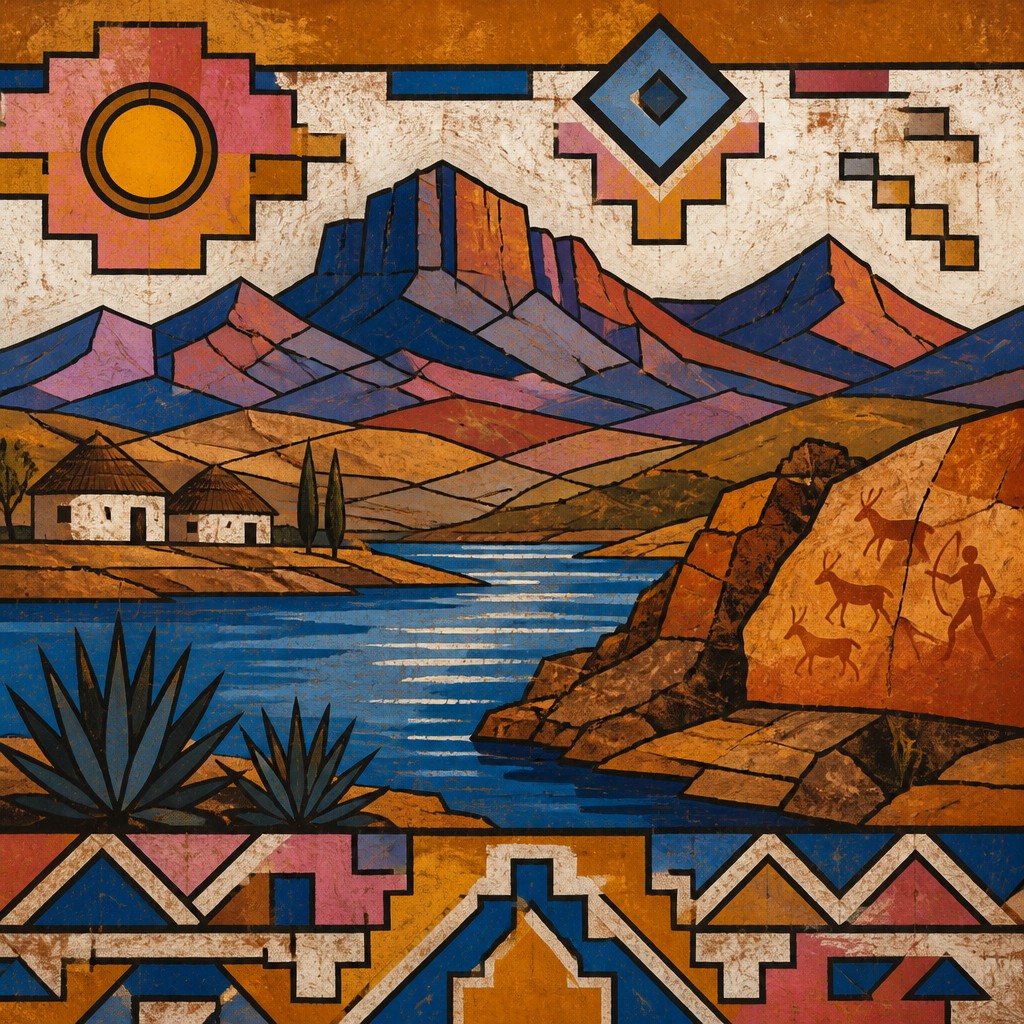
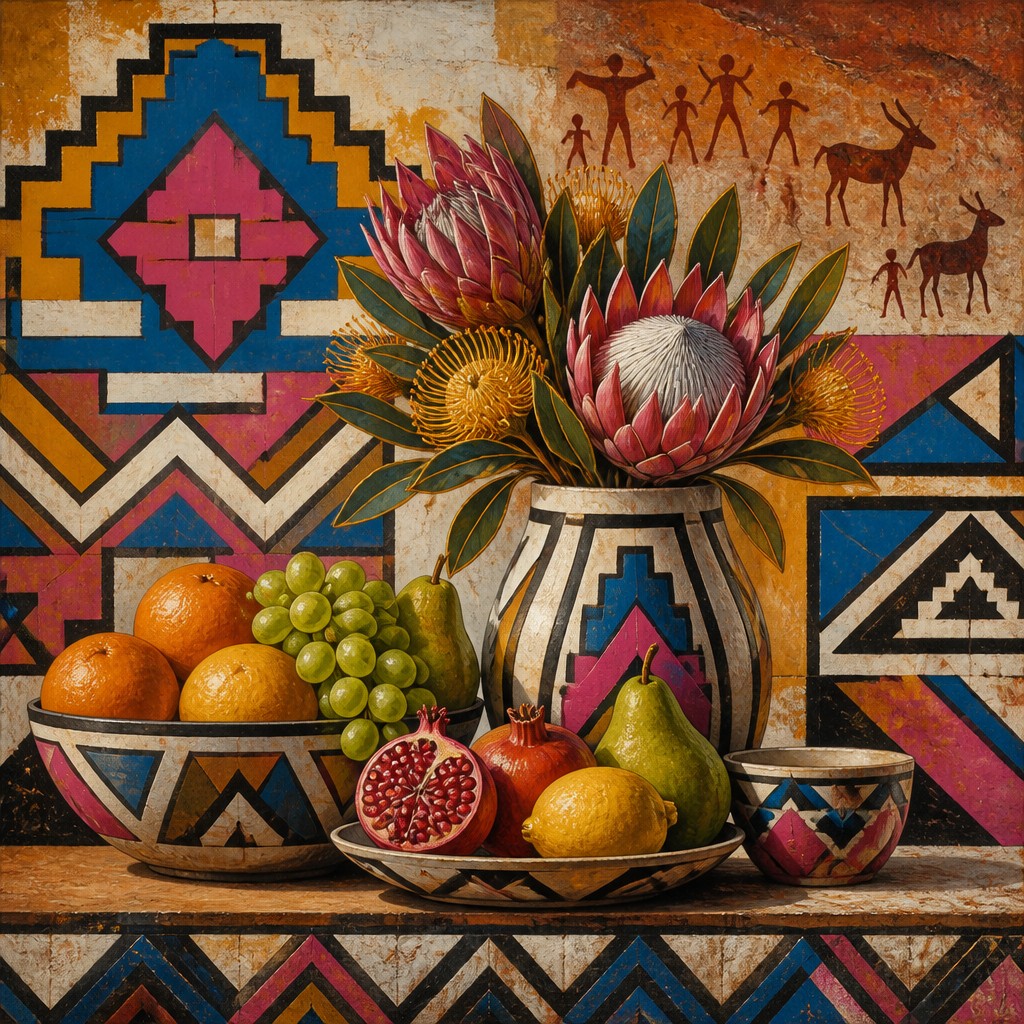
South African Gallery
Tap any artwork to explore it
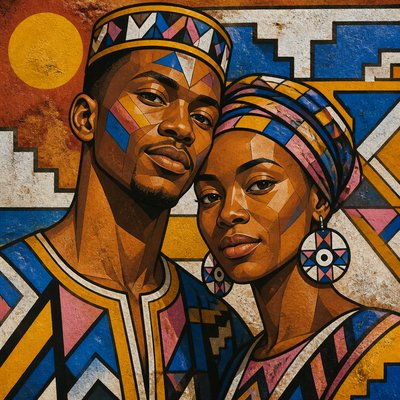
What is South African Art Style?
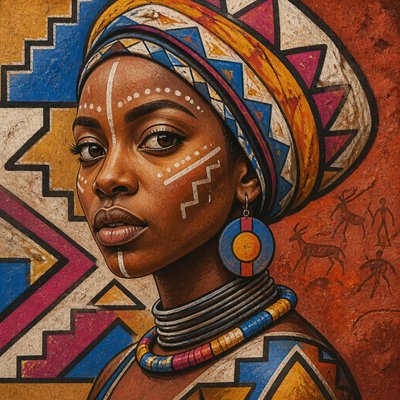
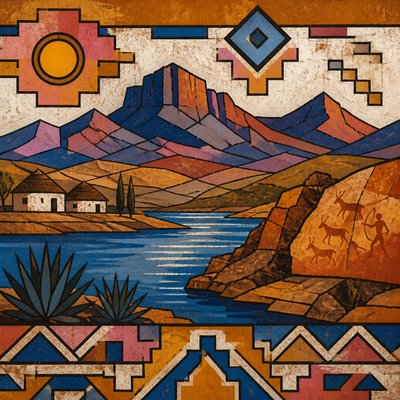
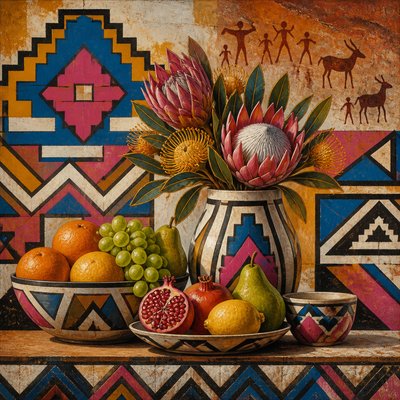
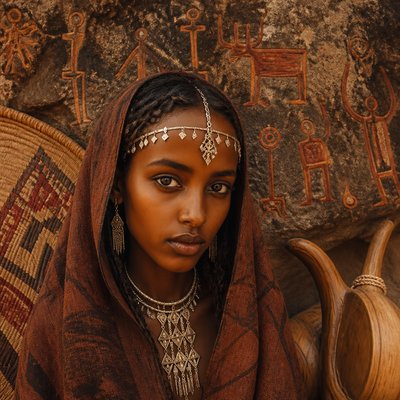
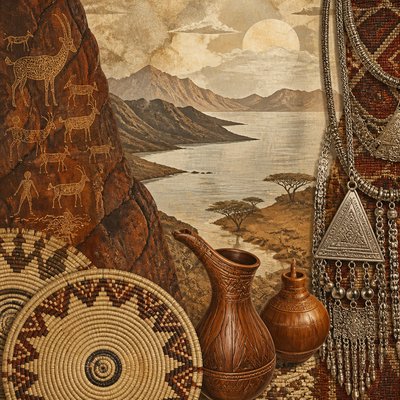
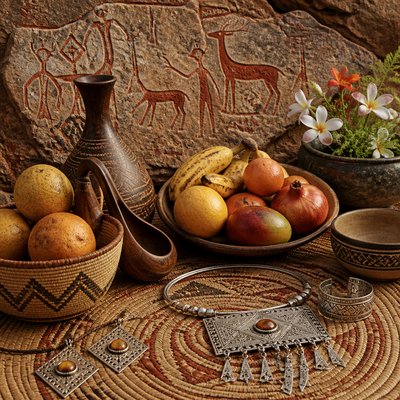
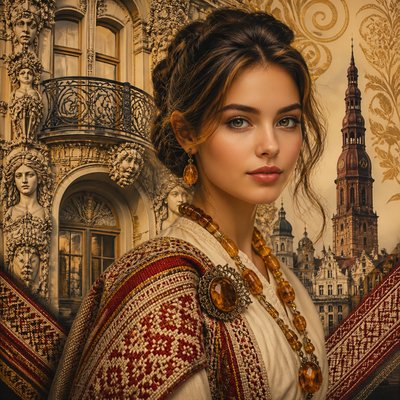
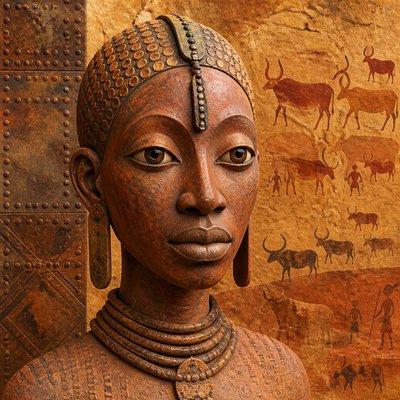
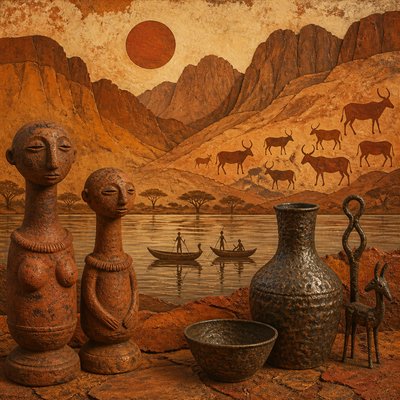
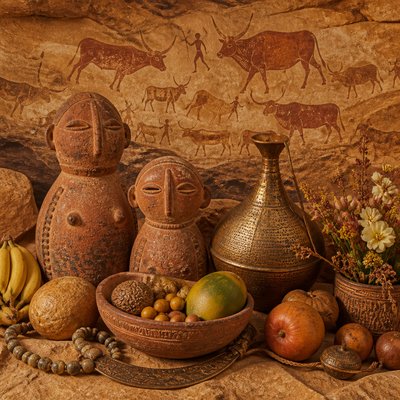
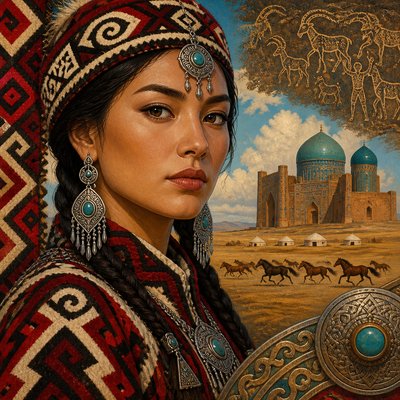
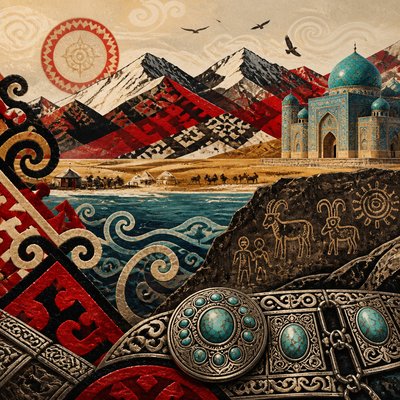
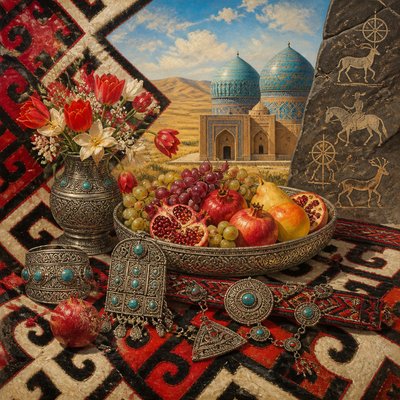
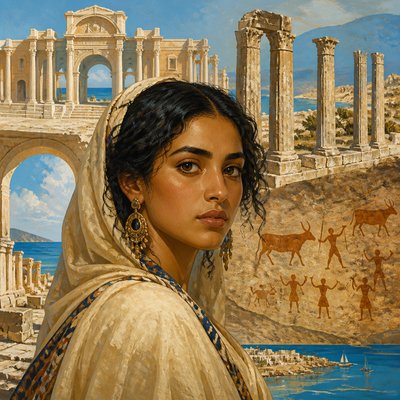
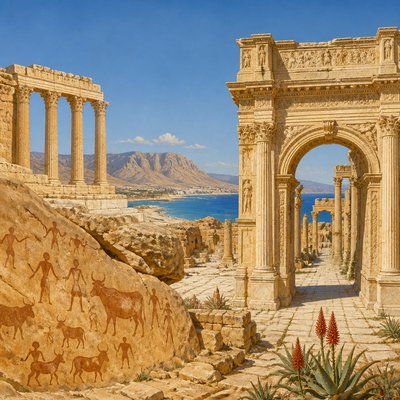
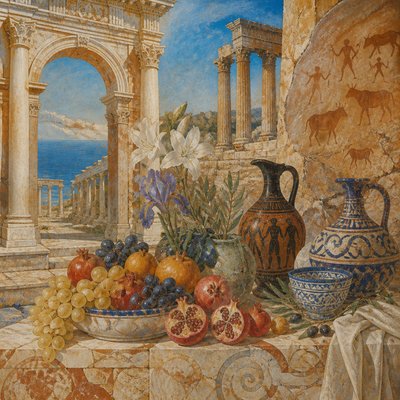
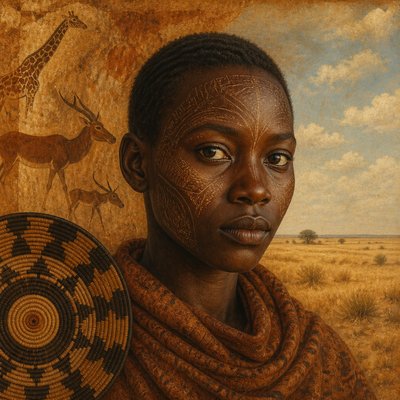
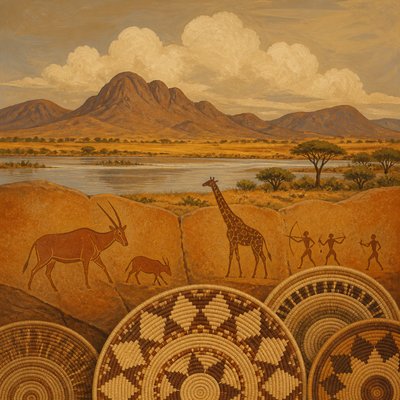
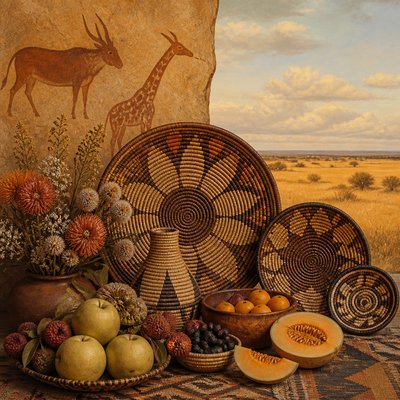
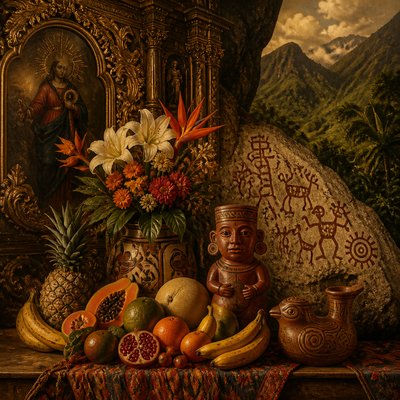
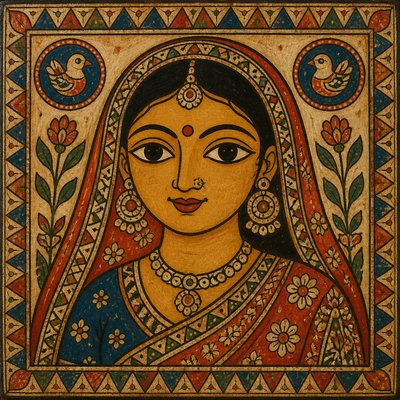
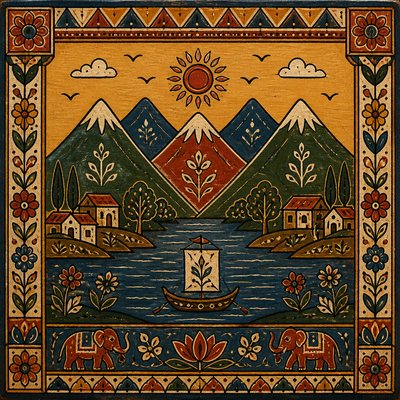
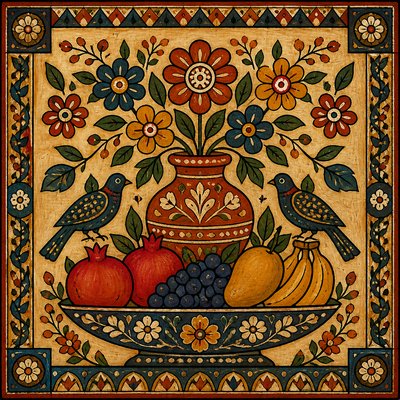
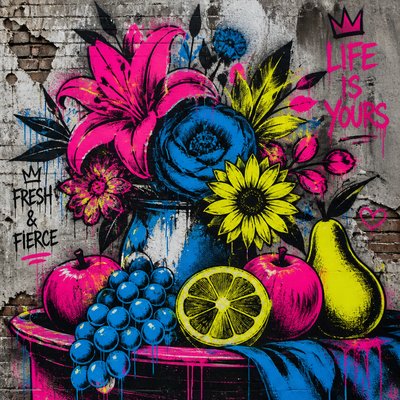
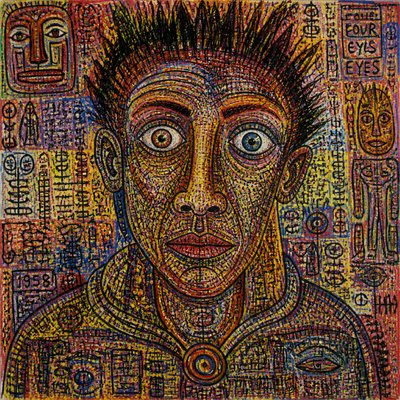
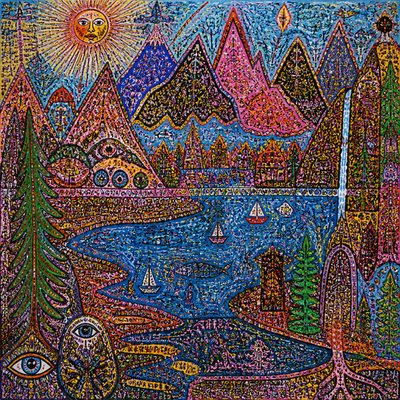
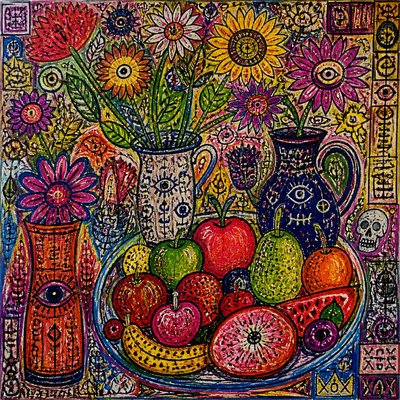
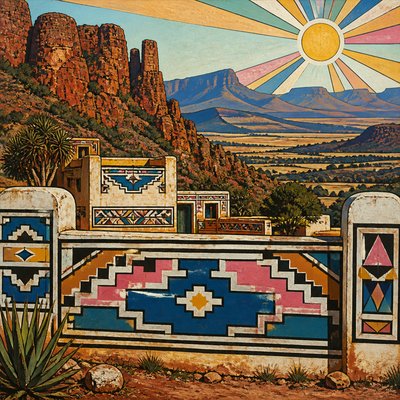
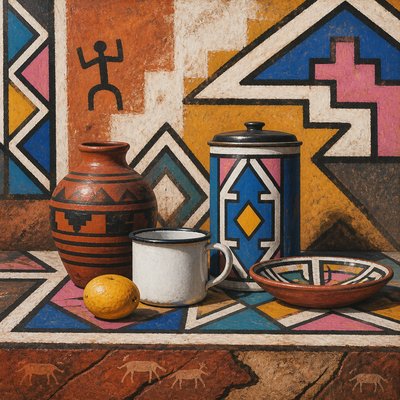
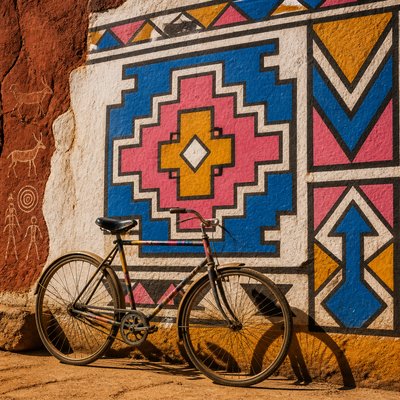
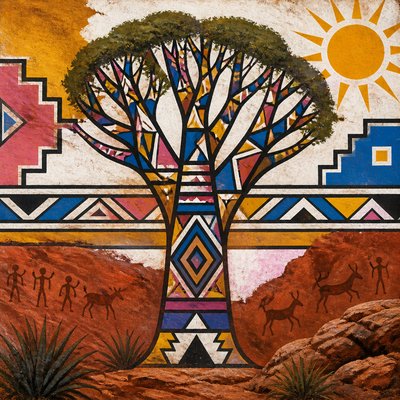
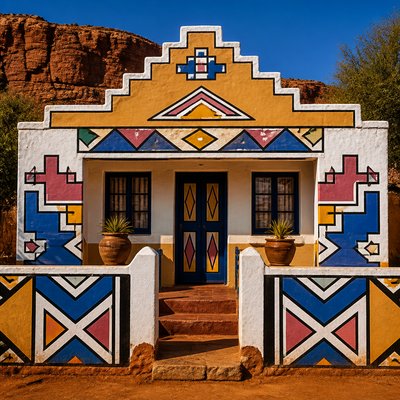
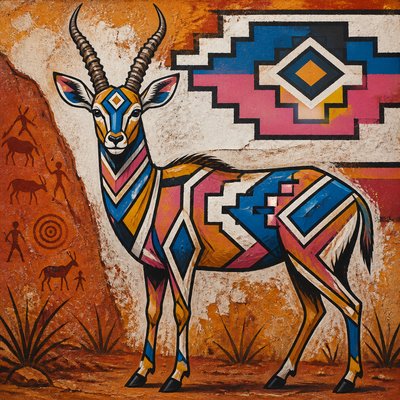
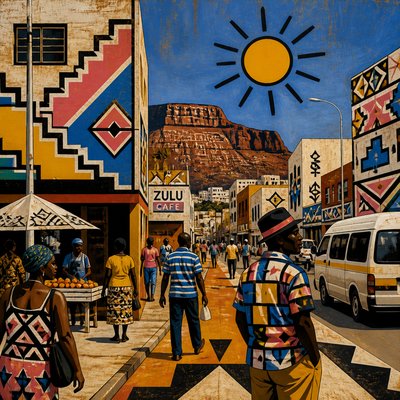
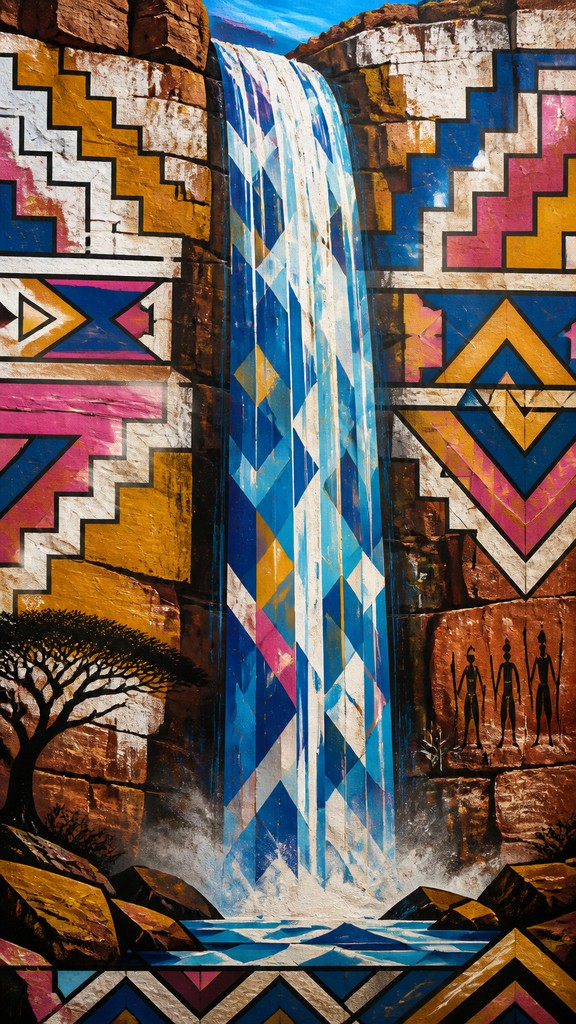
South African art style is a descriptive contemporary aesthetic rather than a single historically codified movement. It combines bold geometric wall-painting color with ochre, whitewash, black outlines, stepped forms, chevrons, and the weathered surfaces associated with Southern African rock landscapes and ancient rock art. The result is graphic, sunlit, and architectural, with flat areas of saturated blue, pink, yellow, red, and earth brown set against mineral grounds.
Its visual identity depends on the tension between precise pattern and tactile imperfection. Strong silhouettes and repeated motifs create a mural-like rhythm, while dry pigment, uneven plaster, eroded stone, and hand-painted edges keep the image connected to place and material. The style can suggest decorated architecture, ceremonial pattern, landscape, portraiture, or contemporary illustration without belonging exclusively to any one medium or community.
Try It On Your Photos
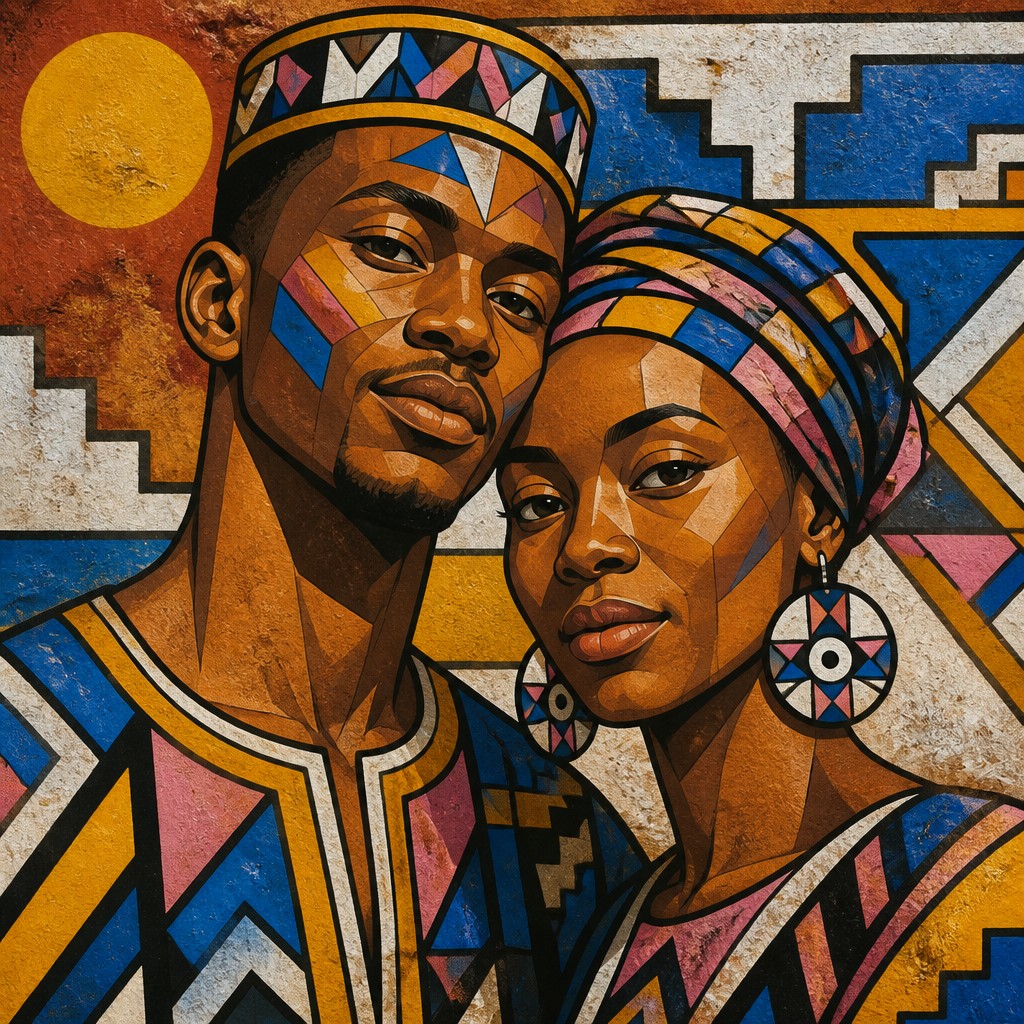
Upload any photo and convert it into South African Art Style — drag the sliders to compare before and after.


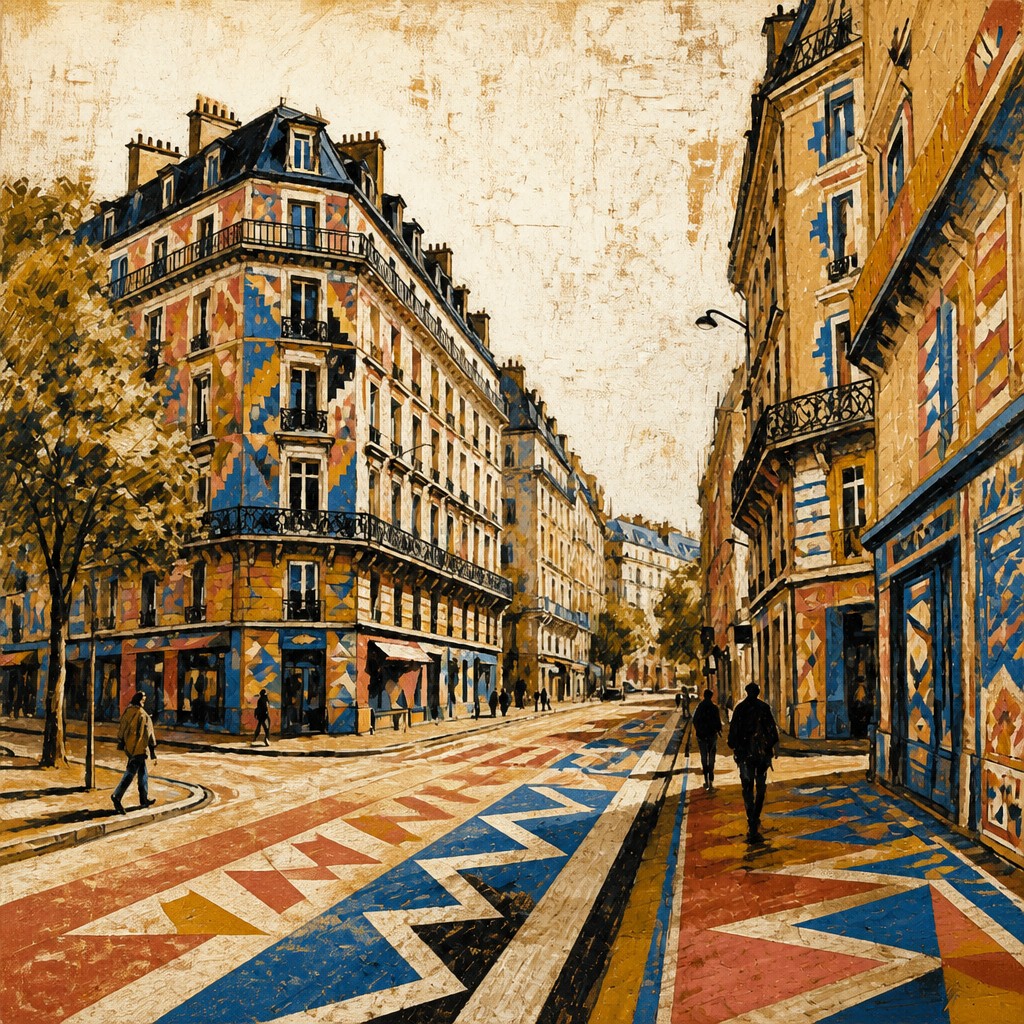

What Defines South African Art Style
The signature details, up close
Geometric mural structure
Large planes, bands, borders, diamonds, triangles, stepped forms, and chevrons organize the composition like a painted facade. Repetition gives the image a clear visual cadence.
Vivid color against earth
Electric blues, pinks, yellows, turquoise, and red-orange are placed against ochre, clay, sand, and whitewash grounds. The contrast makes the colors appear sun-struck and unusually intense.
Black contouring
Dark outlines separate adjoining color fields and clarify motifs at a distance. The contour may be crisp and graphic or slightly irregular, suggesting a hand-painted wall.
Mineral and rock surfaces
Dry stone, cracked plaster, dust, pitted pigment, and earthy red rock textures temper the clean geometry. Surface wear prevents the work from feeling like purely digital vector art.
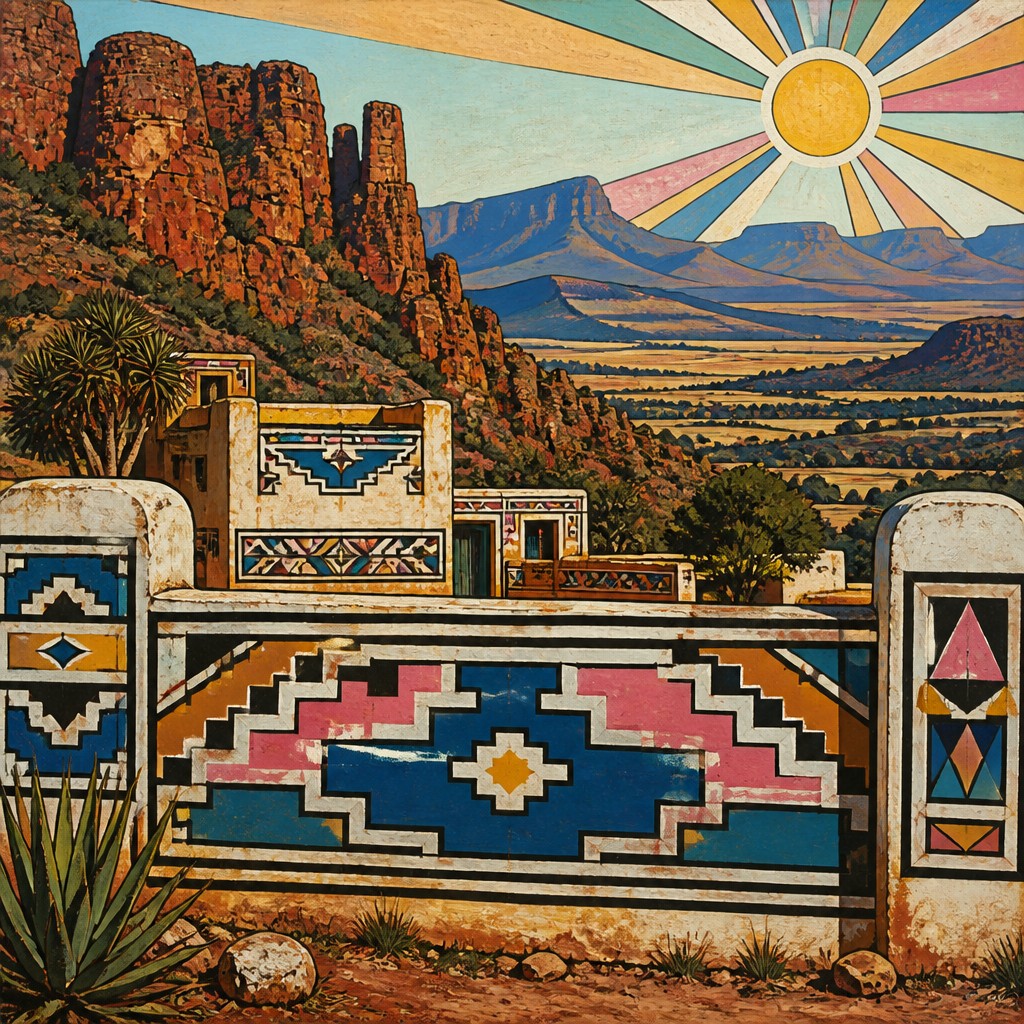
Stepped and chevron motifs
Angular zigzags, stair-step borders, nested diamonds, and directional arrows create movement and visual hierarchy. These motifs are especially effective around doorways, figures, animals, and central emblems.
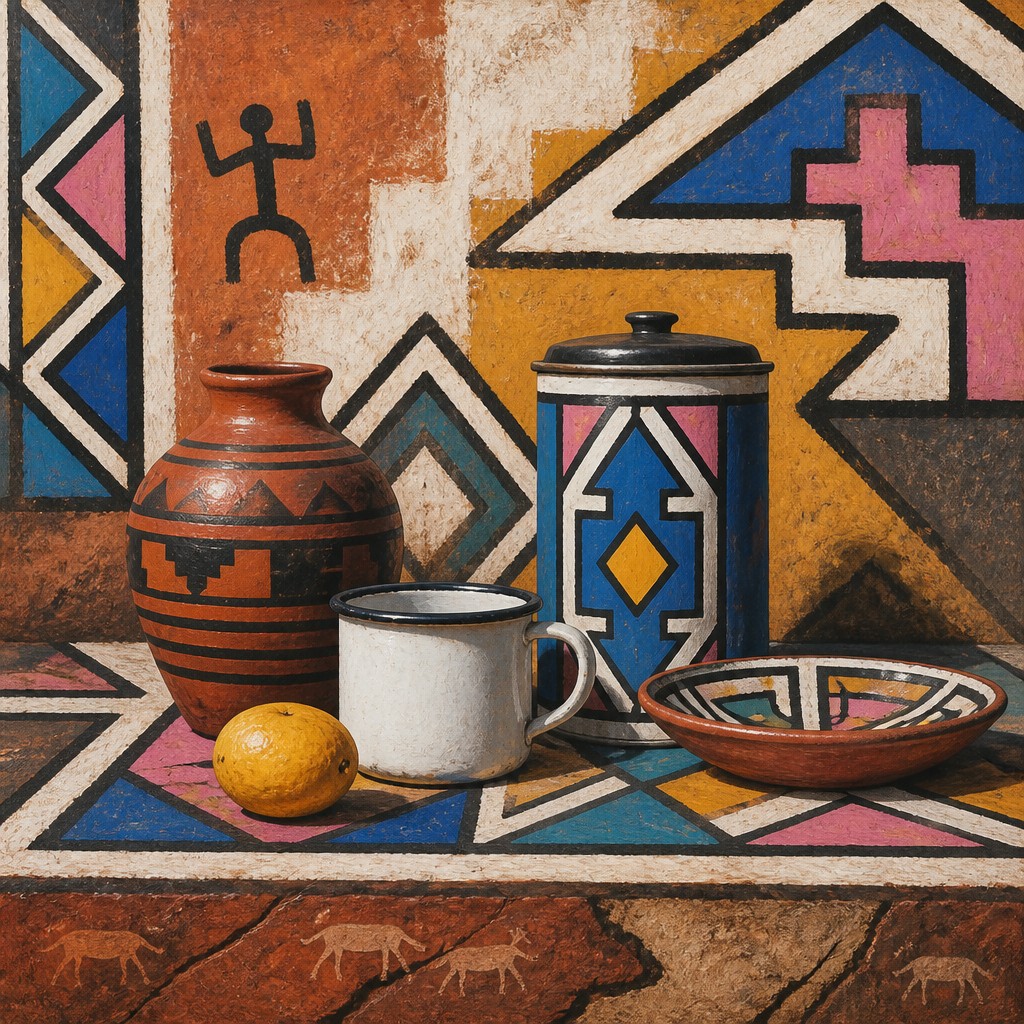
Flat graphic simplification
Forms are reduced to readable silhouettes and broad color blocks rather than modeled with naturalistic shading. Depth comes from overlap, scale, pattern, and the implied plane of the wall.
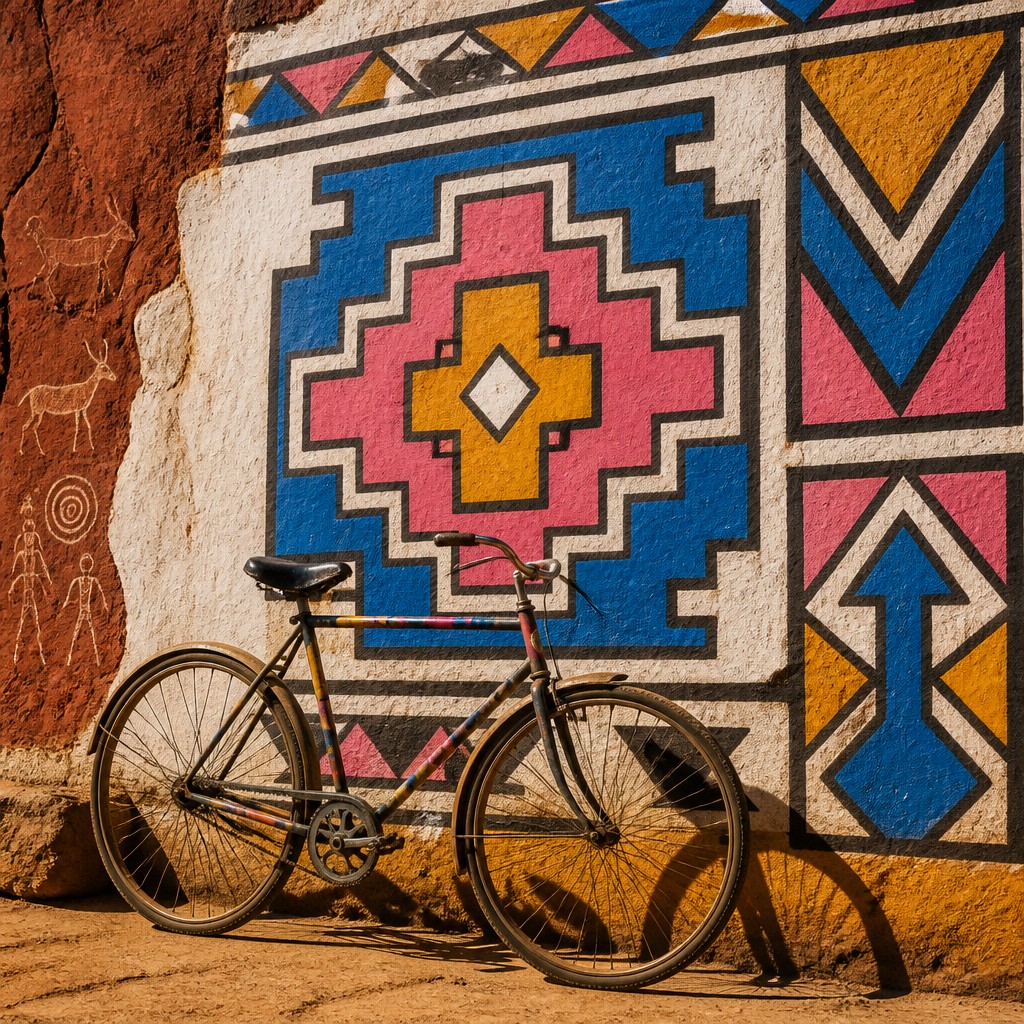
Sunlit physicality
Hard illumination, warm dust, faded edges, and occasional pigment variation evoke an outdoor surface exposed to strong sunlight. The mood is energetic but grounded in landscape and material.
Try It
Create Videos in South African Art Style
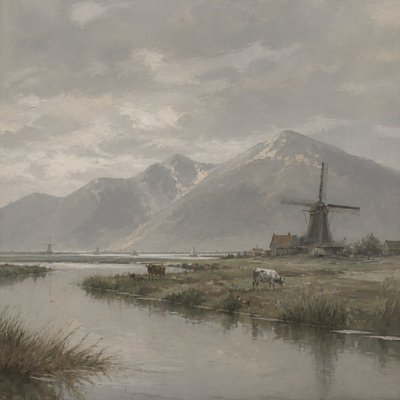
Styles aren't just for stills — describe a scene or animate an image and get a short video rendered in South African. Press play to see this pond come to life.
Make a VideoSouth African Prompt Ideas
Start from an idea — each one opens the generator with the style ready to go. See all 40 South African prompts →
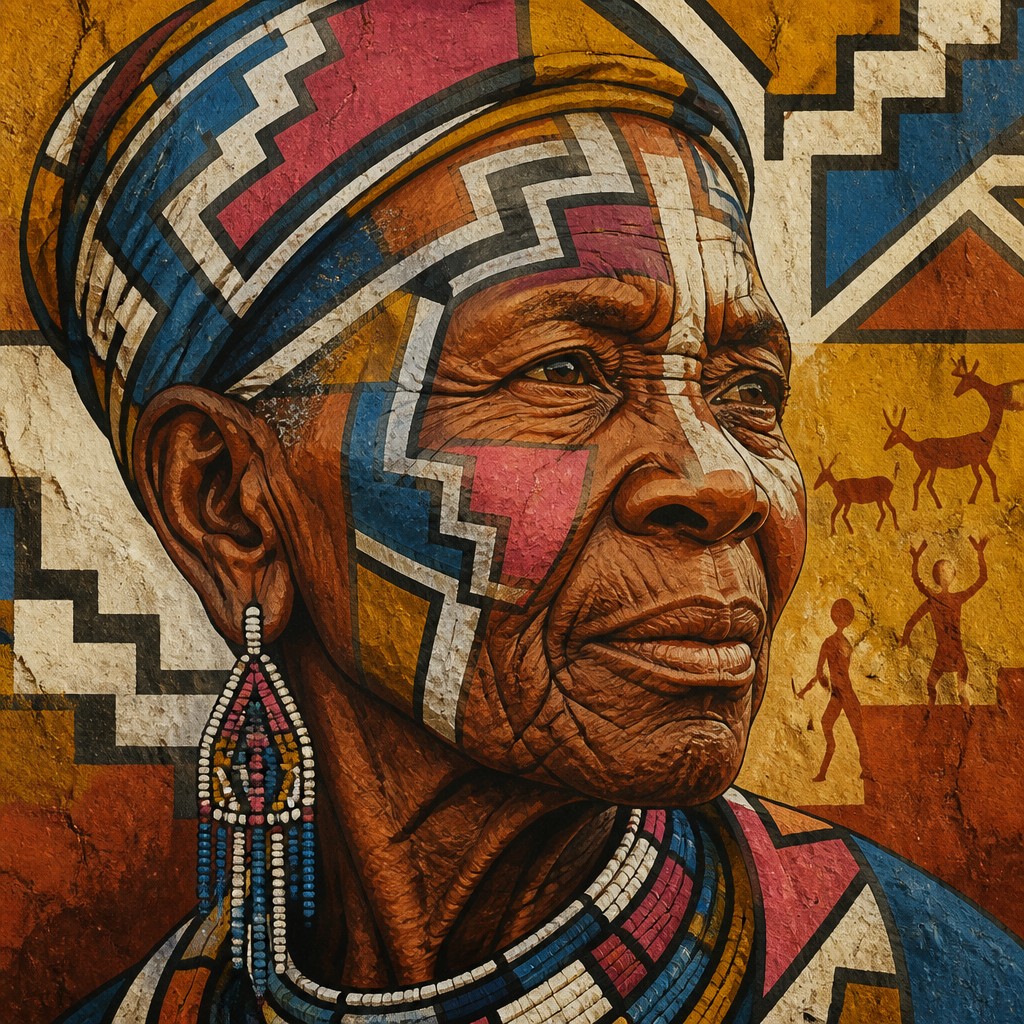
“close-up portrait of an elderly person with expressive weathered features”
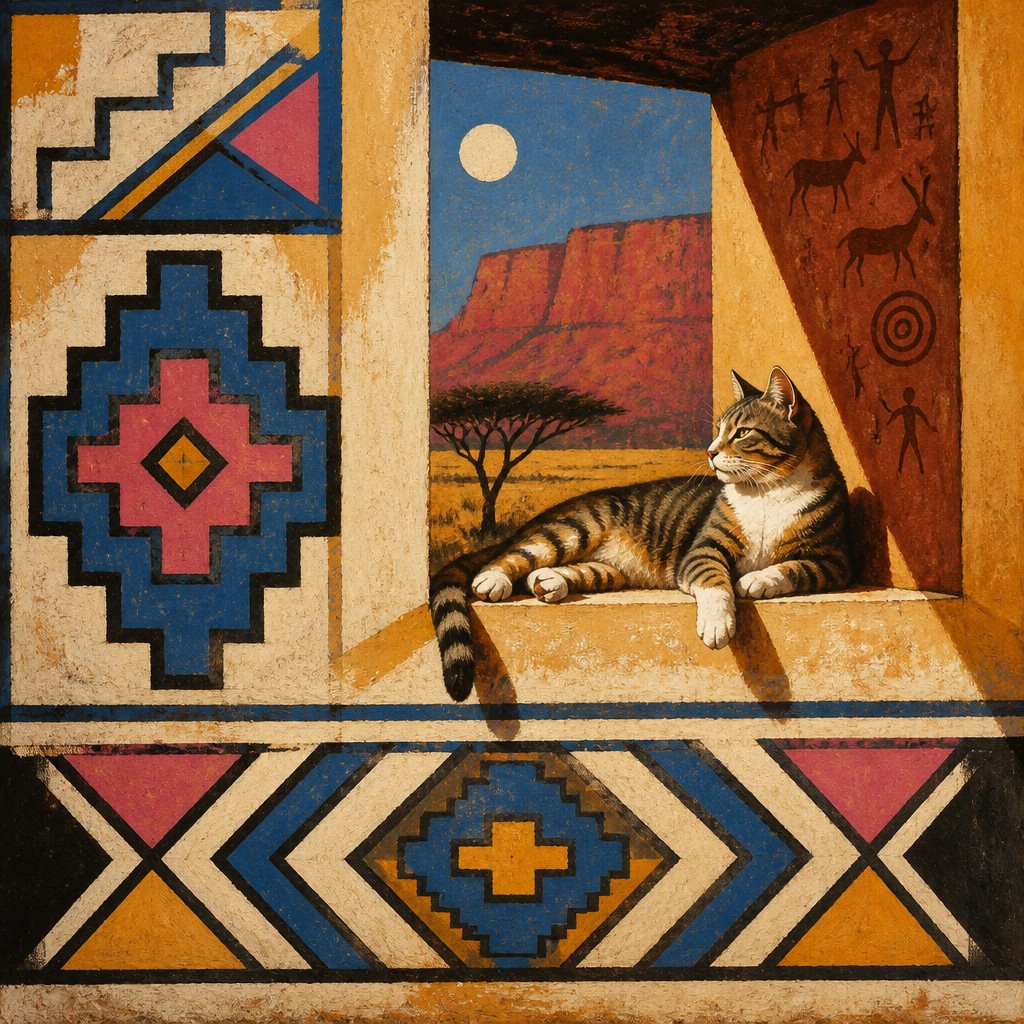
“a cat lounging in a sunlit window”
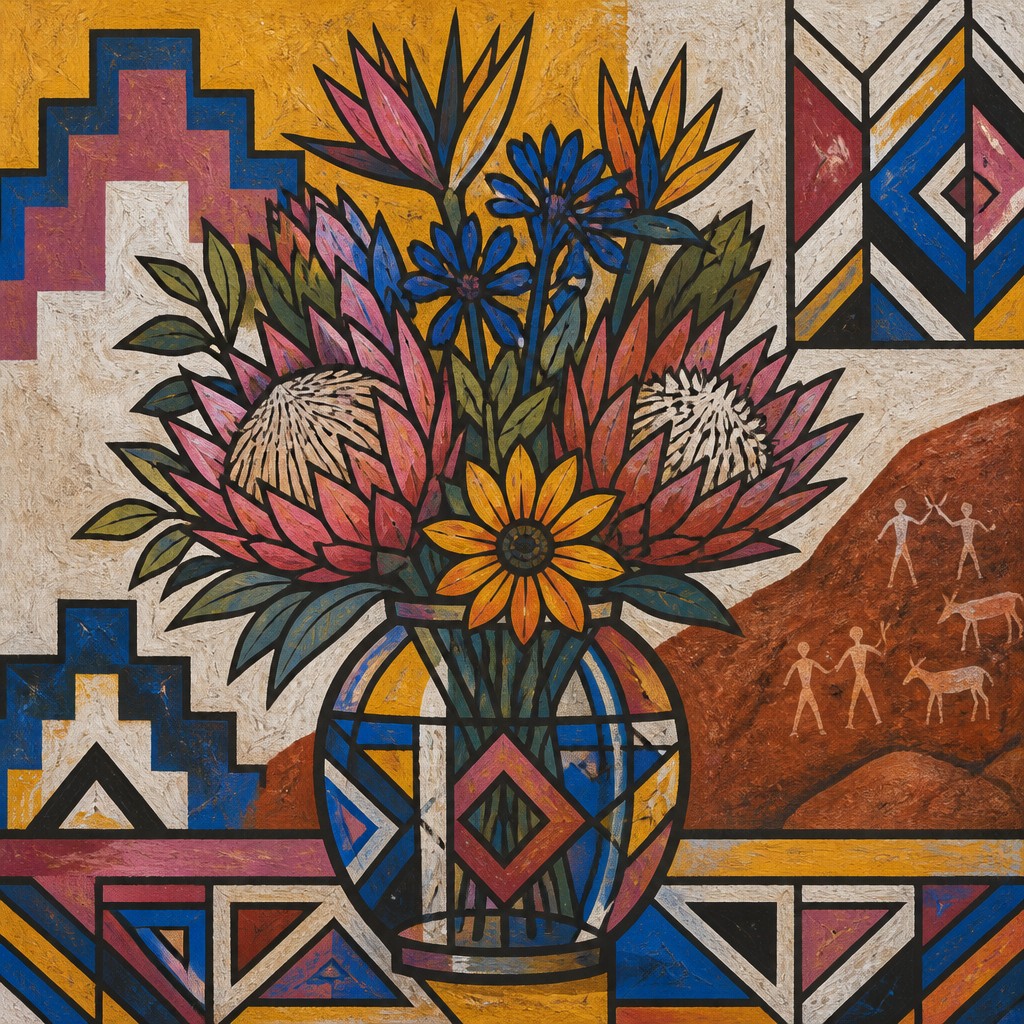
“bouquet of flowers in a glass vase”
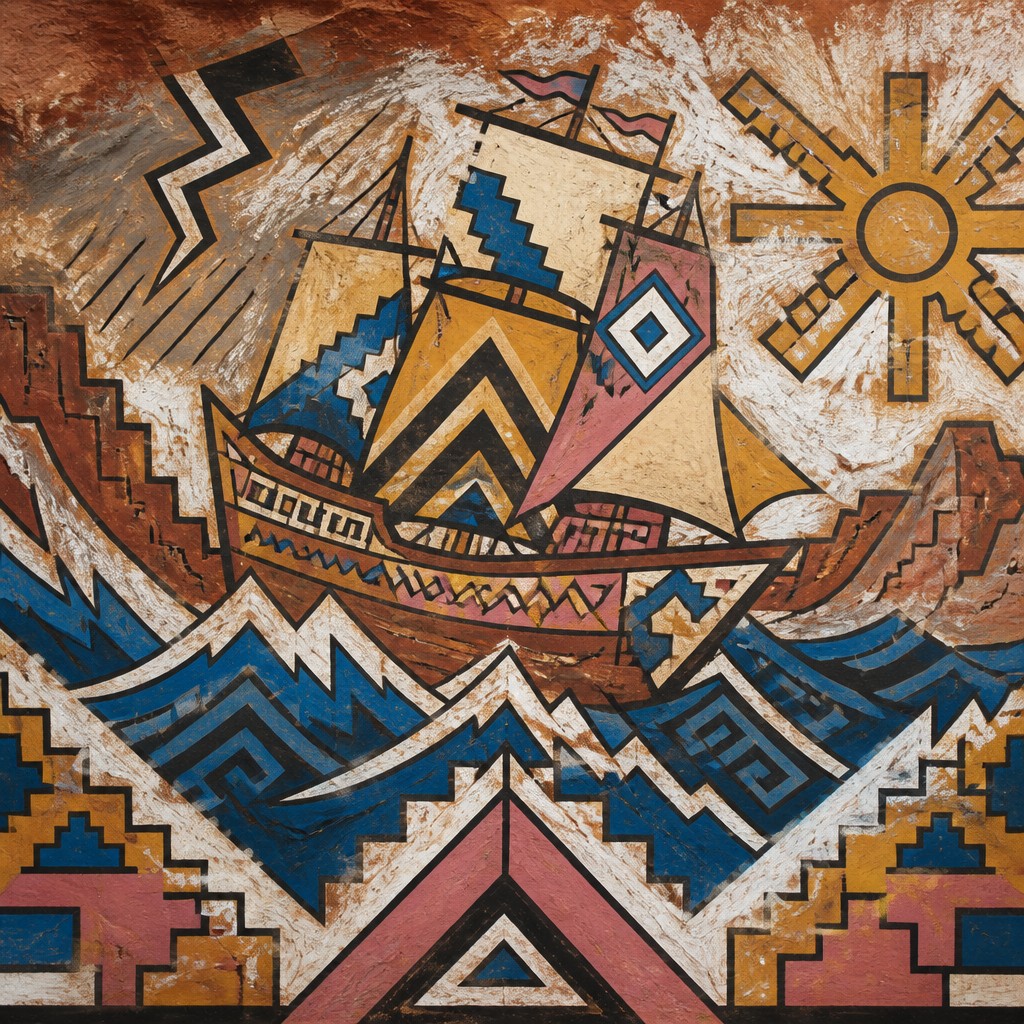
“sailing ship on a stormy sea”
How to Create South African Art
Master the craft step by step — or skip straight to creating. Read the full guide →
- 1
Build a mural-like ground
Begin with a plaster, adobe, stone, or whitewashed surface in ochre, sand, or warm off-white. Add subtle cracks, pores, and pigment loss before placing the main design so the texture remains integrated.
- 2
Reduce forms to angular planes
Sketch the subject as a few strong silhouettes and geometric masses, then surround them with stepped borders, chevrons, diamonds, or zigzags. Avoid excessive gradients and finely rendered detail.
- 3
Use a controlled palette
Combine two or three vivid accents—such as cobalt blue, magenta, yellow, or turquoise—with black, clay red, ochre, and whitewash. Let the earthy colors occupy enough space to keep the palette connected to the wall or rock ground.
- 4
Paint outlines with deliberate irregularity
Use a broad brush, dry-brush pass, or slightly uneven digital contour to suggest human application. Keep the major edges legible while allowing minor variations in thickness and coverage.
- 5
Preserve cultural specificity
When referencing a particular Southern African tradition, research its motifs, meanings, materials, and community context rather than combining sacred or identifiable symbols indiscriminately. For a general interpretation, use abstract geometry and clearly present it as a contemporary synthesis.
- 6
Write focused digital prompts
Specify the subject, mural composition, palette, geometric vocabulary, black outlines, ochre or whitewashed ground, and rock or plaster texture. In image-editing or AI workflows, add constraints such as flat color planes, minimal shading, sunlit surfaces, and hand-painted imperfections.

The Story
History & Origins of South African
There is no single historical movement formally known as the South African art style. This visual formulation is best understood as an aesthetic synthesis drawing from Southern African rock-art traditions, contemporary mural and house-decoration practices, indigenous geometric pattern systems, and the high-contrast visual language of public painting and graphic design.
Its lineage is diverse. Ancient rock paintings across Southern Africa established an enduring association between mineral reds, ochres, black marks, and stone surfaces, while modern geometric wall painting—particularly traditions associated with Ndebele communities—demonstrates how facades can become organized fields of color, borders, diagonals, and repeated symbols. Contemporary interpretations often simplify or recombine these sources, so they should be treated as inspired adaptations rather than as an interchangeable representation of any specific cultural tradition.
Influences: This aesthetic intersects with Southern African rock art, indigenous geometric pattern traditions, contemporary mural painting, decorative facade art, public art, and modern graphic design. It also shares formal qualities with geometric abstraction, folk-art patterning, hard-edge painting, and weathered architectural photography, but its strongest identity comes from the relationship between saturated pattern, mineral color, outdoor light, and earthen surfaces.
Frequently Asked Questions
Is South African art style a recognized historical art movement?
No. The phrase generally describes a broad visual synthesis rather than a single school with a fixed manifesto, membership, or period. It should be used carefully because South Africa contains many distinct artistic communities, histories, and cultural traditions.
What defines the look of this style?
The core features are vivid geometric color, strong black outlines, ochre or whitewashed grounds, stepped and chevron motifs, and tactile rock or plaster texture. Flat graphic shapes are balanced by the irregularity of hand-painted surfaces and weathered materials.
How is it related to Ndebele mural painting?
The emphasis on geometric facade decoration, vivid color, borders, and angular patterning can recall Ndebele mural traditions. However, a generalized image should not be presented as an authentic Ndebele work or treated as interchangeable with that specific living cultural practice.
How does it differ from African-inspired geometric art in general?
This formulation places particular emphasis on South African and Southern African references, including mineral earth colors, rock surfaces, outdoor sunlight, and mural-like architecture. The continent-wide label 'African-inspired' is much broader and can obscure important regional differences.
What materials work well for making it traditionally?
Acrylic, casein, earth pigments, charcoal, chalk, and mineral-like washes work well on plaster, adobe-toned board, masonry, or textured paper. Apply broad color fields first, then add dark contours and selectively distress the surface.
Where can this style be used?
It suits murals, posters, editorial illustration, album artwork, textile patterns, architectural visualization, packaging, portrait backgrounds, and digitally composited photographs. It is especially effective when the subject has a clear silhouette and enough surface area for repeated geometry.
Create your first South African artwork
Describe anything — or upload a photo — and see it in South African Art Style in seconds.
Related Styles
Discover similar art styles