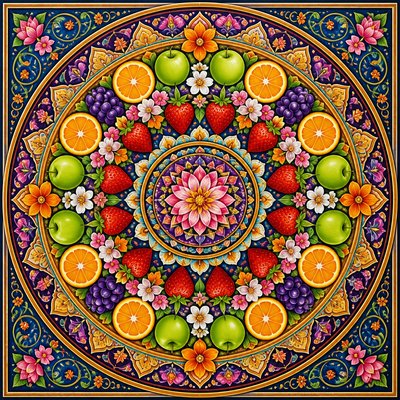
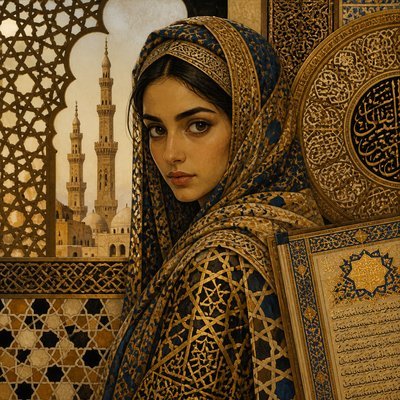
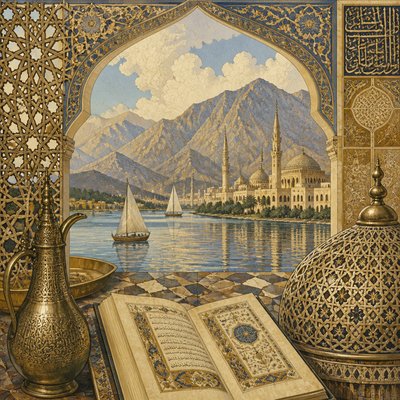
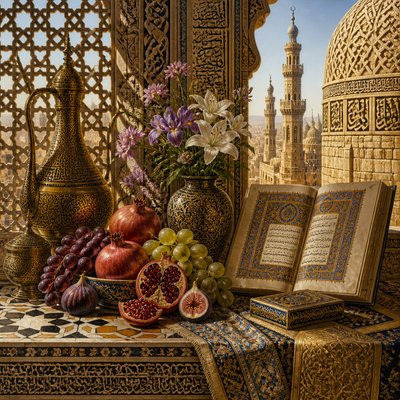
Kazakh Art Style
Explore Kazakh art through felt geometry, silver ornament, turquoise shrine architecture, petroglyph lines, and the open steppe.
Instantly rendered in Kazakh — or transform a photo
Kazakh Gallery
Tap any artwork to explore it
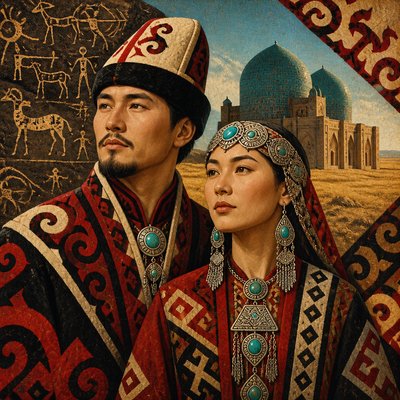
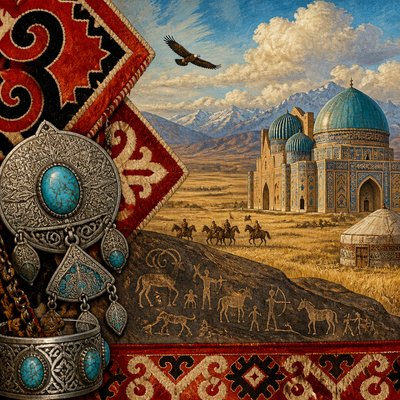
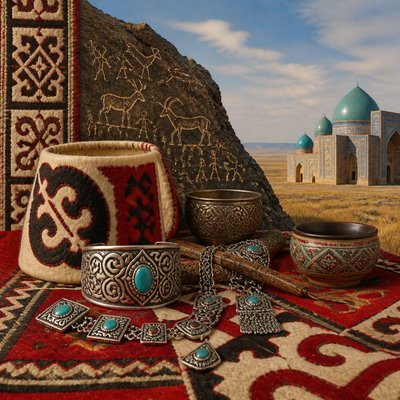
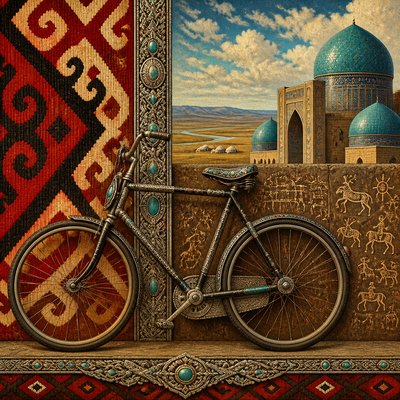
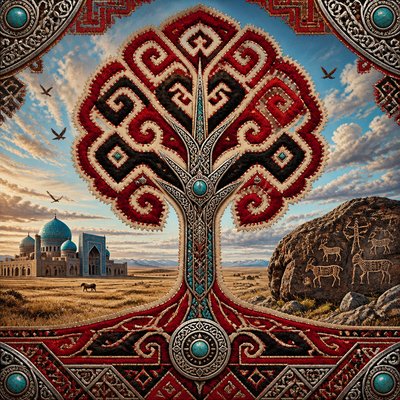
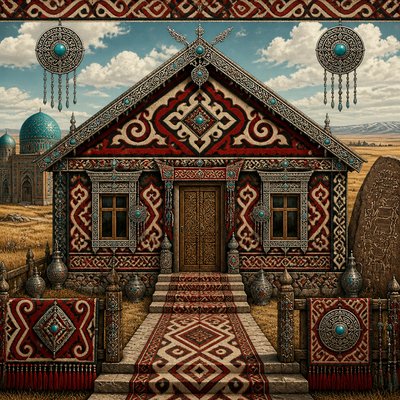
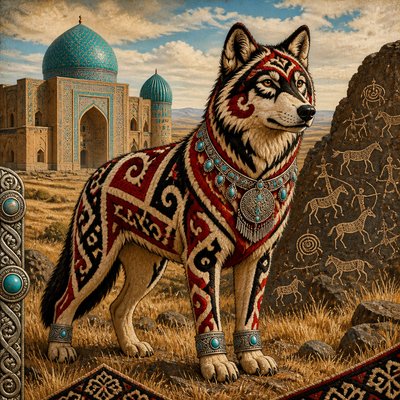
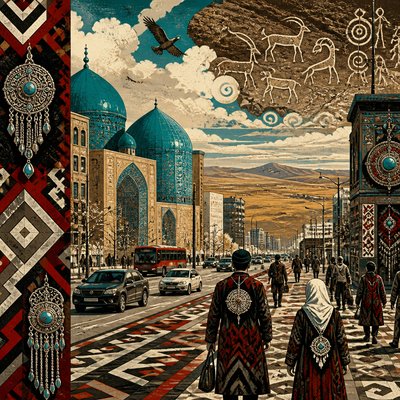
What is Kazakh Art Style?
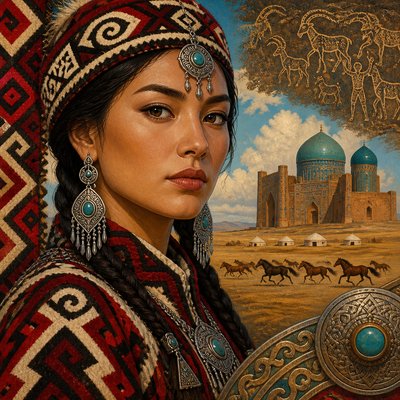
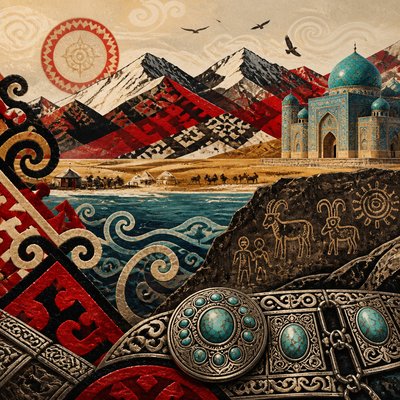
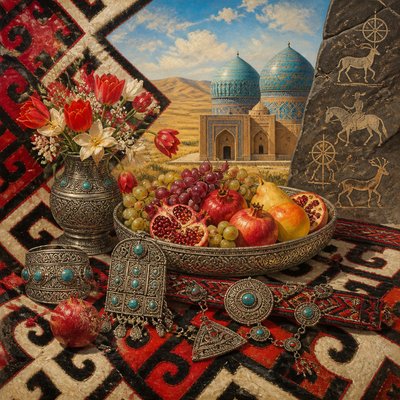
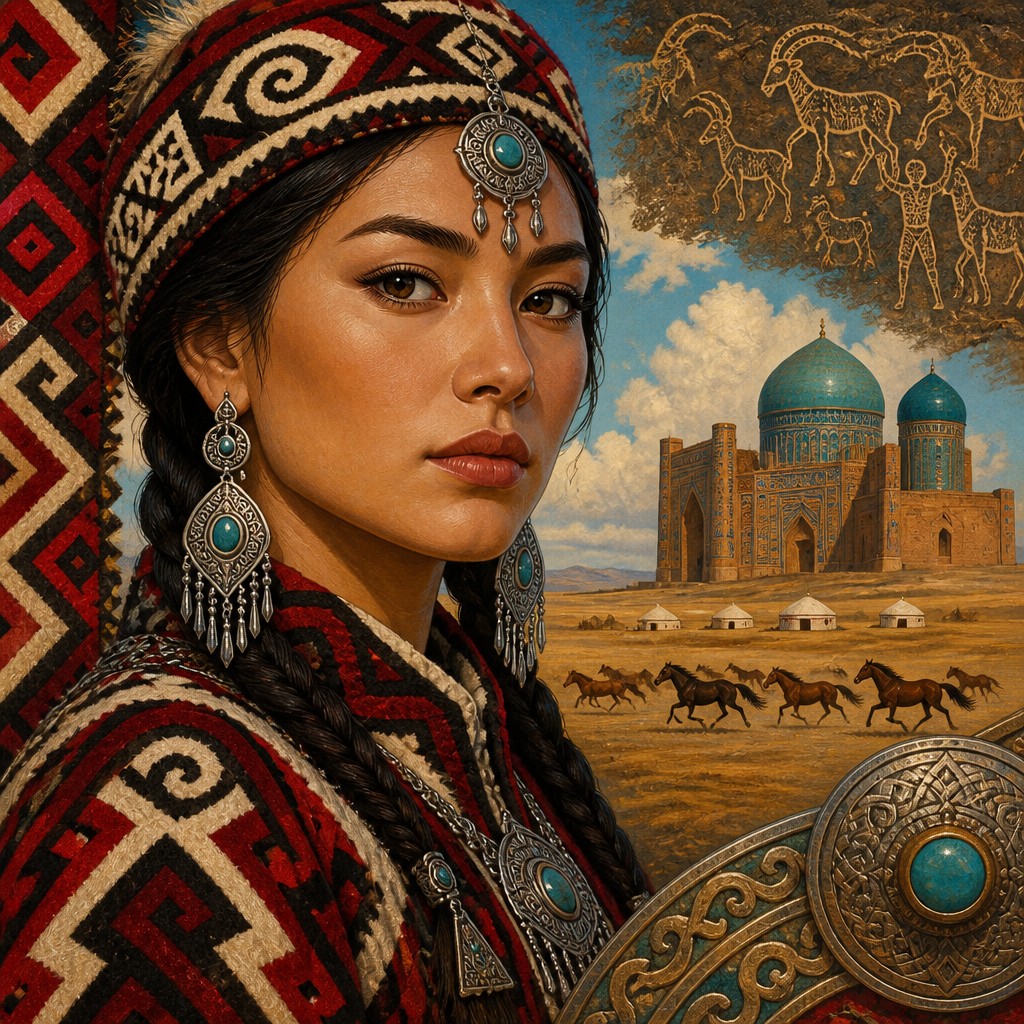
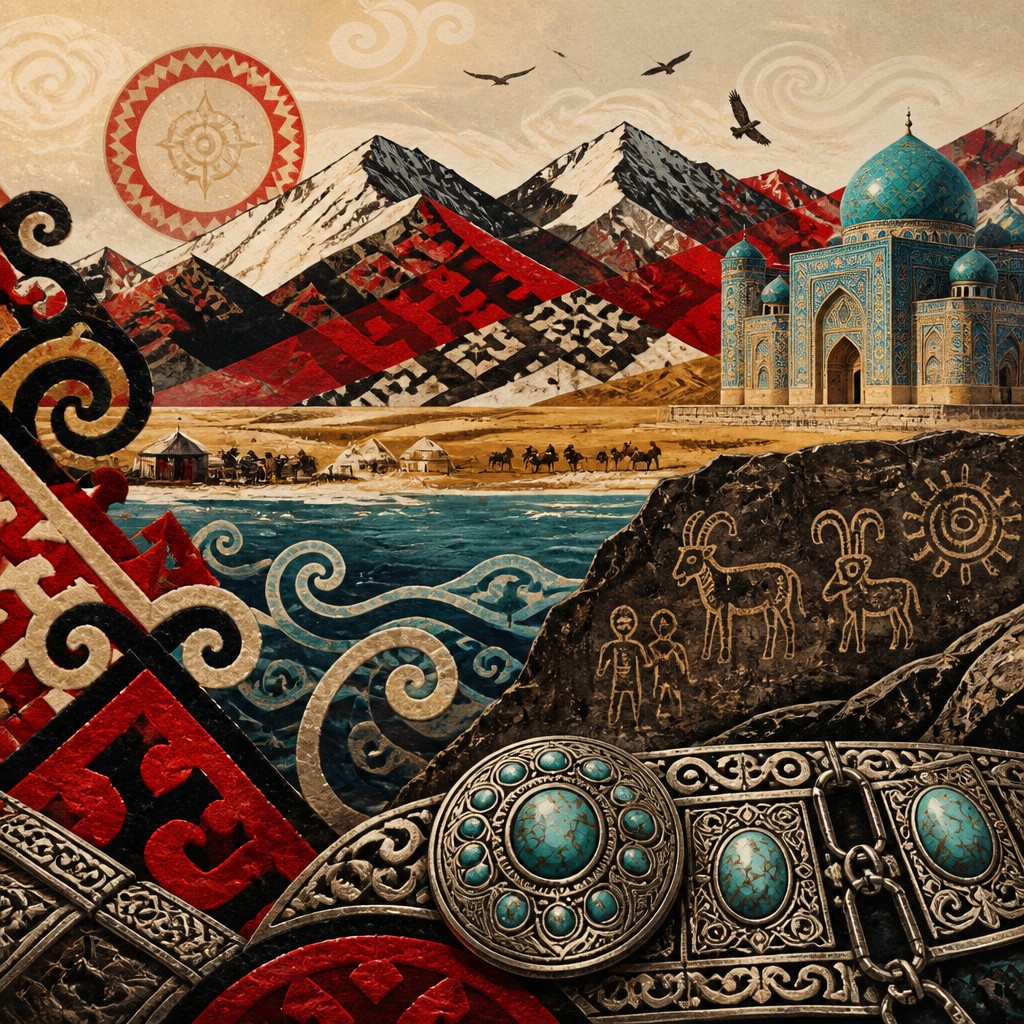
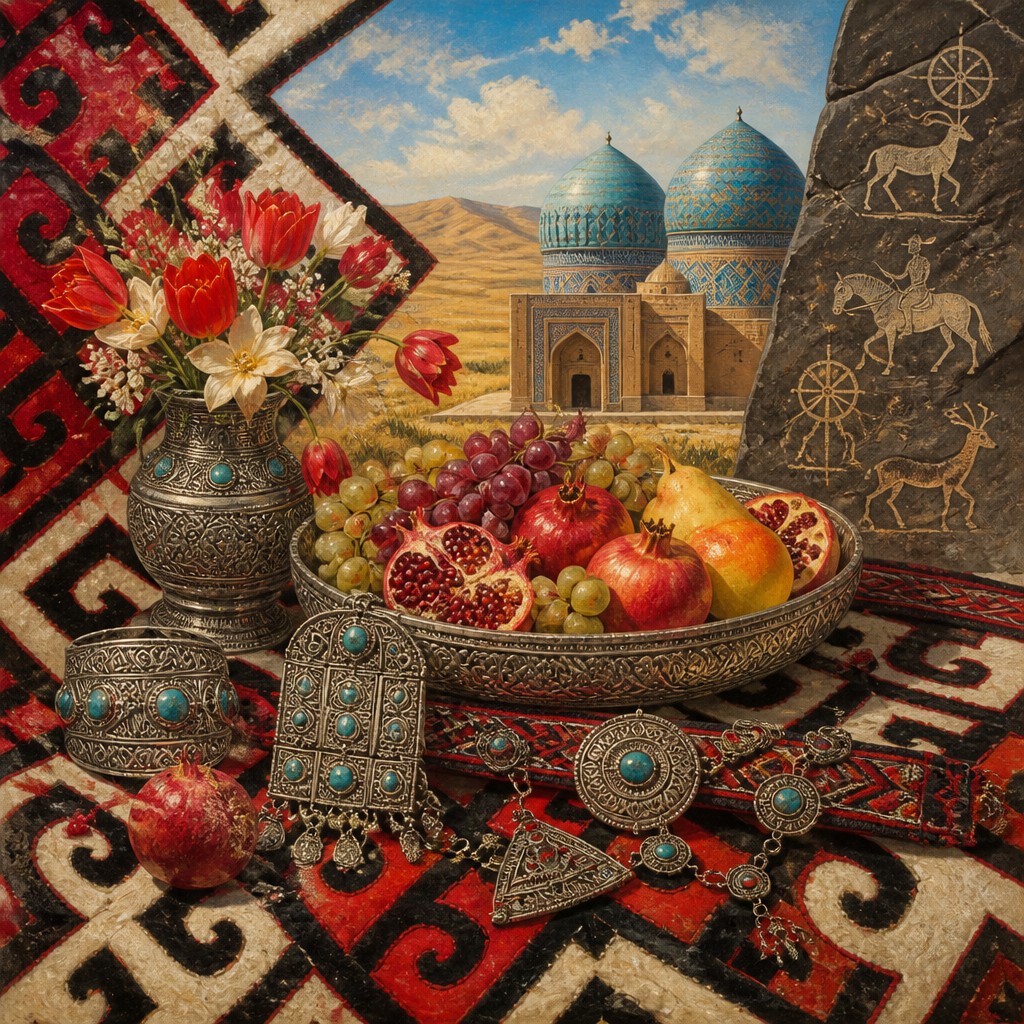
Kazakh art style is a contemporary synthesis of visual traditions from the Kazakh steppe: bold felt-appliqué patterns, nomadic textile ornament, engraved silver jewelry, turquoise inlay, ancient petroglyph lines, and the monumental geometry of Central Asian shrine architecture. Its signature palette combines crimson, black, cream, ochre, silver, and vivid turquoise against spacious golden horizons.
The style looks simultaneously tactile and architectural. Repeated geometric motifs suggest the construction of felt rugs, wall hangings, tent furnishings, and embroidered textiles, while crisp outlines and frontal compositions recall ornament, metalwork, and carved stone. Turquoise domes and expansive skies introduce a sense of place, linking intimate craft objects to the scale of the steppe and its historic sacred landscapes.
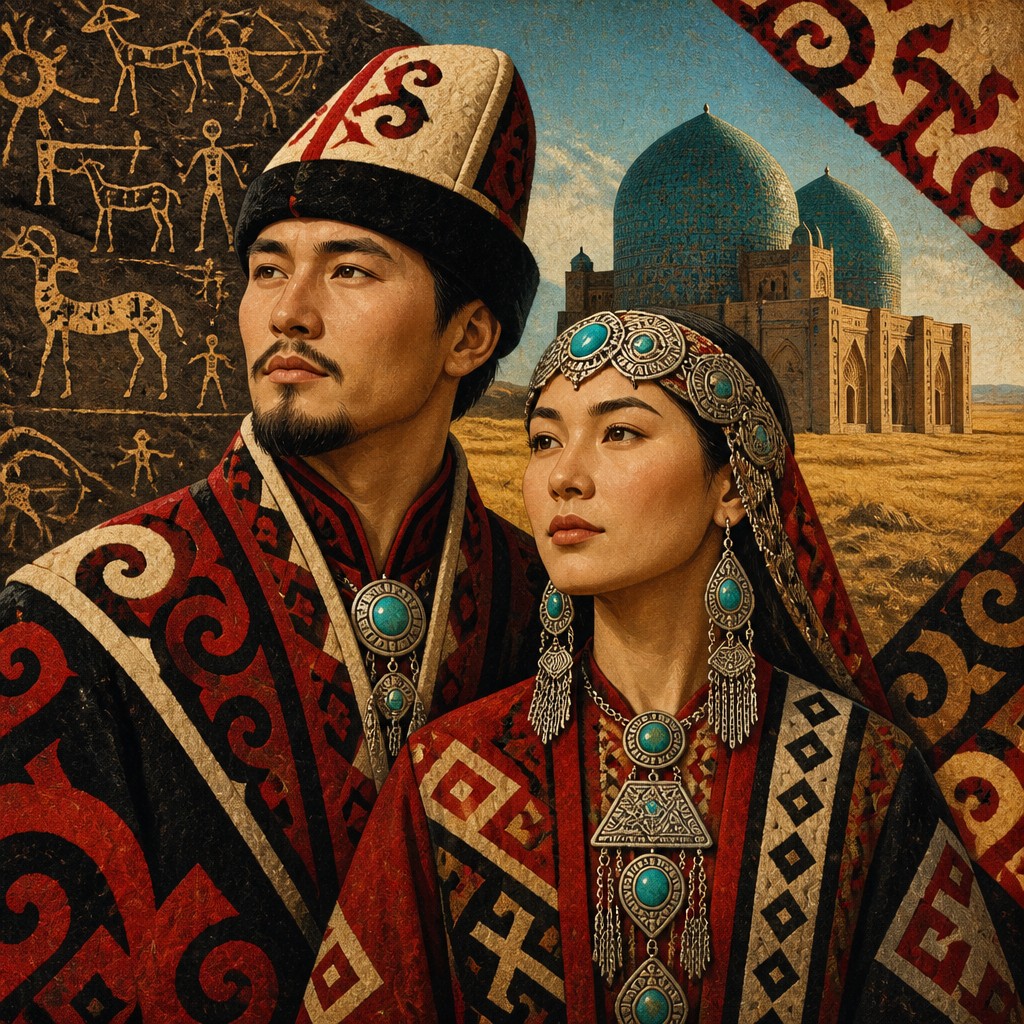
Try It On Your Photos
Upload any photo and convert it into Kazakh Art Style — drag the sliders to compare before and after.
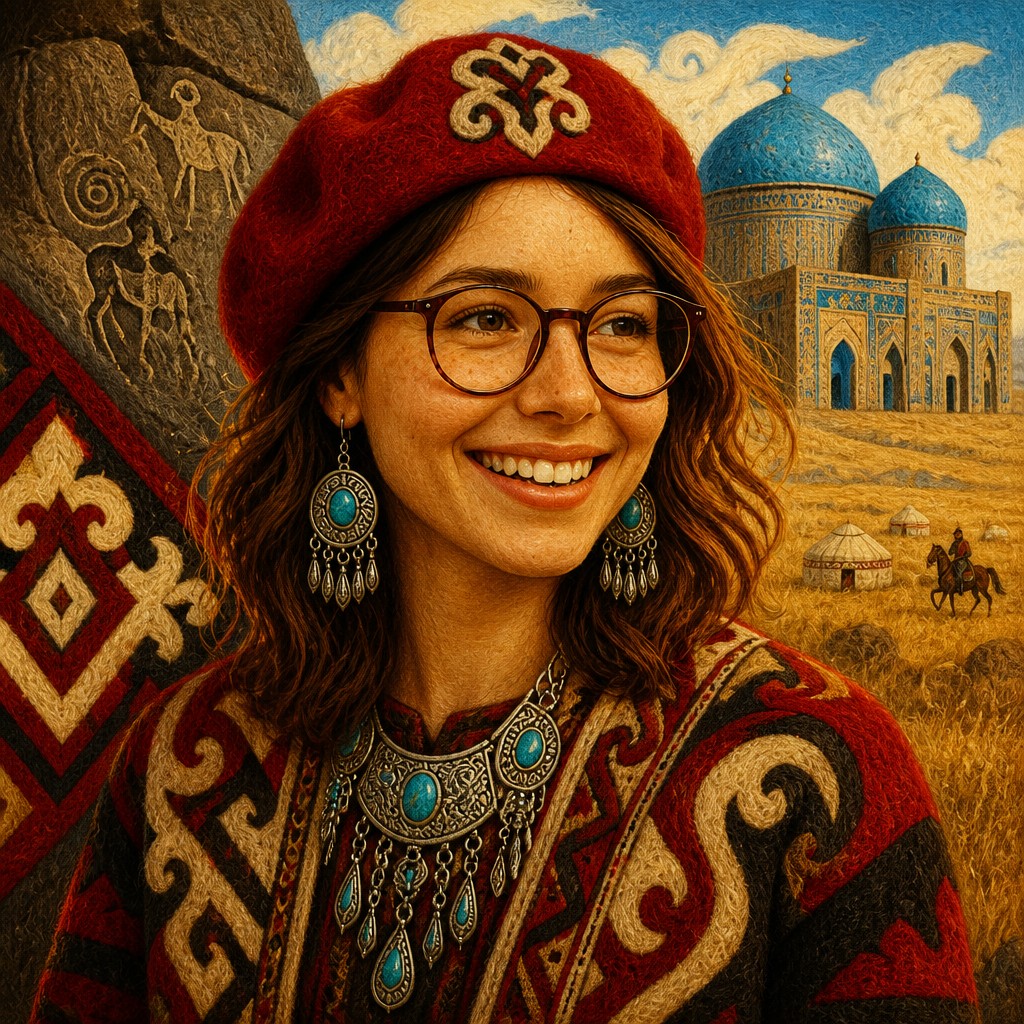

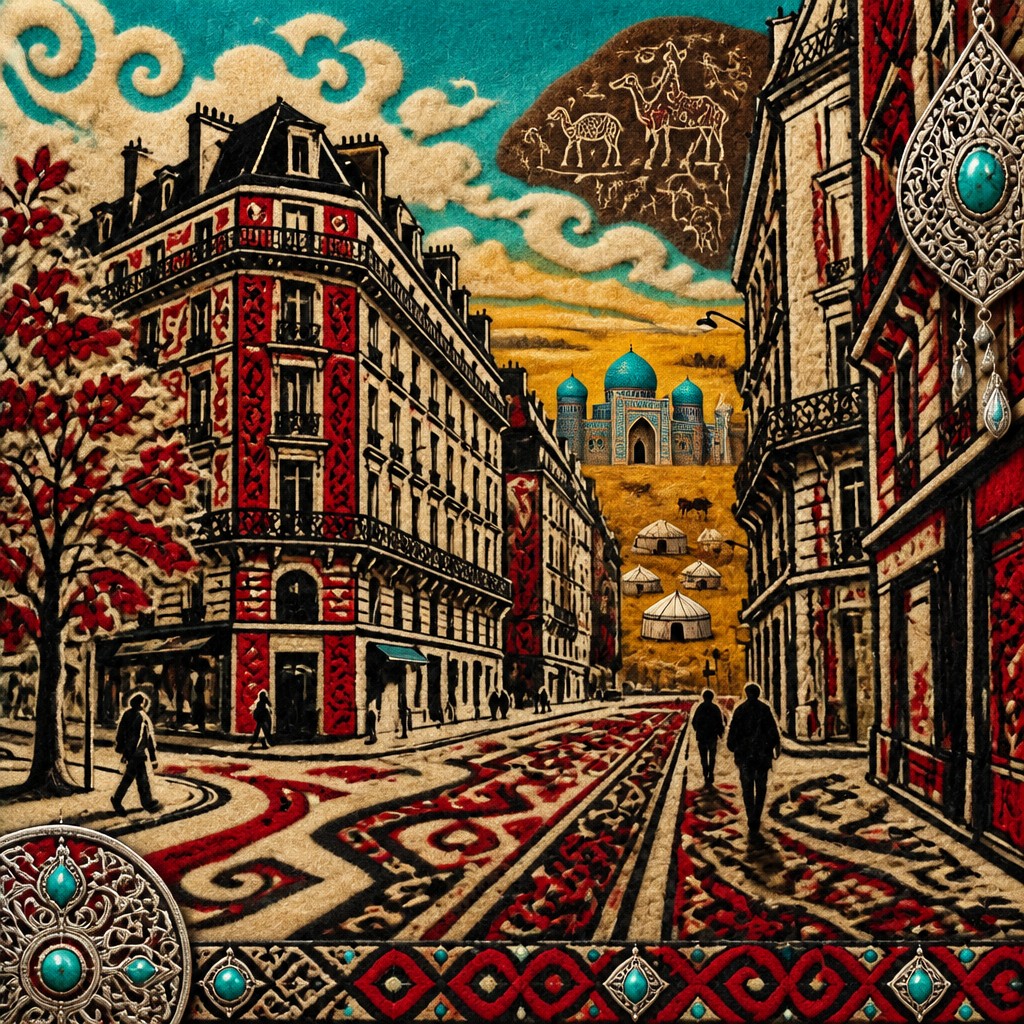

What Defines Kazakh Art Style
The signature details, up close
Felt-appliqué geometry
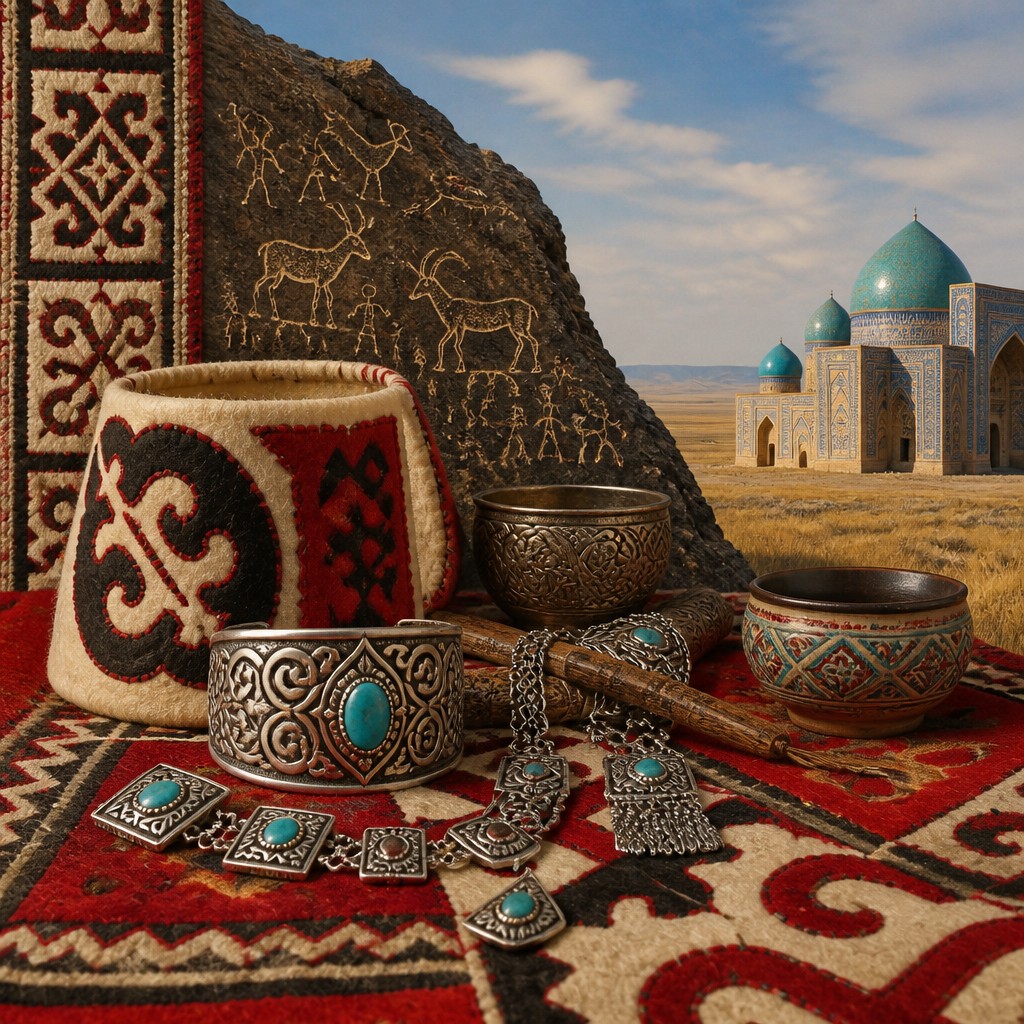
Large crimson, black, cream, and ochre shapes imitate layered felt cutouts and stitched textile panels. Repeated curves, horns, diamonds, hooks, and stepped forms create rhythm without relying on naturalistic shading.
Nomadic ornamental structure
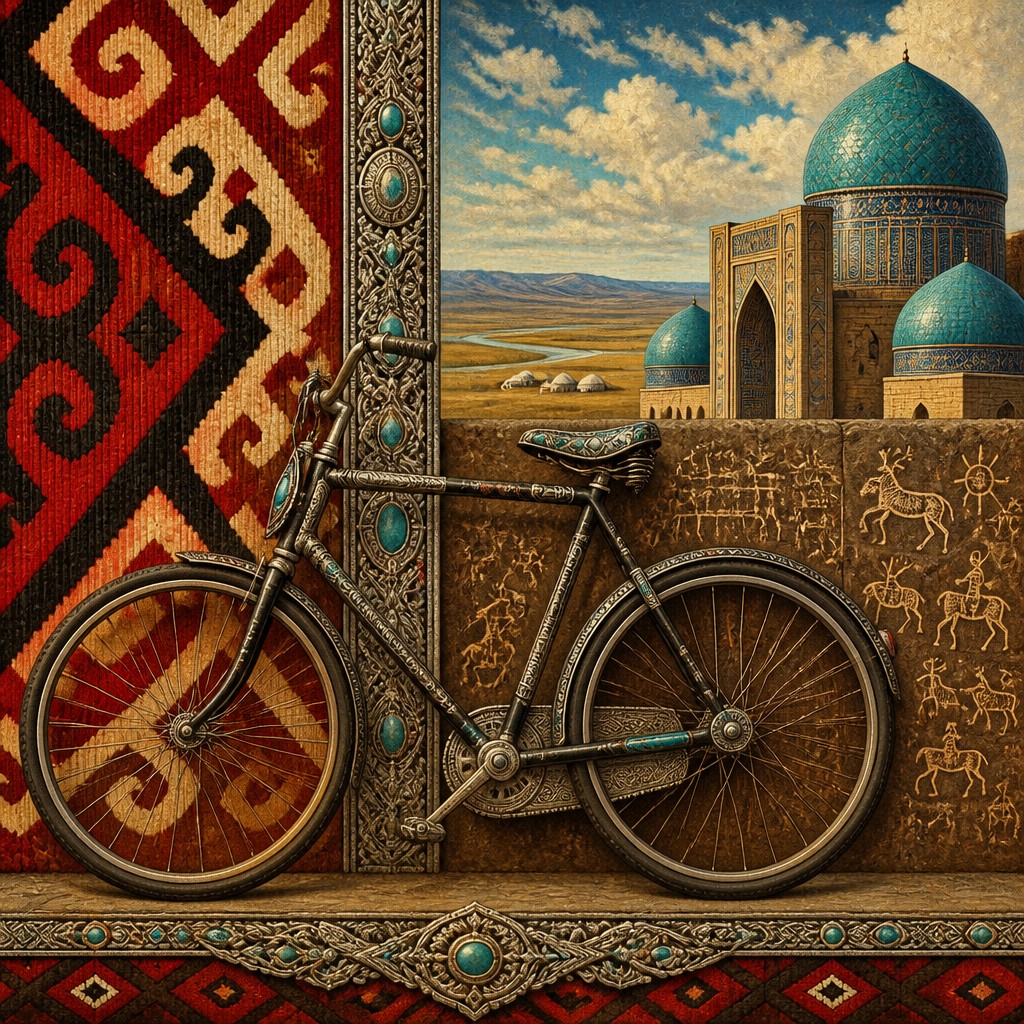
Patterns are arranged in borders, medallions, mirrored fields, and interlocking bands inspired by portable furnishings and ceremonial textiles. Symmetry and modular repetition give the image a constructed, durable quality.
Silver and turquoise detailing
Engraved metal surfaces, chain-like ornament, repoussé texture, and turquoise-colored inlay add small-scale intricacy. These details work as focal accents against broad areas of flat color.
Turquoise-tiled architecture
Domes, portals, brickwork, and glazed tile surfaces evoke the monumental sacred architecture of southern Central Asia. Their blue-green color contrasts with warm steppe earth and textile reds.
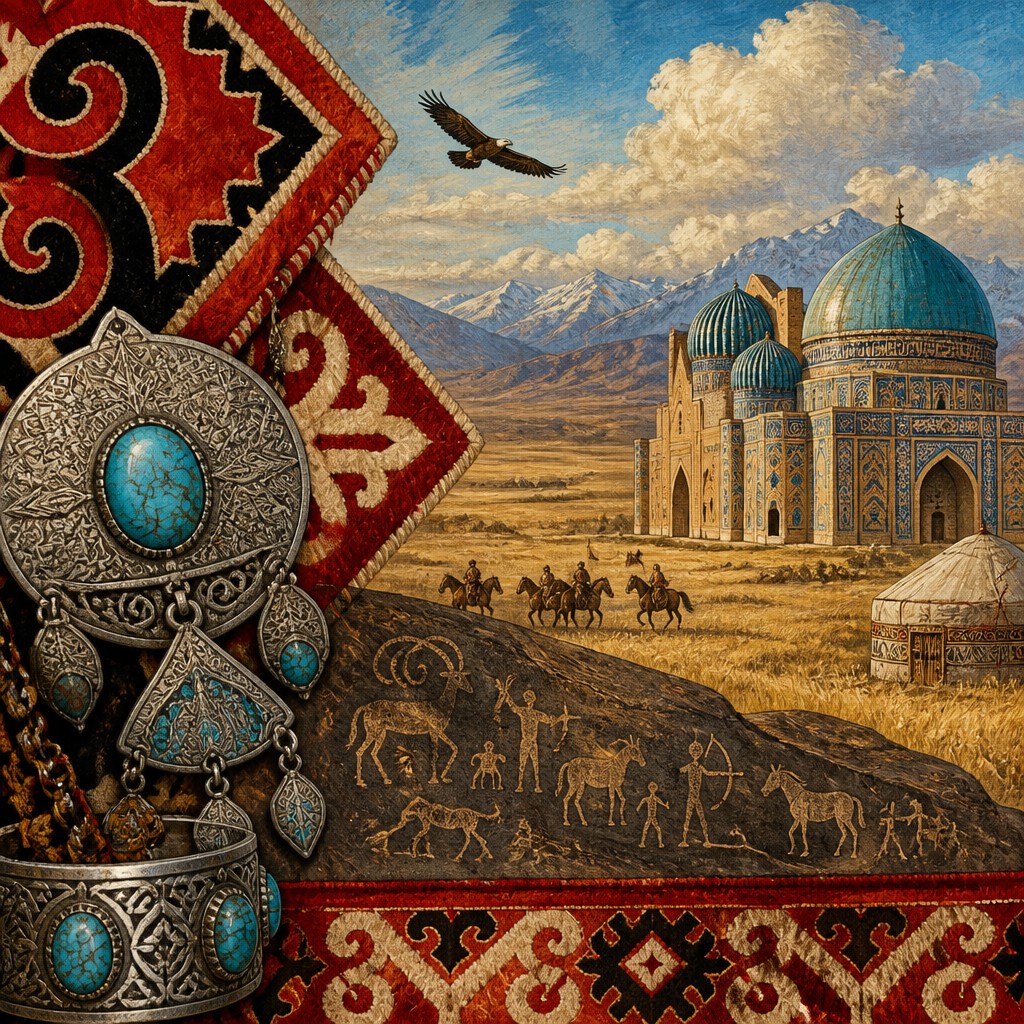
Petroglyph linework
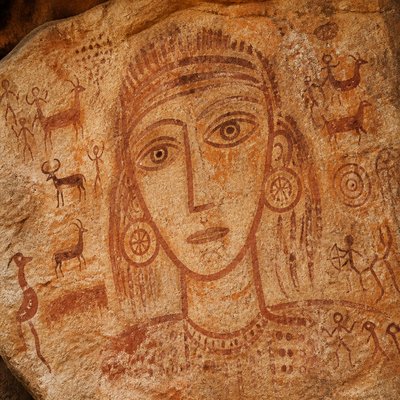
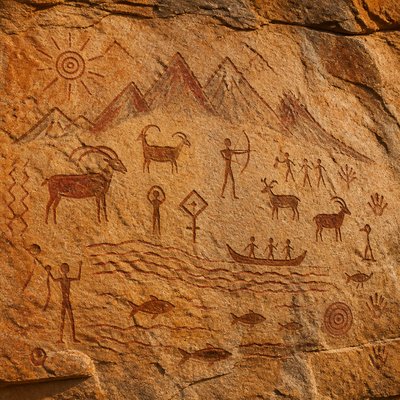
Simplified outlines of animals, riders, tools, and symbolic figures recall the weathered linear language of steppe rock carvings. Uneven, incised contours can make the image feel archaeological rather than digitally polished.
Steppe scale and open sky
Wide horizons, low settlements, distant mountains, and uninterrupted skies provide visual breathing room. The contrast between vast landscape and dense ornament is central to the style's identity.
Tactile, weathered surfaces
Fibrous felt, worn pigment, scratched stone, hammered silver, and slightly irregular tile edges prevent the geometry from feeling sterile. Controlled aging suggests continuity between heritage craft and contemporary image-making.
Kazakh Prompt Ideas
Start from an idea — each one opens the generator with the style ready to go. See all 40 Kazakh prompts →
How to Create Kazakh Art
Master the craft step by step — or skip straight to creating. Read the full guide →
- 1
Build the composition from modules
Start with a central medallion, border, or architectural silhouette, then repeat a small vocabulary of mirrored geometric units. Keep the main forms bold and legible before adding fine ornament.
- 2
Use a disciplined palette
Begin with crimson, black, cream, ochre, and turquoise, adding silver or muted gray as an accent. Reserve the brightest turquoise for domes, jewelry, or selected pattern intersections.
- 3
Suggest real materials
For traditional work, layer cut felt, embroidery, appliqué, metallic thread, or painted board rather than drawing every effect as a smooth gradient. Digitally, use fibrous overlays, slightly rough masks, engraved line textures, and imperfect edges.
- 4
Balance detail with horizon
Place dense ornament in the foreground or around a shrine, garment, or object, then counter it with a broad, minimally marked sky. This preserves the visual tension between intimate craft and nomadic distance.
- 5
Integrate historical references carefully
Use petroglyph-inspired silhouettes, turquoise-tiled Central Asian architecture, and recognizable textile structures as distinct layers rather than merging them into generic exotic decoration. Research regional motifs when making work intended to represent cultural heritage.
- 6
Write precise generation prompts
Specify the subject, felt-appliqué geometry, crimson-black-cream palette, engraved silver with turquoise inlay, petroglyph linework, tiled shrine architecture, golden steppe, and tactile weathering. For photo transformations, ask to preserve the subject's pose and identity while applying these materials and compositional motifs.
The Story
History & Origins of Kazakh
Kazakh art style is not a single historical movement with a fixed period; it is an interpretive, contemporary synthesis of Kazakh and wider Central Asian visual traditions. Its aesthetic lineage reaches into nomadic felt-making, carpet and textile ornament, embroidered household objects, ceremonial clothing, and silver adornment, where portable materials and strongly ordered motifs were especially important. It also draws on the linear imagery of Tamgaly's prehistoric and historic petroglyphs and on the tiled architecture of southern Kazakhstan and Turkistan.
The style's modern visual formulation brings these sources together in a unified graphic language. It preserves the symbolic directness, modular geometry, and material richness of traditional craft while freely combining them with illustration, poster design, digital collage, and architectural imagery. It should therefore be understood as a respectful visual interpretation rather than a claim that all Kazakh art shares one uniform appearance.
Influences: Related sources include Central Asian Islamic architecture, Kazakh felt and textile traditions, nomadic ornament, steppe silverwork, Turkic and Eurasian petroglyph imagery, folk-art pattern design, decorative illustration, and poster-like graphic composition. It also shares methods with appliqué, collage, linocut, naive art, and contemporary cultural design, but its defining combination of portable craft geometry, turquoise architecture, and expansive steppe space distinguishes it from any one of these traditions.
Frequently Asked Questions
What defines the Kazakh art style?
It is defined by a synthesis of Kazakh nomadic craft and Central Asian architectural imagery. Key markers include bold felt-like geometry, crimson-black-cream palettes, turquoise tile, engraved silver ornament, petroglyph linework, and broad steppe horizons.
Is Kazakh art style a historical art movement?
No. The label describes a contemporary interpretive style rather than a formally named historical movement. It draws on genuine Kazakh and Central Asian traditions but combines them into a modern visual language for illustration, design, and digital image-making.
How is it different from generic Central Asian or folk art?
Its identity depends on the specific relationship between nomadic textile geometry, silver-and-turquoise adornment, steppe scale, petroglyph-like drawing, and turquoise-tiled sacred architecture. Generic folk art may share pattern or craft qualities without this particular cultural and geographic combination.
What colors work best for this style?
A strong base palette uses crimson, black, cream, ochre, and golden yellow, with turquoise as a prominent cool accent. Silver, charcoal, muted blue, and weathered earth tones can add material variation without weakening the graphic structure.
Can I create this style with traditional materials?
Yes. Cut felt, appliqué, embroidery, painted wood, metallic thread, hammered or engraved metal, and collage are all appropriate methods. Emphasize mirrored pattern units, tactile surfaces, limited color, and deliberate irregularity rather than smooth photographic realism.
Where is this style commonly used?
It is suitable for cultural illustration, editorial art, posters, textiles, packaging, jewelry concepts, architectural scenes, book covers, murals, and decorative portraiture. It can also frame contemporary subjects, provided cultural symbols are used thoughtfully and not reduced to vague exotic decoration.
Create your first Kazakh artwork
Describe anything — or upload a photo — and see it in Kazakh Art Style in seconds.
Related Styles
Discover similar art styles