Weimar Art Style
Explore Weimar Art Style: Bauhaus geometry, restrained Classicist elegance, primary colors, architectural lines, and precise functional design.
Instantly rendered in Weimar — or transform a photo
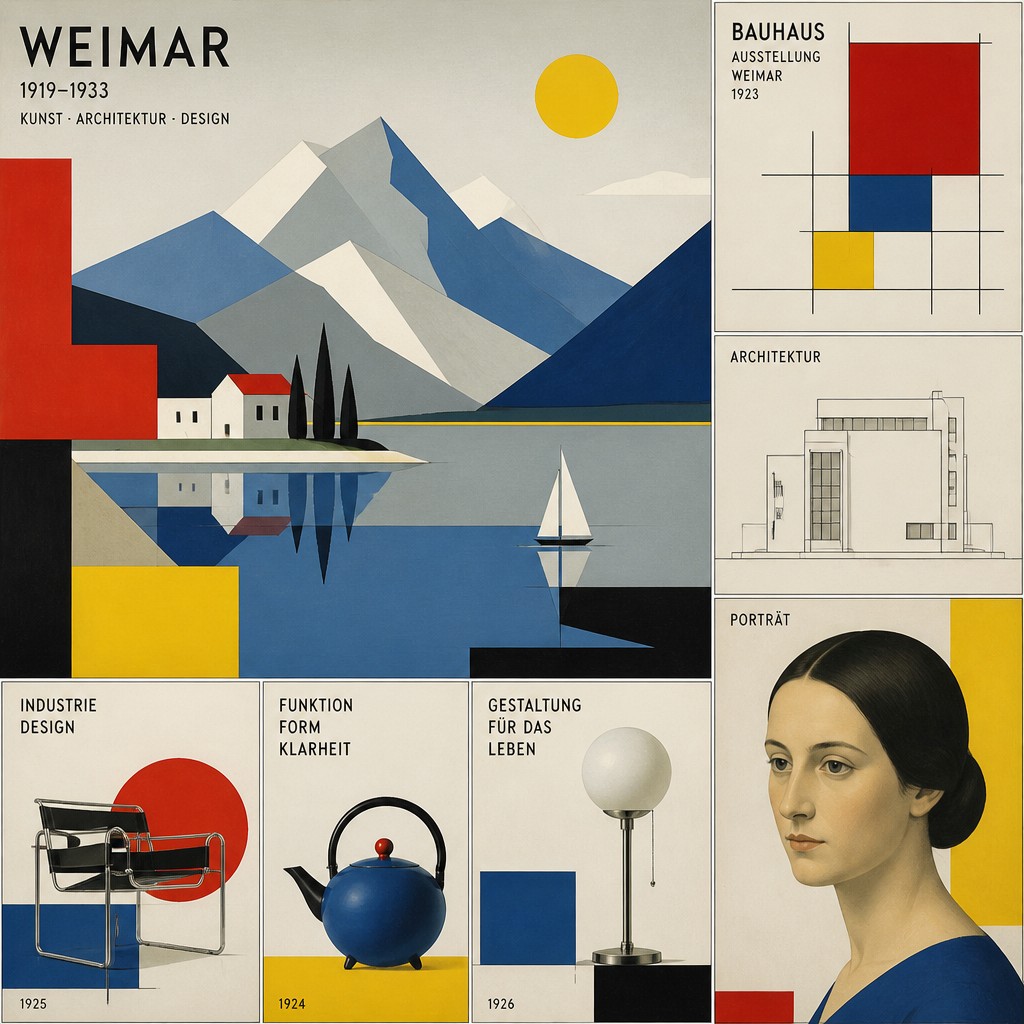
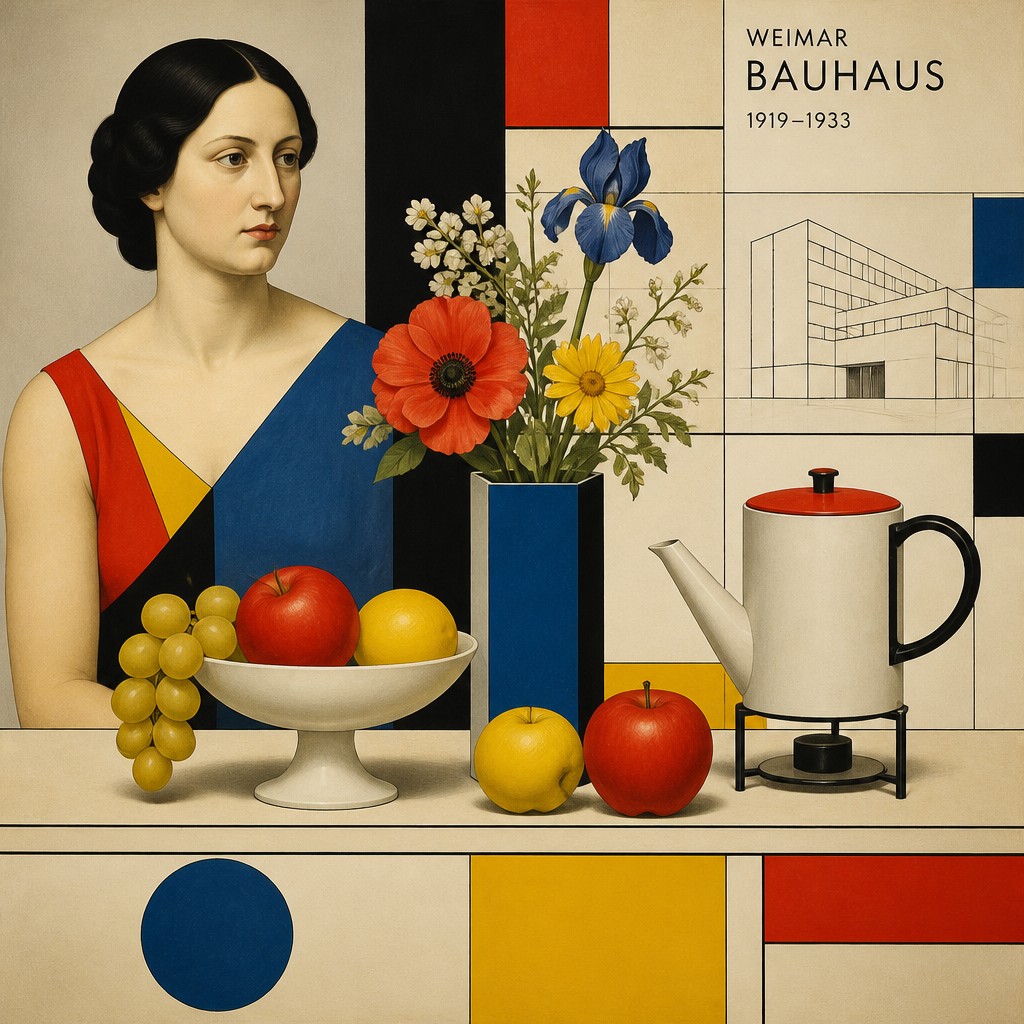
Weimar Gallery
Tap any artwork to explore it
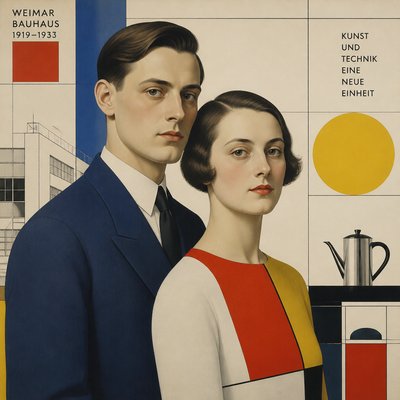
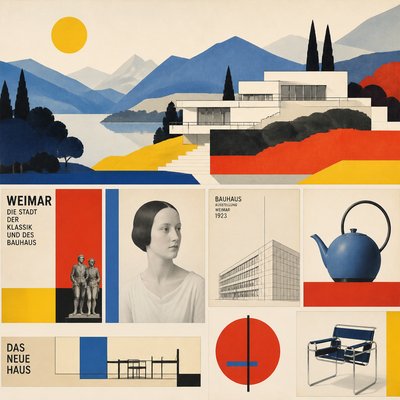
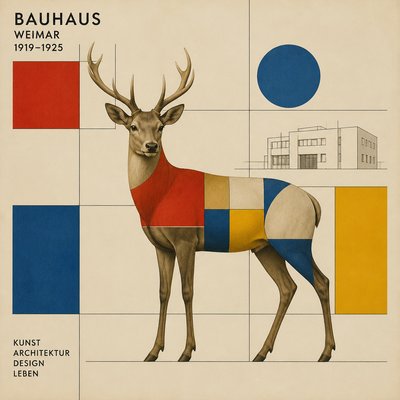
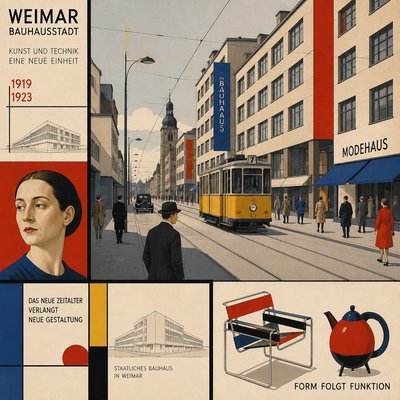
What is Weimar Art Style?
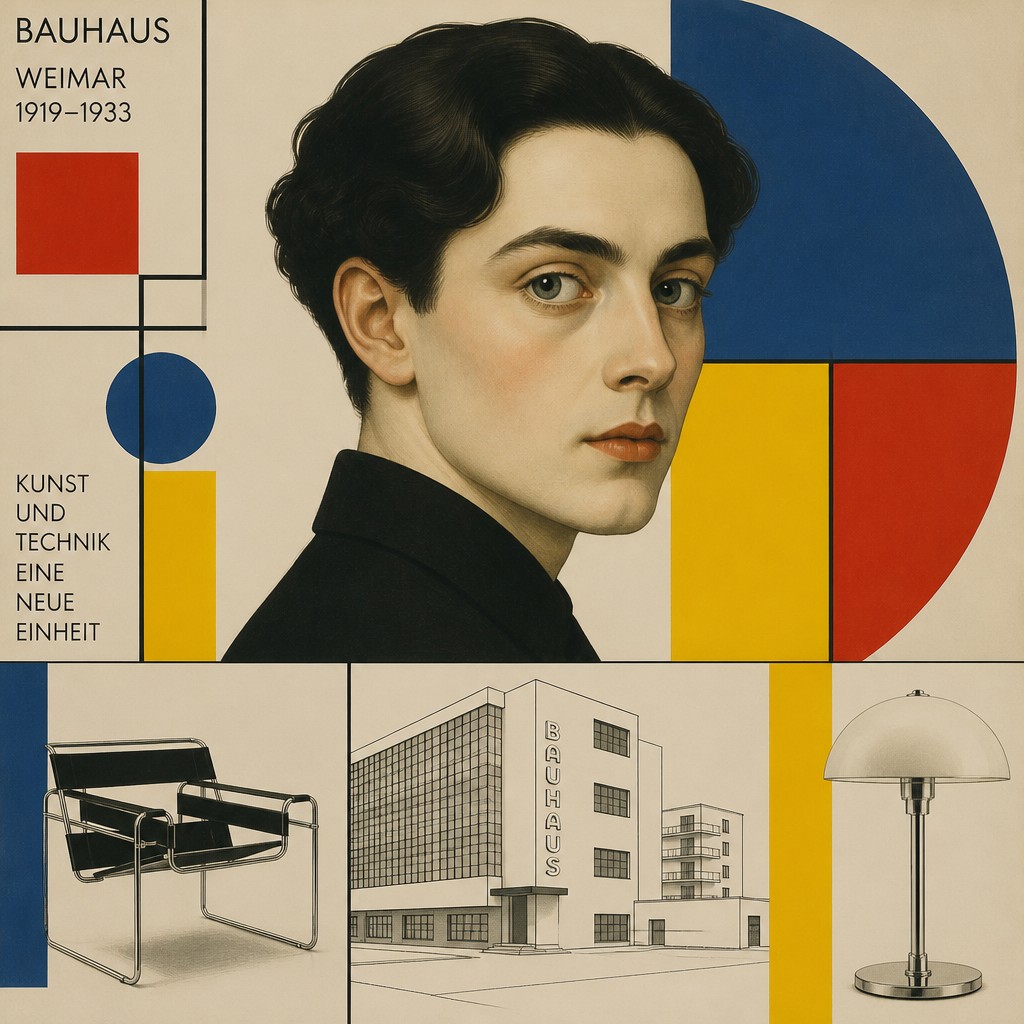
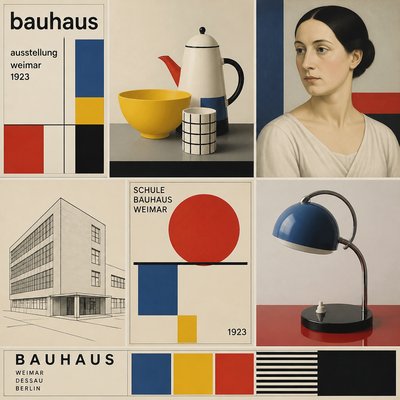
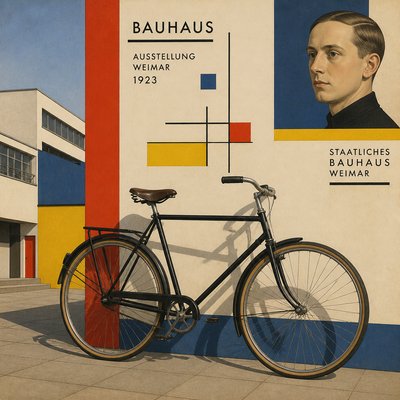
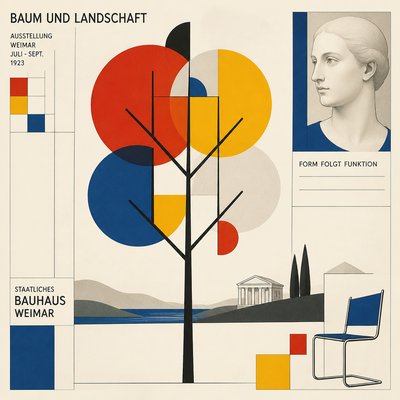
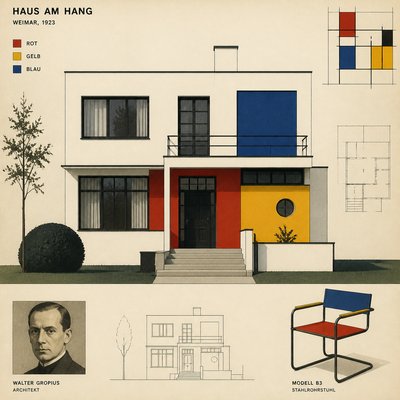
Weimar Art Style is a contemporary visual synthesis of Bauhaus geometric clarity and restrained neoclassical elegance. It combines crisp grids, primary red, yellow, and blue, functional architectural structures, clean sans-serif forms, and smooth pale-toned portraiture into a balanced, highly ordered image language.
The style looks deliberate because every element is organized around proportion, alignment, and visual economy. Flat color, simplified silhouettes, precise line drawing, and limited ornament create a calm modern surface, while classical symmetry and measured poses introduce dignity and historical resonance. Industrial objects, architectural elevations, interiors, and portraits can all be treated within the same unified system.
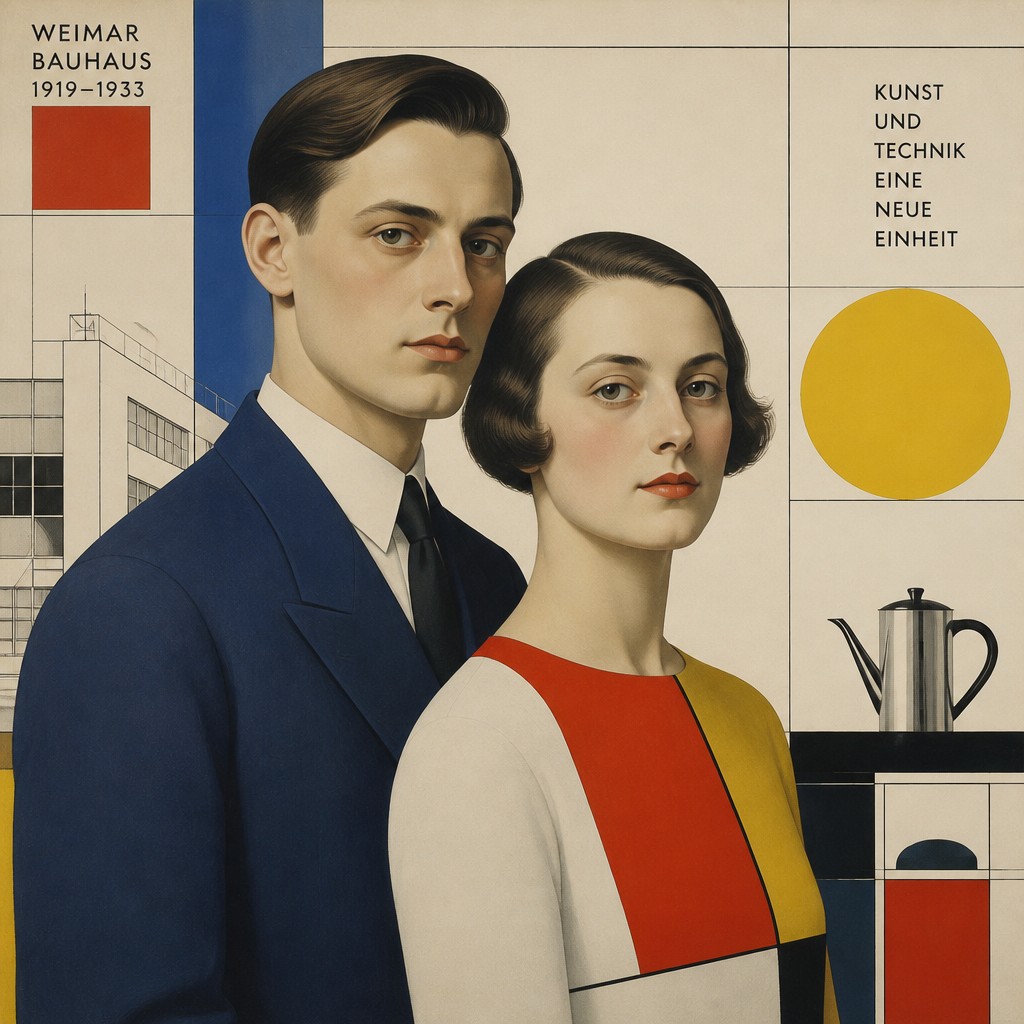
Try It On Your Photos
Upload any photo and convert it into Weimar Art Style — drag the sliders to compare before and after.
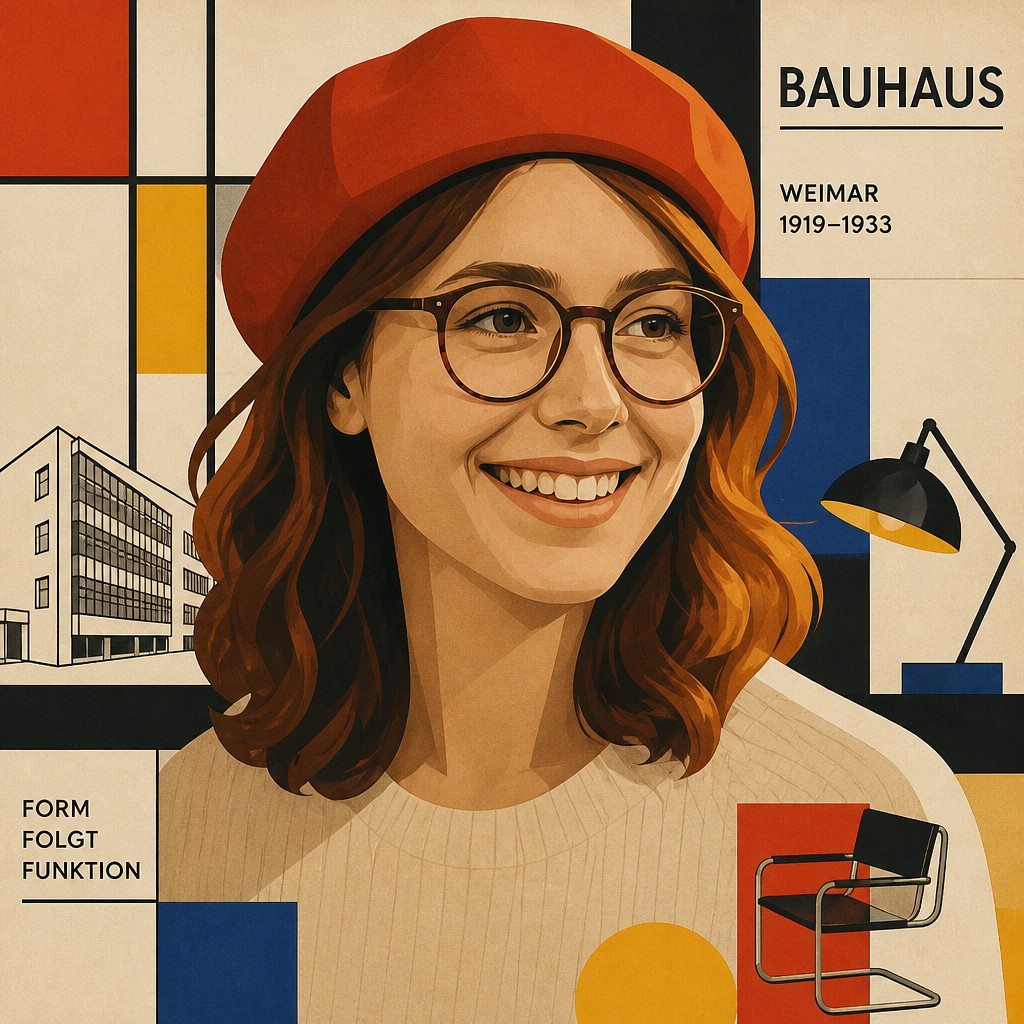

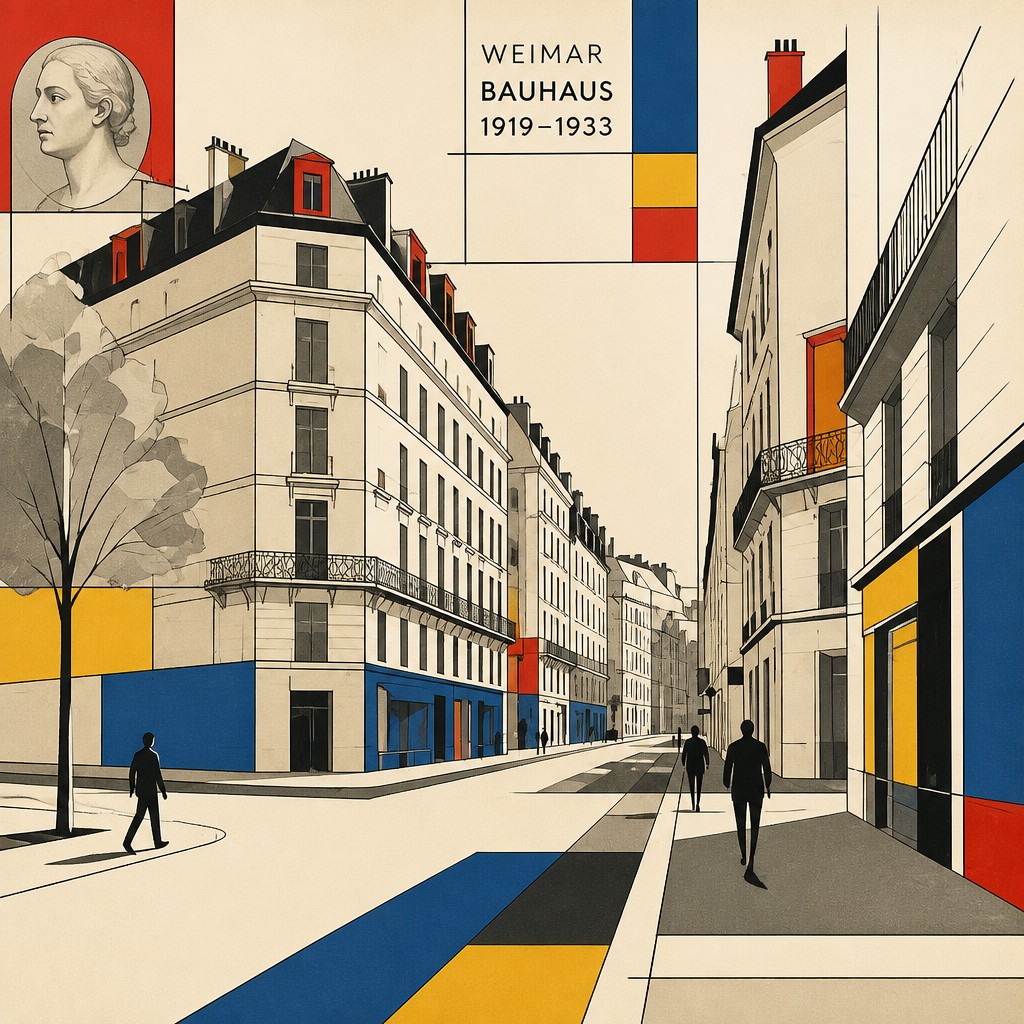

What Defines Weimar Art Style
The signature details, up close
Geometric structure
Images are built from circles, rectangles, planes, orthogonal lines, and carefully measured proportions. Repeated shapes and aligned edges create a clear visual hierarchy.
Primary color accents
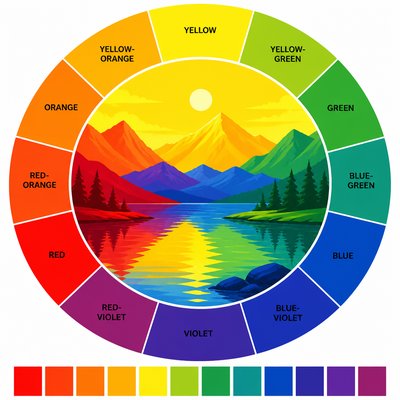
Red, yellow, and blue are used as controlled focal colors against white, charcoal, gray, or pale neutral grounds. Color is generally flat and intentional rather than softly blended.
Functionalist composition
Grid systems, modular arrangements, and visible structural logic organize the image. Decorative elements are reduced unless they reinforce balance, rhythm, or purpose.
Restrained Classicist portraiture
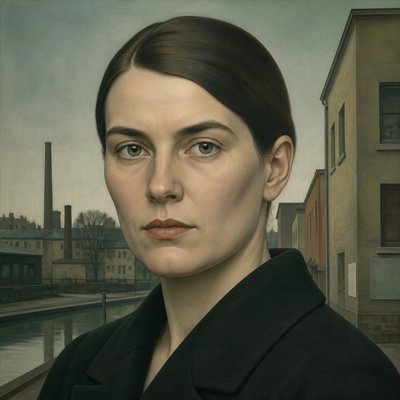
Figures often appear in composed frontal or three-quarter poses, with smooth pale skin tones, calm expressions, simplified clothing, and an emphasis on proportion rather than dramatic emotion.
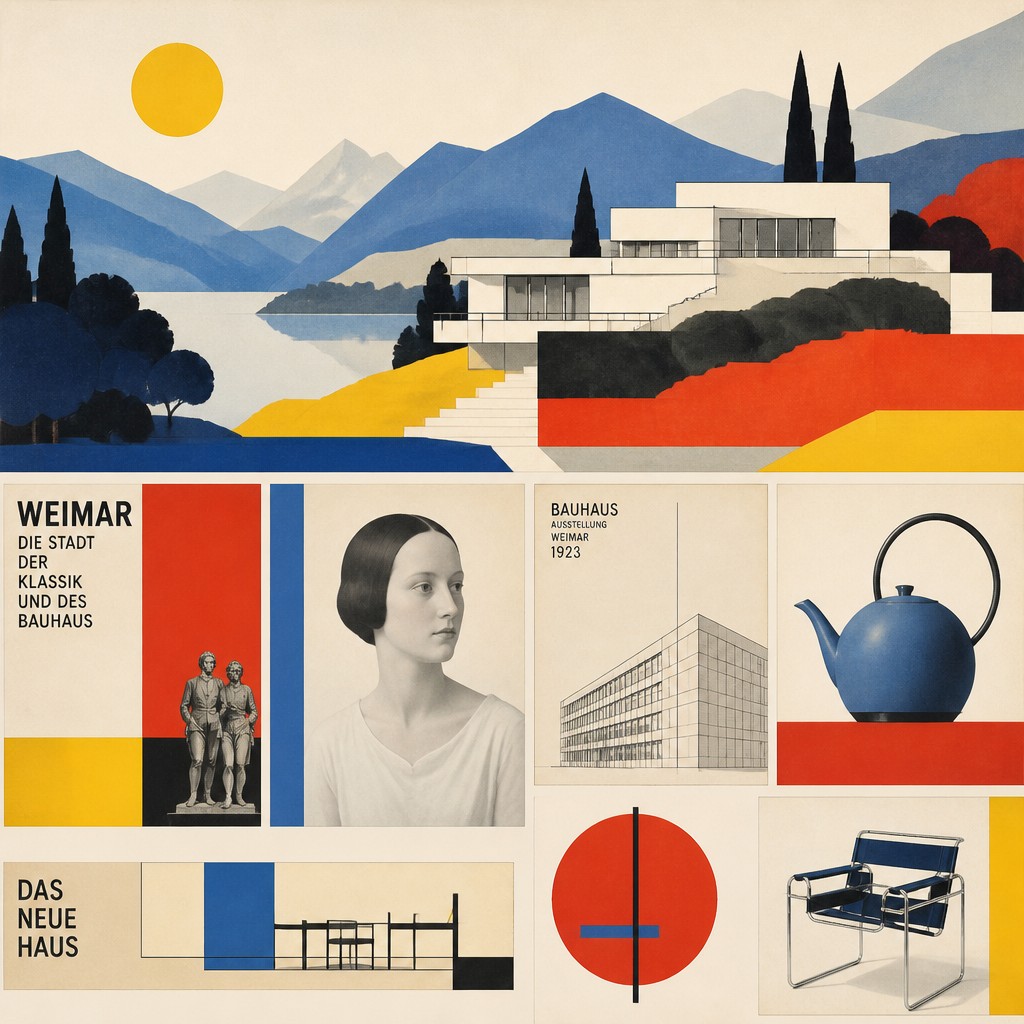
Architectural linework
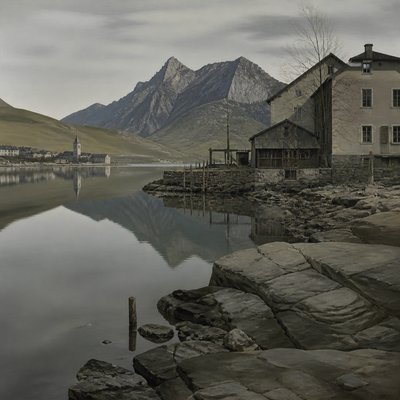
Buildings and interiors are represented with clean elevations, measured perspectives, thin outlines, and strong horizontal and vertical divisions. Structural clarity is more important than atmospheric detail.
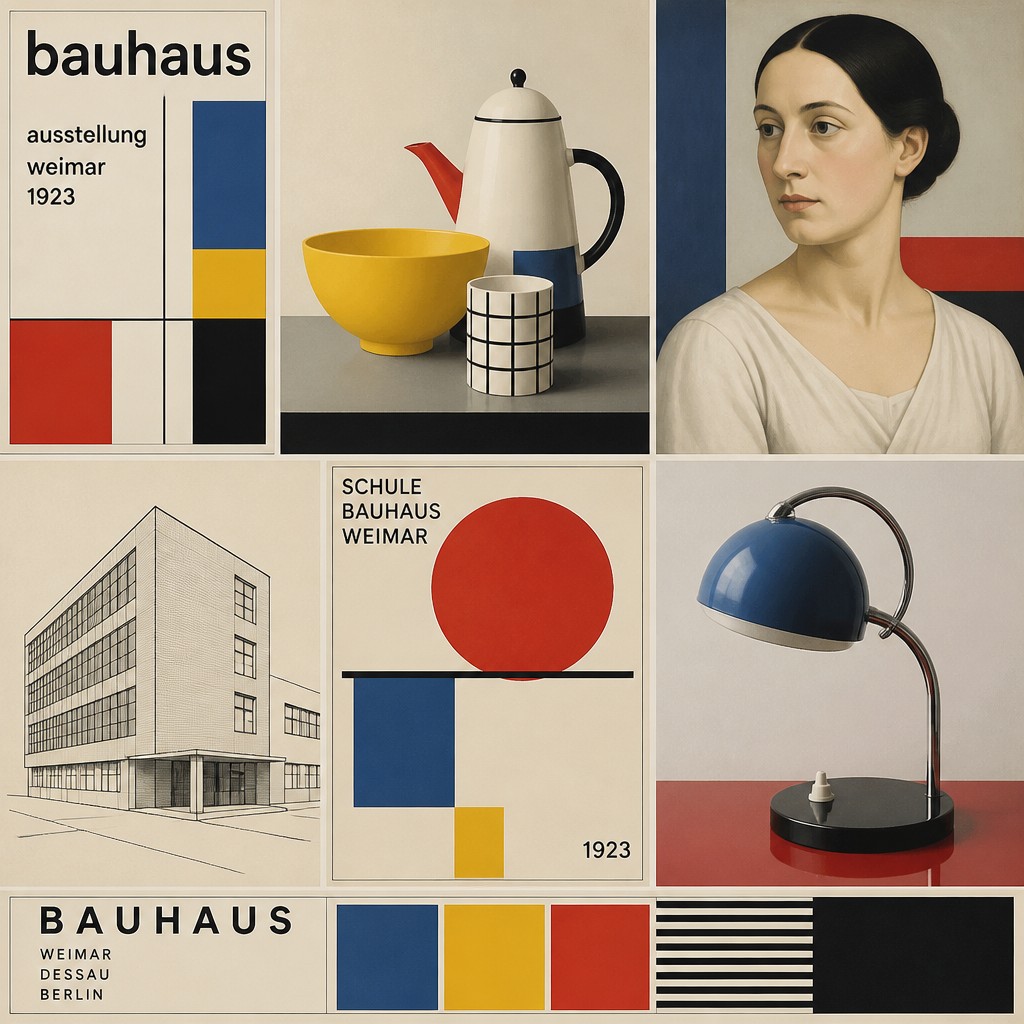
Industrial object design
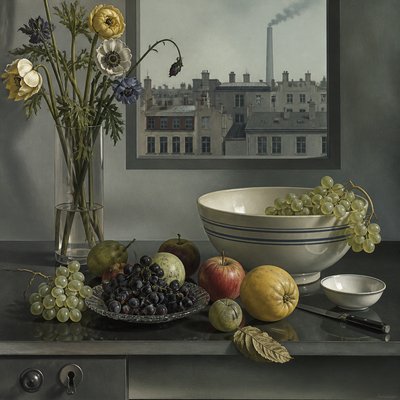
Lamps, chairs, radios, vessels, and machines are simplified into functional silhouettes with precise edges and flat surfaces. Objects often resemble studies in product design or technical illustration.
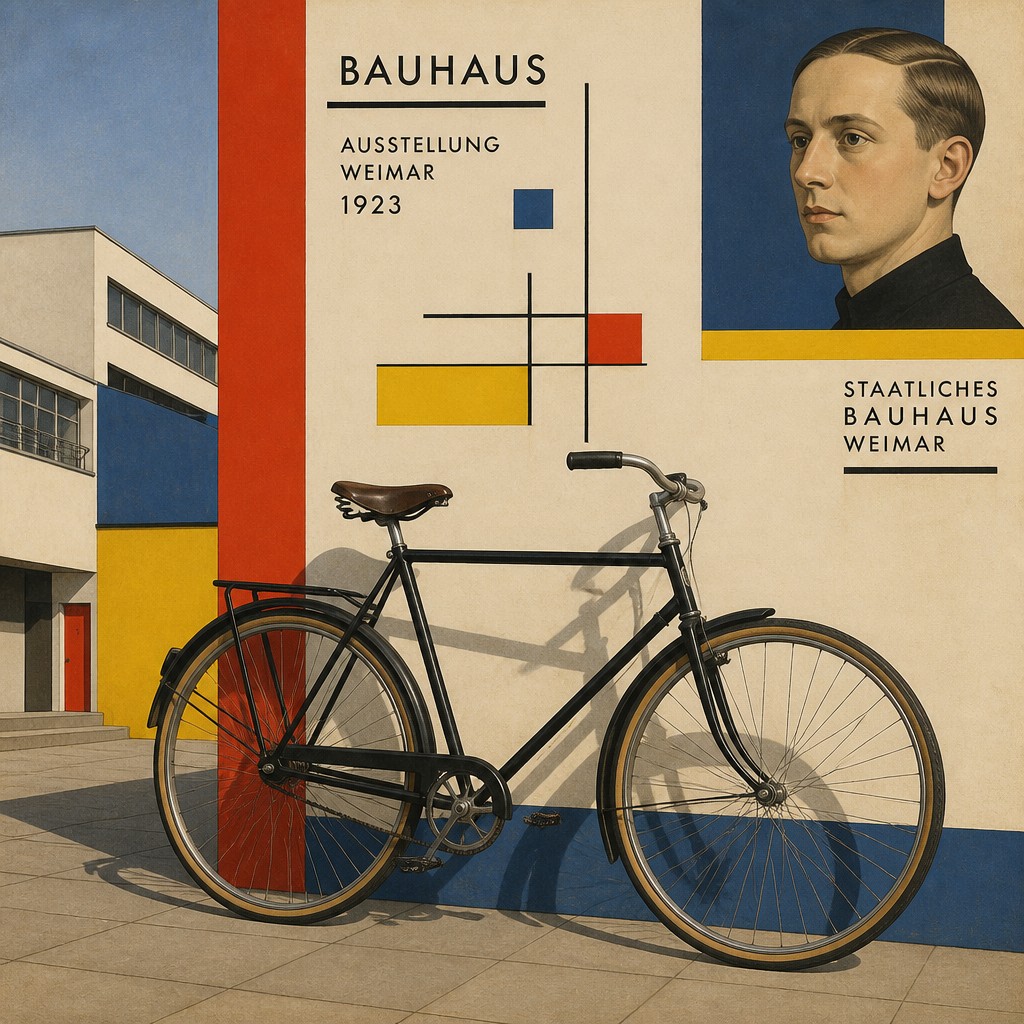
Minimal ornament and finish
Texture, painterly brushwork, and visual noise are kept restrained. Smooth surfaces, consistent contours, and generous negative space give the work a calm, disciplined appearance.
Weimar Prompt Ideas
Start from an idea — each one opens the generator with the style ready to go. See all 40 Weimar prompts →
How to Create Weimar Art
Master the craft step by step — or skip straight to creating. Read the full guide →
- 1
Build a modular layout
Begin with a simple grid and place the main subject along strong verticals, horizontals, or geometric divisions. Leave deliberate negative space so the composition remains legible and balanced.
- 2
Limit the palette
Use off-white, black, gray, or pale skin tones as the foundation, then introduce primary red, yellow, and blue as selective accents. Avoid uncontrolled gradients and excessive secondary colors.
- 3
Simplify the subject
Reduce people, buildings, and objects to essential planes and silhouettes while preserving recognizable structure. Use smooth tonal transitions only where they clarify volume, especially in restrained portraits.
- 4
Use precise line and typography
For traditional or digital work, employ rulers, vector paths, technical pens, and clean sans-serif lettering. Keep line weights consistent and align text, shapes, and architectural details to the same underlying grid.
- 5
Control the lighting
Choose even studio light or soft frontal illumination rather than dramatic chiaroscuro. Pale, calm modeling supports the classical side of the style without compromising its modern clarity.
- 6
Write a structured generation prompt
Specify the subject first, then request Bauhaus geometry, a functionalist grid, primary color accents, restrained neoclassical portrait treatment, architectural linework, flat precise color, and minimal ornament. Add composition, camera angle, and background constraints to reduce visual clutter.
The Story
History & Origins of Weimar
Weimar Art Style is not a formally recognized historical movement; it is a contemporary hybrid label. Its primary historical source is the Bauhaus school, founded in Weimar in 1919, whose teaching joined fine art, craft, architecture, typography, and industrial design through functional form, geometric abstraction, and systematic composition.
Its restrained portraiture and balanced proportions also draw on European Classicism and neoclassical academic traditions, while its sober social clarity recalls aspects of early twentieth-century modernist illustration and documentary design. The resulting style blends the rational visual language of modernist design with the composure and symmetry associated with classical representation.
Influences: The style is closely related to Bauhaus design, International Modernism, geometric abstraction, Constructivist composition, neoclassical portraiture, academic figure study, technical drawing, modernist typography, and industrial product design. It also shares the restrained order of minimalist graphic design and architectural visualization, but softens strict abstraction with human figures, classical proportion, and pale tonal modeling.
Frequently Asked Questions
Is Weimar Art Style a historical art movement?
No. The term is best understood as a contemporary hybrid style rather than a documented historical movement. It references the Bauhaus period in Weimar while combining that legacy with Classicist portraiture, architectural drawing, and modern graphic design.
What defines the Weimar Art Style?
Its defining features are geometric Bauhaus forms, functional grid composition, primary red-yellow-blue accents, clean sans-serif structure, restrained portraiture, and precise architectural or industrial linework. The overall effect is orderly, calm, and economical.
How does it differ from pure Bauhaus design?
Pure Bauhaus design refers to a historically specific school and its varied practices from the early twentieth century. This hybrid style borrows Bauhaus geometry and functionalism but adds smoother pale portrait tones, neoclassical symmetry, and a more explicitly composed sense of historical elegance.
Can portraits be made in this style?
Yes. Portraits work especially well when posed formally, lit evenly, and simplified into smooth planes with limited expression. Geometric backgrounds, restrained clothing, and a small number of primary-color accents help connect the figure to the surrounding design system.
What media are suitable for creating it?
Vector illustration, gouache, acrylic, colored pencil, technical pen, screen printing, collage, architectural rendering, and digital painting are all suitable. The key is controlled edges, measured composition, a limited palette, and reduced surface noise rather than a particular medium.
How should I describe it in an image-generation prompt?
Name the subject and composition first, then specify crisp geometric Bauhaus forms, a functionalist grid, primary color accents, restrained neoclassical modeling, architectural line drawing, and precise flat color. Include exclusions such as ornate decoration, chaotic textures, dramatic shadows, or excessive gradients when a cleaner result is needed.
Create your first Weimar artwork
Describe anything — or upload a photo — and see it in Weimar Art Style in seconds.
Related Styles
Discover similar art styles