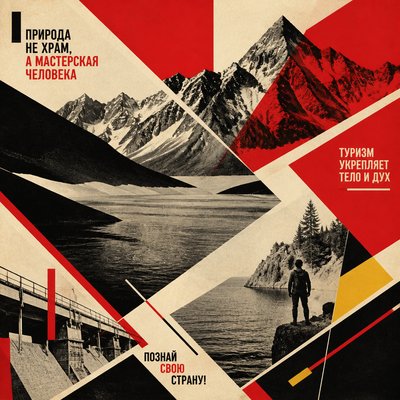
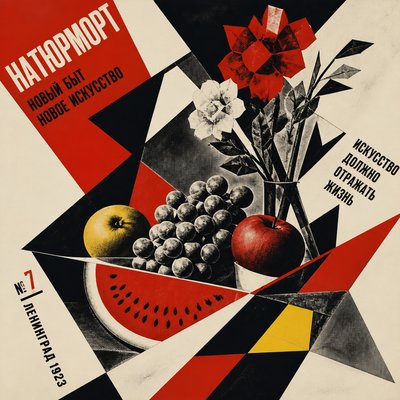
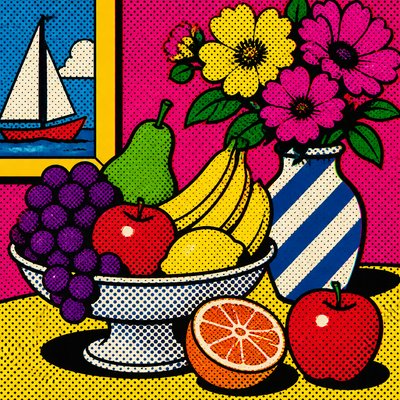
New Objectivity Art Style
Explore New Objectivity: cool, precise Weimar-era realism defined by sharp focus, sober light, frank portraits, and unsentimental urban detail.
Instantly rendered in New Objectivity — or transform a photo
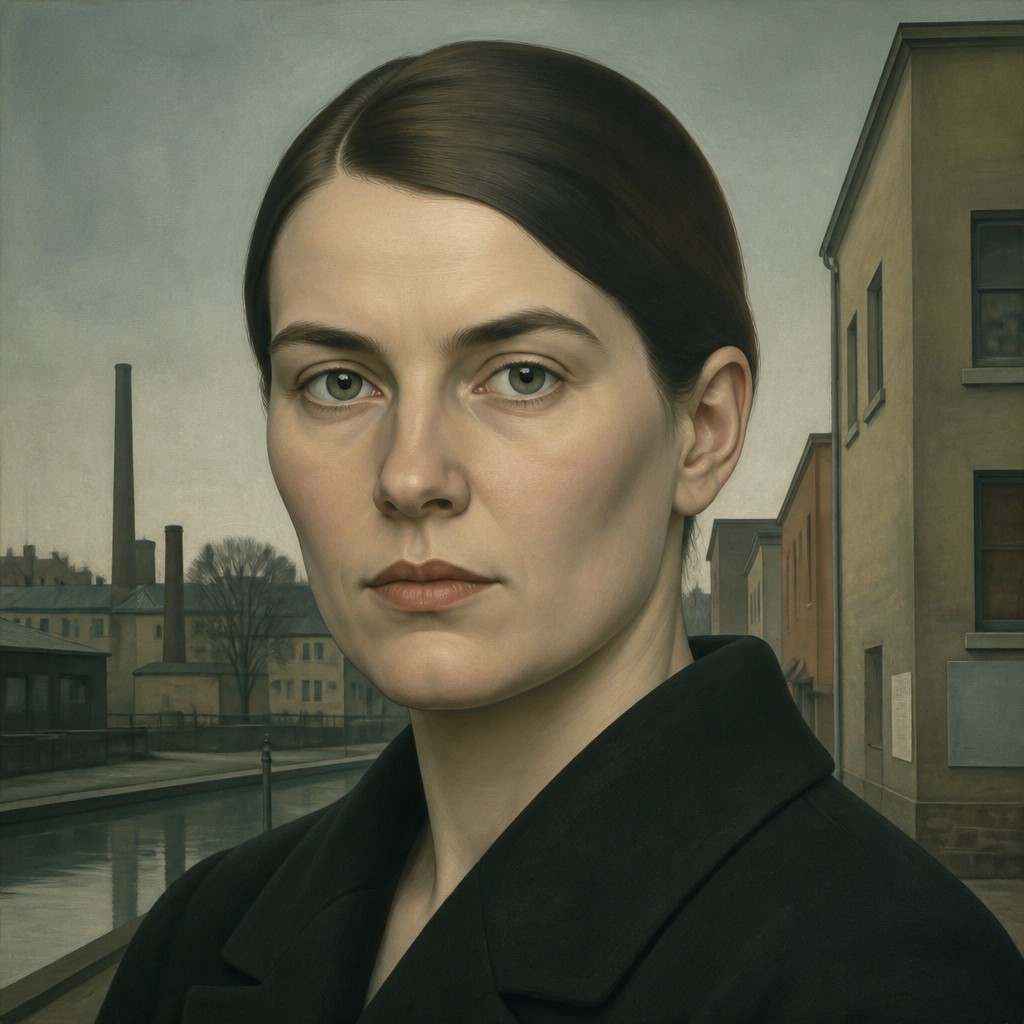
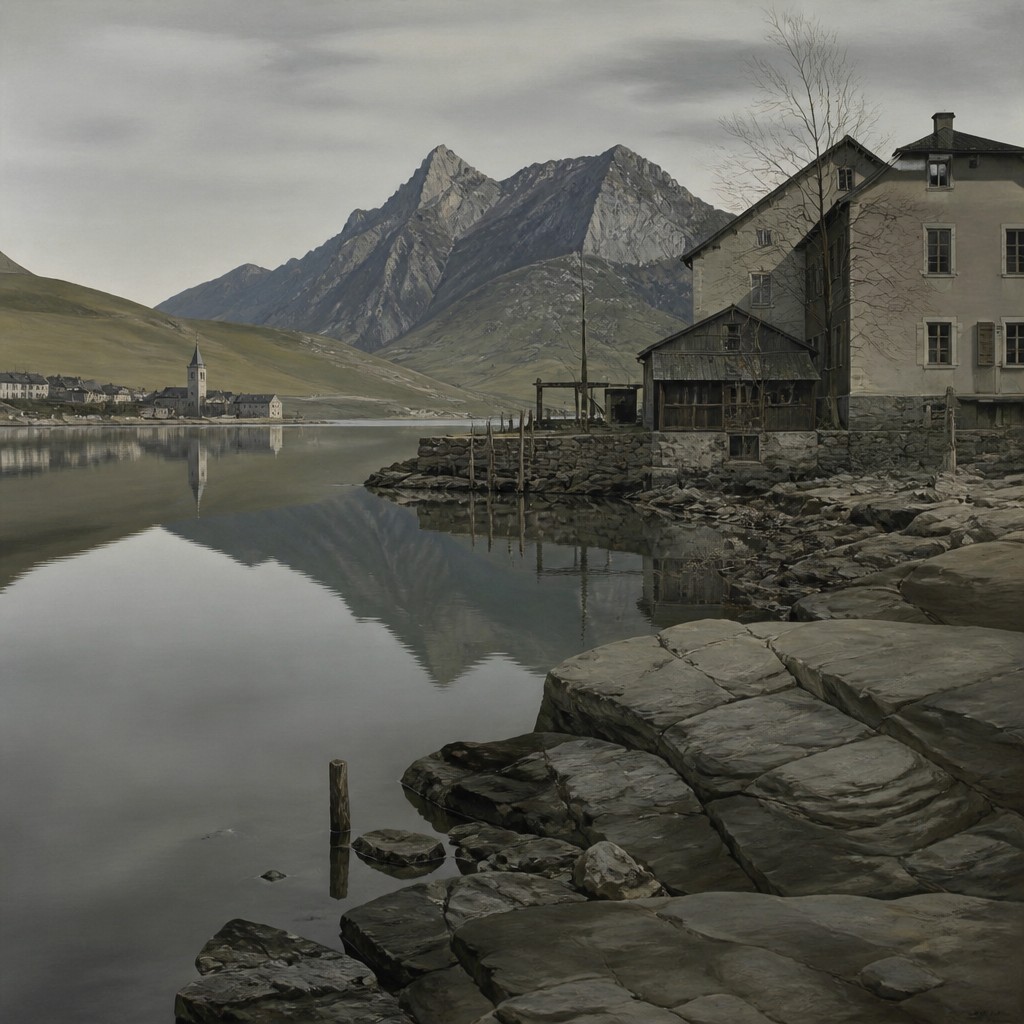
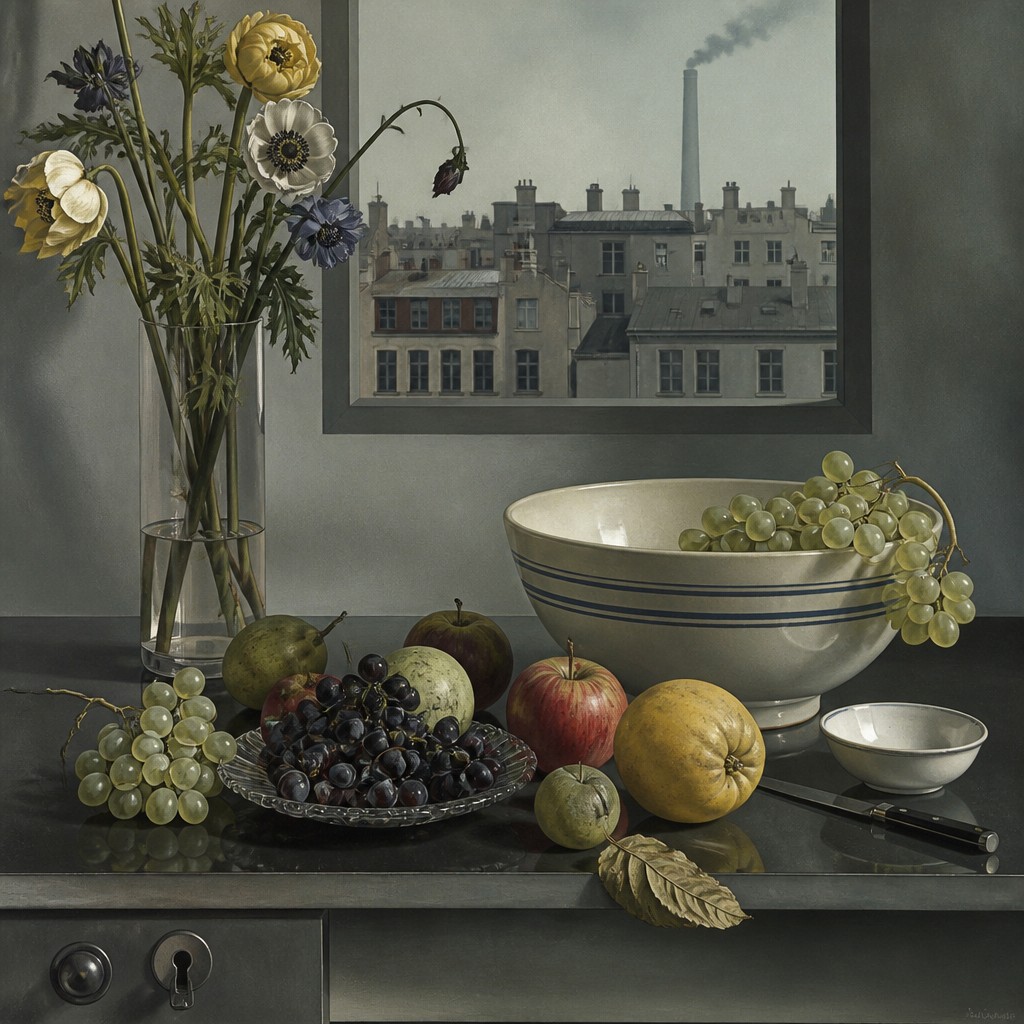
New Objectivity Gallery
Tap any artwork to explore it
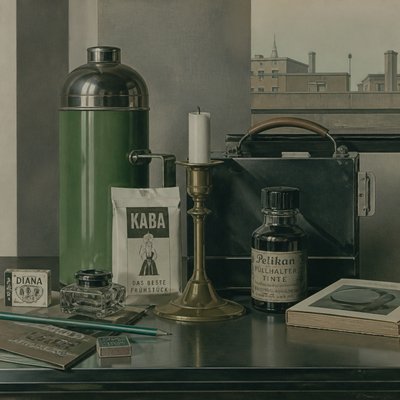

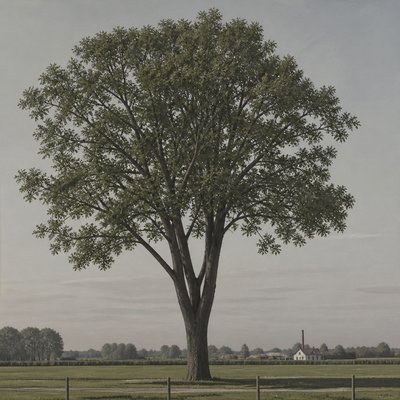
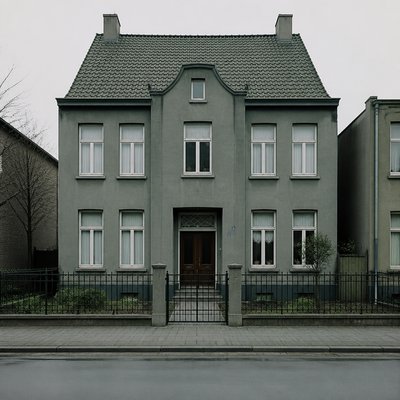
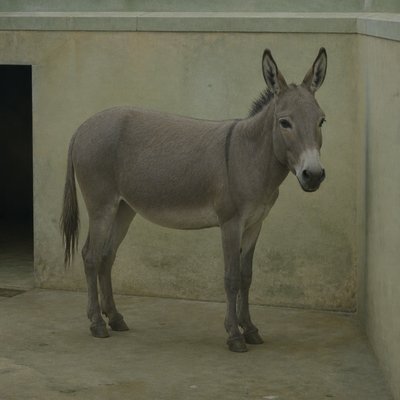
What is New Objectivity Art Style?
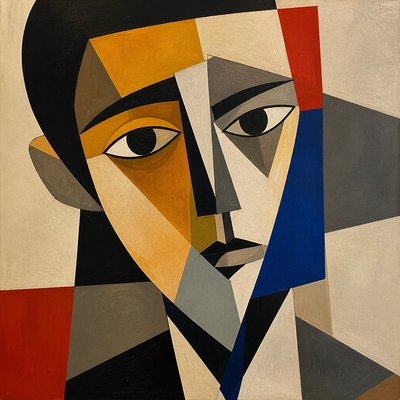
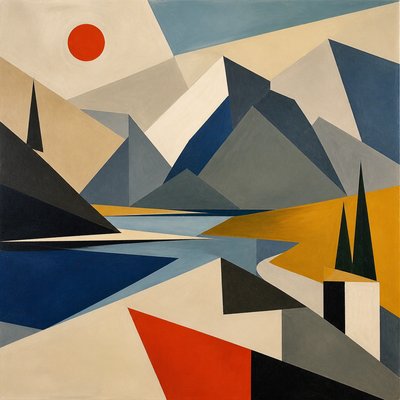
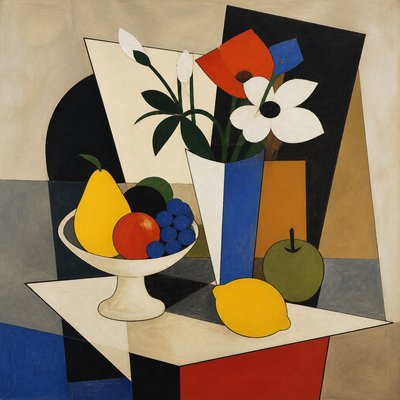
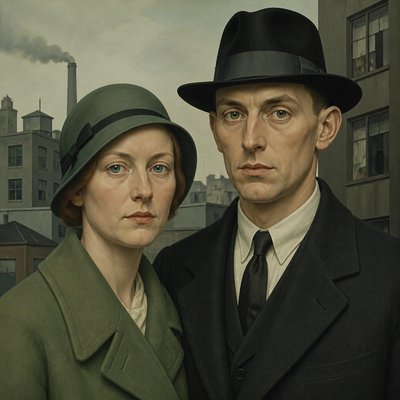
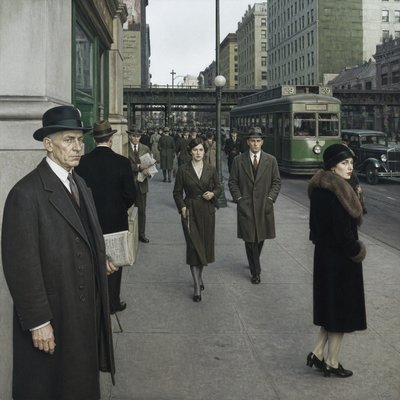
New Objectivity, or Neue Sachlichkeit, is a German realist movement that emerged during the 1920s Weimar Republic. It turned away from the emotional intensity and formal experimentation associated with Expressionism, favoring direct observation, controlled drawing, hard-edged forms, and an emotionally restrained view of modern life. Its subjects include workers, officials, entertainers, families, streets, industrial spaces, and the social tensions of postwar Germany.
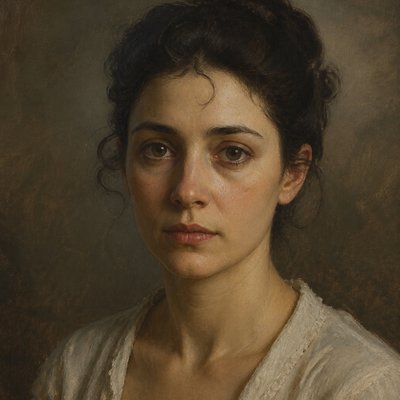
The style is recognizable for its cool, unwavering clarity. Figures and objects are often rendered with sharp, relatively uniform focus, smooth surfaces, sober illumination, and a muted palette of greys, ochres, flesh tones, greens, and browns. This apparent neutrality can be quietly critical: awkward poses, visible fatigue, artificial social roles, and stark urban environments reveal the psychological and political conditions beneath the polished surface.
Try It On Your Photos
Upload any photo and convert it into New Objectivity Art Style — drag the sliders to compare before and after.



What Defines New Objectivity Art Style
The signature details, up close
Cool, detached observation
Scenes are presented without sentimental softening or obvious emotional guidance. Even dramatic subjects may appear controlled, static, and psychologically distant.
Sharp uniform focus
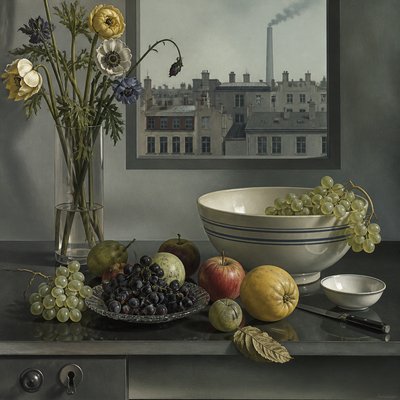
Edges, facial features, architecture, and small objects receive similar visual attention rather than being selectively blurred or painterly. The result resembles an exacting inspection of the entire scene.
Unidealized portraiture
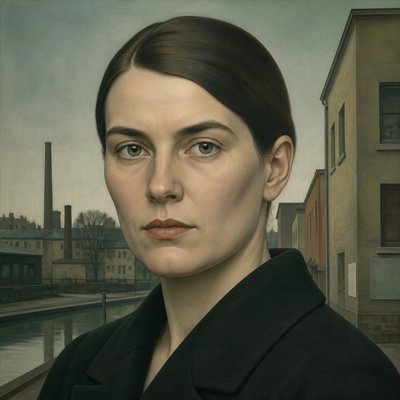
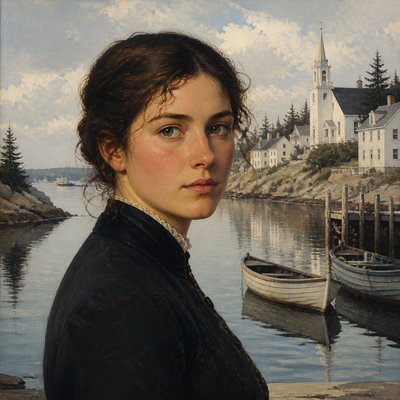
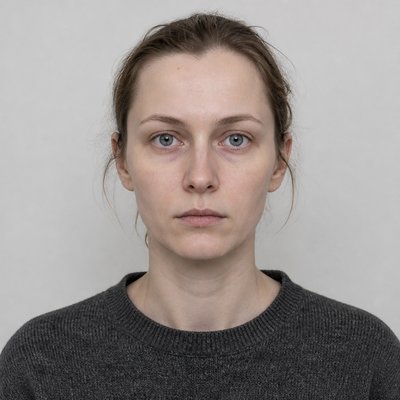
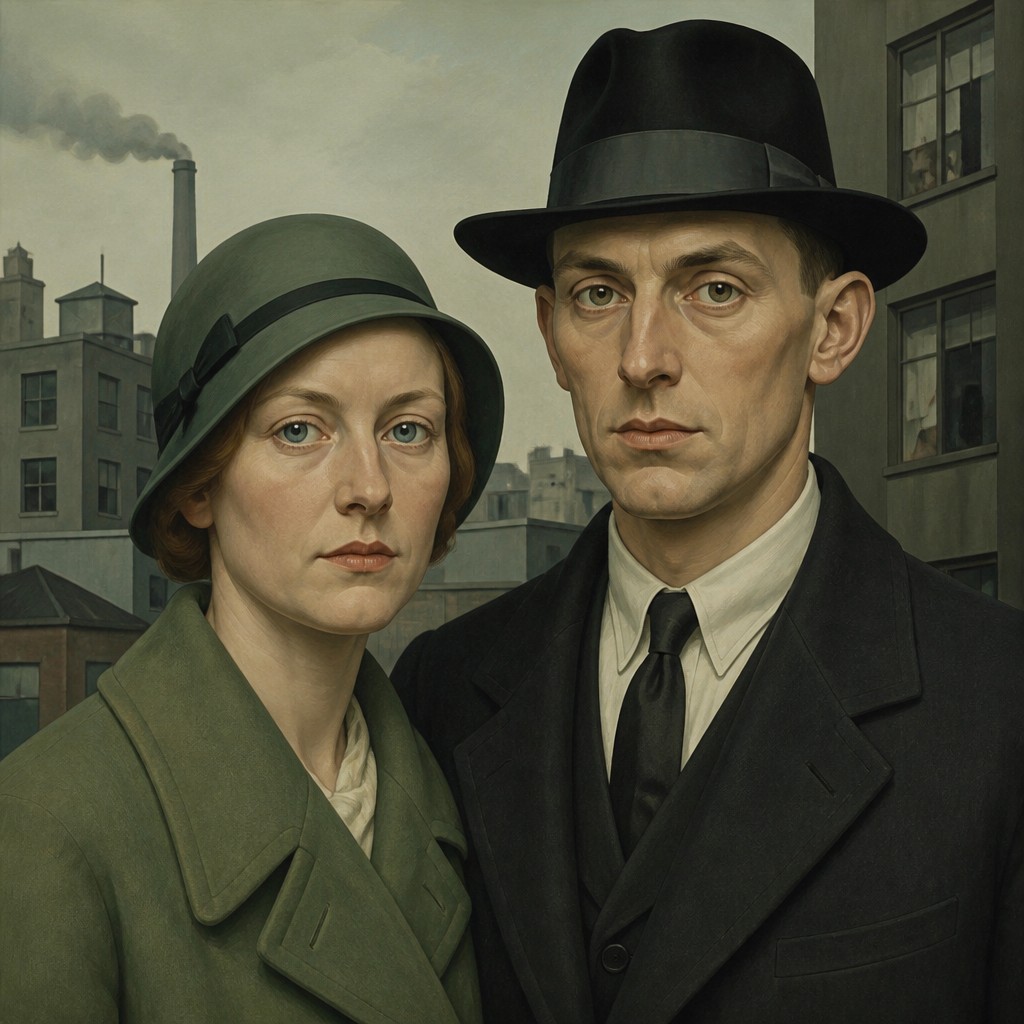
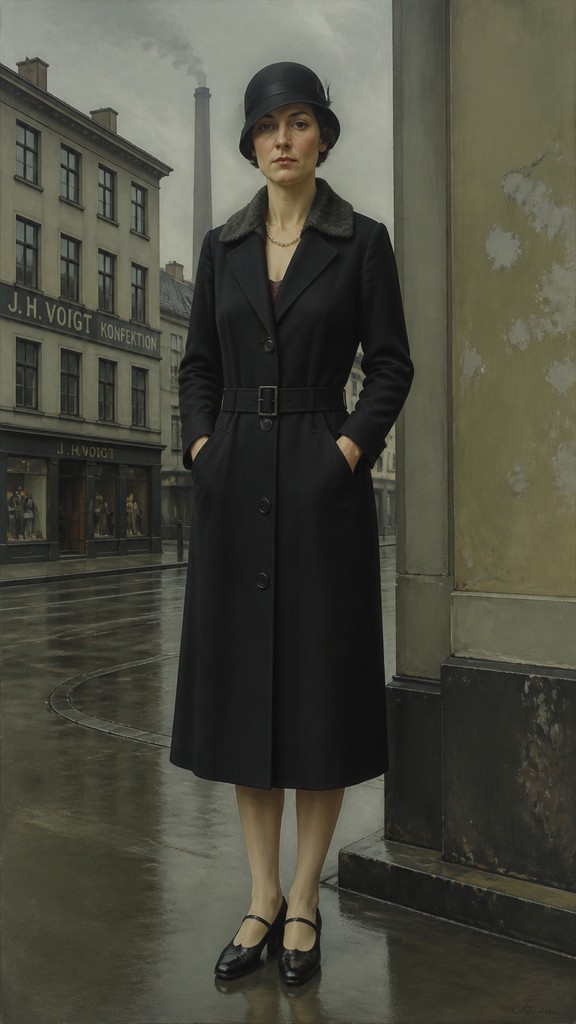
Faces and bodies retain asymmetry, fatigue, age, blemishes, and awkward posture. Portraits often communicate social identity through clothing, setting, and expression rather than flattering beauty.
Sober muted palette
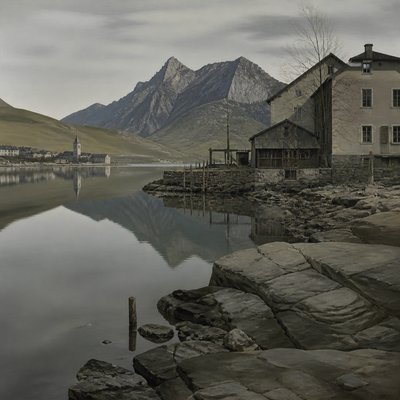
Cold greens, greys, dusty browns, restrained ochres, and subdued flesh tones create an atmosphere of sobriety. Strong color may be used sparingly as a structural or symbolic accent.
Smooth, controlled surfaces
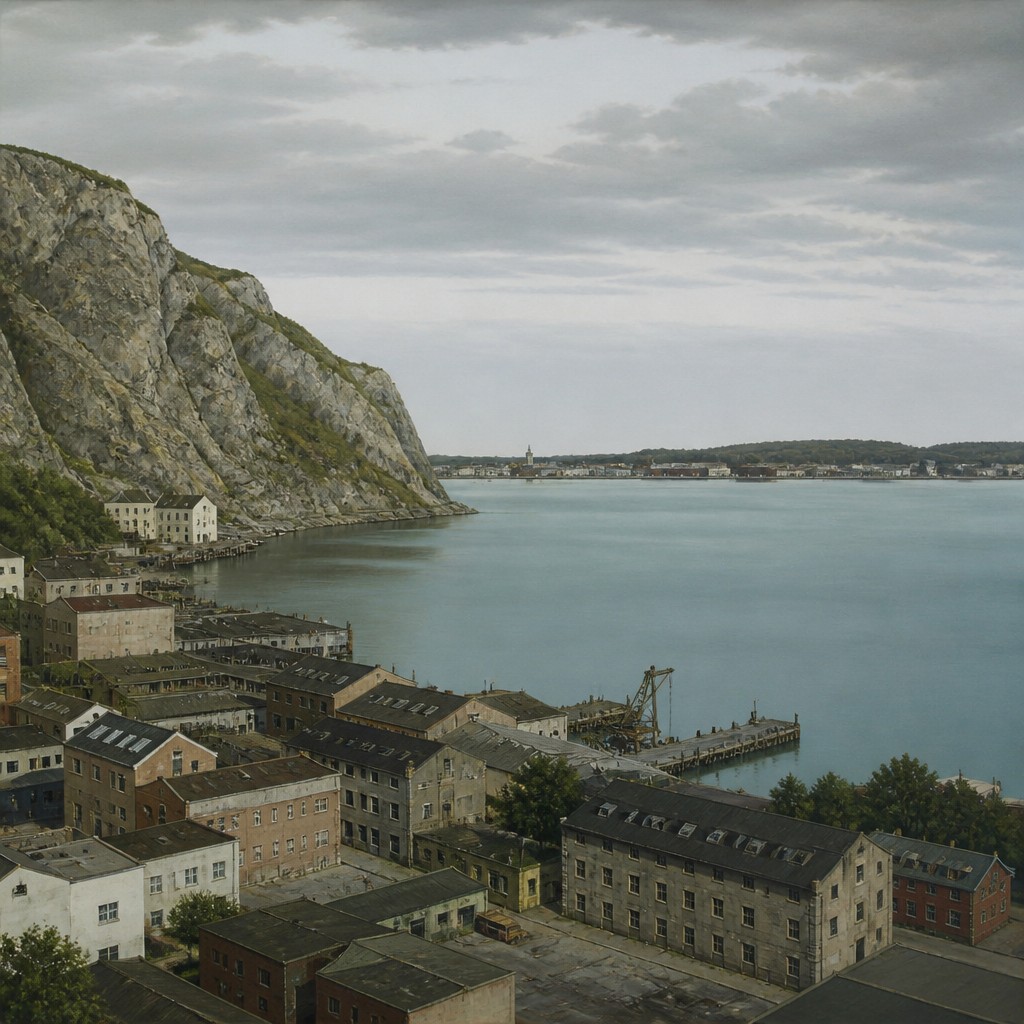
Careful modeling, precise contours, and restrained visible brushwork support the movement's air of factual clarity. A contemporary interpretation may use digital smoothness or glazed paint to achieve a similarly polished finish.
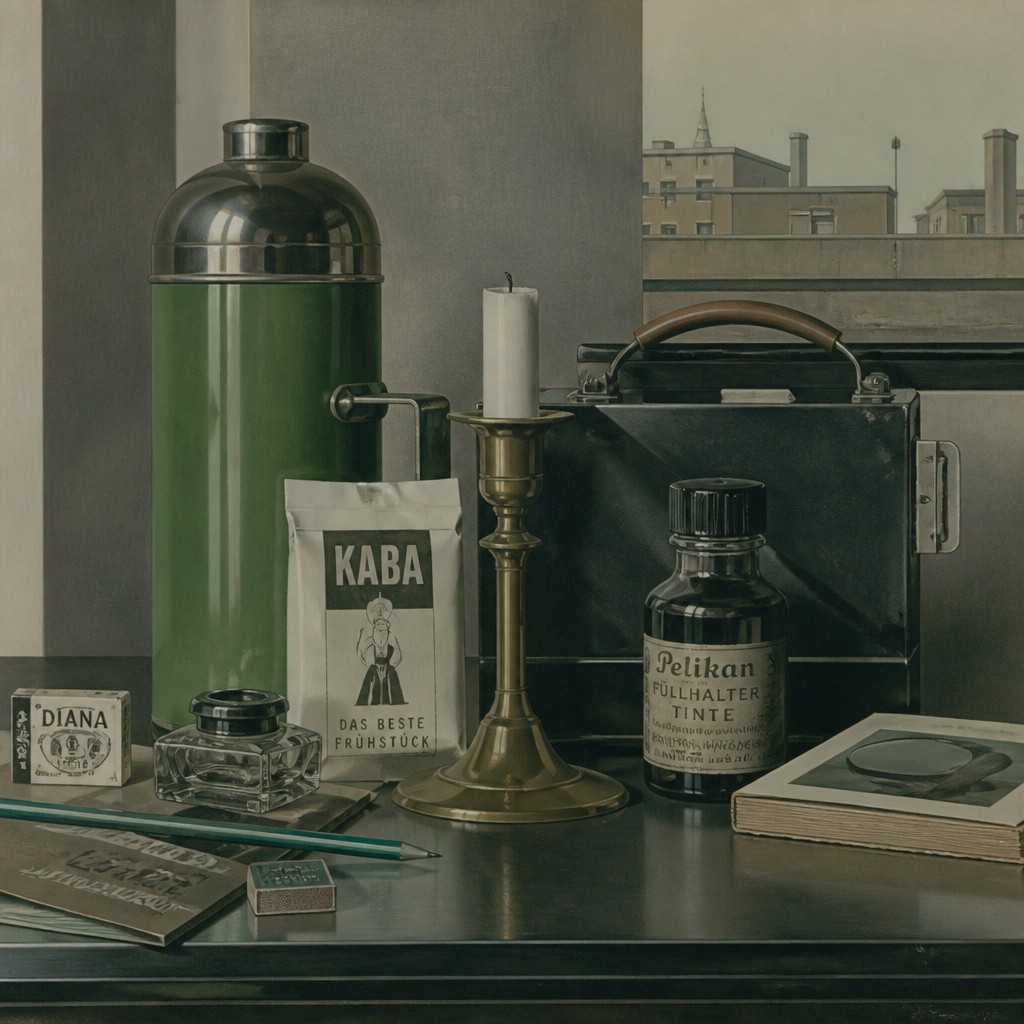
Airless stillness
Compositions frequently feel paused, quiet, and slightly tense, with limited gesture and little atmospheric diffusion. Empty spaces and rigid arrangements can make ordinary environments seem psychologically charged.

Urban and social scrutiny
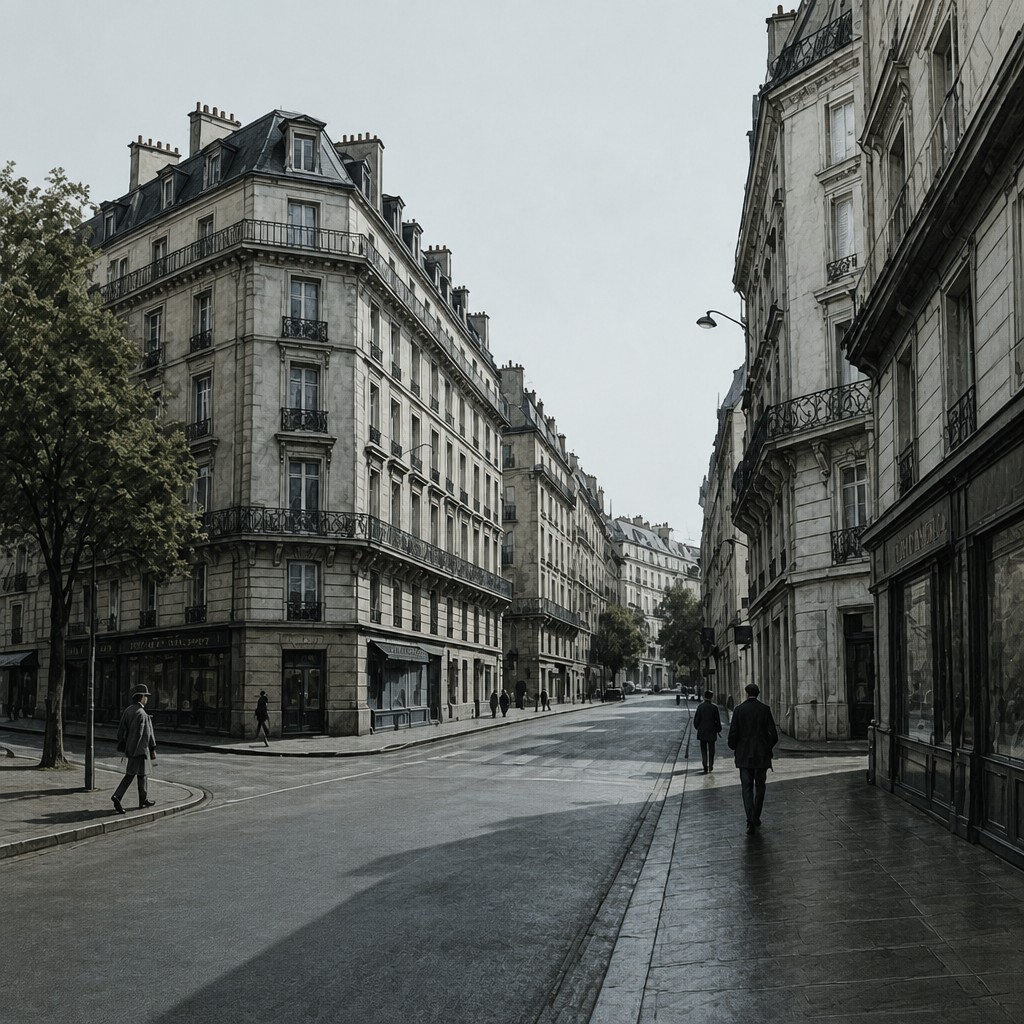
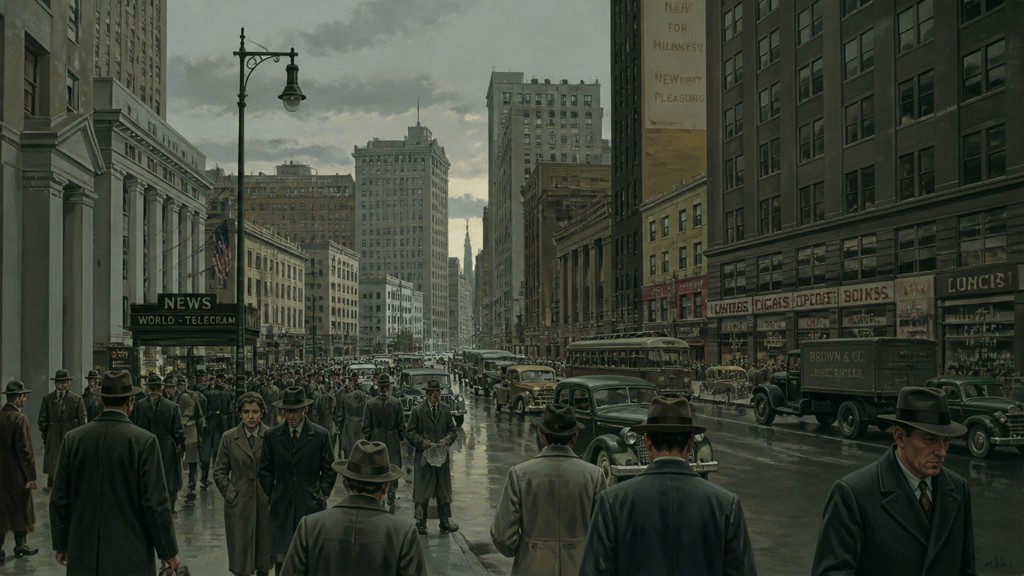
Modern streets, offices, cafés, industrial districts, interiors, and public figures are treated as evidence of social conditions. Details of class, labor, bureaucracy, commerce, and mass culture carry as much weight as the central subject.
Try It
Create Videos in New Objectivity Art Style
Styles aren't just for stills — describe a scene or animate an image and get a short video rendered in New Objectivity. Press play to see this pond come to life.
Make a VideoNew Objectivity Prompt Ideas
Start from an idea — each one opens the generator with the style ready to go. See all 40 New Objectivity prompts →
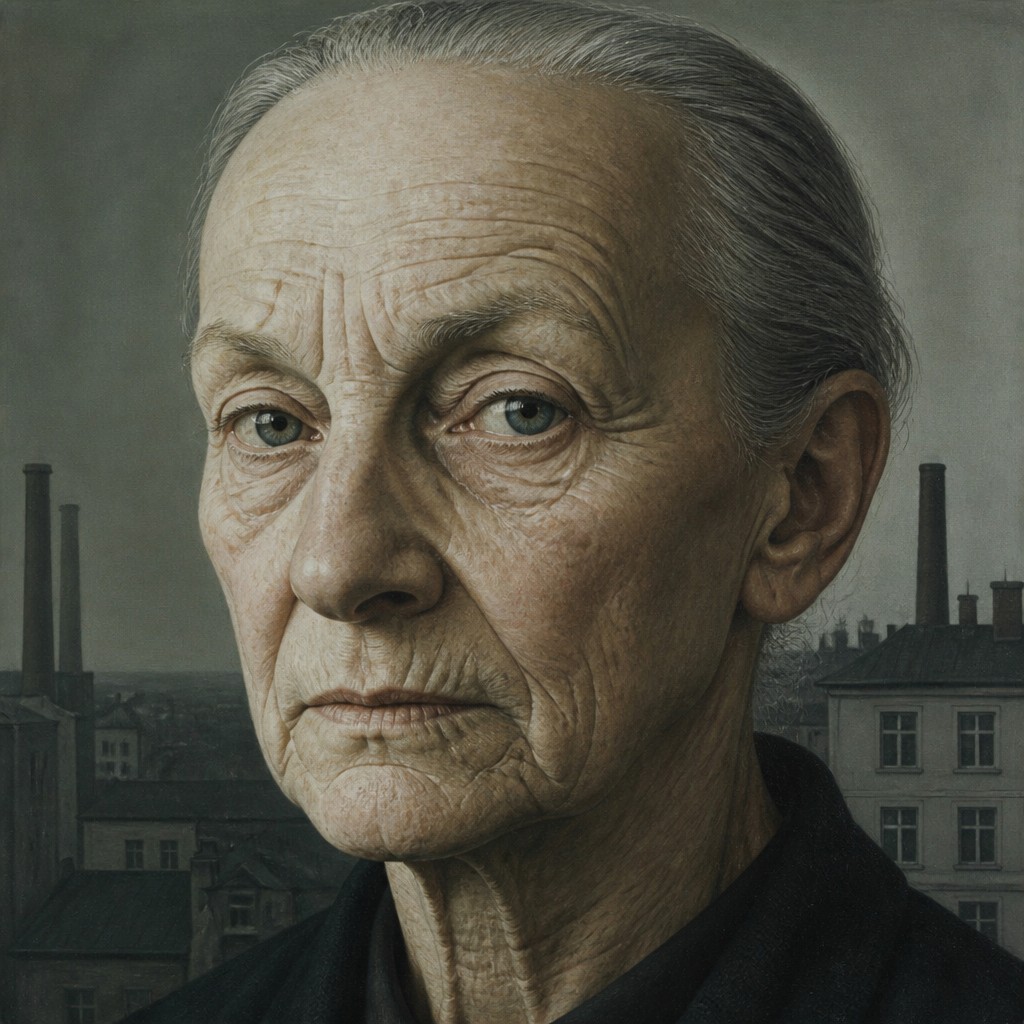
“close-up portrait of an elderly person with expressive weathered features”
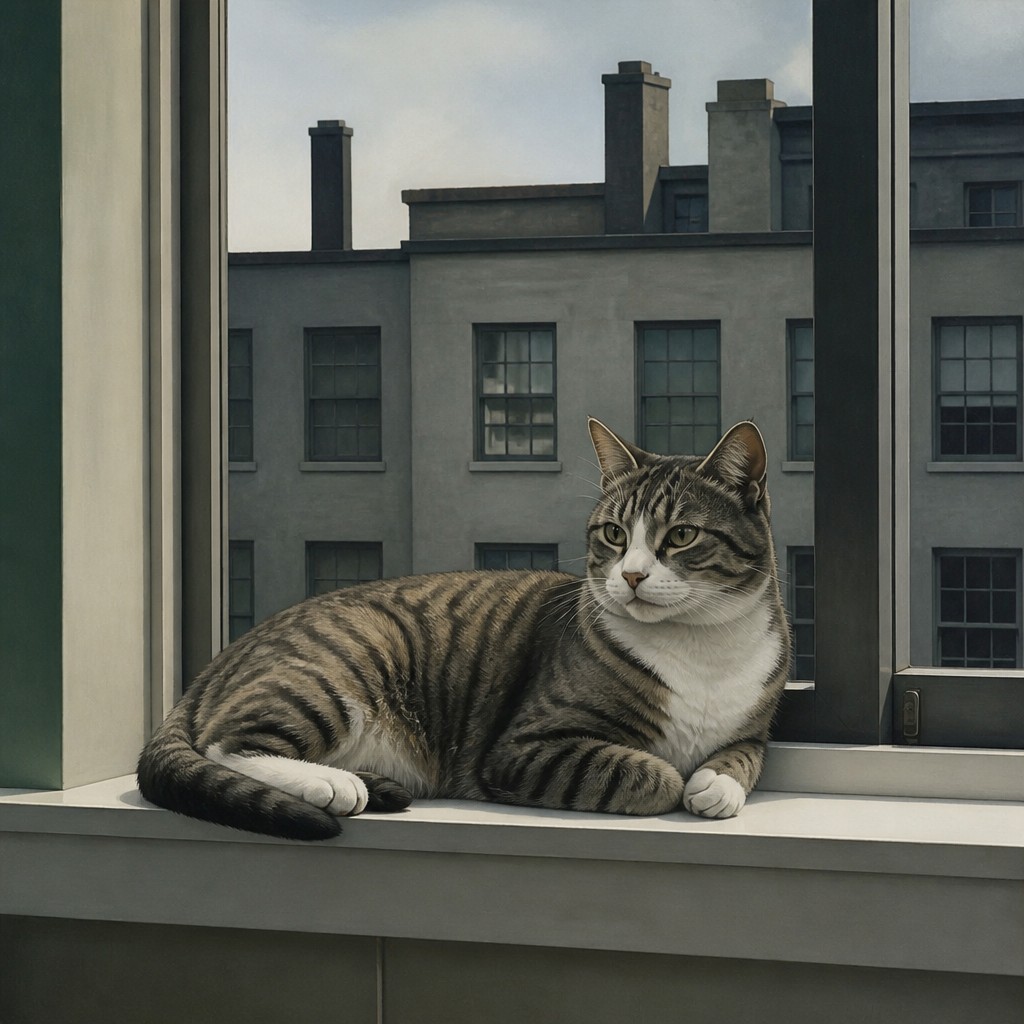
“a cat lounging in a sunlit window”
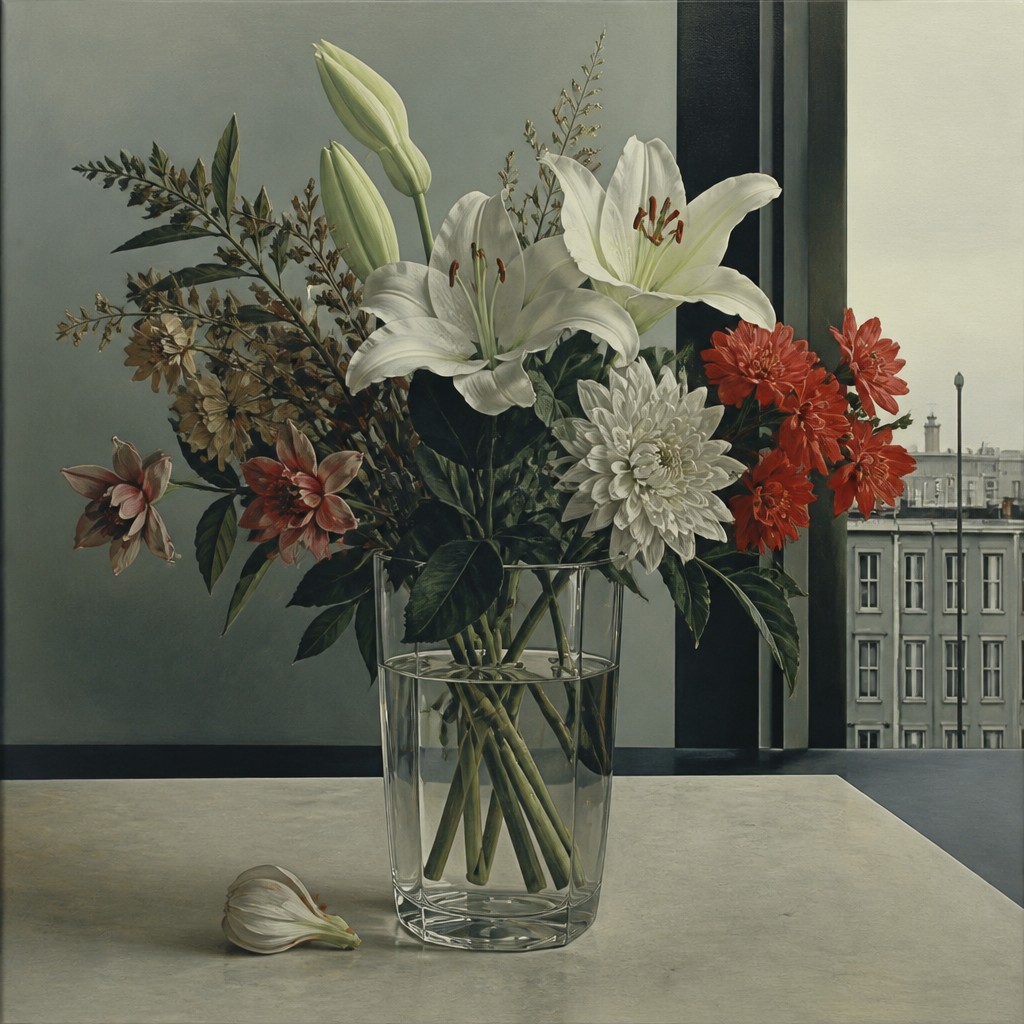
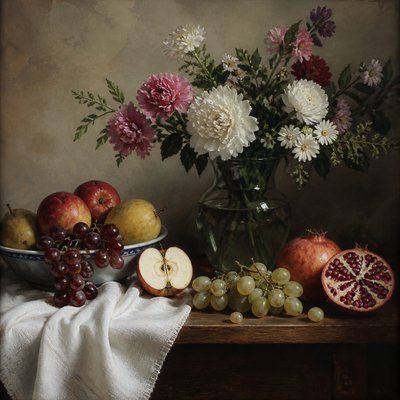
“bouquet of flowers in a glass vase”
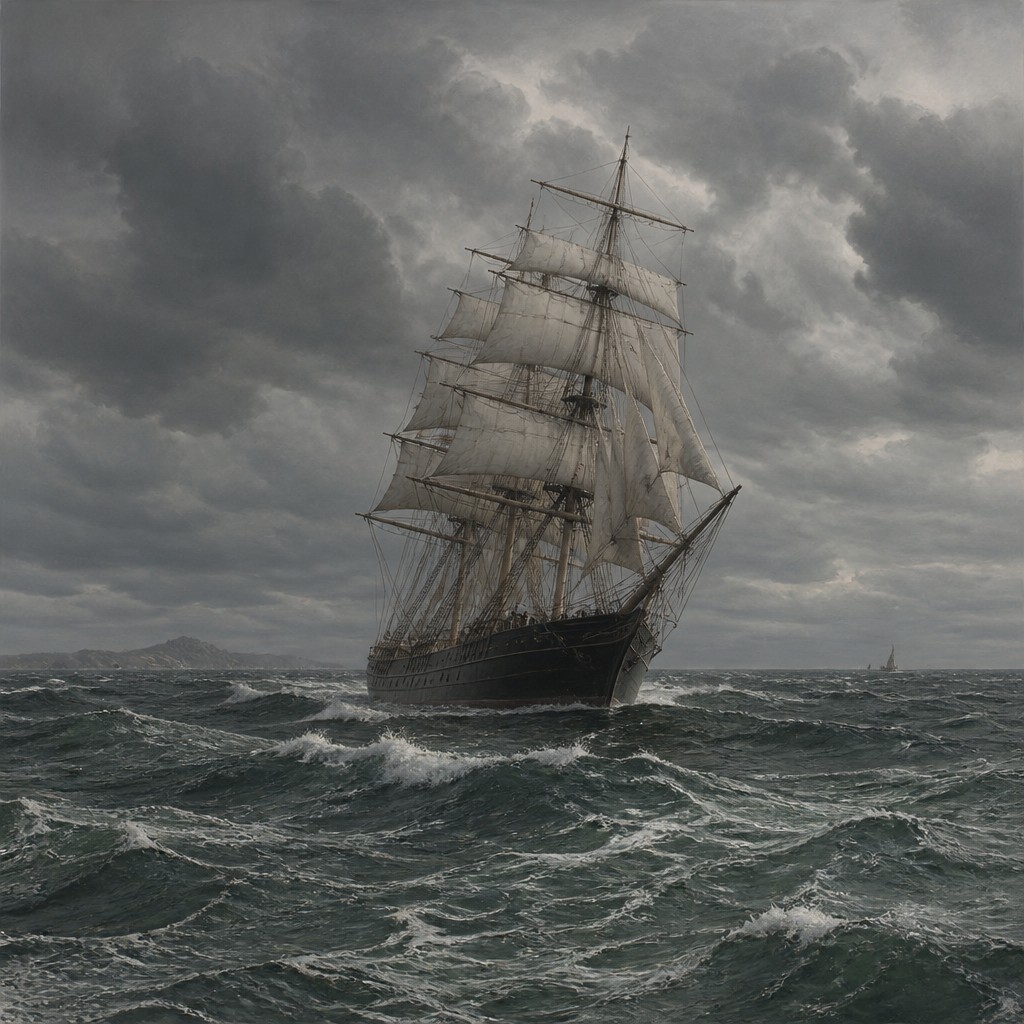
“sailing ship on a stormy sea”
How to Create New Objectivity Art
Master the craft step by step — or skip straight to creating. Read the full guide →
- 1
Build an exact composition
Use clear perspective, stable geometry, and deliberate placement of figures and objects. Avoid excessive cropping, dramatic foreshortening, or decorative chaos unless they serve a social or psychological purpose.
- 2
Control the light
Choose sober daylight, overcast illumination, or a restrained interior source with limited atmospheric glow. Keep shadows readable and relatively firm, avoiding romantic sunset effects or theatrical chiaroscuro.
- 3
Model without flattery
Observe facial structure, posture, clothing, and signs of age directly. In paint, use thin controlled layers, precise drawing, and restrained blending; in digital work, preserve crisp edges and avoid airbrushed perfection.
- 4
Use a disciplined palette
Start with cool greys, desaturated greens, muted browns, dull ochres, and restrained skin tones. Introduce brighter colors only when they clarify an object, social detail, or compositional contrast.
- 5
Make the setting meaningful
Place the subject in an ordinary, specific environment such as a municipal office, apartment, railway platform, workshop, or commercial street. Include factual details that suggest class, labor, technology, or institutional power.
- 6
Write precise generation prompts
Specify a sober subject, sharp uniform focus, unidealized features, cool muted colors, smooth controlled surfaces, and an airless atmosphere. Add concrete period or architectural details rather than relying only on broad mood words.
The Story
History & Origins of New Objectivity
New Objectivity developed in Germany after the First World War, reaching prominence in the 1920s and early 1930s. The movement arose amid disillusionment with wartime ideals, political instability, economic hardship, and the perceived excesses of prewar and Expressionist subjectivity. Its name became widely associated with a major 1925 exhibition of contemporary German art, which helped define the movement as a return to observable reality and disciplined representation.
The movement included several overlapping tendencies, from sharply satirical social realism to a more detached, classically ordered realism. It appeared in painting, drawing, photography, architecture, and design, and declined as an independent force after the Nazi consolidation of power in 1933, when censorship, persecution, exile, and institutional disruption altered Germany's cultural landscape. Its visual language later influenced documentary photography, editorial illustration, political art, and contemporary forms of figurative realism.
Influences: New Objectivity draws on Northern European realist painting, academic draftsmanship, Renaissance-derived perspective, nineteenth-century social observation, documentary photography, and the precise descriptive traditions of commercial illustration. It also developed in dialogue with Expressionism, rejecting its heightened distortion while retaining an interest in modern alienation. Later documentary, political, and psychologically detached figurative practices continue to adapt its combination of factual surface and social unease.
Frequently Asked Questions
What defines the New Objectivity art style?
It combines precise figurative representation with emotional restraint and social observation. Typical features include sharp overall focus, unidealized people, muted colors, controlled surfaces, sober lighting, and a quiet but often critical view of modern life.
When and where did New Objectivity develop?
It developed primarily in Germany during the 1920s, within the cultural and political circumstances of the Weimar Republic. It remained influential into the early 1930s, although censorship and political repression disrupted the movement after 1933.
How is New Objectivity different from Expressionism?
Expressionism generally intensifies emotion through distortion, exaggerated color, and visibly energetic form. New Objectivity tends toward controlled drawing, observational accuracy, cooler color, and a deliberately detached surface, although both can address anxiety and social conflict.
Is New Objectivity the same as photorealism?
No. Both may value detail and accurate observation, but New Objectivity is a historical movement with a specific Weimar-era social context. Its blunt poses, muted atmosphere, and psychological or political implications matter as much as optical accuracy.
How can I make a portrait in this style?
Use an unidealized pose, direct lighting, restrained expression, and a plain or socially specific setting. Emphasize structural facial detail, clothing, posture, and signs of lived experience while avoiding glamour retouching, soft-focus effects, and sentimental color.
Where is this visual language used today?
Its influence appears in figurative painting, editorial illustration, documentary photography, film design, historical scenes, political art, and digitally produced portraits. Contemporary adaptations often preserve the cool observational surface while applying it to present-day workplaces, cities, institutions, and social inequalities.
Create your first New Objectivity artwork
Describe anything — or upload a photo — and see it in New Objectivity Art Style in seconds.
Related Styles
Discover similar art styles