Bhutanese Art Style
Explore Bhutanese art style: cliffside dzongs, thangka mineral colors, carved timber, lotus motifs, and misty Himalayan grandeur.
Instantly rendered in Bhutanese — or transform a photo
Bhutanese Gallery
Tap any artwork to explore it
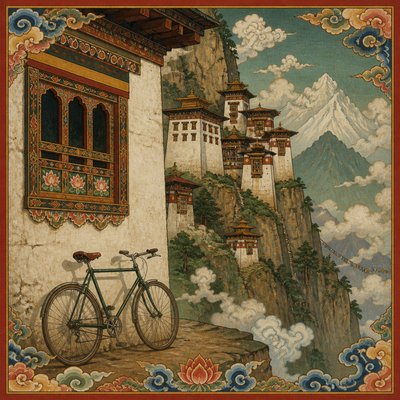
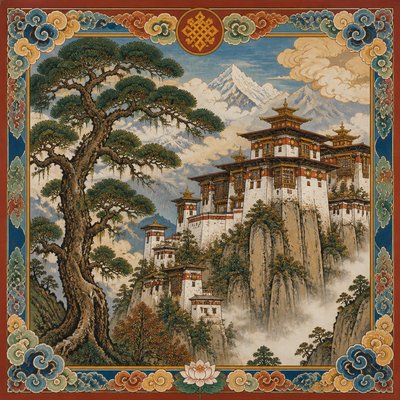
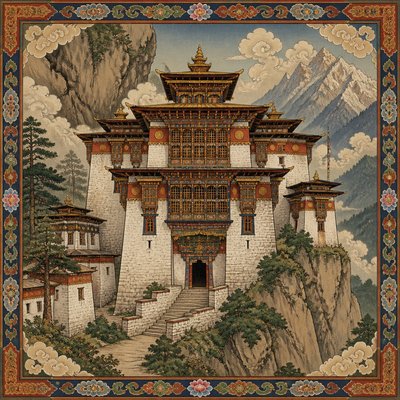
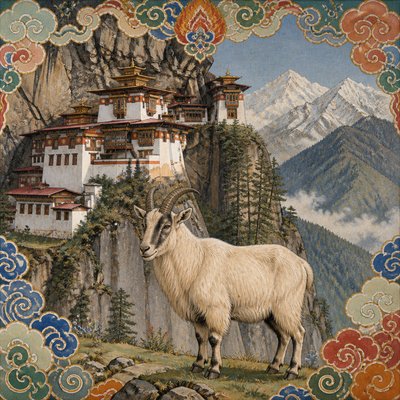
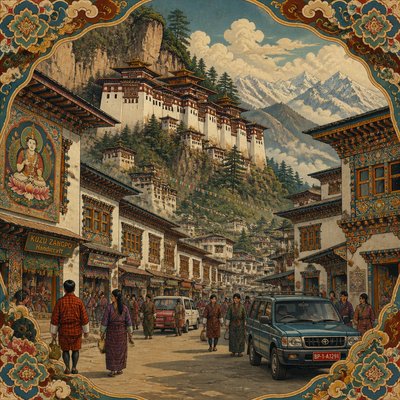
What is Bhutanese Art Style?
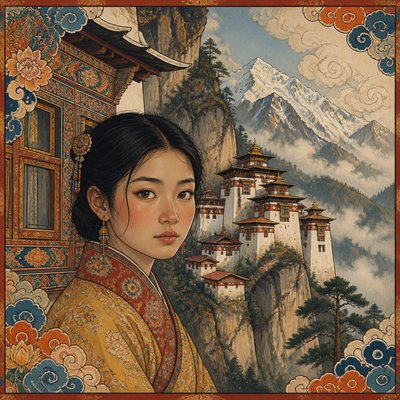
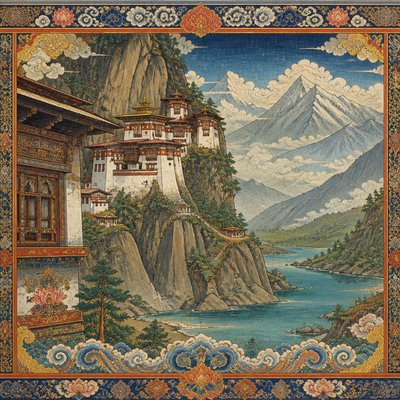
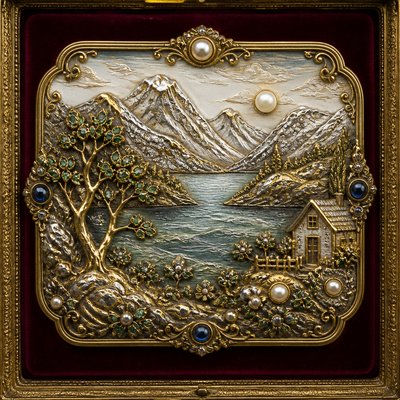
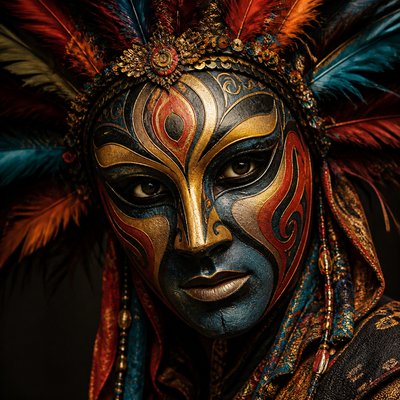
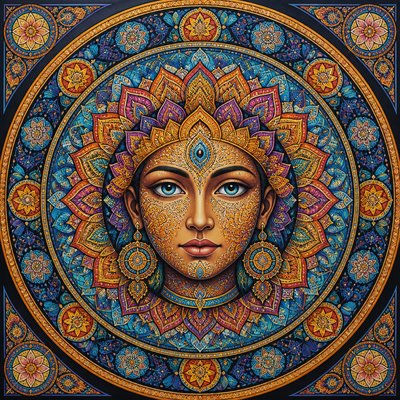
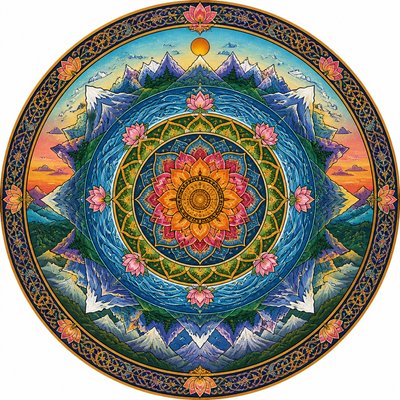
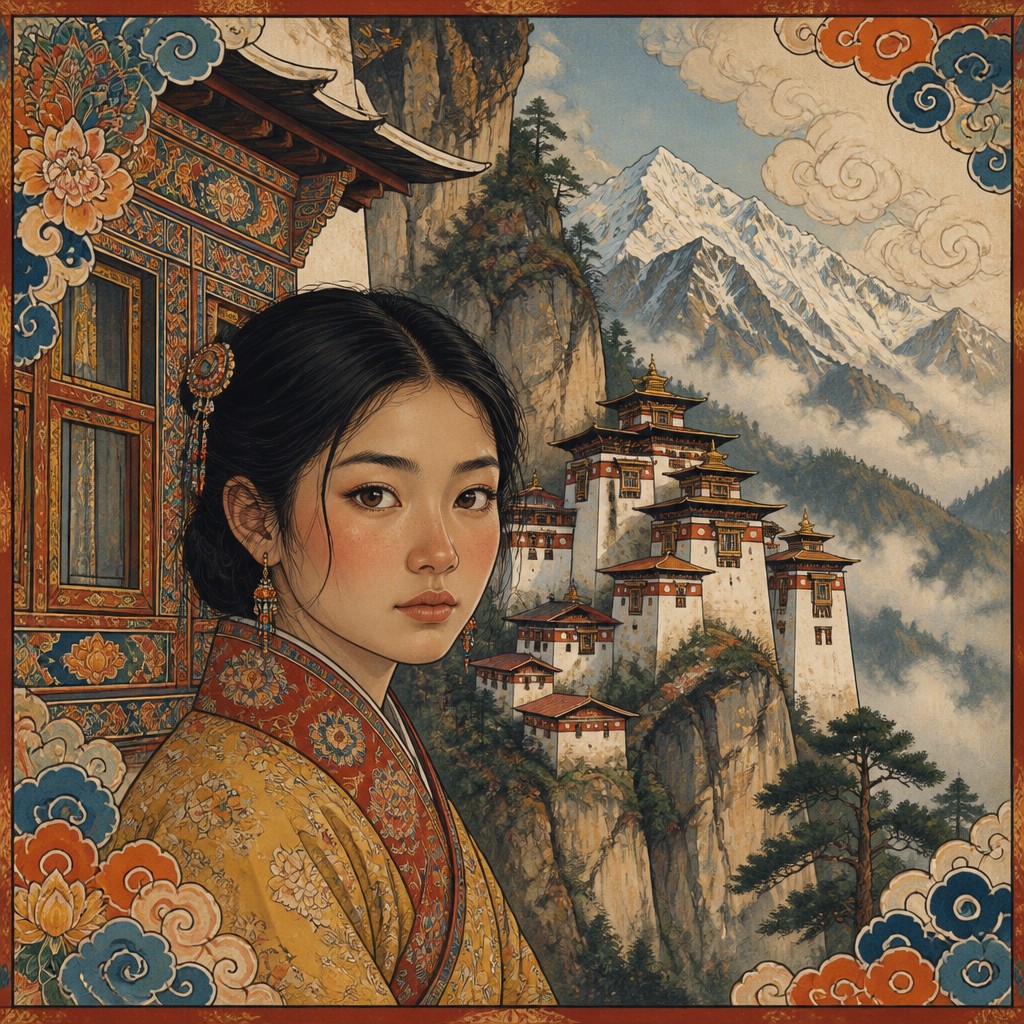
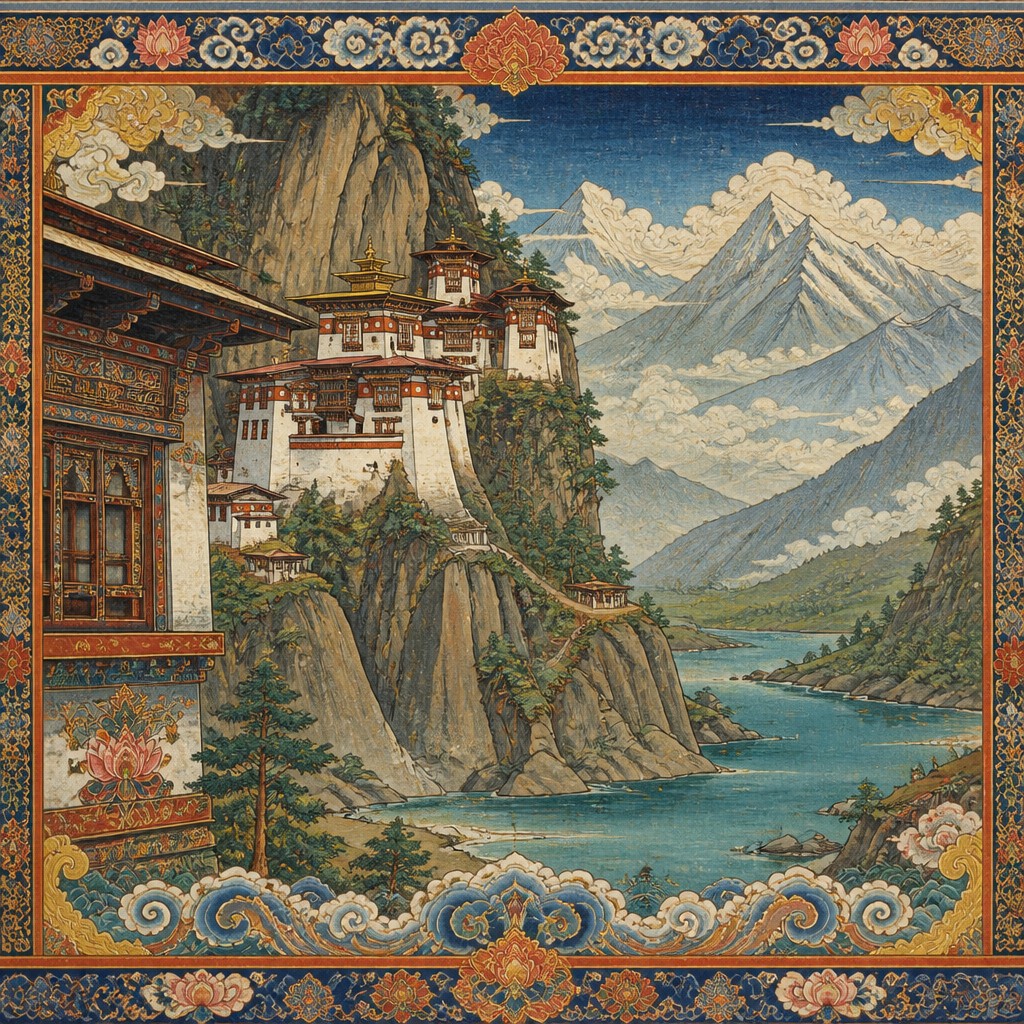
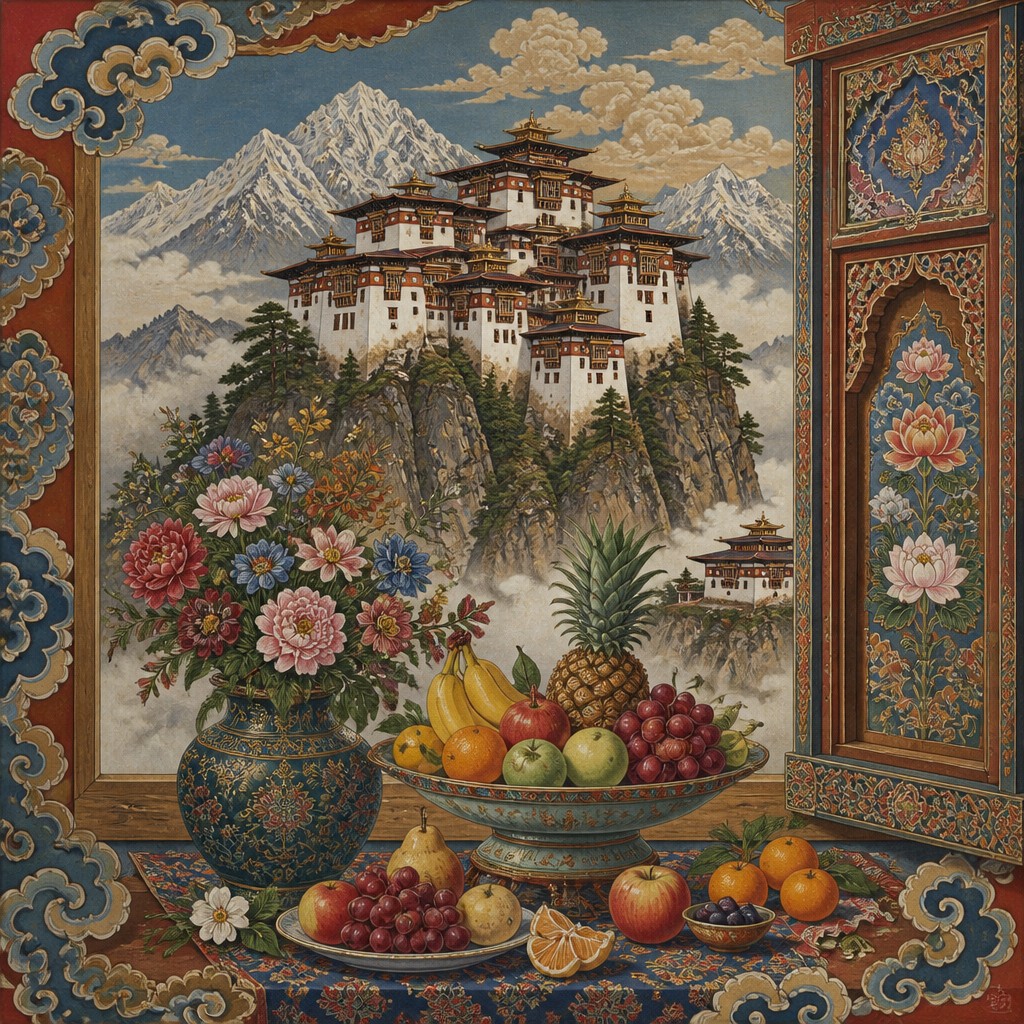
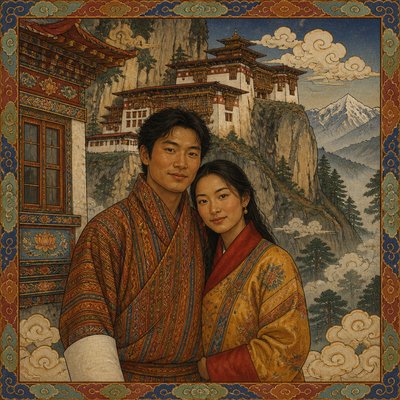
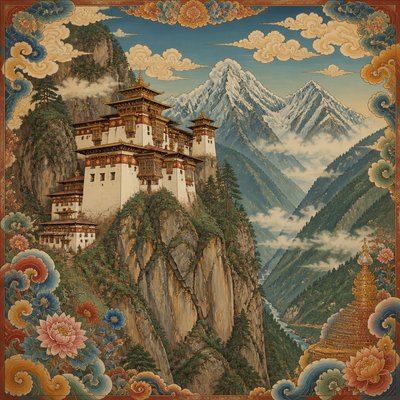
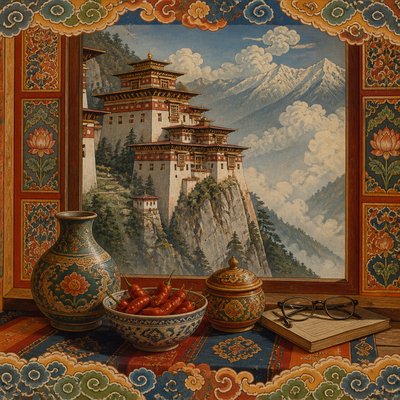
Bhutanese art style is a contemporary visual synthesis rooted in Bhutan’s Himalayan Buddhist traditions, combining the monumental character of cliffside dzong fortress-monasteries with the saturated mineral-pigment palette and disciplined ornament of thangka painting. Its imagery often places whitewashed masonry, red-ochre bands, carved timber windows, high mountain passes, and drifting cloud forms within a calm, vertically composed scene.
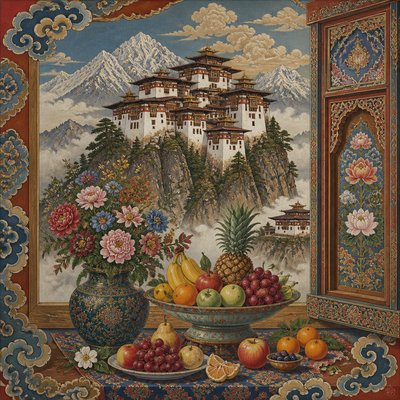
The style looks ceremonial and contemplative rather than purely naturalistic. Architectural façades are organized with strong symmetry and repeated borders, while lotus flowers, cloud scrolls, and geometric patterns provide finely controlled surface detail. Misty peaks and open sky create atmospheric depth, but the flattened color fields, precise contours, and symbolic ornament preserve a connection to devotional painting and traditional Himalayan design.
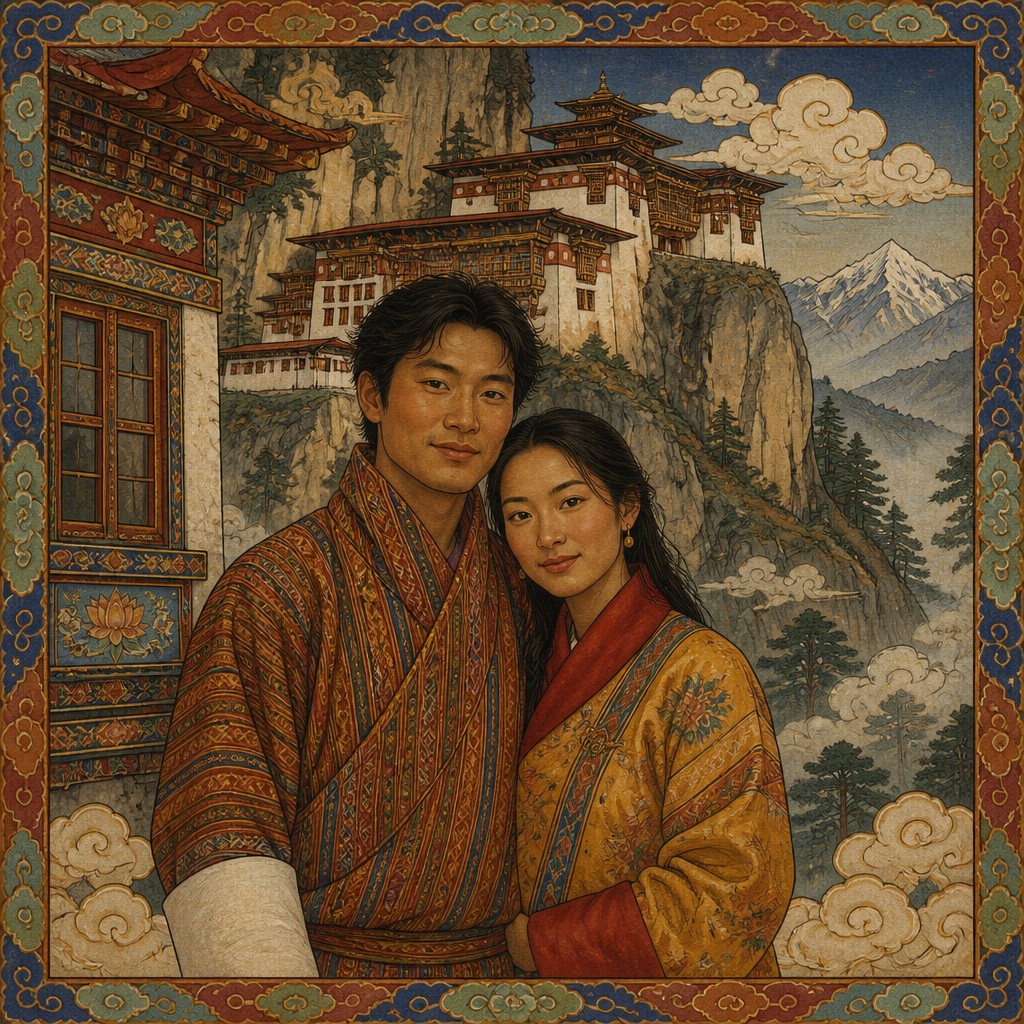
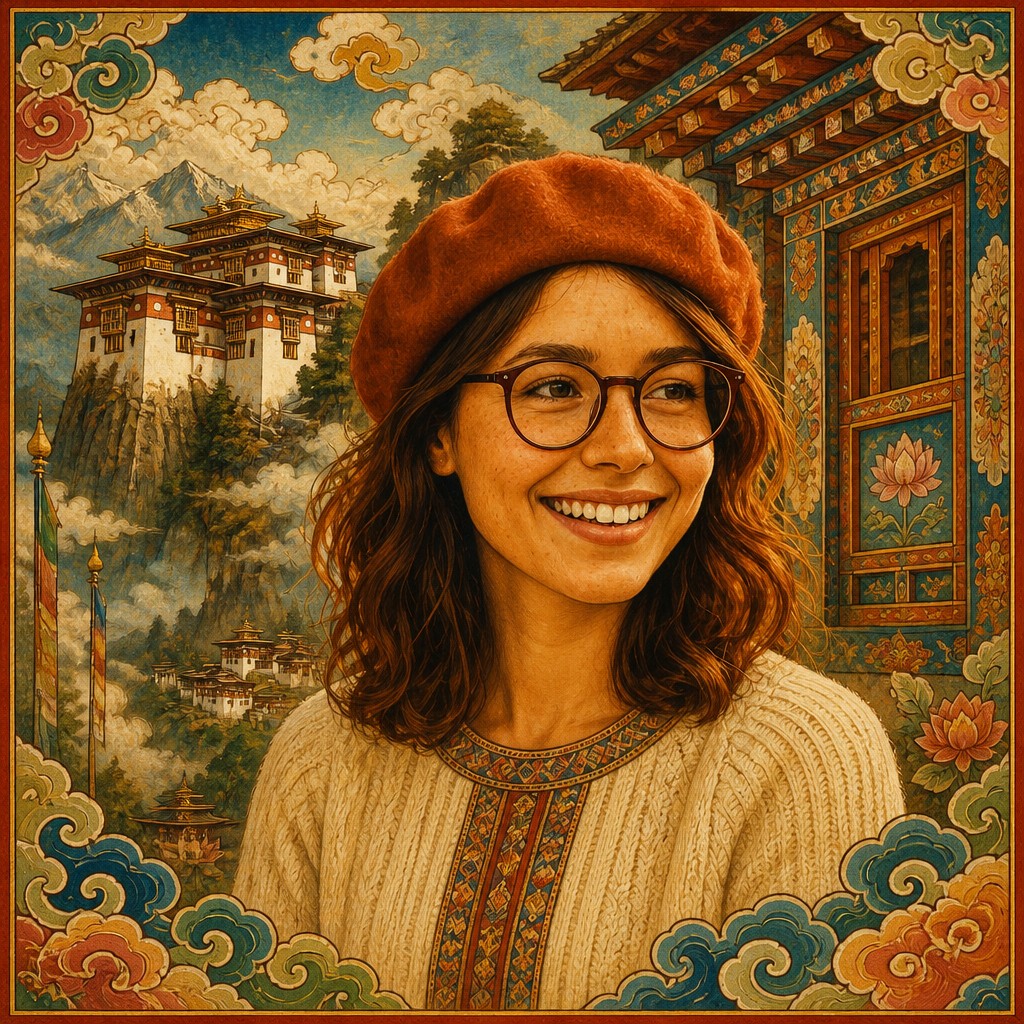
Try It On Your Photos
Upload any photo and convert it into Bhutanese Art Style — drag the sliders to compare before and after.

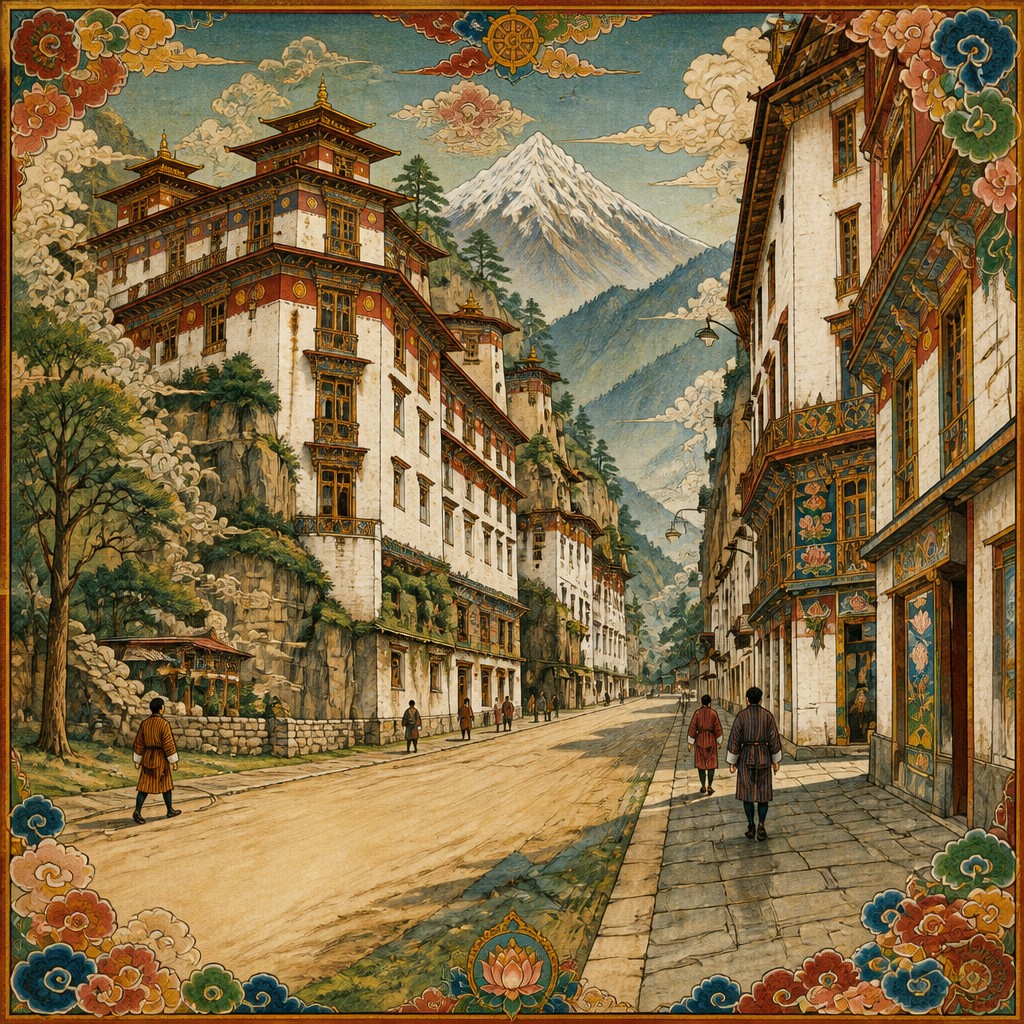

What Defines Bhutanese Art Style
The signature details, up close
Cliffside dzong architecture
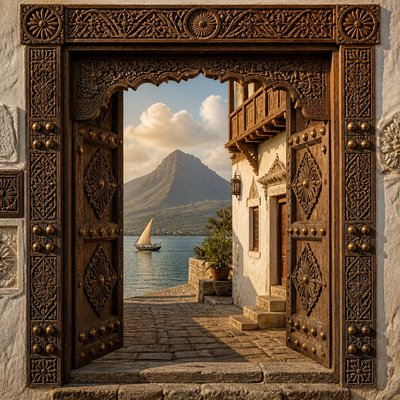
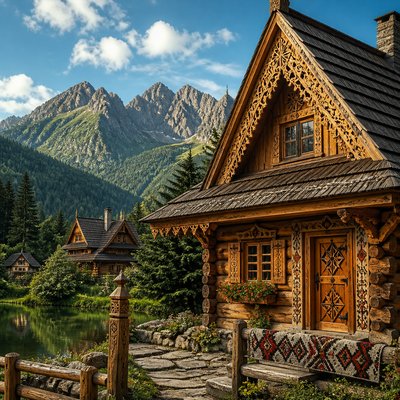
Fortress-monasteries appear on ridges, cliffs, and river valleys, with massive whitewashed walls, red-ochre trim, layered courtyards, and timber roof structures. Their vertical placement conveys both defense and spiritual elevation.
Thangka-inspired color
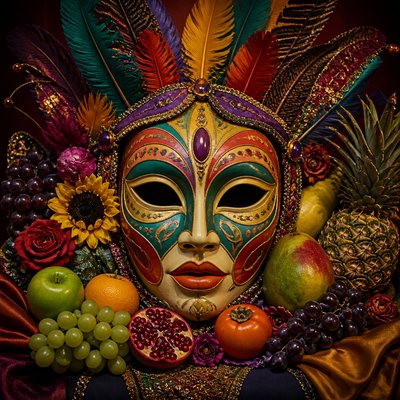
Deep mineral-like reds, saffron, lapis blue, emerald green, white, and warm gold create a saturated but controlled palette. Broad, clean color fields are balanced by darker outlines and carefully repeated accents.
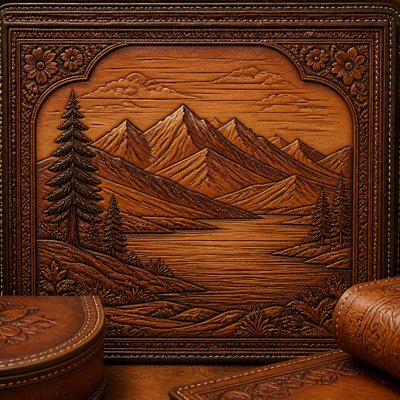
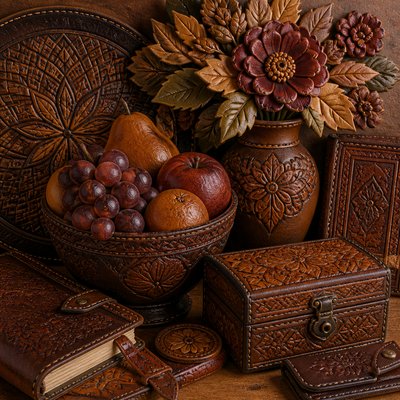
Carved and painted timber
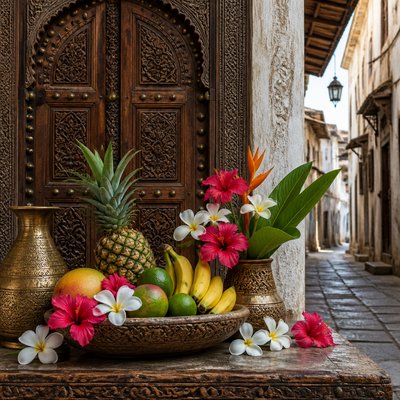
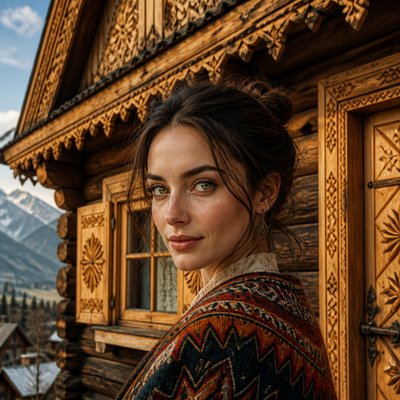
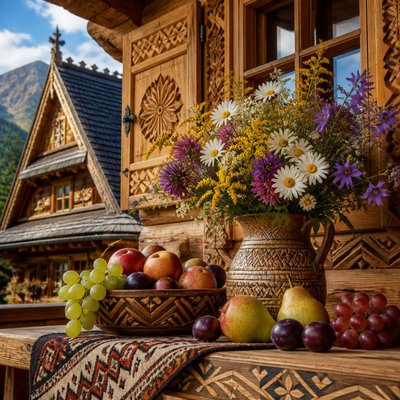
Windows, balconies, eaves, and columns feature intricate wooden frames with painted lotus, cloud, floral, and geometric motifs. The ornament is rhythmic and densely organized without eliminating the underlying architectural structure.
Cloud-scroll borders
Curled cloud forms and decorative bands frame skies, façades, and image edges. These motifs act as both ornament and compositional structure, guiding the eye around the scene.
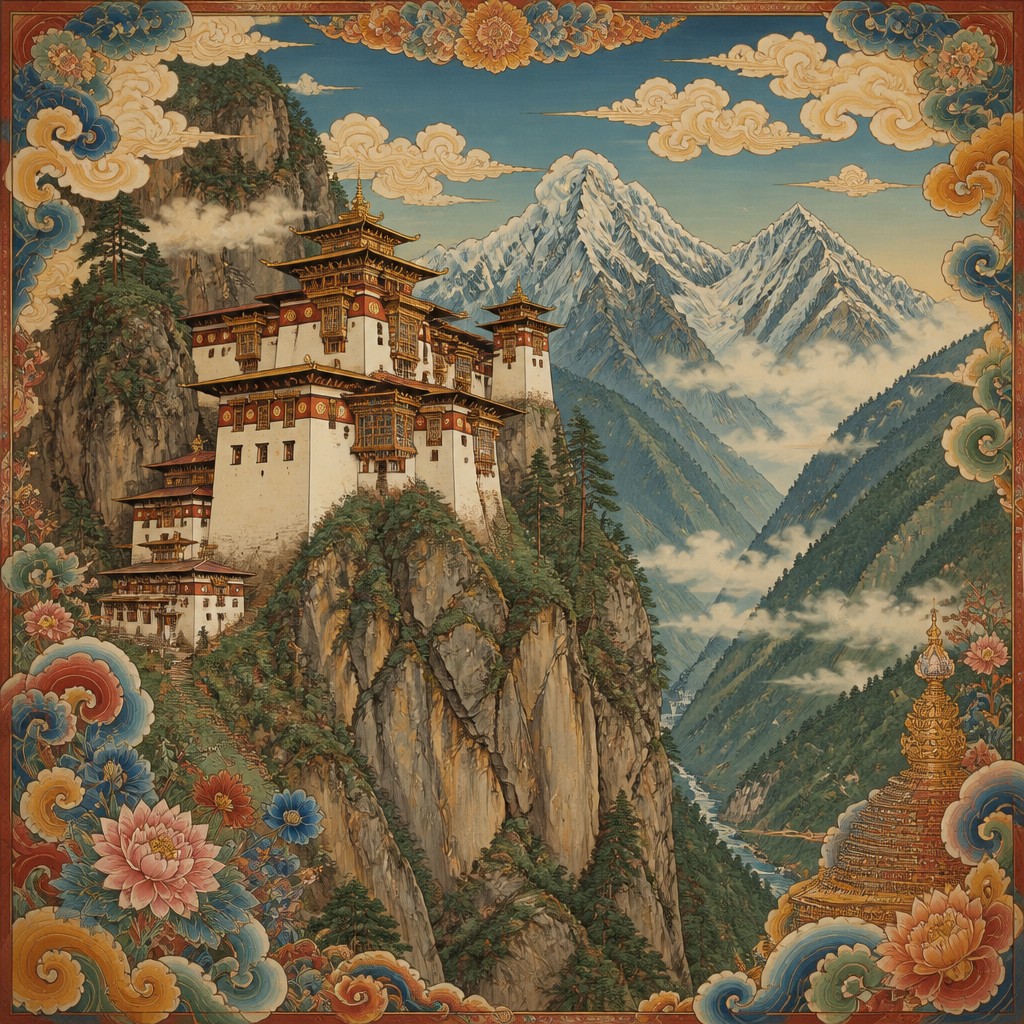
Himalayan atmosphere
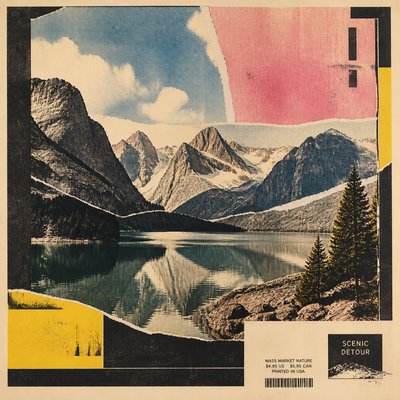
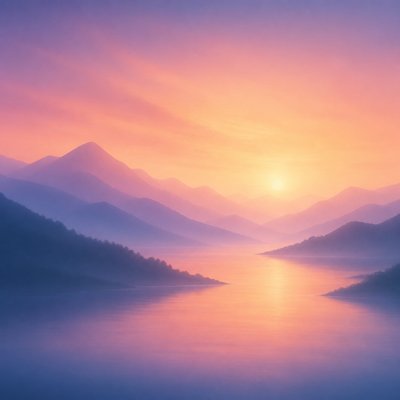
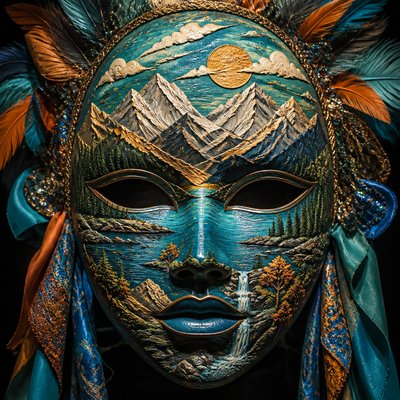
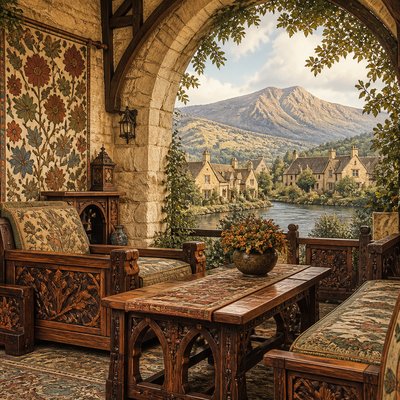
Layered mountain ridges, pale mist, snow peaks, and cool receding blues establish a high-altitude setting. Atmospheric softness contrasts with the crisp, deliberate detail of the buildings.
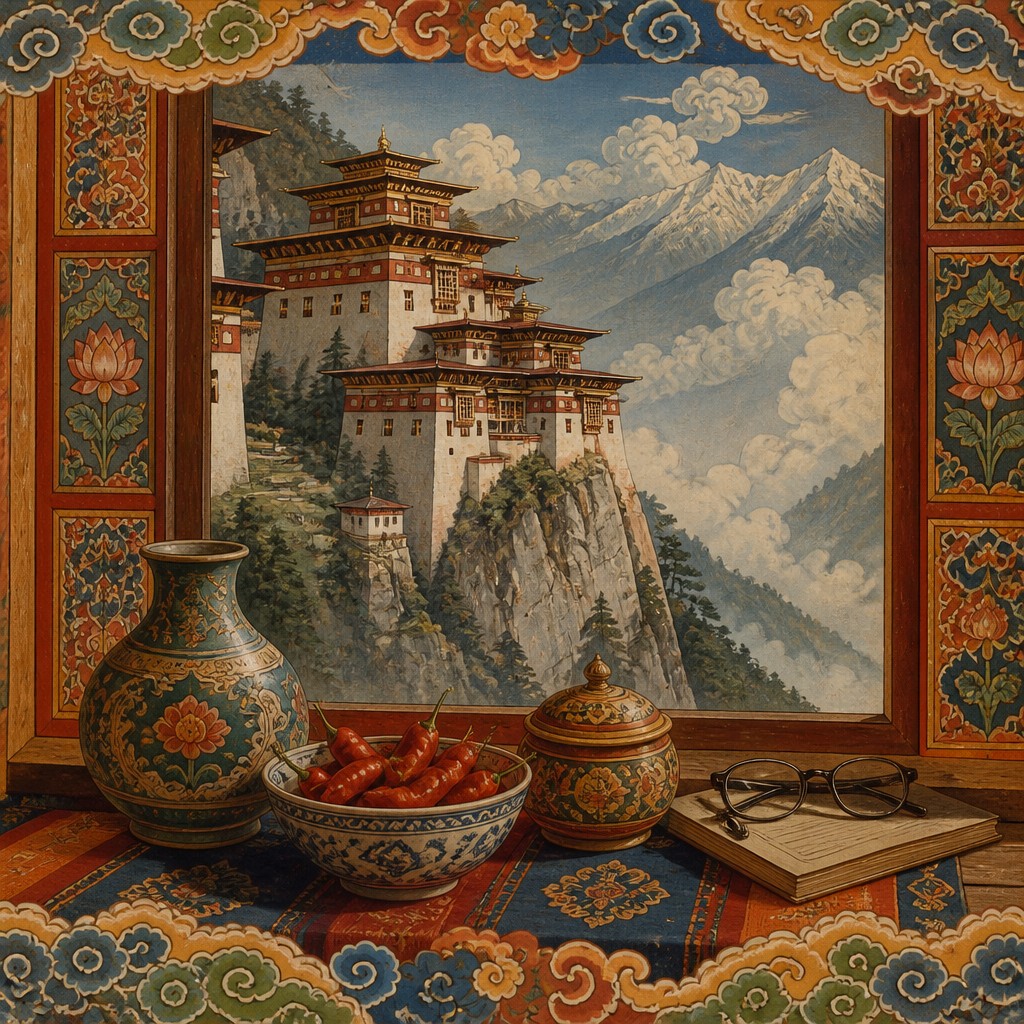
Symmetry and symbolic order
Front-facing façades, centered gateways, repeated windows, and balanced borders give the imagery a ceremonial calm. Decorative motifs suggest cultural continuity rather than incidental surface texture.
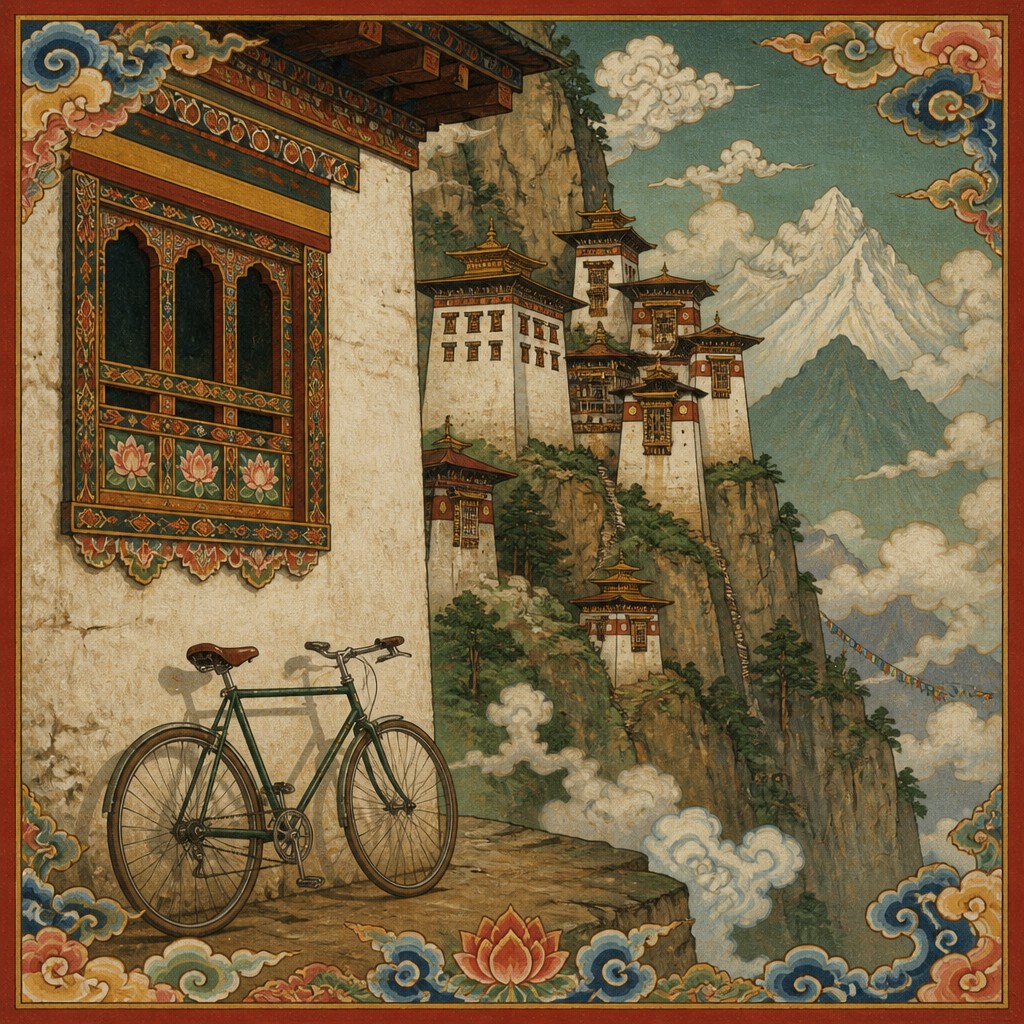
Serene monumental mood
The style favors stillness, spaciousness, and mountain-kingdom grandeur over frantic action or gritty realism. Small human figures may be included to establish scale while keeping the architecture visually dominant.
Bhutanese Prompt Ideas
Start from an idea — each one opens the generator with the style ready to go. See all 40 Bhutanese prompts →
How to Create Bhutanese Art
Master the craft step by step — or skip straight to creating. Read the full guide →
- 1
Build the architectural silhouette first
Begin with a clear perspective sketch of the dzong, its terraces, retaining walls, roofs, and surrounding cliffs. Keep the main façade legible before adding painted timber details or decorative borders.
- 2
Use layered mineral-like color
Work with opaque, matte passages of white, cinnabar red, saffron, indigo, turquoise, and green, then reserve muted blue-gray washes for distant mountains and mist. In digital work, textured brushes and restrained grain can suggest mineral pigment without making the image look distressed.
- 3
Design ornament as a repeatable system
Create a small vocabulary of lotus petals, cloud curls, floral bands, and geometric frames, then repeat it consistently across windows, eaves, and image borders. Controlled repetition is more characteristic than randomly scattered decoration.
- 4
Separate crisp detail from atmospheric depth
Keep foreground architecture sharply outlined and richly patterned, while reducing contrast, saturation, and edge definition in distant peaks. This preserves both the illustrative clarity and the immense scale of the Himalayan setting.
- 5
Use culturally careful symbolism
For devotional subjects, research the relevant Buddhist iconography, proportions, gestures, and attributes rather than treating sacred figures as generic fantasy decoration. For secular scenes, architectural motifs and landscape atmosphere can convey the lineage without imitating a ritual painting.
- 6
Write a structured generation prompt
Specify the subject, dzong architecture, whitewashed walls, red-ochre trim, thangka-inspired mineral colors, carved timber, lotus and cloud motifs, misty Himalayan peaks, balanced composition, and calm mood. Add terms such as matte pigment, precise linework, symmetrical façade, and atmospheric mountain depth to guide the visual hierarchy.
The Story
History & Origins of Bhutanese
Bhutanese art style, as used today, is not a single historical movement with a fixed period or formal school. It draws on Bhutan’s long-established Buddhist artistic traditions, including thangka painting, sacred architectural decoration, woodcarving, textile patterning, and the construction of dzongs. Dzongs developed as combined religious, administrative, and defensive complexes, with many of their best-known architectural forms taking shape from the seventeenth century onward.
The contemporary label brings these distinct traditions together into a unified image-making language. It emphasizes recognizable Bhutanese architectural features and Himalayan atmosphere while adapting traditional motifs for illustration, concept art, editorial imagery, and digital composition. A respectful interpretation should distinguish decorative inspiration from the precise religious iconography and ritual function of actual thangka paintings.
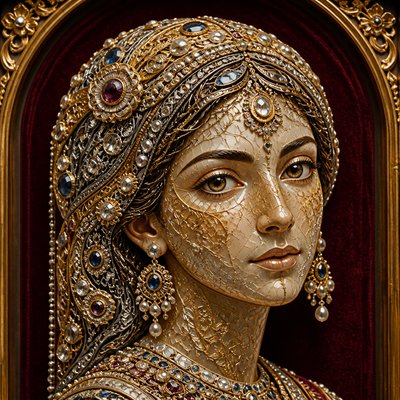
Influences: The style is related to Himalayan Buddhist thangka painting, Bhutanese dzong architecture, traditional woodcarving and textile ornament, Tibetan and Himalayan decorative arts, and sacred architectural illustration. It also shares selected qualities with illuminated manuscripts, symbolic landscape painting, and contemporary environment concept art, especially in its combination of flattened ornament, precise contours, and atmospheric depth.
Frequently Asked Questions
What defines the Bhutanese art style?
It is defined by the combination of Bhutanese dzong architecture, Himalayan mountain scenery, thangka-influenced color, and intricate painted or carved ornament. Whitewashed walls, red-ochre trim, timber windows, lotus motifs, cloud scrolls, and a calm ceremonial mood are common markers.
Is Bhutanese art style a formal historical art movement?
No. This label describes a contemporary synthesis rather than a single historical movement or officially standardized school. It draws from several Bhutanese artistic traditions that have different religious, architectural, and material contexts.
How is it different from Tibetan thangka painting?
Thangka painting is a specific devotional practice with established iconography, compositional systems, ritual purposes, and technical conventions. The Bhutanese art style described here borrows its saturated palette, precision, and ornamental discipline but usually focuses on architecture and landscape rather than reproducing a complete sacred thangka.
How can I make an image in this style without copying sacred imagery?
Focus on dzong forms, painted timber, cloud and lotus ornament, mineral-like colors, and Himalayan atmosphere. Avoid inventing or casually altering sacred figures, mantras, ritual diagrams, or identifiable religious symbols unless you have researched their meaning and are using them in an appropriate context.
What media work well for this aesthetic?
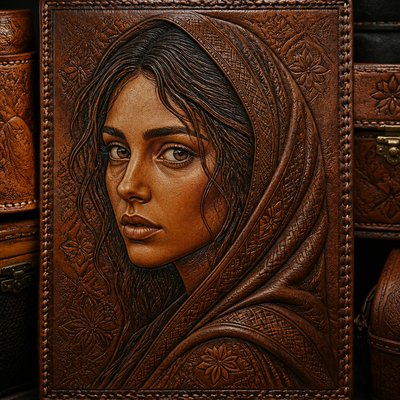
Gouache, opaque watercolor, mineral-pigment approaches, colored pencil, ink, woodblock-inspired printmaking, and digital painting all suit the style. Matte surfaces, controlled outlines, layered flat color, and finely repeated pattern are more important than a particular medium.
Where is this visual style commonly used?
It is well suited to architectural illustration, travel and cultural editorial art, book covers, environment design, educational graphics, posters, and atmospheric landscape scenes. It can also support photo transformations when the original image has a clear structure and enough visible detail for architectural or ornamental treatment.
Create your first Bhutanese artwork
Describe anything — or upload a photo — and see it in Bhutanese Art Style in seconds.
Related Styles
Discover similar art styles