Constructivism Art Style
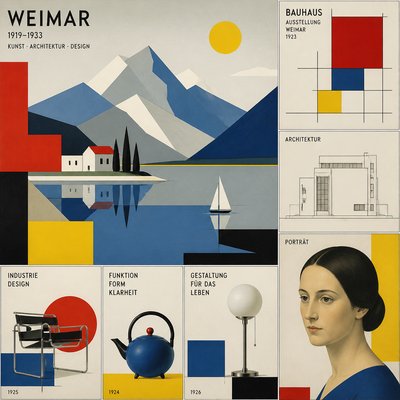
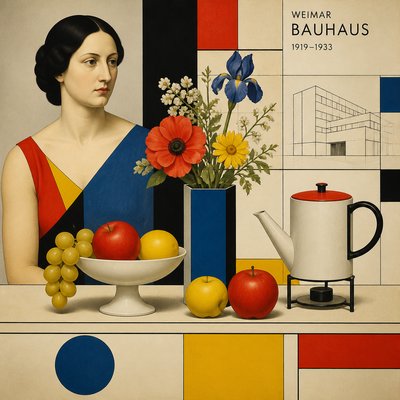
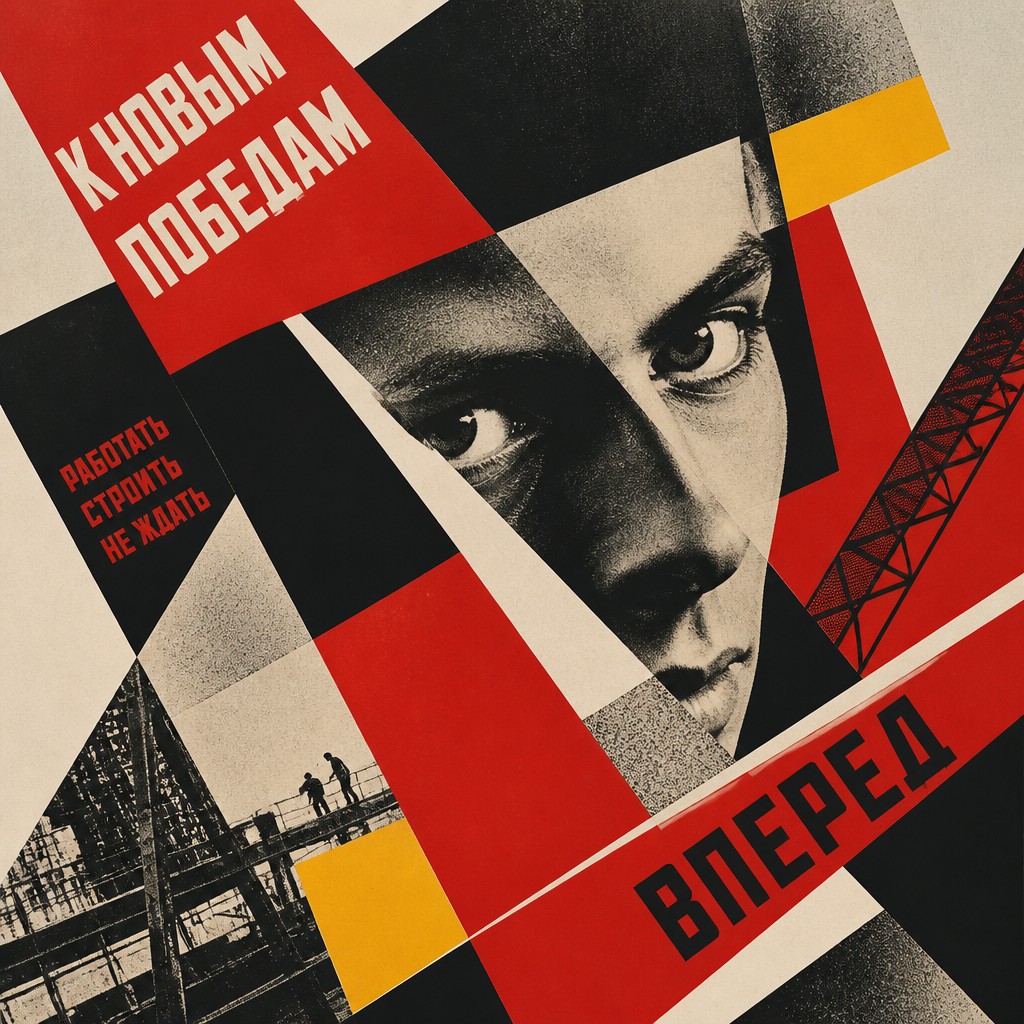
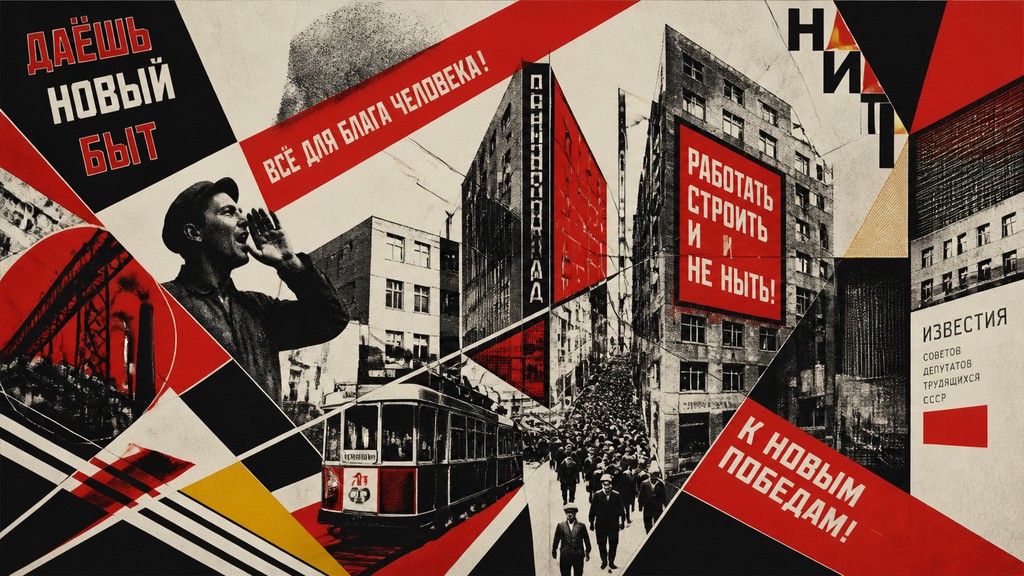
Geometric revolutionary design with red, black, and off-white diagonals, bold propaganda energy, and functional industrial clarity.
Instantly rendered in Constructivism — or transform a photo
Constructivism Gallery
Tap any artwork to explore it
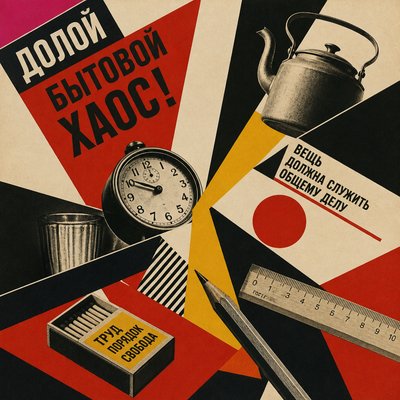
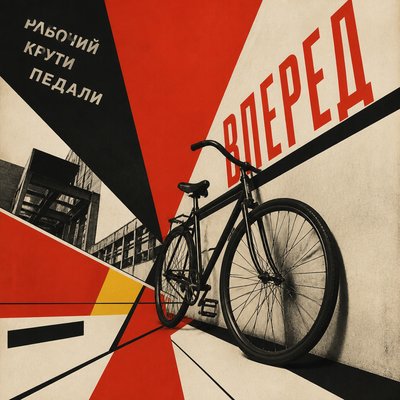
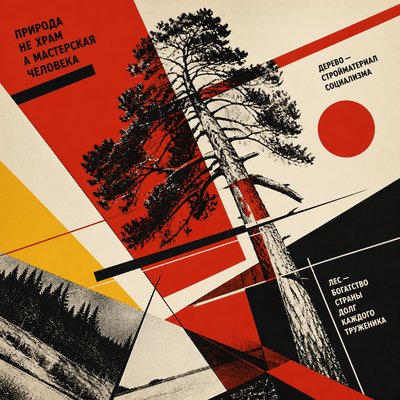
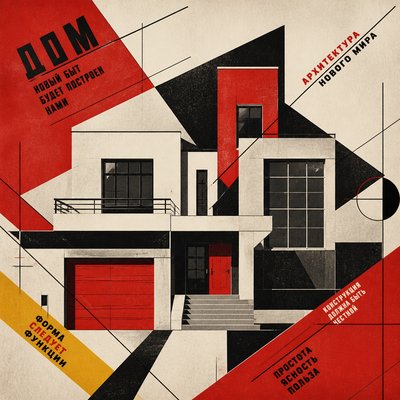
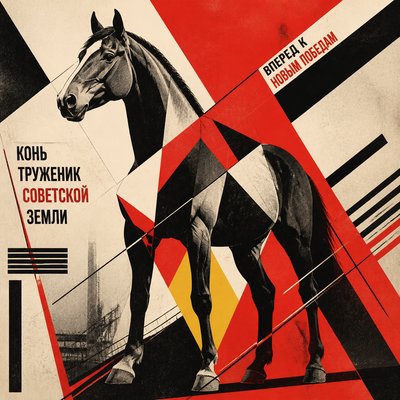
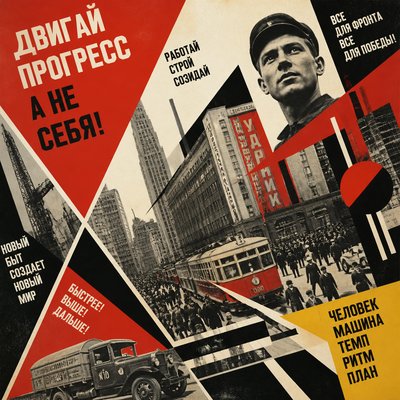
What is Constructivism Art Style?
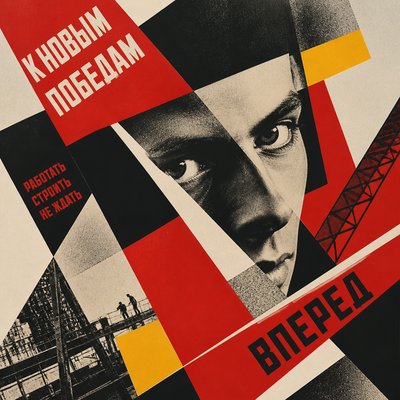
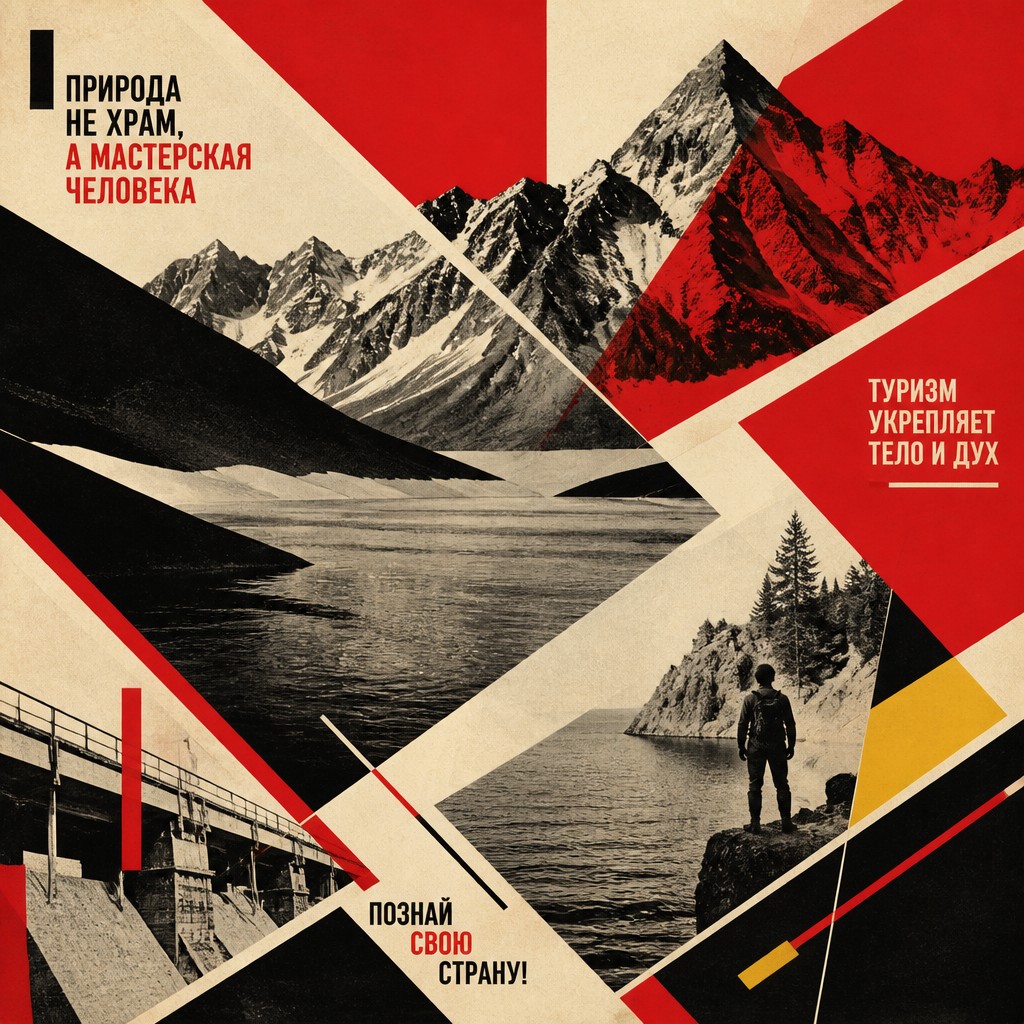
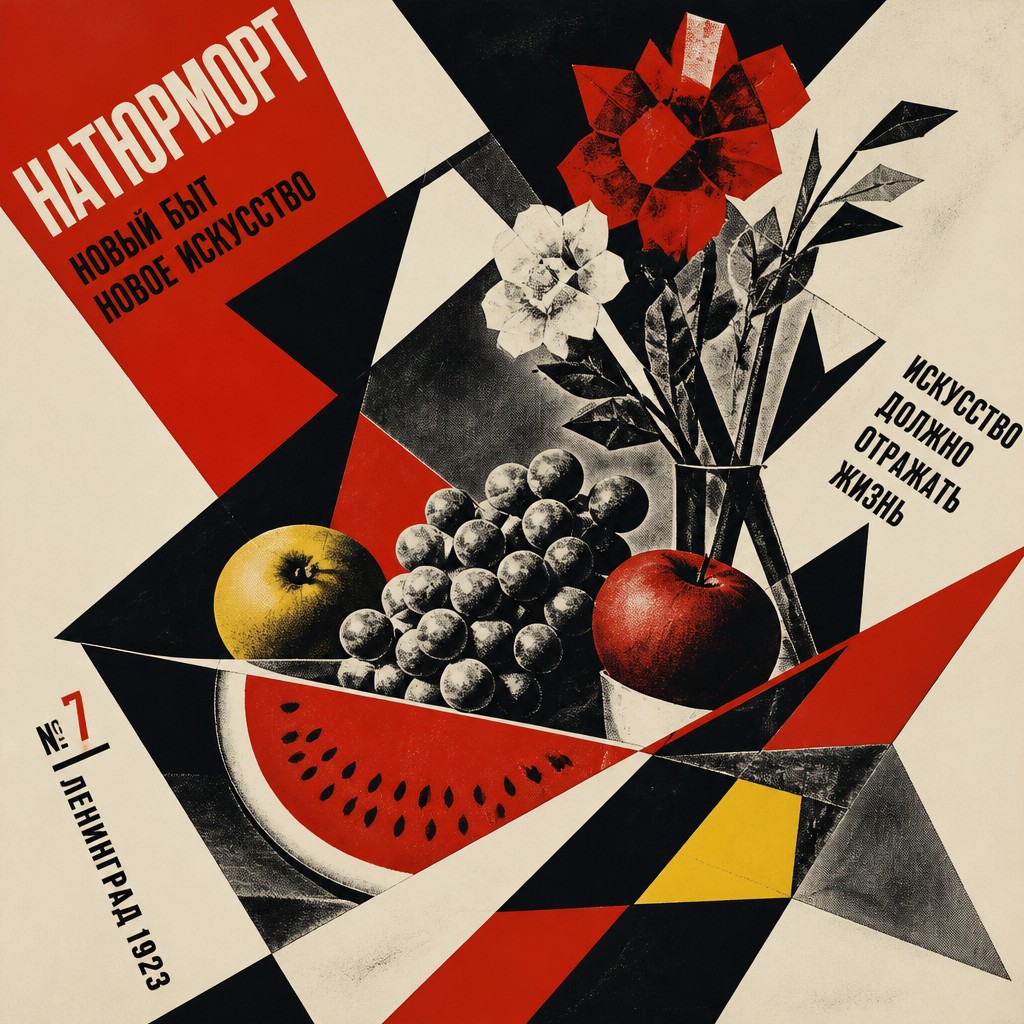
Constructivism is a revolutionary art and design language defined by sharp geometry, diagonal movement, industrial materials, and political purpose. It rejects decorative “fine art” in favor of visual communication: posters, photomontage, typography, stage design, architecture, and utilitarian graphics that feel engineered rather than painted.
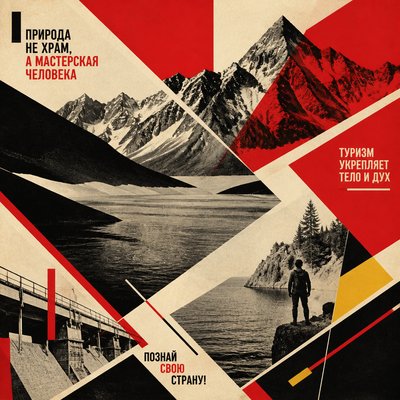
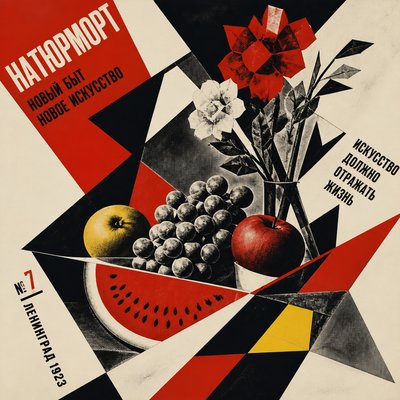
Visually, the style is built from intersecting triangles, circles, bars, and rectangles arranged in dynamic asymmetry. The signature palette is restrained and forceful—red, black, off-white, often with small yellow accents—while flat color, hard edges, mechanical linework, and collage-like fragmentation create a sense of agitation, speed, and collective energy.
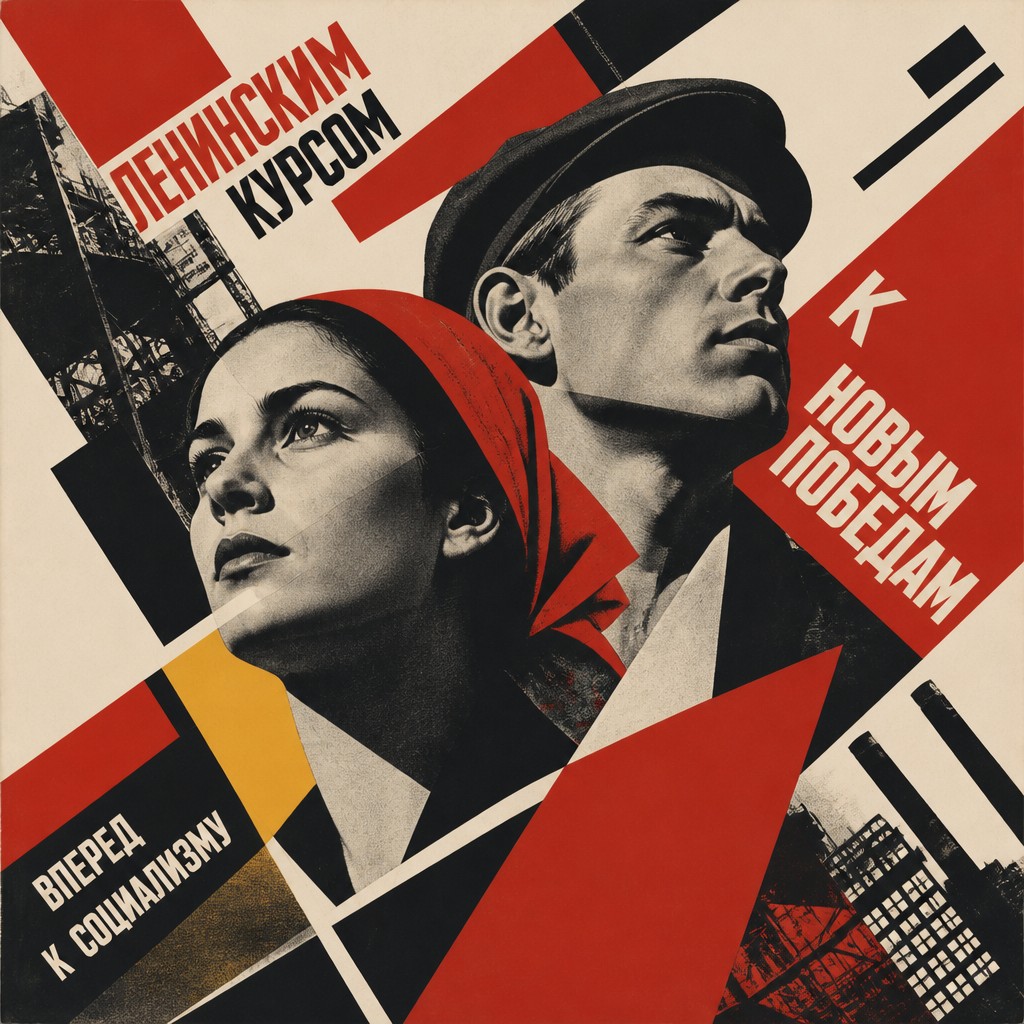
Try It On Your Photos
Upload any photo and convert it into Constructivism Art Style — drag the sliders to compare before and after.
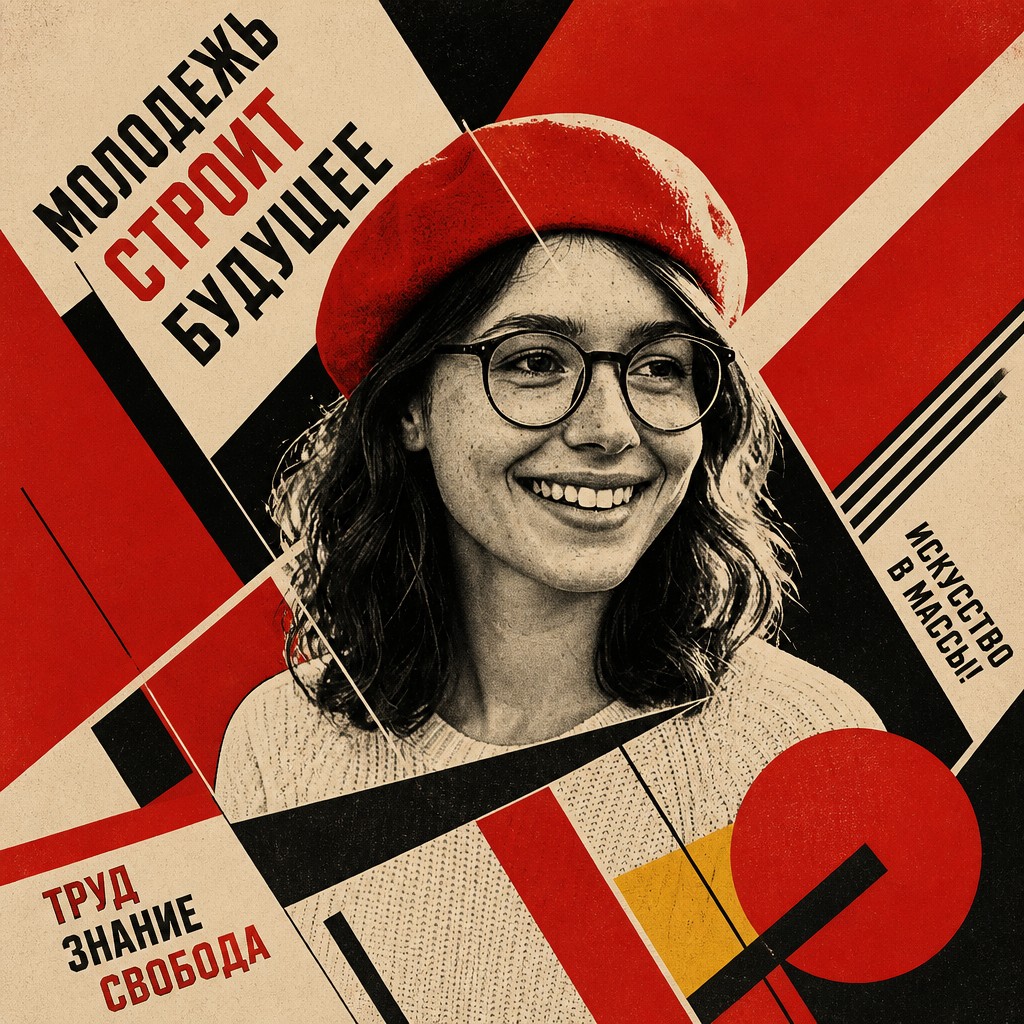


What Defines Constructivism Art Style
The signature details, up close
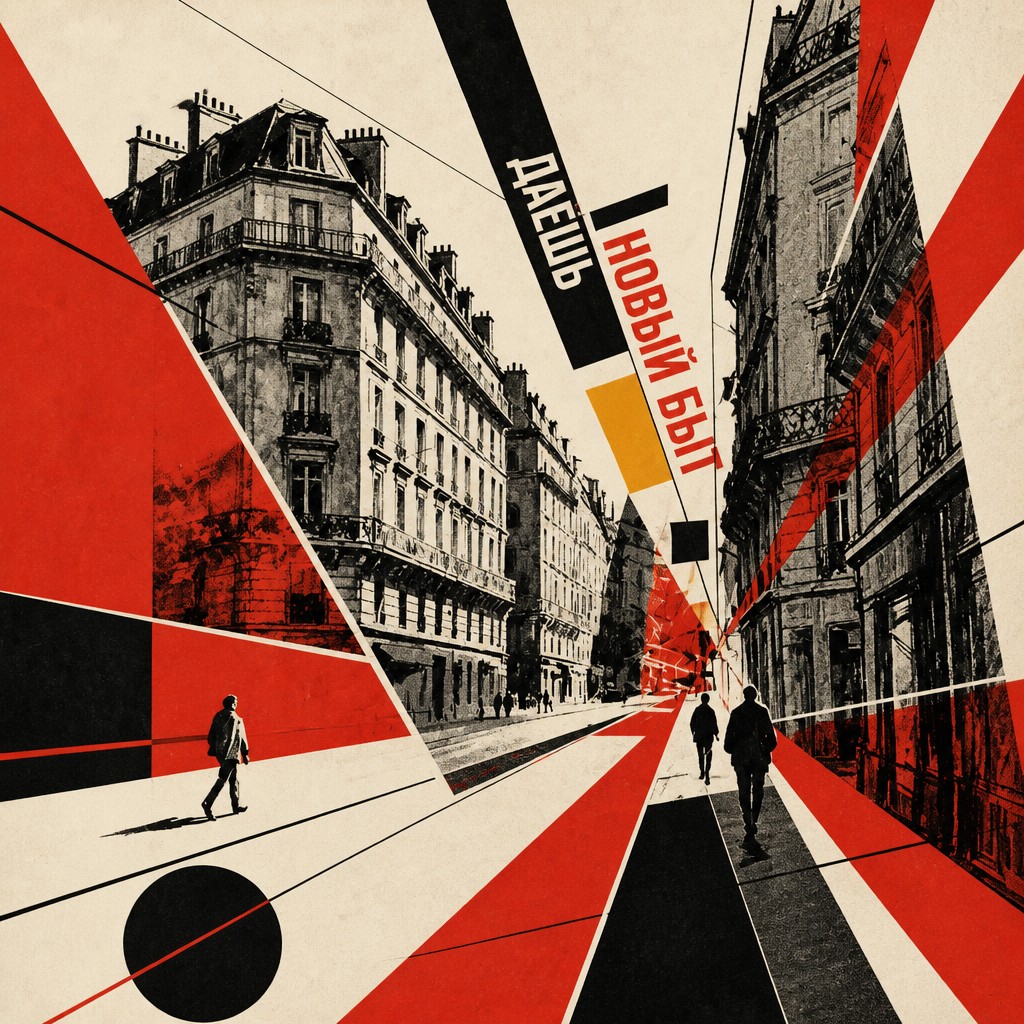
Diagonal dynamism
Compositions often tilt, slice, or radiate diagonally to create movement and urgency. This directional energy is one of the clearest signs of the style.
Red-black-off-white palette
The classic scheme uses revolutionary red against black and white or cream, sometimes with yellow accents. The limited palette strengthens contrast and poster impact.
Geometric fragmentation
Figures, architecture, and objects are broken into angular planes and simplified structural forms. Triangles, circles, bars, and wedges replace naturalistic modeling.
Flat graphic surfaces
Color is usually applied in solid blocks without painterly blending or atmospheric depth. The result feels printed, engineered, and declarative.
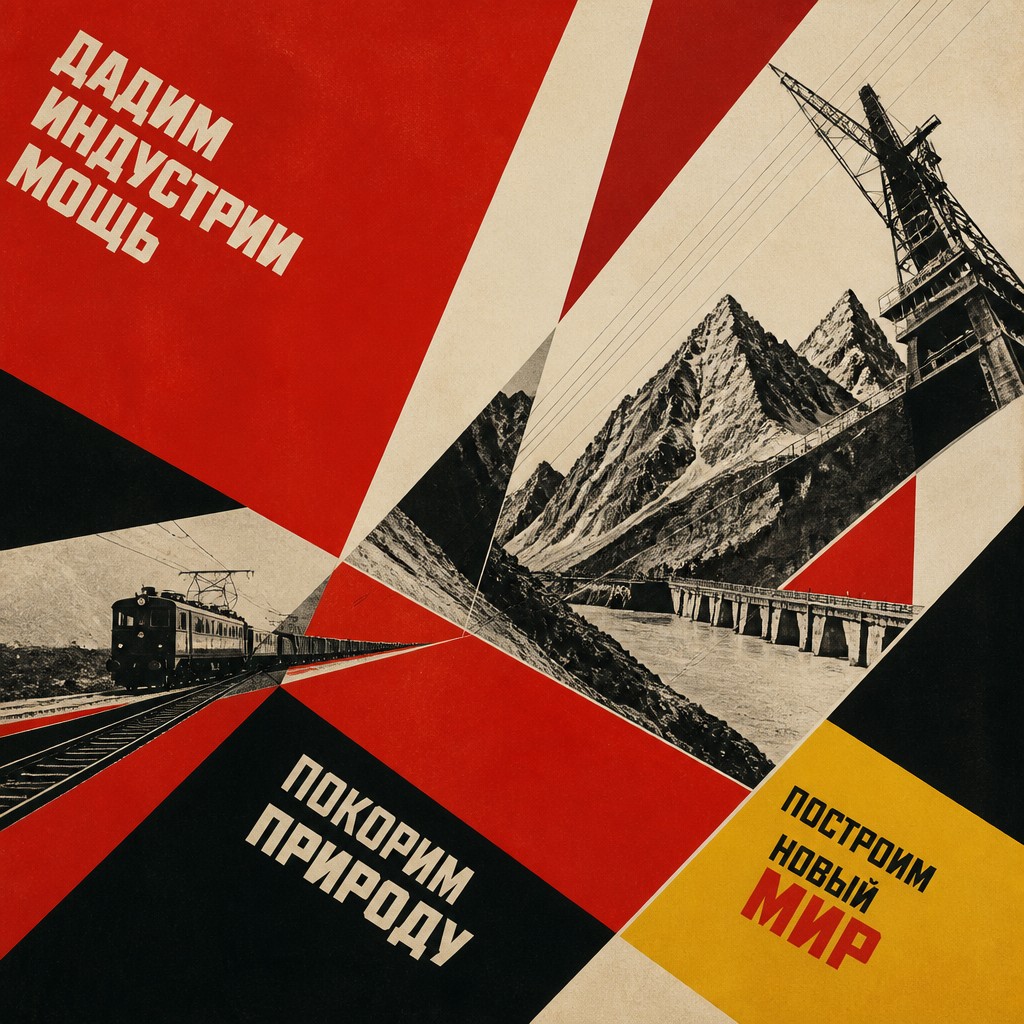
Photomontage and collage logic
Many works combine photographic fragments, cut-paper effects, and typographic elements. Even when fully illustrated, the image often mimics assembled media.
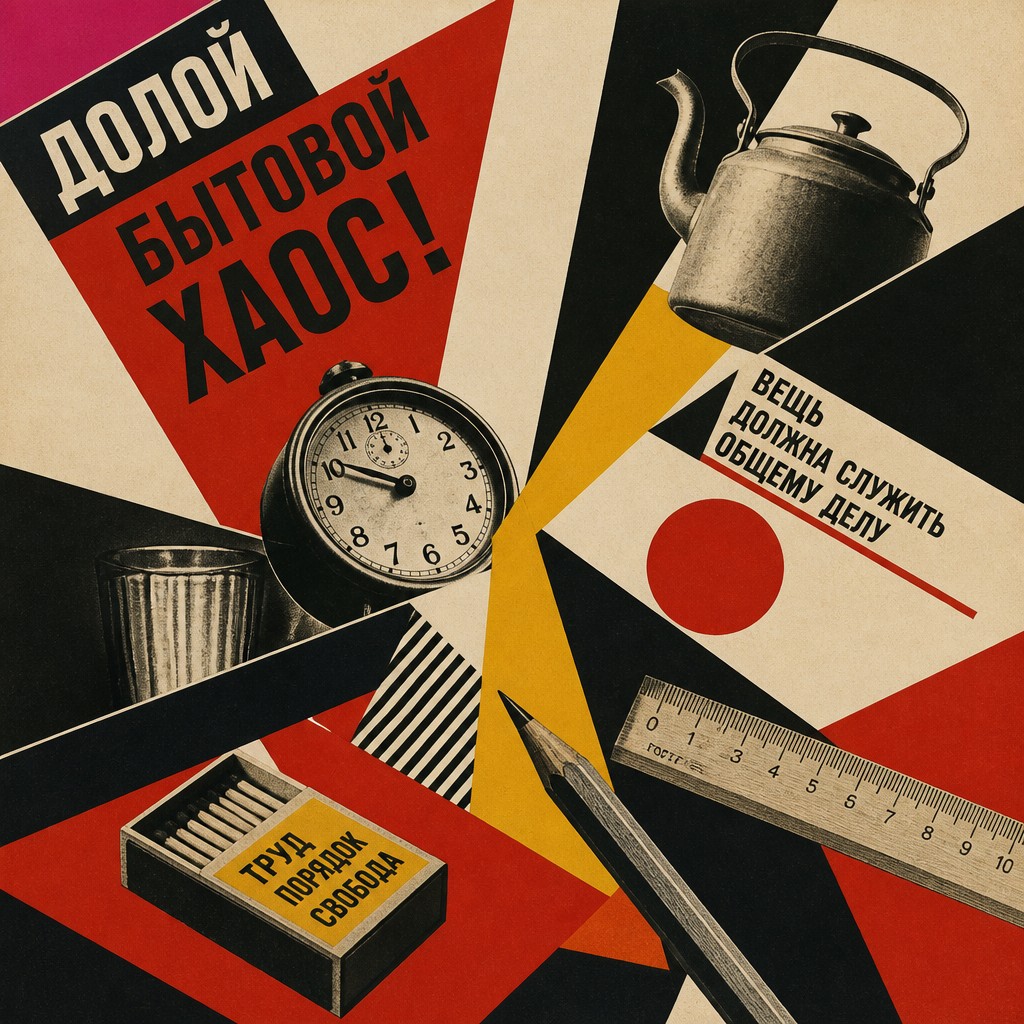
Propaganda-bold typography
Letterforms are compact, assertive, and integrated into the composition as visual architecture. Text is not decorative; it acts as a structural and rhetorical force.
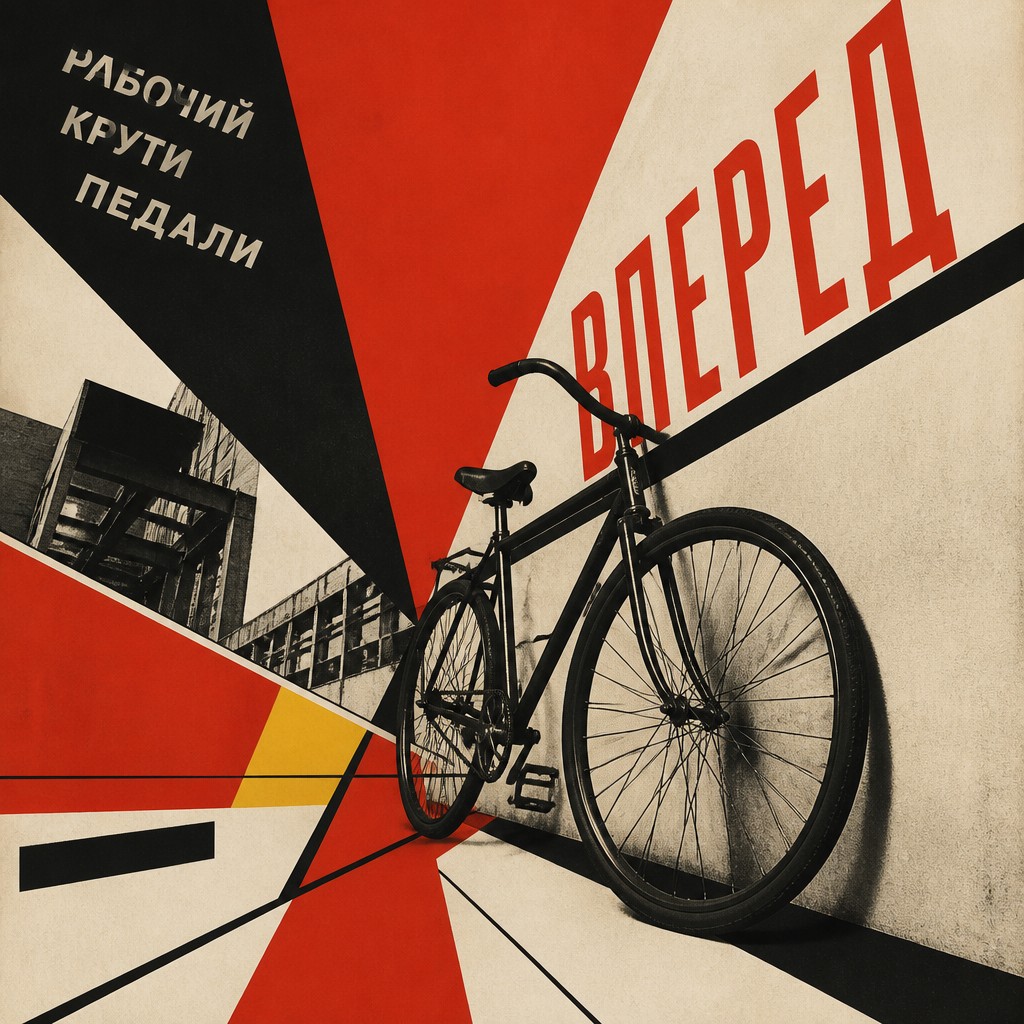
Industrial utilitarianism
The style emphasizes production, machinery, labor, and functional design. Its aesthetic looks made for public persuasion, not private contemplation.
Try It
Create Videos in Constructivism Art Style
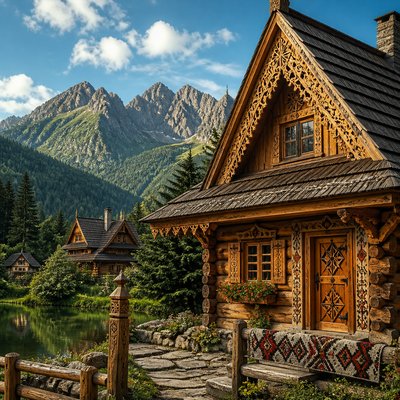
Styles aren't just for stills — describe a scene or animate an image and get a short video rendered in Constructivism. Press play to see this pond come to life.
Make a VideoConstructivism Prompt Ideas
Start from an idea — each one opens the generator with the style ready to go. See all 40 Constructivism prompts →
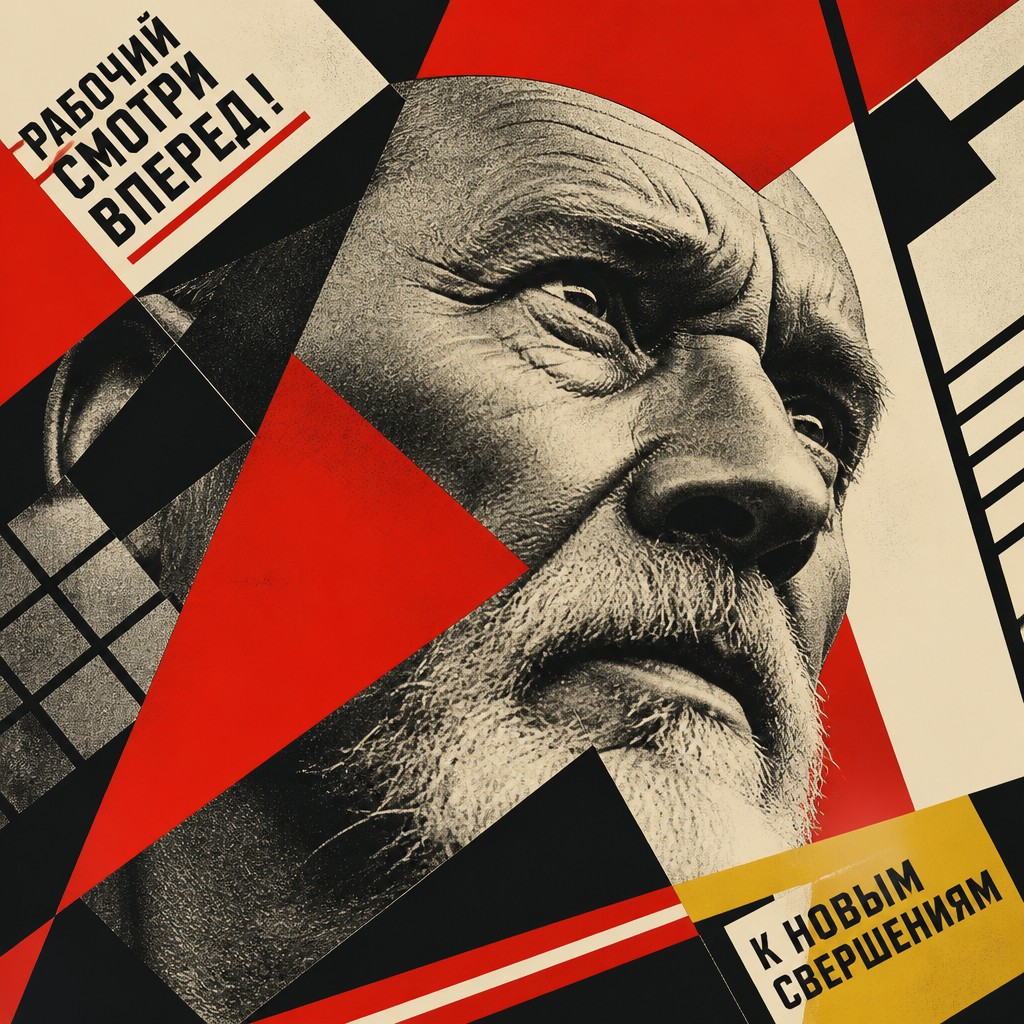
“close-up portrait of an elderly person with expressive weathered features”
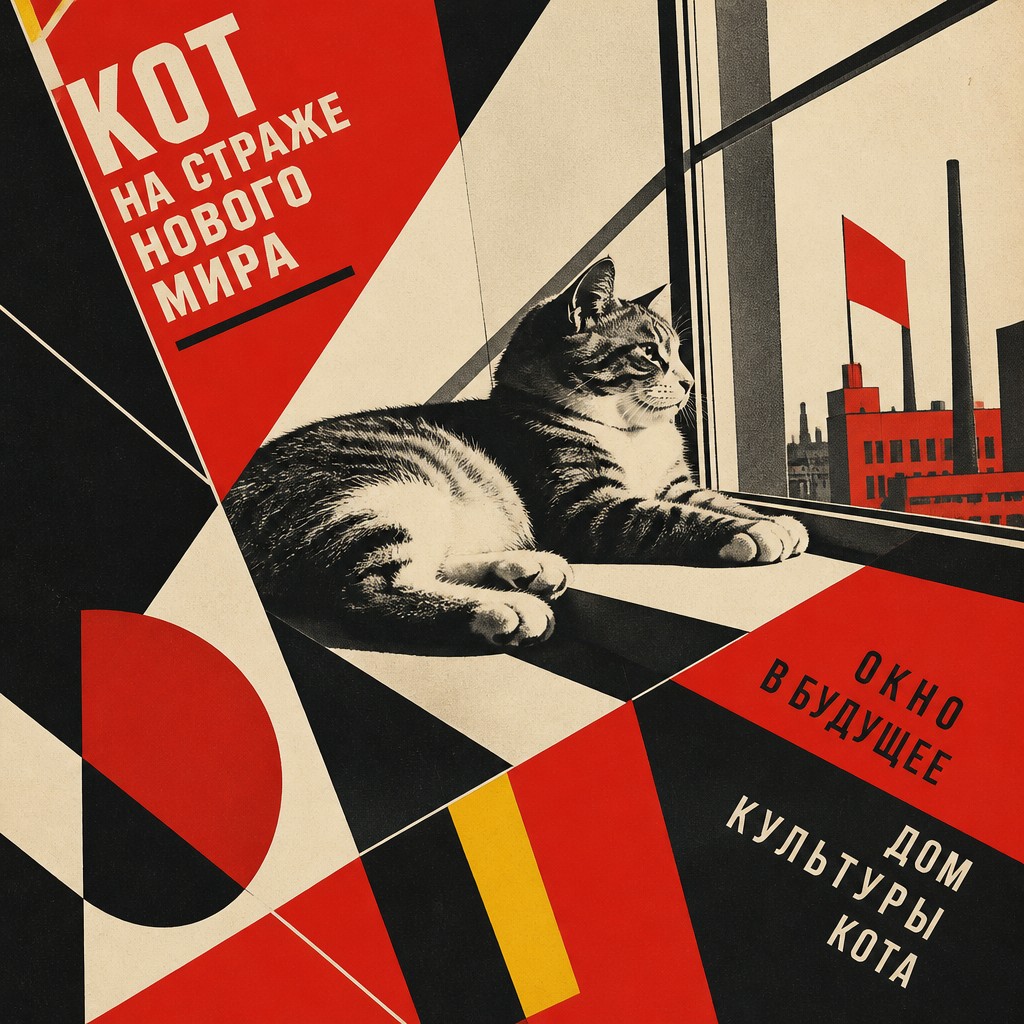
“a cat lounging in a sunlit window”
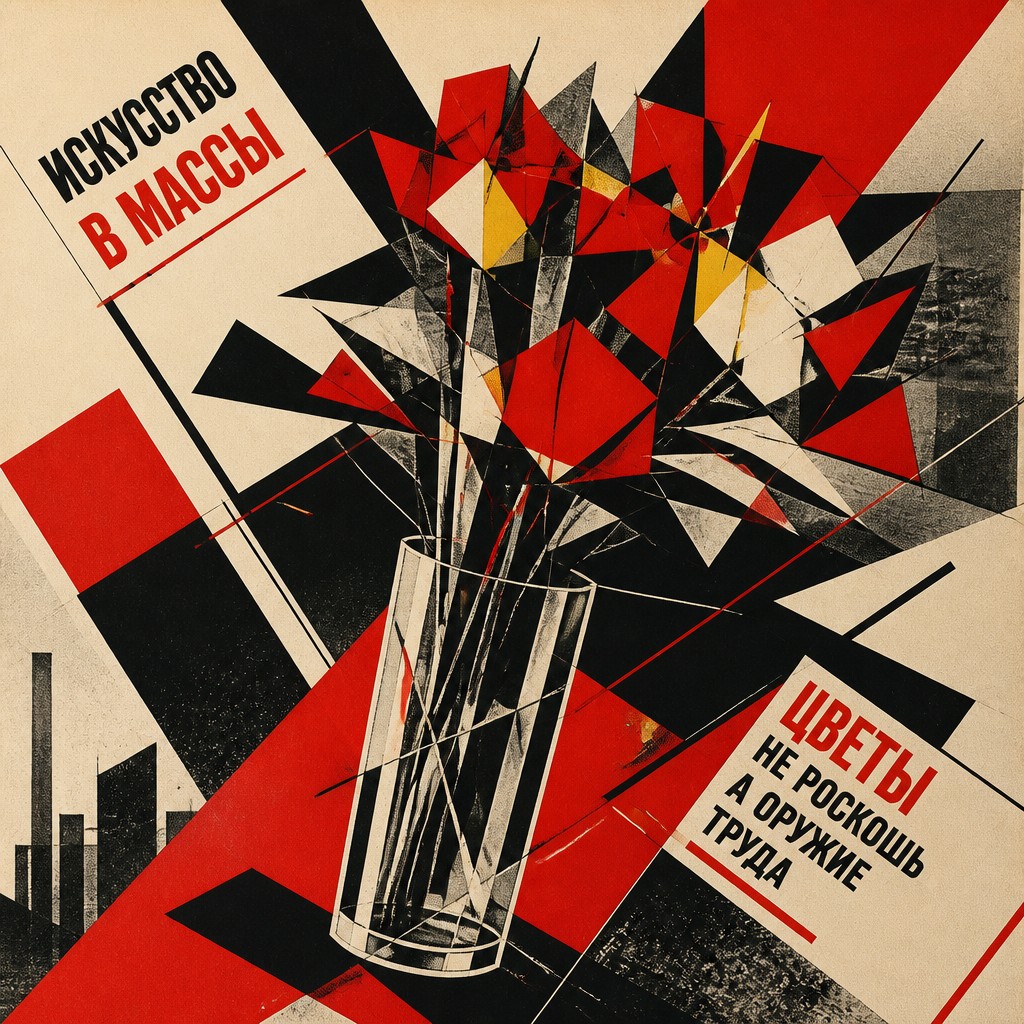
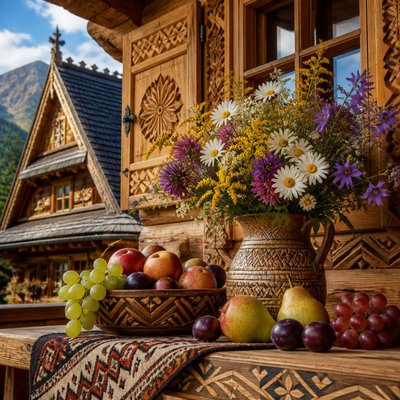
“bouquet of flowers in a glass vase”
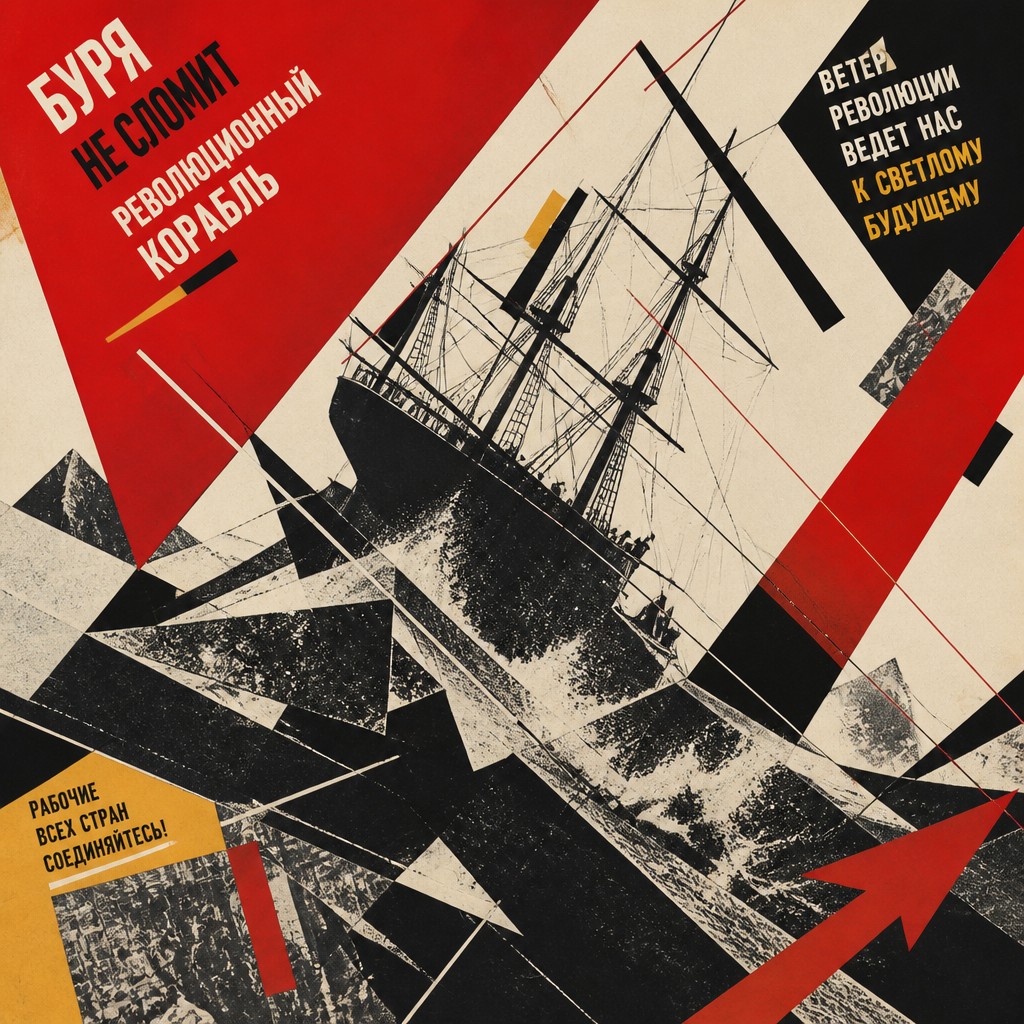
“sailing ship on a stormy sea”
How to Create Constructivism Art
Master the craft step by step — or skip straight to creating. Read the full guide →
- 1
Build the composition from diagonals
Start with a strong diagonal axis and place major forms so they collide, overlap, or thrust across the frame. Traditional media can use cut paper and ruler lines; digital work can use hard-edged vector shapes and layered masks.
- 2
Restrict the palette
Use red, black, white, and a small amount of yellow or gray. Keep colors flat and high-contrast so the design reads immediately at poster scale.
- 3
Simplify forms into geometry
Reduce people, machines, buildings, or products into triangles, rectangles, circles, and beams. Avoid soft contours unless they are clearly subordinated to the graphic structure.
- 4
Use collage and mechanical texture sparingly
Add photomontage grain, halftone, or cut-and-paste edges to suggest print production and political posters. If generating digitally, prompt for crisp linework, collage fragments, and no gradients.
- 5
Integrate text as design
Place slogans, labels, or typographic blocks so they reinforce the diagonals and structural rhythm. In prompts, specify bold sans serif lettering, poster layout, and propaganda composition if text is desired.
- 6
Keep the image purposeful
Avoid ornamental detail and soft atmospheric effects; every element should feel functional and communicative. For image generation, describe the subject plus the visual mechanics: angular planes, flat colors, hard edges, and aggressive vectors.

The Story
History & Origins of Constructivism
Constructivism emerged in post-revolutionary Russia around 1913–1920 and developed most clearly in the early Soviet period. It was shaped by the upheavals of the Russian Revolution and by artists who believed art should serve social reconstruction rather than private expression. Key figures include a pioneering Russian constructivist sculptor, a major Russian modernist graphic designer, two influential female avant-garde designers, a leading Russian avant-garde theorist-artist, and a prominent Soviet montage specialist, each contributing to posters, books, textiles, stage sets, photography, and spatial design.
Its visual language drew on Suprematism, Futurism, Cubism, and modern engineering, but redirected those influences toward propaganda, industry, and mass communication. By the mid-1920s and early 1930s, Constructivist ideas were increasingly absorbed into broader Soviet graphic design and then constrained by the rise of Socialist Realism, though its methods persisted internationally in poster design, avant-garde typography, and later modernist graphic traditions.
Influences: Constructivism is closely related to Russian Futurism, Suprematism, Cubism, and early modernist typography, while also anticipating modern infographic design and political poster art. The Proun works of a leading Russian avant-garde theorist-artist, the posters of a major Russian modernist graphic designer, and the photomontages of a prominent Soviet montage specialist are especially important reference points, as are the material experiments of a pioneering Russian constructivist sculptor and the design collaborations of two influential female avant-garde designers. Later graphic modernism, Swiss-style clarity, and contemporary political poster design all inherit aspects of its structural rigor and reductive visual language.

Frequently Asked Questions
What defines Constructivism visually?
It is defined by geometric abstraction, diagonal motion, limited revolutionary colors, and a machine-made sense of structure. The style often uses flat planes, photomontage, and typography to create a poster-like message rather than a purely pictorial scene.
Is Constructivism the same as Suprematism?
No. Suprematism, associated with a leading figure of non-objective Russian abstraction, pursued non-objective spiritual abstraction, while Constructivism pushed toward practical, social, and industrial uses for art. The two share geometric form and early Russian avant-garde roots, but their goals differ.
What subjects work best in this style?
Subjects tied to labor, industry, machinery, public messaging, architecture, and collective action fit naturally. Portraits, athletes, vehicles, and city scenes can also work well if they are reduced into bold geometric structures.
How do I make a Constructivist-style poster?
Use a limited red-black-white palette, strong diagonals, hard-edged shapes, and large sans serif type. The layout should feel engineered and persuasive, with every element supporting a central message or visual thrust.
Where is Constructivism used today?
Its look appears in poster design, editorial graphics, political imagery, album art, branding, exhibition design, and motion graphics. It is also widely referenced in contemporary illustration and experimental digital art.
What makes this style different from Art Deco or Bauhaus?
Art Deco is typically more ornamental, luxurious, and symmetrical, while Bauhaus emphasizes functional clarity with a cleaner, often less confrontational surface. Constructivism is more aggressive, politically charged, and compositionally tense, with stronger diagonals and propaganda energy.
Create your first Constructivism artwork
Describe anything — or upload a photo — and see it in Constructivism Art Style in seconds.
Make Something with Constructivism
Compare Constructivism
Related Styles
Discover similar art styles