Afghan Art Style
Explore Afghan art style: Timurid miniature jewel tones, gold detail, geometric brickwork, carved cliff architecture, and Silk Road elegance.
Instantly rendered in Afghan — or transform a photo
Afghan Gallery
Tap any artwork to explore it
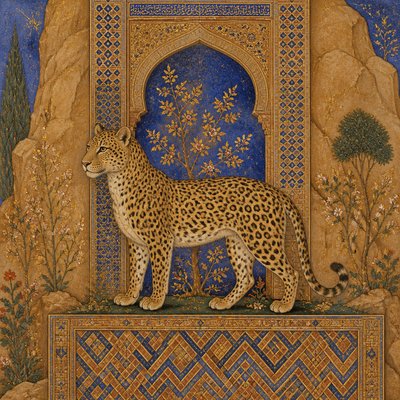
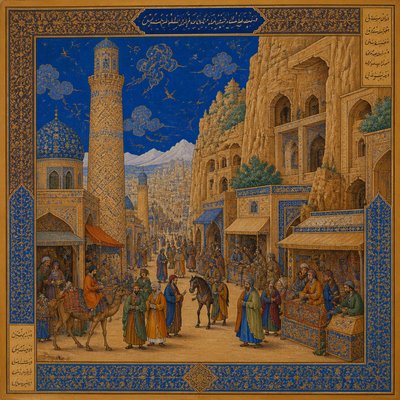
What is Afghan Art Style?
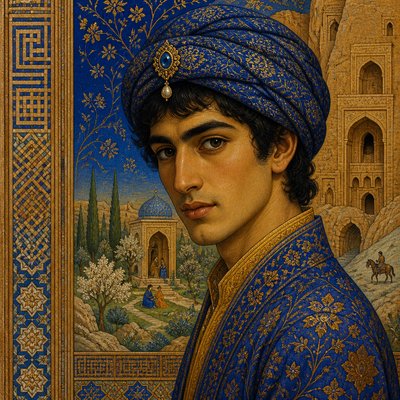
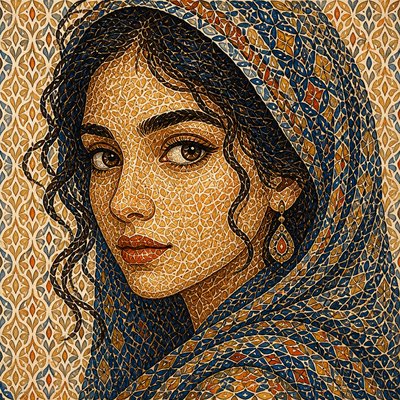
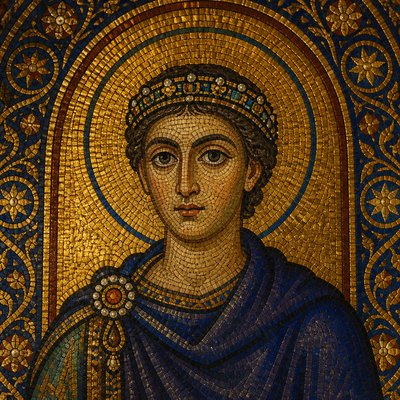
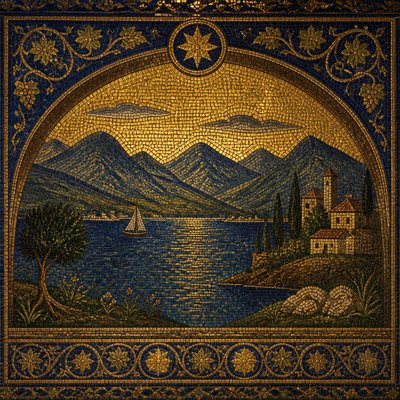
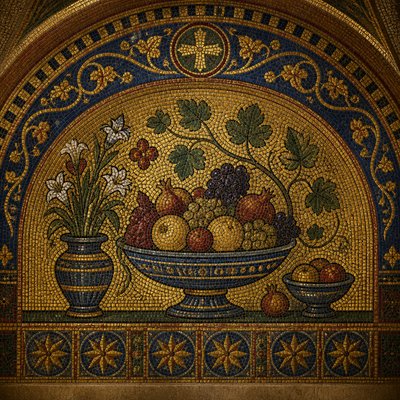
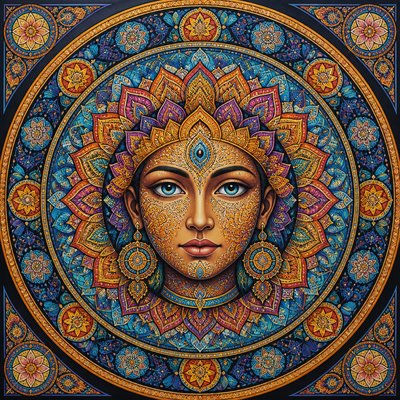
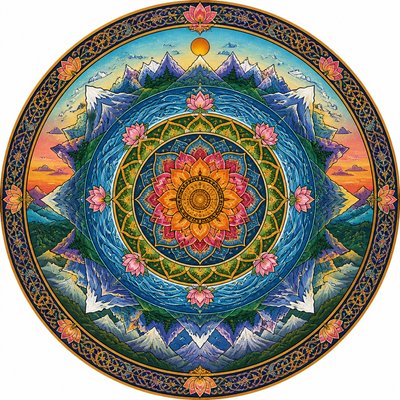
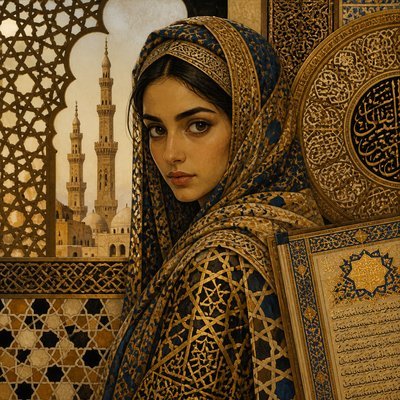
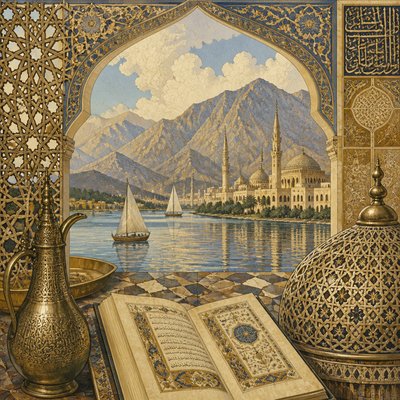
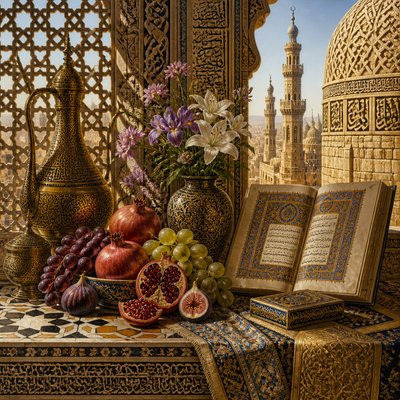
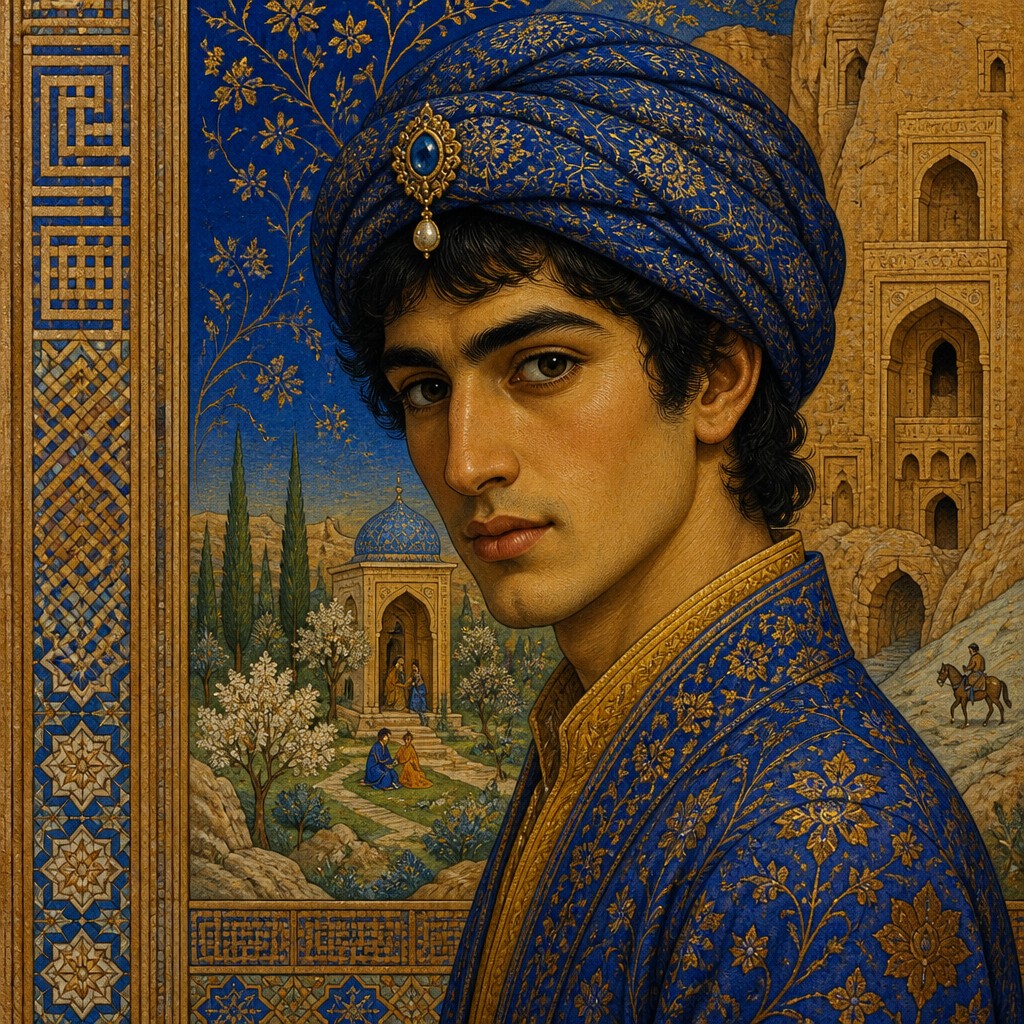
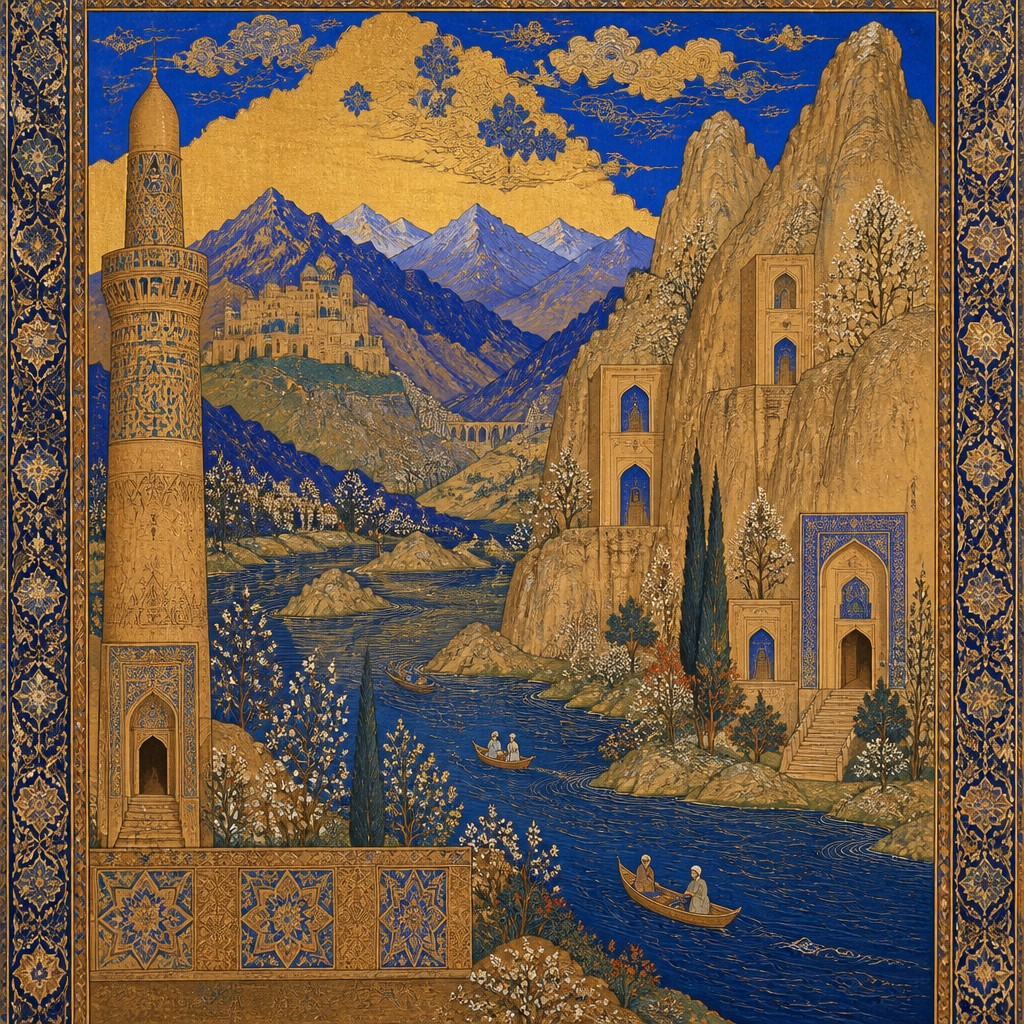
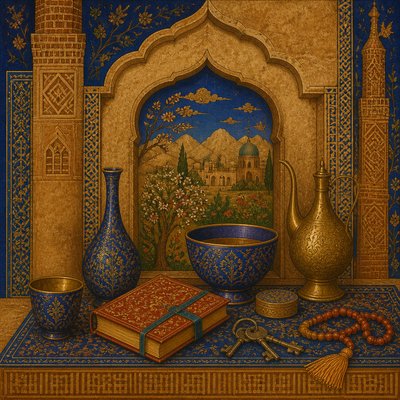
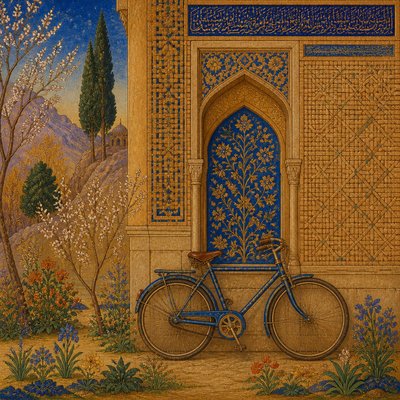
Afghan Art Style is a contemporary descriptive synthesis rather than a single historical movement. It combines the jewel-colored surfaces and meticulous ornament of Timurid miniature painting with the monumental brick geometry, carved sandstone architecture, and vertical drama associated with Afghanistan’s historic landscapes. The resulting image language is decorative, architectural, and highly controlled, balancing intimate detail with monumental scale.
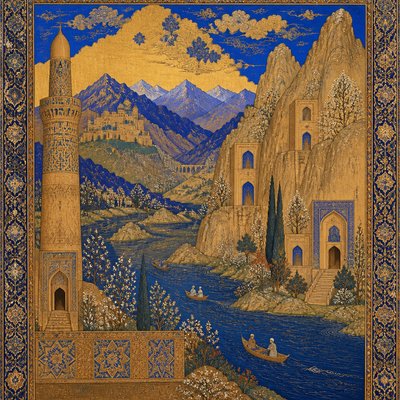
Its visual identity depends on flattened or shallow perspective, dense pattern, and a strong relationship between built form and terrain. Lapis blue, saffron, turquoise, terracotta, cream, and burnished gold create a luminous palette, while repeating brick motifs, pointed arches, garden compartments, minarets, and cliff niches evoke the cultural exchanges of the medieval Silk Road without claiming to reproduce one fixed regional tradition.
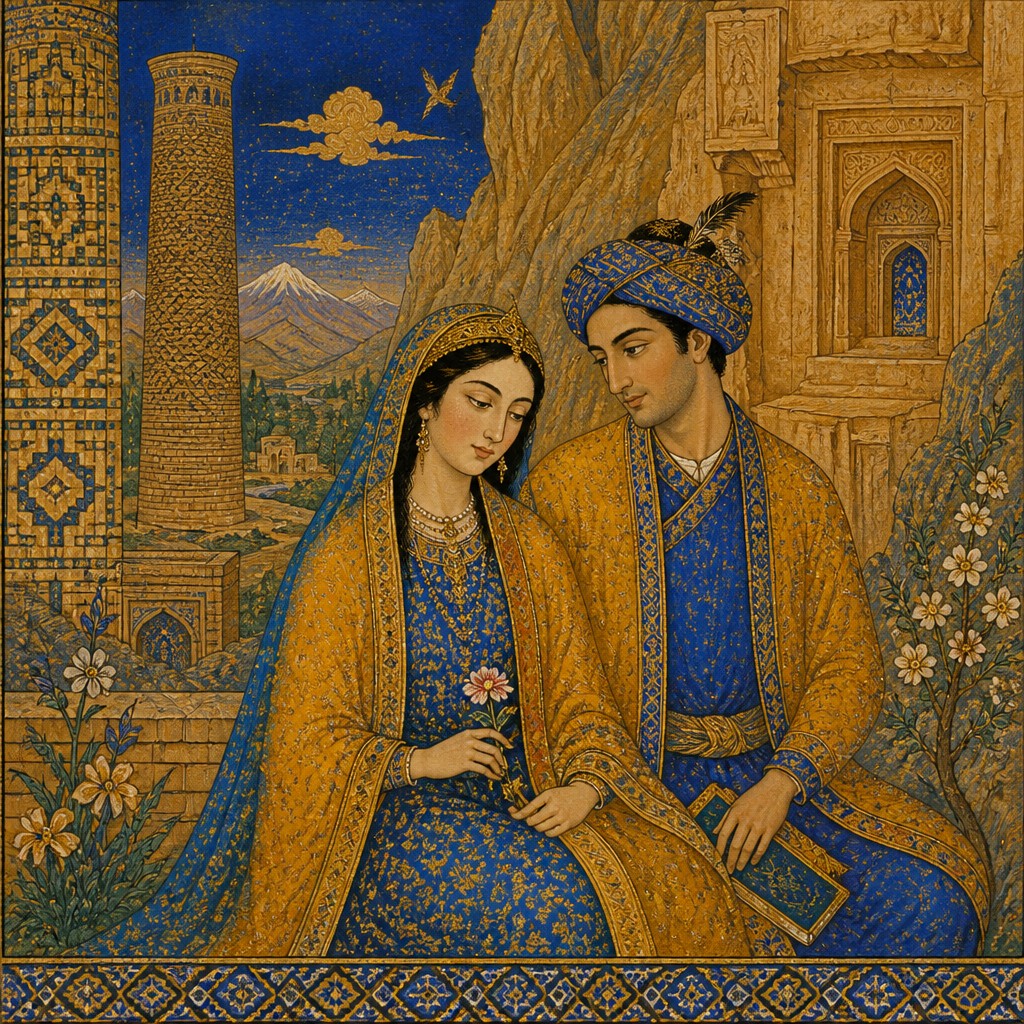
Try It On Your Photos
Upload any photo and convert it into Afghan Art Style — drag the sliders to compare before and after.
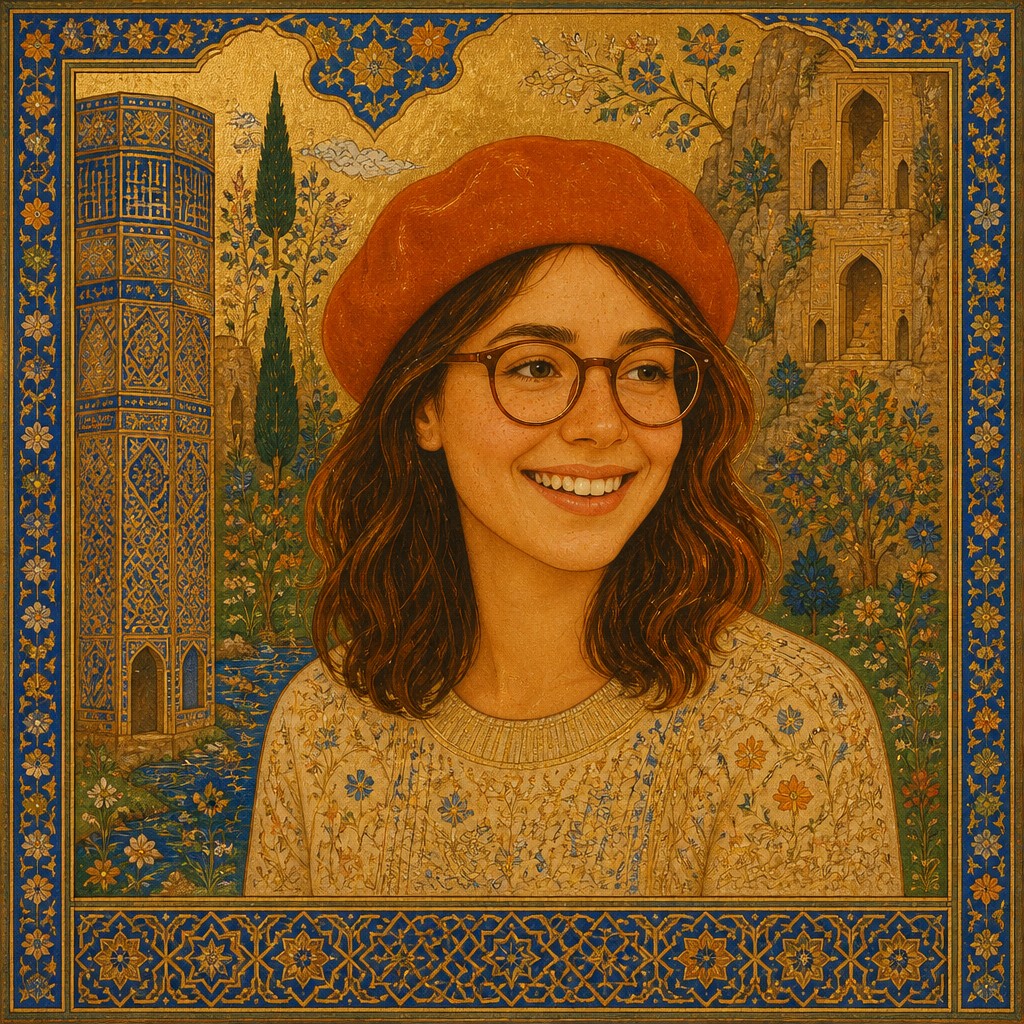

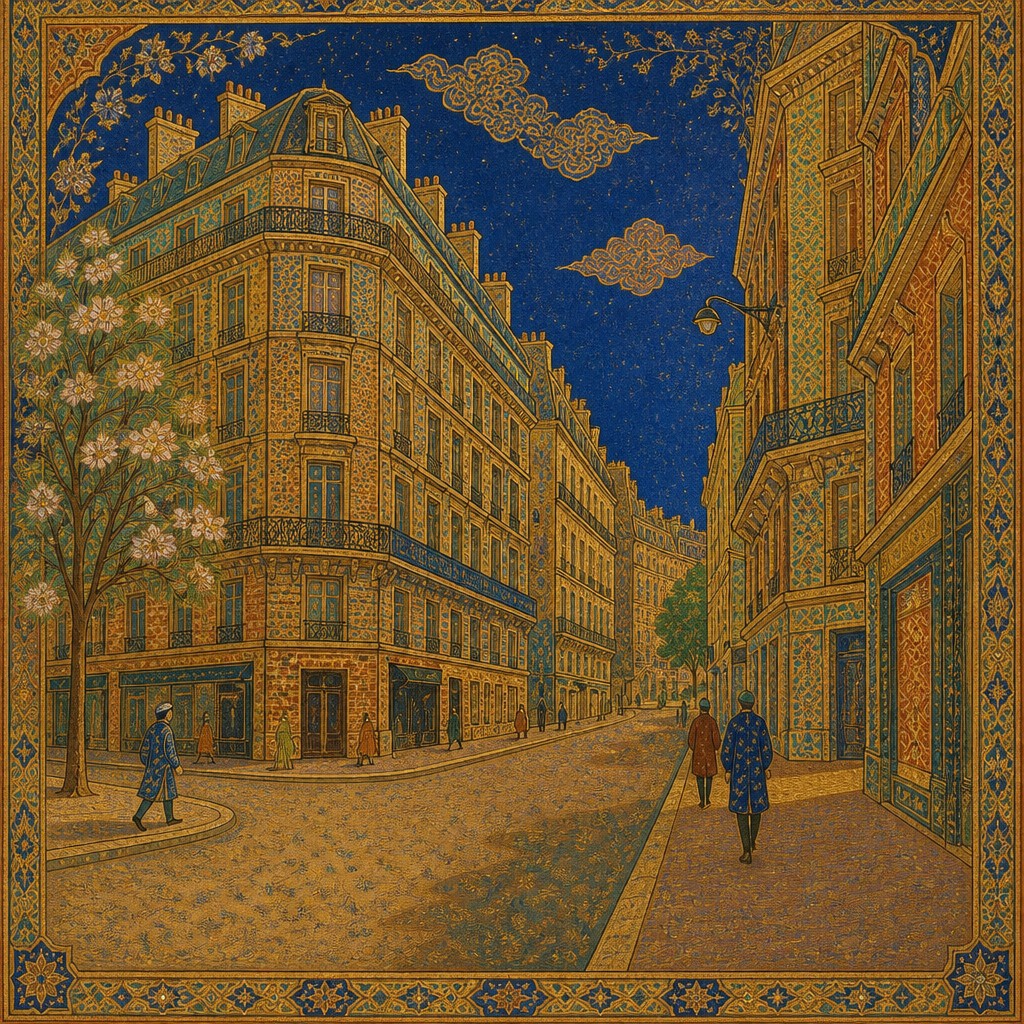

What Defines Afghan Art Style
The signature details, up close
Jewel-toned palette
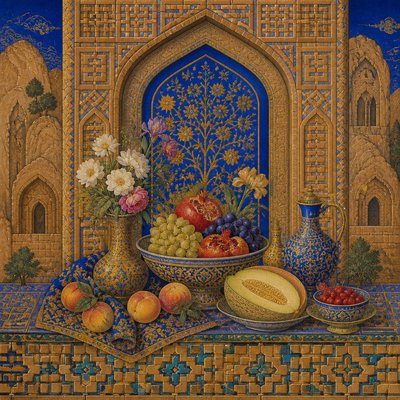
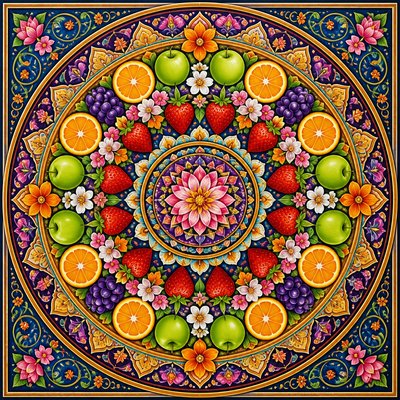
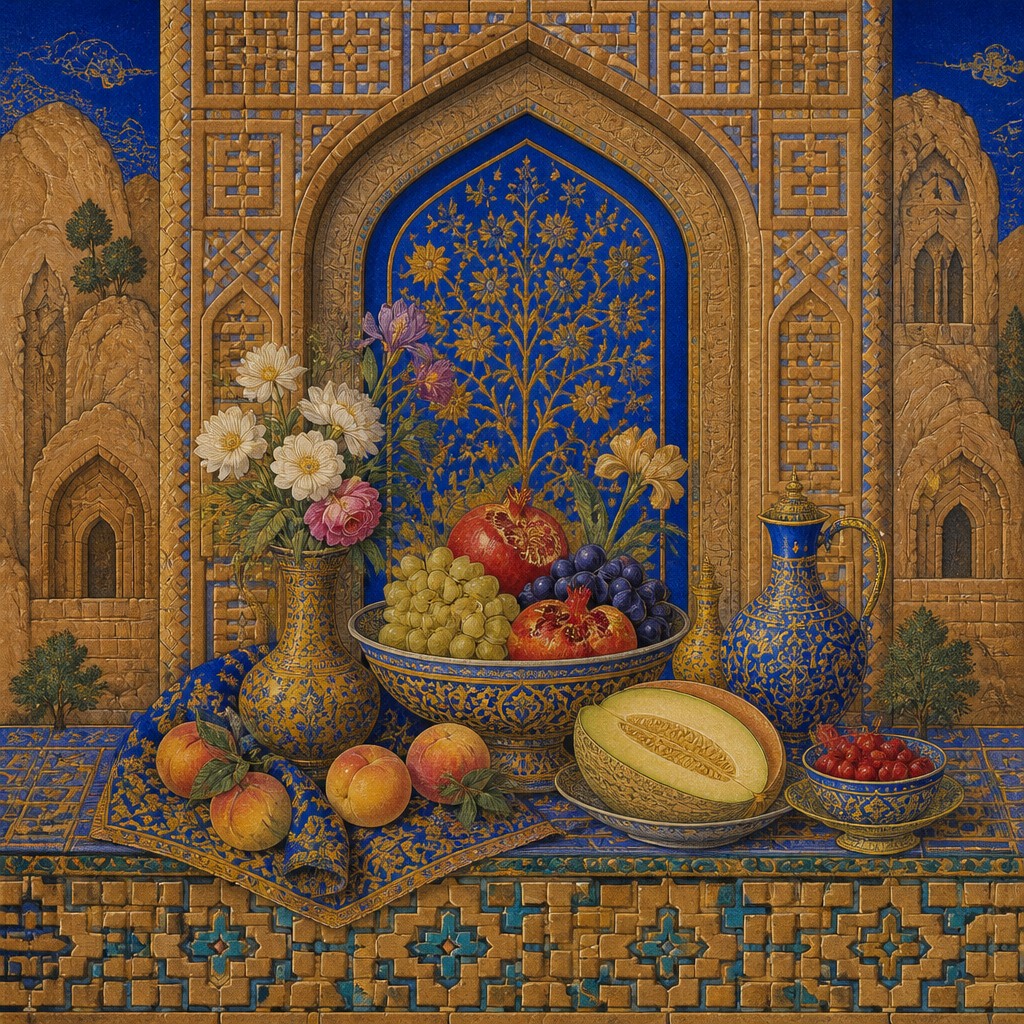
Lapis blue, saffron yellow, turquoise, cinnabar, deep green, terracotta, and ivory form the dominant color family. The hues are usually saturated and placed in clean, deliberate fields rather than blended into atmospheric gradients.
Timurid miniature detail
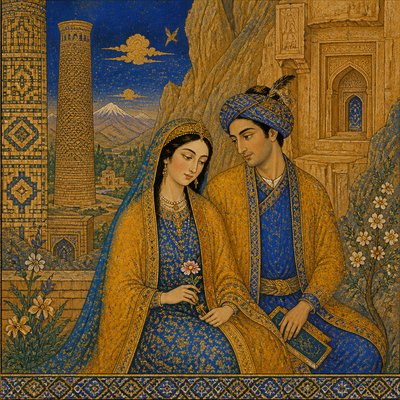
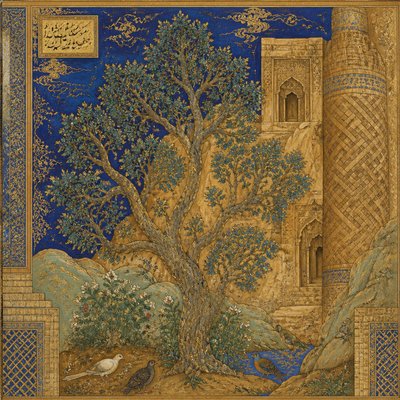
Fine outlines, tiny figures, patterned garments, flowering plants, tiled surfaces, and delicate gold accents create a manuscript-like level of finish. Ornament often carries as much visual importance as the central subject.
Flattened garden perspective
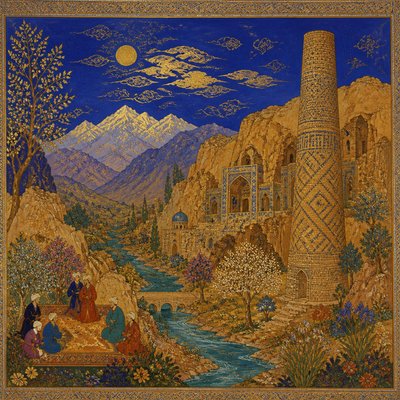
Scenes use stacked planes, elevated viewpoints, compartmentalized gardens, and overlapping architectural zones instead of strict naturalistic depth. This makes distant elements legible and gives the composition the ordered clarity of an illustrated manuscript.
Geometric brickwork
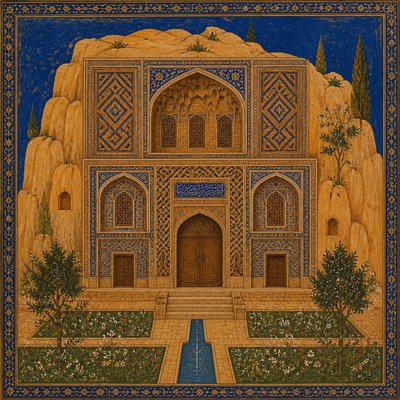
Interlocking bands, chevrons, lozenges, stars, and repeating relief patterns suggest monumental baked-brick construction. The brick ornament functions as both surface decoration and a structural visual rhythm.
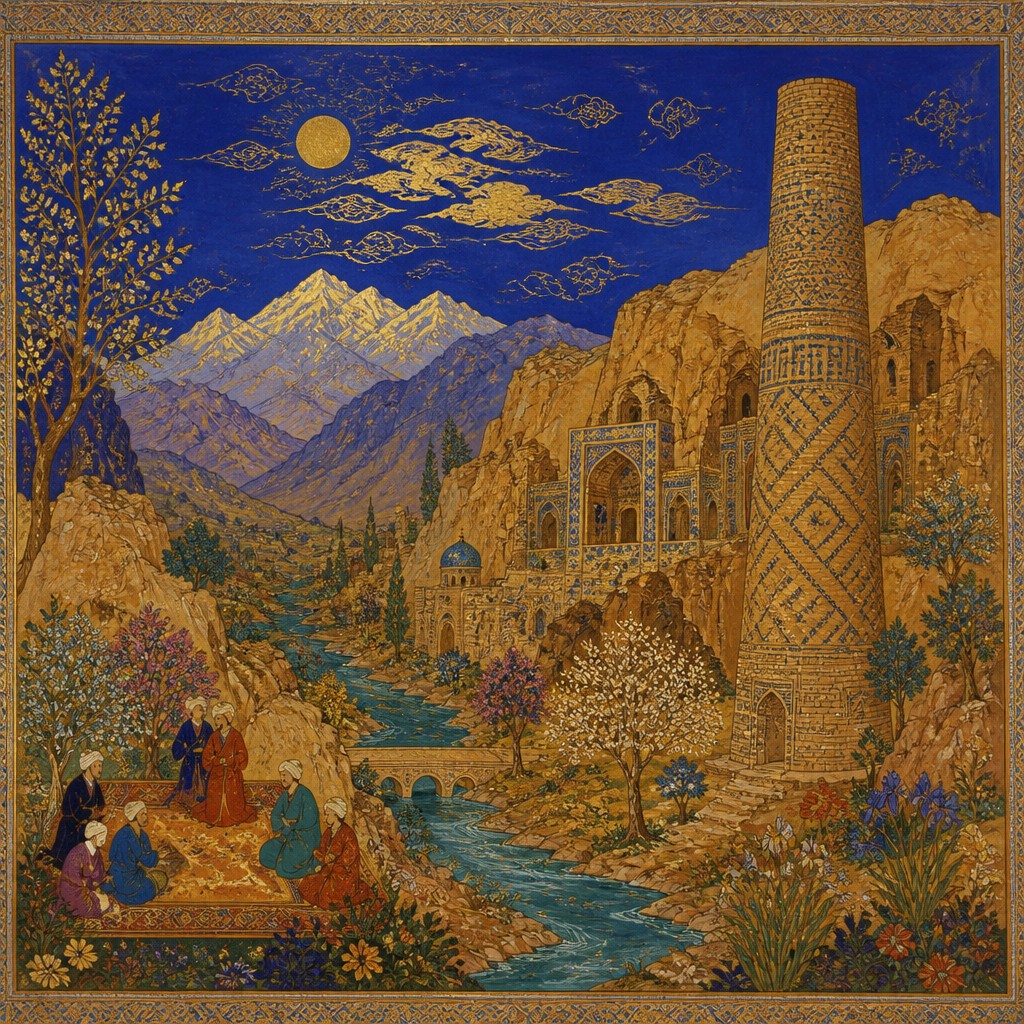
Cliff-niche architecture
Carved sandstone recesses, pointed arches, vaulted chambers, minarets, domes, and fortified walls are integrated into steep rock faces or dry mountain terrain. Architecture is treated as a richly patterned protagonist rather than a neutral backdrop.
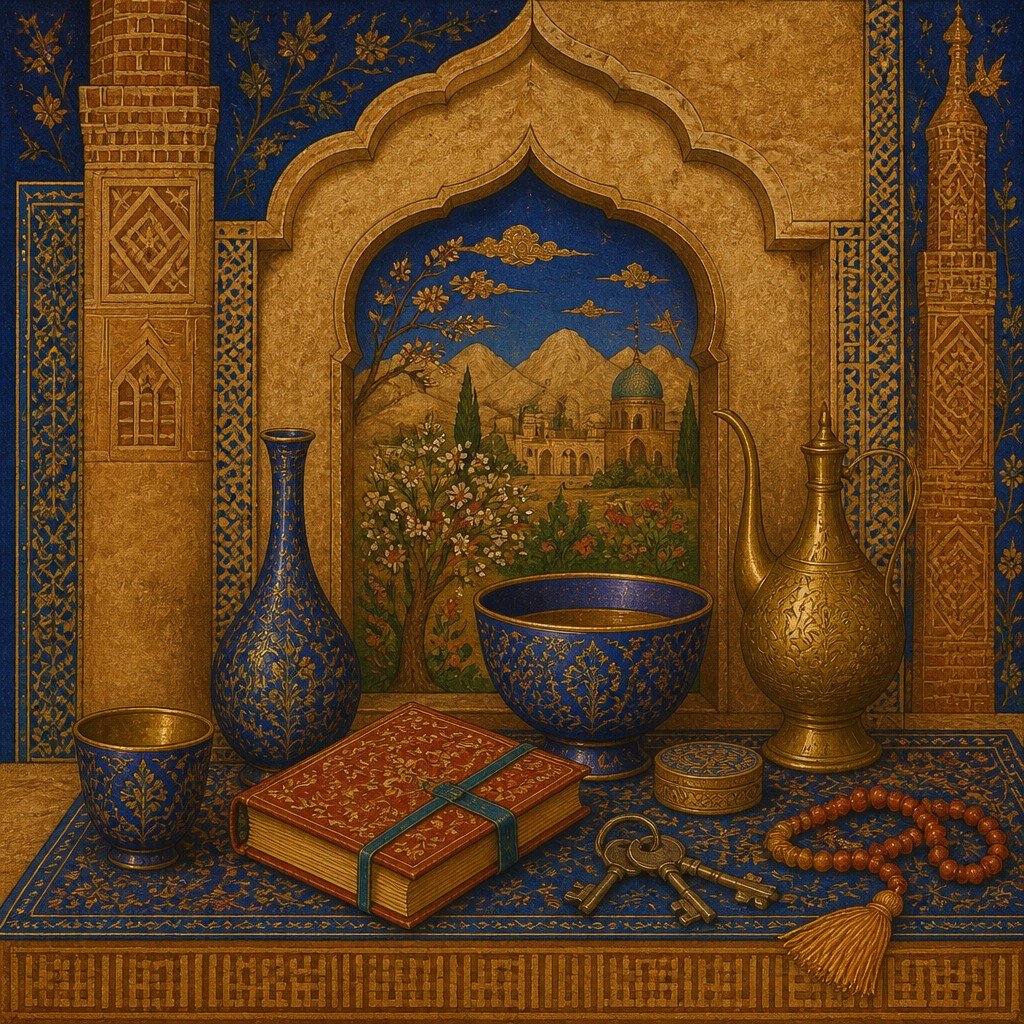
Silk Road elegance
Caravan routes, enclosed gardens, textiles, ceramics, pack animals, and courtly architectural settings introduce a sense of cultural exchange. The mood is refined and contemplative, with historical atmosphere conveyed through objects and ornament.
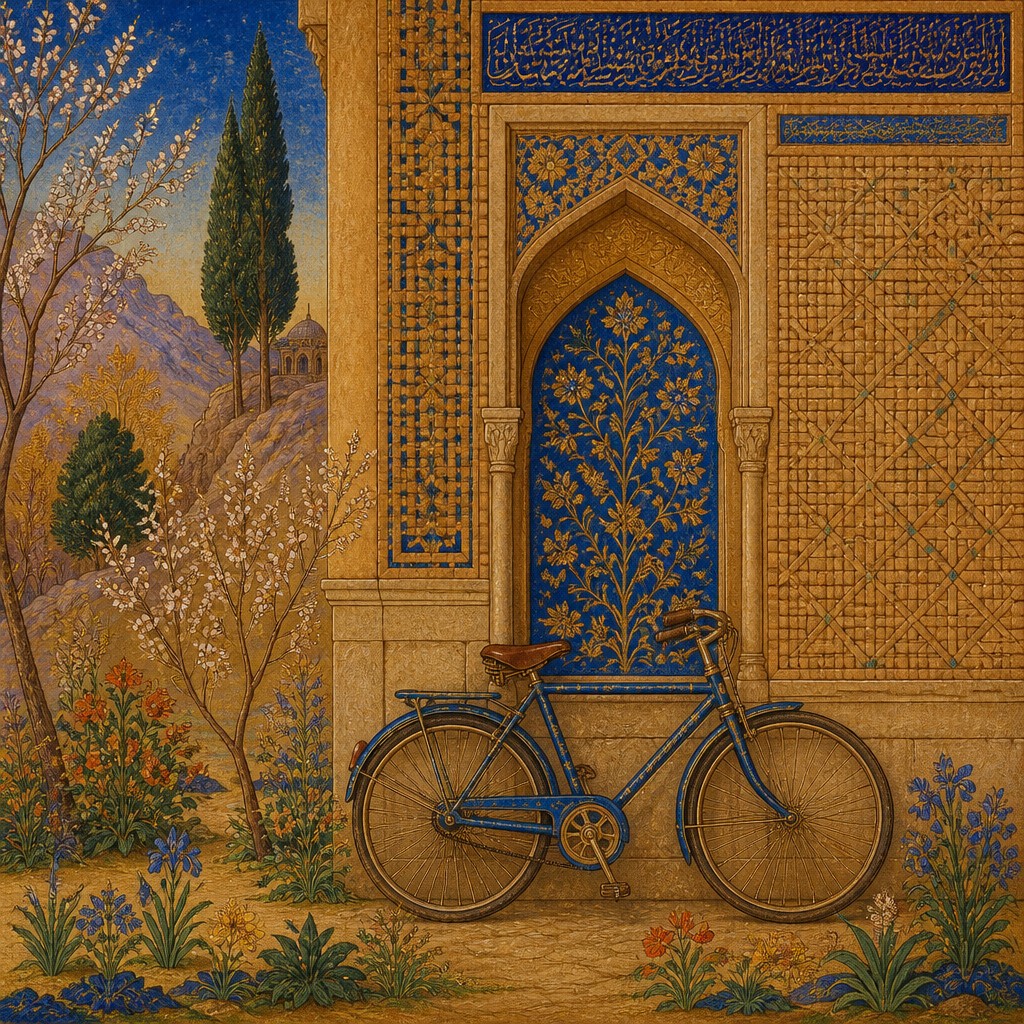
Selective gold illumination
Gold is most effective as a restrained highlight on borders, halos, foliage, architectural trim, or textile pattern. It should punctuate the composition rather than flatten every surface into metallic decoration.
Afghan Prompt Ideas
Start from an idea — each one opens the generator with the style ready to go. See all 40 Afghan prompts →
How to Create Afghan Art
Master the craft step by step — or skip straight to creating. Read the full guide →
- 1
Build a shallow spatial plan
Sketch the scene in horizontal or vertical bands, placing foreground figures, middle-ground gardens, and distant architecture in clearly readable layers. Use overlap and scale changes instead of heavy atmospheric perspective.
- 2
Design the architecture as pattern
Begin with arches, towers, niches, and walls, then cover their surfaces with repeatable brick bands, geometric relief, or restrained calligraphic-like ornament. Keep the structural silhouette simple enough for the surface pattern to remain legible.
- 3
Use opaque, luminous color
For traditional work, layer gouache, watercolor, colored pencil, or fine ink over a carefully drawn ground, reserving metallic watercolor or imitation gold for accents. Digitally, use hard-edged brushes, separate pattern layers, and controlled texture rather than soft airbrushing.
- 4
Balance detail with hierarchy
Reserve the finest marks for the focal subject, architectural threshold, or central garden, while simplifying peripheral areas. A limited palette and repeated motifs will make a complex scene feel coherent.
- 5
Use precise descriptive prompts
For prompt-based generation, specify jewel-toned Timurid miniature painting, fine gold detail, flattened garden perspective, geometric baked-brick ornament, carved sandstone cliff niches, and a lapis-and-saffron palette. Add the subject, setting, viewpoint, and desired level of manuscript detail.
- 6
Refine generated imagery structurally
When transforming an existing image, preserve the main silhouette while requesting flattened depth, patterned surfaces, and architectural ornament. Correct common errors by simplifying crowded details, restoring repeated geometry, and adding gold only to selected focal areas.
The Story
History & Origins of Afghan
The style draws primarily on two distinct historical lineages. Timurid manuscript painting flourished across Central Asian courtly centers, including Herat, during the late fourteenth and fifteenth centuries, and is known for precise drawing, saturated mineral colors, intricate textiles, patterned architecture, and selective use of gold. Afghan architectural references extend across earlier and later periods, including the Ghurid Minaret of Jam, built in the twelfth century, whose baked-brick surface is organized by bands of geometric and calligraphic ornament.
The combined Afghan Art Style presented here is an invented, modern aesthetic category. It brings these lineages together with the visual memory of mountain valleys, desert routes, fortified settlements, and rock-cut or cliff-side architecture, adapting historical motifs for contemporary illustration, digital art, and image-based design rather than representing a documented historical school.
Influences: This aesthetic relates to Timurid and Persianate miniature painting, Central Asian manuscript illumination, Ghurid and broader Islamic geometric architectural ornament, Afghan vernacular masonry, and the decorative traditions of the medieval Silk Road. It also shares techniques with gouache illustration, illuminated manuscripts, architectural visualization, and contemporary digital pattern design. Unlike a strictly historical reconstruction, it freely combines motifs from different periods and regions into a unified visual vocabulary.
Frequently Asked Questions
Is Afghan Art Style a documented historical art movement?
No. In this context, Afghan Art Style is a contemporary synthesis rather than the name of a single established historical school. It draws on documented Afghan, Ghurid, Timurid, Central Asian, and Persianate visual traditions while combining them for modern artistic use.
What defines the look of Afghan Art Style?
Its defining features are jewel-toned color, meticulous miniature-like detail, selective gold, flattened or shallow perspective, geometric brickwork, and carved sandstone architecture integrated with mountain or desert settings. The overall effect is ornate but carefully ordered.
How does it differ from Persian miniature painting?
It borrows the manuscript techniques and Persianate visual language of miniature painting, but gives greater emphasis to Afghan landscapes, cliff architecture, monumental brickwork, and minaret-like vertical forms. It is best understood as a hybrid interpretation rather than a synonym for Persian miniature.
How can I make a painting in this style by hand?
Start with a precise ink drawing and organize the scene into stacked planes or garden compartments. Apply opaque, saturated watercolor or gouache, develop architectural patterns with fine brushes, and reserve metallic paint for small borders, foliage, textiles, or structural highlights.
What subjects work well with this aesthetic?
Caravan routes, mountain fortresses, enclosed gardens, cliff settlements, minarets, market scenes, animals, and ceremonial processions suit the style particularly well. Subjects with strong silhouettes and repeated surfaces give the geometric ornament room to function.
Can photographs be transformed into Afghan Art Style?
Yes, especially photographs of people in structured clothing, historic buildings, courtyards, mountains, or desert landscapes. The transformation works best when the composition is simplified into clear planes and the original forms remain recognizable beneath the added miniature detailing and architectural pattern.
Create your first Afghan artwork
Describe anything — or upload a photo — and see it in Afghan Art Style in seconds.
Related Styles
Discover similar art styles