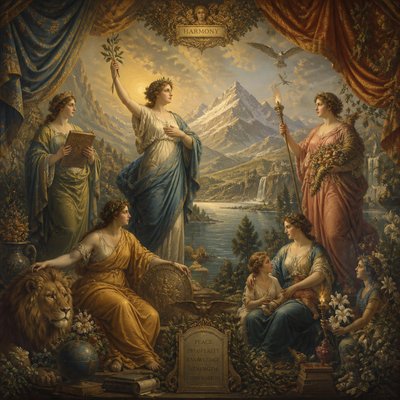
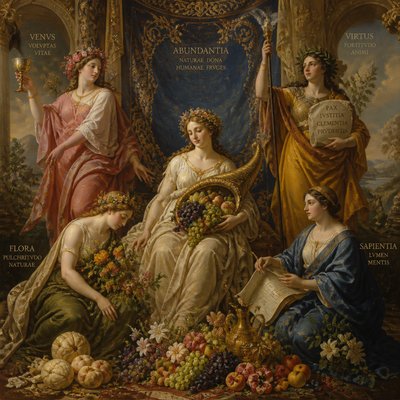
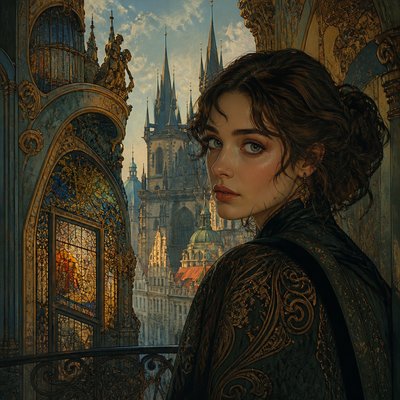
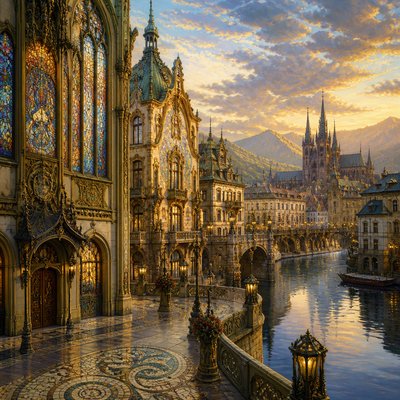
Djiboutian Art Style
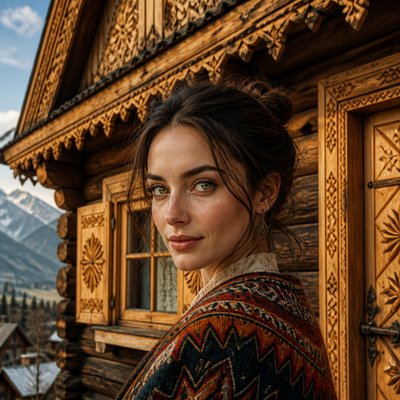
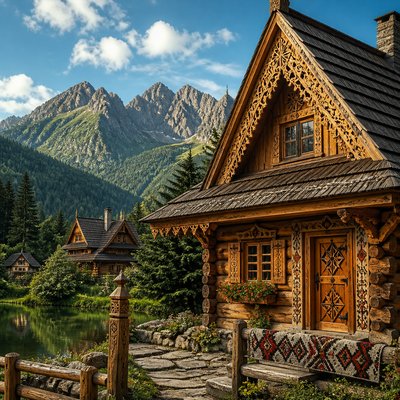
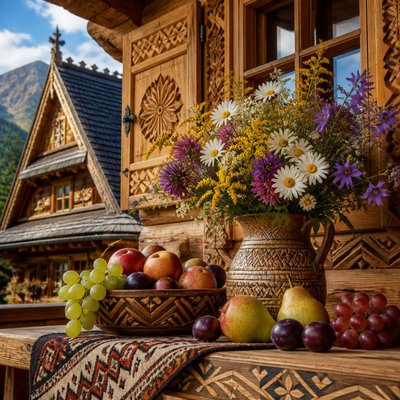
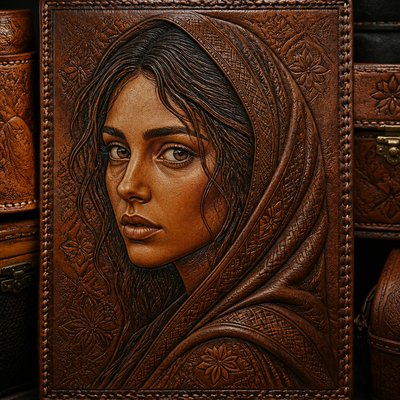
Explore Djiboutian art style: desert petroglyphs, Afar silverwork, palm-leaf weaving, carved vessels, and sun-bleached volcanic color.
Instantly rendered in Djiboutian — or transform a photo
Djiboutian Gallery
Tap any artwork to explore it
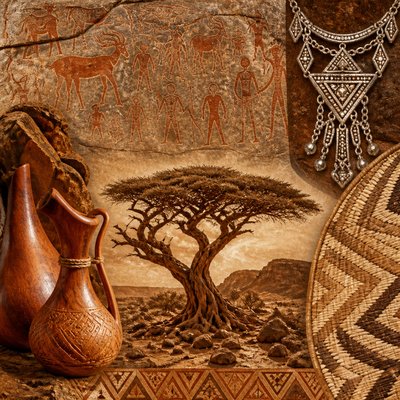
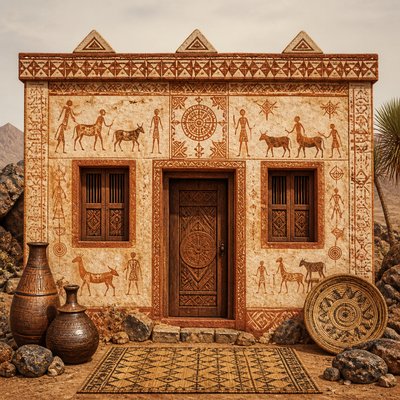
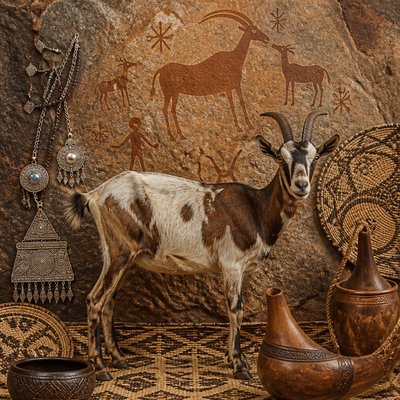
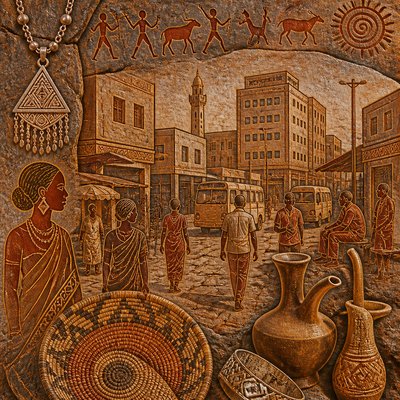
What is Djiboutian Art Style?
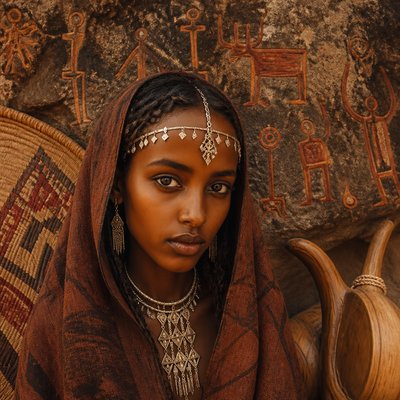
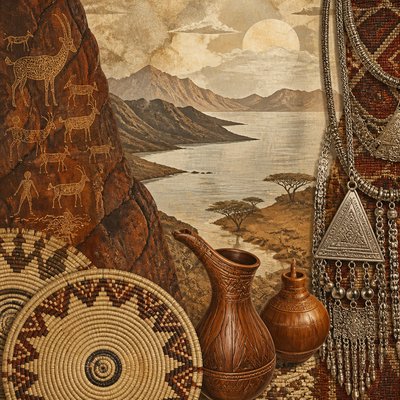
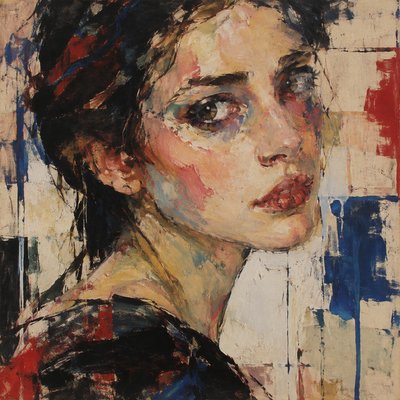
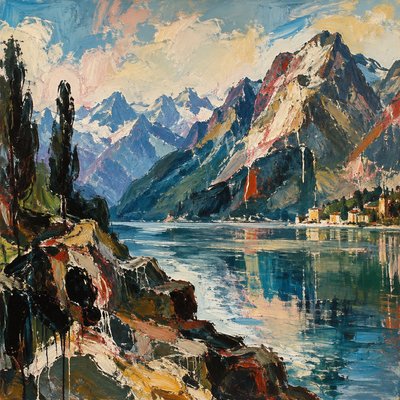
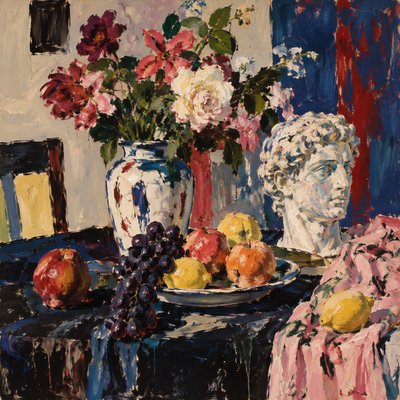
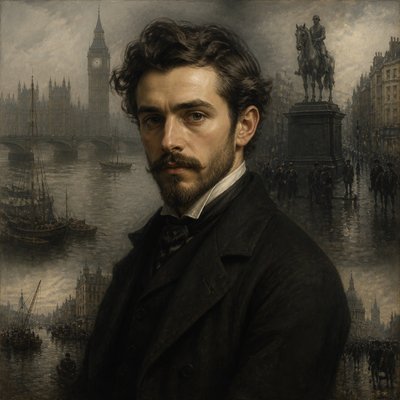
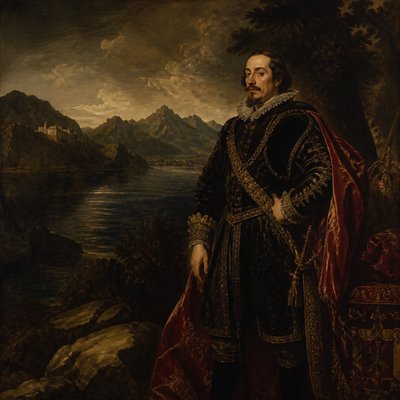
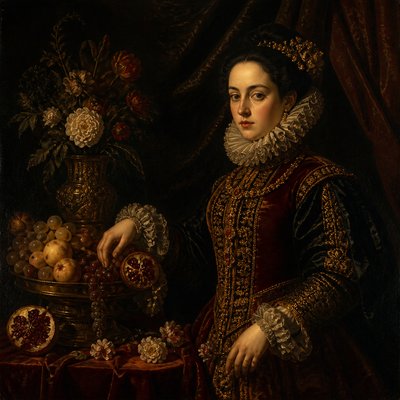
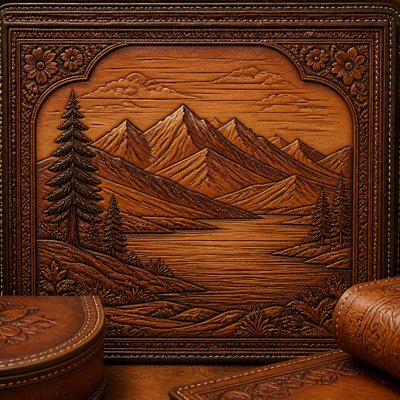
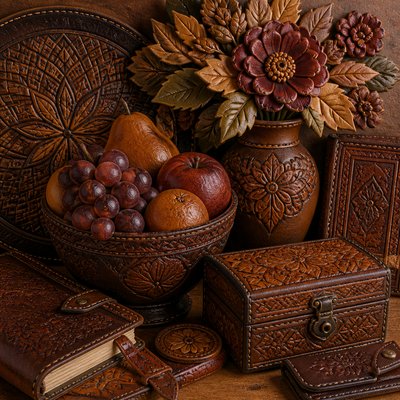
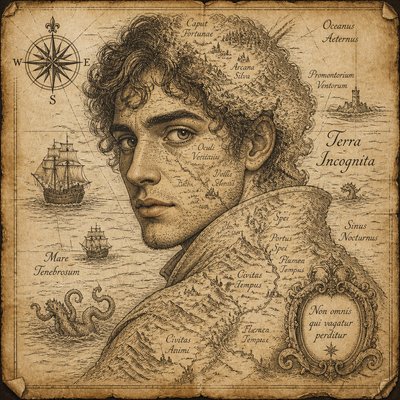
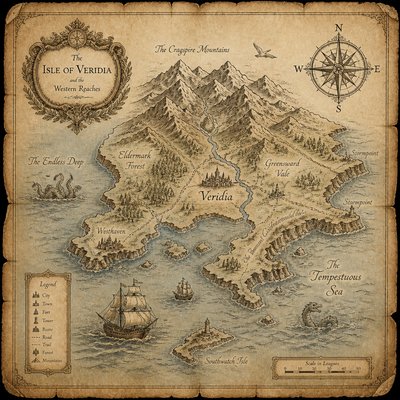
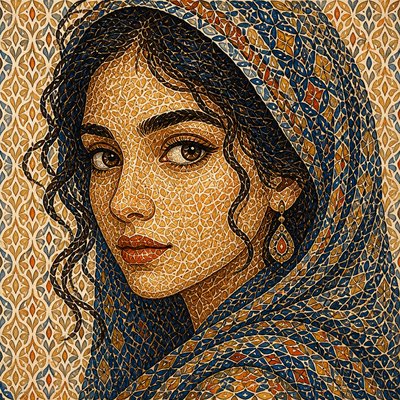
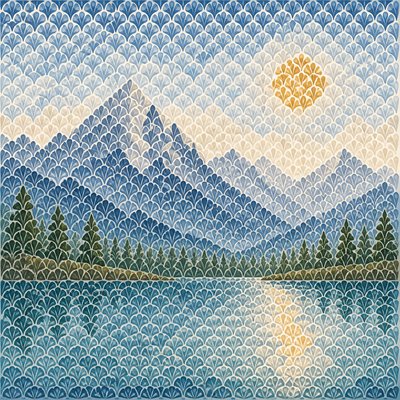
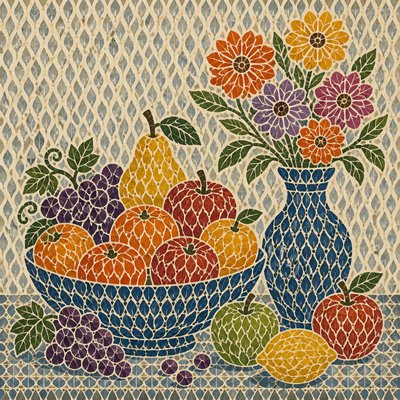
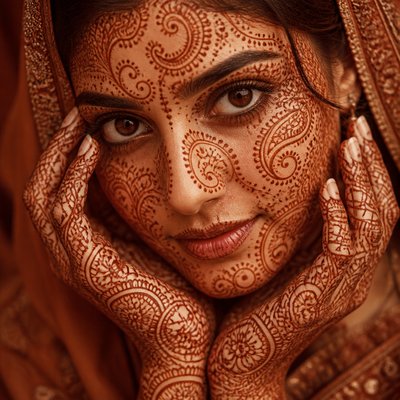
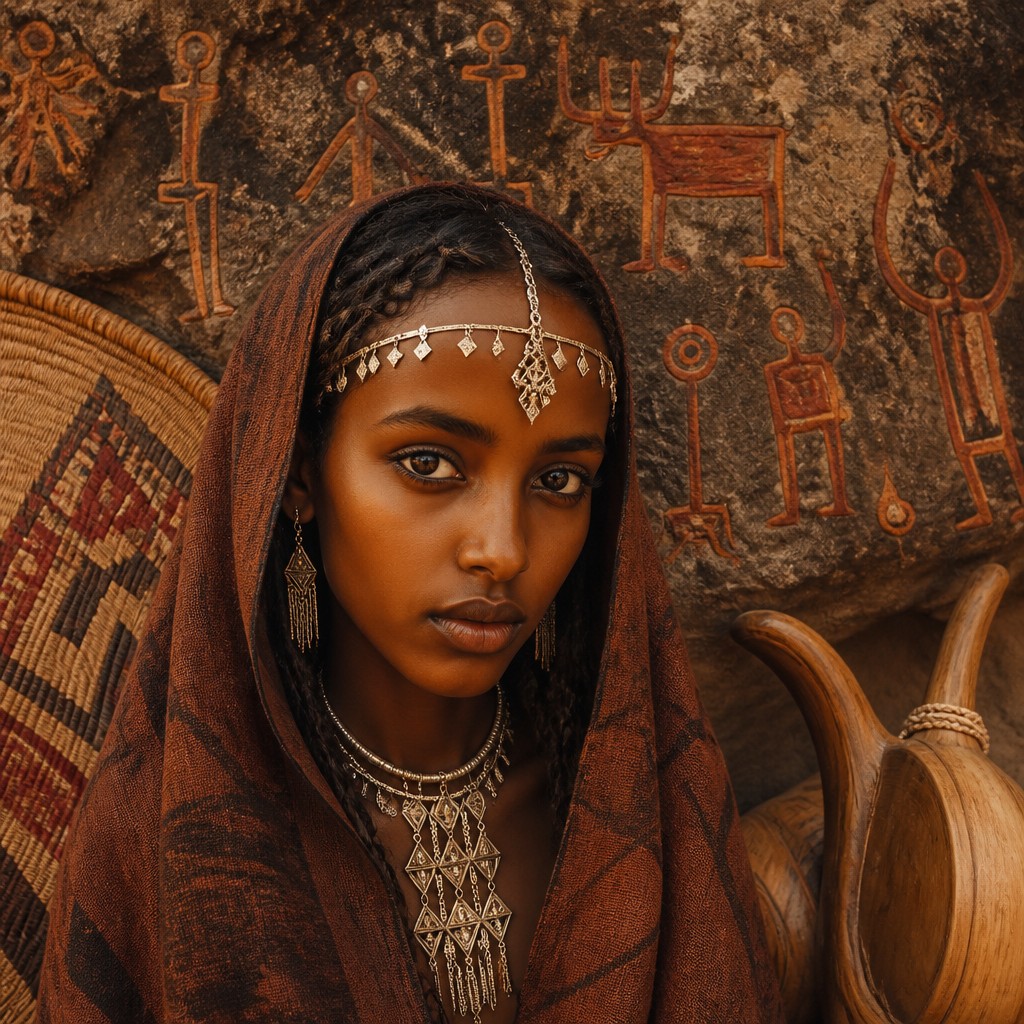
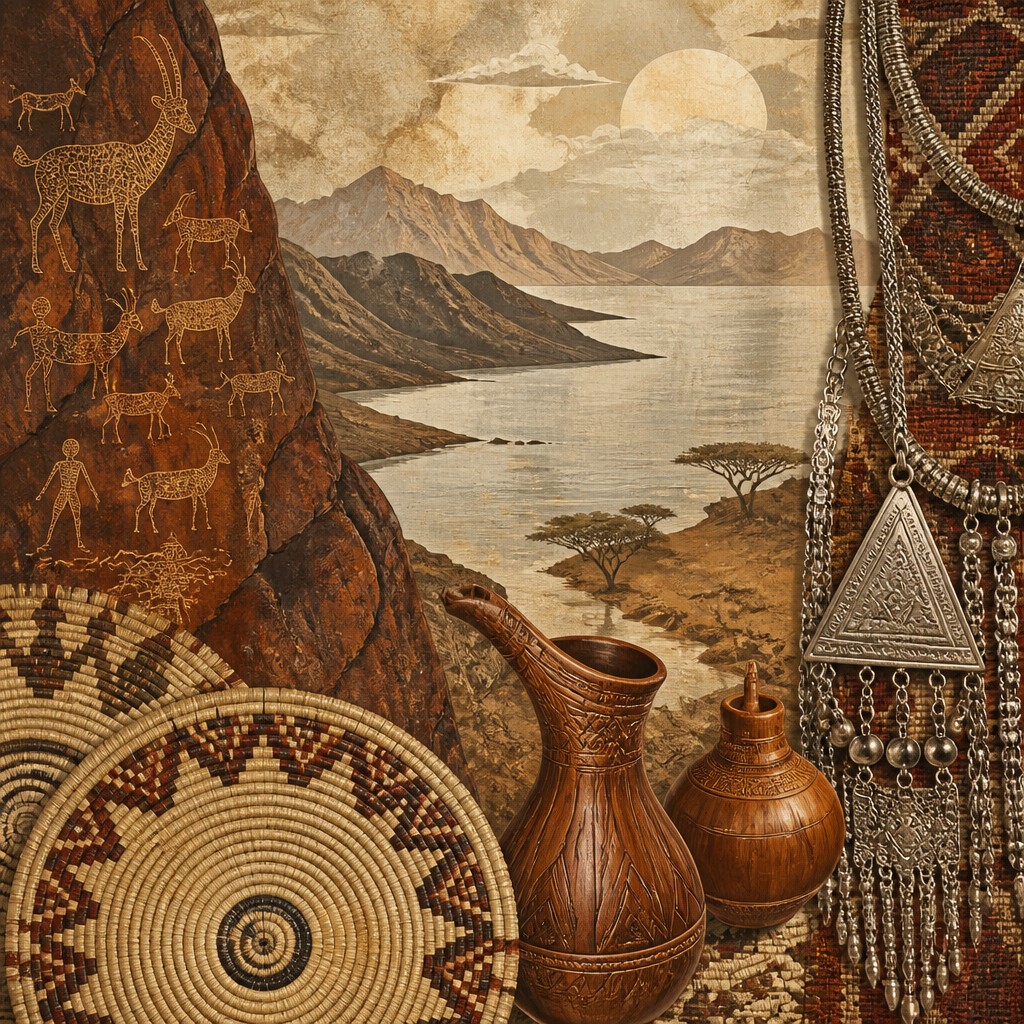
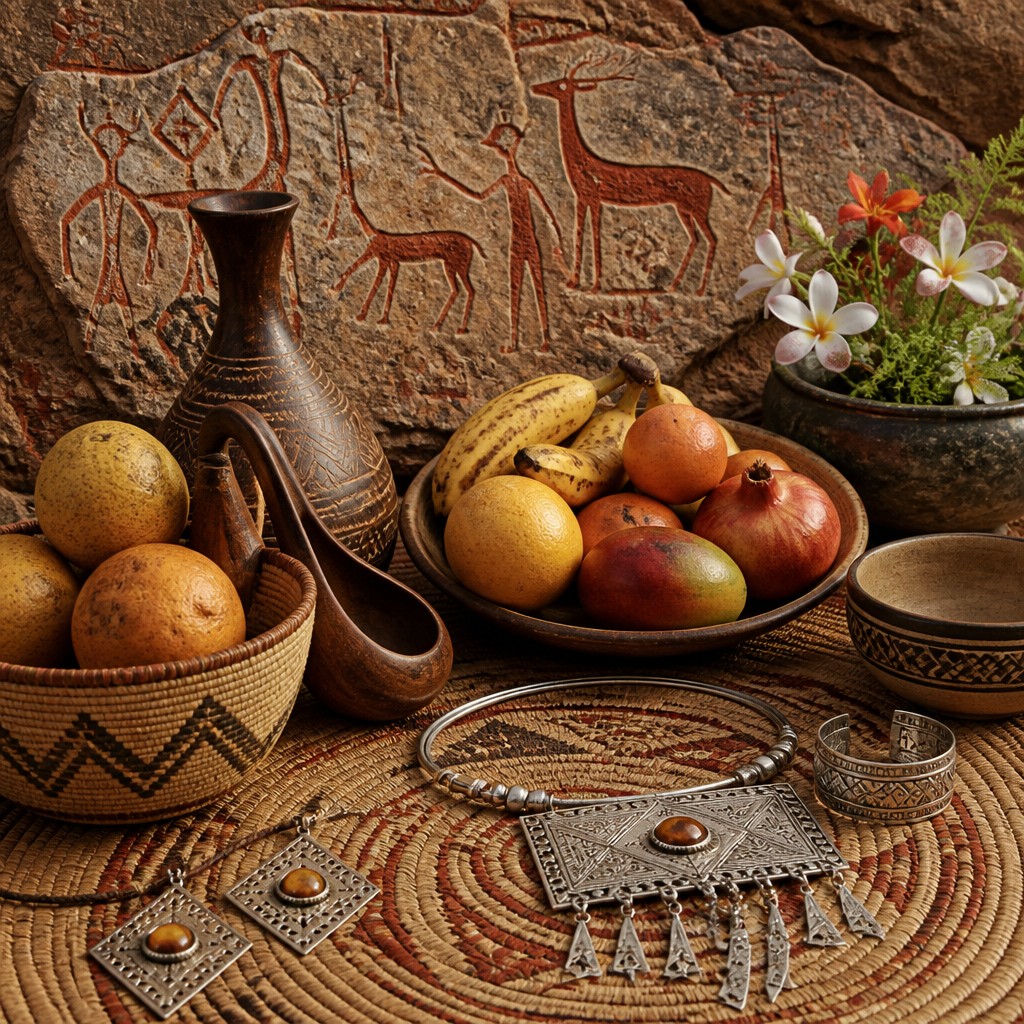
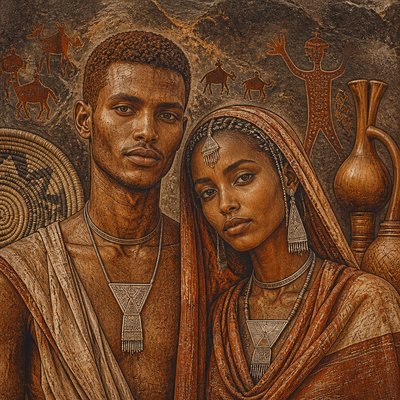
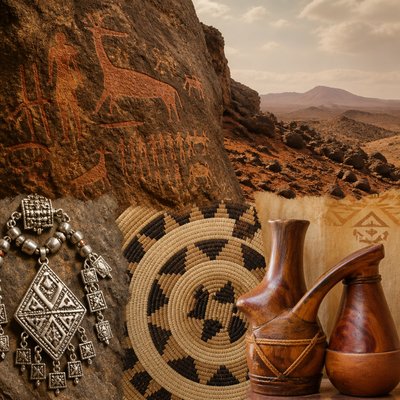
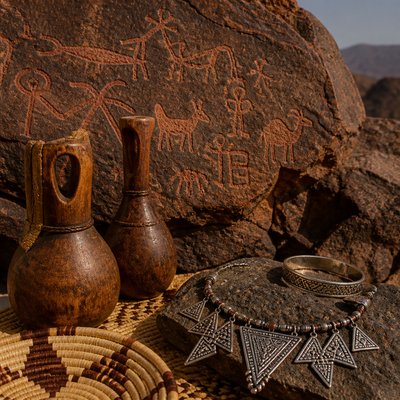
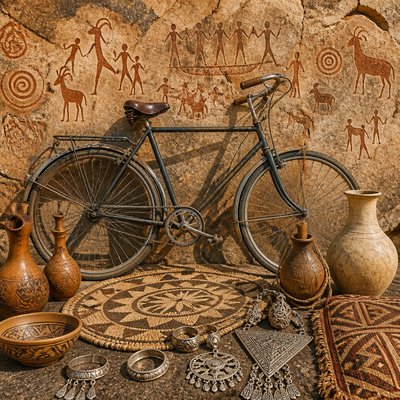
Djiboutian art style is a contemporary descriptive label for an aesthetic rooted in the visual culture of Djibouti and the wider Horn of Africa. It combines the stark presence of desert rock art with the precise geometry of Afar silver jewelry, the repeated structures of woven palm-leaf mats, and the smooth, functional forms of carved wooden vessels. Its palette is mineral and restrained: rust red, ochre, charcoal, bone, sand, amber, and weathered brown.
The style looks direct and tactile rather than polished or ornamental. Etched figures appear as simplified silhouettes against eroded stone; jewelry is built from linked forms, pendants, discs, and angular marks; and craft objects retain visible evidence of hand shaping. The overall effect comes from adapting visual expression to an arid environment in which volcanic surfaces, intense sunlight, portable adornment, woven utility, and durable natural materials are central.
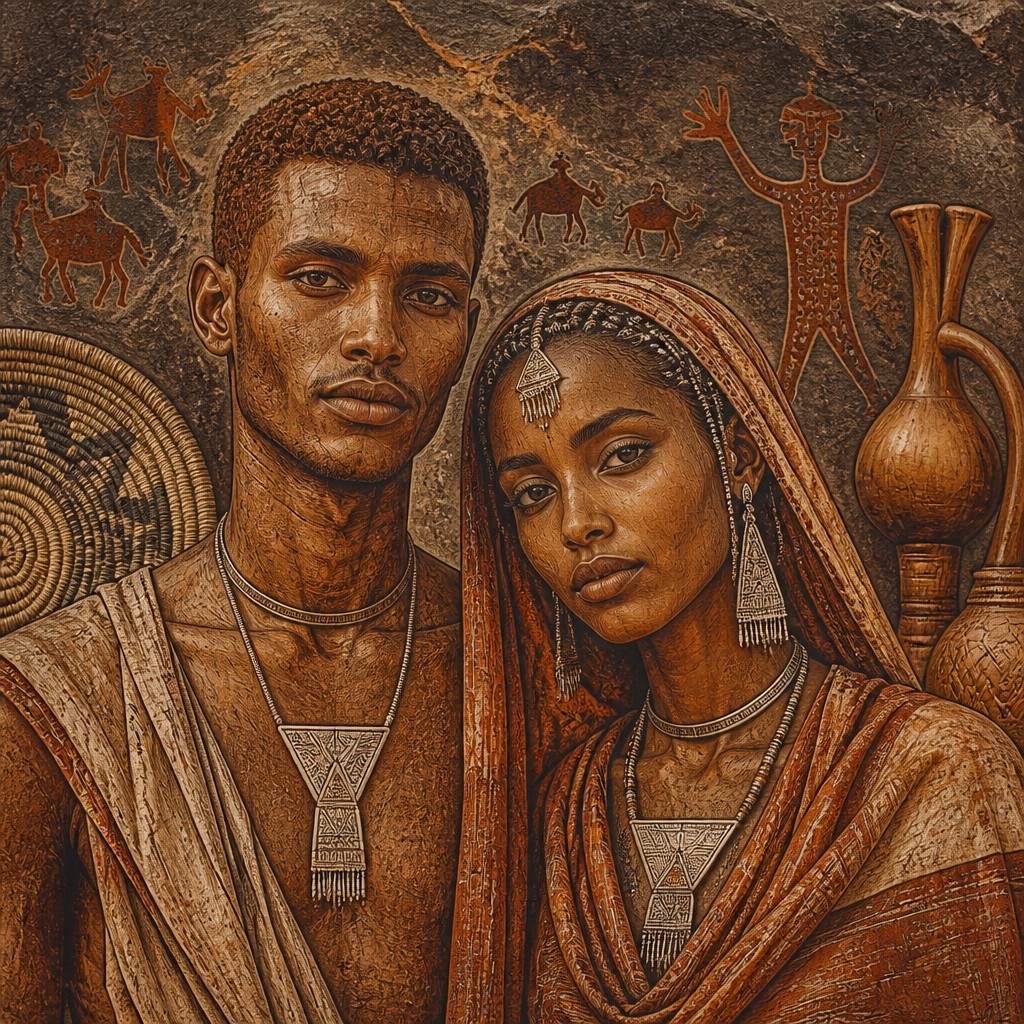
Try It On Your Photos
Upload any photo and convert it into Djiboutian Art Style — drag the sliders to compare before and after.
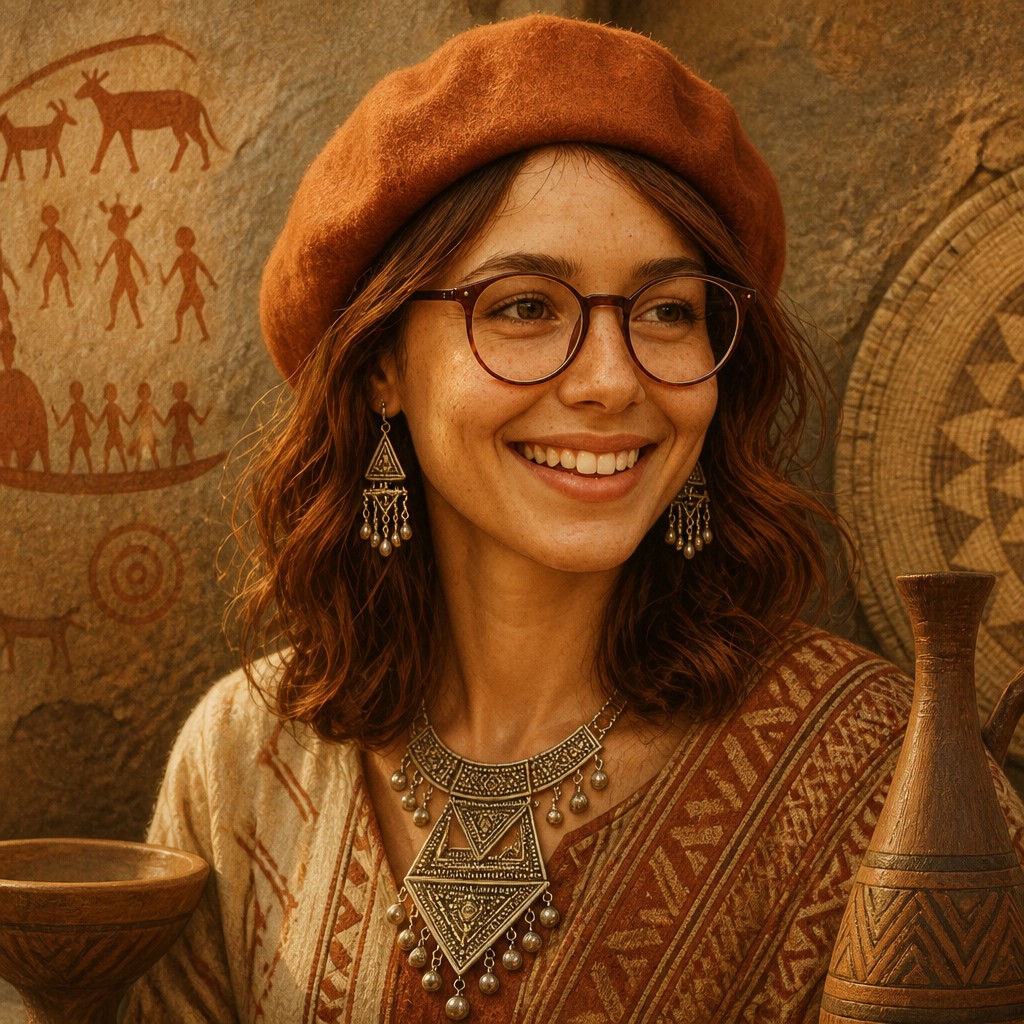

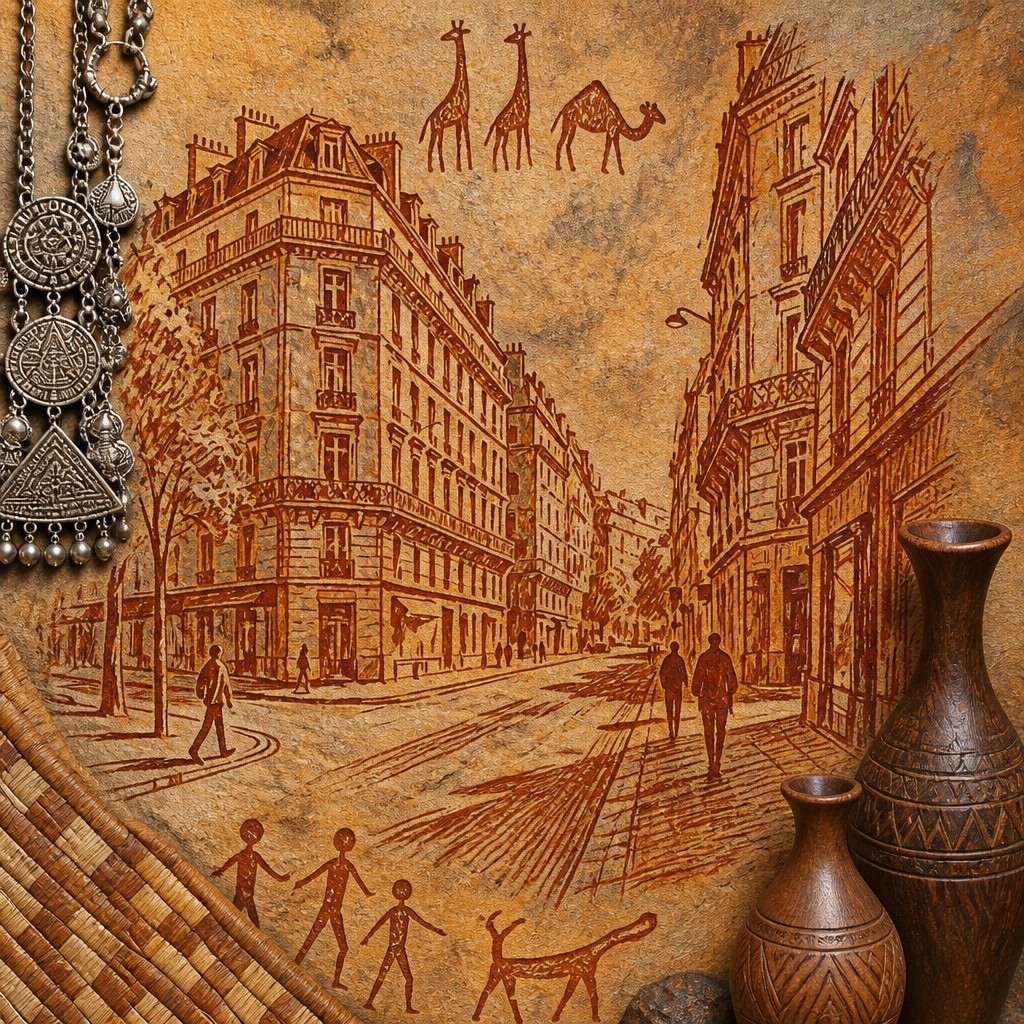

What Defines Djiboutian Art Style
The signature details, up close
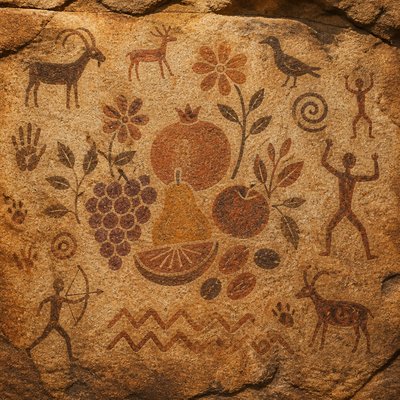
Ochre-red rock imagery
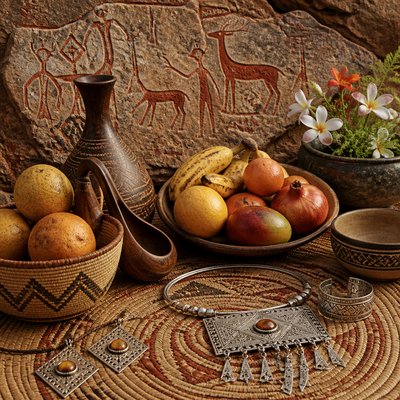
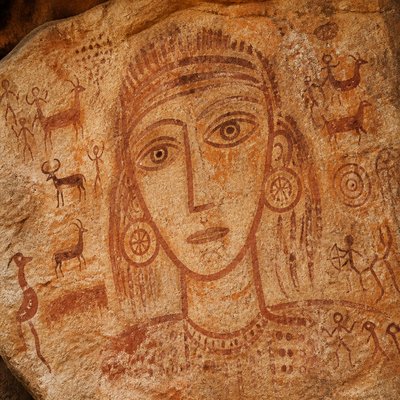
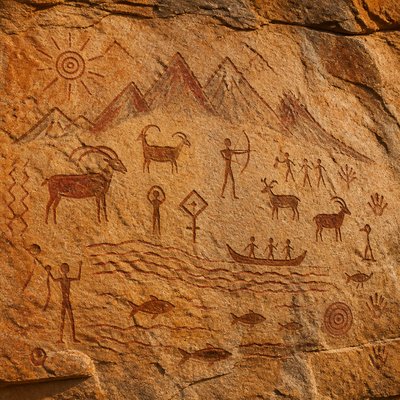
Simplified human and animal figures resemble pigment stains or shallow engravings on weathered volcanic stone. Lines are spare, irregular, and often integrated with cracks, pits, and natural mineral variation.
Afar-inspired silver geometry
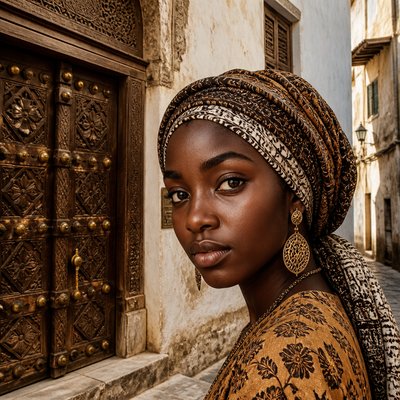
Layered pendants, discs, chains, beads, and angular motifs provide concentrated points of brightness. Silver is typically shown as matte, hammered, oxidized, or softly reflective rather than mirror-polished.
Woven palm-leaf structure
Repeating strips, checkerboards, chevrons, and diagonal bands evoke handwoven mats and baskets. These patterns introduce rhythm and tactile contrast without overwhelming the sparse desert composition.
Carved wooden vessels
Milk vessels and related containers are represented with smooth, rounded contours and restrained detailing. Their warm brown surfaces contrast with the sharper geometry of metalwork and the roughness of stone.
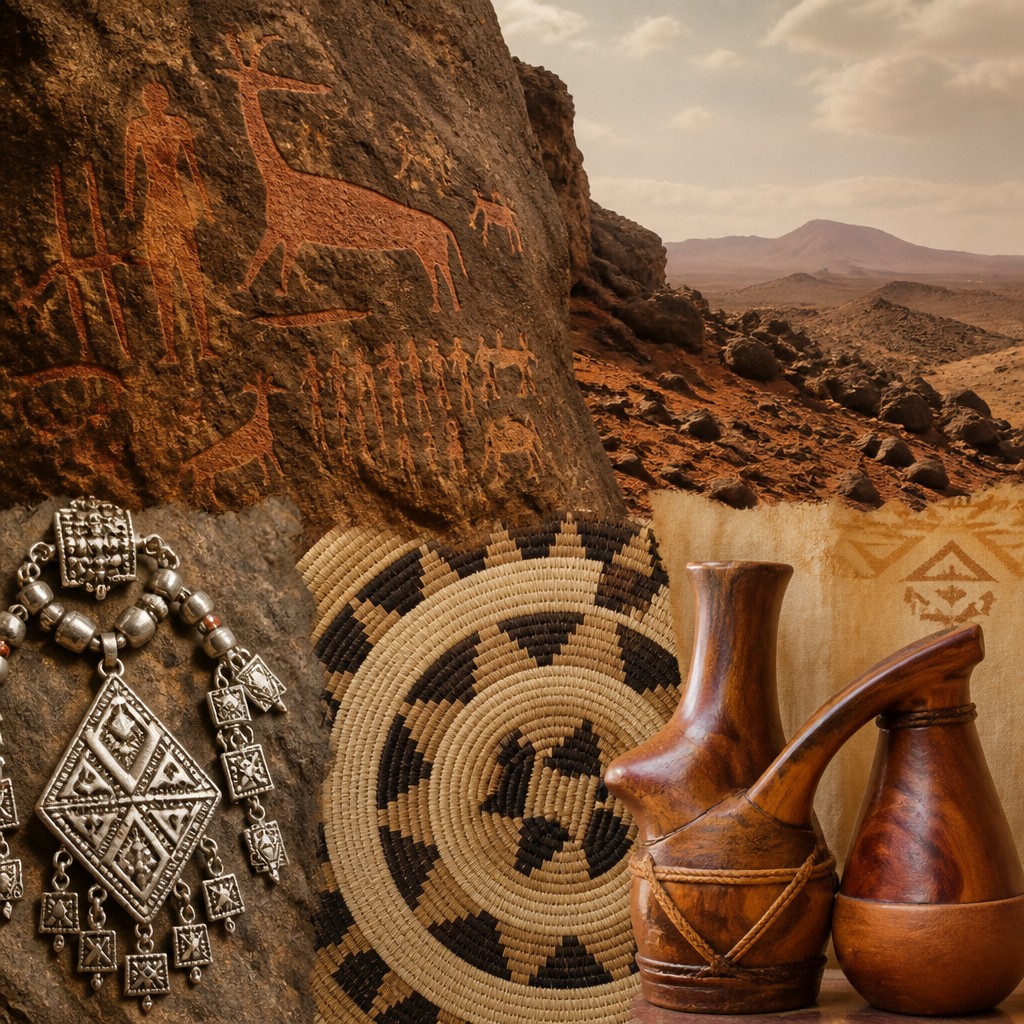
Volcanic desert palette
Rust, burnt sienna, ochre, bone, ash gray, charcoal, amber, and faded umber establish a sun-bleached atmosphere. Saturated color is used sparingly, usually as a small accent in jewelry or textile pattern.
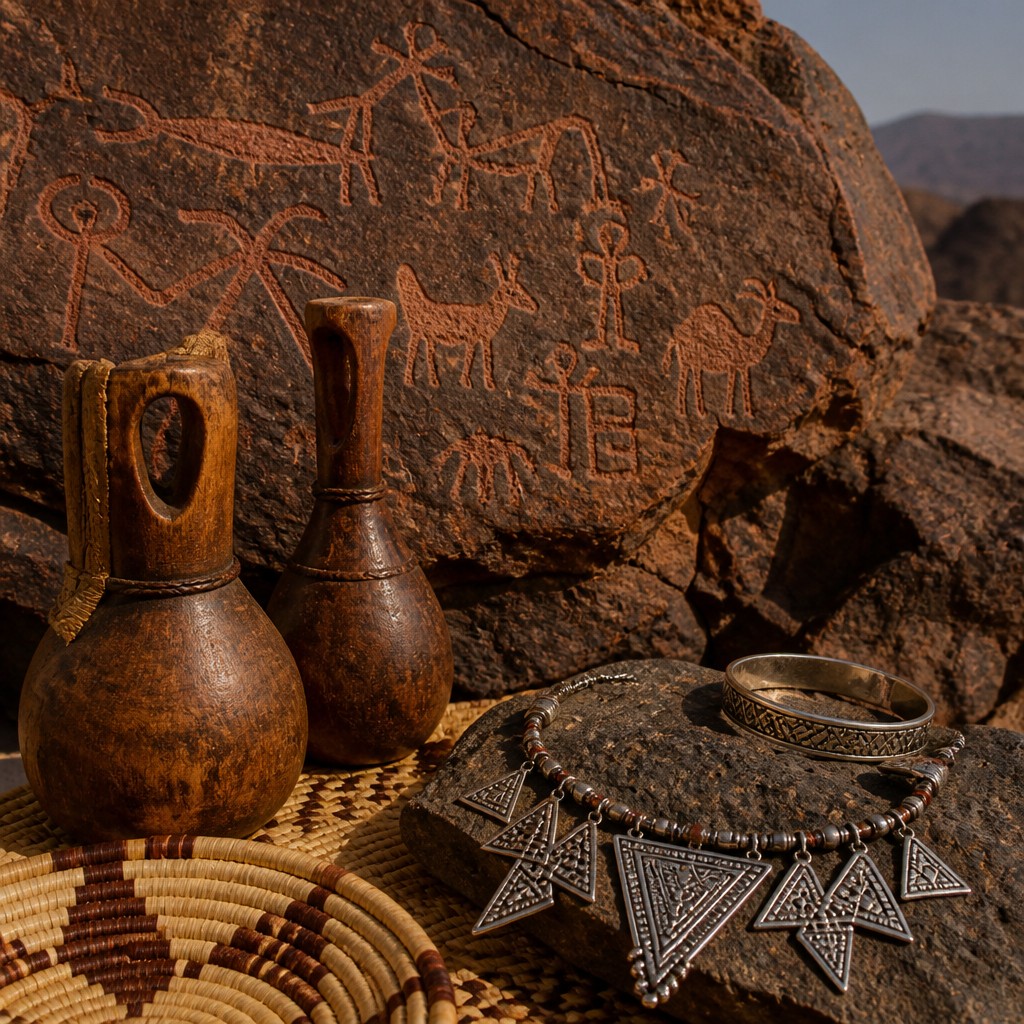
Weathered, tactile surfaces
Abrasion, dust, mineral deposits, tool marks, tarnish, and softened edges are important visual signals. Materials should feel handled, exposed to sun, and shaped by use rather than artificially distressed.
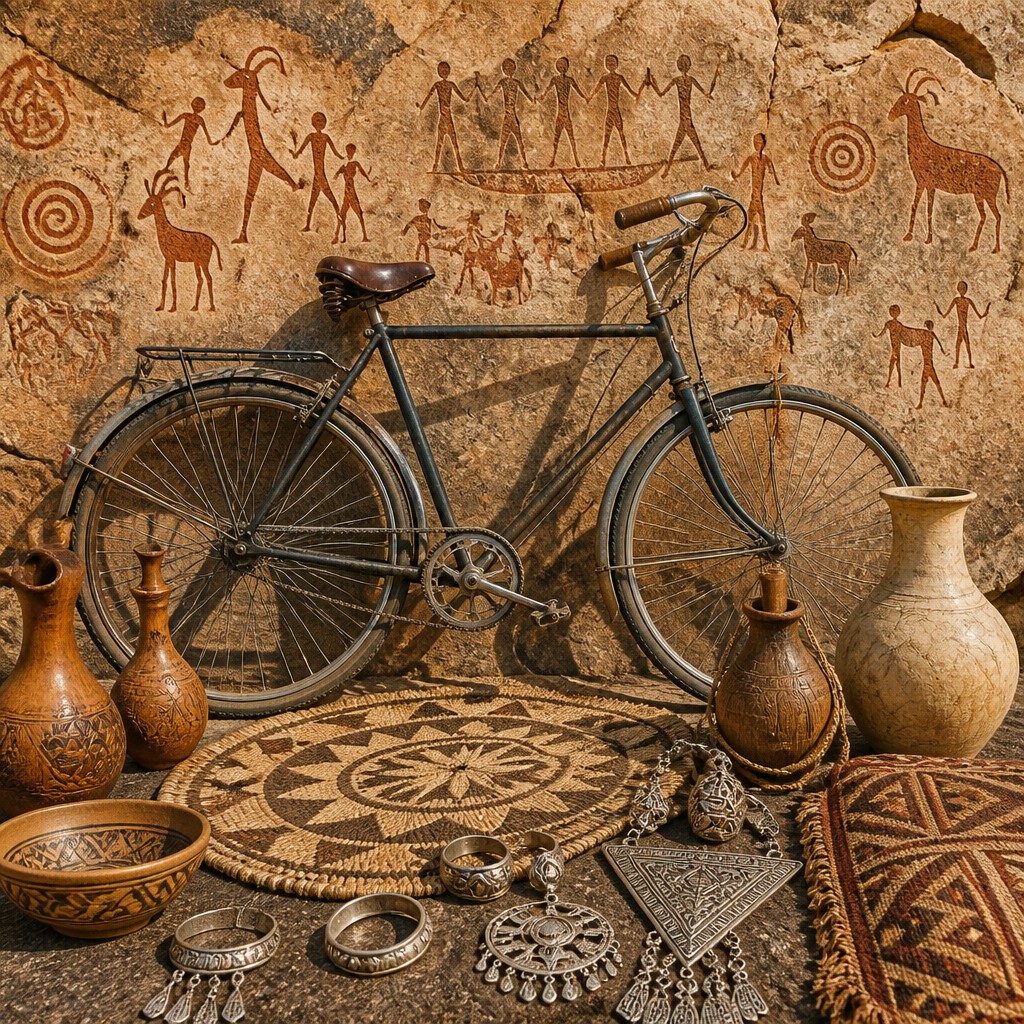
Flat symbolic composition
Subjects are often arranged frontally or in profile with limited perspective and broad areas of empty space. Meaning comes from silhouette, repetition, and material association more than from illusionistic depth.
Djiboutian Prompt Ideas
Start from an idea — each one opens the generator with the style ready to go. See all 40 Djiboutian prompts →
How to Create Djiboutian Art
Master the craft step by step — or skip straight to creating. Read the full guide →
- 1
Build a mineral base
Begin with a ground of rough paper, plaster, clay, or digitally simulated volcanic stone. Layer thin washes of rust, ochre, ash, and bone, leaving irregular patches and abrasion visible.
- 2
Use spare etched marks
Draw figures with a limited line vocabulary: angular limbs, profile animals, simple arcs, and repeated incisions. Vary pressure and depth so the marks appear worn into rock rather than cleanly outlined.
- 3
Add craft-based pattern
Introduce a small area of palm-leaf geometry or silver ornament instead of covering every surface with decoration. Repetition should feel handwoven or hand-hammered, with slight asymmetry and variation.
- 4
Model functional objects simply
For wooden vessels, use broad curved silhouettes, subtle grain, and softened edges. Keep highlights low and diffuse, as if the object has been polished through handling rather than coated in glossy finish.
- 5
Compose with restraint
Leave generous negative space and place the main motif against a sunlit rock or sand-colored field. A low viewpoint, frontal arrangement, or shallow relief can reinforce the archaeological and material character.
- 6
Guide digital or prompt-based work precisely
Specify etched ochre figures, weathered volcanic rock, Afar-inspired geometric silver pendants, woven palm-leaf patterns, carved wooden milk vessels, and a rust-bone-amber palette. Add terms such as matte, hand-worked, sun-bleached, shallow relief, sparse composition, and mineral texture; avoid generic 'tribal' wording and request culturally respectful, non-costume imagery.
The Story
History & Origins of Djiboutian
Djiboutian art style is not a formally defined historical movement or a single traditional school. It is an interpretive synthesis of several visual lineages associated with Djibouti, including documented rock-art traditions in the Horn of Africa, Afar and neighboring pastoral craft practices, regional silver adornment, palm-leaf weaving, and carved wooden household objects. These traditions developed across different communities and periods and should not be treated as interchangeable or as the product of one unified art system.
For contemporary visual use, the style translates those sources into a cohesive language of weathered surfaces, sparse composition, geometric pattern, and desert color. Its historical lineage is therefore material and regional rather than movement-based: ancient and early rock imagery supplies the mark-making vocabulary, while living craft traditions supply pattern, form, and social context.
Influences: The style relates to prehistoric and early historic rock art of the Horn of Africa, pastoral and nomadic material culture, Islamic geometric ornament as filtered through regional craft traditions, African metalworking, palm-leaf weaving, and vernacular wood carving. It also shares compositional qualities with archaeological illustration, earthy minimalism, primitive modernism, and contemporary mixed-media practices that foreground erosion, handwork, and natural materials. These connections are visual rather than evidence that all of the traditions belong to one historical school.
Frequently Asked Questions
Is Djiboutian art style a recognized historical art movement?
No. The term is best understood as a contemporary descriptive or digital art category, not as the name of a documented, unified movement. It draws selectively from Djibouti's rock-art heritage and regional craft traditions, which have distinct histories and community contexts.
What defines the visual identity of this style?
Its defining traits are ochre-red petroglyph-like marks, weathered volcanic textures, geometric silver adornment, palm-leaf weaving patterns, carved wooden vessels, and a restrained desert palette. Sparse compositions and tactile surfaces are as important as the individual motifs.
How is it different from generic desert or African art?
A generic desert aesthetic may rely mainly on sand dunes, warm lighting, or broad ethnic stereotypes. This style is more material-specific, emphasizing rock incision, volcanic surfaces, Afar-associated silver geometry, woven palm structures, and utilitarian wooden forms connected to the Horn of Africa.
Can I make this style with traditional media?
Yes. Use ochre, iron-oxide pigment, charcoal, dry brush, or pastel on rough paper, board, plaster, or clay. For a convincing surface, combine shallow scratching, rubbed pigment, matte metallic leaf or paint, and visible irregularities rather than producing perfectly clean digital geometry.
How should I prompt for images in this style?
Name the subject first, then specify etched rock imagery, matte geometric silverwork, palm-leaf weaving, carved wood, mineral textures, and rust-bone-amber colors. Terms such as sparse, handworked, weathered, shallow relief, and sun-bleached help focus the result; avoid vague labels that flatten distinct cultures into a stereotype.
Where is this aesthetic most useful?
It suits editorial illustration, heritage interpretation, museum-inspired graphics, jewelry concepts, book covers, textile patterns, still lifes, and atmospheric landscape studies. When depicting living communities or ceremonial objects, research the specific context and avoid presenting invented costumes or sacred imagery as documentary fact.
Create your first Djiboutian artwork
Describe anything — or upload a photo — and see it in Djiboutian Art Style in seconds.
Related Styles
Discover similar art styles