Moroccan Art Style
Explore Moroccan art style: zellige mosaics, carved cedar, stucco arabesques, saffron courtyards, and North African geometric elegance.
Instantly rendered in Moroccan — or transform a photo
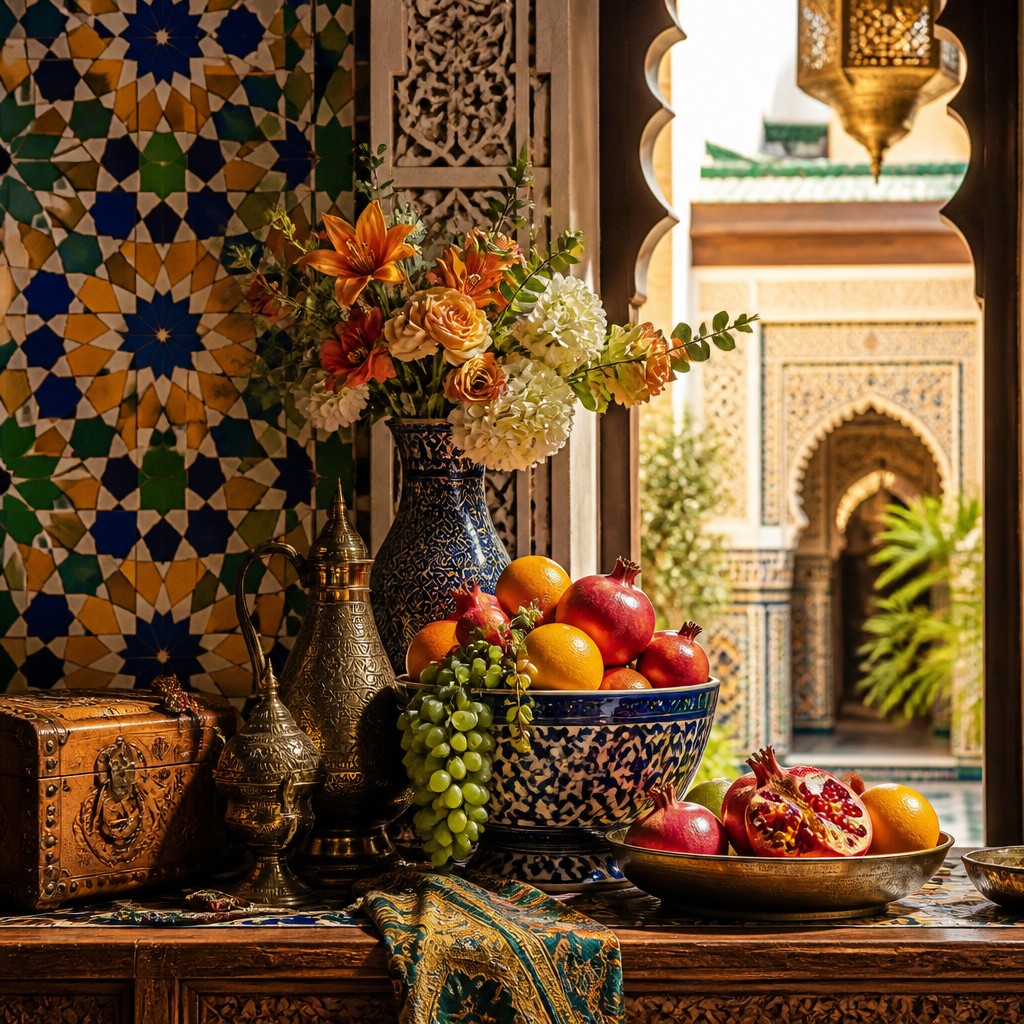
Moroccan Gallery
Tap any artwork to explore it
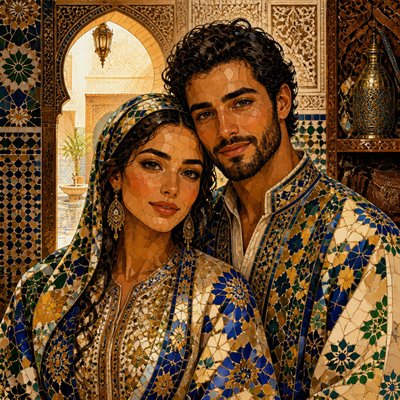
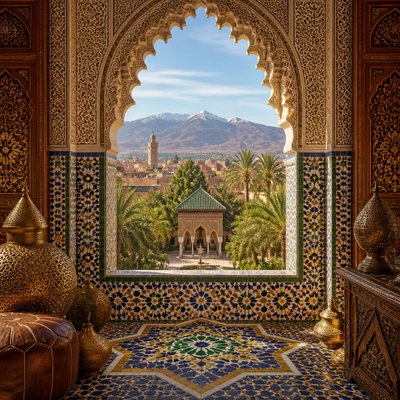
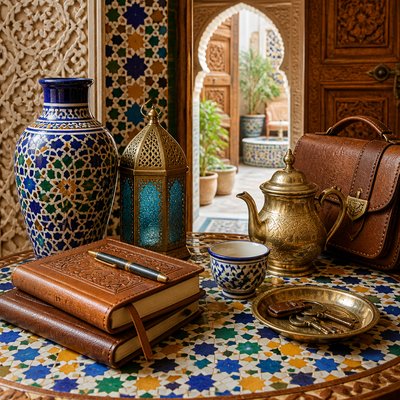
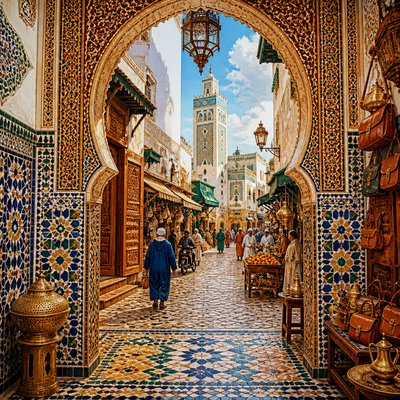
What is Moroccan Art Style?
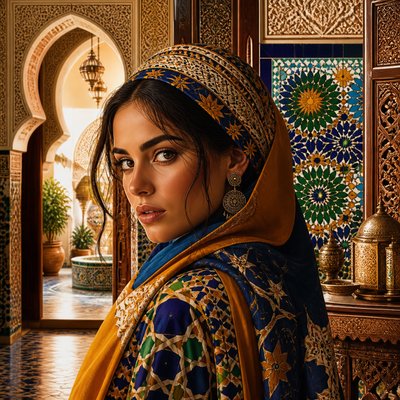
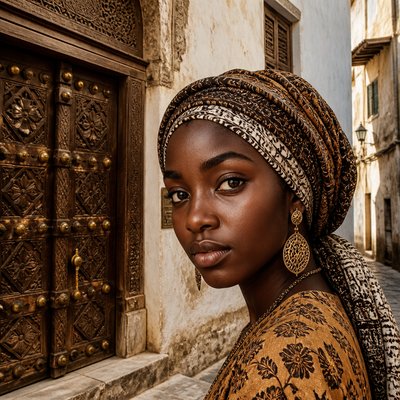
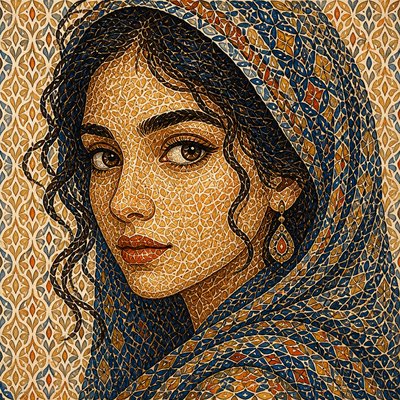
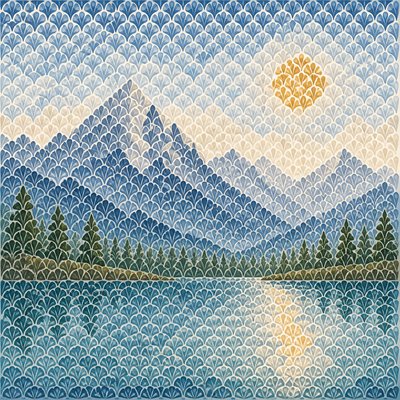
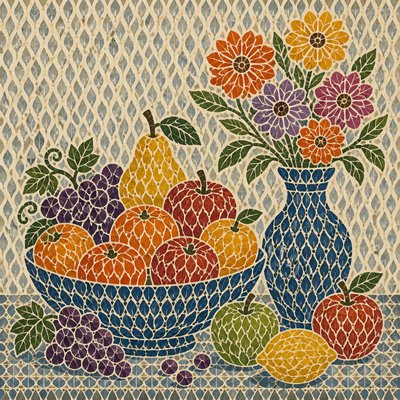
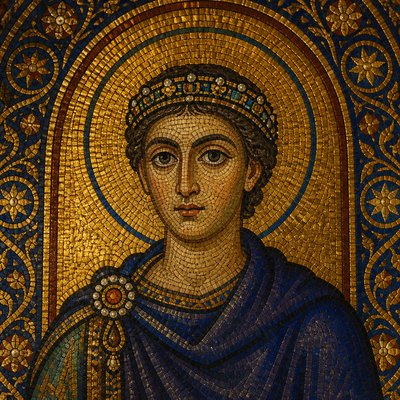
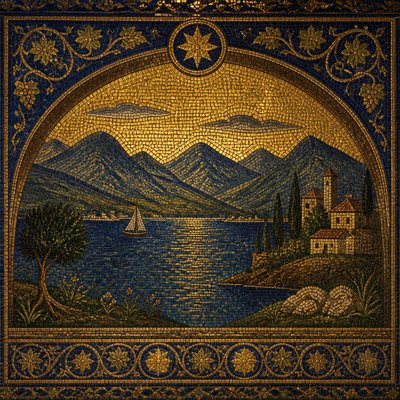
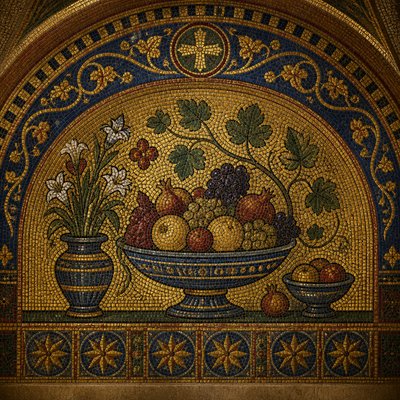
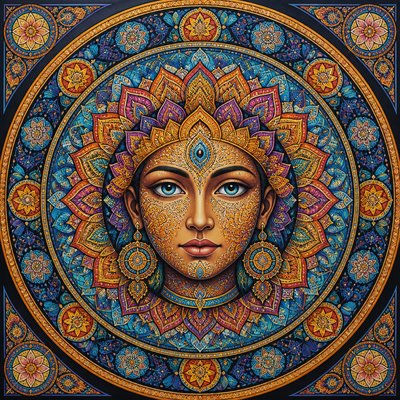
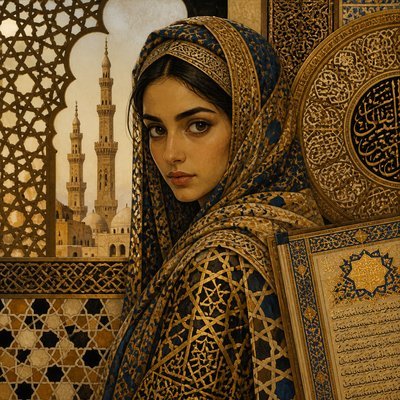
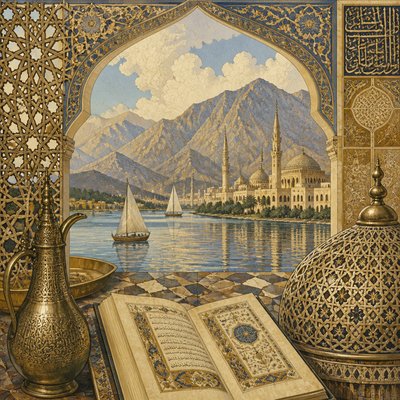
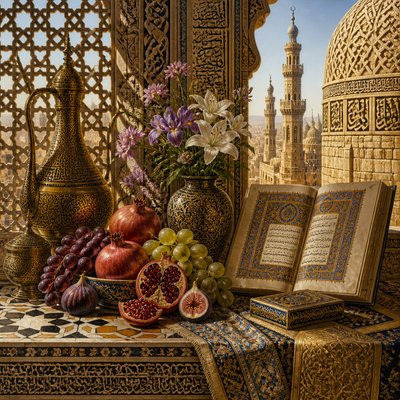
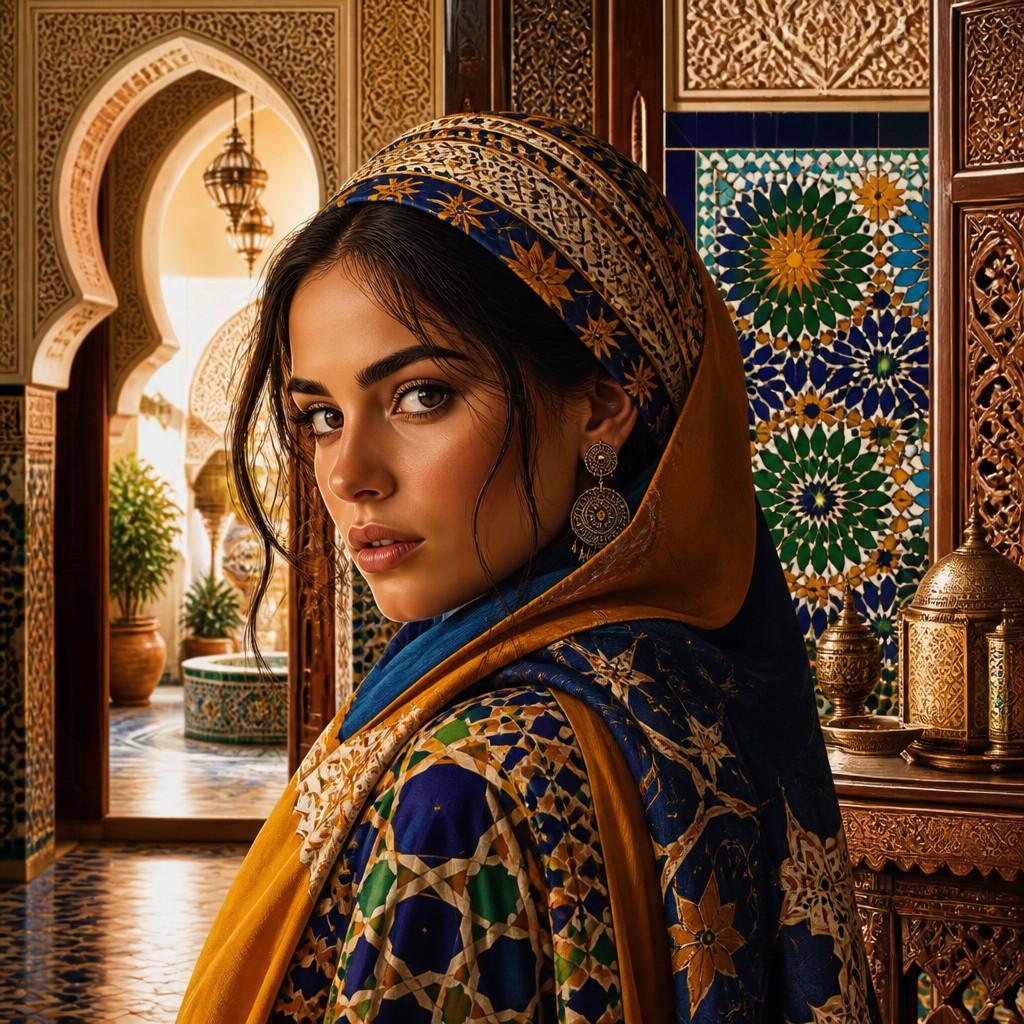
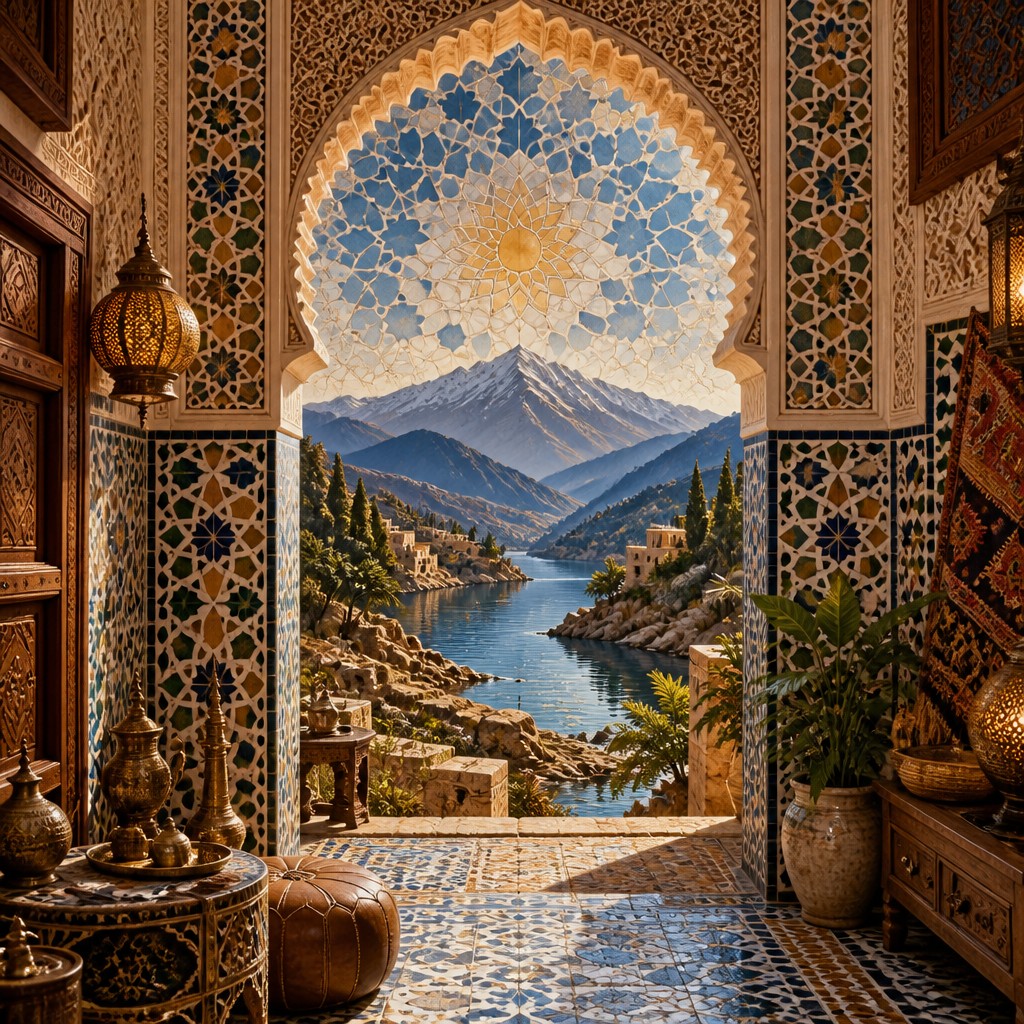
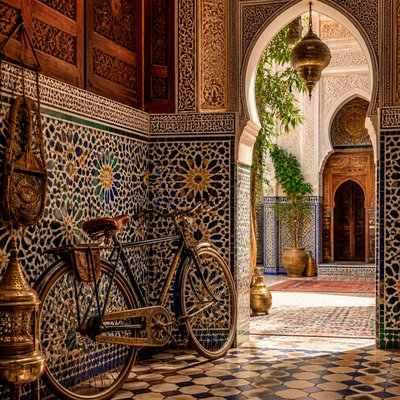
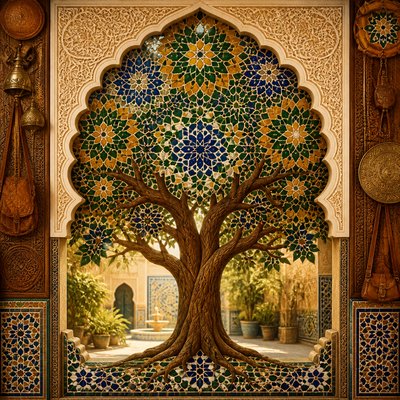
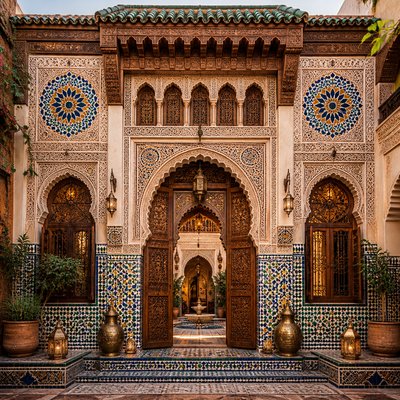
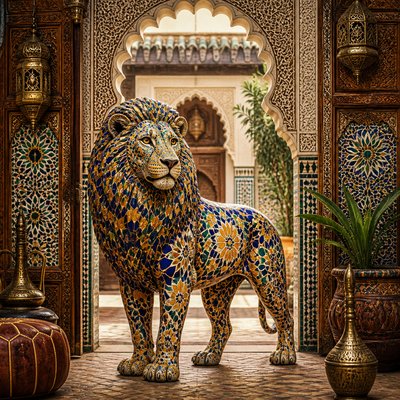
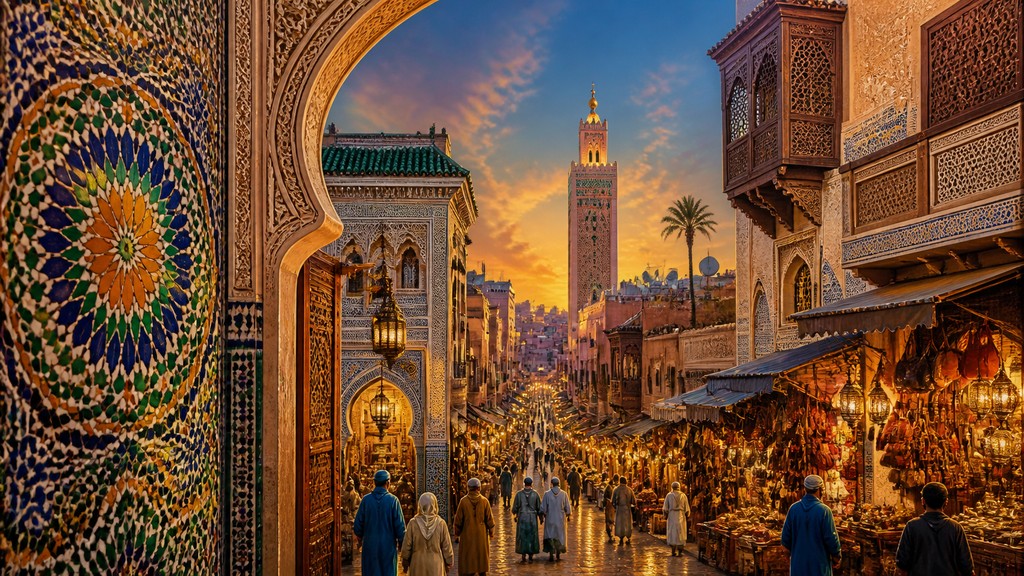
Moroccan art style is a richly ornamental visual language shaped by North African architecture, craft, and domestic interiors. Its signature elements include hand-cut zellige tilework, geometric star patterns, carved cedar, sculpted stucco, horseshoe and keyhole arches, patterned textiles, hammered metal, and warm courtyard light. Cobalt blue, emerald green, saffron, terracotta, white, and earthy brown commonly form its palette.
The style looks highly ordered yet tactile because decoration is built from repeated geometry, hand-worked surfaces, and layered thresholds. A typical composition may combine a mosaic floor, an arabesque wall, a shadowed arcade, and a sunlit riad courtyard, producing a sense of enclosure, rhythm, and quiet luxury. Contemporary interpretations often condense these architectural details into illustrations, interiors, fashion imagery, product designs, and digitally generated scenes.
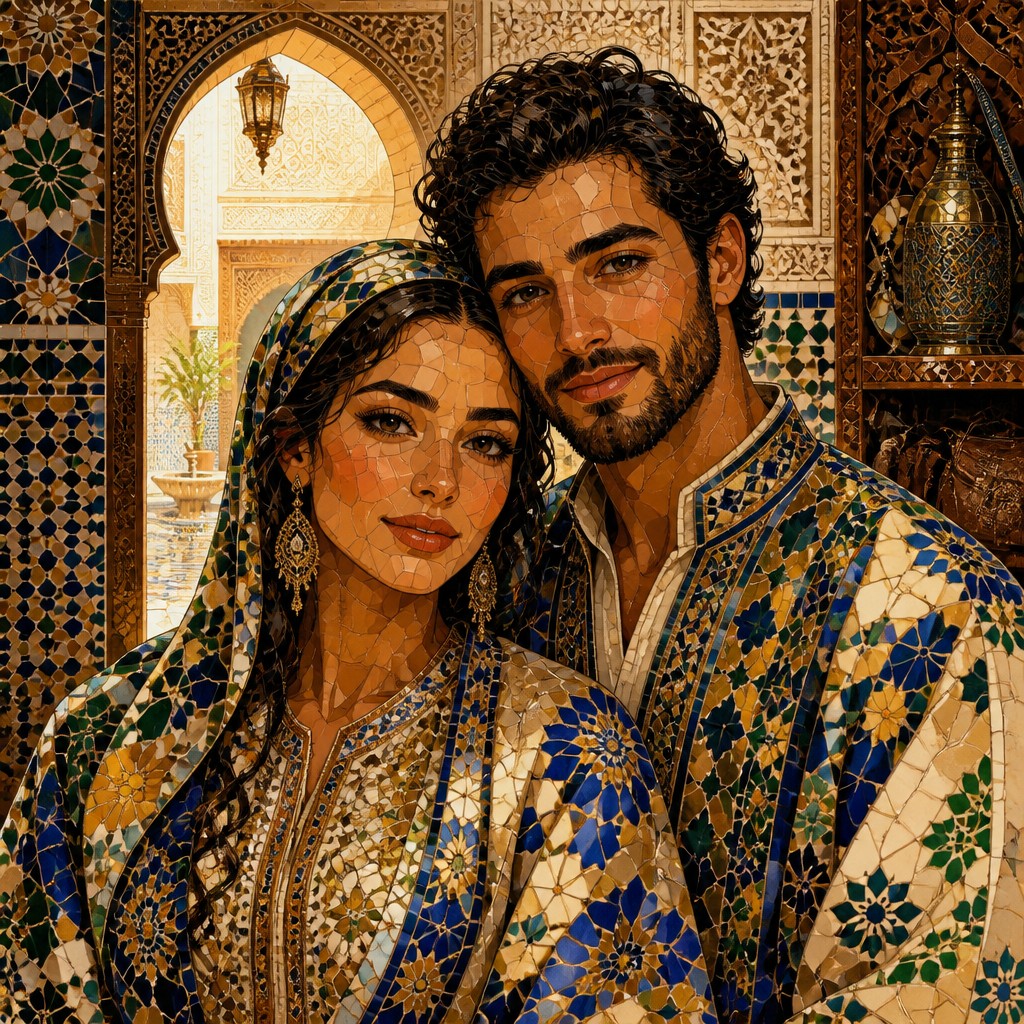
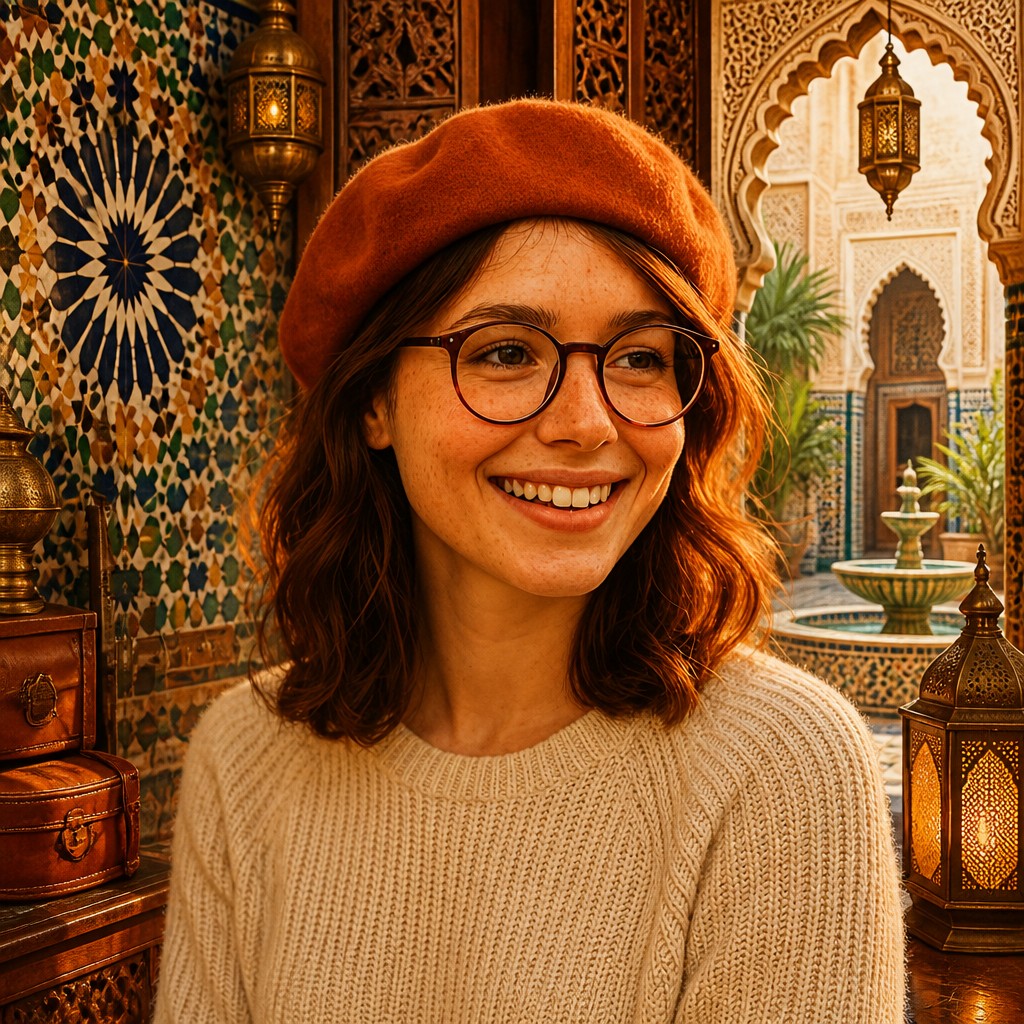
Try It On Your Photos
Upload any photo and convert it into Moroccan Art Style — drag the sliders to compare before and after.

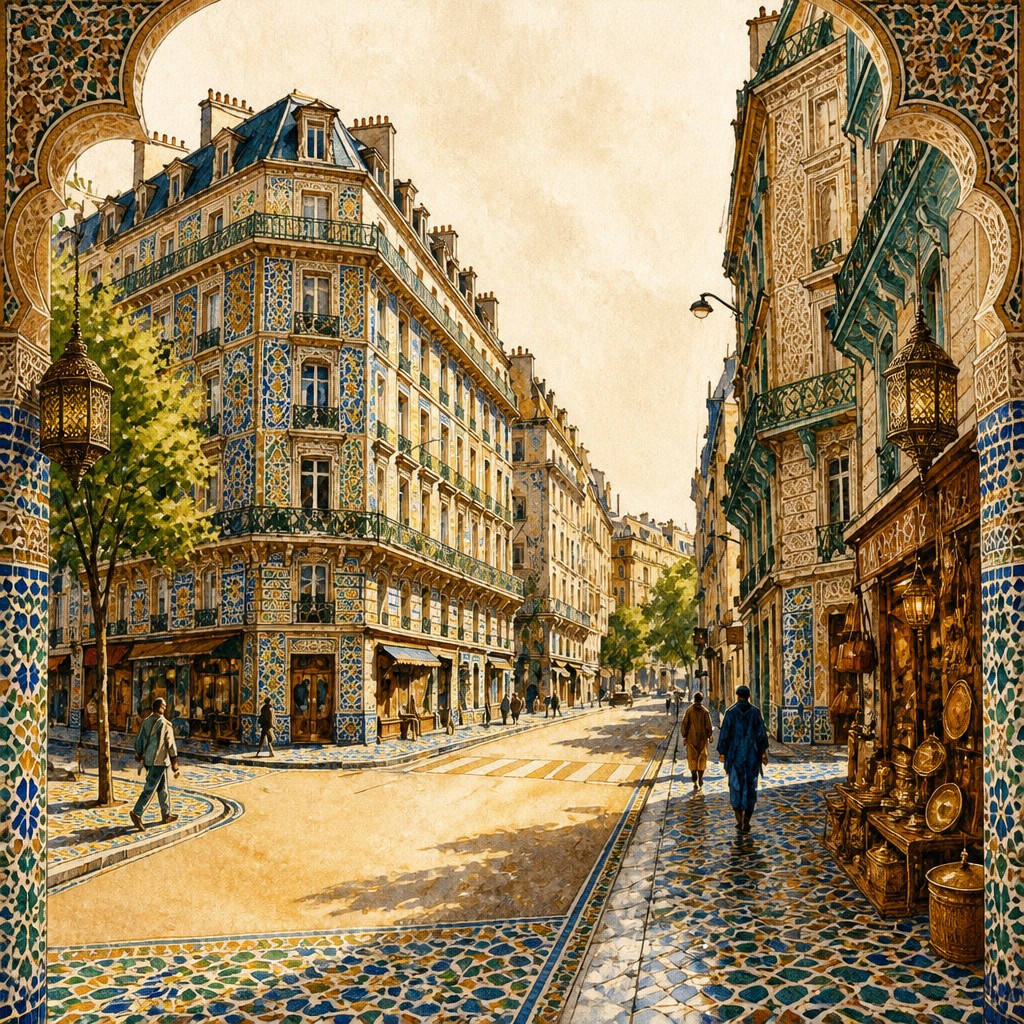

What Defines Moroccan Art Style
The signature details, up close
Zellige geometry
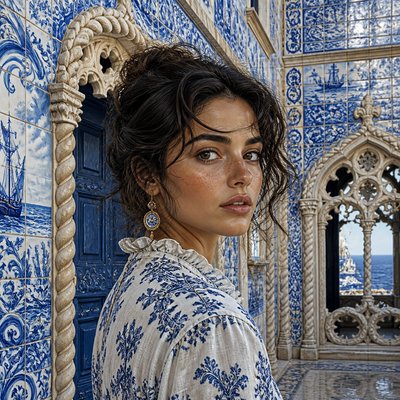
Small, hand-cut glazed tiles form interlocking stars, polygons, crosses, and lattice patterns. Cobalt, turquoise, emerald, white, and saffron tiles create intricate surfaces with slight variations that reveal their handmade character.
Carved cedar and stucco
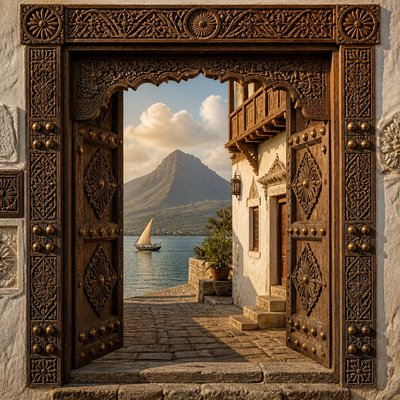
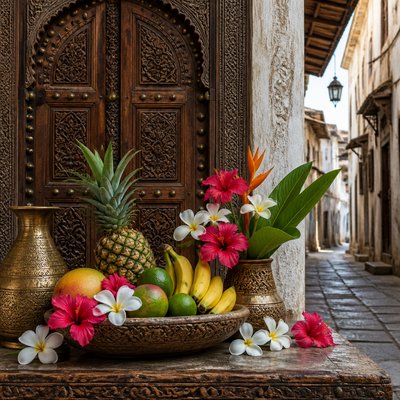
Cedar doors, screens, beams, and ceilings are often covered with geometric or vegetal carving. Sculpted plaster contributes a pale, matte counterpoint through arabesques, calligraphic bands, and finely perforated relief.
Arched architecture
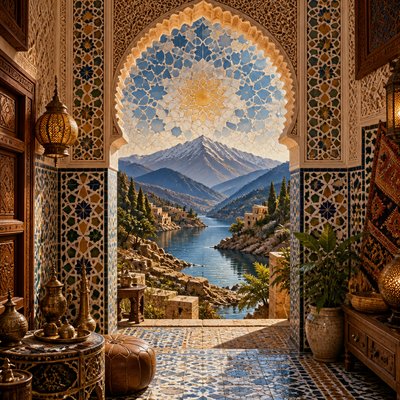
Keyhole, horseshoe, lobed, and pointed arches organize views and create layered transitions between rooms. Repeated arcades frame courtyards, fountains, gardens, and shafts of strong natural light.
Courtyard composition
Riad-inspired spaces center on an enclosed courtyard, often with tilework, planted greenery, water, and a controlled contrast between sun and shade. The resulting compositions feel intimate, symmetrical, and architecturally framed.
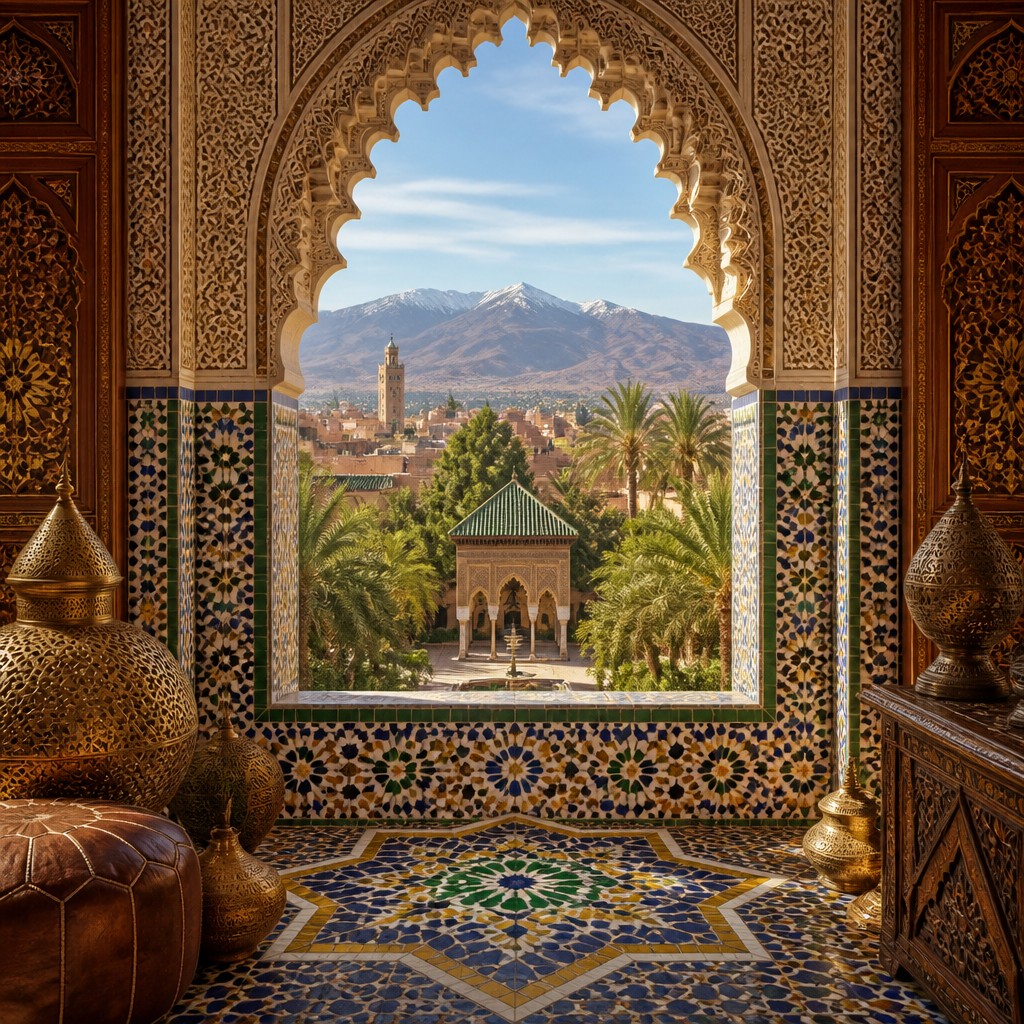
Warm material palette
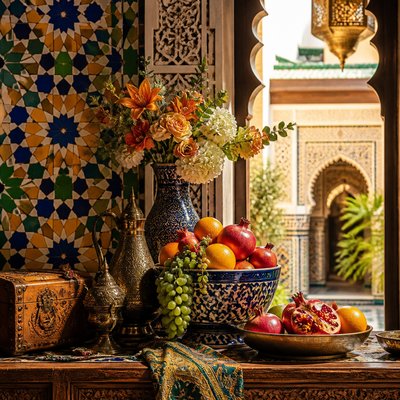
Leather, brass, terracotta, cedar, woven wool, and plaster introduce tactile warmth. Deep blue and green are frequently balanced with saffron, ochre, clay red, cream, and dark wood.
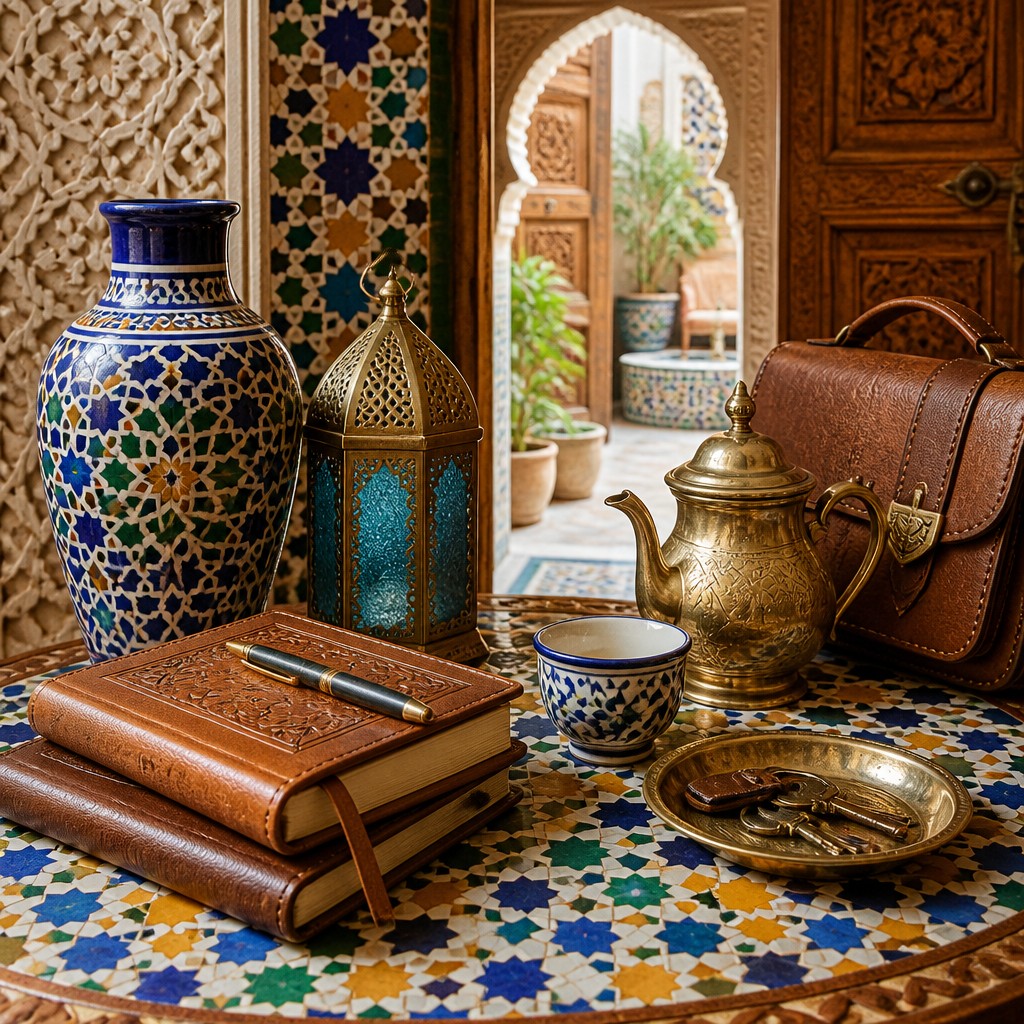
Rhythmic ornament
Decoration is distributed through repetition, symmetry, borders, and nested patterns rather than isolated focal details. Even richly embellished scenes retain a clear underlying grid or axis.
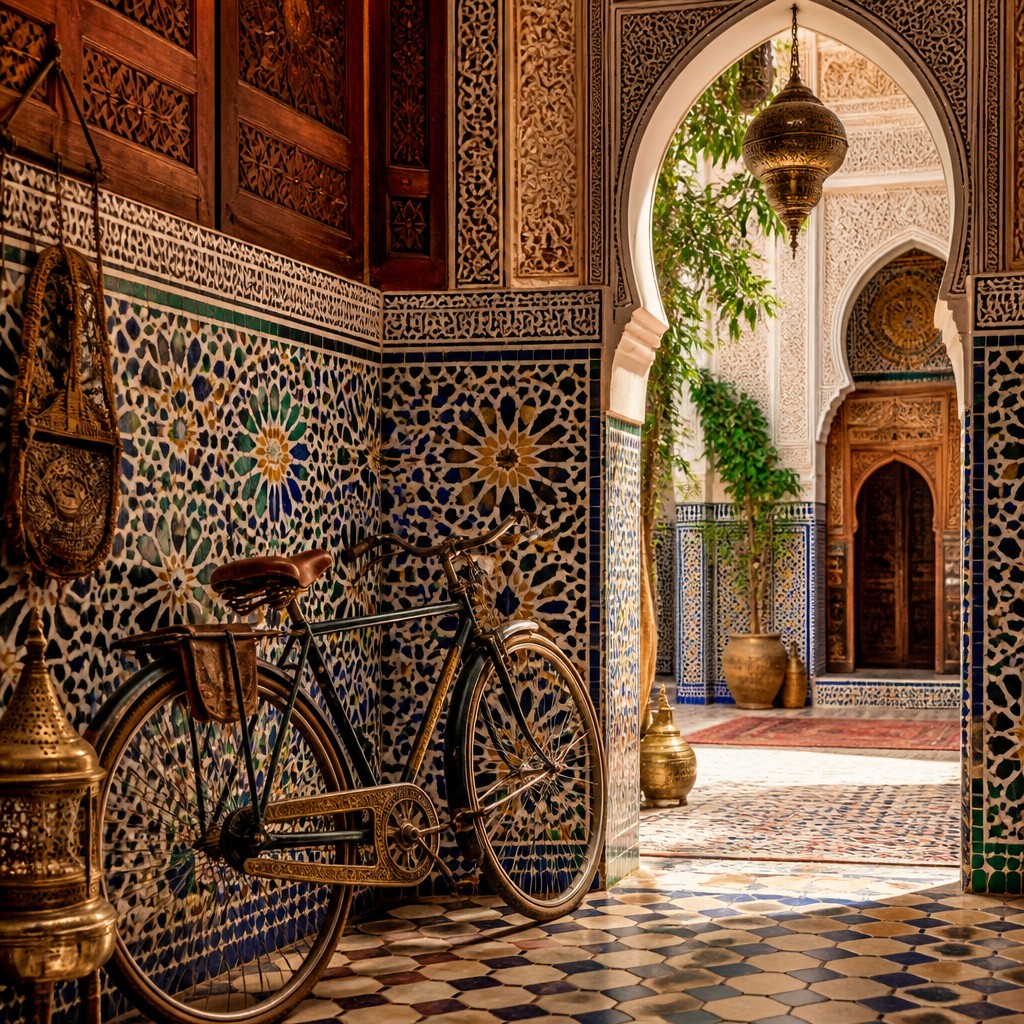
Filtered light and shadow
Sunlight passing through arches, mashrabiya-like screens, shutters, or arcades produces dramatic bands of illumination. Soft interior shadow helps emphasize glossy tile, polished brass, and carved surfaces.
Try It
Create Videos in Moroccan Art Style
Styles aren't just for stills — describe a scene or animate an image and get a short video rendered in Moroccan. Press play to see this pond come to life.
Make a VideoMoroccan Prompt Ideas
Start from an idea — each one opens the generator with the style ready to go. See all 40 Moroccan prompts →
How to Create Moroccan Art
Master the craft step by step — or skip straight to creating. Read the full guide →
- 1
Build a geometric foundation
Start with a clear grid based on stars, polygons, rosettes, or interlaced lines, then repeat it across floors, walls, borders, or textiles. Keep the underlying symmetry visible even when adding organic details.
- 2
Layer tactile materials
Combine glossy glazed tile with matte stucco, dark carved cedar, aged brass, woven fabric, and worn leather. In digital work, vary roughness, bump, edge wear, and reflectivity so the surfaces do not appear uniformly smooth.
- 3
Frame the scene architecturally
Use a keyhole or horseshoe arch, a colonnade, or a shaded doorway to establish depth. Place a courtyard, fountain, garden, or bright exterior beyond the frame to create the characteristic inside-to-outside transition.
- 4
Control the palette and light
Choose a restrained group of saturated jewel tones with warm neutrals rather than using every color equally. Specify late-afternoon sun, lantern glow, or filtered courtyard light to make the mosaic and carved relief legible.
- 5
Use prompt structure deliberately
For prompt-based creation, describe the subject first, then the architecture, materials, palette, geometry, lighting, and level of ornament. For example, combine a subject with zellige star mosaics, carved cedar, stucco arabesques, a keyhole arch, saffron and cobalt accents, and warm courtyard light.
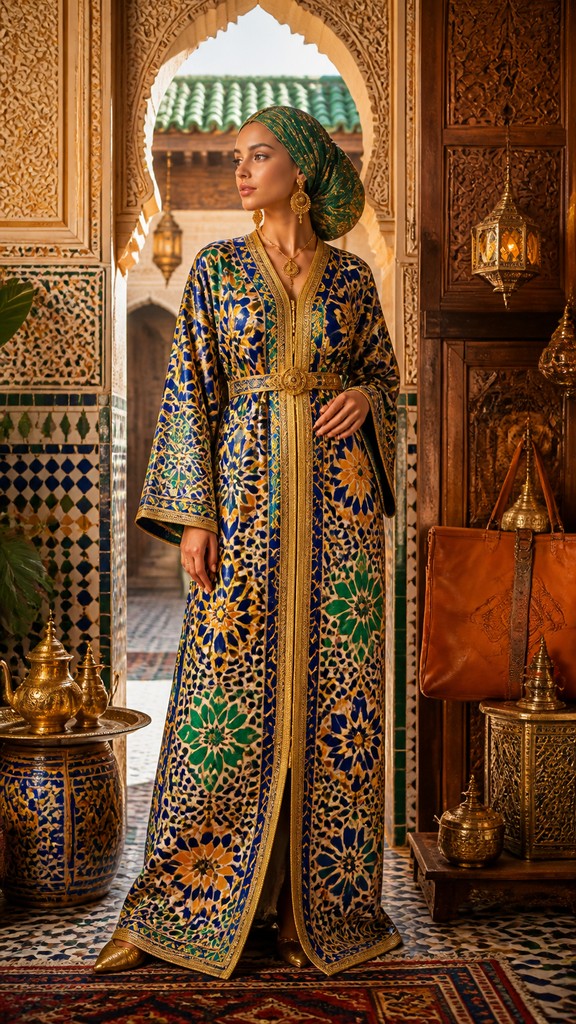
The Story
History & Origins of Moroccan
This style is best understood as a contemporary synthesis rather than a single historical movement. Its aesthetic lineage draws on the craft traditions of Morocco and the wider Maghreb, including zellige mosaic, carved cedar ceilings and doors, plaster carving, woven textiles, metalwork, and courtyard architecture. These practices developed through interactions among Amazigh, Arab, Andalusian, and broader Islamic artistic traditions over many centuries.
Geometric ornament and arabesque patterning became especially prominent in Moroccan religious, civic, and domestic architecture during medieval and early modern periods, while later restoration, tourism, interior design, and global decorative arts helped circulate the visual language internationally. Present-day versions may preserve traditional motifs or reinterpret them through simplified graphics, atmospheric photography, 3D environments, and digital image-making.
Influences: The style relates to Moroccan zellige and riad architecture, Maghrebi and Andalusian decorative traditions, Islamic geometric ornament, Amazigh textile pattern, North African metalwork, and Mediterranean courtyard design. It also overlaps with contemporary maximalist interiors, architectural visualization, ornamental illustration, and pattern-based graphic design. Unlike a single historical school, it is a flexible modern synthesis of regional craft languages and internationally circulated decorative imagery.

Frequently Asked Questions
What defines Moroccan art style?
It is defined by geometric zellige mosaics, carved cedar, sculpted stucco, arched openings, courtyard settings, and a warm palette of cobalt, emerald, saffron, terracotta, cream, and brown. Tactile materials and repeated ornament are as important as the subject itself.
Is Moroccan art style a historical art movement?
No. The label usually describes a contemporary aesthetic synthesis rather than one formal movement with a fixed period or manifesto. It draws from longstanding Moroccan and wider Maghrebi craft and architectural traditions.
How is it different from Moorish or general Islamic design?
Moroccan art style is more geographically specific, with particular emphasis on Moroccan zellige, riad courtyards, carved cedar, plaster carving, local color combinations, and souk materials. Moorish and Islamic design are broader categories that include many regions, periods, and visual practices.
How can I make an image in this style?
Begin with a clear subject and place it in an architectural setting with arches, a courtyard, or a tiled interior. Add specific materials, a limited jewel-toned palette, geometric borders, carved surfaces, and directional sunlight; for physical work, use stencil, tile, relief, collage, or painted pattern techniques.
Where is Moroccan art style commonly used?
It appears in interior design, hospitality spaces, architecture, textiles, ceramics, jewelry, packaging, editorial illustration, photography, and digital environments. Its strong patterns and recognizable materials also make it useful for decorative backgrounds and atmospheric scene design.
Can Moroccan art style be minimalist?
Yes, although its traditional references are often richly ornamental. A minimalist interpretation can retain one arch, a restrained tile pattern, natural plaster, and a small palette while reducing repeated decoration and visual density.
Create your first Moroccan artwork
Describe anything — or upload a photo — and see it in Moroccan Art Style in seconds.
Related Styles
Discover similar art styles