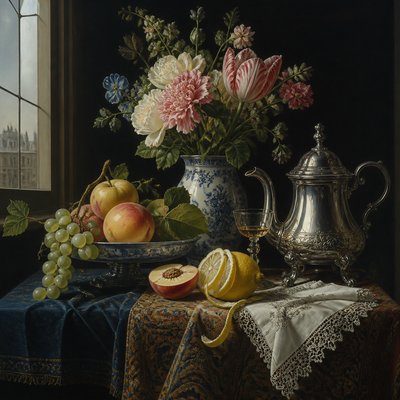
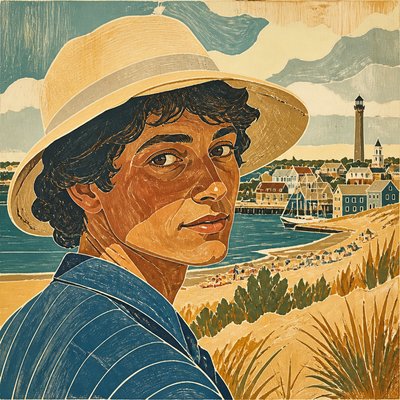
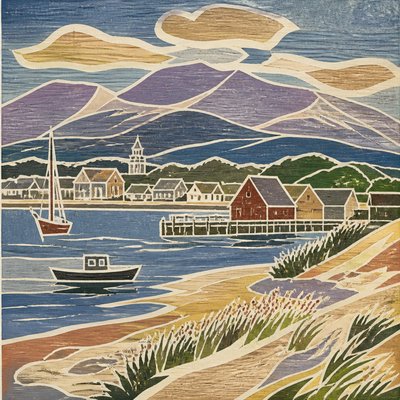
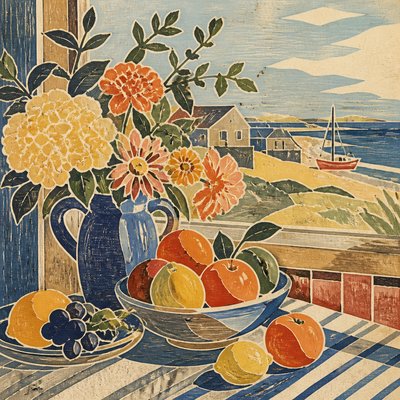
Ajanta Art Style
Explore Ajanta art: Buddhist cave murals in mineral pigments, flowing figures, ochre palettes, sculptural niches, and weathered rock-cut surfaces.
Instantly rendered in Ajanta — or transform a photo
Ajanta Gallery
Tap any artwork to explore it
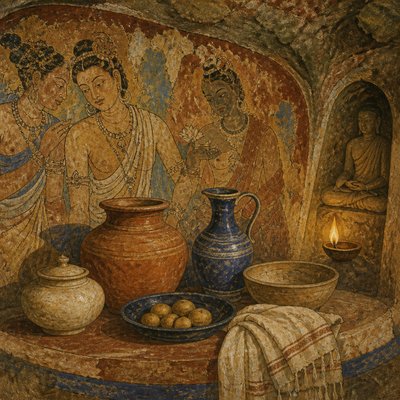
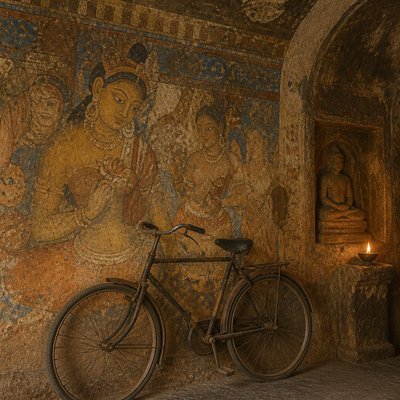
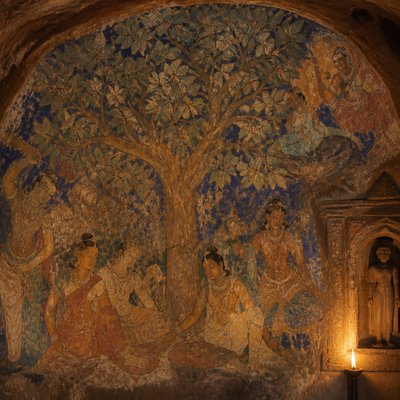
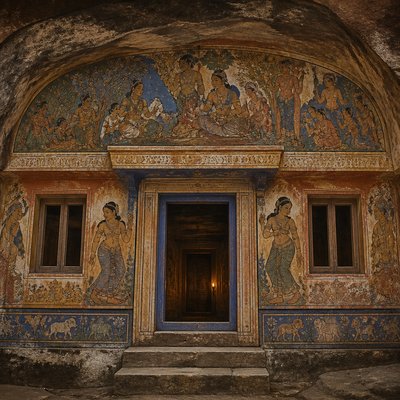
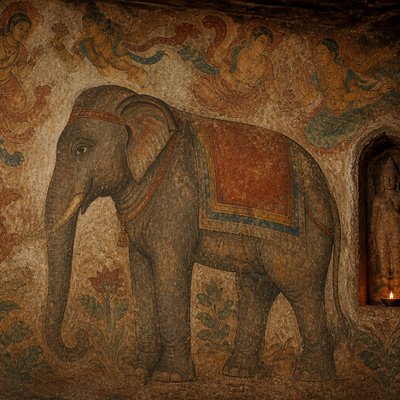
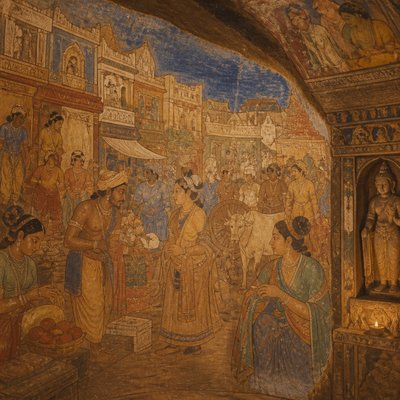
What is Ajanta Art Style?
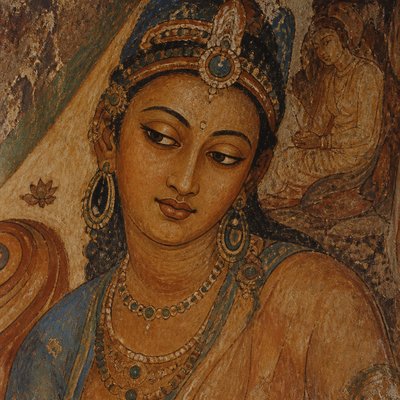
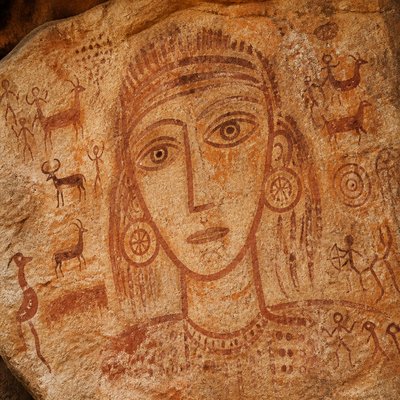
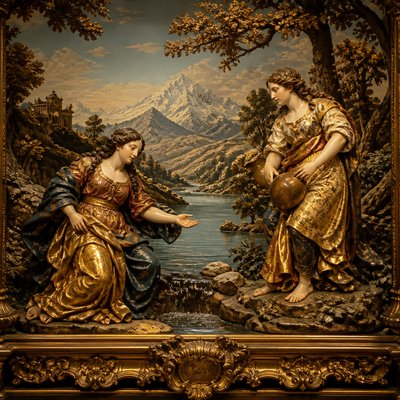
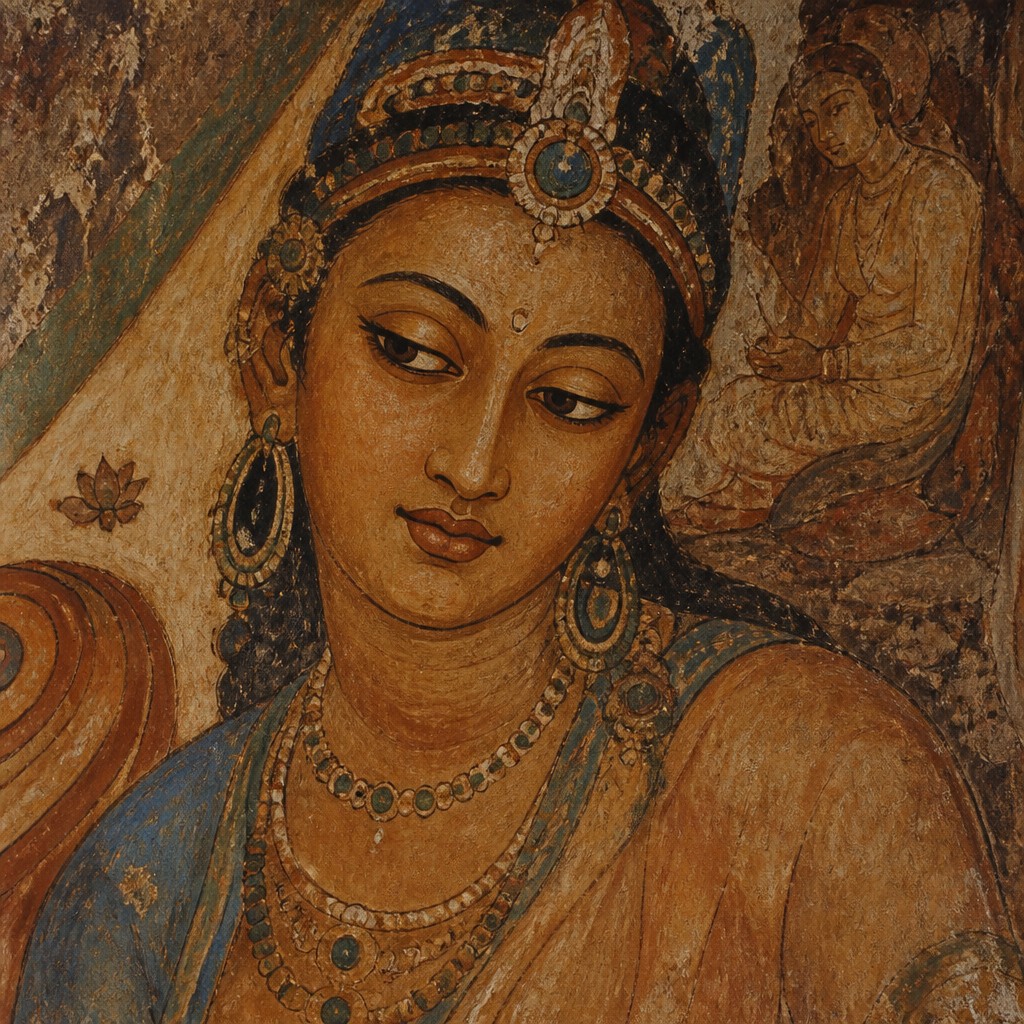
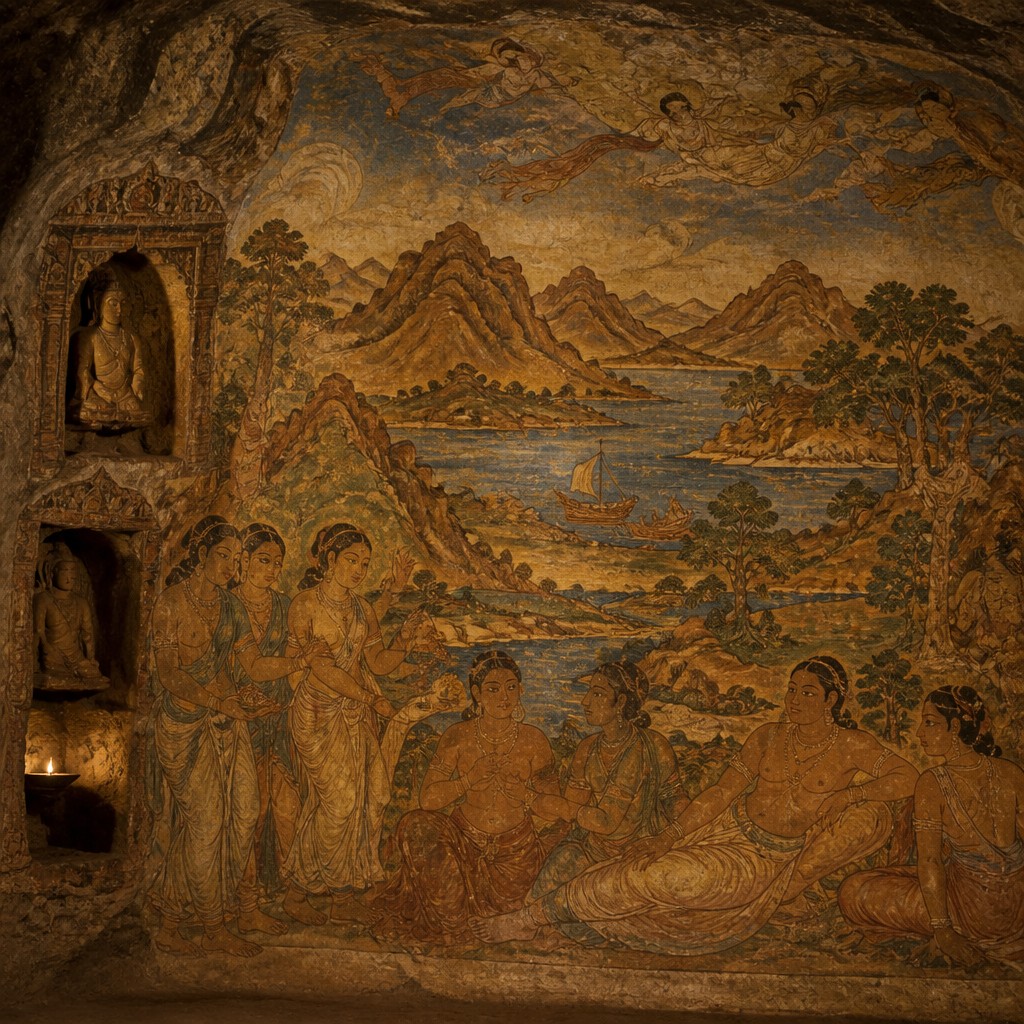
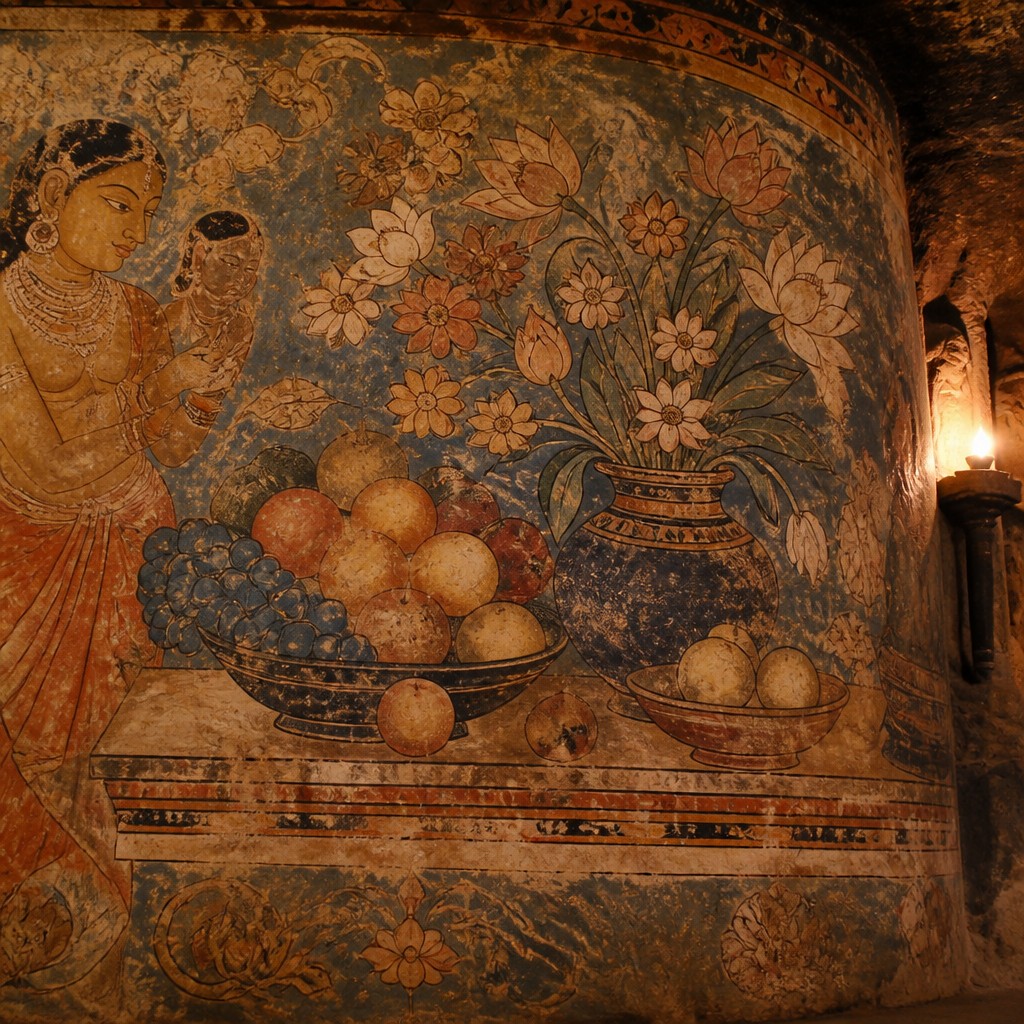
Ajanta art refers primarily to the Buddhist paintings and sculpture created in the rock-cut caves of Ajanta in Maharashtra, India. Its best-known visual expression is a mural tradition of elegantly modeled figures, rhythmic processions, expressive faces, elaborate textiles, and narrative scenes arranged across irregular cave walls. Earthy ochres, terracotta reds, mineral greens, carbon black, pale lime, and occasional deep blue create a palette that harmonizes with the surrounding stone.
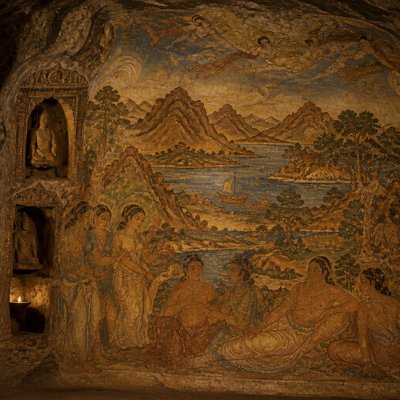
The style is recognized for its flowing contours and compositional movement. Figures overlap and turn through the picture field rather than occupying isolated frames, while delicate lines describe jewelry, drapery, hair, foliage, architecture, and gesture. Weathering, abrasion, uneven plaster, and the low illumination of cave interiors contribute to its characteristic softness, making the imagery appear integrated with the rock rather than placed on a pristine painted surface.
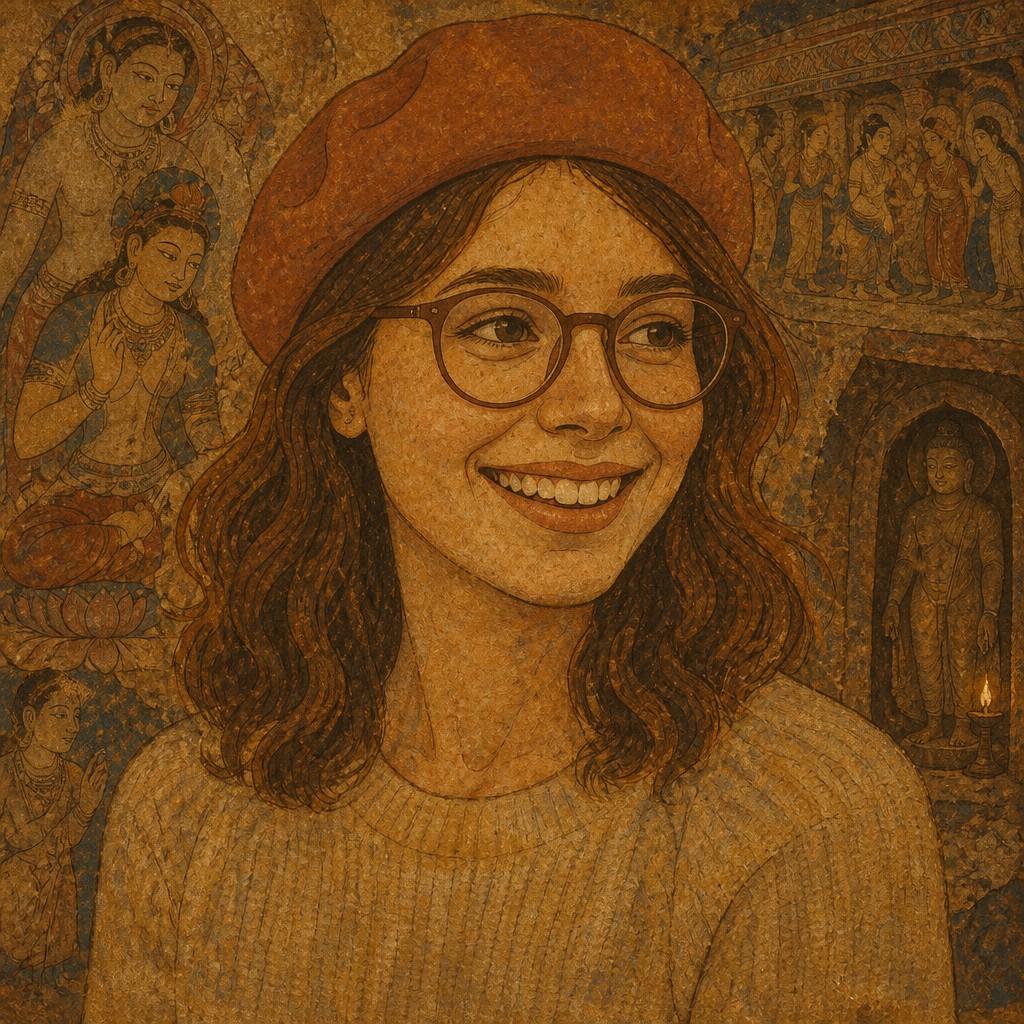
Try It On Your Photos
Upload any photo and convert it into Ajanta Art Style — drag the sliders to compare before and after.

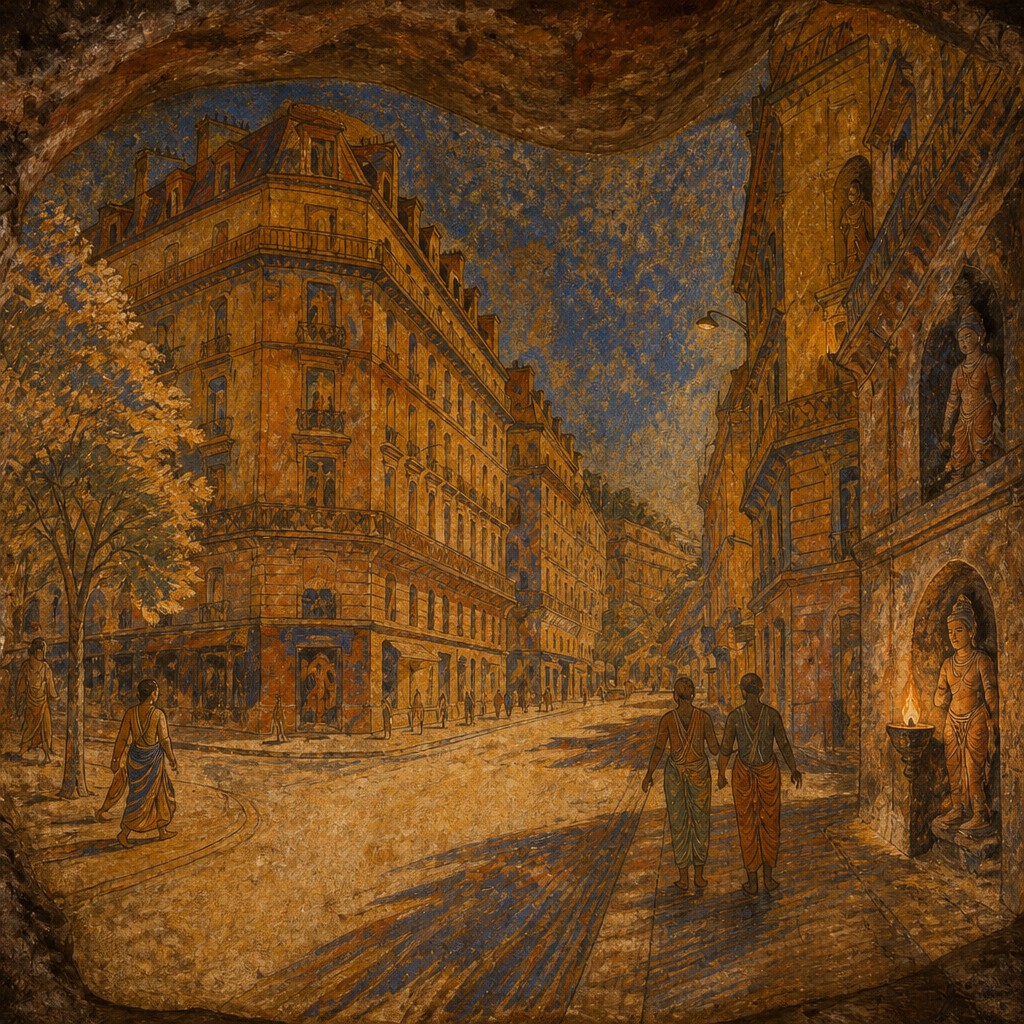

What Defines Ajanta Art Style
The signature details, up close
Mineral earth palette
Ochre yellow, red earth, terracotta, umber, mineral green, black, and pale plaster tones establish a warm, natural range. Deep blue accents may be used sparingly to suggest lapis or other mineral color.
Flowing contour lines
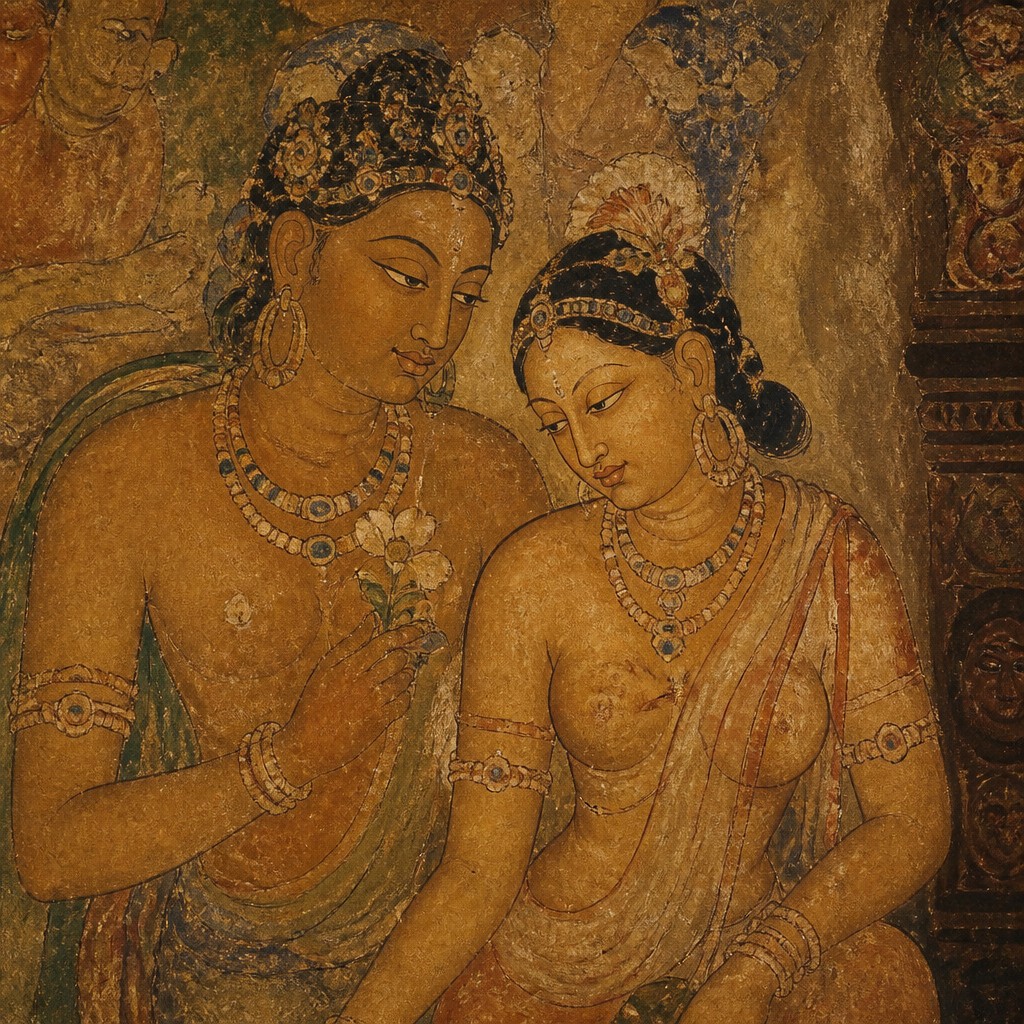
Figures and ornaments are defined by graceful, continuous outlines rather than hard geometric edges. Line carries anatomy, gesture, expression, and the movement of drapery.
Narrative figure groups
Scenes unfold through overlapping bodies, attendants, animals, architectural details, and symbolic objects. Spatial depth is often conveyed by scale, position, gesture, and tonal modeling rather than strict linear perspective.
Expressive faces and gestures
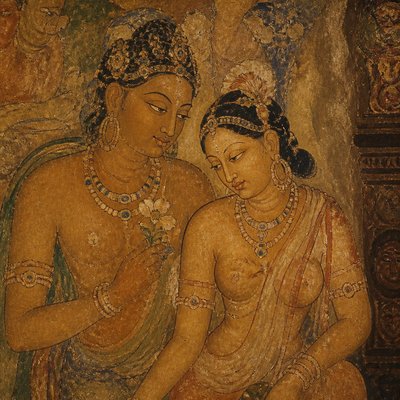
Large, carefully shaped eyes, arched brows, inclined heads, and poised hands communicate attention, compassion, devotion, or social interaction. Subtle changes in contour and shading give the faces considerable presence.
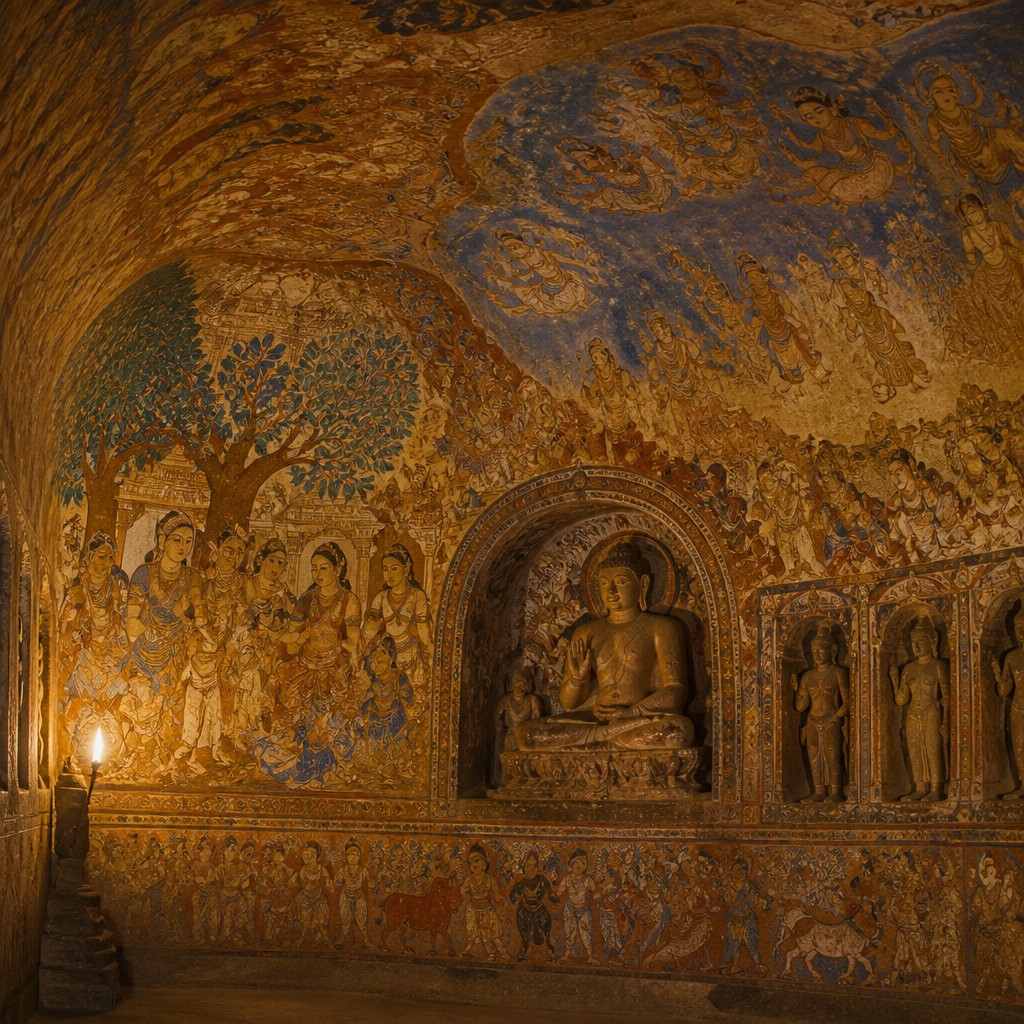
Textile and ornament detail
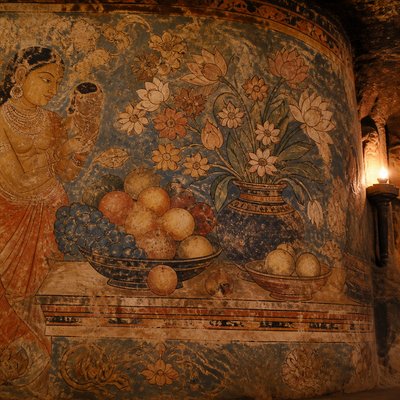
Fine lines describe translucent garments, patterned fabrics, necklaces, crowns, headdresses, and floral motifs. Decorative detail enriches the surface without fully suppressing the underlying wall.
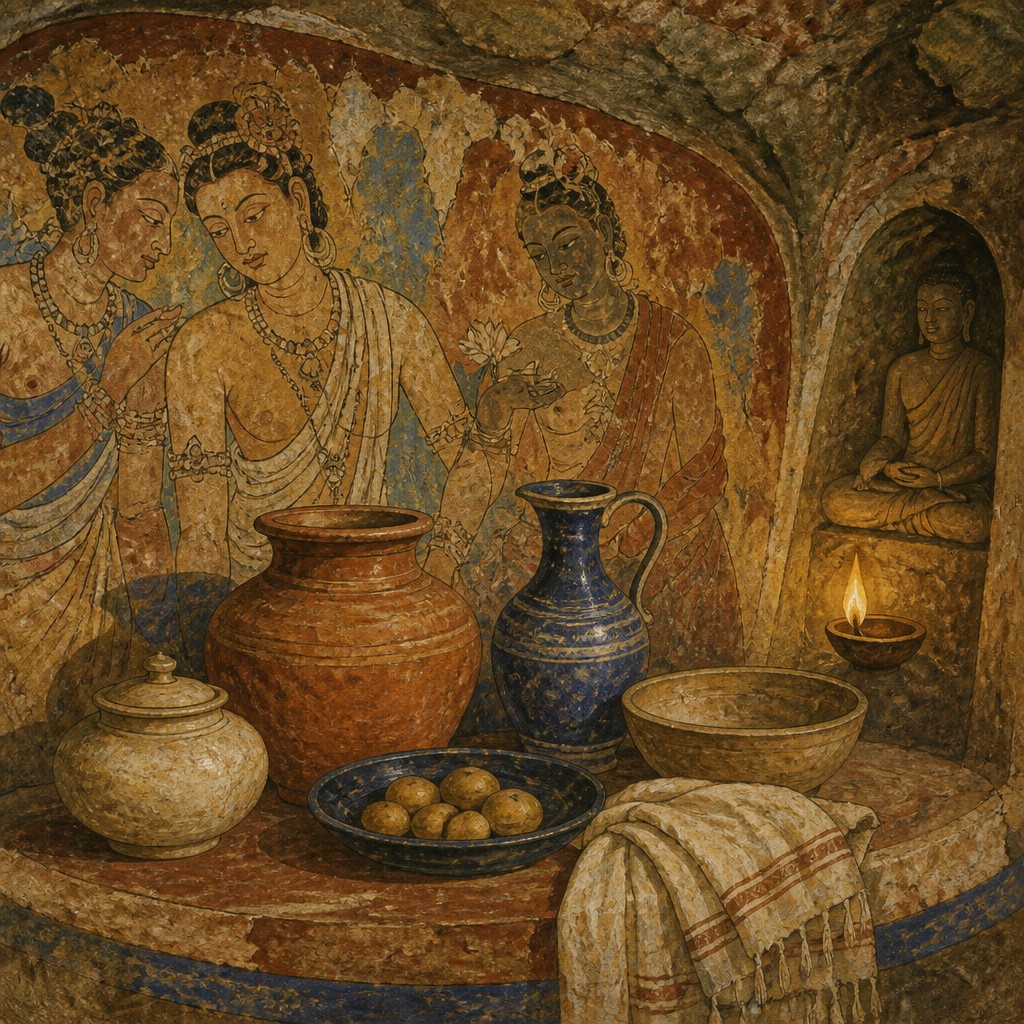
Rock-integrated surfaces
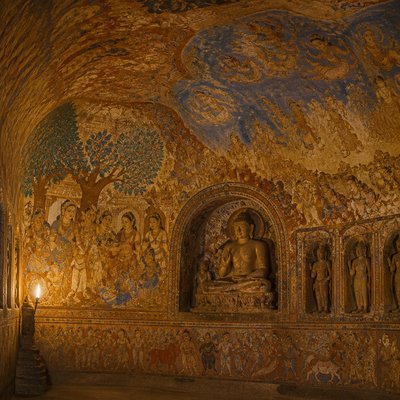
The imagery appears adapted to curved, uneven cave walls, columns, recesses, and sculptural niches. Cracks, faded pigment, plaster loss, soot, and softened edges can be part of the visual character.
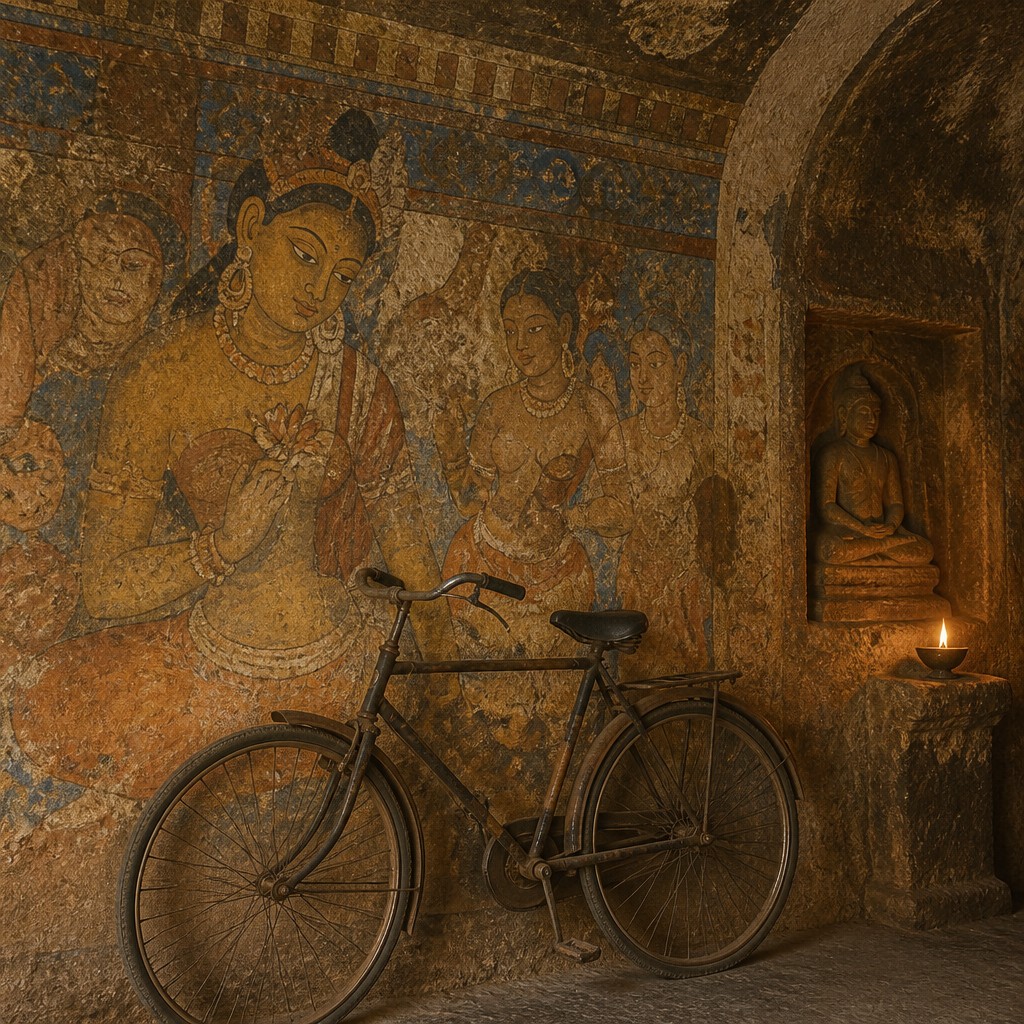
Tempera-like modeling
Layered mineral color builds rounded cheeks, limbs, and torsos through restrained tonal transitions. The result is more matte and earthen than glossy, with pigment visibly subordinate to the stone environment.
Ajanta Prompt Ideas
Start from an idea — each one opens the generator with the style ready to go. See all 40 Ajanta prompts →
How to Create Ajanta Art
Master the craft step by step — or skip straight to creating. Read the full guide →
- 1
Prepare an earthen ground
For traditional work, begin with a warm plaster-like ground in cream, muted ochre, or clay red, then sketch the main figures and directional flow before adding detail. In digital work, use a subtly mottled wall texture rather than a clean canvas.
- 2
Build figures through contour and tone
Use a confident dark-red, brown, or charcoal line for silhouettes, then model faces and limbs with a small range of matte mineral tones. Keep shadows soft and avoid polished gradients or photographic highlights.
- 3
Organize a continuous narrative
Arrange groups along the curvature of the surface, varying scale and overlap to create depth. Repeat gestures, foliage, textiles, and architectural motifs so the composition feels connected rather than divided into modern panels.
- 4
Add age without destroying clarity
Introduce restrained fading, plaster variation, hairline cracks, pigment abrasion, and soot-darkened recesses after the main painting is complete. Weathering should support the sense of an ancient cave surface while leaving faces and gestures legible.
- 5
Write precise generation prompts
Describe the subject, Buddhist narrative atmosphere, mineral palette, curved rock wall, flowing contour drawing, matte plaster, and controlled weathering. For photo transformation, preserve the subject's pose but simplify modern details into drapery, ornament, and hand-painted cave-mural forms.
The Story
History & Origins of Ajanta
The Ajanta caves were developed as a Buddhist monastic complex in phases from approximately the 2nd century BCE through the 5th and 6th centuries CE. Early excavations belong broadly to the Satavahana period, while a major later expansion and decoration took place under Vakataka patronage. The site includes prayer halls, monastic residences, shrines, columns, sculptural reliefs, and extensive painted surfaces cut into a horseshoe-shaped ravine.
Ajanta murals were made over prepared rock surfaces using layers of plaster and mineral pigments, generally in a tempera-like technique rather than true wet fresco. Their subjects include episodes from the Buddha's previous lives, Buddhist devotional imagery, courtly life, animals, vegetation, architecture, and ornamental patterns. Later conservation and exposure to moisture, soot, abrasion, and changing cave conditions have left the surviving paintings fragmented and subdued, but their line, modeling, and narrative organization remain highly influential.
Influences: Ajanta art is closely related to the broader Buddhist mural traditions of South Asia, including narrative painting associated with monastic caves and devotional imagery. It also connects with Indian traditions of temple ornament, manuscript illustration, courtly textile design, yaksha and yakshi sculpture, and classical approaches to gesture and idealized anatomy. Later South Asian mural and miniature traditions inherited aspects of its expressive line, decorative richness, and storytelling, while modern interpretations often combine these features with archaeological surface weathering and cave-like lighting.
Frequently Asked Questions
What defines the Ajanta art style?
It is defined by Buddhist narrative imagery, graceful contour drawing, expressive faces and gestures, richly patterned textiles, and a mineral earth palette. The paintings are closely integrated with rock-cut architecture and often appear softened by age, plaster irregularity, and low cave light.
When and where was Ajanta art created?
The original works were created in the Ajanta cave complex in Maharashtra, India. Construction and decoration took place in several phases from about the 2nd century BCE through the 5th and 6th centuries CE.
Are the Ajanta murals true frescoes?
They are commonly called frescoes, but many were painted over prepared plaster after it had dried, making the technique closer to tempera or dry fresco than true wet fresco. Mineral pigments were applied in layers over a carefully prepared wall surface.
How is Ajanta art different from Indian miniature painting?
Ajanta murals were created on large, irregular cave surfaces and use broad narrative compositions with life-size or near-life-size figures. Indian miniature painting generally uses portable, bounded pages with finer scale, more controlled framing, and different regional conventions developed much later.
What colors are associated with Ajanta art?
Common colors include red and yellow ochres, terracotta, brown, black, pale plaster, and mineral green, with blue used selectively where available. The overall effect is muted, matte, and earthen rather than intensely saturated or glossy.
How can I make an image look authentically Ajanta-inspired?
Emphasize flowing line, overlapping figures, Indian Buddhist narrative subjects, mineral pigments, plaster texture, and architecture adapted to a curved cave wall. Avoid crisp digital outlines, photorealistic lighting, modern perspective, and excessive artificial distressing that obscures the composition.
Create your first Ajanta artwork
Describe anything — or upload a photo — and see it in Ajanta Art Style in seconds.
Related Styles
Discover similar art styles