Algerian Art Style
Explore Algerian art style: Tassili rock-art ochres, Saharan light, Kabyle silver, geometric pottery, and weathered Roman architecture.
Instantly rendered in Algerian — or transform a photo
Algerian Gallery
Tap any artwork to explore it
What is Algerian Art Style?
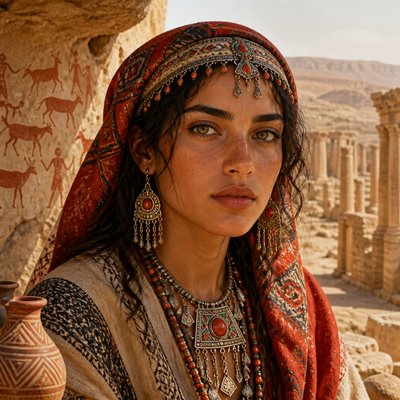
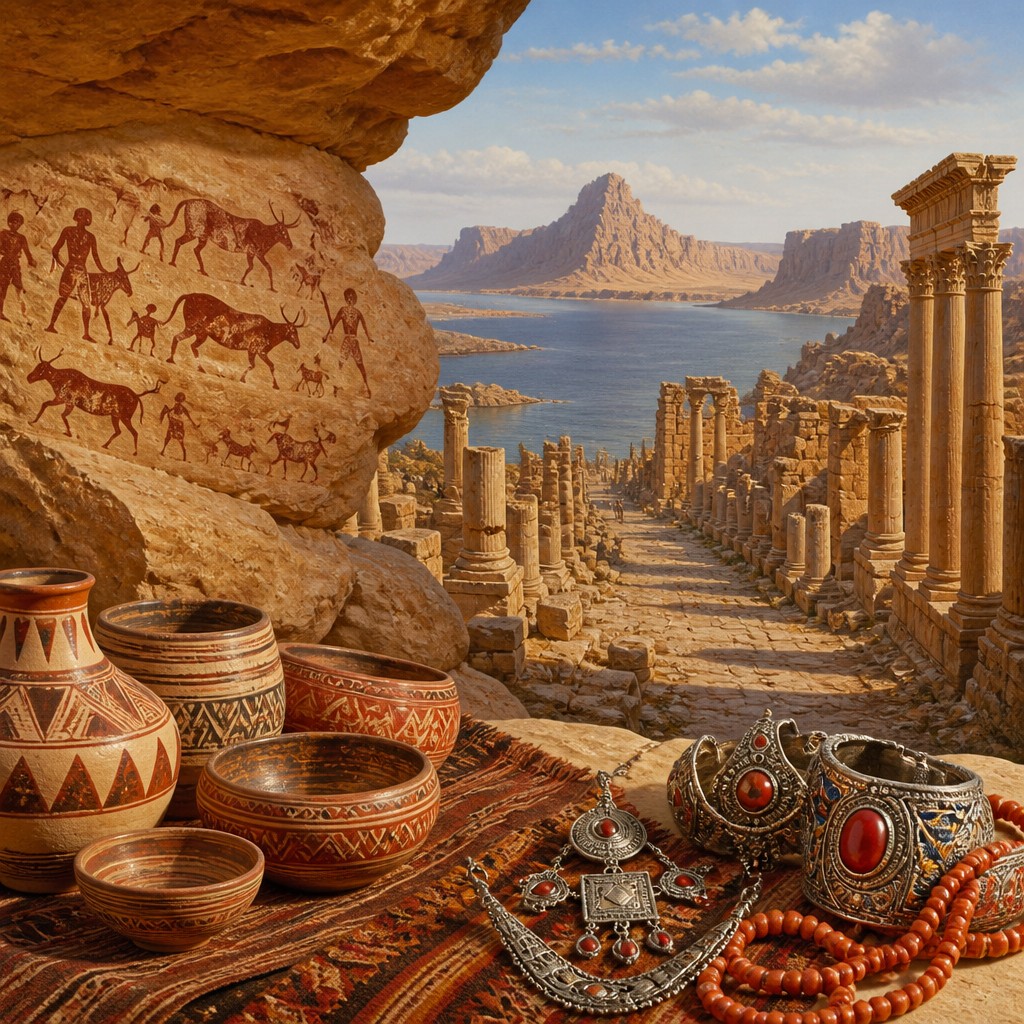
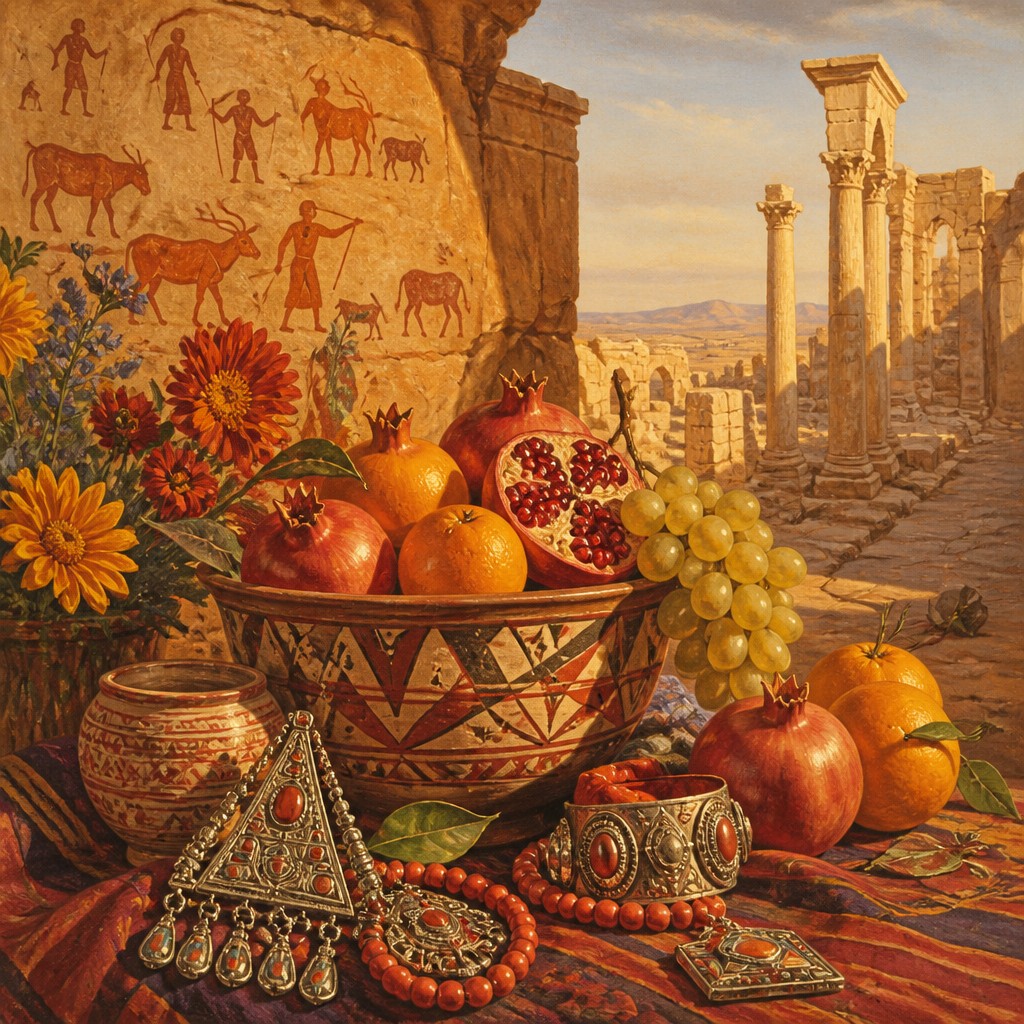
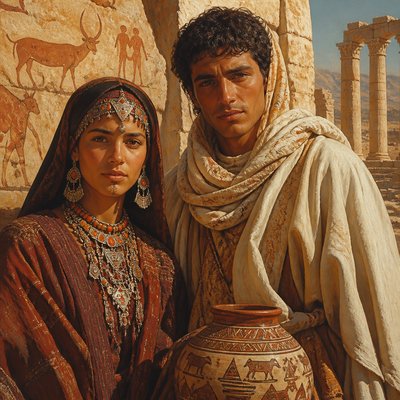
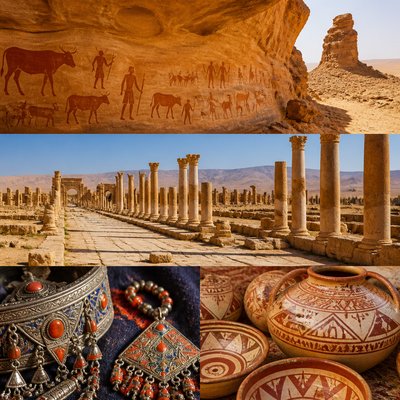
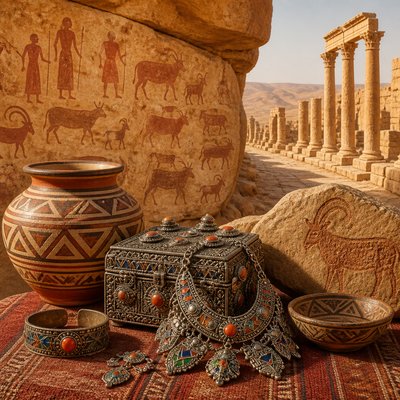
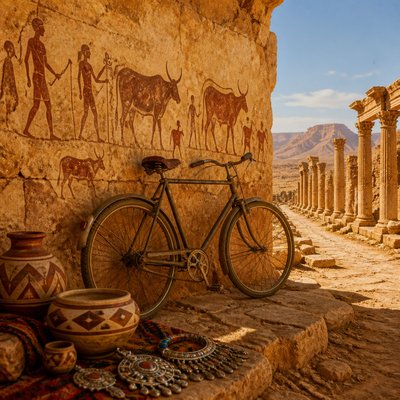
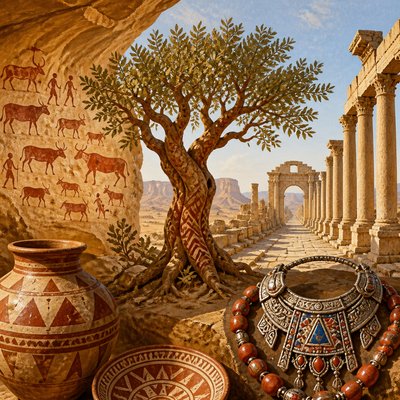
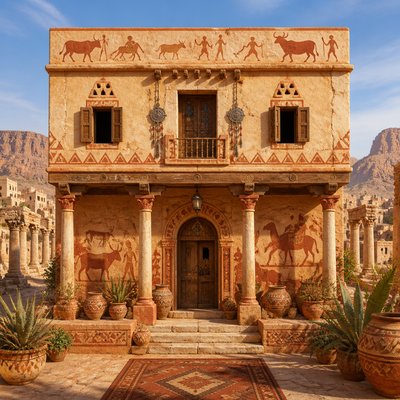
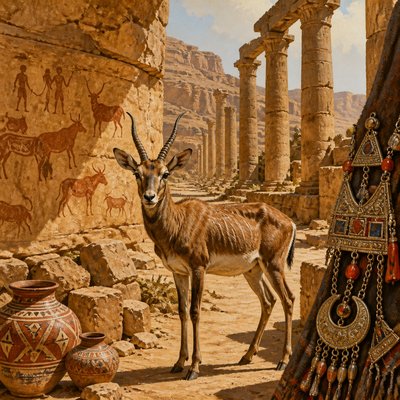
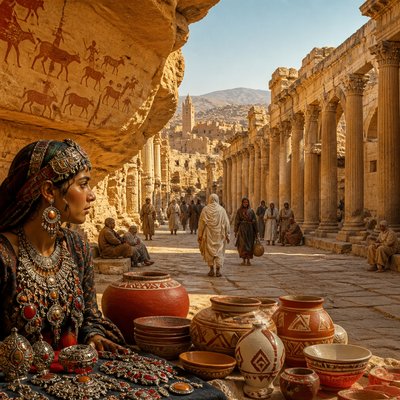
Algerian art style is a contemporary, cross-cultural visual vocabulary rather than a single historically codified movement. It brings together the ochre figures and animals of prehistoric Tassili rock art, the geometric ornament of Kabyle craft traditions, the earthy surfaces of North African pottery, and the monumental remains of Algeria's Roman and Saharan landscapes.
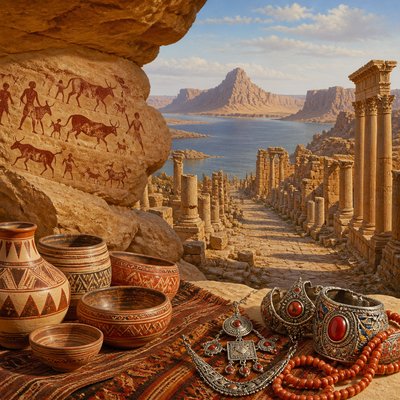
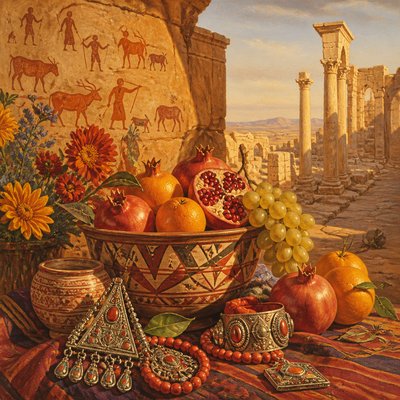
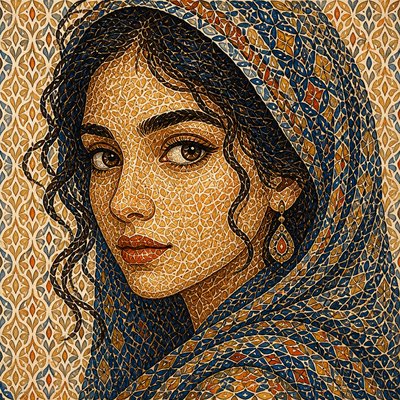
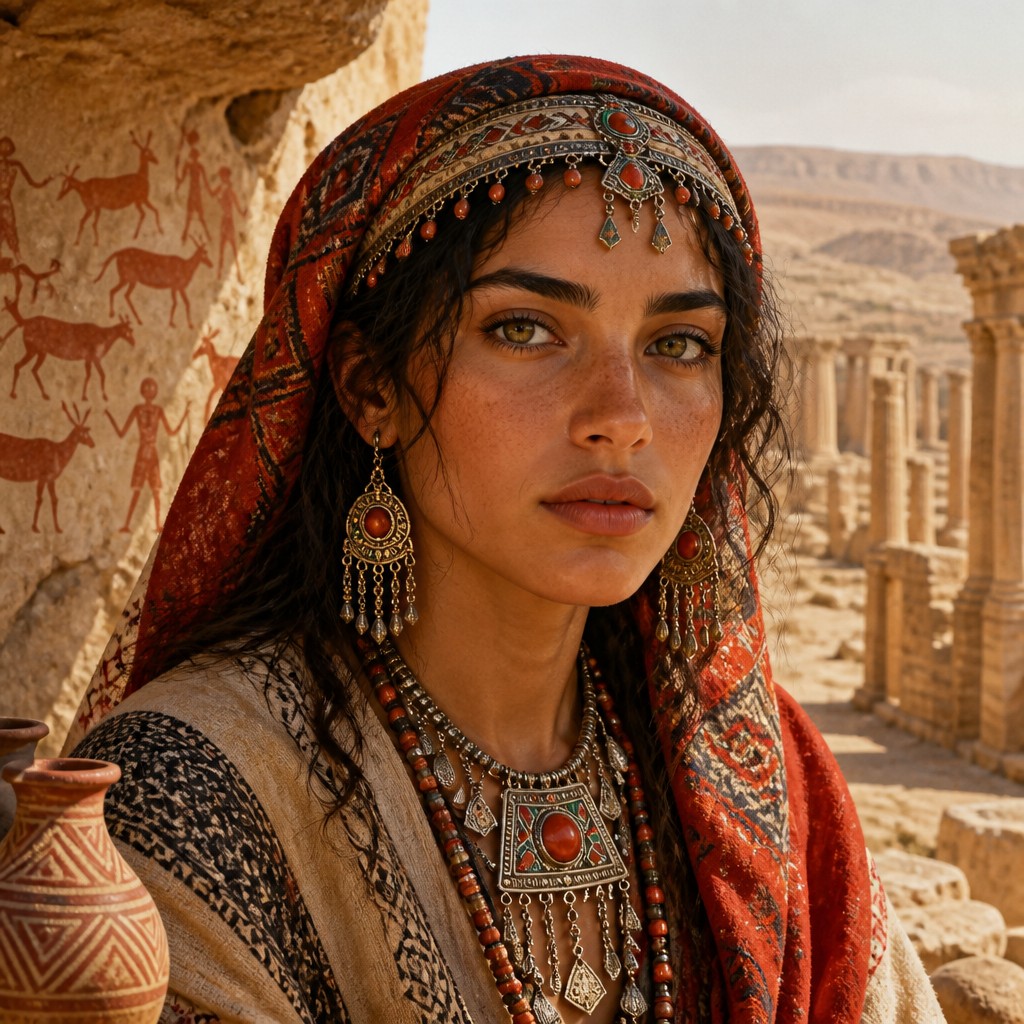
Its identity depends on material-looking surfaces, restrained desert colors, strong silhouettes, and ornament used as structure rather than decoration alone. Rust red, sandstone, cream, charcoal, silver, coral, and enamel blue evoke sunlit rock shelters, mineral pigments, metalwork, and fired clay. The resulting imagery can feel archaeological and tactile while remaining suitable for contemporary illustration, design, photography, and digital composition.
Try It On Your Photos
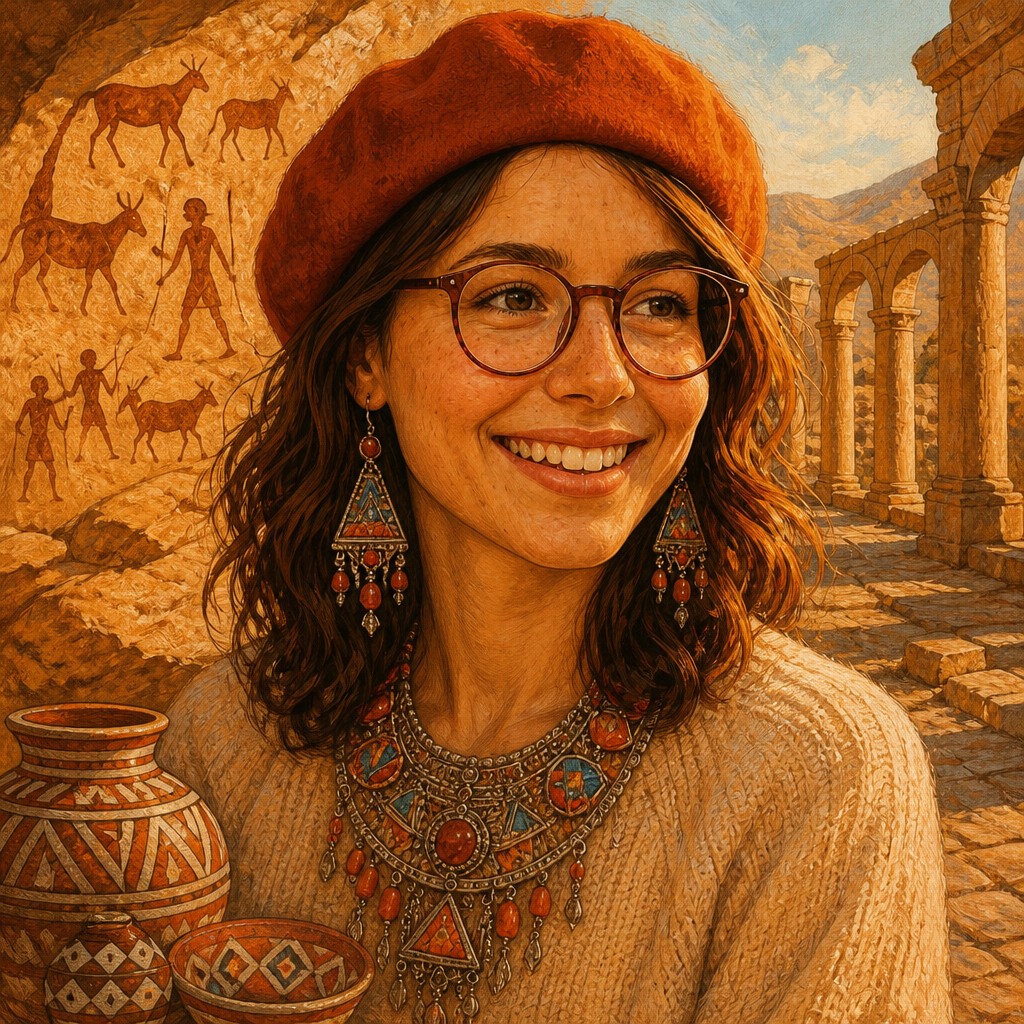
Upload any photo and convert it into Algerian Art Style — drag the sliders to compare before and after.

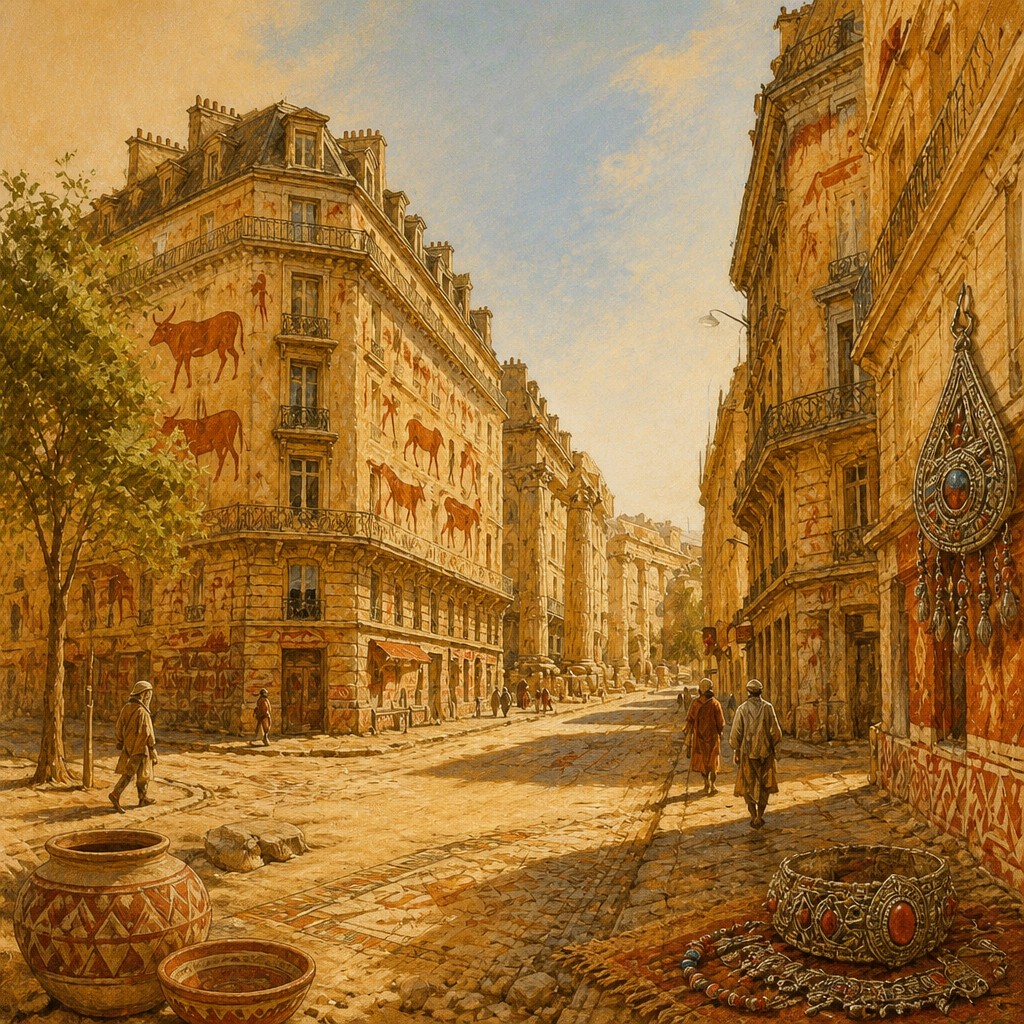

What Defines Algerian Art Style
The signature details, up close
Tassili ochre imagery
Flat or lightly modeled figures, herders, wildlife, and ritual scenes recall prehistoric paintings on sandstone shelters. Mineral ochre, iron red, umber, charcoal, and muted cream create an aged, absorbent surface.
Desert materiality
Sandstone grain, wind erosion, dust, fissures, and sun-bleached expanses give compositions a dry tactile quality. Broad areas of warm light often contrast with sharply defined silhouettes.
Kabyle geometric ornament
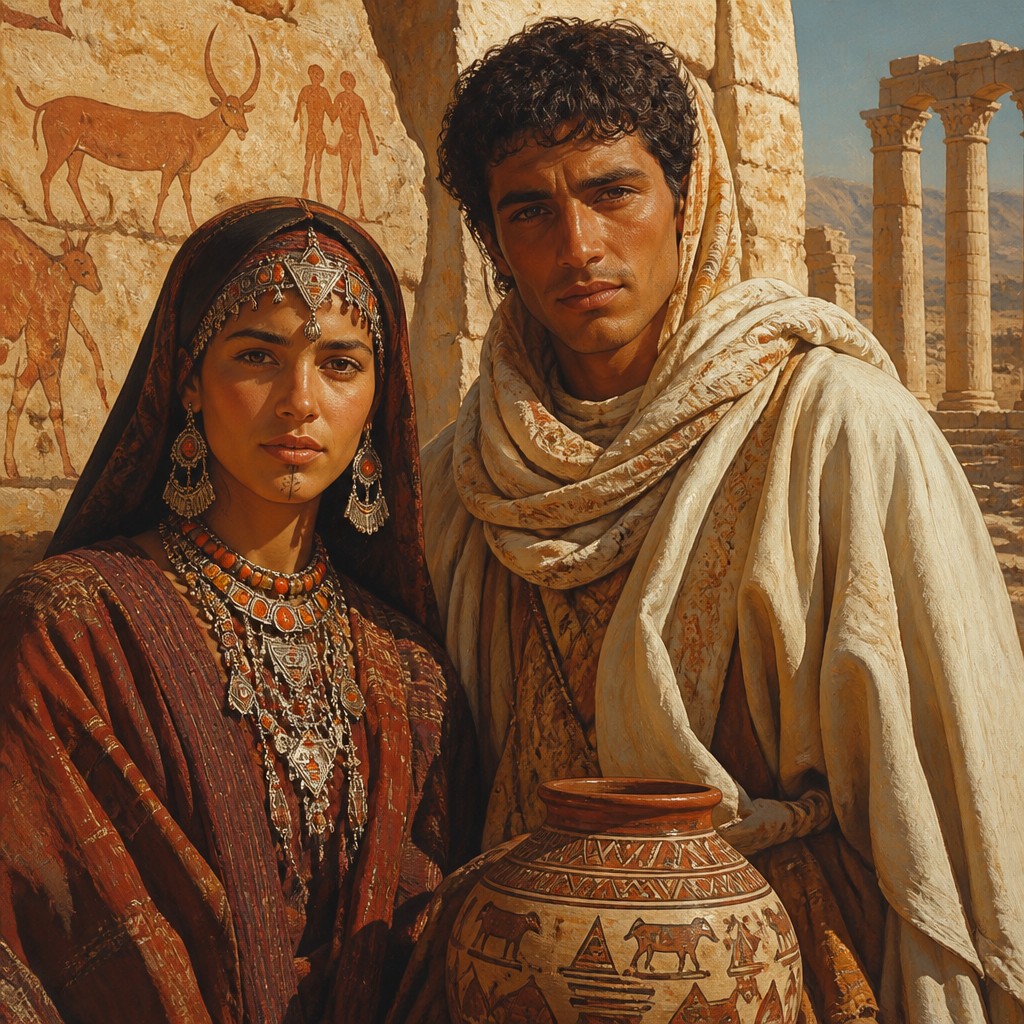
Triangles, diamonds, chevrons, crosses, and repeated bands suggest the visual language of Kabyle jewelry and textiles. Ornament is typically arranged rhythmically around borders, bodies, vessels, or architectural details.
Silver, coral, and enamel accents
Bright silver surfaces can punctuate an otherwise earthen palette, with small coral-red and enamel-blue details providing concentrated color. These accents work best as inlays, pendants, clasps, or patterned highlights.
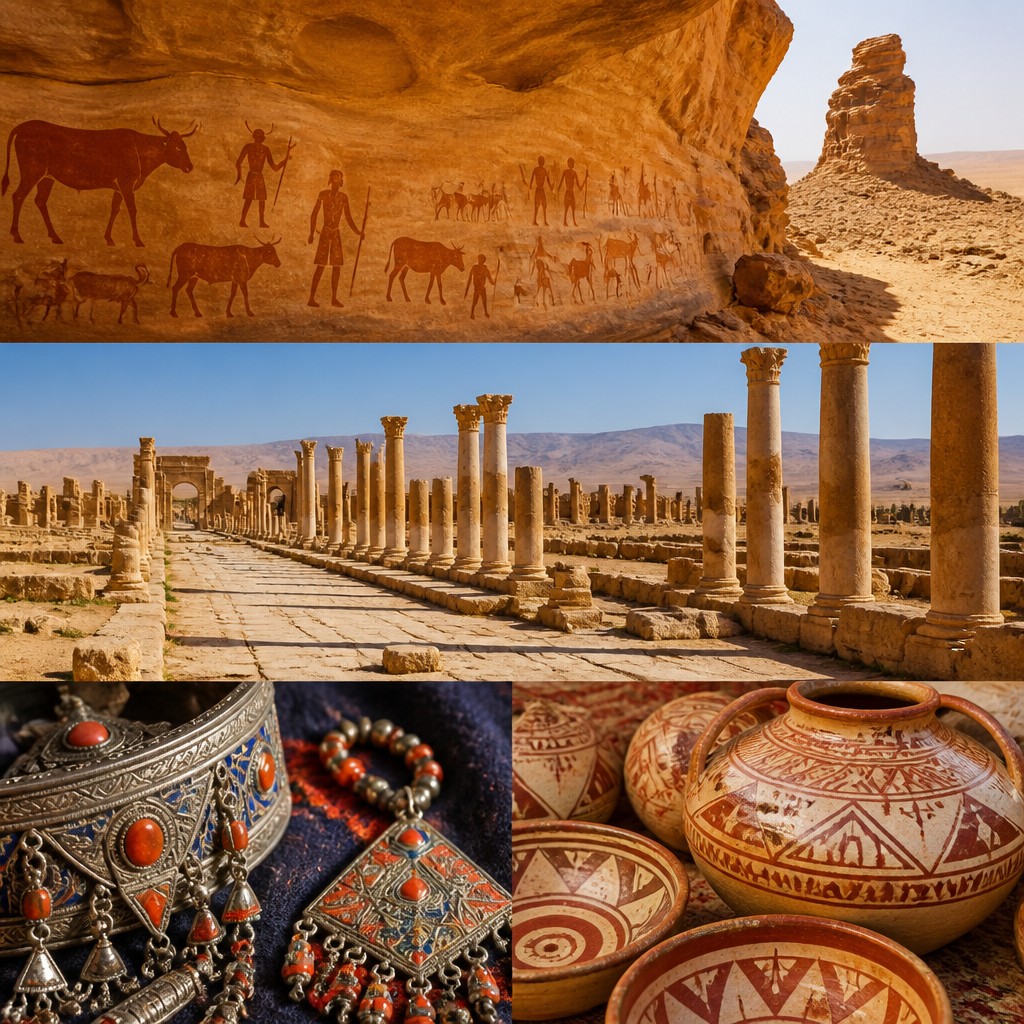
Handmade pottery
Rust-and-cream vessels use irregular symmetry, visible firing variation, and painted geometric marks. Coarse clay, matte glaze, and slight asymmetry help avoid a polished industrial appearance.
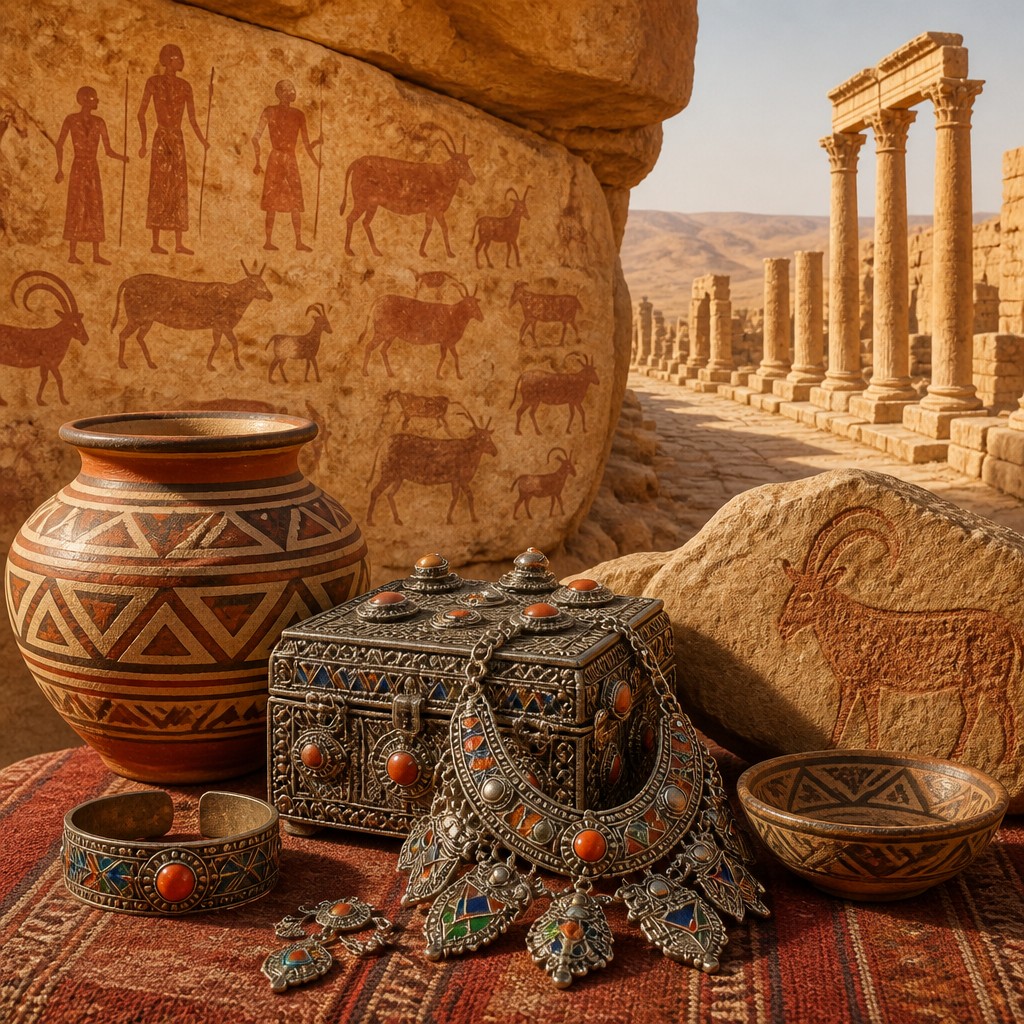
Archaeological architecture
Colonnades, arches, broken capitals, and paved streets evoke Algeria's Roman ruins without requiring a literal reconstruction. Weathering, partial collapse, and drifting sand integrate architecture with the landscape.
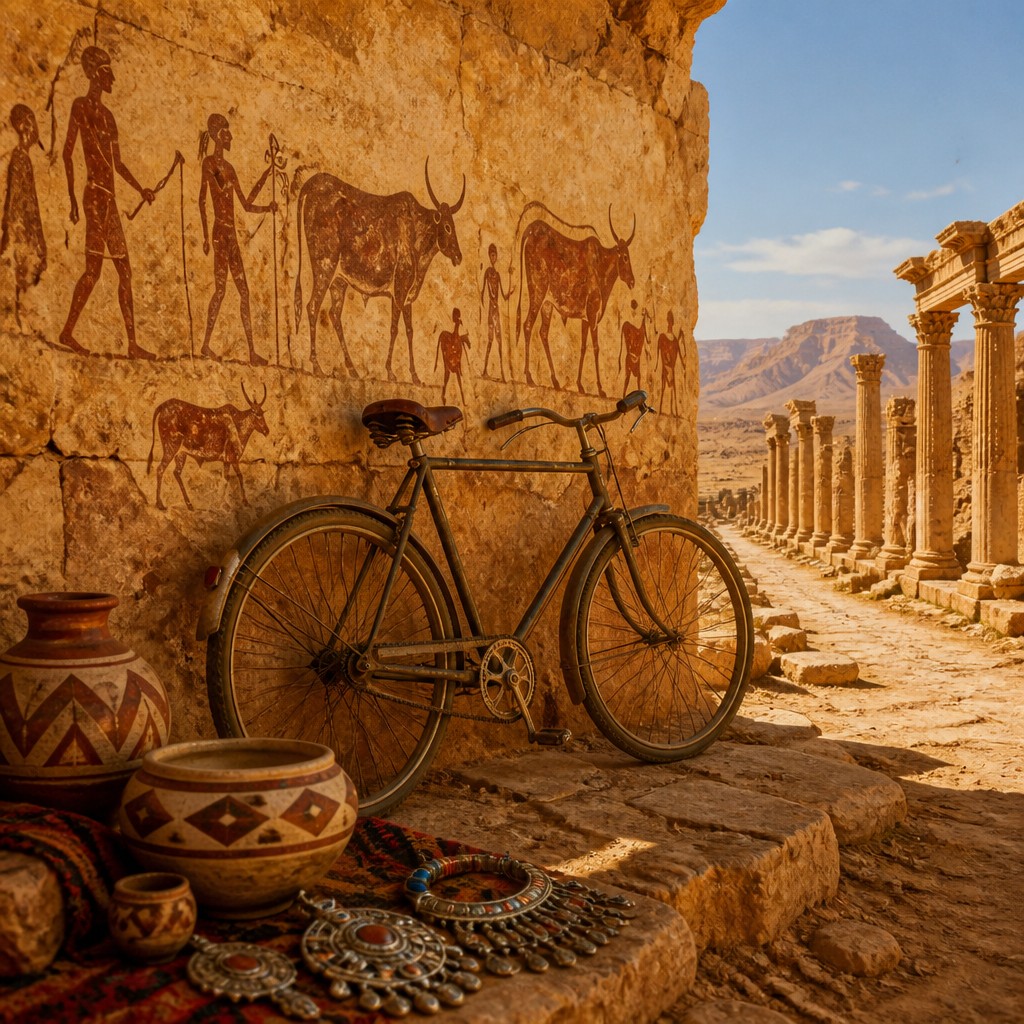
Graphic silhouettes and open space
Figures and animals are often reduced to readable contours, while large areas of sky, rock, or sand establish scale. The balance of dense pattern and quiet negative space gives the style a ceremonial, contemplative rhythm.
Algerian Prompt Ideas
Start from an idea — each one opens the generator with the style ready to go. See all 40 Algerian prompts →
How to Create Algerian Art
Master the craft step by step — or skip straight to creating. Read the full guide →
- 1
Build a mineral palette
Start with ochre, iron red, terracotta, sandstone cream, umber, and charcoal, then reserve silver, coral, or enamel blue for small accents. Keep saturation controlled so the image feels sun-weathered rather than glossy.
- 2
Use simplified, legible forms
Reduce people and animals to strong silhouettes with a few internal marks, drawing inspiration from rock painting rather than anatomical realism. Vary scale to suggest shelter walls, open desert, or monumental space.
- 3
Layer tactile surfaces
For traditional work, combine dry pigment, diluted earth colors, scratch marks, and matte paint on textured paper, clay, or board. Digitally, add sandstone grain, pigment pooling, ceramic irregularity, and controlled erosion without obscuring the main subject.
- 4
Treat ornament as structure
Place geometric bands and repeated motifs along jewelry, pottery rims, garments, or architectural edges. Use consistent spacing and a limited set of shapes so the pattern feels rooted in craft rather than randomly decorative.
- 5
Compose with archaeological depth
Pair a clear foreground subject with weathered columns, rock shelters, pottery, or distant dunes, using atmospheric haze to establish scale. Leave areas of quiet sky and stone around the detailed motifs.
- 6
Write precise generation prompts
Specify the subject, medium, palette, surface, lighting, and cultural references separately: for example, a desert settlement, mineral-pigment texture, Kabyle-inspired silver geometry, and late-afternoon Saharan light. Avoid asking for a generic 'tribal' look; name the materials and regional references you actually intend.
The Story
History & Origins of Algerian
This style name does not describe a documented historical school. It is best understood as an invented synthesis grounded in several Algerian visual traditions. The prehistoric rock art of Tassili n'Ajjer includes painted and engraved human figures, animals, and scenes associated with changing Saharan environments over thousands of years; its pigments and simplified forms provide the style's oldest visual reference.
Other sources include Kabyle jewelry and domestic crafts from northern Algeria, where silver, coral, enamel, and repeated geometric motifs have long been used in adornment and household objects. Roman archaeological sites in Algeria contribute weathered stone streets, arches, columns, and ruins, while Saharan light and earthen architecture supply the broad tonal atmosphere. These elements should not be mistaken for a unified ancient Algerian style: they belong to different regions and periods and are combined here as an aesthetic lineage.
Influences: The style draws on prehistoric Saharan rock art, Amazigh and especially Kabyle craft traditions, North African ceramic decoration, Islamic geometric pattern, Roman archaeology in Algeria, and vernacular earthen architecture. It also shares qualities with archaeological illustration, material-focused folk art, modernist primitivizing design, and contemporary editorial collage, while remaining distinct from each of these established categories.
Frequently Asked Questions
Is Algerian art style a recognized historical art movement?
No. The label generally refers to a contemporary or AI-oriented synthesis rather than a formally documented movement with a fixed period or manifesto. It combines references from Algerian prehistoric art, craft, architecture, and landscape, which originated in different regions and historical eras.
What defines the visual look of this style?
The main identifiers are mineral ochres, sandstone textures, simplified figures and animals, geometric craft patterns, handmade pottery, silver jewelry accents, and strong Saharan light. Weathered surfaces and deliberate negative space are as important as the motifs themselves.
How is it different from generic desert or North African art?
A generic desert image may rely mainly on dunes, warm color grading, or exoticized decoration. This approach is more specific: it connects Saharan rock-art forms with Algerian materials, Kabyle geometric ornament, ceramic craft, and archaeological architecture while acknowledging that these references are not one unified tradition.
Can I make this style with traditional media?
Yes. Try earth pigments or matte gouache on rough paper, board, or a prepared clay-like surface, then add scratched lines and restrained geometric pattern. For jewelry or objects, oxidized silver-colored surfaces, colored resin, enamel-like paint, and coral-red accents can suggest the material contrast.
How should I prompt an image in this style?
Describe the subject first, then specify mineral pigments, sandstone or fired-clay texture, geometric ornament, regional materials, and Saharan lighting. Naming concrete objects such as silver pendants, terracotta vessels, rock shelters, or Roman columns produces more coherent results than relying on broad cultural adjectives.
Where can this aesthetic be used?
It works well for editorial illustration, cultural posters, book covers, museum-inspired graphics, textile patterns, jewelry concepts, ceramic designs, travel imagery, and atmospheric environment art. Cultural context and accurate labeling are important when using motifs associated with living Amazigh craft traditions.
Create your first Algerian artwork
Describe anything — or upload a photo — and see it in Algerian Art Style in seconds.
Related Styles
Discover similar art styles