Yemeni Art Style
Explore Yemeni art style: Sana'a tower houses, gypsum ornament, alabaster lattice, Sabaean script, silver jewelry, and highland dusk colors.
Instantly rendered in Yemeni — or transform a photo
Yemeni Gallery
Tap any artwork to explore it
What is Yemeni Art Style?
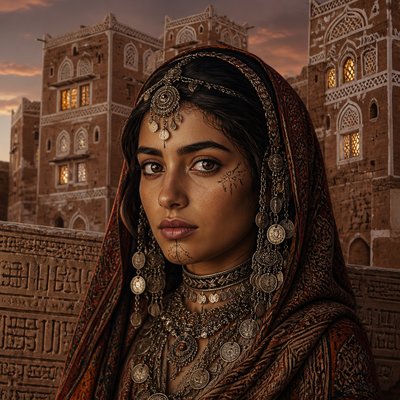
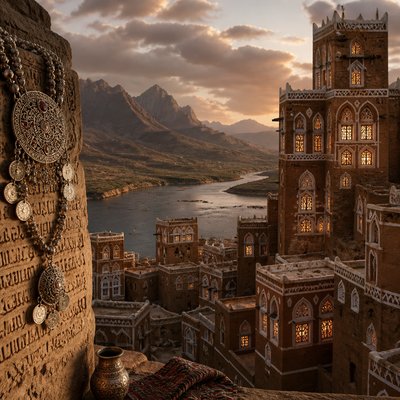
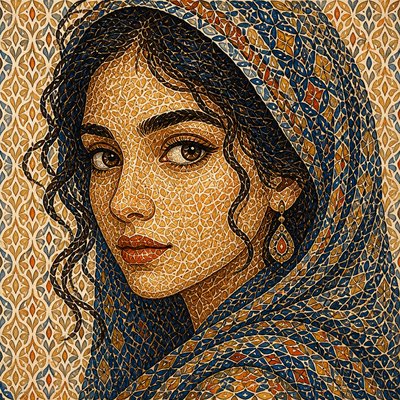
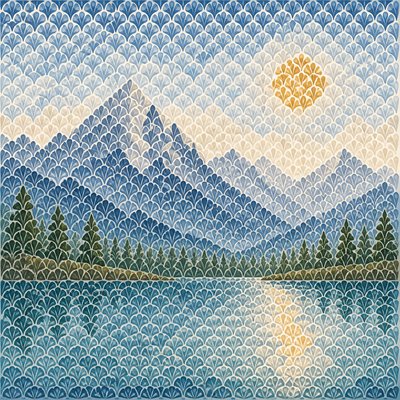
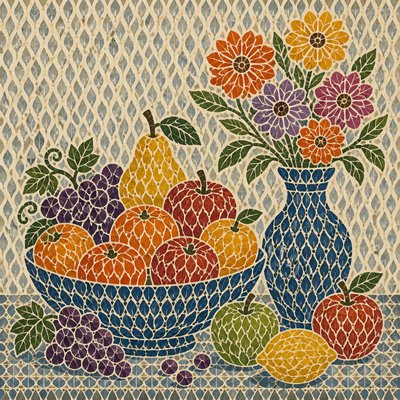
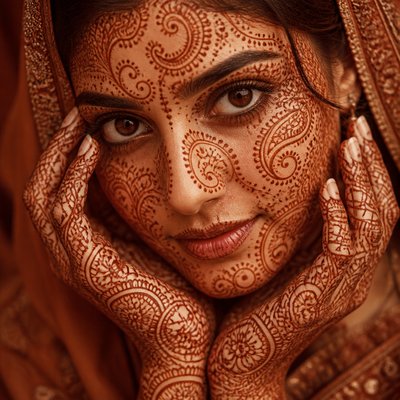
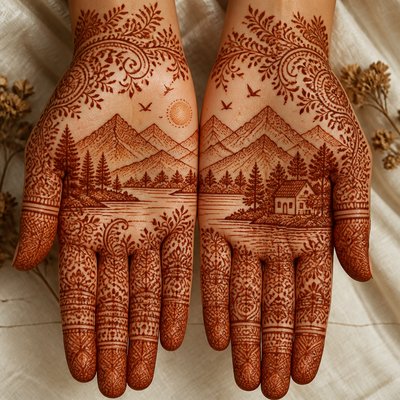
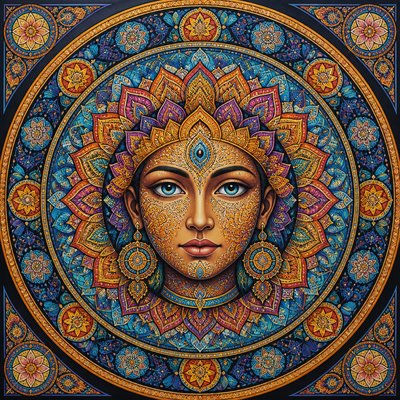
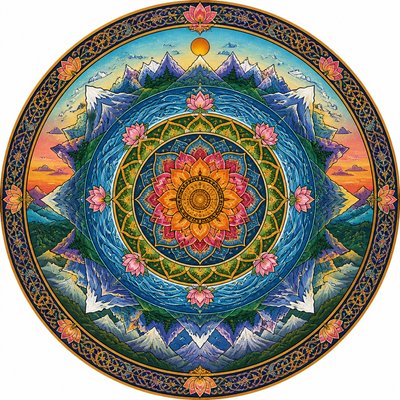
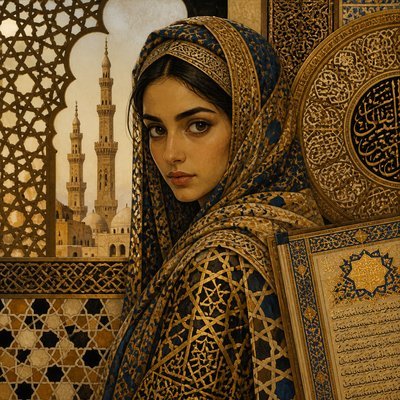
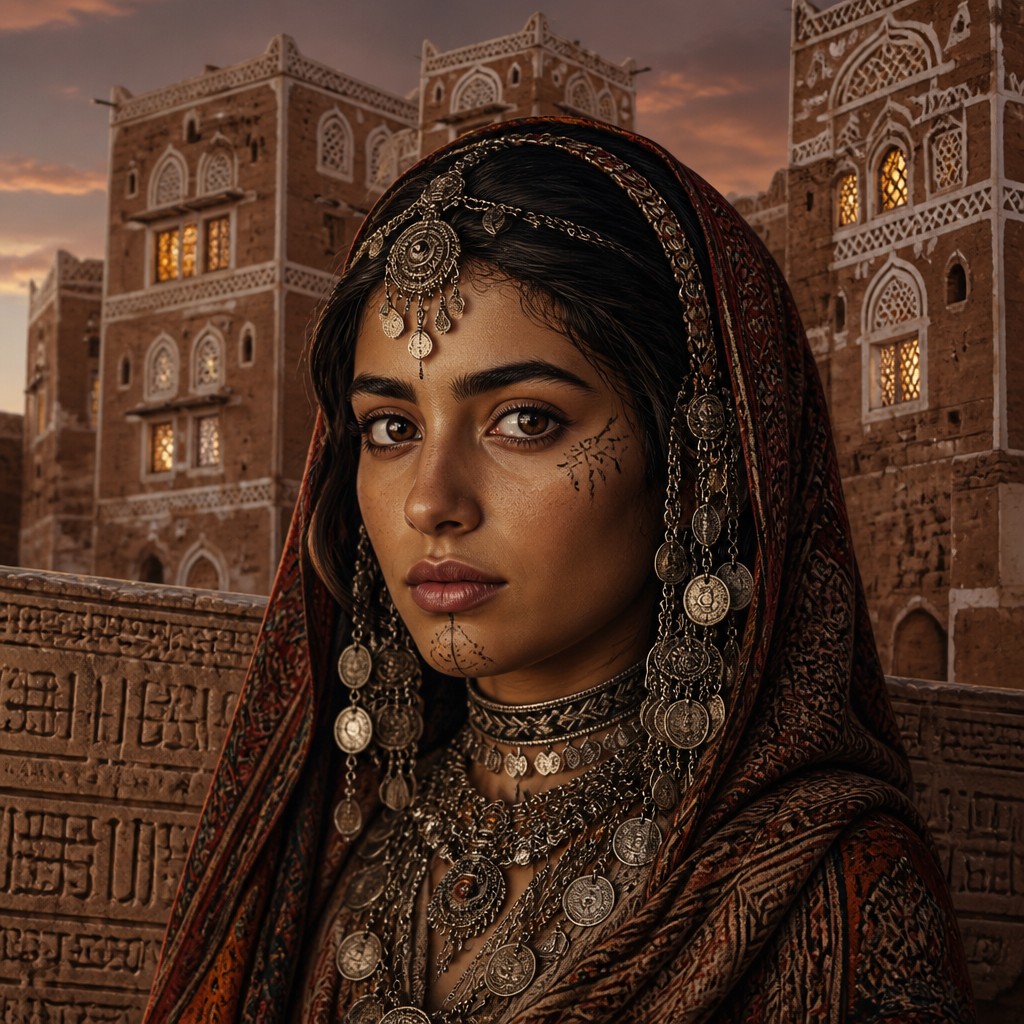
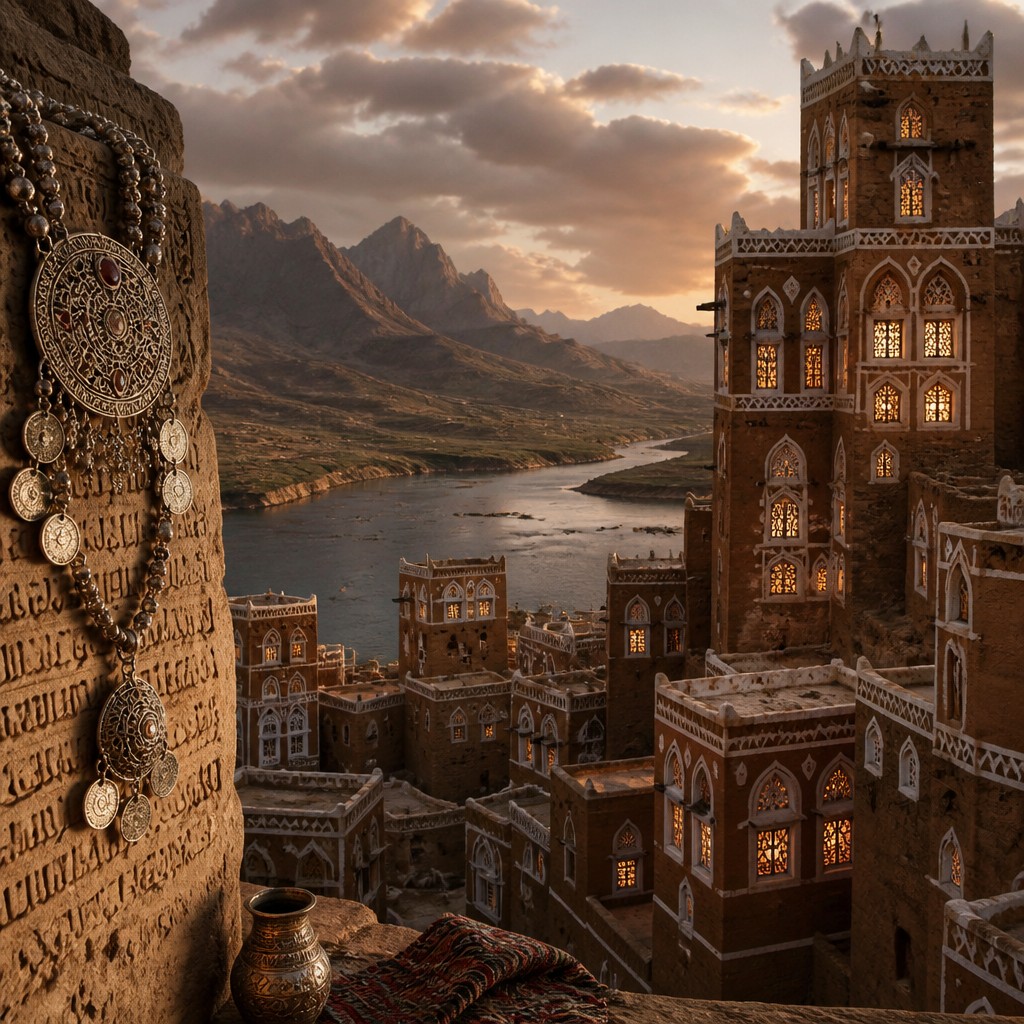
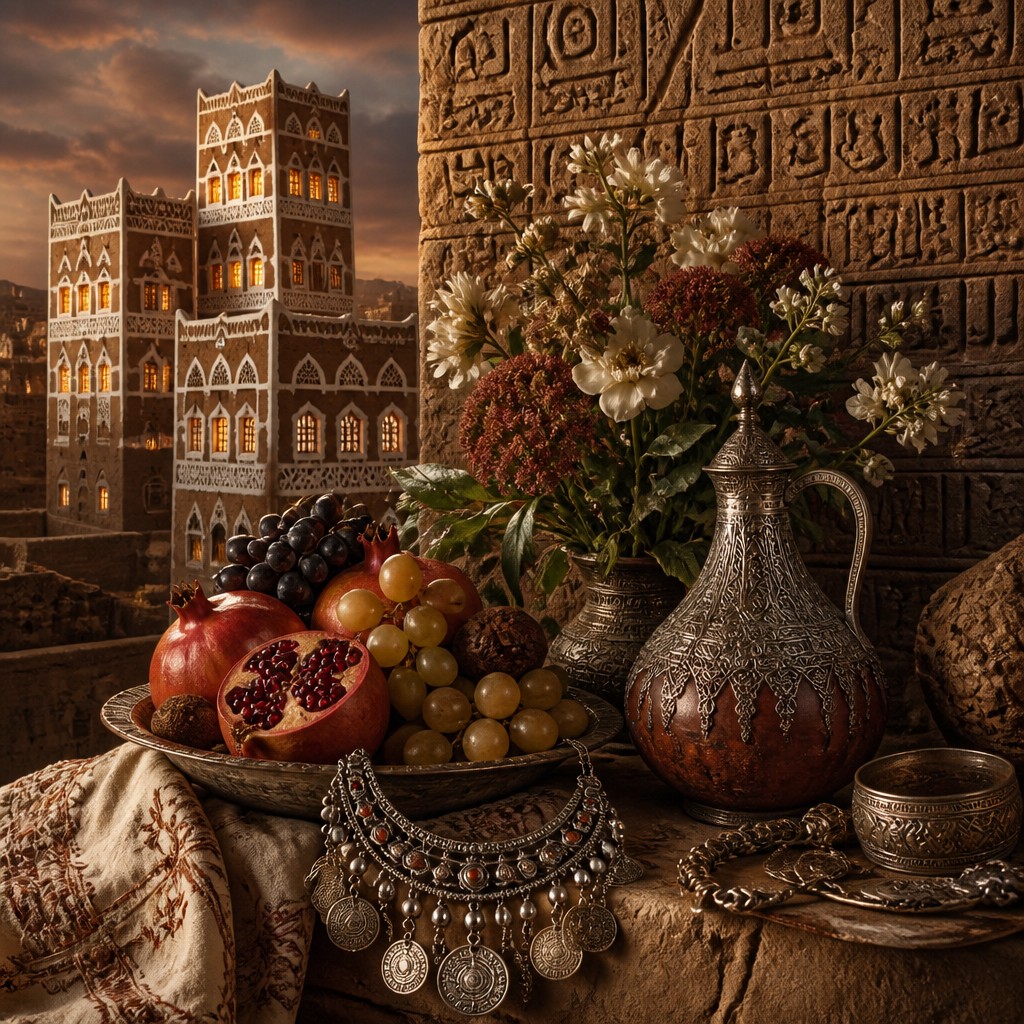
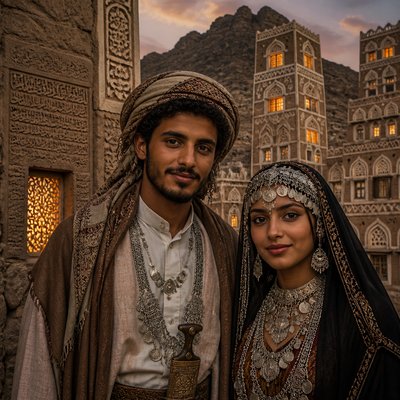
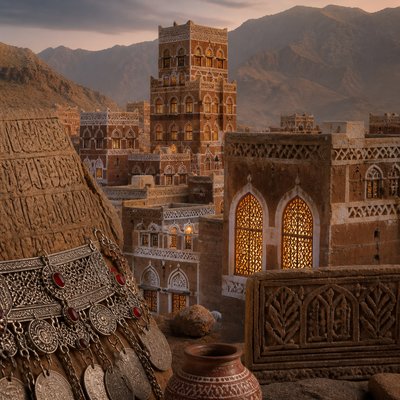
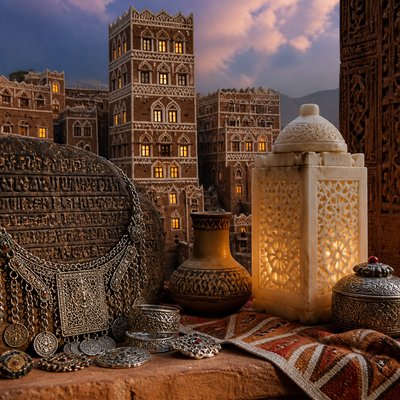
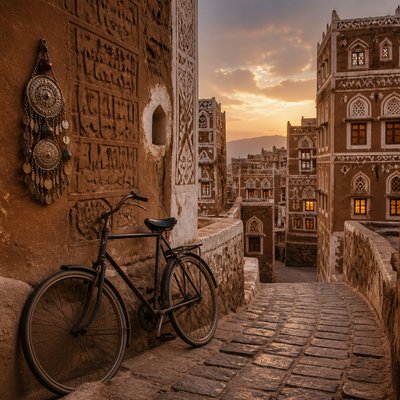
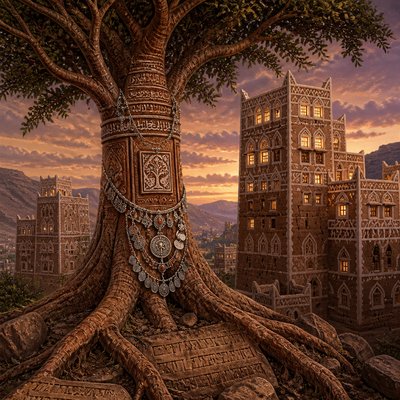
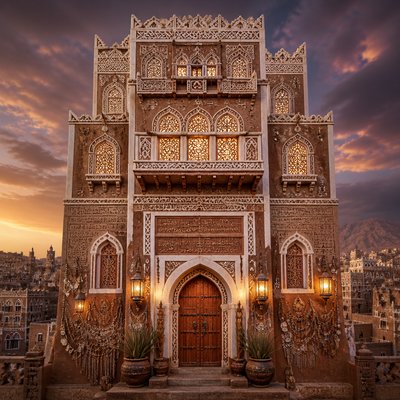
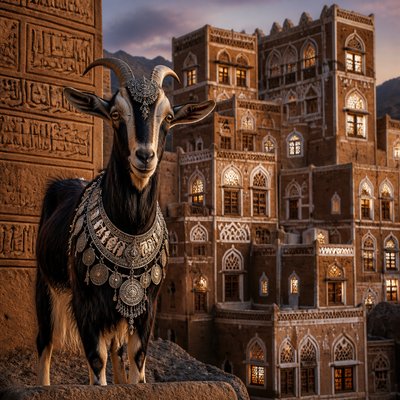
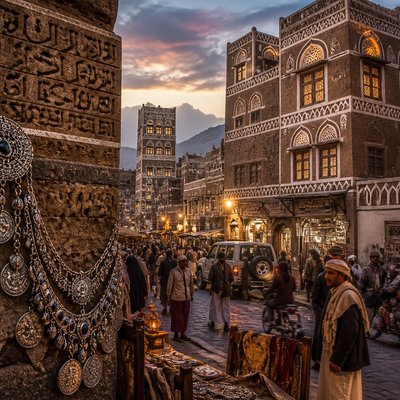
Yemeni art style is a contemporary descriptive aesthetic built from the visual traditions of Yemen, especially the highland architecture of Sana'a and the craft cultures of northern and central Yemen. Its signature imagery combines tall mudbrick tower houses, geometric white gypsum decoration, glowing qamariya windows made with colored glass or translucent alabaster, ancient South Arabian inscriptions, and ornate Yemeni silver jewelry.
The style is defined by strong vertical forms, rhythmic pattern, tactile earthen surfaces, and a restrained palette of sienna, clay red, cream, whitewash, charcoal, and dusk blue. It looks distinctive because highland buildings balance massive mudbrick walls with delicate cutwork and luminous windows, while jewelry and script introduce finely scaled detail. The result can feel simultaneously architectural, historical, handmade, and atmospheric.
Try It On Your Photos
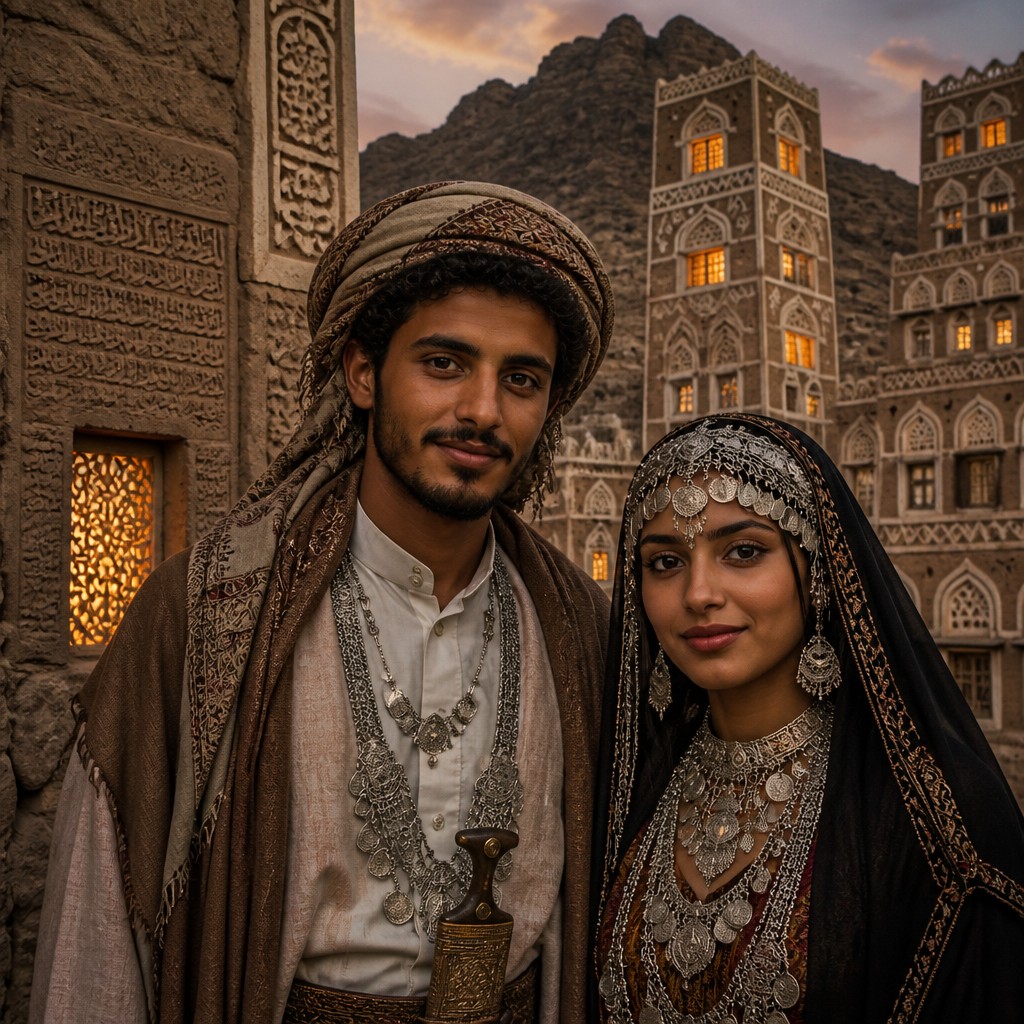
Upload any photo and convert it into Yemeni Art Style — drag the sliders to compare before and after.


What Defines Yemeni Art Style
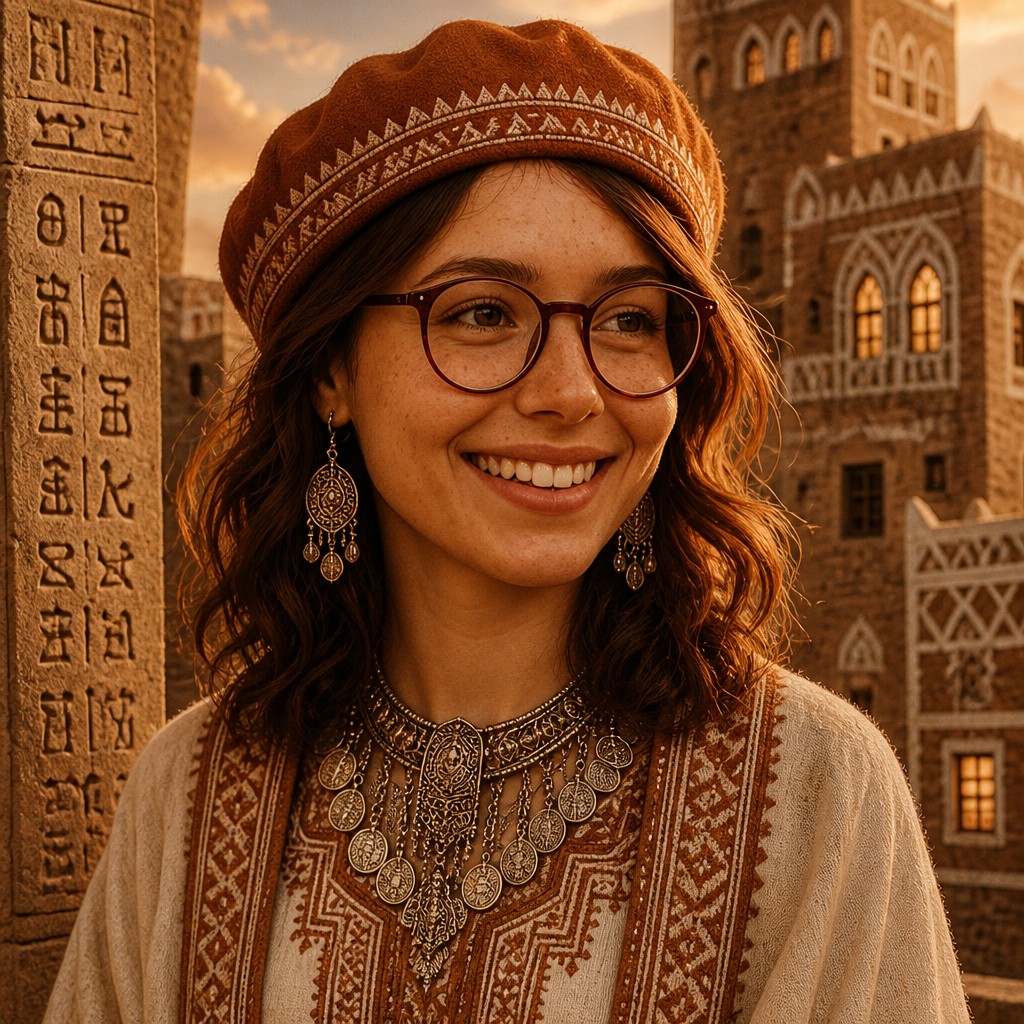
The signature details, up close
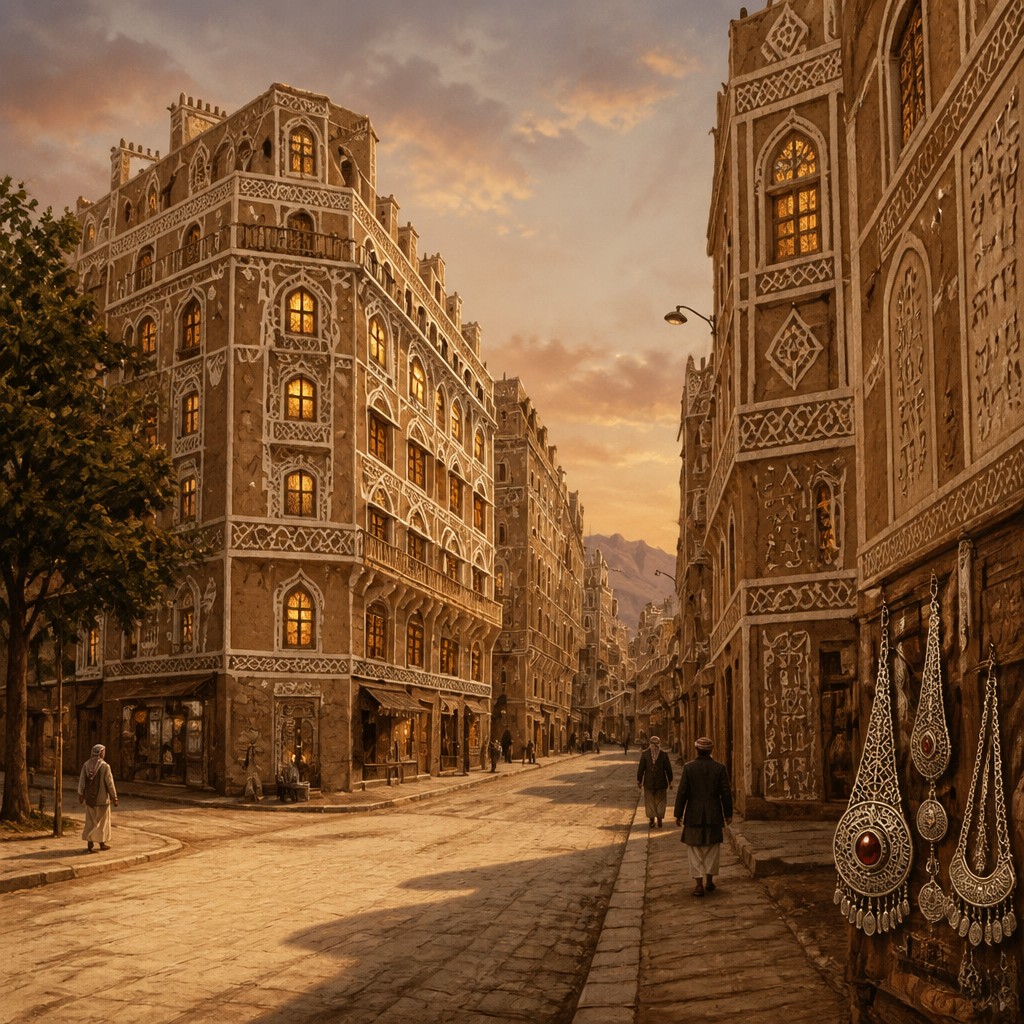
Sana'a tower houses
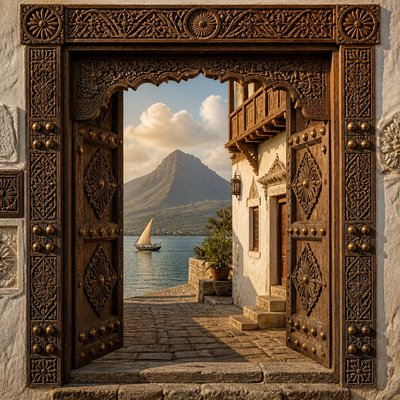
Tall, narrow mudbrick or stone buildings rise in stacked tiers, often with small windows, crenellated rooflines, and carefully balanced geometric façades. Their verticality is one of the style's strongest compositional cues.
White gypsum ornament
Bright gypsum plaster frames windows and doors in bands, diamonds, arches, and other crisp geometric motifs. Against warm earthen walls, the white decoration creates a graphic, almost lace-like contrast.
Qamariya windows
Arched upper windows with translucent alabaster or colored glass glow from within. They add jewel-like points of light and soften the heavy mass of the tower architecture.
South Arabian script
Ancient Sabaean and related South Arabian inscriptions are represented through angular Musnad letterforms carved into stone, plaster, or architectural panels. Text should be treated as historical ornament unless the wording has been verified.
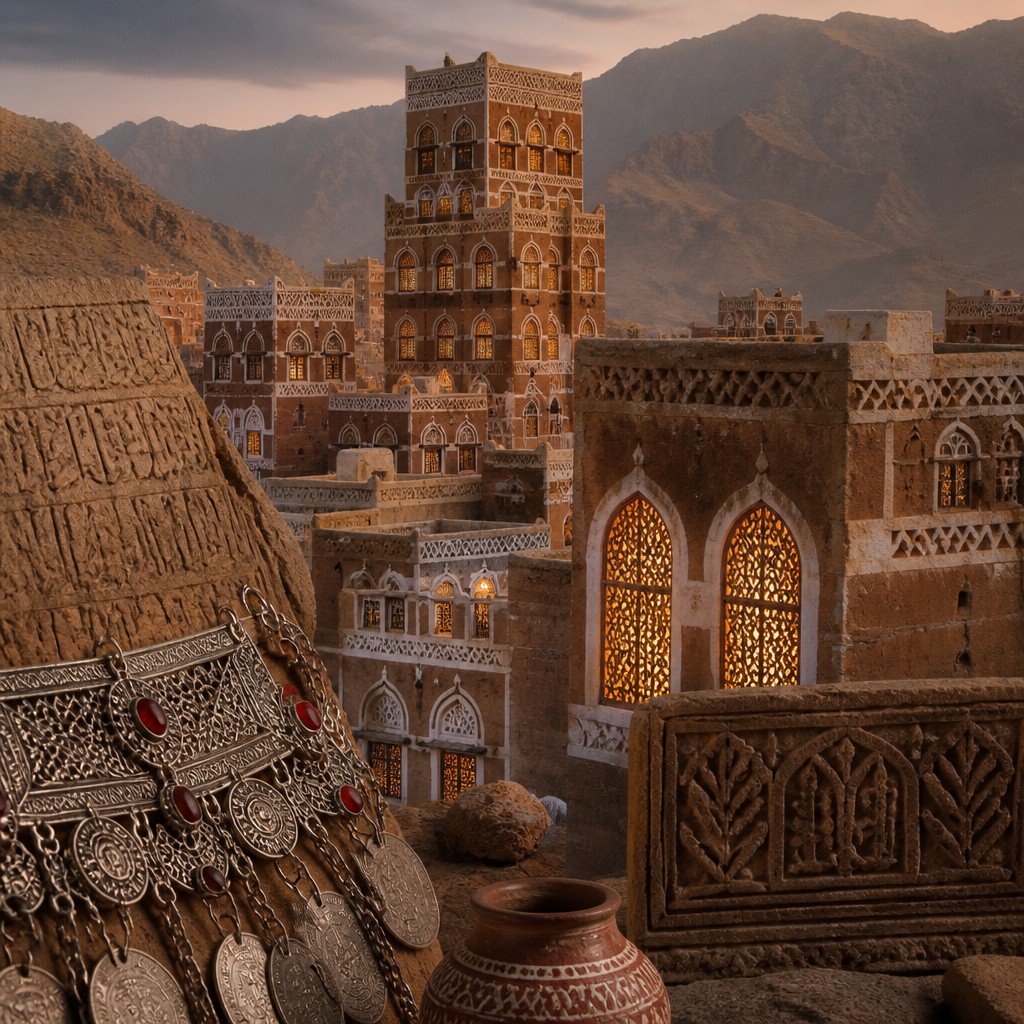
Yemeni silver jewelry
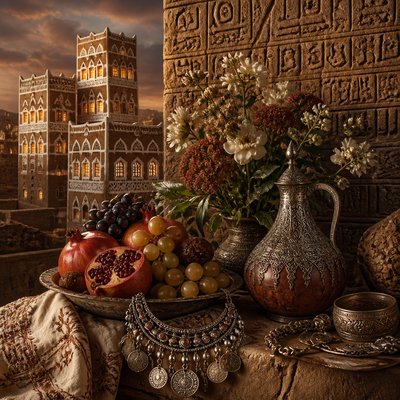
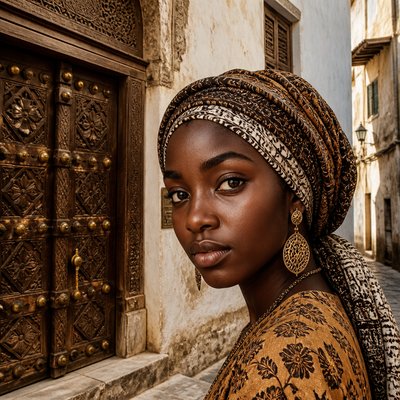
Layered necklaces, bracelets, rings, anklets, and pendant forms introduce intricate metalwork, granulation, chains, beads, and coin-like elements. The jewelry provides a reflective counterpoint to matte mudbrick and plaster.
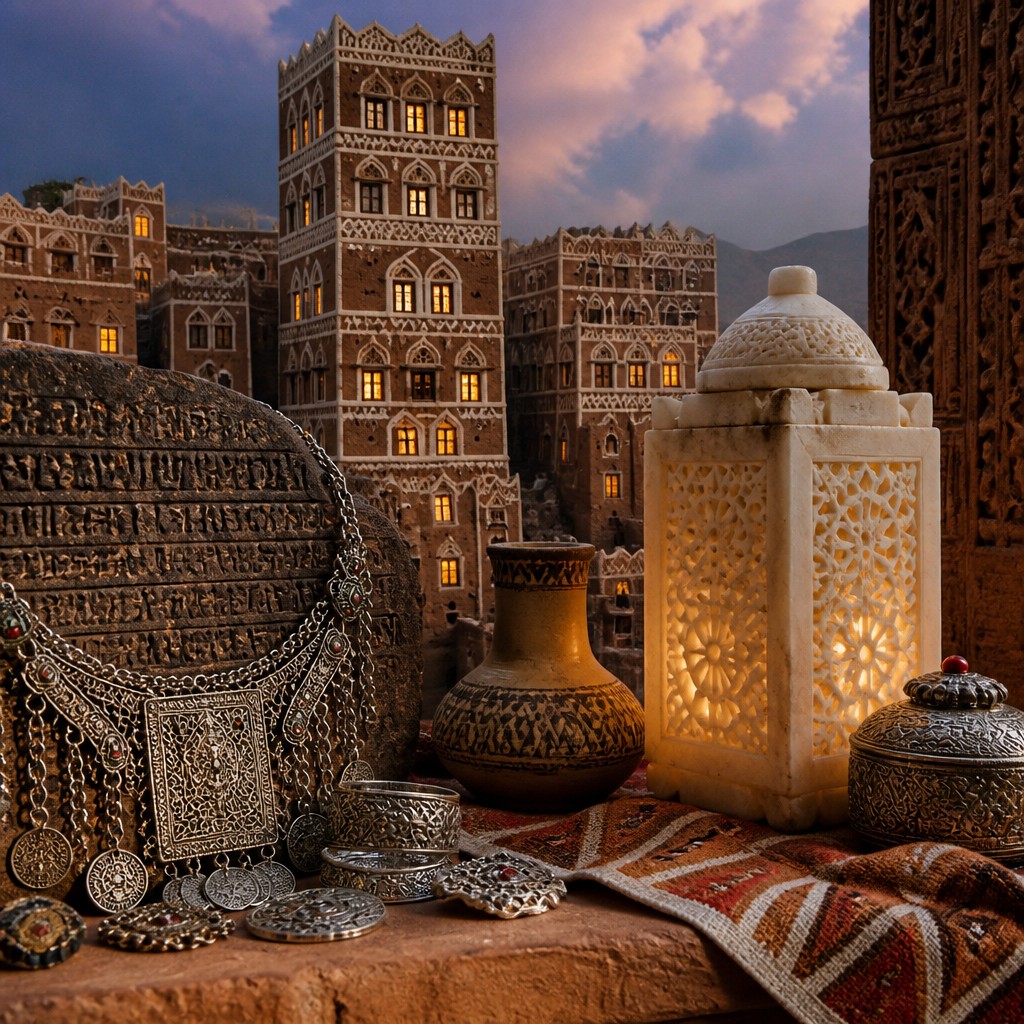
Highland earth palette
The dominant colors are sienna, ochre, terracotta, sand, ivory, chalk white, oxidized silver, and deep blue-gray. Warm dusk or dawn light emphasizes the texture of walls and the glow of the windows.
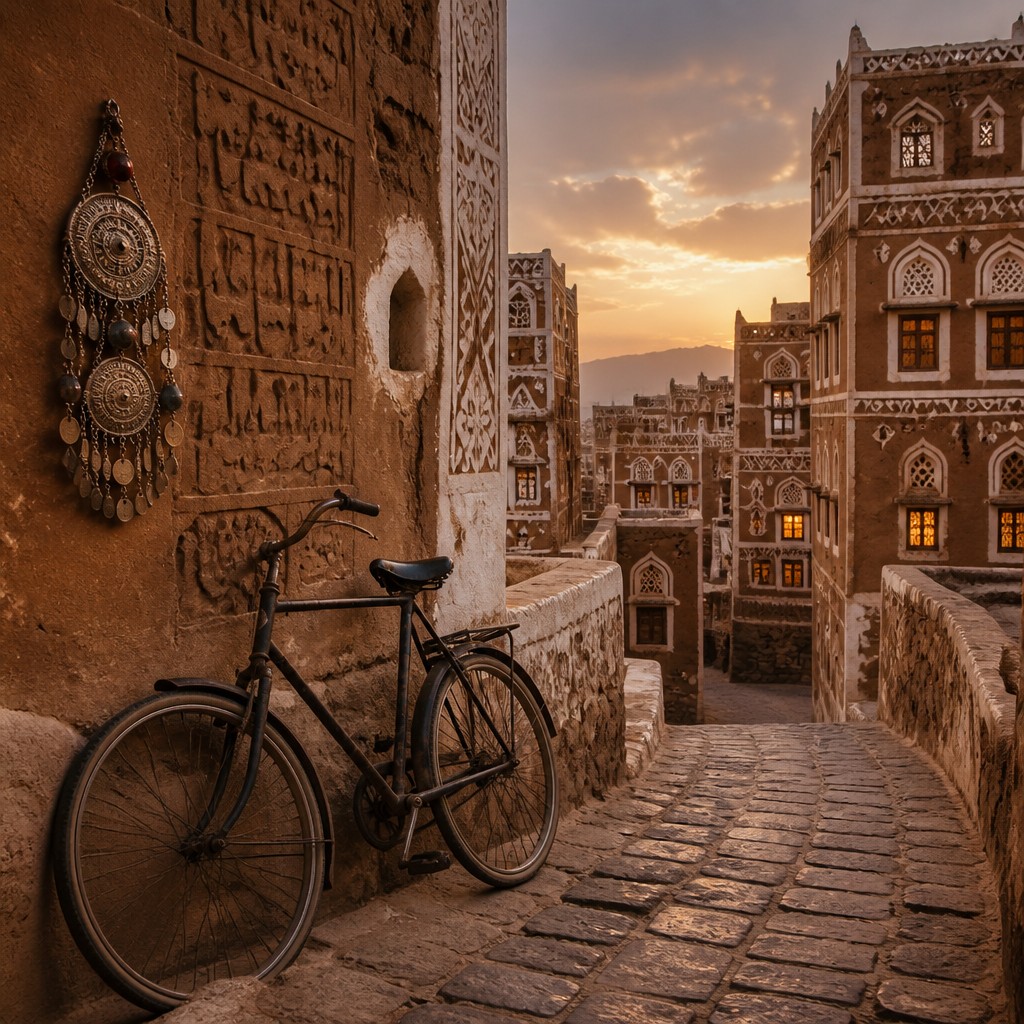
Geometric craft pattern
Repeated diamonds, stepped bands, latticework, carved borders, and symmetrical framing unify architecture, textiles, jewelry, and illustration. Detail is usually organized rather than randomly ornamental.
Yemeni Prompt Ideas
Start from an idea — each one opens the generator with the style ready to go. See all 40 Yemeni prompts →
How to Create Yemeni Art
Master the craft step by step — or skip straight to creating. Read the full guide →
- 1
Build a vertical architectural structure
Begin with a tall, narrow silhouette and stack irregular floors, small openings, projecting ledges, and a distinct roofline. Use perspective sparingly so the façade remains legible as a patterned object.
- 2
Separate earthen walls from plaster trim
Apply rough, matte textures to mudbrick or stone, then reserve clean white or cream shapes for gypsum bands and window surrounds. A limited palette will make the contrast more convincing.
- 3
Light the windows from within
Place a warm amber or muted multicolor glow behind qamariya-style openings, keeping the surrounding walls darker. In traditional media, layer translucent washes; digitally, use a soft additive or screen-like light pass.
- 4
Use script as a visual element responsibly
For historical accuracy, reference verified Musnad letterforms and avoid presenting invented marks as readable Sabaean text. In a decorative image, carved geometric inscription bands can suggest antiquity without making a false translation.
- 5
Add jewelry at a finer scale
Render silver filigree, chains, beads, and coin pendants with sharp highlights and repeated motifs. Keep the jewelry subordinate to the main silhouette unless the subject is a portrait or a still life.
- 6
Write focused generation prompts
Specify the subject, Sana'a-style tower architecture, mudbrick texture, gypsum geometry, qamariya illumination, South Arabian inscription motifs, silver adornment, and highland dusk light. For image transformation, preserve the source subject while applying the palette, materials, and architectural framing rather than replacing every detail.
The Story
History & Origins of Yemeni
Yemeni art style is not a single formally recognized historical movement. It is an aesthetic synthesis drawing primarily on Yemen's highland building traditions, including the multi-story mudbrick and stone tower houses of Sana'a, whose visible forms developed over many centuries and incorporate older regional construction knowledge. White gypsum façades, geometric friezes, carved doors, and qamariya windows are central elements of this architectural lineage.
Its historical references also include the ancient South Arabian civilizations, especially Sabaean and related inscriptions written in the angular Musnad script, as well as Yemeni metalworking traditions involving silver jewelry, chains, beads, and coin pendants. Contemporary illustrations and digital compositions often combine these sources with cinematic lighting and decorative patterning; this combination should be understood as an interpretive style rather than evidence of one unified ancient art school.
Influences: The aesthetic draws on Yemeni highland vernacular architecture, Sana'a's historic urban fabric, ancient South Arabian epigraphy, regional Islamic geometric ornament, Arabian and Red Sea metalworking, and handmade textile traditions. It also overlaps visually with architectural illustration, ethnographic portraiture, decorative arts, and cinematic concept art that emphasizes material texture and warm atmospheric light.
Frequently Asked Questions
What defines Yemeni art style?
It is defined by a combination of Sana'a-style mudbrick tower houses, white gypsum ornament, glowing qamariya windows, South Arabian inscription motifs, Yemeni silver jewelry, and a warm earth-tone palette. Vertical architecture and organized geometric detail are especially important.
Is Yemeni art style a historical art movement?
No. The label is best understood as a contemporary aesthetic synthesis rather than a single historical movement or school. It draws from several real Yemeni architectural, epigraphic, and craft traditions.
What is a qamariya window?
A qamariya is an arched decorative window traditionally associated with Yemeni architecture, often made with translucent alabaster or colored glass. Its filtered light can create a luminous focal point inside an otherwise heavy masonry façade.
How does it differ from generic Arabian or Islamic art?
Generic regional labels can obscure important differences. This aesthetic specifically emphasizes Yemen's highland tower-house silhouettes, mudbrick construction, white gypsum façade work, qamariya windows, Musnad-related inscription imagery, and local silver ornament.
How can I make an image in this style without making it look stereotypical?
Use specific architectural and material details rather than relying only on words such as exotic or ancient. Distinguish verified historical references from decorative invention, avoid treating all Yemeni clothing and jewelry as interchangeable, and keep the composition grounded in believable construction and craft.
Where is this aesthetic useful?
It suits architectural scenes, historical illustration, cultural portraiture, jewelry studies, travel-inspired compositions, book covers, game environments, and decorative pattern work. It is particularly effective when the image contrasts rough earthen surfaces with precise white ornament and luminous windows.
Create your first Yemeni artwork
Describe anything — or upload a photo — and see it in Yemeni Art Style in seconds.
Related Styles
Discover similar art styles