Wire Art Style
Explore Wire Art Style: airy sculptures and images formed from looping metallic lines, open space, twisted joints, and expressive shadows.
Instantly rendered in Wire — or transform a photo
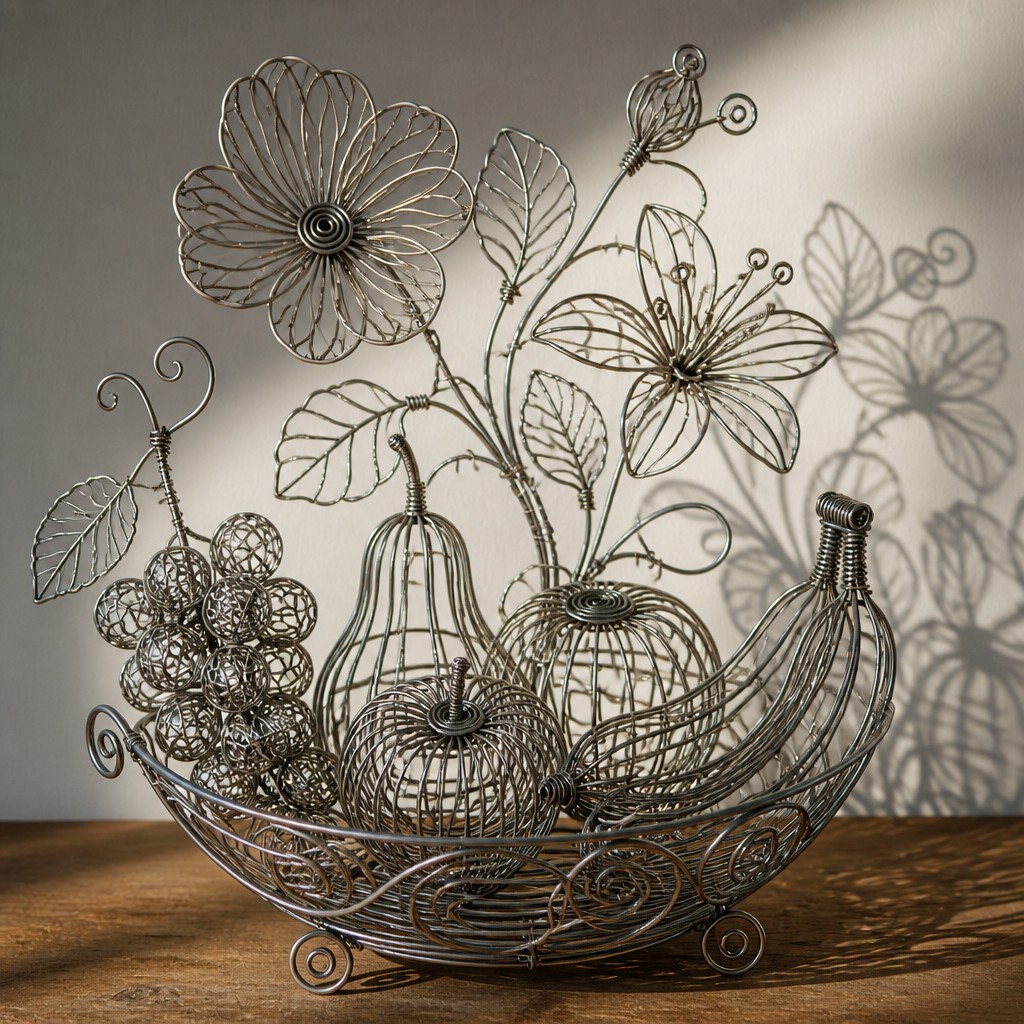
Wire Gallery
Tap any artwork to explore it
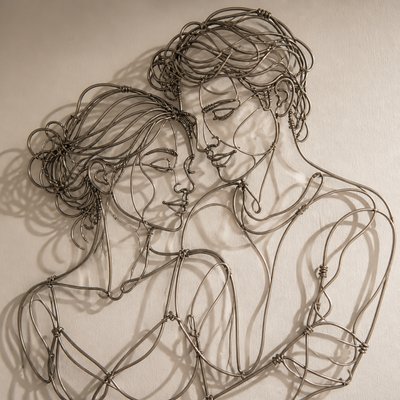
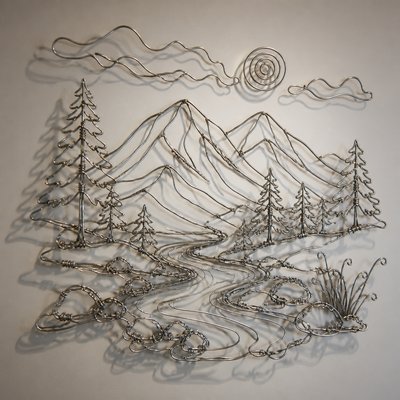
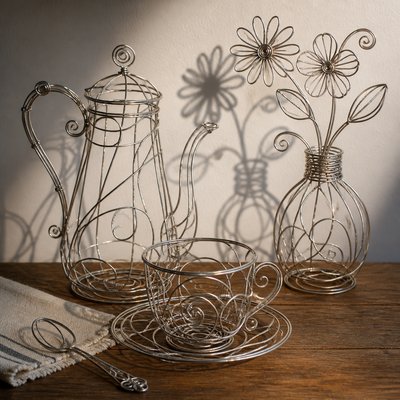
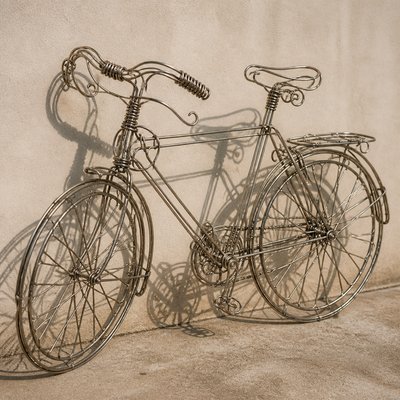
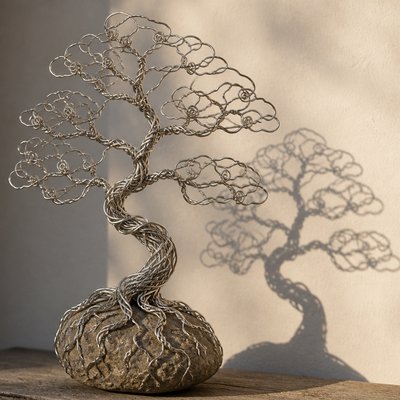

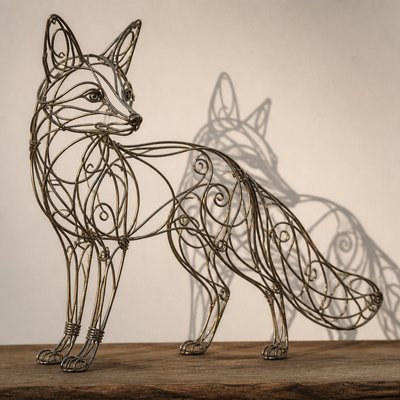
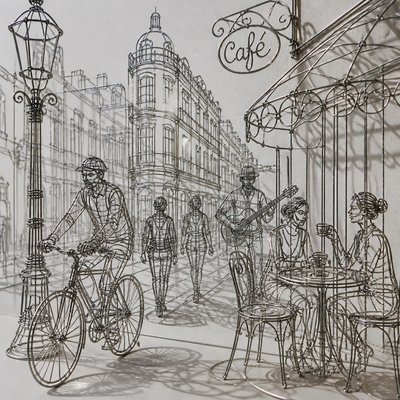
What is Wire Art Style?
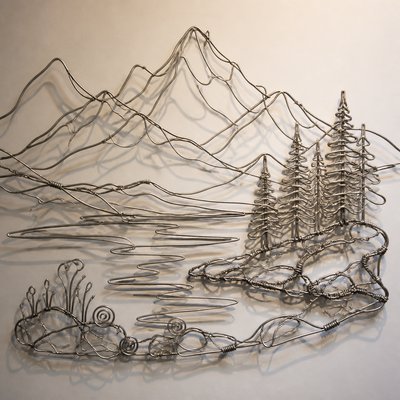
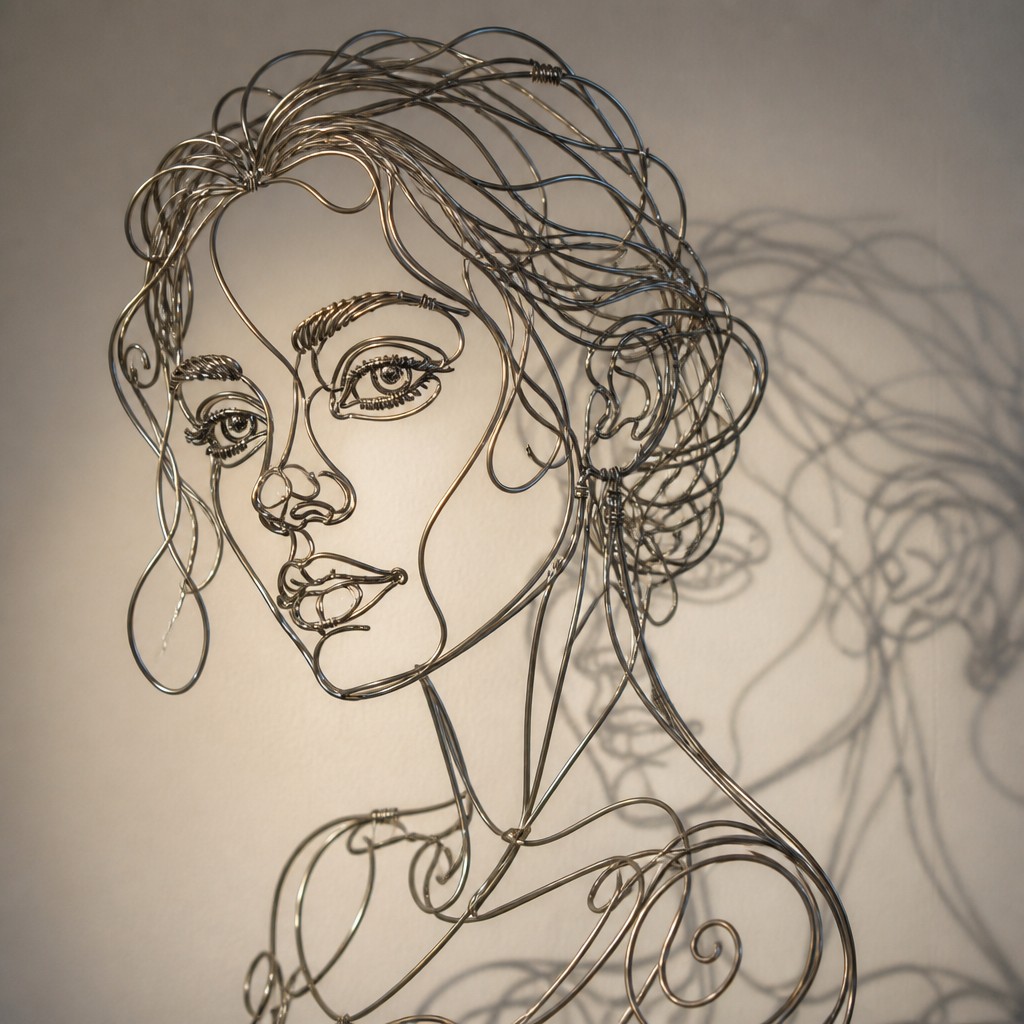
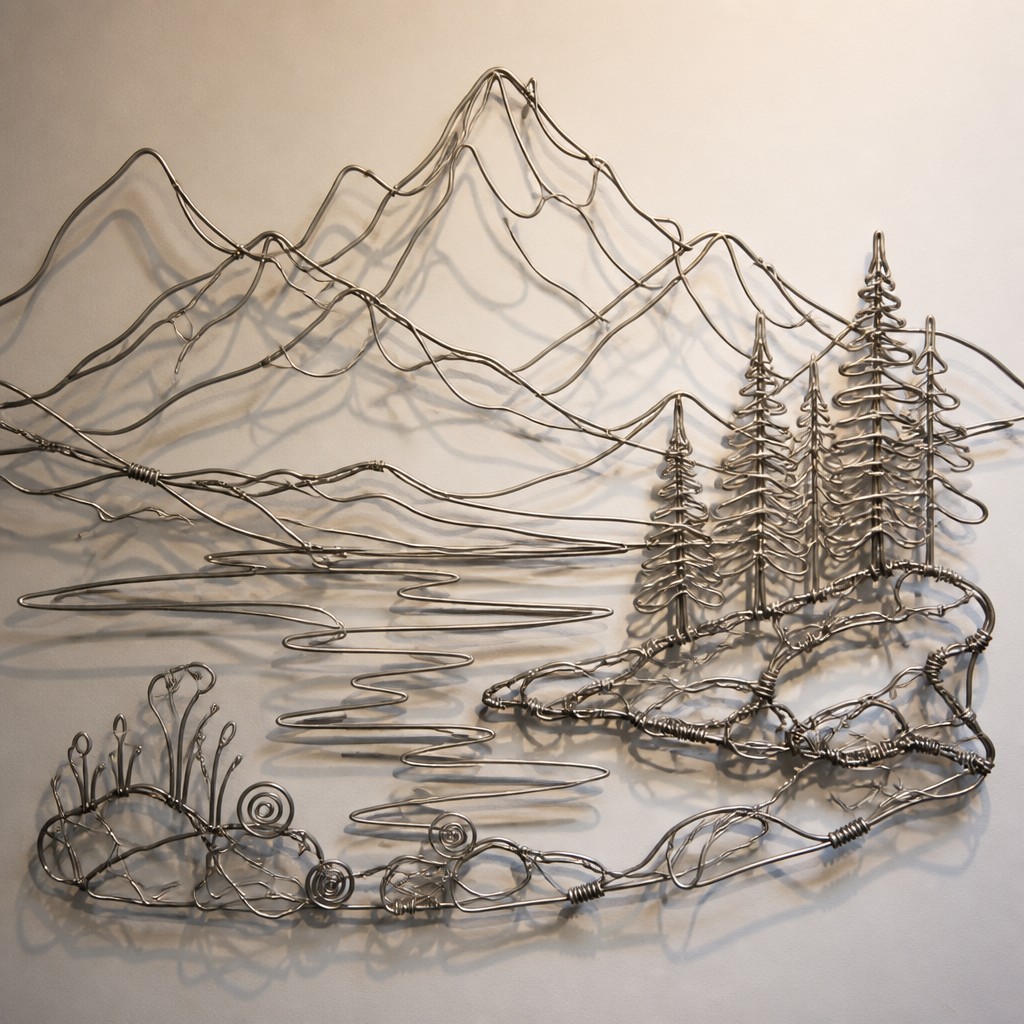
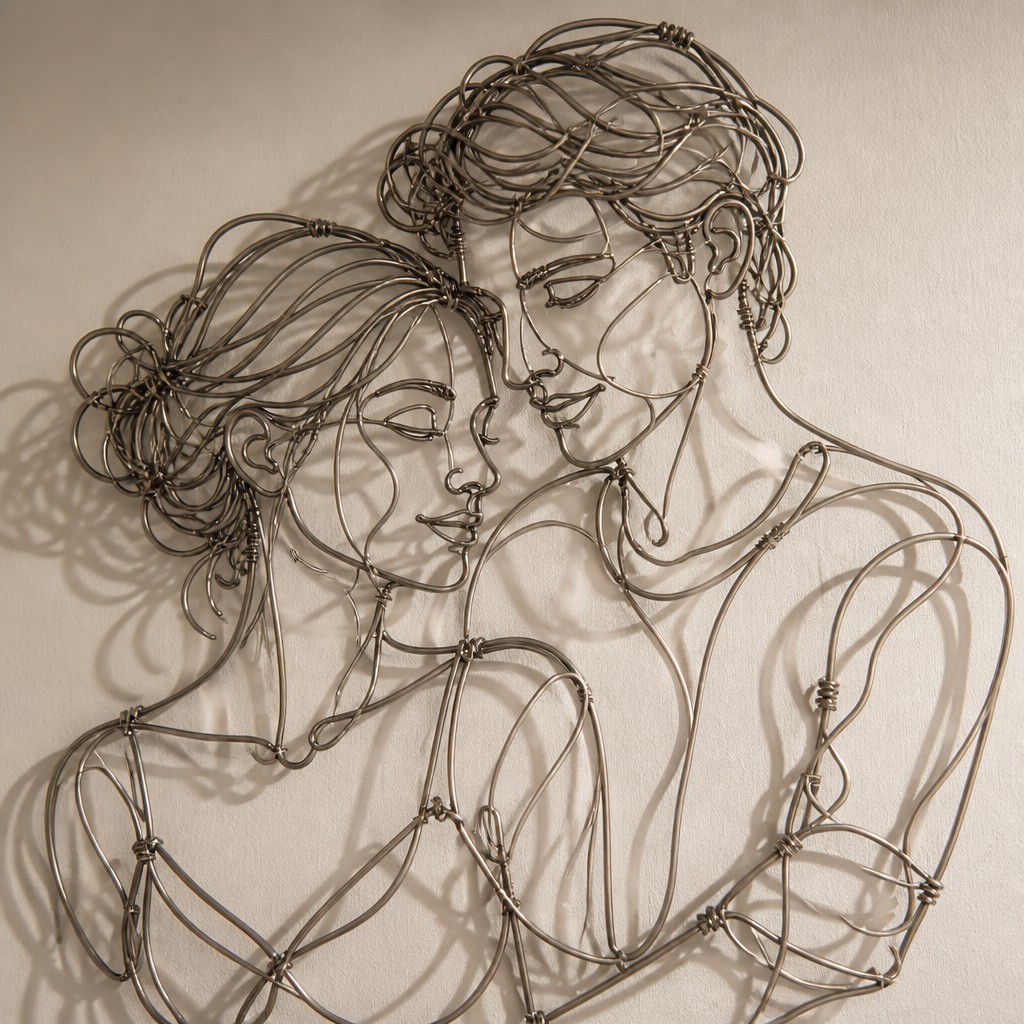
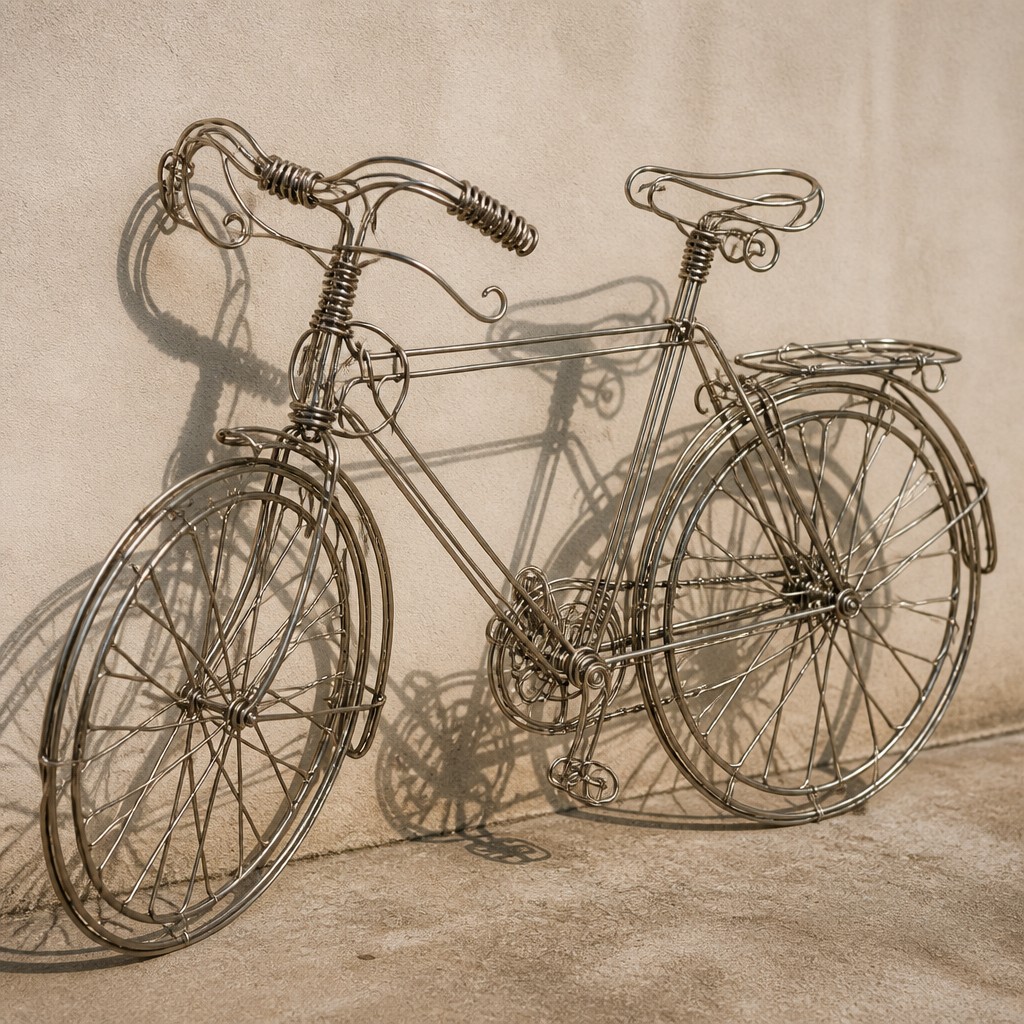
Wire Art Style translates subjects into thin, continuous or near-continuous metal lines that loop, coil, and bend through three-dimensional space. Its forms remain deliberately open, allowing the surrounding air—and often a wall or floor behind the work—to become part of the composition. Metallic highlights emphasize the wire's changing direction, while cast shadows repeat or extend the linear silhouette.
Try It On Your Photos
Upload any photo and convert it into Wire Art Style — drag the sliders to compare before and after.



Or use the free Wire photo filter
What Defines Wire Art Style
The signature details, up close
Continuous linear contour
Subjects are described through a long, flowing wire path rather than solid surfaces or dense modeling. The line may loop back on itself to establish volume, gesture, and recognizable anatomy.
Open lattice structure
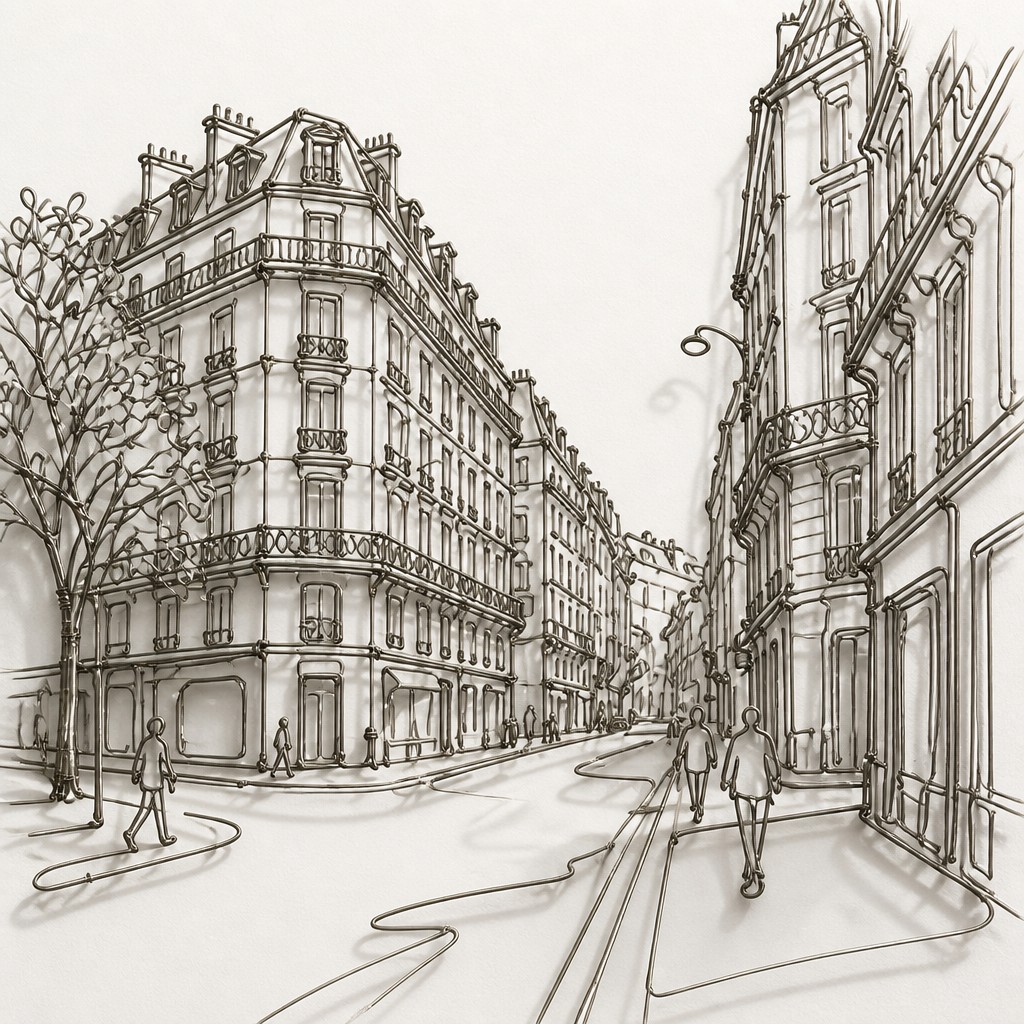
Large areas of negative space remain visible inside the form. This openness gives the work a lightweight, airy appearance and makes the surrounding environment visually active.
Metallic surface
A polished, brushed, or oxidized finish catches highlights along the wire's narrow profile. Controlled reflections help separate overlapping strands without filling the structure with color.
Hand-twisted joints
Wrapped connections, irregular bends, and small coils preserve evidence of fabrication. These details add tactile character and distinguish the work from a perfectly uniform digital curve.
Spatial volume through line
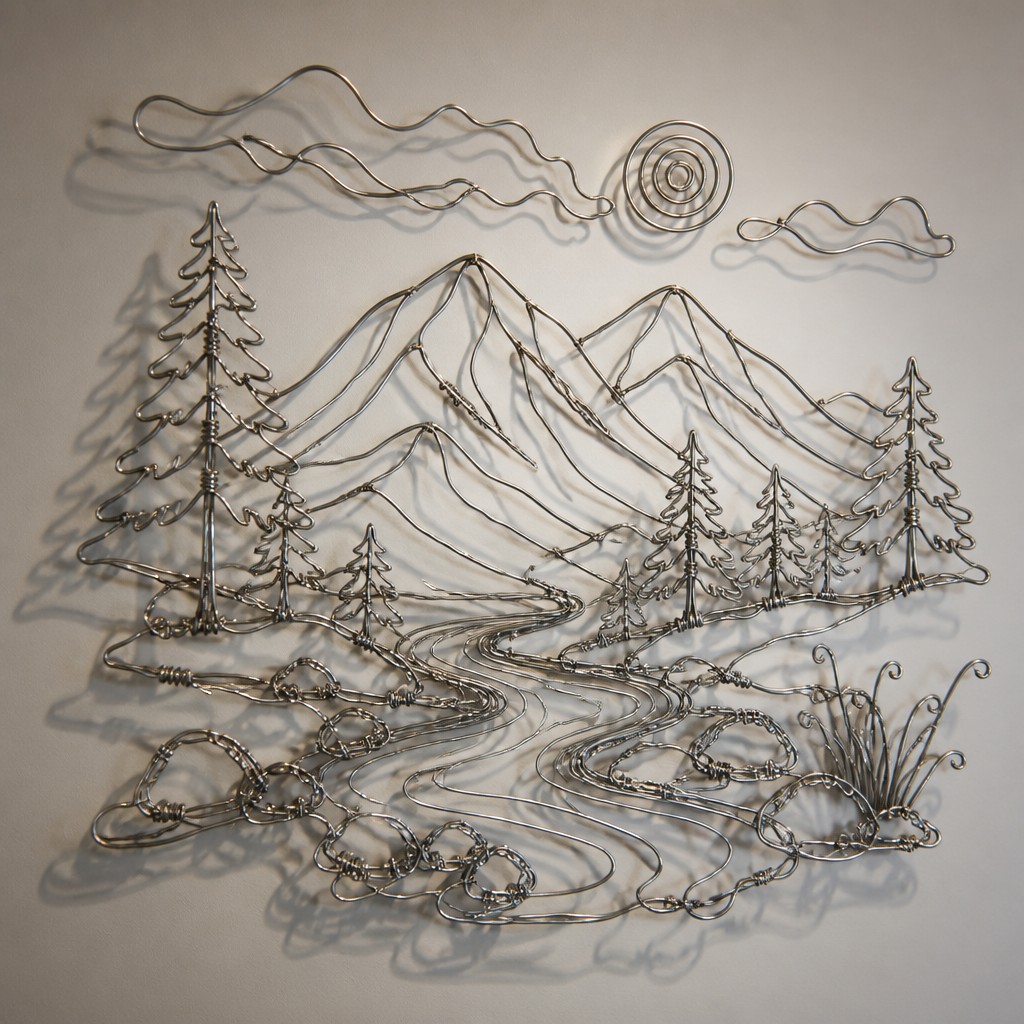
Depth is communicated by crossings, foreshortening, changing wire angles, and varying strand density. The sculpture can read differently from each viewpoint because its contour is genuinely three-dimensional.
Expressive cast shadow
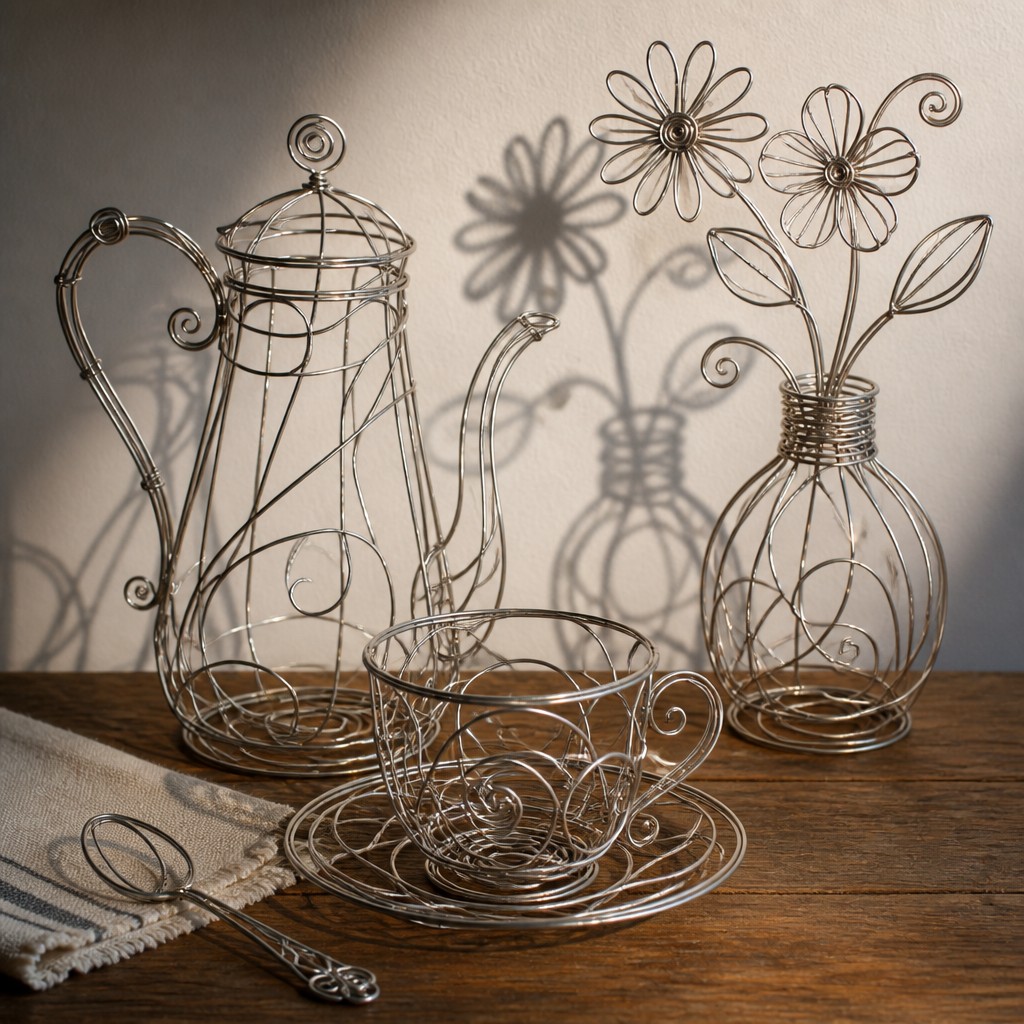
Lighting produces a shadow that echoes, stretches, or fragments the sculpture's outline. The shadow may function as a second drawing and is often essential to the style's sense of delicacy.
Restrained visual palette
Silver, blackened steel, copper, brass, and muted metallic tones are common. Color is usually subordinate to silhouette, reflection, line rhythm, and the contrast between wire and empty space.
Wire Prompt Ideas
Start from an idea — each one opens the generator with the style ready to go. See all 40 Wire prompts →
How to Create Wire Art
Master the craft step by step — or skip straight to creating. Read the full guide →
- 1
Plan the contour
Reduce the subject to a few decisive lines before building it. Mark the primary silhouette, major interior loops, and the points where the form must turn in depth.
- 2
Build with flexible wire
Use aluminum, steel, copper, or craft wire suited to the desired stiffness, shaping it with pliers and round mandrels. Wrap or coil joints securely, and vary tension carefully to avoid unwanted kinks.
- 3
Model depth and light
Arrange crossings and offsets so the subject remains legible from the intended viewpoint. Photograph or render it against a simple wall with directional light to reveal both metallic highlights and a readable shadow.
- 4
Keep negative space intentional
Do not fill every gap with additional strands; empty areas establish the style's lightness. Add density only where it clarifies anatomy, structure, or the focal contour.
- 5
Use digital construction when useful
In 3D software, create curves with bevelled profiles, convert selected paths to mesh, and adjust thickness, roughness, and lighting for a convincing metal finish. A plain background and soft directional illumination usually preserve the sculptural clarity.
- 6
Write precise generation prompts
Describe the subject, a single flowing wire contour, open lattice volume, metallic reflections, twisted joints, and a wall shadow. Specify the camera angle, background, material, and lighting while avoiding requests for solid surfaces or dense filled shapes.
The Story
History & Origins of Wire
Wire Art Style is a contemporary descriptive category rather than a formally defined historical movement. Its aesthetic lineage combines the long craft traditions of metal twisting and wirework with modernist interest in linear abstraction, spatial construction, and reduced sculptural form. It also relates to drawn-line practices in which an object is suggested through contour rather than filled mass.
Influences: The style draws on modernist linear sculpture, Constructivist and geometric approaches to spatial structure, continuous-line drawing, metalworking and jewelry-wire techniques, and the shadow-conscious traditions of installation art. It also shares the restraint of minimalist sculpture while retaining the hand-made irregularities of craft, and its open volumetric logic connects with contemporary digital curve modeling and 3D visualization.
Frequently Asked Questions
What defines Wire Art Style?
It is defined by thin metallic lines that form an open, three-dimensional contour rather than a solid object. Continuous curves, visible negative space, twisted joints, reflective highlights, and a deliberate cast shadow are central features.
Is Wire Art Style a historical art movement?
No. The term is best understood as a contemporary aesthetic category describing a family of wire-based and wire-like visual treatments. It has recognizable connections to metal craft, linear drawing, modernist sculpture, and minimalist spatial design, but it does not refer to one fixed historical school.
How does it differ from line drawing?
Line drawing is generally two-dimensional, while Wire Art Style implies physical or convincingly rendered depth. Overlapping strands, foreshortening, metallic reflections, and cast shadows make the line occupy space from multiple viewpoints.
What materials are used for physical wire art?
Common materials include aluminum, copper, brass, stainless steel, and mild steel wire. The choice affects stiffness, color, weight, oxidation, and the ability to hold delicate curves; pliers, cutters, mandrels, and bases are typical tools.
How can a subject remain recognizable when it is mostly empty space?
Use a strong outer silhouette and reserve denser loops for essential structural cues such as eyes, joints, edges, or architectural supports. A carefully chosen viewpoint and directional light can make a sparse contour read more clearly than a crowded one.
Where is this style commonly used?
It appears in contemporary sculpture, gallery installations, public art, product and jewelry concepts, decorative interiors, editorial illustration, and digitally rendered visualizations. Its low visual mass also makes it useful for designs that emphasize transparency, lightness, and spatial flow.
Create your first Wire artwork
Describe anything — or upload a photo — and see it in Wire Art Style in seconds.
Related Styles
Discover similar art styles