Puppet Art Style
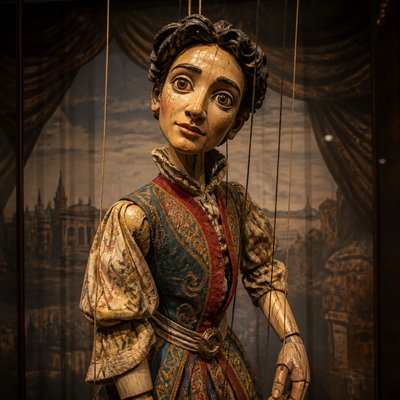
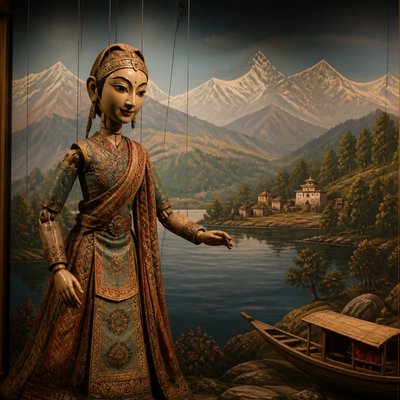
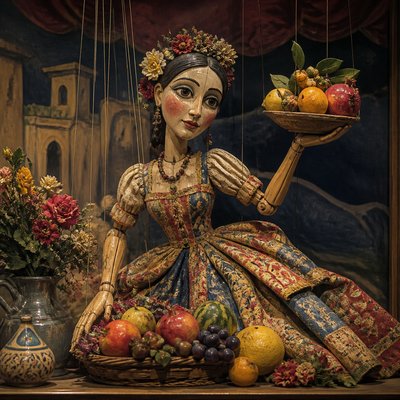
Explore Puppet Art Style: carved wooden figures, visible control wires, painted faces, articulated limbs, fabric costumes, and theatrical patina.
Instantly rendered in Puppet — or transform a photo
Puppet Gallery
Tap any artwork to explore it
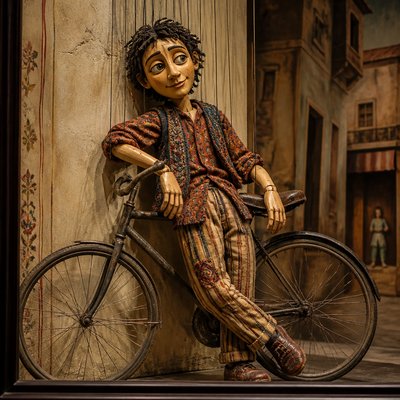
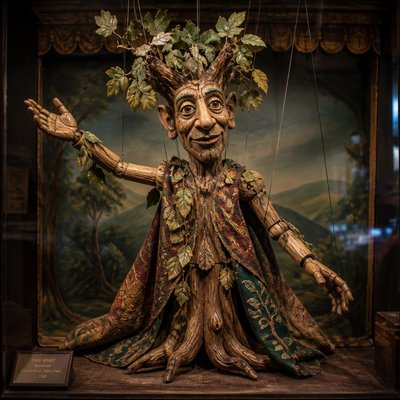
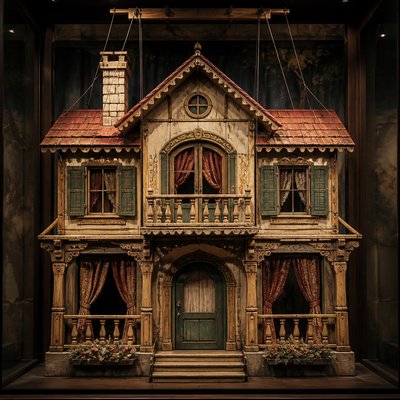
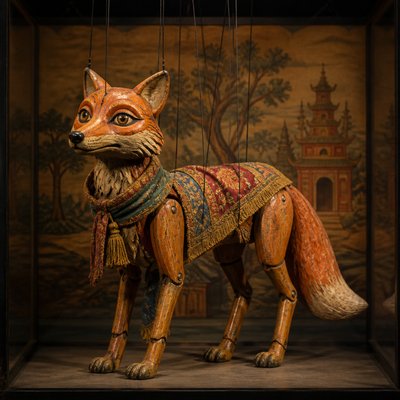
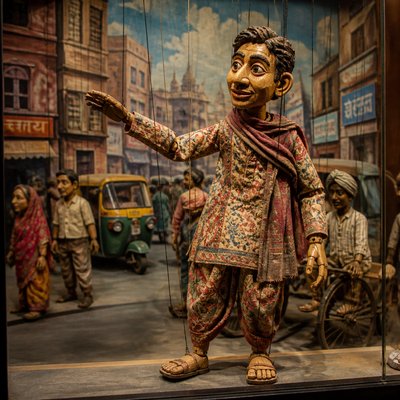
What is Puppet Art Style?
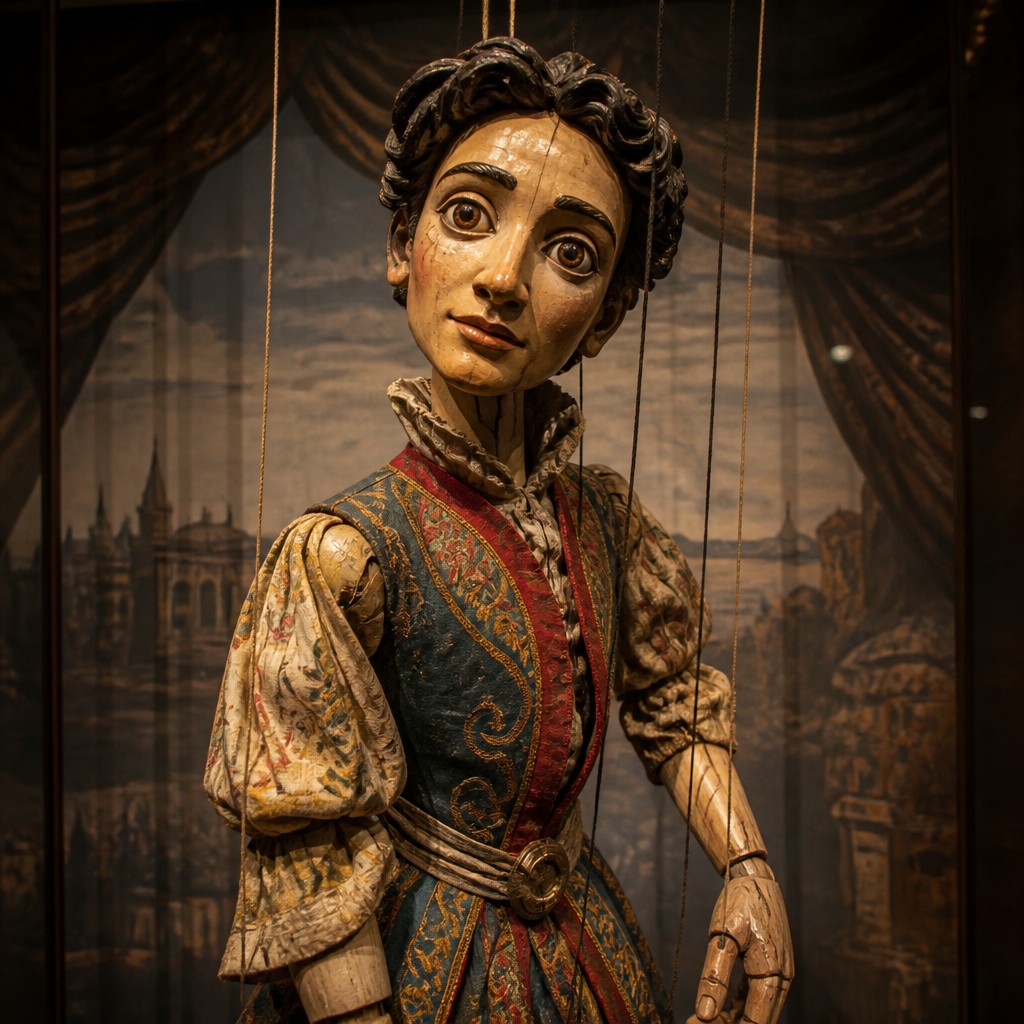
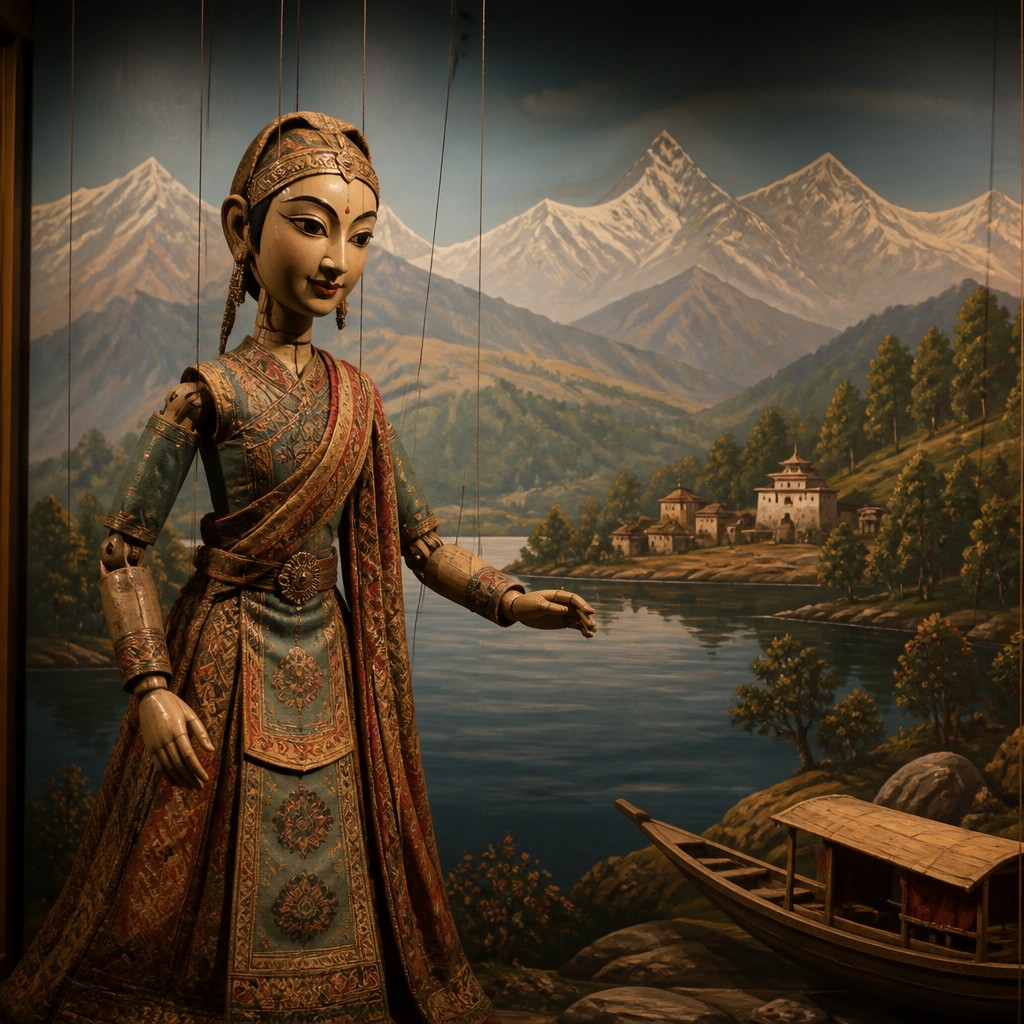
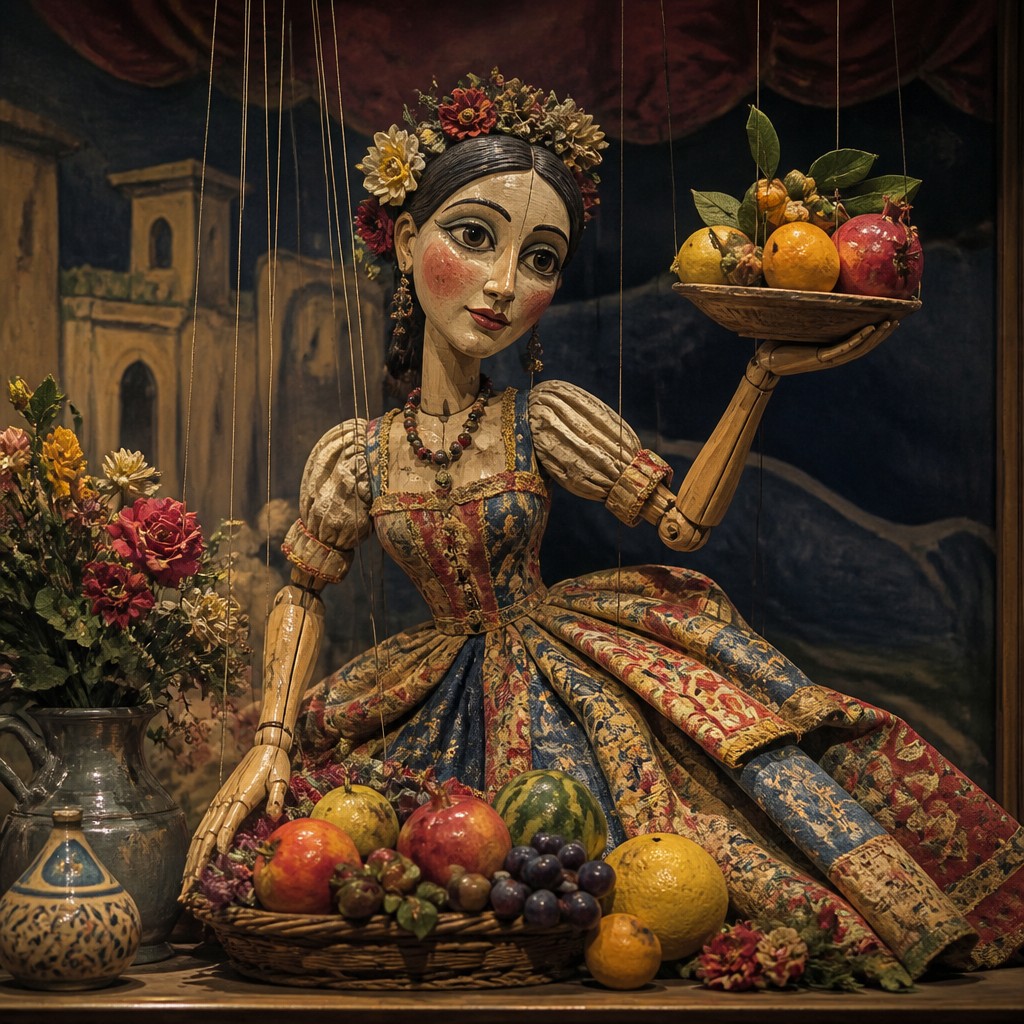
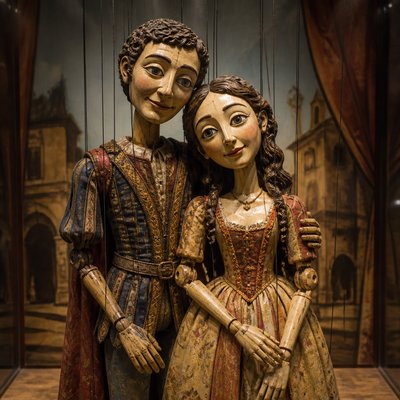
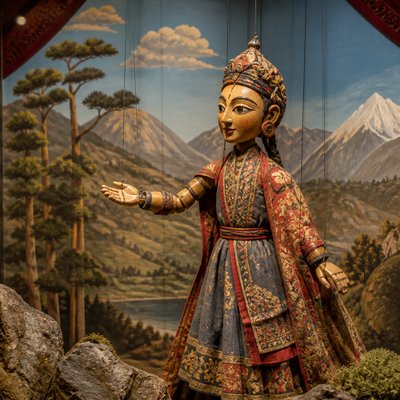
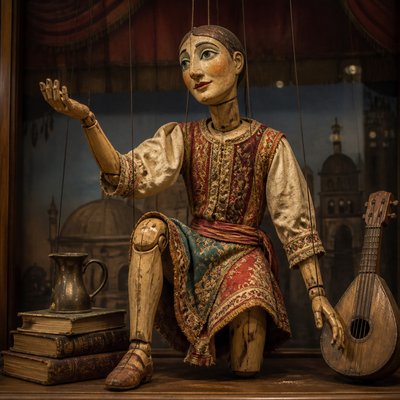
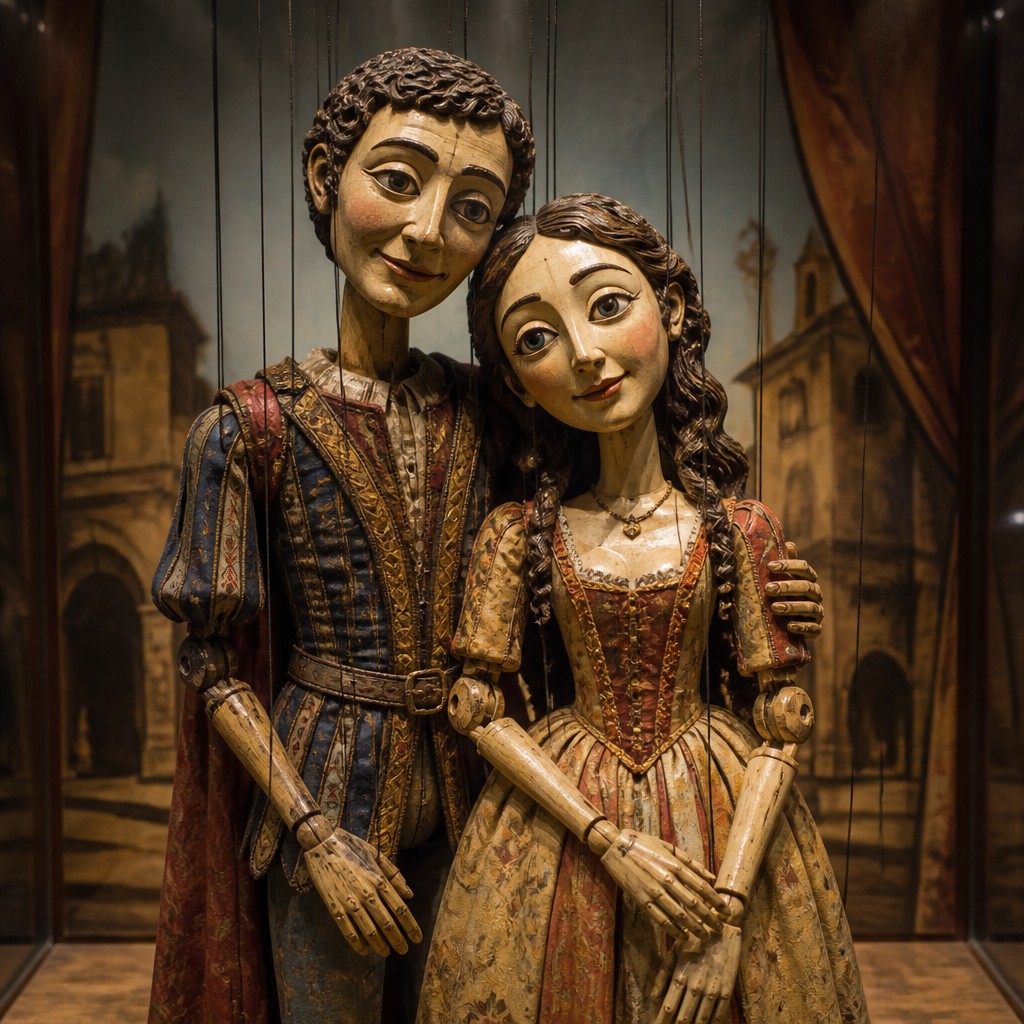
Puppet Art Style presents a subject as a hand-carved wooden marionette or theatrical figure, with visible control wires, jointed limbs, painted facial features, and a costume constructed from richly patterned fabric. The figure is usually shown in a carefully posed, nearly static presentation rather than in the middle of an action, allowing the construction, materials, and mechanisms to remain visible.
Its distinctive appearance combines the intimacy of folk carving, the formal design of stage costume, and the controlled atmosphere of a museum display. Hard wood, worn paint, exposed joints, cords, and aged textiles create a tactile sense of history, while theatrical lighting and an implied stage backdrop frame the subject as both an artifact and a performer waiting for movement.
Try It On Your Photos
Upload any photo and convert it into Puppet Art Style — drag the sliders to compare before and after.


What Defines Puppet Art Style
The signature details, up close
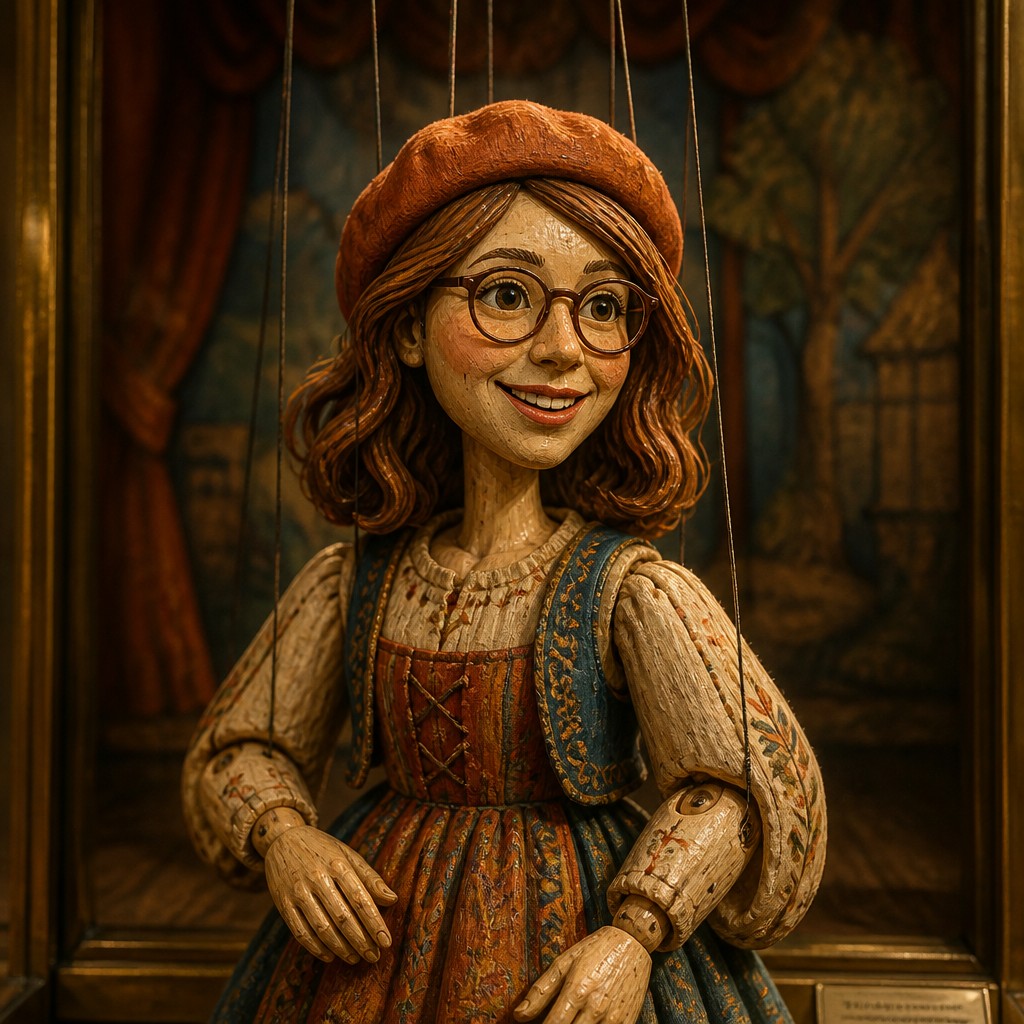
Carved wooden construction
The body appears shaped from wood with visible grain, tool marks, seams, and softened edges. Aged patina, small dents, and uneven paint reinforce the sense of a handmade object.
Visible control wires
Strings, cords, and overhead control bars remain in view rather than being hidden. They clarify the figure's marionette mechanism and add vertical lines that connect the character to the unseen stage.
Articulated anatomy
The figure is built from jointed sections at the shoulders, elbows, hips, knees, neck, and sometimes fingers. These divisions create a deliberate tension between human expression and mechanical construction.
Painted expressive features
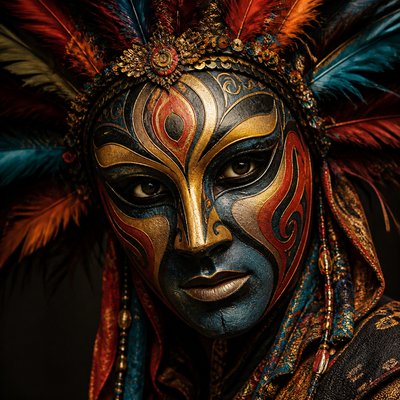
Facial features are simplified, outlined, or slightly exaggerated, often with glassy eyes, painted brows, and theatrical mouth shapes. Expression is conveyed through graphic marks as much as through realistic anatomy.
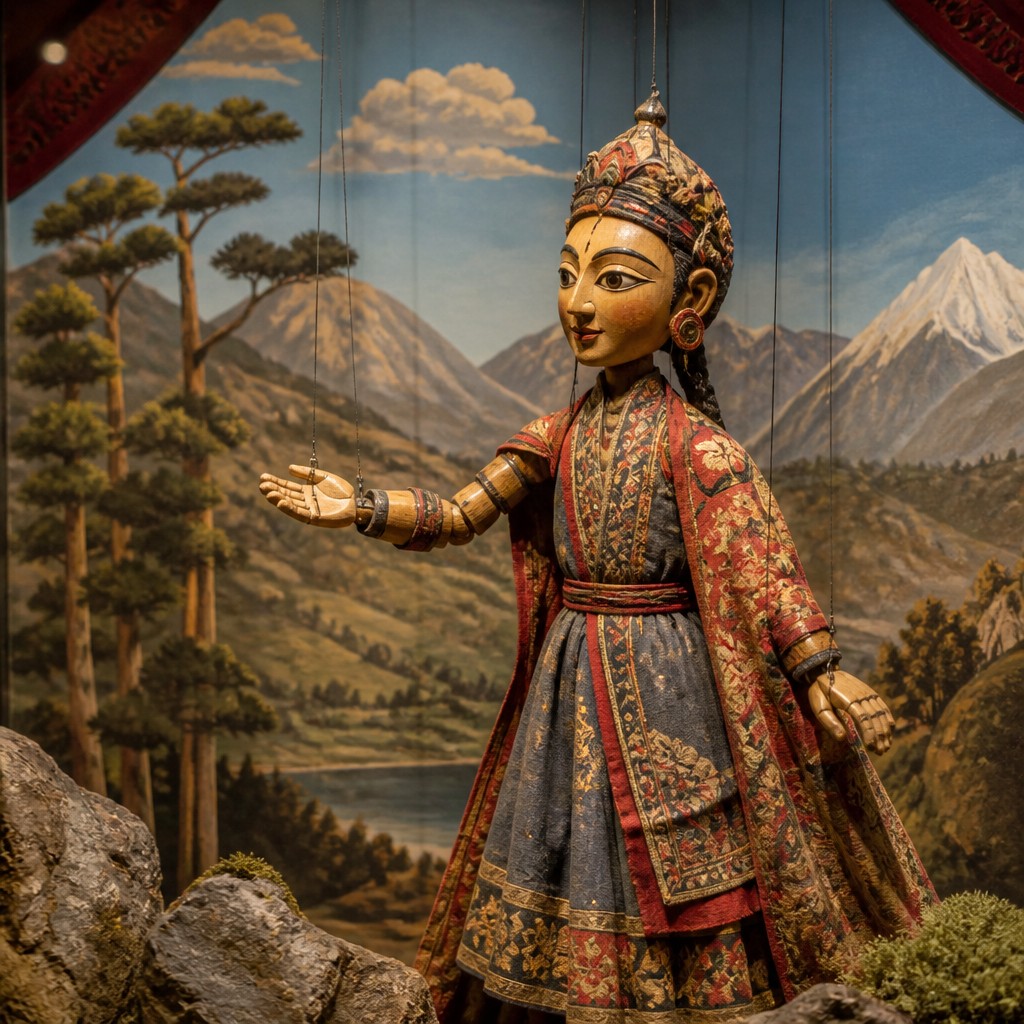
Patterned costume
Layered fabric, embroidered trims, ribbons, brocade-like surfaces, and miniature accessories drape over the wooden frame. Costume design supplies cultural, historical, or fantastical identity without concealing the puppet's structure completely.
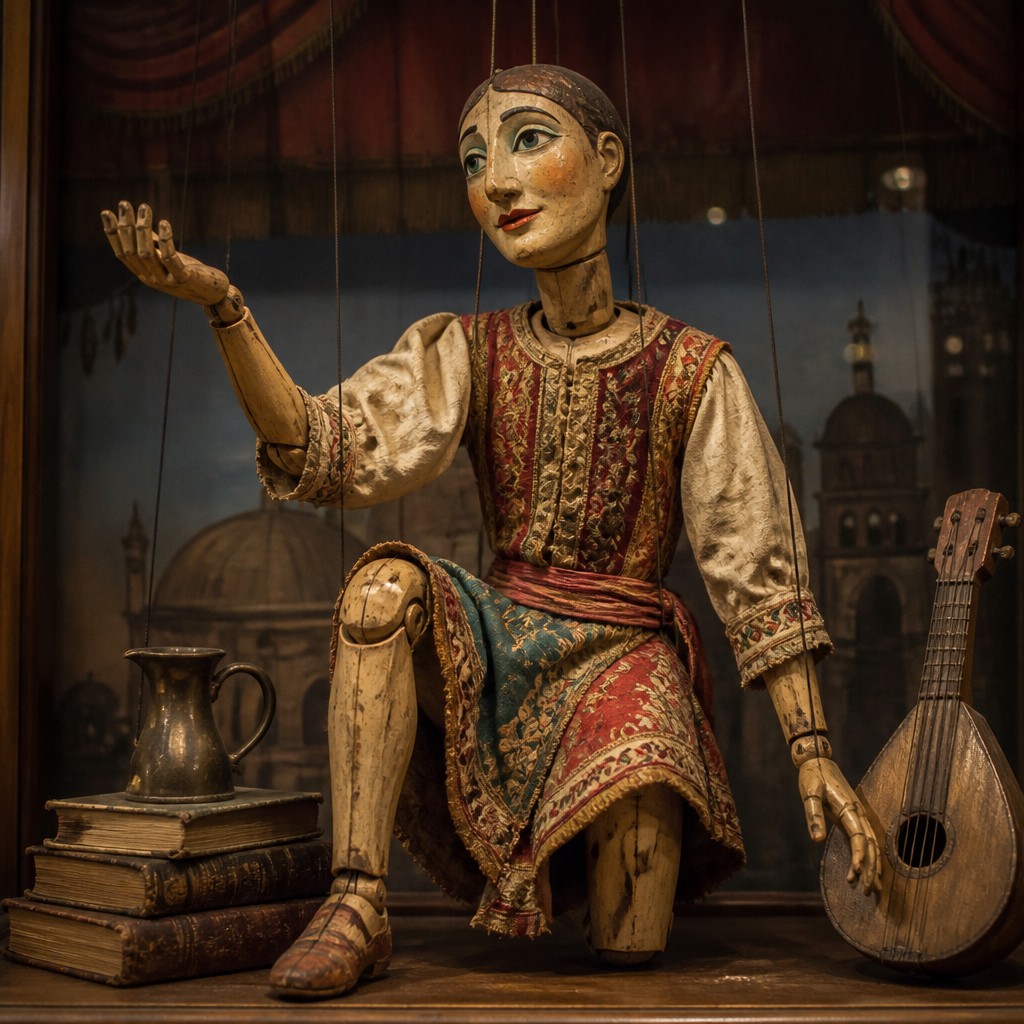
Vitrine-like lighting
Soft museum or display-case illumination highlights wood grain, chipped pigment, textile fibers, and metal fittings. Controlled shadows give the figure sculptural depth while keeping the composition quiet and observational.
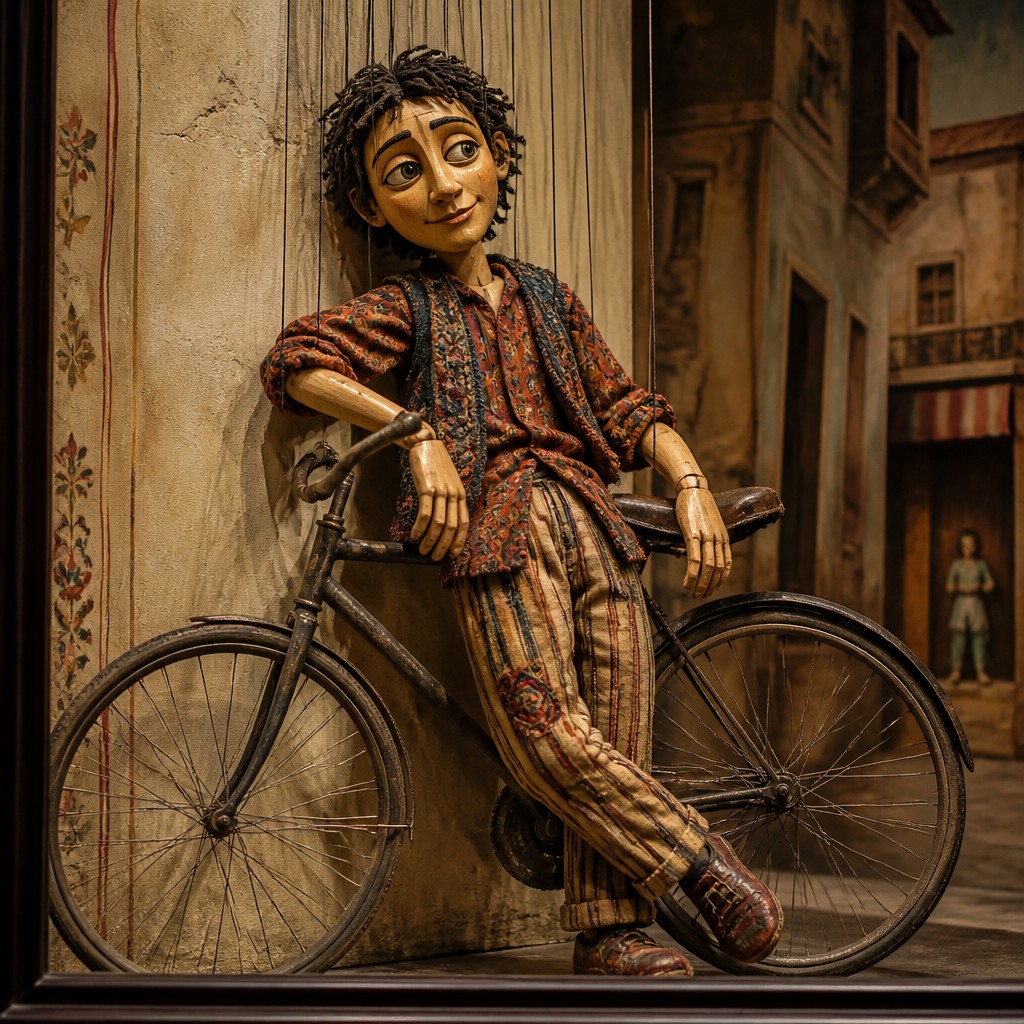
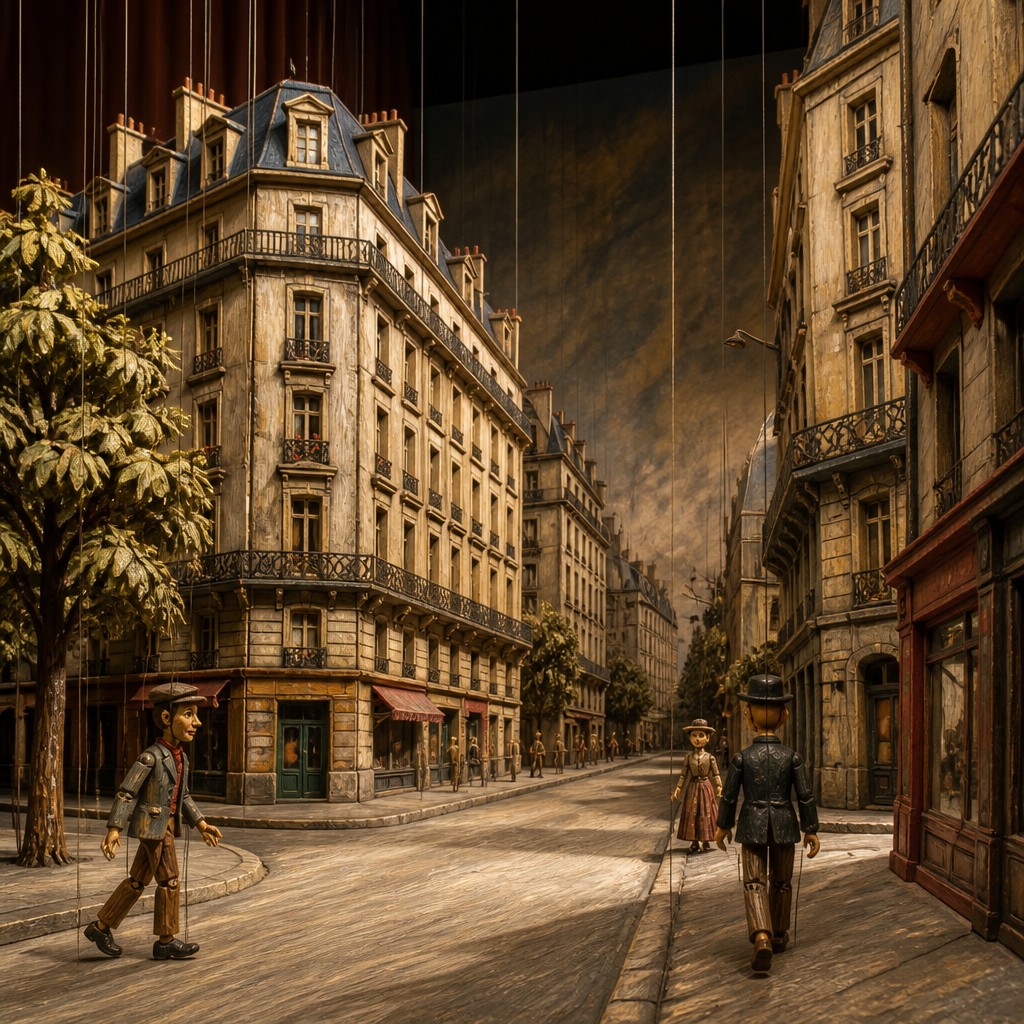
Implied theatrical setting
A muted stage, curtain, workshop, or darkened performance space is suggested behind the subject. Backgrounds remain subordinate so that the isolated figure reads as an artifact prepared for storytelling.
Puppet Prompt Ideas
Start from an idea — each one opens the generator with the style ready to go. See all 40 Puppet prompts →
How to Create Puppet Art
Master the craft step by step — or skip straight to creating. Read the full guide →
- 1
Build the form from simple carved volumes
For a physical piece, block the head, torso, and limbs from basswood or another workable material, then refine the joints and preserve selected tool marks. In digital work, model or paint these parts as separate wooden components rather than as a seamless human body.
- 2
Design joints and suspension clearly
Place visible pivots at the major limbs and add fine cords from the shoulders, hands, and head to a control bar above. Keep the mechanism legible, but vary cord thickness and tension so it feels handmade rather than diagrammatic.
- 3
Use restrained theatrical painting
Apply a limited palette of worn pigments, then add fine outlines and slightly heightened eyes or mouth shapes. Layer translucent stains, edge wear, and small chips over the surface to suggest age without making every area distressed.
- 4
Treat costume as miniature stage design
Combine patterned cloth, braided trim, folds, fasteners, and small props to establish the figure's role. Allow some wood and joint hardware to remain visible so the costume supports, rather than erases, the puppet construction.
- 5
Light for material evidence
Use a broad key light from above or to one side with gentle fill and a subdued background. Emphasize contact shadows beneath fabric, highlights on varnished wood, and fine reflections on wires or painted eyes.
- 6
Write prompts with material and presentation cues
Specify the subject first, then describe carved wood, articulated joints, visible wires, painted expression, patterned costume, aged patina, and a quiet stage or museum-vitrine setup. For image-to-image work, preserve the source pose while asking for puppet construction and textile details rather than simply adding a generic theatrical filter.
The Story
History & Origins of Puppet
Puppet Art Style is not a single historically codified art movement. It is a contemporary descriptive aesthetic that draws on the long traditions of marionette theater, hand-carved folk figures, mechanical toys, devotional sculpture, stage design, and museum presentation. Marionettes with suspended strings have appeared in theatrical cultures across Europe, Asia, and the Middle East, while carved and costumed figures have also served ritual, religious, and popular entertainment purposes.
The style develops this broad lineage into a unified visual language: the puppet is isolated like a collectible sculpture, its control system is deliberately revealed, and signs of age such as patina, chipped pigment, faded cloth, and softened wood grain become part of the design. Digital image-making has further popularized this hybrid of theater, craft documentation, and storybook atmosphere.
Influences: The style is related to marionette and glove-puppet theater, folk carving, painted wooden devotional figures, mechanical automata, miniature stage design, theatrical costume, stop-motion fabrication, and cabinet-of-curiosity display. It also shares the aged surfaces and restrained observation of museum photography, while its expressive faces and compressed storytelling can overlap with storybook illustration, dark fantasy, and surreal conceptual sculpture.
Frequently Asked Questions
What defines Puppet Art Style?
Its core features are a carved wooden figure, visible suspension wires, articulated limbs, painted facial features, and a richly designed costume. A quiet theatrical or museum-like presentation makes the construction feel intentional and emphasizes the object as both sculpture and performer.
Is Puppet Art Style a historical art movement?
No. The term describes a contemporary hybrid aesthetic rather than a single movement with a fixed date, manifesto, or geographic origin. It gathers visual ideas from established puppet traditions, folk sculpture, stagecraft, automata, and museum display.
How does it differ from ordinary puppet photography?
Puppet photography may document an actual performance, whereas this style often presents the figure as a posed artifact. It gives equal attention to wood grain, joints, wires, costume construction, and patina, with controlled lighting and a simplified background.
Can a human portrait be transformed into this style?
Yes. Preserve the person's recognizable pose, clothing cues, or facial expression while translating the anatomy into carved segments with visible joints and painted features. Adding cords, a control bar, fabric layers, and subtle wood wear helps establish the style more convincingly than applying a surface texture alone.
What materials are associated with the style?
Common material references include carved or turned wood, casein or oil-like paint, varnish, cotton, wool, brocade, embroidery, leather, wire, and string. Digital images can simulate these materials through wood grain, chipped pigment, textile weave, metal highlights, and contact shadows.
Where is this aesthetic commonly used?
It suits character portraits, theatrical scenes, folklore, fantasy narratives, editorial illustration, collectible-object studies, and concept design. It is especially effective when the image needs to suggest a story while keeping the mechanisms and craft of the figure visible.
Create your first Puppet artwork
Describe anything — or upload a photo — and see it in Puppet Art Style in seconds.
Related Styles
Discover similar art styles