Niger Art Style
Explore Niger art style: Tuareg silver geometry, Hausa mudbrick architecture, Wodaabe beadwork, and luminous Sahel desert color.
Instantly rendered in Niger — or transform a photo
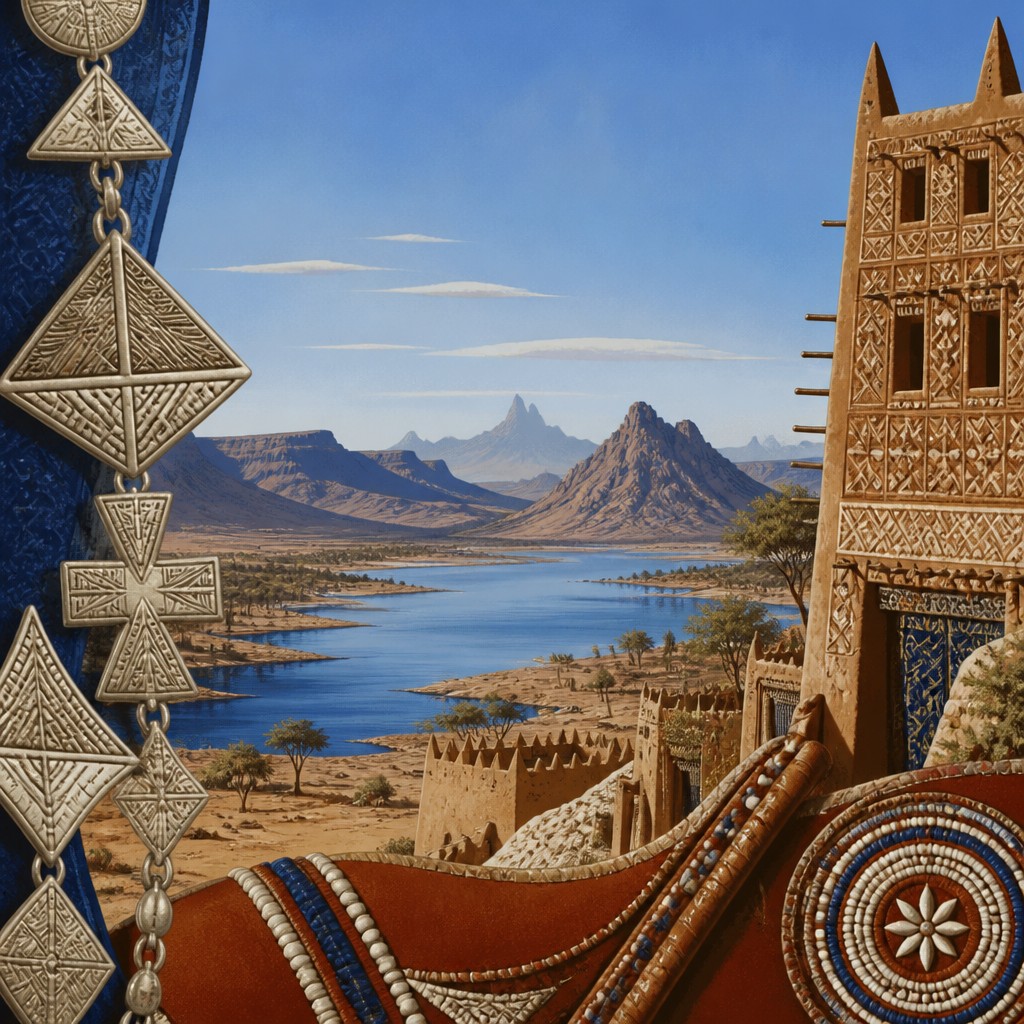
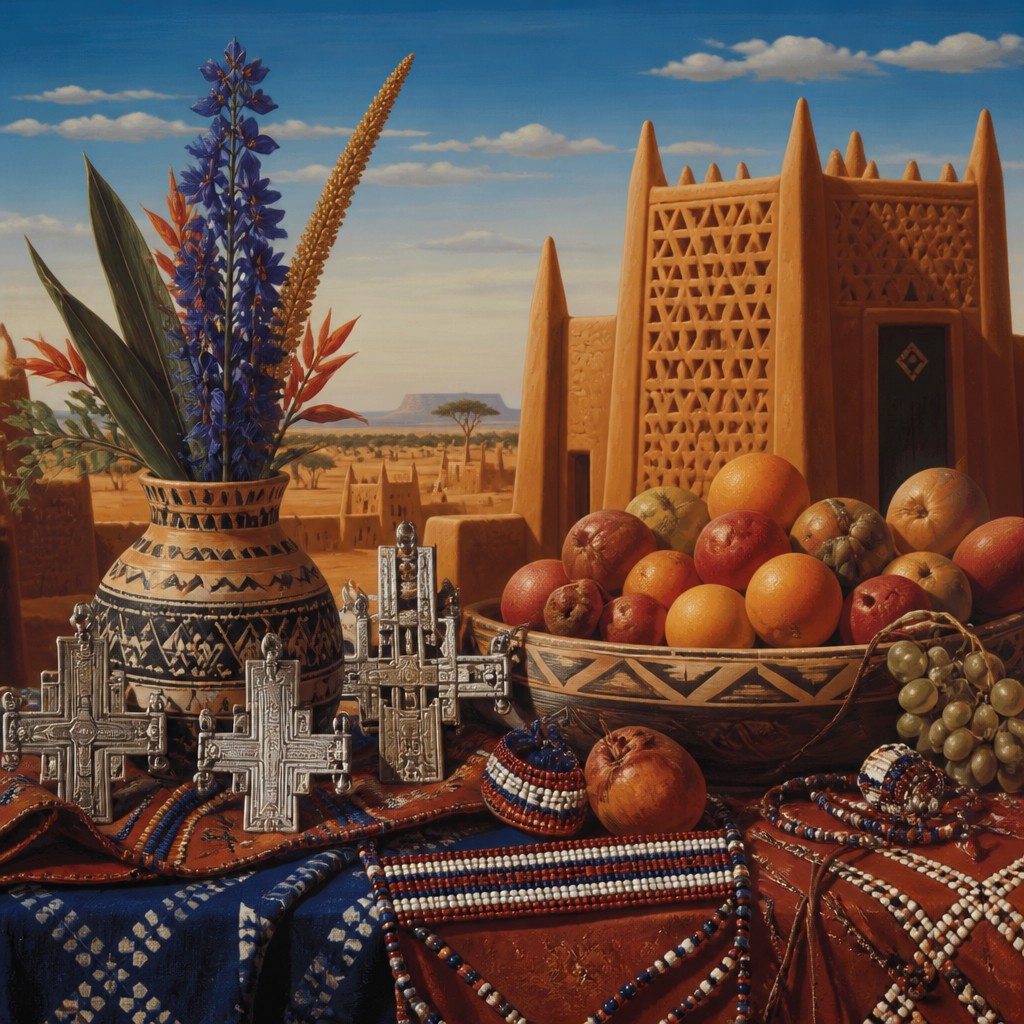
Niger Gallery
Tap any artwork to explore it
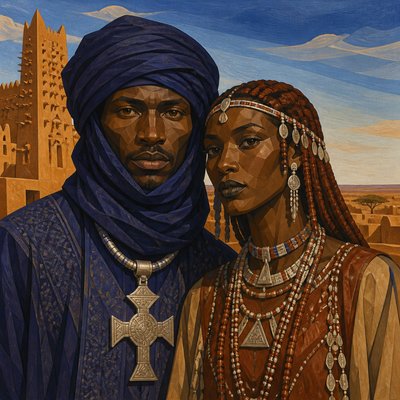
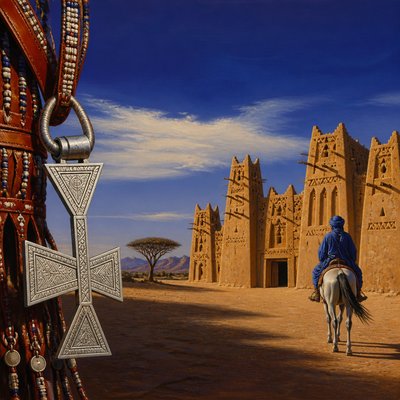
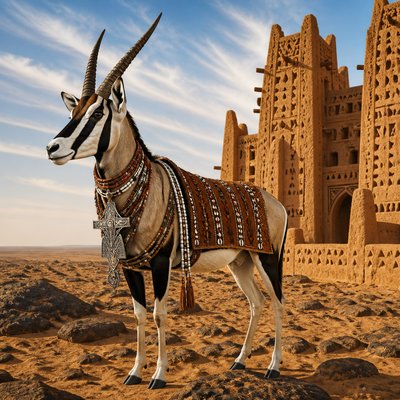
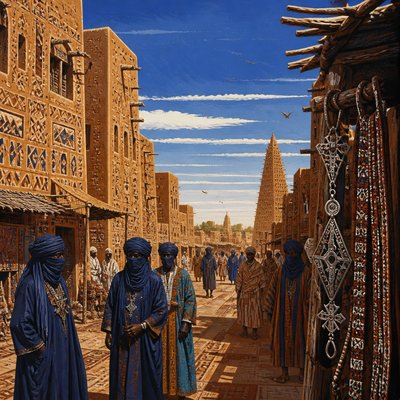
What is Niger Art Style?
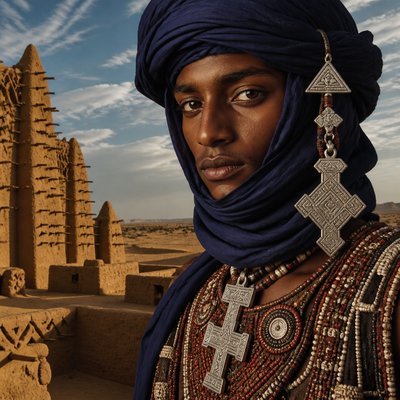
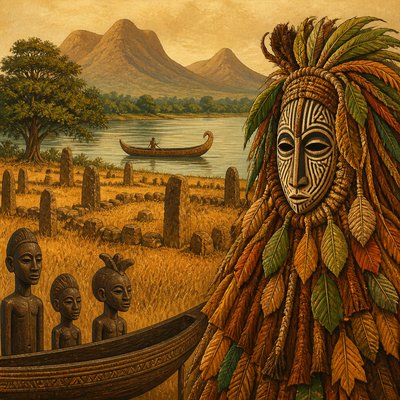
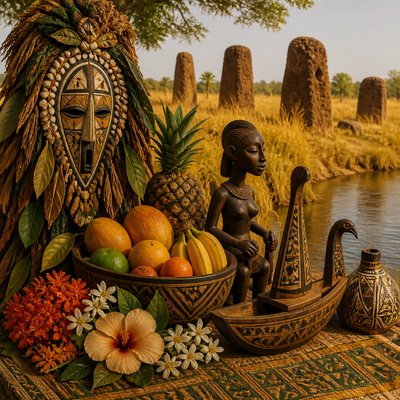
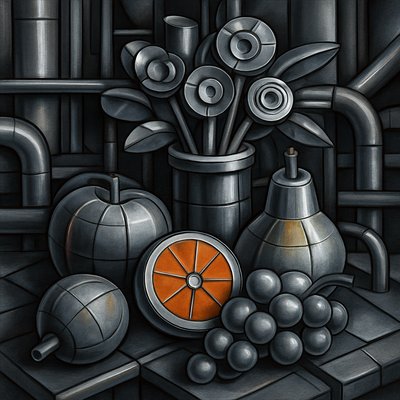
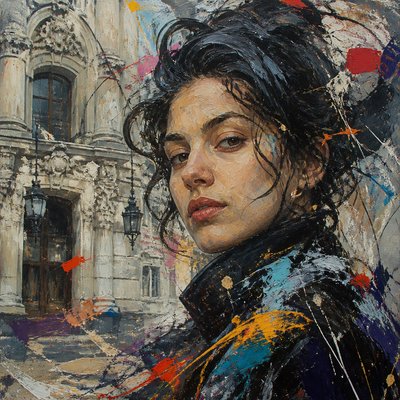
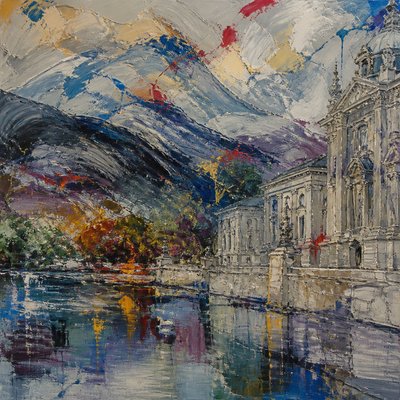
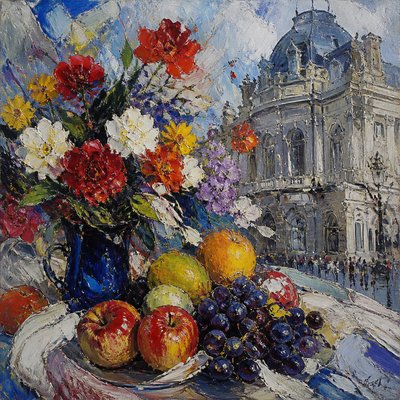
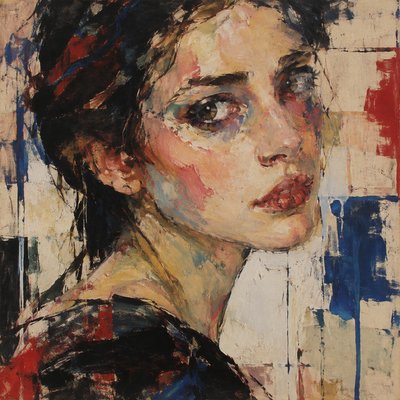
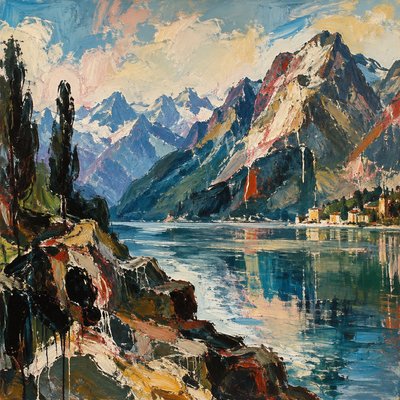
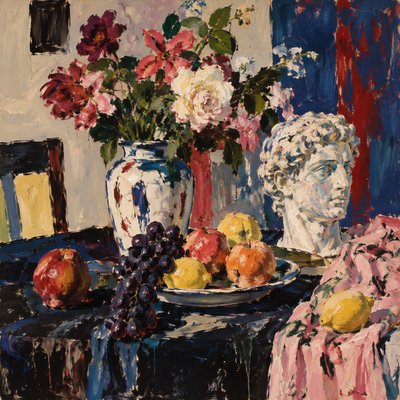
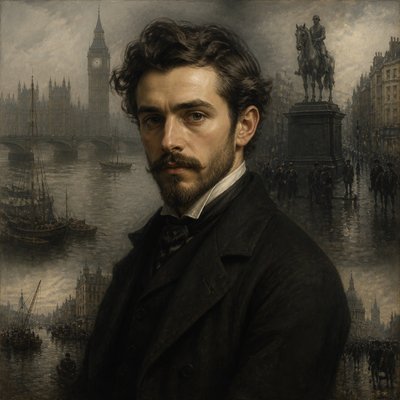
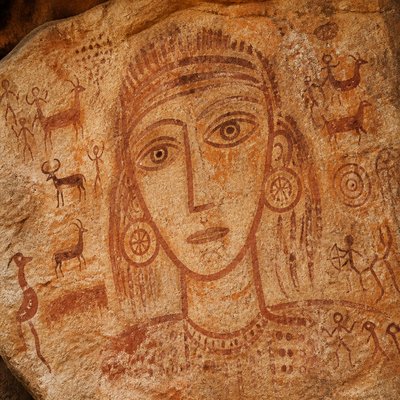
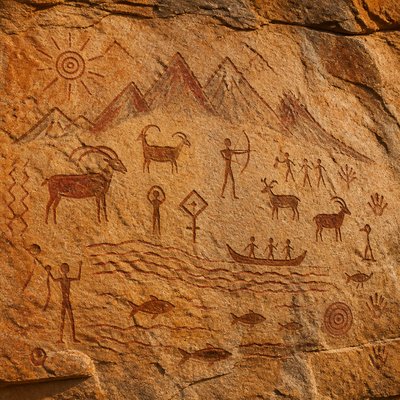
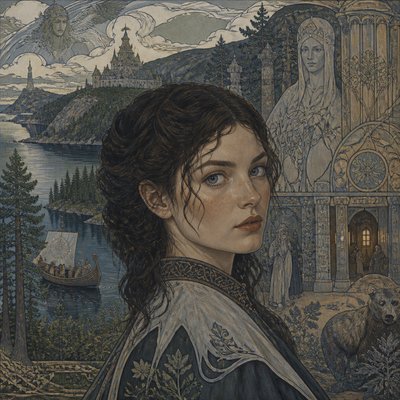
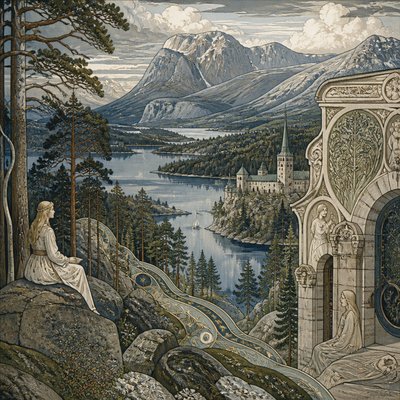
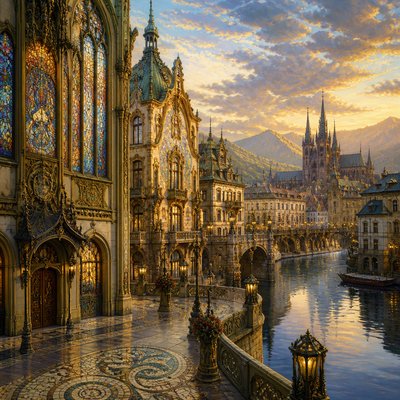
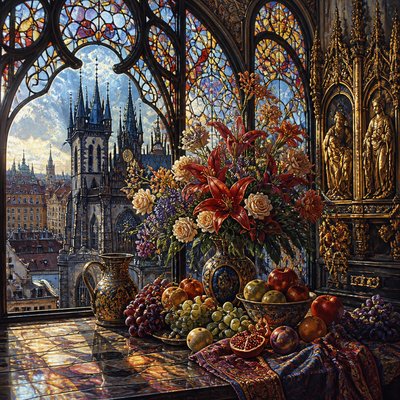
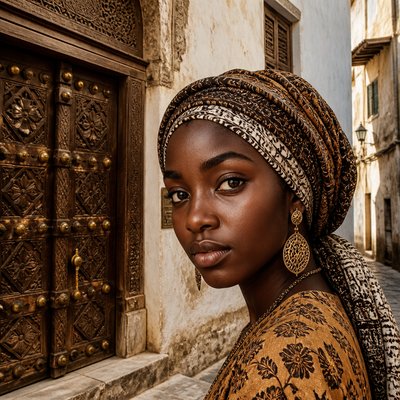
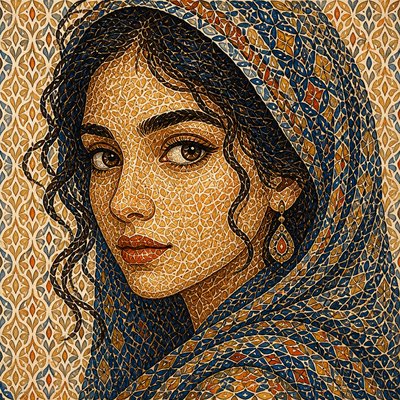
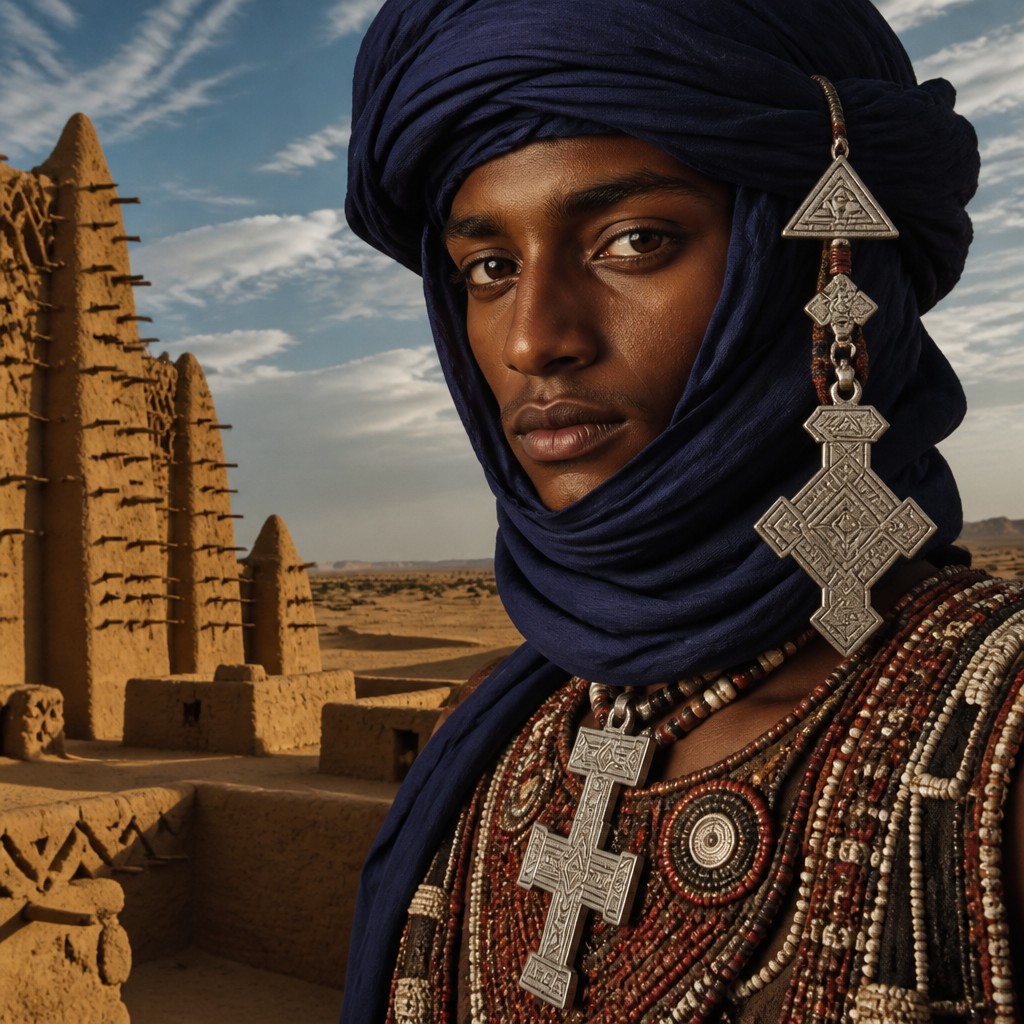
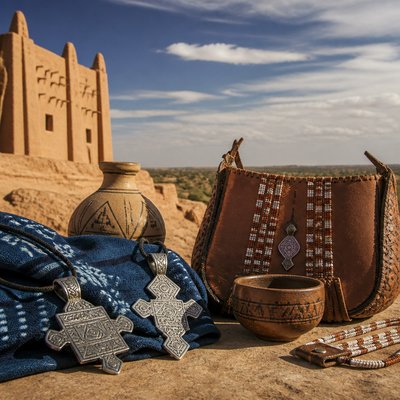
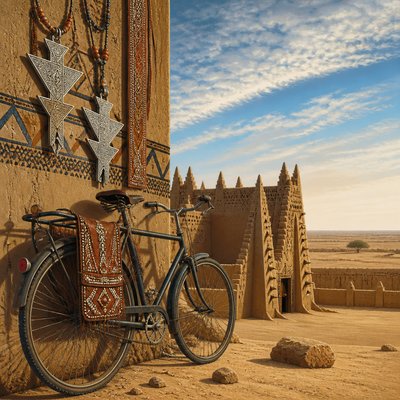
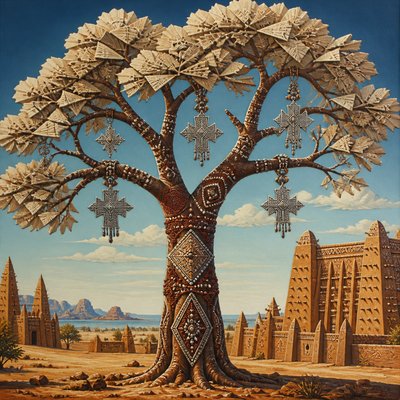
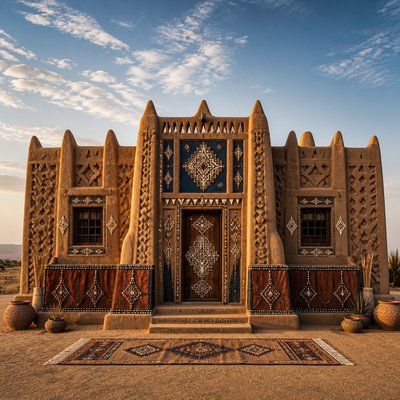
Niger art style is a contemporary, synthesis-based aesthetic rooted in the material cultures of the Sahara and Sahel. Its visual vocabulary combines angular Tuareg silver pendants, especially the cross-shaped forms associated with Agadez, sculptural Hausa earthen architecture, and richly ornamented Wodaabe leather and beadwork. Rather than describing one historical school, the term brings several regional traditions into a coherent visual language for illustration, design, photography, and digital image-making.
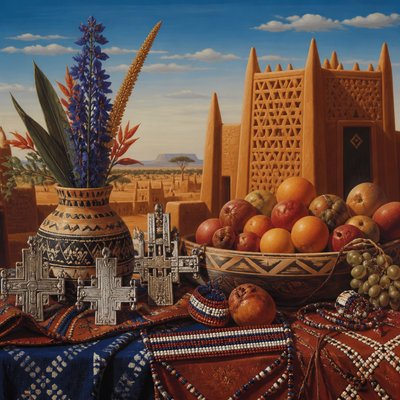
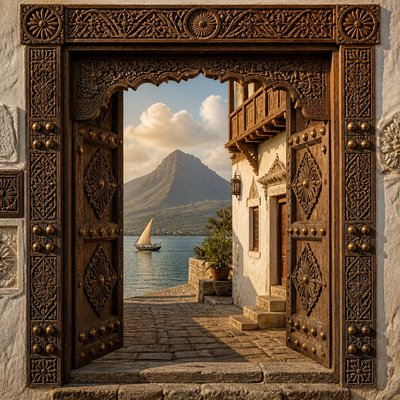
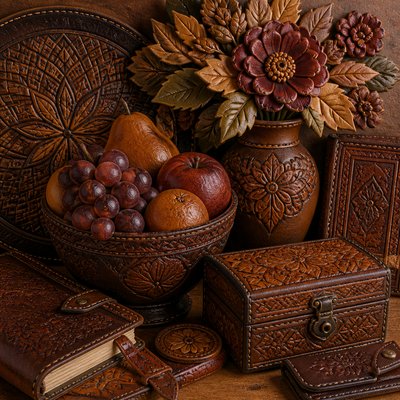
The style is defined by geometry, tactile surfaces, and a restrained desert palette. Engraved silver, hand-worked leather, compacted earth, woven fibers, and beads are set against broad horizons, hard sunlight, and deep indigo shadow. Warm ochre, clay red, ivory, charcoal, and blue suggest the Sahelian environment while emphasizing the contrast between crafted detail and expansive space.
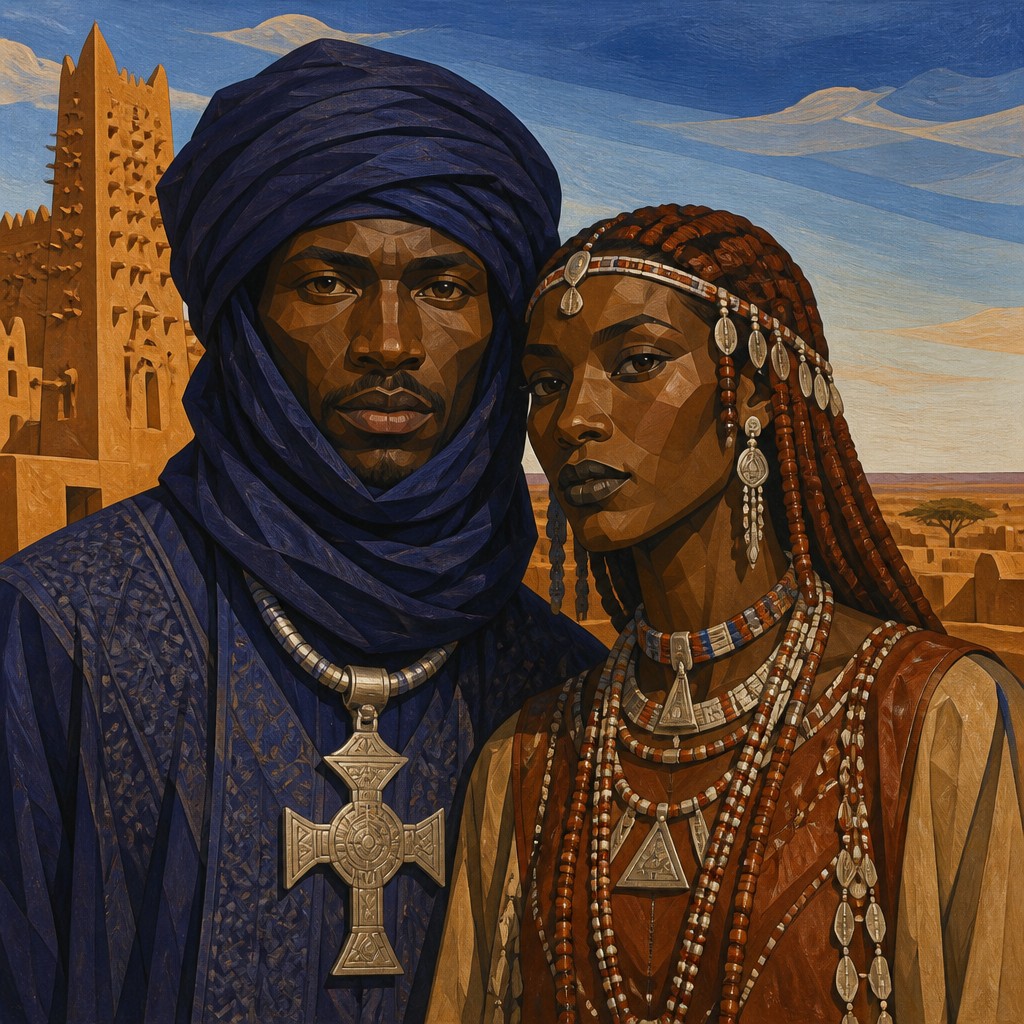
Try It On Your Photos
Upload any photo and convert it into Niger Art Style — drag the sliders to compare before and after.
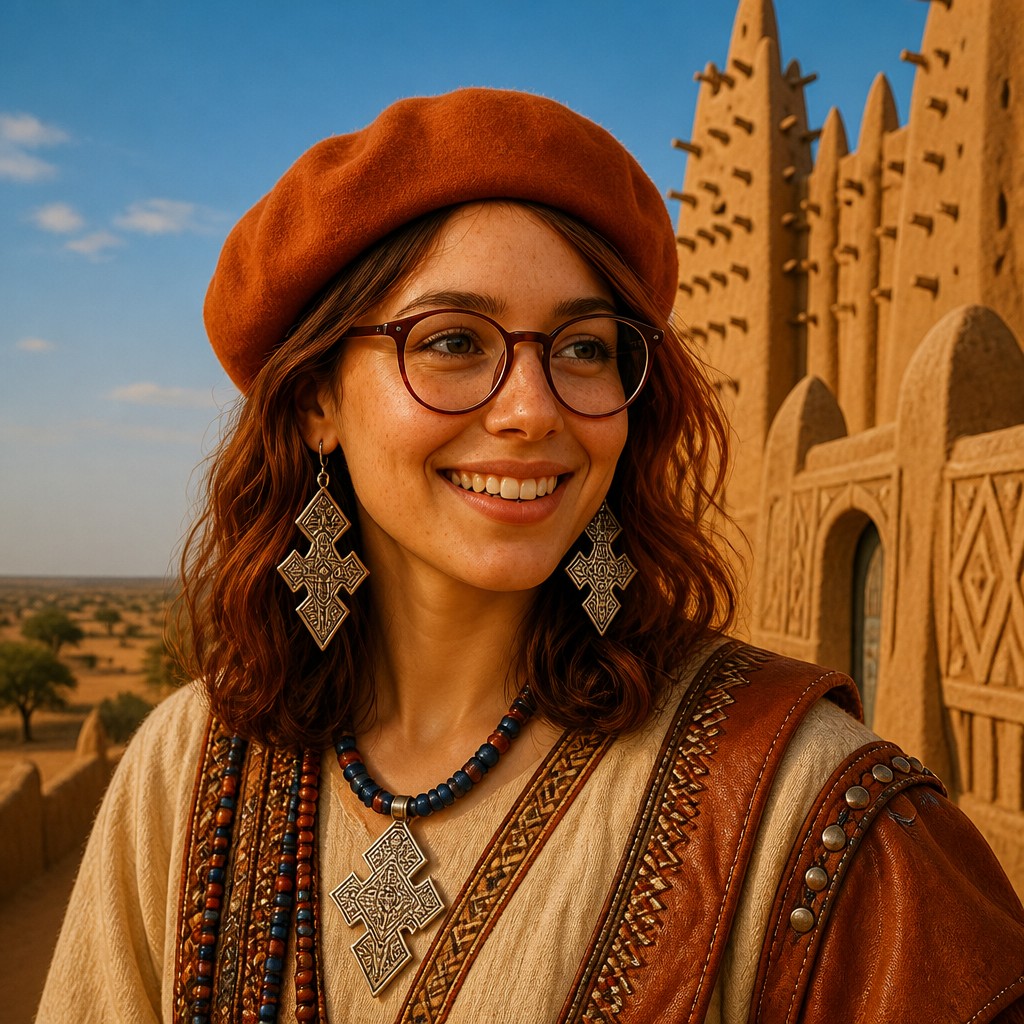

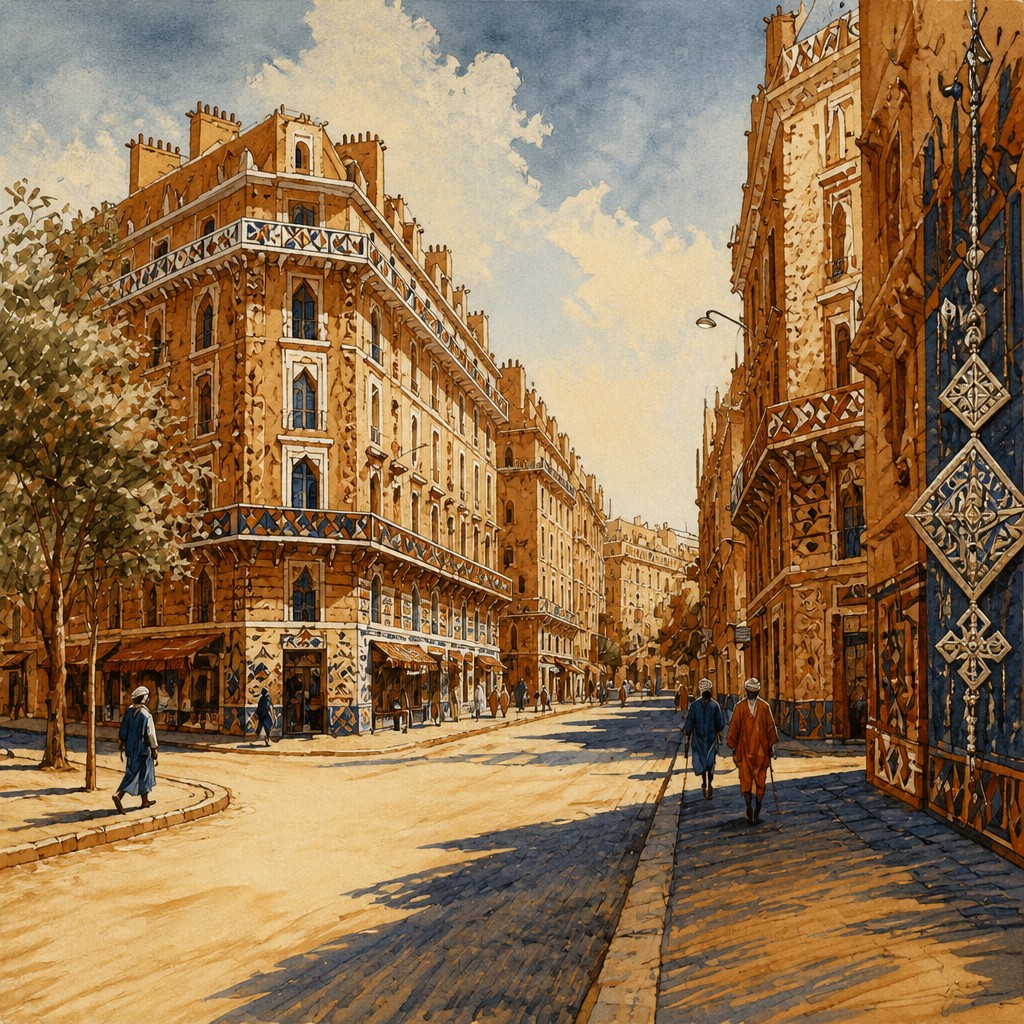

What Defines Niger Art Style
The signature details, up close
Angular Agadez silver geometry
Cross-shaped and other geometric pendants appear with crisp profiles, pierced sections, incised lines, and repeated triangular or linear motifs. The metal is often shown as matte, softly tarnished, or selectively polished rather than mirror-bright.
Earthen architectural mass
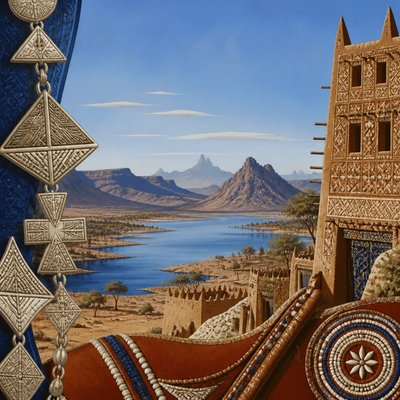
Hausa-inspired facades use mudbrick or banco-like surfaces, thick walls, projecting buttresses, crenellated edges, and sculpted relief. Their irregular handmade texture is central to the image, not merely a background effect.
Beaded leather ornament
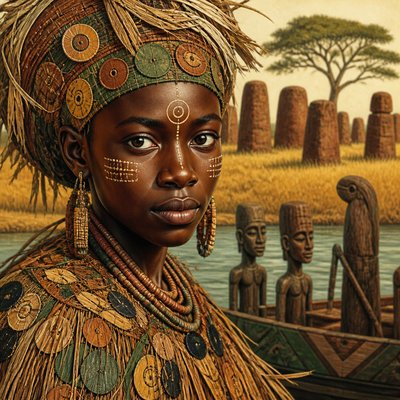
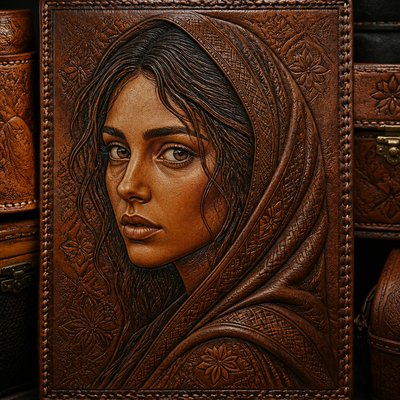
Rust, ivory, black, and indigo beads are arranged on belts, pouches, collars, harnesses, and garments made from warm-toned leather. Repetition, fringe, and small-scale tactile detail create visual richness.
Sahelian earth palette
The dominant colors are sand, ochre, terracotta, clay red, weathered brown, ivory, and muted charcoal, punctuated by deep indigo or cobalt. Saturation is generally controlled so that blue accents and silver highlights remain legible.
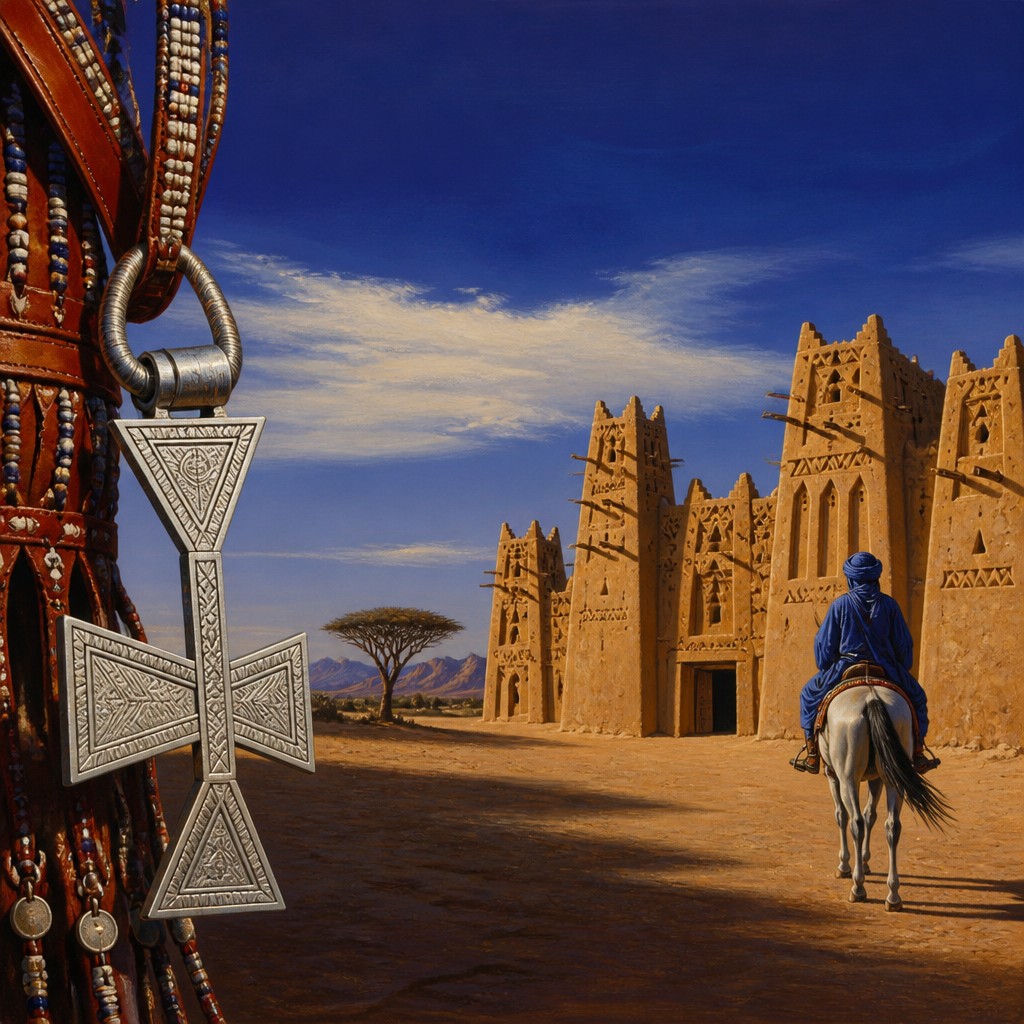
Hard horizon light
Wide skies, low horizons, sharp shadows, and warm directional sunlight evoke the open Sahel. Atmospheric haze can soften distant forms while preserving the graphic clarity of nearby objects.
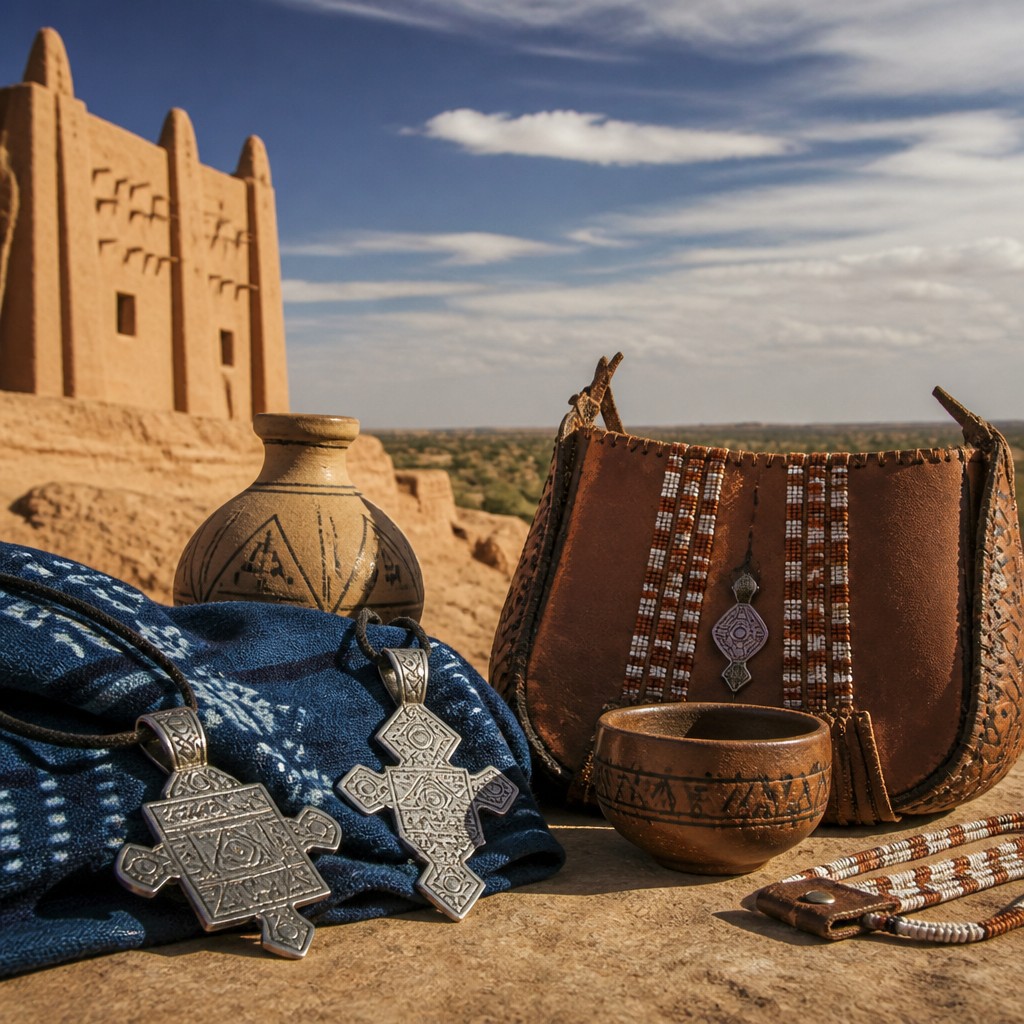
Pattern as structure
Engraving, brick relief, stitching, bead rows, woven marks, and repeated triangles or chevrons organize the composition. Pattern functions both as decoration and as a record of handwork.
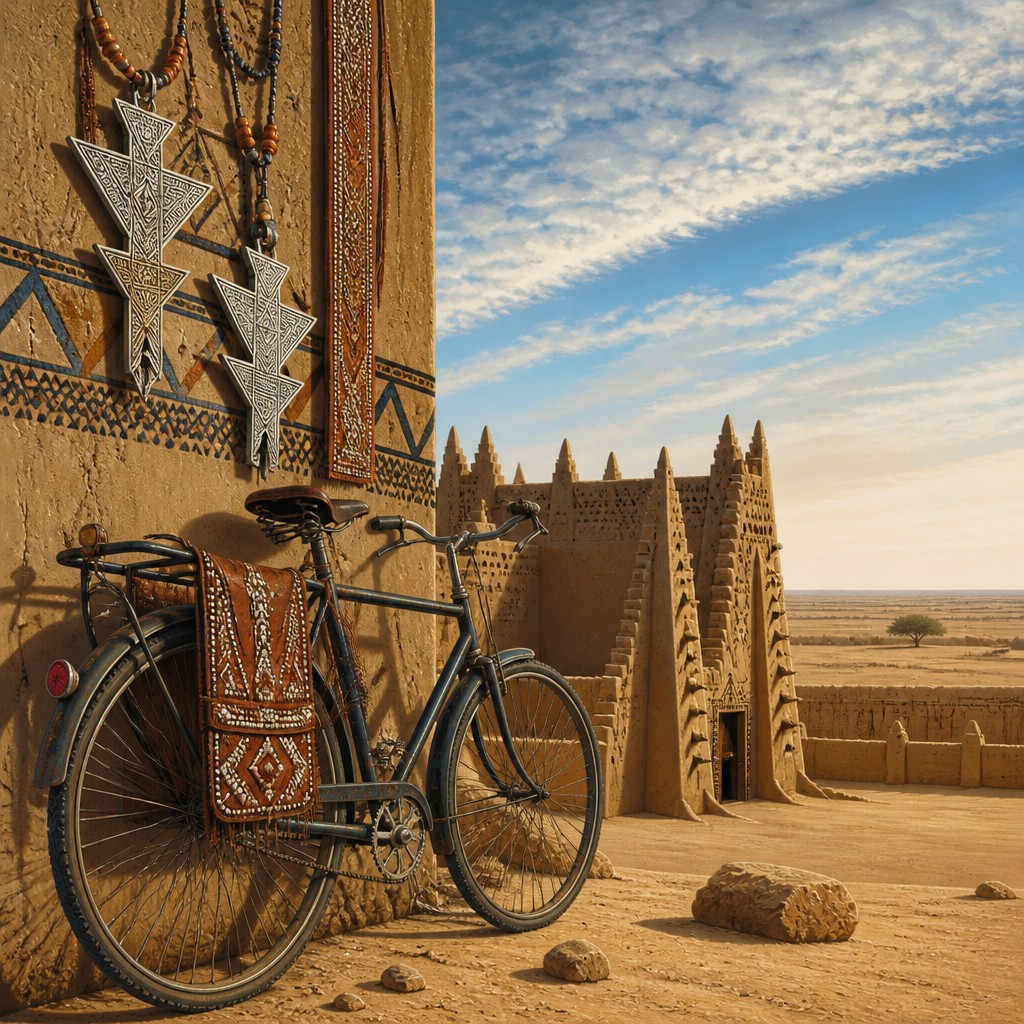
Material honesty
The aesthetic favors visible grain, tool marks, abrasions, uneven edges, oxidized metal, and compacted earth over flawless synthetic surfaces. These details communicate craft, use, and local material conditions.
Niger Prompt Ideas
Start from an idea — each one opens the generator with the style ready to go. See all 40 Niger prompts →
How to Create Niger Art
Master the craft step by step — or skip straight to creating. Read the full guide →
- 1
Build a material reference board
Collect separate references for Tuareg silver engraving, Hausa earthen facades, and Wodaabe bead and leather work before combining them. Keep the cultural sources visually distinct so the final image does not flatten different traditions into one costume.
- 2
Work from large shapes to surface detail
Start with a broad horizon, strong architectural masses, or a clearly silhouetted ornament. Add relief, engraving, stitching, and beadwork only after the composition and light are established.
- 3
Use restrained color contrasts
Begin with sand, ochre, clay, ivory, and umber, then introduce indigo as a deliberate accent. For painting or digital work, reserve the brightest value for silver edges, sunlit plaster, or bead highlights.
- 4
Model tactile surfaces
In physical media, combine dry-brush, incised marks, textured grounds, or layered earth pigments to suggest mudbrick and worn leather. Digitally, use directional texture maps and irregular masks rather than uniform noise.
- 5
Compose around the horizon
Use a low or distant horizon, expansive negative space, and long cast shadows to create the characteristic sense of Sahelian openness. Place detailed craft objects in the foreground so fine geometry contrasts with the landscape.
- 6
Write precise generation prompts
Specify the subject, material, cultural reference, palette, lighting, and composition separately—for example, an engraved silver pendant, a Hausa-inspired mudbrick facade, wide Sahel light, and a low horizon. Ask for respectful, historically grounded clothing and architecture, and avoid vague labels such as 'tribal' or 'exotic.'
The Story
History & Origins of Niger
Niger art style is not the name of a single historical movement or unified indigenous school. It is an aesthetic lineage assembled from long-standing Tuareg metalworking and leather traditions, Hausa architecture and decorative relief, and Wodaabe clothing and adornment practices, all shaped by the ecological and commercial networks of the Sahara and Sahel.
Agadez silverwork developed within Tuareg craft traditions and includes distinctive geometric pendants, engraved jewelry, and practical as well as ceremonial objects. Hausa builders in Niger and neighboring regions developed earthen structures with projecting buttresses, modeled surfaces, and patterned relief. Wodaabe communities are known for elaborate dress, beadwork, leather accessories, and visual performance. Contemporary interpretations should acknowledge these traditions as distinct rather than treating them as interchangeable symbols of a generic desert culture.
Influences: The style draws from Tuareg metalworking and leathercraft, Hausa earthen architecture, Wodaabe adornment, Saharan textile and jewelry traditions, and broader Sahelian craft practices. Its compositional openness also relates to documentary landscape photography, material-focused illustration, vernacular architecture studies, and contemporary pattern-based design. It should not be confused with a single pan-African style, North African ornament as a whole, or a uniform representation of all Nigerien communities.
Frequently Asked Questions
What defines Niger art style?
It is defined by a synthesis of Tuareg silver geometry, Hausa-inspired mudbrick architecture, Wodaabe bead and leather ornament, and the light and palette of the Sahel. Tactile surfaces, repeated geometric pattern, broad horizons, and strong warm sunlight are especially important.
Is Niger art style a historical art movement?
No. The label is best understood as a contemporary descriptive or AI-oriented style category, not a named historical movement. Its imagery should be traced to distinct Nigerien and wider Saharan and Sahelian traditions rather than presented as one unified ancient style.
What is an Agadez cross?
An Agadez cross is a Tuareg silver pendant associated with the Agadez region and commonly recognized by its geometric, cross-like silhouette. Forms and meanings vary, and the term should not be treated as a single standardized design or as a generic symbol for every Saharan community.
How is this different from generic desert or North African art?
Niger art style focuses on Sahelian material culture and on specific visual lineages from Niger, including Tuareg jewelry, Hausa earthen architecture, and Wodaabe adornment. Generic desert imagery often relies on dunes and nomadic clichés without identifying craft techniques, building forms, or regional distinctions.
How can I make an image in this style without stereotyping people?
Name the particular material tradition you are drawing from and describe clothing, architecture, and objects accurately. Avoid vague terms such as 'primitive,' 'tribal,' or 'exotic,' and do not combine sacred, ceremonial, or community-specific elements indiscriminately.
Where is this style most effective?
It works well for jewelry studies, architectural visualization, editorial illustration, fashion details, landscape compositions, travel-inspired design, and tactile still lifes. The strongest results usually balance a carefully described crafted object with open space and regionally appropriate light.
Create your first Niger artwork
Describe anything — or upload a photo — and see it in Niger Art Style in seconds.
Related Styles
Discover similar art styles