Togolese Art Style
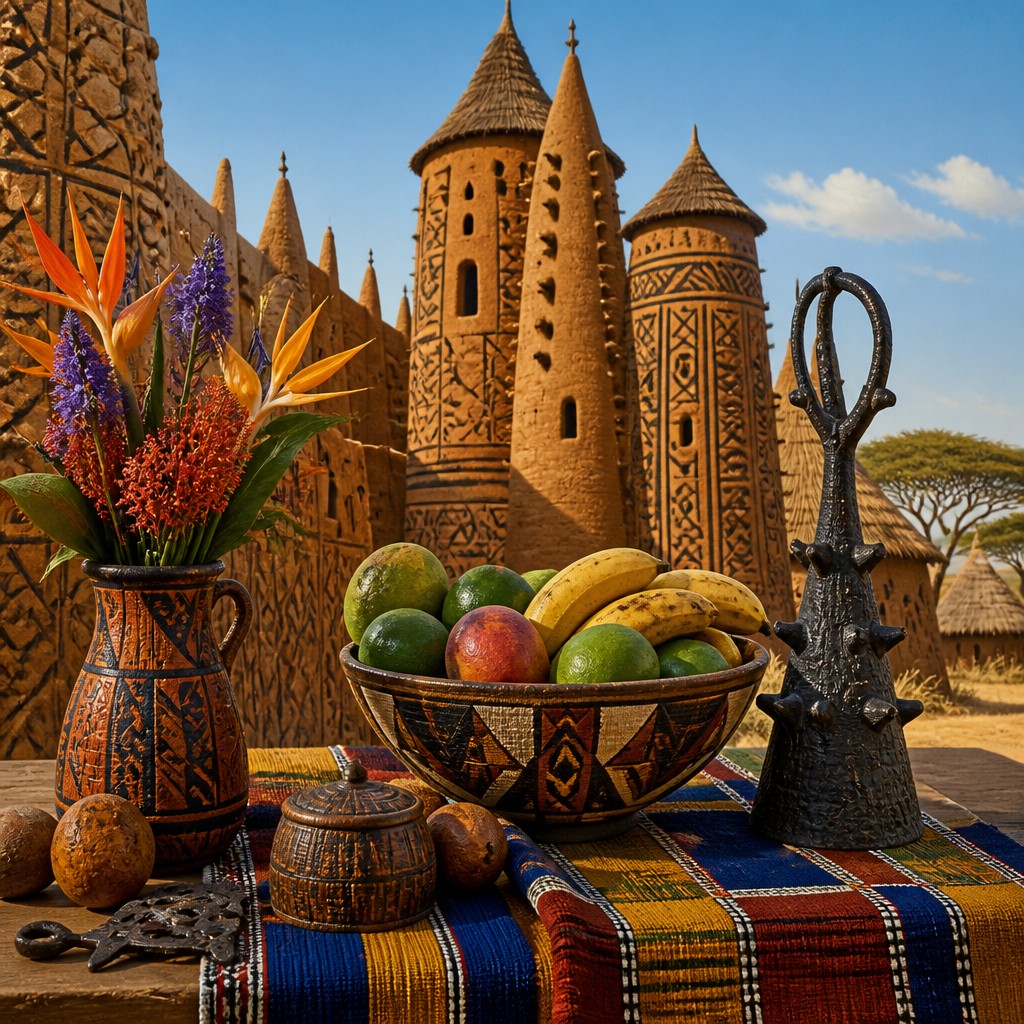
Explore Togolese art style: sculptural mud tower houses, Ewe-inspired woven geometry, Kabye ironwork textures, and a warm savanna palette.
Instantly rendered in Togolese — or transform a photo
Togolese Gallery
Tap any artwork to explore it
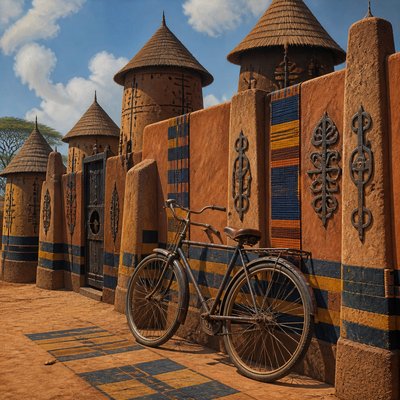
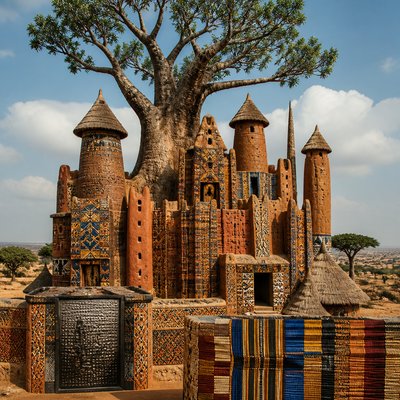
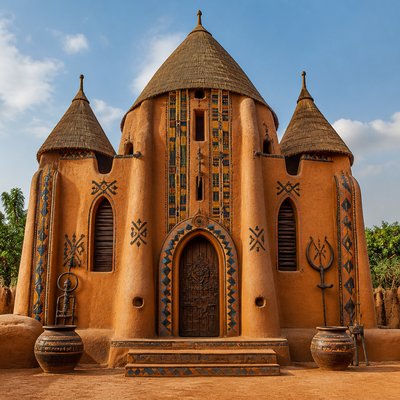
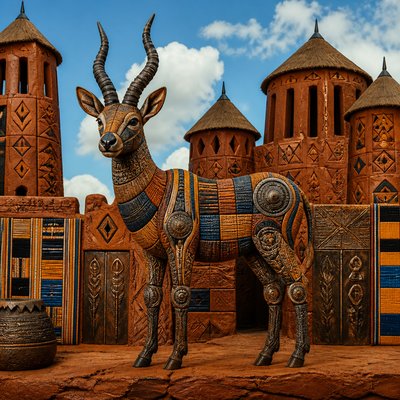
What is Togolese Art Style?
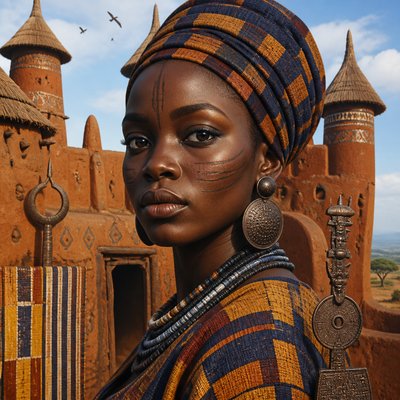
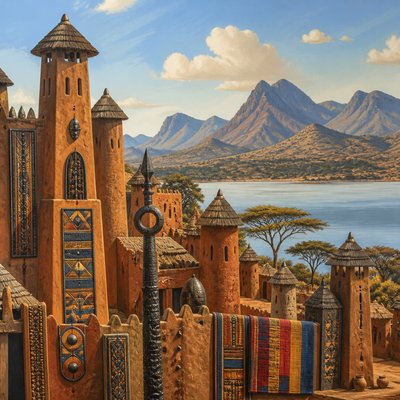
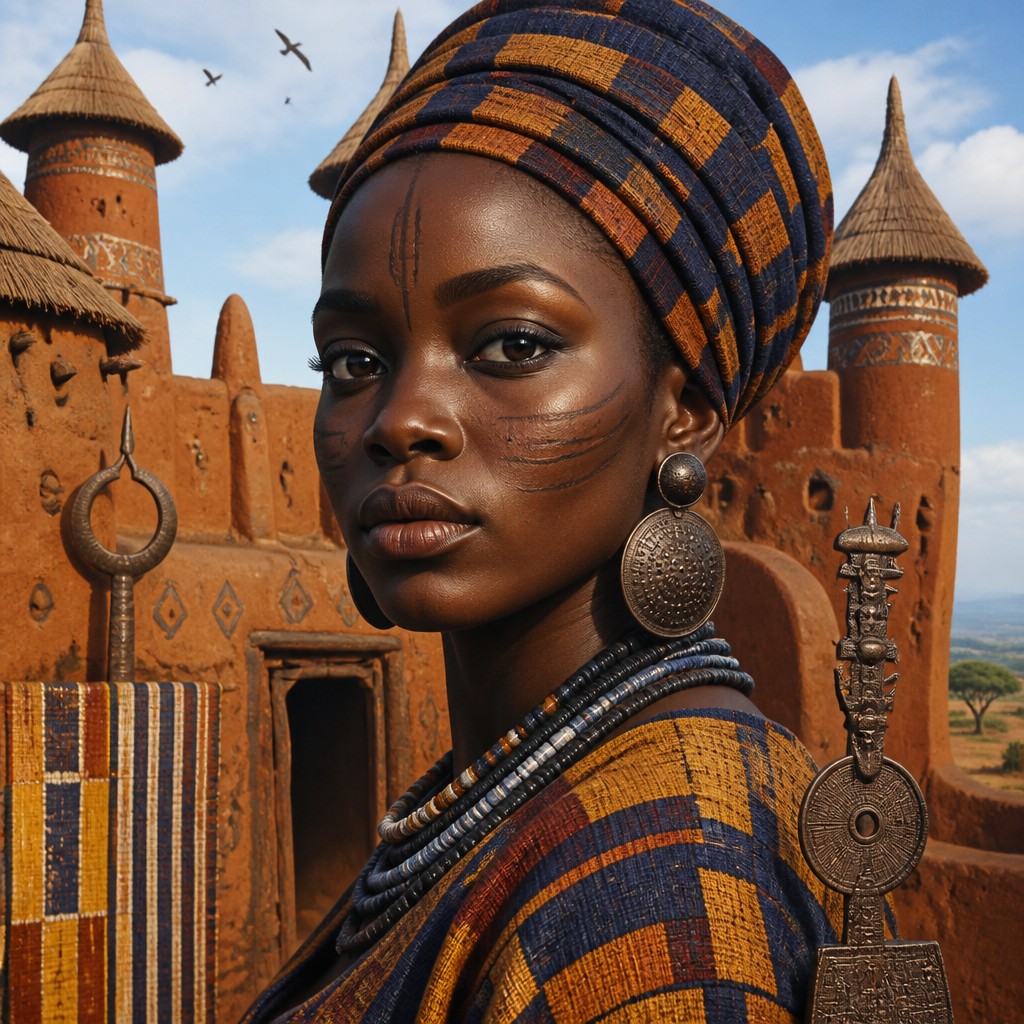
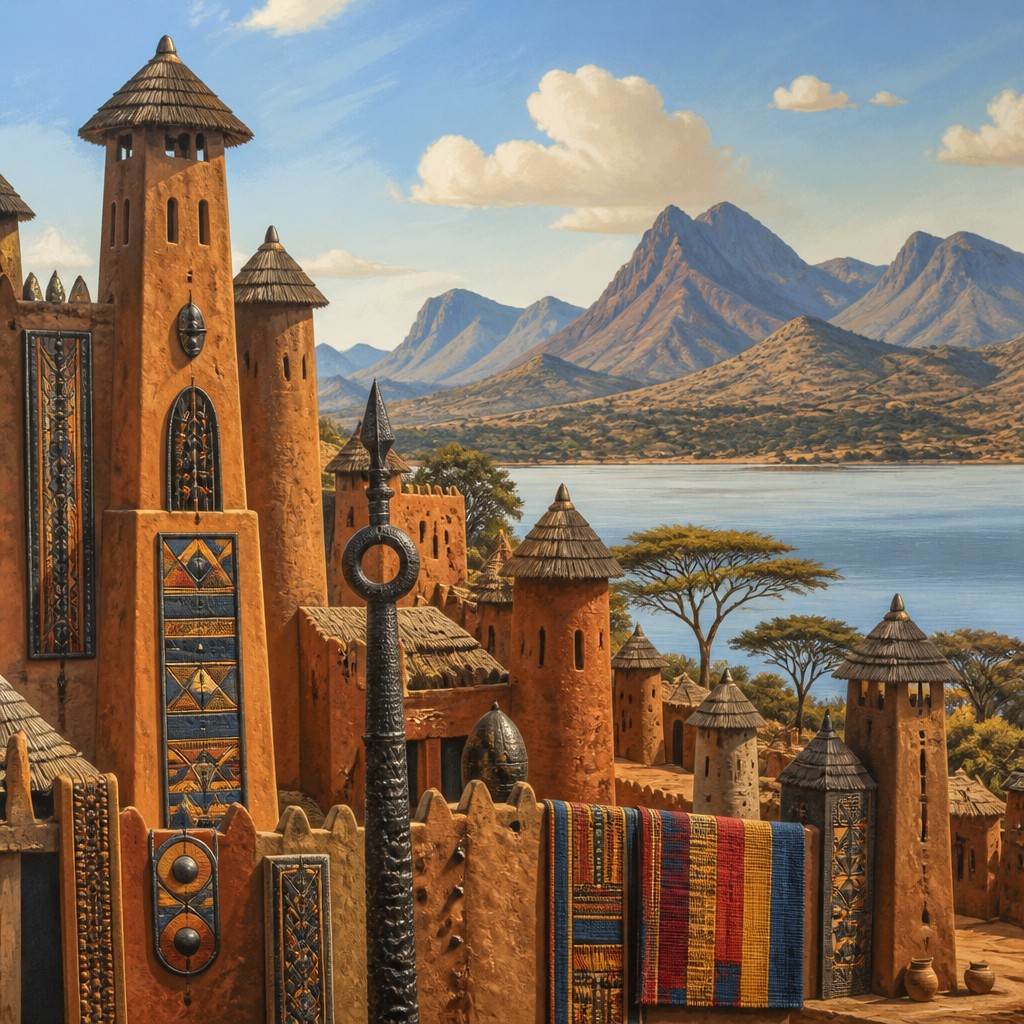
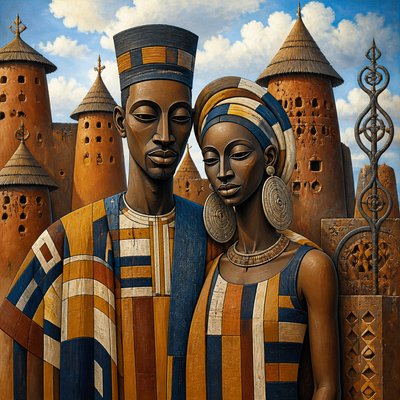
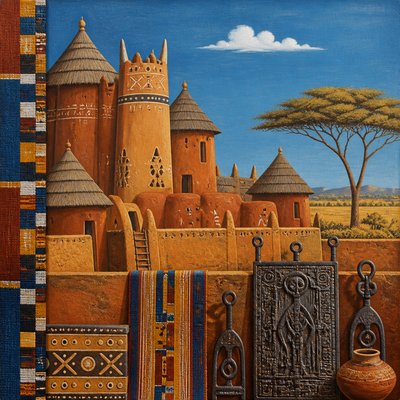
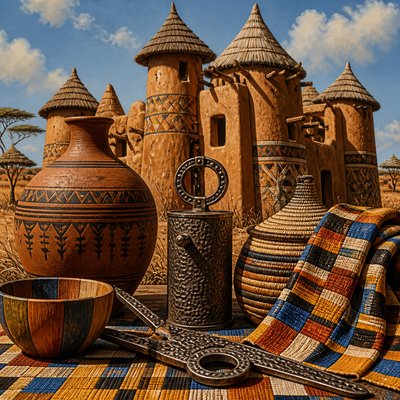
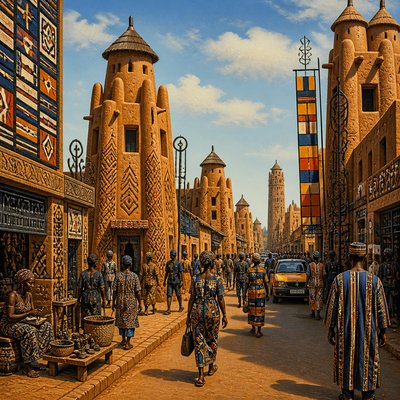
Togolese Art Style is a contemporary, AI-native visual synthesis inspired by Togo’s earthen architecture, textile traditions, metalwork, and savanna environments. Its central image language combines sculptural mudbrick tower houses with rounded turrets and conical thatched roofs, narrow-strip woven patterns in strong color blocks, and the rough, dark surface of hammered iron. Warm terracotta, ochre, clay red, charcoal, cream, and indigo establish a grounded regional palette.
The style looks architectural and tactile rather than ornamental alone. Repeated towers, horizontal textile bands, roof cones, and iron marks create a steady visual rhythm, while broad skies and simplified landscapes give the composition spaciousness. It is best understood as an interpretive aesthetic lineage, not as a single traditional movement or a uniform national style representing every community in Togo.
Try It On Your Photos
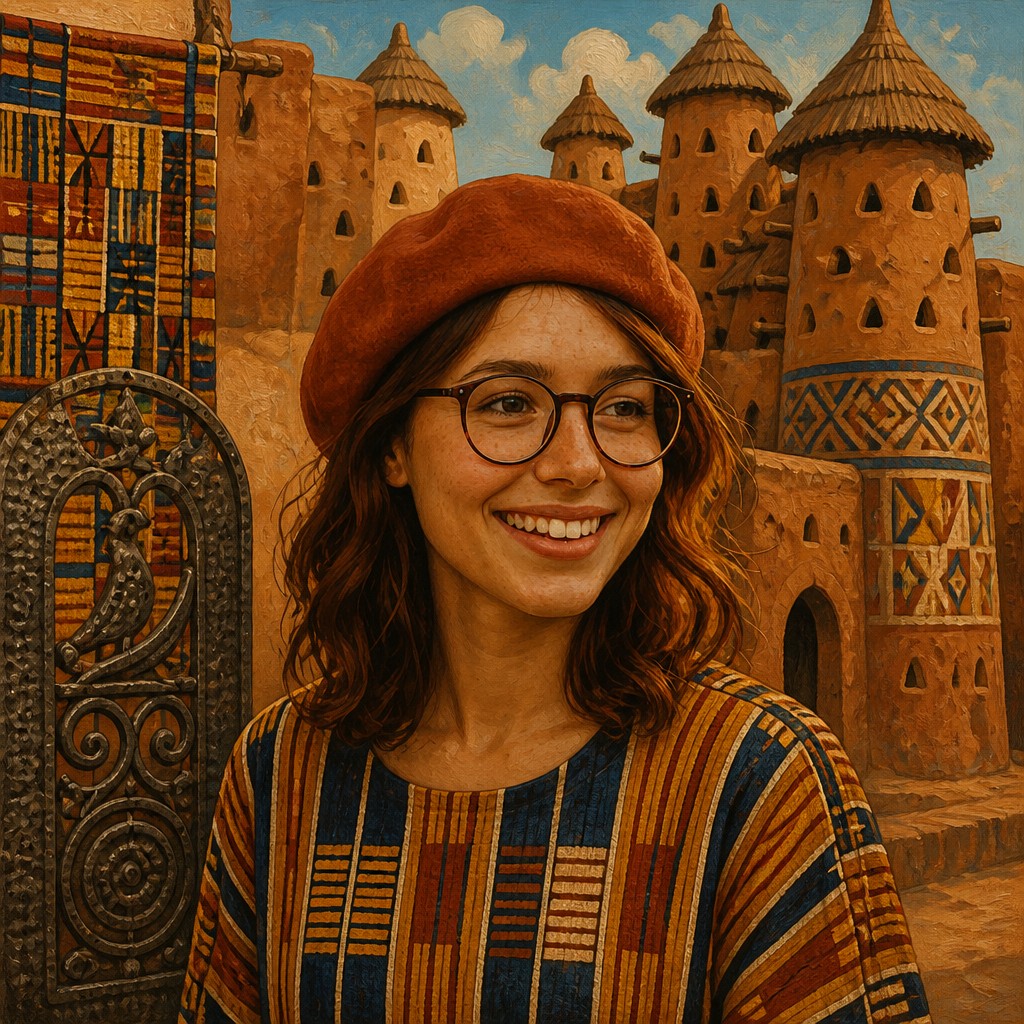
Upload any photo and convert it into Togolese Art Style — drag the sliders to compare before and after.


What Defines Togolese Art Style
The signature details, up close
Sculptural mud tower houses
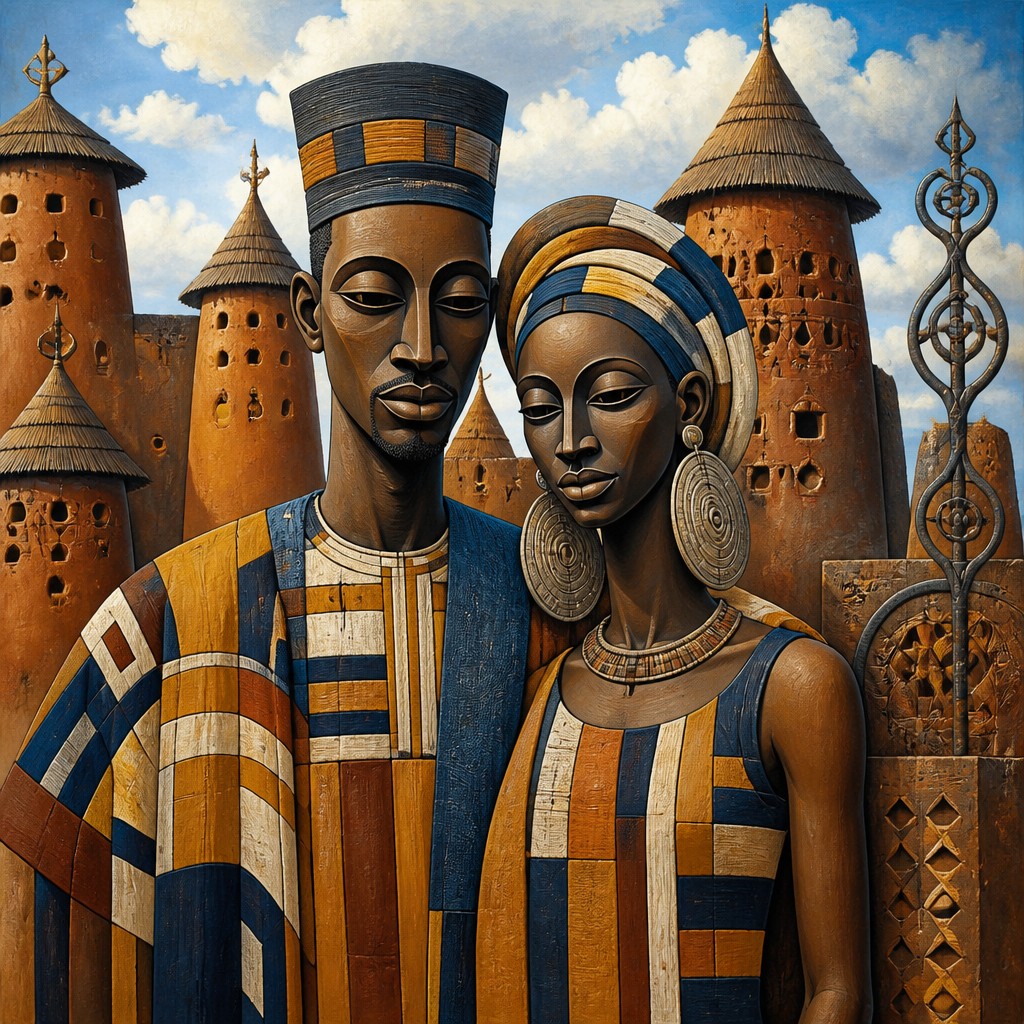
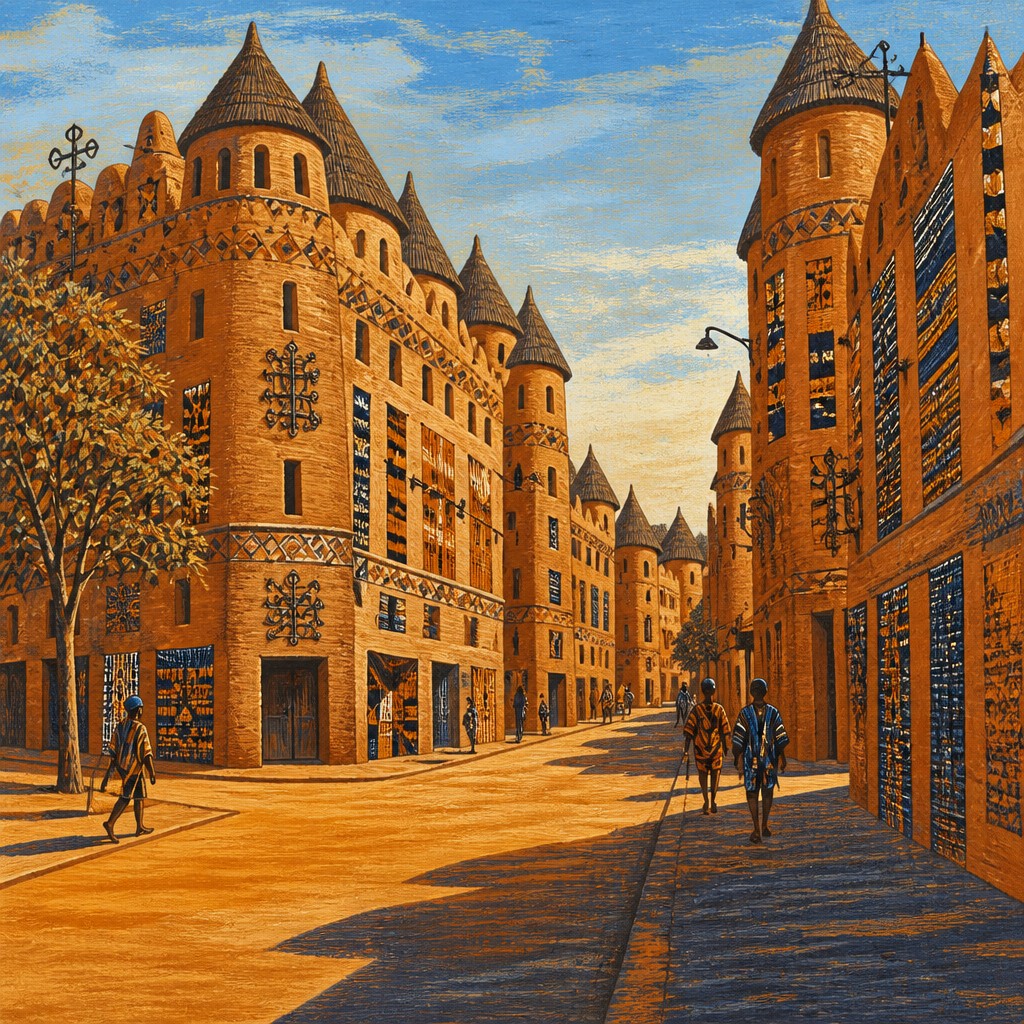
Tall earthen dwellings are shown as clustered, rounded or slightly tapered towers with projecting forms and compact openings. Their modeled surfaces emphasize the material weight of mudbrick and plaster.
Conical thatched roofs
Straw or grass roofs form repeated cone shapes above the towers, introducing a clear vertical rhythm and a strong contrast between pale thatch and dark earthen walls.
Ewe-inspired woven geometry
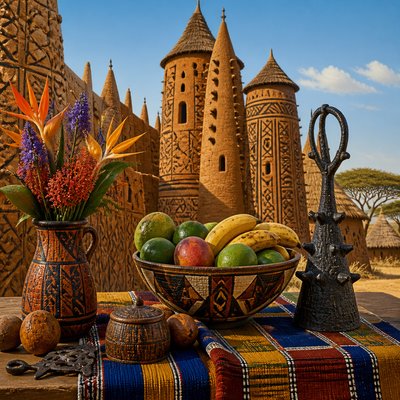
Narrow-strip textile structures appear as bands, panels, borders, or garments organized into bold blocks and stepped geometric motifs. The reference is interpretive and should not be treated as a reproduction of one specific textile pattern.
Hammered iron texture
Dark metallic surfaces, irregular pitting, tool marks, and simplified forged forms suggest hand-worked iron. These textures add visual density and contrast to the matte clay architecture.
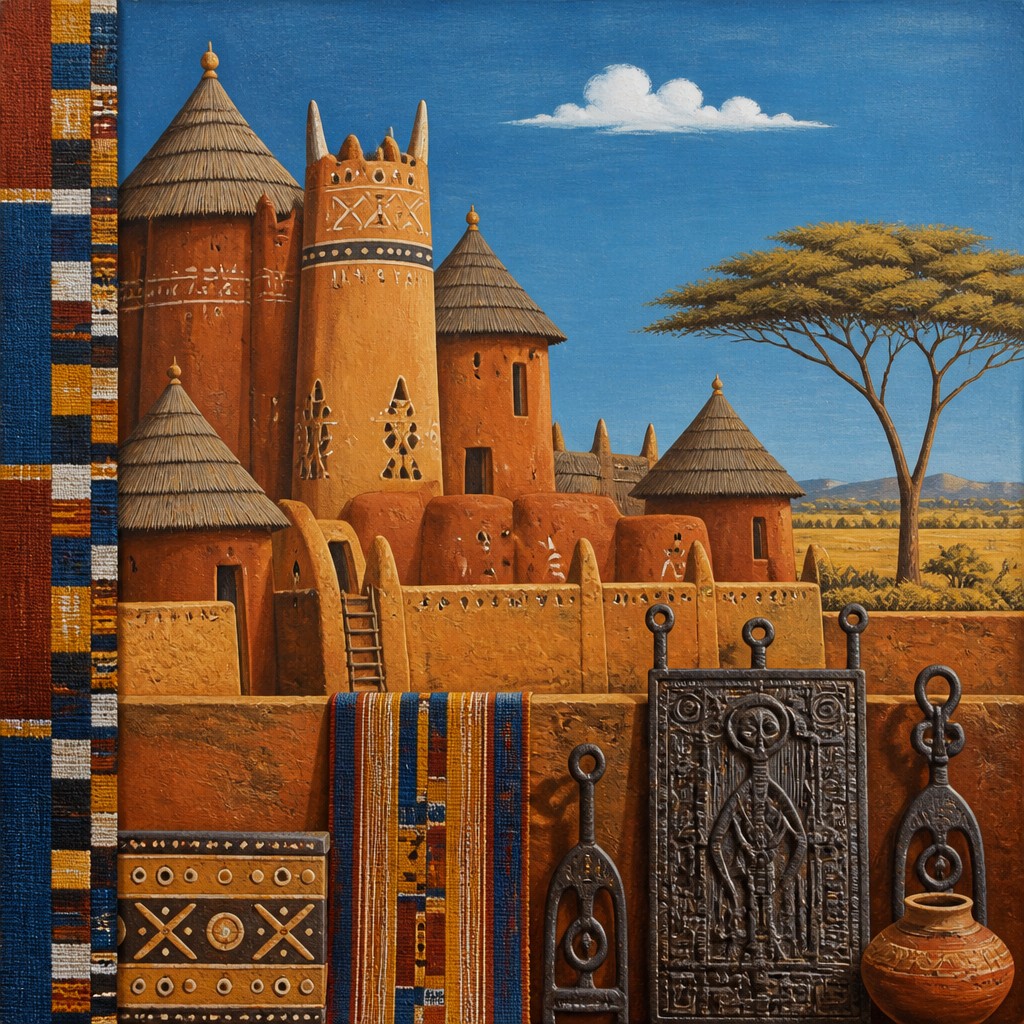
Terracotta and indigo palette
Earth reds, ochres, dust browns, charcoal, muted cream, and deep indigo dominate the image. Saturated textile accents can be used sparingly against the restrained landscape.
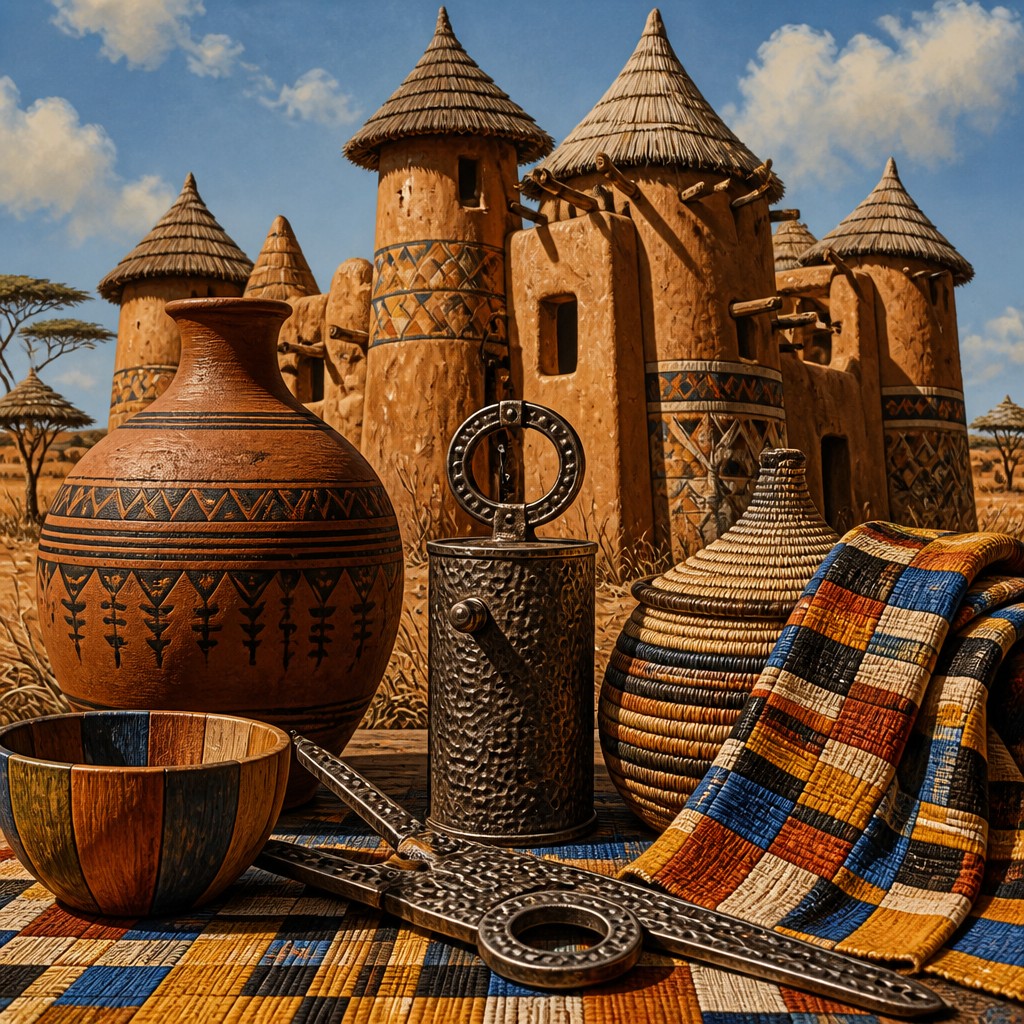
Rhythmic modular composition
Repeated towers, textile stripes, roof cones, and horizontal ground lines create a pattern-like structure. Symmetry may be present, but slight irregularity preserves the handmade character.
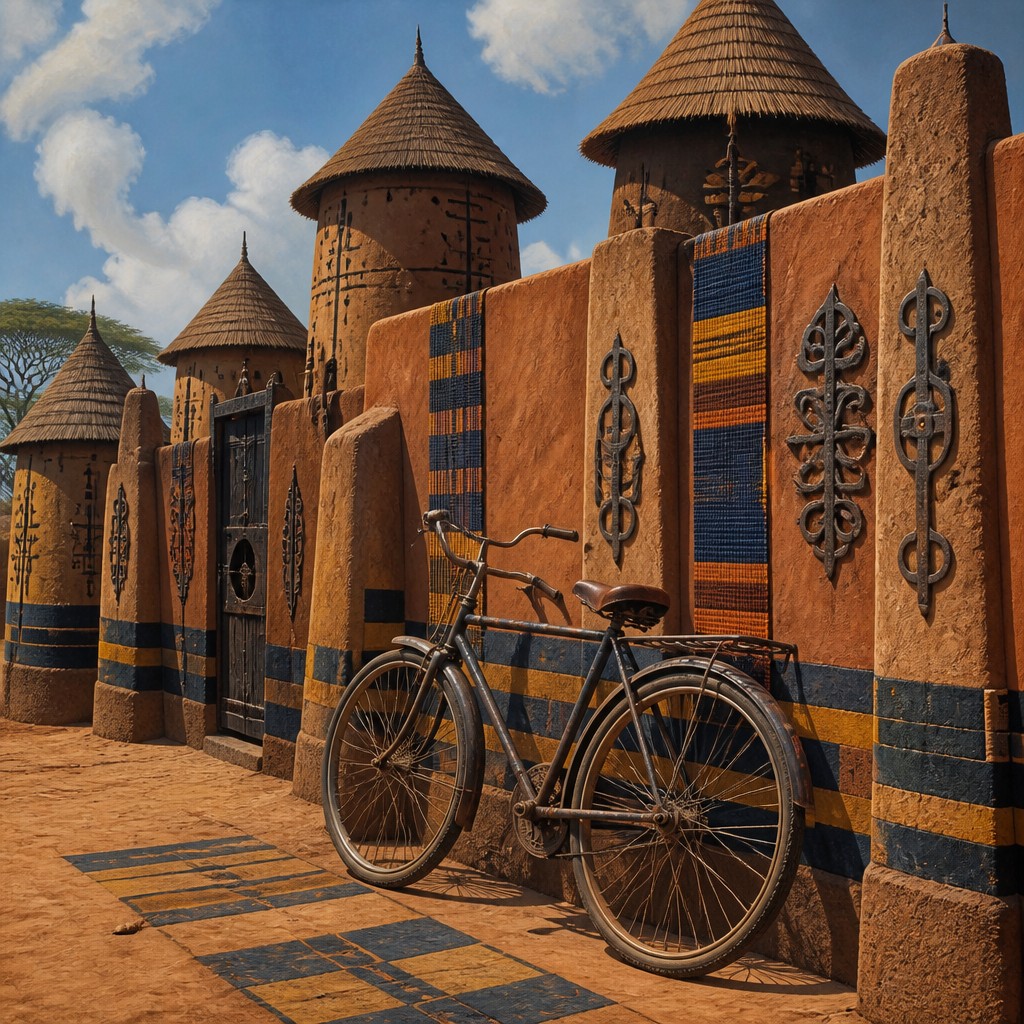
Open savanna atmosphere
Wide skies, dry grasses, distant horizons, and diffuse sunlight frame the built forms. The environment is usually simplified so that architecture and material texture remain the main subjects.
Togolese Prompt Ideas
Start from an idea — each one opens the generator with the style ready to go. See all 40 Togolese prompts →
How to Create Togolese Art
Master the craft step by step — or skip straight to creating. Read the full guide →
- 1
Build the architecture from simple volumes
Start with cylinders, tapered blocks, rounded walls, and cone roofs before adding doors, ledges, and surface wear. Keep openings small and the masses substantial to preserve the protective, sculptural character of earthen compounds.
- 2
Use tactile surface marks
In traditional media, combine dry-brush, palette-knife, gouache, or textured earth pigments to suggest mud, plaster, and thatch. Digitally, layer grain, roughness, edge variation, and directional brush marks rather than relying on perfectly smooth fills.
- 3
Treat textiles as structure
Represent woven cloth with narrow horizontal strips, stepped motifs, and deliberate color blocks. Vary thread edges and alignment slightly so the pattern feels woven rather than mechanically tiled.
- 4
Balance warm and cool accents
Establish a base of terracotta, ochre, and sand, then introduce indigo, charcoal, or restrained jewel tones for contrast. Keep the sky and ground relatively quiet so the architectural rhythm remains legible.
- 5
Write prompts around material and form
For prompt-based creation, specify mudbrick towers, rounded turrets, thatched cones, narrow-strip weaving, hammered iron, open savanna, and a limited earth-and-indigo palette. Add composition terms such as wide shot, modular repetition, tactile relief, or broad sky to control the image.
- 6
Protect cultural specificity
Use precise references such as northern Togolese earthen tower architecture or Ewe-inspired weaving instead of treating all West African traditions as interchangeable. Avoid invented ceremonial details, sacred symbols, or generic 'tribal' imagery unless you have verified the context.
The Story
History & Origins of Togolese
This style does not describe a formally documented historical school called Togolese Art Style. It draws selectively from several real Togolese and neighboring West African traditions, especially the fortified earthen compounds associated with the Batammariba of northern Togo, Ewe weaving traditions found across the Togo–Ghana region, and metalworking associated with communities including the Kabye.
Its contemporary development comes from combining these references into a coherent image-making vocabulary. The result belongs to a broader practice of culturally informed digital synthesis: traditional building forms, woven geometry, hand-worked surfaces, and environmental color are reorganized for illustration, concept art, pattern design, and image-based transformation.
Influences: The style relates to Batammariba earthen tower-house architecture, Ewe and wider West African narrow-strip weaving traditions, Togolese metalworking practices, Sahelian and savanna vernacular architecture, and modern material-focused illustration. It also shares qualities with vernacular architecture studies, textile abstraction, relief sculpture, earth-toned editorial illustration, and contemporary digital world-building that combines documented cultural references into a new visual system.
Frequently Asked Questions
Is Togolese Art Style a historical art movement?
No. The name describes a contemporary, interpretive style rather than a formally established historical movement. It synthesizes several real Togolese visual traditions for use in illustration, design, and digital image-making.
What defines the visual identity of this style?
Its defining elements are sculptural earthen tower houses, rounded turrets, conical thatched roofs, woven geometric bands, hammered-metal texture, and a terracotta, ochre, charcoal, and indigo palette. Repetition and broad open skies give the compositions their characteristic rhythm.
Is this the same as traditional Batammariba architecture?
No. Batammariba tower-house architecture is one important reference, especially for the earthen forms and clustered compounds, but the style also incorporates textile and metalwork references from other Togolese traditions. It should not be presented as a documentary depiction of one community or building type.
How can I make an image in this style without making it look generic?
Name concrete materials and forms: mudbrick, rounded towers, thatch, narrow-strip weaving, hammered iron, dry grasses, and a limited earth-toned palette. Specify the composition and surface qualities as well, such as repeated architectural masses, small openings, rough plaster, woven stripes, and wide sky.
Can this style be used for portraits or clothing?
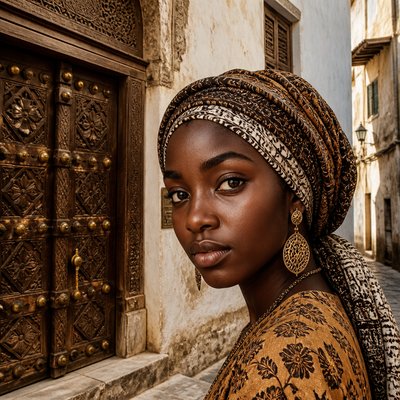
Yes, but clothing and accessories should be described as Ewe-inspired woven textiles or regionally researched Togolese garments rather than as undifferentiated 'tribal' costume. Keep the architectural, textile, and material vocabulary visible if you want the result to remain recognizably within this style.
Where is this style most useful?
It suits architectural visualization, cultural illustration, editorial artwork, textile and surface design, book covers, game environments, posters, and atmospheric portraits. It works particularly well when the subject benefits from tactile materials, geometric repetition, and a strong sense of place.
Create your first Togolese artwork
Describe anything — or upload a photo — and see it in Togolese Art Style in seconds.
Related Styles
Discover similar art styles