VR Art Style
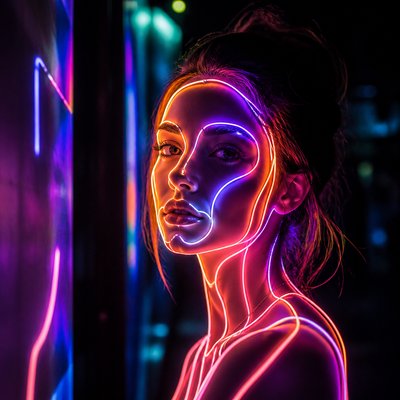
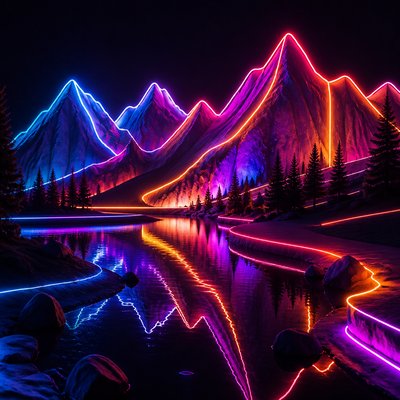
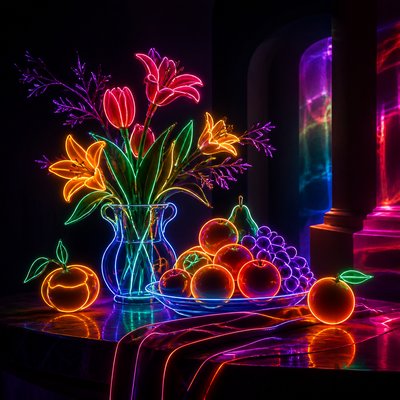
Explore VR Art Style: immersive painted-light sculptures, luminous ribbons, translucent geometry, and stereoscopic space designed for 360-degree viewing.
Instantly rendered in VR — or transform a photo
VR Gallery
Tap any artwork to explore it
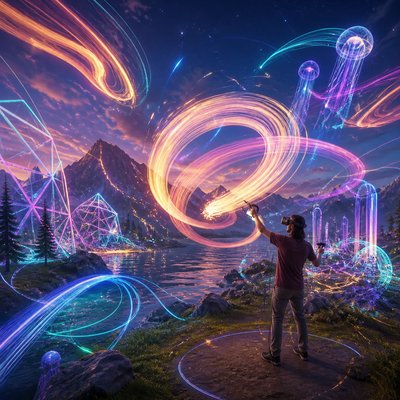
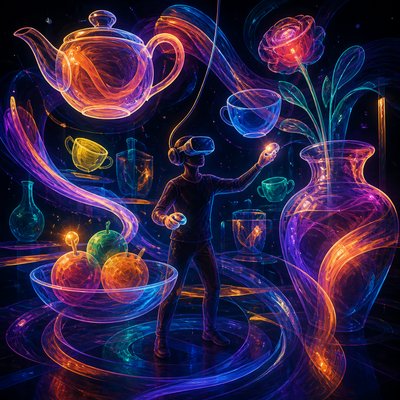
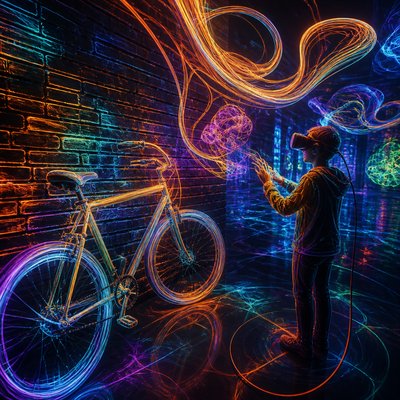
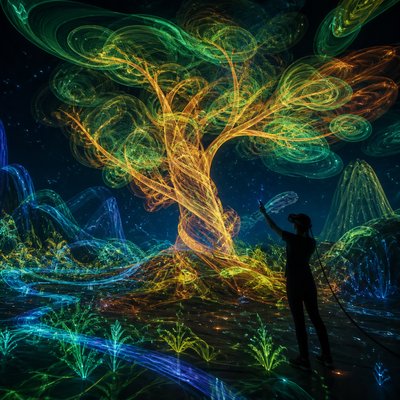
What is VR Art Style?
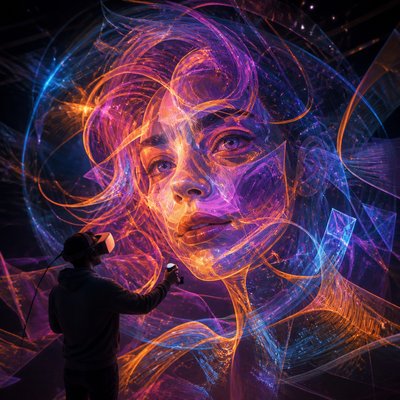
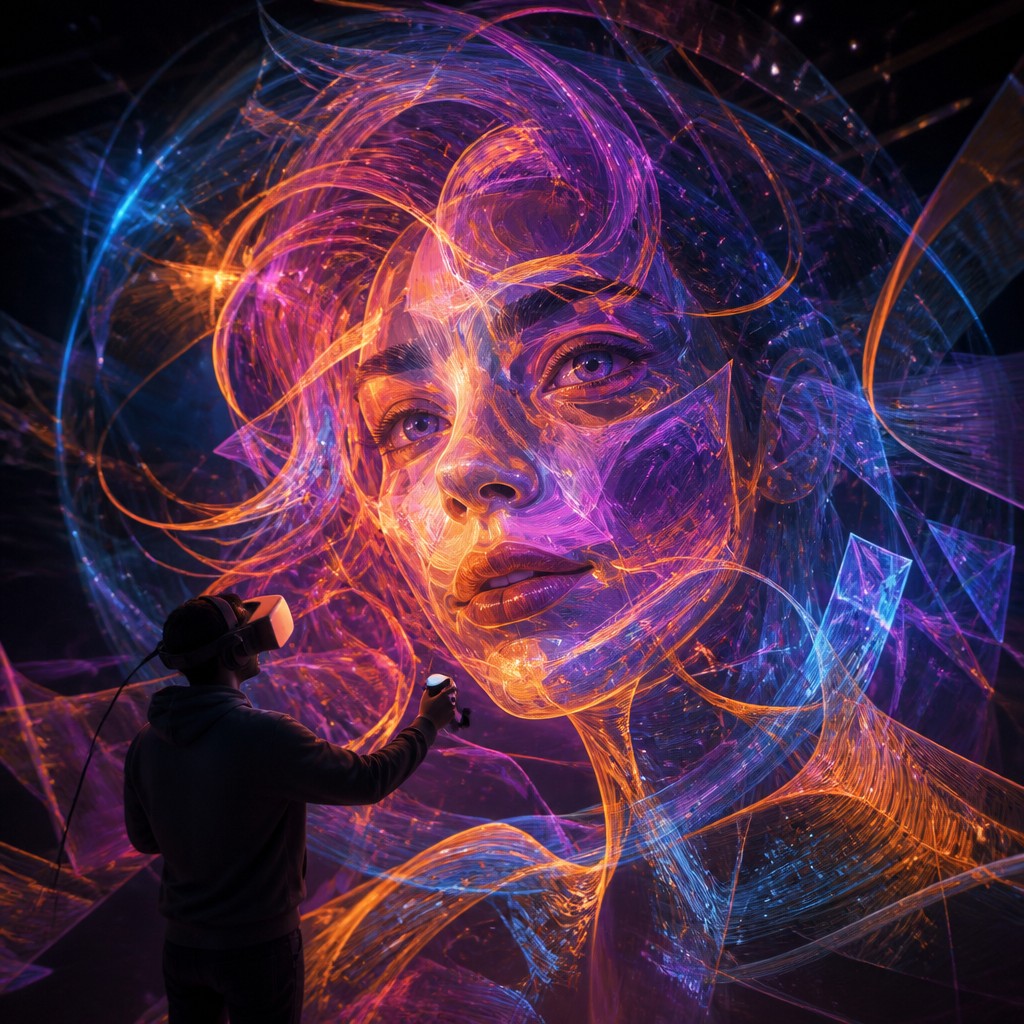
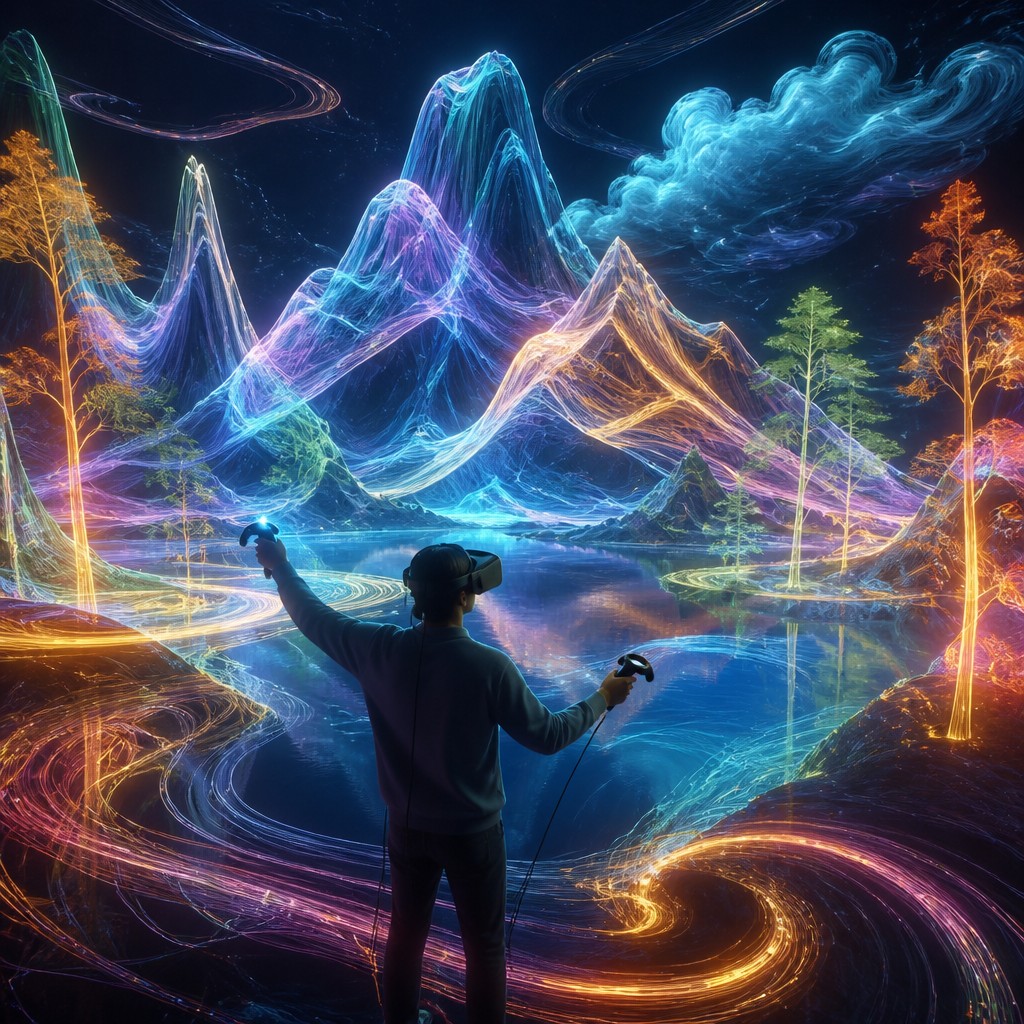
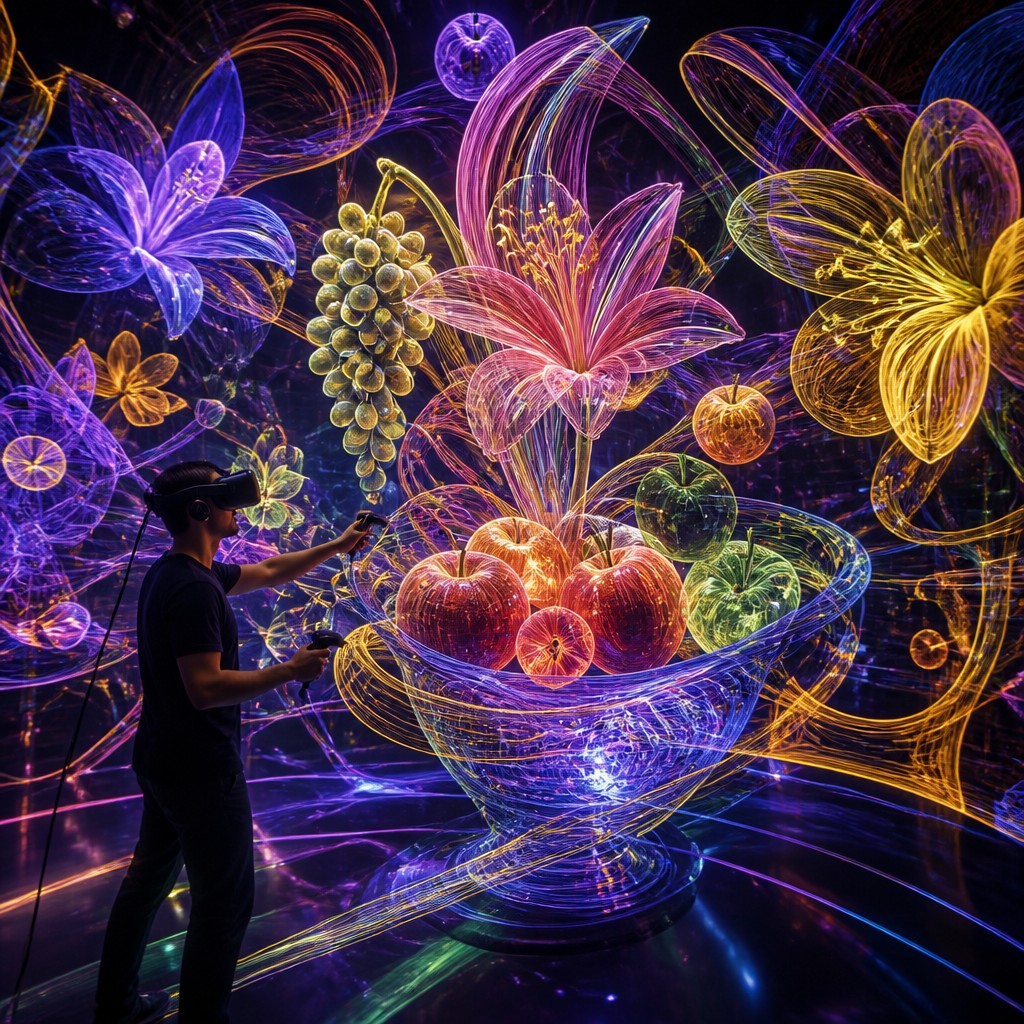
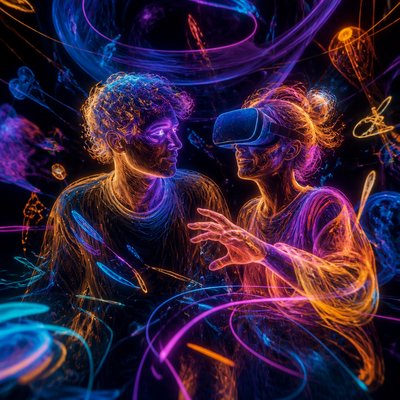
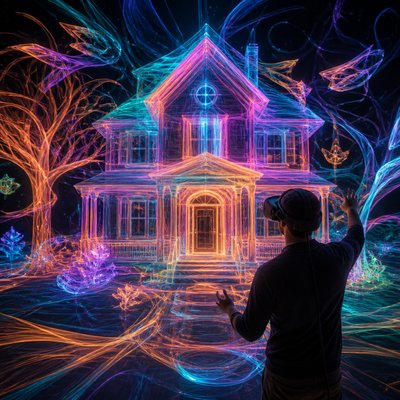
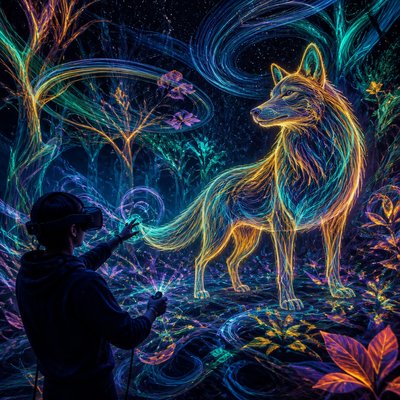
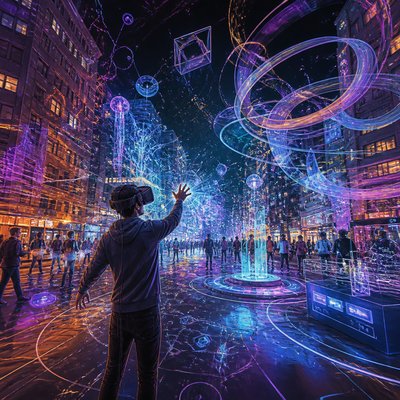
VR Art Style is an AI-native and digitally oriented visual language that treats light as a sculptural material. Instead of placing painted marks on a flat surface, it imagines luminous brushstrokes, ribbons, and translucent forms suspended in a navigable three-dimensional environment. The result is an image that suggests an artwork surrounding the viewer rather than a scene observed from a fixed viewpoint.
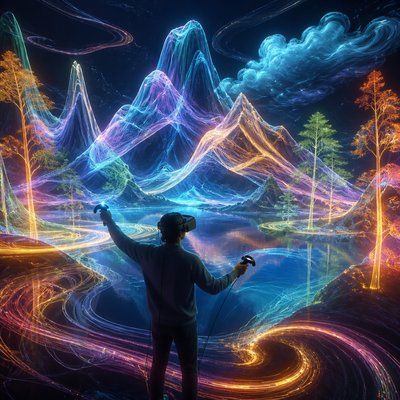
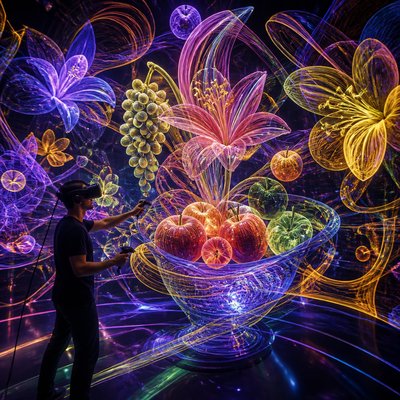
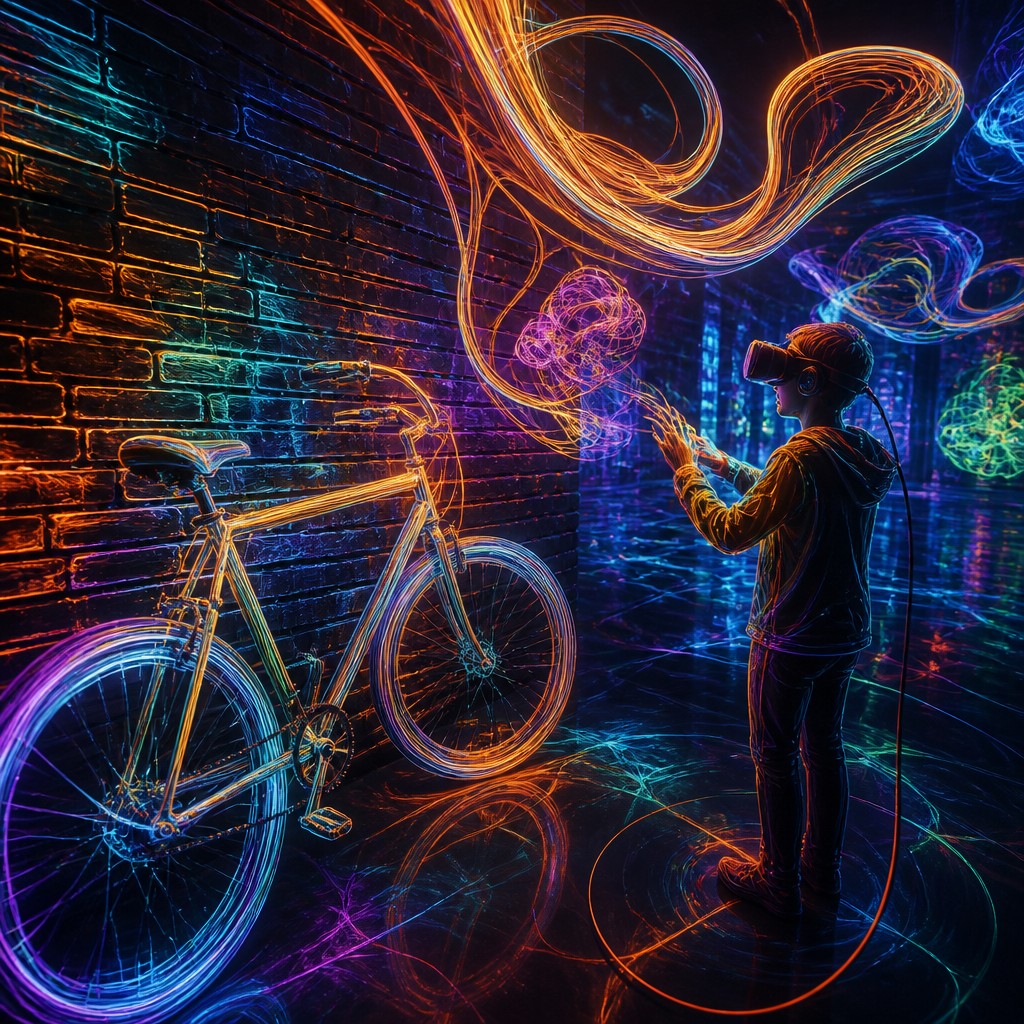
Its visual identity depends on the tension between painterly gesture and spatial construction. Glowing lines appear to have been drawn through the air, while layered geometry, haze, bloom, and depth cues imply that forms occupy different distances from the viewer. Figures wearing or using headsets often establish scale and interaction, reinforcing the style's connection to virtual reality, immersive installation, and speculative digital sculpture.
Try It On Your Photos
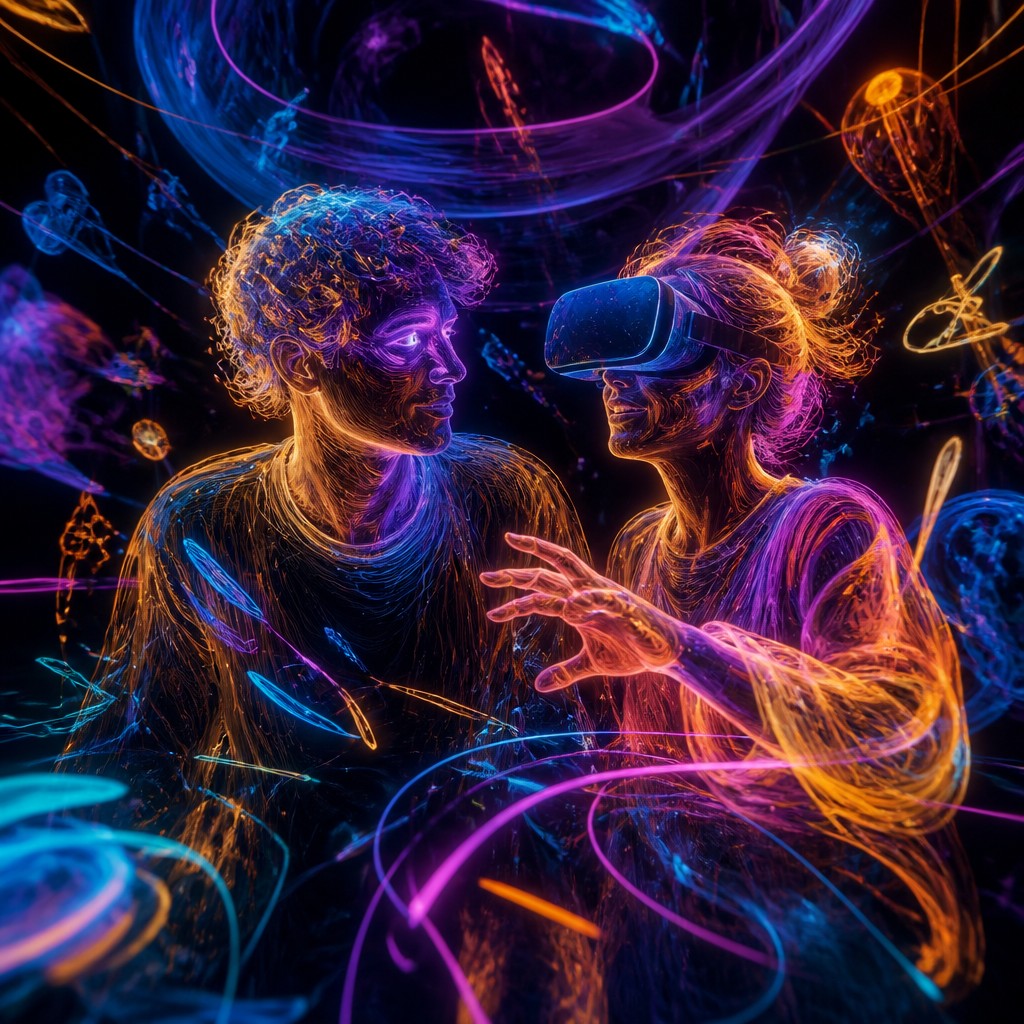
Upload any photo and convert it into VR Art Style — drag the sliders to compare before and after.
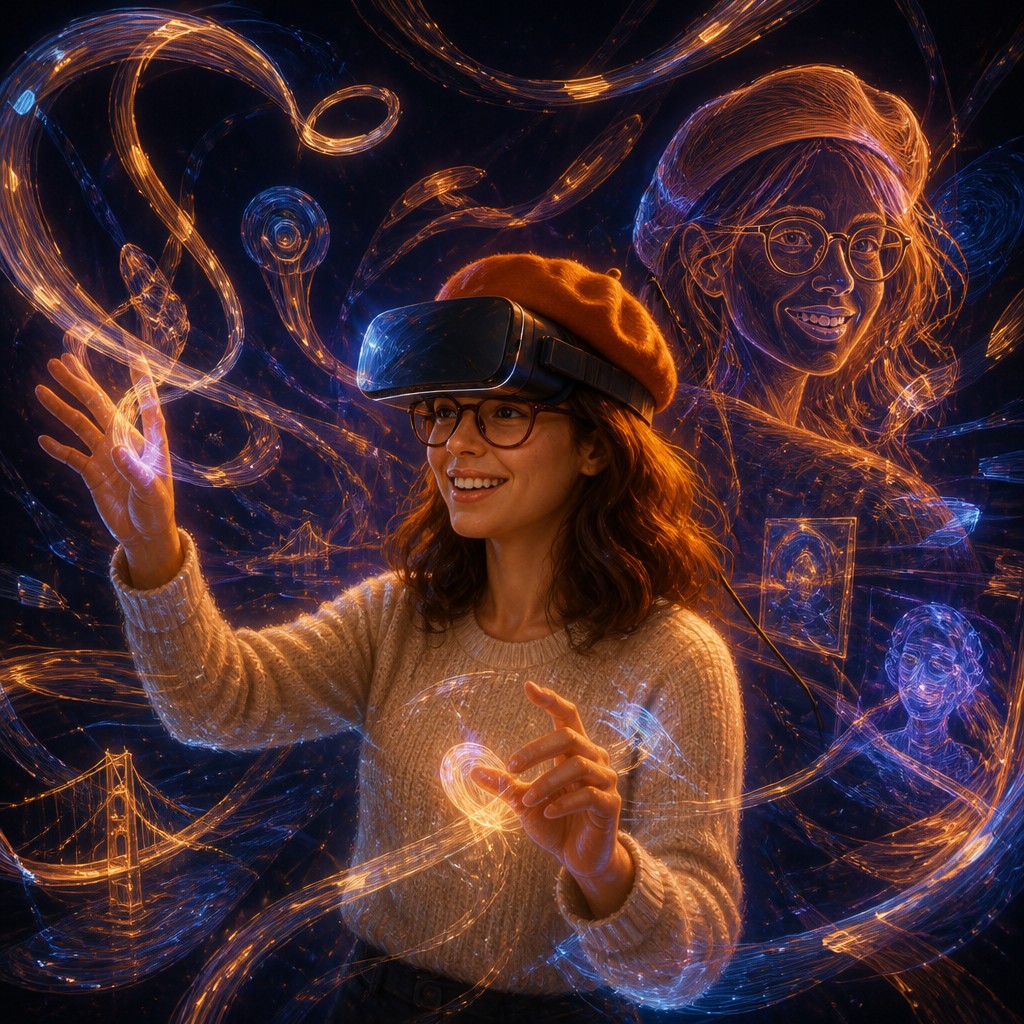

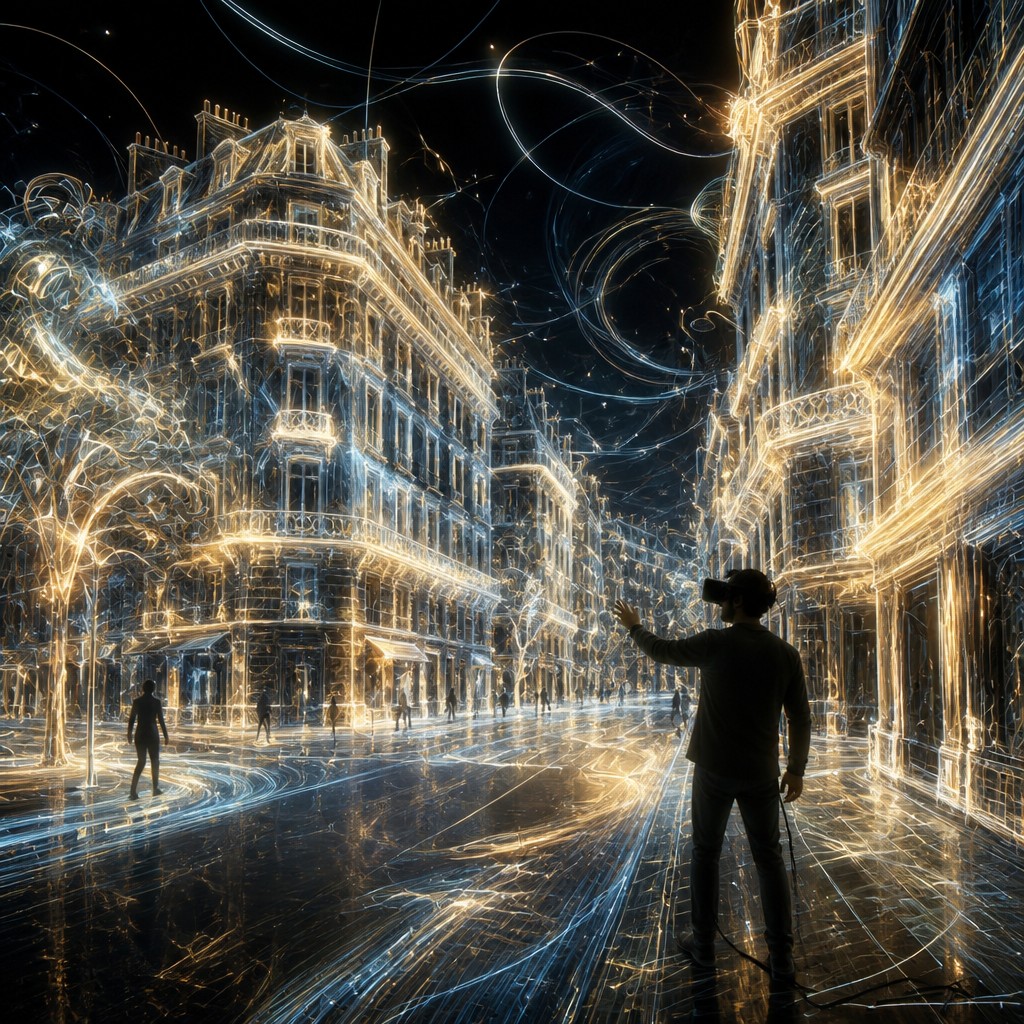

Or use the free VR photo filter
What Defines VR Art Style
The signature details, up close
Luminous brushstroke forms
Broad strokes and narrow marks appear as glowing volumes rather than pigment on a surface. Their edges may dissolve into halos, suggesting light painted directly into space.
Floating ribbon lines
Curving, calligraphic bands travel through the composition in looping or spiral paths. These lines provide a sense of motion and make the imagined environment feel hand-drawn in three dimensions.
Stereoscopic depth
Overlapping transparent layers, scale changes, atmospheric perspective, and strong foreground-background separation create cues associated with binocular or headset viewing. Objects are arranged to feel spatially reachable.
Translucent geometry
Glass-like planes, wireframes, particles, and semi-transparent volumes intersect without becoming fully opaque. Refraction, internal glow, and layered contours make the forms appear simultaneously material and immaterial.
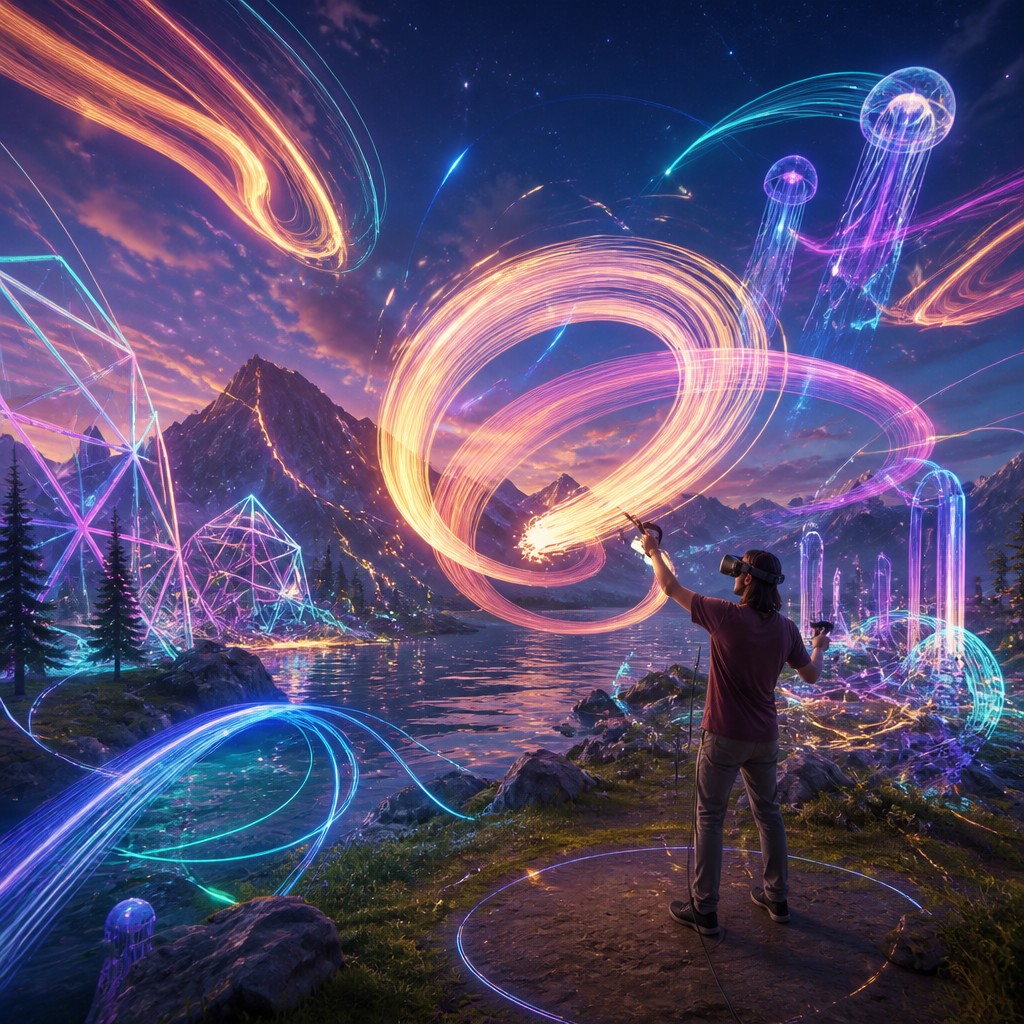
Immersive environment
The composition often implies a 360-degree field rather than a conventional rectangular stage. Light sculptures may surround the viewer, recede into darkness, or float without a visible floor or horizon.
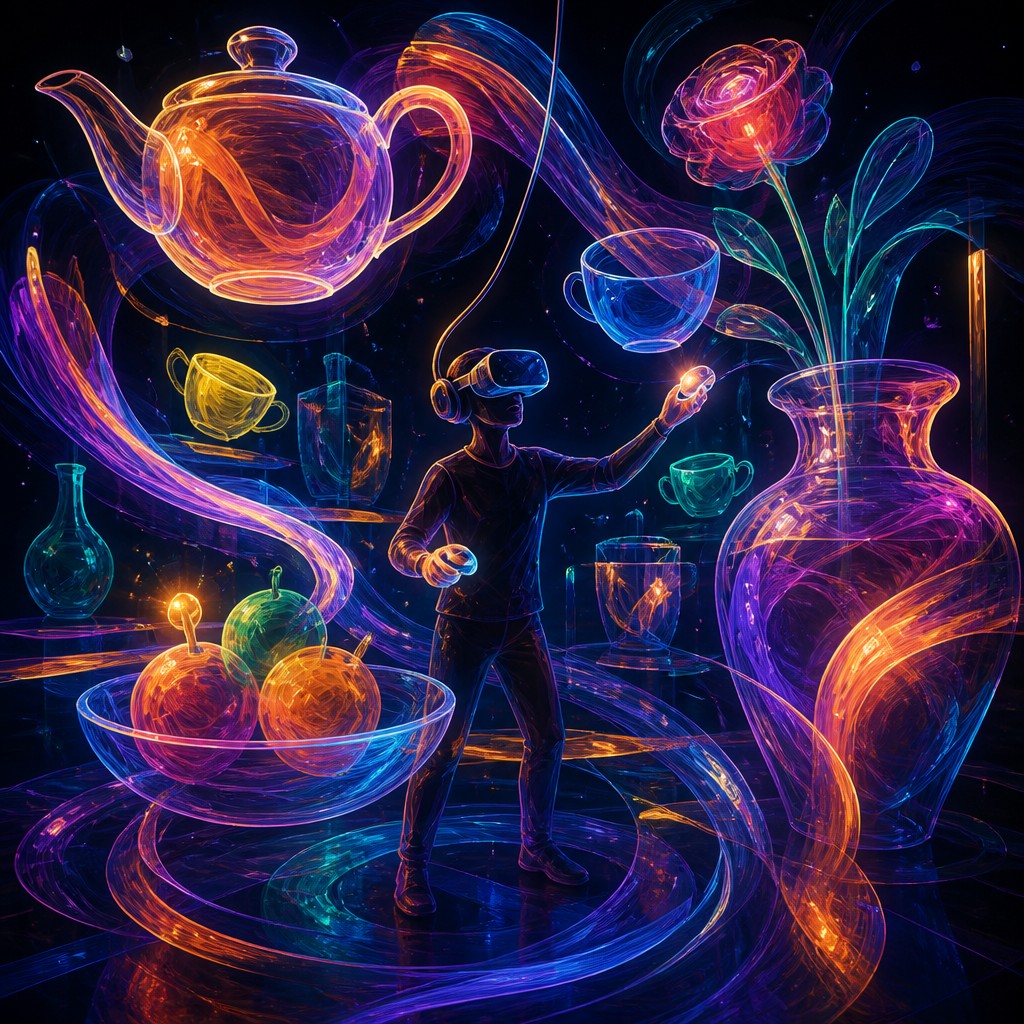
Human scale and interaction
A headset-wearing or gesturing figure frequently acts as a visual anchor. The figure communicates how the surrounding forms might be explored, manipulated, or experienced in virtual space.
Chromatic glow and atmospheric darkness
Deep black, indigo, and subdued neutral fields allow cyan, violet, magenta, amber, or green light to dominate. Bloom, volumetric haze, and reflected color unify the floating elements.
VR Prompt Ideas
Start from an idea — each one opens the generator with the style ready to go. See all 40 VR prompts →
How to Create VR Art
Master the craft step by step — or skip straight to creating. Read the full guide →
- 1
Build the space before the surface
In 3D software, begin with curves, particles, volumetric objects, and transparent meshes positioned around a virtual camera. In a traditional sketch, use multiple perspective grids and overlapping contours to imply forms extending toward and behind the viewer.
- 2
Treat light as a mark
Use emissive materials, neon-like edges, bloom, and additive blending to make strokes read as illumination rather than solid paint. Vary line width, opacity, and intensity so the gestures retain a sense of hand movement.
- 3
Establish stereoscopic depth
Separate forms clearly across foreground, middle distance, and background, with partial occlusion and atmospheric fading. For headset-ready work, test scale, camera height, and comfortable distances to avoid a flat or visually confusing arrangement.
- 4
Balance abstraction with a human anchor
Add a small figure, hand, or headset user to indicate scale and interaction. Keep the person relatively simple so that the luminous environment remains the primary subject.
- 5
Compose for a surrounding field
Avoid relying only on a central horizon or symmetrical poster layout. Distribute forms around the imagined viewer, while preserving one or two dominant gestures that guide attention through the space.
- 6
Use precise prompt structure
For digital or AI creation, specify the subject first, then describe floating luminous strokes, translucent geometry, stereoscopic depth, immersive darkness, and a gesturing headset-wearing figure. Add camera or rendering terms such as volumetric light, layered transparency, and 360-degree environment when a stronger spatial effect is needed.
The Story
History & Origins of VR
VR Art Style is not a documented historical movement with a fixed period or founding school. It is an invented contemporary aesthetic that draws on the development of virtual-reality environments, real-time 3D graphics, light-based installation, abstract painting, generative imagery, and digital sculpture.
Its visual vocabulary developed from the convergence of several practices: painting translated into spatial gesture, computer-generated forms designed for immersive viewing, and experimental environments built from light, transparency, and sound-responsive geometry. Prompt-based image generation has further popularized the style by combining these elements into single concept images, even when the final work is presented as a flat illustration rather than an interactive world.
Influences: The style draws on abstract expressionist gesture, light and space installation, kinetic and op-art approaches to visual movement, holographic and laser-based imagery, computer-generated 3D sculpture, virtual-reality interface design, and science-fiction visualization. It also inherits the atmospheric color and luminous edge effects of digital painting, while its floating forms recall traditional sculptural mobiles and installation art. Unlike a single historical school, it is a hybrid vocabulary shaped by immersive media and contemporary image synthesis.
Frequently Asked Questions
What defines VR Art Style?
It is defined by luminous marks treated as three-dimensional objects, translucent geometry, strong stereoscopic depth, and an environment that appears to surround the viewer. A human figure interacting with floating light sculptures is common but not required. The key idea is painted gesture translated into immersive space.
Is VR Art Style a historical art movement?
No. It is a contemporary, invented aesthetic rather than a formally documented movement with a canonical period or membership. Its lineage comes from immersive digital art, light installation, abstract painting, 3D graphics, and virtual-reality culture.
How is it different from ordinary digital abstract art?
Ordinary digital abstraction may remain primarily concerned with a flat image, surface texture, or graphic composition. VR Art Style emphasizes spatial occupation: strokes float at different distances, transparent forms overlap, and the scene implies that a viewer could move through it.
Does the artwork need to be viewed through a VR headset?
No. The style can be presented as a still image, animation, 360-degree panorama, or interactive virtual environment. A headset can strengthen the intended experience, but depth layering, scale, lighting, and composition can communicate the aesthetic in a conventional image.
How can I make an image in this style?
Start with a clear subject and combine it with descriptions of glowing brushstrokes, floating ribbons, translucent geometry, volumetric haze, and stereoscopic depth. For manual work, use 3D curves, emissive materials, particle systems, and transparent meshes; for prompt-based creation, specify the spatial arrangement and lighting as carefully as the subject.
Where is this style commonly used?
It is suited to virtual-reality environments, immersive installations, game and interface concepts, music visuals, science-fiction worldbuilding, projection mapping, digital illustration, and experimental motion graphics. It is also useful for communicating the appearance of an imagined interactive artwork in a single concept image.
Create your first VR artwork
Describe anything — or upload a photo — and see it in VR Art Style in seconds.
Related Styles
Discover similar art styles