Vorticism Art Style
Explore Vorticism: a British machine-age style of sharp geometry, spiraling force, steel tones, and abstract urban energy.
Instantly rendered in Vorticism — or transform a photo
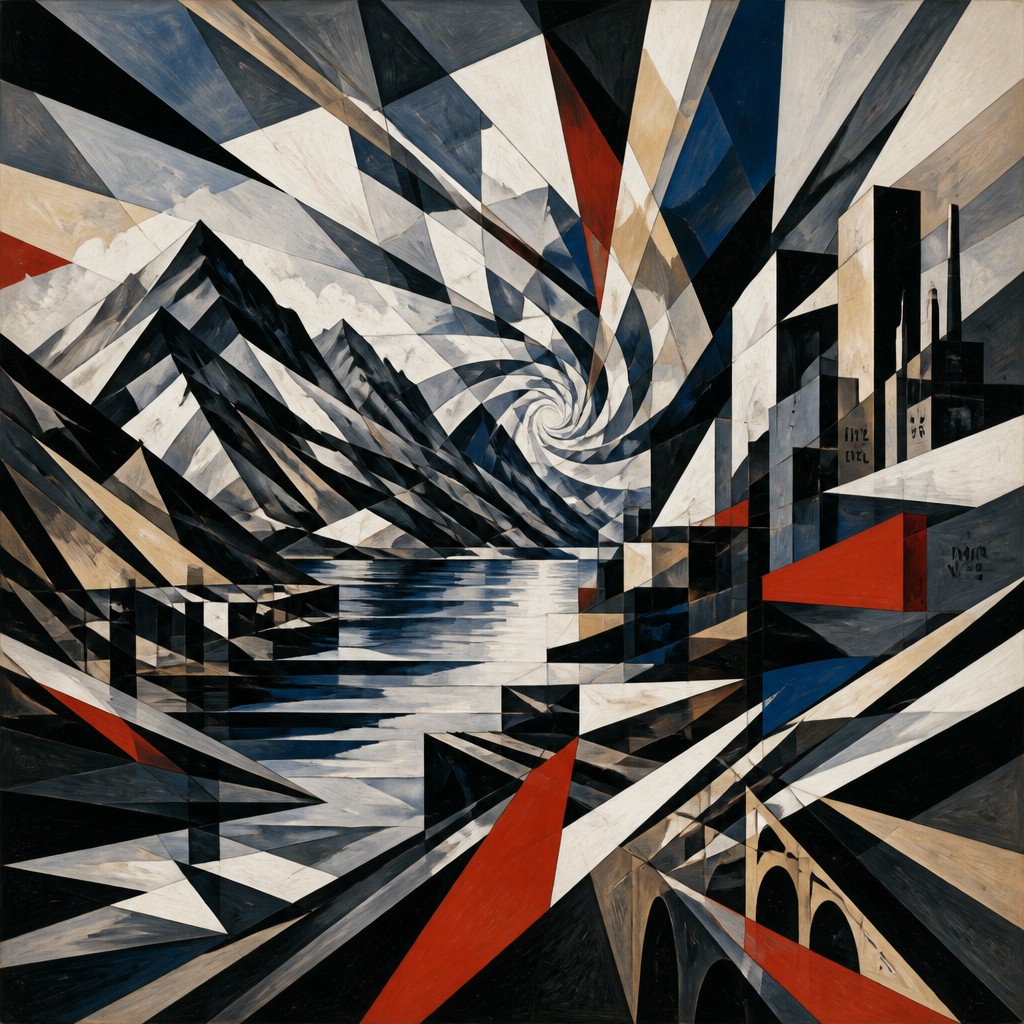
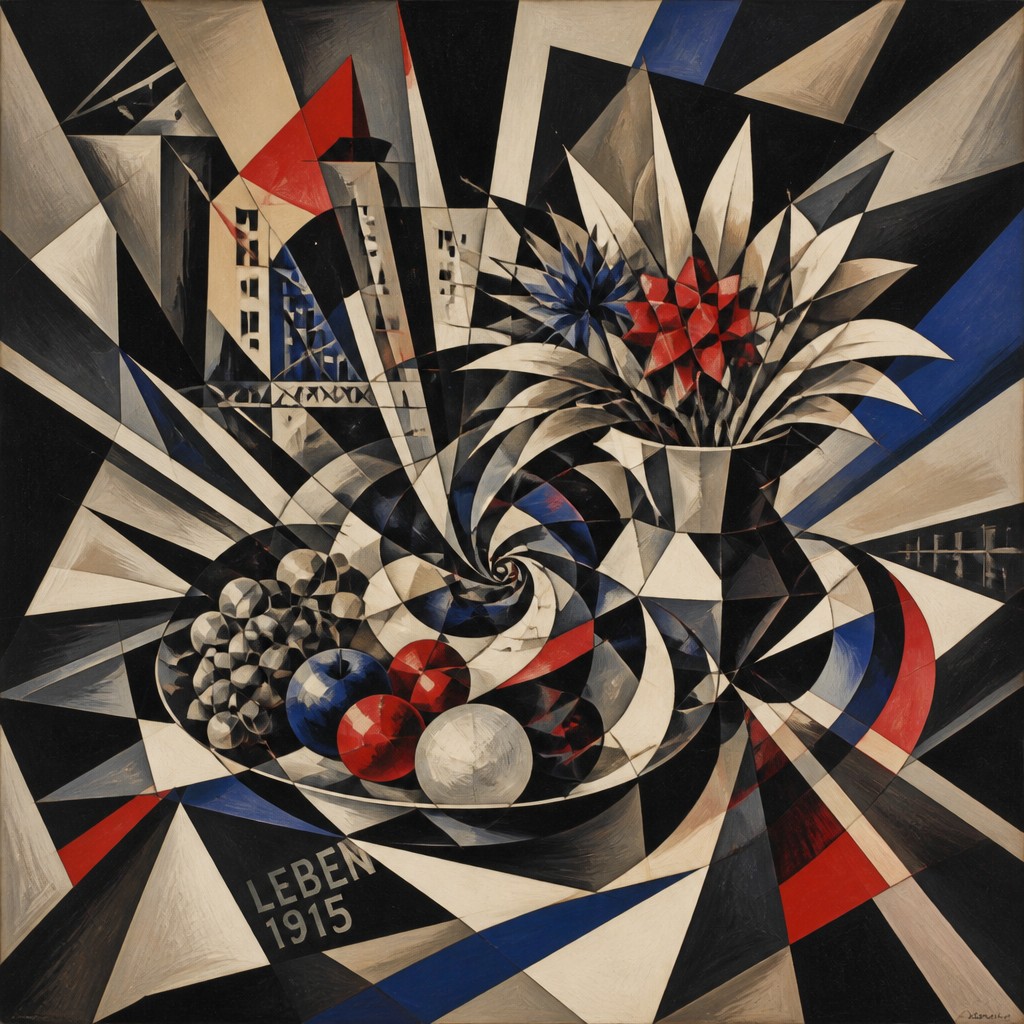
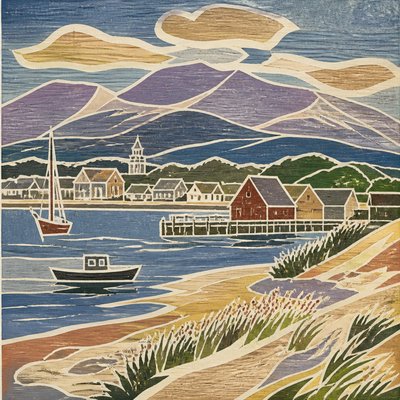
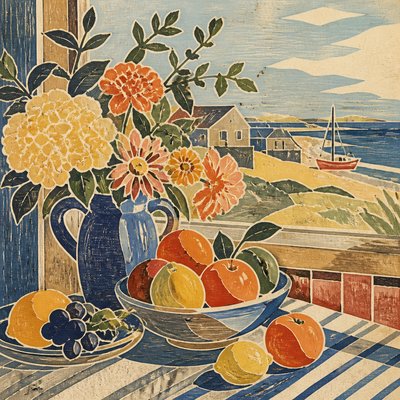
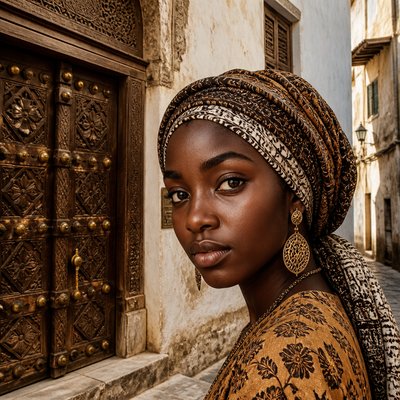
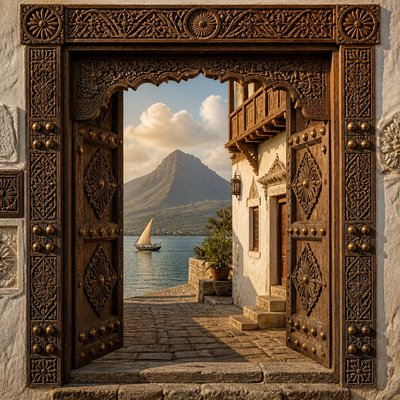
Vorticism Gallery
Tap any artwork to explore it
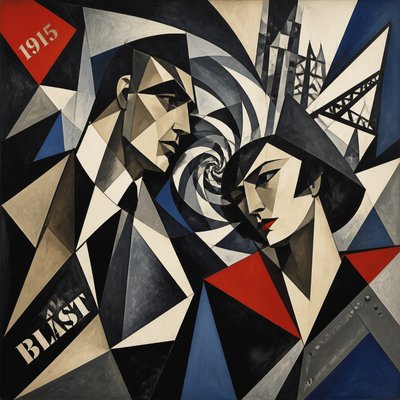
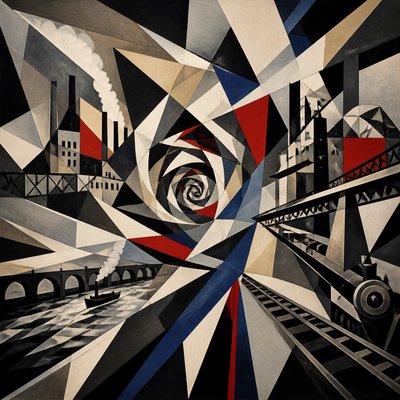
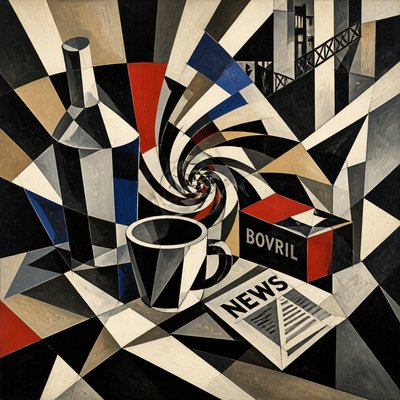
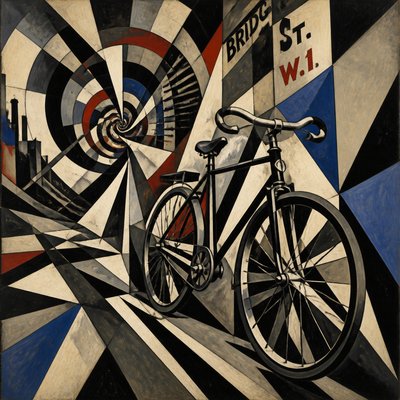
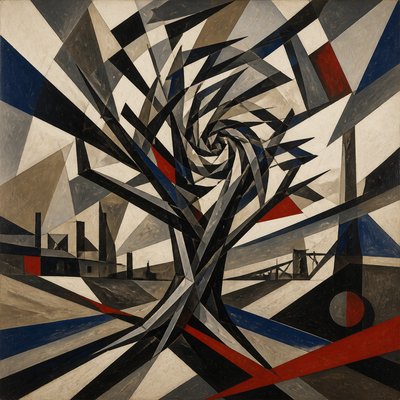
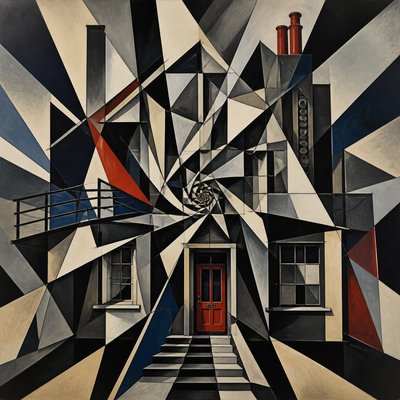
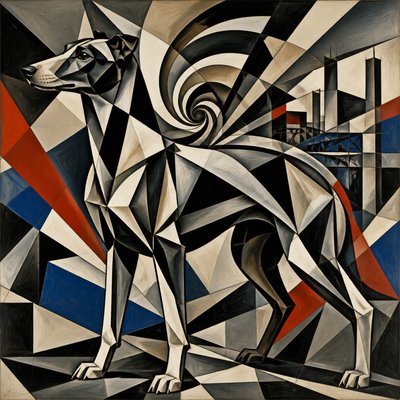
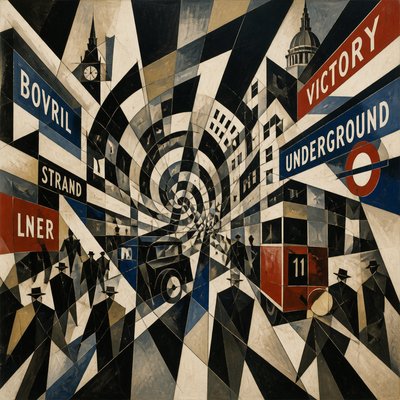
What is Vorticism Art Style?
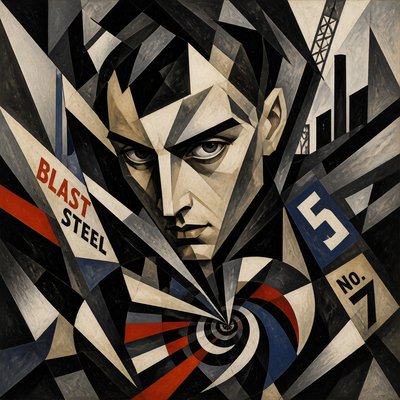
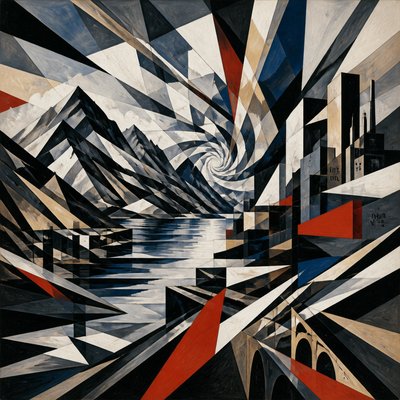
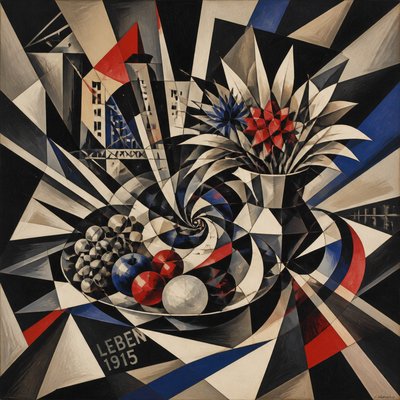
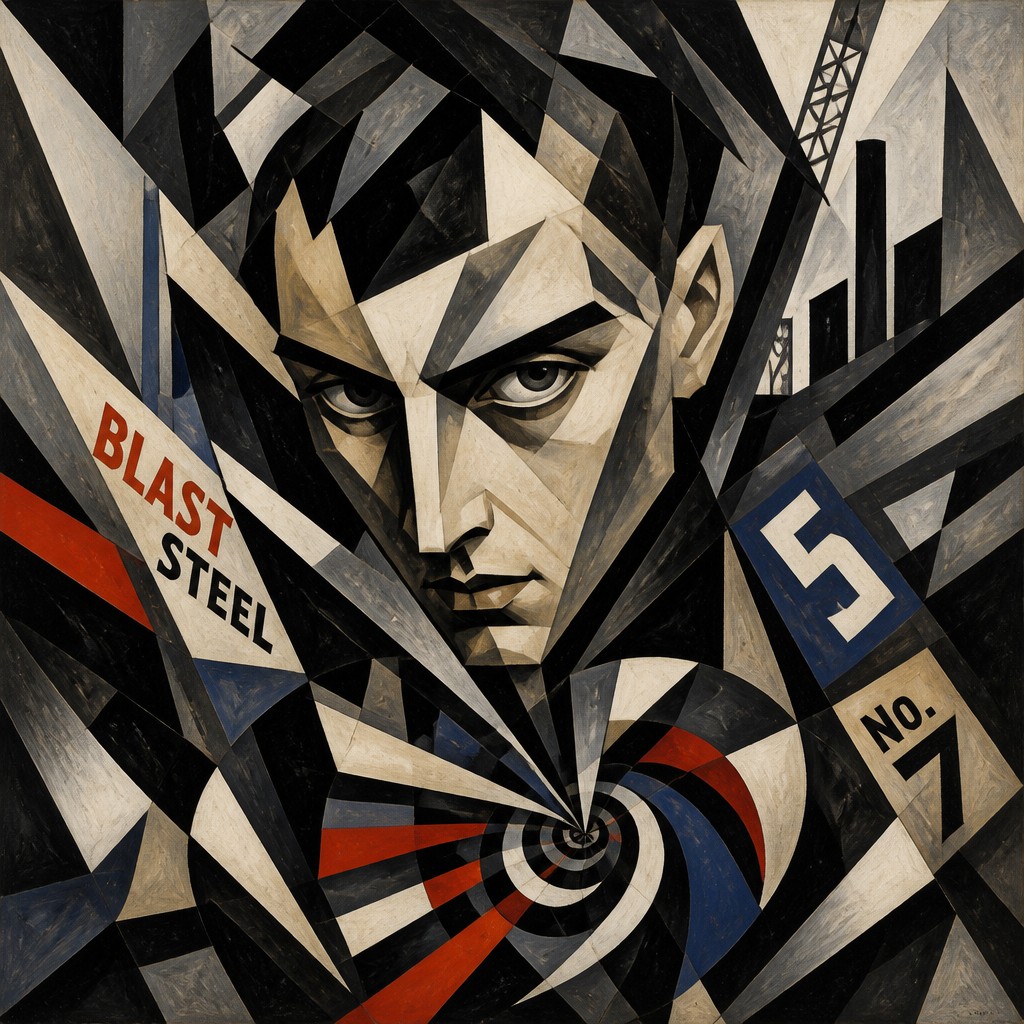
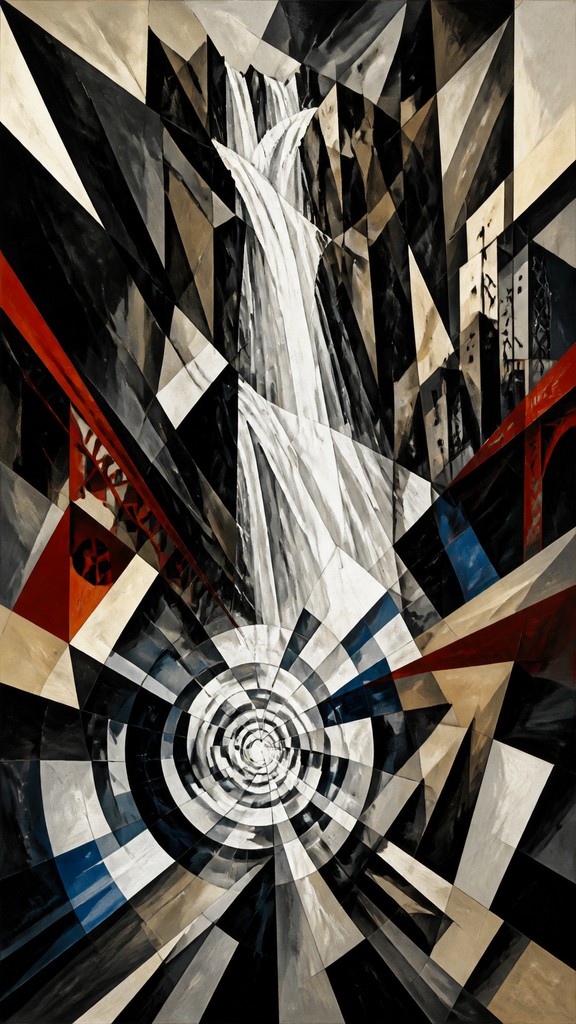
Vorticism is an early twentieth-century British avant-garde movement built around forceful geometry, mechanical energy, and the visual tension of modern industrial life. Its compositions often appear to rotate around a central vortex, using sharp diagonals, interlocking planes, faceted forms, and abrupt shifts between solid black, white, muted buff, and intense industrial accents.
Rather than depicting motion through smooth curves or naturalistic detail, Vorticist art compresses movement into hard-edged structures. Figures, machines, buildings, and landscapes may be reduced to angular fragments and reorganized into a dense, energized design. The result is simultaneously abstract and representational: recognizable subjects remain present, but they are made to feel engineered, pressurized, and caught inside a powerful visual system.
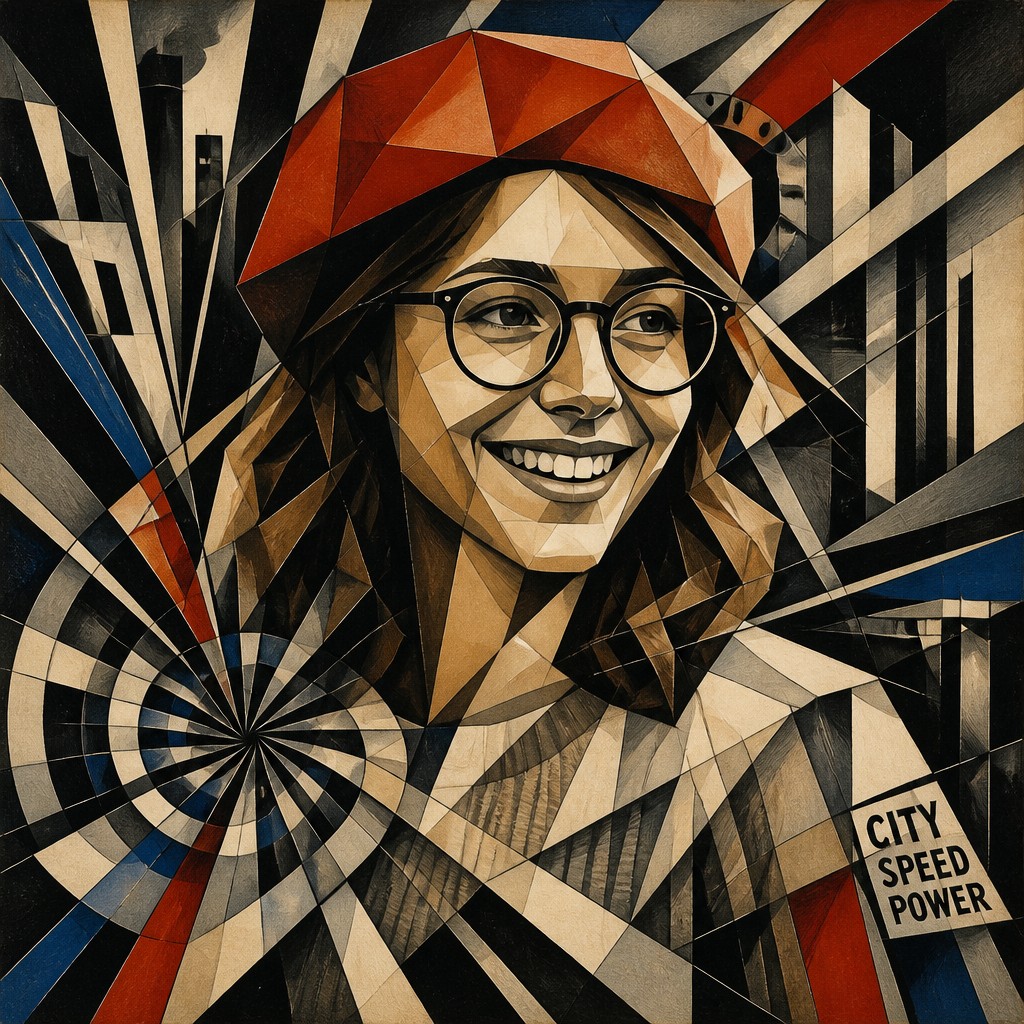
Try It On Your Photos
Upload any photo and convert it into Vorticism Art Style — drag the sliders to compare before and after.

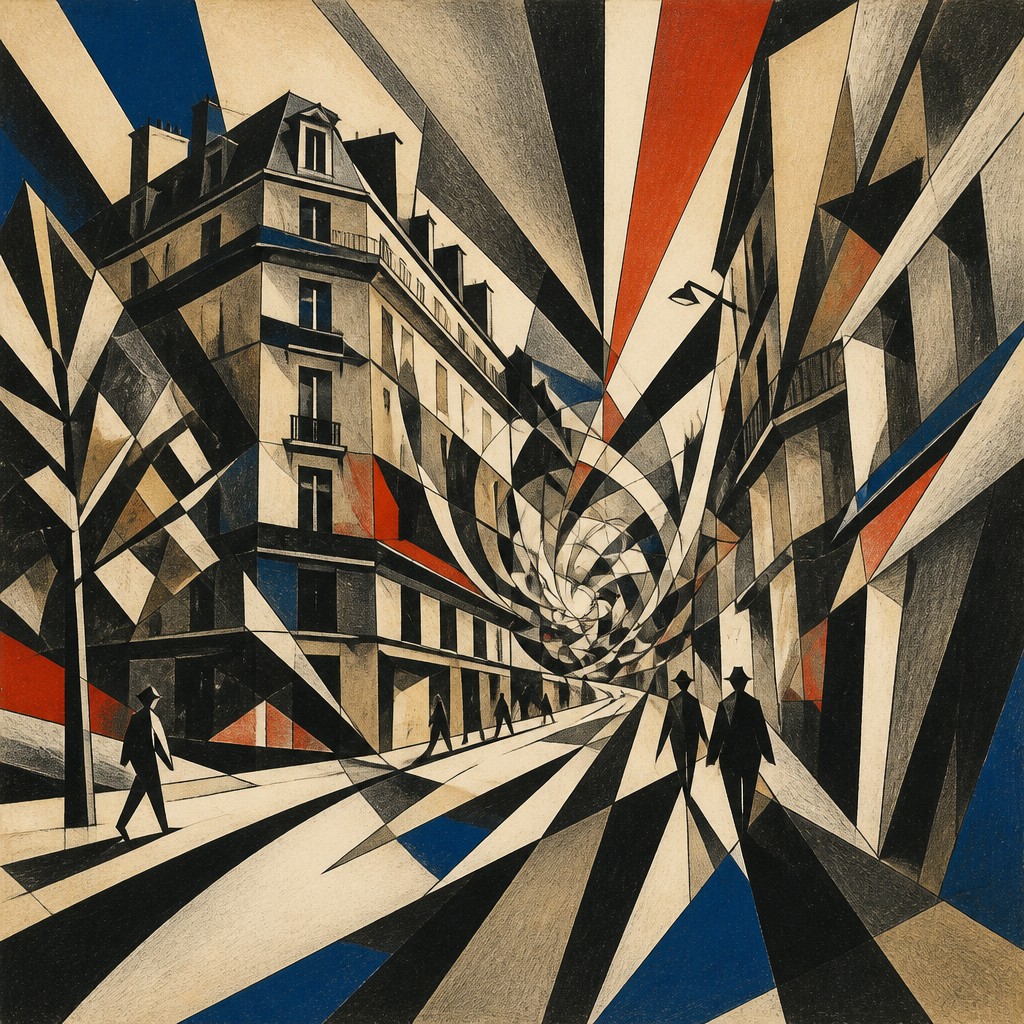

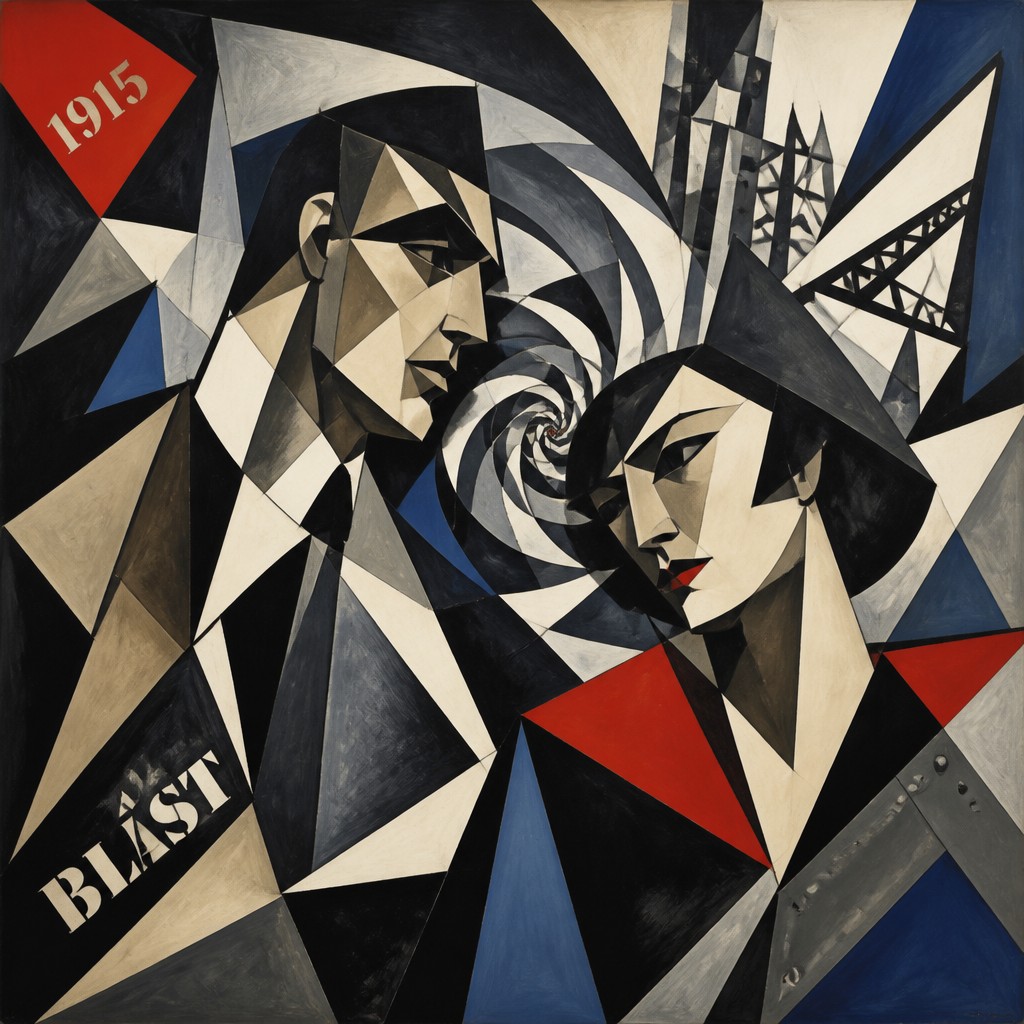
What Defines Vorticism Art Style
The signature details, up close
Central vortex
Compositions frequently organize their forms around a visual center, suggesting a whirlpool, turbine, or compressed burst of energy. Lines and planes seem to rotate inward or erupt outward from this focal point.
Harsh angular geometry
Sharp triangles, wedges, zigzags, and interlocking polygons replace soft contours. Curves are minimized or broken into faceted segments.
Mechanical diagonals
Strong diagonal bars and blade-like planes create directional force and a sense of engineered motion. These elements often overlap like gears, beams, pistons, or structural braces.
Restricted industrial palette
Black, white, gray, and buff commonly dominate, with controlled accents of red or blue providing visual impact. Limited color keeps attention on structure, contrast, and rhythm.
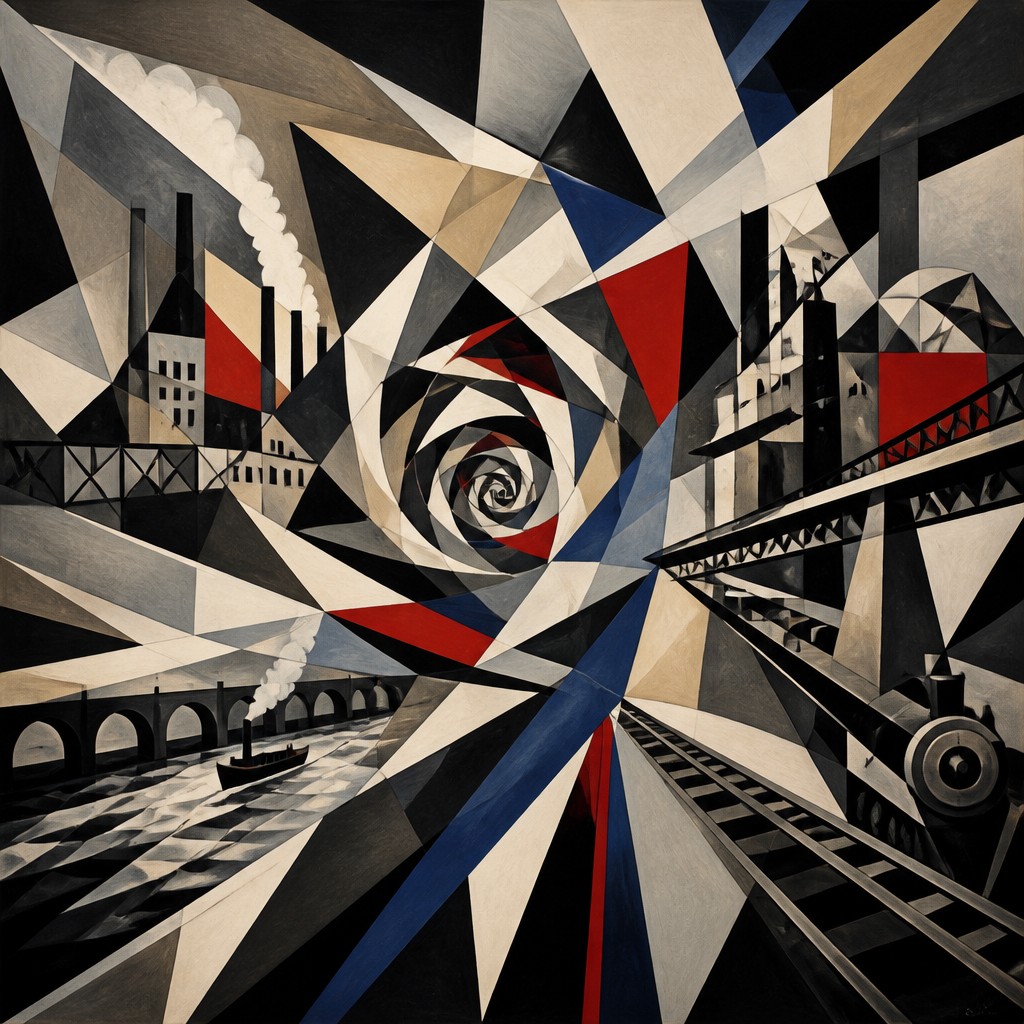
Abstracted urban structure
Buildings, streets, machinery, and human figures are simplified into architectural fragments and hard-edged masses. Perspective may be compressed or deliberately made unstable.
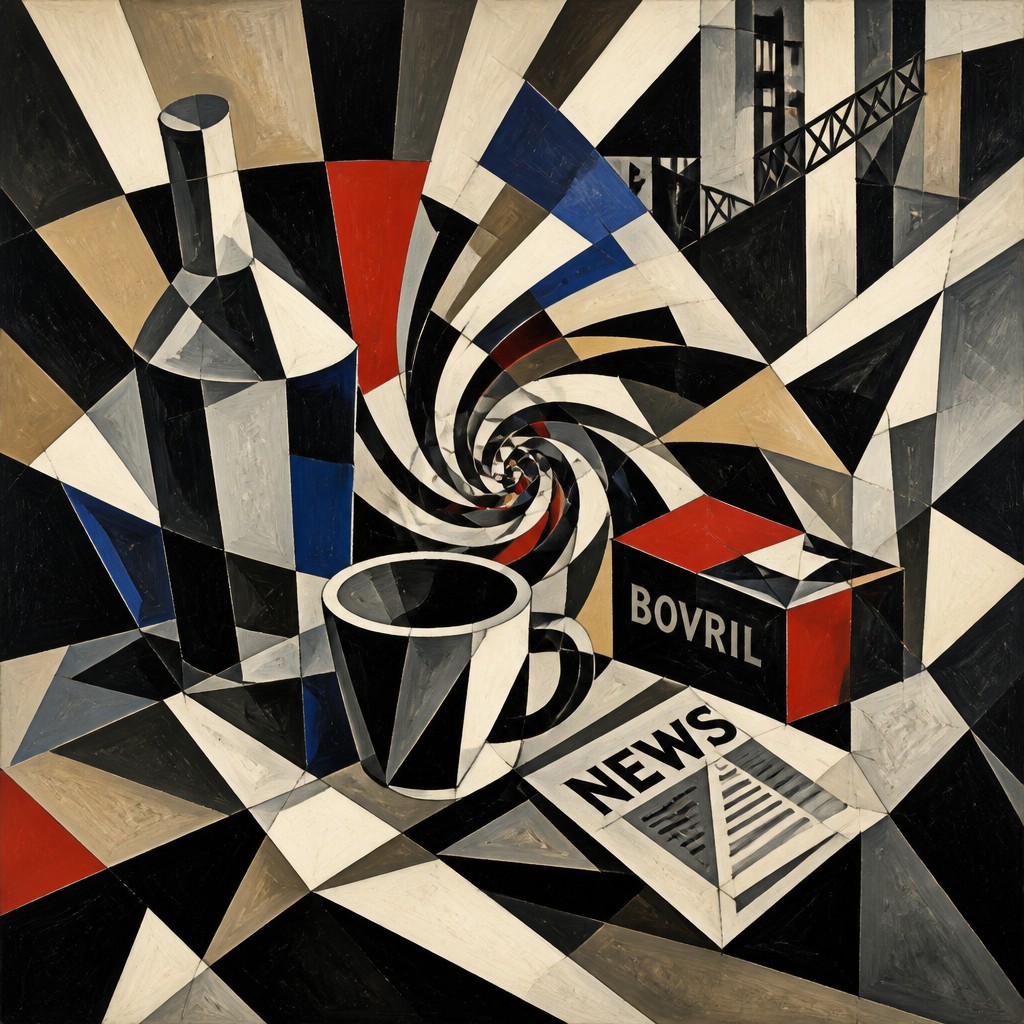
Crisp graphic finish
Clean boundaries, flat areas of color, and emphatic contrast give the work a poster-like clarity. Texture is generally subordinate to the force of the composition.
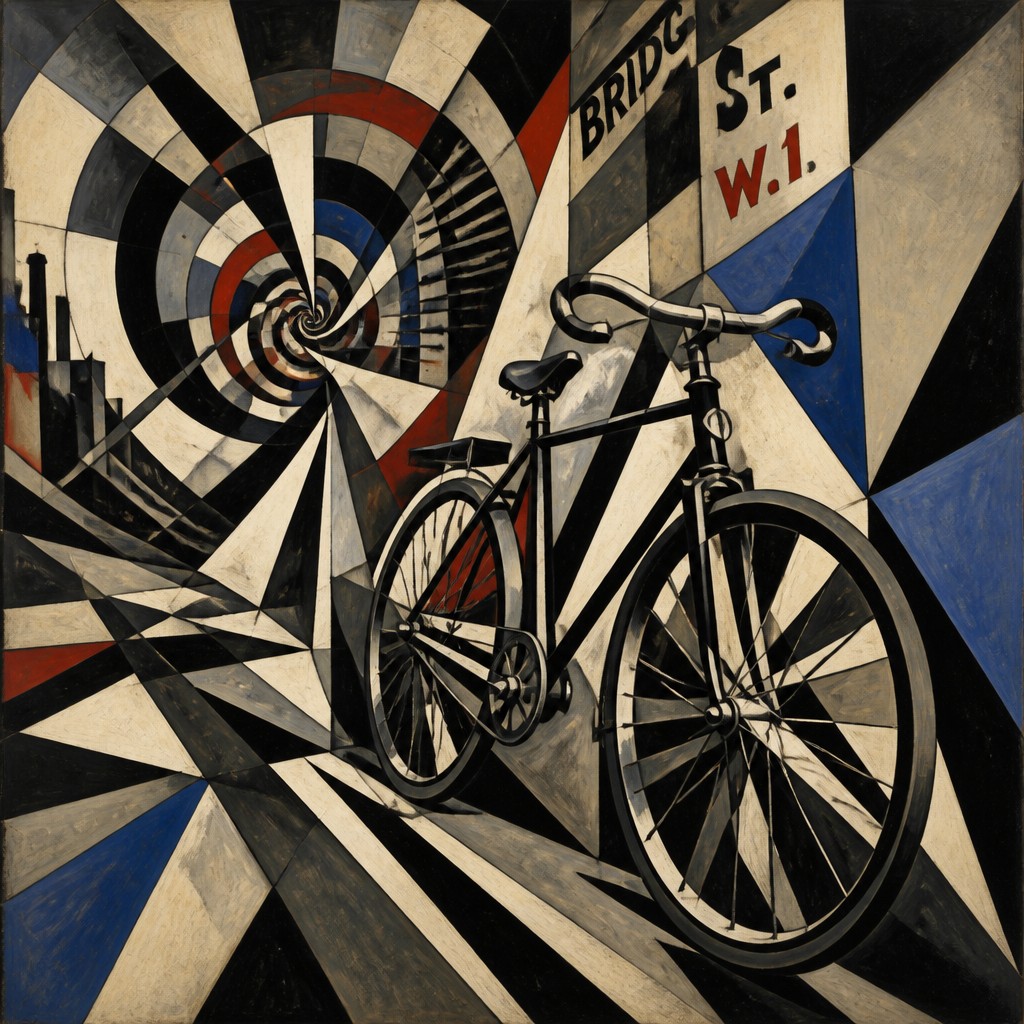
Aggressive visual rhythm
Repeated diagonals, interruptions, and collisions between planes create tension rather than calm balance. The image should feel concentrated, energetic, and resistant to passive viewing.
Try It
Create Videos in Vorticism Art Style
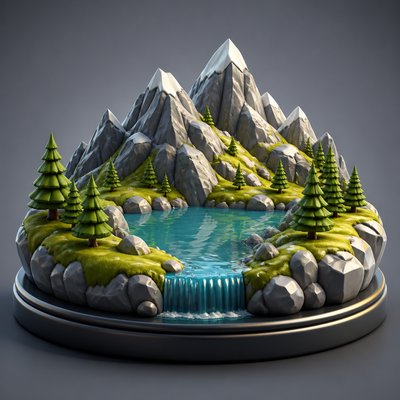
Styles aren't just for stills — describe a scene or animate an image and get a short video rendered in Vorticism. Press play to see this pond come to life.
Make a VideoVorticism Prompt Ideas
Start from an idea — each one opens the generator with the style ready to go. See all 40 Vorticism prompts →
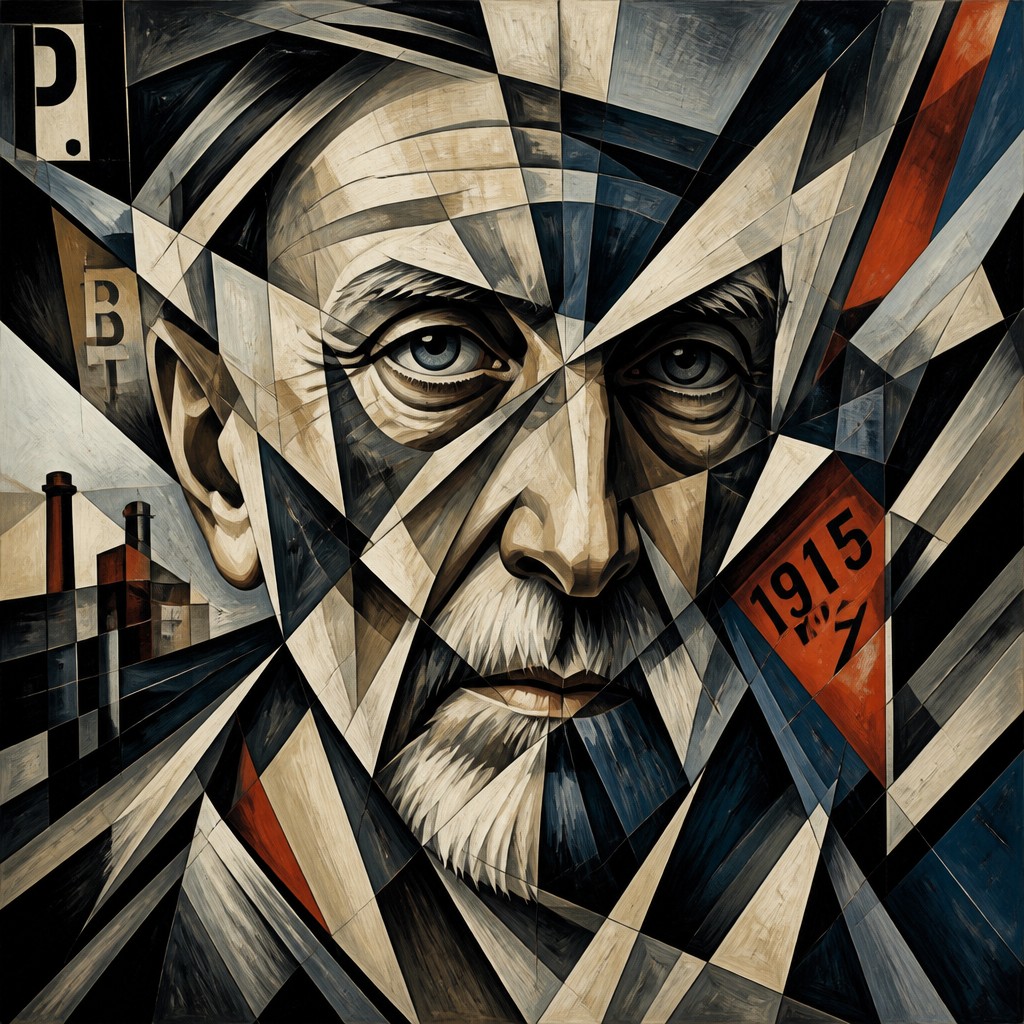
“close-up portrait of an elderly person with expressive weathered features”
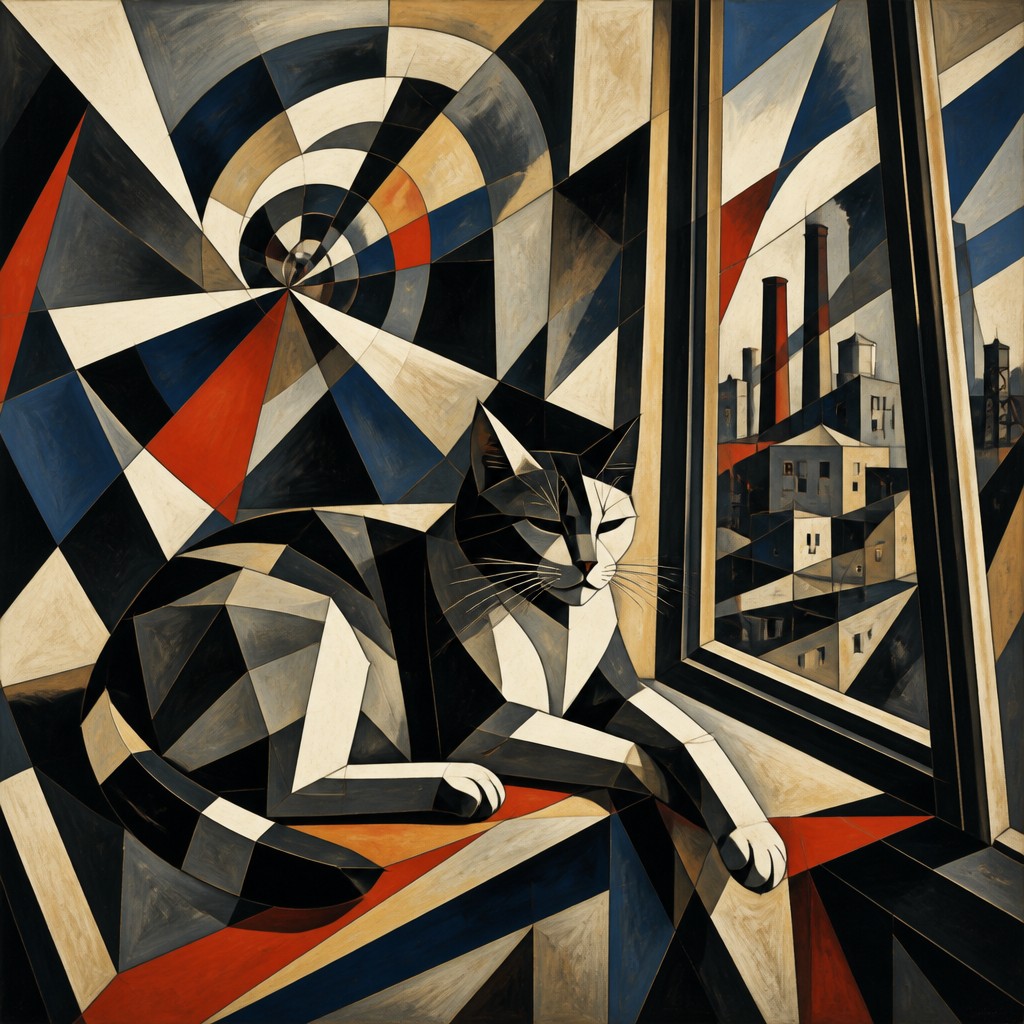
“a cat lounging in a sunlit window”
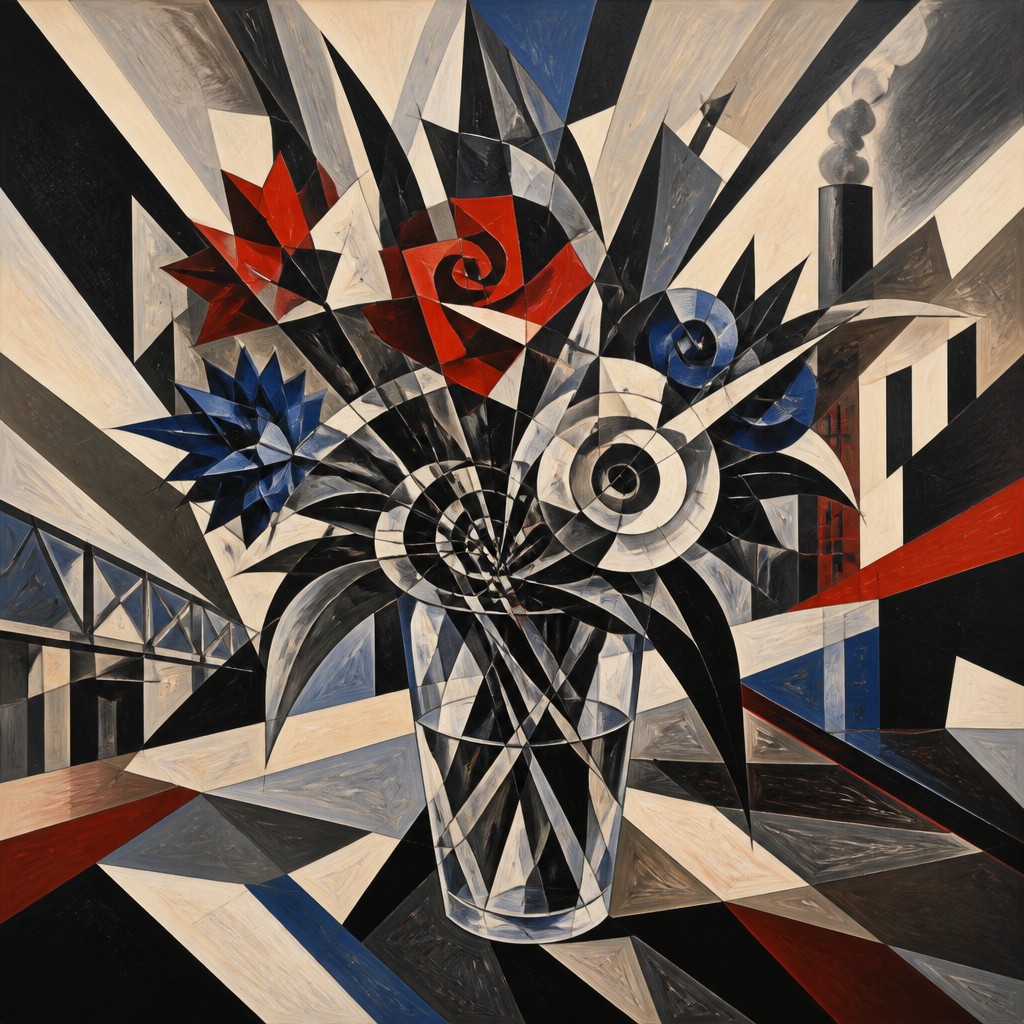
“bouquet of flowers in a glass vase”
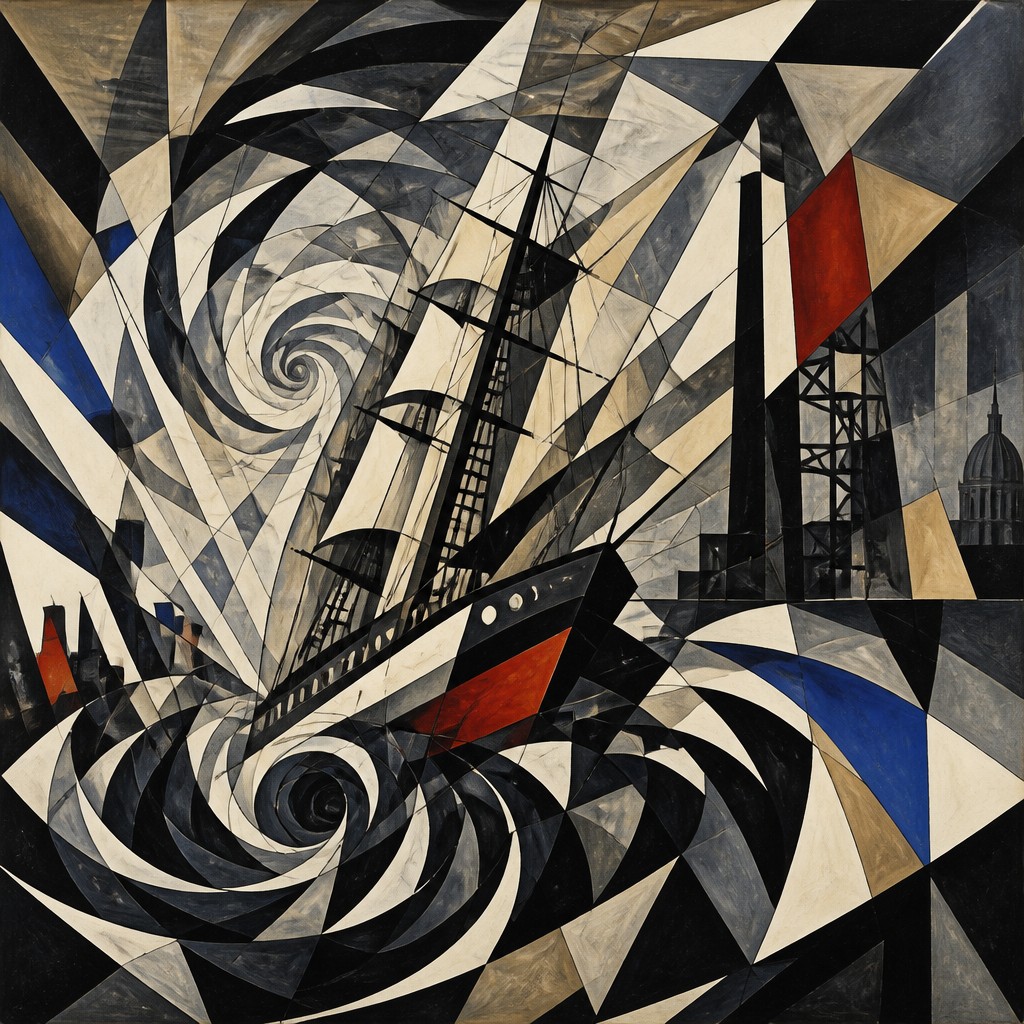
“sailing ship on a stormy sea”
How to Create Vorticism Art
Master the craft step by step — or skip straight to creating. Read the full guide →
- 1
Build from a central force
Begin with a vortex, impact point, or rotational axis, then arrange major shapes so they converge toward or explode from it. Sketch the directional flow before adding subject detail.
- 2
Reduce forms to planes
Translate faces, buildings, vehicles, and objects into triangles, wedges, bars, and overlapping facets. Avoid soft modeling; use abrupt changes in shape and value to suggest volume.
- 3
Limit the palette
Work primarily with black, white, gray, and warm buff, adding only small areas of industrial red or blue. Strong value contrast is more important than a broad range of hues.
- 4
Use graphic construction
In traditional media, try ink, gouache, linocut, collage, or opaque acrylic with rulers and masking tools for hard edges. Digitally, use vector shapes, layer masks, angular selections, and controlled geometric distortion.
- 5
Control motion through diagonals
Repeat slanted beams, wedges, and broken lines to create acceleration and pressure. Vary their scale and overlap so the image has both a dominant movement and secondary rhythms.
- 6
Write focused generation prompts
For text-to-image creation, specify the subject, central vortex, angular planes, restricted steel palette, hard edges, and machine-age urban structure. For image-to-image work, preserve the source subject while requesting faceted geometry, diagonal force, and reduced industrial color.

The Story
History & Origins of Vorticism
Vorticism emerged in Britain in the early 1910s, reaching its most active period around 1914 before being disrupted by the First World War. The movement was associated with an avant-garde exhibition culture and a short-lived literary-art magazine that promoted a distinctly modern, urban, and machine-oriented visual language. Its practitioners sought an alternative to both sentimental naturalism and the more purely speed-focused approaches of continental modernism.
The style developed through the combination of Cubist fragmentation, Futurist interest in velocity and industrial power, and British traditions of graphic experimentation. Although Vorticism was brief as an organized movement, its severe geometry and mechanical abstraction continued to influence illustration, typography, poster design, architecture imagery, and later forms of digital art.
Influences: Vorticism is closely related to Cubist fragmentation, Futurist treatments of speed and machinery, and the broader European machine-age fascination with engineering, urbanization, and industrial production. It also connects to abstract geometry, modernist poster design, experimental typography, collage, architectural drawing, and later constructivist approaches to structure. Its specifically British character comes from combining continental avant-garde ideas with a more austere, forceful, and graphic visual language.
Frequently Asked Questions
What defines Vorticist art?
Vorticist art is defined by angular geometry, concentrated rotational energy, mechanical diagonals, and a restricted industrial palette. Subjects are often fragmented into hard-edged planes and arranged around a central point of force. The style feels abstract, urban, engineered, and deliberately aggressive.
When and where did Vorticism begin?
Vorticism began in Britain in the early 1910s and was most active around 1914. It developed within the prewar avant-garde and was promoted through exhibitions and experimental print culture. The First World War significantly interrupted its development as an organized movement.
How is Vorticism different from Futurism?
Both styles respond to modern technology, speed, and industrial life, but they emphasize different visual strategies. Futurism often uses repeated contours and flowing directional lines to suggest rapid movement, while Vorticism tends to compress energy into dense, angular structures organized around a central vortex.
Can Vorticist art include recognizable subjects?
Yes. Figures, machines, buildings, vehicles, and landscapes can remain identifiable, but their forms are simplified and fractured into geometric planes. Recognition works best when a few defining contours survive within the abstraction.
What materials work well for creating this style?
Ink, gouache, opaque paint, collage, linocut, and stencil techniques are well suited to its flat shapes and hard edges. Digital vector tools and layered raster editing also work effectively because they allow precise diagonals, masks, limited palettes, and controlled overlaps.
Where is Vorticist design used today?
Its visual language appears in editorial illustration, posters, album artwork, book covers, motion graphics, architectural visualizations, and experimental typography. Contemporary digital artists also adapt its machine-age geometry for abstract environments and image transformations.

Create your first Vorticism artwork
Describe anything — or upload a photo — and see it in Vorticism Art Style in seconds.
Related Styles
Discover similar art styles