Vietnamese Art Style
Explore Vietnamese Art Style: Dong Son bronze motifs, Cham reliefs, sơn mài lacquer, eggshell shimmer, and misty karst landscapes.
Instantly rendered in Vietnamese — or transform a photo
Vietnamese Gallery
Tap any artwork to explore it
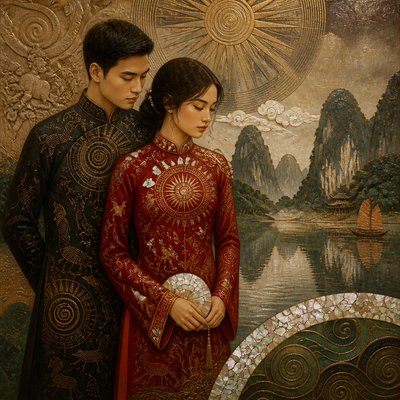
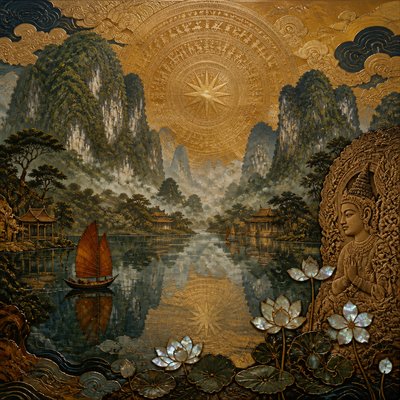
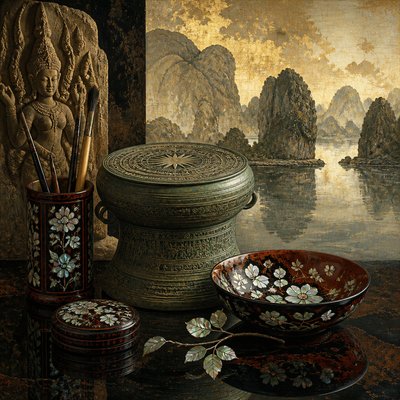
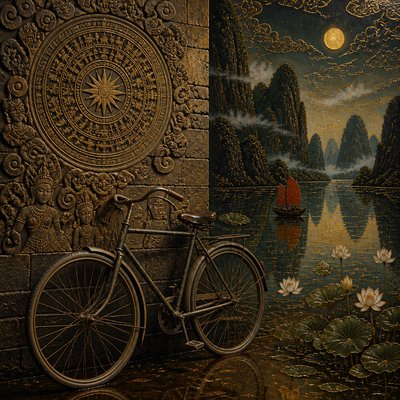
What is Vietnamese Art Style?
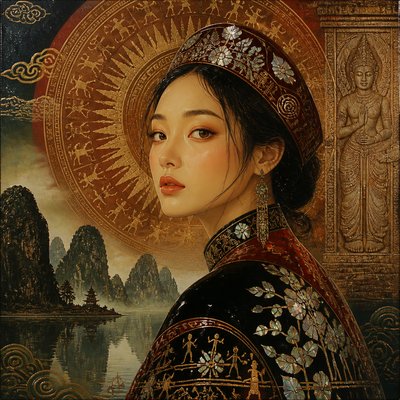
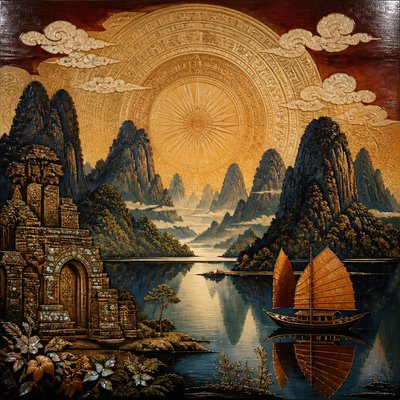
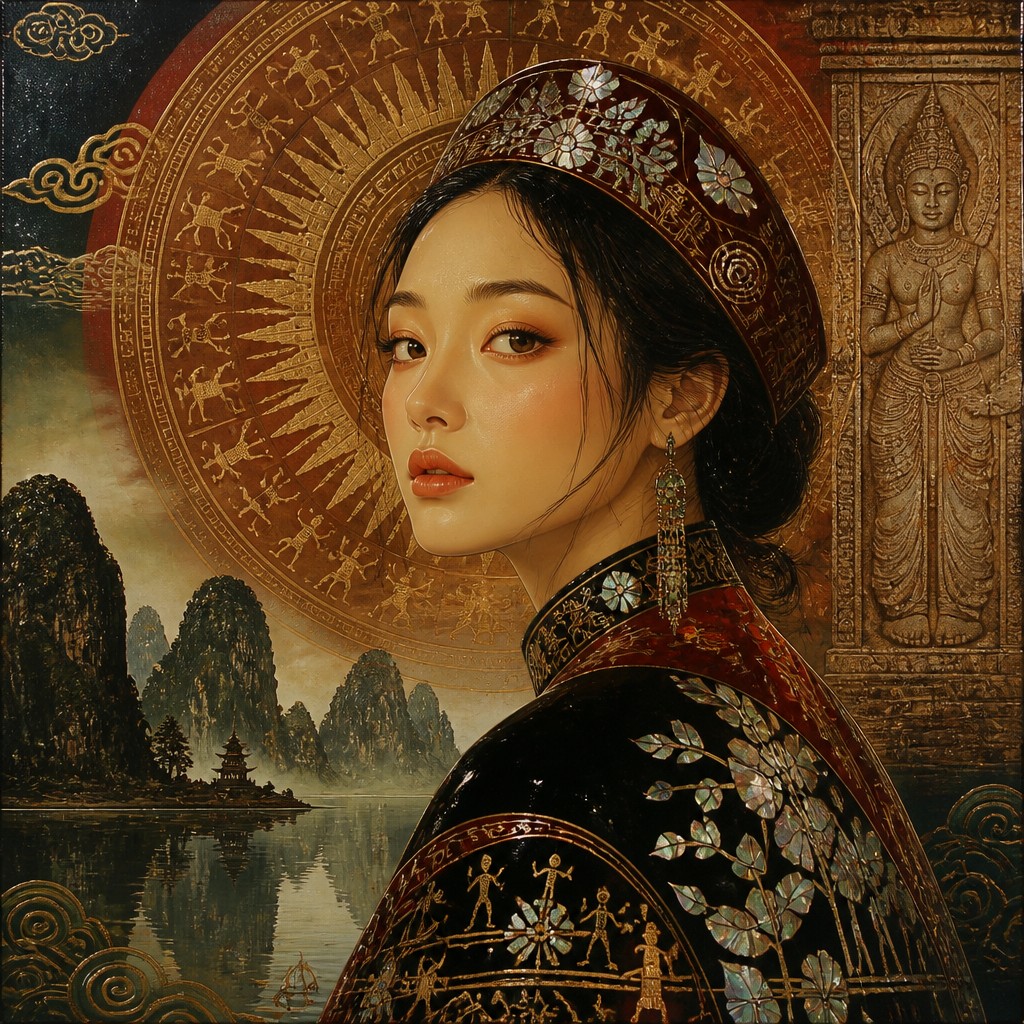
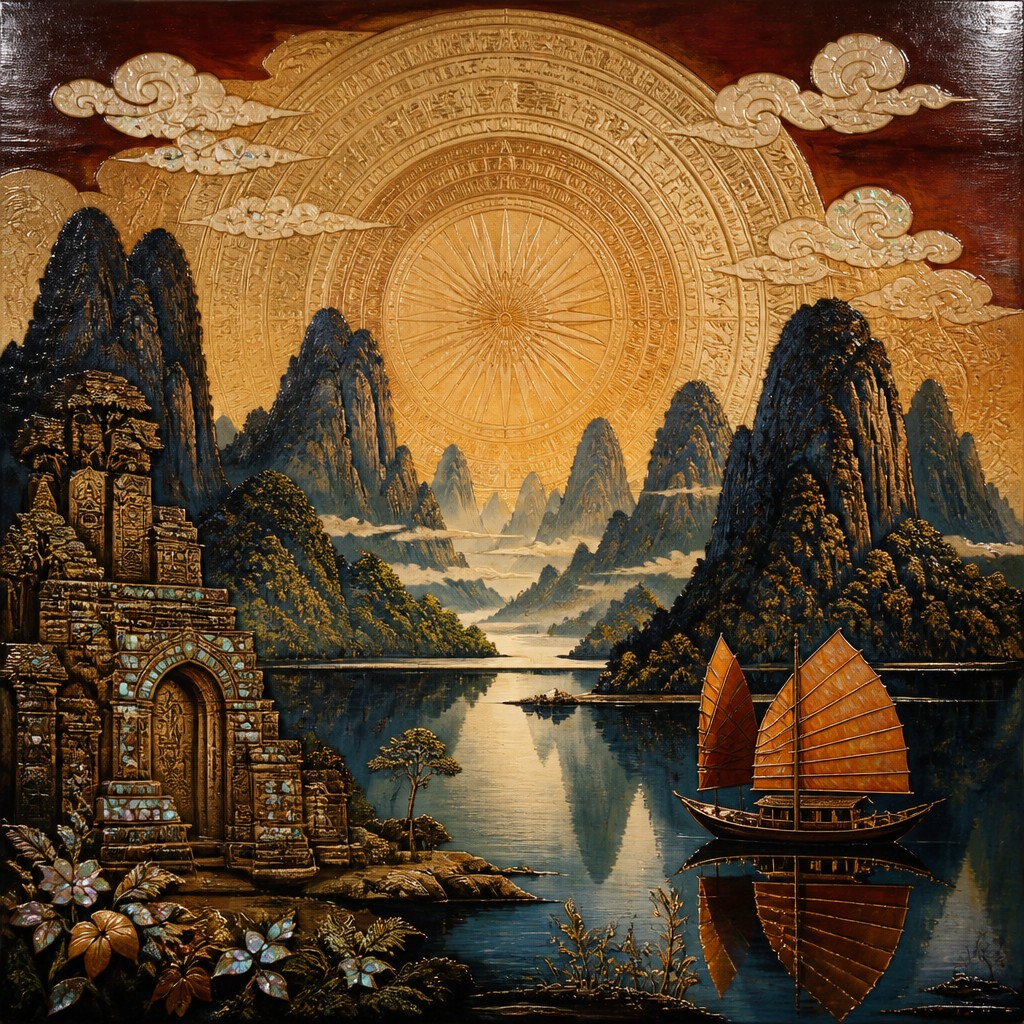
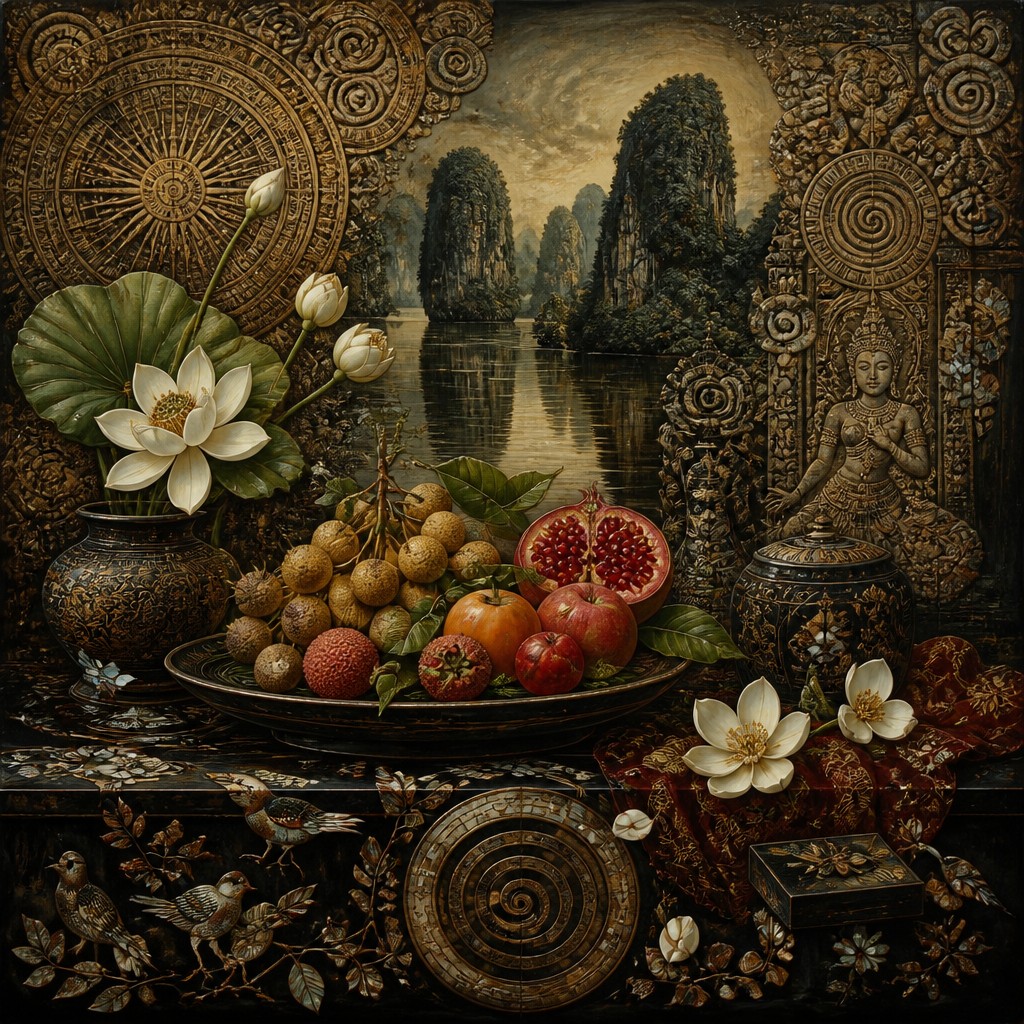
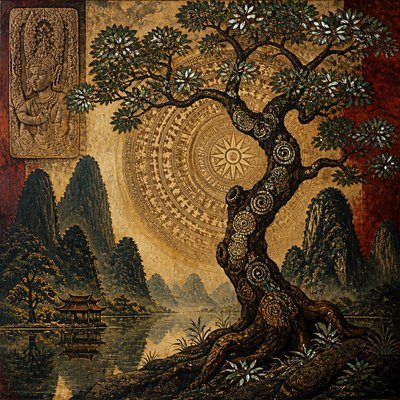
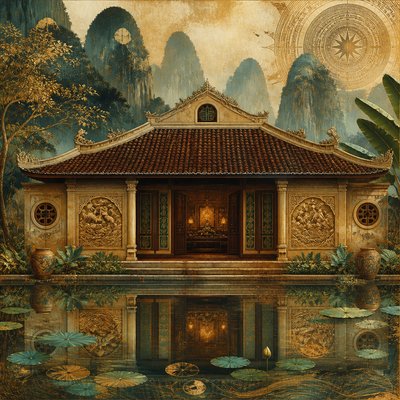
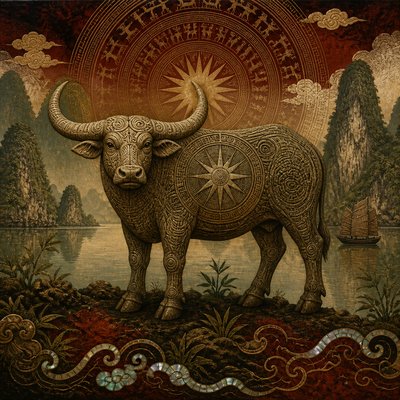
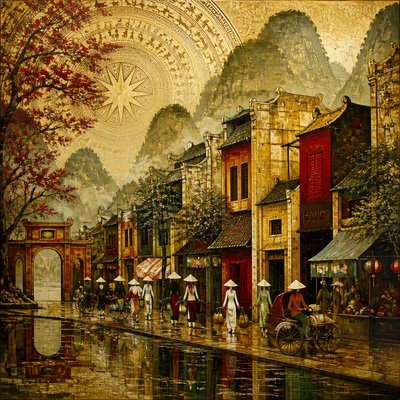
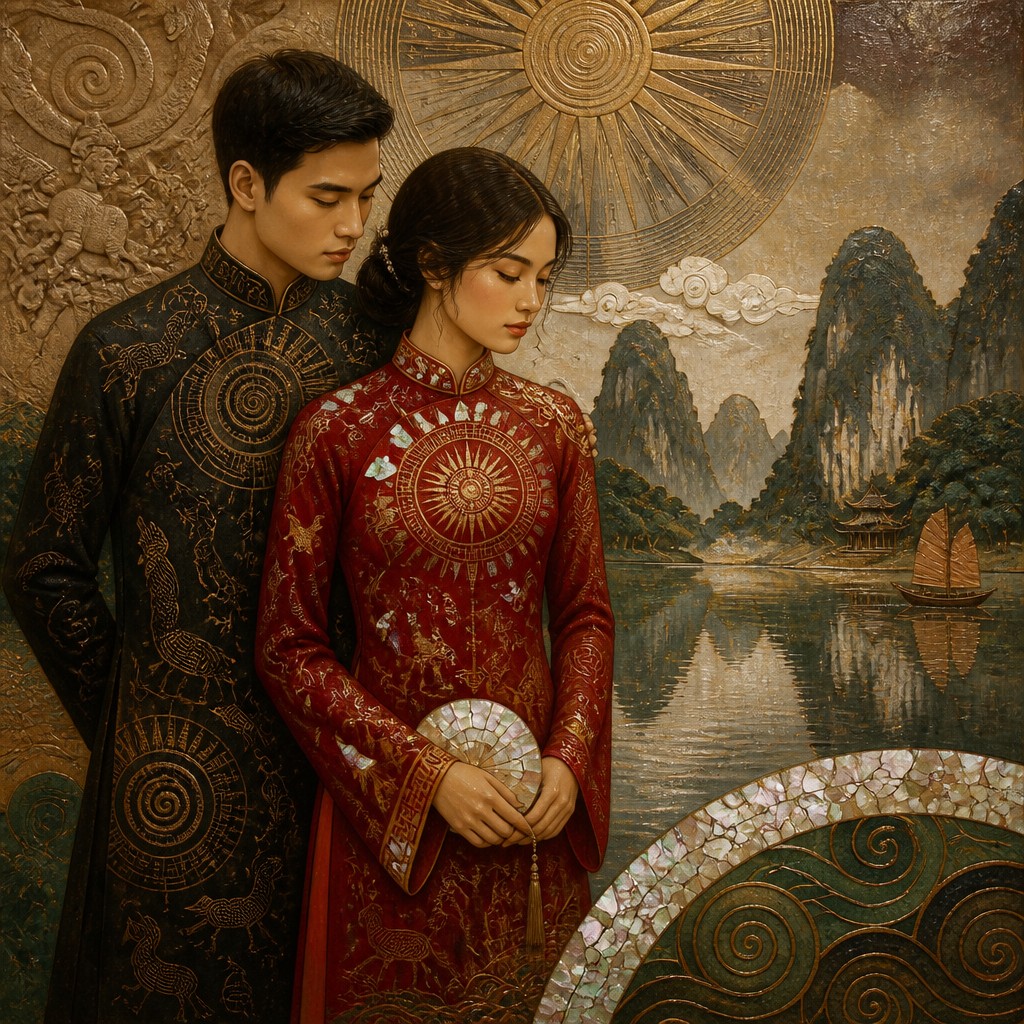
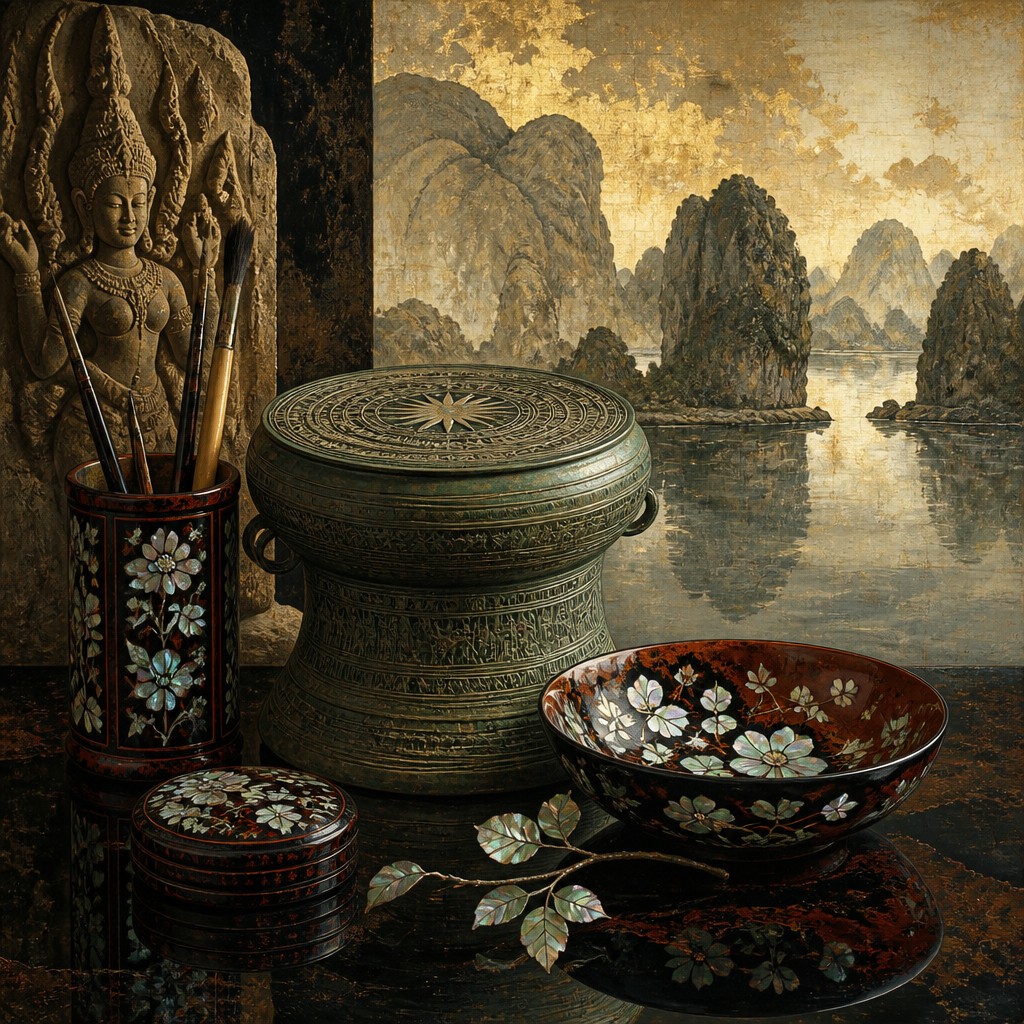
Vietnamese Art Style is a contemporary aesthetic synthesis rooted in several Vietnamese visual traditions rather than a single historical movement. It combines the geometric spirals, concentric rings, birds, boats, and radiating suns associated with Dong Son bronze drums; the weathered monumentality of Cham sandstone relief; and the deep, reflective surfaces of Vietnamese sơn mài lacquer painting. Misty limestone karsts, still water, and restrained atmospheric light provide a landscape setting for these decorative and archaeological references.
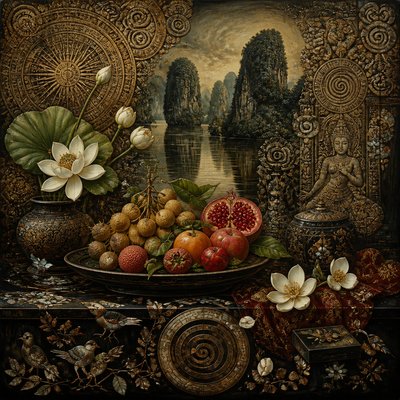
The style looks distinctive because it balances ancient pattern with quiet modern composition. Dark lacquer layers absorb light while polished red, amber, black, and umber passages return it selectively; eggshell inlay introduces a finely fractured white shimmer. Relief-like textures, softened edges, and controlled negative space prevent the ornamental motifs from becoming visually noisy, producing an atmosphere of age, ceremony, and contemplative stillness.
Try It On Your Photos
Upload any photo and convert it into Vietnamese Art Style — drag the sliders to compare before and after.


What Defines Vietnamese Art Style
The signature details, up close
Dong Son geometry
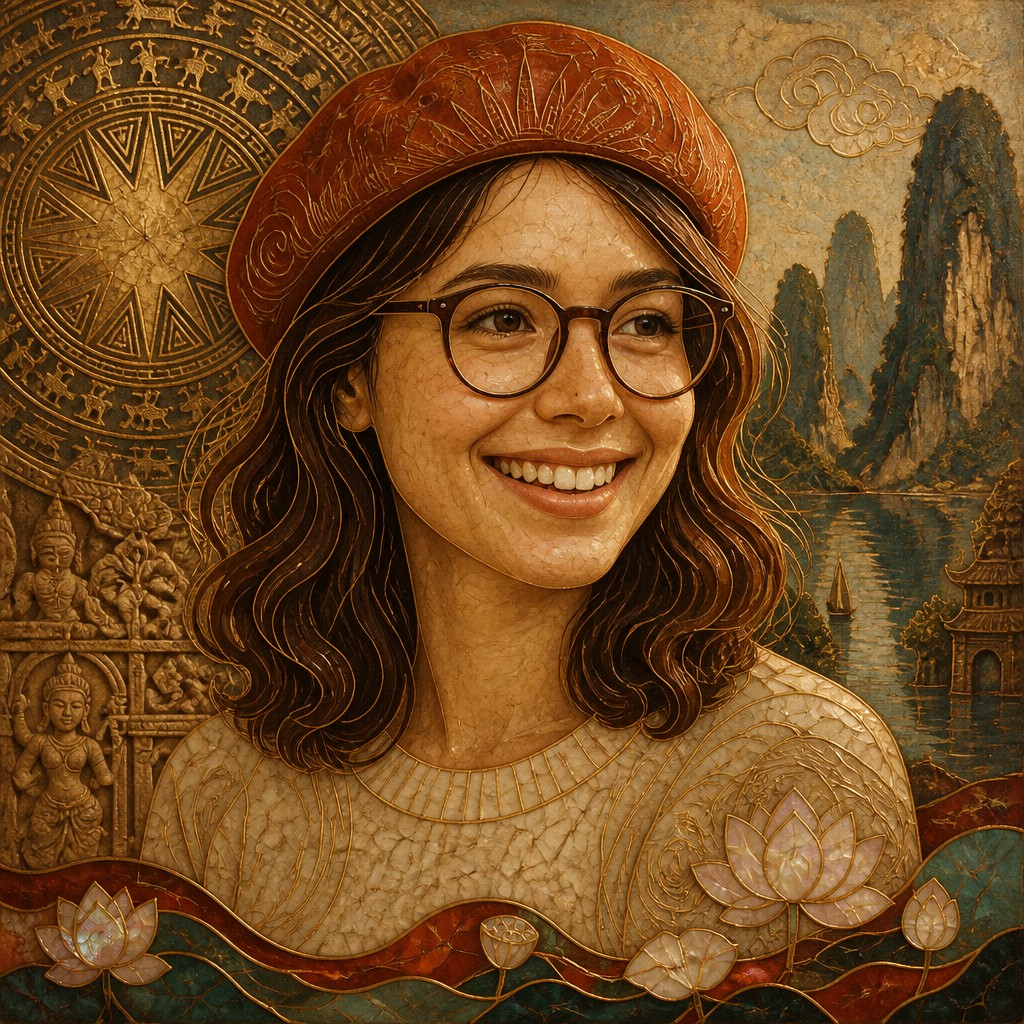
Concentric circles, spirals, dotted bands, feathered birds, boats, and radiating sunbursts create a rhythmic graphic structure. Motifs should feel engraved or cast rather than casually painted.
Layered sơn mài surface
Deep black, oxblood, cinnabar red, ochre, and amber are arranged in thin, visually dense layers. Selective polishing creates a smooth reflective depth alongside areas that remain softly obscured.
Eggshell inlay shimmer
Fine off-white fragments or hairline cracks can define highlights, clouds, water, garments, or ornamental borders. The effect is tactile and irregular, not a flat digital white fill.
Cham sandstone relief
Weathered carved texture, shallow shadows, softened edges, and traces of erosion suggest temple sculpture and architectural fragments. Relief details work best when integrated into the composition rather than pasted on as decoration.
Karst and reflective water
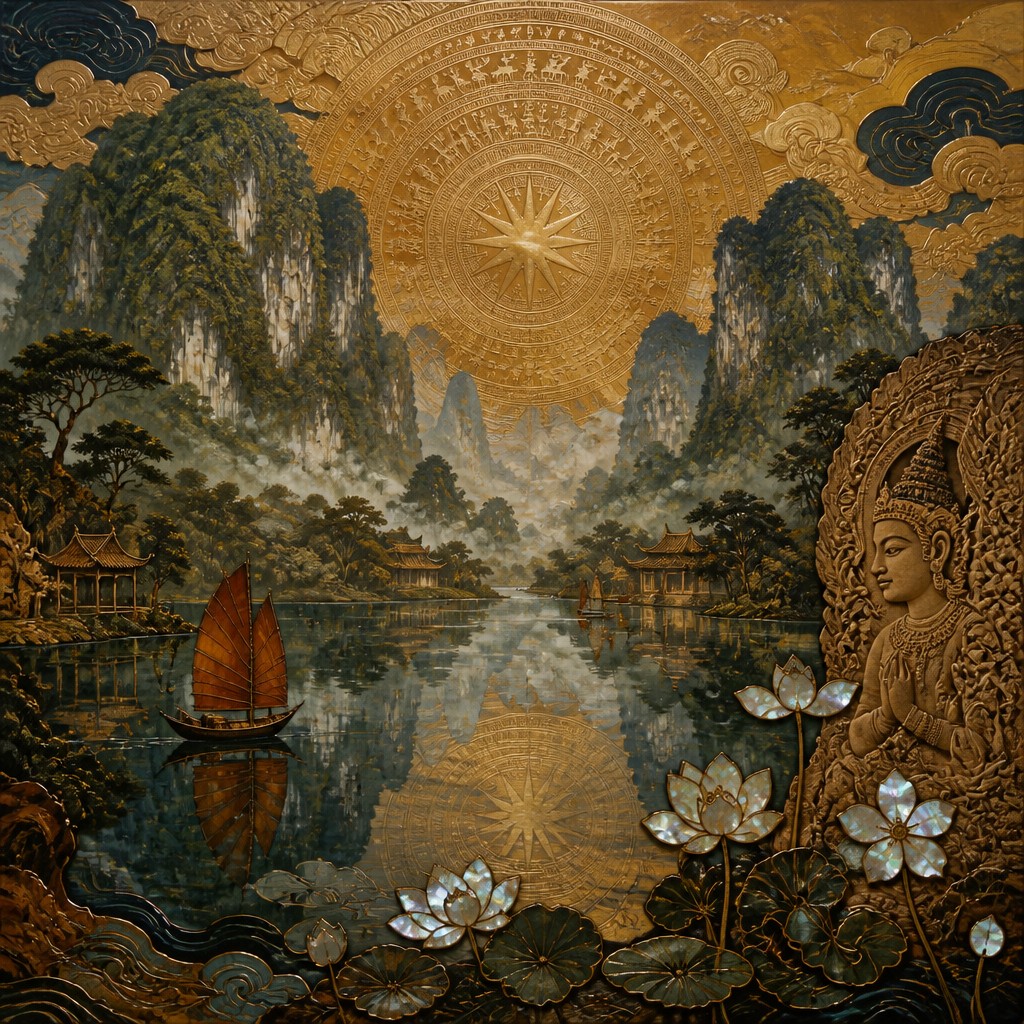
Limestone pinnacles, humid valleys, river inlets, and still water provide a recurring environmental vocabulary. Reflections are subdued and slightly broken, reinforcing the lacquer-like surface.
Ceremonial restraint
The palette and composition favor dignity, silence, and balanced spacing over exuberant spectacle. A limited number of motifs, framed by darkness or mist, gives the imagery an archaeological and contemplative character.
Vietnamese Prompt Ideas
Start from an idea — each one opens the generator with the style ready to go. See all 40 Vietnamese prompts →
How to Create Vietnamese Art
Master the craft step by step — or skip straight to creating. Read the full guide →
- 1
Build a layered ground
For physical work, establish a dark ground and add translucent color layers, sanding and polishing between stages where appropriate to evoke sơn mài depth. Digitally, use stacked multiply, color-burn, and soft-light layers with masked abrasion rather than a single glossy filter.
- 2
Design the ornament first
Sketch concentric rings, spirals, sunbursts, or small repeating bands on a separate grid so their spacing remains intentional. Keep motifs partially hidden by mist, erosion, or lacquer darkness to avoid a wallpaper-like result.
- 3
Create tactile material contrast
Combine smooth polished highlights with chipped mineral grain, shallow relief, and irregular eggshell fragments. Texture should follow the form of the object or landscape instead of being applied uniformly across the image.
- 4
Control the palette and light
Start with black, brown, deep red, muted gold, mineral gray, and warm ivory, then reserve the brightest accents for inlay, water, or polished lacquer. Use low, diffused light and selective reflections rather than bright global illumination.
- 5
Compose with atmospheric distance
Place the strongest engraved or relief details in the foreground and let karst peaks dissolve into humid haze. Broad areas of dark water or mist provide the negative space needed for the pattern to read clearly.
- 6
Write a precise generation prompt
Specify the subject first, then request Dong Son concentric engraving, weathered Cham sandstone, layered sơn mài lacquer, eggshell inlay, and misty karst reflections. For image-to-image work, preserve the source silhouette while applying the material vocabulary, controlled palette, and aged surface texture.
The Story
History & Origins of Vietnamese
This is an invented contemporary style label, not the name of a unified historical Vietnamese school. Its aesthetic lineage reaches back to Dong Son culture in northern Vietnam, conventionally dated from roughly the seventh century BCE to the second century CE, whose cast bronze drums are known for concentric ornament, rhythmic geometric pattern, and solar imagery. It also draws on Cham architectural and sculptural traditions that developed in central and southern Vietnam over many centuries, particularly their carved sandstone surfaces and sacred relief programs.
Its lacquer component comes from the long Vietnamese lacquer tradition, including the modern development of sơn mài as a fine-art medium during the twentieth century. Traditional lacquer work builds color through repeated applications, sanding, polishing, and the incorporation of materials such as eggshell, gold, silver, and lacquer-derived pigments. The present synthesis combines these historical references with karst landscapes and digitally imagined archaeological patina.
Influences: The style relates to Dong Son bronze ornament, Cham sculpture and temple architecture, Vietnamese sơn mài, East and Southeast Asian lacquer traditions, and the broader visual language of archaeological reconstruction. It also shares qualities with decorative arts, relief sculpture, symbolist landscape, and atmospheric minimalism, while remaining distinct from any one of these traditions because it deliberately combines engraved geometry, mineral texture, lacquer depth, and karst scenery.
Frequently Asked Questions
What defines Vietnamese Art Style?
It is defined by the combination of Dong Son-inspired bronze geometry, Cham-like weathered relief, layered Vietnamese lacquer surfaces, eggshell inlay, and misty karst landscapes. Its mood is generally ceremonial, aged, reflective, and restrained.
Is Vietnamese Art Style a historical art movement?
No. The label describes a contemporary synthesis rather than a documented historical movement or single national school. It draws responsibly on several Vietnamese traditions that developed in different places and periods.
How is it different from traditional Vietnamese lacquer painting?
Traditional sơn mài is a specific material and artistic practice involving layered lacquer, polishing, and inlay. This style uses those qualities as a foundation but adds archaeological bronze motifs, Cham relief textures, and karst landscape imagery in a deliberately hybrid composition.
What colors work best for this style?
A restrained palette of lacquer black, deep brown, cinnabar, oxblood, amber, mineral gray, muted green, and warm ivory is effective. Metallic or eggshell-like highlights should be used sparingly so the surface retains depth and quietness.
Can photographs be transformed into this style?
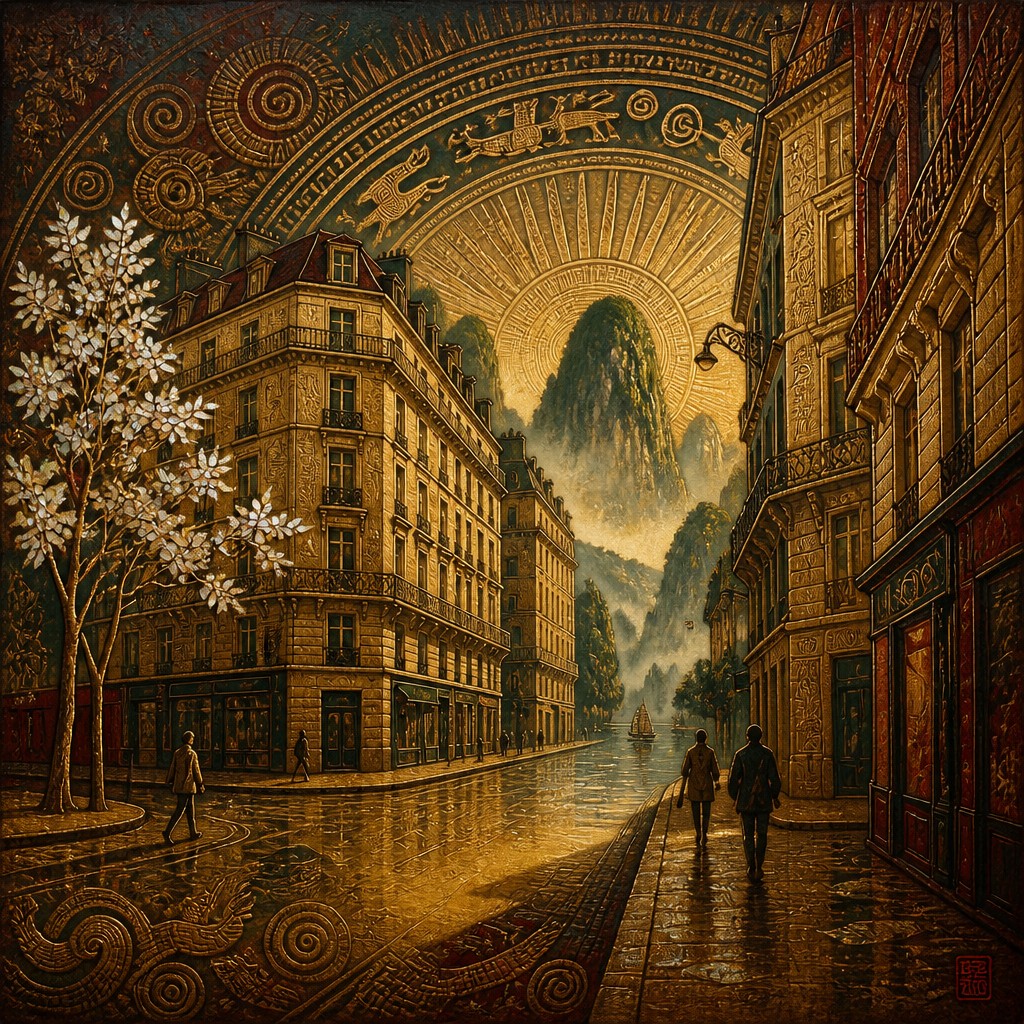
Yes. Architectural details, portraits, boats, forests, and landscapes can all serve as source material. Preserve the main structure of the photograph while introducing engraved pattern, lacquer layering, relief texture, selective inlay, and humid atmospheric light.
Where is this style most effective?
It suits landscapes, cultural objects, architectural studies, still lifes, ceremonial scenes, and portraits with strong silhouette. It is especially effective when the subject includes reflective surfaces, carved texture, or enough dark space for the ornament to remain legible.
Create your first Vietnamese artwork
Describe anything — or upload a photo — and see it in Vietnamese Art Style in seconds.
Related Styles
Discover similar art styles