Vanuatu Art Style
Explore Vanuatu-inspired art through slit-gong drums, tusked-pig masks, volcanic colors, and continuous sand-drawing patterns.
Instantly rendered in Vanuatu — or transform a photo
Vanuatu Gallery
Tap any artwork to explore it
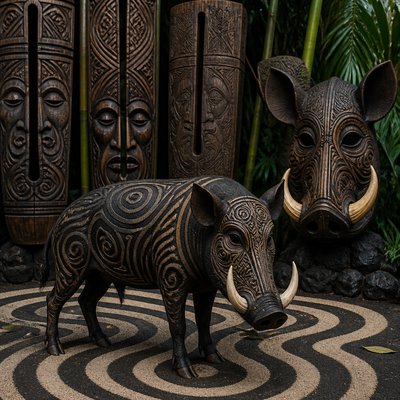
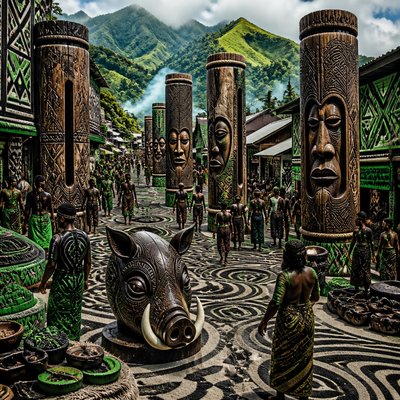
What is Vanuatu Art Style?
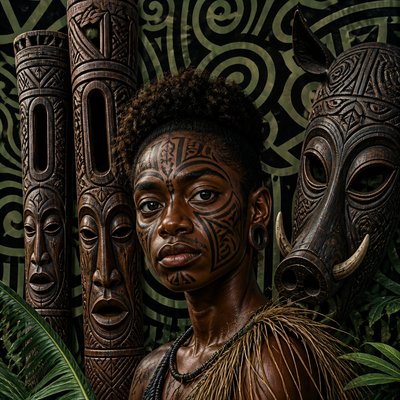
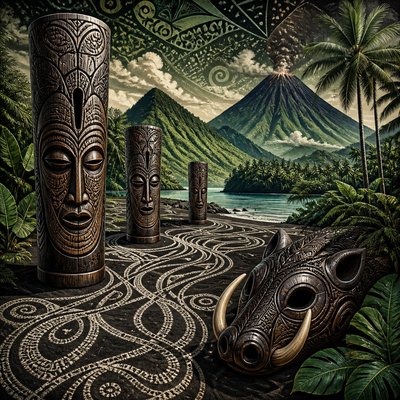
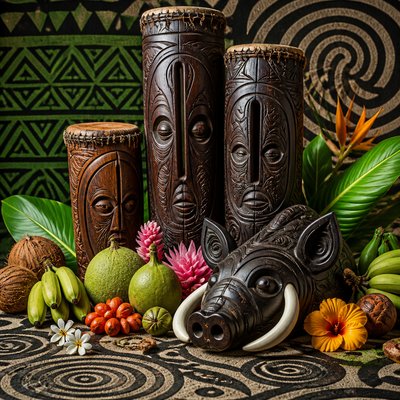
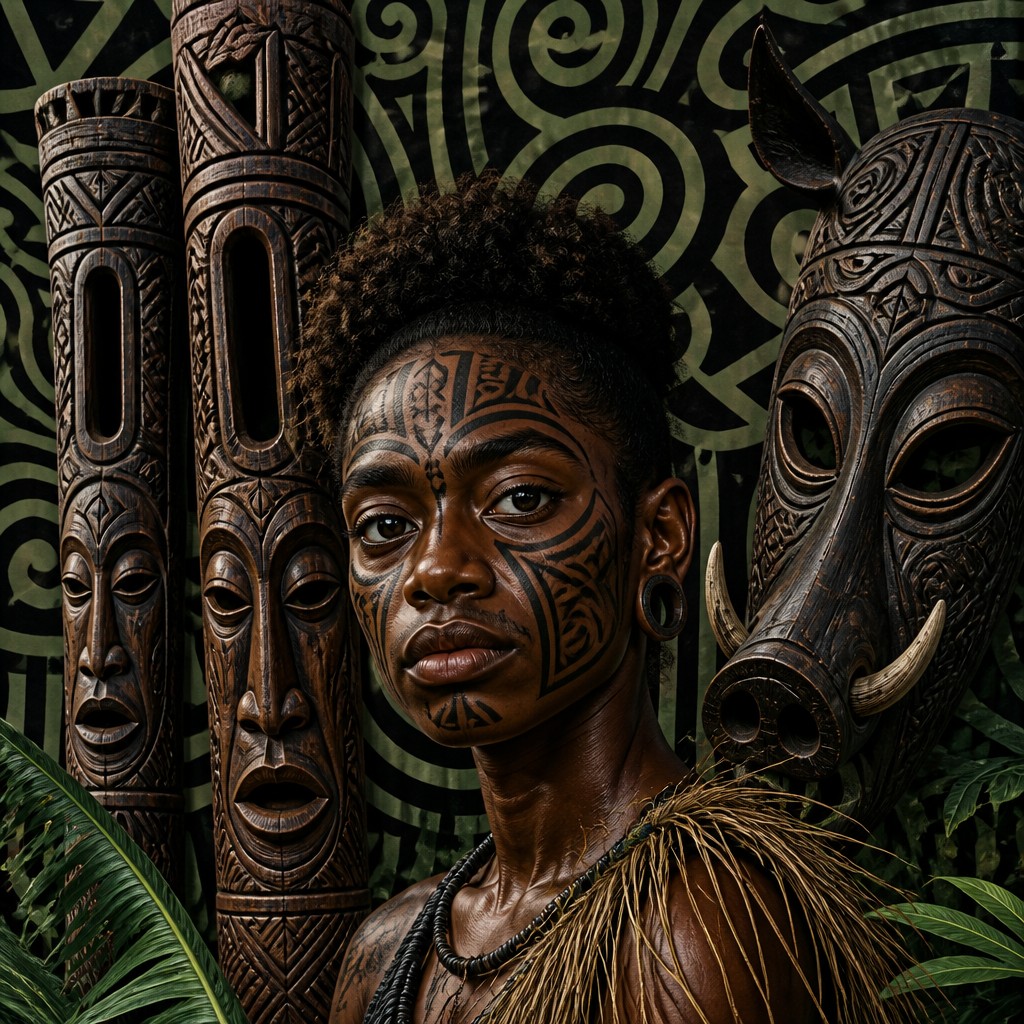
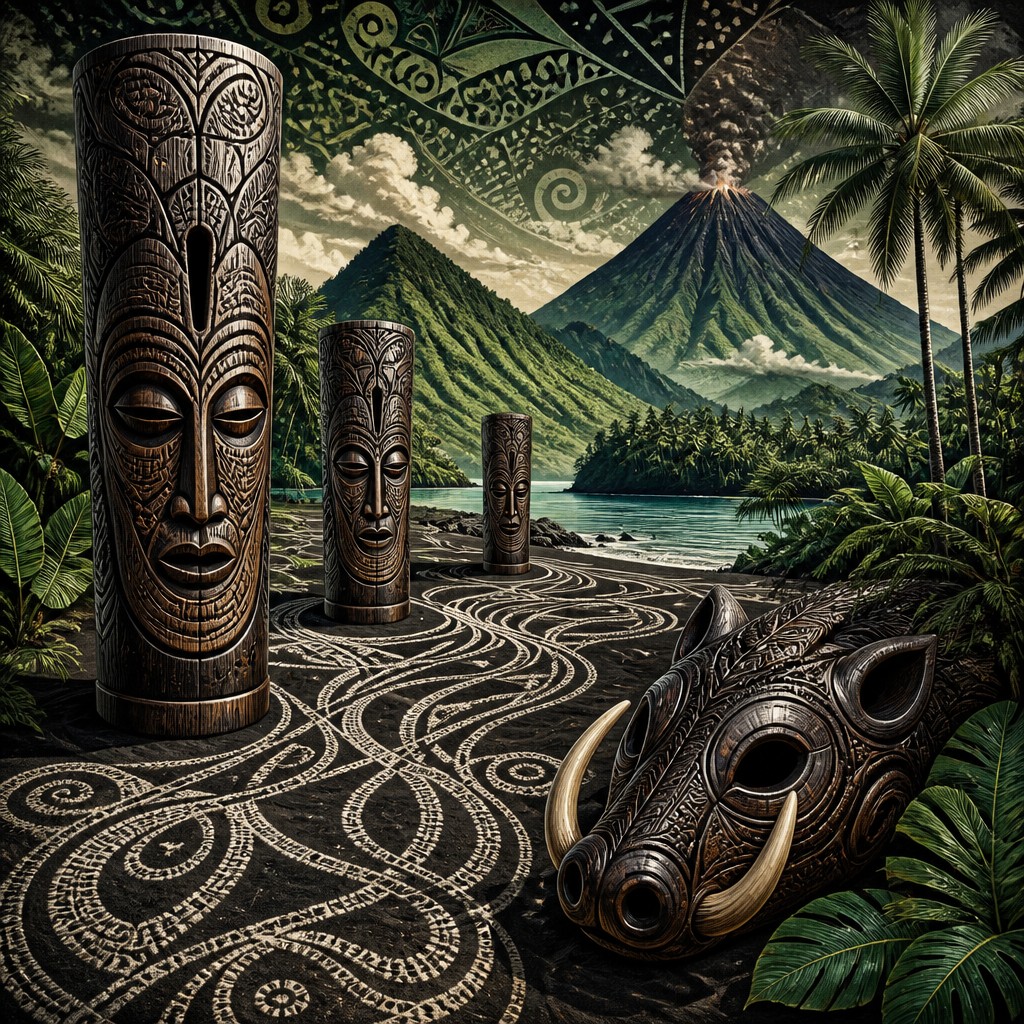
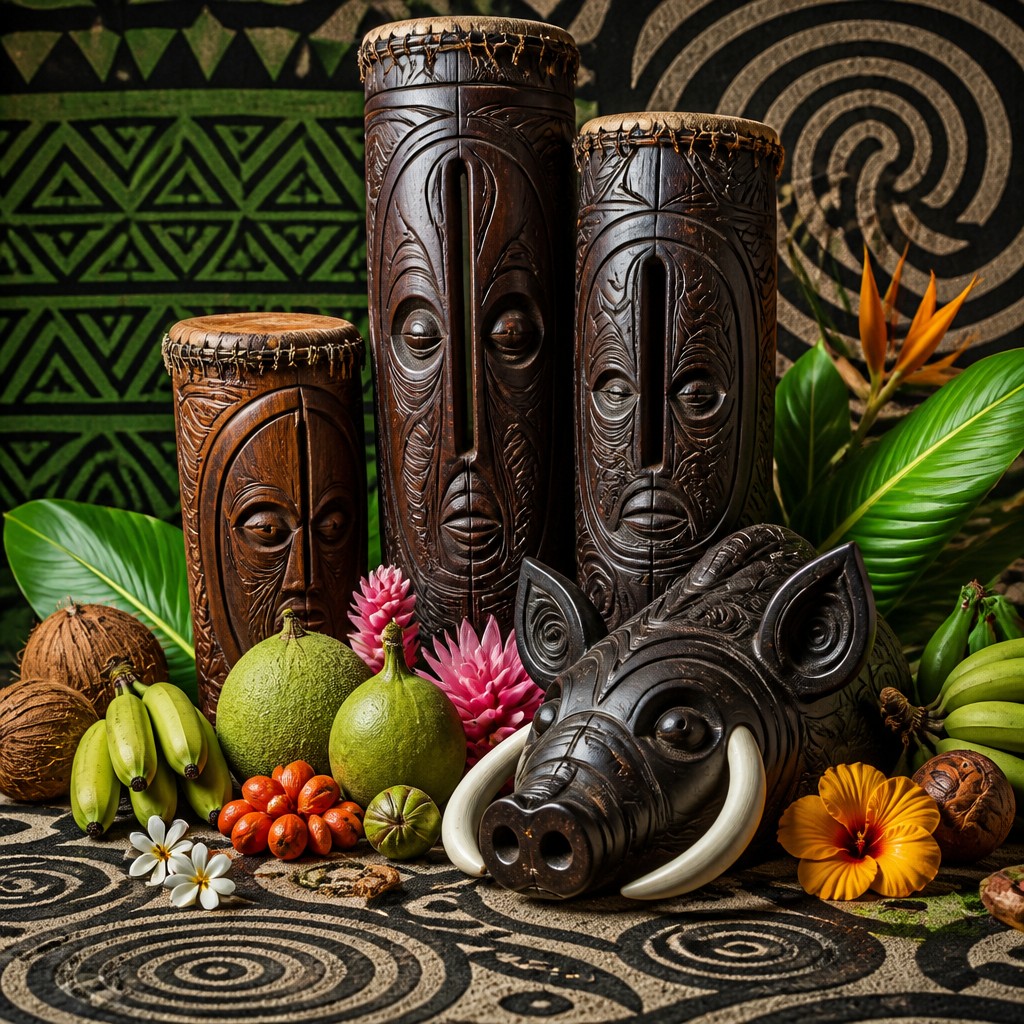
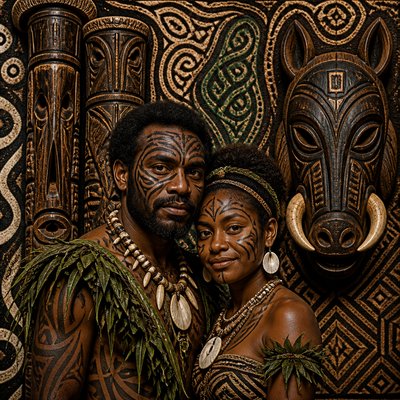
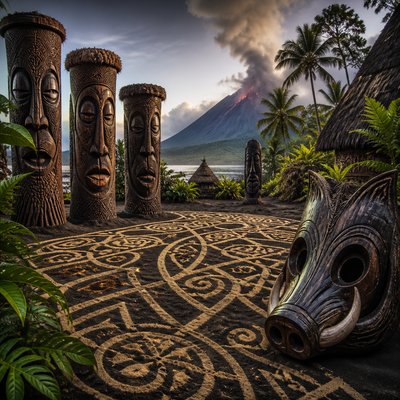
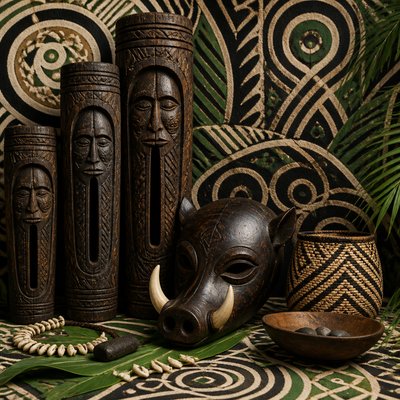
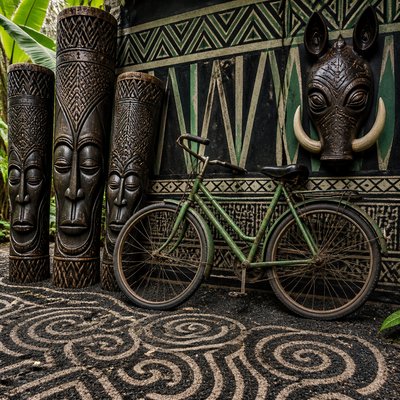
Vanuatu Art Style is a contemporary, cross-island visual synthesis inspired by the ceremonial woodcarving, instruments, masks, and sand-drawing traditions of Vanuatu. Its defining imagery includes towering carved slit-gong drums, dark polished wooden forms, stylized tusked-pig masks, and continuous geometric lines that suggest designs traced in sand. A palette of volcanic black, earth brown, bone white, and dense jungle green gives the style a strongly material, island-centered identity.
The style looks powerful and rhythmically ordered because its visual sources are connected to communal performance, ancestral presence, navigation, storytelling, and customary knowledge. Bold silhouettes and incised reliefs make carved objects legible from a distance, while looping line systems create visual movement without relying on shading or naturalistic perspective. This is best understood as an inspired contemporary style rather than a single traditional art category shared uniformly across all Vanuatu communities.
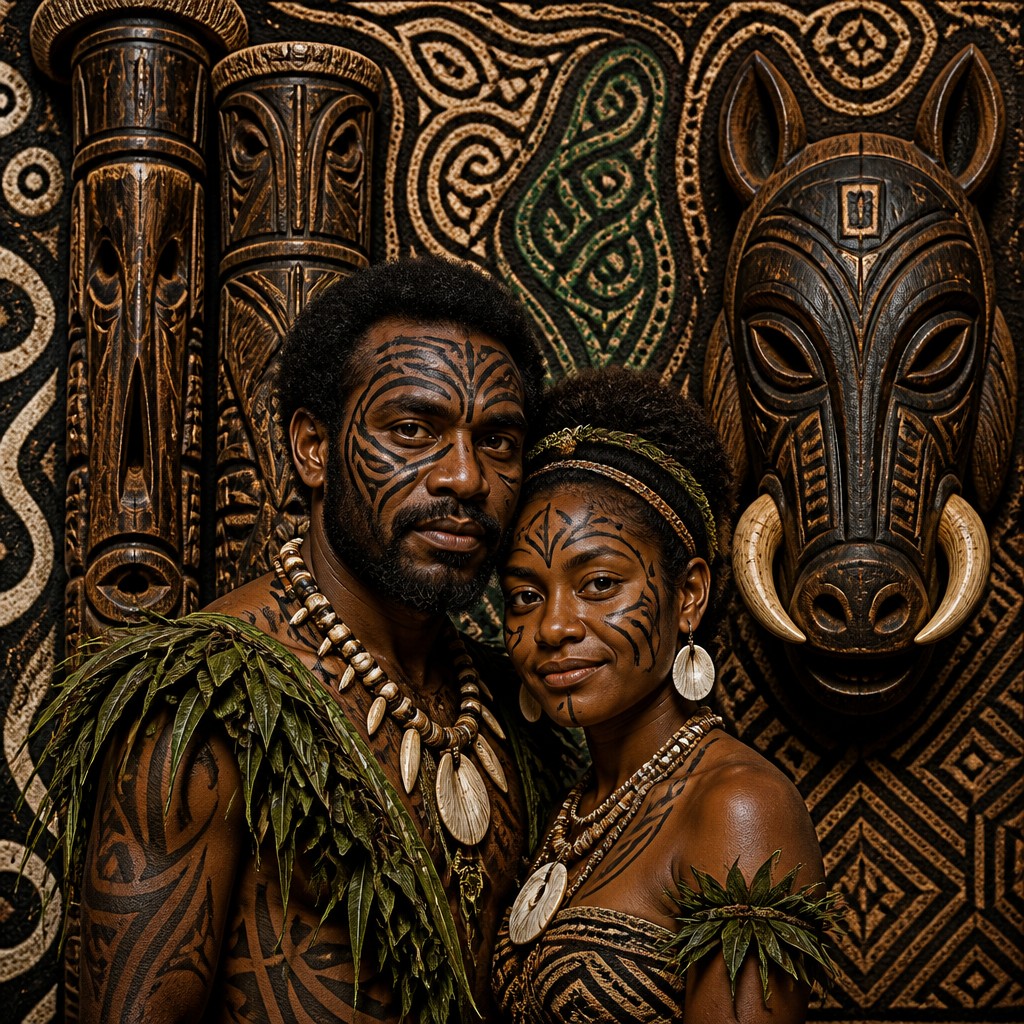
Try It On Your Photos
Upload any photo and convert it into Vanuatu Art Style — drag the sliders to compare before and after.
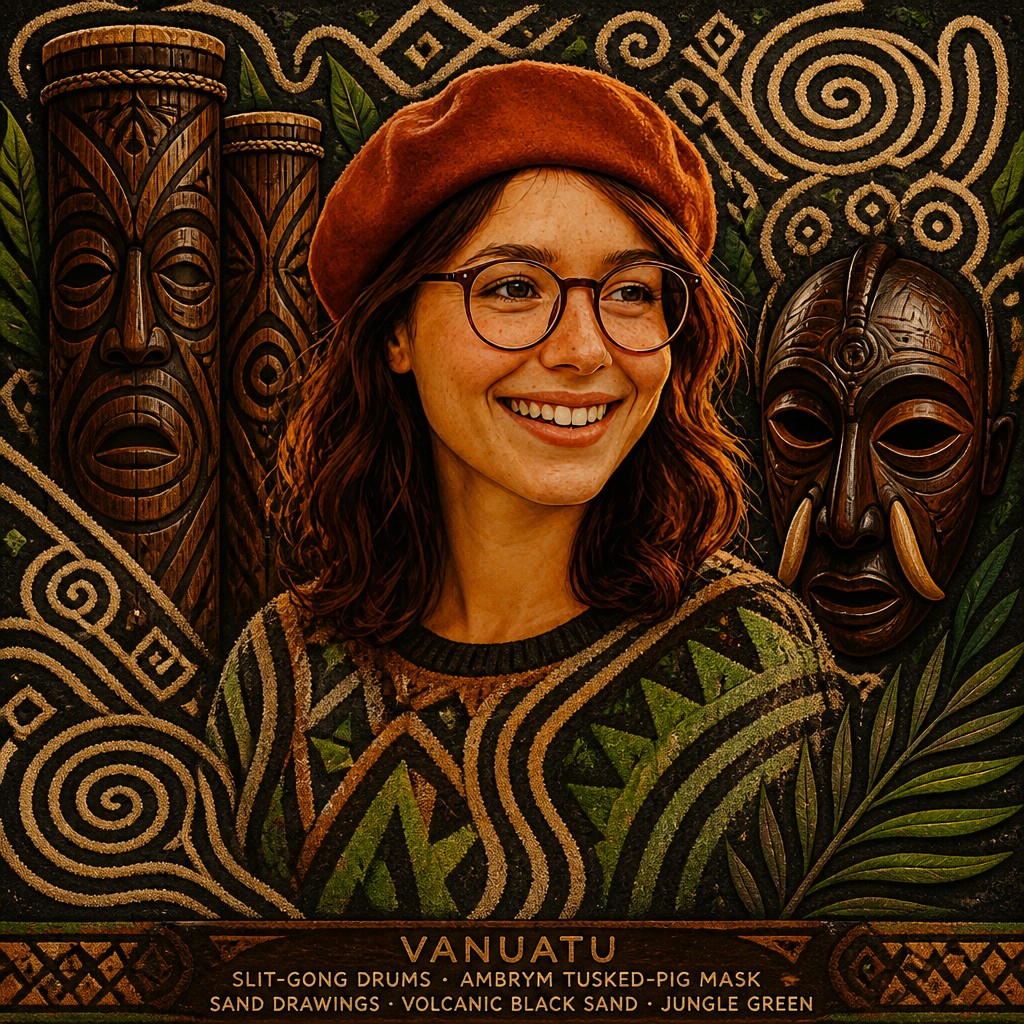

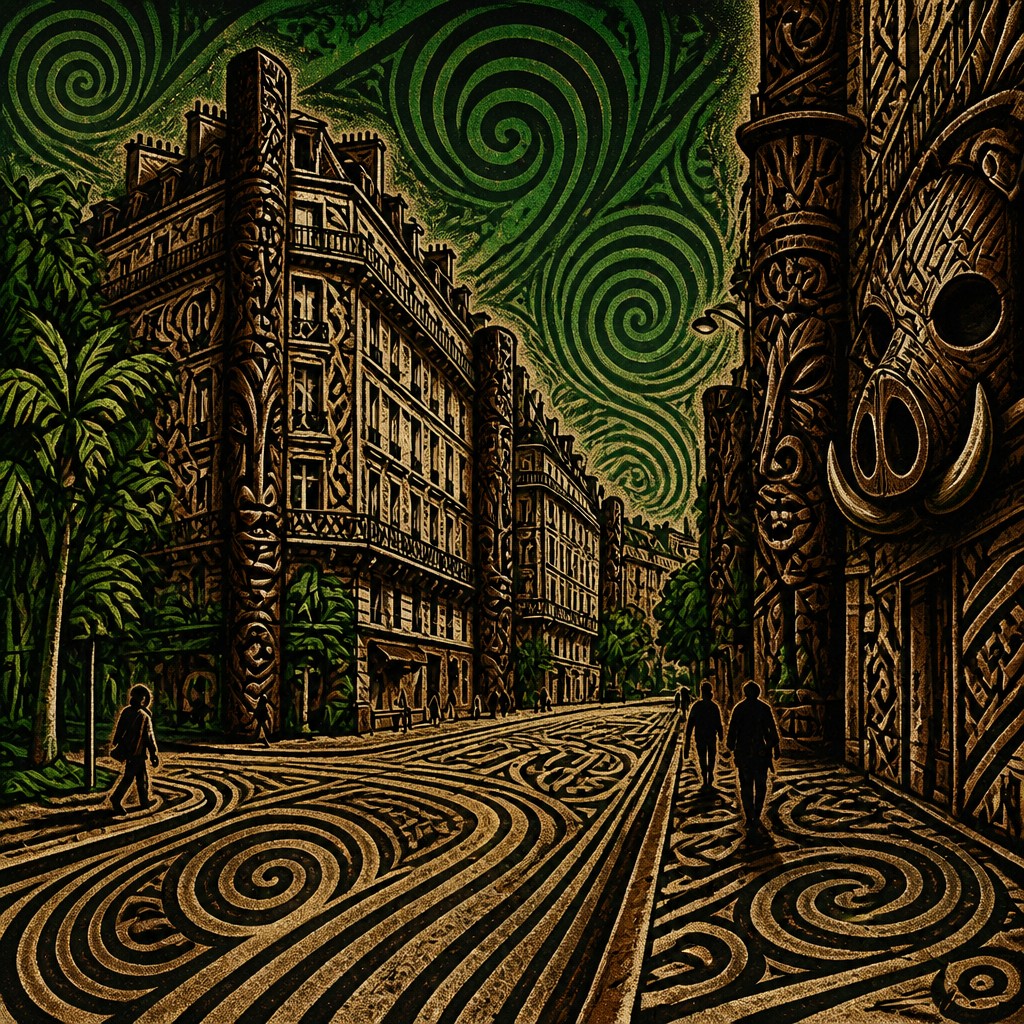

What Defines Vanuatu Art Style
The signature details, up close
Anthropomorphic slit-gong forms
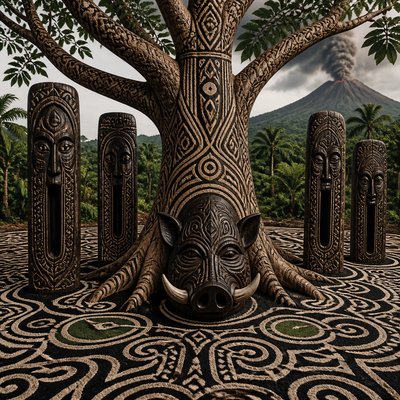
Tall wooden drums are treated as architectural or ancestral figures, with deep vertical openings, strong tapering silhouettes, and carved face-like reliefs. Their scale and frontal presence suggest sound, ceremony, and communal gathering.
Tusked-pig symbolism
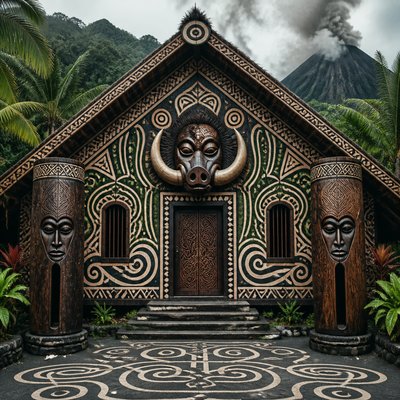
Curving tusks, rounded snouts, and mask-like facial structures provide a recurring visual vocabulary. Pig imagery should be handled as a culturally significant motif rather than a generic tribal ornament.
Continuous sand-drawing lines
Single, unbroken lines loop, spiral, cross, and return upon themselves to form geometric narratives and rhythmic diagrams. The marks are usually flatter and more deliberate than gestural brushwork.
Carved relief and incised texture
Deep grooves, softened tool marks, polished wood, and raised facial planes create contrast between shadow and smooth surface. Relief is graphic and structural, not highly naturalistic.
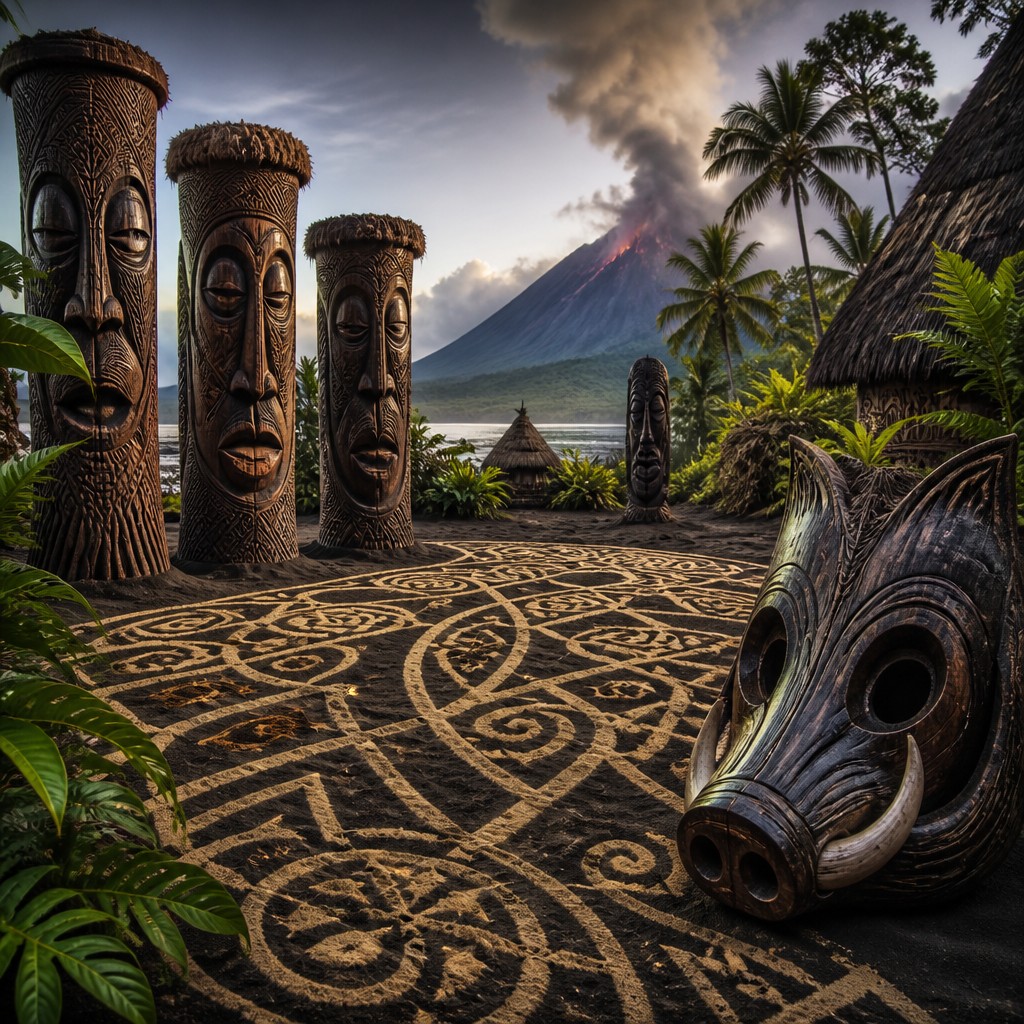
Volcanic and forest palette
Black sand, charcoal, dark umber, clay red, muted ivory, and saturated jungle green evoke volcanic islands and dense vegetation. Limited color fields help preserve the clarity of the carved silhouettes and line patterns.
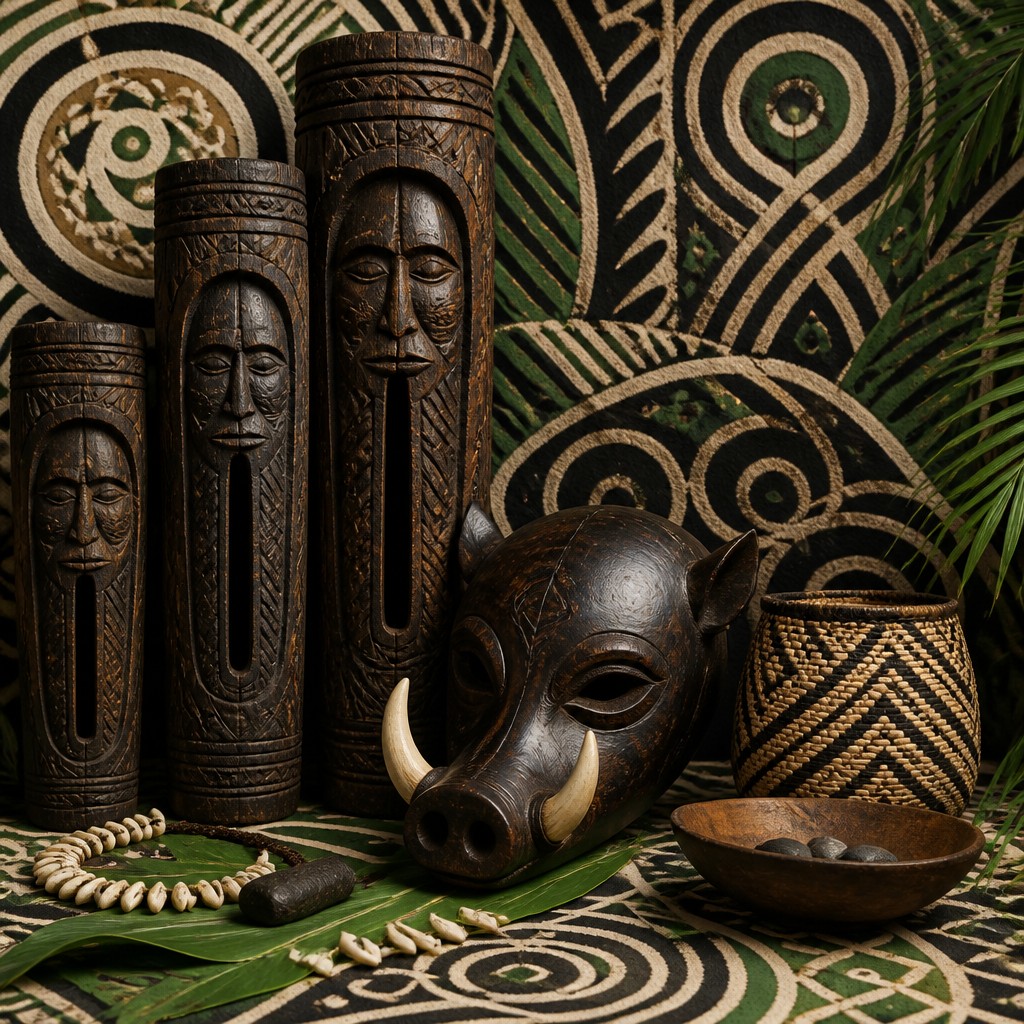
Frontal ceremonial composition
Subjects often face the viewer in a stable, centered arrangement, with symmetrical or near-symmetrical emphasis. Layered drums, masks, foliage, and pattern bands can create a sense of procession or ritual space.
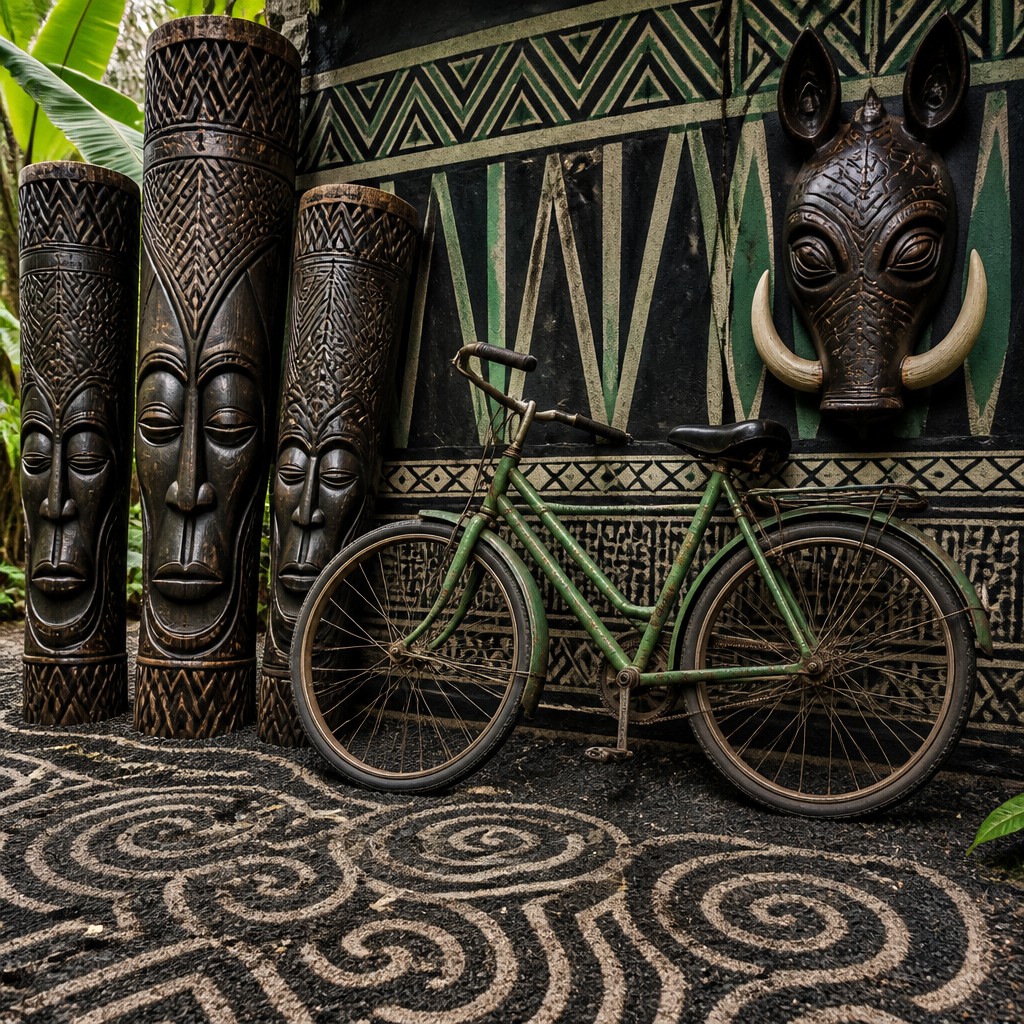
Island rhythm and pattern density
Repeated marks, alternating bands, and visual beats imply music and movement. The strongest compositions balance dense ornament with open areas that allow the primary carved form to read clearly.
Vanuatu Prompt Ideas
Start from an idea — each one opens the generator with the style ready to go. See all 40 Vanuatu prompts →
How to Create Vanuatu Art
Master the craft step by step — or skip straight to creating. Read the full guide →
- 1
Build a strong carved silhouette
Begin with one dominant vertical form, such as a slit gong or mask, and establish its outline before adding decoration. Use broad planes and deep recesses so the object remains readable at small scale.
- 2
Use relief rather than painted realism
Describe facial features as incised grooves, raised planes, and worn polished surfaces. In digital work, combine rough wood grain, ambient occlusion, directional light, and restrained highlights to simulate carved depth.
- 3
Construct one-line patterns
Sketch continuous loops and geometric pathways without lifting the drawing tool, then repeat them as borders or ground markings. Keep the line weight consistent and let overlaps create rhythm instead of random detail.
- 4
Limit and anchor the palette
Start with charcoal black, deep brown, jungle green, muted ivory, and one earthy accent. Use color in broad graphic areas, reserving brighter tones for tusks, ceremonial details, or pattern highlights.
- 5
Compose with cultural care
Treat the imagery as a respectful contemporary synthesis, not as a literal depiction of a specific ceremony. When referencing a particular island or community, research its terminology, objects, and permissions rather than combining unrelated motifs indiscriminately.
- 6
Write precise generation prompts
Specify the subject, carved material, frontal composition, continuous sand-drawing geometry, volcanic palette, and lighting, while requesting no text, logos, or generic fantasy tribal symbols. For image transformation, preserve the subject's pose but replace surfaces with dark wood relief, incised lines, and natural island textures.
The Story
History & Origins of Vanuatu
There is no single historical movement called Vanuatu Art Style. The label describes an aesthetic lineage drawn from the diverse customary arts of Vanuatu, an island nation in the southwestern Pacific. Monumental slit gongs, often called tam-tams, are carved from tree trunks and used in ceremonial, communicative, and musical contexts; their forms and meanings vary by island and community. Ambrym is particularly associated with powerful carved forms and traditions involving masks, dance, and the symbolic importance of pigs and tusks.
The style also draws on Vanuatu sand drawing, a traditionally practiced form of tracing continuous lines in sand to communicate stories, histories, practical knowledge, and cosmological ideas. Sand drawing was recognized by UNESCO as intangible cultural heritage in 2008. Contemporary illustrations, sculpture, games, and digital images may combine these references, but they should not present the resulting hybrid as an exact reproduction of one community's ceremonial art.
Influences: The style draws on Vanuatu customary woodcarving, slit-gong instrument traditions, Ambrym carving and mask-related visual culture, and the continuous-line practice of Vanuatu sand drawing. Its graphic clarity also relates to Pacific Oceanic art, relief sculpture, vernacular pattern systems, ethnographic illustration, and contemporary digital folk-art synthesis. It should be distinguished from a generalized category of 'tribal art,' which often collapses distinct cultures into a single decorative vocabulary.
Frequently Asked Questions
Is Vanuatu Art Style a historical art movement?
No. The term is a contemporary umbrella description for an aesthetic inspired by several real Vanuatu traditions. Vanuatu contains many island communities and artistic systems, so the label should not be treated as the name of one unified historical school.
What objects define the style?
The most recognizable references are carved slit-gong drums, dark wooden masks, pig tusks, and continuous sand-drawing patterns. These are combined with volcanic textures, jungle forms, frontal compositions, and bold relief carving.
What is Vanuatu sand drawing?
Vanuatu sand drawing is a form of continuous-line tracing used to convey stories, knowledge, histories, and practical information. It is more than surface decoration, and its meanings can differ according to community and context.
How is this style different from generic tribal or Polynesian art?
It is specifically rooted in visual references from Vanuatu, including slit gongs and sand drawing, rather than treating the Pacific as one homogeneous culture. Accurate work should avoid mixing unrelated motifs or assigning ceremonial meanings without research.
Can this style be made with traditional materials?
Yes. A physical interpretation can use carved or modeled wood, scored clay, charcoal, mineral pigments, sand, and natural-fiber textures. Artists can imitate relief through shallow carving and emphasize a continuous-line drawing process rather than painting every form naturalistically.
How can I create a digital image in this style respectfully?
Name the specific visual references you are using, describe materials and composition clearly, and avoid invented sacred rituals, costumes, or claims of authenticity. Focus on carved wood, slit-gong architecture, tusked-pig imagery, sand-drawing geometry, and a restrained volcanic palette.
Create your first Vanuatu artwork
Describe anything — or upload a photo — and see it in Vanuatu Art Style in seconds.
Related Styles
Discover similar art styles