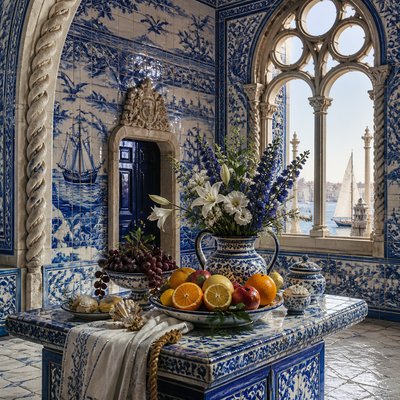
Uzbek Art Style
Explore Uzbek art style: Timurid turquoise tilework, suzani embroidery, gilded muqarnas, geometric ornament, and luminous Silk Road color.
Instantly rendered in Uzbek — or transform a photo
Uzbek Gallery
Tap any artwork to explore it
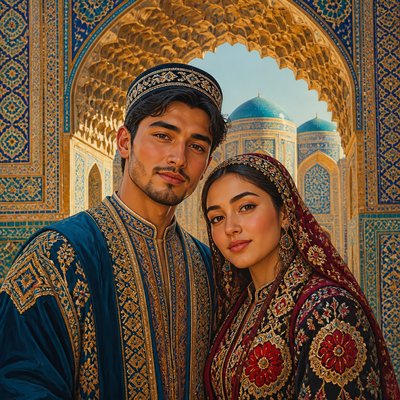
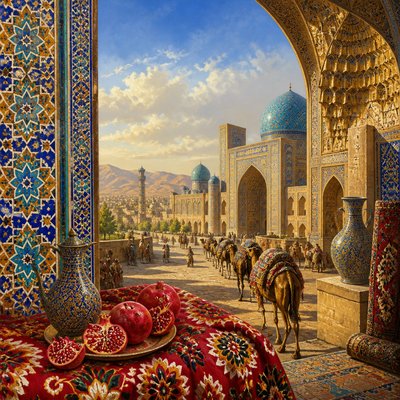
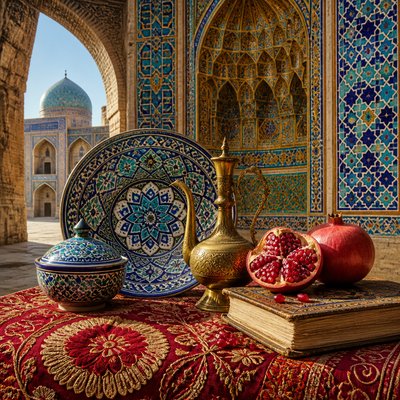
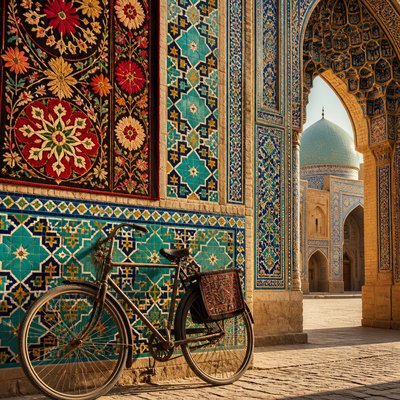
What is Uzbek Art Style?
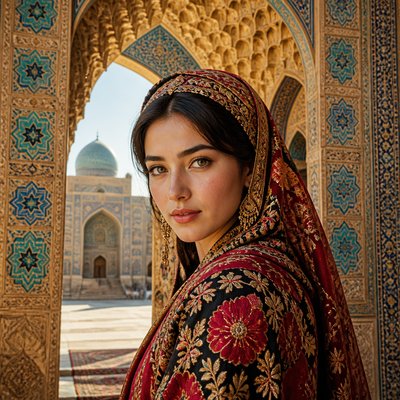
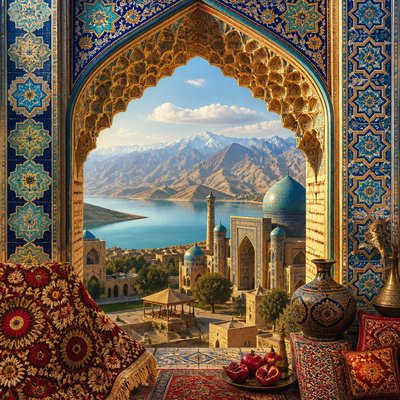
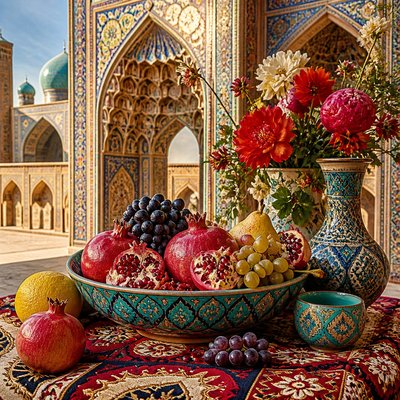
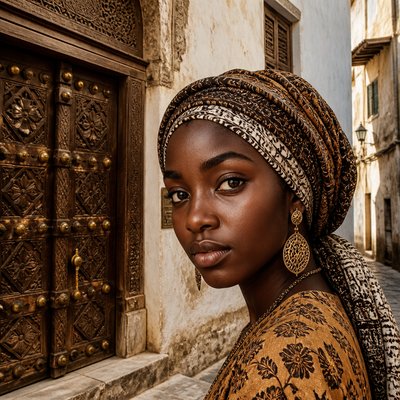
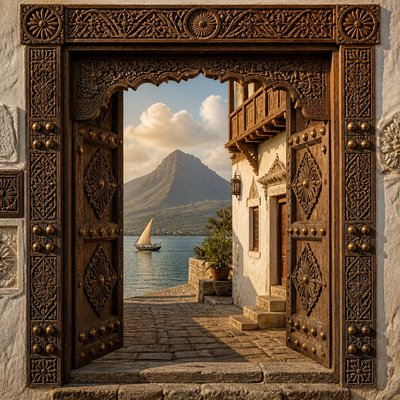
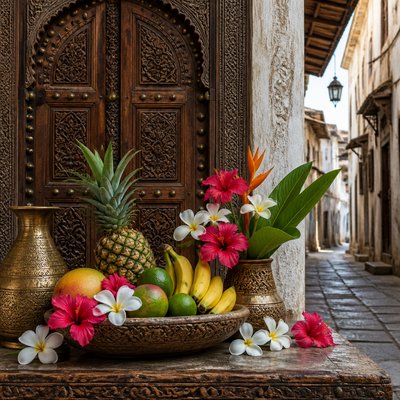
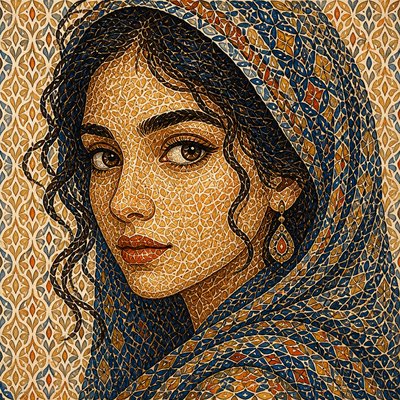
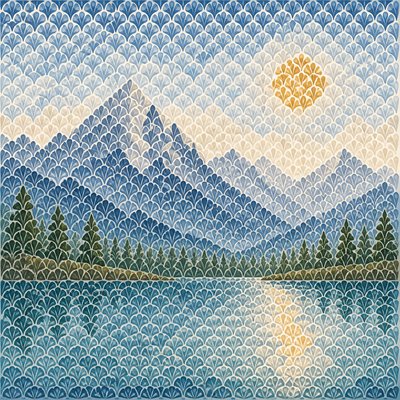
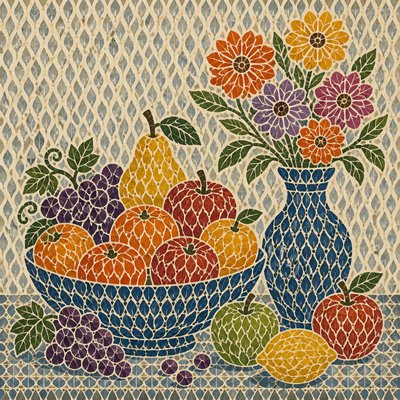
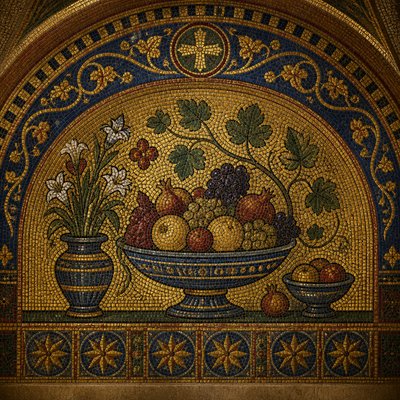
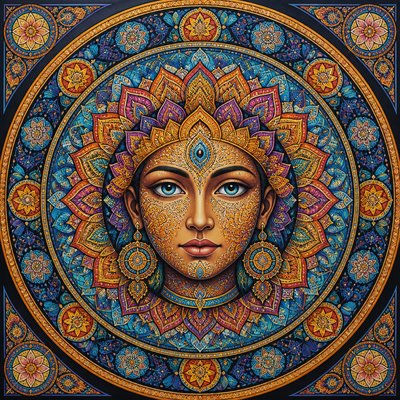
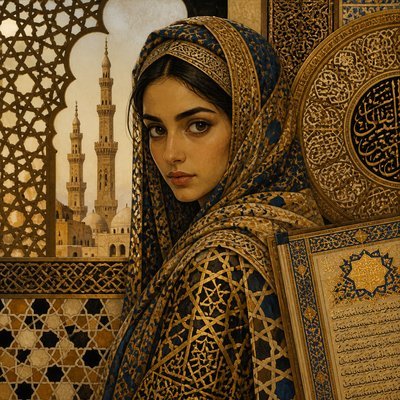
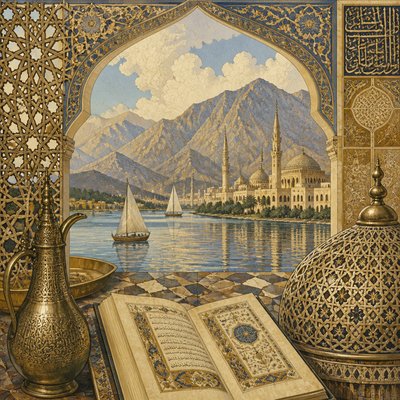
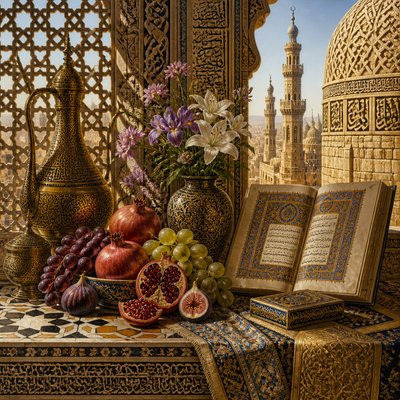
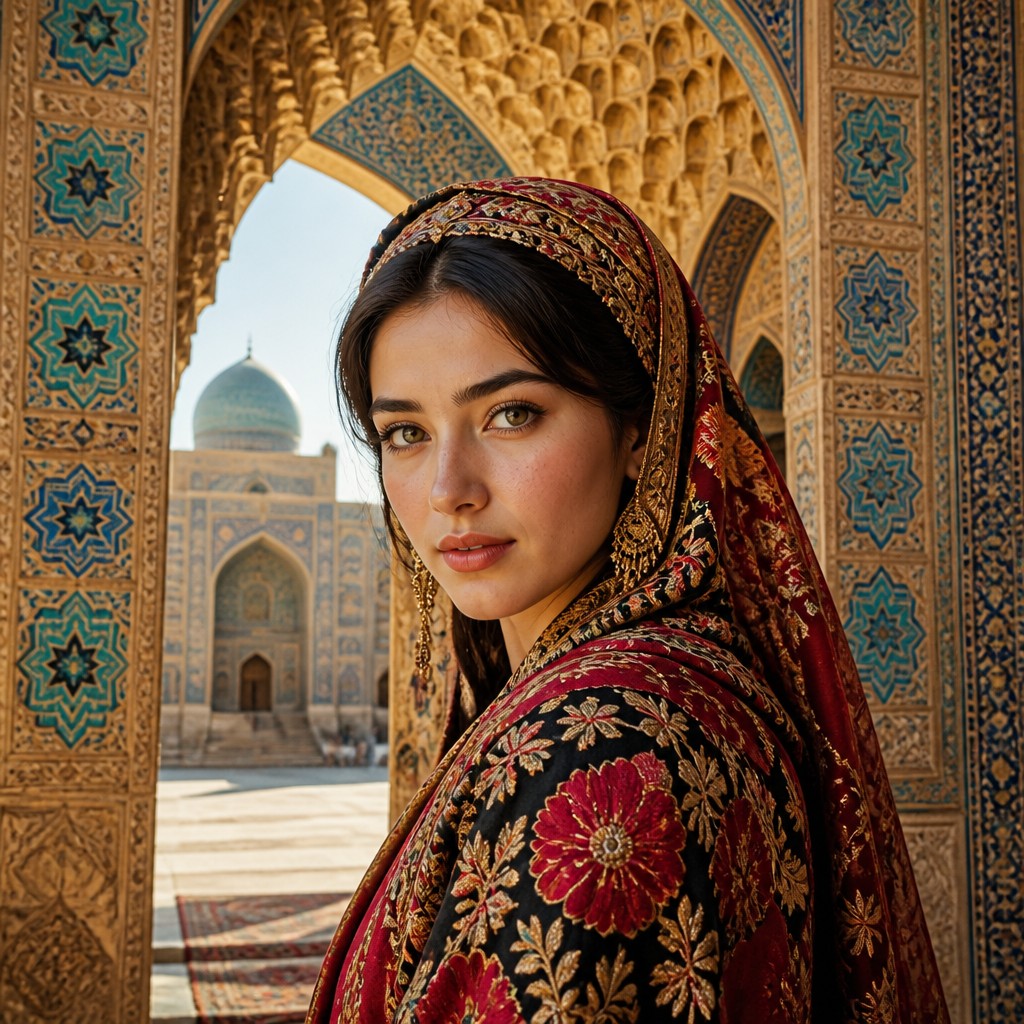
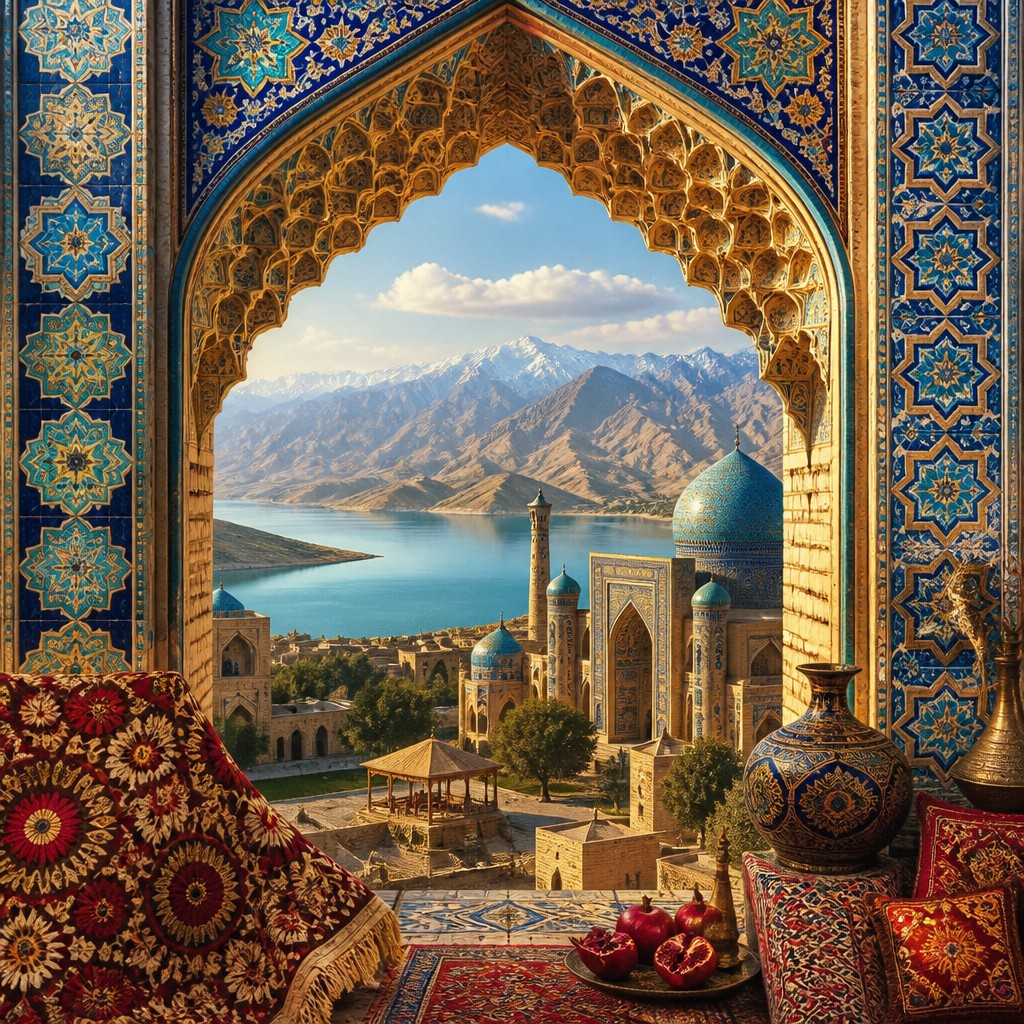
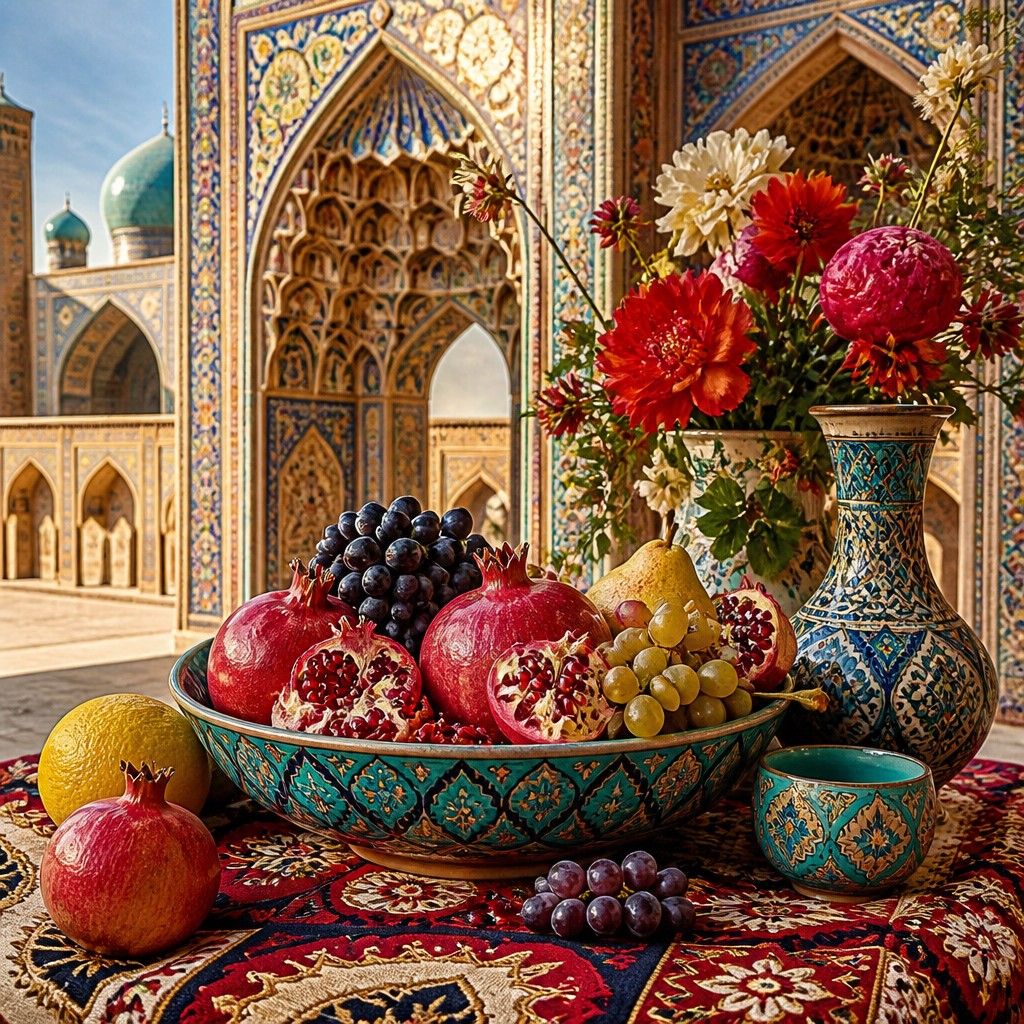
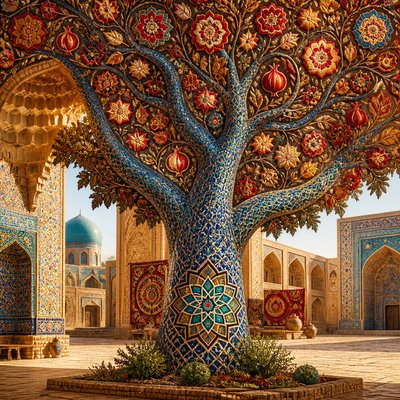
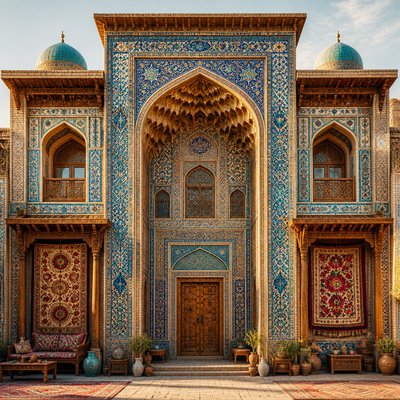
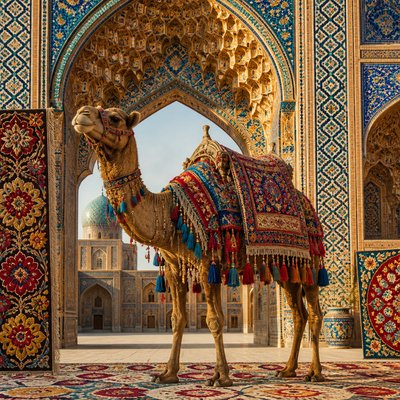
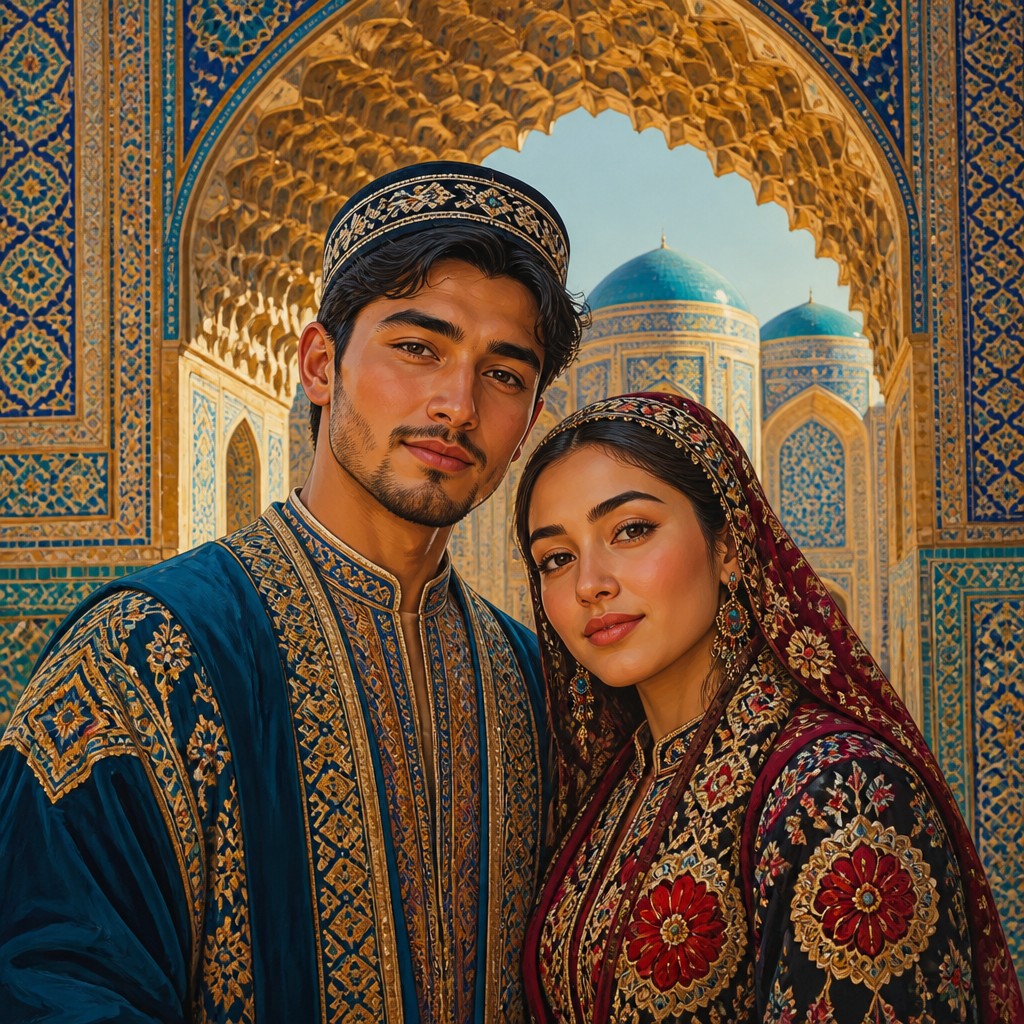
Uzbek art style is a contemporary descriptive label for an image language rooted in Uzbekistan’s architectural, textile, and decorative traditions. Its visual identity combines radiant turquoise and cobalt majolica, star-and-cross geometry, brick courtyards, domes, gilded muqarnas, and richly embroidered suzani motifs in crimson, gold, pomegranate, and saffron.
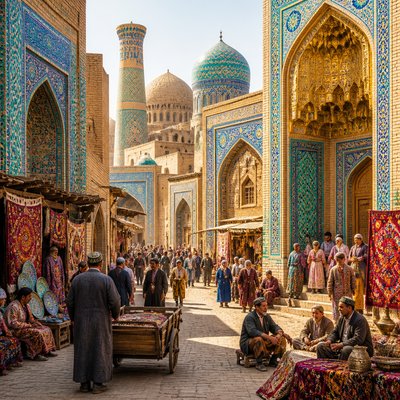
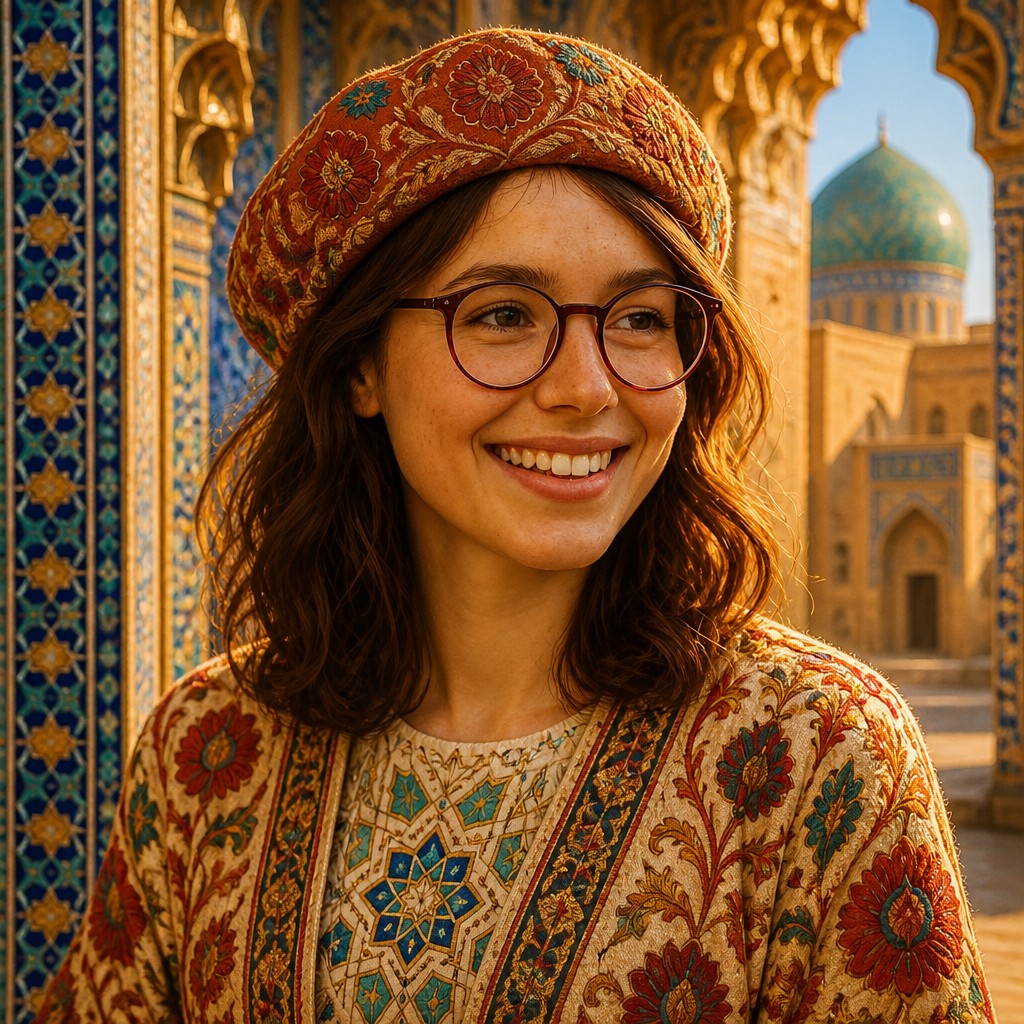
The style looks both architectural and textile-based: crisp ornamental structure is softened by floral embroidery, weathered masonry, and warm desert light. Repeated geometry suggests the mathematical order of Islamic ornament, while saturated color, metallic accents, and caravan-route atmosphere evoke the cultural exchange of Central Asian cities along the Silk Road.
Try It On Your Photos
Upload any photo and convert it into Uzbek Art Style — drag the sliders to compare before and after.


What Defines Uzbek Art Style
The signature details, up close
Turquoise and cobalt tilework
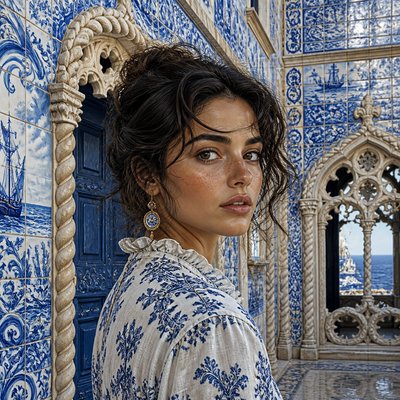
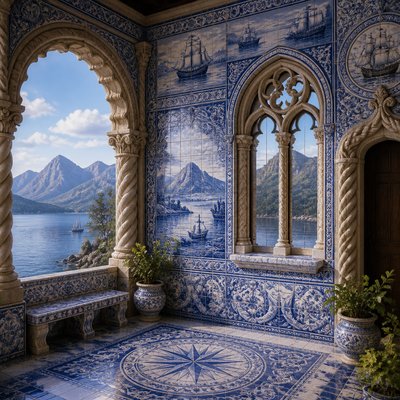
Glazed ceramic surfaces appear in intense turquoise, lapis blue, white, and sometimes deep green. Tiles are arranged in bands, panels, and interlocking mosaics that emphasize the structure of domes, portals, and facades.
Star-and-cross geometry
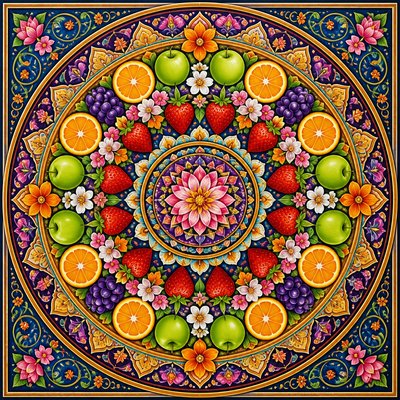
Eight-pointed stars, polygonal grids, arabesques, and cross-shaped intervals create an orderly ornamental rhythm. Repetition and symmetry are central, with geometry often framing inscriptions, arches, or architectural borders.
Timurid architectural forms
Large pishtaq portals, ribbed or tiled domes, courtyards, pointed arches, and muqarnas vaults provide the principal spatial vocabulary. These forms are frequently presented as monumental silhouettes against a dry, luminous sky.
Suzani floral embroidery
Large stylized flowers, pomegranates, vines, leaves, and sunlike rosettes echo Central Asian embroidered textiles. The motifs are commonly rendered in crimson, scarlet, gold, orange, and dark green over warm fabric grounds.
Sunbaked masonry and patina
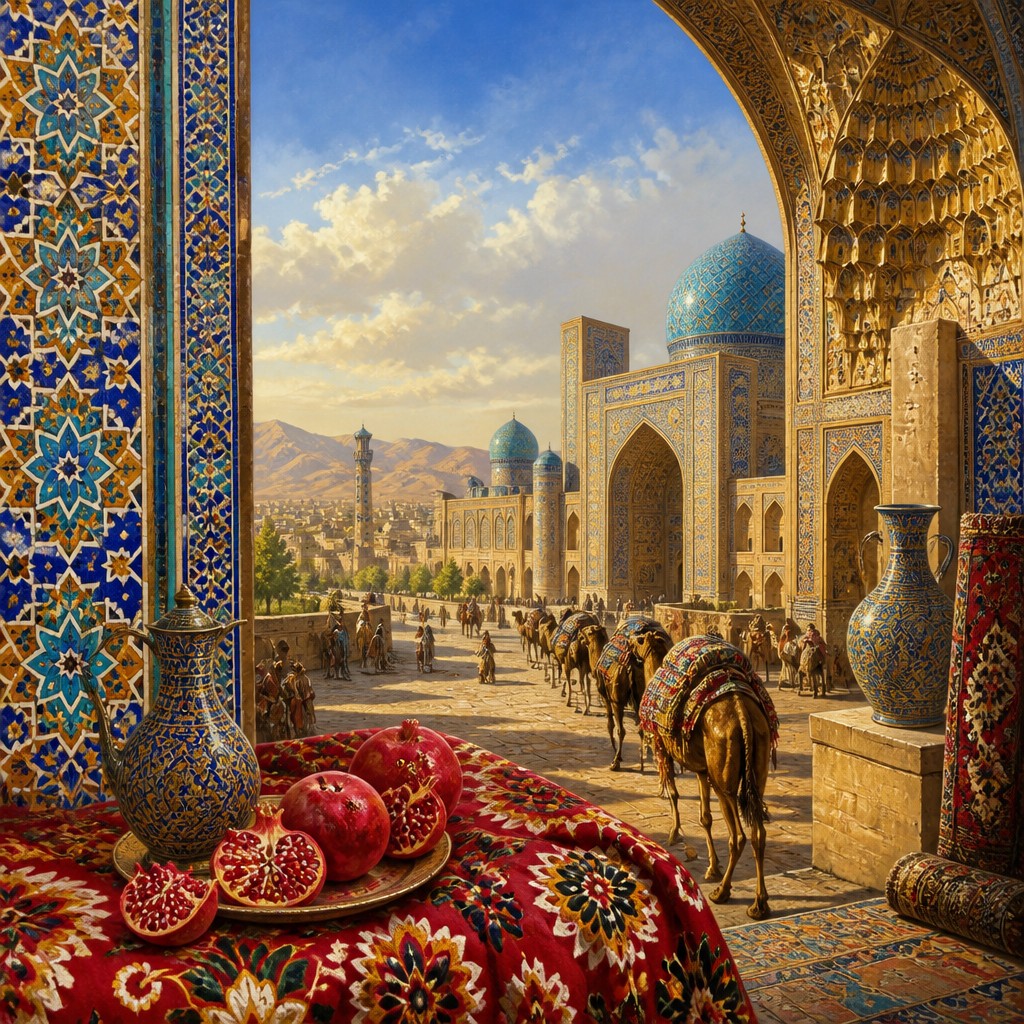
Un glazed brick, plaster, dust, cracks, and softened edges balance the brilliance of the tile. Weathering gives the image historical depth and prevents the palette from appearing uniformly polished.
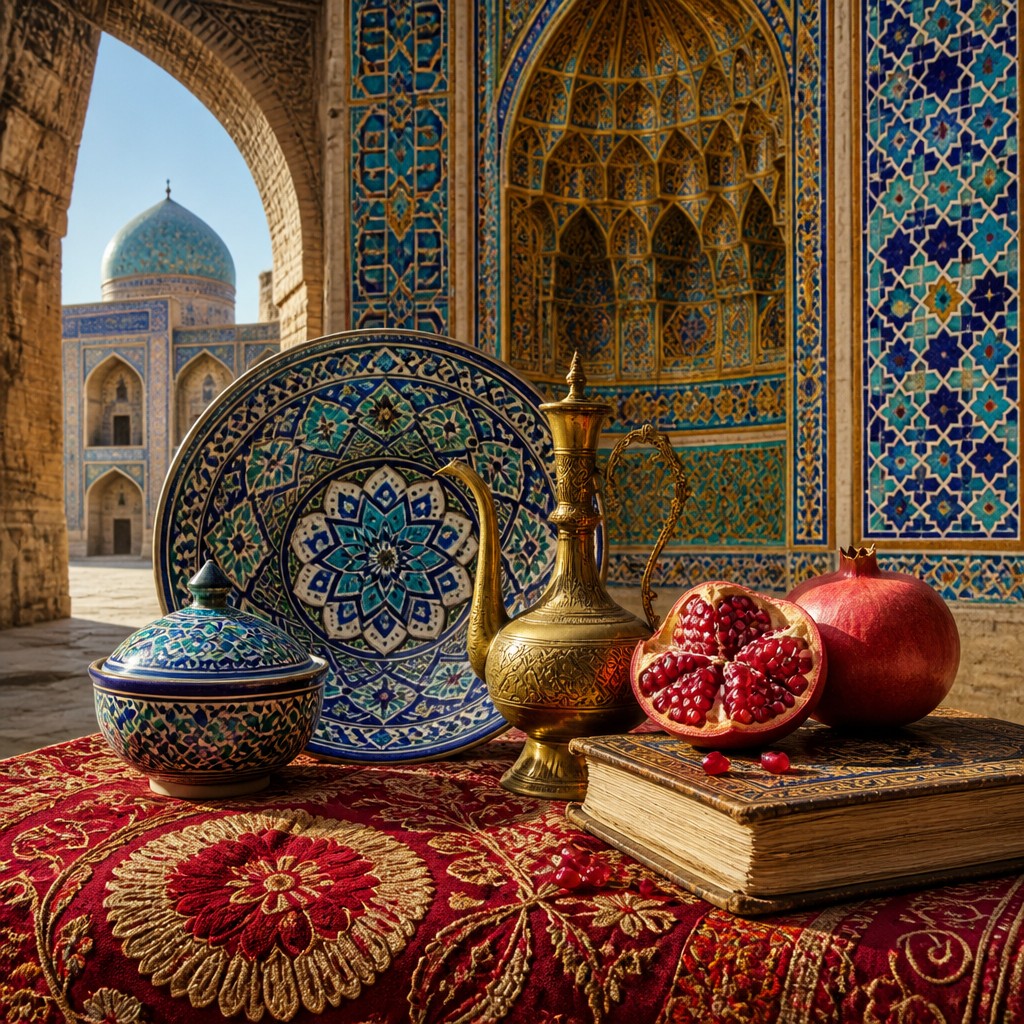
Metallic and jewel-like accents
Gold leaf effects, brass tones, lapis shadows, and small highlights suggest ceremonial richness. Metallic details work best as selective emphasis on borders, embroidery, domes, or carved ornament.
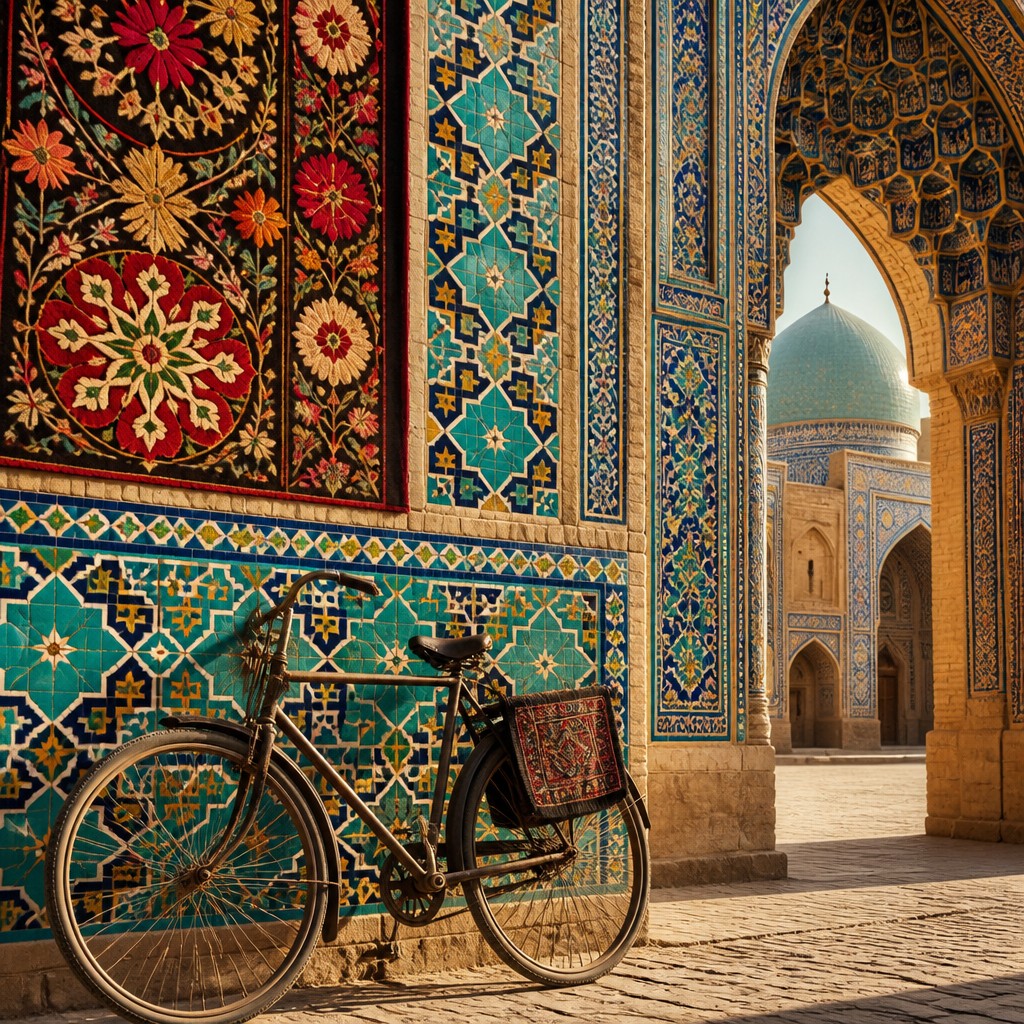
Silk Road atmosphere
Warm haze, long shadows, caravan imagery, dry courtyards, market textiles, and distant domes establish a sense of movement between cultures. The mood is luminous, ornate, and contemplative rather than starkly modern.
Uzbek Prompt Ideas
Start from an idea — each one opens the generator with the style ready to go. See all 40 Uzbek prompts →
How to Create Uzbek Art
Master the craft step by step — or skip straight to creating. Read the full guide →
- 1
Build a controlled palette
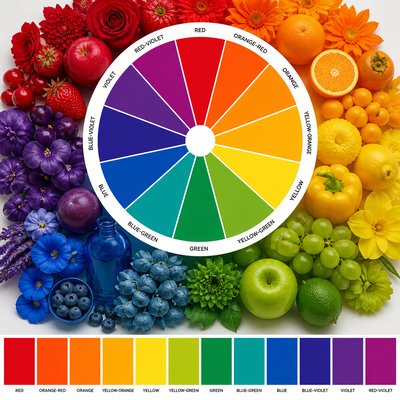
Start with turquoise, cobalt, ivory, brick red, pomegranate crimson, ochre, and muted sand. Reserve gold for focal details so the image retains hierarchy instead of becoming uniformly saturated.
- 2
Construct geometry before decoration
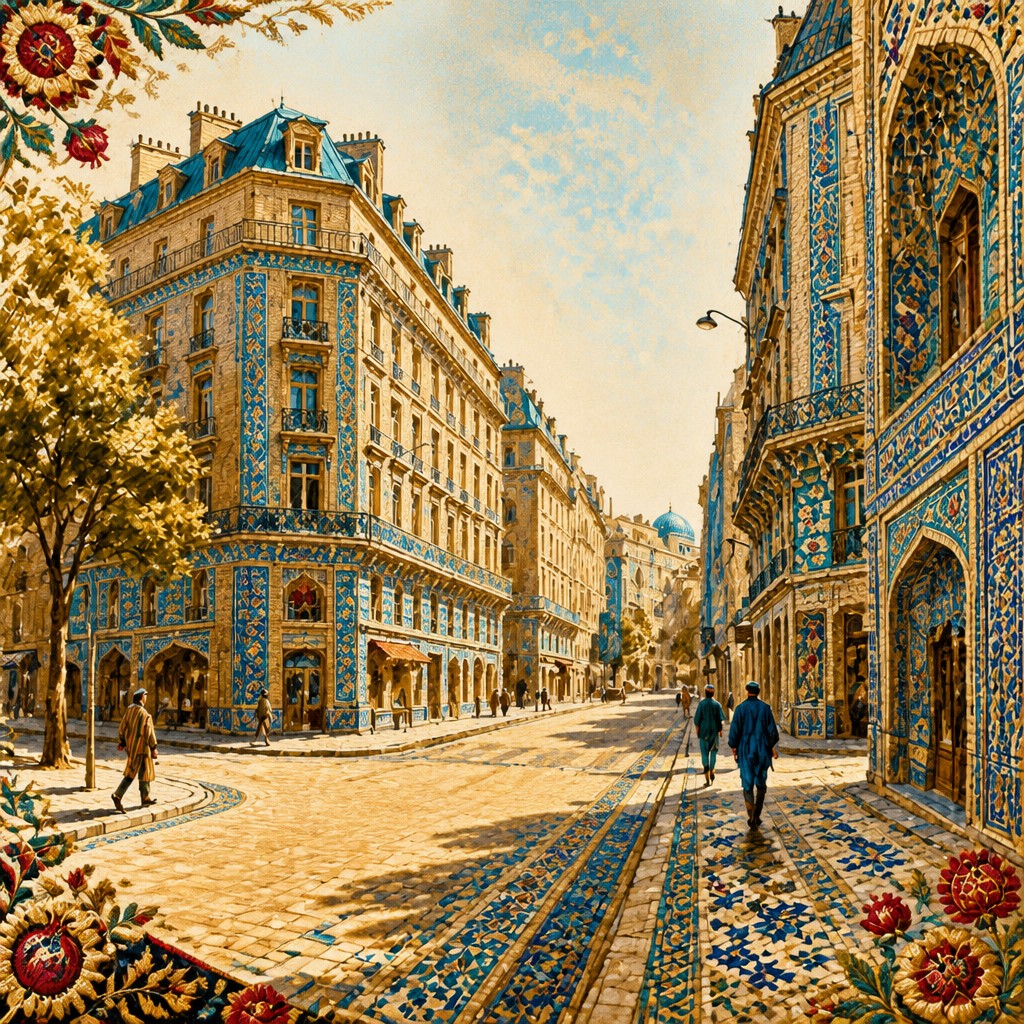
Lay out arches, domes, tile bands, and repeating polygons with a clear grid, then add floral or embroidered motifs inside the structure. In digital work, use vector paths, mirrored layers, and pattern tools to maintain symmetry.
- 3
Blend architecture with textile motifs
Pair hard-edged mosaic surfaces with organic suzani flowers, vines, and pomegranates. Vary scale and texture so the result feels like an integrated decorative language rather than unrelated architectural and textile images.
- 4
Use light to describe material
Apply warm directional light to brick and plaster, cool reflected light to glazed tile, and restrained highlights to gilding. Soft dust or atmospheric haze can suggest a dry Central Asian courtyard without obscuring the ornament.
- 5
Add tactile imperfection
Introduce slight variation in grout, tile glazing, embroidery stitches, masonry edges, and pigment density. These irregularities evoke handmade craft and historical patina while preserving the overall ornamental order.
- 6
Write precise generation prompts
Specify the subject, architectural setting, palette, materials, geometric pattern, embroidery details, lighting, and composition separately. For image-to-image work, preserve the source subject’s silhouette while requesting tile, suzani ornament, warm courtyard light, and controlled symmetry.
The Story
History & Origins of Uzbek
Uzbek art style is not a single historical movement or officially defined school. It is an aesthetic lineage drawing chiefly from the architecture and ornament of Central Asia, especially the Timurid period of the late 14th and 15th centuries, when monumental madrasas, mosques, mausoleums, domes, tile mosaics, and muqarnas flourished in cities such as Samarkand and Herat.
Its textile references come from suzani embroidery traditions developed across Central Asian communities, including areas of present-day Uzbekistan. Modern interpretations often combine these historical sources with contemporary illustration, decorative painting, digital collage, fantasy world-building, and stylized architectural visualization rather than reproducing one period with archaeological precision.
Influences: The style draws from Timurid and broader Islamic architectural ornament, Central Asian suzani embroidery, Persianate decorative traditions, geometric tile mosaic, arabesque pattern, illuminated manuscript design, and the material atmosphere of Silk Road cities. It also overlaps with contemporary decorative illustration, ornamental fantasy art, architectural visualization, textile design, and digitally composed pattern work.
Frequently Asked Questions
What defines Uzbek art style?
It is defined by the combination of turquoise and cobalt tilework, Timurid-inspired domes and portals, geometric Islamic ornament, suzani floral embroidery, warm brick, and dusty golden light. The style is decorative, symmetrical, materially rich, and strongly connected to Central Asian visual culture.
Is Uzbek art style a historical art movement?
No. The phrase is best understood as a contemporary umbrella description rather than the name of one historical movement. It synthesizes several real traditions, especially Timurid architecture and Central Asian embroidery, for use in illustration, design, and visual storytelling.
How is it different from Persian or Islamic geometric art?
It shares geometry, arabesque ornament, tilework, and architectural principles with many Persianate and Islamic traditions. Its more specific emphasis is on Uzbek and Central Asian associations: turquoise monumental architecture, suzani motifs, brick courtyards, pomegranates, and Silk Road desert light.
What materials are associated with this style?
Traditional references include glazed ceramic tile, fired brick, carved and molded plaster, gilding, woven textiles, and hand embroidery. Contemporary artists can simulate these materials with watercolor, gouache, acrylic, colored pencil, vector pattern, 3D texturing, or digital painting.
How can I create an image in this style?
Choose a clear subject, then define the architectural setting, tile geometry, suzani motifs, palette, surface texture, and lighting. In digital or AI-assisted workflows, use separate prompt clauses or layers for structure, ornament, materials, and atmosphere, and request restrained symmetry rather than random decoration.
Where is this style commonly used?
It suits architectural scenes, travel and cultural illustration, textile and wallpaper patterns, book covers, game environments, posters, interior concepts, and decorative portraits. It is especially effective when a composition needs strong ornament, historical atmosphere, and a saturated turquoise-and-crimson palette.
Create your first Uzbek artwork
Describe anything — or upload a photo — and see it in Uzbek Art Style in seconds.
Related Styles
Discover similar art styles