Uruguayan Art Style
Explore Uruguayan art style: gaucho silverwork, tooled leather, Charrúa heritage, whitewashed estancias, and luminous pampas landscapes.
Instantly rendered in Uruguayan — or transform a photo
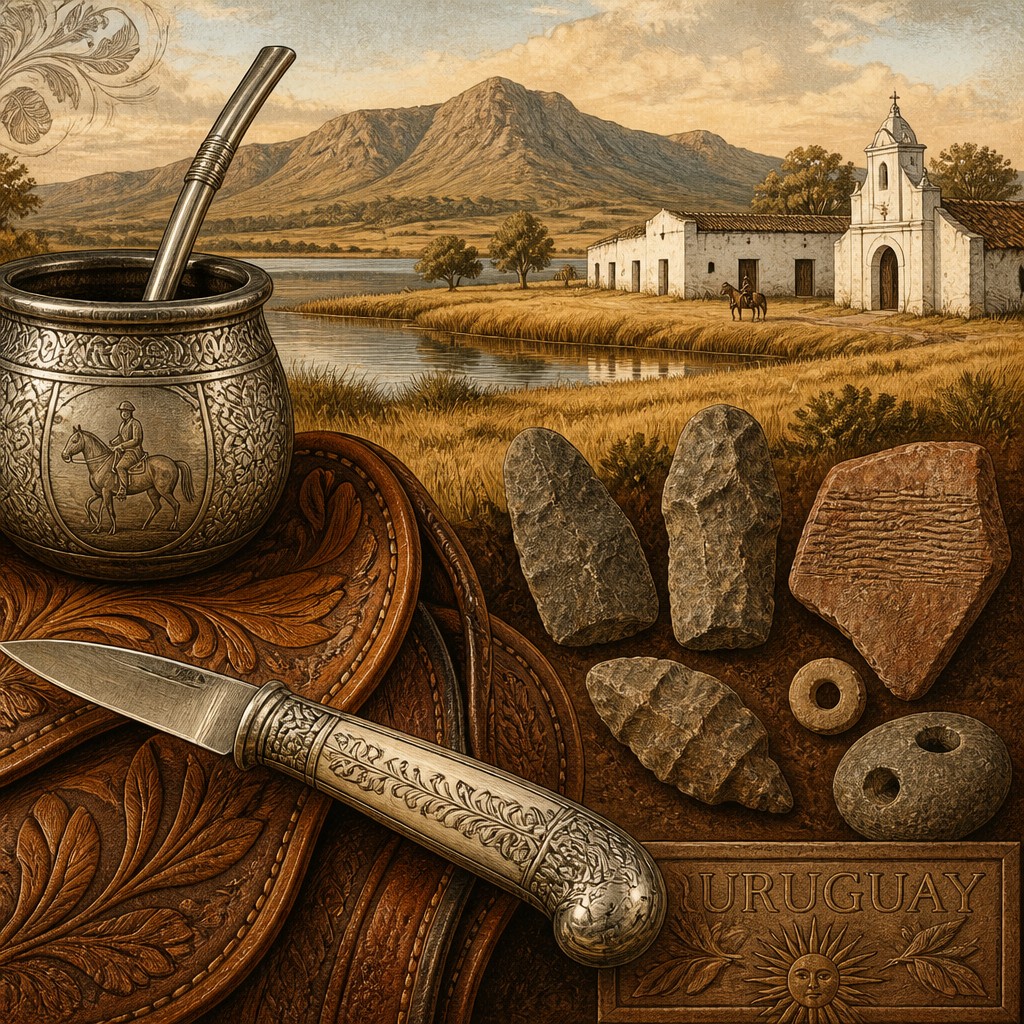
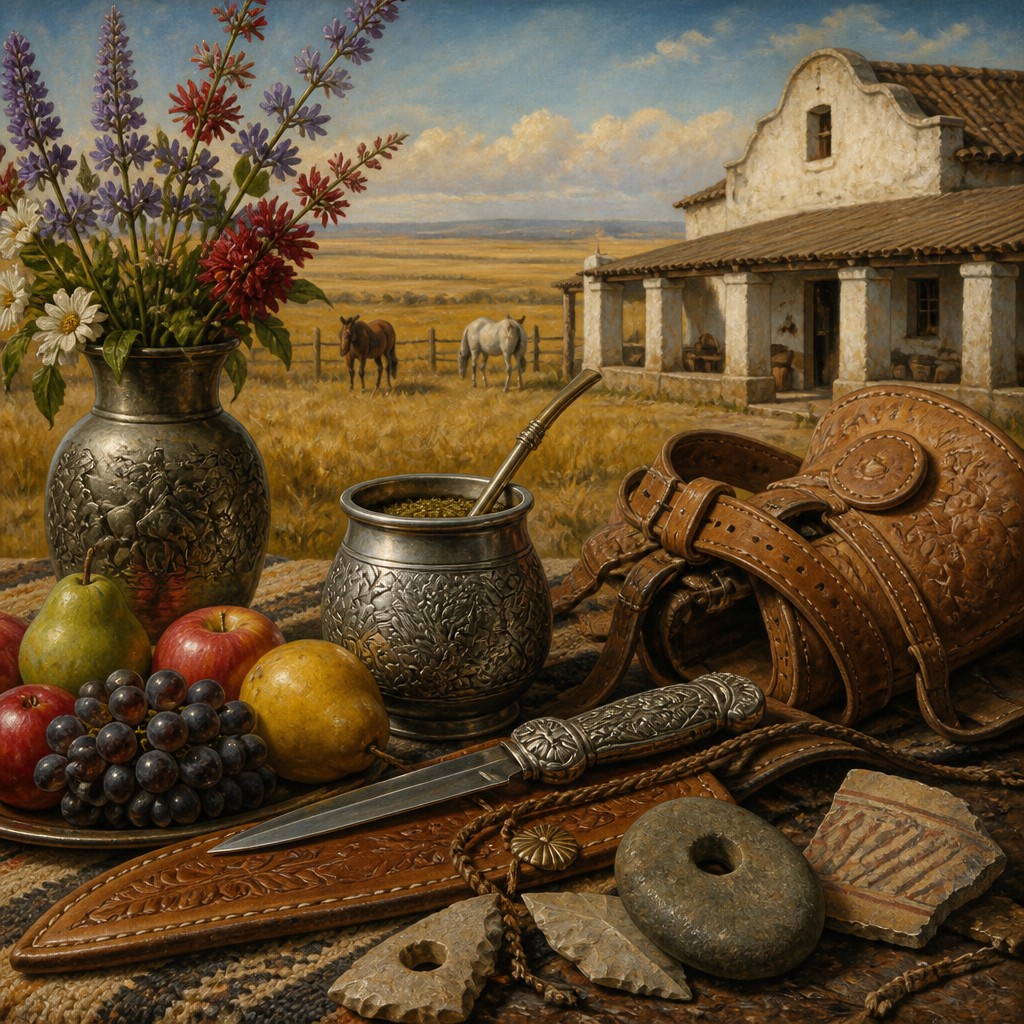
Uruguayan Gallery
Tap any artwork to explore it
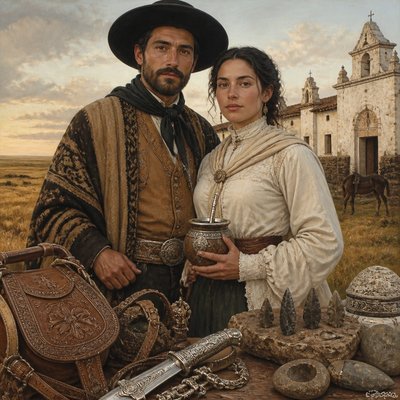
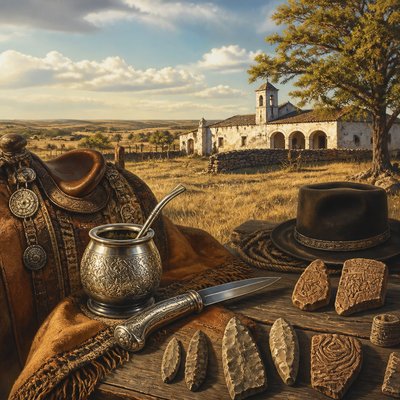
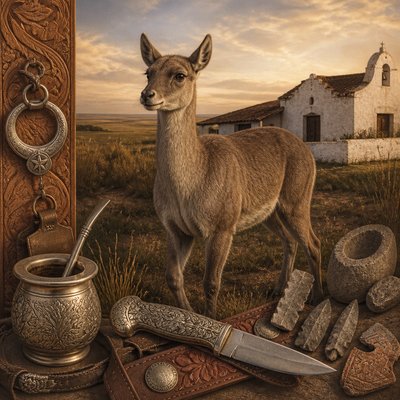
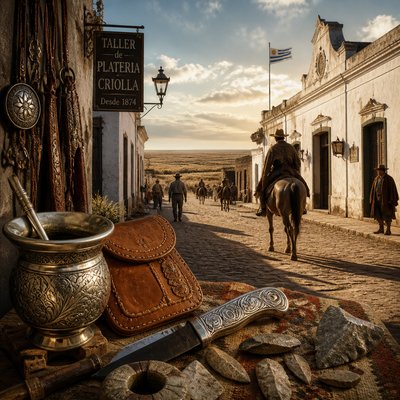
What is Uruguayan Art Style?
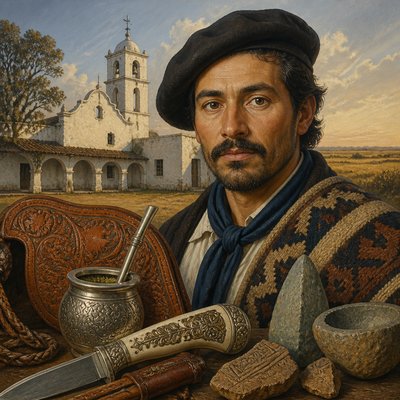
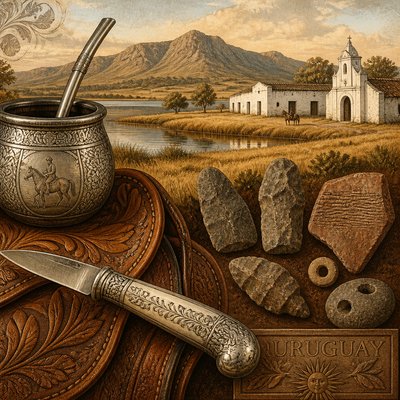
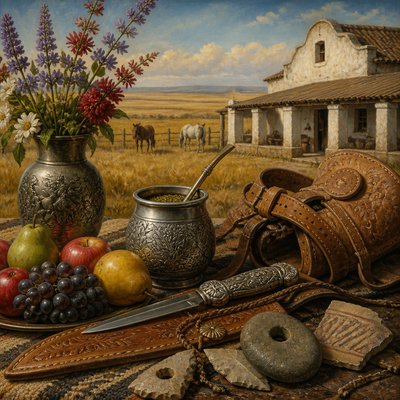
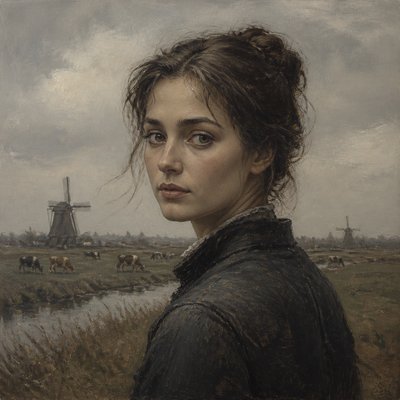
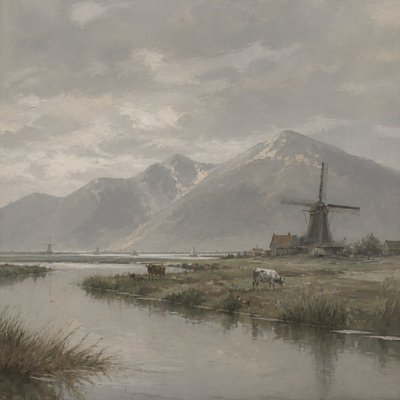
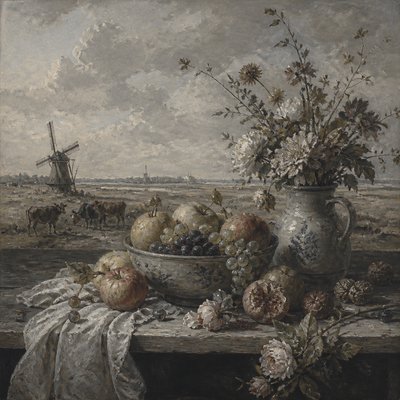
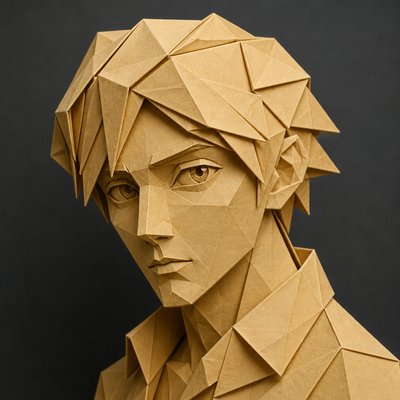
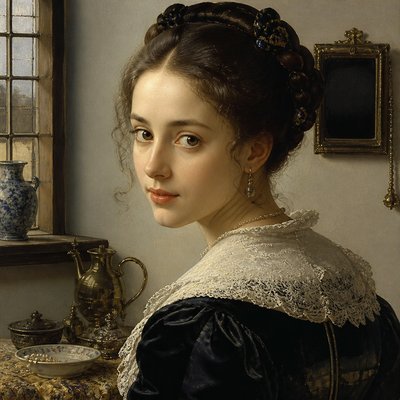
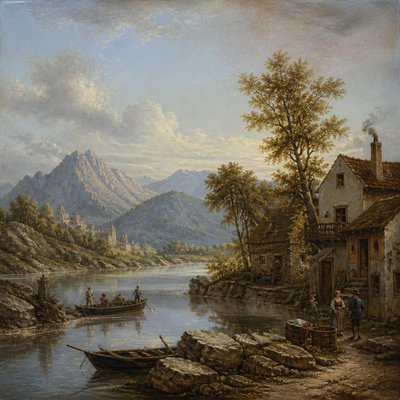
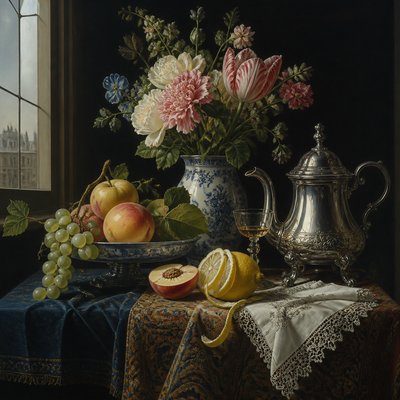
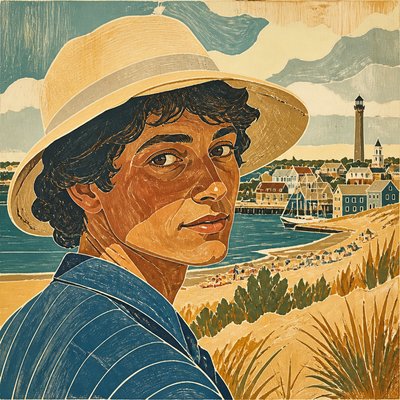
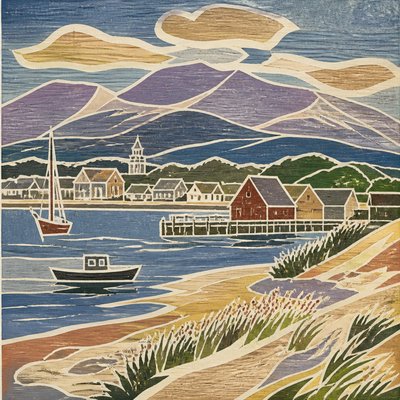
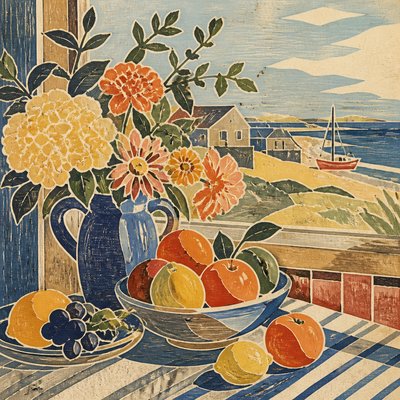
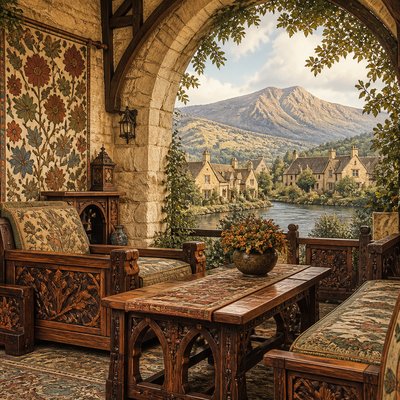
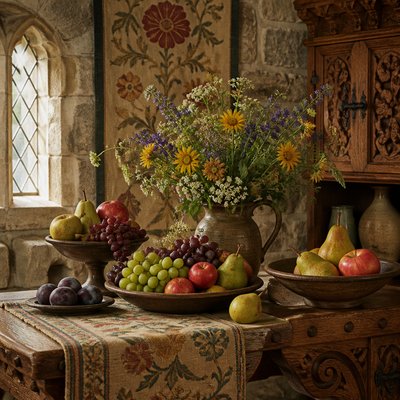
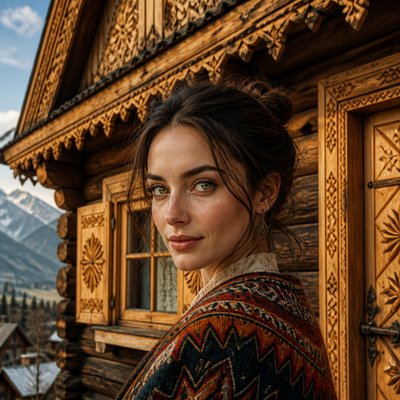
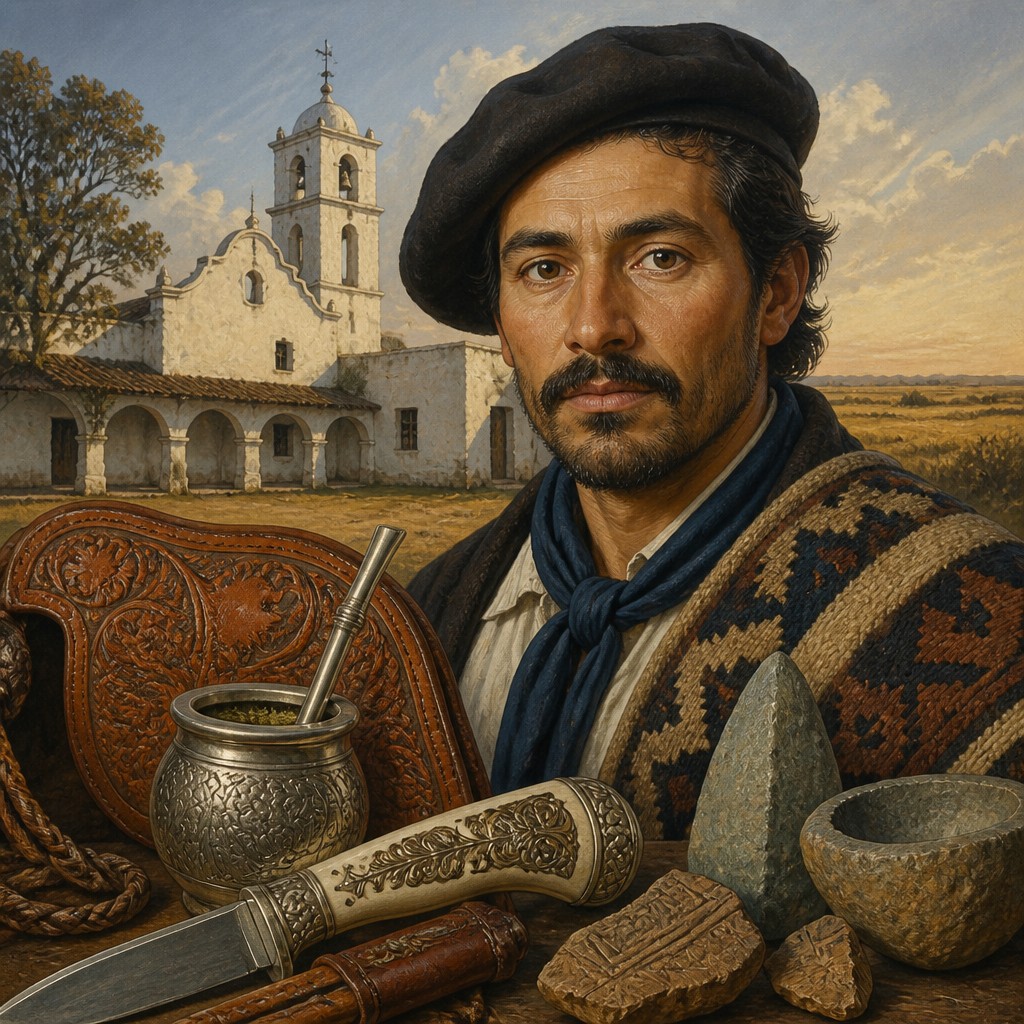
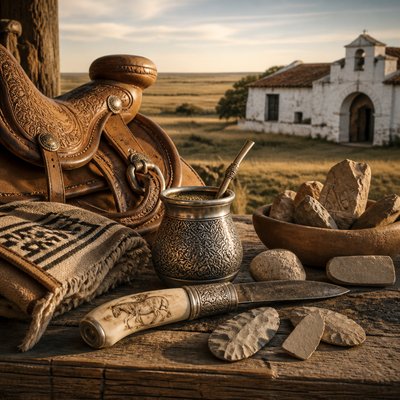
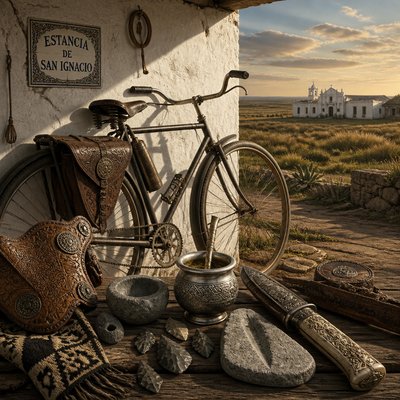
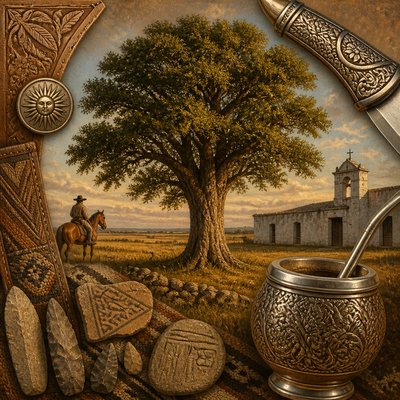
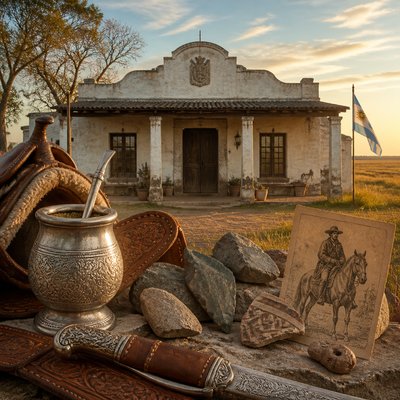
Uruguayan art style is a contemporary descriptive synthesis built around the material culture and landscape of Uruguay. Its visual identity combines the restrained elegance of gaucho silverwork, warm tooled leather, Charrúa archaeological forms, whitewashed colonial estancia architecture, and the broad horizons of the pampas. The result is tactile, quiet, and grounded rather than ornamental for its own sake.
The style looks the way it does because rural life in the Río de la Plata has long been expressed through durable objects, skilled handwork, and an intimate relationship with open grassland. Engraved mate vessels, knife fittings, stirrups, belts, saddles, adobe walls, weathered timber, stone tools, and golden pasture become a visual vocabulary of use, memory, and place. Compositions often favor spacious horizons, low buildings, natural materials, and clear light.
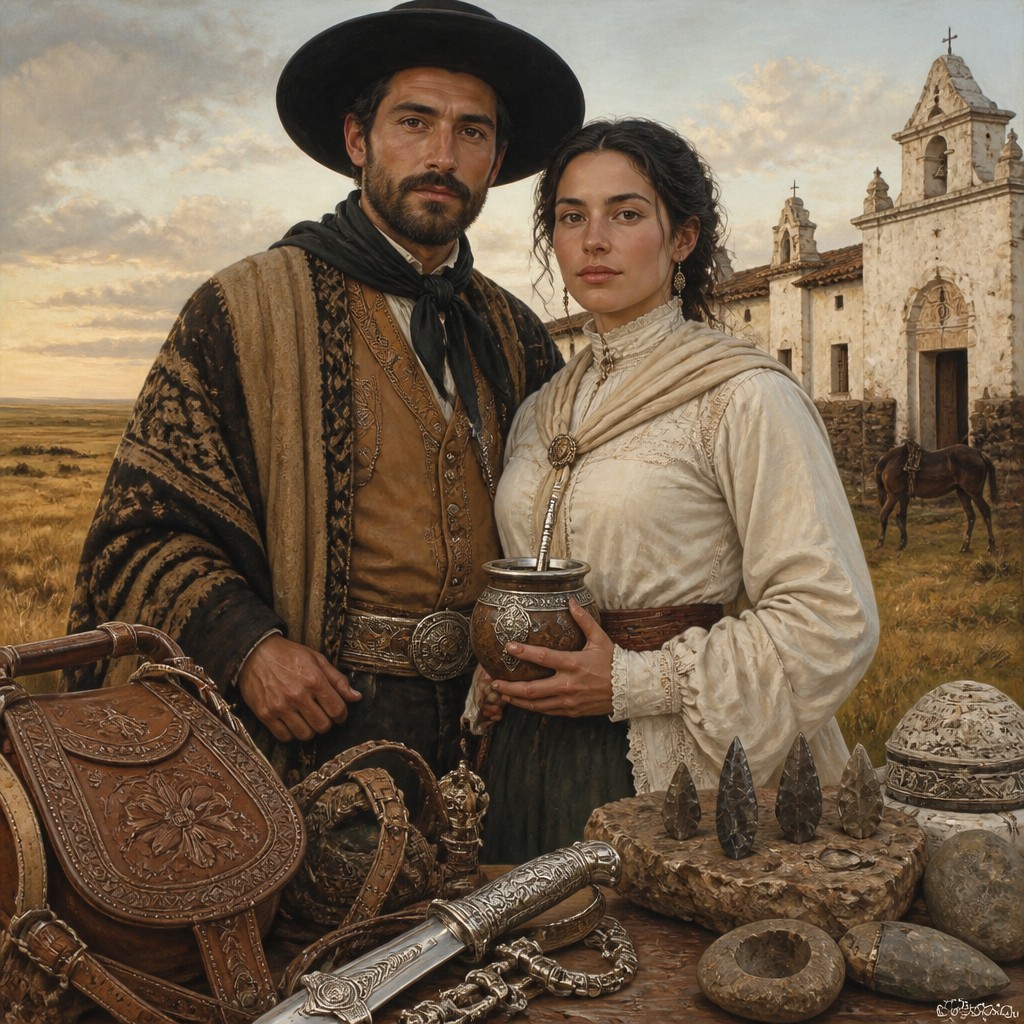
Try It On Your Photos
Upload any photo and convert it into Uruguayan Art Style — drag the sliders to compare before and after.
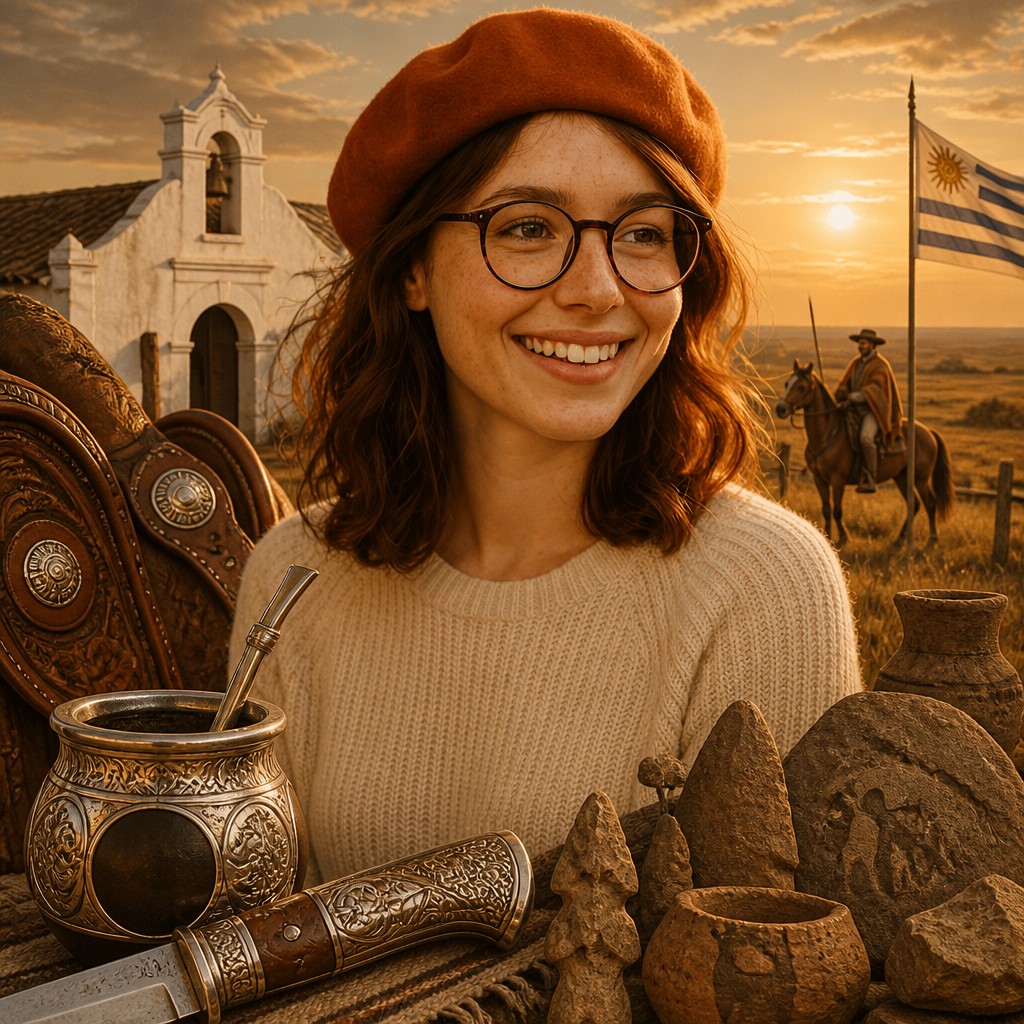

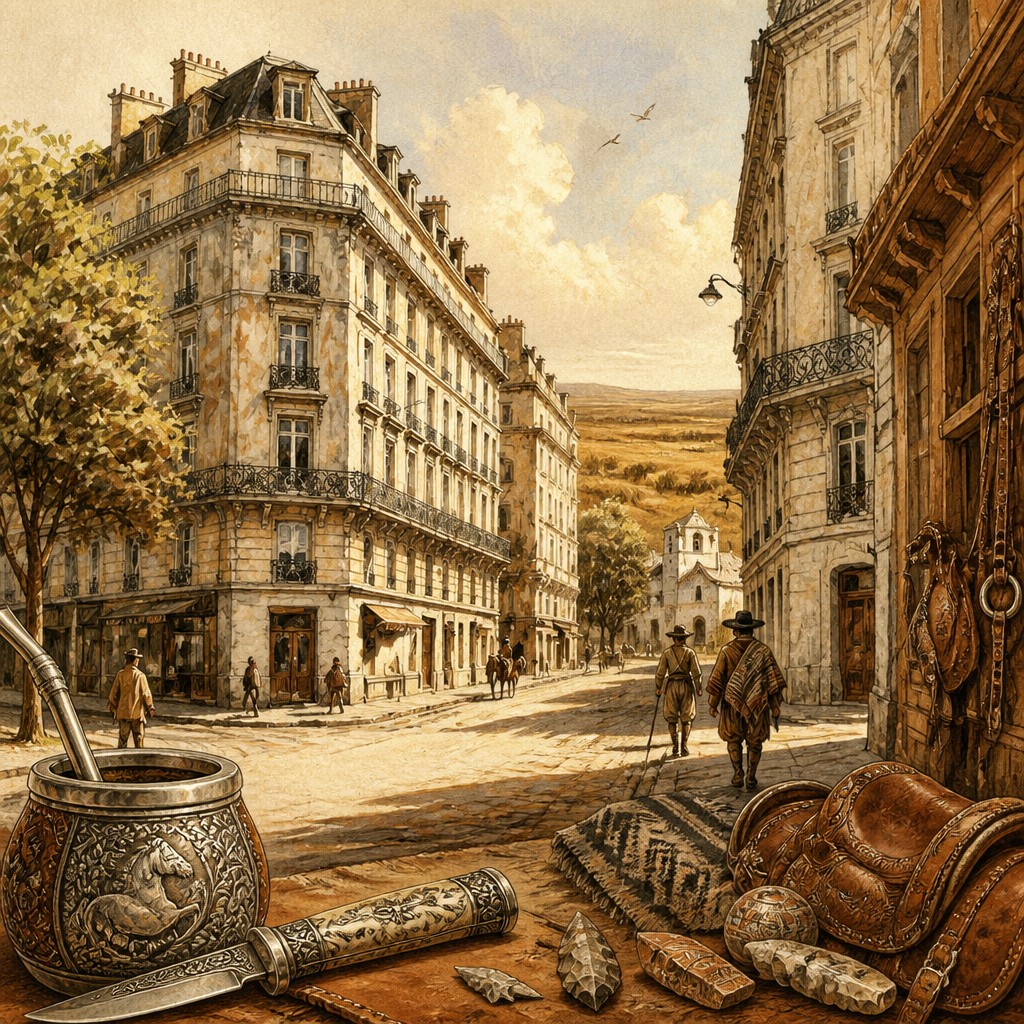

What Defines Uruguayan Art Style
The signature details, up close
Gaucho silverwork
Engraved mate cups, knife handles, buckles, stirrups, and harness fittings provide small areas of polished brightness. Repeated linear engraving and restrained repoussé contrast with matte leather and sunlit grass.
Tooled leathercraft
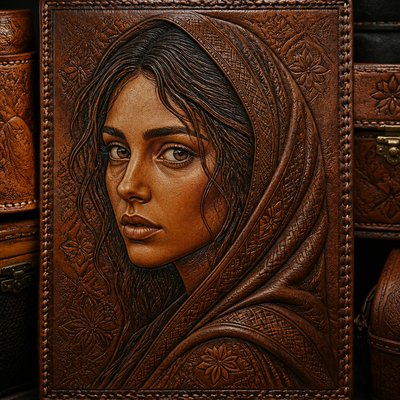
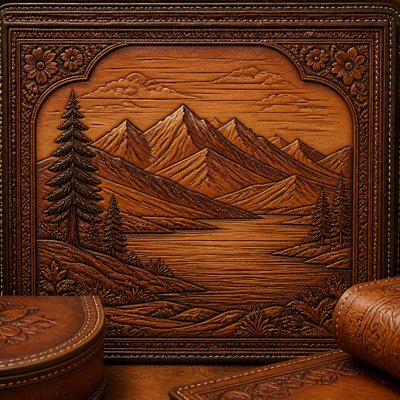
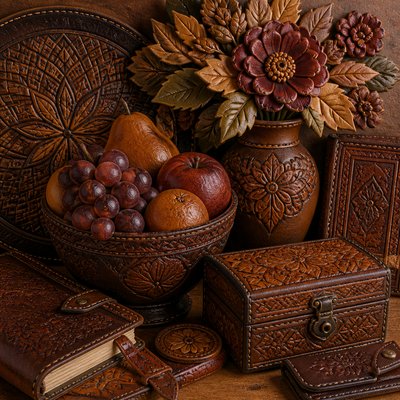
Warm tan, russet, and dark brown hides appear in saddles, reins, belts, scabbards, and travel gear. Floral, geometric, or restrained incised tooling emphasizes handwork, patina, stitching, and supple texture.
Charrúa material references
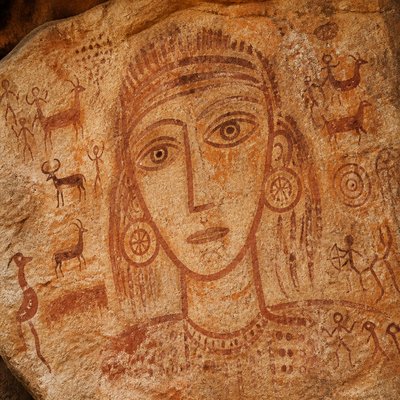
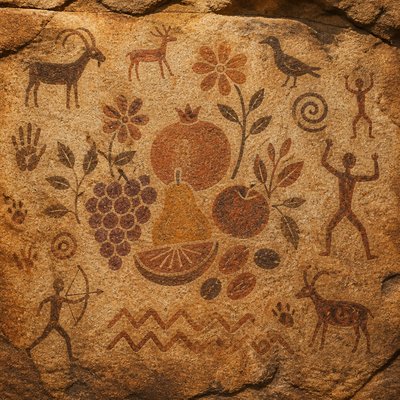
Stone tools, worked fragments, simple geometric marks, and archaeological forms can introduce deep time and Indigenous presence. These elements work best as carefully contextualized details rather than as generic symbols or costume effects.
Whitewashed estancia architecture
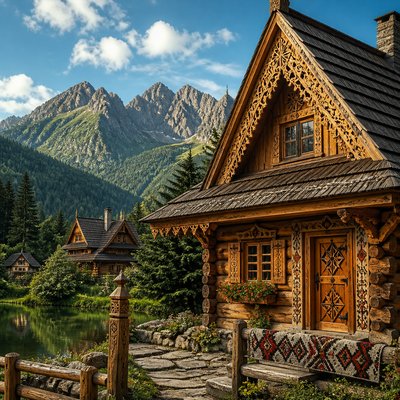
Low adobe or masonry buildings, clay-tiled roofs, timber doors, shaded galleries, courtyards, and weathered plaster establish a rural colonial vocabulary. The architecture is usually shown simply, with emphasis on proportion, wall texture, and surrounding land.
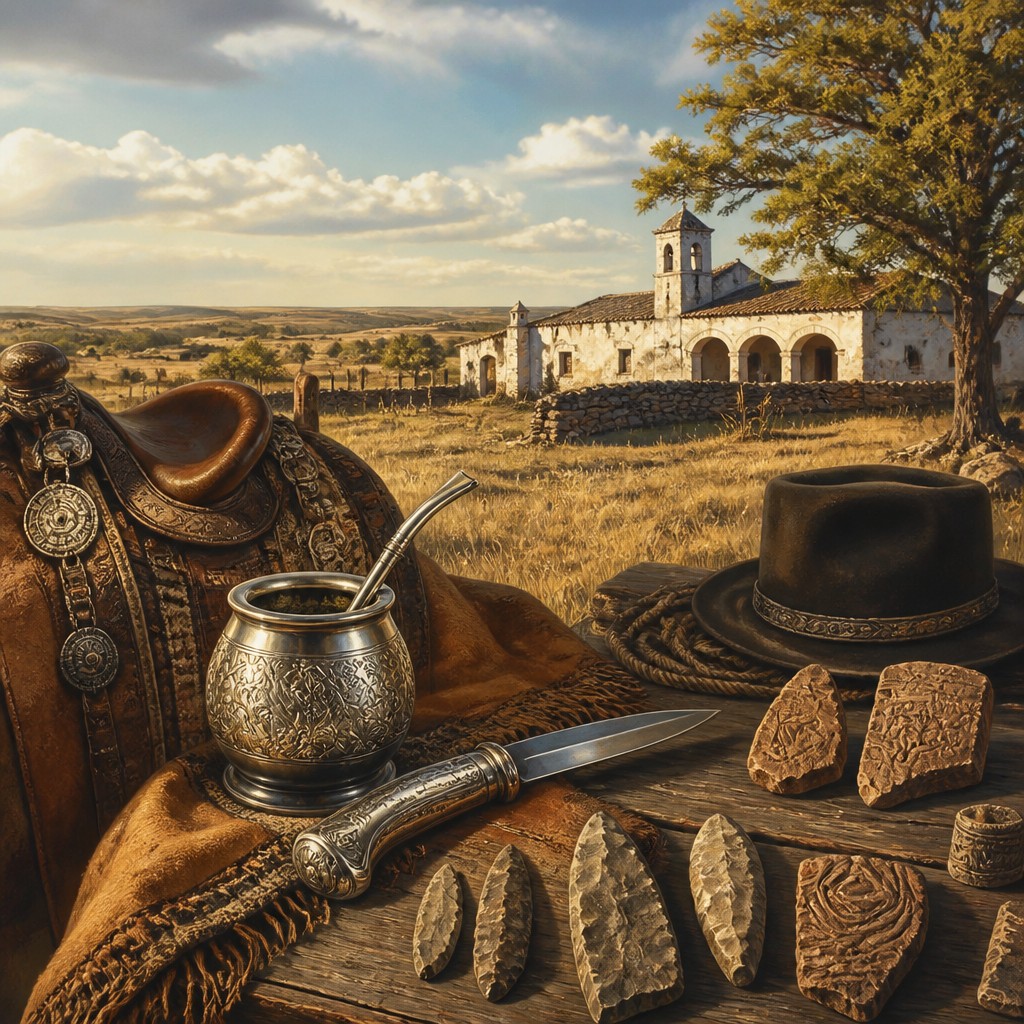
Open pampas composition
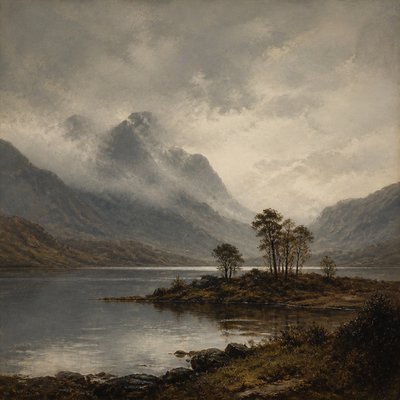
Long horizontal sightlines, a low horizon, broad skies, and sparse structures create a strong sense of distance. Figures and objects are often given generous breathing room within the grassland.
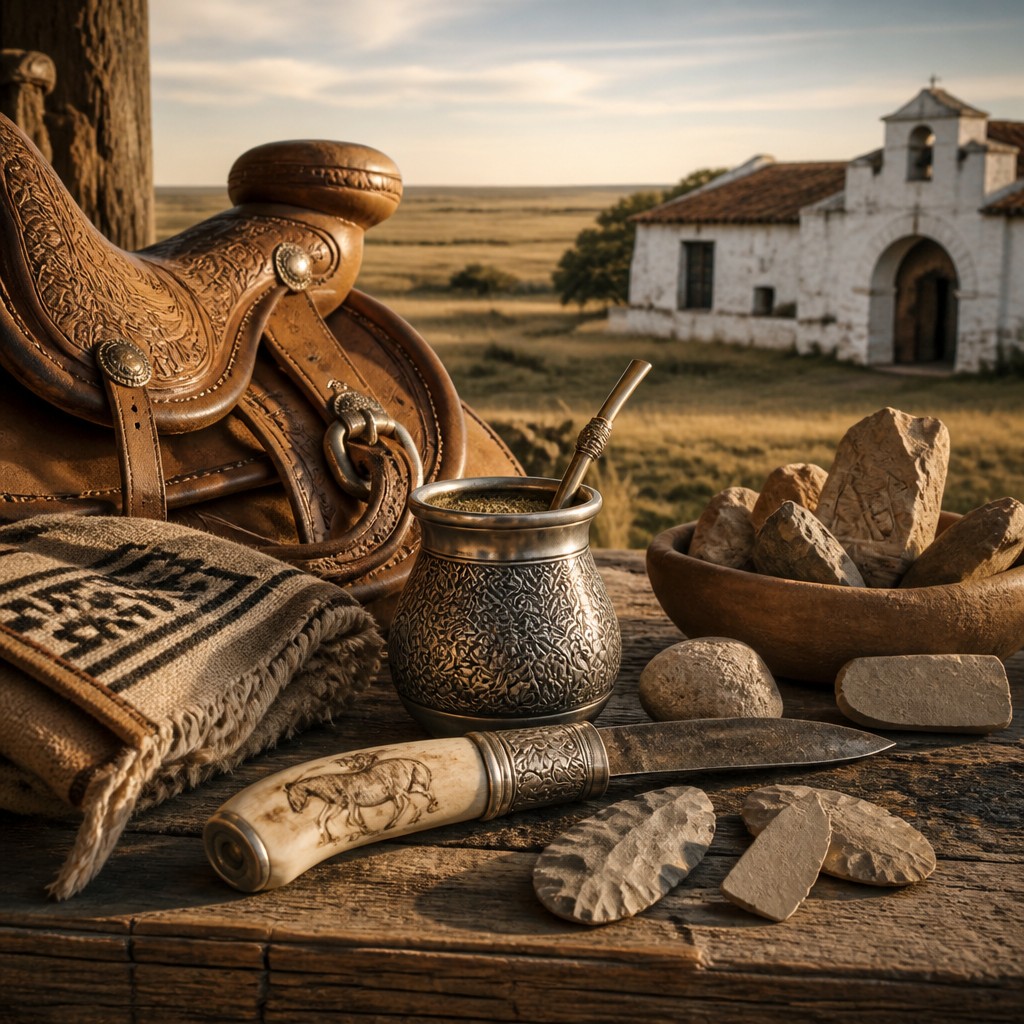
Material and light contrast
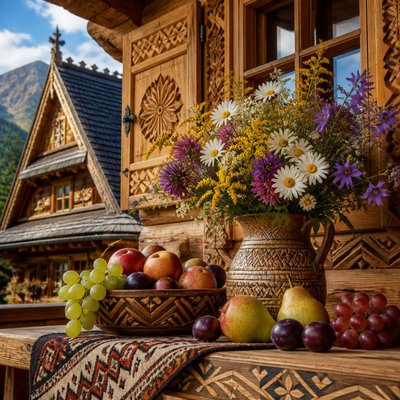
Golden grass, chalky walls, oxidized metal, dark wood, and honey-colored hide form the central palette. Clear daylight, late-afternoon glow, and subtle weathering make surfaces feel tangible without excessive visual drama.
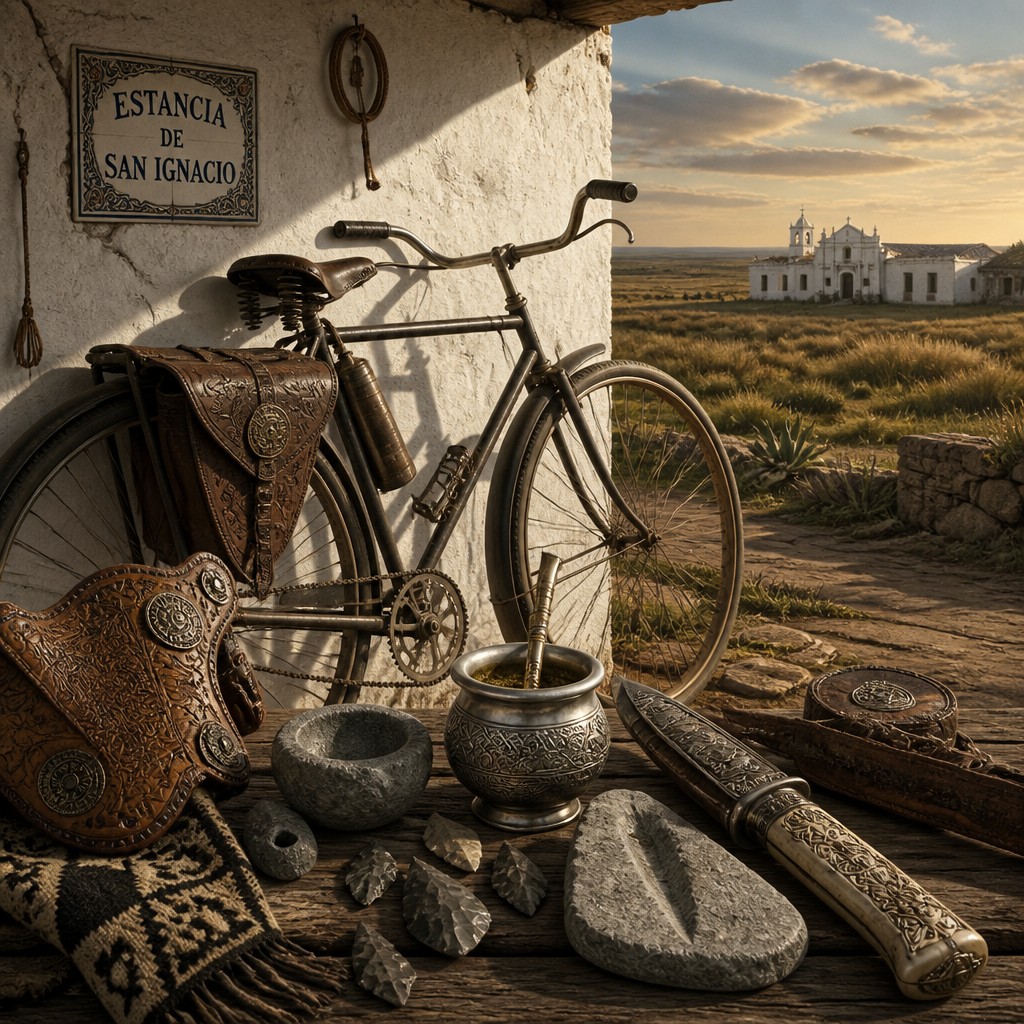
Quiet rural dignity
The mood is contemplative, practical, and self-possessed. Scenes tend to avoid spectacle, favoring the dignity of work, horsemanship, domestic objects, and sustained attention to landscape.
Uruguayan Prompt Ideas
Start from an idea — each one opens the generator with the style ready to go. See all 40 Uruguayan prompts →
How to Create Uruguayan Art
Master the craft step by step — or skip straight to creating. Read the full guide →
- 1
Build a material palette
Begin with aged silver, warm leather, adobe white, red-brown earth, charcoal wood, and pampas gold. In traditional media, combine graphite, ink, watercolor, oil, or acrylic with careful surface marks that distinguish metal, hide, plaster, and grass.
- 2
Design around the horizon
Use a wide format, a low or middle horizon, and one clear focal object such as a saddled horse, mate cup, estancia doorway, or knife. Keep the background spacious so the landscape carries equal weight with the subject.
- 3
Render craft details selectively
Reserve the sharpest lines and brightest highlights for engraved silver, stitching, tooling, and worn edges. Avoid covering every surface with decoration; contrast detailed foreground objects with simplified architecture and distant pasture.
- 4
Use historically aware references
Research gaucho tack, mate culture, rural architecture, and Charrúa archaeological materials before combining them. Distinguish Indigenous artifacts, colonial buildings, and later gaucho traditions instead of presenting them as interchangeable.
- 5
Translate the look digitally
Use layered brushes or textured scans for leather grain, scratched metal, limewashed walls, and dry grass, then apply restrained color grading rather than heavy effects. A documentary or naturalistic base usually supports the style better than glossy fantasy rendering.
- 6
Write precise generation prompts
Specify the subject, material details, Río de la Plata rural setting, low horizon, warm natural light, and desired medium. Add exclusions such as modern signage, tropical vegetation, ornate European palace architecture, or excessive saturation when they conflict with the intended atmosphere.
The Story
History & Origins of Uruguayan
This is not a single historically codified movement or named school, but an aesthetic lineage assembled from Uruguayan and wider Río de la Plata traditions. Its foundations include Indigenous Charrúa material culture, colonial rural architecture, Jesuit-established agricultural settlements in the region, gaucho dress and horsemanship, silversmithing, leathercraft, and the visual culture of estancia life. These sources developed across different periods and communities and should not be treated as one unified historical tradition.
In contemporary illustration, decorative art, photography, and digital image-making, these references are often combined into a coherent rural-national atmosphere. The style can therefore be approached as a respectful interpretive synthesis: historically informed in its materials and settings, but not a claim that all of its motifs existed together in a single period.
Influences: The style draws on gaucho material culture, Río de la Plata folk and rural traditions, Indigenous Charrúa archaeology, colonial and Jesuit architectural heritage, South American landscape painting, documentary photography, historical craft illustration, and naturalistic plein-air observation. It also shares with vernacular and Arts and Crafts approaches an emphasis on honest materials, visible workmanship, and functional objects, while its spacious compositions recall broader traditions of pampas and frontier landscape art.
Frequently Asked Questions
What defines the Uruguayan art style?
It is defined by a combination of gaucho silverwork, tooled leather, mate and knife details, Charrúa material references, whitewashed rural architecture, and expansive pampas landscapes. Its mood is restrained and contemplative, with tactile surfaces and natural light rather than theatrical ornament.
Is Uruguayan art style a formal historical art movement?
No. The term describes a contemporary aesthetic synthesis rather than a single historically organized movement, period, or school. It brings together visual traditions from different communities and eras, so individual references should be identified and contextualized.
How does it differ from generic gaucho or South American rustic art?
The emphasis is not only on horses, riders, or frontier costume. It gives equal importance to Uruguayan landscape, silver and leather workmanship, estancia architecture, archaeological depth, horizontal space, and a quiet rural atmosphere.
What colors work best for this style?
Useful colors include pampas gold, straw, ochre, warm tan, russet, adobe white, weathered gray, dark wood, and muted green. Small accents of polished silver or blue-gray sky create contrast without making the image overly saturated.
Can this style be made with photography or digital illustration?
Yes. Photography can emphasize natural light, aged surfaces, rural architecture, tack, tools, and wide horizons. Digital illustration can combine textured brushes, archival-looking surface grain, controlled color grading, and carefully researched period or regional details.
How should Indigenous Charrúa references be handled?
Use archaeological objects and documented material forms with care, distinguishing them from gaucho and colonial traditions. Avoid inventing ceremonial meanings, treating fragments as generic tribal decoration, or merging separate historical cultures into an indistinct regional stereotype.
Create your first Uruguayan artwork
Describe anything — or upload a photo — and see it in Uruguayan Art Style in seconds.
Related Styles
Discover similar art styles