Ukrainian Art Style
Explore Ukrainian art style: Petrykivka flowers, pysanka geometry, firebirds, poppies, and sunflower gold in a vivid folk tradition.
Instantly rendered in Ukrainian — or transform a photo
Ukrainian Gallery
Tap any artwork to explore it
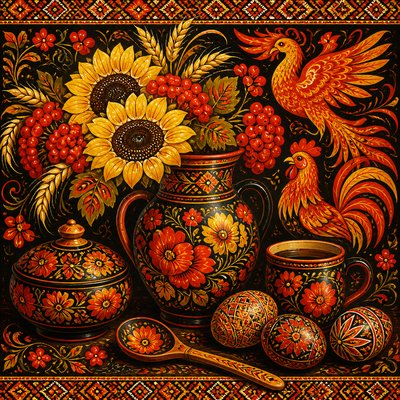
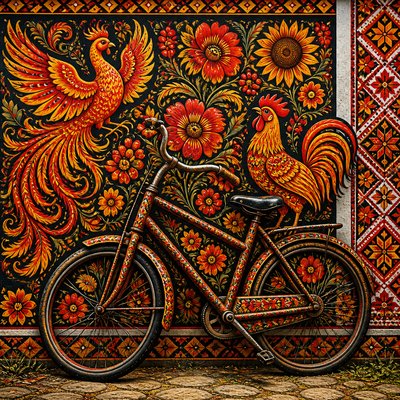
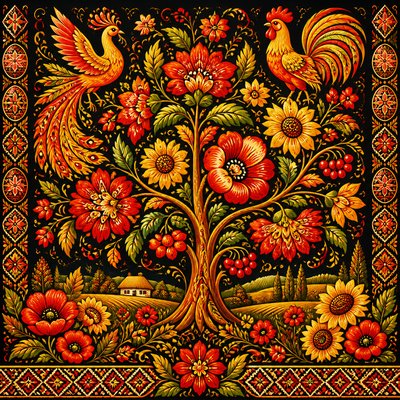
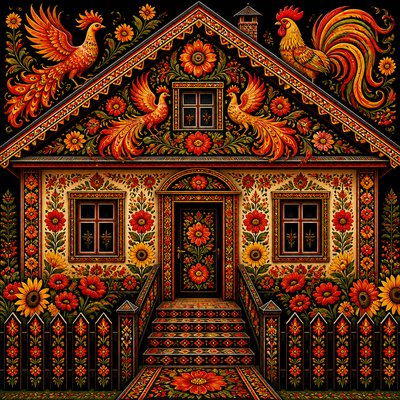
What is Ukrainian Art Style?
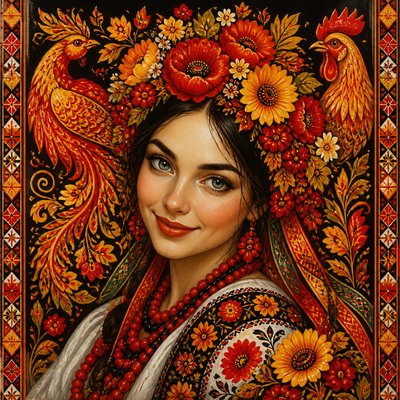
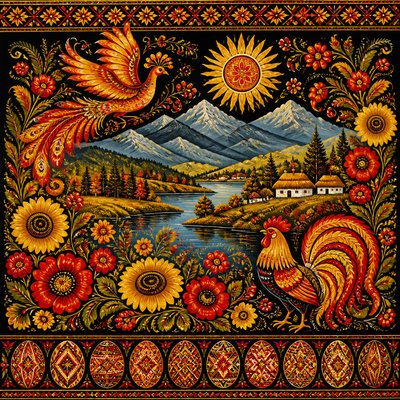
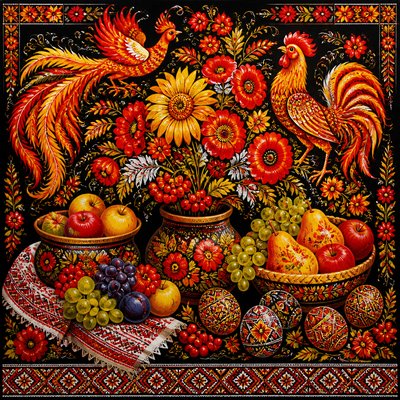
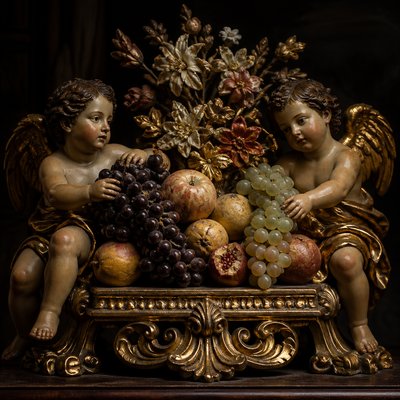
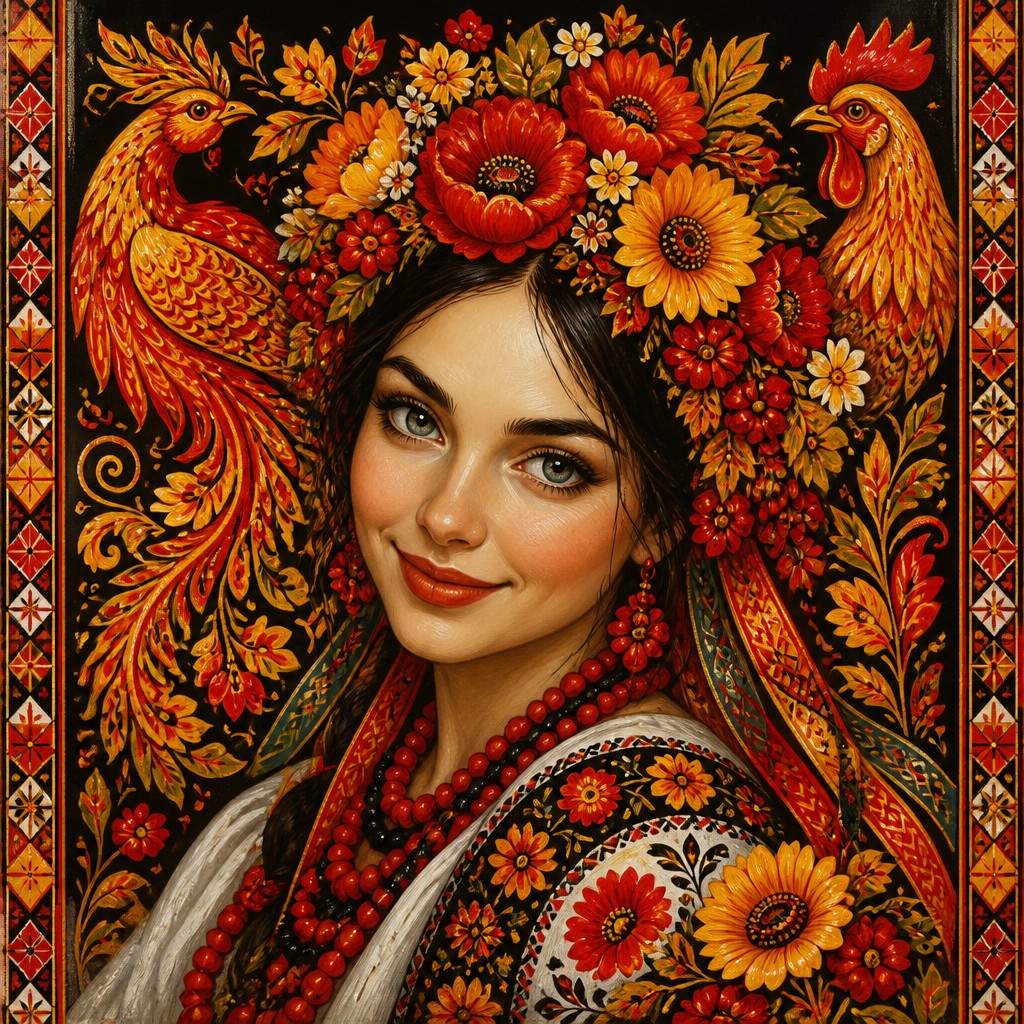
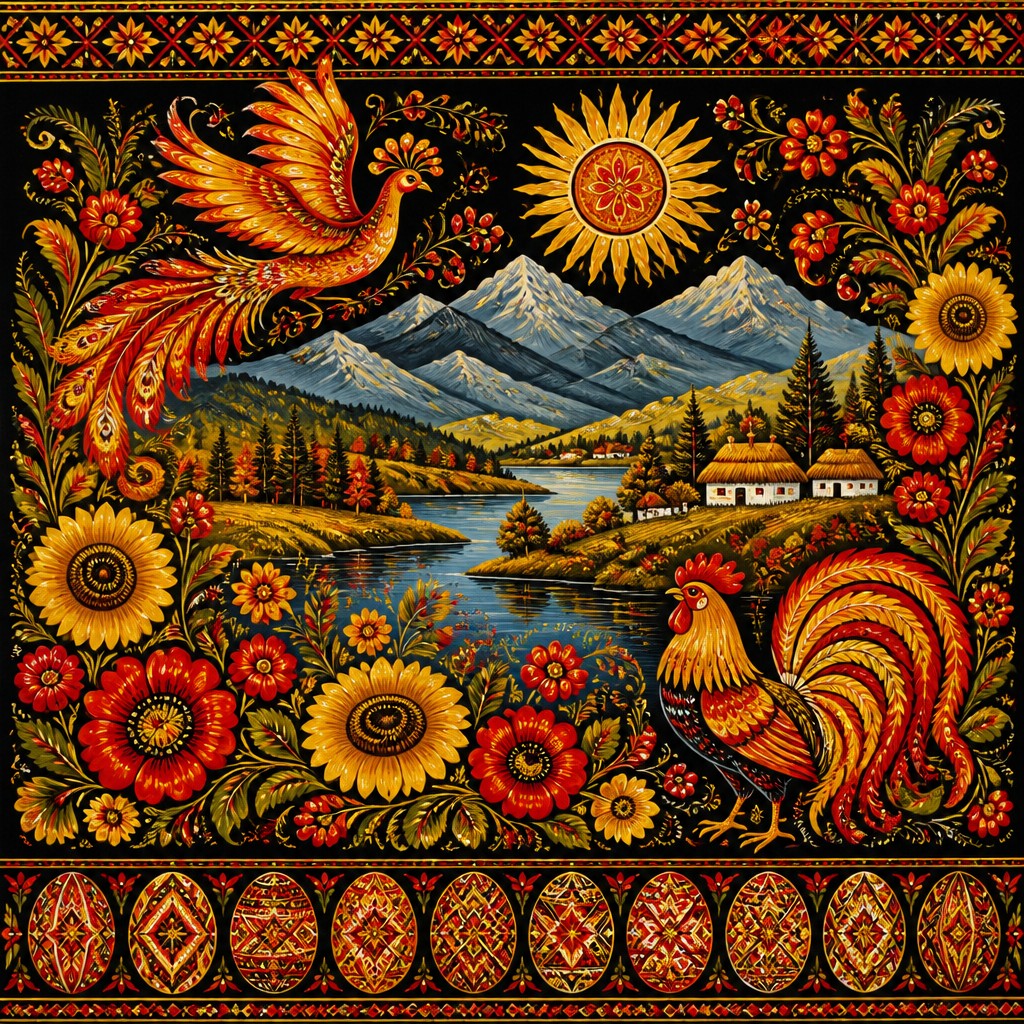
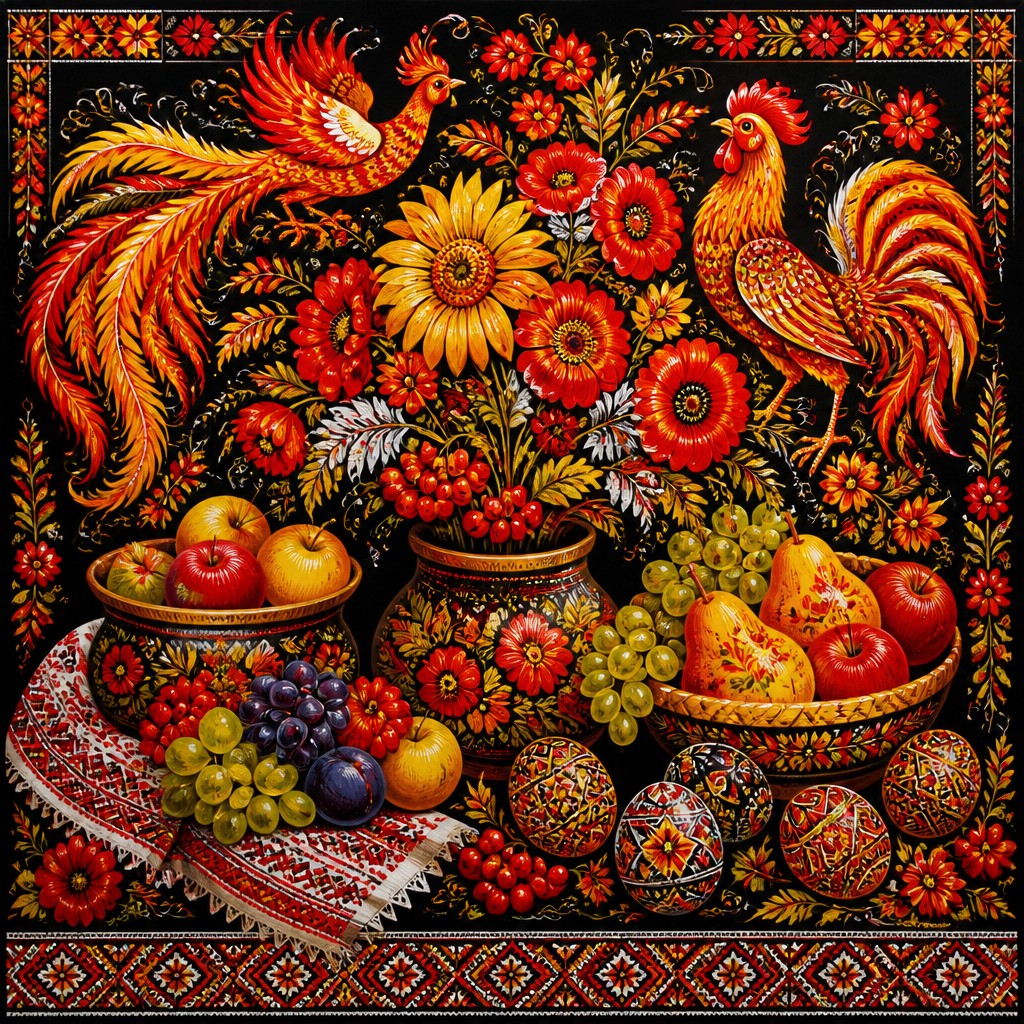
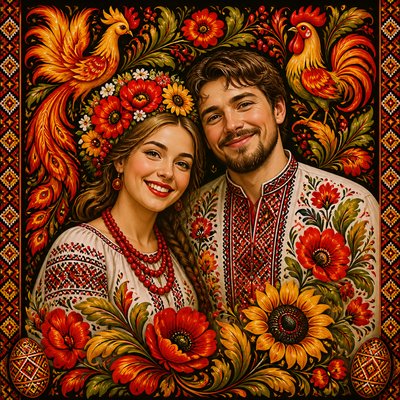
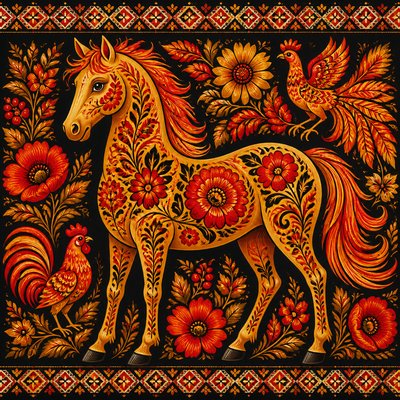
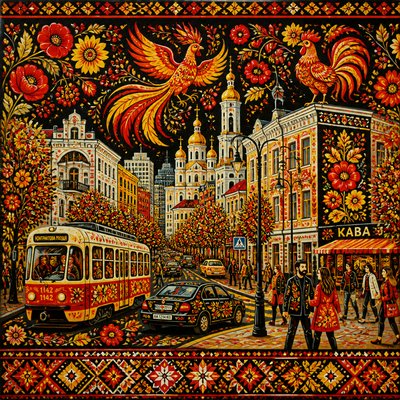
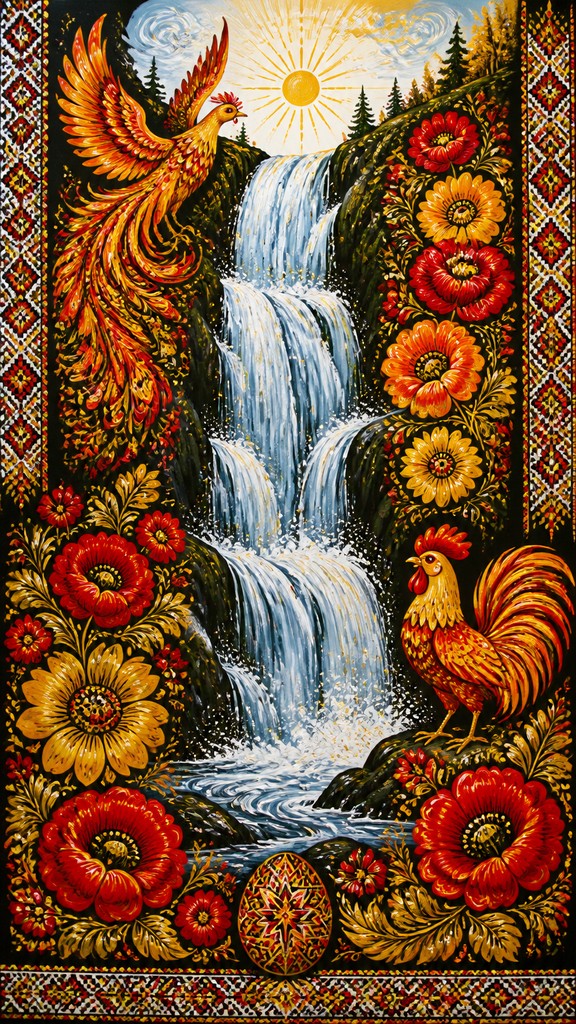
Ukrainian art style is a broad decorative folk aesthetic most visibly associated with Petrykivka painting, pysanka egg decoration, and the symbolic imagery of Ukrainian rural and ceremonial culture. It combines exuberant flowers, curling leaves, birds, animals, geometric borders, and strong color contrasts, often set against deep black, red, green, or cream grounds. Poppies, sunflowers, viburnum-like berries, roosters, horses, and firebirds are especially common visual references.
The style looks vivid and rhythmically organized because its imagery is built from repeated brush marks, balanced floral clusters, contour lines, and ornamental borders rather than naturalistic modeling. Petrykivka-inspired painting favors fine, tapered strokes and feathered flicks that make petals and leaves appear to radiate outward. Pysanka traditions contribute symbolic geometry, compartmentalized surfaces, and a strong sense of pattern, while contemporary interpretations may apply these elements to posters, textiles, murals, packaging, illustration, and digital images.
Try It On Your Photos
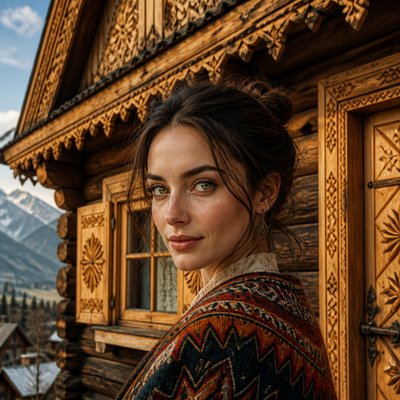
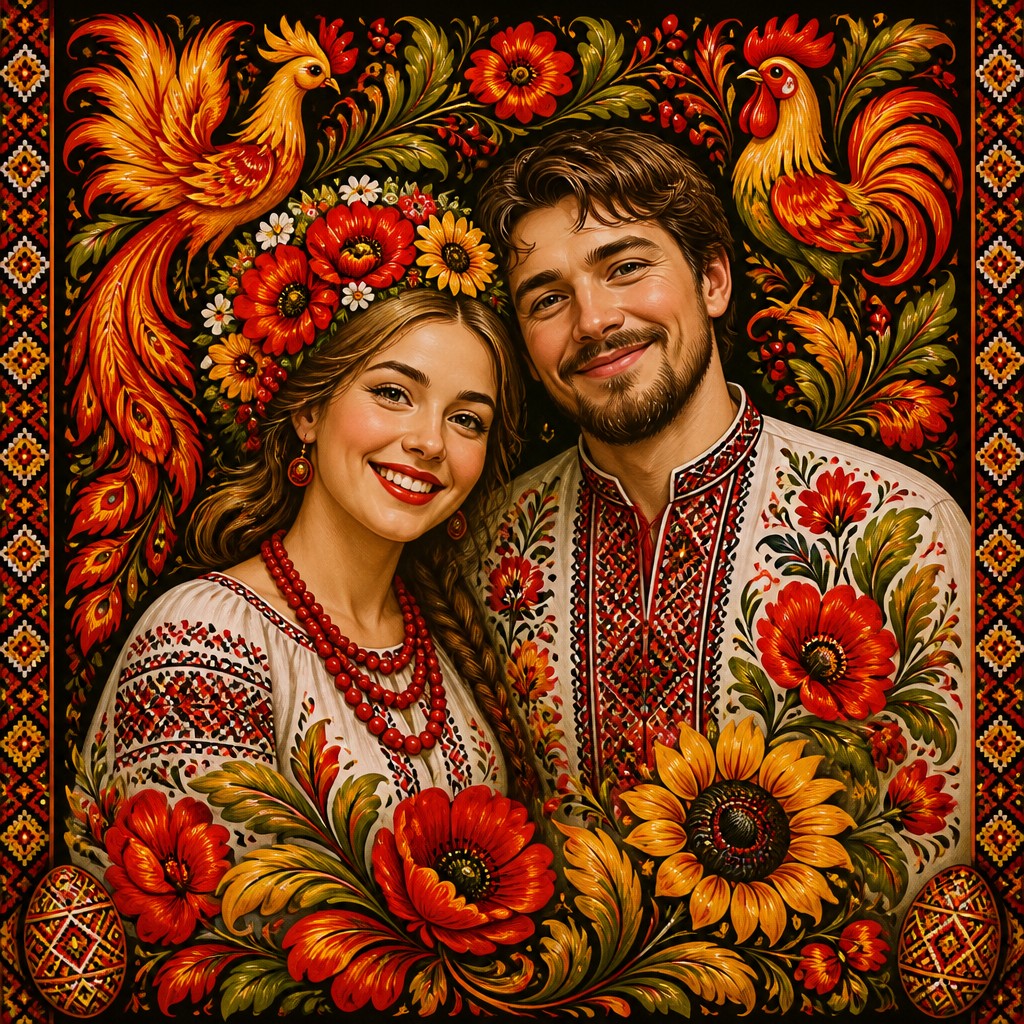
Upload any photo and convert it into Ukrainian Art Style — drag the sliders to compare before and after.

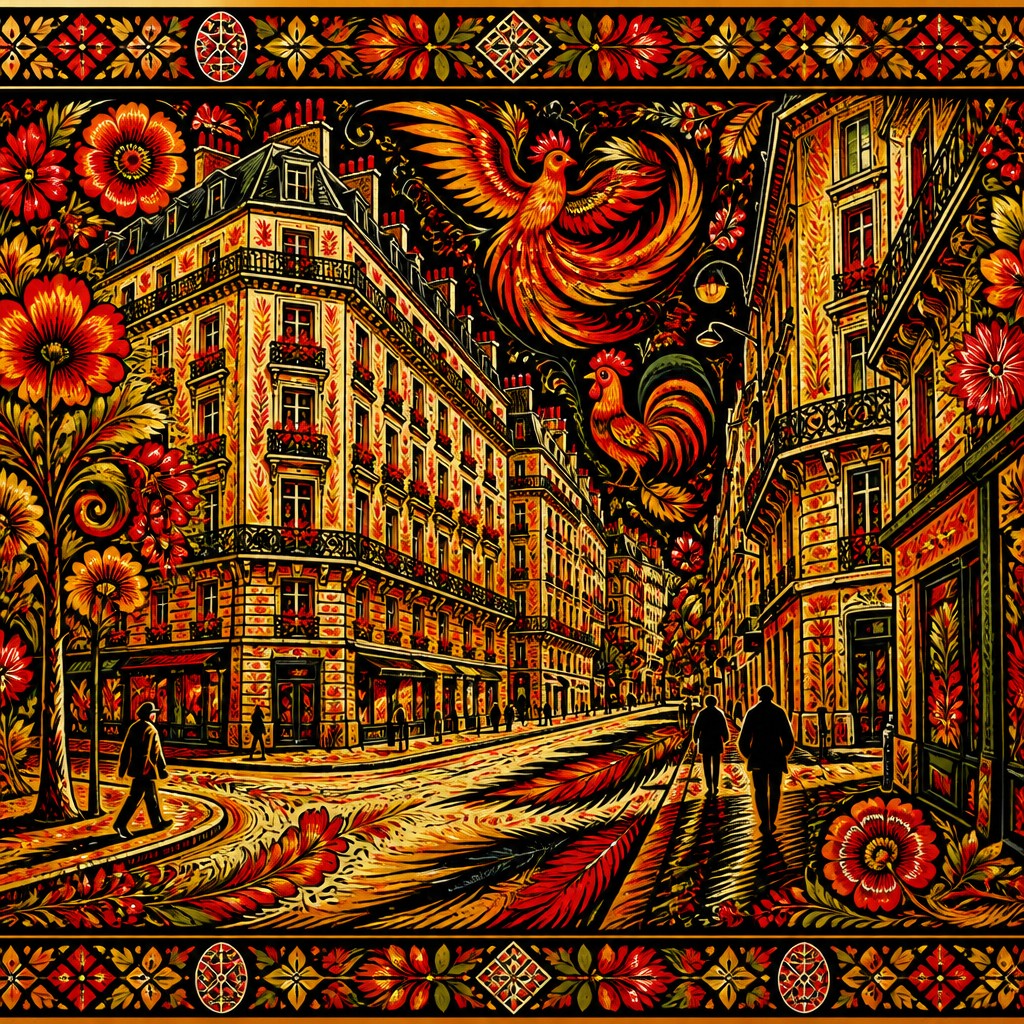

What Defines Ukrainian Art Style
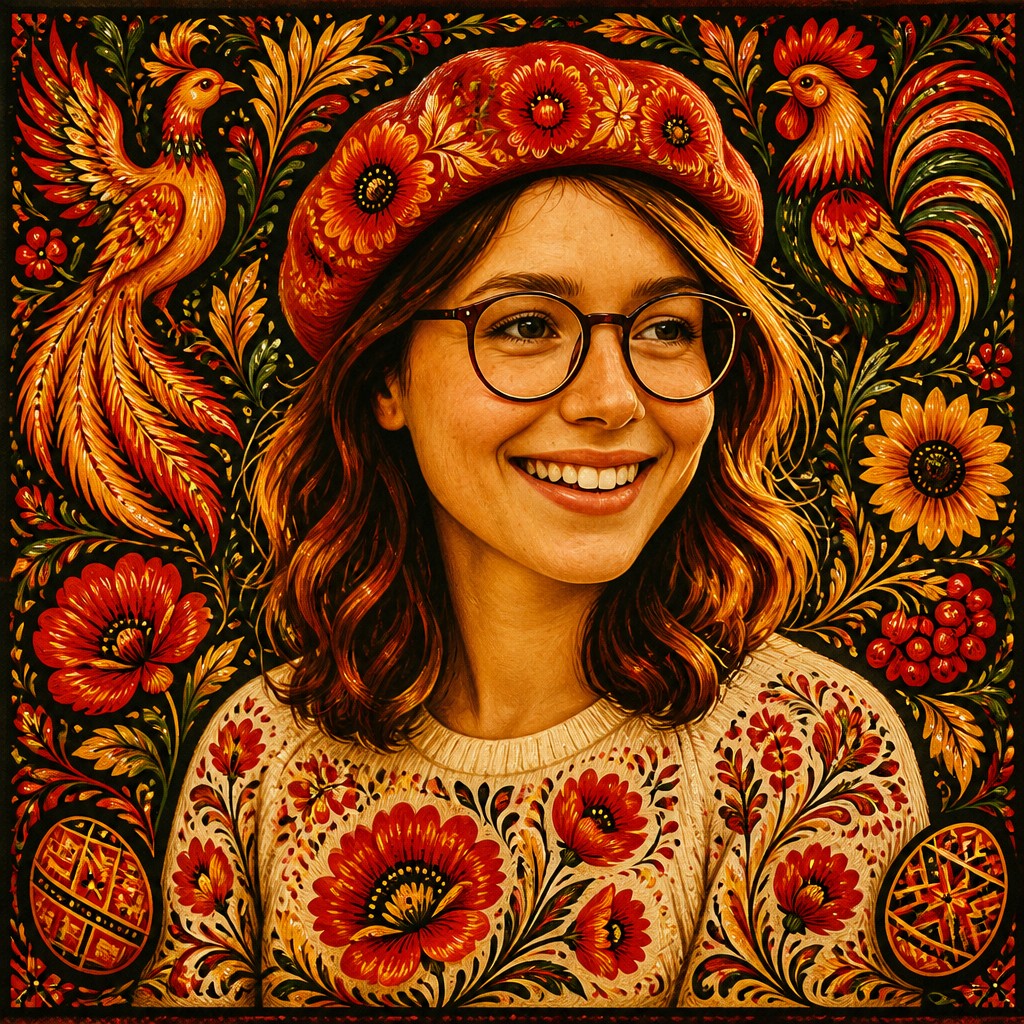
The signature details, up close
Petrykivka-inspired floral clusters
Large flowers, curling stems, leaves, berries, and sprays are arranged in dense yet carefully balanced compositions. The forms are decorative and stylized rather than botanically exact.
Feathered brush-flick petals
Tapered strokes create petals, leaves, and fine tendrils with a soft feathered edge. Small directional marks provide rhythm, movement, and a handmade sense of touch.
Poppy red and sunflower gold
The palette commonly emphasizes saturated red, orange, yellow, cobalt or leafy green, and white. Poppy red and sunflower gold create a particularly recognizable Ukrainian folk contrast.
Deep contrasting grounds
Black, dark green, red, or richly colored backgrounds make the ornament appear luminous. Light outlines and bright floral accents are often used to clarify overlapping forms.
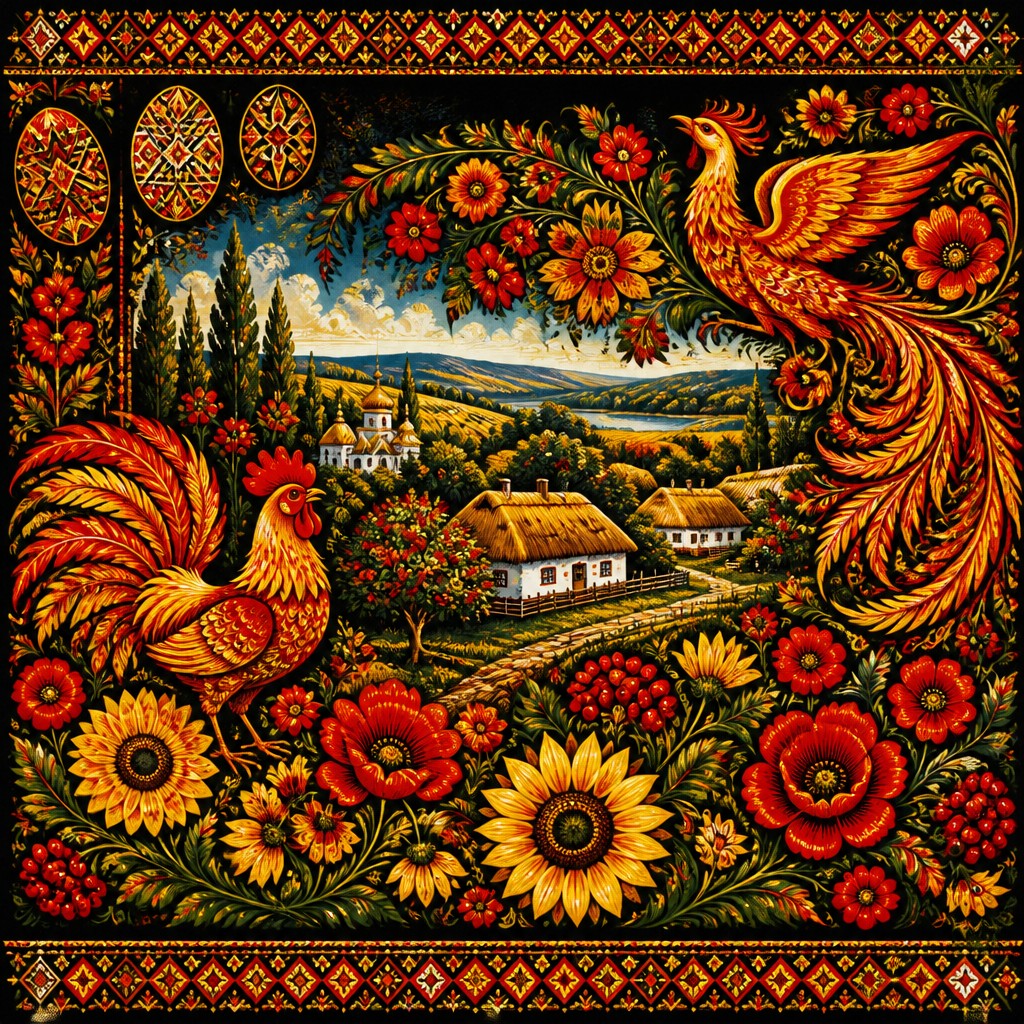
Pysanka geometry
Diamonds, stars, spirals, bands, rosettes, triangles, and compartmentalized borders echo the structured surfaces of decorated eggs. These motifs add order to the otherwise organic floral abundance.
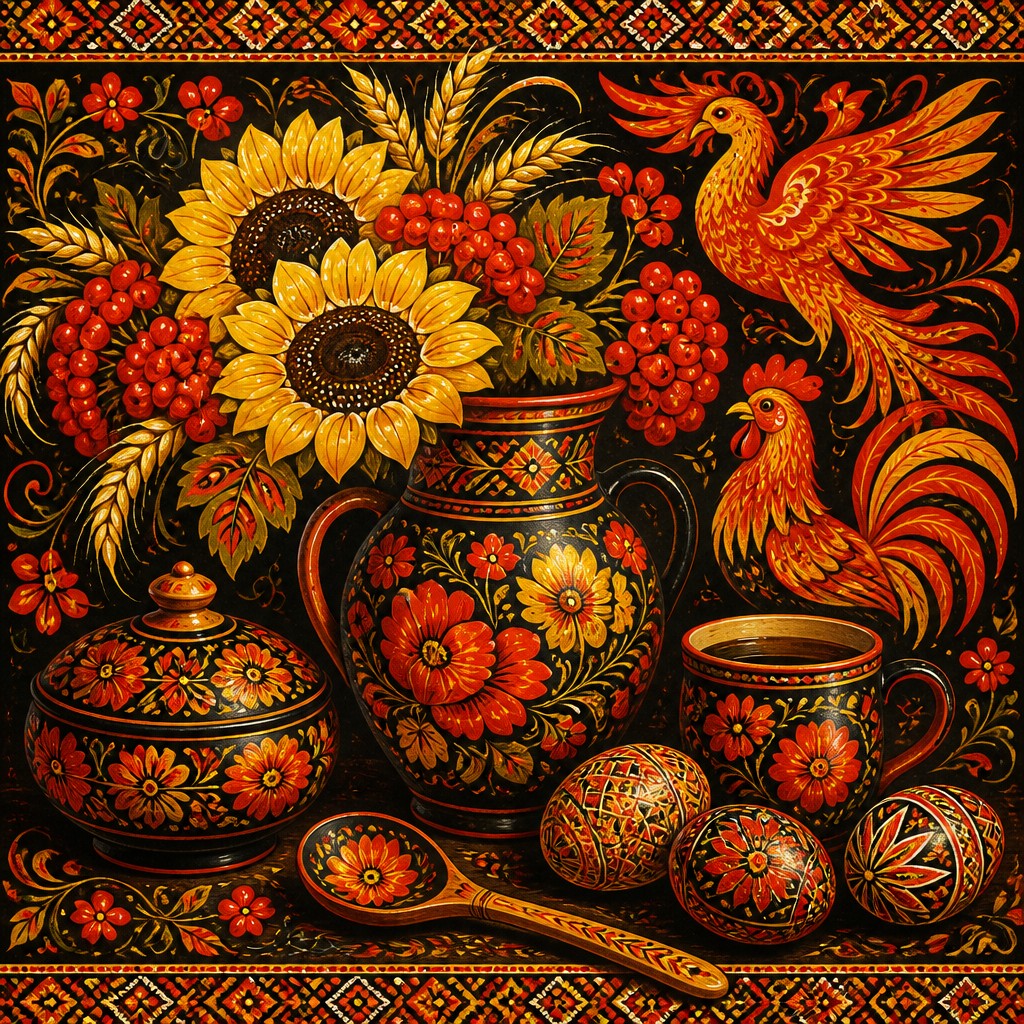
Birds and symbolic creatures
Roosters, doves, horses, deer, and firebird-like forms may appear as emblems of vitality, prosperity, protection, or renewal. Their anatomy is simplified into elegant silhouettes and ornamental curves.
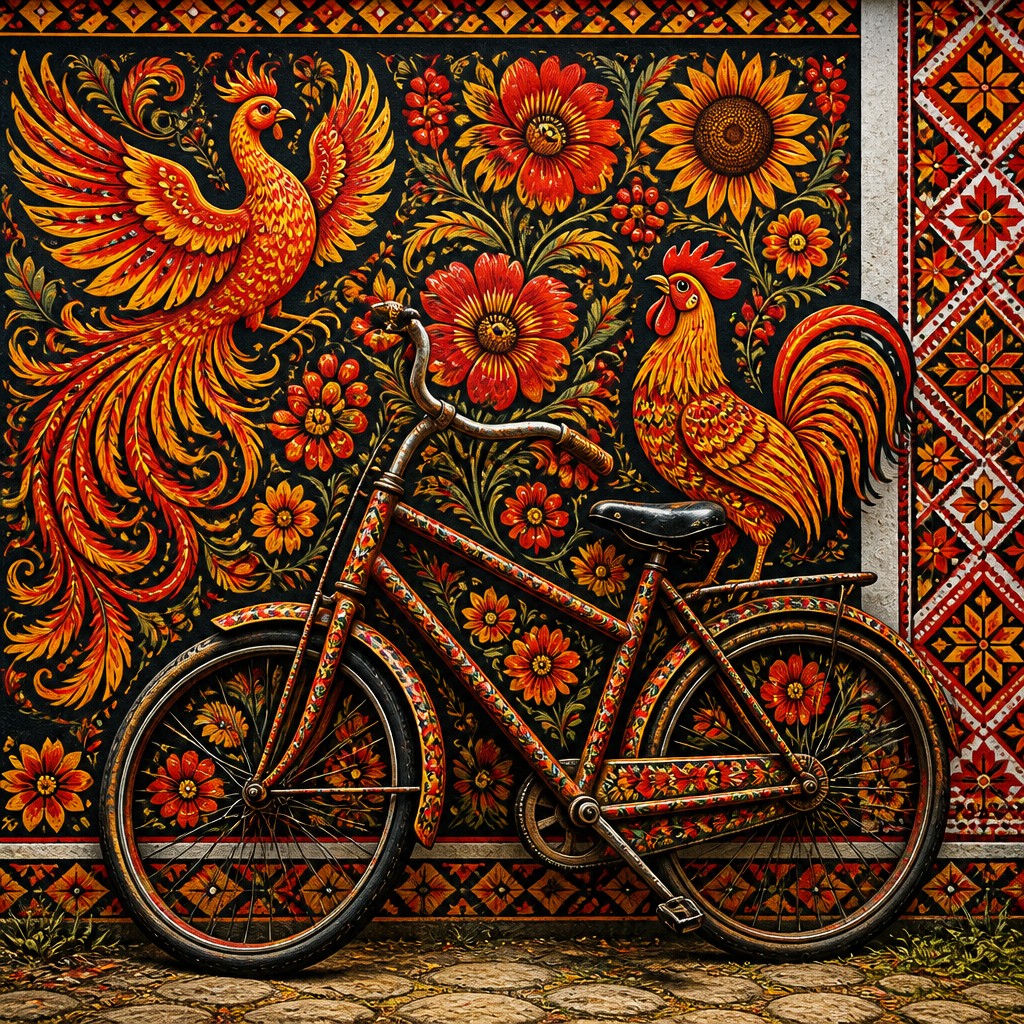
Flat decorative composition
The style generally avoids deep perspective and realistic shadow in favor of frontal, planar arrangements. Repetition, symmetry, contour, and visual balance are more important than optical realism.
Try It
Create Videos in Ukrainian Art Style
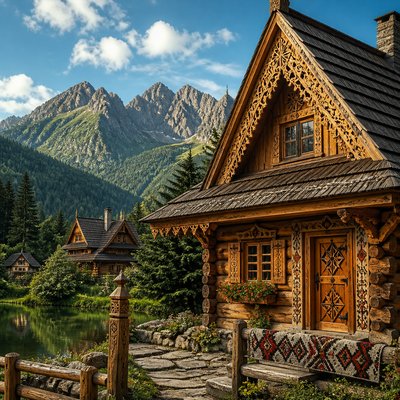
Styles aren't just for stills — describe a scene or animate an image and get a short video rendered in Ukrainian. Press play to see this pond come to life.
Make a VideoUkrainian Prompt Ideas
Start from an idea — each one opens the generator with the style ready to go. See all 40 Ukrainian prompts →
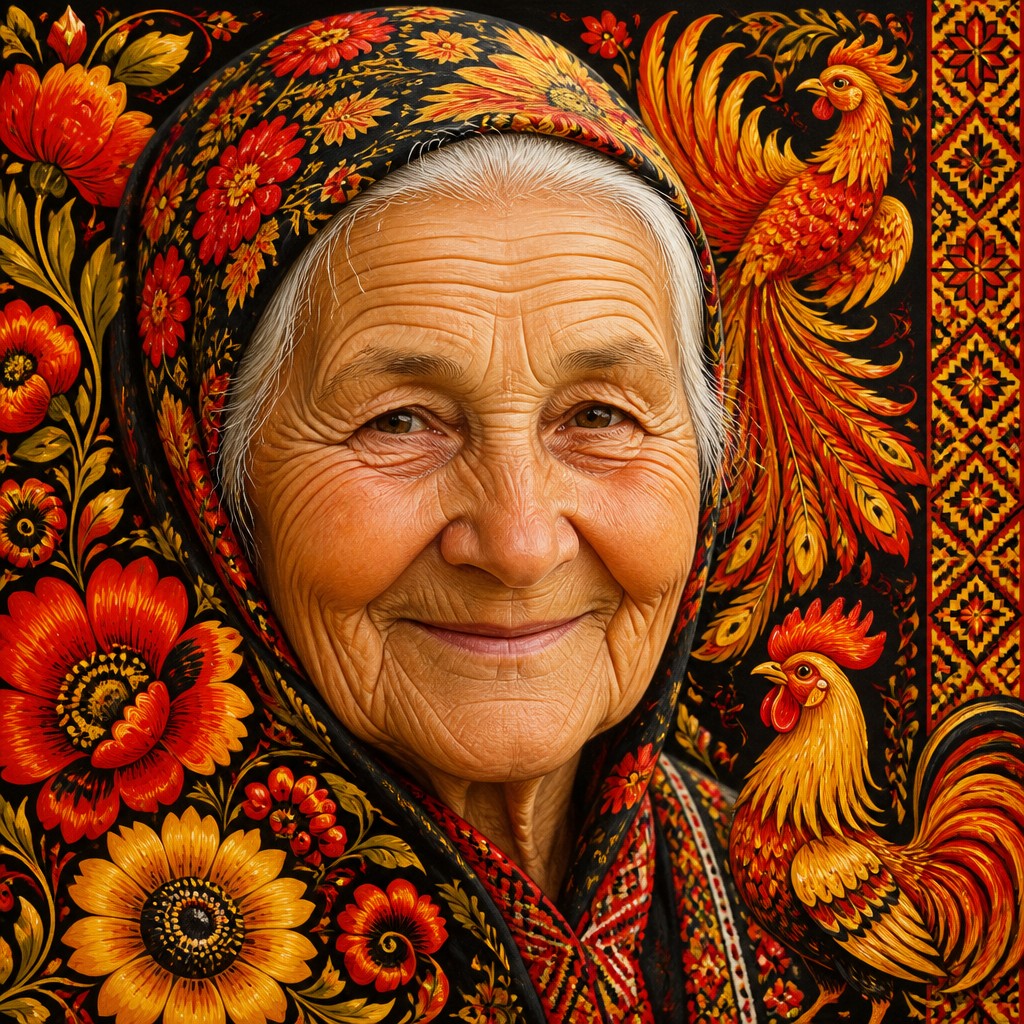
“close-up portrait of an elderly person with expressive weathered features”
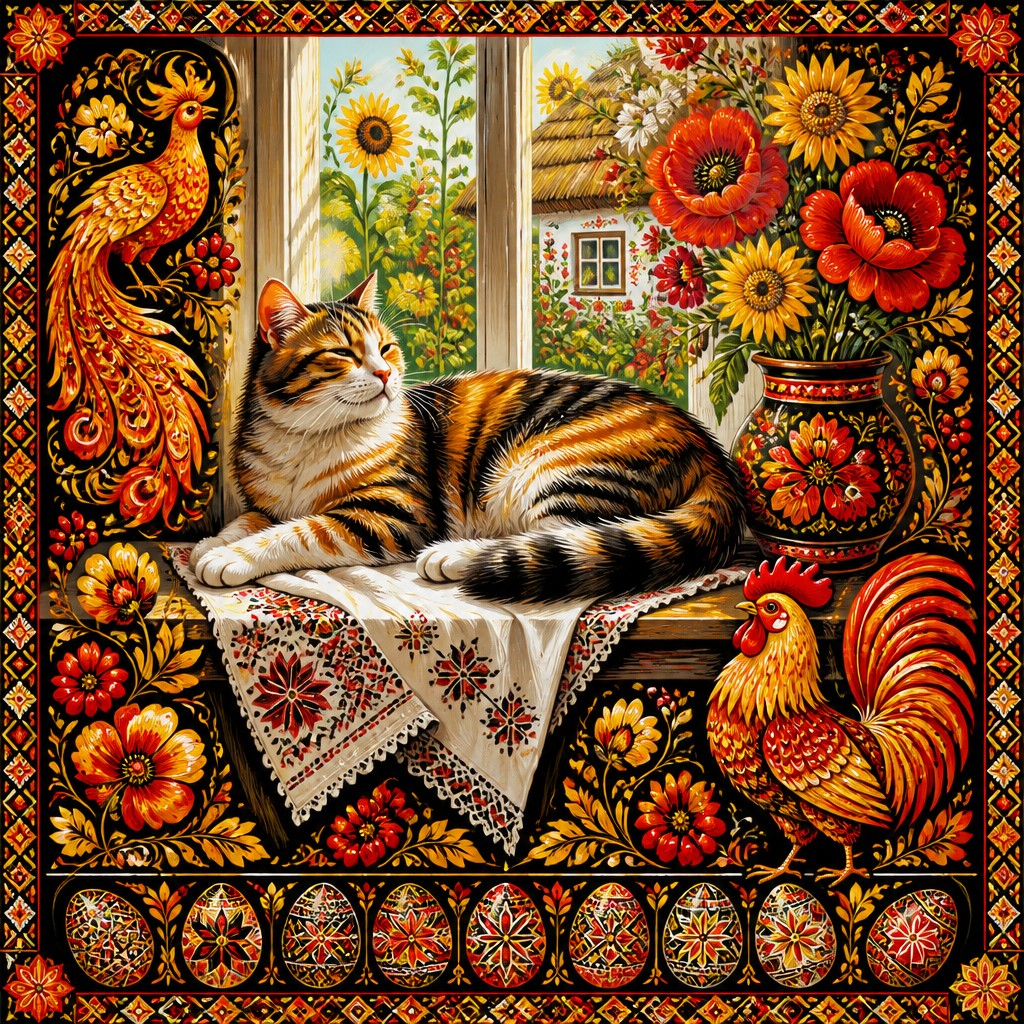
“a cat lounging in a sunlit window”
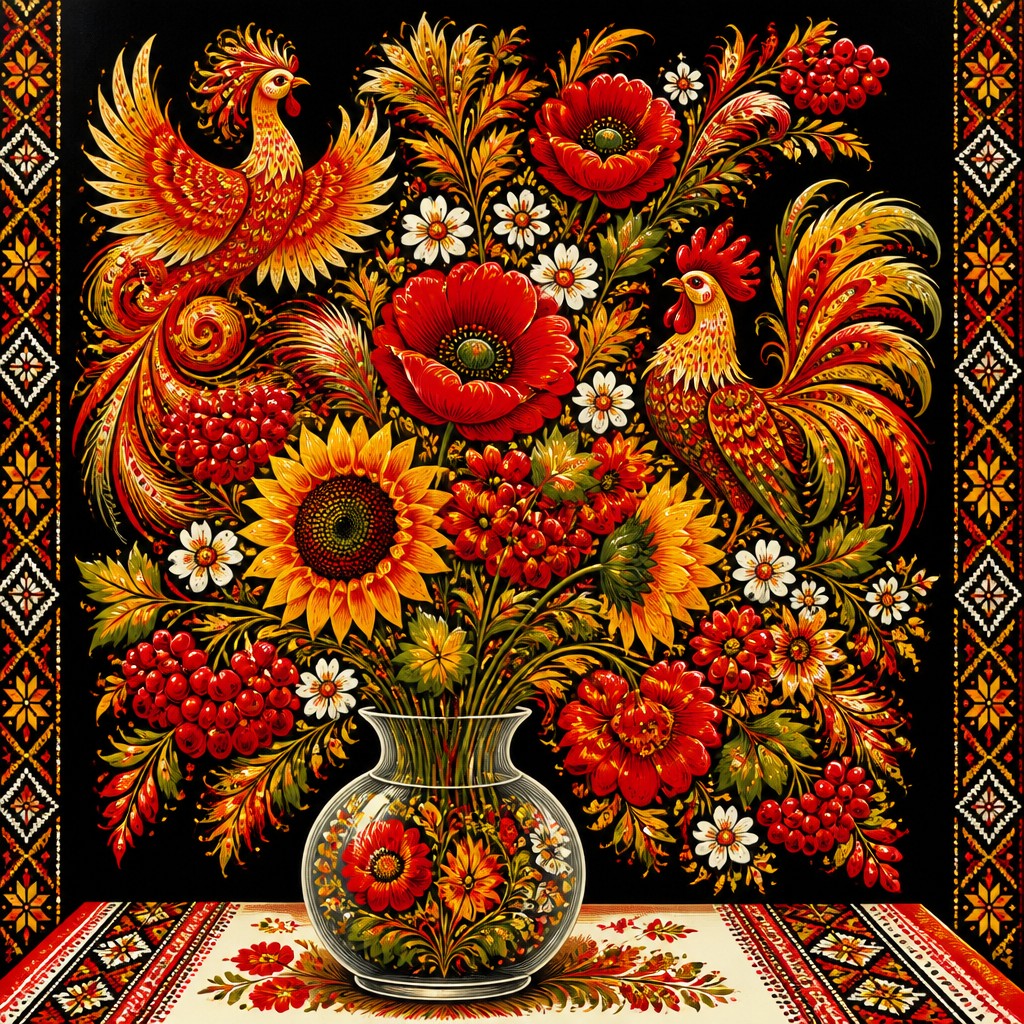
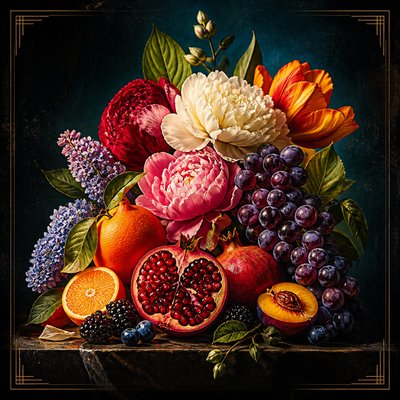
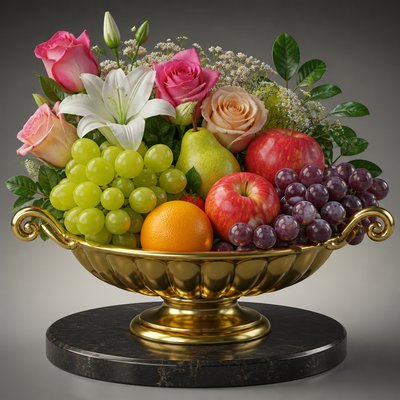
“bouquet of flowers in a glass vase”
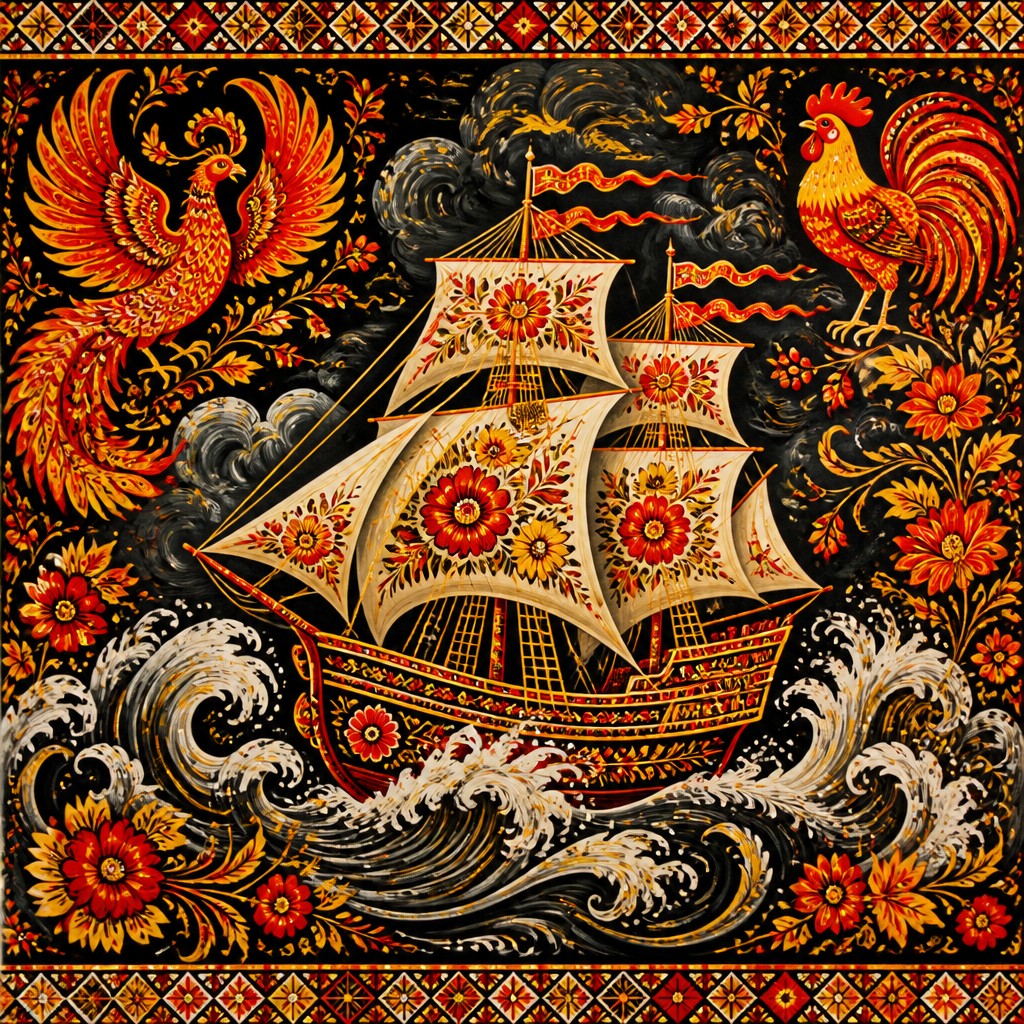
“sailing ship on a stormy sea”
How to Create Ukrainian Art
Master the craft step by step — or skip straight to creating. Read the full guide →
- 1
Build a dark or saturated ground
Begin with black, deep green, crimson, or warm cream, then place the brightest flowers and leaves over it. In digital work, preserve a slightly uneven painted texture so the surface does not feel mechanically flat.
- 2
Construct motifs from controlled strokes
Use a fine round brush or pressure-sensitive digital brush for tapered petals, commas, dots, and curling stems. Vary pressure and direction rather than relying on smooth vector shapes alone.
- 3
Organize the composition as ornament
Arrange floral sprays in a wreath, arch, bouquet, border, or centered medallion. Repeat related shapes and colors, but introduce small variations to retain the character of hand decoration.
- 4
Add symbolic geometry carefully
Use pysanka-like bands, diamonds, spirals, and rosettes to frame the subject or divide the surface. Keep geometric borders subordinate to the main image unless the goal is an egg, textile, or ornamental panel.
- 5
Layer color and fine accents
Place broad color shapes first, then add lighter petal strokes, dark contours, white dots, berries, and slender tendrils. Avoid excessive gradients; layered opaque marks better preserve the folk-painted appearance.
- 6
Describe the subject and visual rules in a prompt
For prompt-based creation, specify the subject, a Petrykivka-inspired floral treatment, feathered brush-flick petals, pysanka geometric borders, saturated red and gold, and a deep contrasting ground. Add terms such as flat decorative composition, hand-painted texture, ornamental symmetry, and no photorealistic shading when a traditional result is desired.

The Story
History & Origins of Ukrainian
This is not a single historical movement with one founding date, but a modern umbrella term for several Ukrainian folk and decorative traditions. Petrykivka painting developed in the Dnipro region, particularly around the village of Petrykivka, where floral ornament was used to decorate household interiors, domestic objects, and later paper and painted panels. Its techniques and ornamental vocabulary were transmitted through local practice and adapted across the twentieth century; Petrykivka decorative painting was inscribed on UNESCO's Representative List of the Intangible Cultural Heritage of Humanity in 2013.
Pysanka is an older Ukrainian egg-decoration tradition with roots in pre-Christian seasonal symbolism that continued within Christian culture. Eggs are traditionally decorated with a wax-resist process, in which successive applications of wax and dye preserve layered geometric and symbolic designs. The contemporary digital and commercial use of the phrase Ukrainian art style often synthesizes Petrykivka floral painting, pysanka patterning, embroidered ornament, folk ceramics, and national decorative motifs rather than reproducing one historically fixed regional practice.
Influences: The aesthetic draws primarily from Petrykivka decorative painting and the broader Ukrainian folk painting tradition, alongside pysanka wax-resist ornament, regional embroidery, woven textiles, painted ceramics, wood decoration, and iconographic flatness. It also shares principles with other Eastern European folk arts, including ornamental symmetry, symbolic plants, repeated borders, and saturated color. Contemporary versions may incorporate poster design, botanical illustration, naïve art, and digital pattern-making while retaining the visual logic of hand-applied folk ornament.
Frequently Asked Questions
What defines Ukrainian art style?
Its defining features are exuberant floral ornament, tapered brush-flick marks, saturated red and gold, dark contrasting grounds, stylized birds or firebirds, and geometric borders associated with pysanka decoration. The composition is usually flat, rhythmic, symbolic, and highly decorative rather than naturalistic.
Is Ukrainian art style the same as Petrykivka painting?
Not exactly. Petrykivka painting is a specific Ukrainian decorative tradition from the Dnipro region, while Ukrainian art style is often used more broadly for a synthesis of Petrykivka flowers, pysanka geometry, embroidery patterns, folk animals, and related cultural motifs.
What materials are traditionally used?
Petrykivka-inspired work can be painted on paper, wood, walls, household objects, or other prepared surfaces using fine brushes and opaque pigments. Pysanky are traditionally made with eggs, wax, dyes, and a stylus-like tool for applying the wax-resist lines.
How can I make an image in this style?
Start with a dark or saturated background, place a central bouquet or symbolic animal, and build the image from tapered petals, curling stems, berries, dots, and ornamental borders. For digital or prompt-based work, explicitly request flat decorative composition, hand-painted brush texture, Petrykivka-inspired flowers, and pysanka-like geometry.
What colors work best for this style?
Poppy red, sunflower yellow, orange, white, leafy green, cobalt, and black are especially effective. Strong contrast is central, although cream, burgundy, and deep blue can provide more subdued regional or contemporary variations.
Where is Ukrainian art style used today?
It appears in painted household objects, murals, textiles, ceramics, greeting cards, posters, packaging, fashion details, public cultural projects, illustration, and digital pattern design. Contemporary artists may use its motifs to express heritage, seasonal celebration, national identity, or connection to Ukrainian folk culture.

Create your first Ukrainian artwork
Describe anything — or upload a photo — and see it in Ukrainian Art Style in seconds.
Related Styles
Discover similar art styles