Ugandan Art Style
Explore Ugandan Art Style: bark-cloth texture, Kasubi-inspired thatched domes, basketry, drums, and warm equatorial earth tones.
Instantly rendered in Ugandan — or transform a photo
Ugandan Gallery
Tap any artwork to explore it
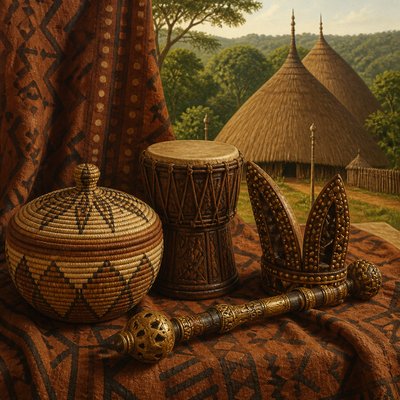
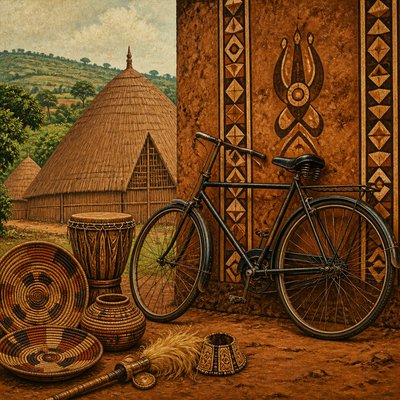
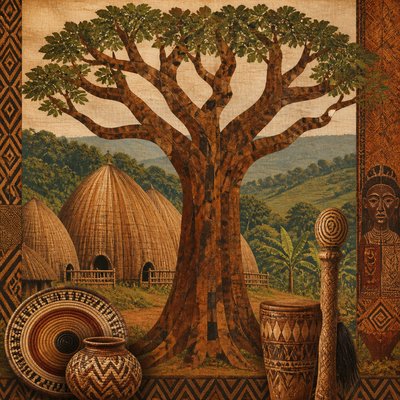
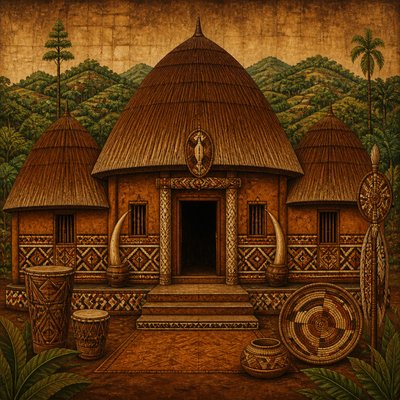
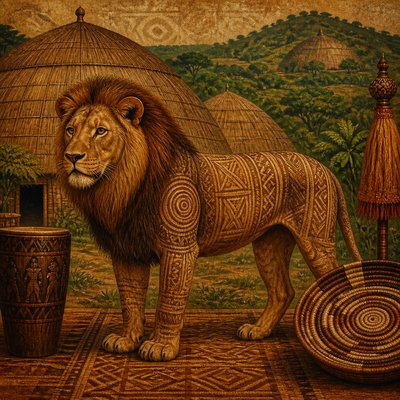
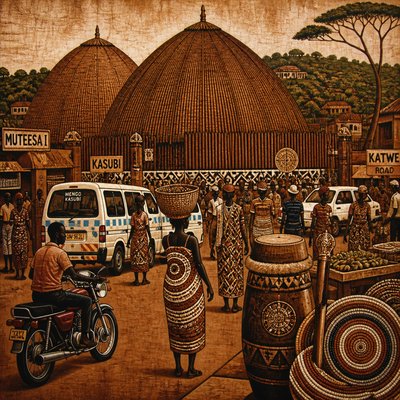
What is Ugandan Art Style?
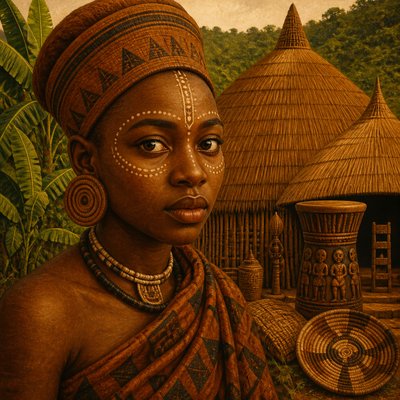
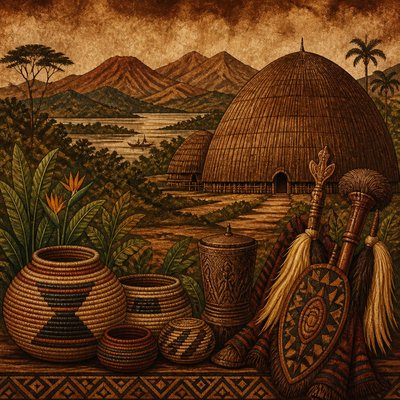
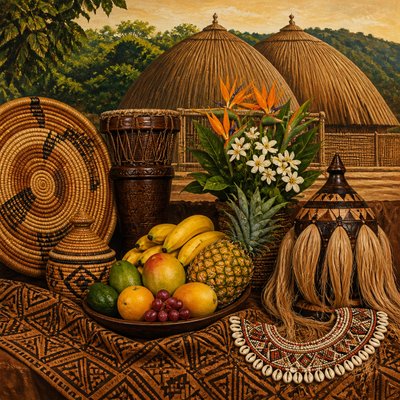
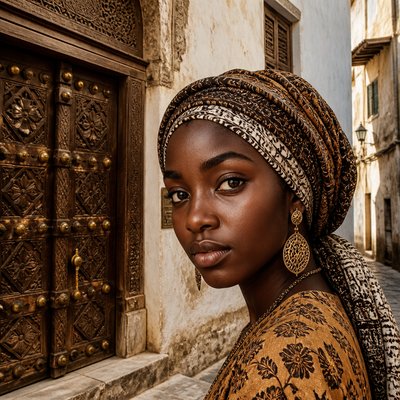
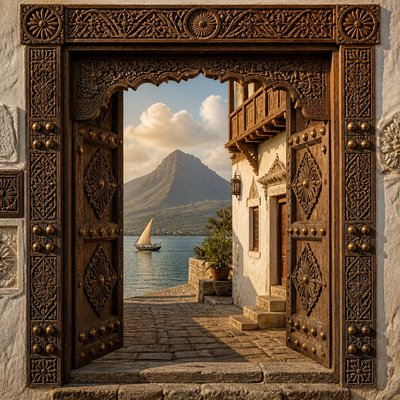
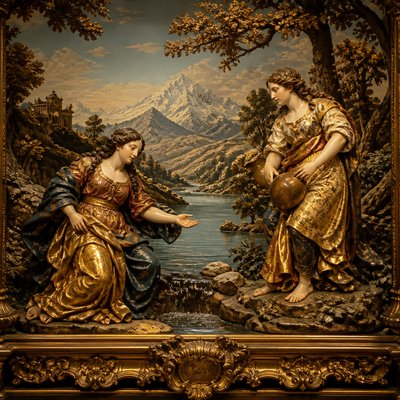
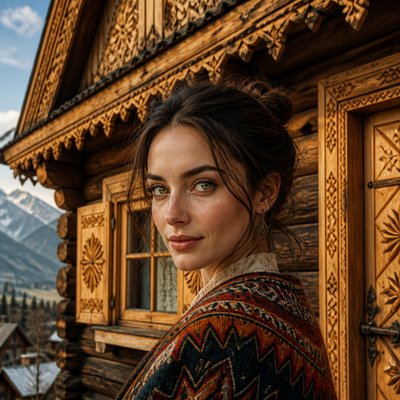
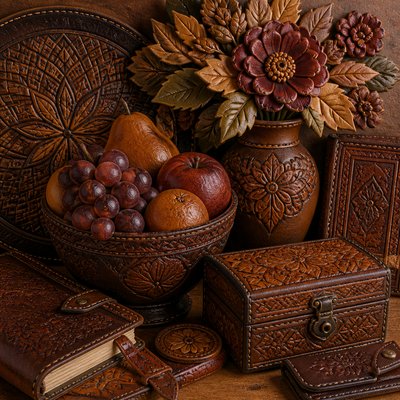
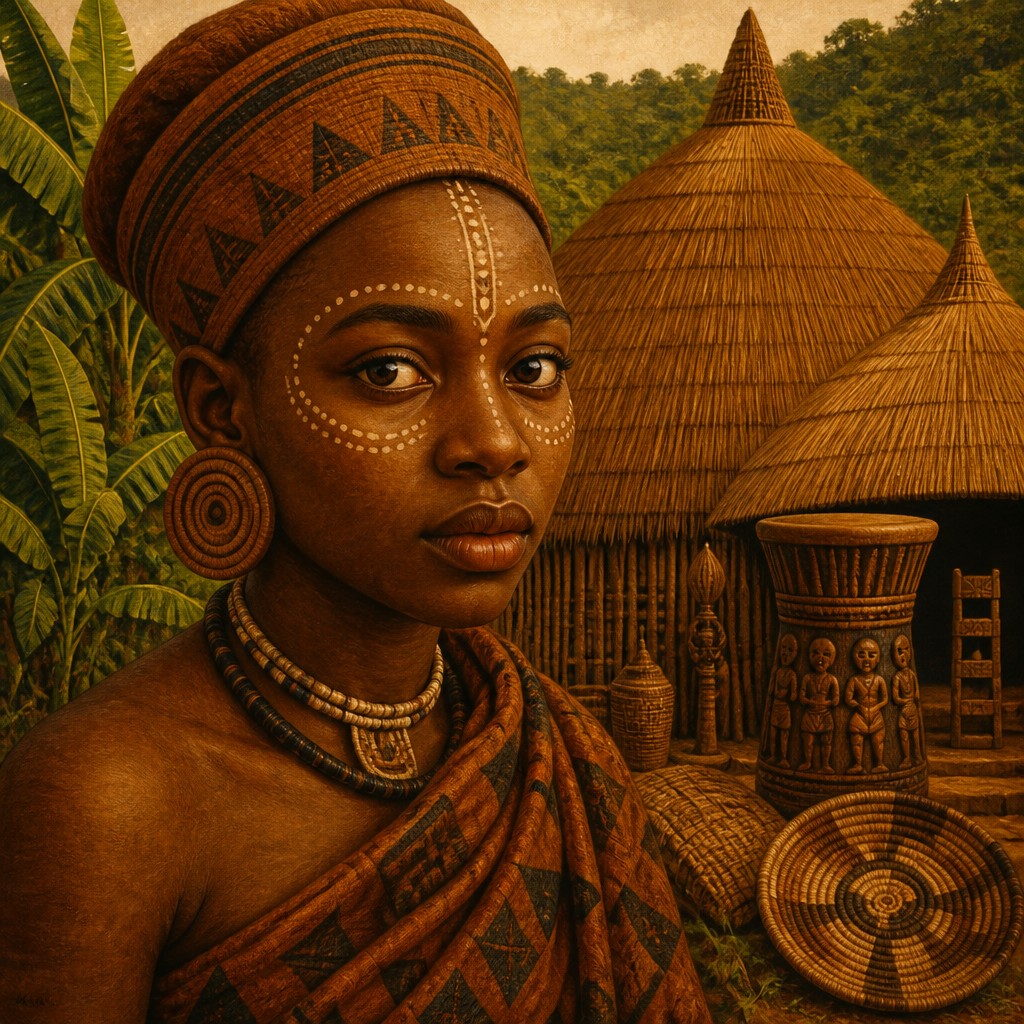
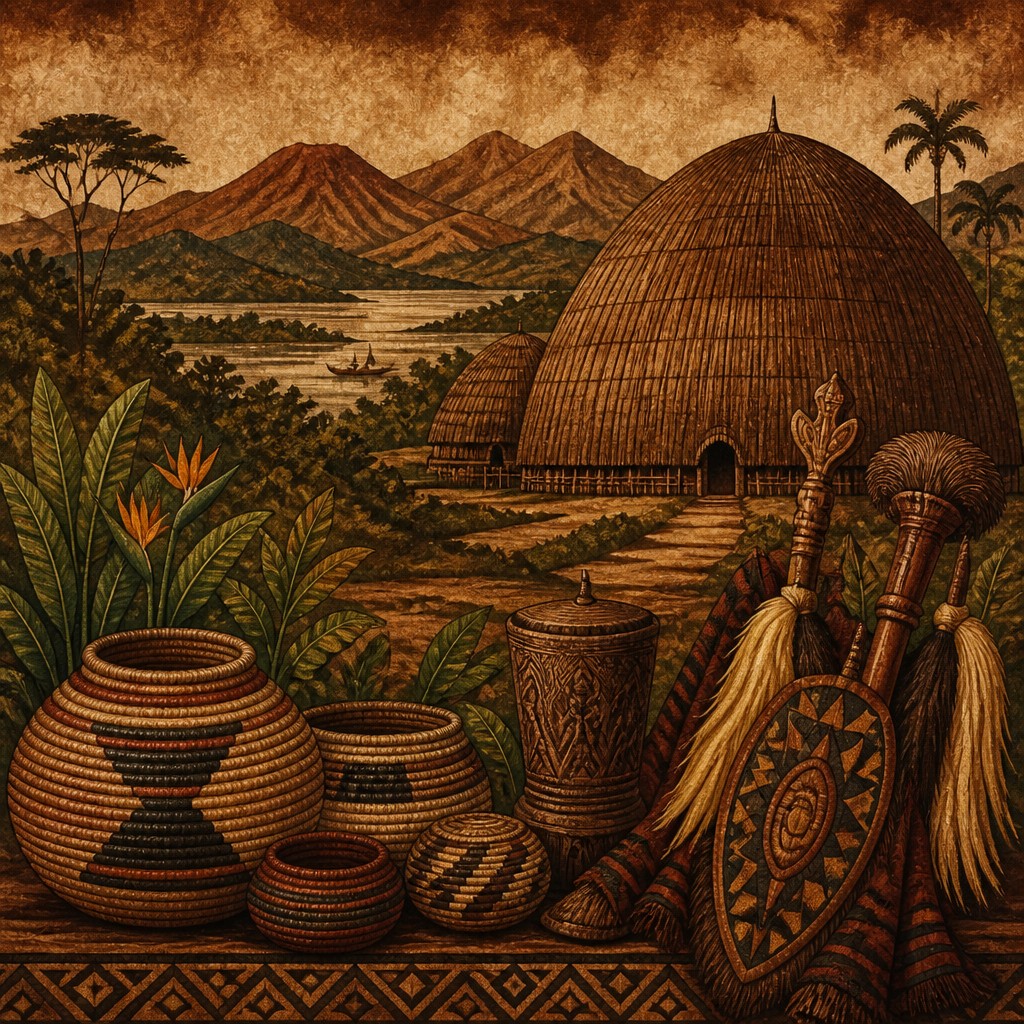
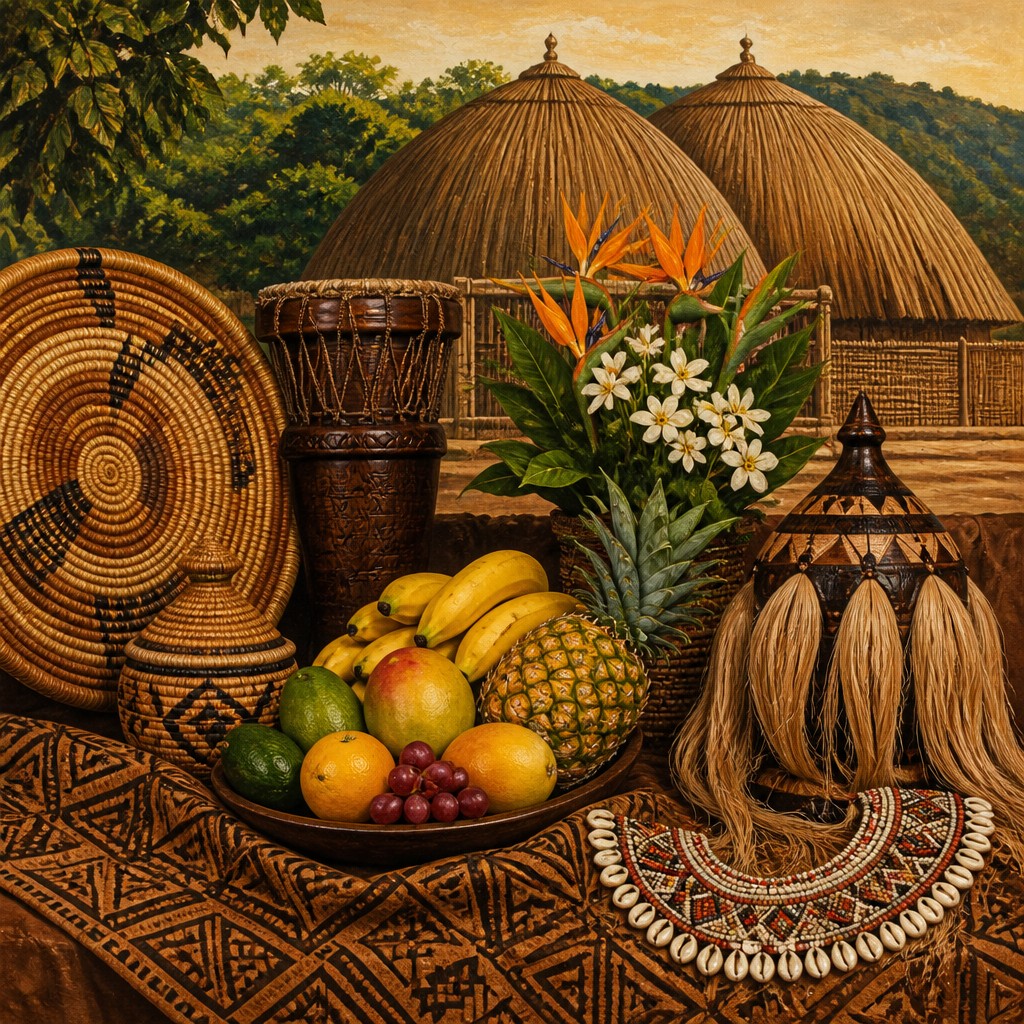
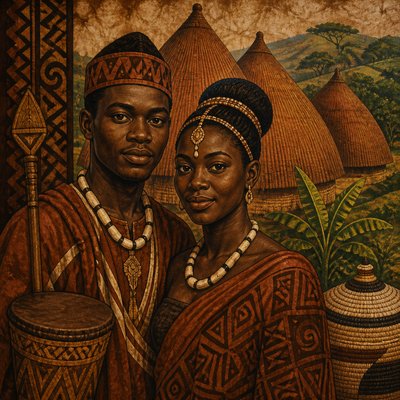
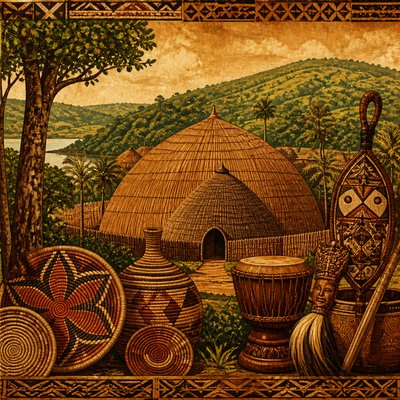
Ugandan Art Style is a contemporary, broadly defined visual language built from recognizable material and architectural traditions of Uganda. Its signature combination is rust-brown bark cloth, softly beaten organic texture, tall thatched domes associated with the Kasubi royal tombs, tightly coiled basketry, carved drums, ceremonial regalia, and luminous equatorial greenery.
The style looks tactile rather than polished. Muted russet, ochre, charcoal, cream, and leaf green create an earthy palette, while mottled grain, woven patterns, rough fibers, and hand-carved details suggest processes made by hand. It is best understood as a respectful contemporary synthesis rather than a single historical Ugandan art movement or a uniform national style.
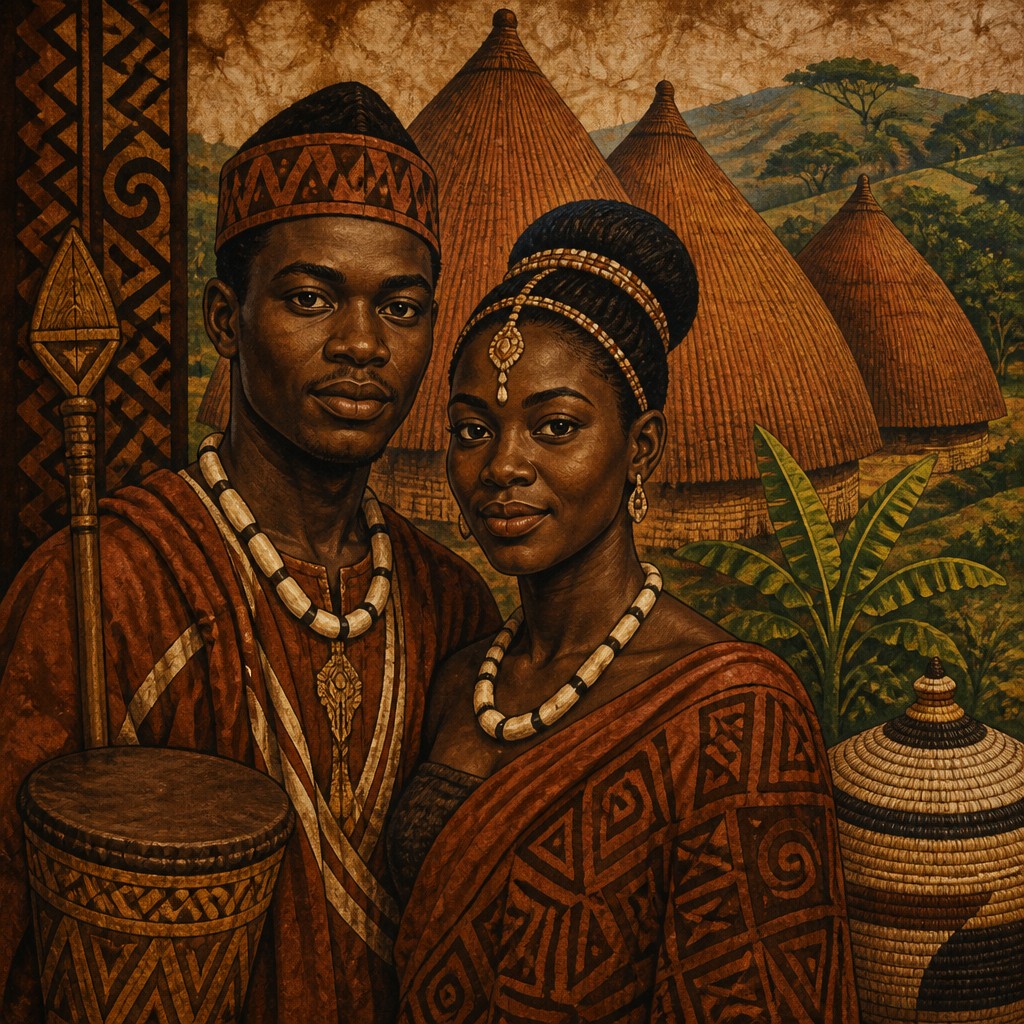
Try It On Your Photos
Upload any photo and convert it into Ugandan Art Style — drag the sliders to compare before and after.
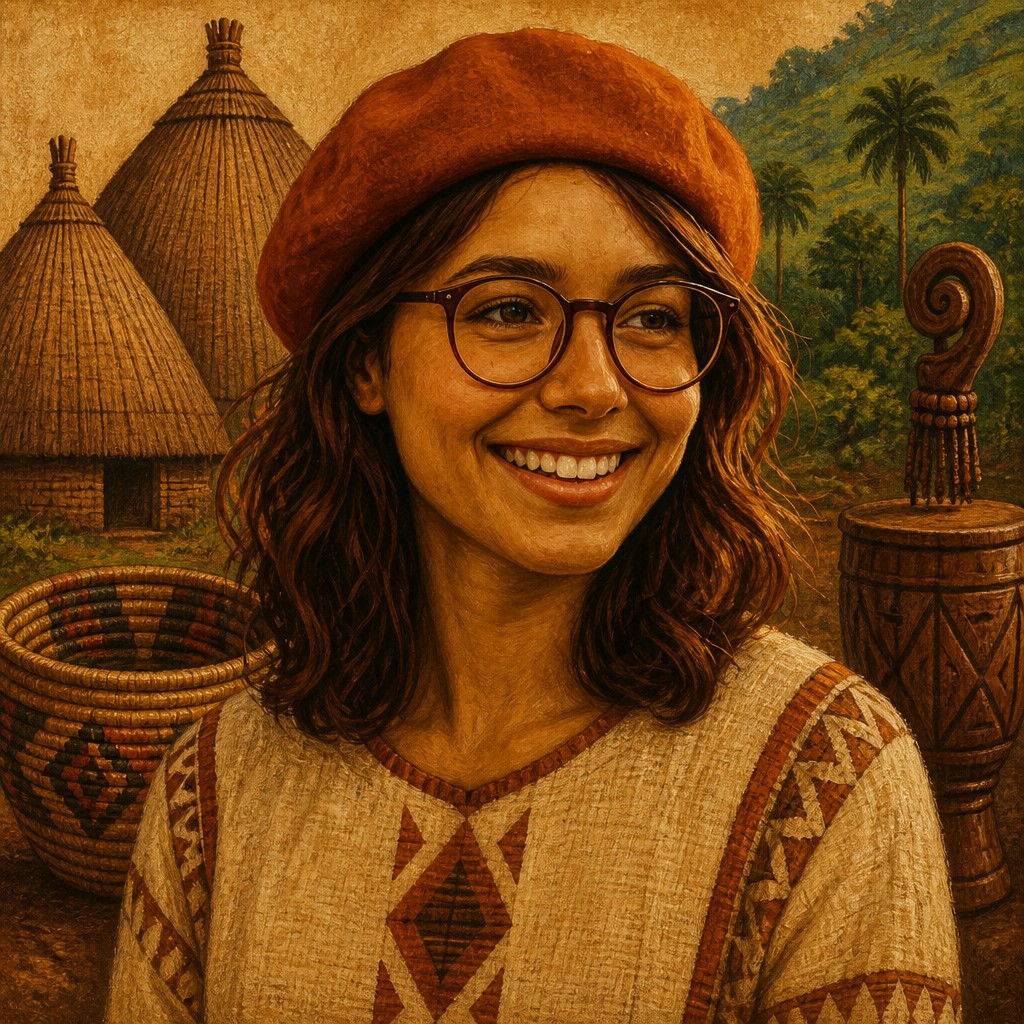

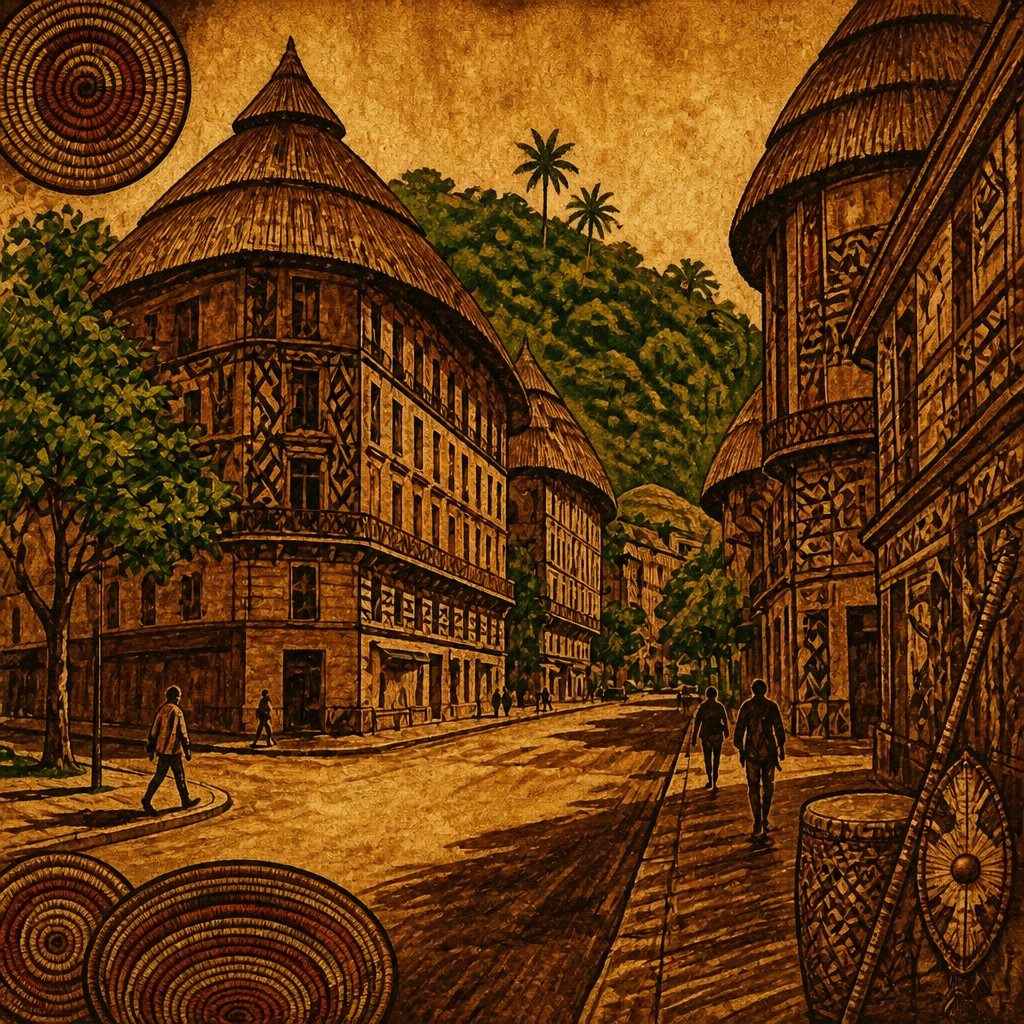

What Defines Ugandan Art Style
The signature details, up close
Bark-cloth surfaces
Rust, sienna, and umber fields are marked by soft hand-beaten fibers, irregular pores, and subtle tonal variation. The surface should feel breathable and organic rather than like flat painted paper.
Thatched royal domes
Tall conical or domed roofs with layered straw thatching provide a strong architectural silhouette. They may reference the Kasubi royal tombs, whose cultural and spiritual significance should be treated with care.
Coiled basketry
Concentric coils, spiral bands, and tightly repeated geometric patterns introduce rhythm and crafted precision. Warm tan, black, rust, and cream fibers are especially characteristic.
Carved drums and regalia
Ceremonial drums, staffs, shields, beads, woven ornaments, and carved wooden details add symbolic and tactile focal points. These objects should be depicted with contextual respect rather than as generic exotic decoration.
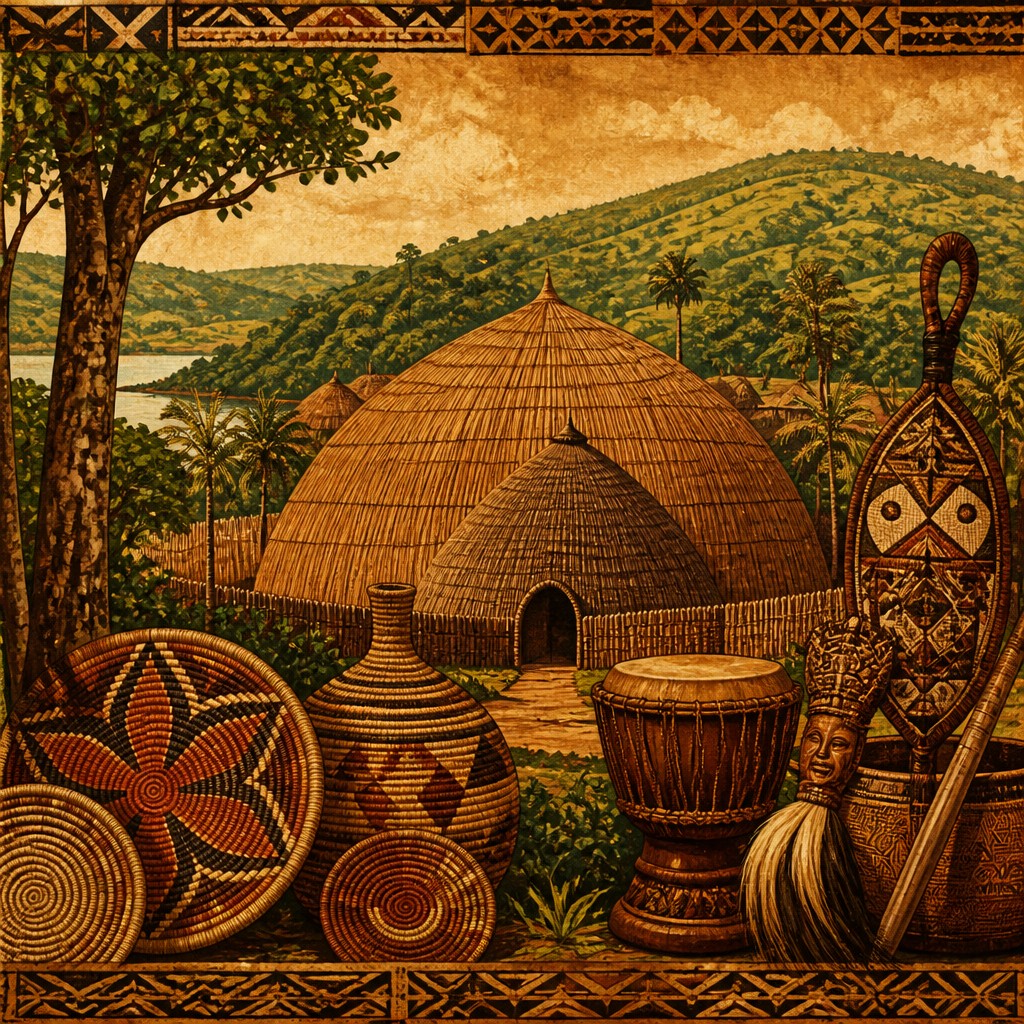
Equatorial light
Warm, humid daylight filters through lush vegetation and produces soft highlights on fibers, wood, and clay. Green hillside backgrounds balance the dominant earth tones.
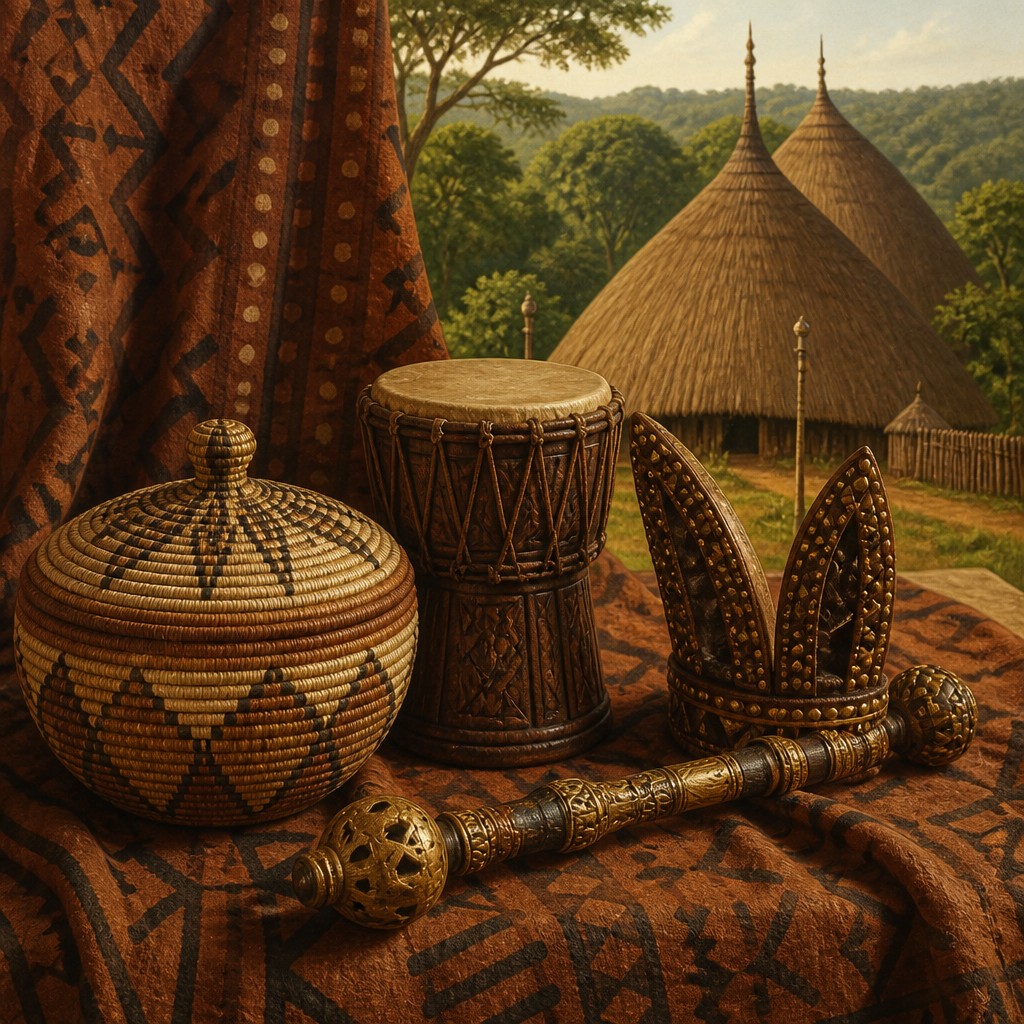
Handmade irregularity
Slight asymmetry, uneven edges, visible joins, and natural variation help convey handcraft. Excessively smooth gradients and sterile symmetry weaken the material character.
Ugandan Prompt Ideas
Start from an idea — each one opens the generator with the style ready to go. See all 40 Ugandan prompts →
How to Create Ugandan Art
Master the craft step by step — or skip straight to creating. Read the full guide →
- 1
Build a tactile ground
For traditional work, press or brush diluted earth pigments over handmade paper, fabric, or a bark-cloth-inspired surface, then add dry-brush fibers and mottled stains. Digitally, scan bark, raffia, woven mats, or handmade paper and use them as low-contrast texture layers.
- 2
Establish the architectural silhouette
Begin with one dominant thatched dome or conical roof, using overlapping straw strokes and a dark structural opening beneath. Keep the building grounded in a recognizable landscape instead of turning the roof into an isolated pattern.
- 3
Use a restrained palette
Start with bark brown, russet, ochre, charcoal, cream, and deep leaf green, reserving brighter color for beads, cloth accents, or flowers. Warm ambient light should unify the materials.
- 4
Layer craft patterns carefully
Add basket coils, incised wood marks, bead rows, and drum details in focused areas so the image remains legible. Vary scale and spacing to avoid making every surface look mechanically patterned.
- 5
Write a material-specific prompt
For prompt-based generation, name the subject first, then specify bark-cloth grain, layered thatch, coiled basketry, warm earth pigments, soft equatorial light, and handmade irregularity. Ask for culturally grounded architectural details and avoid generic phrases such as 'tribal' or 'primitive.'
The Story
History & Origins of Ugandan
This label draws on several Ugandan cultural traditions rather than describing a formally named historical school. Bark cloth has long been produced in the Great Lakes region from the inner bark of the mutuba tree, especially among communities in central Uganda, where repeated beating creates a supple, naturally textured sheet. Basketry, pottery, drums, beadwork, carved objects, and royal regalia likewise belong to distinct local traditions with their own uses and meanings.
The tall thatched forms commonly referenced in this aesthetic evoke the domed structures of the Kasubi royal tombs in Kampala, a major site of Ganda cultural heritage. Contemporary illustration, craft-inspired design, photography, and digital image-making often combine these references into a unified visual vocabulary, but such combinations should not be mistaken for a single traditional style practiced throughout Uganda.
Influences: The aesthetic is related to East African material culture, Great Lakes bark-cloth production, Ganda architectural heritage, African basketry and textile design, vernacular architecture, craft-based illustration, and contemporary cultural photography. It also shares methods with textured mixed-media painting, natural-history illustration, editorial collage, and digital surface design, while remaining distinct from broad labels such as Afrofuturism, African modernism, or generic tribal art.
Frequently Asked Questions
What defines Ugandan Art Style?
It is defined by a tactile bark-cloth surface, warm russet and earth colors, thatched domed architecture, coiled basketry, carved drums or regalia, and lush equatorial light. The label describes a contemporary synthesis of Ugandan visual references, not one officially codified historical movement.
Is Ugandan Art Style a traditional art movement?
No. The phrase is best treated as a modern descriptive or digital-art category. Its imagery draws from distinct Ugandan traditions, including bark-cloth making, basketry, ceremonial objects, and Ganda architectural heritage, each of which has its own history and cultural context.
What is bark cloth in Uganda?
Bark cloth is made from the inner bark of trees such as the mutuba, or Ficus natalensis. The bark is stripped and repeatedly beaten until it forms a flexible sheet with a naturally fibrous, mottled texture; it is used for clothing, ceremonial purposes, craft, and contemporary design.
How is this style different from generic African art?
It focuses on specific material and architectural cues associated with Uganda, especially central Ugandan bark cloth, coiled basketry, equatorial landscapes, and domed thatched heritage structures. Generic labels erase regional distinctions, so accurate descriptions should identify the particular tradition being referenced.
How can I make an image in this style without making it look artificial?
Use uneven fibers, imperfect joins, restrained color, soft directional light, and a clear hierarchy of materials. Combine one or two strong cultural references with a specific subject rather than covering every surface in repetitive patterns.
Where can this visual language be used?
It can suit editorial illustration, cultural heritage interpretation, packaging, textile and surface design, architectural visualization, portrait backgrounds, and mixed-media artwork. Sacred buildings, ceremonial objects, and regalia should be presented with accurate context and respect, especially when used for commercial or fictional imagery.
Create your first Ugandan artwork
Describe anything — or upload a photo — and see it in Ugandan Art Style in seconds.
Related Styles
Discover similar art styles