Turkmen Art Style
Explore Turkmen Art Style: deep-red carpet guls, black geometry, Parthian ruins, Khorezmian brickwork, and desert-gold light.
Instantly rendered in Turkmen — or transform a photo
Turkmen Gallery
Tap any artwork to explore it
What is Turkmen Art Style?
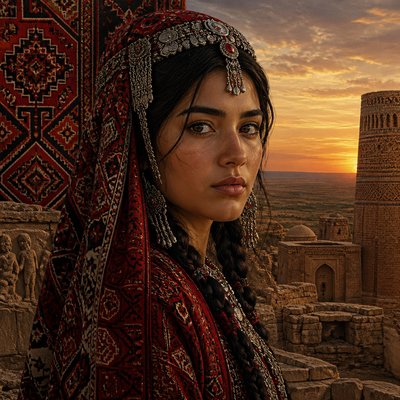
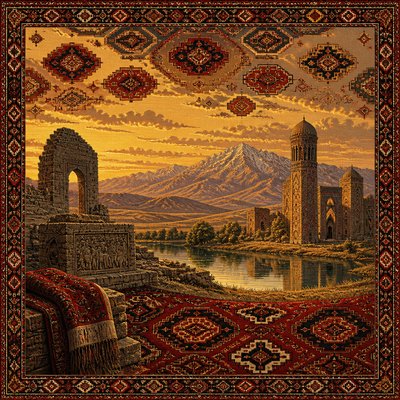
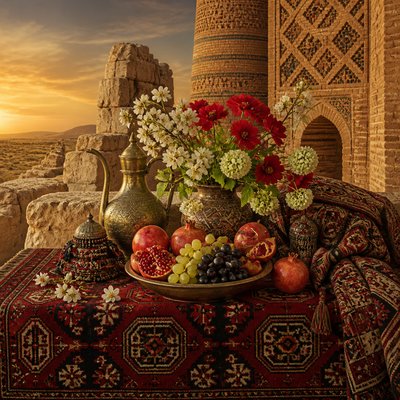
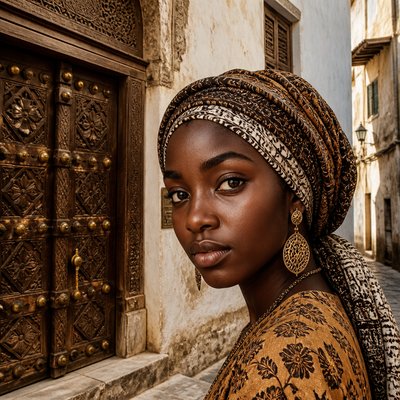
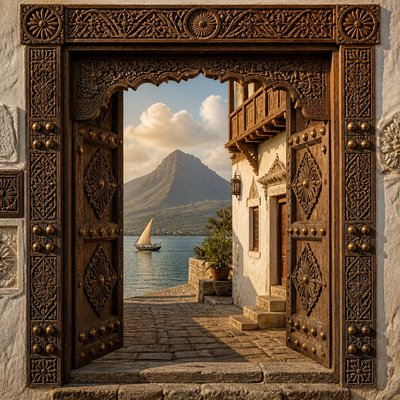
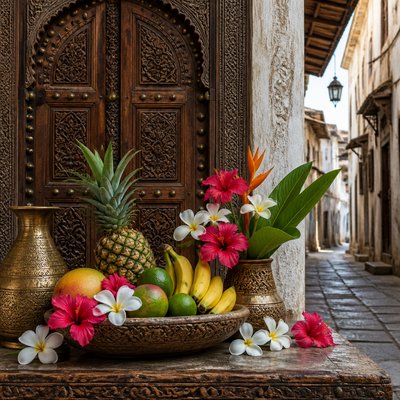
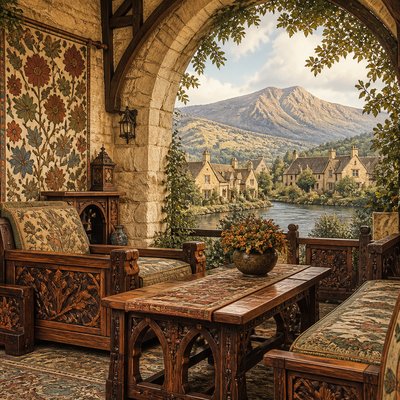
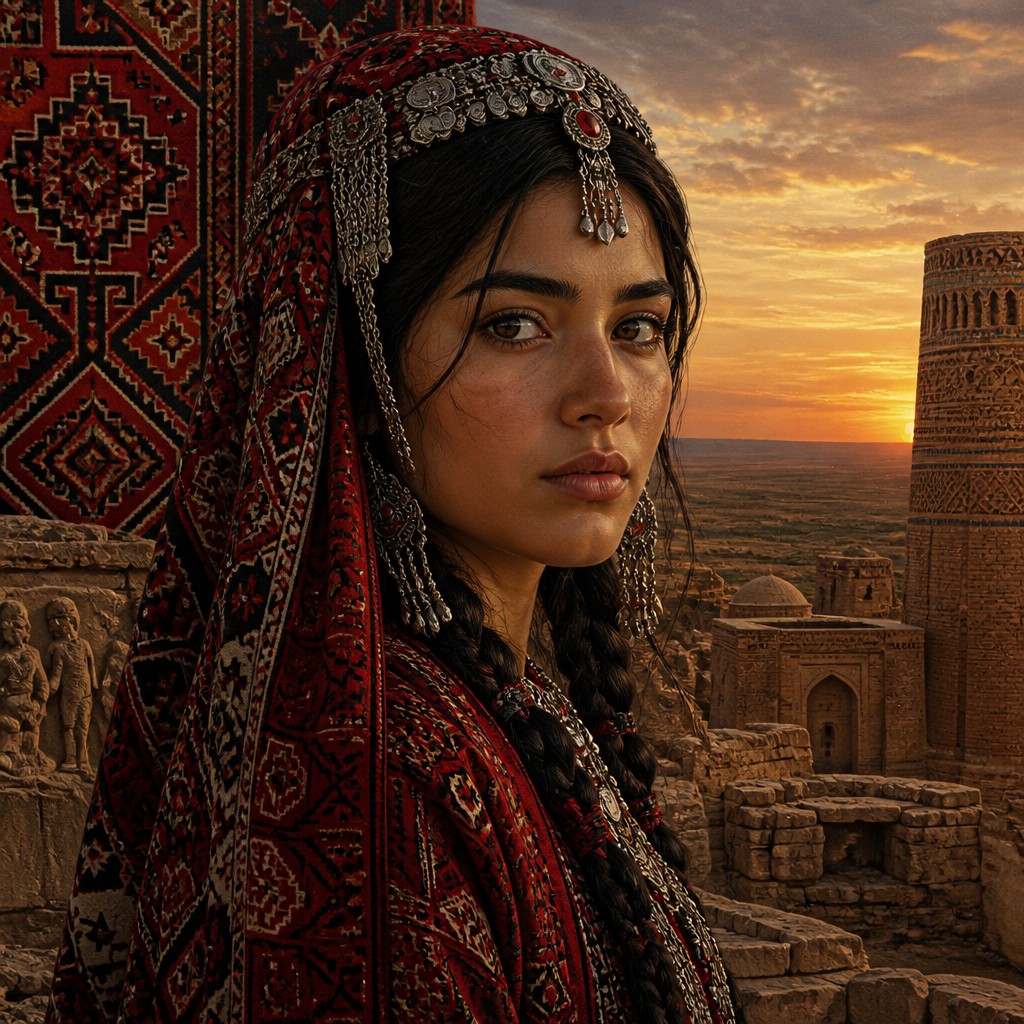
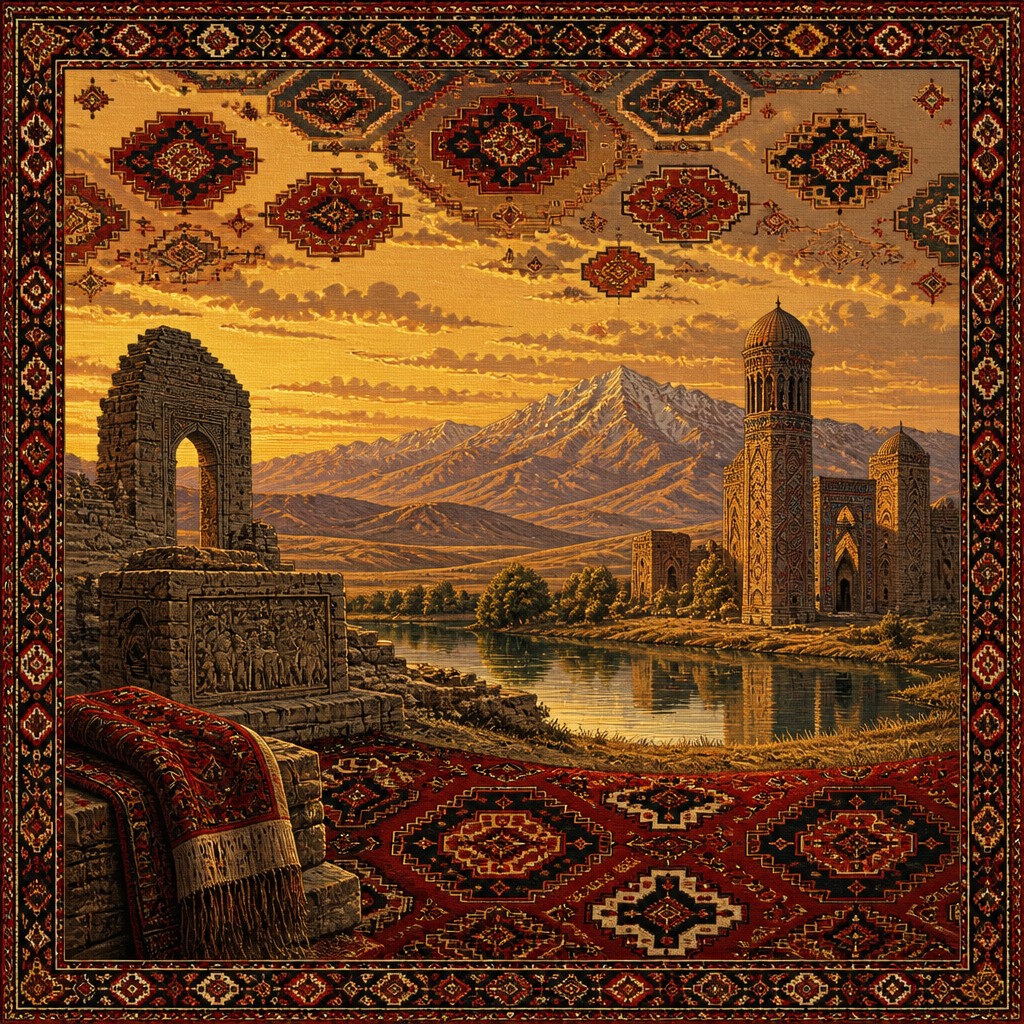
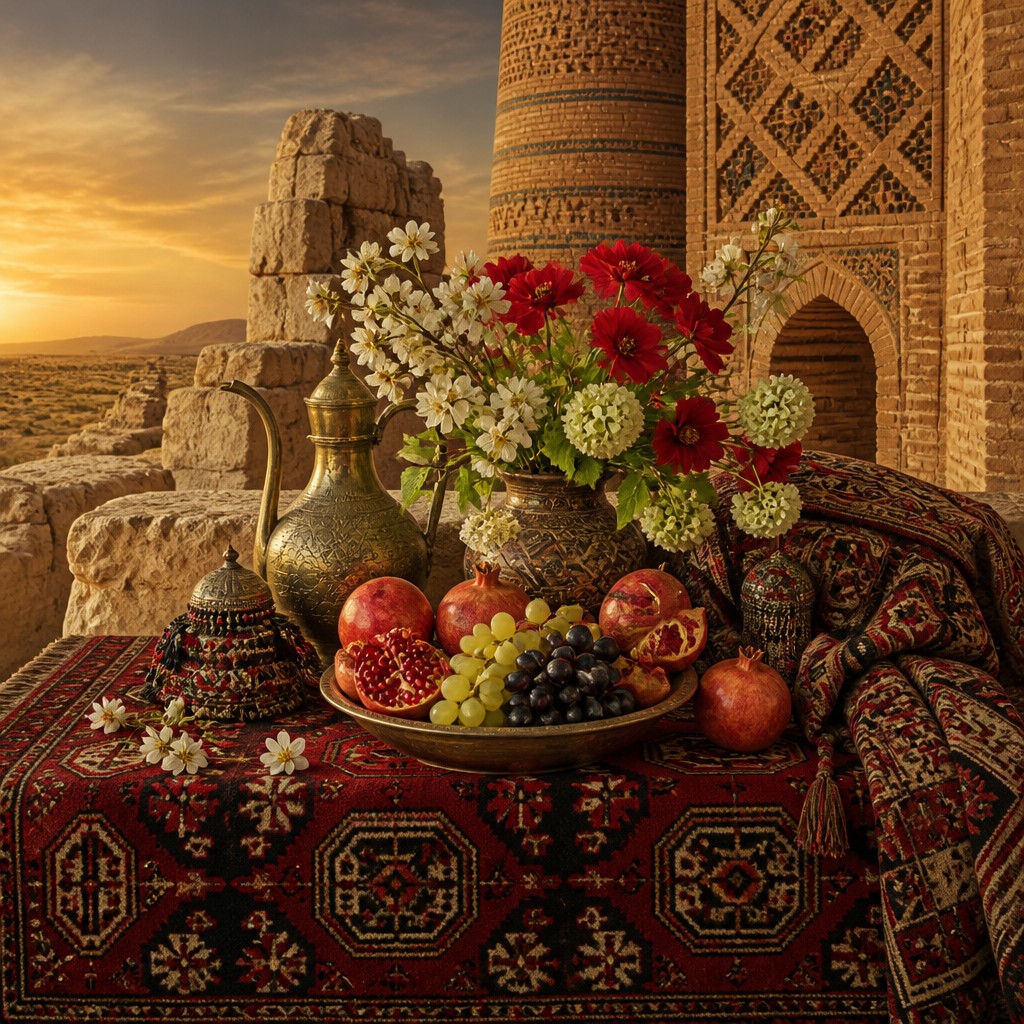
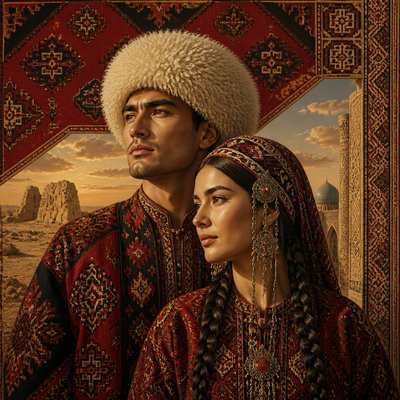
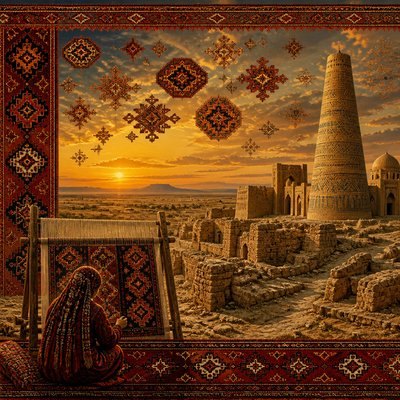
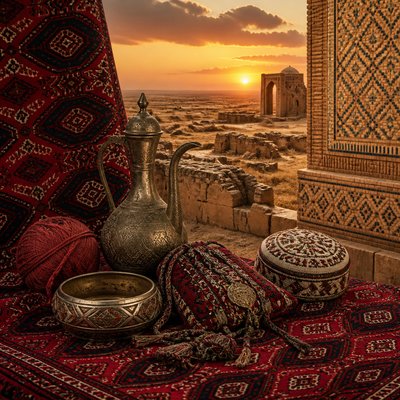
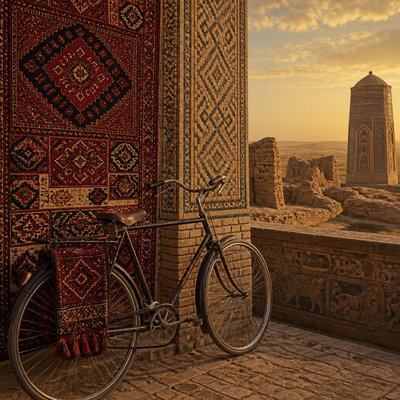
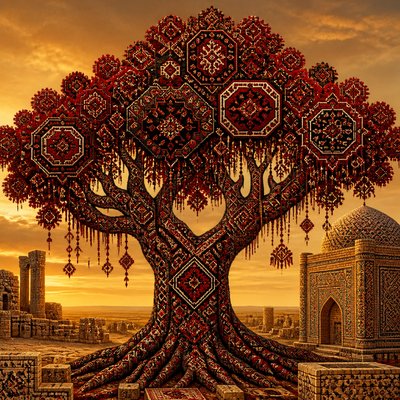
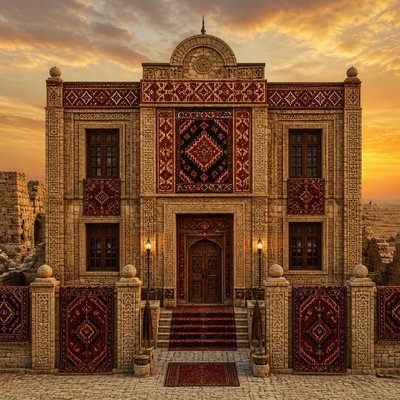
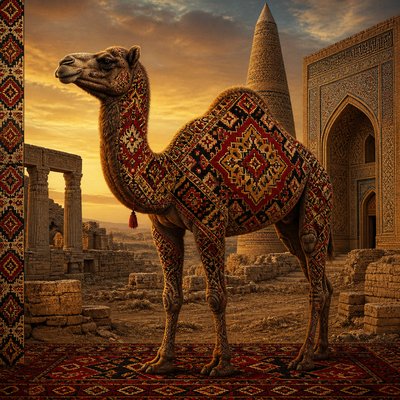
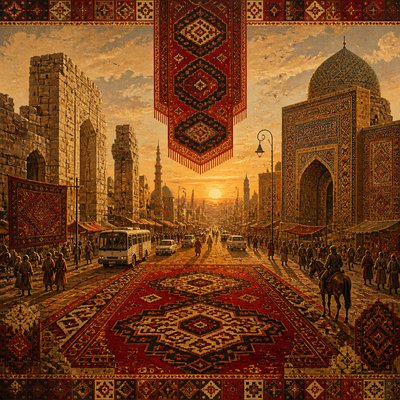
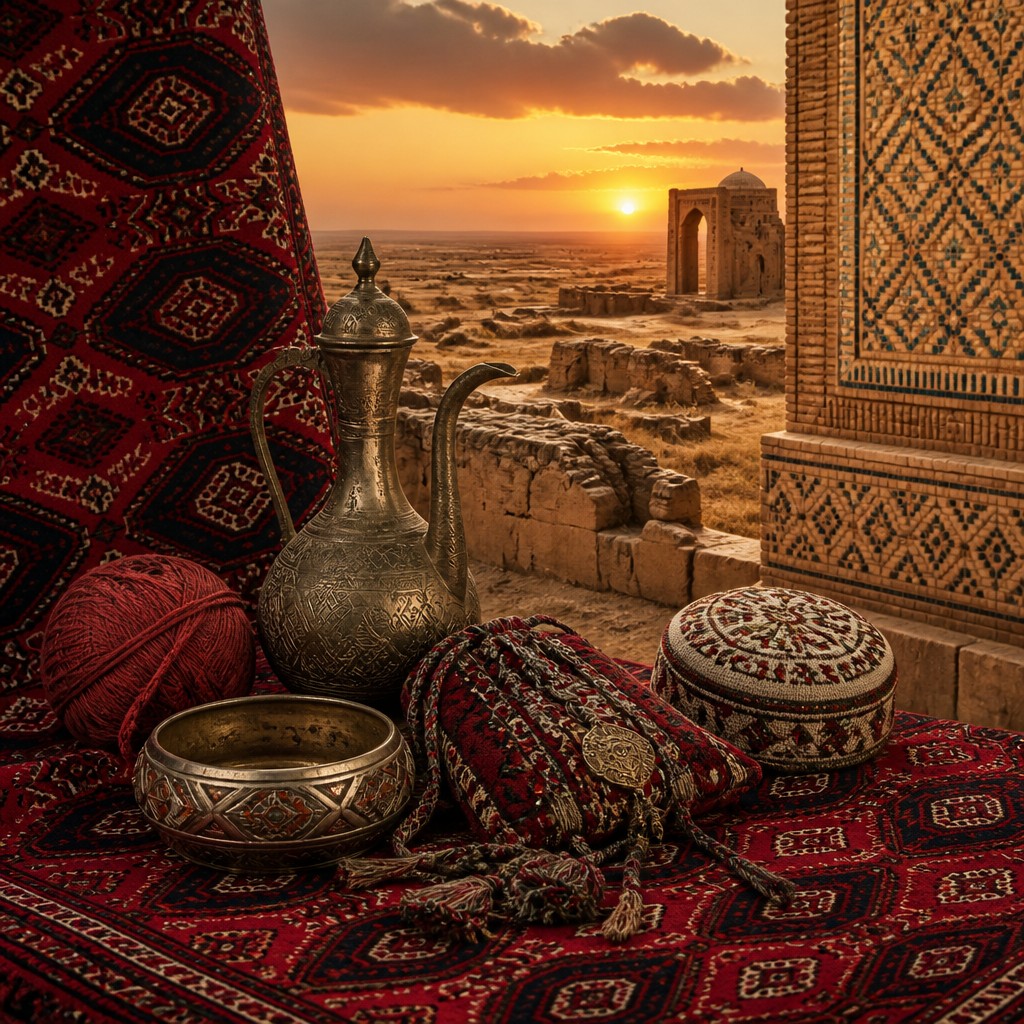
Turkmen Art Style is a contemporary visual synthesis inspired by Turkmen carpet weaving, Central Asian architectural ornament, and the archaeological landscapes of present-day Turkmenistan. Its central image is a field of densely repeated geometric guls in deep madder red, black, rust, cream, and muted gold, often set against weathered masonry and a broad desert horizon.
The style looks structured, tactile, and monumentally composed. Carpet geometry supplies its rhythm and symmetry; the ruins of ancient Nisa and the brick architecture associated with medieval Konye-Urgench contribute stepped arches, patterned surfaces, and eroded mineral textures. Warm dusk illumination unifies these elements with a restrained palette of red earth, fired brick, shadowed black, and desert gold.
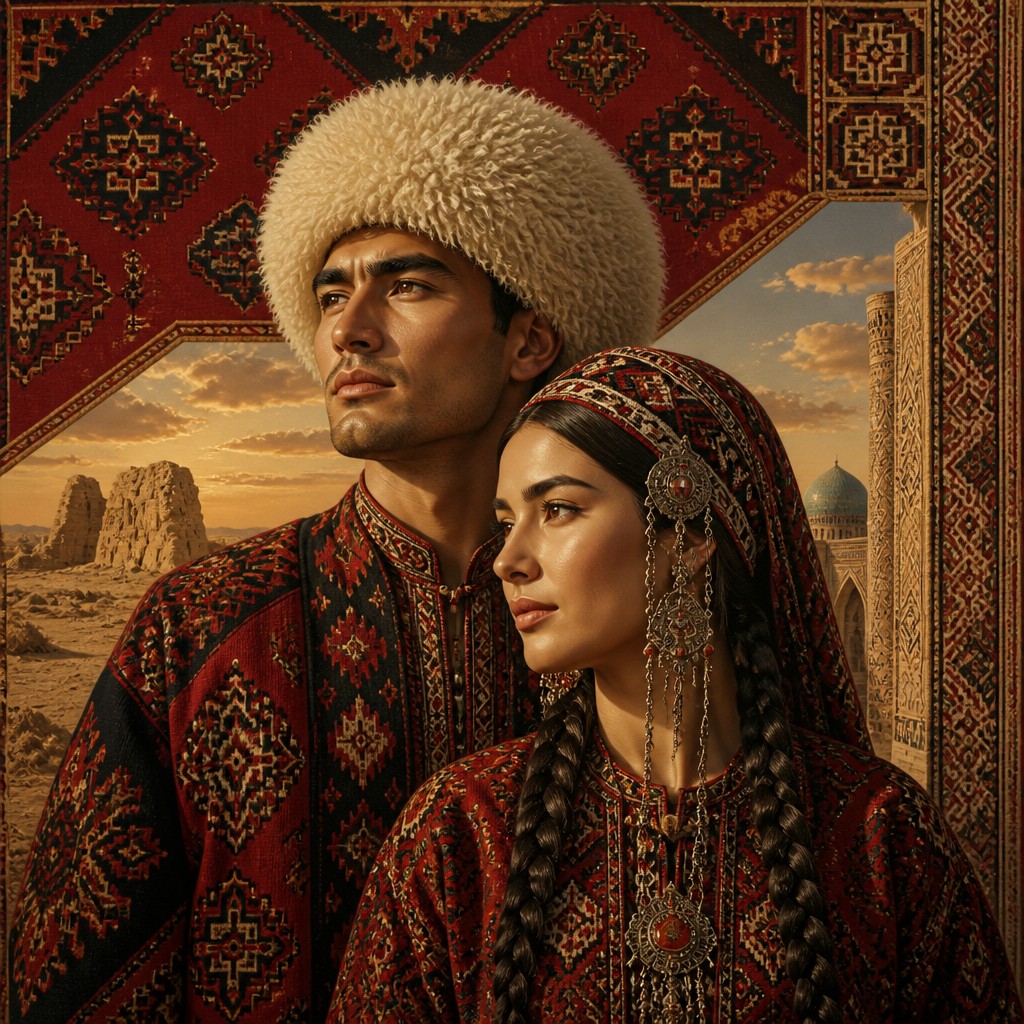
Try It On Your Photos
Upload any photo and convert it into Turkmen Art Style — drag the sliders to compare before and after.
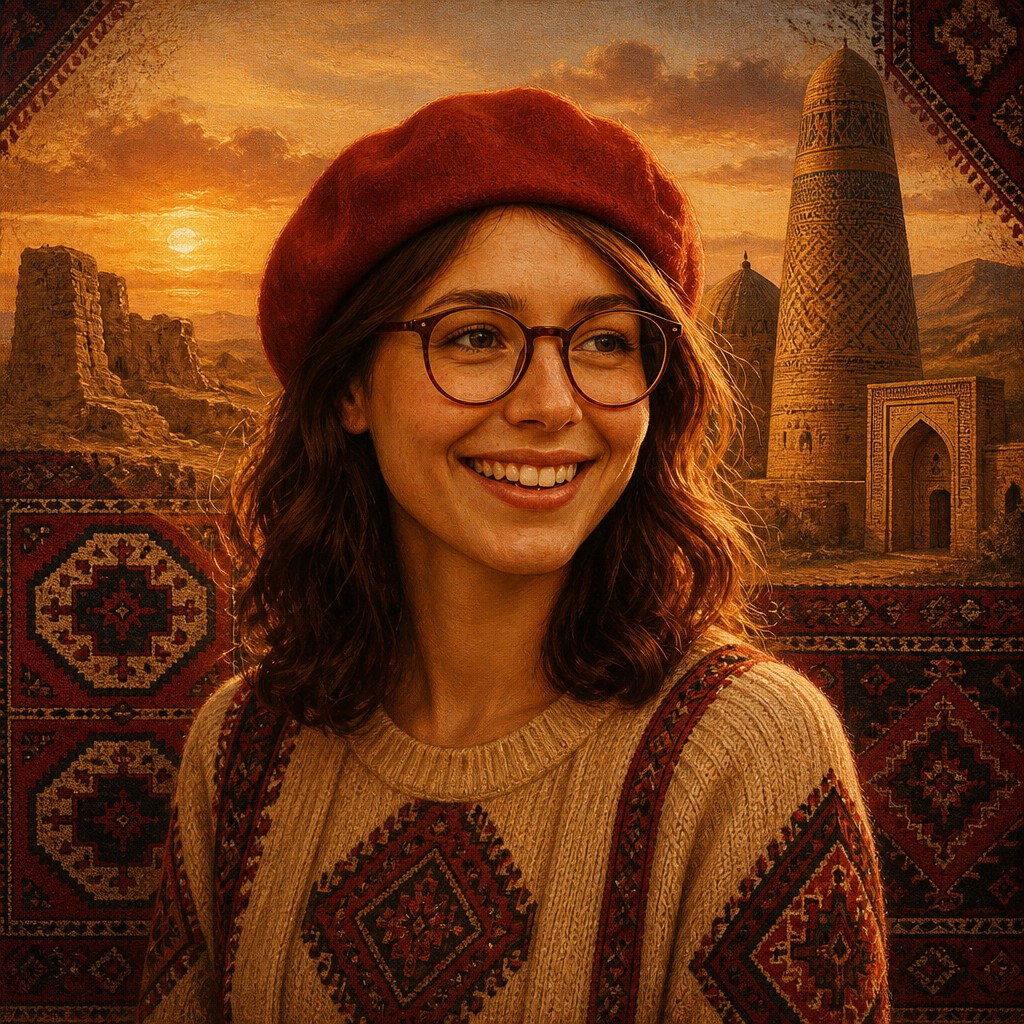

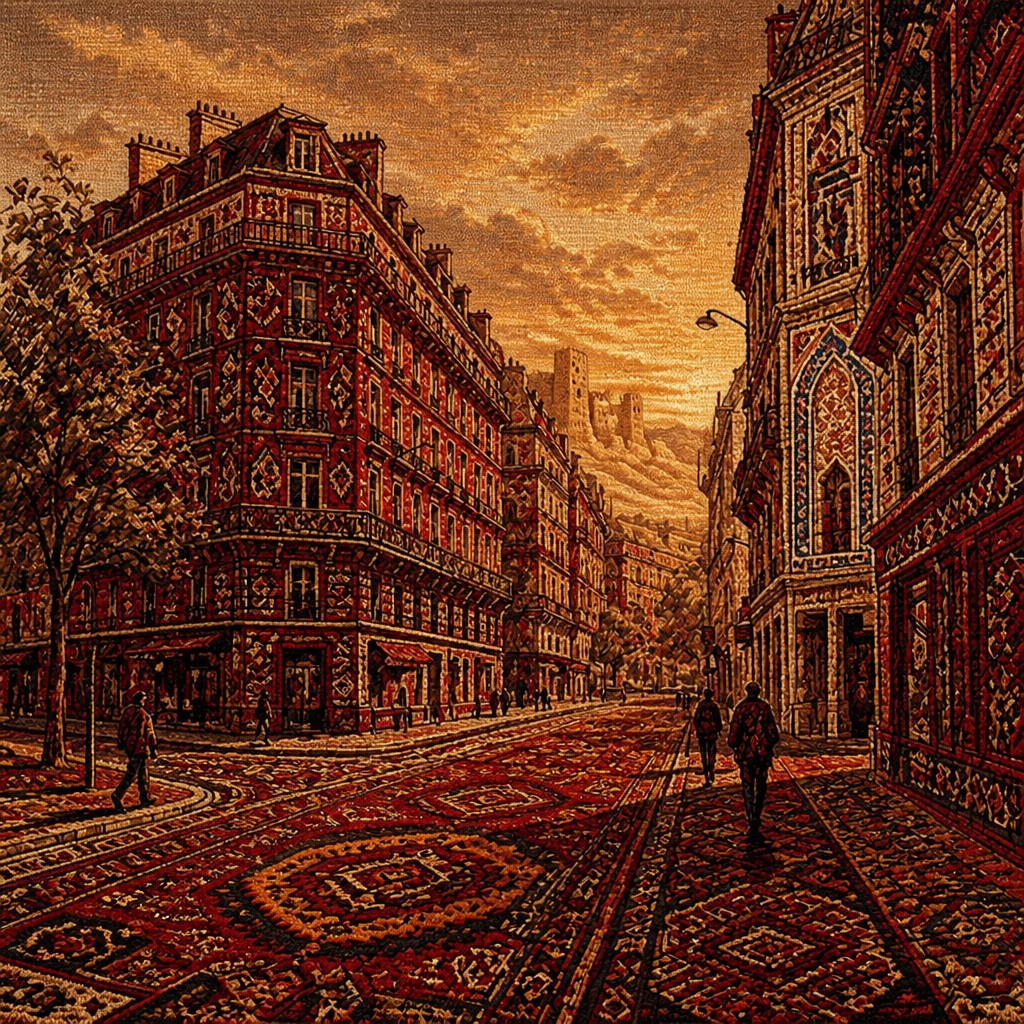

What Defines Turkmen Art Style
The signature details, up close
Deep madder-red ground
Rich red forms the dominant visual field, recalling natural carpet dyes and sun-baked Central Asian earth. It is usually balanced with black, ivory, rust, and subdued ochre rather than bright modern colors.
Geometric carpet guls
Large repeated guls and smaller angular motifs organize the image into a woven-looking rhythm. Their symmetry may be precise, but slight irregularity helps preserve the impression of handcraft.
Black linear structure
Dark outlines, stepped borders, hooks, diamonds, and interlocking bands define the motifs with graphic clarity. Black also creates a strong visual bridge between patterned textiles and shadowed ruins.
Parthian and Khorezmian masonry
Weathered brick, earthen walls, vaulted openings, and fragmentary monumental forms evoke Nisa and the architectural heritage of Konye-Urgench. Surfaces should appear layered, eroded, and materially believable.
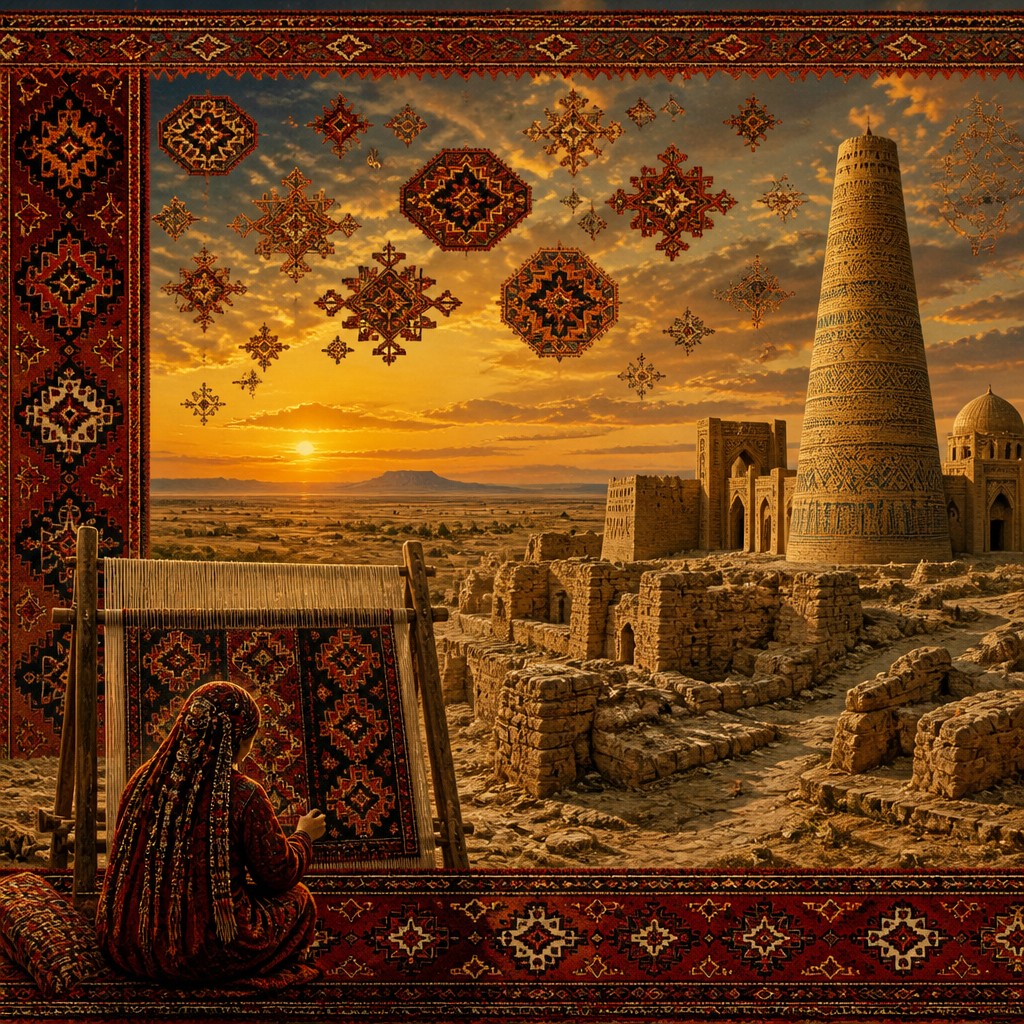
Desert-gold atmosphere
Low sidelight at dusk creates long shadows and a warm horizon glow. Gold is atmospheric rather than ornamental alone, separating distant ruins from the red-black pattern field.
Flat pattern against spatial depth
The style often contrasts nearly planar carpet ornament with deep archaeological space. This fusion gives the image a poster-like silhouette while retaining landscape, masonry, and textile texture.
Turkmen Prompt Ideas
Start from an idea — each one opens the generator with the style ready to go. See all 40 Turkmen prompts →
How to Create Turkmen Art
Master the craft step by step — or skip straight to creating. Read the full guide →
- 1
Build a limited palette
Start with madder red, charcoal black, aged ivory, brick orange, and desert gold. Keep saturation controlled and reserve the brightest gold for dusk light or selected ornament.
- 2
Design the pattern system first
Create a central gul, secondary diamonds or hooked forms, and one or two enclosing borders before adding imagery. In traditional work, use repeated blocks and careful alignment; digitally, construct motifs as modular vector or painted units.
- 3
Add tactile material
For textile passages, use irregular fibers, compressed pile, softened edges, and small variations in dye. For ruins, layer chipped brick, dust, mortar seams, cracks, and softened corners instead of relying on a single texture overlay.
- 4
Balance ornament with architecture
Place the strongest geometric field in the foreground or framing border, then simplify motifs as they recede into the scene. This keeps the composition legible while allowing Nisa-inspired ruins or medieval brick forms to provide scale.
- 5
Use directional dusk light
Illuminate the scene from a low side angle so masonry relief and woven irregularities cast readable shadows. A hazy gold horizon can soften distant forms without flattening the red and black foreground.
- 6
Write precise digital prompts
Specify the subject, carpet geometry, masonry reference, palette, lighting, and material qualities separately. For image-to-image work, preserve the source silhouette while asking for restrained geometric ornament, weathered brick texture, and a deep-red desert-toned treatment.
The Story
History & Origins of Turkmen
This is not a formally documented historical movement but an invented, contemporary style built from several genuine Turkmen and Central Asian visual traditions. Its strongest lineage is the regional carpet tradition, in which handwoven rugs use repeated medallions, bordered fields, stylized botanical forms, and highly controlled geometric structures. The palette and motifs vary among weaving communities and should not be treated as a single uniform national design system.
The architectural component draws on the fortified and ceremonial remains of Parthian Nisa, as well as the monumental brick ornament and Islamic architectural heritage of medieval Konye-Urgench. By combining woven pattern, archaeological surface, and desert light, the style transforms distinct historical references into a unified image language suited to illustration, architecture, textiles, and digital composition.
Influences: The style is related to Turkmen carpet weaving, Central Asian geometric ornament, Parthian archaeological architecture, medieval Khorezmian brick construction, and orientalist landscape illustration only in its broad interest in ruins and atmosphere. It also shares methods with textile design, decorative arts, architectural drawing, poster composition, and contemporary digital collage. Its defining distinction is the deliberate merging of woven pattern, archaeological masonry, and desert twilight rather than adherence to one historical school.
Frequently Asked Questions
What defines Turkmen Art Style?
It is defined by deep madder-red carpet geometry, black linear ornament, weathered Central Asian masonry, and warm desert-gold light. The style combines flat, repeated textile pattern with the depth and erosion of archaeological architecture.
Is Turkmen Art Style a historical art movement?
No. In this usage, it is a contemporary synthesis rather than a documented historical movement with a fixed period or membership. It draws respectfully on real Turkmen weaving traditions, Parthian Nisa, and the architectural heritage of Konye-Urgench.
How is it different from generic Persian or Orientalist art?
Its emphasis is specifically on Turkmen carpet structures, including gul-based geometry and a red-black woven palette, combined with Central Asian brick ruins. It should not be reduced to a broad exoticized desert scene or to the distinct traditions of Persian miniature painting.
Can this style be used for portraits or contemporary subjects?
Yes. Portraits, vehicles, interiors, and urban scenes can be framed with carpet borders or rendered with angular textile-inspired planes. Keep the subject recognizable and use the pattern as structure, clothing detail, backdrop, or selective surface ornament.
What materials work well for making it traditionally?
Wool, natural-dye-inspired pigments, gouache, tempera, ink, relief print, and architectural watercolor are suitable choices. Layered opaque color, repeated stencils, block-like marks, and dry-brush abrasion can suggest both woven fibers and aged brick.
How should prompts be written for this visual style?
Name the subject first, then specify deep red and black carpet geometry, weathered brick or ruin architecture, tactile materials, and low desert-gold light. Mention symmetry, repeated guls, eroded surfaces, and a restrained palette when those qualities are important.
Create your first Turkmen artwork
Describe anything — or upload a photo — and see it in Turkmen Art Style in seconds.
Related Styles
Discover similar art styles