Topiary Art Style
Explore topiary art: precise living hedge sculptures shaped into animals, figures, and geometry within formal garden settings.
Instantly rendered in Topiary — or transform a photo
Topiary Gallery
Tap any artwork to explore it

What is Topiary Art Style?
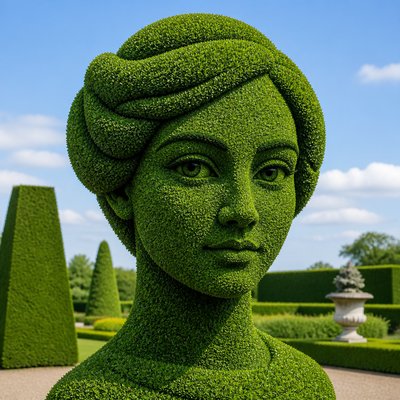
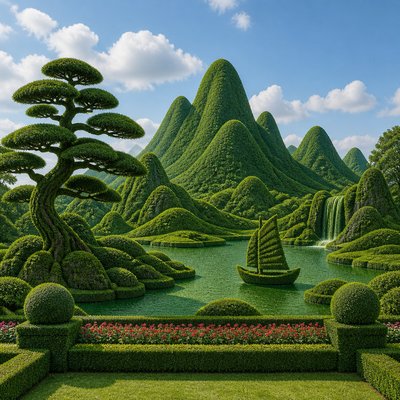
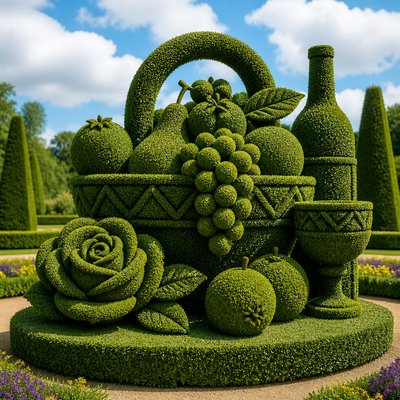
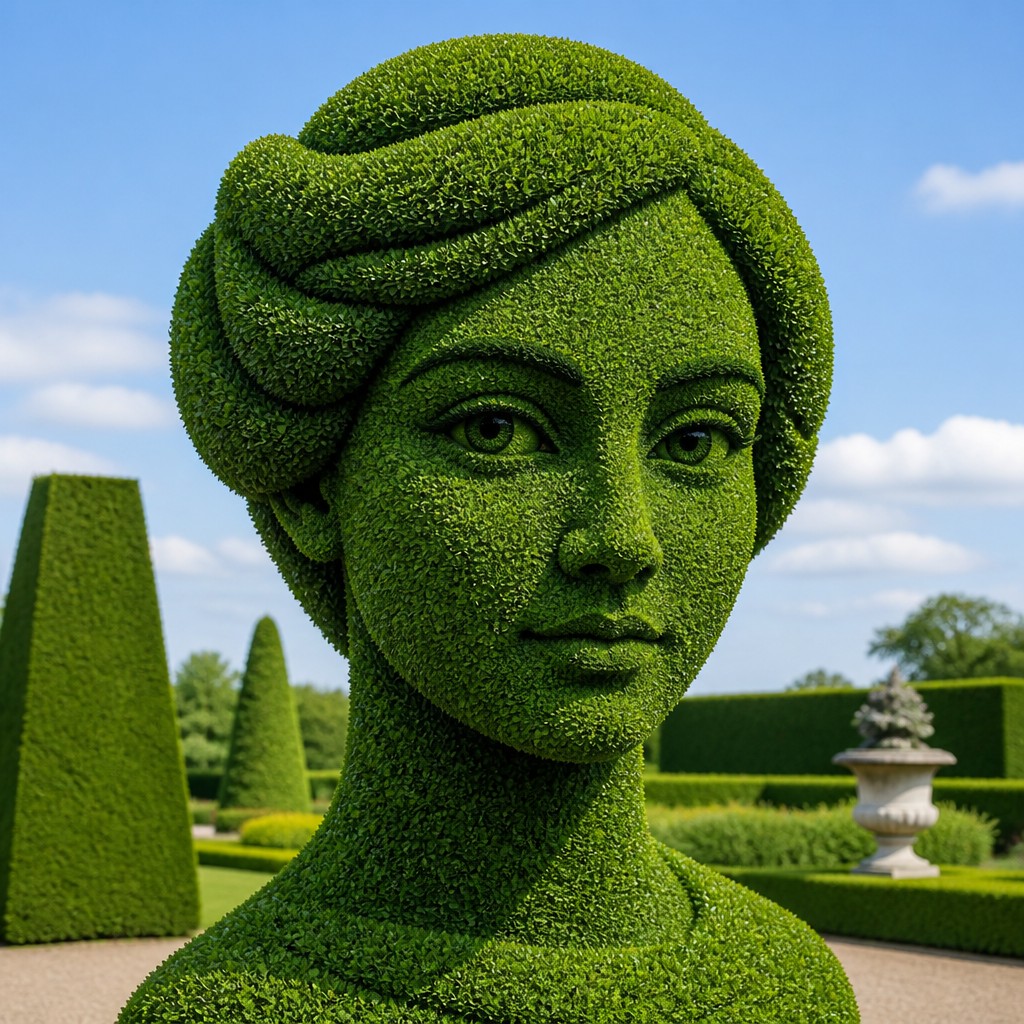
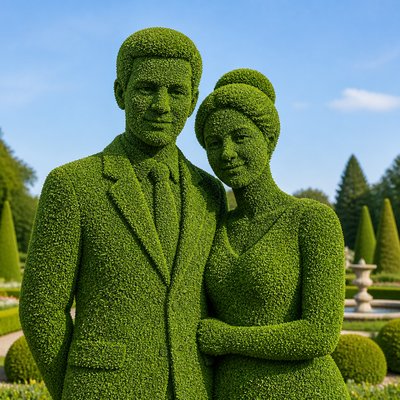
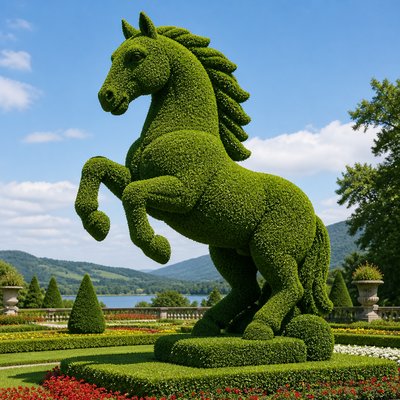
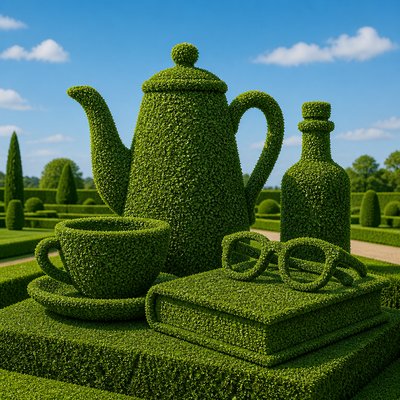
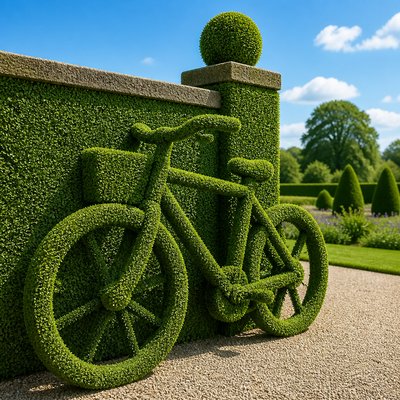
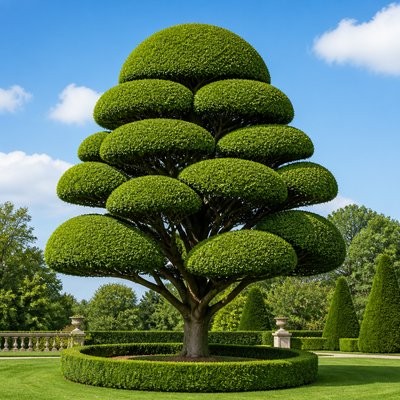
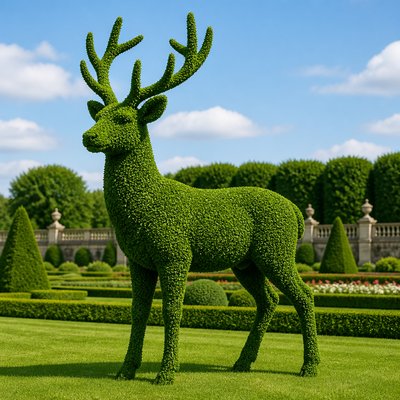
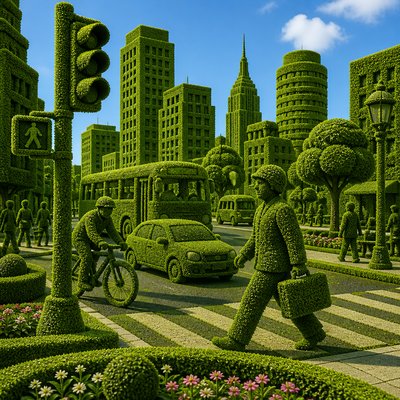
Topiary art is the practice and visual style of shaping dense, living hedges into recognizable forms. Its subjects may be geometric masses, arches, animals, birds, human figures, or elaborate garden ornaments. The defining impression is one of controlled growth: a resilient plant is transformed into a crisp silhouette through repeated trimming and training.
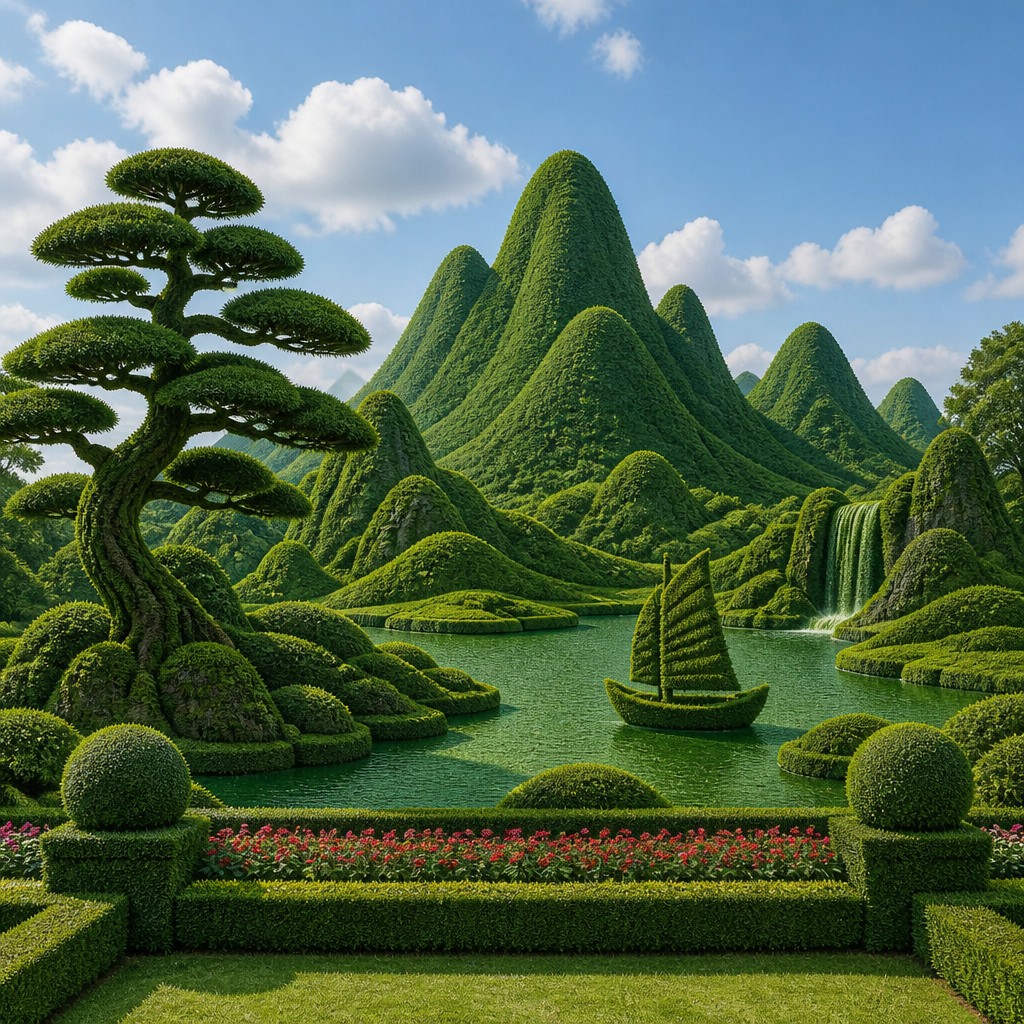
Visually, the style combines sculptural volume with botanical texture. Rounded contours, compact foliage, and sharply maintained edges create a surface that is both soft and highly ordered. Formal lawns, clipped borders, gravel paths, open sky, and symmetrical garden layouts often frame the greenery, emphasizing the contrast between organic material and deliberate design.
Try It On Your Photos
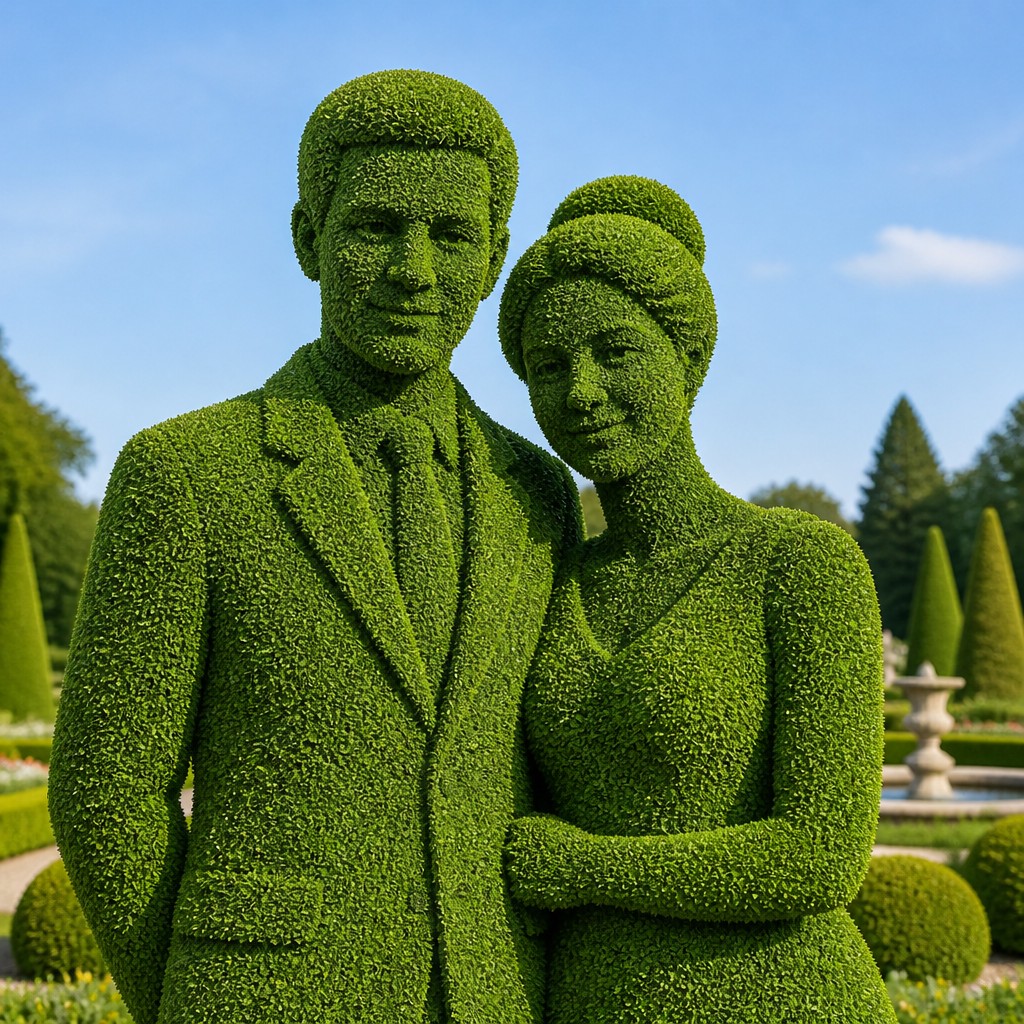
Upload any photo and convert it into Topiary Art Style — drag the sliders to compare before and after.

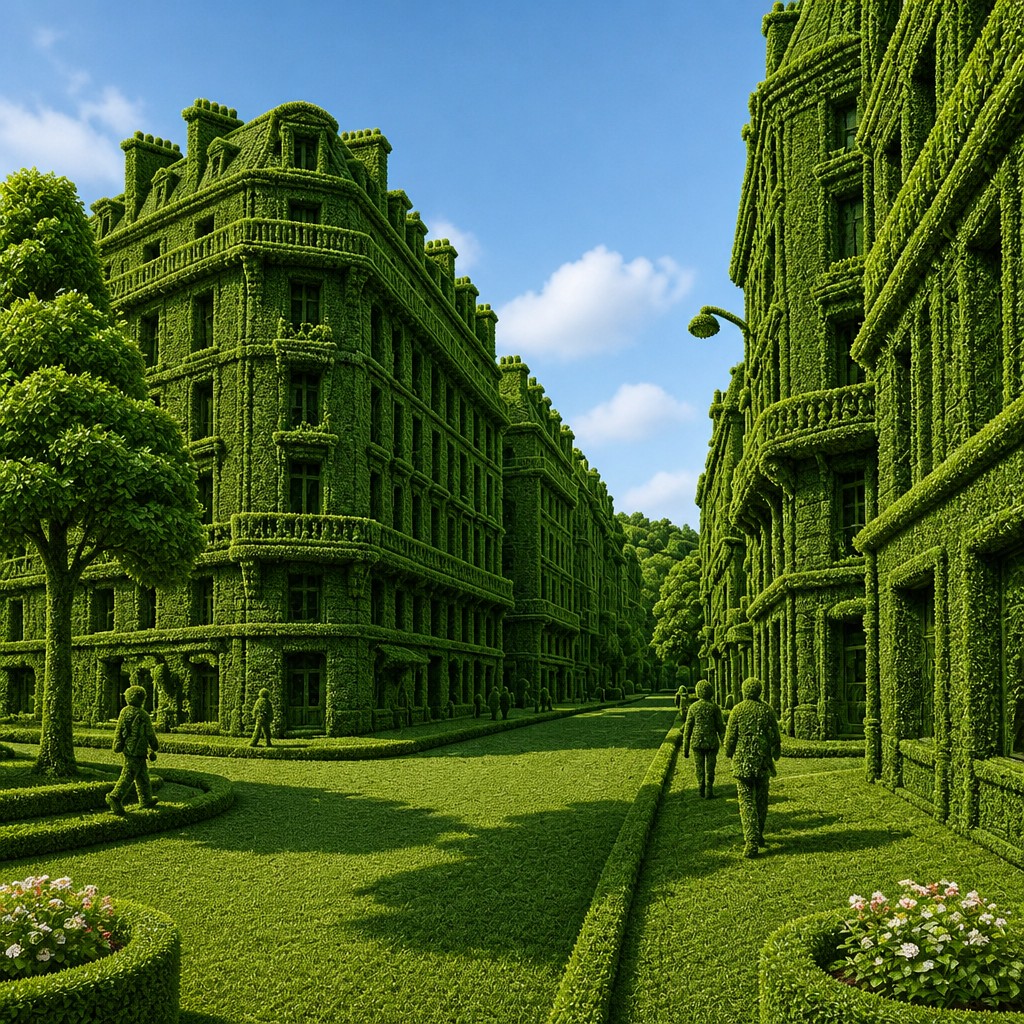

What Defines Topiary Art Style
The signature details, up close
Sculpted living volume
Forms are built from dense plant masses rather than carved stone or molded metal. The greenery retains the rounded, swelling volume of a shrub while conforming to a carefully planned silhouette.
Precise clipping
Repeated pruning produces smooth edges, compact planes, and controlled transitions between sections. Small irregularities may remain, but the overall contour is unmistakably intentional.
Leaf-textured surfaces
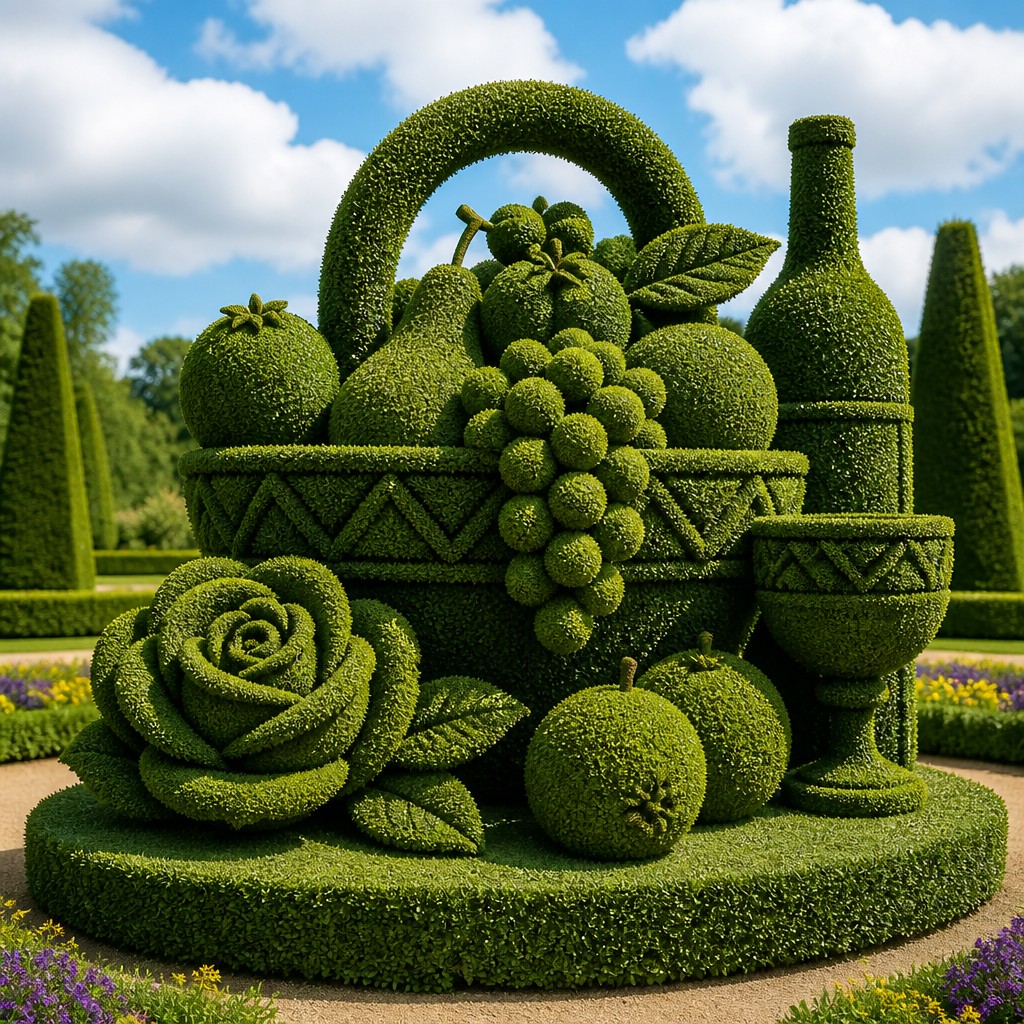
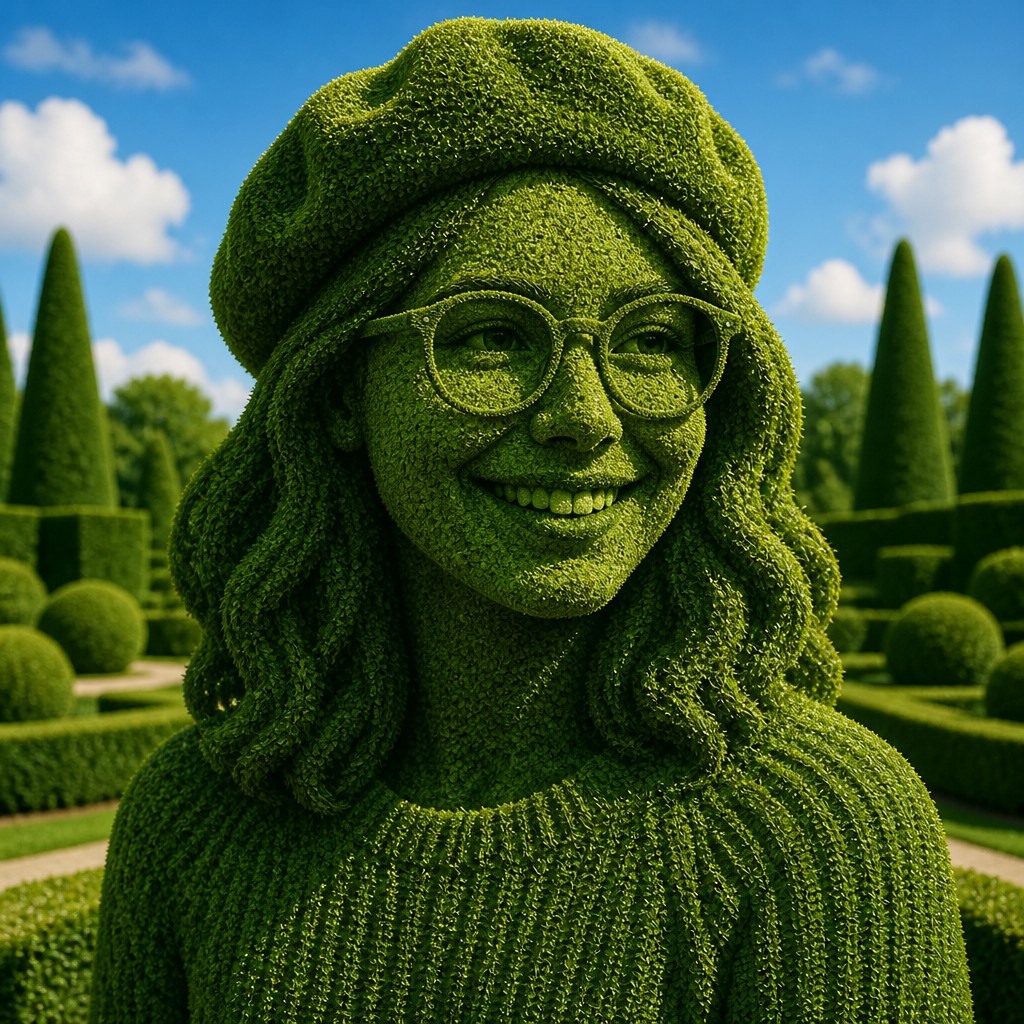
The surface is composed of countless small leaves, creating a fine, granular texture across the sculpture. Highlights and shadows gather unevenly over this foliage instead of forming a perfectly uniform material.
Geometric and figurative forms
Common structures include spheres, cones, cubes, spirals, arches, animals, birds, and human silhouettes. Complex figures are simplified into readable masses so that the outline remains clear at a distance.
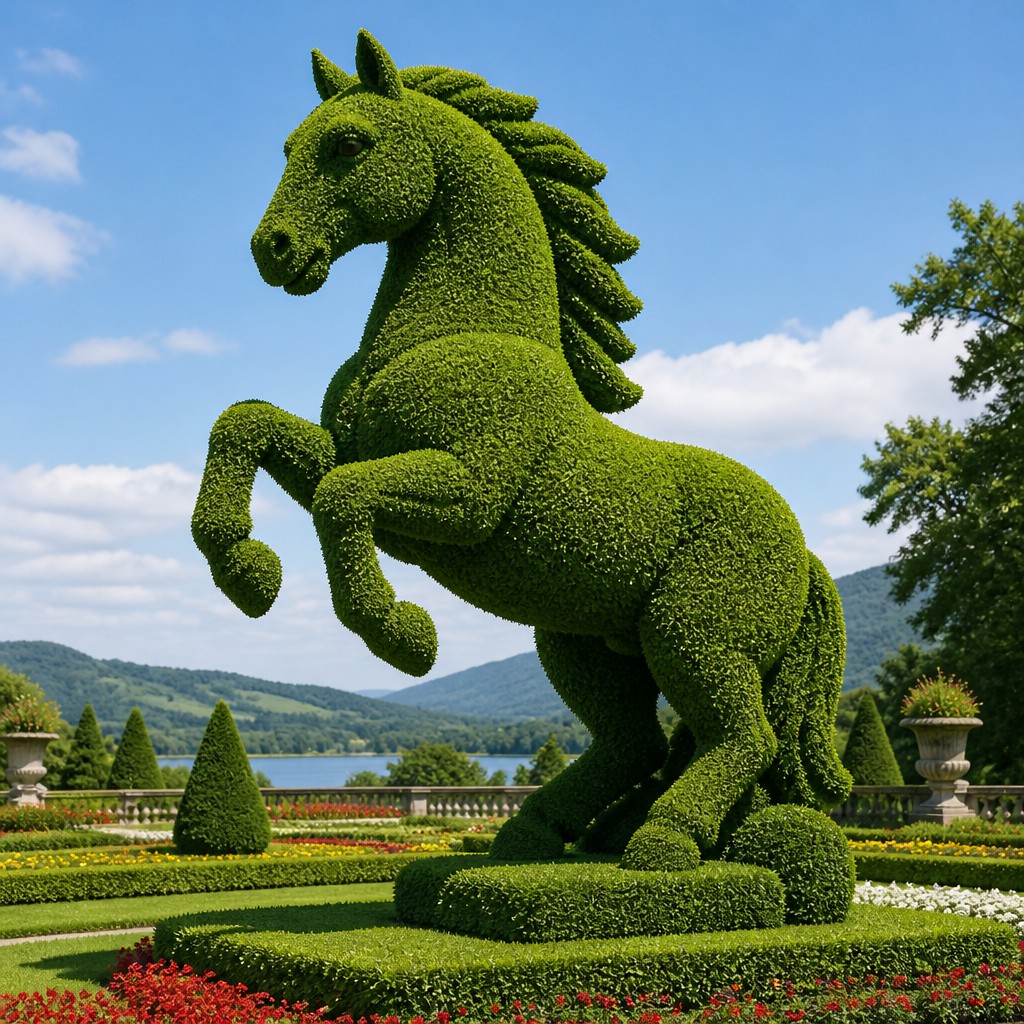
Formal garden framing
Clipped sculptures are often placed within symmetrical lawns, parterres, courtyards, hedged avenues, or gravel paths. These architectural garden settings reinforce the style's sense of order and ceremony.
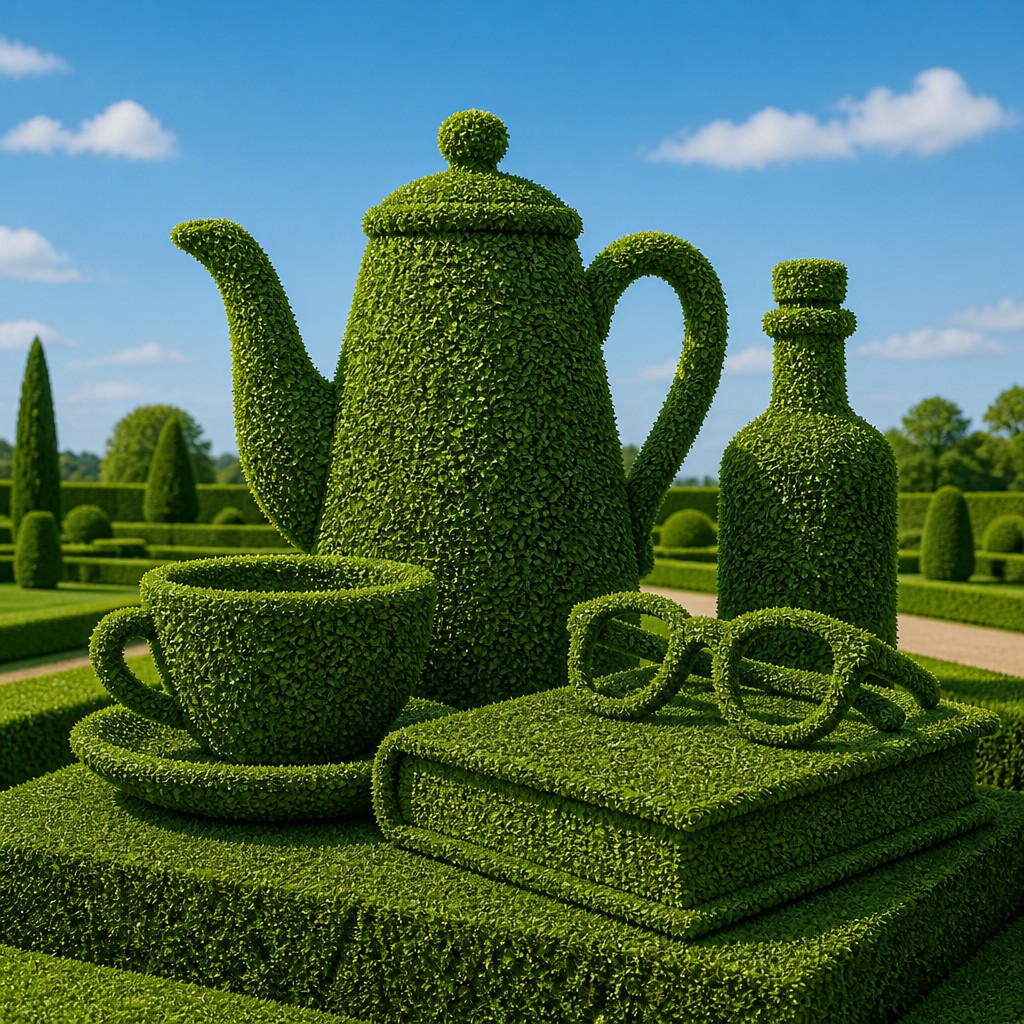
Vivid natural green
The palette is usually dominated by fresh or deep green foliage, with restrained brown stems and muted earth tones. Strong daylight can produce a graphic contrast between the hedge and an open sky, pale wall, or lawn.
Topiary Prompt Ideas
Start from an idea — each one opens the generator with the style ready to go. See all 40 Topiary prompts →
How to Create Topiary Art
Master the craft step by step — or skip straight to creating. Read the full guide →
- 1
Plan the silhouette
Begin with a simple geometric mass or a recognizable profile, then divide it into major volumes such as a torso, head, limbs, or architectural sections. The outline should read clearly before fine leaf texture is added.
- 2
Choose suitable plant structure
For a physical work, use dense, small-leaved evergreen shrubs and prune gradually with clean shears during appropriate growing periods. Wire frames can support complex figures, but the plant must be allowed time to fill the structure.
- 3
Build volume before detail
In drawing, painting, or 3D work, establish the hedge as a solid mass with rounded planes before rendering individual leaves. Reserve the finest texture for the surface and edges, where it will clarify the form.
- 4
Use controlled lighting
Employ broad daylight or soft directional light to reveal the clipped contours and layered foliage. Gentle shadows beneath projections help communicate depth without making the greenery appear rough or wild.
- 5
Compose a formal setting
Frame the subject with axial paths, clipped borders, stone walls, lawns, or symmetrical garden architecture. Keep background detail orderly so it supports rather than competes with the sculpted plant.
- 6
Specify material and structure in prompts
For digital or AI-assisted creation, describe a dense clipped hedge, smooth rounded contours, countless small leaves, a crisp silhouette, and a formal garden setting. Add the intended subject, camera angle, season, and lighting while excluding loose branches, sparse foliage, or unruly growth.
The Story
History & Origins of Topiary
Topiary has an ancient lineage, with evidence of ornamental shrub clipping in the gardens of the Roman world. The practice was later maintained and adapted in European horticultural traditions, becoming especially prominent in Renaissance Italian gardens and the formal garden designs of the seventeenth and eighteenth centuries. Geometric hedges, evergreen compartments, and sculpted shrubs formed part of broader systems of axial planning, symmetry, and controlled views.
In the nineteenth century, topiary became widely associated with country estates, public gardens, cottage gardens, and elaborate horticultural displays. Contemporary topiary ranges from living sculpture cultivated over many years to temporary installations made with wire frames, fast-growing plants, or cut foliage. As a digital aesthetic, it extends these traditions into idealized scenes with exceptionally clean contours, impossibly intricate forms, and uniformly vivid greenery.
Influences: The style draws on ancient Mediterranean garden ornament, Renaissance Italian garden planning, Baroque formal landscaping, European hedge parterres, Victorian horticultural display, and the broader tradition of living sculpture. It also relates to geometric abstraction through its simplified volumes, to sculpture through its emphasis on mass and silhouette, and to architectural design through symmetry, repetition, framing, and spatial order.
Frequently Asked Questions
What defines topiary art?
Topiary art is defined by living or convincingly rendered foliage clipped into a deliberate geometric or figurative form. Dense greenery, smooth contours, a readable silhouette, and an orderly garden setting are its central visual features.
Is topiary art a historical art movement?
No. Topiary is primarily a horticultural practice and garden-art tradition rather than a single formal art movement. Its contemporary visual style combines historical garden design with sculptural, botanical, and digital-image conventions.
How is topiary different from an ordinary hedge?
An ordinary hedge is usually maintained as a boundary, screen, or architectural line. Topiary is shaped as a standalone object or ornamental composition, with pruning used to create a specific silhouette, volume, or figure.
What plants are commonly used for physical topiary?
Suitable plants generally have dense growth, small leaves, and good tolerance for repeated pruning. Evergreen shrubs are especially useful because they preserve their structure across seasons, although the best choice depends on climate, species, and the intended form.
Can topiary art depict animals or people?
Yes. Animal figures, birds, mythical creatures, and simplified human forms are common subjects. Successful designs reduce complex anatomy to large connected masses so the subject remains recognizable as a clean silhouette.
How can I create a digital image in this style?
Describe the subject as a dense, tightly clipped hedge sculpture and specify smooth rounded contours, small-leaf texture, vivid green foliage, and a formal garden context. Include lighting and composition details, and clarify whether the form should be geometric, realistic, whimsical, or figurative.
Create your first Topiary artwork
Describe anything — or upload a photo — and see it in Topiary Art Style in seconds.
Related Styles
Discover similar art styles