Tongan Art Style
Explore Tongan art style: ngatu barkcloth patterns, kupesi geometry, lalava cordwork, coconut-fibre tones and bright lagoon light.
Instantly rendered in Tongan — or transform a photo
Tongan Gallery
Tap any artwork to explore it

What is Tongan Art Style?
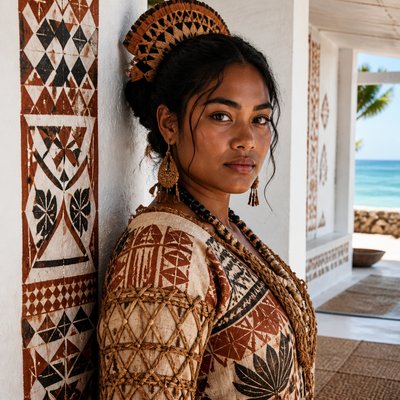
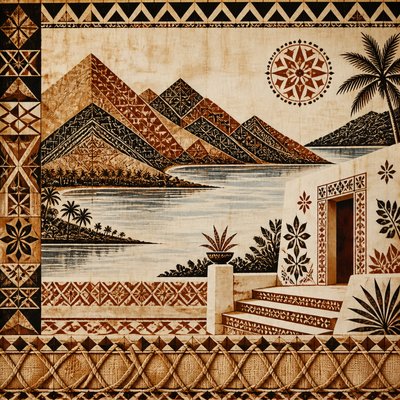
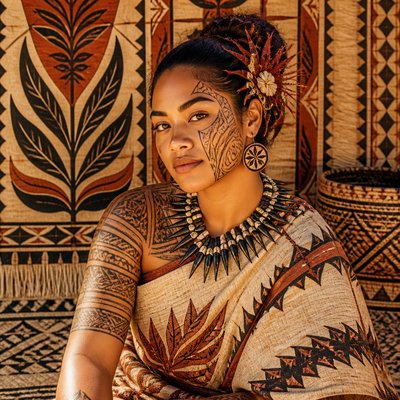
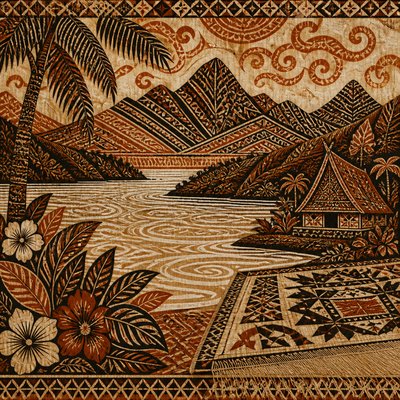
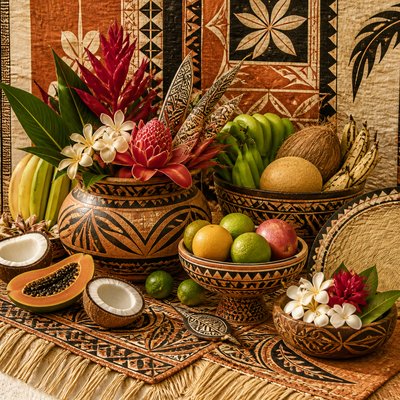
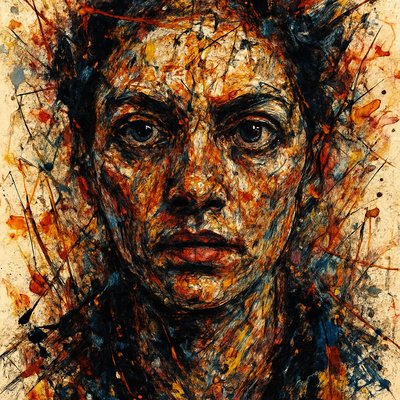
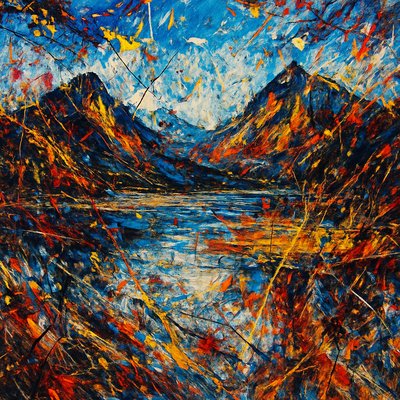
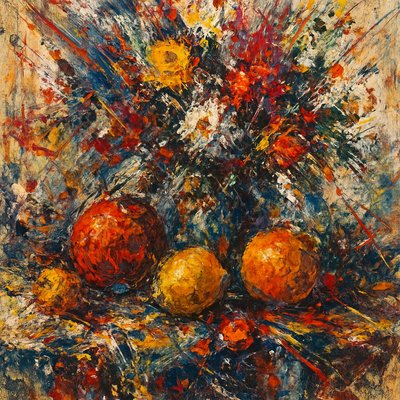
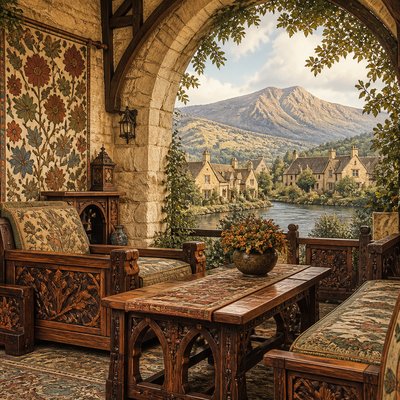
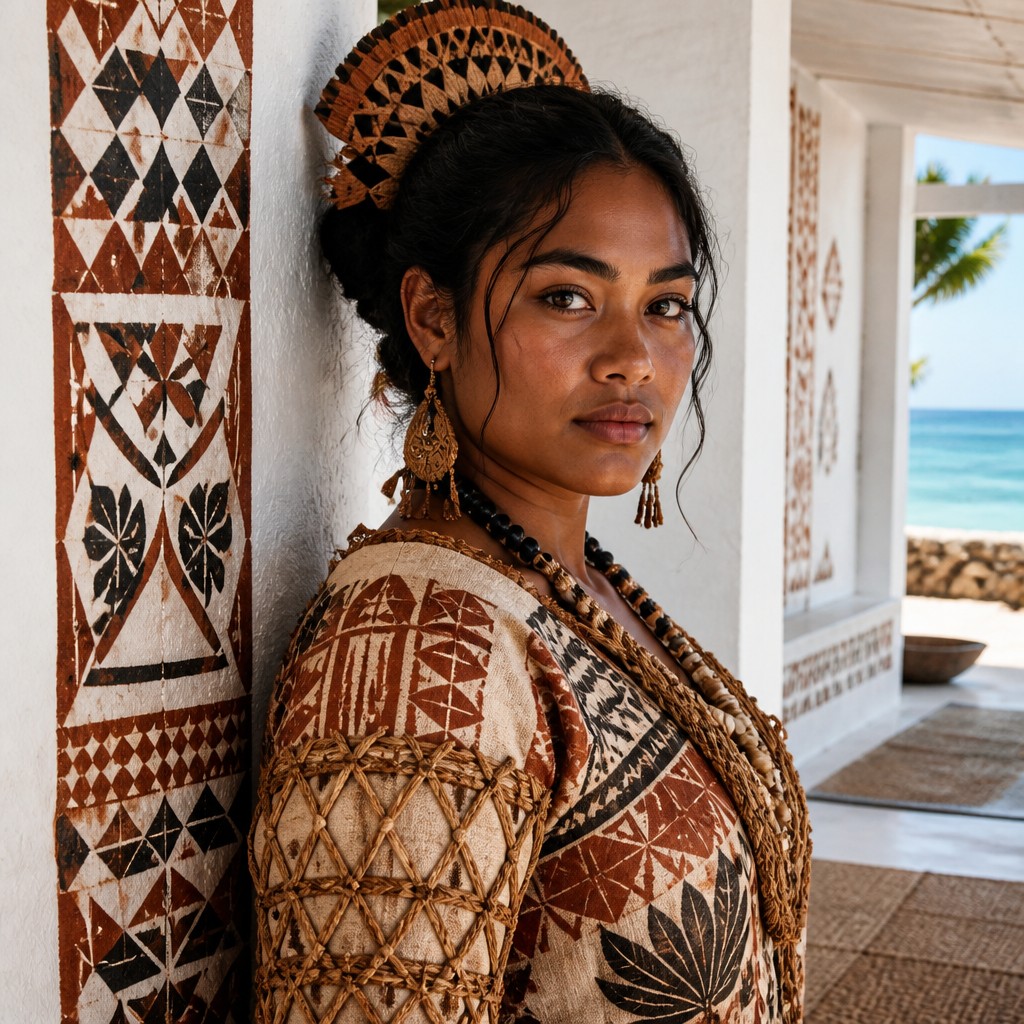
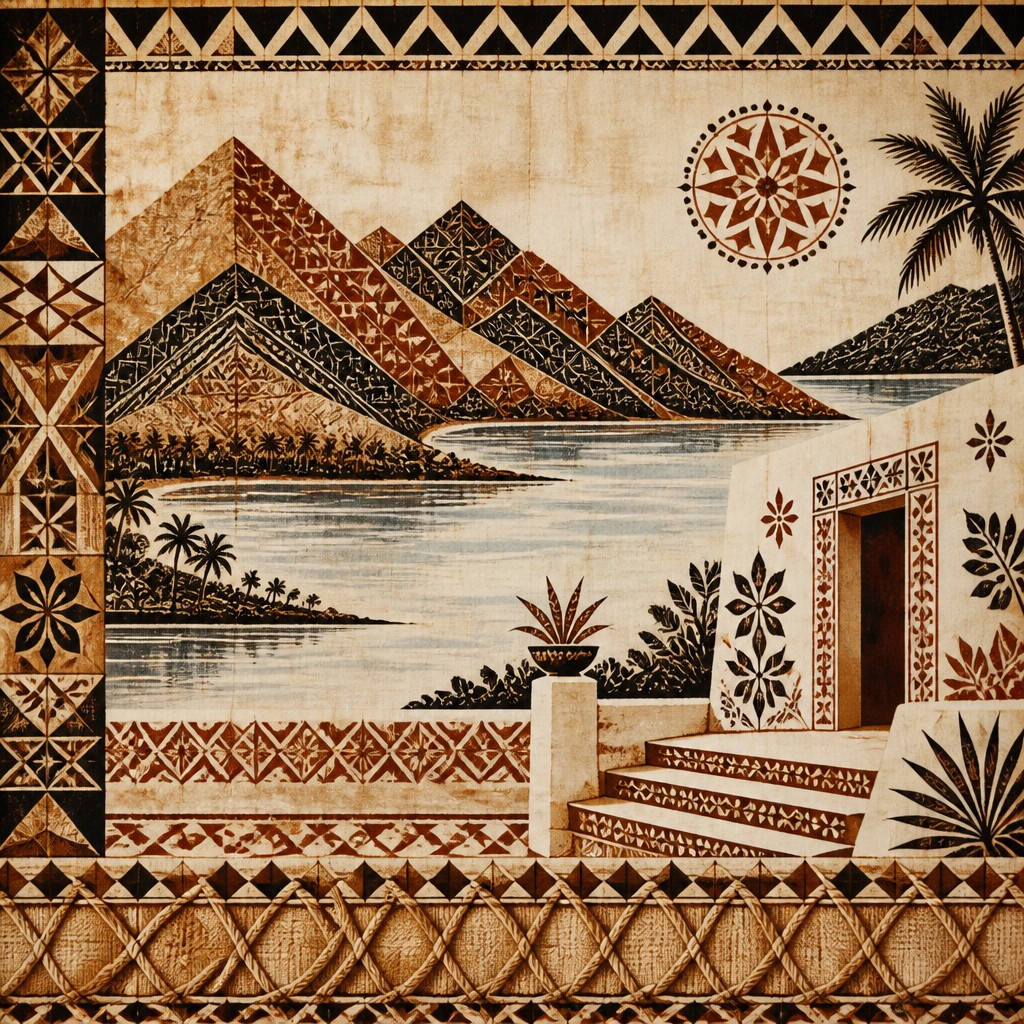
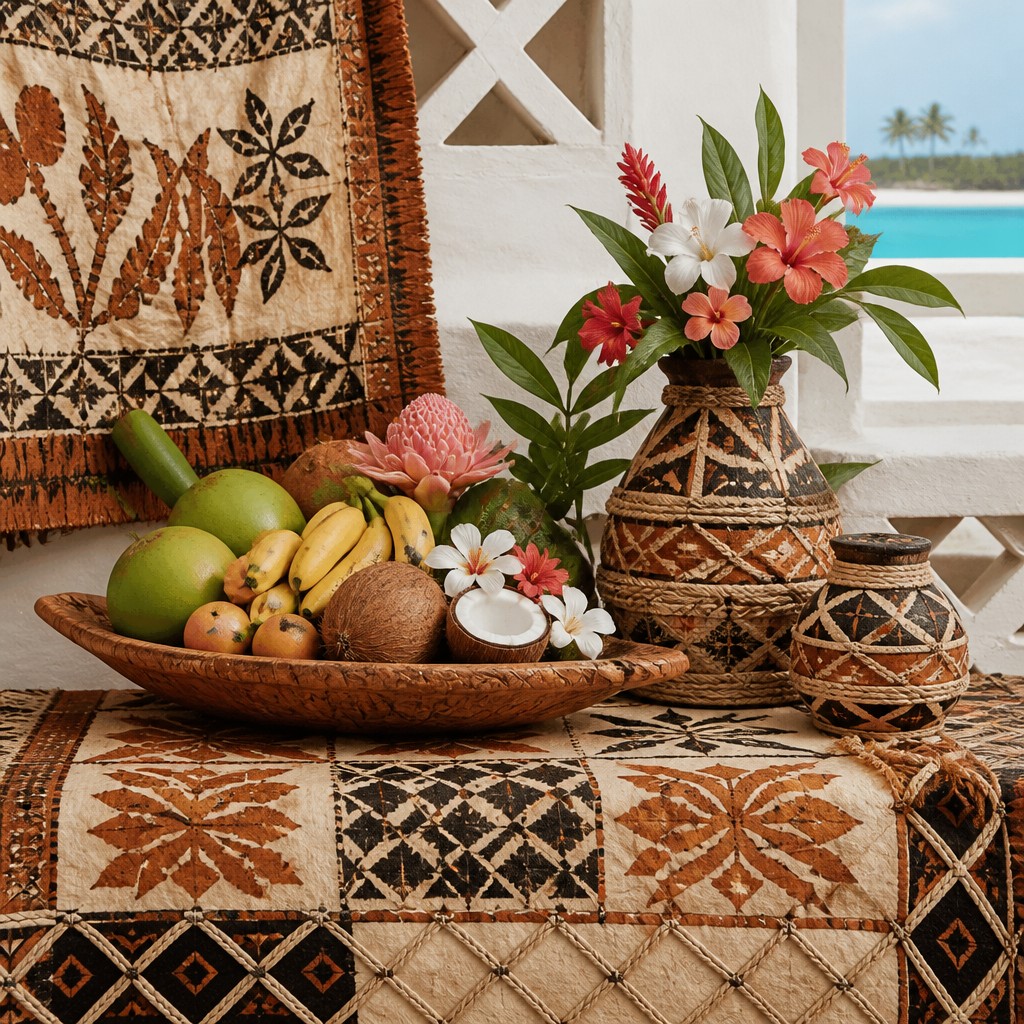
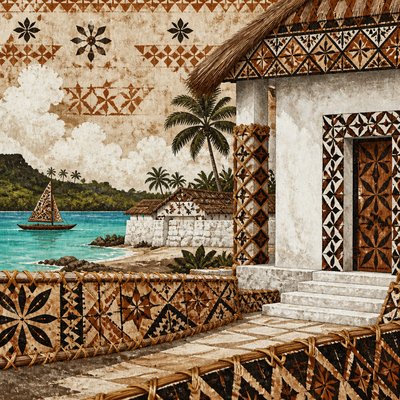
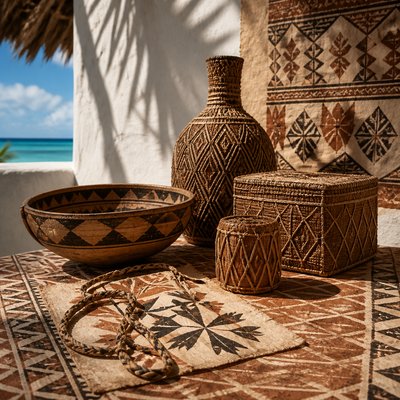
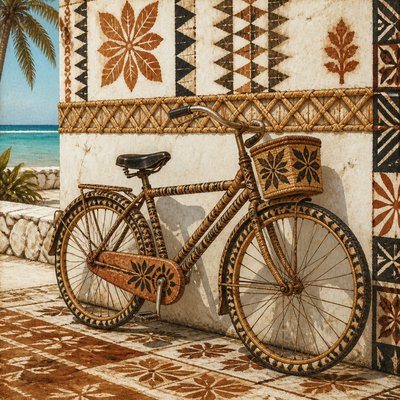
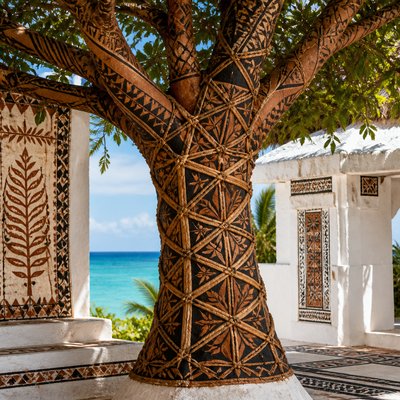
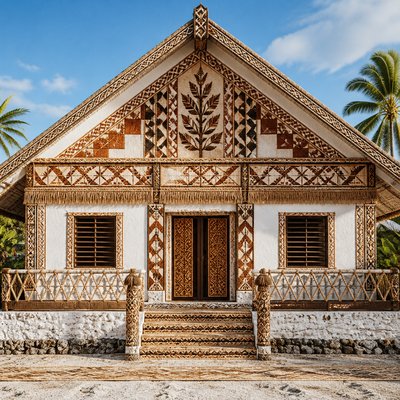
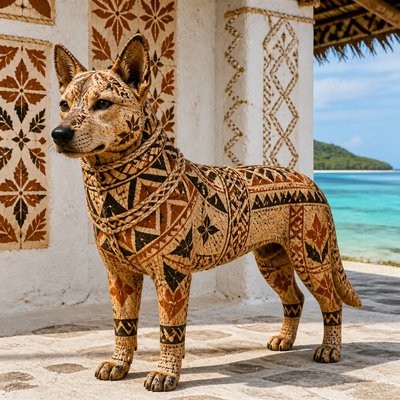
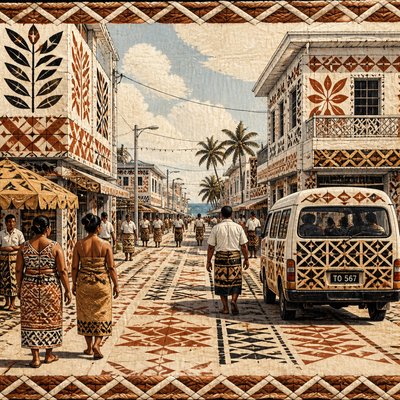
Tongan art style is a contemporary descriptive synthesis built around the visual language of Tongan material culture. Its signature elements are ngatu barkcloth, kupesi-derived geometric and botanical motifs, sennit-cord lalava lashing, coconut-fibre neutrals, and the high-contrast illumination of a coral-lagoon environment. The result is tactile, ordered, and strongly patterned rather than painterly or loosely atmospheric.
The style looks disciplined because its visual structure comes from repeated units, bilateral arrangements, borders, bands, and carefully controlled spacing. Rust brown and black markings stand out against pale barkcloth or whitewashed surfaces, while woven and lashed textures introduce a sense of handwork. Lagoon light can be rendered as bright, clean, and warm, clarifying edges and emphasizing the contrast between organic fibers, architecture, skin, vegetation, and water.
Try It On Your Photos
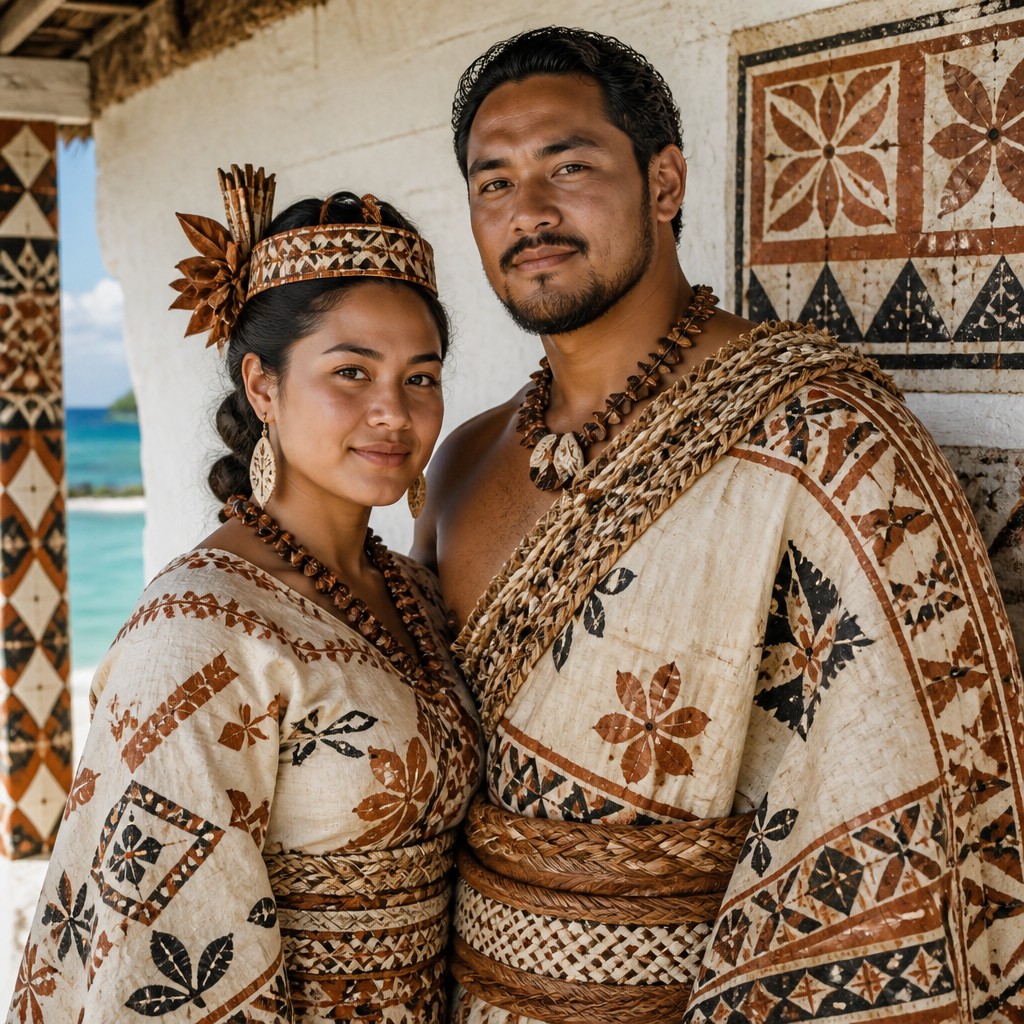
Upload any photo and convert it into Tongan Art Style — drag the sliders to compare before and after.



What Defines Tongan Art Style
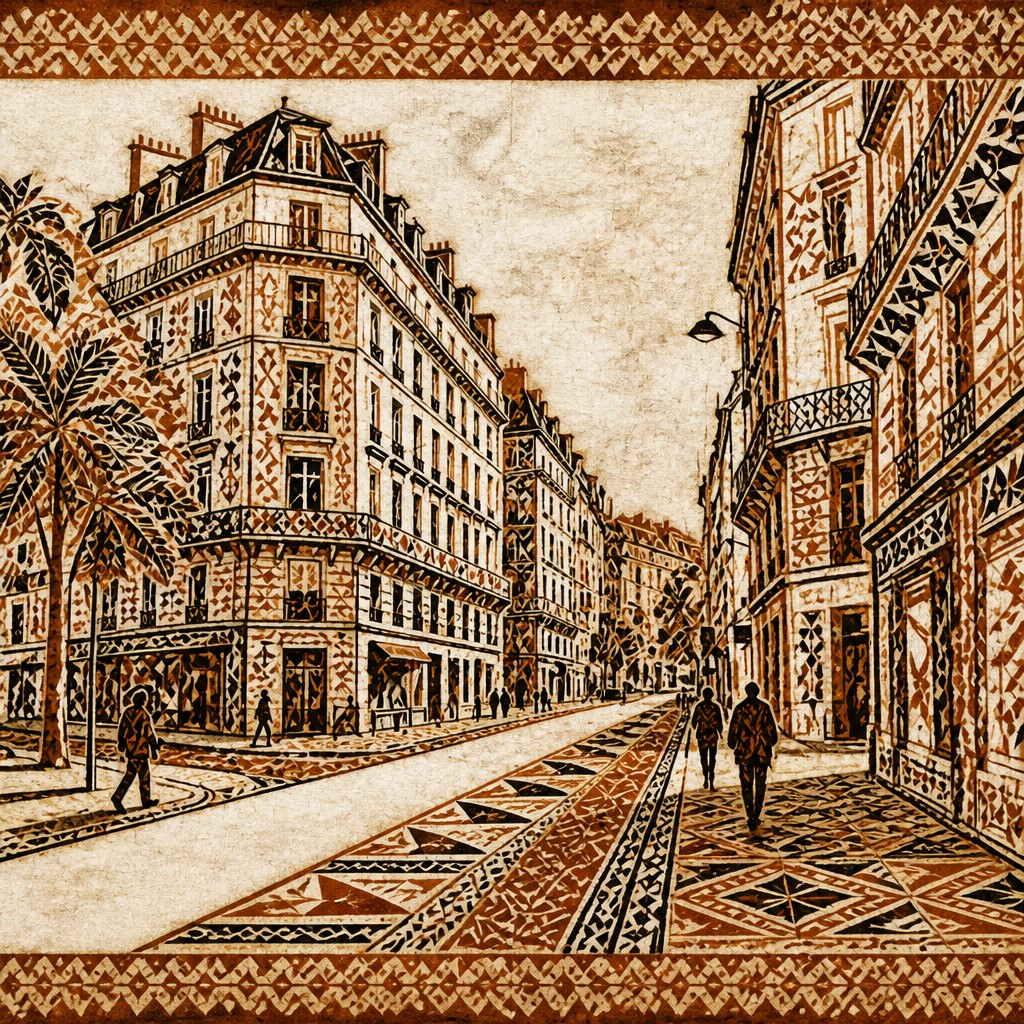
The signature details, up close
Ngatu barkcloth ground
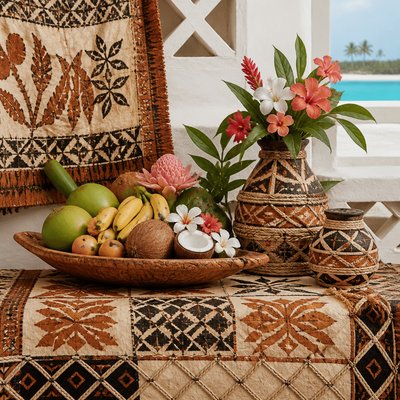
Images often use a fibrous, matte surface resembling barkcloth made from paper-mulberry bark. The ground may appear warm ivory, tan, or lightly weathered, with visible grain and handmade irregularity.
Kupesi-derived geometry
Repeated motifs based on geometric and botanical pattern systems create borders, grids, medallions, and all-over fields. The marks should feel modular and intentional, with rhythm taking precedence over naturalistic shading.
Rust-brown and black pigment
A restrained palette centers on earthy rust, umber, charcoal, and black against pale cloth or plaster. Small variations in opacity and edge quality can suggest rubbing, stamping, or hand-applied pigment.
Sennit lalava lashing
Braided or twisted coconut-fibre cord appears in diamond, zigzag, lattice, and binding arrangements. It may function as a structural detail, a frame, or a raised decorative layer with convincing tension and overlap.
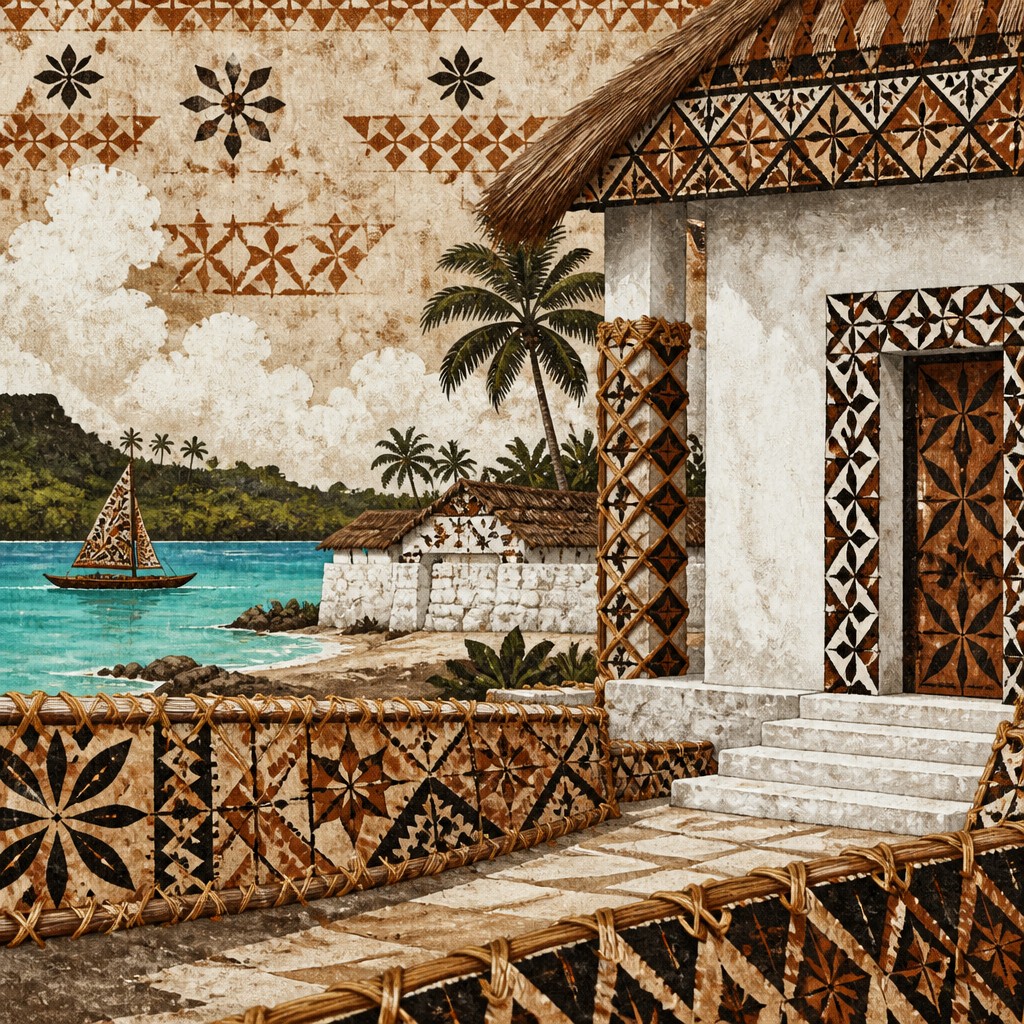
Disciplined graphic rhythm
Strong bands, repeated intervals, clear silhouettes, and controlled symmetry organize the composition. Negative space is deliberate, allowing patterned areas and focal subjects to remain legible.
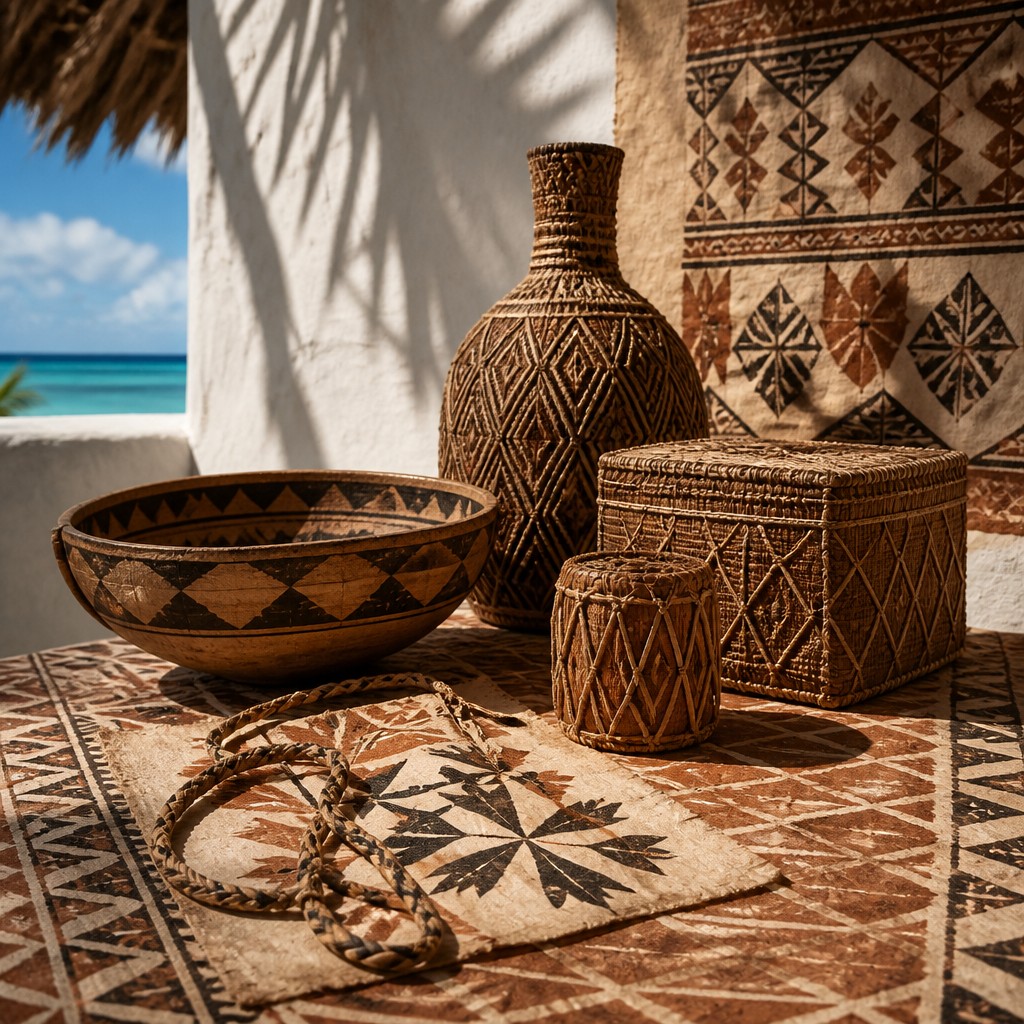
Coral-lagoon illumination
Light is bright, warm, and relatively clean, with turquoise, chalk-white, sand, and sunlit coral accents used sparingly. Crisp highlights and short, readable shadows reinforce the tropical coastal setting.
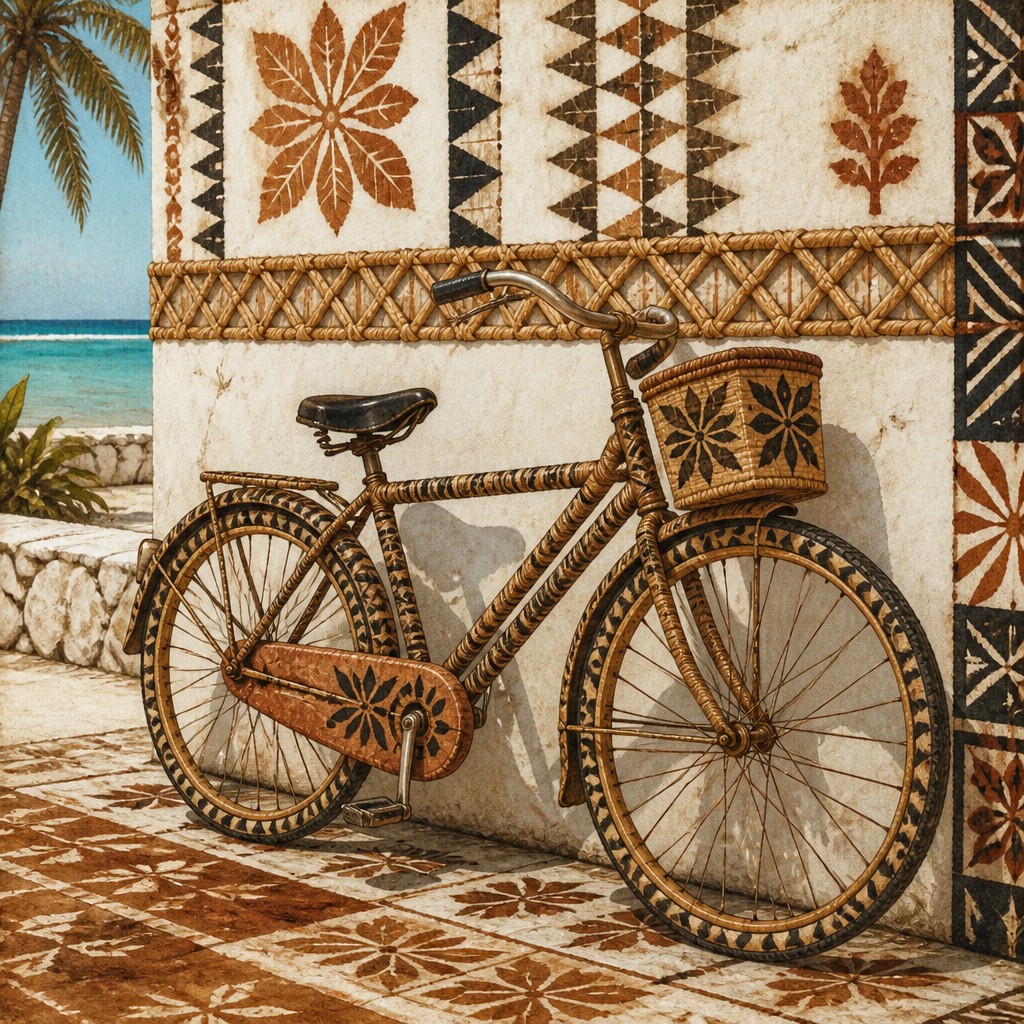
Tactile material contrast
Soft bark fiber, rough cord, woven surfaces, whitewashed architecture, polished shell, water, and vegetation are distinguished through texture rather than heavy tonal modeling. The image should feel crafted and materially specific.
Tongan Prompt Ideas
Start from an idea — each one opens the generator with the style ready to go. See all 40 Tongan prompts →
How to Create Tongan Art
Master the craft step by step — or skip straight to creating. Read the full guide →
- 1
Build a patterned ground
Begin with a paper-mulberry barkcloth texture, then establish a border and a repeat unit before filling the larger field. Keep motifs aligned to an underlying grid while allowing slight registration shifts for a handmade result.
- 2
Use layered mark-making
For physical work, combine rubbed or stamped pigment with dry-brush irregularities and selectively softened edges. Digitally, layer scanned fiber, vector pattern, pigment grain, and displacement maps rather than relying on a single flat texture.
- 3
Construct believable lalava
Treat sennit as a cord with thickness, twist, tension, crossings, and cast shadows. In drawing or 3D work, trace the lashing path first, then add highlights along the raised fibers and darker occlusion where strands overlap.
- 4
Control the palette and light
Start with ivory, coconut tan, rust brown, and black, adding turquoise or coral only as restrained environmental accents. Use broad, bright lagoon light and crisp edges instead of smoky gradients or excessive cinematic contrast.
- 5
Compose with repetition and space
Frame the subject with bands, organize motifs in balanced fields, and leave calm negative space around important forms. Avoid filling every area with ornament; contrast between patterned and unpatterned surfaces is central to the visual rhythm.
- 6
Write precise digital prompts
Specify the subject first, then the ngatu-like barkcloth surface, kupesi-derived geometric patterning, sennit lalava cordwork, earthy palette, whitewashed setting, and bright coral-lagoon light. For image transformation, preserve the subject's pose and silhouette while requesting material and pattern changes rather than a complete scene replacement.
The Story
History & Origins of Tongan
The label Tongan Art Style, in this specific image-making sense, is not the name of a historical art movement. It is a contemporary aesthetic synthesis drawing from Tongan ngatu production, kupesi pattern systems, lalava lashing traditions, Pacific material culture, and modern graphic composition. Tongan ngatu is made from processed paper-mulberry bark and decorated with repeated designs traditionally transferred with patterned boards, rubbing, pigment, and related marking techniques.
Lalava refers to intricate lashing with sennit, commonly made from coconut-husk fiber, used to bind and ornament structures and objects. This visual language developed through practical construction, ceremonial exchange, identity, and inherited pattern knowledge rather than through a single school or period. The style described here places those traditions into a unified image vocabulary with contemporary architectural settings, editorial framing, and digitally reproducible patterning.
Influences: The style relates to Tongan ngatu and kupesi pattern traditions, Pacific barkcloth and fiber arts, sennit lashing and vernacular construction, Polynesian textile design, geometric abstraction, textile-based pattern composition, and modern surface design. It also shares qualities with minimalist graphic design through its limited palette, repetition, clear borders, and emphasis on negative space, while its tactile surfaces distinguish it from purely digital geometric art.
Frequently Asked Questions
What defines Tongan art style?
It is defined here by the combination of ngatu-like barkcloth surfaces, kupesi-derived repeated patterns, sennit lalava cordwork, earthy rust-and-black pigments, and bright coral-lagoon light. Order, material texture, and rhythmic repetition are more important than painterly realism.
Is Tongan art style a historical art movement?
No. The term is a contemporary descriptive label for an aesthetic synthesis, not the name of a formal movement with a founding period or school. It should be understood through the real Tongan traditions that inform it, especially ngatu decoration and lalava lashing.
What is ngatu?
Ngatu is Tongan barkcloth made from processed paper-mulberry bark. It is decorated with inherited pattern systems and has important practical, ceremonial, social, and exchange-related roles.
What does lalava mean in this context?
Lalava refers to lashing made with sennit or related fiber cord, often used to bind and ornament structures and objects. In this visual style, its crossings, knots, bands, and tension become prominent graphic and textural elements.
How is this different from generic Polynesian or tropical art?
The style is more specific than a general tropical image because it relies on Tongan-associated material references and a controlled pattern system. Ngatu-like barkcloth, kupesi-derived geometry, and lalava cordwork should be identifiable, rather than replaced by generic palm trees, ocean colors, or loosely tribal decoration.
Where can this style be used?
It works well for portraits, editorial illustration, textile concepts, architectural studies, product surfaces, cultural storytelling, and coastal scenes. When used for commercial or public-facing work, respectful research and consultation are appropriate because the referenced patterns and materials carry cultural meaning.
Create your first Tongan artwork
Describe anything — or upload a photo — and see it in Tongan Art Style in seconds.
Related Styles
Discover similar art styles