Toledo Art Style
Explore Toledo Art Style: Mannerist figures, storm-lit stone cities, acid green-grey harmonies, and uncanny dramatic shadows.
Instantly rendered in Toledo — or transform a photo
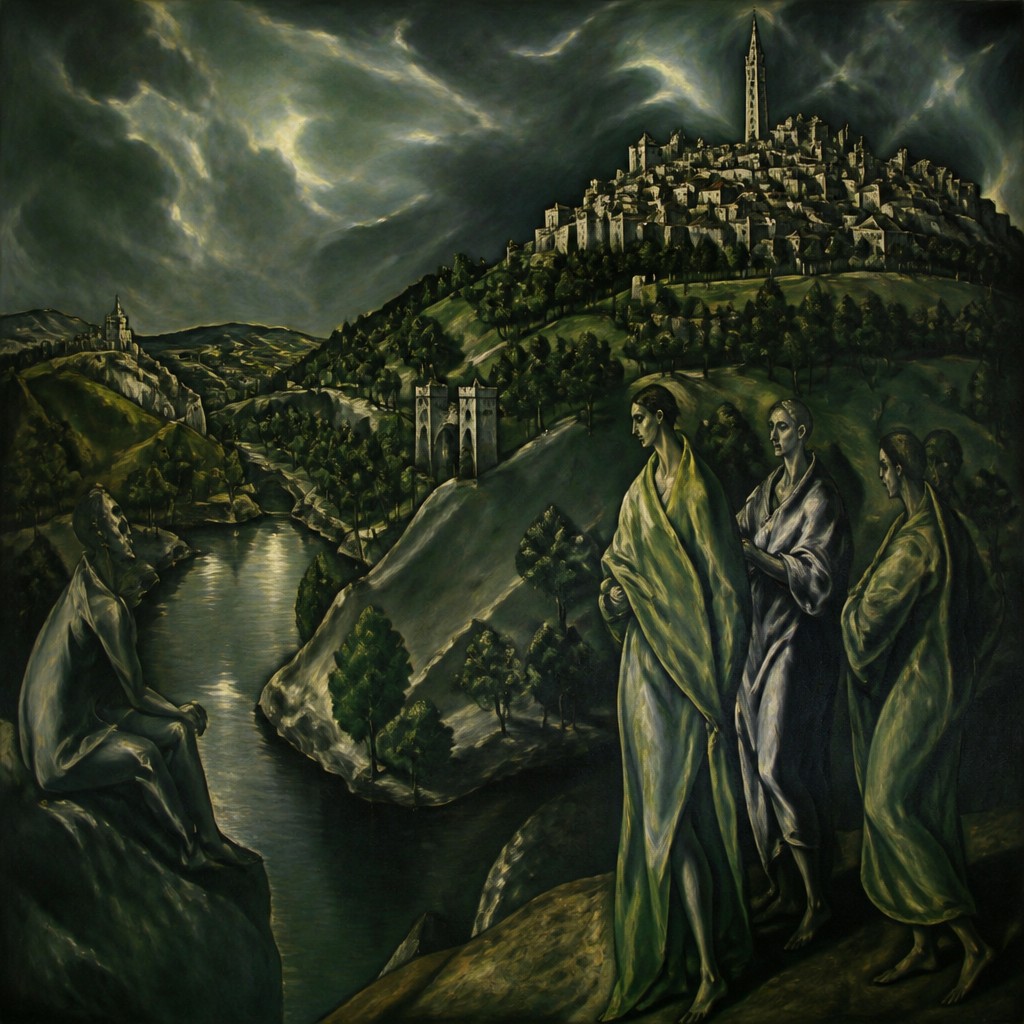
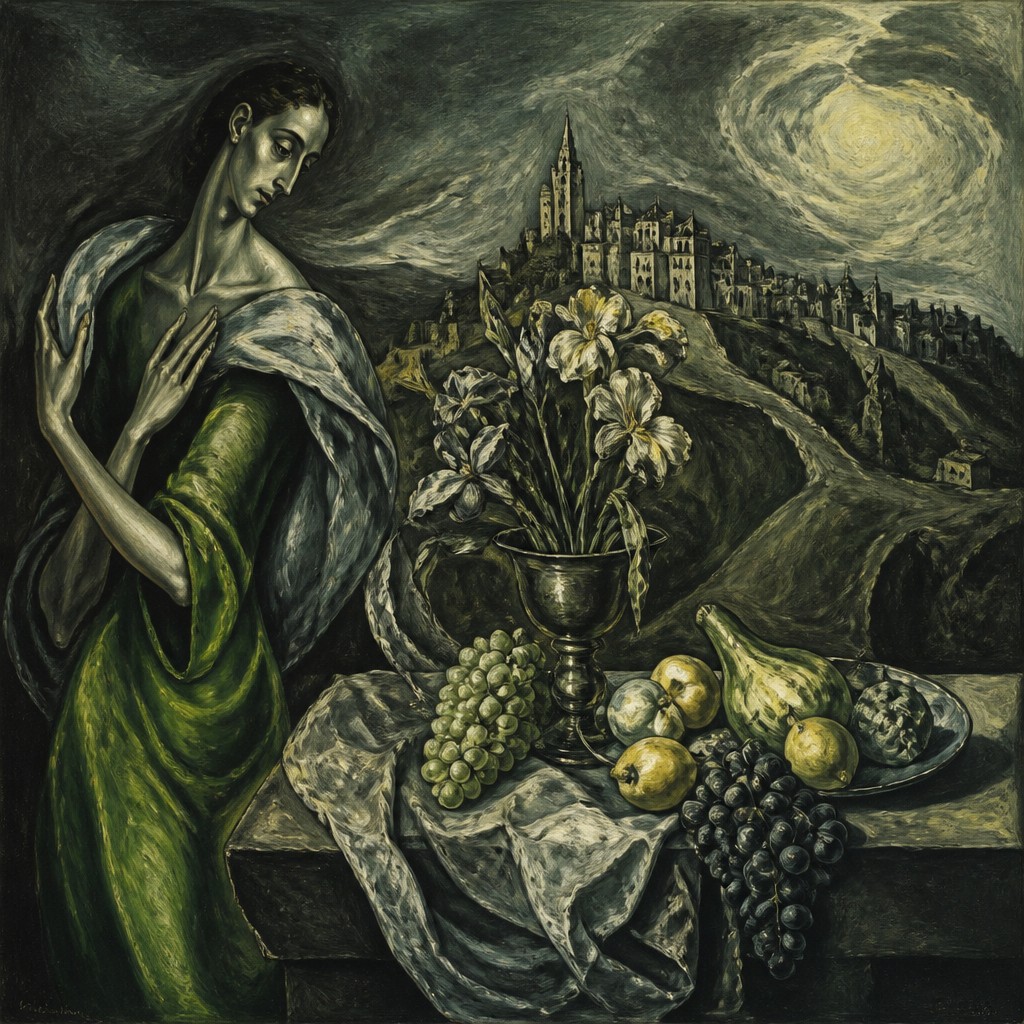
Toledo Gallery
Tap any artwork to explore it
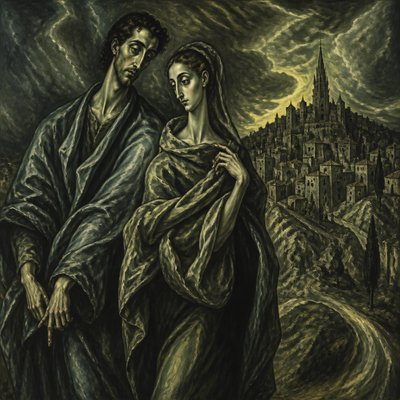
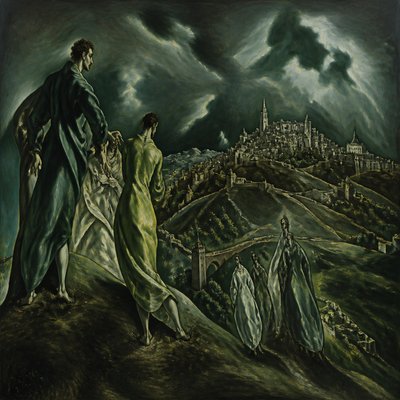
What is Toledo Art Style?
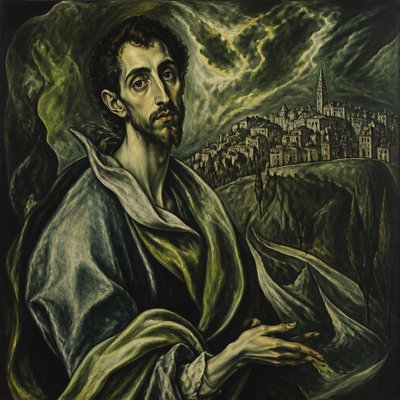
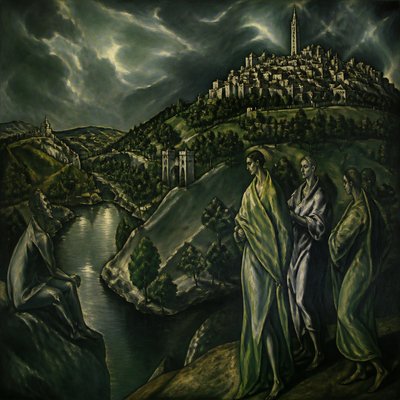
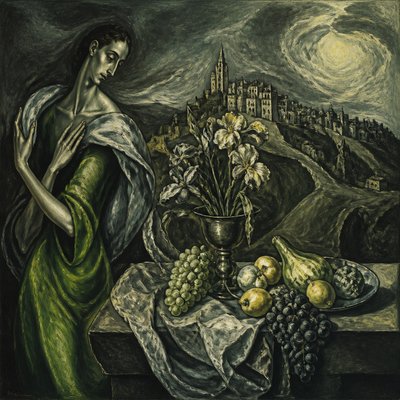
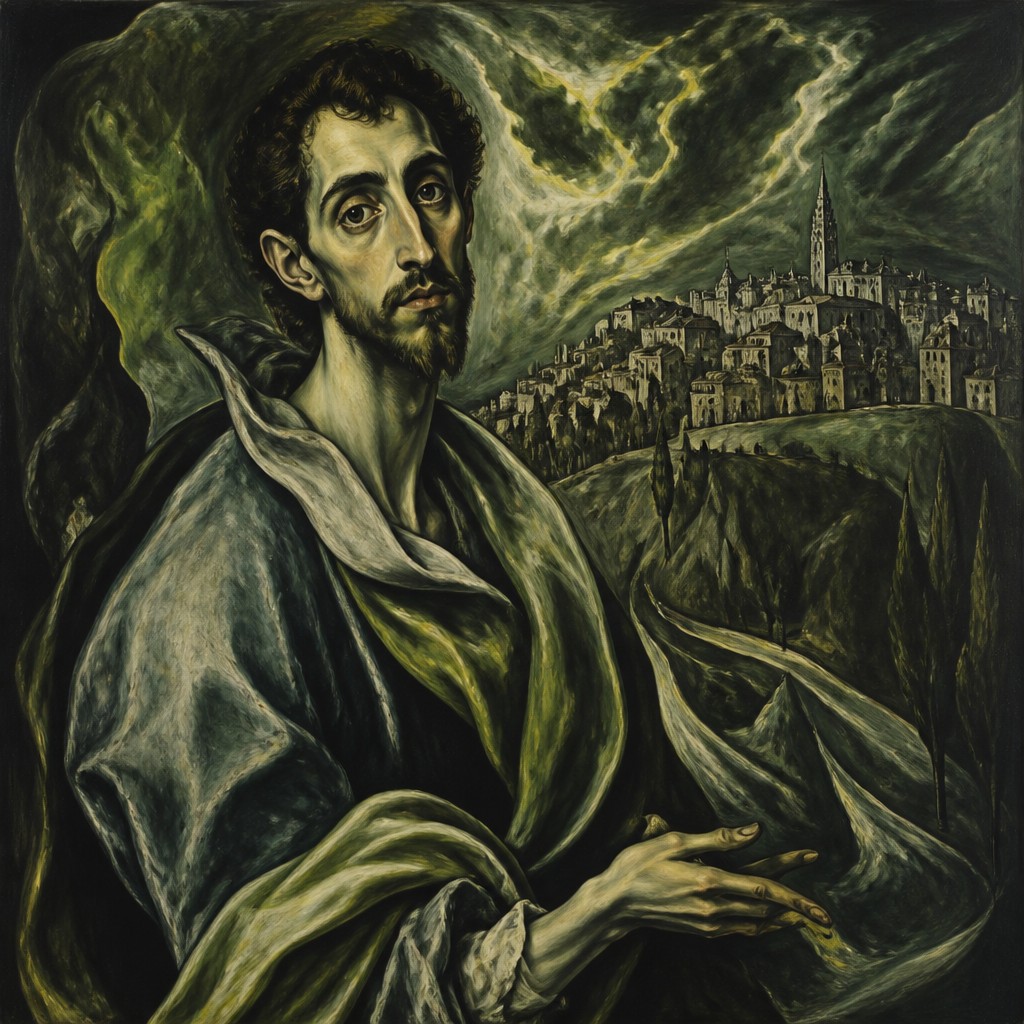
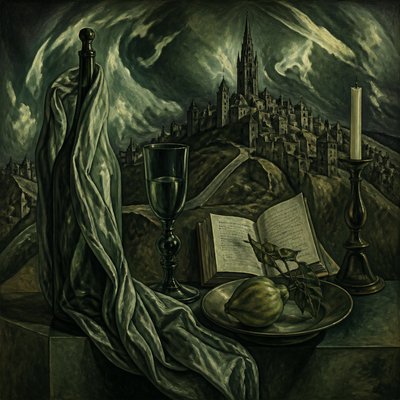
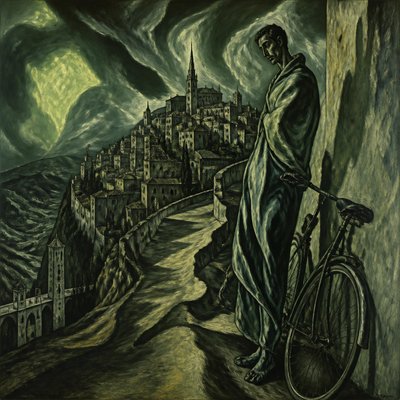
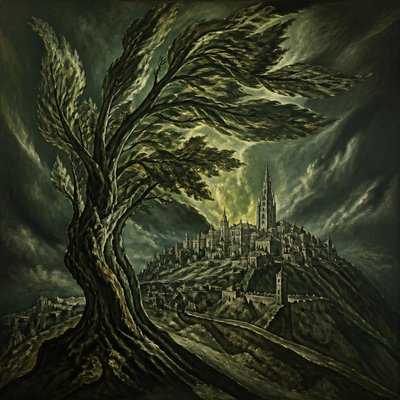
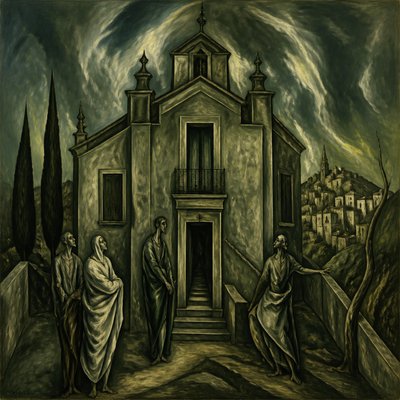
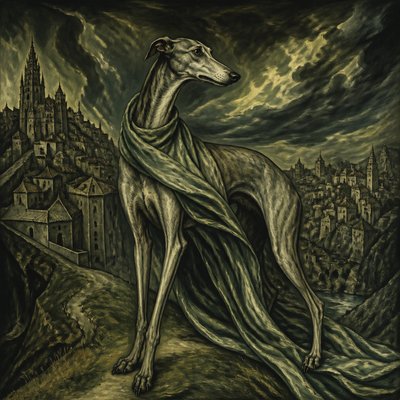
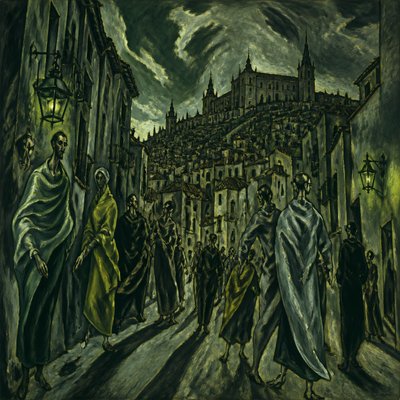
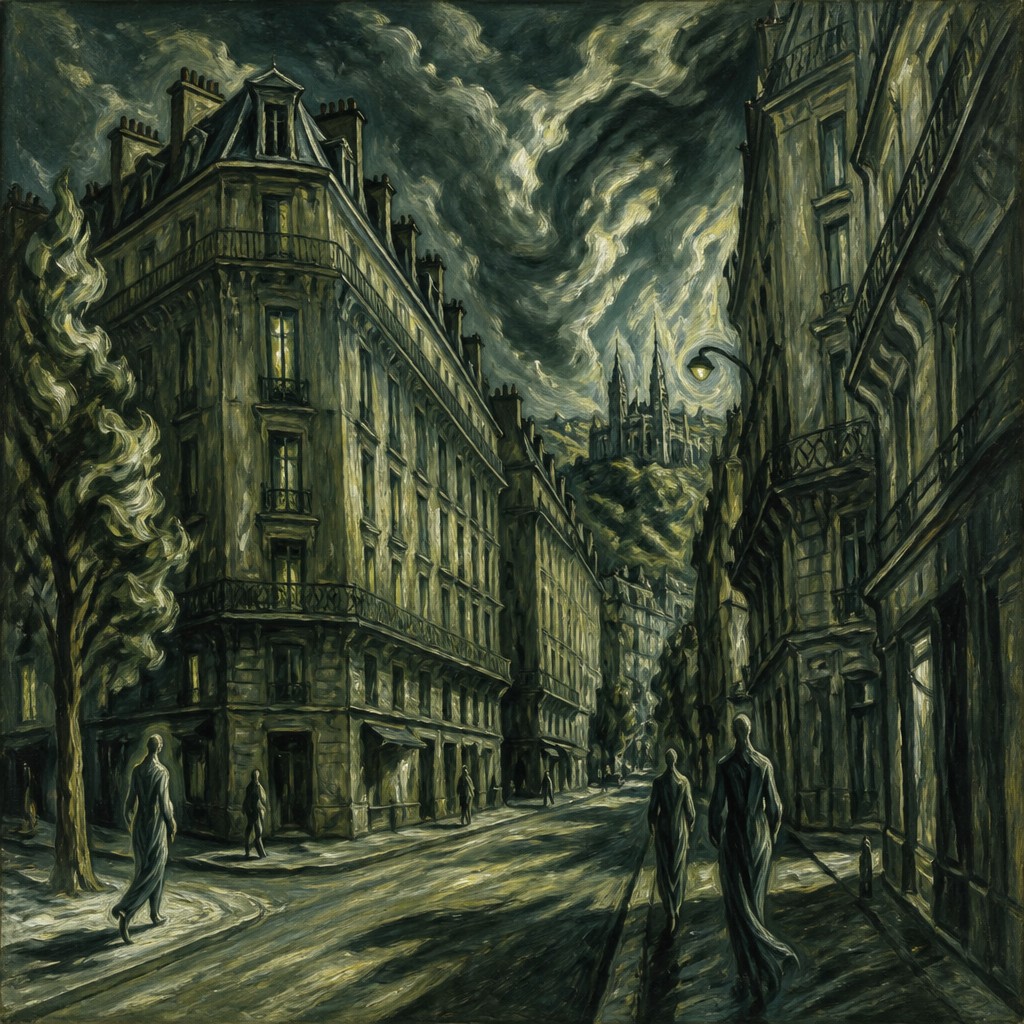
Toledo Art Style is a contemporary descriptive style built around the collision of Mannerist distortion and an ominous hilltop cityscape. Its typical image combines elongated, attenuated figures, heavily winding drapery, turbulent skies, and a stone-built urban silhouette resembling a fortified Iberian city viewed from a dramatic distance.
Its identity depends on visual unease rather than naturalistic atmosphere. Acid green-grey, slate, and deep umber tones are unified by a dark greenish underpainting, while an apparently unnatural light source creates sharp highlights and exceptionally long shadows. The result is devotional, theatrical, and dreamlike: a recognizable landscape transformed into a psychologically charged vision.
Try It On Your Photos
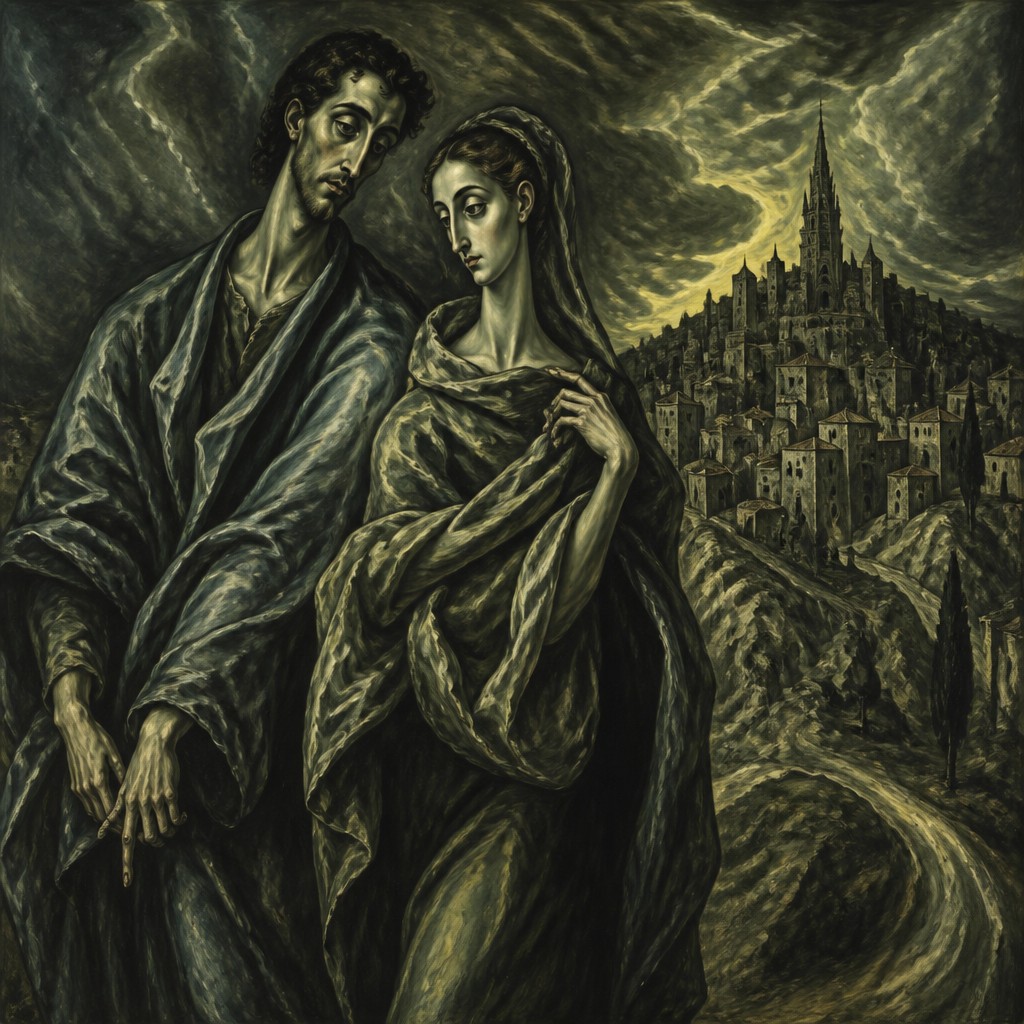
Upload any photo and convert it into Toledo Art Style — drag the sliders to compare before and after.


What Defines Toledo Art Style
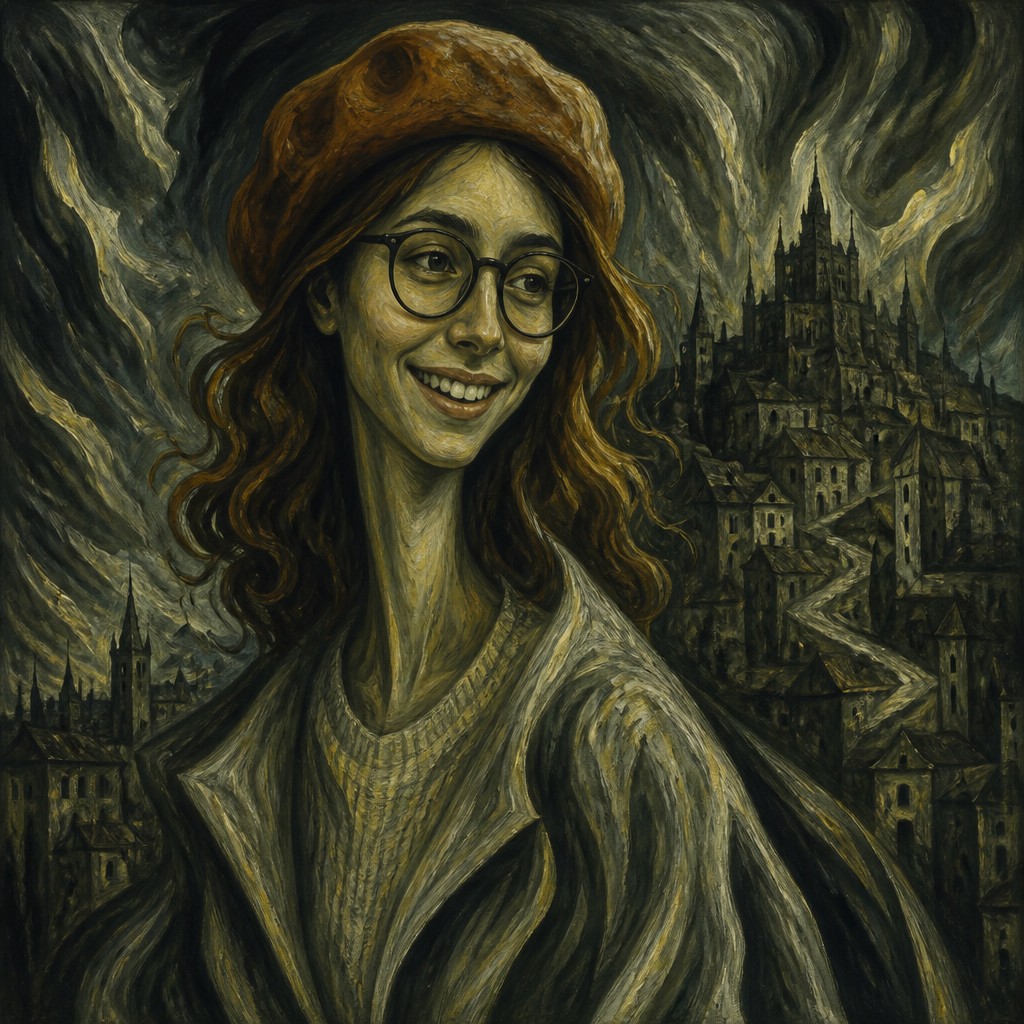
The signature details, up close
Elongated anatomy
Human figures are stretched vertically, with narrow torsos, extended limbs, and subtly unstable proportions. The distortion is deliberate and expressive rather than anatomical error.
Swirling drapery
Clothing folds loop, twist, and rise around the body, turning garments into active compositional elements. Drapery often reinforces the vertical movement and theatrical tension of the scene.
Storm-torn skies
Dense clouds, diagonal wind patterns, and abrupt openings in the atmosphere create a sense of weather in motion. The sky generally occupies a large area and serves as an emotional counterpart to the figures or city.
Hilltop stone architecture
Fortified walls, clustered masonry buildings, towers, and narrow streets form a compact city perched above the surrounding landscape. Architecture is usually recognizable but slightly compressed or dreamlike.
Acidic green-grey palette
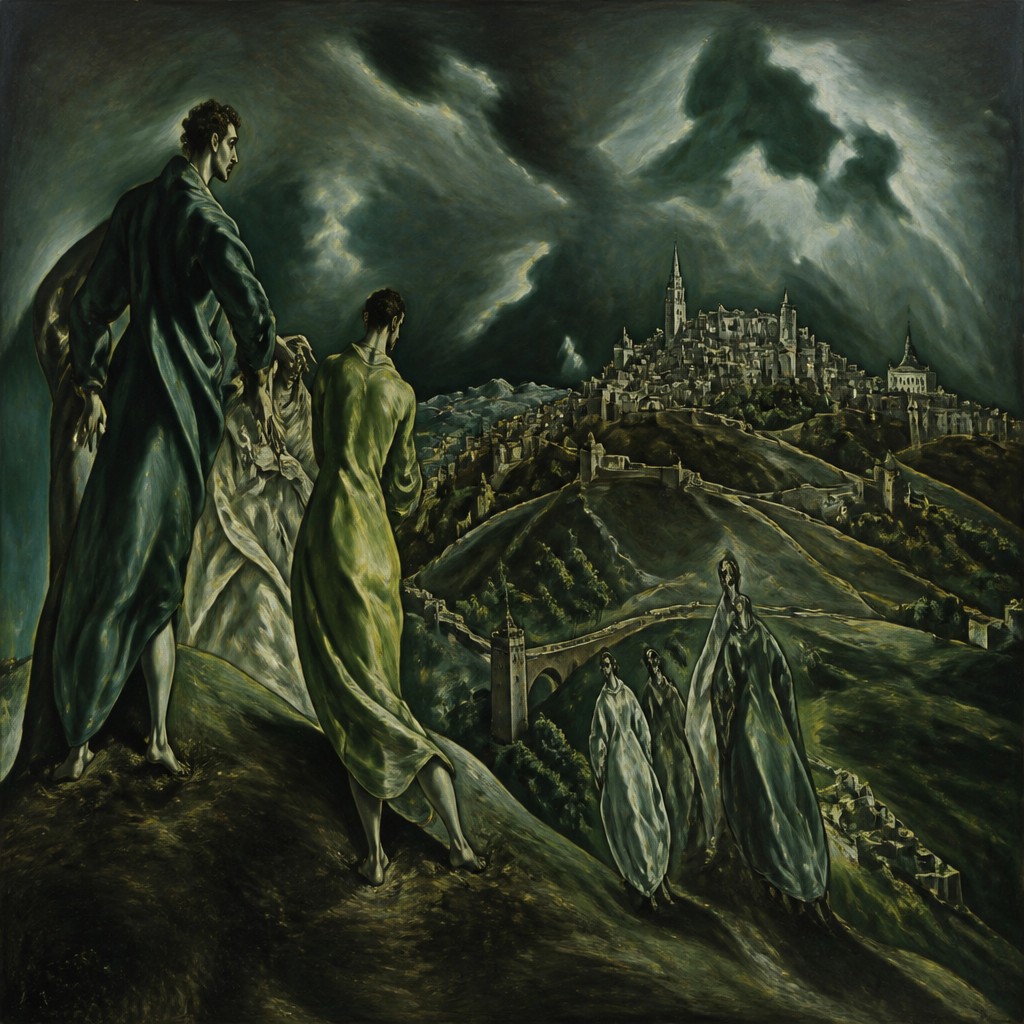
Sickly greens, slate blue-greys, muted ochres, and near-black shadows replace clean naturalistic color. Small areas of warmer light may appear as unsettling accents.
Unnatural directional light
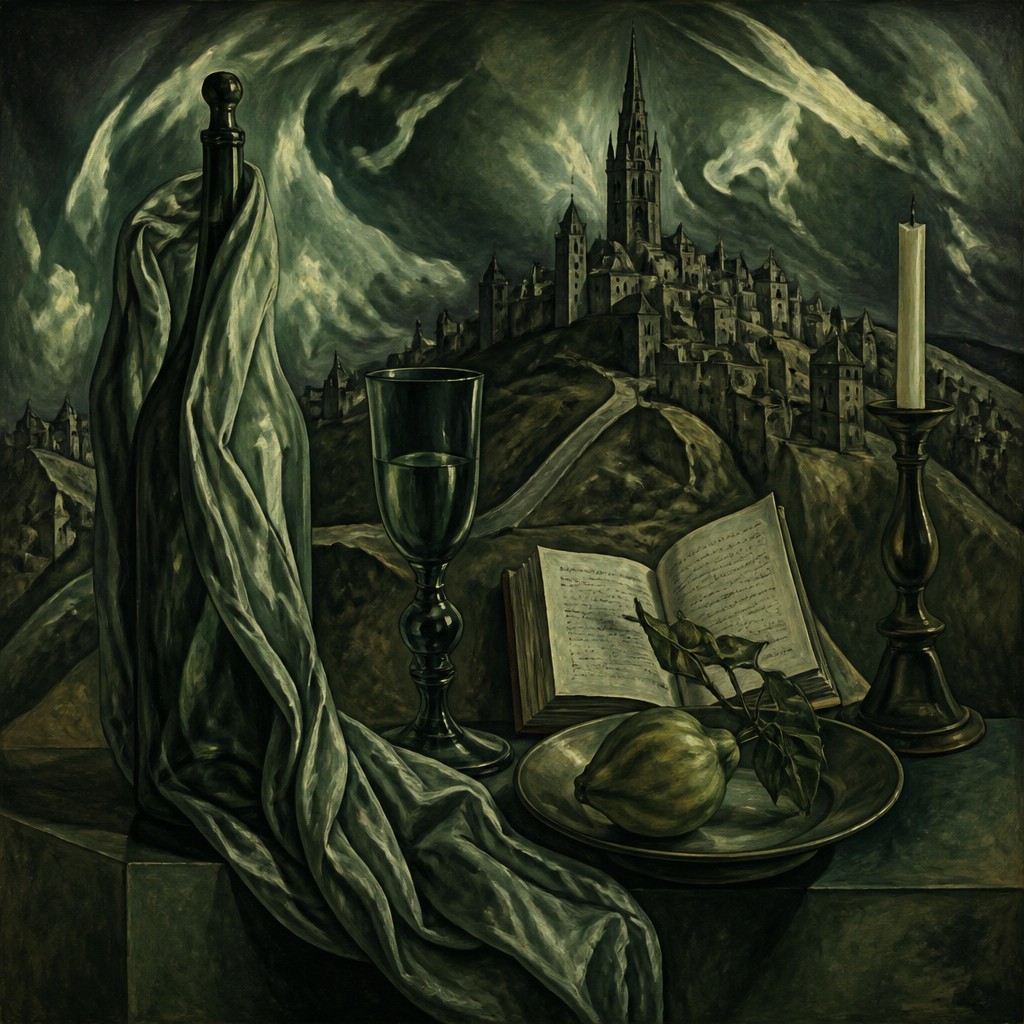
A flickering or concealed light source cuts across the scene, producing sharp illumination and dramatically elongated shadows. Light often feels symbolic, supernatural, or psychologically motivated.
Dark underpainting
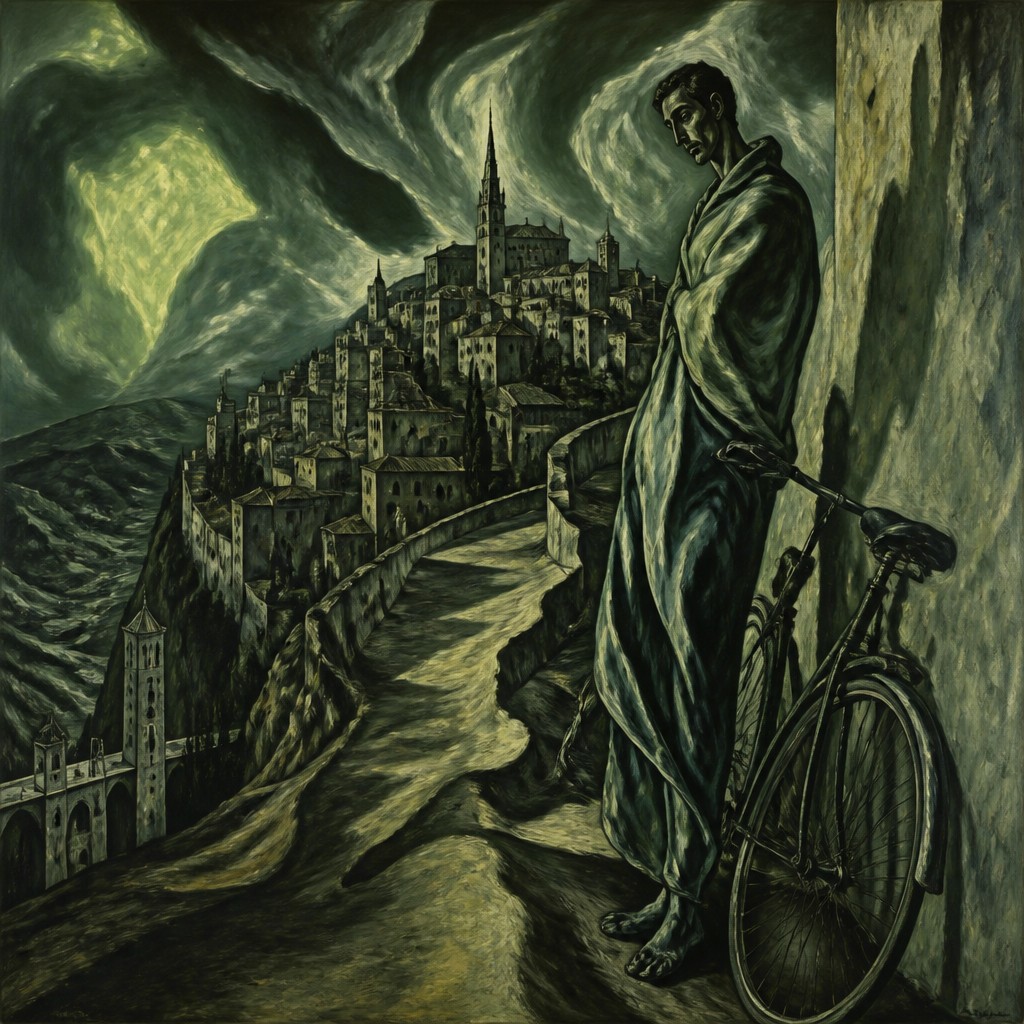
A deep greenish or umber ground unifies the composition beneath the visible colors. This gives pale highlights a spectral quality and prevents the storm palette from becoming flat or purely graphic.
Toledo Prompt Ideas
Start from an idea — each one opens the generator with the style ready to go. See all 40 Toledo prompts →
How to Create Toledo Art
Master the craft step by step — or skip straight to creating. Read the full guide →
- 1
Establish a dark ground
Begin a traditional painting with a thin green-black, viridian-umber, or cool brown imprimatura. In digital work, place a low-opacity dark green layer beneath the color layers to preserve a continuous, murky atmosphere.
- 2
Distort the figure deliberately
Block in a believable pose before extending the neck, limbs, hands, or torso beyond natural proportion. Keep the gesture elegant and coherent so the result reads as Mannerist tension rather than random deformation.
- 3
Build the city as a silhouette
Use a simple hill and clustered stone masses first, then add towers, walls, windows, and narrow streets selectively. Avoid evenly distributing architectural detail; a compressed, irregular skyline feels more historic and uncanny.
- 4
Shape the storm light
Choose one strong diagonal or lateral light direction and reserve your palest values for its impact points. Extend cast shadows farther than realism permits, but keep their direction consistent across figures, buildings, and terrain.
- 5
Control the color harmony
Mix slate, desaturated green, charcoal, and dull ochre rather than using clean primary colors. Add a few acidic highlights only after the dark masses and atmospheric depth are established.
- 6
Use precise prompt structure
For prompt-based generation, specify the subject first, then elongated anatomy, twisting drapery, the hilltop stone city, turbulent weather, green-grey colors, unnatural directional light, and a dark greenish underpainting. For image transformation, describe which existing features should remain recognizable while requesting the altered proportions, palette, and lighting.
The Story
History & Origins of Toledo
Toledo Art Style is not a documented historical movement or period school. It is an invented contemporary style whose name and imagery evoke the late sixteenth-century Mannerist culture of Spain, especially the period's interest in spiritual intensity, elongated anatomy, artificial color, and emotionally charged religious imagery.
Its aesthetic lineage also draws on storm-lit landscape painting, fortified hill cities, Northern European atmospheric drama, and modern surreal or cinematic world-building. The combination of historical references with exaggerated light, color, and anatomy makes it especially suited to digital illustration and other hybrid image-making practices.
Influences: The style is related to late Renaissance and Spanish Mannerism through its elongated bodies, artificial color, spiritual drama, and emphasis on expressive distortion. It also intersects with Baroque tenebrism, Romantic storm landscapes, Gothic architectural imagery, expressionist color, surreal landscape, and cinematic dark fantasy. Its defining synthesis is the placement of Mannerist figures and theatrical light within a distinctly Iberian hill-city setting.
Frequently Asked Questions
Is Toledo Art Style a recognized historical art movement?
No. It is a contemporary descriptive or AI-native style label rather than a documented historical movement. The name refers to an imagined vision of Toledo-like stone architecture and draws on established traditions including Spanish Mannerism and dramatic landscape painting.
What defines the Toledo Art Style?
Its core features are elongated figures, wind-twisted drapery, stormy skies, a compact hilltop stone city, acidic green-grey colors, and unnatural directional light. A dark greenish underpainting helps unify the scene and gives its highlights a spectral quality.
How does it differ from ordinary Mannerist painting?
It borrows Mannerist anatomy and artificiality but combines them with a highly specific storm-lit cityscape. The style also intensifies the green-grey palette, elongated shadows, and atmospheric unease in ways that reflect modern surreal and cinematic image-making.
Can this style be created with traditional materials?
Yes. Oil, acrylic, gouache, and mixed media can all support the style. Start with a dark greenish ground, establish a limited cool palette, distort the figures carefully, and reserve strong light for a few dramatic focal areas.
What subjects work well in this style?
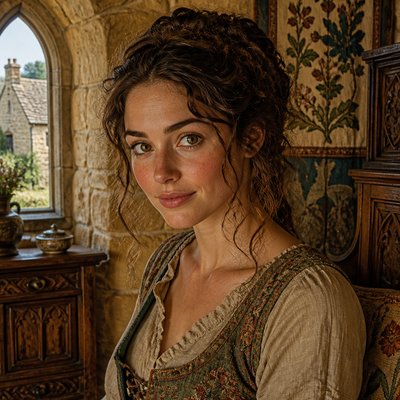
Pilgrims, processions, solitary travelers, saints, mourners, towers, monasteries, bridges, and fortified cities are especially effective. Ordinary subjects can also work if they are placed within the same storm-lit architecture and given a theatrical, psychologically charged pose.
How can a prompt preserve the style without making the image too chaotic?
Specify one main subject, one architectural setting, and one clear light direction before adding atmosphere and distortion. Include terms such as elongated anatomy, controlled swirling drapery, limited green-grey palette, and consistent long shadows to keep the composition coherent.
Create your first Toledo artwork
Describe anything — or upload a photo — and see it in Toledo Art Style in seconds.
Related Styles
Discover similar art styles