Thanjavur Art Style
Explore Thanjavur art: gilded devotional panels, jeweled relief, South Indian bronze sculpture, and temple mural color.
Instantly rendered in Thanjavur — or transform a photo
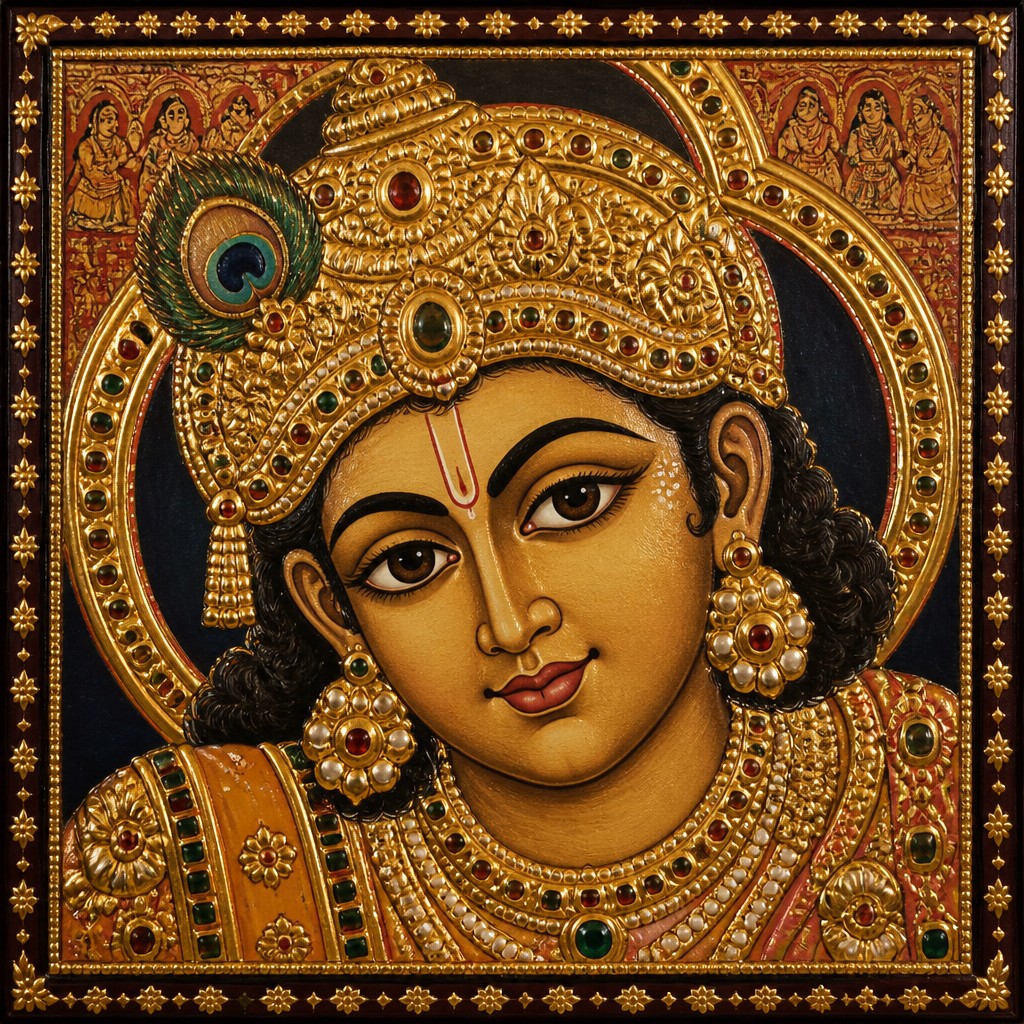
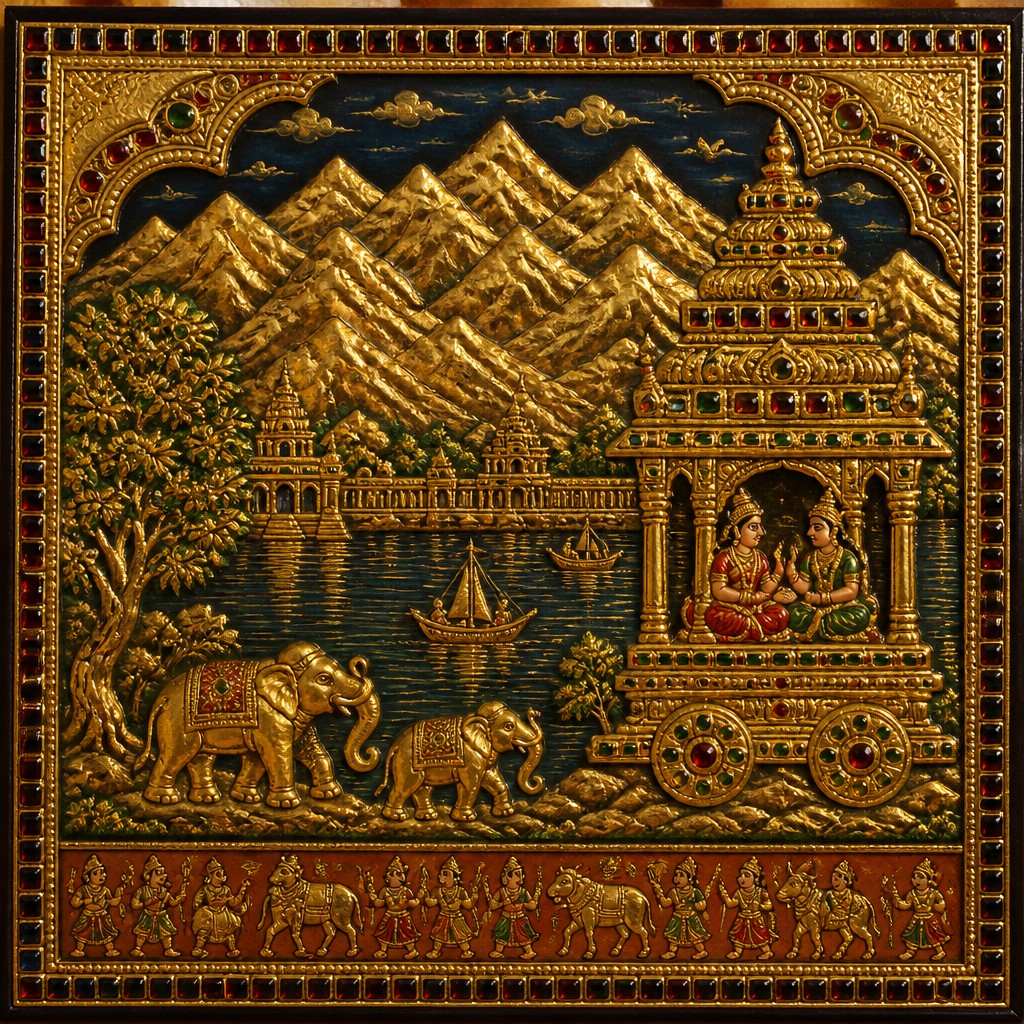
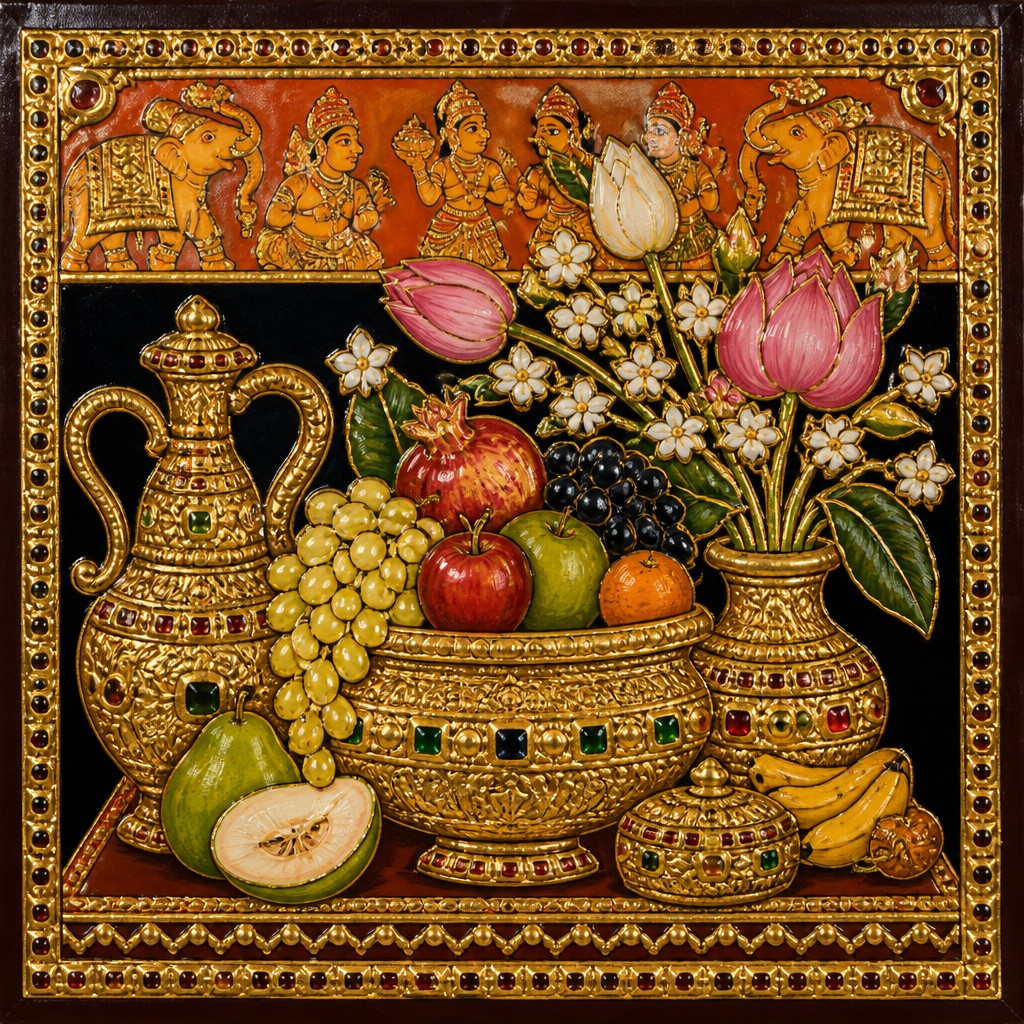
Thanjavur Gallery
Tap any artwork to explore it
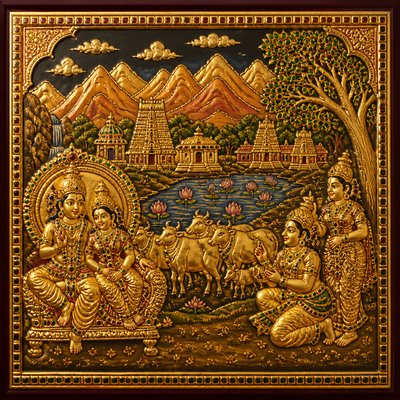
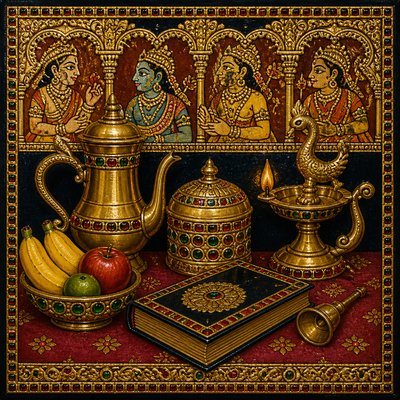
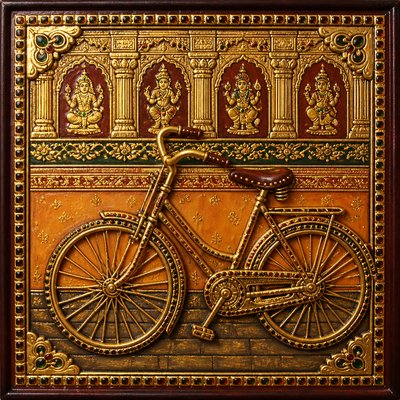
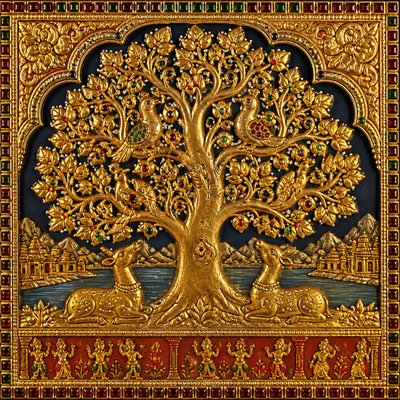
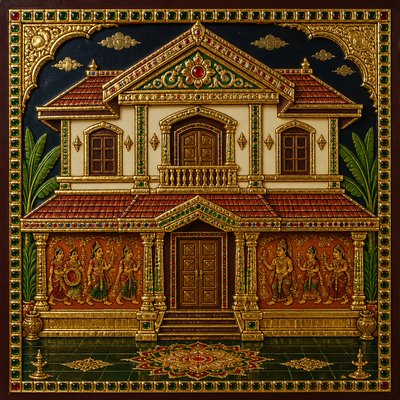
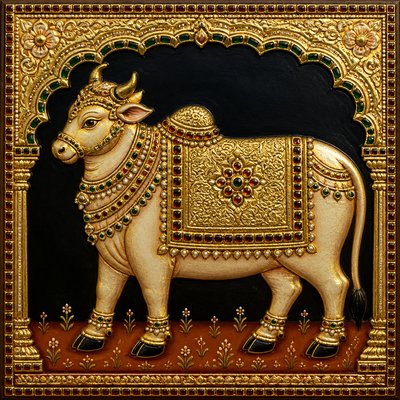
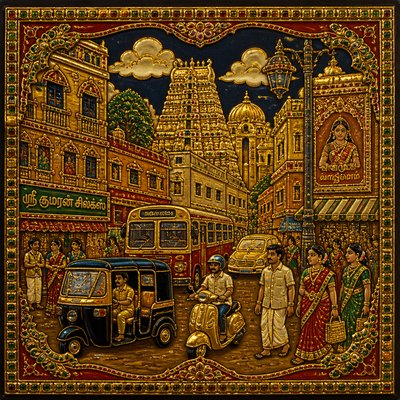
What is Thanjavur Art Style?
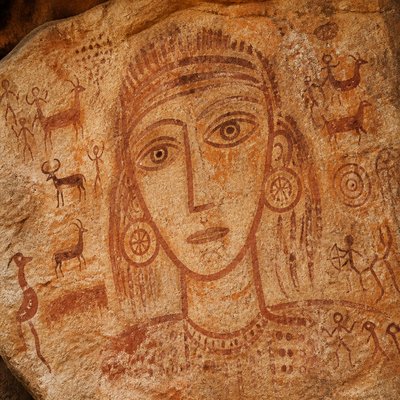
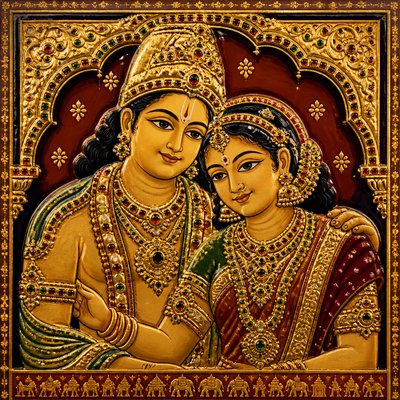
In a broader decorative sense, the style can also evoke the visual language of South Indian temple culture: cast bronze figures with fluid contours, ochre-and-vermilion mural painting, carved ornament, and dark lacquered or wooden borders. These elements are related traditions rather than a single historical medium, but together they create an opulent, ceremonial aesthetic built around devotion, material richness, and visual permanence.
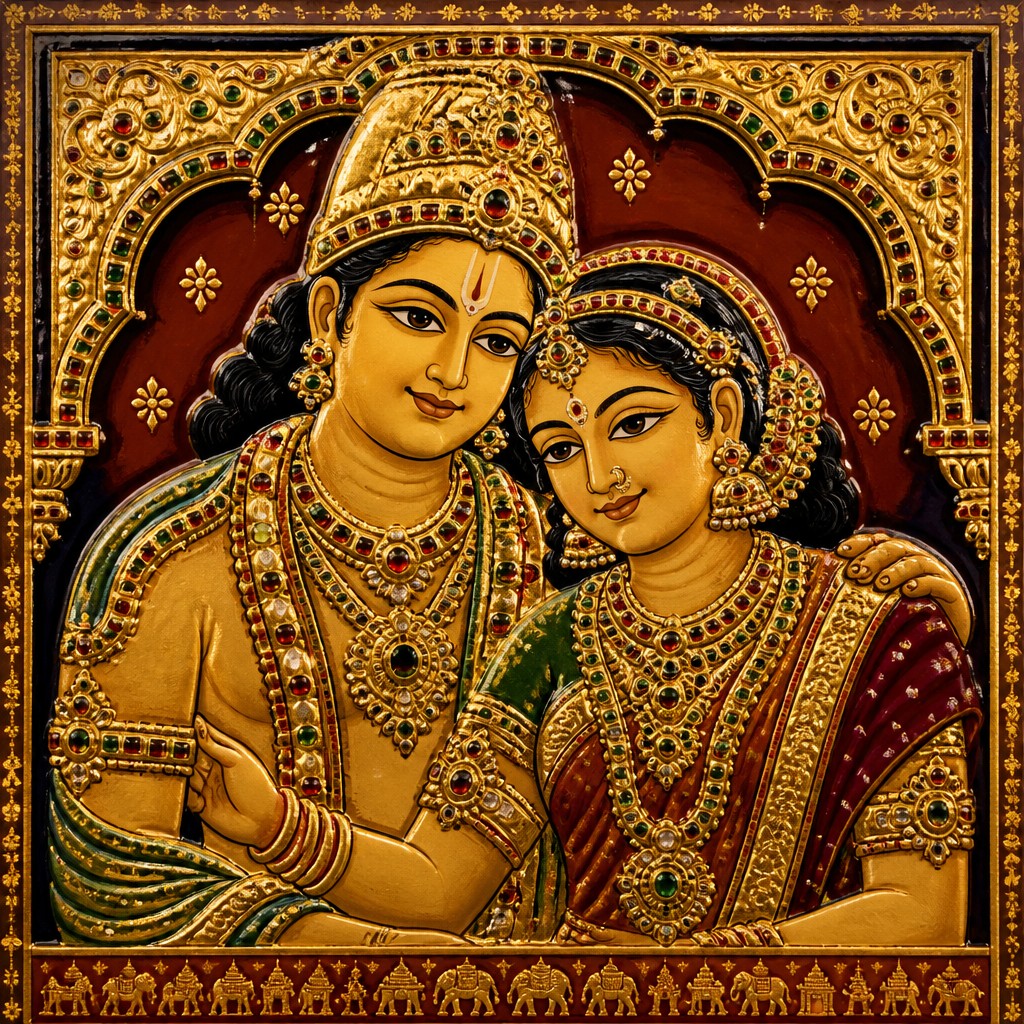
Try It On Your Photos
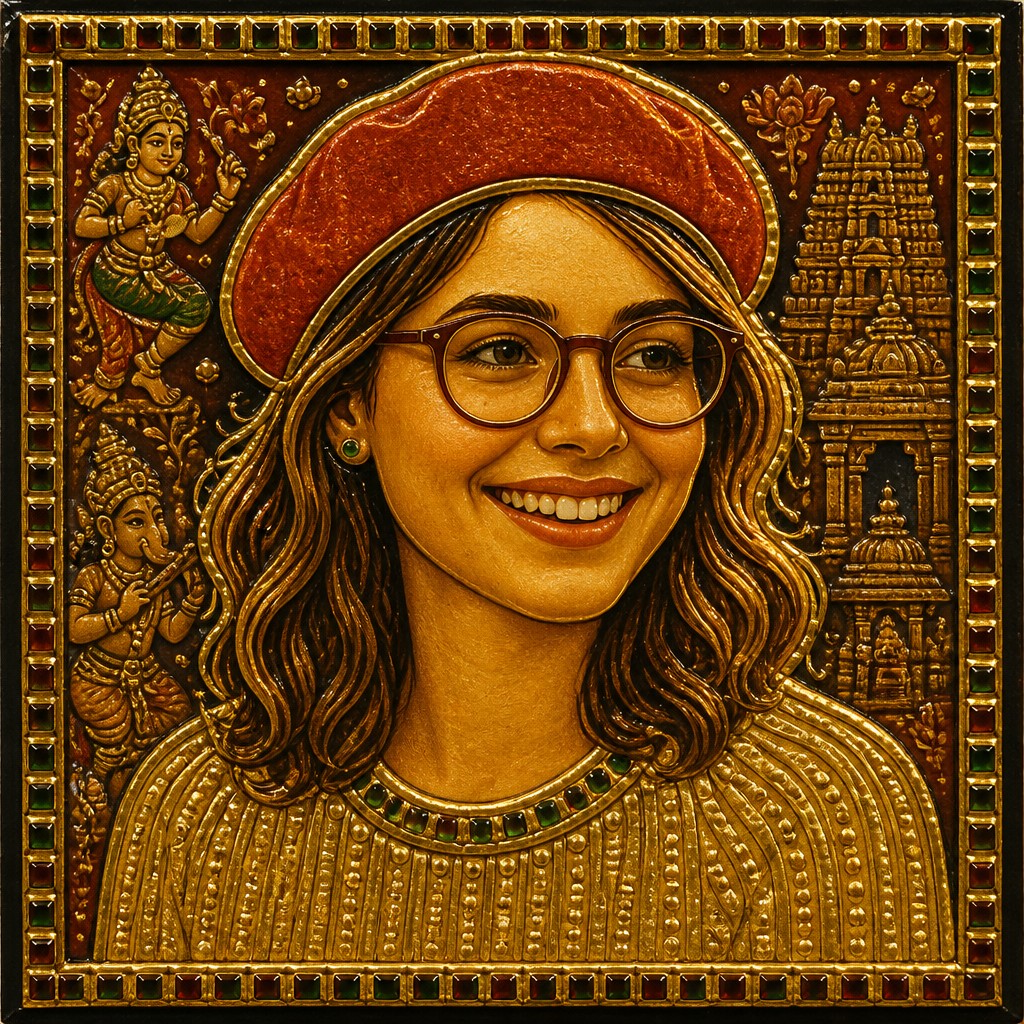
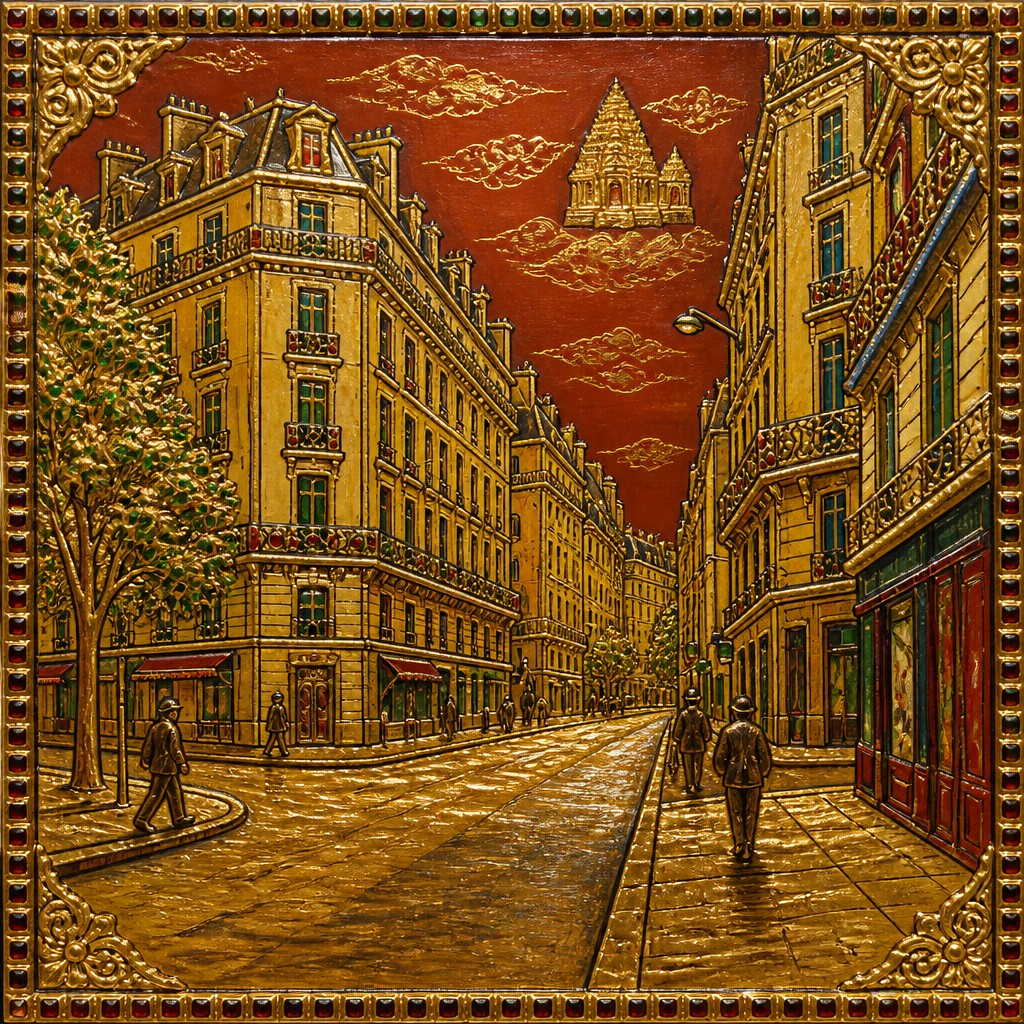
Upload any photo and convert it into Thanjavur Art Style — drag the sliders to compare before and after.


What Defines Thanjavur Art Style
The signature details, up close
Raised gesso relief
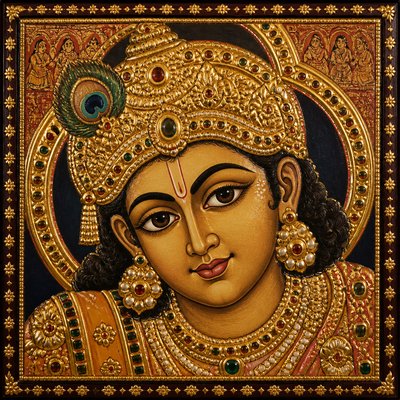
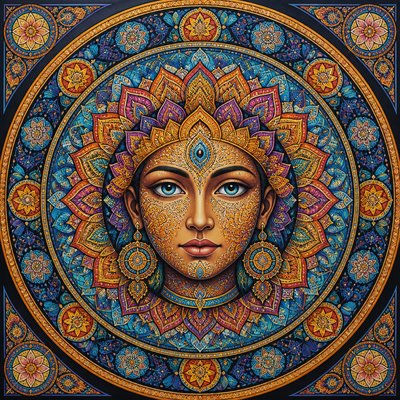
Modelled gesso creates dimensional halos, crowns, jewelry, garments, and architectural details beneath the painted surface. The relief catches light and gives the panel a sculptural presence.
Abundant gold leaf
Gold leaf is applied over selected relief areas, especially halos, ornaments, throne structures, and borders. Its reflective surface signals sacred radiance while contrasting with dense matte pigments.
Jeweled ornament
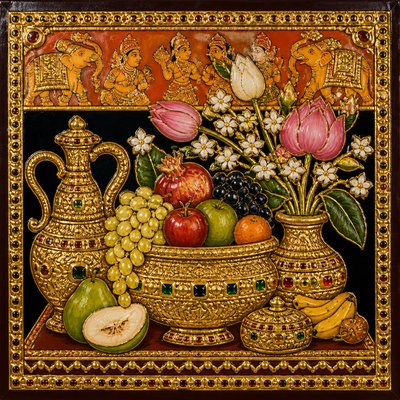
Colored glass, stones, and reflective inserts are set into the relief to imitate precious jewelry. Red, green, blue, and clear accents punctuate crowns, necklaces, floral motifs, and textile patterns.
Iconic frontal figures
Central deities and saints are usually arranged symmetrically and shown in a formal, frontal or gently hierarchical pose. Enlarged eyes, composed expressions, and carefully ordered gestures reinforce devotional focus.
Temple-derived palette
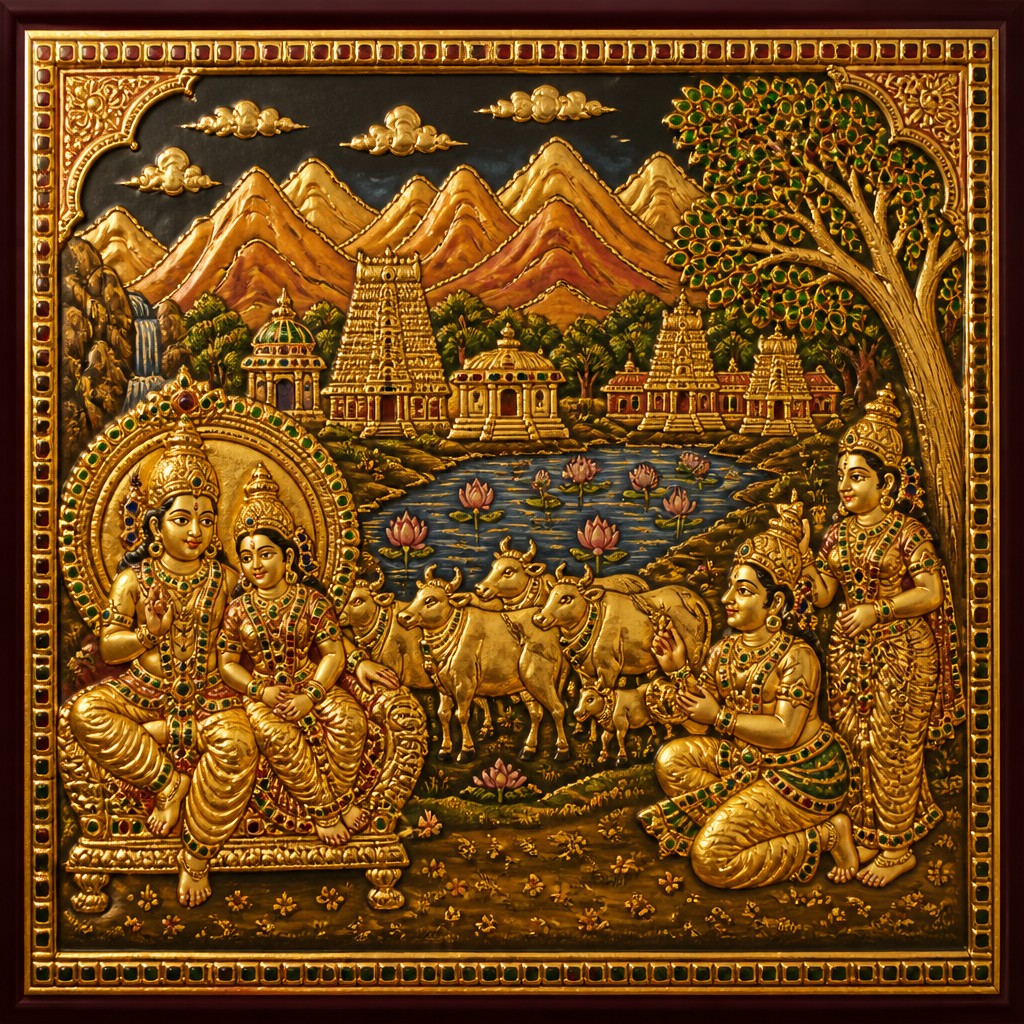
Vermilion, ochre, deep green, indigo, cream, black, and warm brown create a saturated ceremonial palette. Strong color fields make the gold and jeweled details visually prominent.
Ornate framing
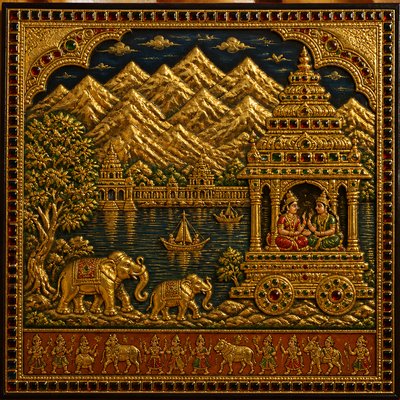
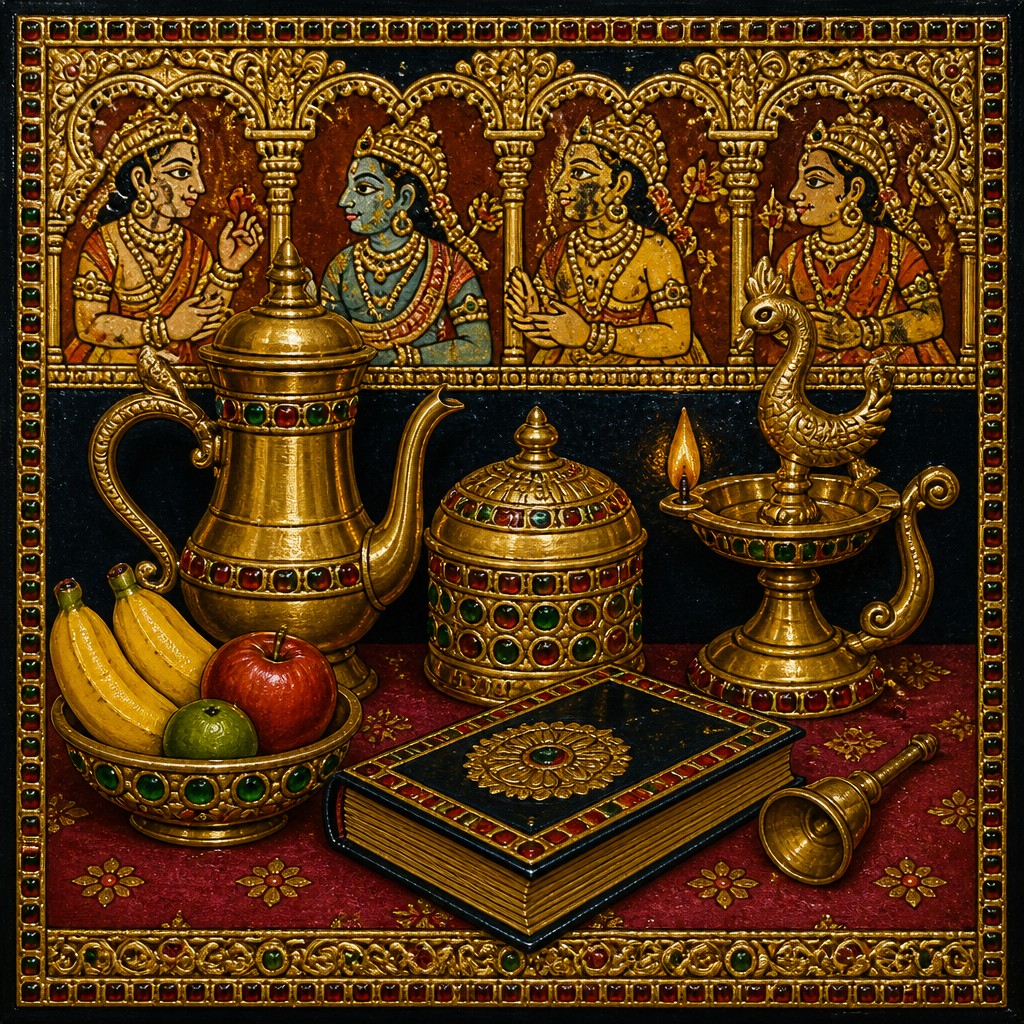
Deep-toned wooden or painted borders often surround the central image, with arches, columns, floral scrolls, and patterned textile details. The frame functions as part of the sacred architectural setting.
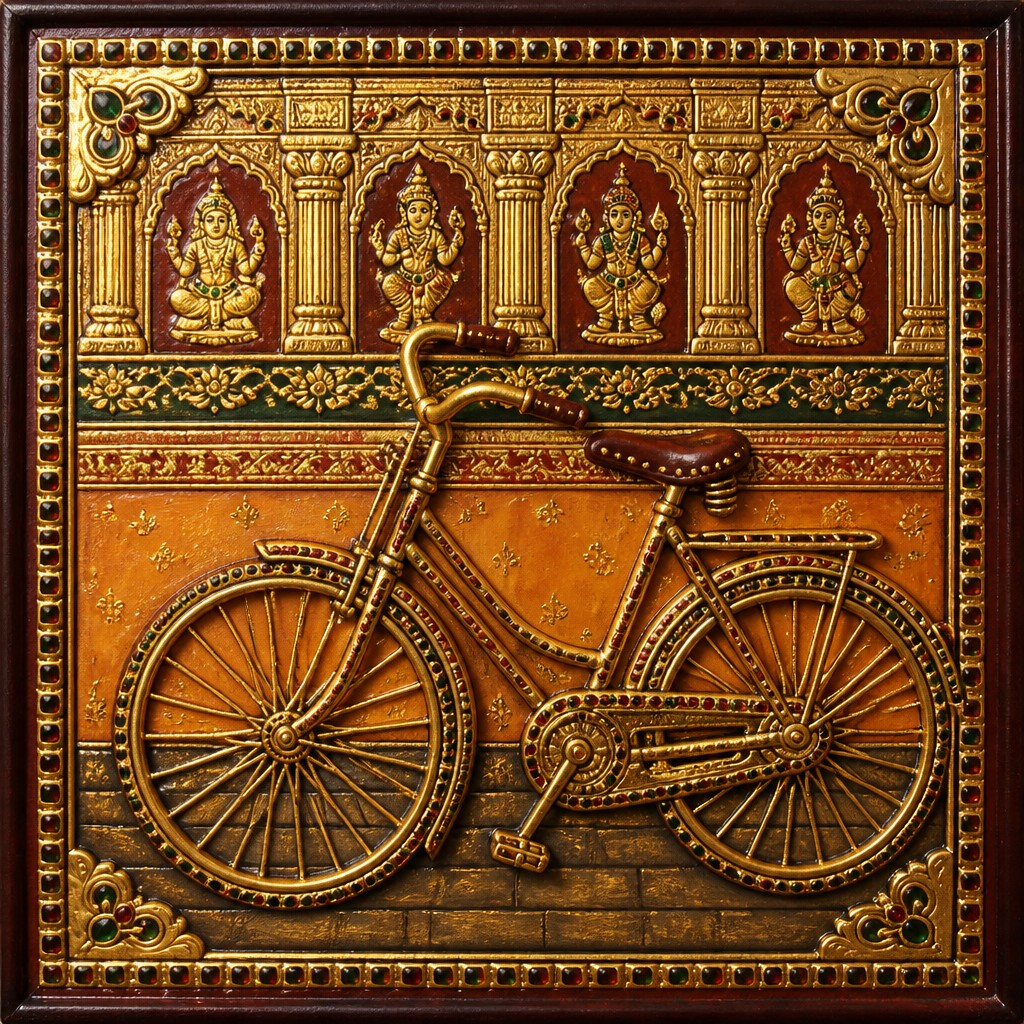
Bronze and mural resonance
When the style is interpreted broadly, smooth cast-bronze contours and flowing deity poses complement the flat iconography of panel painting. Mural-like friezes add horizontal rhythm, narrative detail, and weathered temple color.
Thanjavur Prompt Ideas
Start from an idea — each one opens the generator with the style ready to go. See all 40 Thanjavur prompts →
How to Create Thanjavur Art
Master the craft step by step — or skip straight to creating. Read the full guide →
- 1
Build the panel structure
For a traditional work, prepare a rigid wooden support, establish a centered icon, and reserve space for a broad architectural border. In digital work, use a strong central axis and layered border geometry before adding ornament.
- 2
Model the relief
Apply raised gesso or a digital equivalent to halos, jewelry, crowns, and throne elements, keeping the relief controlled rather than fully sculptural. Vary height so the most sacred or important forms receive the strongest highlights.
- 3
Use gold and gem contrast
Combine warm metallic gold with saturated red, green, blue, and cream rather than using a uniformly metallic surface. Add small jewel-like highlights selectively to preserve hierarchy and avoid visual noise.
- 4
Strengthen the icon
Place the principal figure frontally or in a stable three-quarter pose, enlarge the eyes slightly, and use calm symmetry, ornamental garments, and a clear halo. Keep secondary figures and scenery subordinate to the devotional subject.
- 5
Add regional material cues
Introduce ochre-and-vermilion mural bands, dark lacquered wood, temple columns, floral borders, or subtly modeled bronze forms to broaden the South Indian visual context. These accents should support the panel rather than obscure its central image.
- 6
Write precise generation directions
For prompt-based creation, specify the subject, frontal composition, raised gesso, gold leaf, colored glass gems, temple palette, wood border, and controlled devotional lighting. For photo transformation, preserve the subject's silhouette while adding relief, gilding, jewel insets, and an icon-like background.
The Story
History & Origins of Thanjavur
The bronze component of the wider visual lineage reaches further back, especially to the Chola-period metalworking tradition of approximately the ninth to thirteenth centuries, when hollow lost-wax casting produced highly expressive Hindu icons for temple ritual and procession. Temple murals also preserve older regional conventions in mineral color, narrative sequencing, and architectural ornament. Modern usage often combines these distinct traditions into a unified South Indian sacred-art vocabulary.
Influences: The style is closely related to South Indian devotional painting, Nayaka-period mural conventions, Maratha-court panel production, Hindu iconographic traditions, and the Chola and later Tamil bronze-casting lineages. It also shares decorative principles with temple architecture, goldsmithing, manuscript ornament, textile pattern, and lacquered woodcraft. Its emphasis on frontal icons, sacred radiance, symmetry, and precious materials distinguishes it from looser narrative mural painting and from purely naturalistic portraiture.
Frequently Asked Questions
What defines Thanjavur art style?
It is defined most strongly by devotional panel images with raised gesso, gold leaf, saturated pigments, jeweled or glass-studded ornament, frontal figures, and elaborate borders. The broader visual vocabulary may also include South Indian temple murals and bronze sculpture, although those are historically related but distinct traditions.
Is Thanjavur painting the same as Tanjore painting?
Yes. Thanjavur painting and Tanjore painting are common English names for the same South Indian panel-painting tradition. The spelling varies because Thanjavur is also widely transliterated as Tanjore.
When did Thanjavur painting originate?
The recognizable panel tradition developed primarily in the late eighteenth century and continued through the nineteenth century in and around Thanjavur. It drew on older Nayaka mural, devotional, courtly, and craft traditions rather than appearing as an entirely new form.
How is it different from South Indian bronze sculpture?
Thanjavur painting is a two-dimensional panel medium that uses relief, pigment, gold, and embedded ornament. South Indian bronze sculpture is a three-dimensional metal tradition, especially associated with lost-wax casting and temple ritual; both share devotional subjects and formal elegance but are made through different processes.
What subjects are commonly shown?
Common subjects include Hindu deities, saints, royal or divine couples, temple scenes, and episodes from devotional narratives. Central figures are usually presented with attributes, halos, elaborate jewelry, and a carefully organized sacred setting.
Can this style be created digitally or from a photograph?
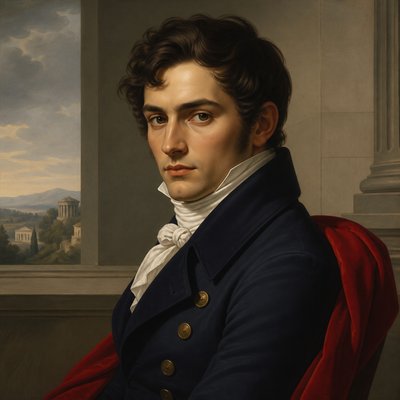
Yes. Use a centered composition, strong silhouette, raised-relief effects, gold-leaf texture, jewel-like color accents, and a dark architectural border. For a photograph, retain recognizable facial structure and pose while applying selective gilding, ornamental relief, temple color, and an icon-like background rather than flattening every detail into pattern.
Create your first Thanjavur artwork
Describe anything — or upload a photo — and see it in Thanjavur Art Style in seconds.
Related Styles
Discover similar art styles