Thai Art Style
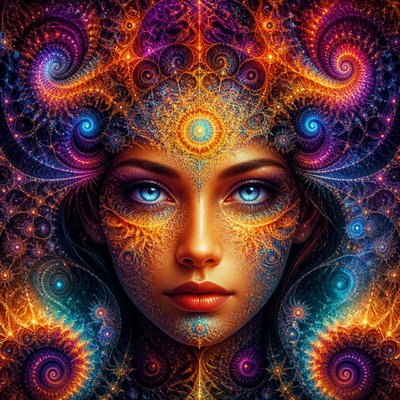
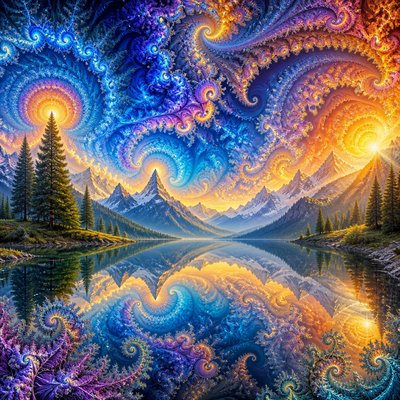
Explore Thai art style: gilded temple murals, elegant bronze contours, lacquer ornament, vivid colors, and devotional tropical radiance.
Instantly rendered in Thai — or transform a photo
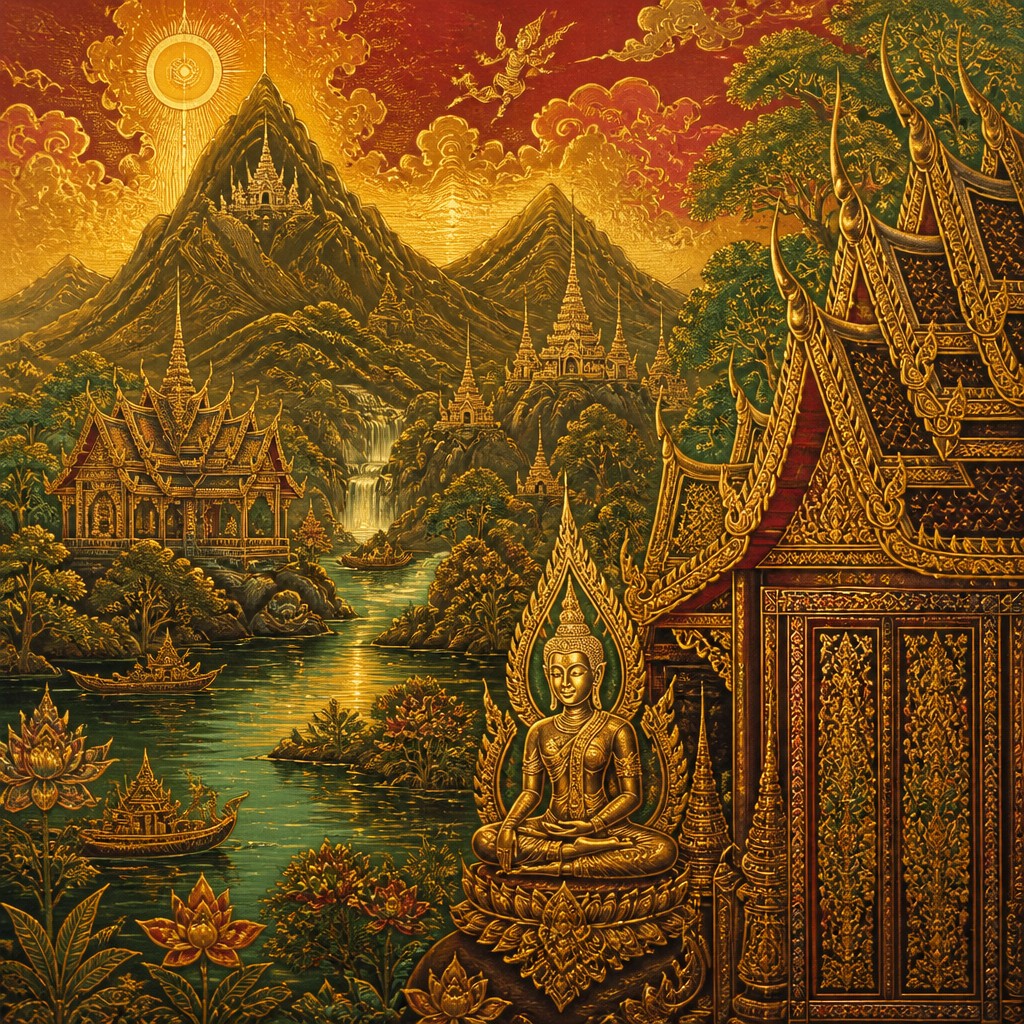
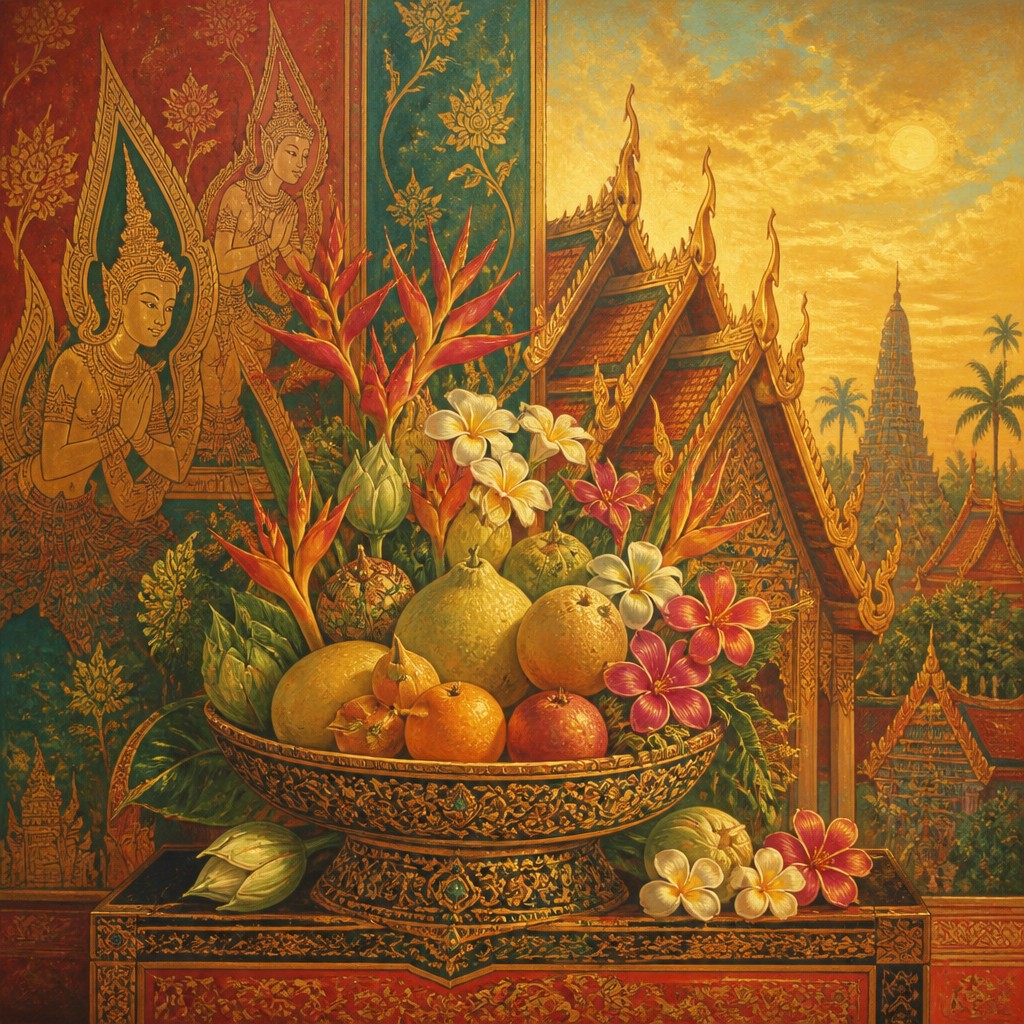
Thai Gallery
Tap any artwork to explore it
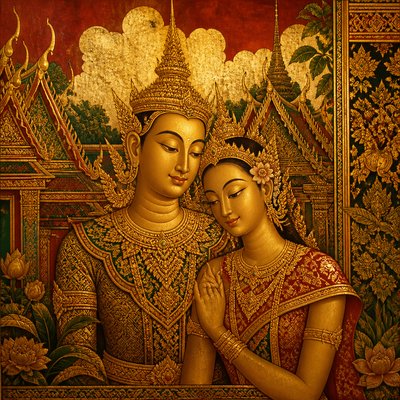
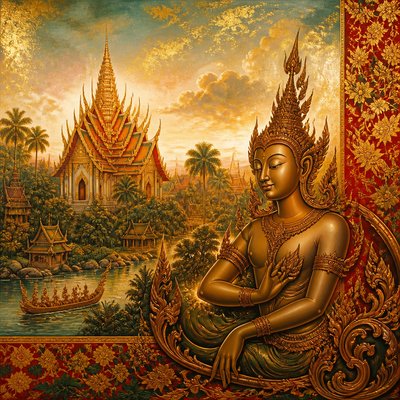
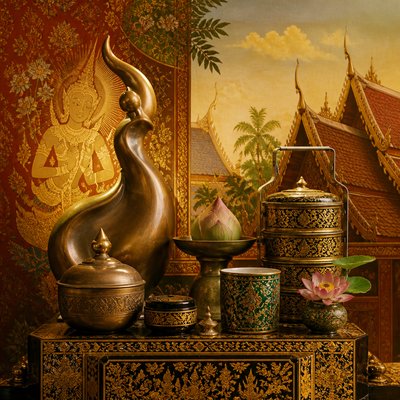
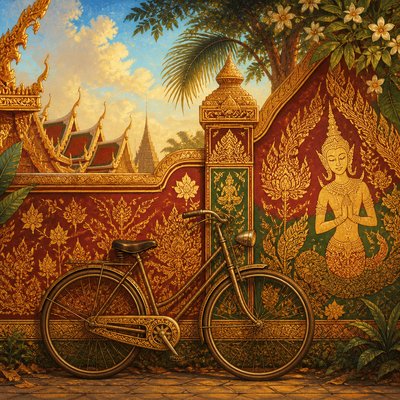
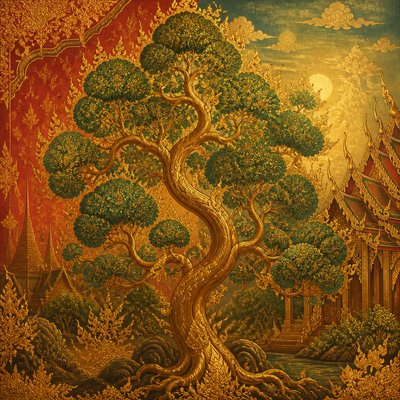
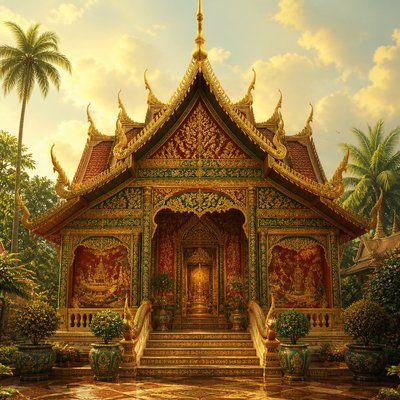
What is Thai Art Style?
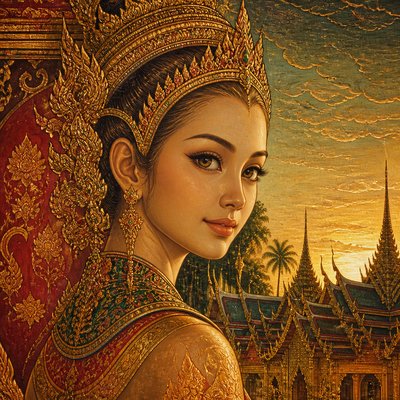
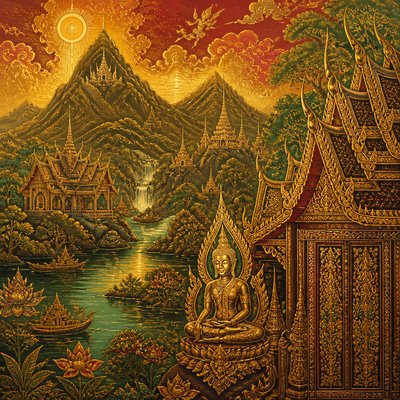
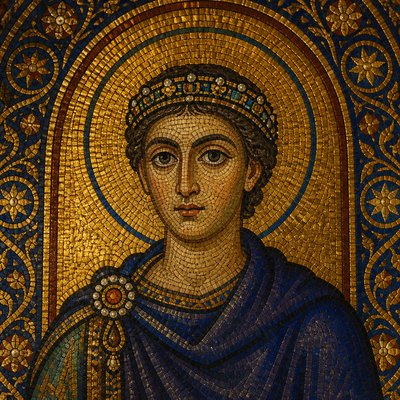
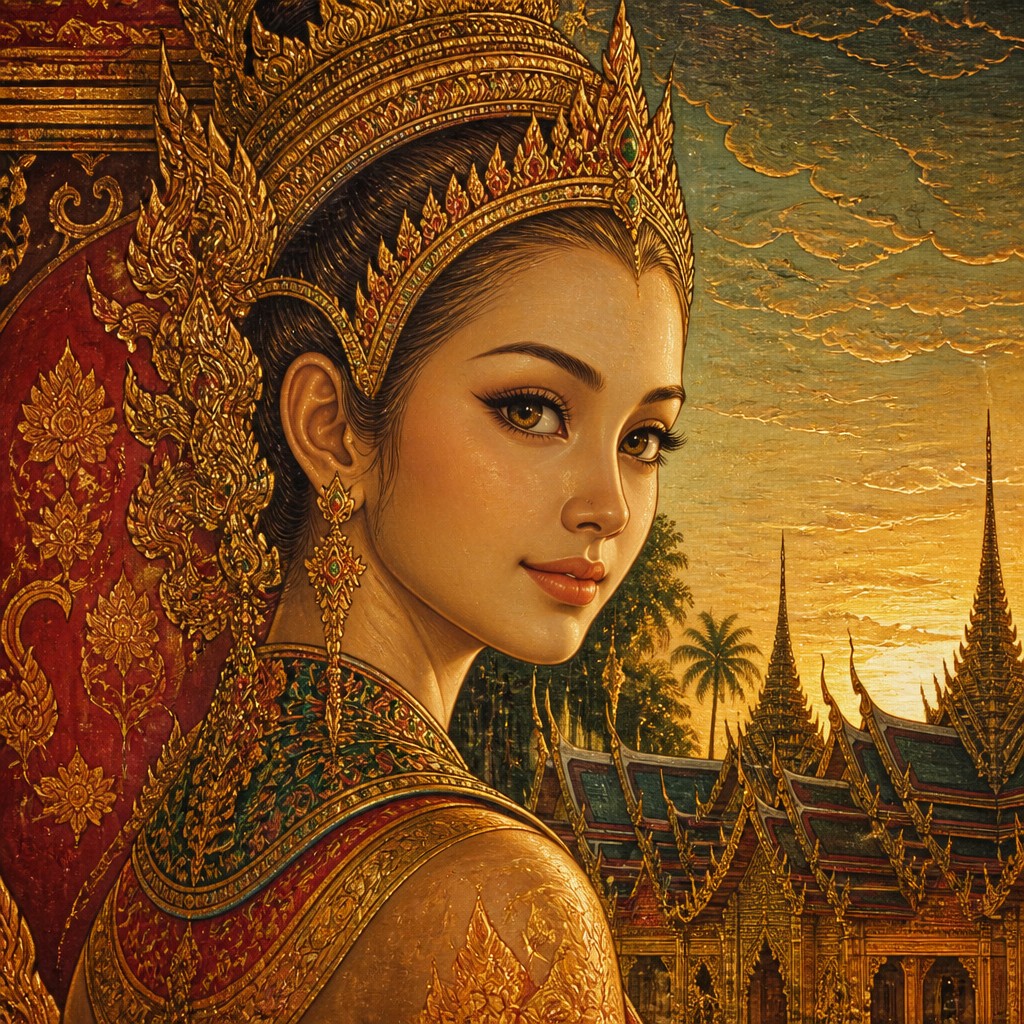
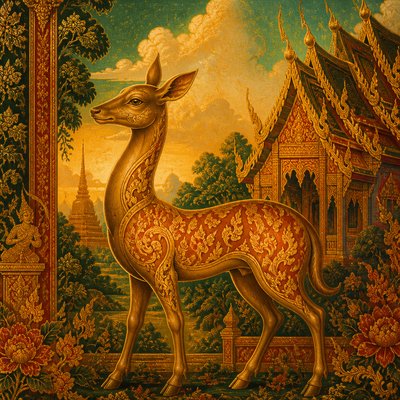
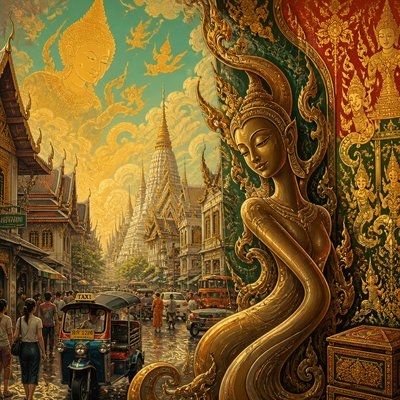
Thai art style refers to the visual traditions developed in Thailand through Buddhist temple painting, sculpture, architecture, manuscript illumination, textiles, lacquerware, and ceremonial craft. Its recognizable identity combines disciplined ornament, rhythmic contours, symbolic imagery, and radiant surfaces in which gold, vermilion, deep blue, green, black, and white create a concentrated sense of visual splendor.
The style is often associated with serene Buddha figures, flame-like halos, pointed architectural silhouettes, mythical creatures, botanical scrollwork, and narrative murals. Its elegance comes from the relationship between a calm central form and a densely patterned setting: smooth rounded bodies and flowing lines are framed by intricate borders, gilded details, and layered decorative motifs. In contemporary interpretations, these qualities can be extended into bronze-like sculpture, digital painting, fashion, interiors, and atmospheric scenes with a warm tropical glow.
Try It On Your Photos
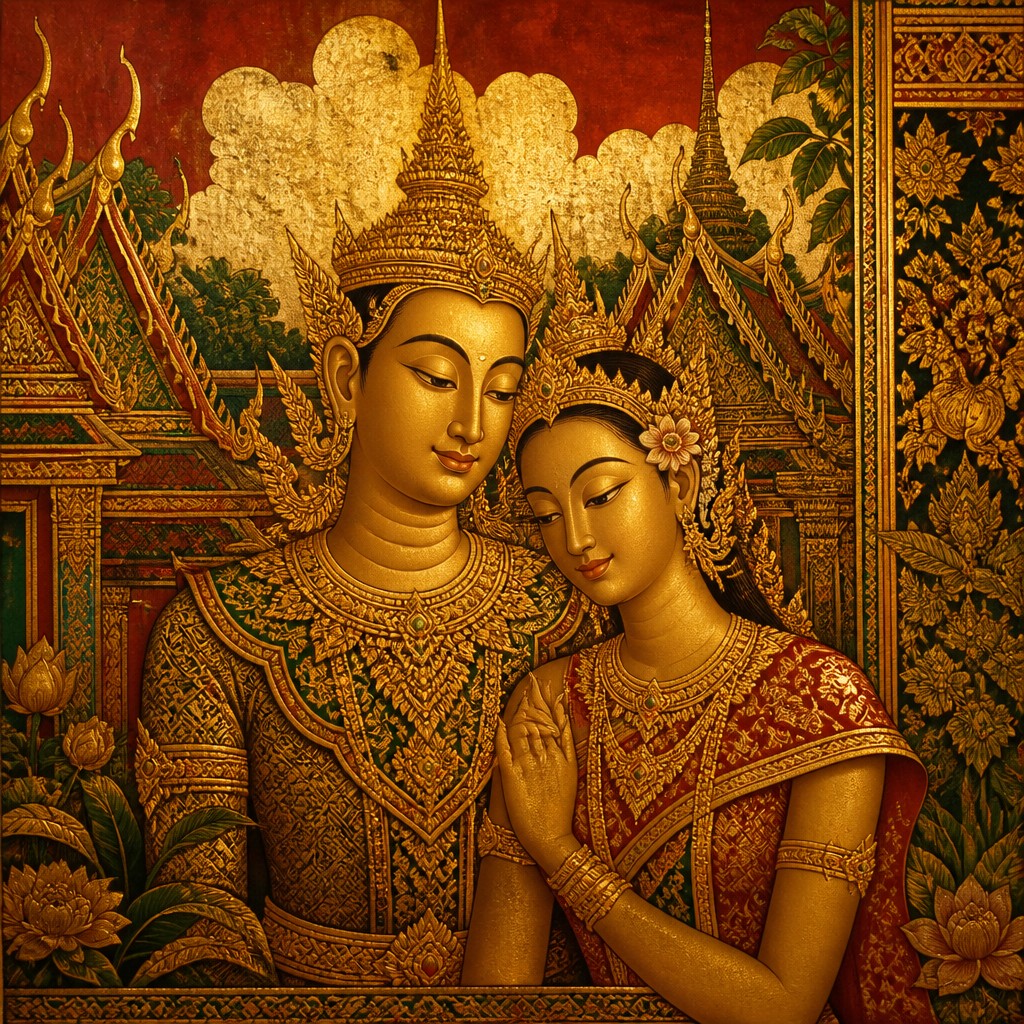
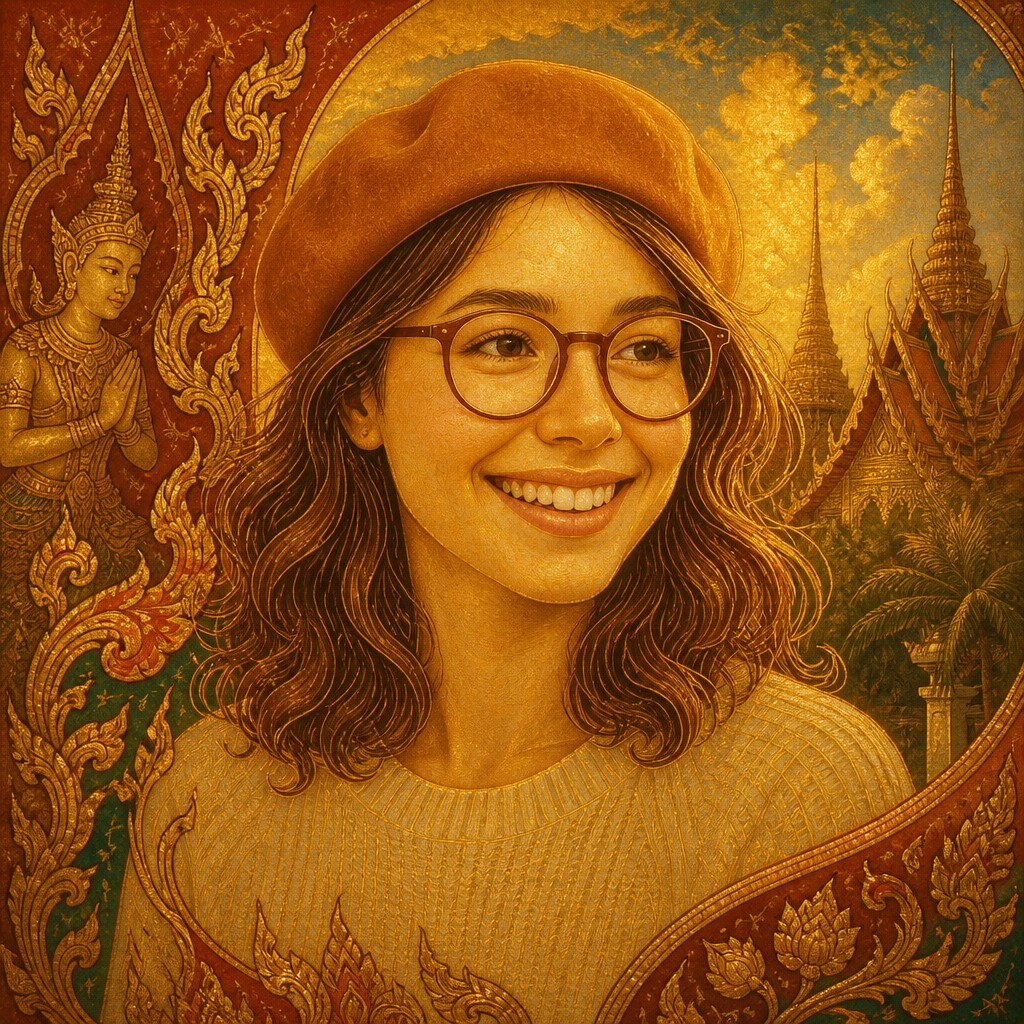
Upload any photo and convert it into Thai Art Style — drag the sliders to compare before and after.

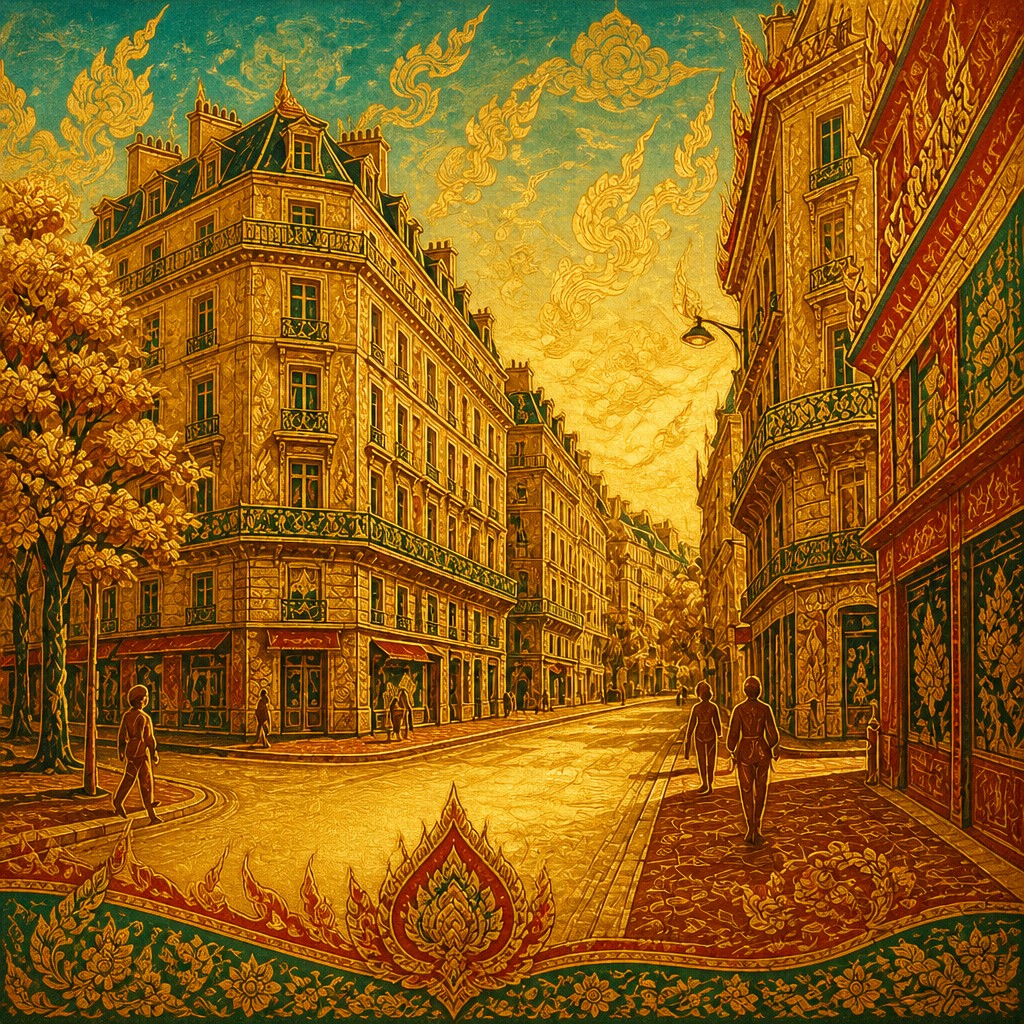

Or use the free Thai photo filter
What Defines Thai Art Style
The signature details, up close
Gilded ornament
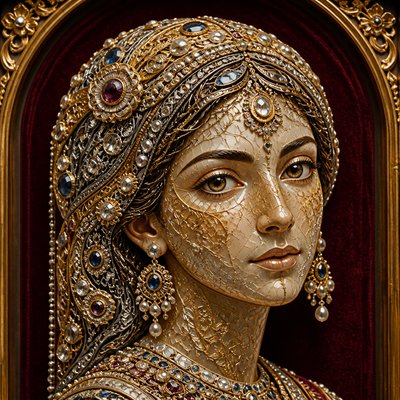
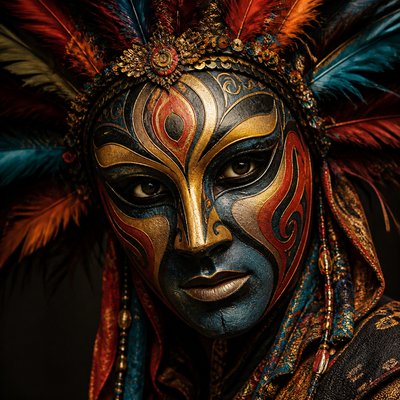
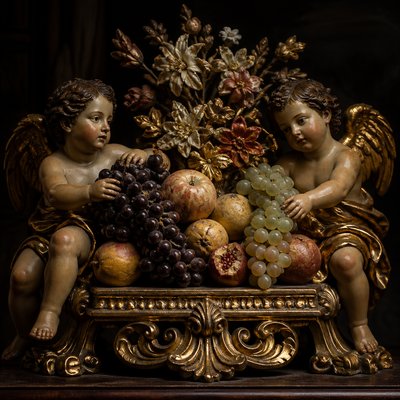
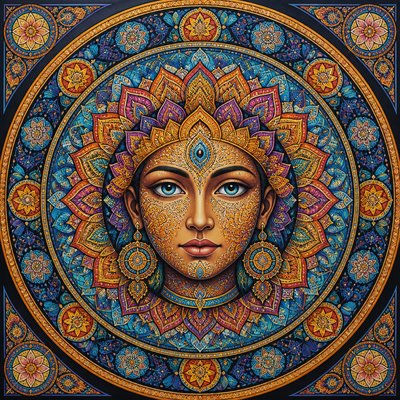
Gold leaf and gold-like highlights appear on figures, architectural details, borders, and decorative patterns. The reflective surface creates a devotional radiance and gives flat painted areas a jewel-like intensity.
Serene rounded forms
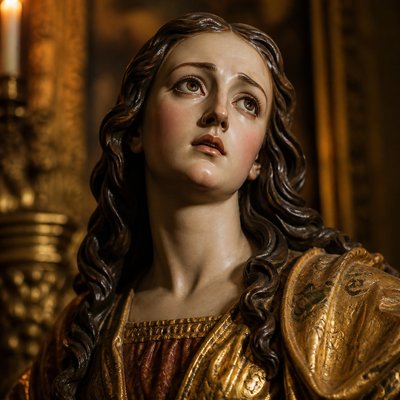
Figures, especially sacred sculptures, tend toward balanced proportions, softened volumes, composed expressions, and controlled gestures. Smooth contours contrast with the complexity of the surrounding ornament.
Flame-like contours
Flame motifs appear in halos, finials, crowns, foliage, and roof details, producing pointed upward rhythms. These tapering forms suggest spiritual energy while adding movement to otherwise symmetrical compositions.
Vermilion, emerald, and gold
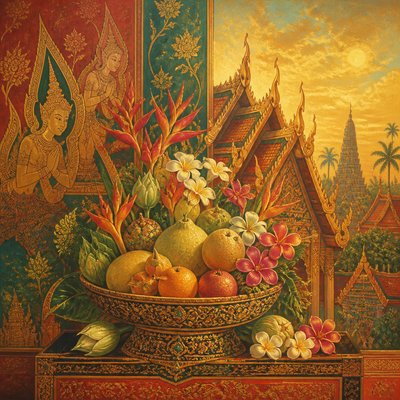
Saturated red, green, blue, black, and warm metallic tones are frequently arranged in strong decorative contrasts. The palette can be intensified with humid atmospheric light and dark grounds that make gilded elements stand out.
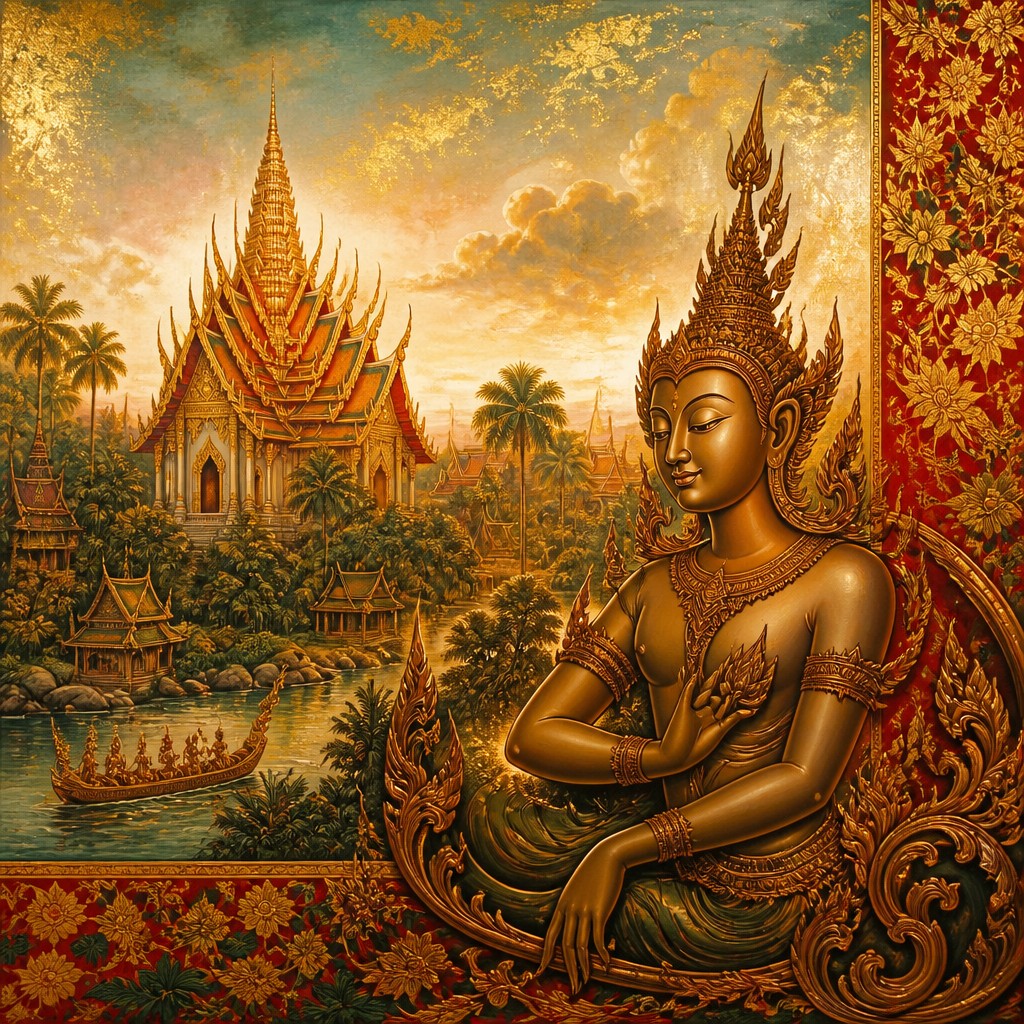
Narrative mural composition
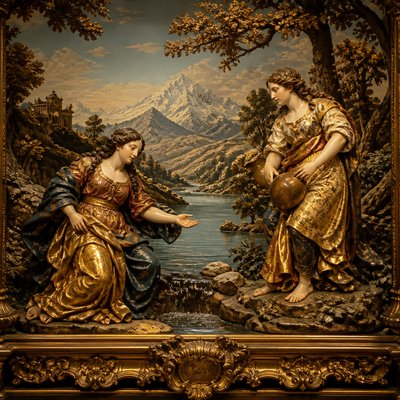
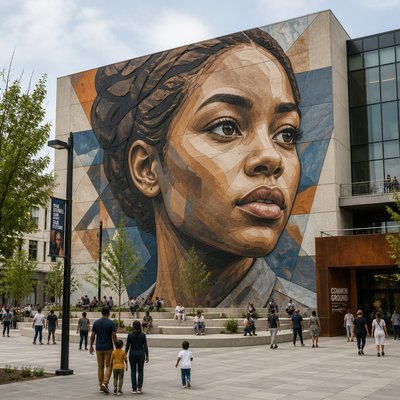
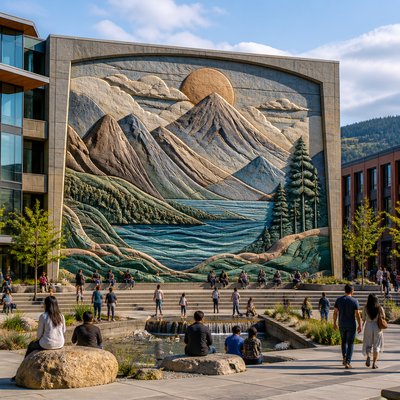
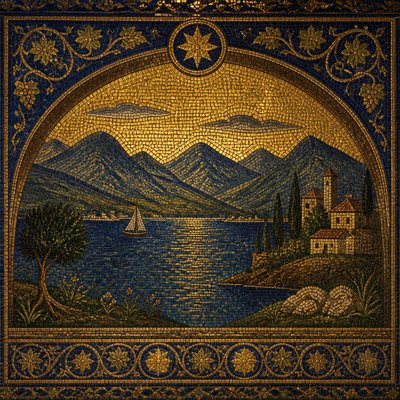
Traditional temple murals commonly organize religious stories, moral narratives, courtly scenes, landscapes, and daily life across expansive walls. Figures and episodes may be arranged through symbolic scale and rhythmic repetition rather than strict naturalistic perspective.
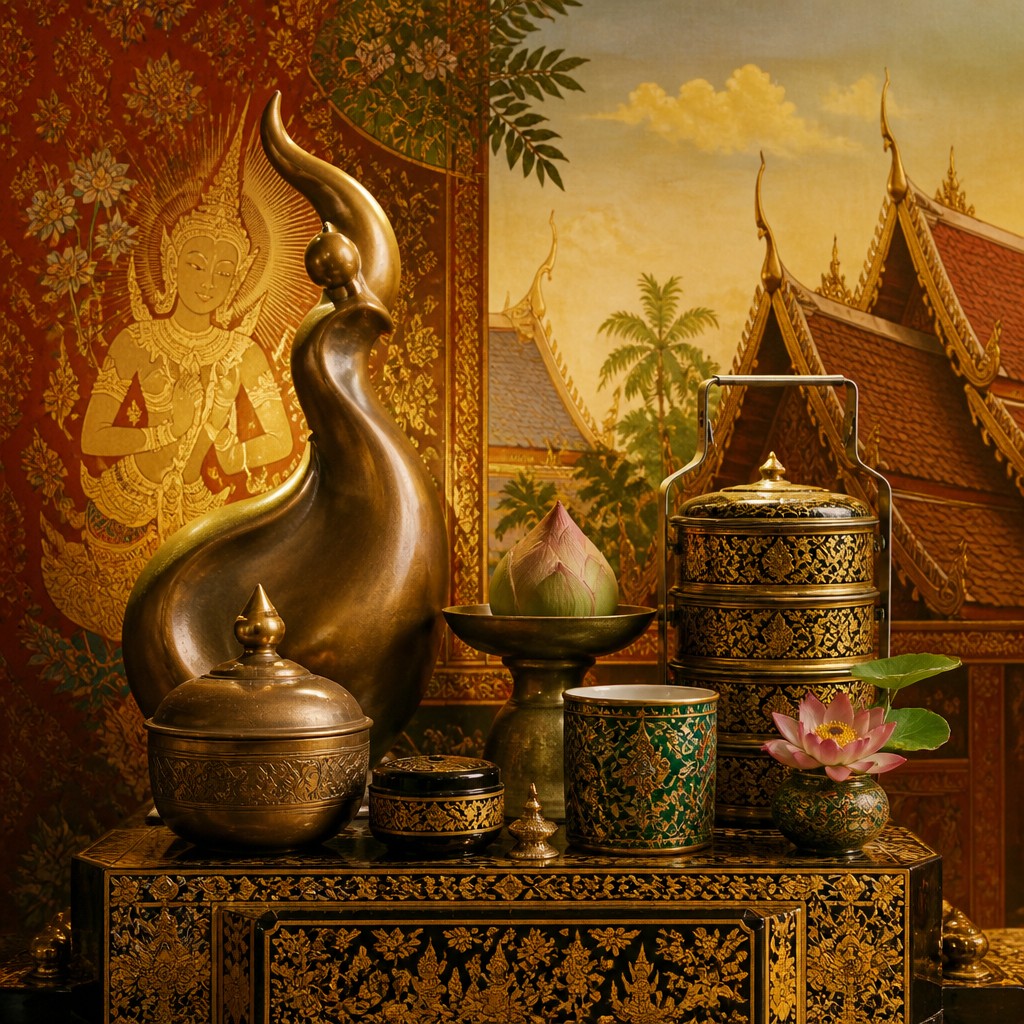
Lacquer-and-gilt patterning
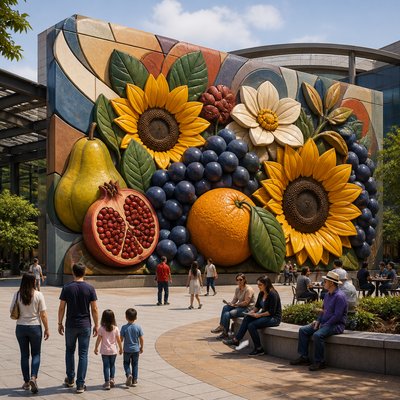
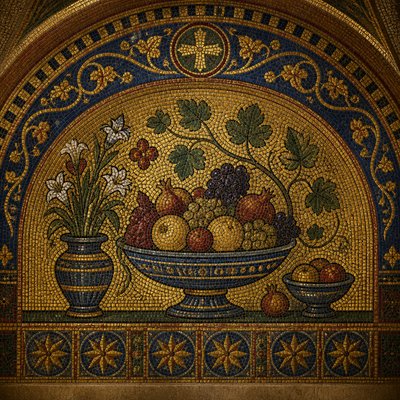
Fine plant scrolls, floral arabesques, geometric borders, mythical animals, and architectural motifs evoke the precision of Thai lacquer decoration. Dense detail is usually balanced by clear silhouettes and ordered repetition.
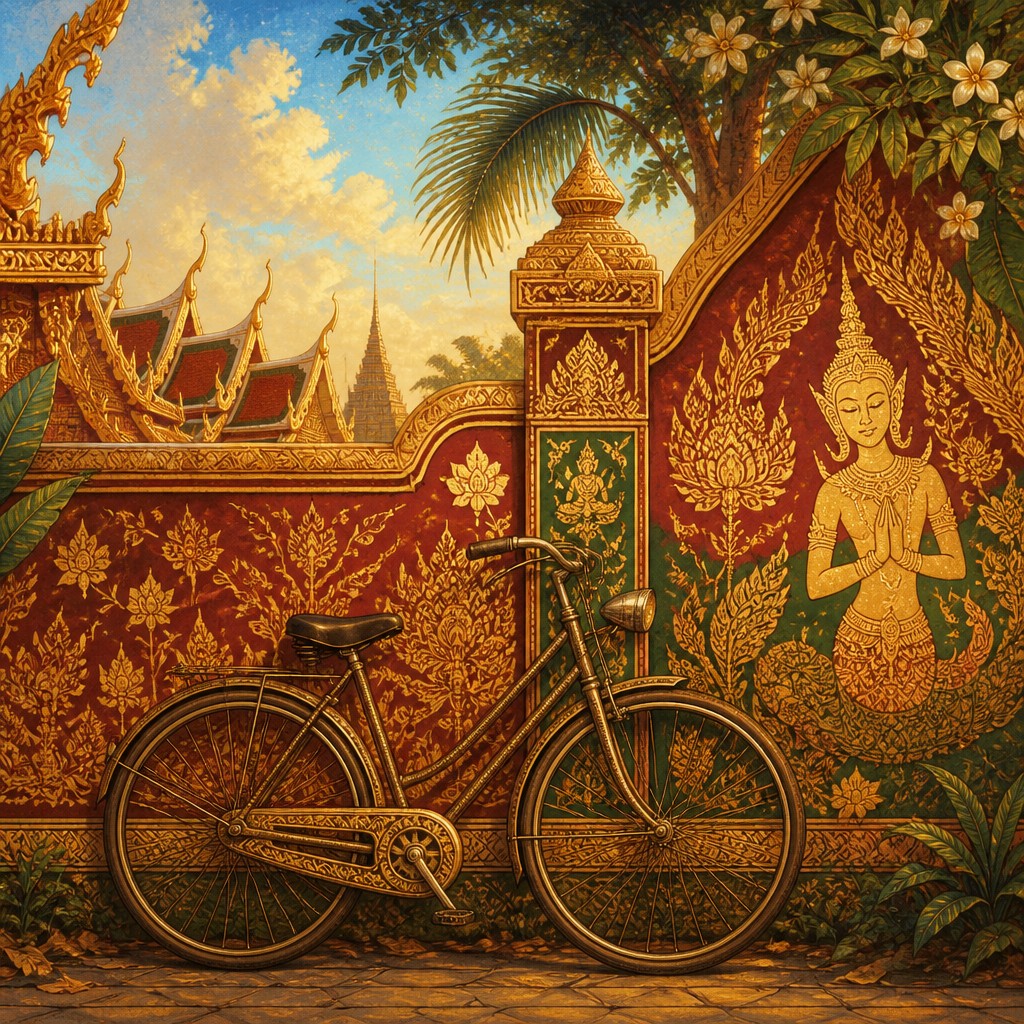
Temple and tropical atmosphere
Pointed roof profiles, naga-like serpents, guardian figures, palms, water, and luminous skies connect the style to sacred architecture and Southeast Asian environments. Warm haze and reflective surfaces can suggest a humid, ceremonial setting.
Thai Prompt Ideas
Start from an idea — each one opens the generator with the style ready to go. See all 40 Thai prompts →
How to Create Thai Art
Master the craft step by step — or skip straight to creating. Read the full guide →
- 1
Build a calm primary silhouette
Begin with a centered figure, shrine, animal, or architectural form using smooth rounded volumes and elegant continuous contours. Keep the main silhouette readable before adding decorative complexity.
- 2
Layer color and metallic accents
Use a dark or richly colored ground, then layer vermilion, emerald, indigo, ivory, and black with restrained gold highlights. In physical work, imitate gilding with metal leaf or metallic pigment; digitally, combine warm bloom with controlled reflective edges.
- 3
Design ornamental rhythm
Add repeated flame tips, lotus or vine forms, cloud scrolls, geometric borders, and lacquer-like motifs along the frame and secondary surfaces. Vary scale and density so the ornament supports the focal subject rather than obscuring it.
- 4
Suggest mural or lacquer technique
For a painted result, use flat or gently modeled color fields, crisp decorative contours, and selective texture resembling mineral pigment, aged plaster, lacquer, or gold leaf. Avoid making every surface photorealistic; the tension between stylization and material richness is central.
- 5
Use architectural framing
Place the subject within a temple wall, gilded panel, pointed roof, shrine niche, or patterned border when a strongly traditional context is desired. Tropical sky, foliage, water, and warm humid light can establish place without turning the image into a generic fantasy scene.
- 6
Write focused generation prompts
Specify the subject first, then request gilded mural ornament, elegant bronze-like contours, lacquer-and-gilt detailing, flame-tipped forms, and a vermilion-emerald-gold palette. For image transformation, preserve the source pose and composition while describing the desired materials, borders, lighting, and level of ornament.
The Story
History & Origins of Thai
Thai art developed through the interaction of local traditions with Indian Buddhist and Hindu imagery, Khmer artistic influence, and exchanges with neighboring cultures across mainland Southeast Asia. Distinctive regional conventions emerged during the Sukhothai period, approximately the thirteenth to fifteenth centuries, and continued to develop through the Ayutthaya period from the fourteenth to eighteenth centuries and the Rattanakosin period from the late eighteenth century onward. Temple murals, cast-metal images, lacquer-and-gilt furnishings, illuminated manuscripts, and architectural ornament became especially important vehicles for religious and courtly expression.
The visual language is not a single fixed historical style. It varies by period, region, workshop, and function, while modern design often selects and recombines its most recognizable features. The aesthetic described here is a contemporary synthesis rooted in Thai temple murals, Ayutthaya lacquer decoration, gilded architectural details, bronze sculpture, and the flame-tipped silhouettes of traditional roofs rather than a claim to a separate historical movement.
Influences: This style draws on Thai Buddhist temple murals, Sukhothai and Ayutthaya sculpture, Ayutthaya lacquer-and-gilt craft, Rattanakosin architectural ornament, manuscript illumination, and the broader Buddhist and Hindu visual traditions of South and Southeast Asia. It also relates to Khmer-influenced sacred architecture, Southeast Asian bronze casting, ceremonial textiles, decorative arts, and contemporary digital fantasy illustration that reinterprets historical ornament through luminous materials and atmospheric light.
Frequently Asked Questions
What defines Thai art style?
It is defined by gilded ornament, flowing contours, saturated colors, serene sacred forms, flame-like motifs, and dense but ordered decoration. Temple murals, bronze sculpture, lacquerware, roof silhouettes, and Buddhist imagery are common reference points, although the tradition includes many regional and historical variations.
Is Thai art style the same as Thai temple art?
Not exactly. Thai temple art is a major historical source, especially murals, sculpture, and architectural decoration, while the broader label may also include textiles, manuscripts, lacquerware, contemporary design, and stylized interpretations. A modern image can draw from temple aesthetics without representing an actual religious site or historical period.
How does it differ from Khmer or Indian art?
Thai art shares Buddhist, Hindu, and regional influences with both Khmer and Indian traditions, but it developed its own conventions of proportion, facial serenity, ornamental rhythm, roof design, color, and narrative composition. The distinctions are historical and regional rather than absolute, since artistic exchange across the region was continuous.
What colors work best for this style?
Vermilion, emerald, deep blue, black, ivory, and metallic gold provide a strong traditional-inspired palette. Use gold selectively for focal points and borders, and support it with darker grounds or saturated neighboring colors so the gilding remains visually legible.
How can I make a photograph or portrait fit this aesthetic?
Preserve the subject's recognizable pose and broad proportions, then introduce a decorative border, patterned background, warm directional light, and selective gold or bronze material cues. Simplifying the background into mural-like shapes and adding controlled ornamental detail usually works better than covering every surface with random decoration.
Where is this style commonly used?
Its historical forms appear in temples, monasteries, religious sculpture, murals, manuscripts, ceremonial objects, lacquerware, and architecture. Contemporary adaptations appear in illustration, games, animation, product decoration, interior design, jewelry, fashion, and digital environments inspired by Southeast Asian ornament.
Create your first Thai artwork
Describe anything — or upload a photo — and see it in Thai Art Style in seconds.
Related Styles
Discover similar art styles