Tanzanian Art Style
Explore Tanzanian art style: vivid Tingatinga color, Makonde ebony carving, Zanzibar doors, Kondoa rock art, and savanna–Indian Ocean palettes.
Instantly rendered in Tanzanian — or transform a photo
Tanzanian Gallery
Tap any artwork to explore it
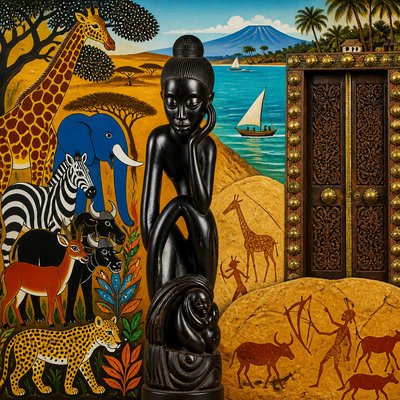
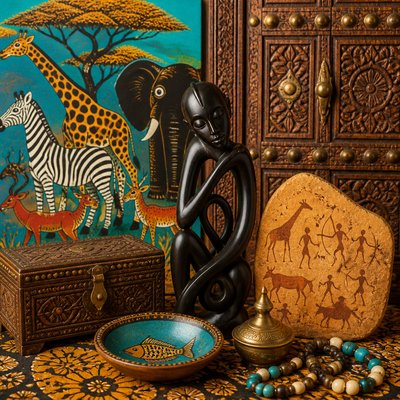
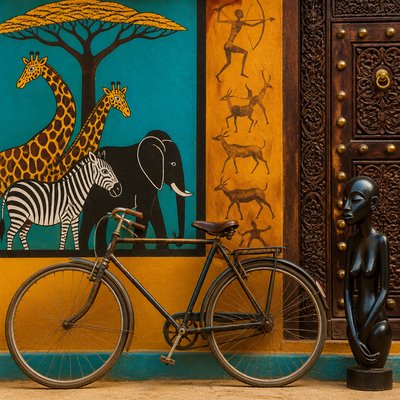
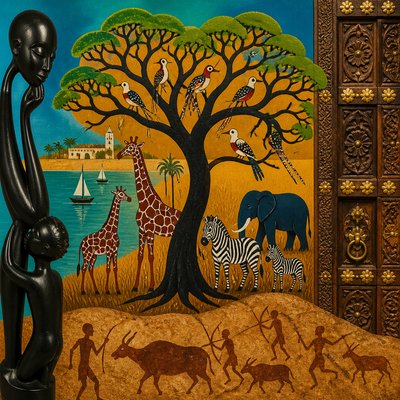
What is Tanzanian Art Style?
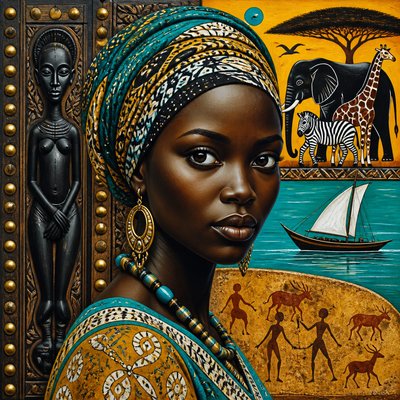
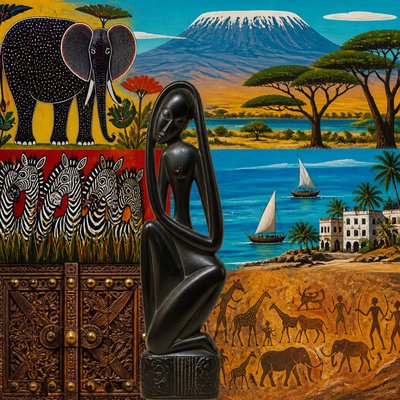
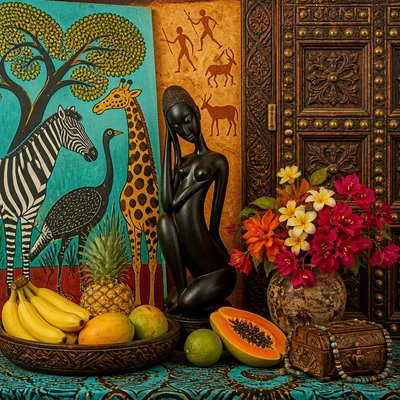
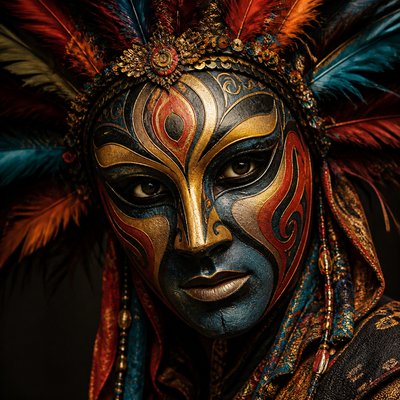
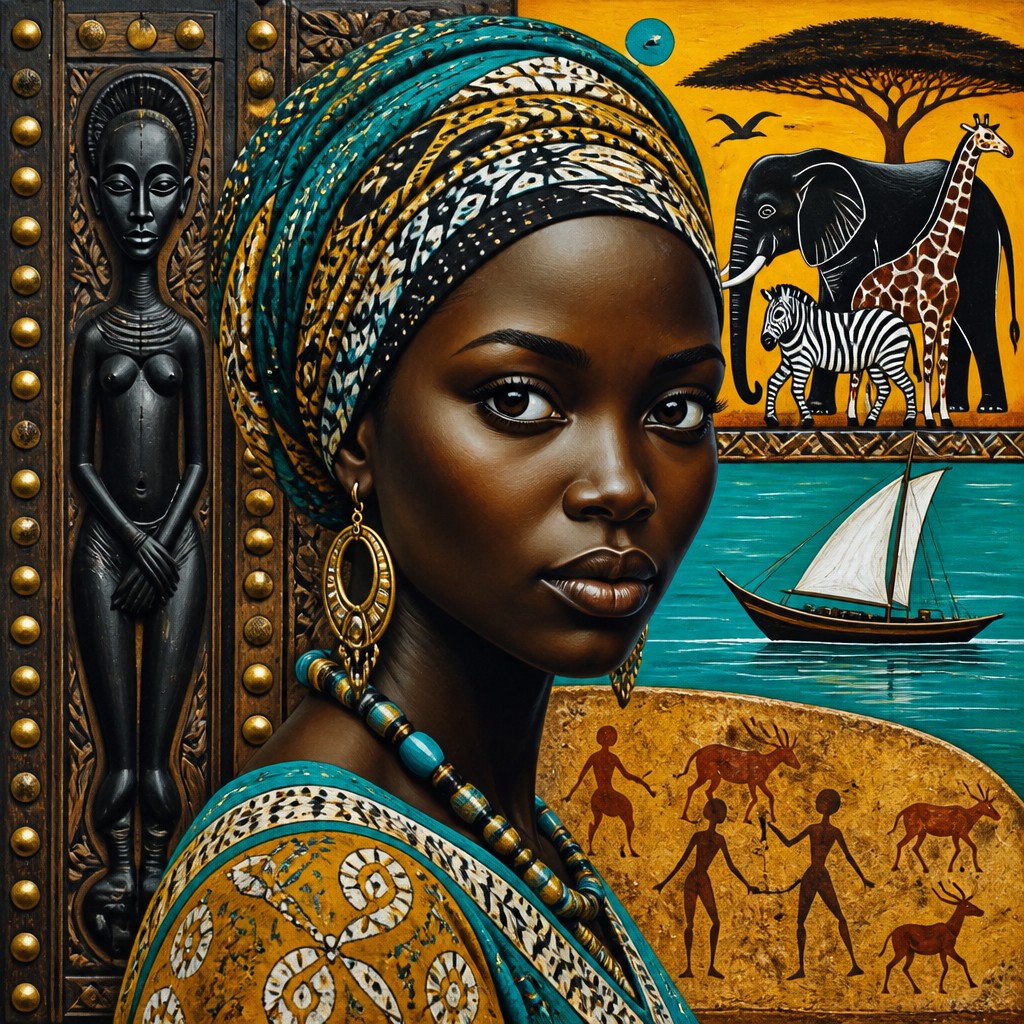
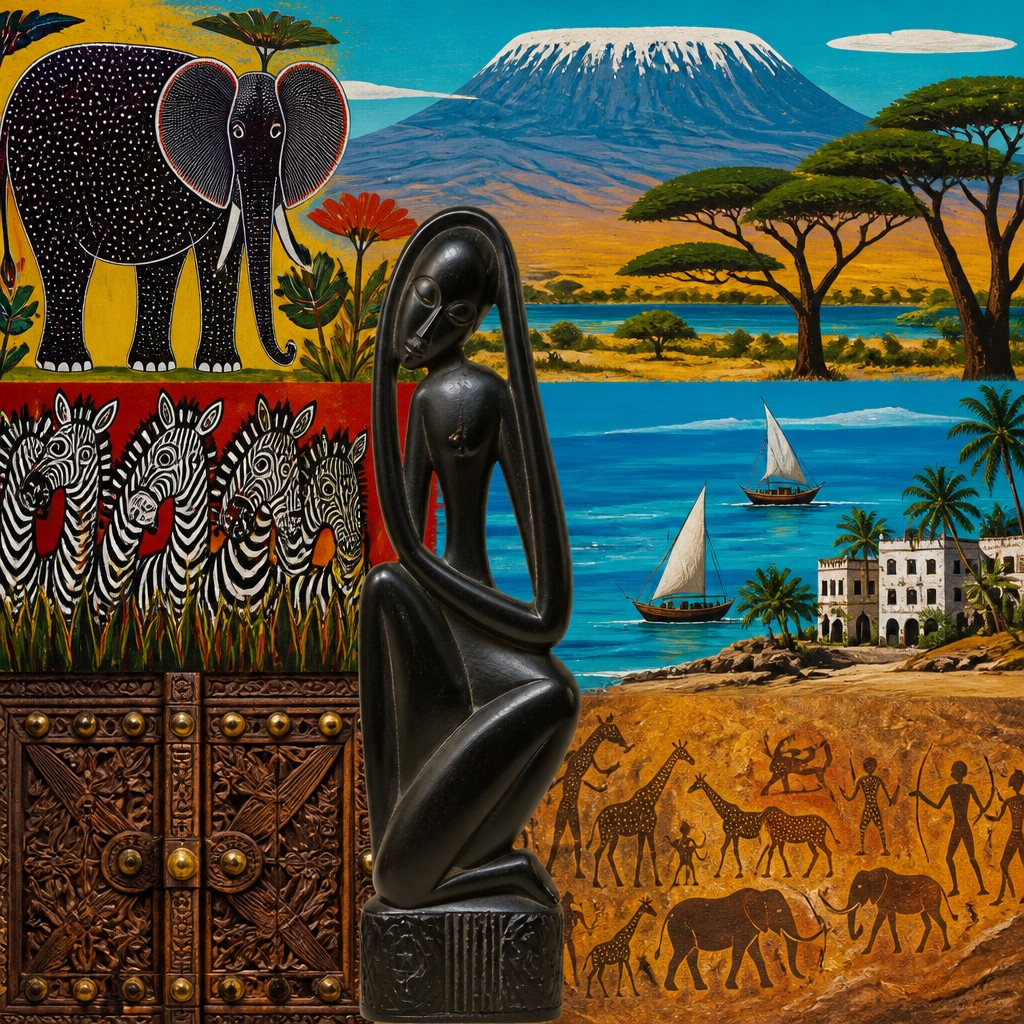
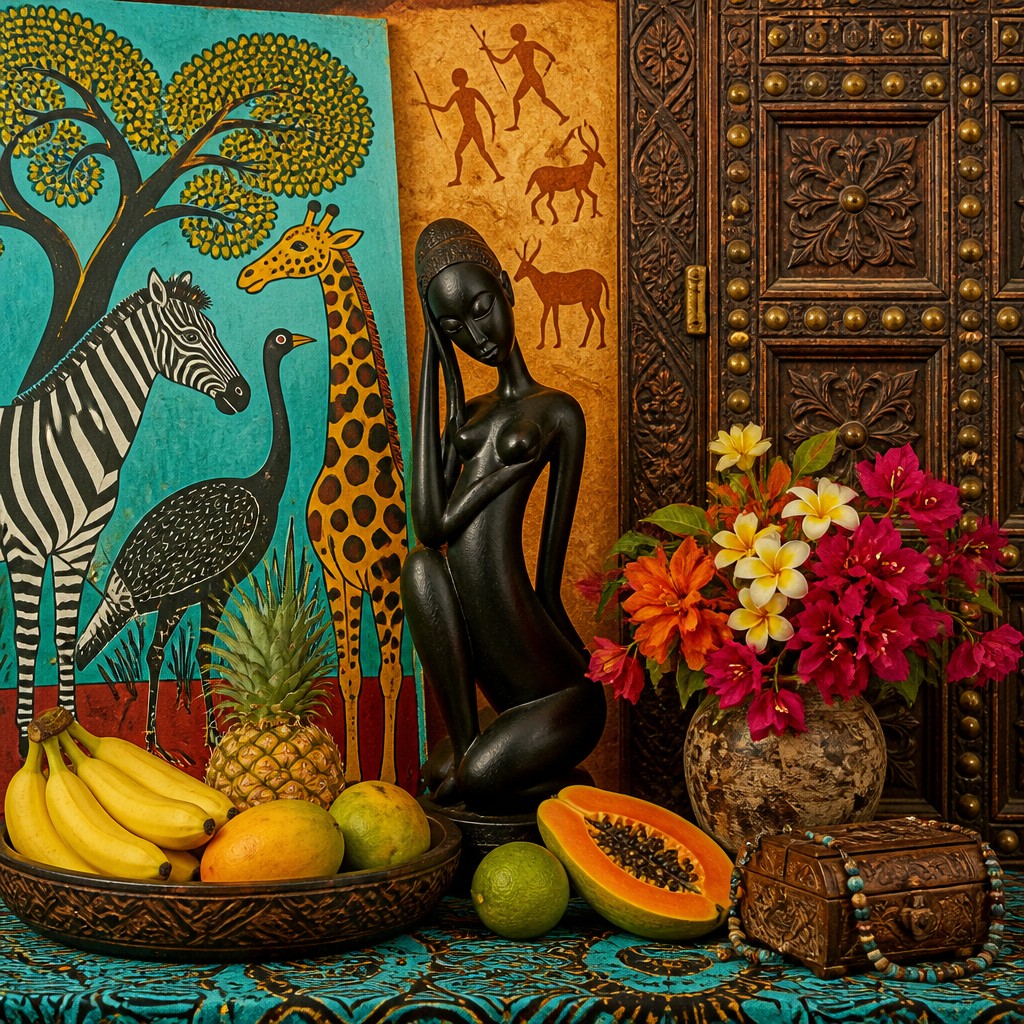
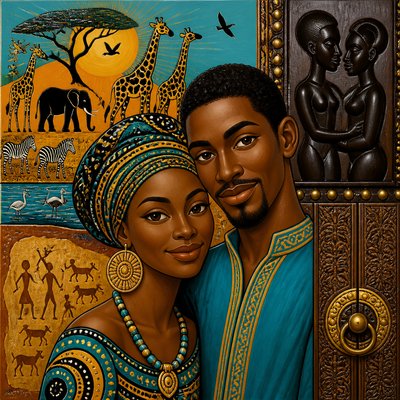
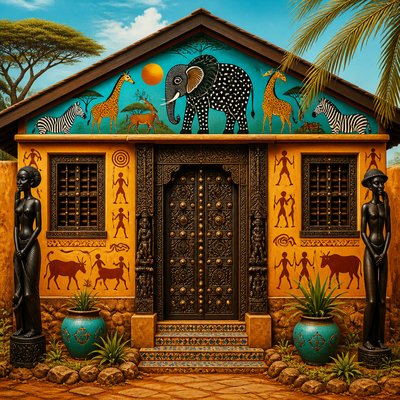
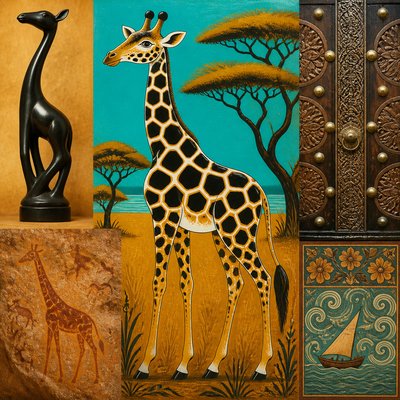
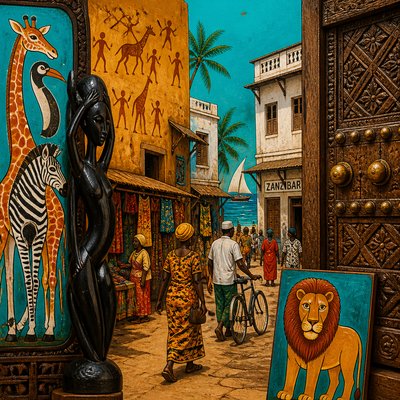
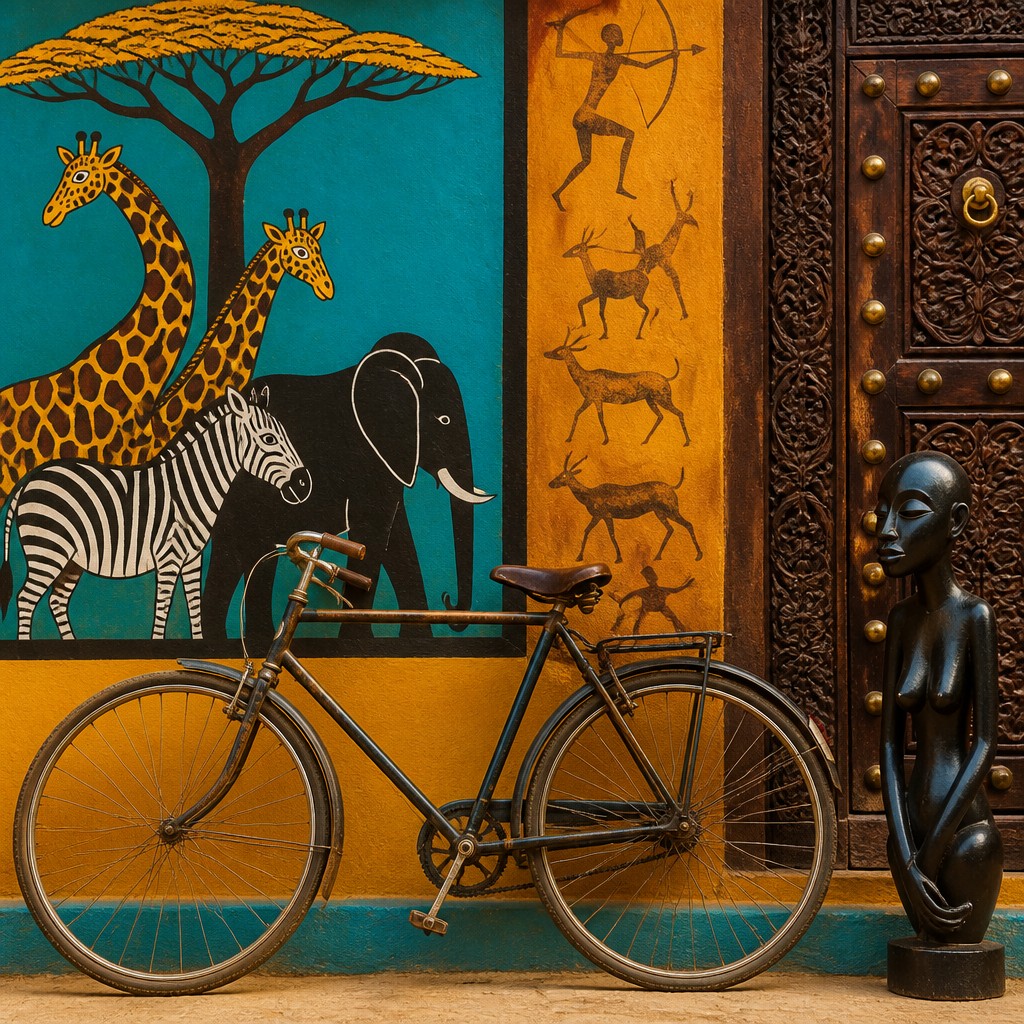
The style is defined by strong silhouettes, tactile surfaces, decorative repetition, and a warm palette of ochre, red, black, cream, savanna gold, and Indian Ocean turquoise. Its visual contrasts are deliberate: enamel-smooth painted fields sit beside polished dark wood, finely incised doors, and weathered mineral-like marks. Animals, ancestral figures, masks, plants, and coastal motifs are commonly simplified into emblematic forms rather than rendered through naturalistic perspective.
Try It On Your Photos
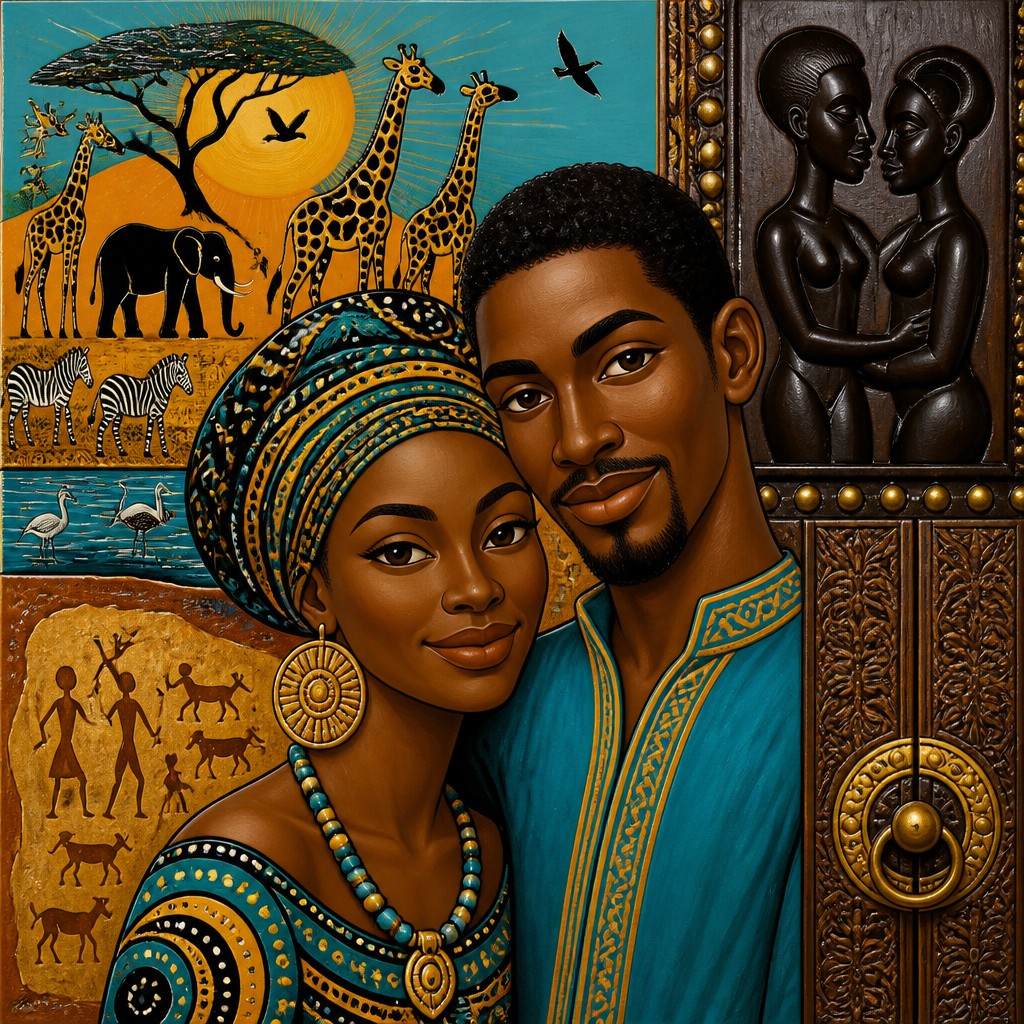
Upload any photo and convert it into Tanzanian Art Style — drag the sliders to compare before and after.
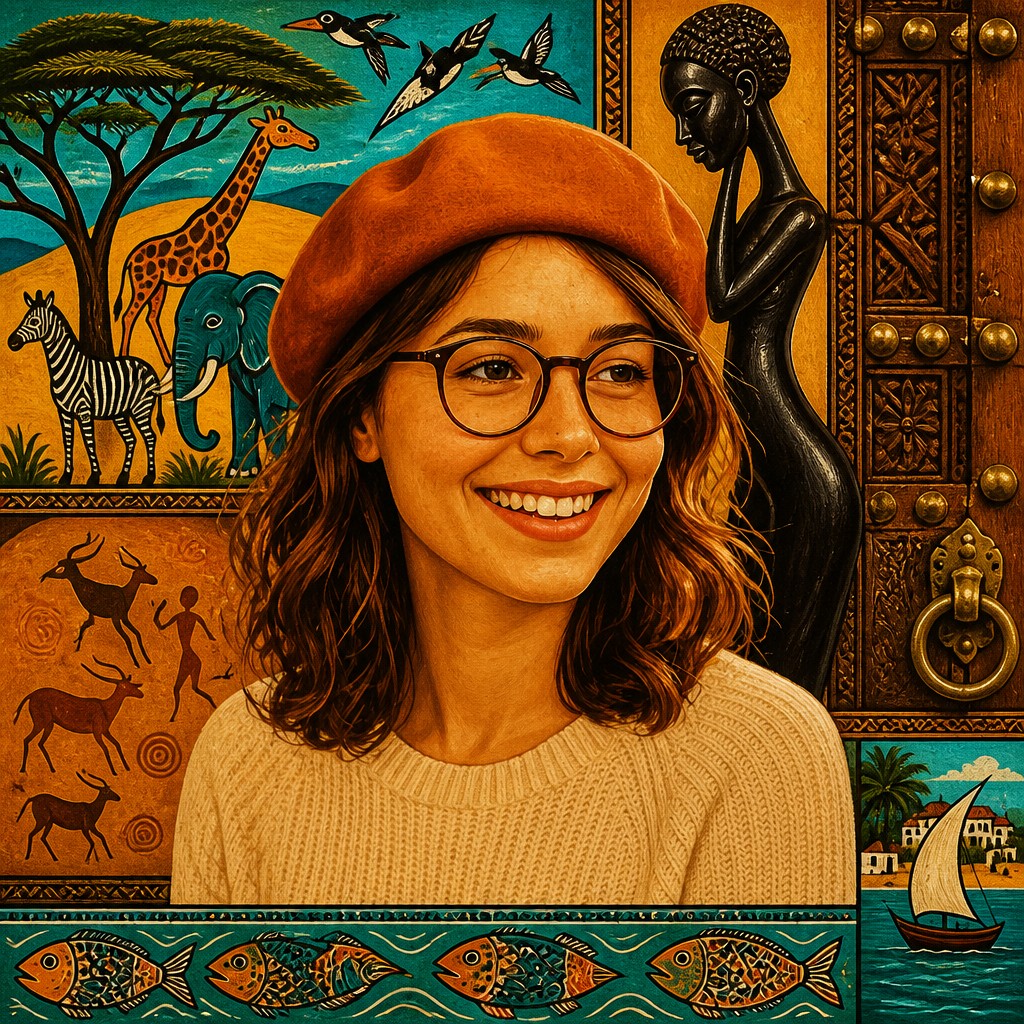

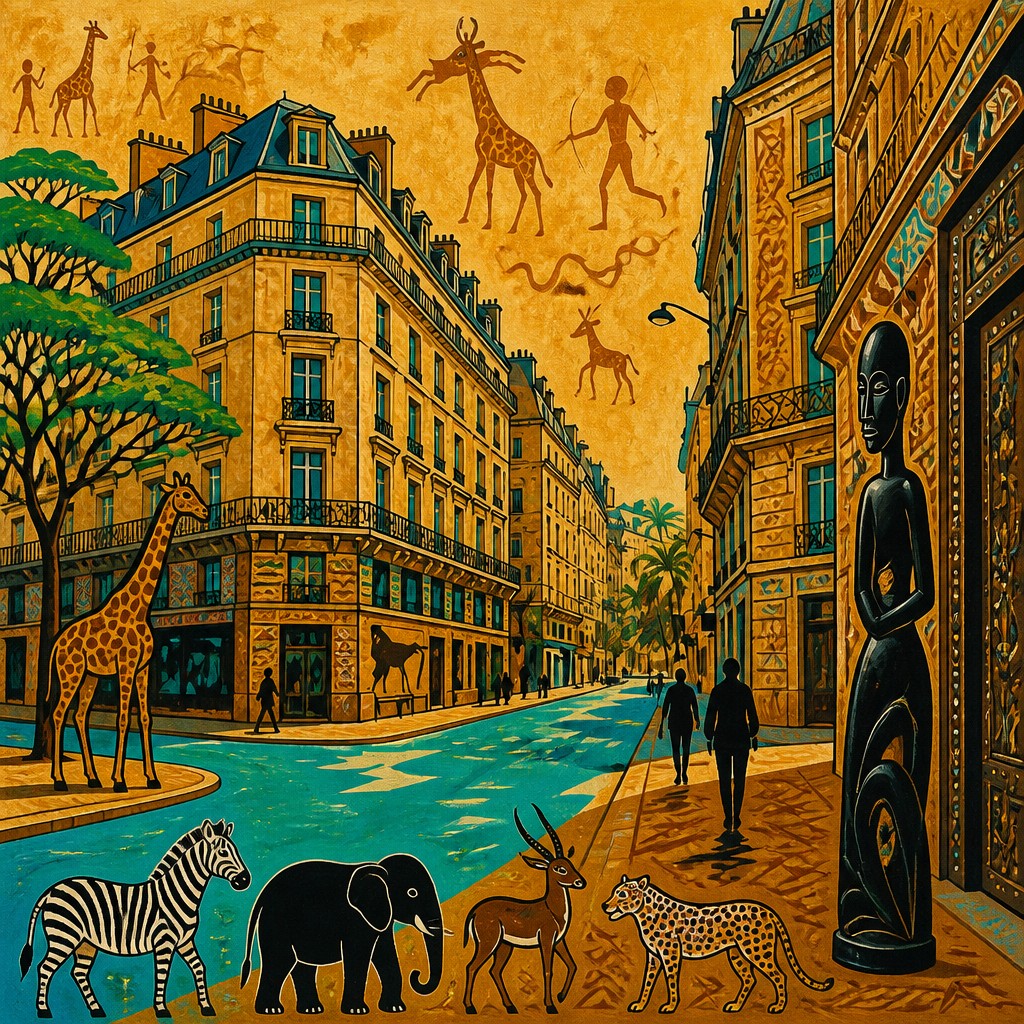

What Defines Tanzanian Art Style
The signature details, up close
Flat, saturated color
Large areas of vivid red, yellow, green, blue, black, and white create a graphic, poster-like effect. Shading is limited or replaced by color blocking, outlines, and patterned fills.
Stylized wildlife
Lions, elephants, giraffes, birds, fish, and antelope are reduced to clear silhouettes or frontal decorative forms. Their poses often emphasize recognition, rhythm, and symbolic presence over anatomical realism.
Makonde-inspired verticality
Human and animal figures may appear elongated, intertwined, and rhythmically stacked, echoing the sculptural logic of carved ebony traditions. Polished black surfaces, incised details, and flowing contours suggest the material presence of wood.
Ornamental woodwork
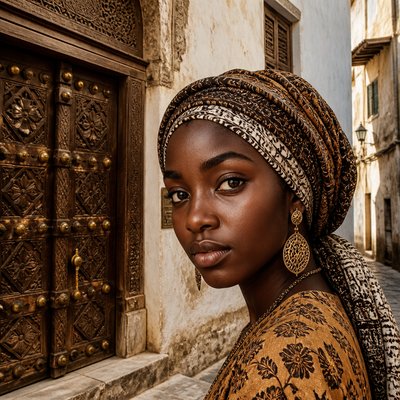
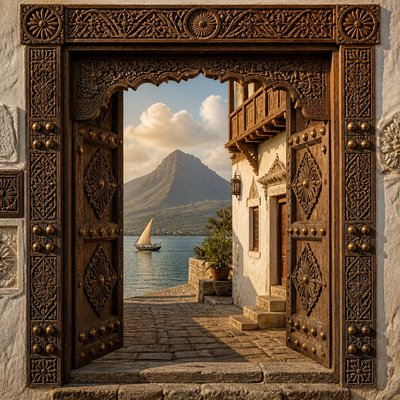
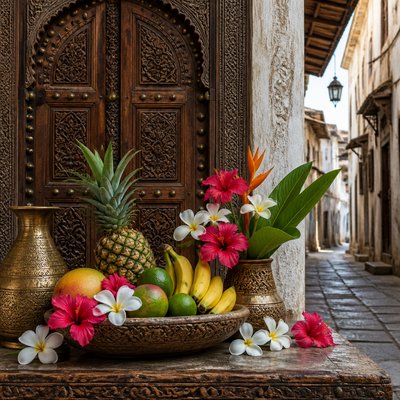
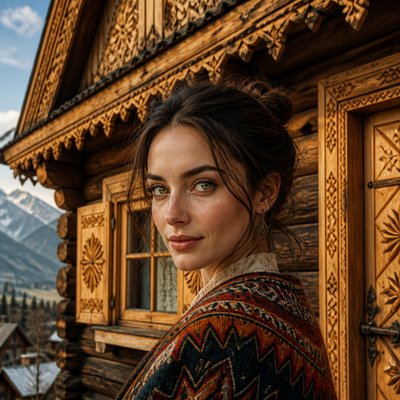
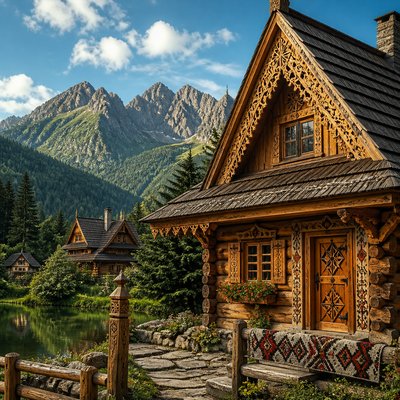
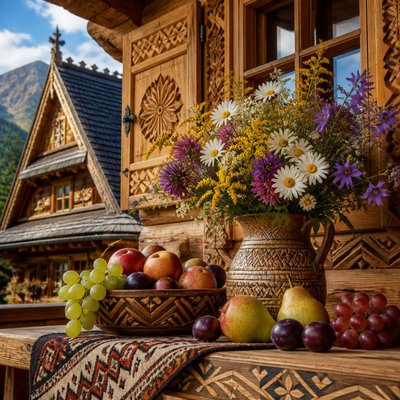
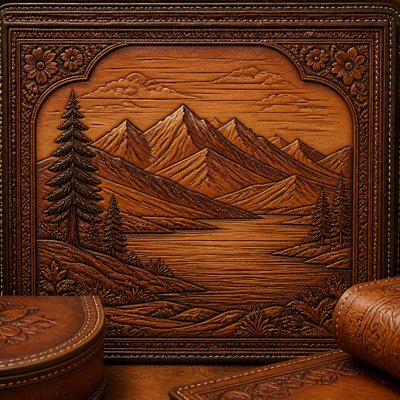
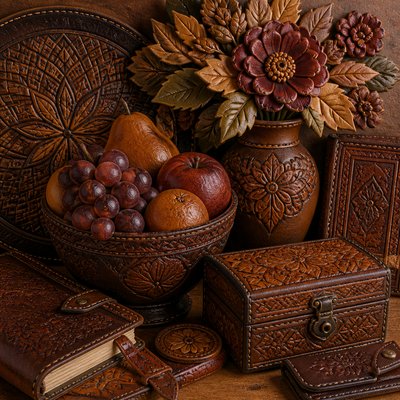
Geometric borders, rosettes, lattice patterns, floral motifs, and brass-like studs reference the elaborate carved doors and architectural details of the Swahili coast. These elements can function as framing devices or all-over decorative fields.
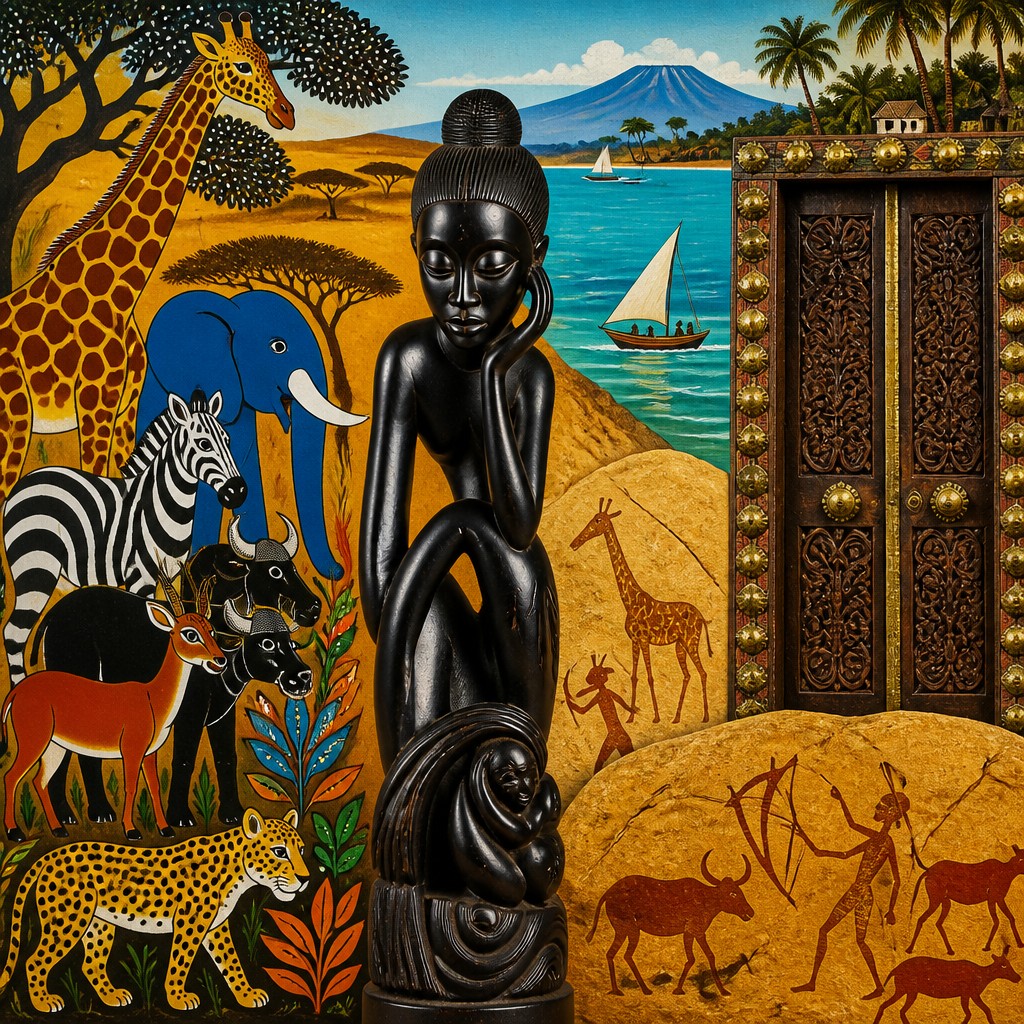
Rock-art silhouettes
Simple ochre, rust, charcoal, and umber marks evoke the pared-down figures and animals of Kondoa rock-art imagery. Irregular edges, hand-drawn contours, and mineral-like textures provide a weathered counterpoint to polished paint.
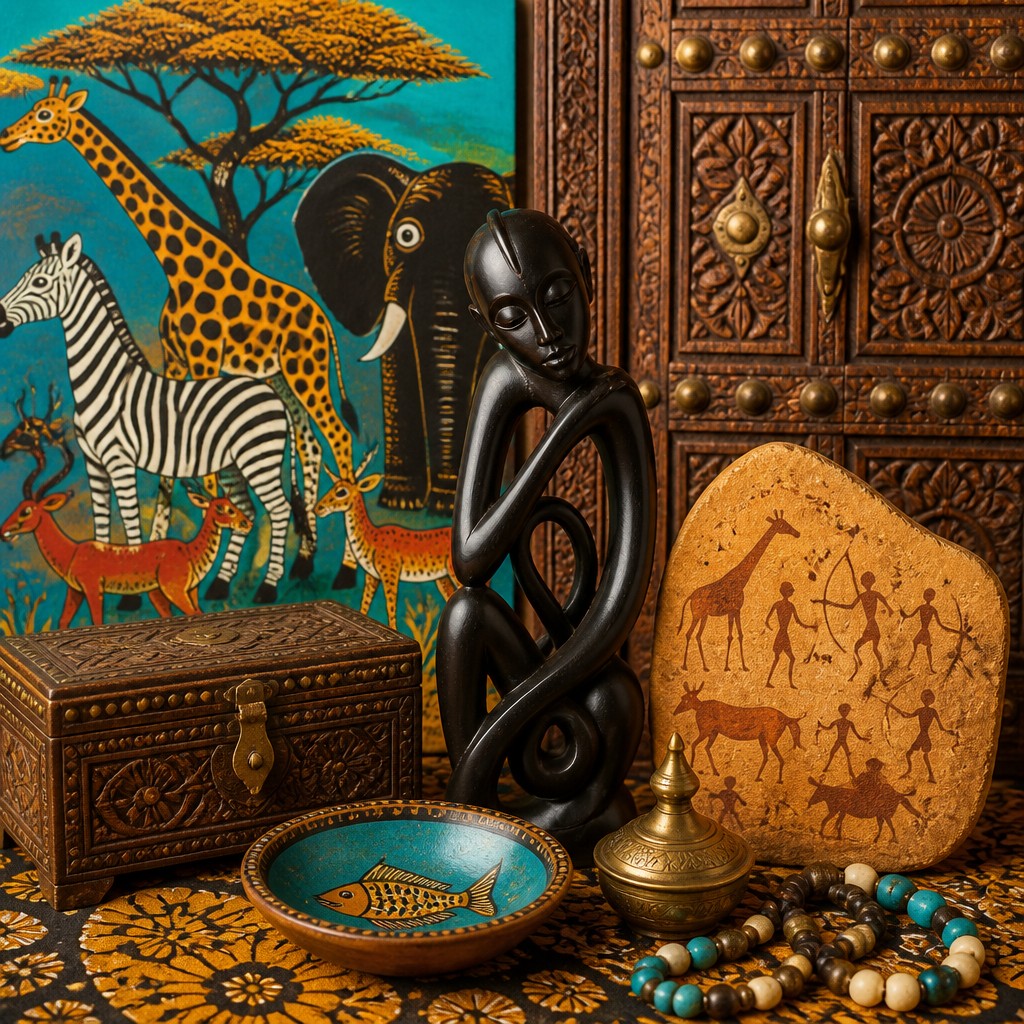
Savanna and coastal palette
Earthy ochres and sunlit golds are balanced by deep ebony, coral reds, leafy greens, and turquoise associated with the Indian Ocean. The palette should feel hot, luminous, and materially grounded.
Patterned, emblematic composition
Subjects are often arranged frontally or in profile against uncluttered fields, borders, or repeated motifs. Symmetry, visual balance, and decorative density matter more than conventional depth.
Tanzanian Prompt Ideas
Start from an idea — each one opens the generator with the style ready to go. See all 40 Tanzanian prompts →
How to Create Tanzanian Art
Master the craft step by step — or skip straight to creating. Read the full guide →
- 1
Build a clear silhouette first
Start with a recognizable animal, figure, or architectural motif in profile or frontal view. Reduce interior detail into a few bold shapes before adding pattern, texture, or small marks.
- 2
Use opaque color fields
For painting, apply acrylic, enamel-like paint, or gouache in solid layers on a smooth panel, then add crisp outlines and repeated motifs. Avoid excessive gradients so the image retains a graphic Tingatinga-derived character.
- 3
Suggest carved wood digitally or physically
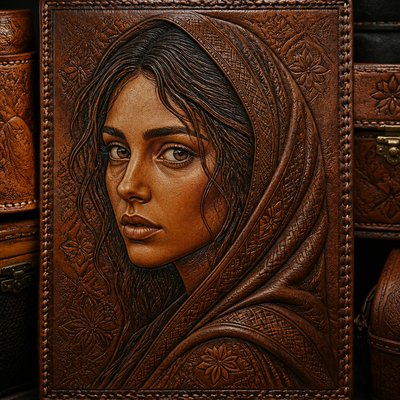
In sculpture, work with dark wood or a comparable material and emphasize elongated contours, polished planes, and incised lines. In digital work, combine near-black glossy surfaces with shallow relief, edge highlights, and visible carving marks.
- 4
Frame the subject with ornament
Add a carved-door border, brass-like studs, geometric lattice, or coastal floral pattern around the main image. Keep the ornament organized so it supports the subject rather than obscuring the silhouette.
- 5
Introduce weathered mineral texture
Use dry-brush marks, speckling, faded ochre, and uneven edges to suggest rock-art surfaces, while reserving the smoothest finish for painted panels or polished ebony forms.
- 6
Write precise generation prompts
Specify the subject, flat saturated colors, simplified animal or figure silhouettes, polished black wood, carved coastal ornament, and ochre rock-art texture. Mention composition and material separately to prevent every element from becoming equally textured or visually confused.
The Story
History & Origins of Tanzanian
Its sculptural and architectural references come from Makonde carving traditions associated with southeastern Tanzania and northern Mozambique, Swahili coastal woodcarving including Zanzibar door panels, and prehistoric rock paintings found in the Kondoa region. These sources belong to different communities, periods, and functions; combining them is a modern interpretive synthesis rather than a claim that they form one traditional art style.
Influences: The style relates most directly to Tingatinga painting, Makonde woodcarving, Swahili and Zanzibar architectural ornament, and the prehistoric rock-art traditions of central Tanzania. It also shares qualities with African modernist graphic art, vernacular sign painting, decorative folk painting, relief sculpture, and contemporary craft fusion. Its flat silhouettes and saturated palette may resemble some folk and naïve art, but its specific material references remain rooted in Tanzanian cultural traditions.
Frequently Asked Questions
Is Tanzanian Art Style a single traditional art movement?
No. The term describes a contemporary visual synthesis rather than a formally recognized historical movement. It combines references from distinct Tanzanian traditions, especially Tingatinga painting, Makonde carving, Swahili coastal woodwork, and Kondoa rock art.
What defines the style visually?
The clearest markers are saturated flat color, simplified wildlife, strong silhouettes, decorative borders, elongated carved figures, and a palette linking savanna ochres with Indian Ocean turquoise. Smooth painted surfaces often contrast with polished ebony and weathered rock-like textures.
How is it different from African folk art in general?
African folk art is a broad category covering many regions, communities, periods, and media. This style is more specific in its references to Tanzanian traditions, particularly Tingatinga imagery, Makonde sculpture, Swahili coastal ornament, and central Tanzanian rock art.
What materials are traditionally associated with its source traditions?
Tingatinga works are commonly associated with painted panels and vivid opaque pigments. Makonde carving is strongly associated with dark hardwood, while Zanzibar architectural ornament uses carved wood and metal fittings; Kondoa rock art uses mineral and earth pigments applied to rock surfaces.
How can I make an image in this style without copying a specific artwork?
Begin with an original subject and use broad characteristics such as flat color, emblematic silhouettes, carved geometric borders, and polished dark wood. Avoid reproducing a particular artist’s composition or treating separate Tanzanian traditions as interchangeable.
Where is this style suitable for visual projects?
It works well for illustrated wildlife scenes, posters, murals, editorial graphics, textile concepts, cultural storytelling, game environments, and decorative wall art. For educational or commercial use, identify the source traditions accurately and avoid presenting the modern synthesis as a single ancient tradition.
Create your first Tanzanian artwork
Describe anything — or upload a photo — and see it in Tanzanian Art Style in seconds.
Related Styles
Discover similar art styles