Sudanese Art Style
Explore Sudanese art style: Nubian pyramids, Kushite reliefs, Kerma pottery, desert light, and Nile Valley craftsmanship.
Instantly rendered in Sudanese — or transform a photo
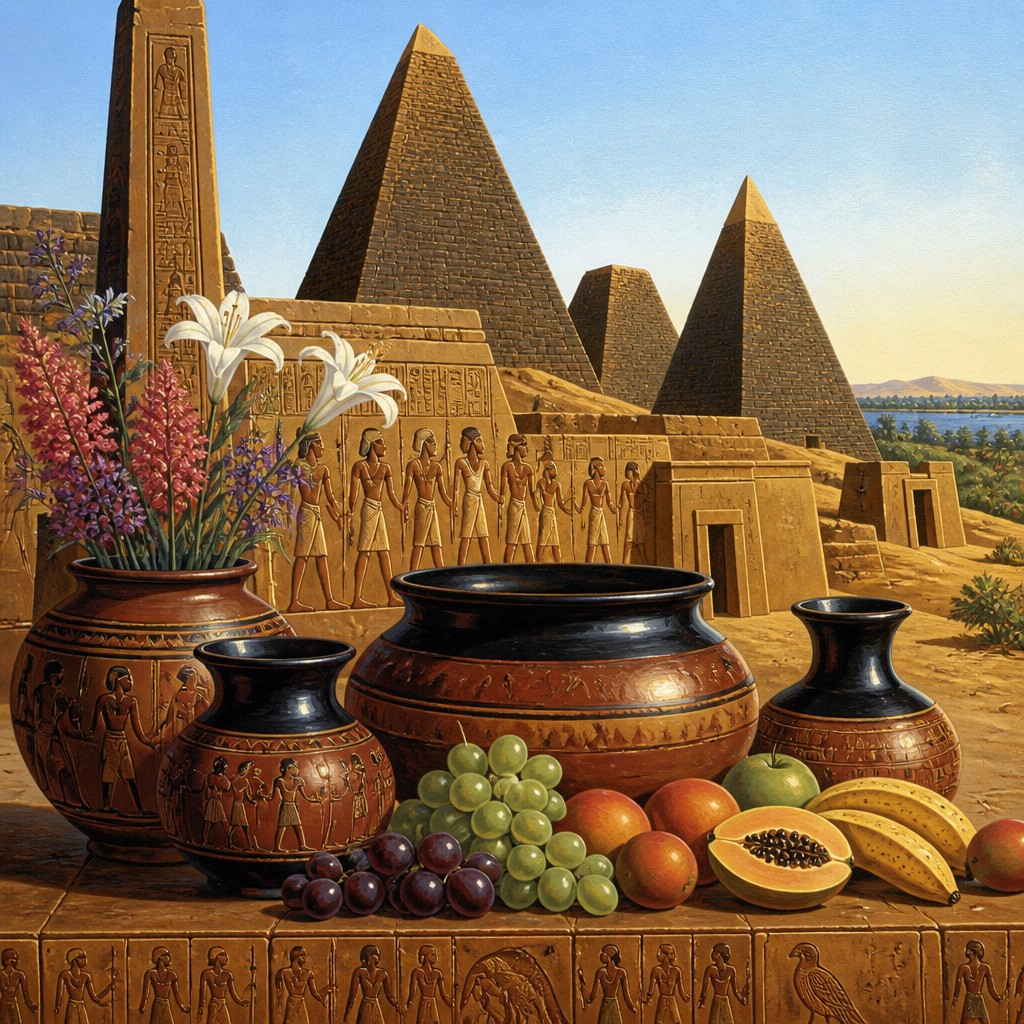
Sudanese Gallery
Tap any artwork to explore it
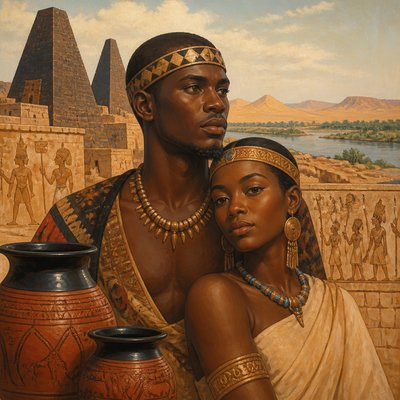
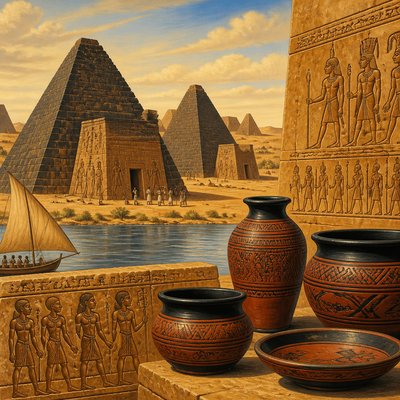
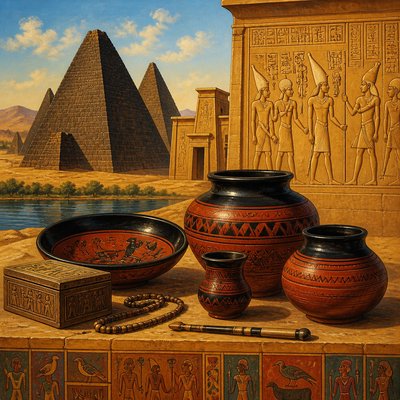
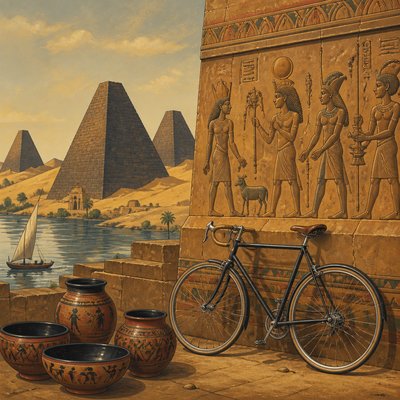
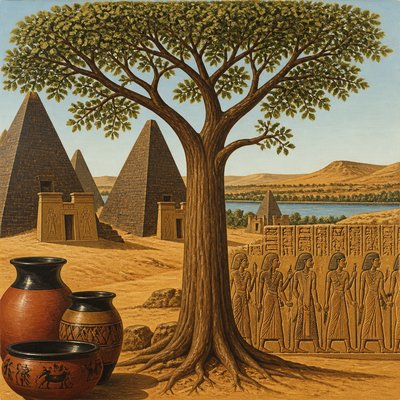
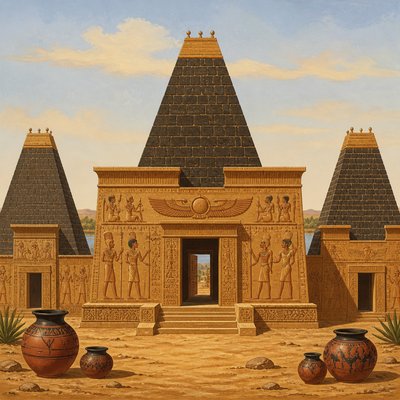
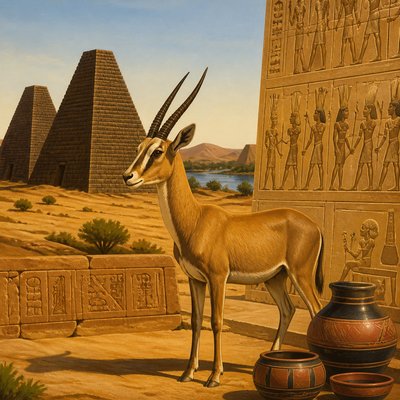
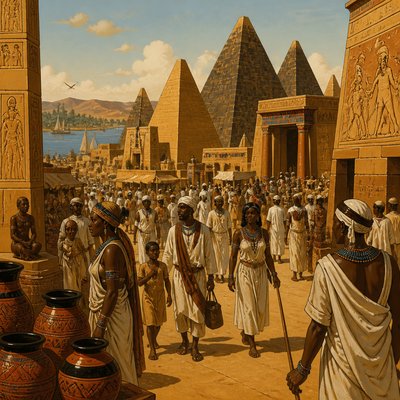
What is Sudanese Art Style?
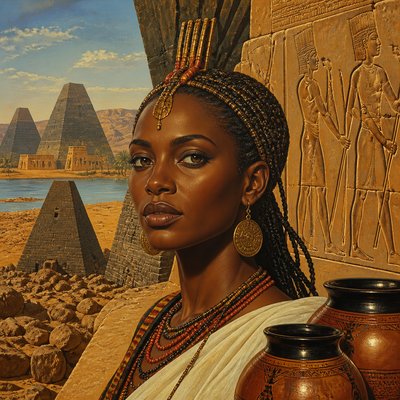
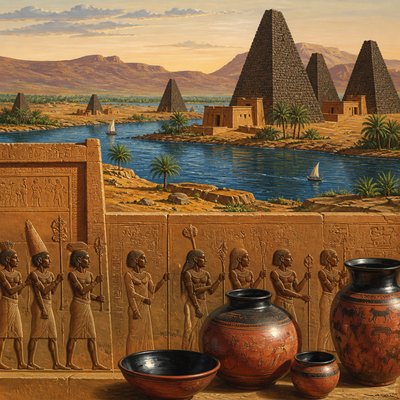
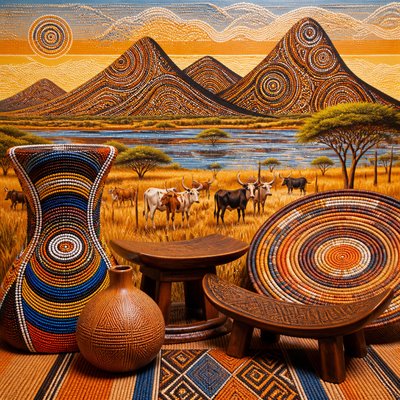
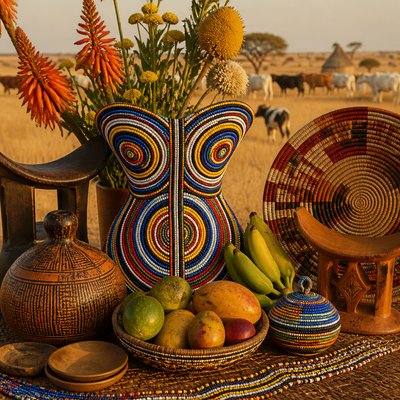
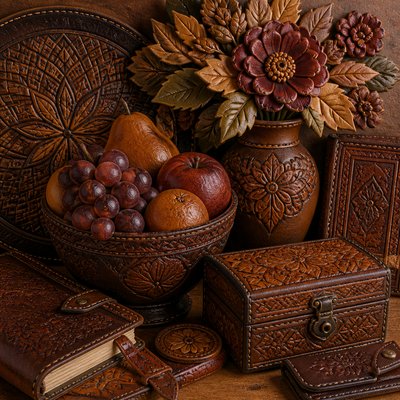
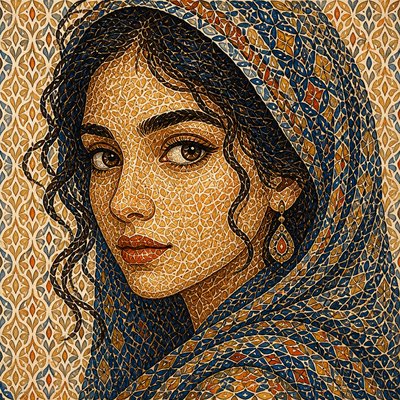
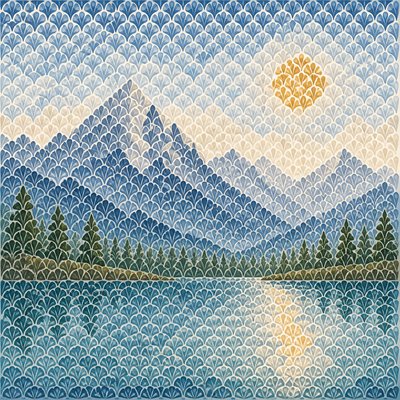
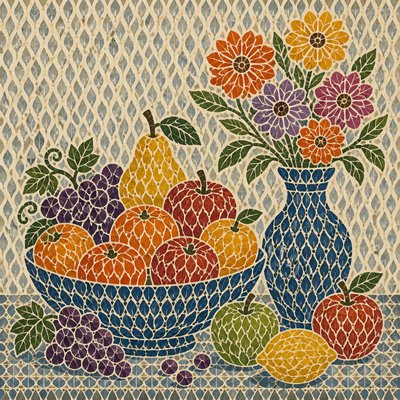
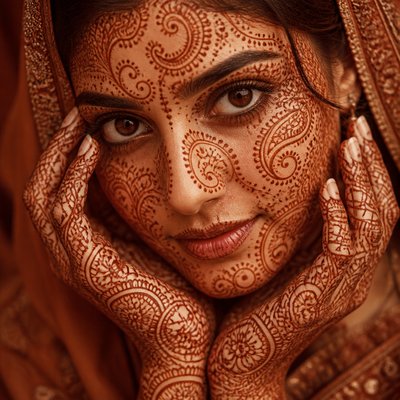
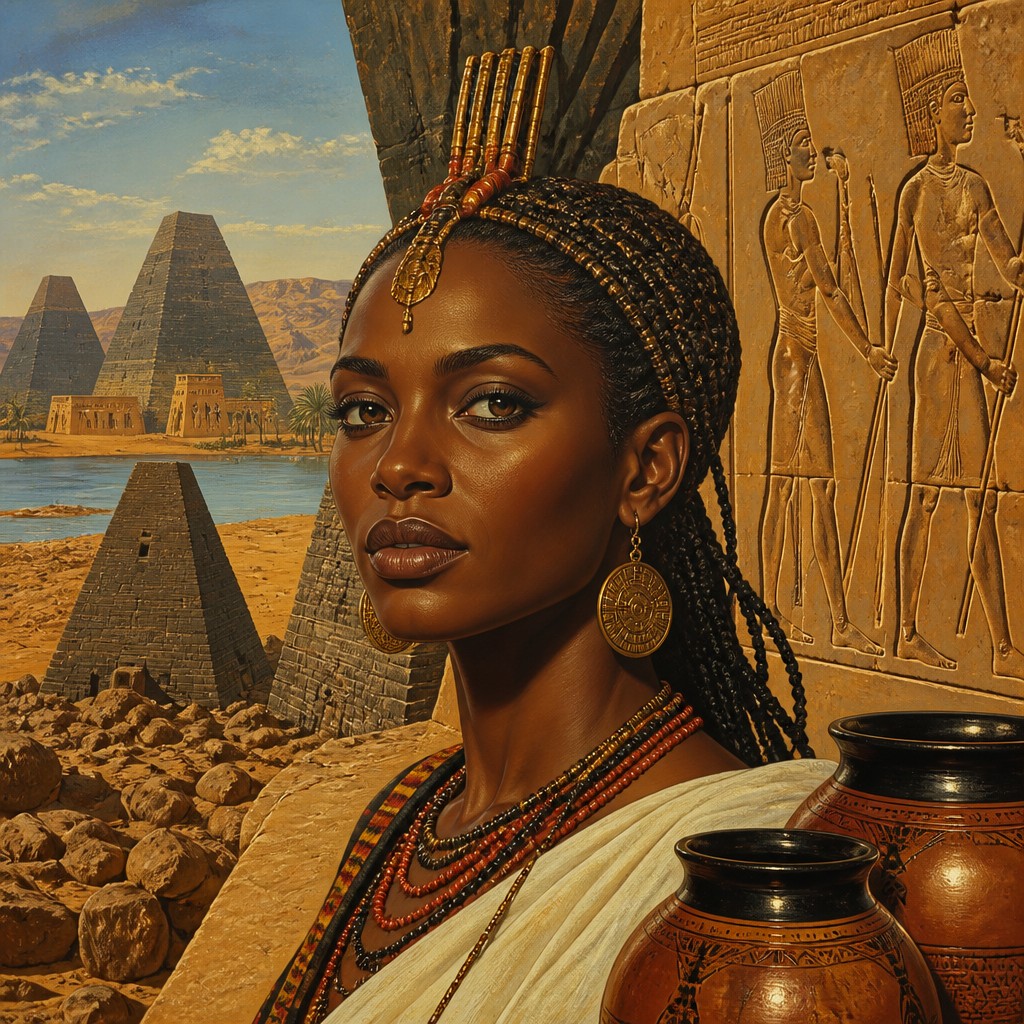
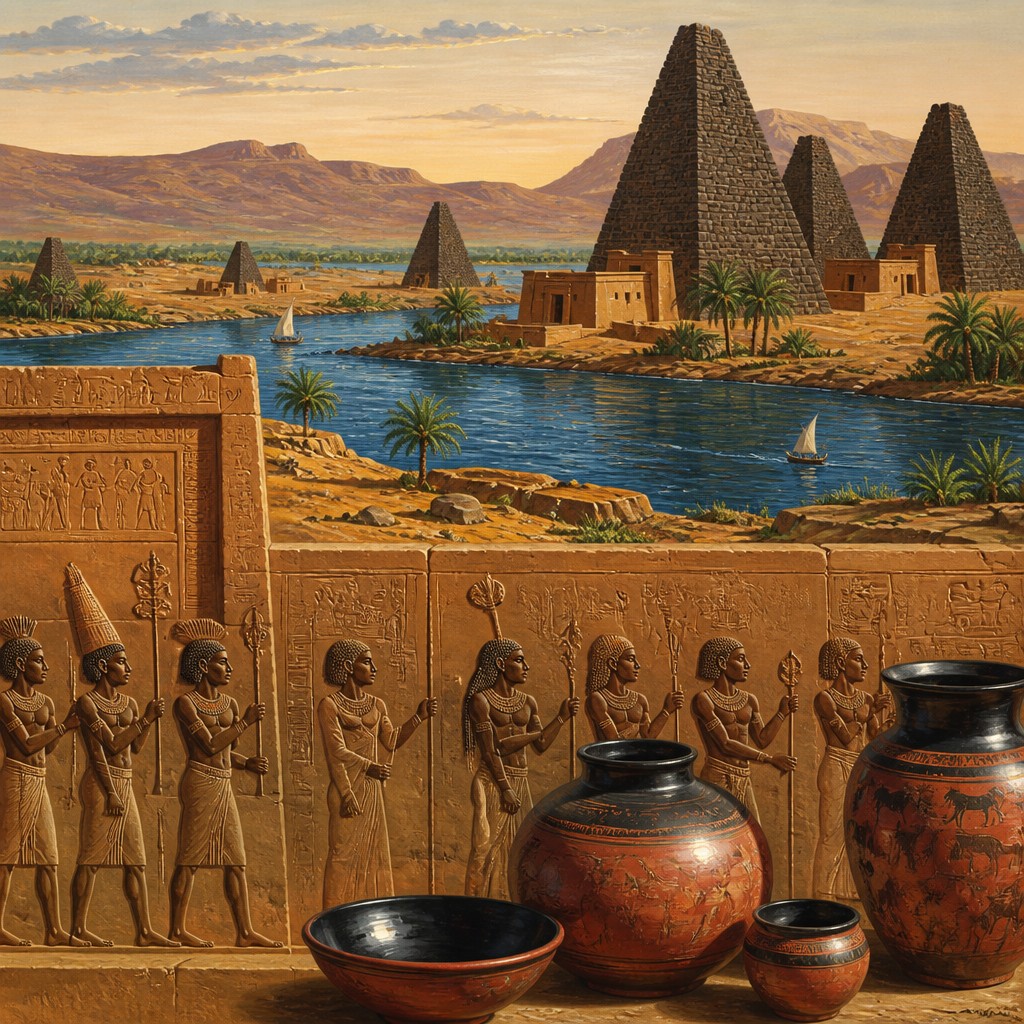
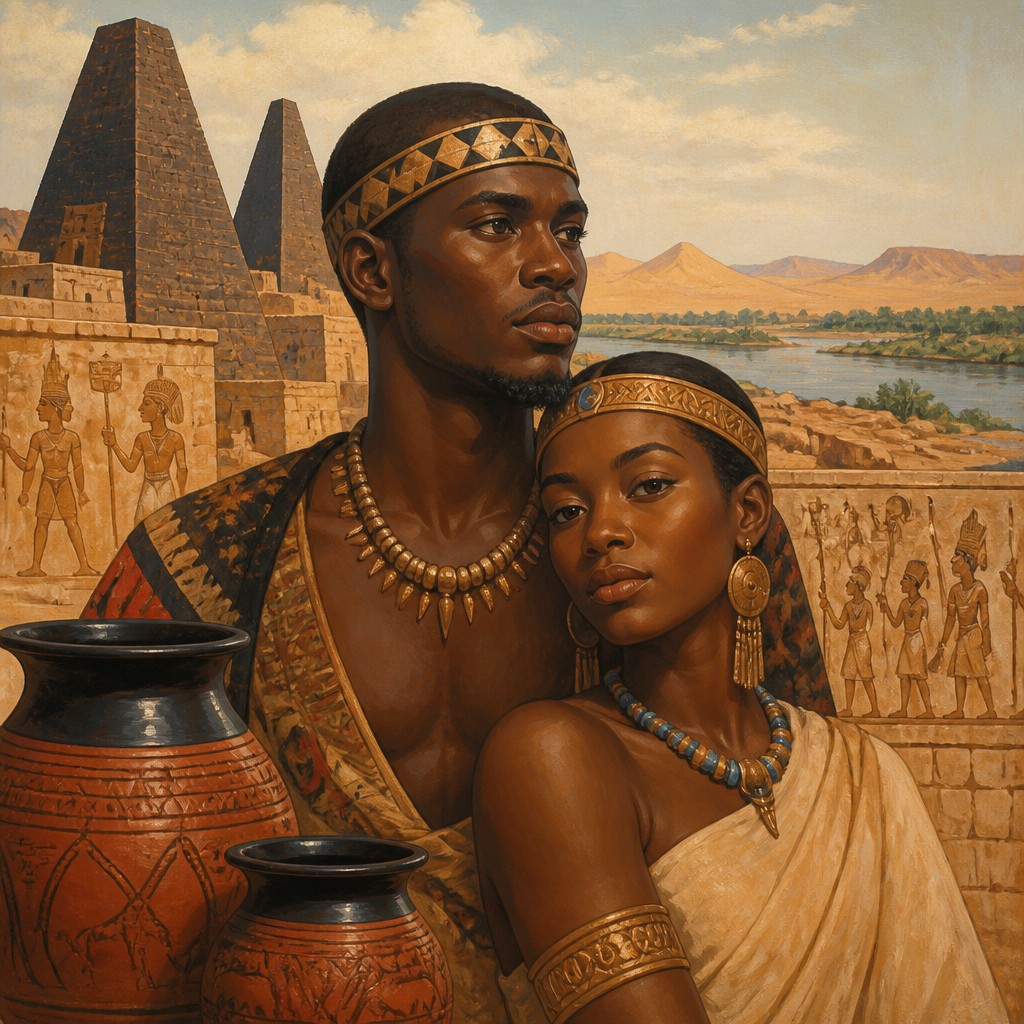
Sudanese Art Style is a contemporary, heritage-inspired visual synthesis based on the ancient artistic traditions of the Middle Nile Valley. Its central imagery combines the steep silhouettes of Nubian pyramids, profile processions from Kushite temple reliefs, and the distinctive hand-burnished pottery associated with Kerma, set within a palette of red clay, warm sandstone, black mineral surfaces, golden sand, and deep river blues.
The style looks monumental yet tactile. Strong contours, simplified profile figures, repeated processional rhythms, sunlit masonry, and carefully contrasted black and red ceramic surfaces create an image language that feels both archaeological and atmospheric. It is not a single historical movement or a uniform national art tradition, but an interpretive modern style that draws on Sudan's ancient Nubian, Kerma, Kushite, and Meroitic visual heritage.
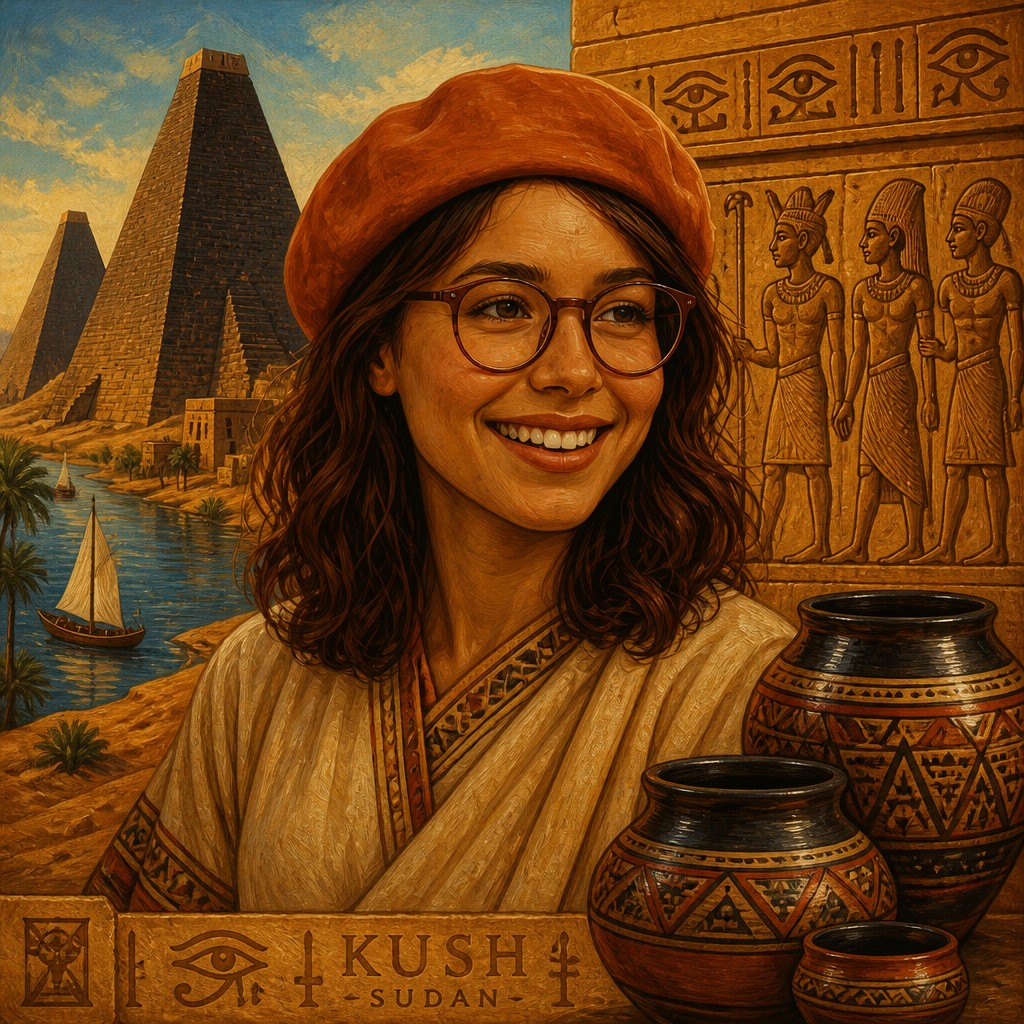
Try It On Your Photos
Upload any photo and convert it into Sudanese Art Style — drag the sliders to compare before and after.


What Defines Sudanese Art Style
The signature details, up close
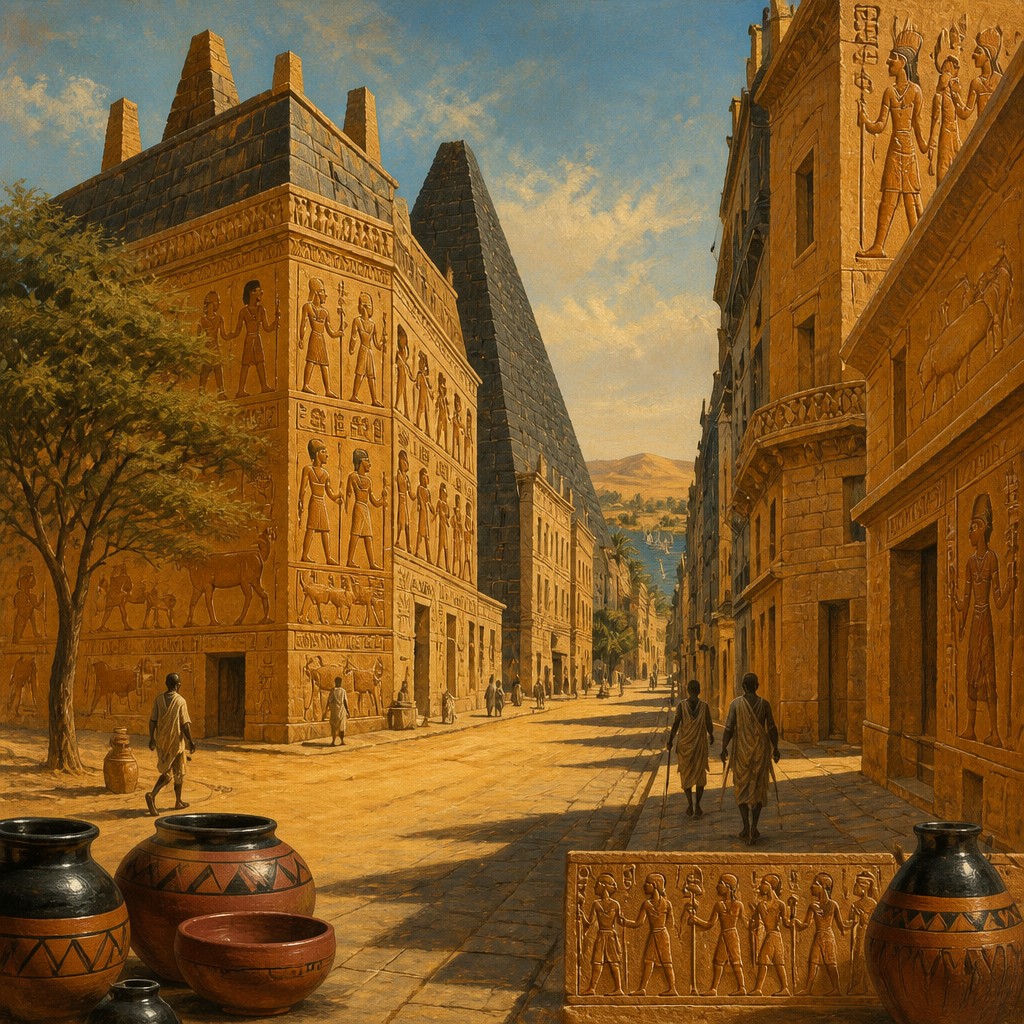
Steep Nubian pyramids
Tall, narrow pyramids with sharply angled faces act as dominant architectural forms. They are usually rendered in dark stone or sun-warmed masonry against broad skies and open desert.
Kushite relief language
Figures appear in formal profile, arranged in processions or ceremonial groupings with controlled gestures and clear contour lines. Carved costume, headdresses, offerings, and ritual objects provide historical texture.
Kerma-inspired ceramics
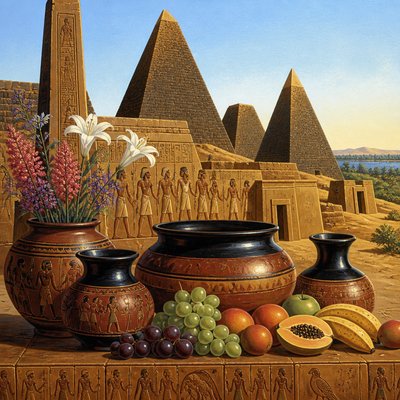
Hand-shaped vessels combine red or reddish-brown clay bodies with glossy black rims, bands, or interiors. Burnished surfaces and slight irregularities preserve the sense of skilled manual craft.
Nile Valley palette
The core colors include ochre sand, terracotta, charcoal black, muted sandstone, mineral gray, indigo shadow, and restrained Nile blue. Warm earth colors are balanced by the dark ceramic rim and deep architectural silhouettes.
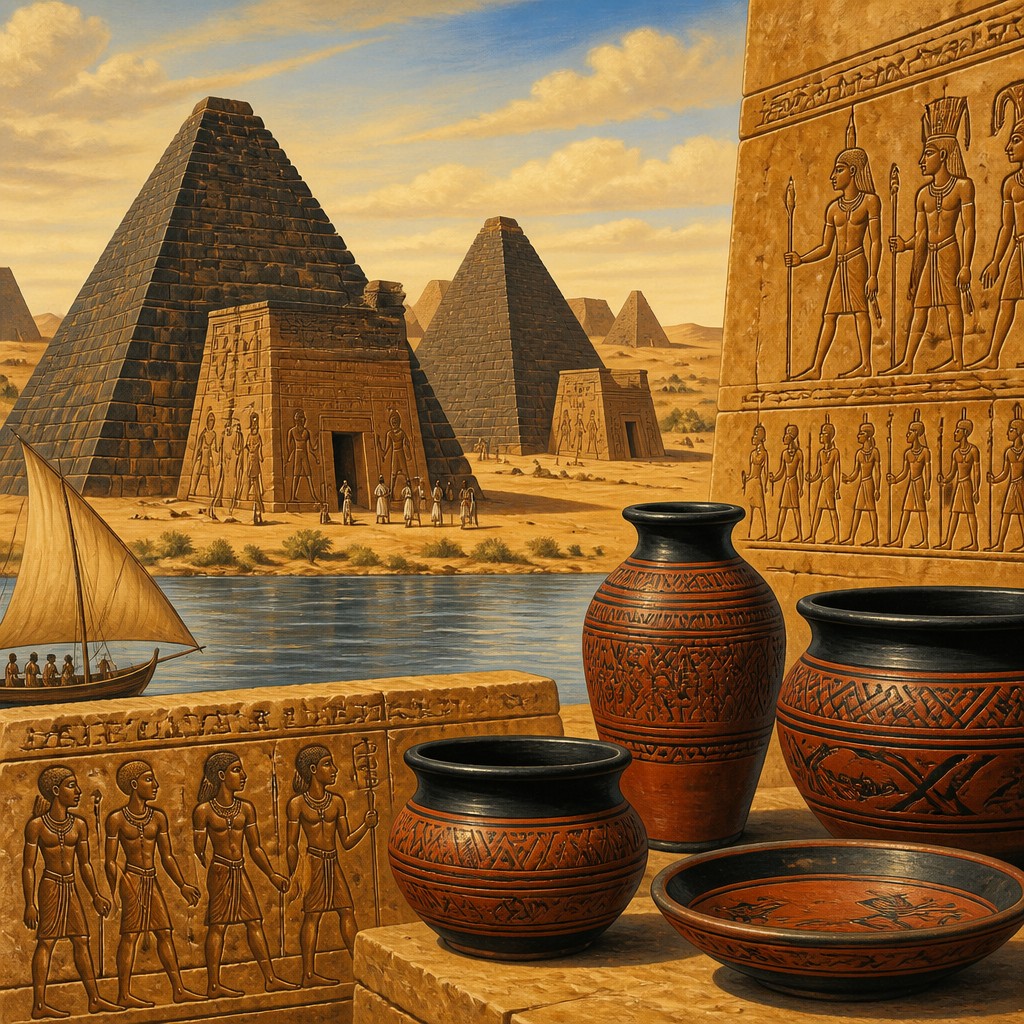
Monumental simplicity
Large geometric masses, sparse horizons, and uncluttered compositions give the imagery a dignified, ceremonial quality. Detail is concentrated in reliefs, pottery, masonry, and symbolic objects rather than scattered evenly across the scene.
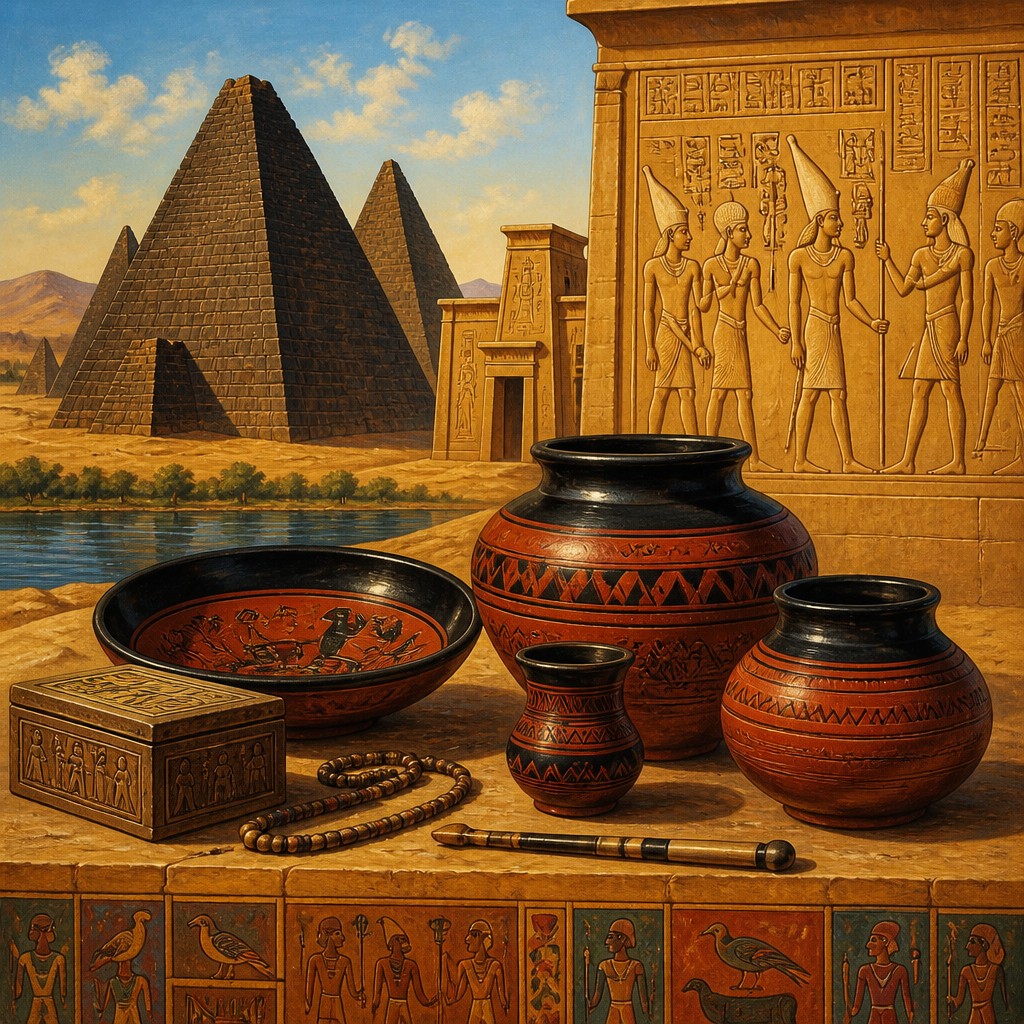
Desert light and material contrast
Hard sunlight creates crisp edges, long shadows, and visible surface texture on stone and clay. The contrast between matte sand, rough masonry, and glossy burnished pottery is especially important.
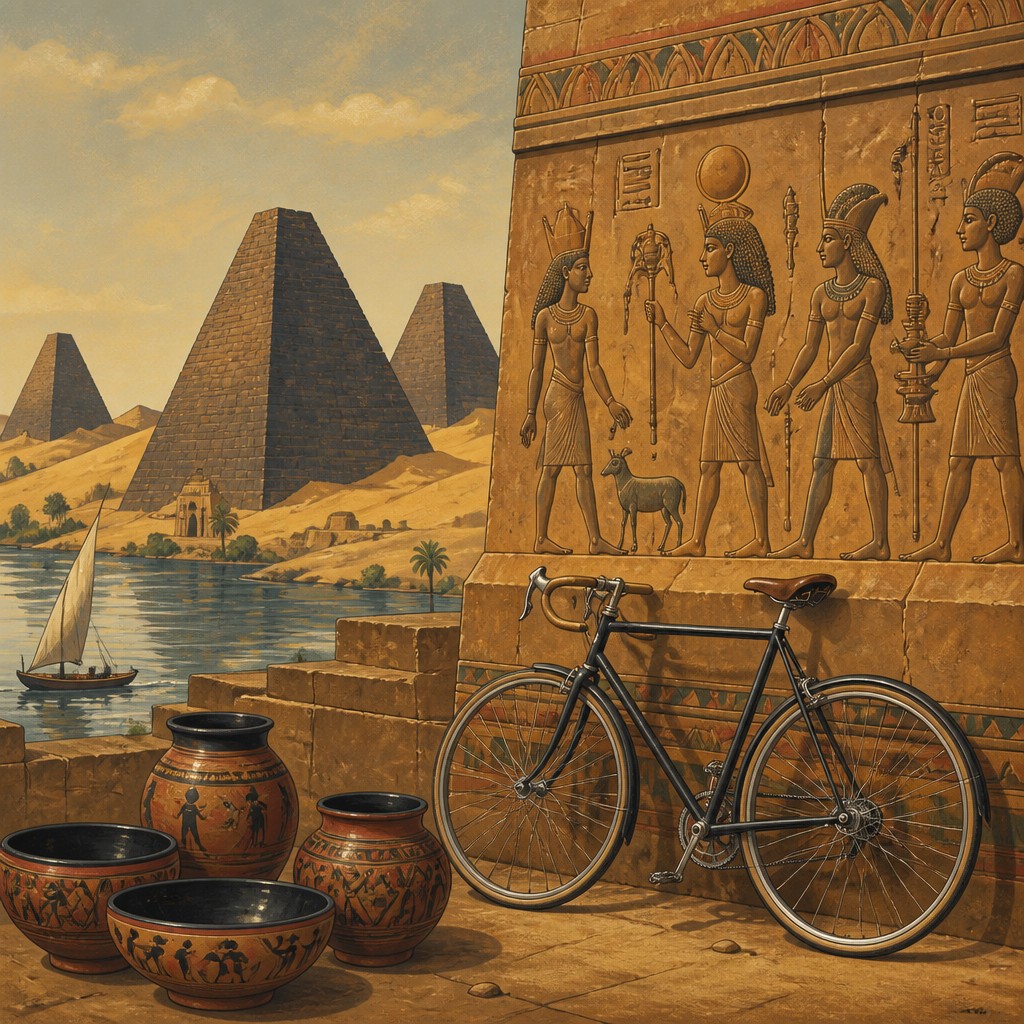
Rhythmic ornament
Repeated figures, bands, borders, hieroglyphic-inspired marks, and architectural steps establish visual rhythm. Decorative references should remain respectful and avoid inventing unreadable text as if it were a historical inscription.
Sudanese Prompt Ideas
Start from an idea — each one opens the generator with the style ready to go. See all 40 Sudanese prompts →
How to Create Sudanese Art
Master the craft step by step — or skip straight to creating. Read the full guide →
- 1
Build a clear monumental composition
Begin with one strong pyramid, temple façade, pottery vessel, or Nile landscape as the focal point. Use a low horizon, broad negative space, and triangular or stepped geometry to establish ceremonial scale.
- 2
Work with earth and mineral colors
Mix terracotta, ochre, sandstone, charcoal, and muted blue rather than using highly saturated modern colors. In traditional media, layered washes, dry brush, clay pigments, and rubbed graphite can suggest sunlit stone and desert dust.
- 3
Emphasize surface craftsmanship
Add incised lines, simplified relief carving, chipped masonry, and uneven hand-burnished ceramic highlights. Digital artists can use separate texture layers, restrained grain, and directional light to distinguish clay, stone, and sand.
- 4
Use profile and procession
Arrange figures in side view with measured spacing, repeated gestures, and simplified anatomical forms inspired by relief composition. Keep the scene ceremonial rather than making the figures look like generic fantasy warriors.
- 5
Control historical references
Specify whether the image emphasizes Kerma pottery, Kushite reliefs, Napatan pyramids, or Meroitic architecture, since these references belong to different contexts. Avoid combining modern objects, invented royal insignia, and archaeological details without signaling a contemporary interpretation.
- 6
Write focused generation prompts
Describe the subject, composition, materials, lighting, and palette in that order, then request carved profile relief, black-rimmed red clay, or steep dark-stone pyramids as needed. For image-to-image work, preserve the source silhouette while applying warm sandstone lighting, burnished textures, and restrained Nile Valley colors.
The Story
History & Origins of Sudanese
This is an invented contemporary category rather than a historically named Sudanese movement. Its principal aesthetic lineage reaches back to Kerma culture in ancient Nubia, approximately 2500-1500 BCE, whose ceramics are known for finely made vessels with red bodies and dark, often highly burnished rims. It also draws from the art and architecture of the Kingdom of Kush, including the pyramid fields, temples, stelae, and carved reliefs of sites associated with Napatan and Meroitic periods, broadly from the early first millennium BCE through the fourth century CE.
The style unites these archaeological references into a coherent visual vocabulary for illustration, concept art, design, and image-making. Its emphasis on pyramidal geometry, Nile Valley materials, and ceremonial profile imagery reflects both the physical landscape of Sudan and the enduring cultural significance of Nubian heritage, without claiming to reproduce one specific ancient workshop or period.
Influences: The style is related to ancient Nubian and Kushite architecture, Kerma ceramic traditions, Napatan and Meroitic funerary monuments, and the profile-based conventions of Egyptian-influenced Nile Valley relief. It also intersects with archaeological illustration, heritage interpretation, vernacular clay craft, modern Africanist design, and contemporary editorial art that uses simplified geometry and material texture. Its visual logic is distinct from generic Egyptomania because it centers Sudanese landscapes, Nubian pyramid proportions, Kerma pottery, and Kushite historical references.
Frequently Asked Questions
What defines the Sudanese Art Style?
It is defined by a synthesis of Nubian pyramid architecture, Kushite profile reliefs, Kerma-inspired red-and-black ceramics, and a warm desert-and-Nile palette. Monumental geometry and tactile materials are more important than photorealistic archaeological reconstruction.
Is Sudanese Art Style a historical art movement?
No. The term is a modern descriptive category for an art direction inspired by several ancient Sudanese and Nubian traditions. Kerma, Kushite, Napatan, and Meroitic art are historical traditions with their own periods and contexts, not subdivisions of one movement called Sudanese Art Style.
How is it different from ancient Egyptian-inspired art?
Both traditions can include profile figures, temples, and formal relief composition because ancient Nubia and Egypt interacted for centuries. This style distinguishes itself through Sudan-focused subjects, the steep forms of Nubian pyramids, Kerma's black-rimmed ceramics, and the landscapes of the Middle Nile.
How can I make an image in this style by hand?
Start with a limited palette of ochre, terracotta, charcoal, sandstone, and muted blue. Block in a simple monumental composition, then add profile figures, incised relief marks, rough masonry, and polished ceramic highlights using paint, ink, clay, collage, or mixed media.
What subjects work best with this visual language?
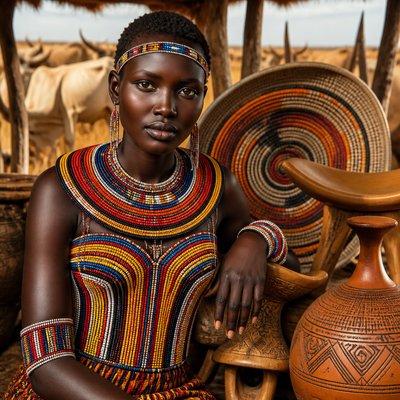
Pyramids, temple façades, Nile landscapes, archaeological still lifes, ceremonial processions, clay vessels, desert settlements, and portraits framed by geometric motifs are especially suitable. Contemporary subjects can also work when the historical references are used as visual structure rather than as misleading claims of antiquity.
Can this style be used for digital or image-based transformation?
Yes. Digital artists can preserve a photograph's main silhouette while adding sandstone lighting, relief-like contours, terracotta surfaces, and black-rimmed ceramic textures. Clear prompts should identify the desired historical references and avoid asking for an undifferentiated mix of all ancient African imagery.
Create your first Sudanese artwork
Describe anything — or upload a photo — and see it in Sudanese Art Style in seconds.
Related Styles
Discover similar art styles