Slovenian Art Style
Explore Slovenian Art Style: karst castles, Ljubljana architecture, painted beehive panels, bright folk color, misty valleys, and playful craft.
Instantly rendered in Slovenian — or transform a photo
Slovenian Gallery
Tap any artwork to explore it
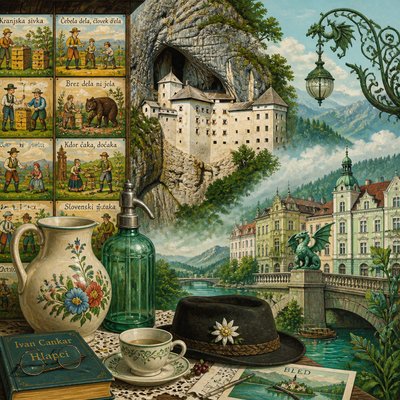
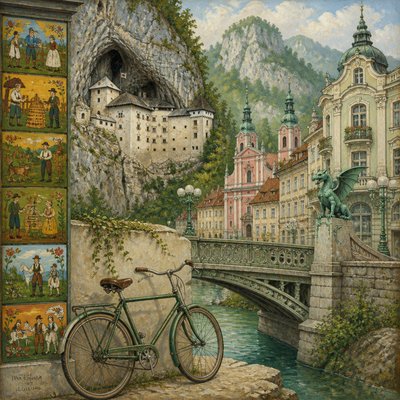
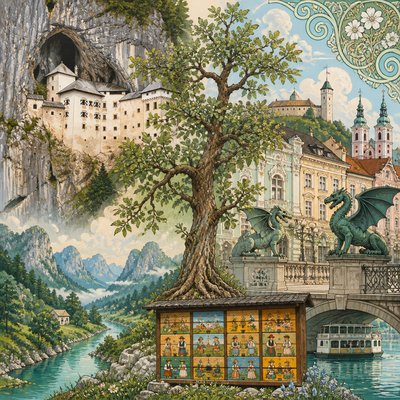
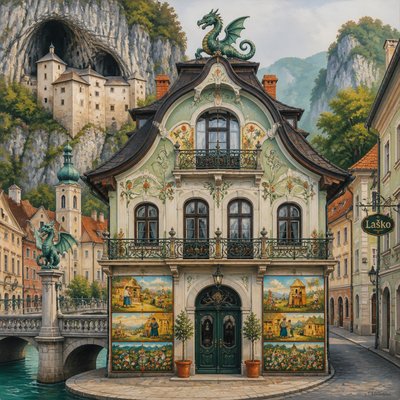
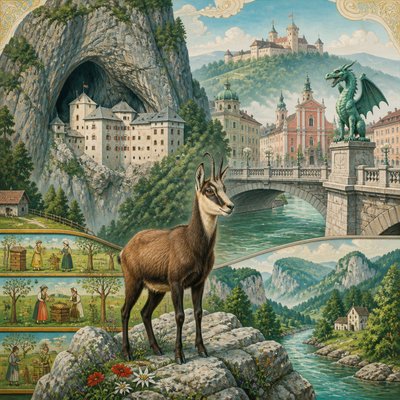
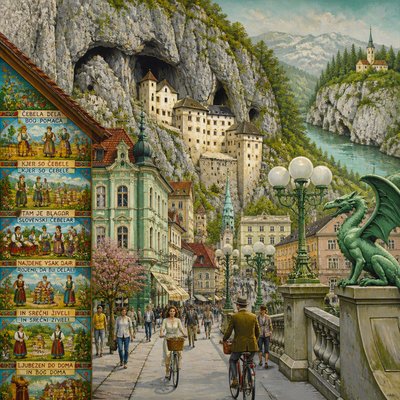
What is Slovenian Art Style?
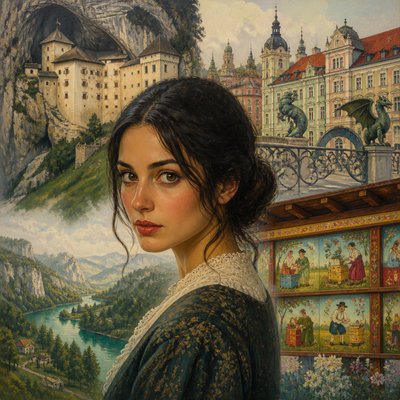
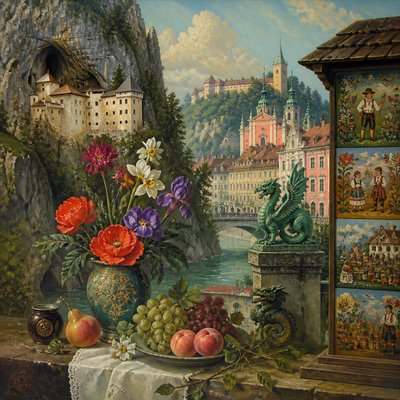
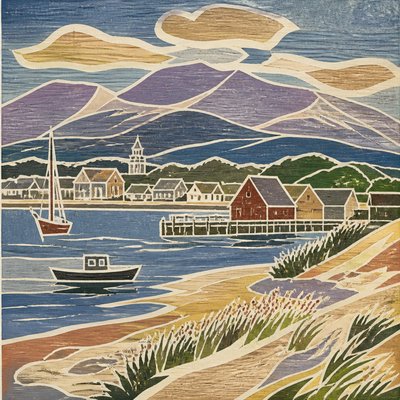
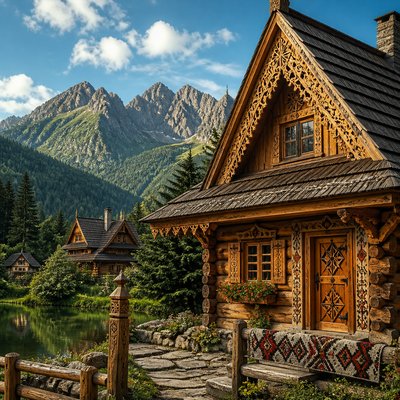
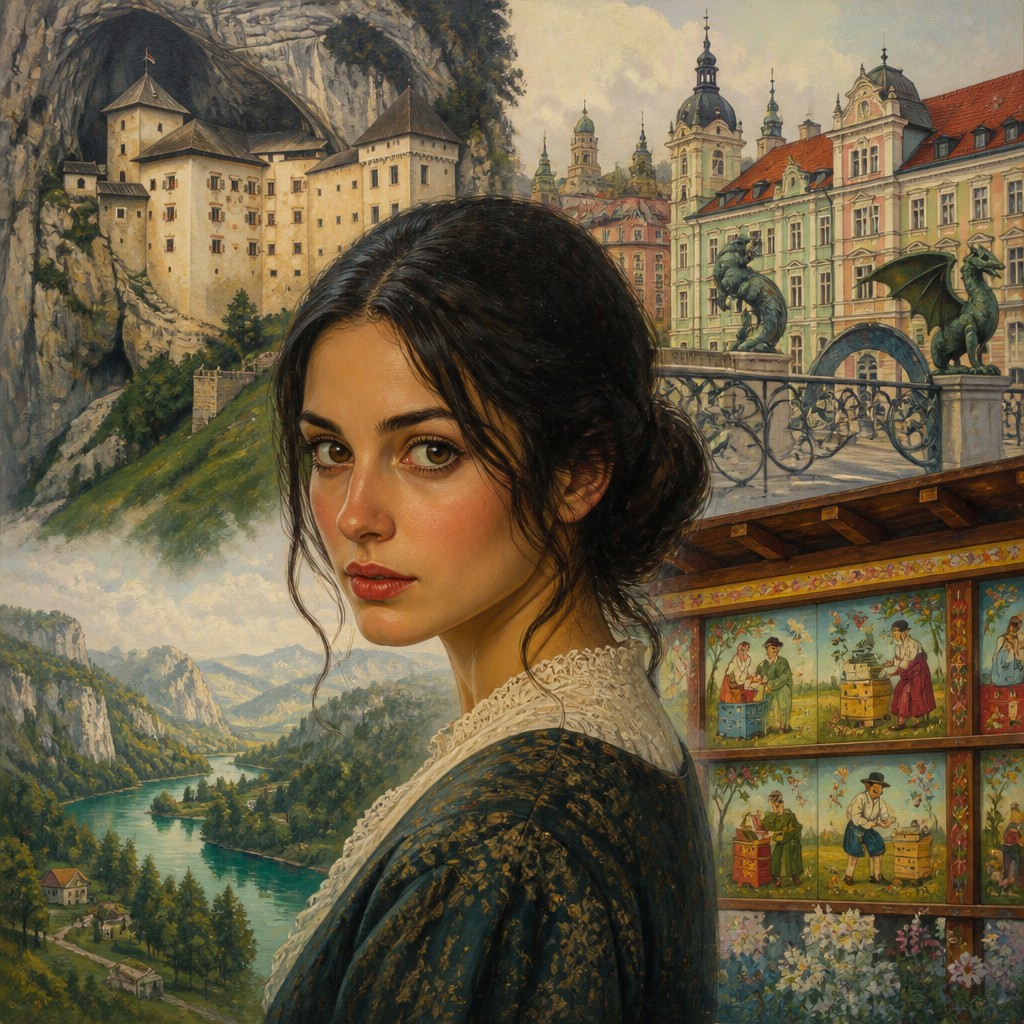
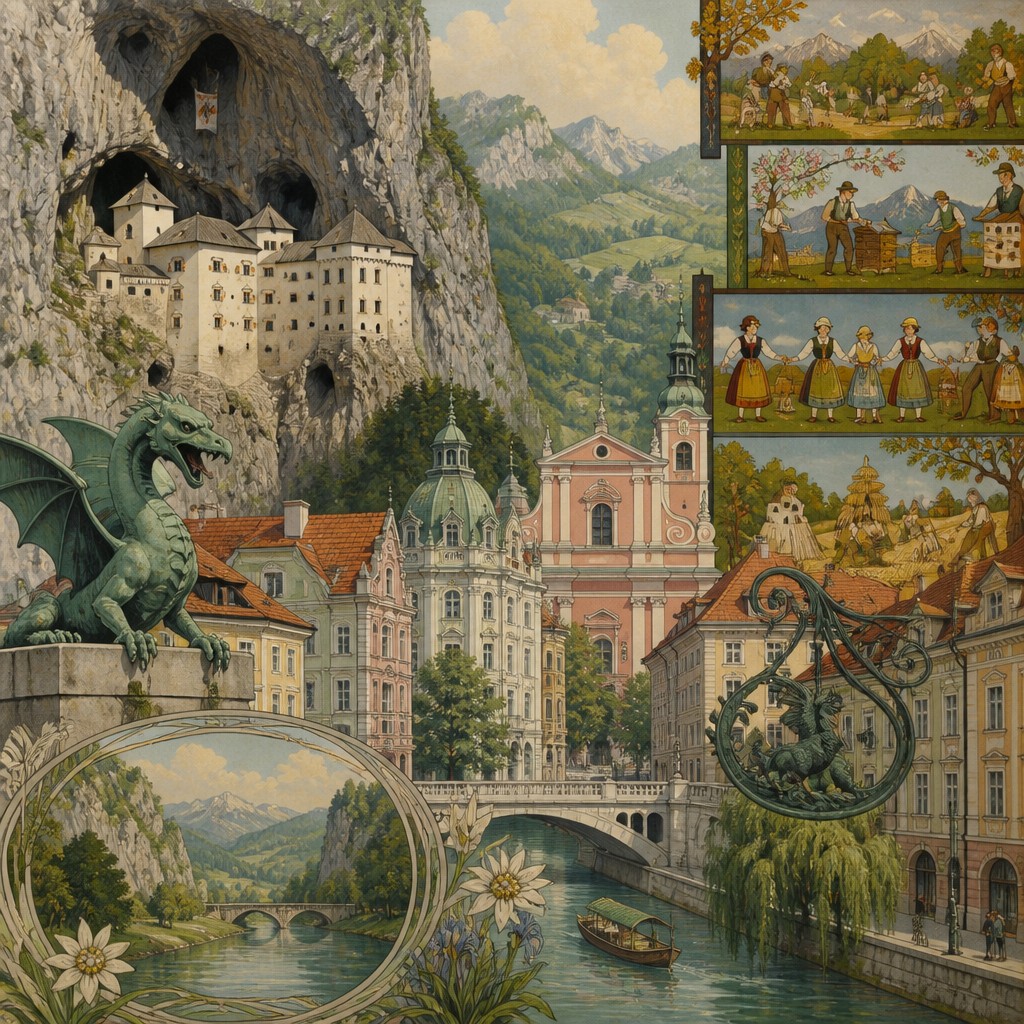
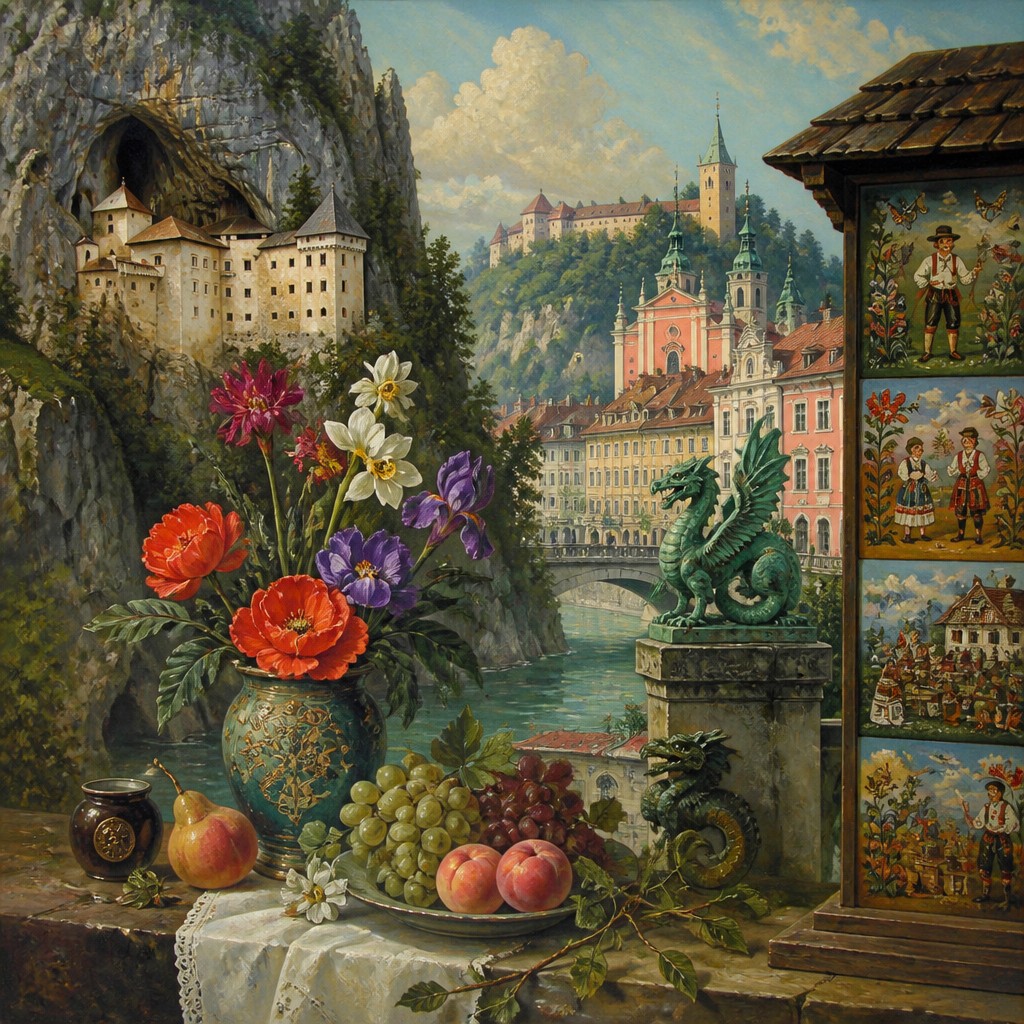
Slovenian Art Style is a contemporary, hybrid visual language inspired by Slovenia’s karst landscapes, historic architecture, and vernacular craft traditions. Its imagery brings together cliffside castles built from pale limestone, elegant town streets with pastel façades and wrought-iron ornament, green valleys, turquoise rivers, and brightly painted beehive panels.
The style is defined by a deliberate contrast between monumental and intimate subjects. Dramatic caves, fortifications, and mountain scenery provide a strong architectural framework, while naive folk scenes, simplified figures, flat color, and humorous details add warmth and playfulness. The result is decorative rather than strictly documentary: recognizable Slovenian references are reorganized into a storybook-like composition with clear shapes, lively color, and a handcrafted surface.
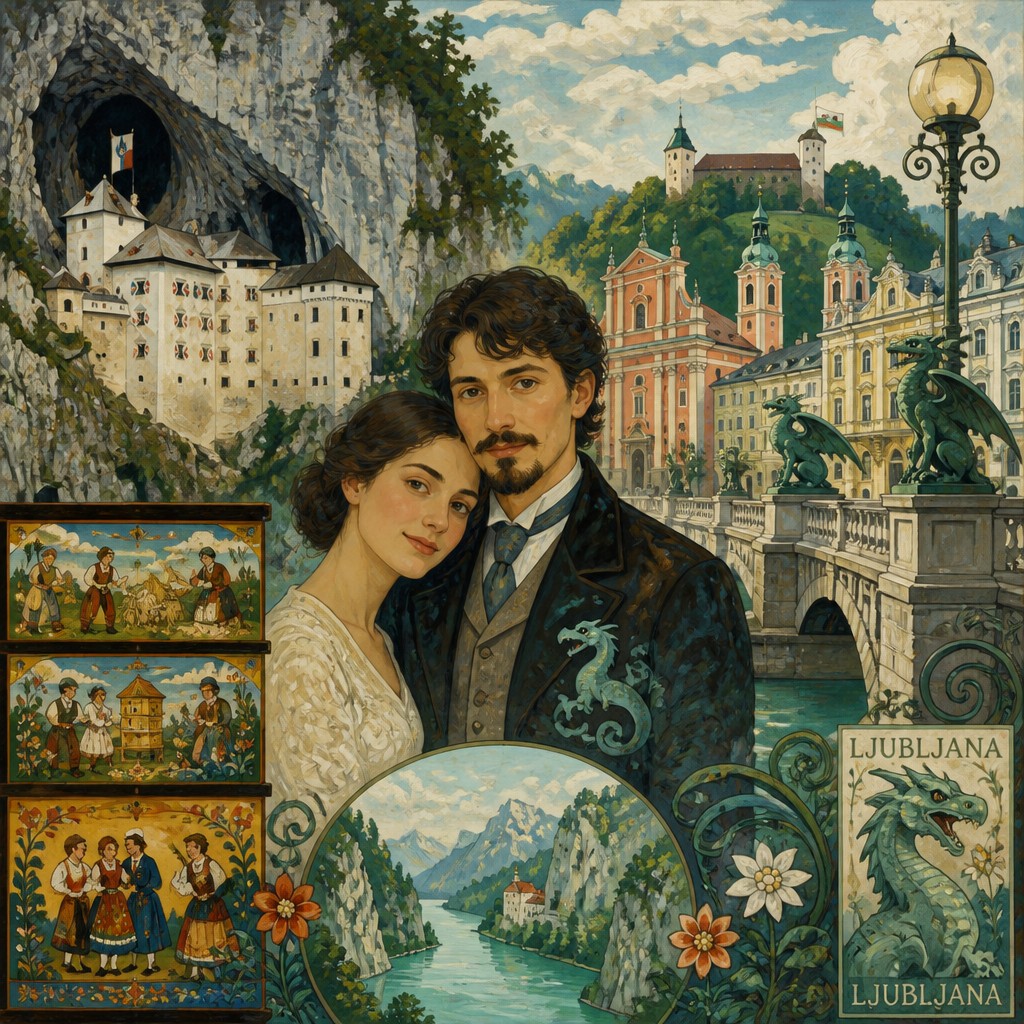
Try It On Your Photos
Upload any photo and convert it into Slovenian Art Style — drag the sliders to compare before and after.
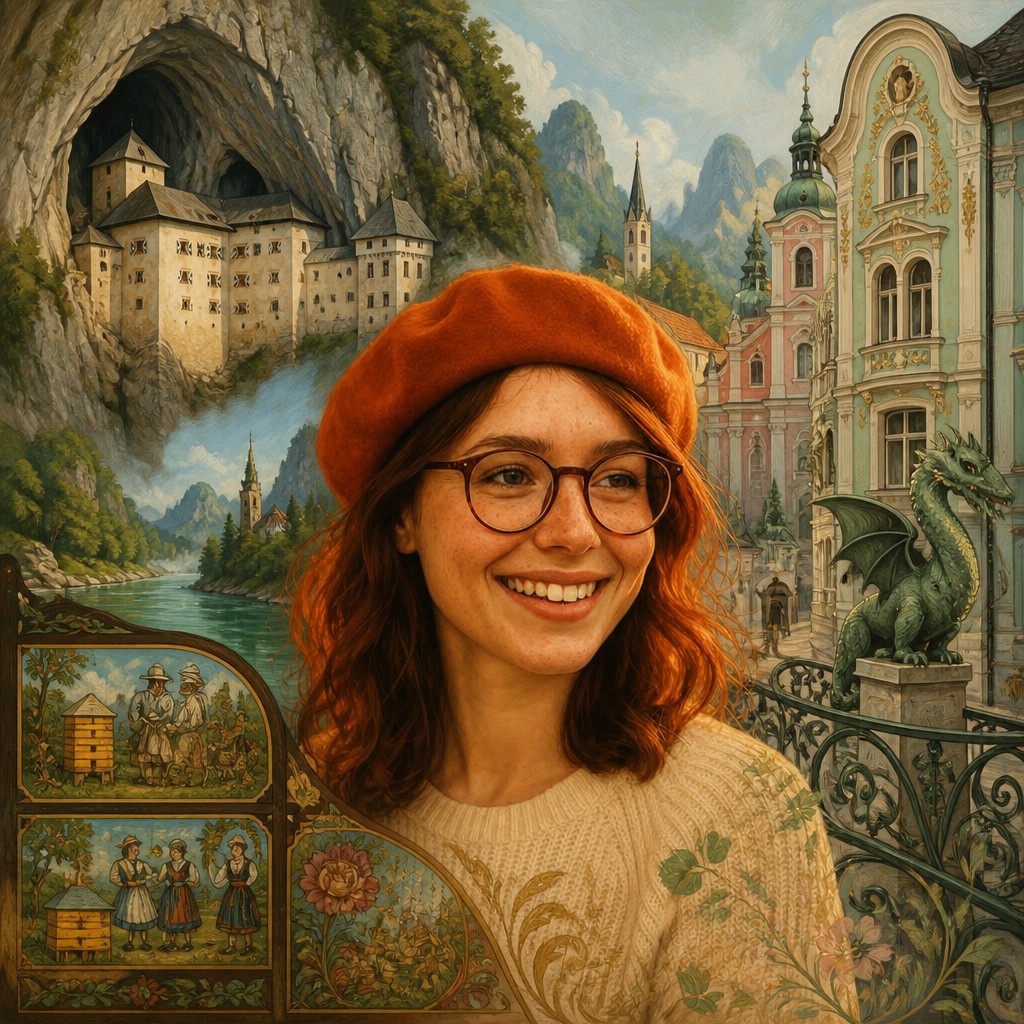

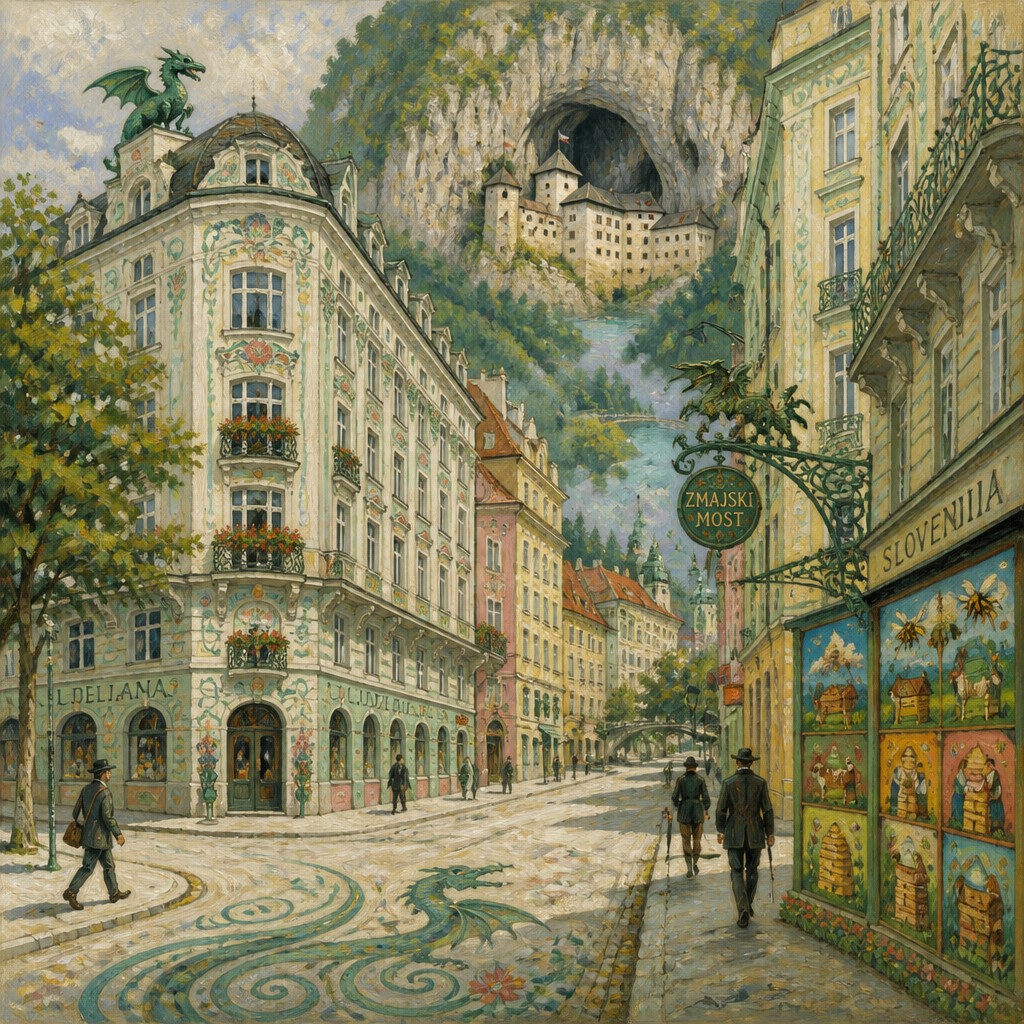

What Defines Slovenian Art Style
The signature details, up close
Karst limestone architecture
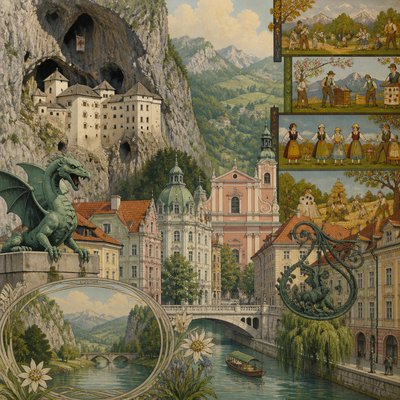
Castles, towers, bridges, and village walls appear carved into pale, weathered limestone cliffs and cave mouths. Rough stone texture anchors the image in the geology of southwestern Slovenia.
Painted beehive folk scenes
Small-scale narrative panels inspired by Slovenian beehive fronts introduce flat figures, animals, occupations, legends, and comic rural episodes. Their simplified contours and direct storytelling provide the style’s most distinctive folk-art accent.
Baroque and Secessionist townscape
Pastel façades, varied rooflines, arcades, decorative windows, and wrought-iron balconies suggest historic Ljubljana. Curving ornament and restrained dragon motifs add a civic, architectural rhythm.
Bright, flattened color
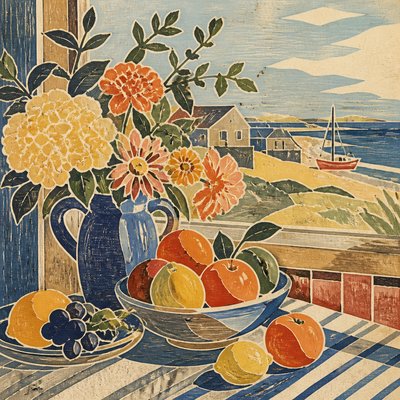
Saturated reds, yellows, blues, greens, and turquoise are arranged in broad, readable areas rather than highly blended modeling. Color is used decoratively to separate planes and emphasize narrative details.
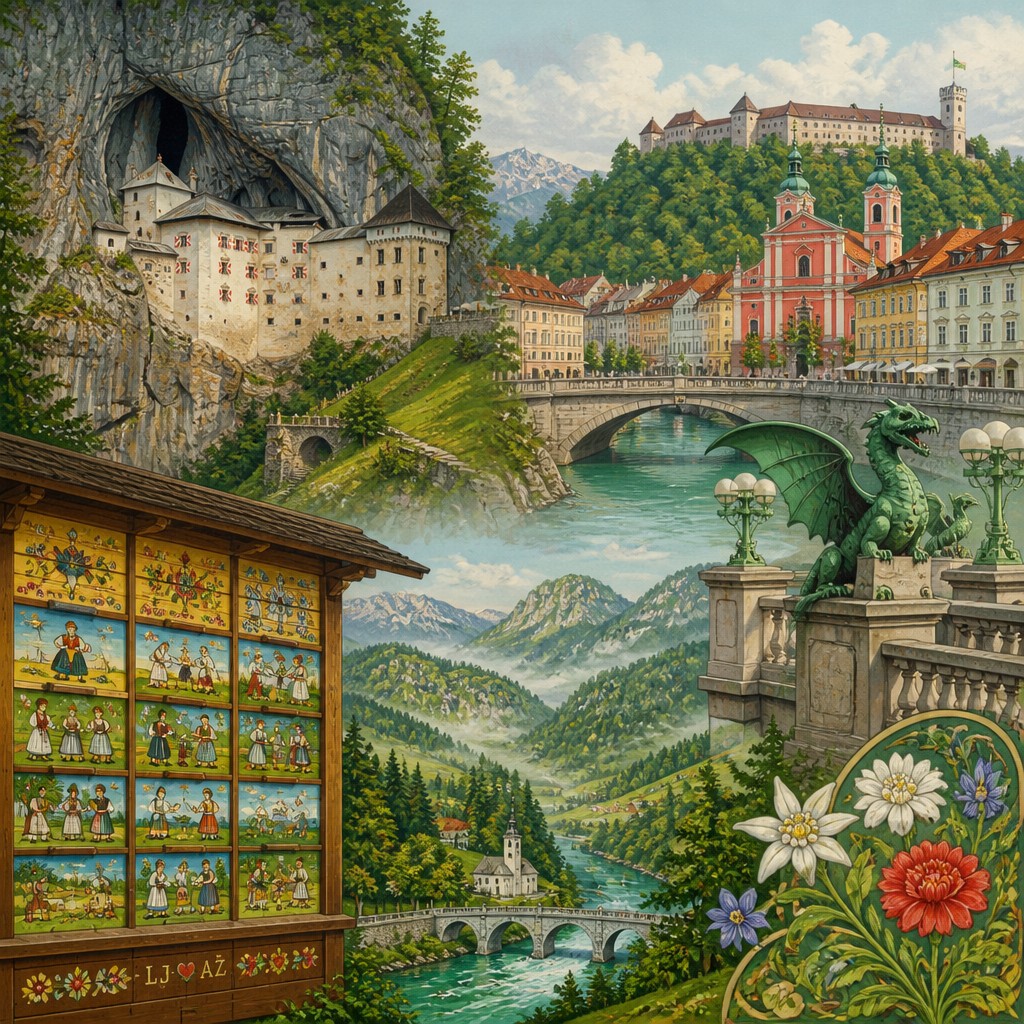
Misty green landscapes
Karst valleys, wooded hills, alpine vegetation, and winding rivers are softened by atmospheric haze. The landscape balances the hard geometry of castles and façades with a calm pastoral mood.
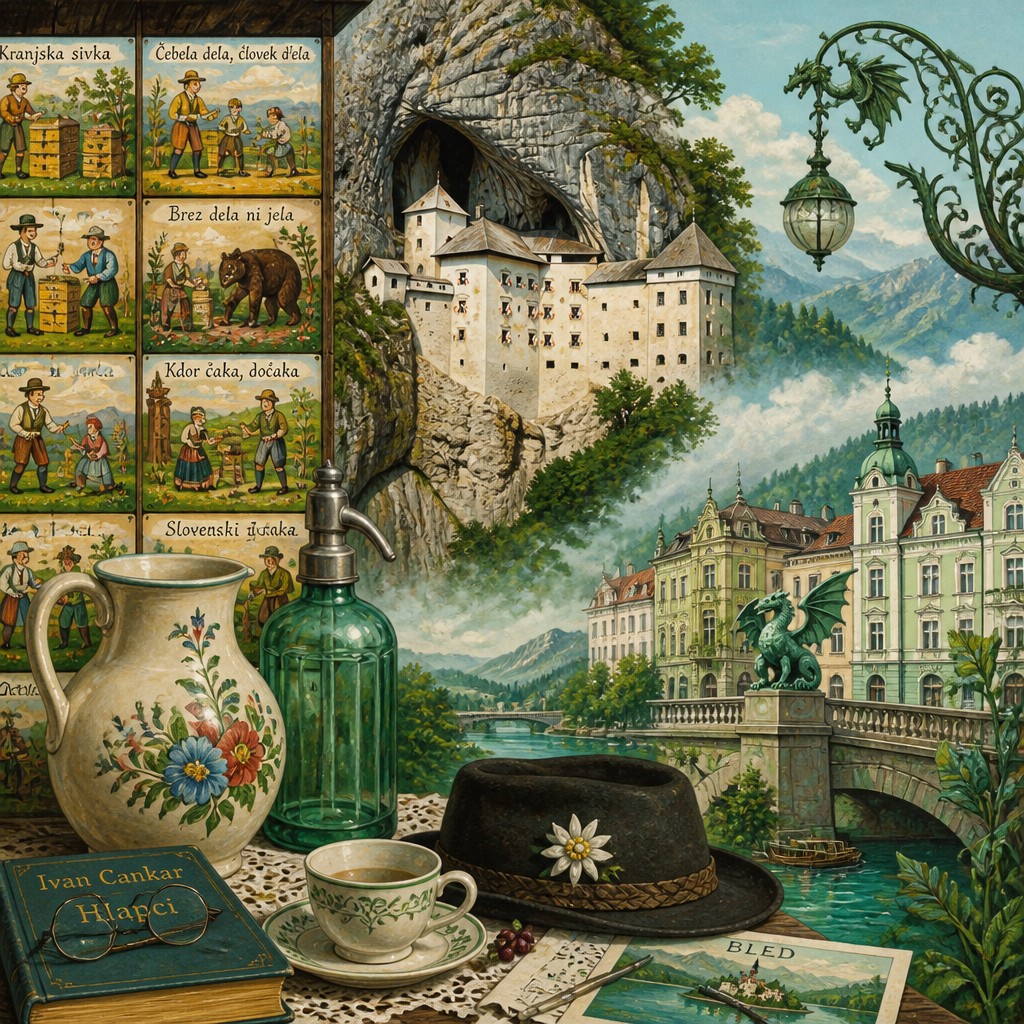
Playful naive perspective
Architecture may be slightly compressed or tilted, and figures are often simplified with expressive gestures. The imagery favors clarity, charm, and visual anecdote over strict optical realism.
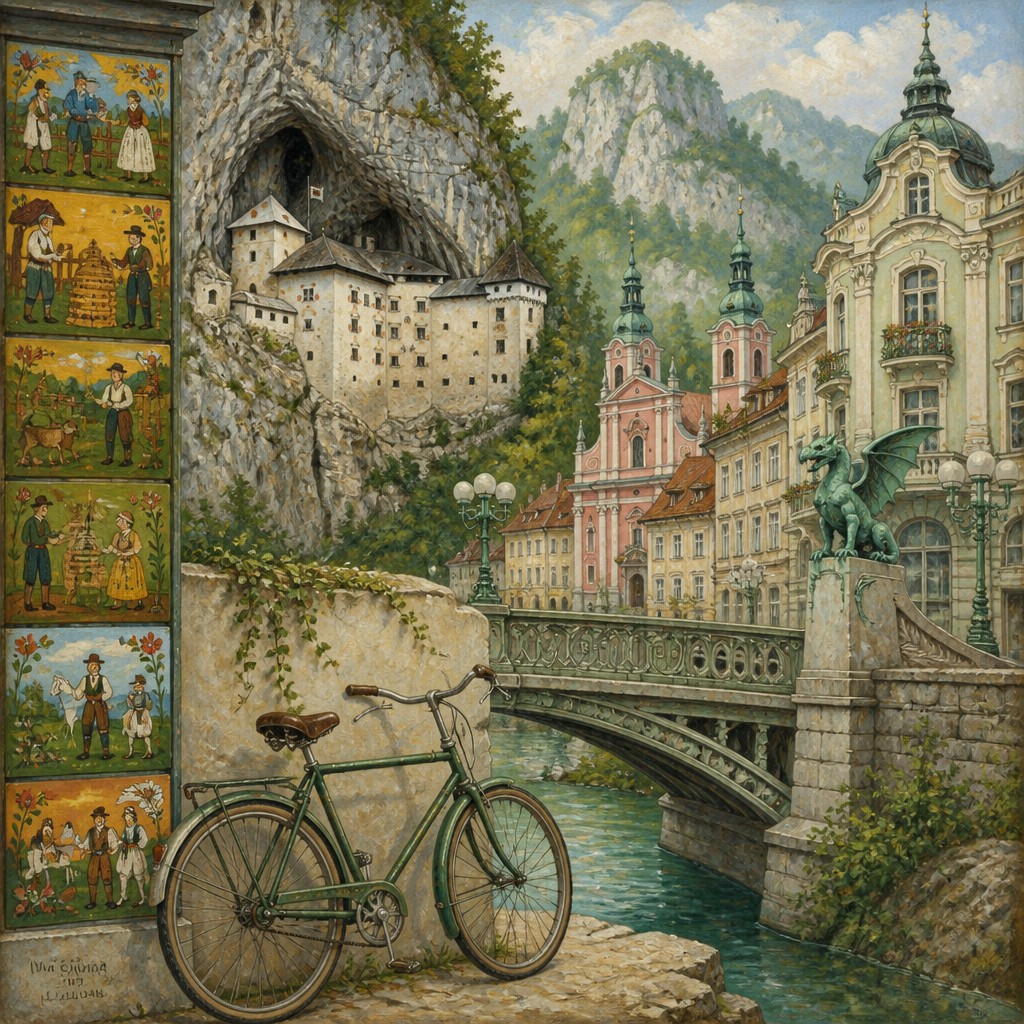
Handcrafted surface
Visible brushwork, painted wood grain, lightly uneven outlines, and modest decorative wear suggest an object made by hand. Digital versions benefit from retaining this irregularity instead of appearing perfectly polished.
Slovenian Prompt Ideas
Start from an idea — each one opens the generator with the style ready to go. See all 40 Slovenian prompts →
How to Create Slovenian Art
Master the craft step by step — or skip straight to creating. Read the full guide →
- 1
Build a layered composition
Begin with a limestone cliff, castle, or cave as the main structural mass, then add a townscape, valley, and small folk-art narrative elements in successive layers. Keep the focal architecture readable while using distant haze to create depth.
- 2
Use a folk-painting palette
Choose a compact palette of warm ochre, brick red, cobalt or ultramarine, leaf green, turquoise, cream, and dark brown. Apply color in broad, mostly flat shapes, with only limited shading on stone and clouds.
- 3
Simplify figures and stories
Design people and animals with clear silhouettes, frontal or profile poses, and expressive gestures. Give each small scene a legible action—farming, dancing, courtship, travel, or a humorous village encounter.
- 4
Add architectural ornament
Use pastel façades, tiled roofs, wrought-iron curves, arcades, and restrained dragon-shaped details to evoke historic Ljubljana without overcrowding the scene. Repeat a few motifs to unify the composition.
- 5
Preserve a handmade finish
For physical work, consider gouache, tempera, acrylic, or painted wood with slightly uneven outlines and visible grain. In digital work, add subtle brush texture, irregular edges, and controlled weathering rather than heavy photorealistic detail.
- 6
Write focused generation prompts
Specify the subject, karst setting, limestone architecture, pastel townscape, painted-panel folk narration, flat bright colors, and misty atmosphere. Request a handcrafted illustration or painted wood surface, and mention a clear composition to prevent the elements from becoming visually chaotic.
The Story
History & Origins of Slovenian
Slovenian Art Style is not a formally recognized historical movement; it is an invented, AI-native synthesis of several authentic Slovenian visual traditions. Its aesthetic lineage draws especially on the painted wooden beehive fronts associated with rural Slovenia, a craft tradition that flourished from the eighteenth and nineteenth centuries onward, as well as on the limestone architecture and cave environments of the Karst region.
It also incorporates architectural cues from Ljubljana’s Baroque and Secessionist streetscapes, including pastel façades, ornamental ironwork, and dragon motifs connected with the city’s civic symbolism. The combination creates a modern interpretive style rather than a claim that these elements historically formed one unified school.
Influences: The style relates to Central European folk painting, especially Slovenian painted beehive fronts and other vernacular narrative crafts. Its architectural vocabulary draws on Baroque town planning, nineteenth- and early twentieth-century Secessionist ornament, and the fortified stone buildings of the Karst region. It also shares qualities with naive art, storybook illustration, pastoral landscape painting, decorative gouache, and heritage-focused architectural illustration.
Frequently Asked Questions
What defines Slovenian Art Style?
It combines Slovenian karst castles and limestone caves with pastel urban architecture, painted beehive-panel narratives, bright flat color, and misty green landscapes. The defining effect is a balance between monumental architecture and playful rural storytelling.
Is Slovenian Art Style a historical art movement?
No. This name describes a contemporary hybrid aesthetic rather than a documented historical school. It reinterprets real Slovenian traditions, including painted beehive fronts, Karst architecture, and Ljubljana’s Baroque and Secessionist visual heritage.
How is it different from generic folk art?
Generic folk art can refer to many regional traditions, while this style uses a specifically Slovenian combination of limestone landscapes, Ljubljana-inspired ornament, and beehive-panel storytelling. Its palette and architecture are deliberately fused into one stylized scene.
What materials work well for making it traditionally?
Gouache, tempera, acrylic, and painted wood are well suited to its opaque colors and handcrafted appearance. Slightly irregular outlines, visible grain, and simplified shapes help the work feel like a decorative folk object rather than a polished photographic illustration.
Can photographs be transformed into this style?
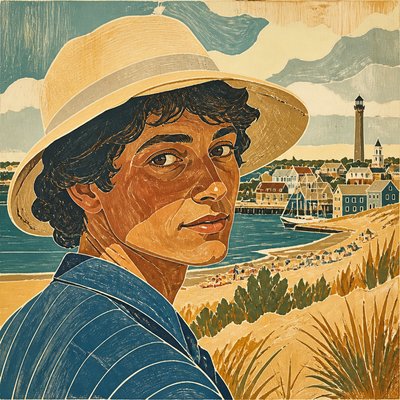
Yes. A landscape, village street, castle, or portrait can be adapted by simplifying forms, introducing flat folk-art color, adding limestone and pastel architectural cues, and applying a painted-panel texture. The strongest results preserve the original subject’s main silhouette while stylizing its surface and surroundings.
Where is this style useful?
It suits travel illustrations, cultural posters, heritage interpretation, editorial artwork, children’s books, postcards, maps, packaging, and decorative wall art. It is especially effective when an image needs a strong sense of place without relying on strict realism.
Create your first Slovenian artwork
Describe anything — or upload a photo — and see it in Slovenian Art Style in seconds.
Related Styles
Discover similar art styles