Skagen Art Style
Explore Skagen art: luminous Nordic coastal light, windswept beaches, fishermen, boats, and naturalistic plein-air painting.
Instantly rendered in Skagen — or transform a photo
Skagen Gallery
Tap any artwork to explore it
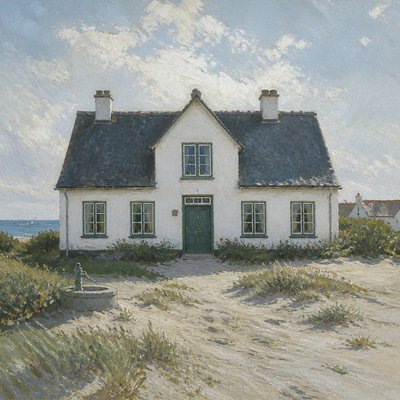
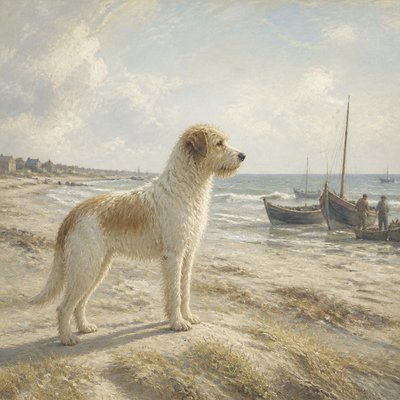
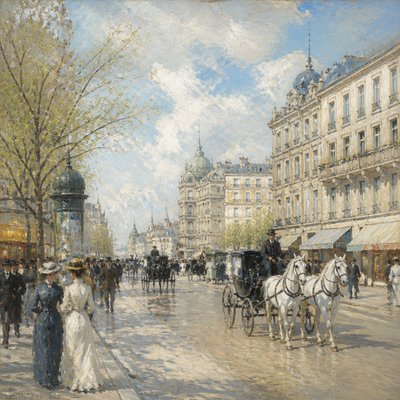
What is Skagen Art Style?
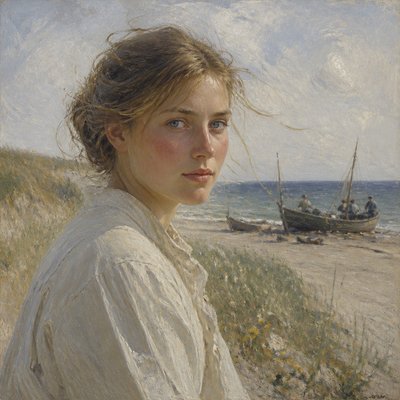
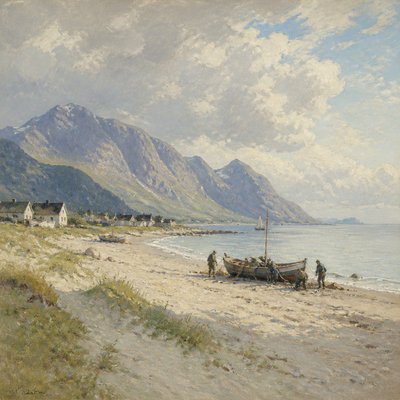
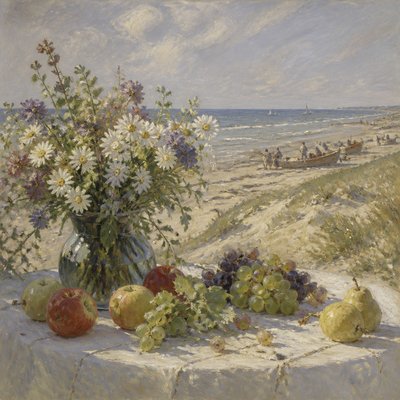
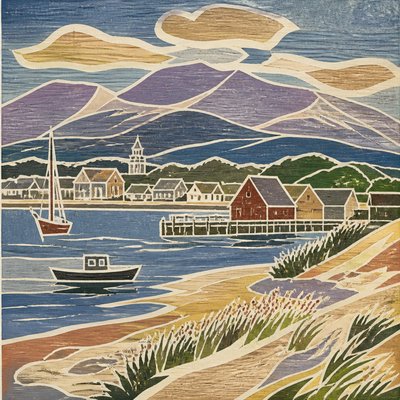
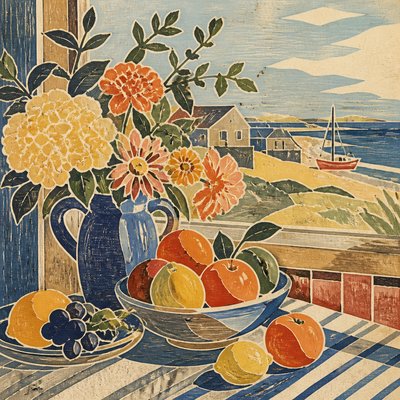
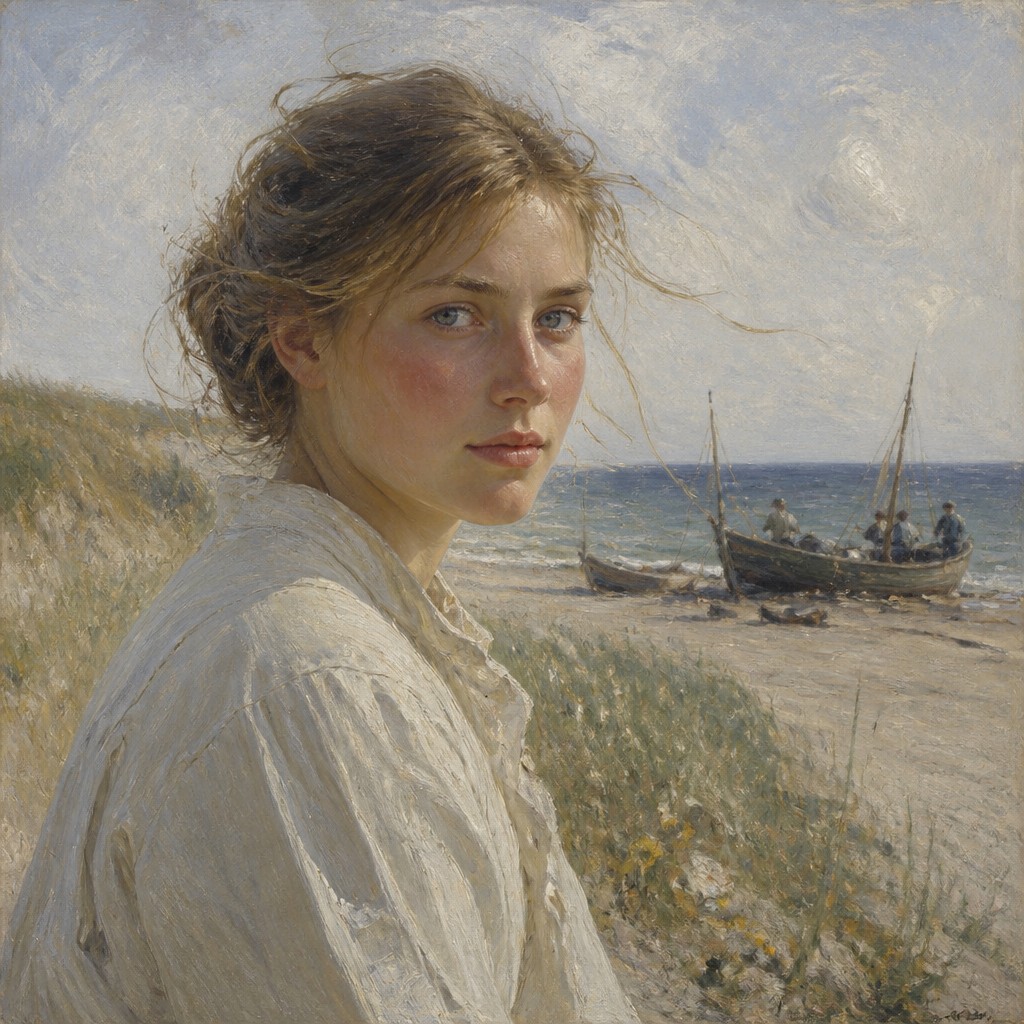
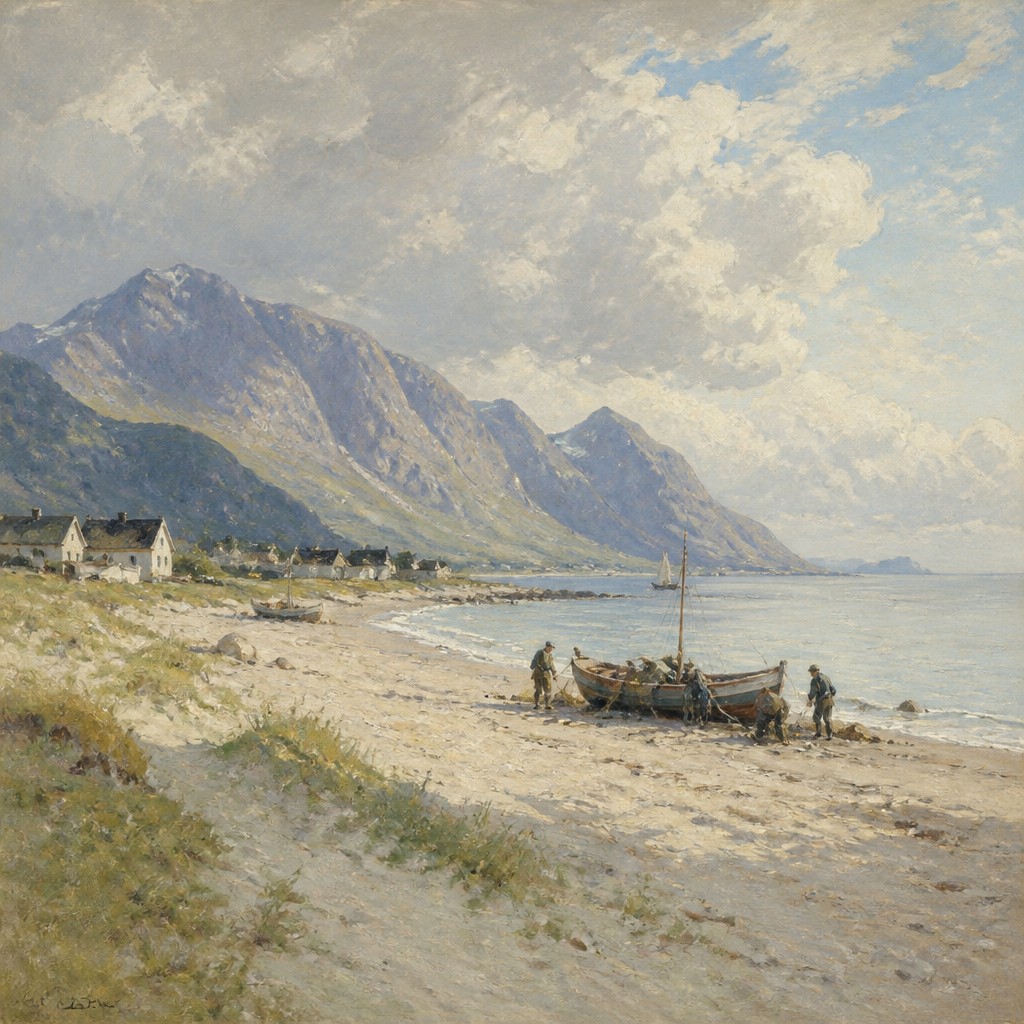
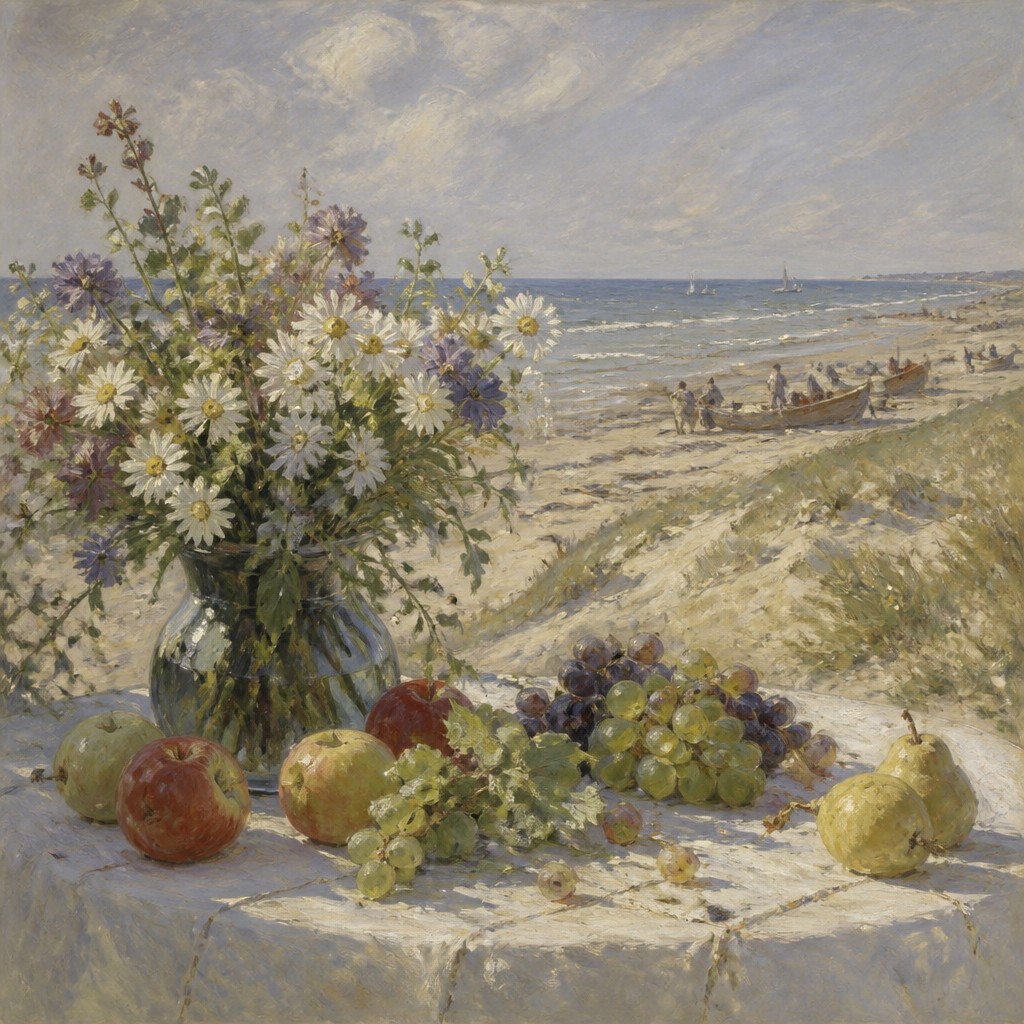
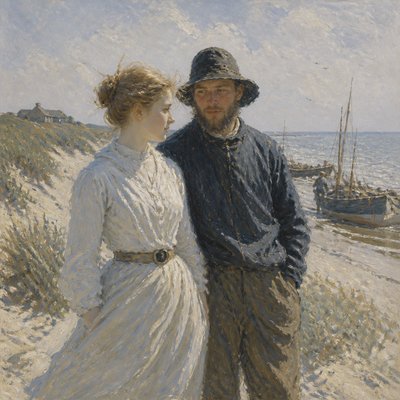
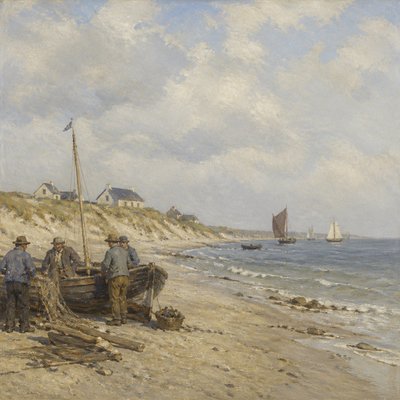
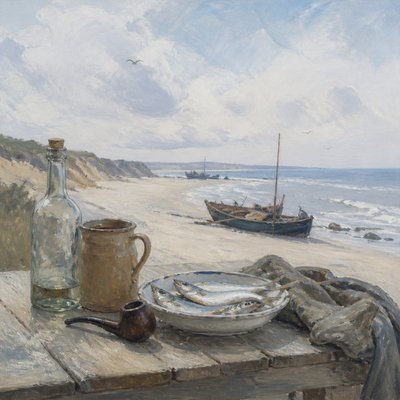
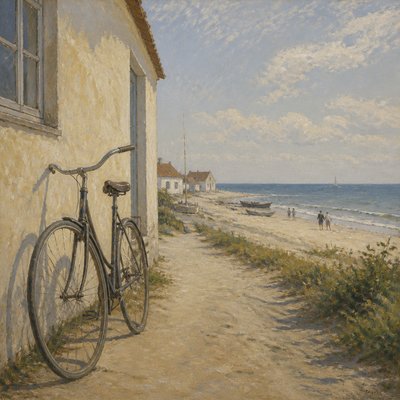
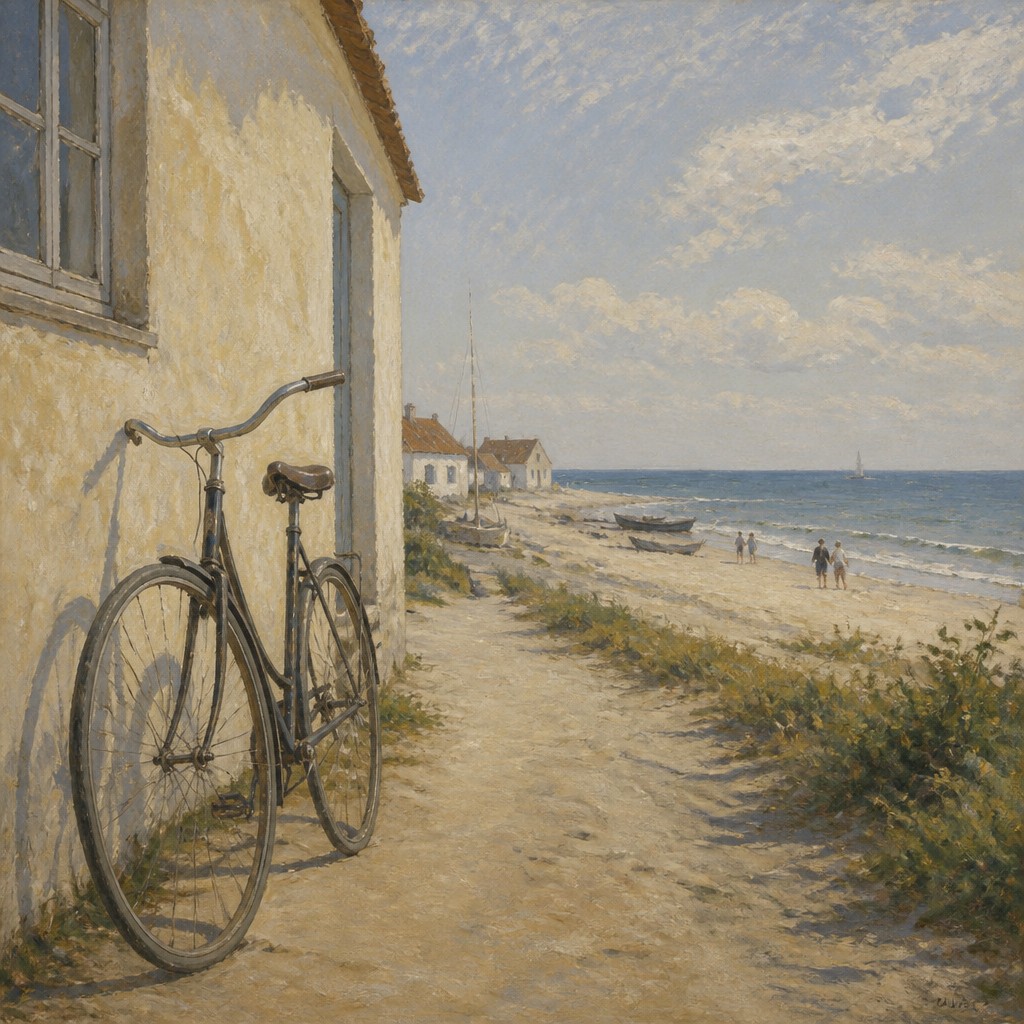
Skagen art is a late nineteenth-century Scandinavian coastal painting tradition centered on the fishing community of Skagen, at Denmark’s northern tip. Its visual identity rests on luminous northern light, open beaches, dunes, working fishermen, boats, domestic interiors, and quiet scenes of everyday life. The style combines plein-air observation with naturalistic drawing and a restrained, atmospheric palette of silvery blues, warm ochres, muted greens, and sandy neutrals.
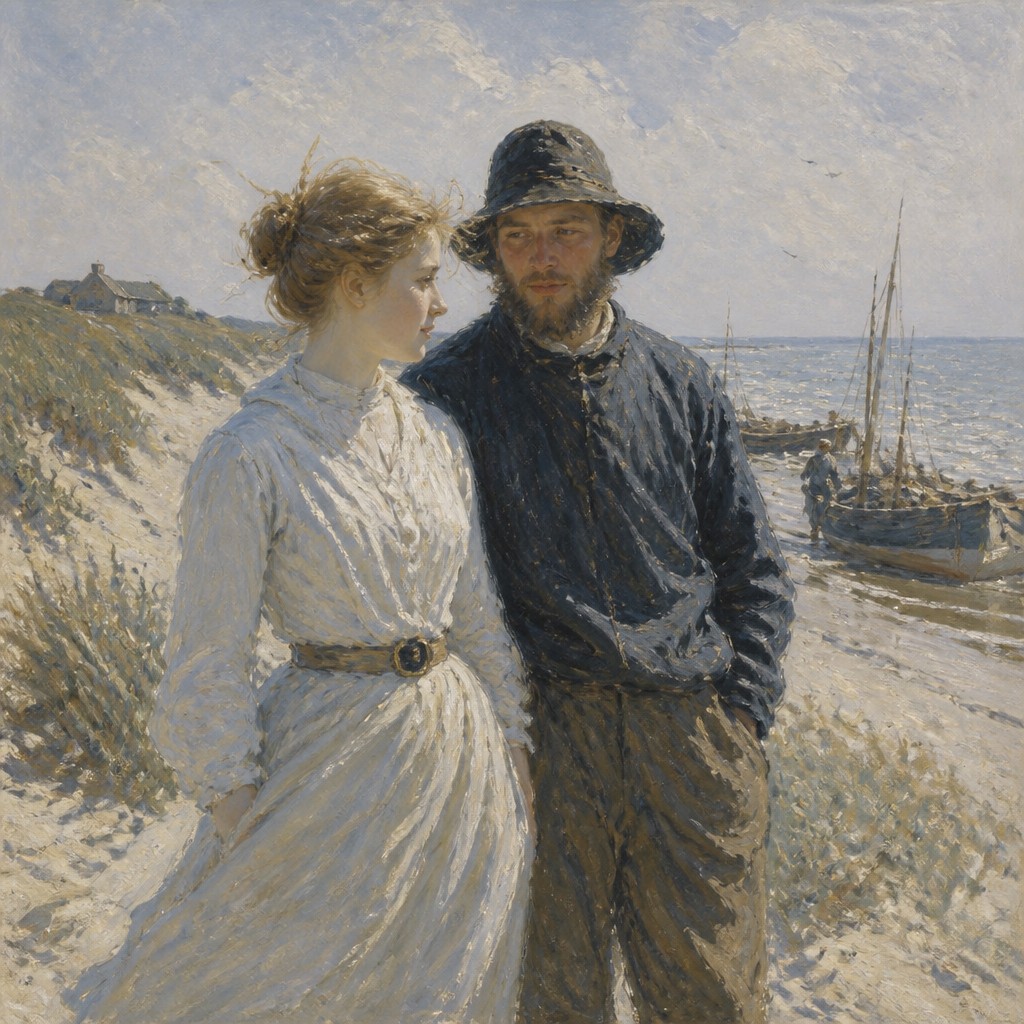
Try It On Your Photos
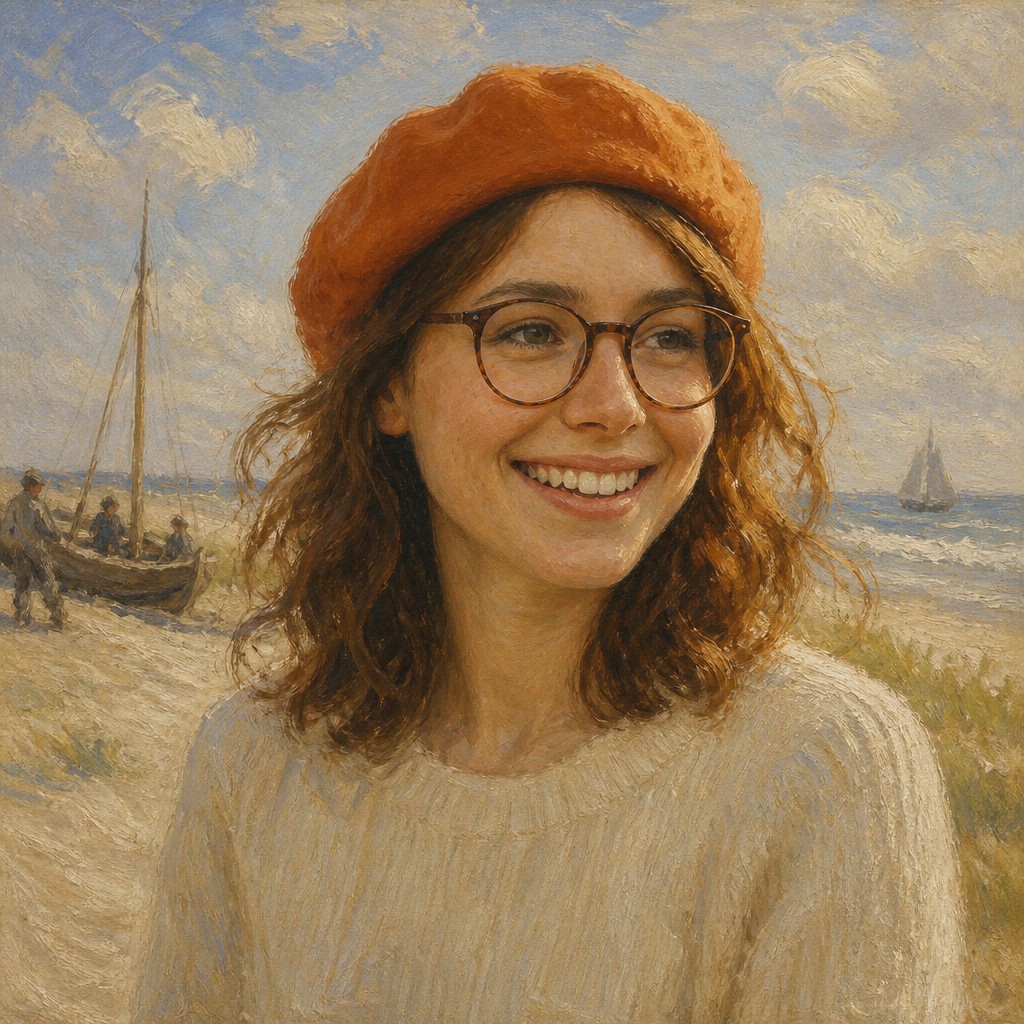
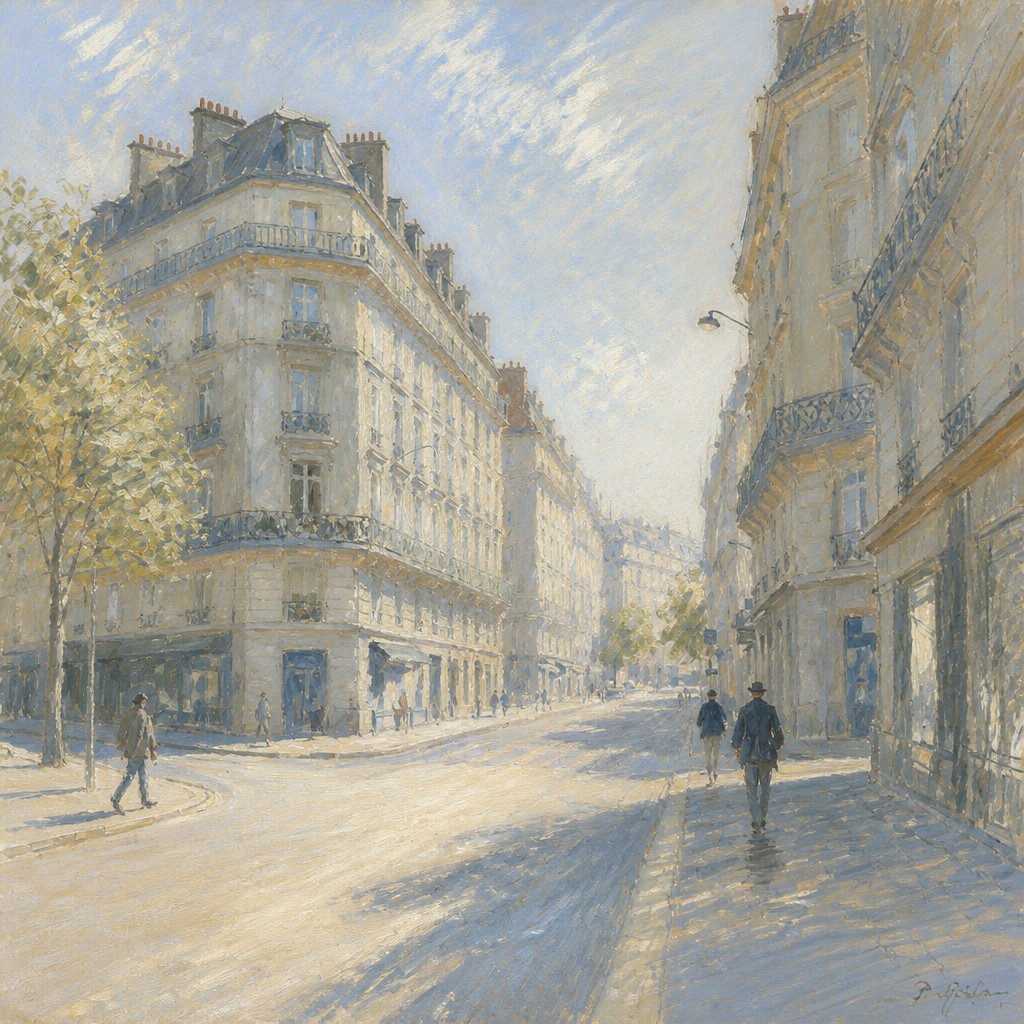
Upload any photo and convert it into Skagen Art Style — drag the sliders to compare before and after.


What Defines Skagen Art Style
The signature details, up close
Luminous northern light
Scenes are shaped by cool, diffused coastal illumination, often with bright skies, reflective sand, and soft transitions between light and shadow. The atmosphere may feel silvery, hazy, or briefly radiant as weather changes.
Windswept beaches and dunes
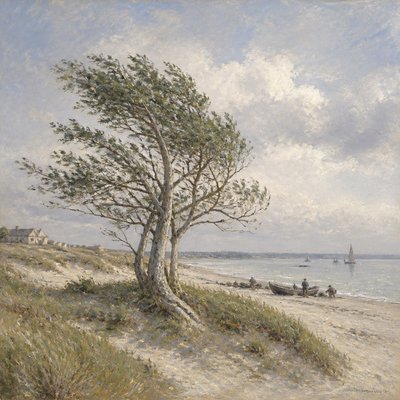
Open shorelines, low dunes, sea grass, tidal flats, and broad horizons provide spacious compositions. The landscape is observed as an active environment influenced by wind, cloud, mist, and shifting sunlight.
Plein-air brushwork
Loose, visible strokes record immediate outdoor observation rather than polished studio finish. Brushwork remains responsive to changing weather while preserving the underlying structure of figures, boats, and terrain.
Fishermen and working life
Fishermen, nets, vessels, cottages, and beach labor are treated with dignity and practical detail. Human activity is integrated into the landscape instead of presented as theatrical spectacle.
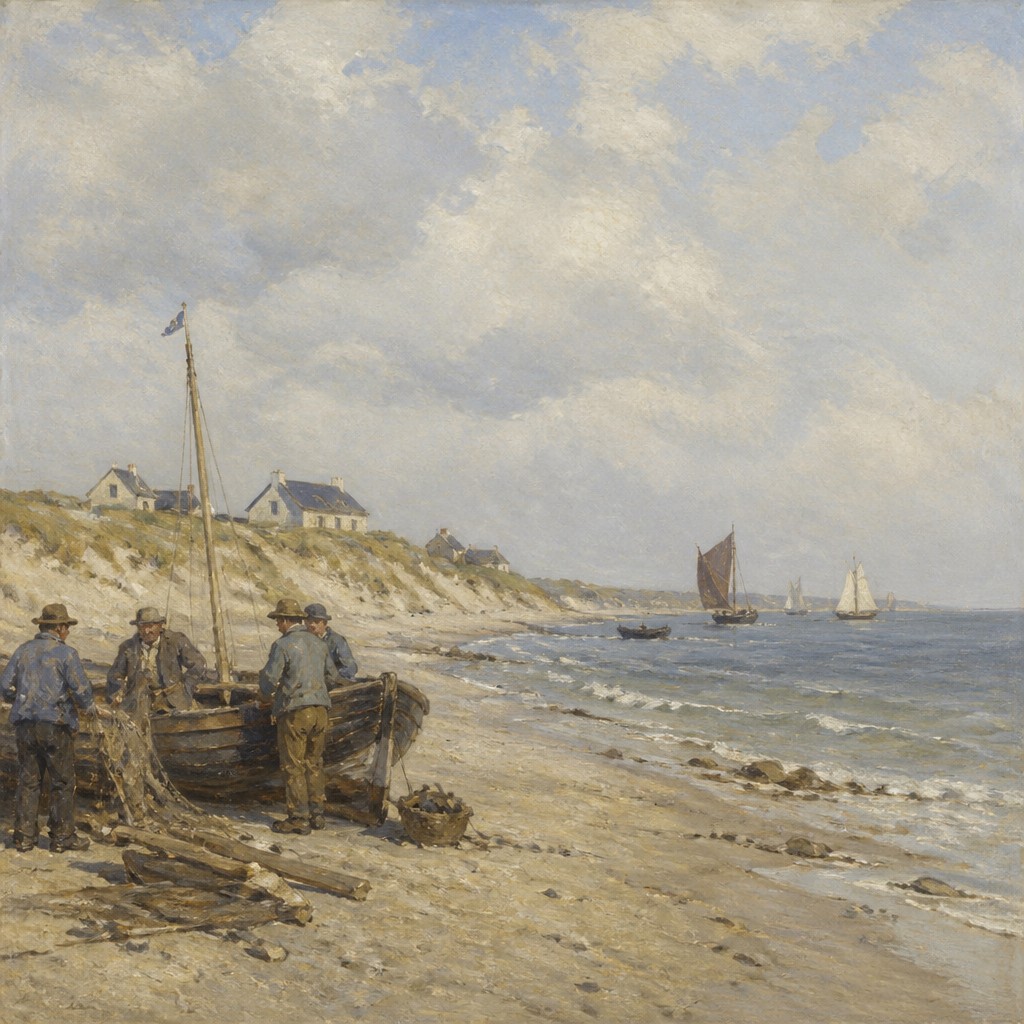
Naturalistic figures
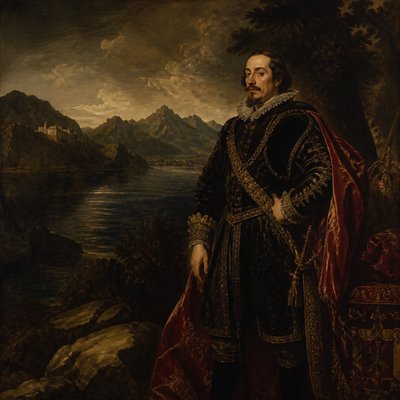
Figures are grounded in believable anatomy, posture, clothing, and gesture. Faces and bodies often appear absorbed in work or conversation, creating an observational rather than idealized mood.
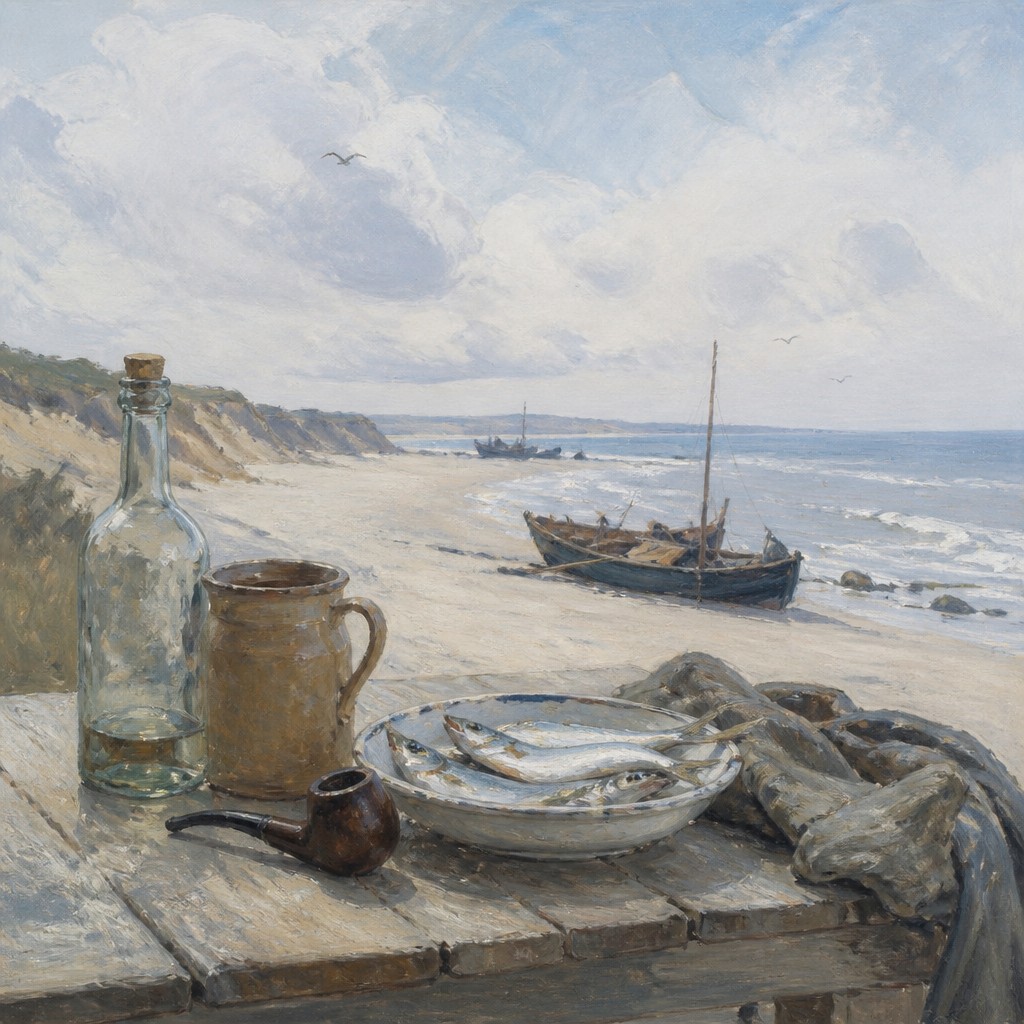
Muted maritime palette
Soft blue-gray, pearl, cream, ochre, umber, and weathered green tones create a calm coastal harmony. Accents of stronger color may appear in clothing, fishing equipment, or sunset light without overpowering the atmosphere.
Quiet, observational mood
The emotional register is contemplative and intimate, even when the subject is physically demanding work. Compositions favor pauses, ordinary encounters, and the poetry of repeated coastal routines.
Skagen Prompt Ideas
Start from an idea — each one opens the generator with the style ready to go. See all 40 Skagen prompts →
How to Create Skagen Art
Master the craft step by step — or skip straight to creating. Read the full guide →
- 1
Begin with outdoor observation
Work from direct studies of a beach, harbor, dune, or fishing village, noting the direction and color temperature of the light. Establish the horizon, major tonal masses, and wind direction before adding detail.
- 2
Build the scene in broad tones
Lay in large passages of sky, sand, water, and shadow with thin or moderately loaded paint, then refine selected areas. Keep edges varied: soften distant forms and atmospheric transitions while retaining firmer contours around important figures and equipment.
- 3
Use a restrained palette
Favor cool grays, desaturated blues, sandy ochres, muted greens, and warm earth colors, reserving brighter notes for reflected light or small clothing details. Mix colors toward atmospheric harmony rather than maximum saturation.
- 4
Balance looseness with structure
Let brushstrokes remain visible in sky, water, grass, and clothing, but draw boats, hands, tools, and human poses with naturalistic care. The style works best when expressive surface marks support accurate observation.
- 5
Adapt the method digitally
Use textured brushes, layered opacity, cool color grading, and selective edge softening to imitate outdoor oil or gouache studies. For prompt-based creation, specify coastal light, open dunes, working fishermen, naturalistic figures, silvery maritime atmosphere, and loose plein-air brushwork.
The Story
History & Origins of Skagen
The style developed from the 1870s into the early twentieth century as artists from Denmark, Norway, and Sweden gathered in Skagen to work directly from the landscape and local community. Its development coincided with European naturalism and the expanding interest in painting modern life outdoors, while the region’s distinctive maritime light encouraged broad tonal effects and sensitive studies of weather, season, and time of day.
Influences: Skagen art draws on nineteenth-century Nordic naturalism, European plein-air painting, social realism, and the broader modern interest in depicting ordinary life. It also shares atmospheric concerns with Impressionism, but generally retains stronger drawing, quieter color relationships, and a more grounded interest in regional community and labor. Maritime landscape painting, coastal vernacular architecture, and Scandinavian traditions of subdued tonal harmony further shape its appearance.
Frequently Asked Questions
What defines the Skagen art style?
It is defined by luminous northern coastal light, open beaches and dunes, naturalistic figures, and scenes of fishermen or everyday community life. Loose plein-air brushwork is combined with careful observation of people, boats, clothing, and weather.
Is Skagen art the same as Impressionism?
No. Skagen art developed alongside Impressionism and shares its interest in outdoor light and visible brushwork, but it is more specifically rooted in Scandinavian coastal life. It often uses a quieter palette, firmer drawing, and more naturalistic social observation.
When did Skagen art develop?
The tradition emerged in Skagen during the 1870s and continued into the early twentieth century. It was associated with an international Scandinavian artists’ colony drawn to the area’s distinctive light, fishing culture, and relatively remote landscape.
What colors are typical of Skagen art?
Typical colors include silvery blue, pearl gray, cream, sand, ochre, muted green, umber, and weathered brown. Stronger colors can be used sparingly, especially in clothing, boats, or warm sunlight, but overall harmony is subdued and atmospheric.
How can I paint a Skagen-inspired beach scene?
Work from a simple coastal composition and establish the sky, horizon, water, and sand as broad tonal areas first. Use visible but controlled brushwork, soften distant edges, and give figures and working objects enough structural detail to remain believable.
Where is this style commonly used today?
It suits coastal landscape paintings, historical or regional scenes, editorial illustration, travel imagery, museum-inspired interiors, and atmospheric digital artwork. The style is especially effective for subjects that combine quiet human activity with expansive natural surroundings.
Create your first Skagen artwork
Describe anything — or upload a photo — and see it in Skagen Art Style in seconds.
Related Styles
Discover similar art styles