Senegalese Art Style
Explore Senegalese art style: vivid reverse-glass painting, indigo textile patterns, Gorée facades, basketry texture, and Atlantic color.
Instantly rendered in Senegalese — or transform a photo
Senegalese Gallery
Tap any artwork to explore it
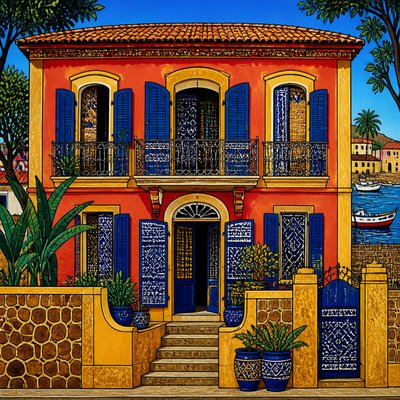
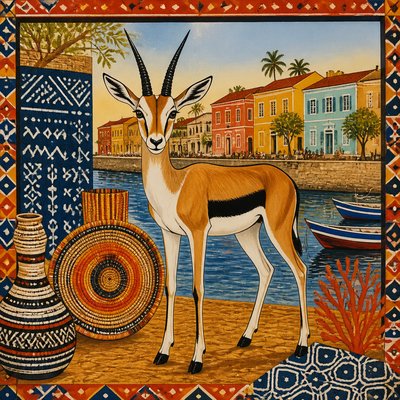
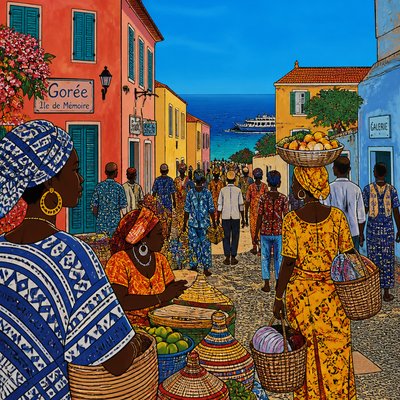
What is Senegalese Art Style?
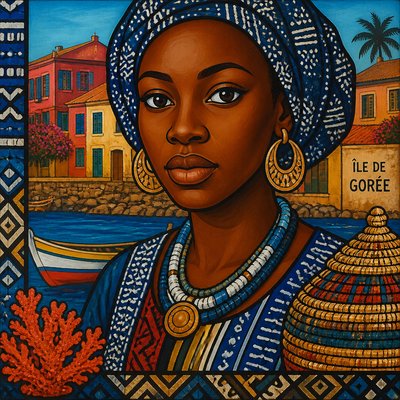
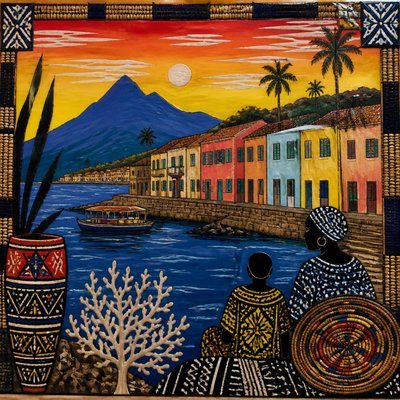
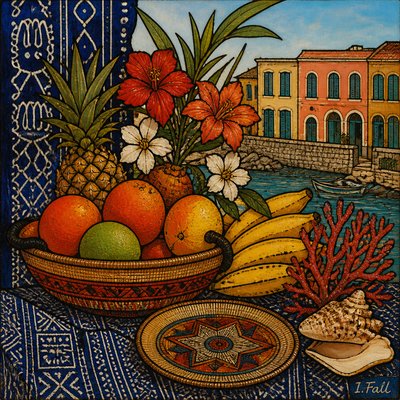
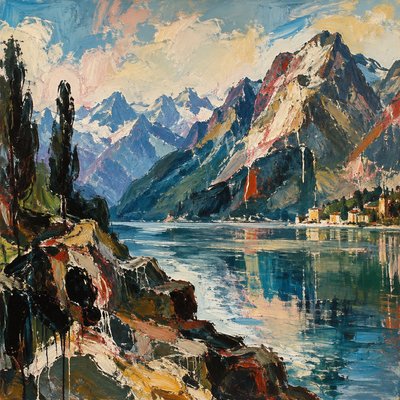
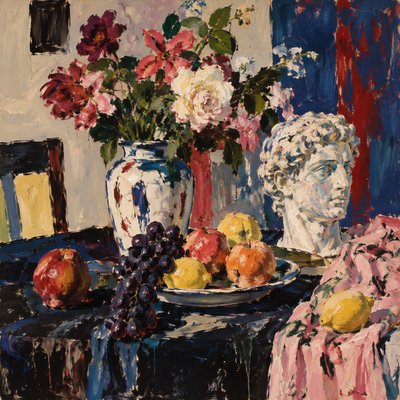
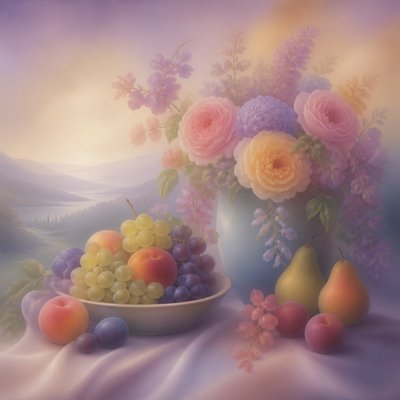
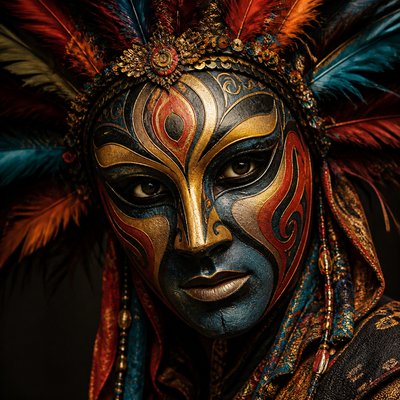
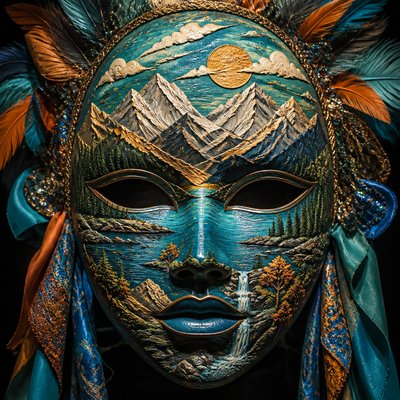
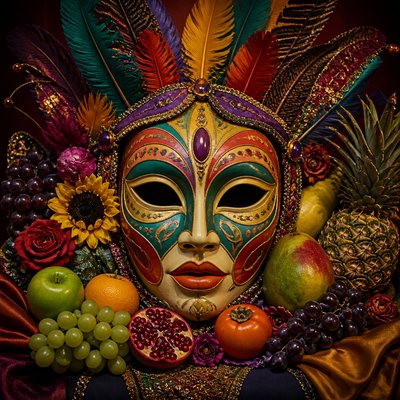
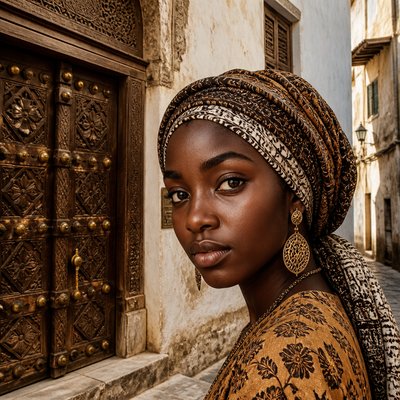
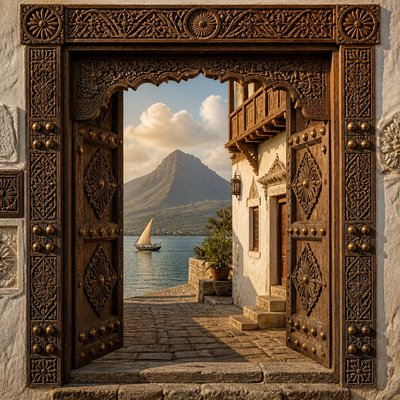
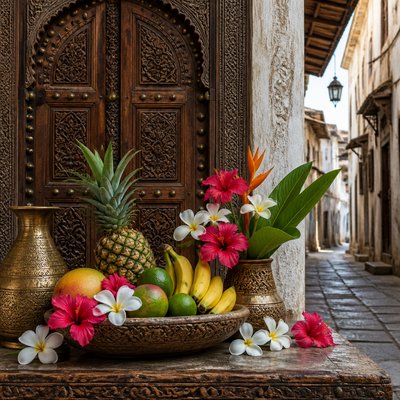
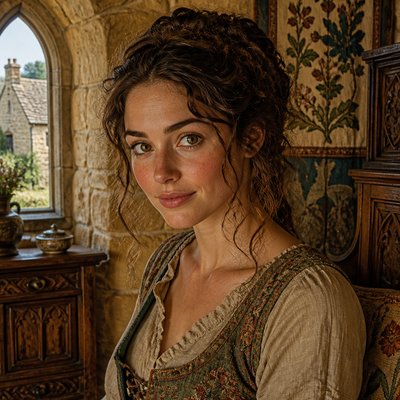
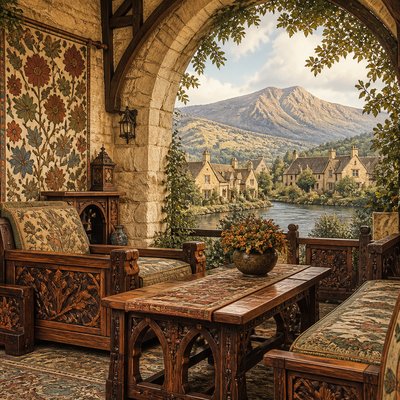
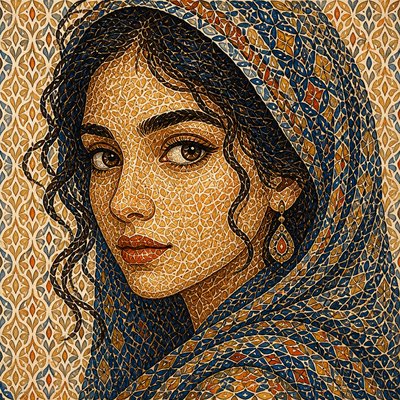
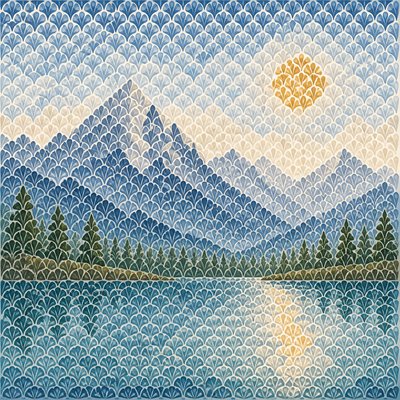
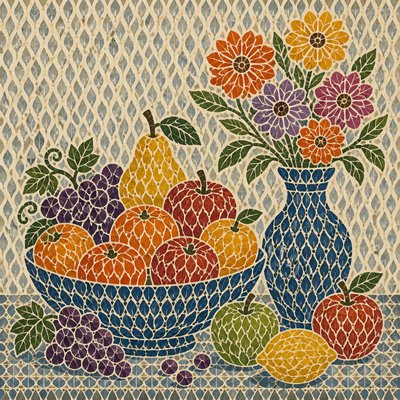
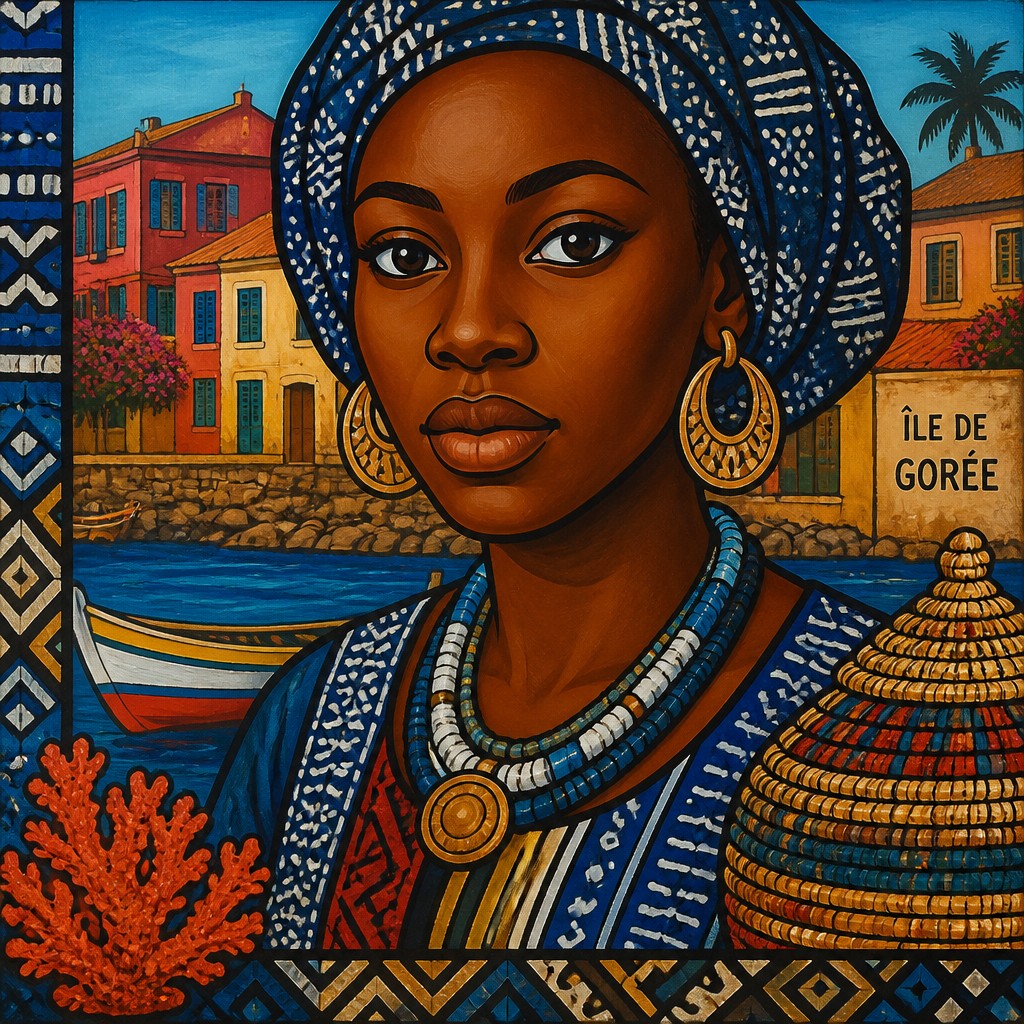
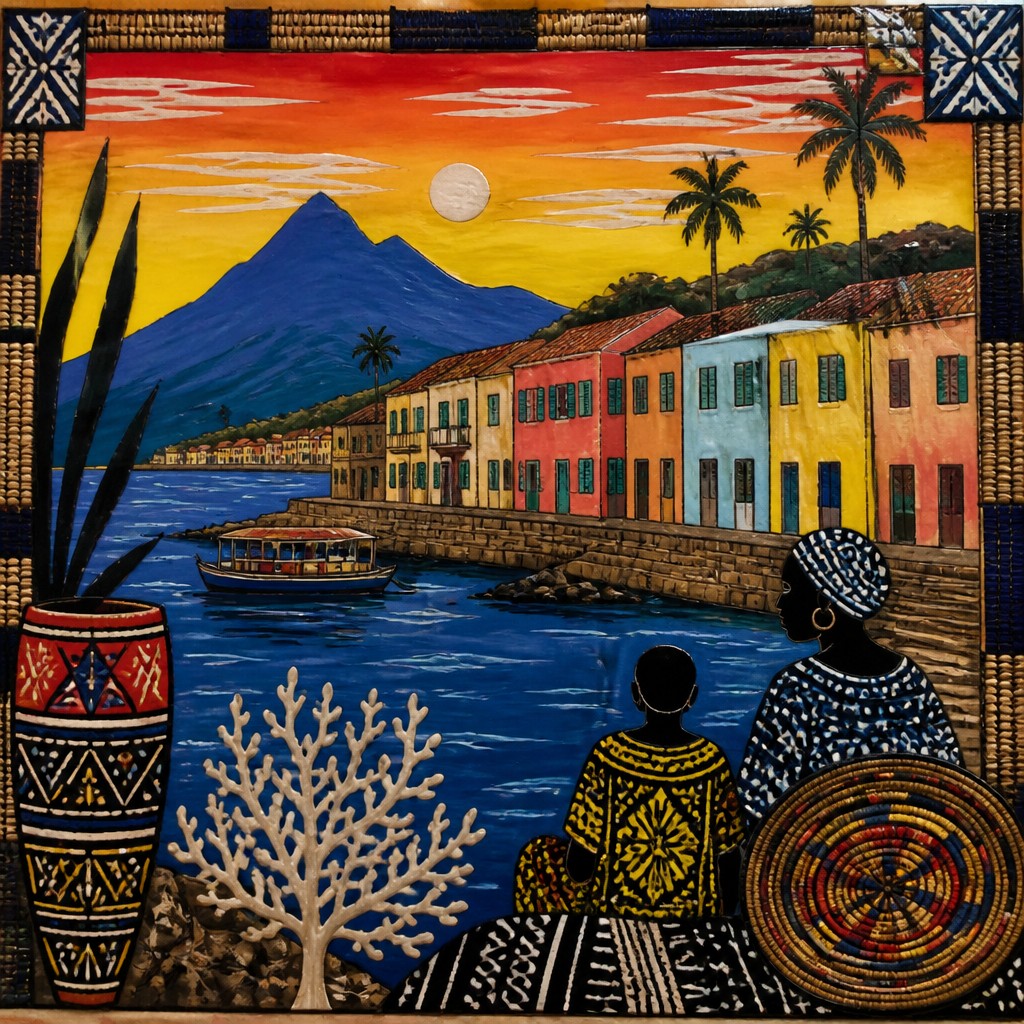
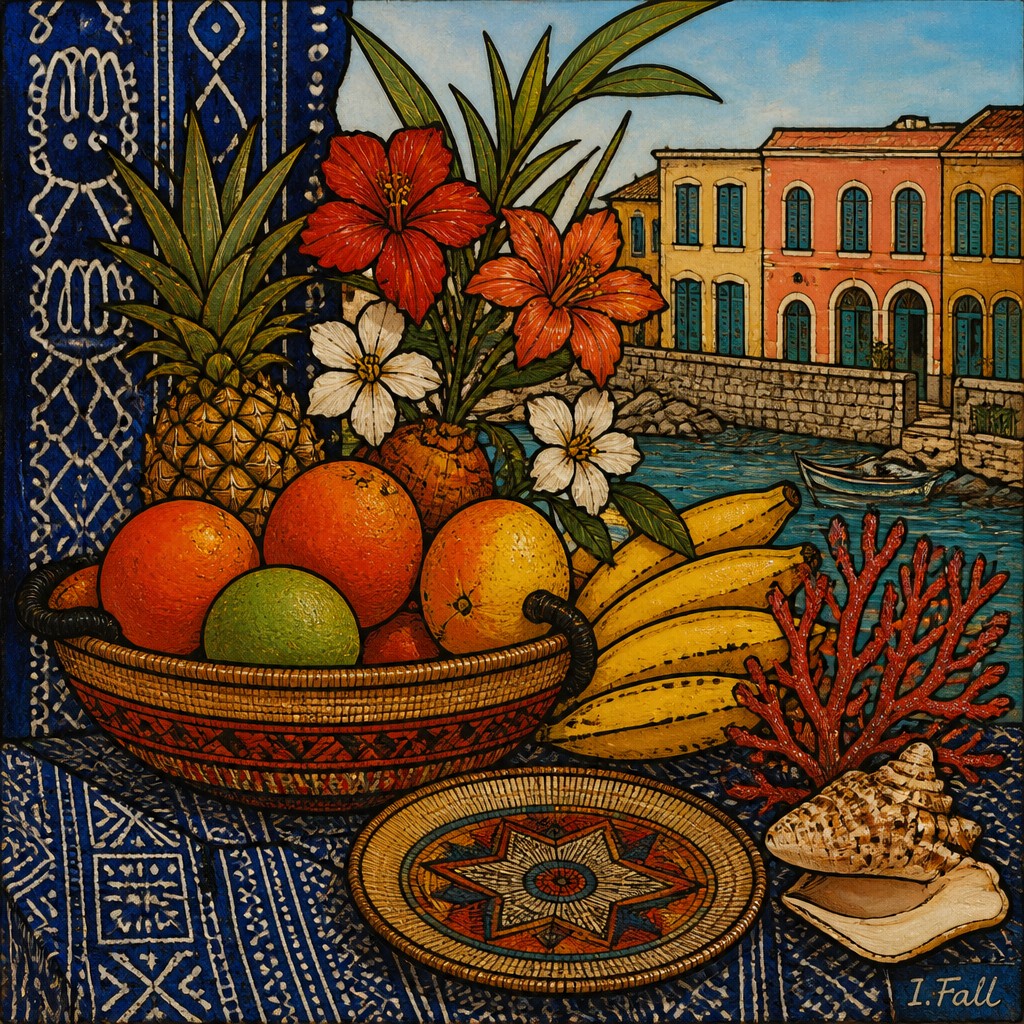
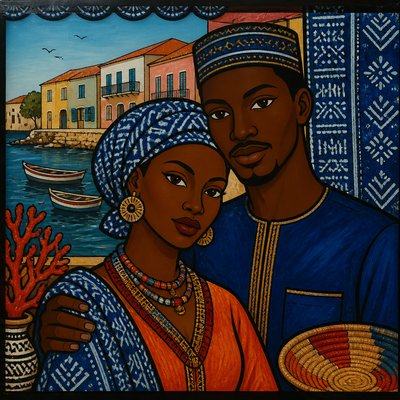
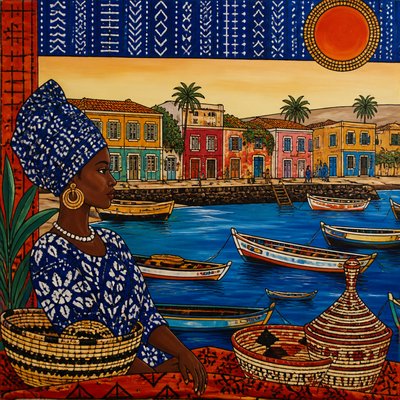
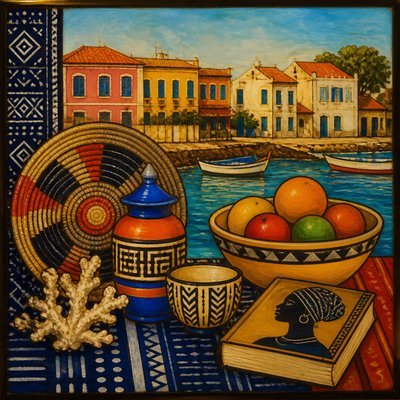
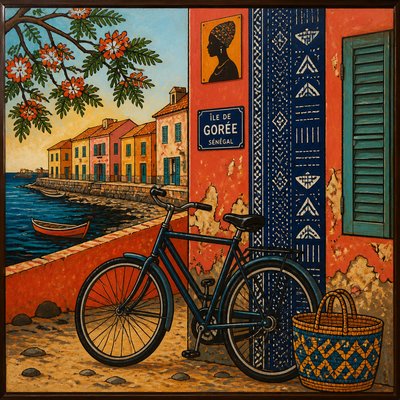
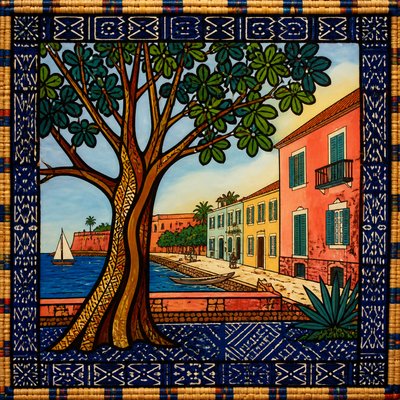
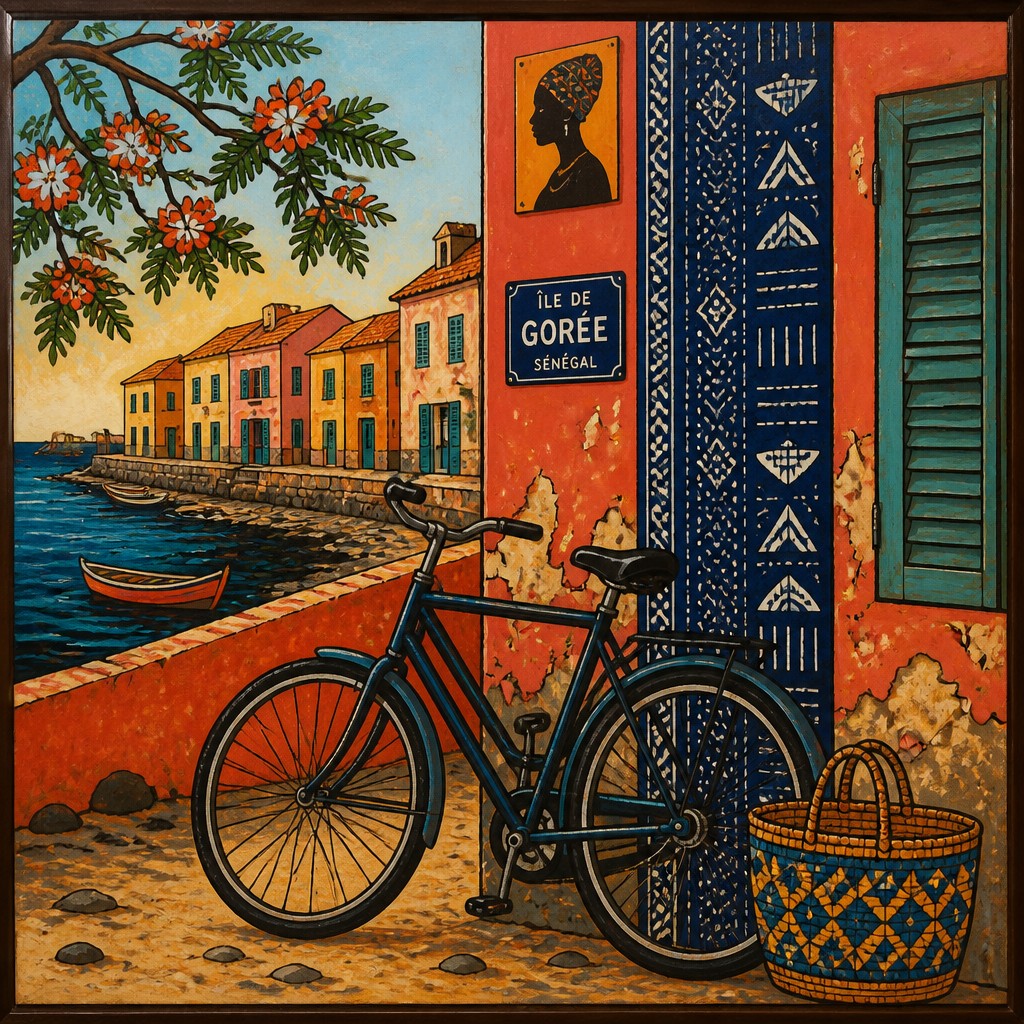
Senegalese Art Style, as used here, describes a contemporary visual synthesis rooted in Senegalese sous-verre reverse-glass painting, regional indigo and woven-textile traditions, the pastel architecture of coastal towns, and the material textures of basketry. Its imagery is immediately recognizable through strong contours, luminous flat color, decorative pattern, and a warm Atlantic atmosphere.
The style typically combines coral, cobalt, indigo, marigold, turquoise, and sun-washed pink. Figures, boats, markets, animals, and harbor buildings are simplified into clearly separated shapes, while textile motifs and woven surfaces add rhythm and tactile detail. The result is painterly but graphic: handmade irregularity is preserved rather than replaced by sterile geometric precision.
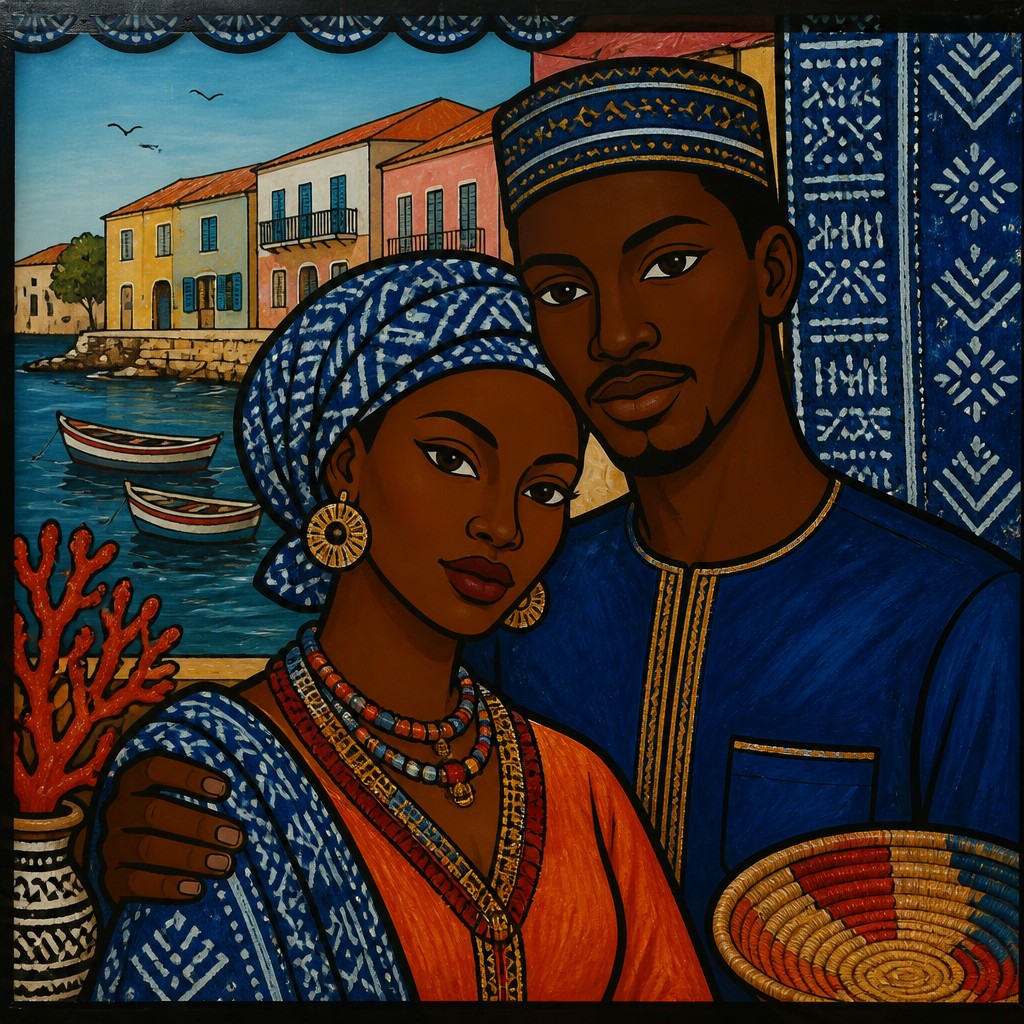
Try It On Your Photos
Upload any photo and convert it into Senegalese Art Style — drag the sliders to compare before and after.
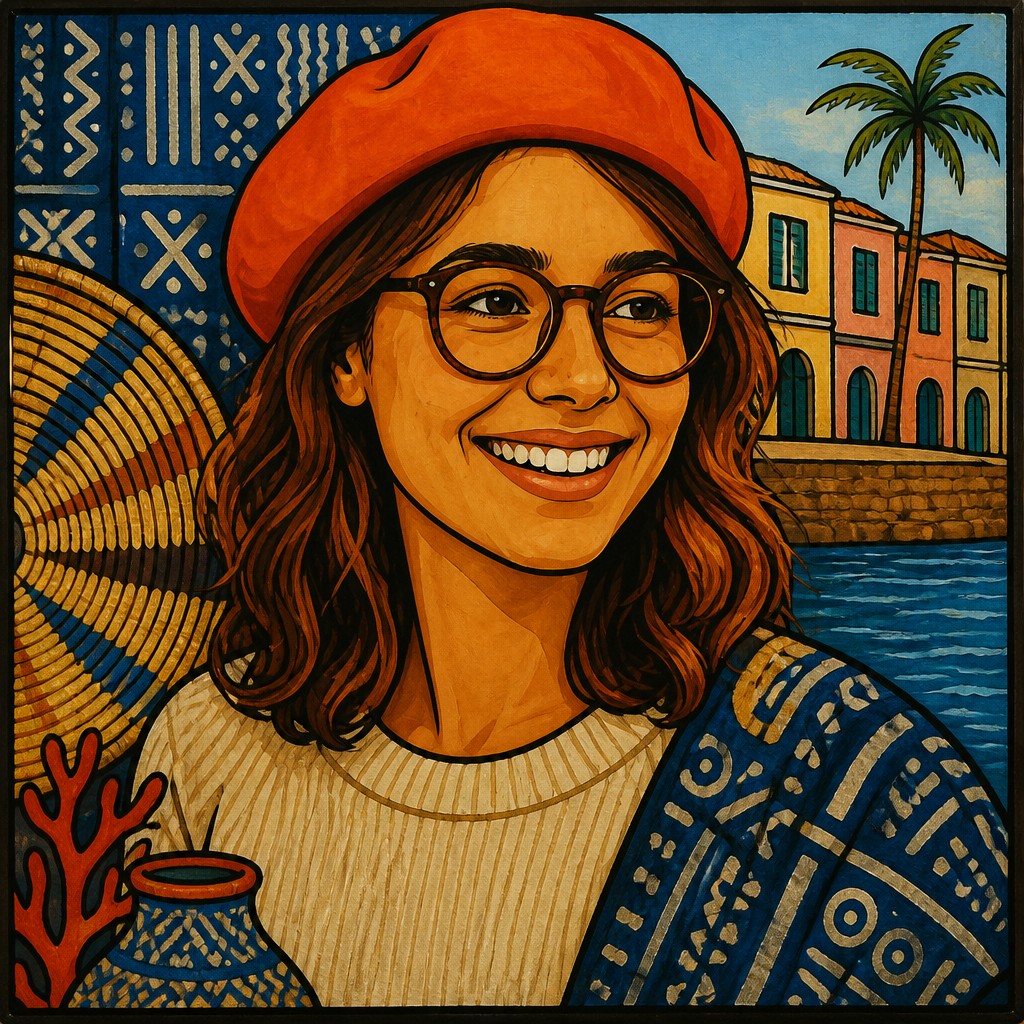

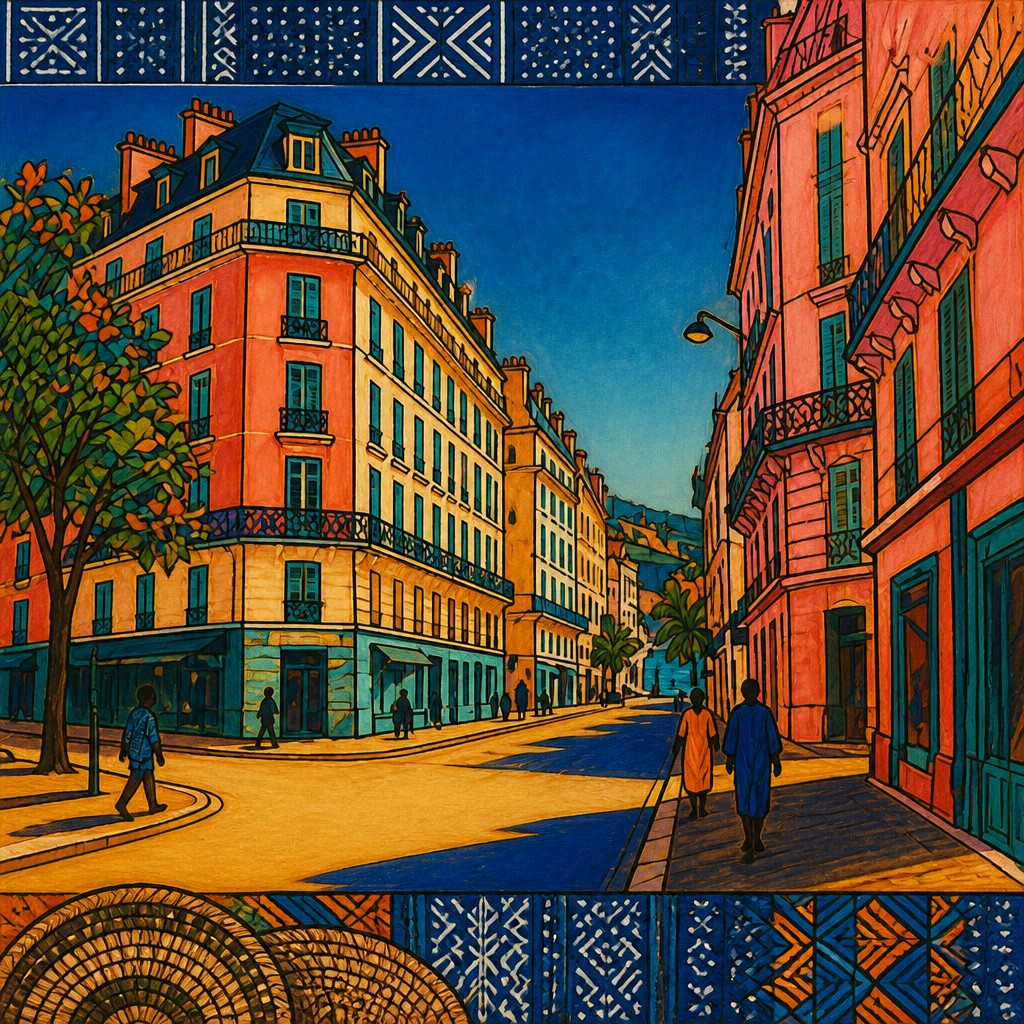

What Defines Senegalese Art Style
The signature details, up close
Reverse-glass clarity
Bold contours, opaque color fields, and clean silhouettes evoke sous-verre painting viewed through glass. The image often feels polished on the surface while retaining small hand-painted irregularities.
Saturated coastal palette
Coral, cobalt, indigo, marigold, turquoise, and warm pink create high contrast without losing the softness of sunlit coastal air. Deep blue is commonly balanced by sandy, terracotta, or chalky architectural tones.
Indigo and woven pattern
Repeating motifs inspired by regional indigo cloth, weaving, and resist-dye traditions provide borders, garments, awnings, and background accents. Patterns should support the composition rather than overwhelm its main subject.
Pastel colonial-era streetscapes
Coastal façades, shutters, balconies, arcades, and narrow harbor lanes may appear in faded pink, ochre, cream, or blue. These architectural references are treated as visual setting, not as a claim that all Senegalese art shares one built environment.
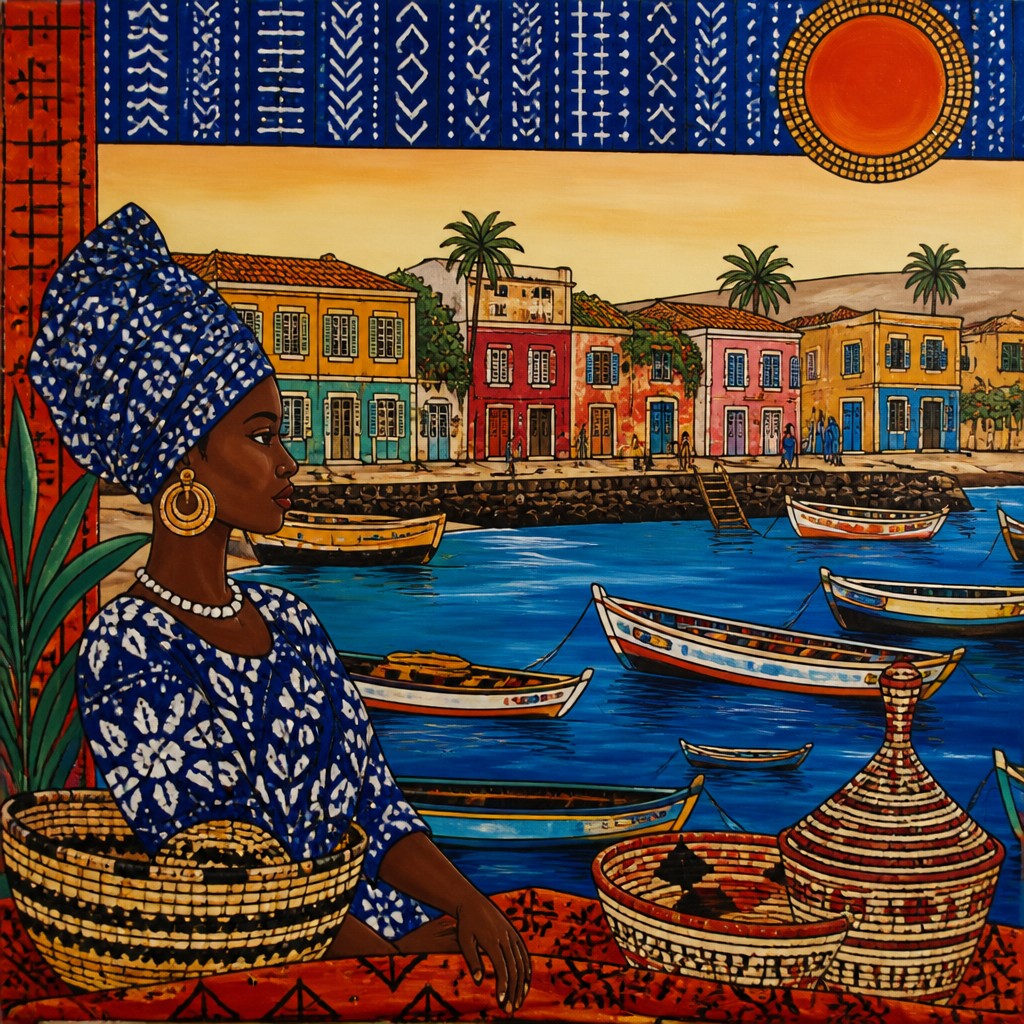
Decorative flattening
Perspective is often compressed in favor of readable shapes and ornamental arrangement. Overlapping color planes, simplified anatomy, and frontal or profile views give the work a poster-like directness.
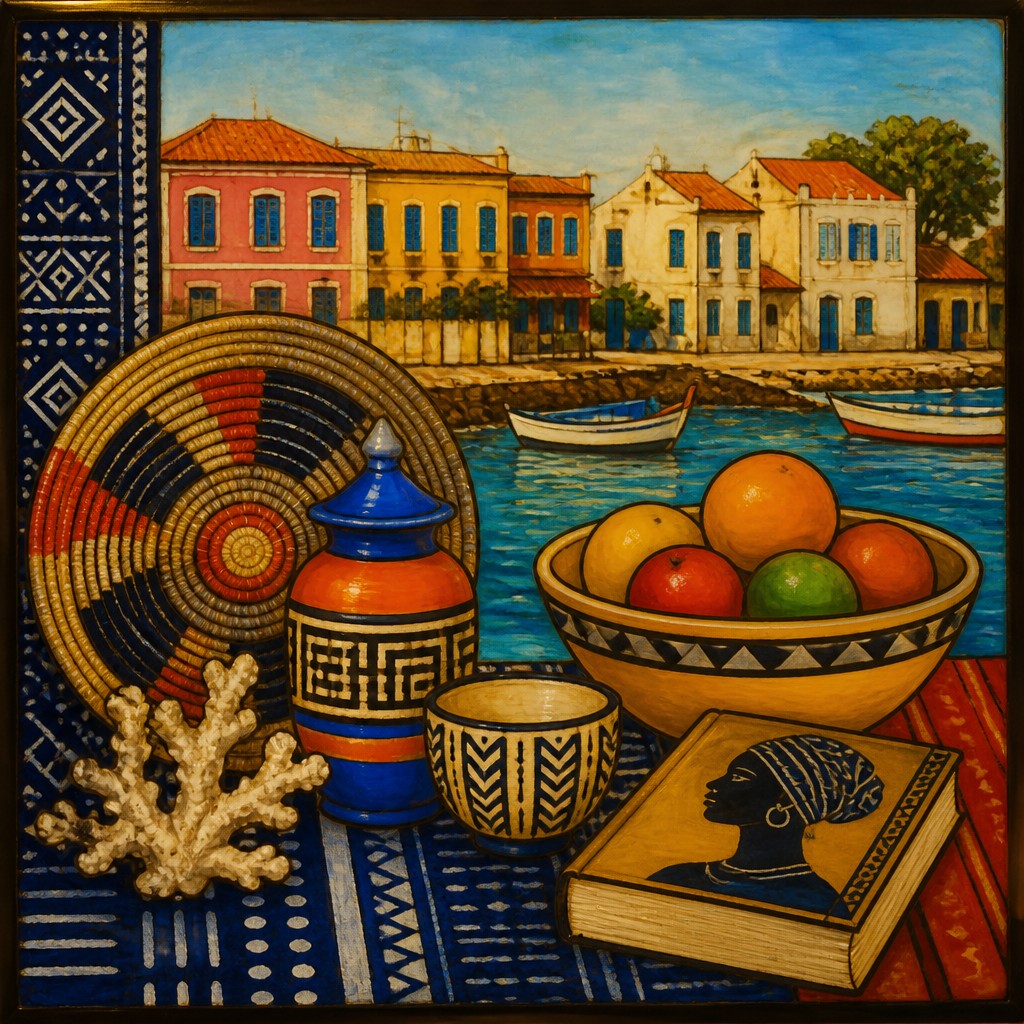
Basketry and tactile surfaces
Fine crosshatching, interlaced marks, and repeated bands suggest woven baskets, mats, and handmade fiber objects. These textures contrast with smooth glass-like color areas.
Warm Atlantic light
Golden haze, bright reflections, and softened shadows suggest the light of a coastal harbor. Even strongly outlined subjects can retain atmospheric warmth through translucent glow and sun-bleached edges.
Senegalese Prompt Ideas
Start from an idea — each one opens the generator with the style ready to go. See all 40 Senegalese prompts →
How to Create Senegalese Art
Master the craft step by step — or skip straight to creating. Read the full guide →
- 1
Plan the reverse-glass sequence
For a traditional sous-verre effect, imagine or execute the image in reverse order: fine highlights and small details first, larger forms afterward, and broad background areas last. Keep contours decisive because corrections are difficult once opaque paint layers are added.
- 2
Build a limited color structure
Choose a compact palette centered on indigo, cobalt, coral, marigold, and one or two pale architectural colors. Use flat fills for major forms, then reserve gradients and transparent washes for reflected light, sky, and harbor haze.
- 3
Add pattern selectively
Place indigo textile motifs on clothing, canopies, walls, or borders, and use small interlaced marks for baskets and mats. Vary scale and spacing so the decorative language supports focal points instead of making every surface equally busy.
- 4
Simplify the composition
Arrange the subject in clear overlapping planes with a strong foreground, middle ground, and background. Reduce unnecessary perspective detail and use bold silhouettes to preserve the immediate readability associated with painted glass and sign art.
- 5
Use a tactile digital workflow
In digital painting, separate opaque color layers, contour layers, pattern layers, and a subtle glass or paper texture. Slight edge variation, pigment noise, and imperfect registration can make a polished image feel handmade.
- 6
Write a focused generation prompt
Specify the subject, reverse-glass painting, bold flat outlines, saturated coastal colors, indigo textile motifs, woven texture, and warm Atlantic light. Add composition instructions such as simplified planes or a Gorée-inspired harbor setting, and state what should remain uncluttered.
The Story
History & Origins of Senegalese
This is not a single historical movement with a fixed membership or period. It is an aesthetic lineage assembled from established Senegalese and West African visual practices, especially sous-verre painting, in which pigment is applied to the reverse side of a sheet of glass so that the image is viewed through the unpainted front surface. Because the painting is built back-to-front, details and outlines must be planned in an unusual sequence, producing crisp silhouettes and saturated, jewel-like color.
The synthesis also draws on Senegal's coastal architectural environment, including the pastel façades and dense streetscapes associated with Gorée Island, as well as regional textile, indigo-dyeing, and basketry traditions. In contemporary illustration and digital image-making, these sources are often combined with simplified composition, decorative pattern, and atmospheric coastal light rather than copied as a historically uniform school.
Influences: The style is related to Senegalese sous-verre painting, West African sign and market painting, indigo dyeing and regional textile design, and vernacular basketry. It also intersects with coastal architectural illustration, folk-art flattening, decorative poster design, and contemporary digital collage. Its emphasis on contour and separated color planes can recall stained glass and modernist graphic simplification, while its irregular textures preserve a handmade craft sensibility.
Frequently Asked Questions
Is Senegalese Art Style a historical art movement?
No. The term is best understood as a contemporary descriptive synthesis rather than the name of a single formally defined movement. It draws on real Senegalese traditions, especially sous-verre painting, textiles, basketry, and coastal architecture.
What is sous-verre painting?
Sous-verre is a reverse-glass painting technique in which paint is applied to the back of a glass sheet and viewed from the front. The artist must work in an inverted sequence, placing details and highlights before larger background layers, which helps produce crisp outlines and luminous color.
What colors are typical of this style?
Common colors include indigo, cobalt, coral, marigold, turquoise, terracotta, cream, and faded pink. The palette reflects a blend of saturated painted-glass color with sun-washed coastal architecture and warm Atlantic light.
How is this different from generic African-inspired art?
A specific Senegalese reference is more grounded in identifiable media and visual sources, such as sous-verre painting, regional textile patterns, coastal façades, and woven craft textures. It should avoid treating the diverse visual cultures of Africa as one undifferentiated style.
Can I create this look without painting on glass?
Yes. Layered acrylic, gouache, colored paper, screen printing, or digital painting can imitate its flat color and strong contour structure. Add controlled pattern, slight surface irregularity, and a glass-like front finish while preserving the reverse-painted logic.
What subjects work well in this style?
Harbors, fishing boats, markets, musicians, dancers, family scenes, baobabs, woven objects, and pastel coastal streets are especially effective. Subjects with clear silhouettes and opportunities for textile or basketry detail tend to translate best.
Create your first Senegalese artwork
Describe anything — or upload a photo — and see it in Senegalese Art Style in seconds.
Related Styles
Discover similar art styles