Saudi Art Style
Explore Saudi Art Style: Hegra sandstone facades, Arabian petroglyphs, Najdi geometry, mashrabiya shadows, and desert color.
Instantly rendered in Saudi — or transform a photo
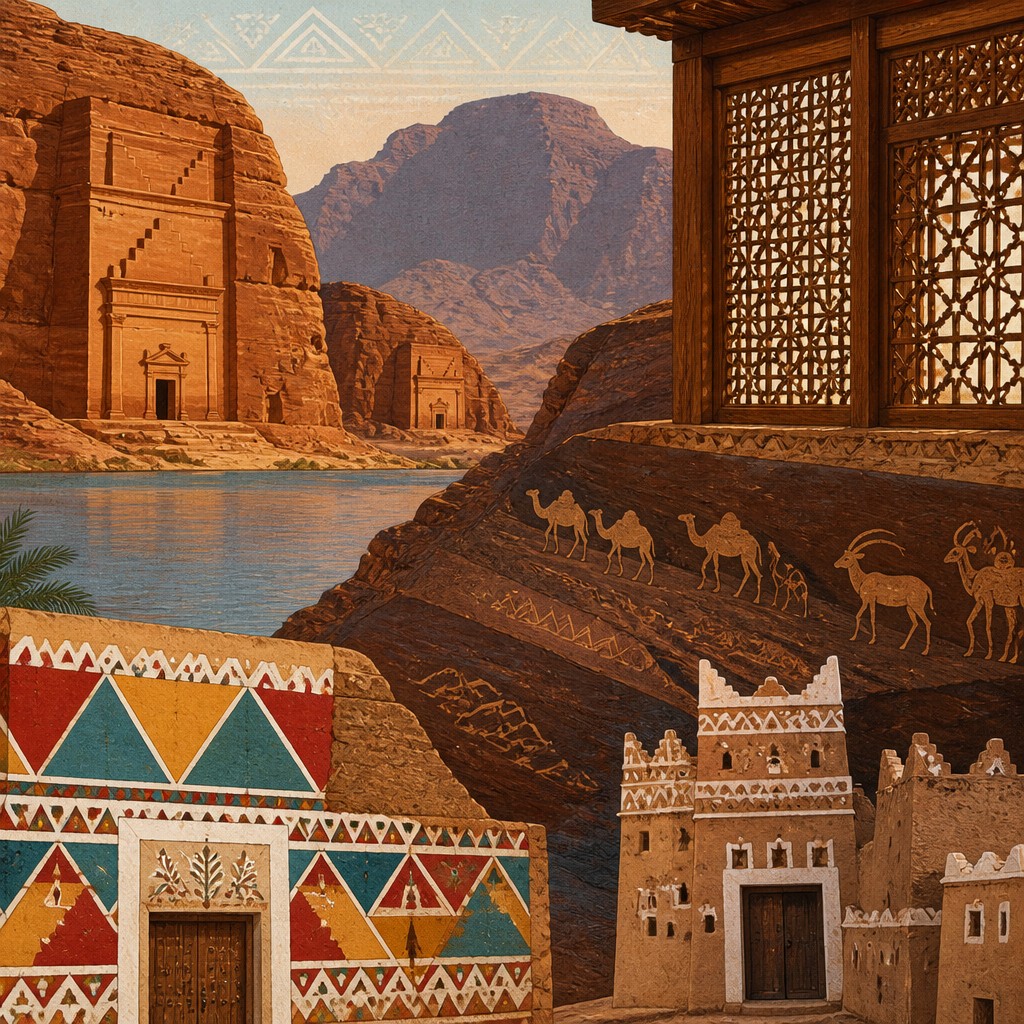
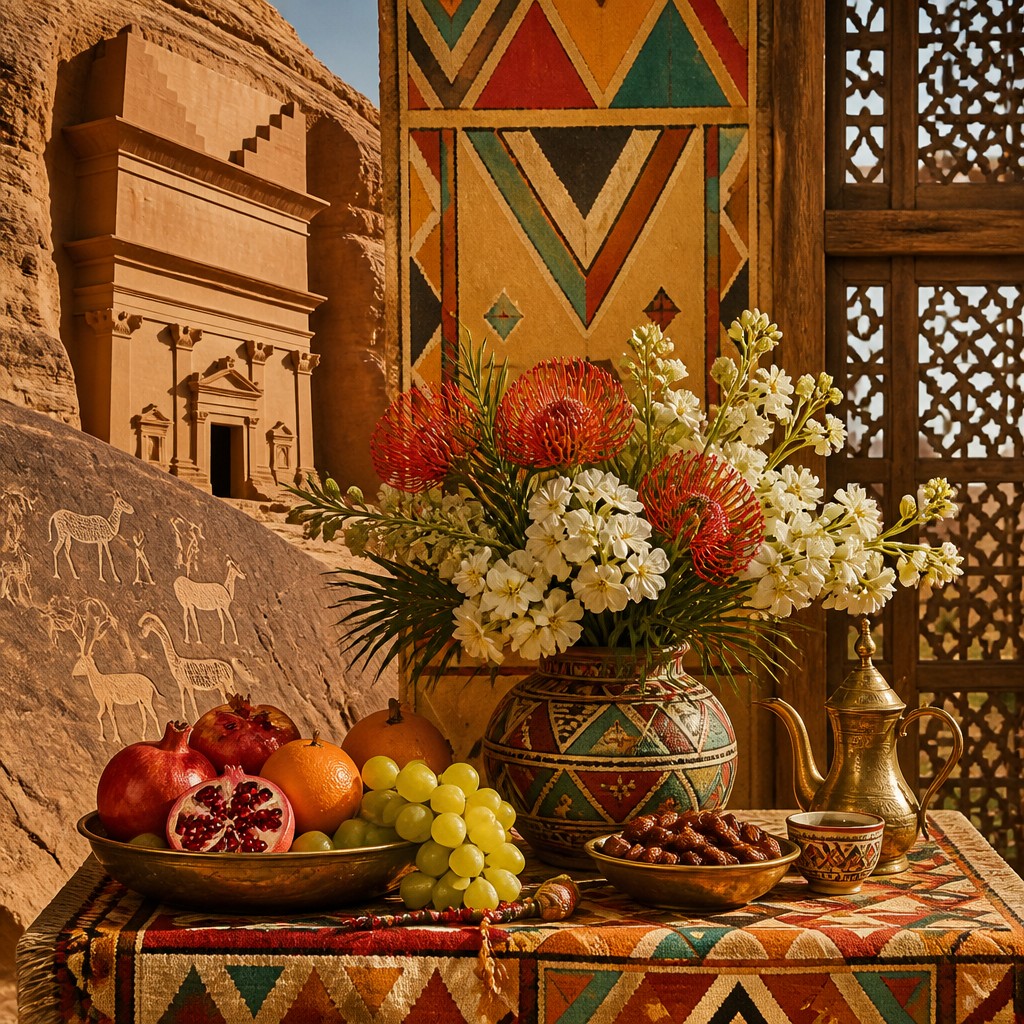
Saudi Gallery
Tap any artwork to explore it
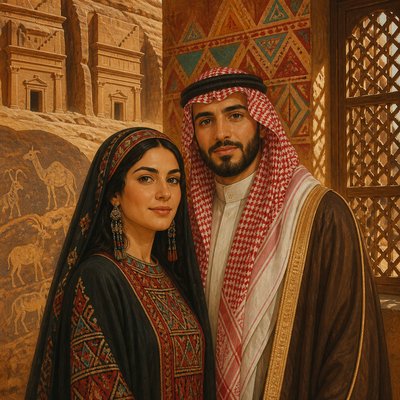
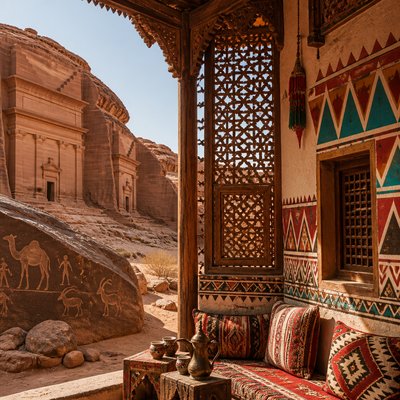
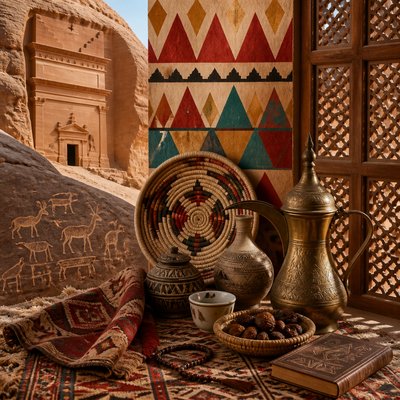
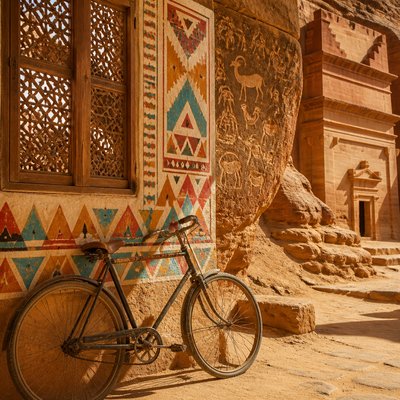
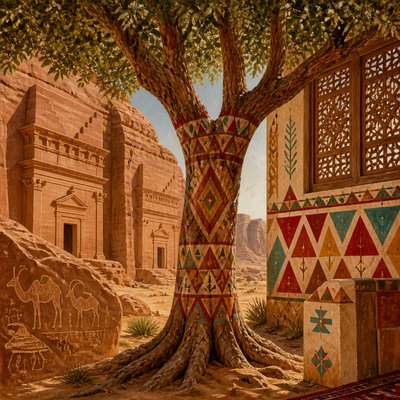
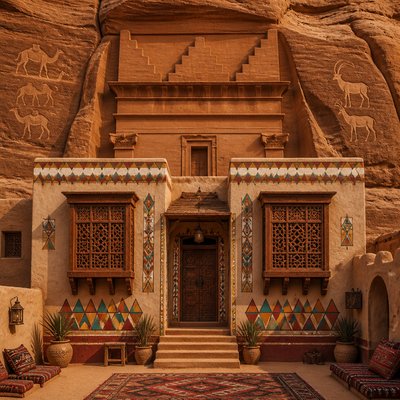
What is Saudi Art Style?
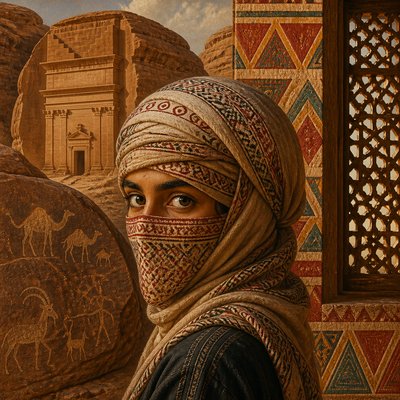
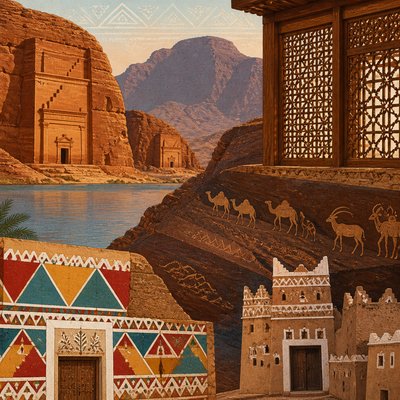
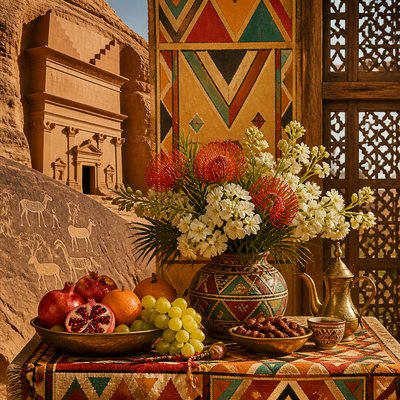
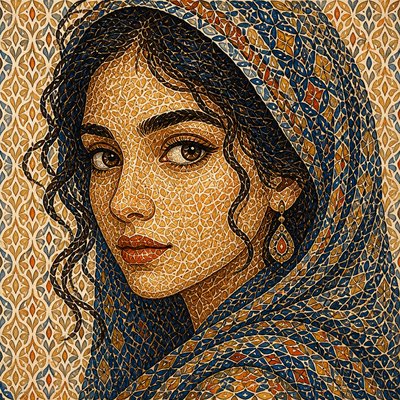
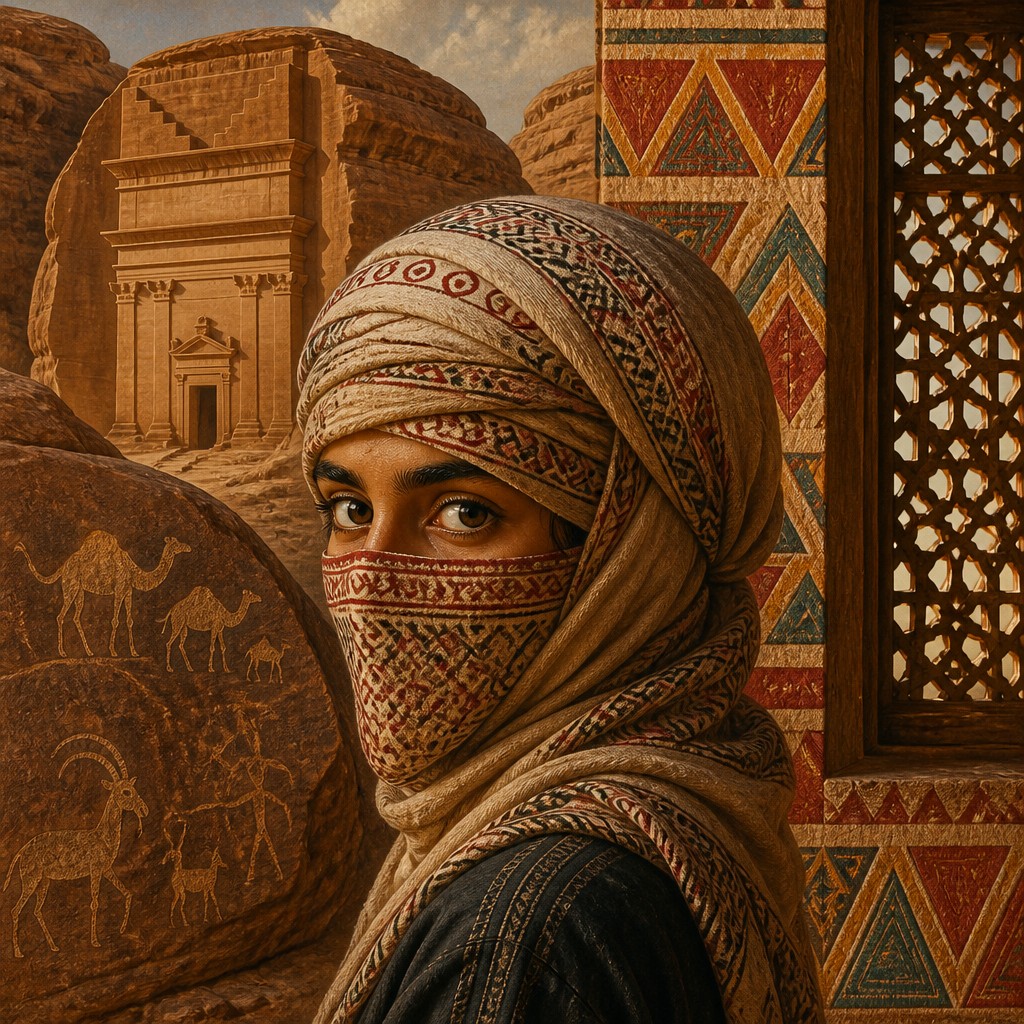
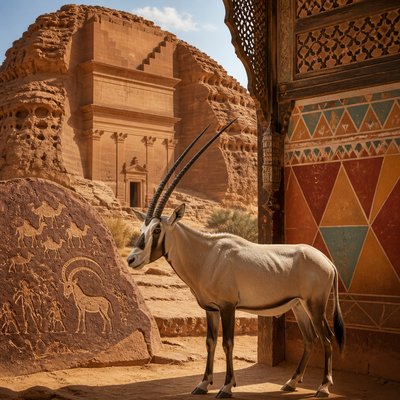
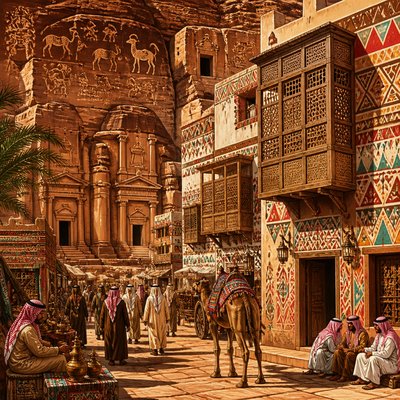
Saudi Art Style is a contemporary visual synthesis inspired by the built environment, craft traditions, and archaeological landscapes of the Arabian Peninsula. Its imagery combines Hegra’s monumental rock-cut tombs, ancient desert inscriptions and petroglyphs, Najdi geometric wall decoration, carved wooden screens, and a palette of rose sandstone, ochre, crimson, turquoise, and sun-baked earth tones.
The style is defined less by a single historical school than by the meeting of architectural mass, surface ornament, and desert light. Monumental facades and cliffs provide a strong vertical structure, while triangles, repeated borders, carved motifs, and animal figures create rhythm across the surface. The resulting look can feel archaeological and contemporary at once: tactile, pattern-rich, weathered, and strongly connected to place.
Try It On Your Photos
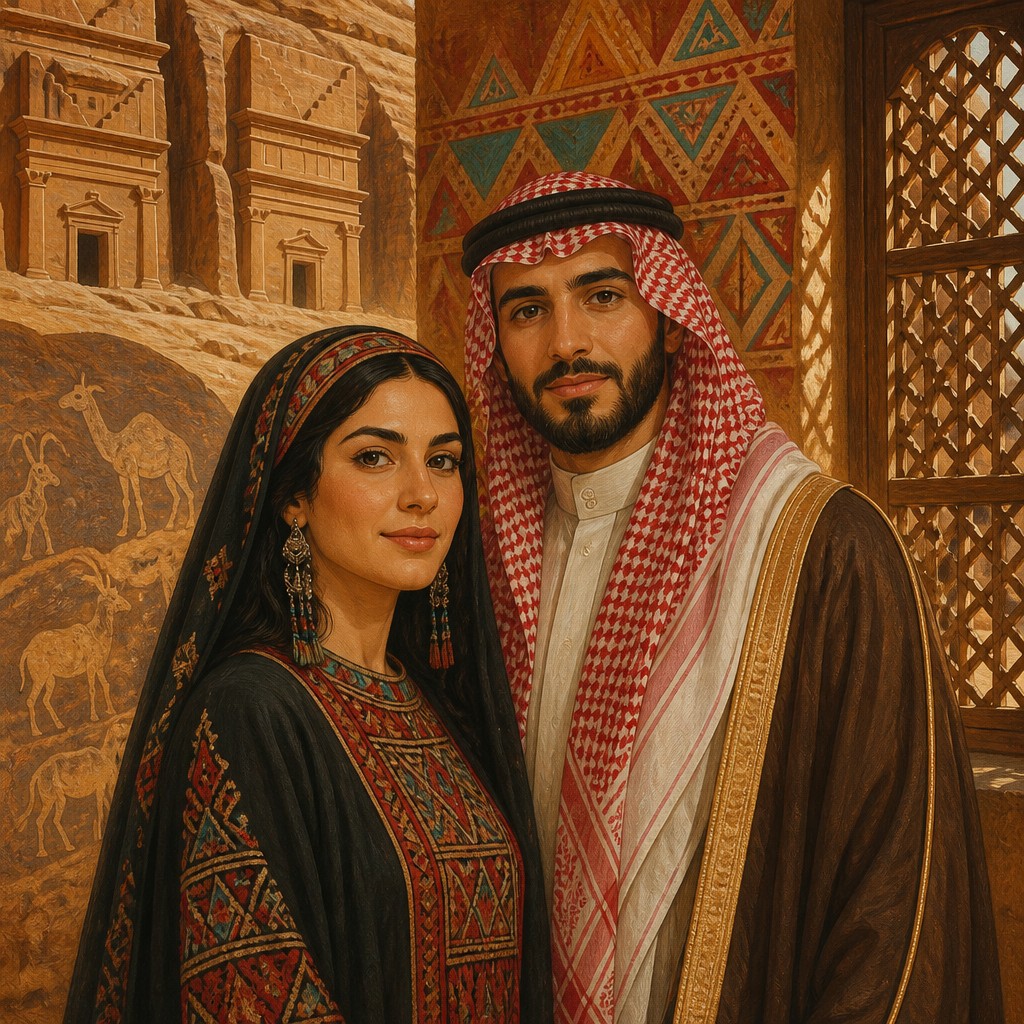
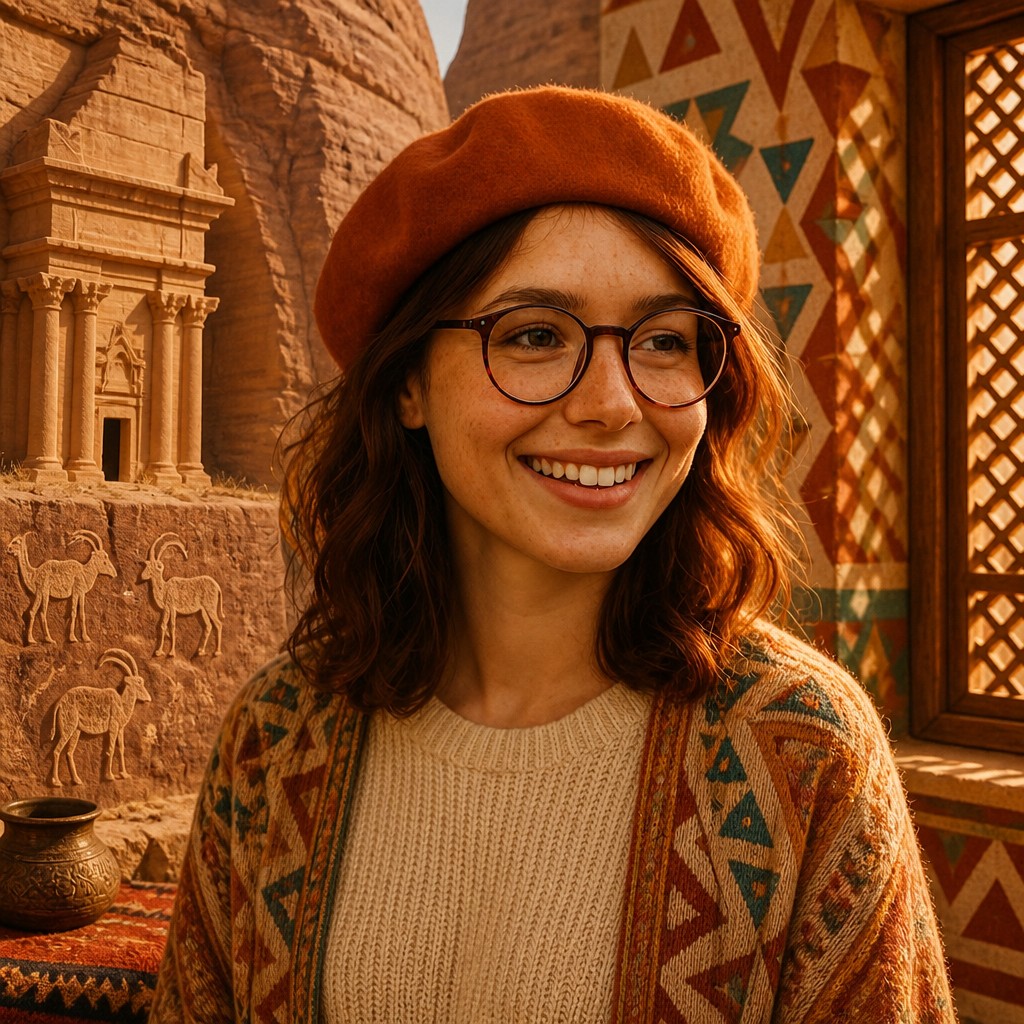
Upload any photo and convert it into Saudi Art Style — drag the sliders to compare before and after.

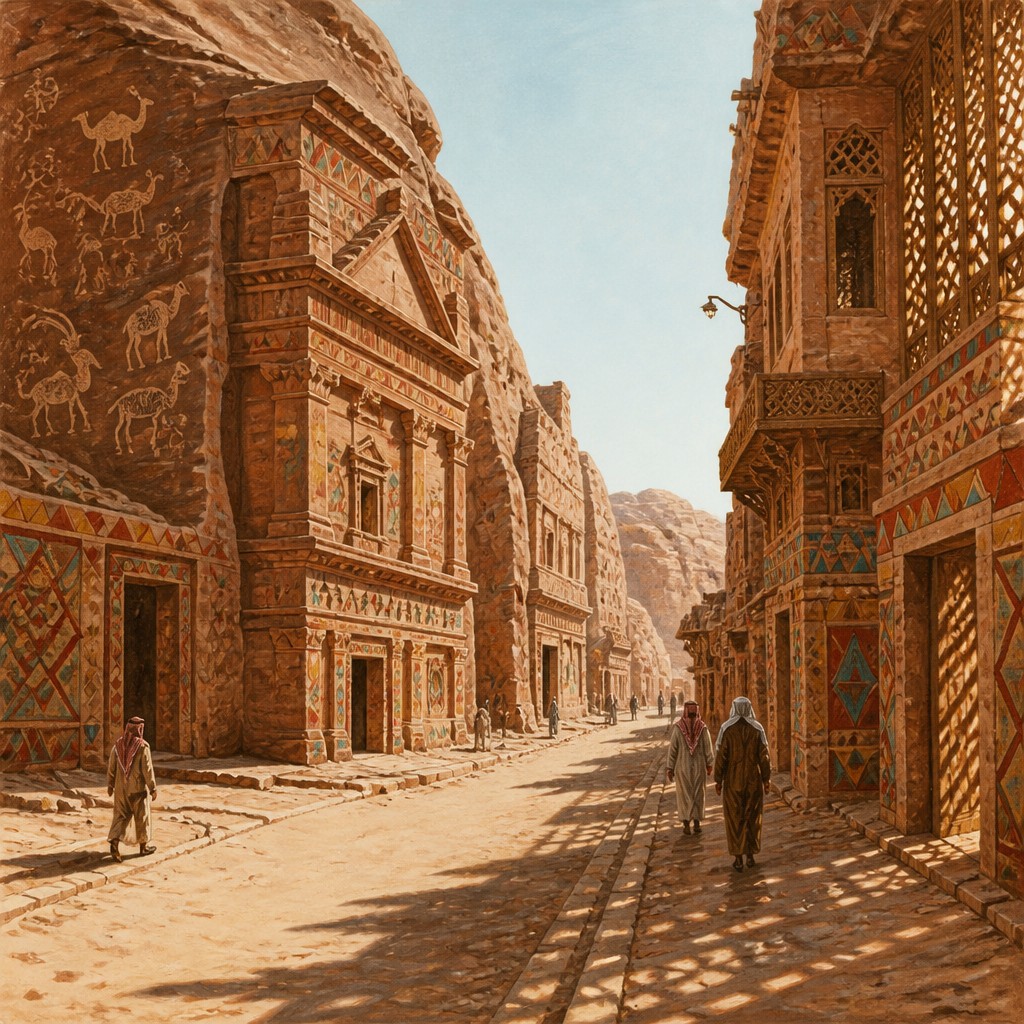

What Defines Saudi Art Style
The signature details, up close
Rose sandstone architecture
Large carved cliffs, tomb entrances, stepped profiles, and weathered stone surfaces establish the style’s monumental foundation. Warm pink, rust, and terracotta hues suggest the geology of the desert landscape.
Rock-cut facades
Architectural compositions favor frontal, symmetrical facades with recessed doorways, columns, cornices, and sharply outlined openings. These forms evoke the sculptural presence of Hegra without requiring literal archaeological reconstruction.
Desert petroglyphs
Etched camels, ibex, horses, geometric marks, and simplified human figures add an ancient graphic layer. The marks are usually rendered as incisions, dark abrasions, or tonal contrasts against the rock.
Najdi geometric ornament
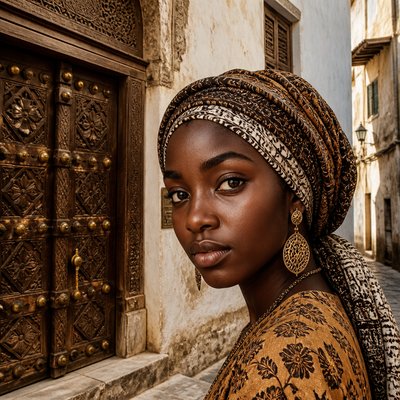
Triangles, diamonds, stepped bands, chevrons, and repeating borders create a bold decorative surface. Crimson, ochre, turquoise, white, and deep brown provide contrast against mud-plaster or sandstone grounds.
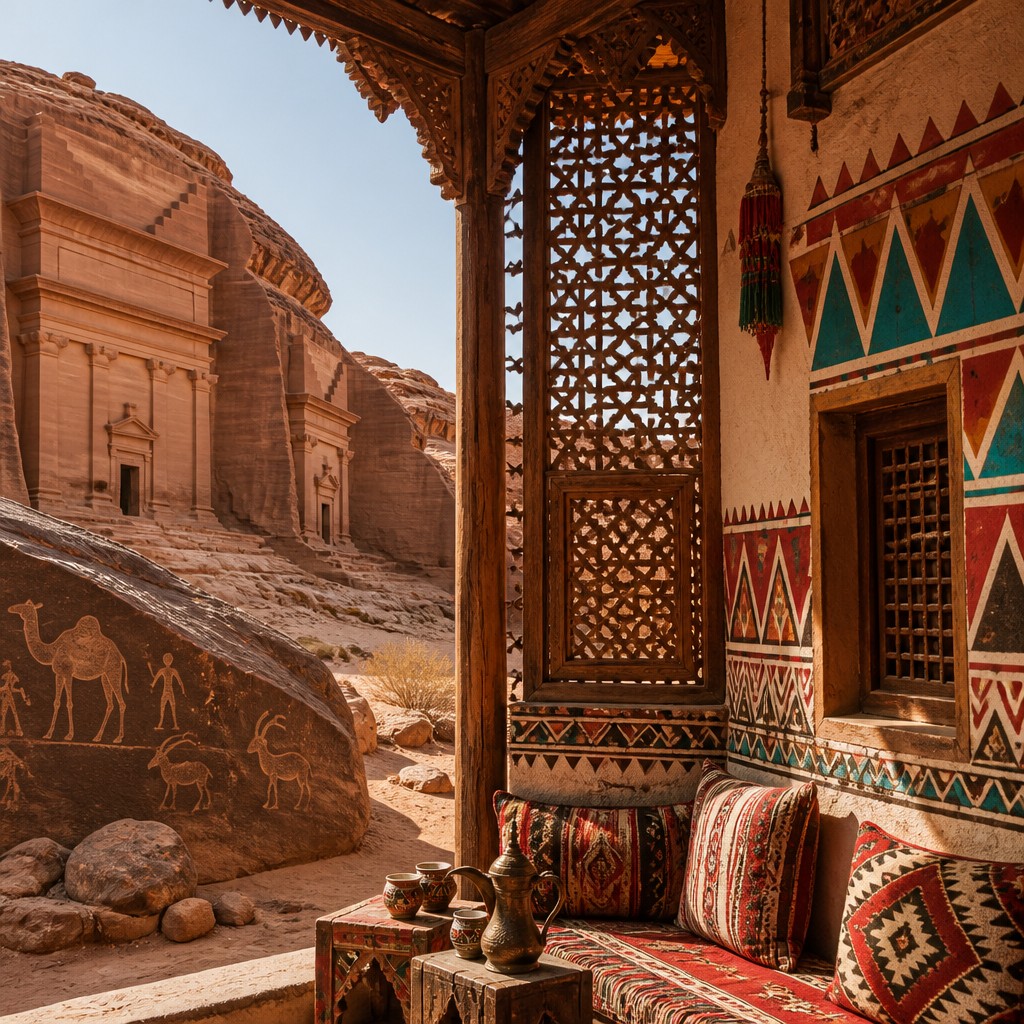
Carved wooden screens
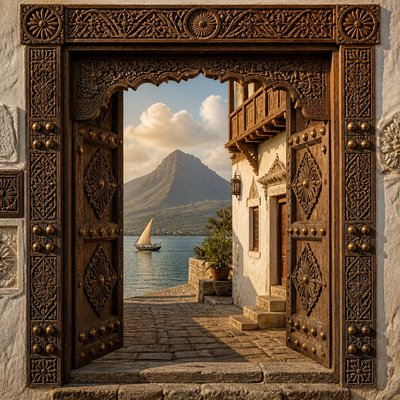
Mashrabiya-like screens and latticework introduce a delicate counterpoint to heavy stone architecture. Repeated apertures cast patterned shadows and communicate privacy, ventilation, and filtered sunlight.
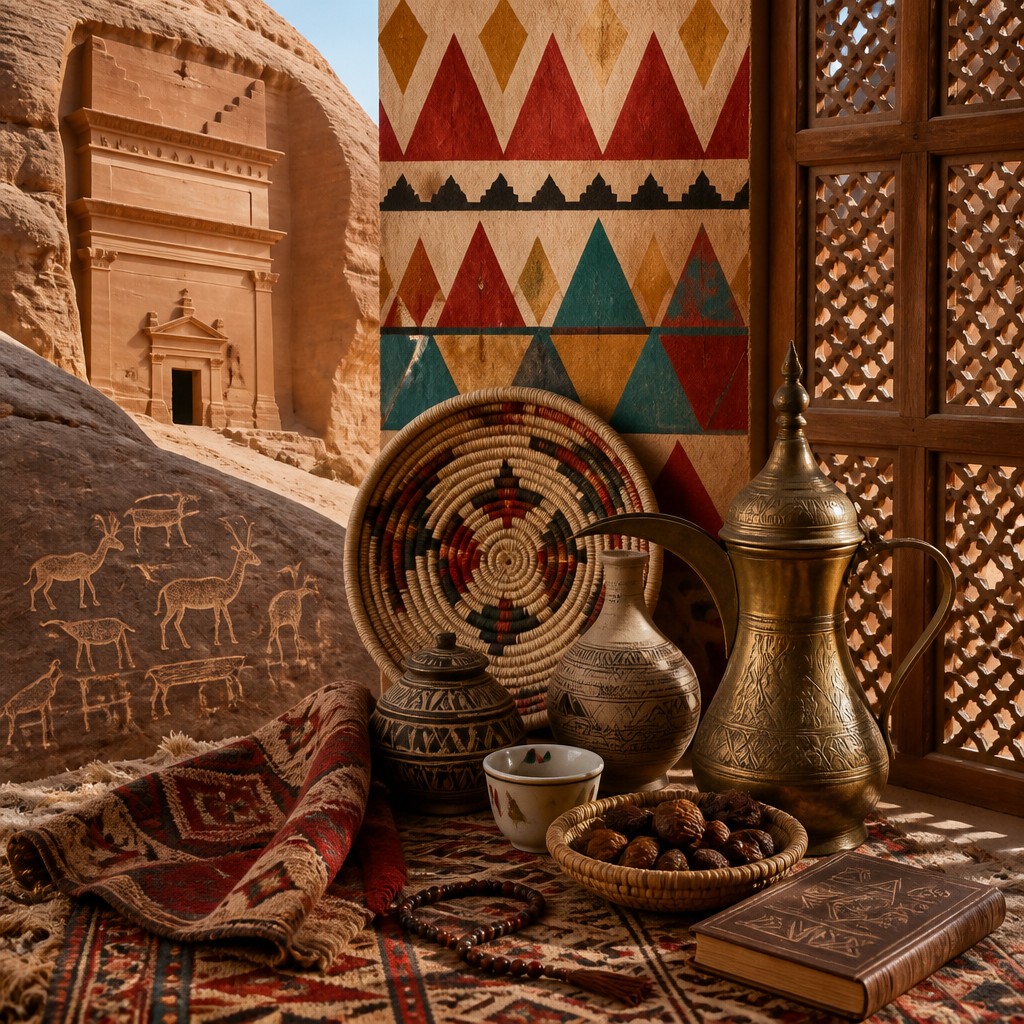
Desert light and material texture
Hard sunlight, long shadows, dust haze, and sun-bleached surfaces emphasize relief and depth. Rough stone, cracked plaster, carved wood, and pigment absorption should remain visibly tactile.
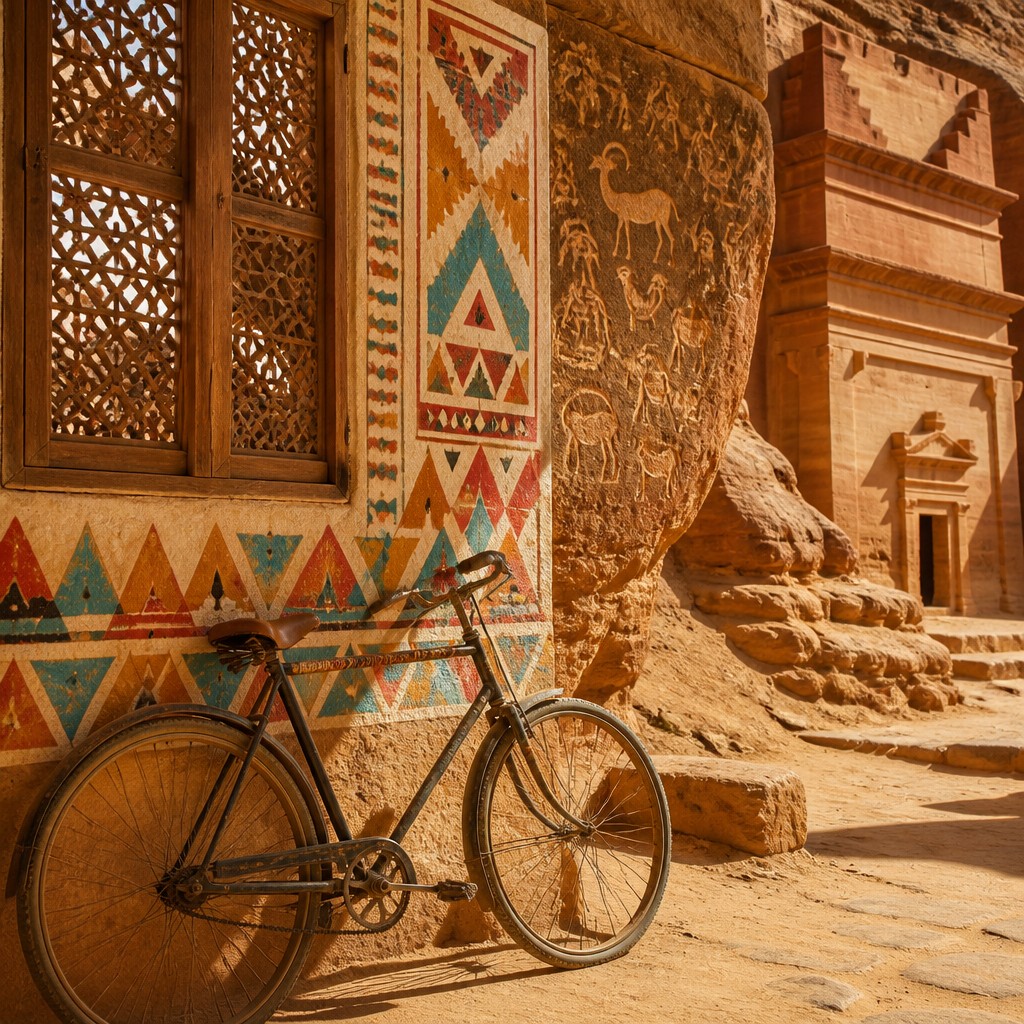
Patterned monumental composition
The style balances a large central architectural subject with concentrated ornamental detail around its edges and surfaces. Symmetry, frontal views, and strong silhouettes make the imagery legible while preserving visual richness.
Saudi Prompt Ideas
Start from an idea — each one opens the generator with the style ready to go. See all 40 Saudi prompts →
How to Create Saudi Art
Master the craft step by step — or skip straight to creating. Read the full guide →
- 1
Build the composition from architecture
Begin with a dominant cliff, carved doorway, courtyard wall, or fortress-like facade, then organize smaller motifs around its main axis. Use frontal symmetry or a carefully controlled perspective to preserve monumentality.
- 2
Choose a regionally grounded palette
Combine rose sandstone, ochre, clay red, charcoal, and sun-bleached cream with restrained turquoise or blue-green accents. Keep saturated colors concentrated in painted geometry, textiles, doors, or ceramic details.
- 3
Layer relief and surface marks
In traditional media, combine dry brush, mineral-like pigments, incised lines, and uneven washes to suggest stone, plaster, and carved wood. Digitally, use separate texture layers, displacement, opacity masks, and directional shadows rather than a smooth flat fill.
- 4
Use pattern as structure
Design repeating triangles, diamonds, zigzags, and border bands before adding small decoration. Vary scale and wear so the pattern feels handmade and architectural instead of mechanically uniform.
- 5
Control light through screens
Place latticework, shutters, or carved wooden panels between the viewer and the light source to create recognizable shadow grids. Strong side lighting helps reveal both rock-cut relief and delicate wood carving.
- 6
Write focused generation prompts
Specify the subject, Hegra-inspired sandstone architecture, Arabian petroglyphs, Najdi geometric color, carved screens, material texture, and lighting in that order. For image-to-image work, preserve the source image’s pose or composition while requesting sandstone, painted geometry, etched motifs, and filtered desert light.
The Story
History & Origins of Saudi
Saudi Art Style is best understood as an invented or contemporary aesthetic lineage rather than a formally recognized historical movement. It draws on the Nabataean rock-cut architecture preserved at Hegra, whose monumental tomb facades date principally from the late first millennium BCE through the early centuries CE, as well as on petroglyph traditions found throughout Arabia across prehistoric and historic periods.
Its decorative language also references Najdi geometric interiors and earthen architecture, regional wood carving, Islamic architectural screening, and contemporary heritage-focused illustration and design. Modern digital art often brings these sources together into a unified visual vocabulary, even though they originated in different regions, periods, and cultural contexts.
Influences: The style draws from Nabataean rock-cut architecture, Arabian rock-art and petroglyph traditions, Najdi mud-brick architecture and interior painting, Islamic geometric ornament, regional wood latticework, vernacular desert construction, archaeological illustration, and contemporary heritage design. It also shares compositional traits with architectural drawing, mural art, relief sculpture, and textured digital concept art.
Frequently Asked Questions
Is Saudi Art Style a historical art movement?
No. The term describes a contemporary, synthesized aesthetic rather than a formally established historical movement with a fixed period or manifesto. It combines visual references from several Saudi and Arabian traditions that developed at different times and in different regions.
What defines the look of Saudi Art Style?
Its main identifiers are rose sandstone architecture, carved cliff facades, desert petroglyphs, bold geometric wall patterns, carved wooden screens, and intense sunlight. A tactile palette of ochre, crimson, terracotta, cream, and turquoise is also characteristic.
How is it different from generic desert or Middle Eastern art?
Generic desert imagery may rely mainly on dunes, camels, and warm colors. This style is more specific because it emphasizes Saudi architectural references, especially Hegra-like rock-cut forms, Najdi geometric decoration, archaeological surface marks, and layered craft textures.
Can I create this style with traditional materials?
Yes. Use mineral or earth-toned paint, dry-brush texture, incised drawing, stencil-like geometric borders, and layered washes on paper, plaster, wood, or canvas. Uneven pigment, visible tool marks, and controlled abrasion help reproduce the material character.
How can I make an image in this style digitally?
Combine a clear architectural subject with descriptors for rose sandstone, carved relief, petroglyphs, geometric wall painting, wooden latticework, and filtered desert light. In image-to-image workflows, keep the original subject or pose while applying the palette, textures, pattern overlays, and architectural surface treatment.
Where is this aesthetic useful?
It suits architectural visualizations, cultural illustration, editorial artwork, posters, murals, environment design, game backgrounds, packaging, and heritage-focused interiors. Projects should distinguish imaginative synthesis from accurate documentation of real archaeological sites or regional traditions.
Create your first Saudi artwork
Describe anything — or upload a photo — and see it in Saudi Art Style in seconds.
Related Styles
Discover similar art styles