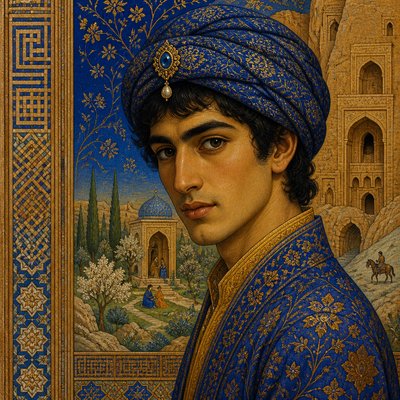
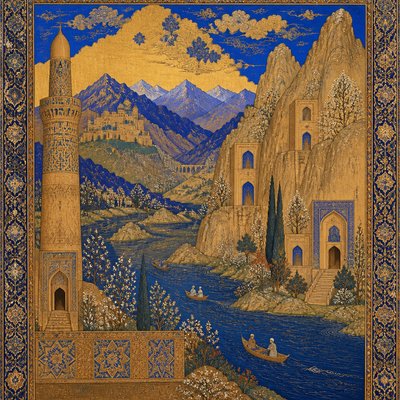
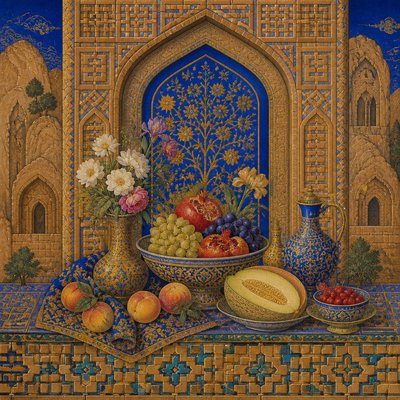
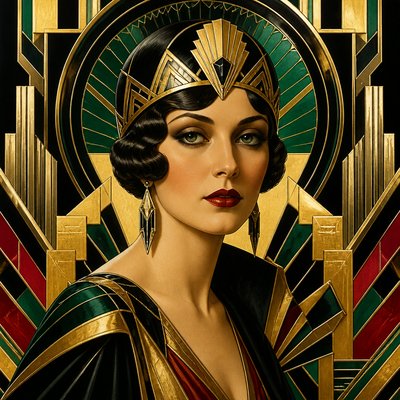
Sao Tome Art Style
Explore São Tomé art style: pastel roça architecture, naïve tropical color, palm weaving, volcanic landscapes, and luminous equatorial coasts.
Instantly rendered in Sao Tome — or transform a photo
Sao Tome Gallery
Tap any artwork to explore it
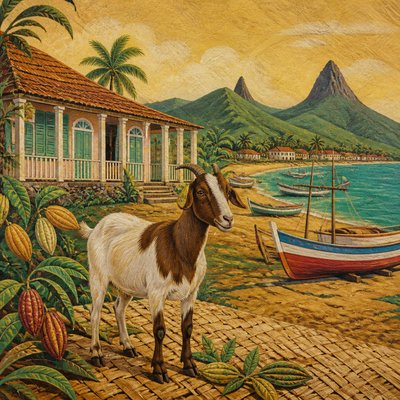
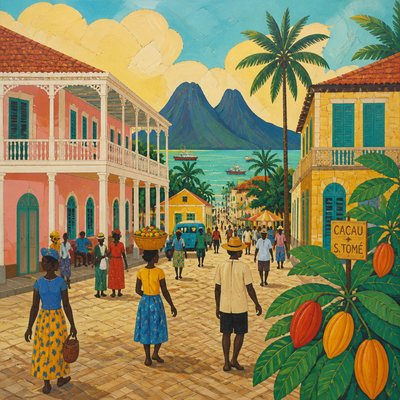
What is Sao Tome Art Style?
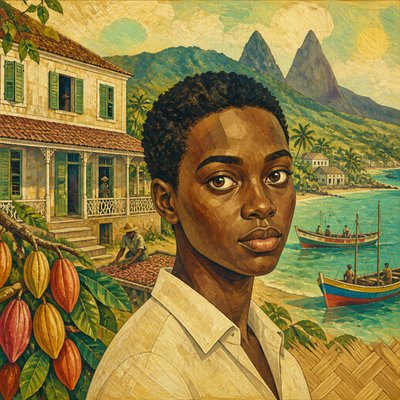
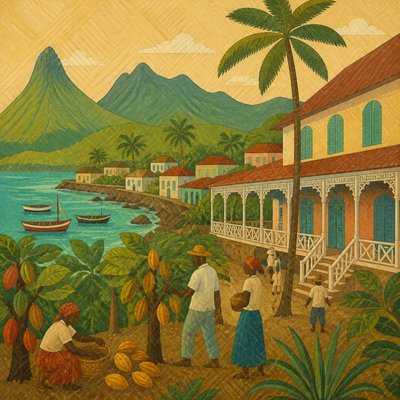
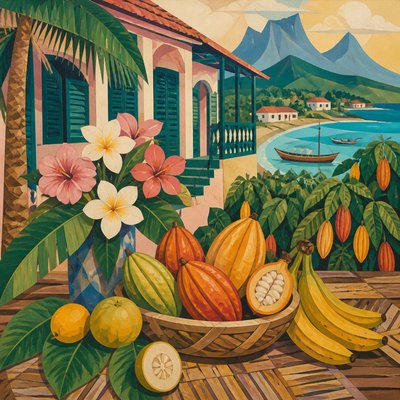
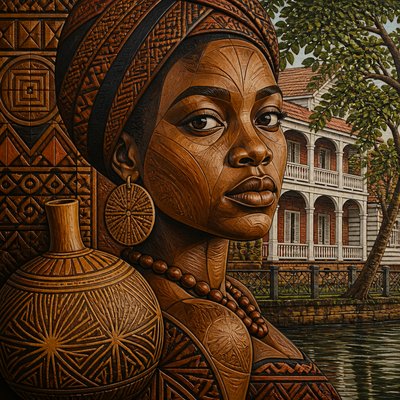
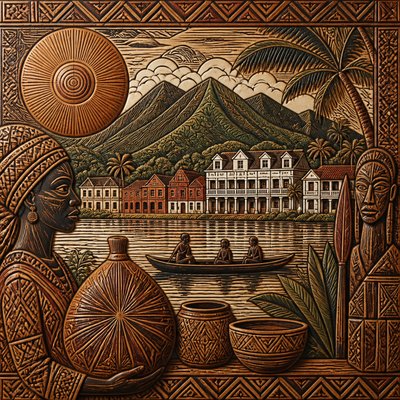
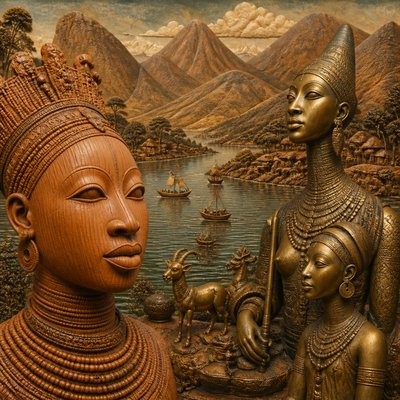
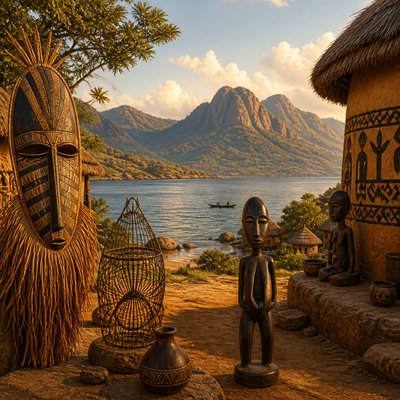
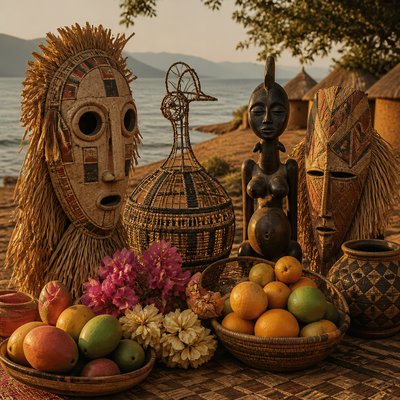
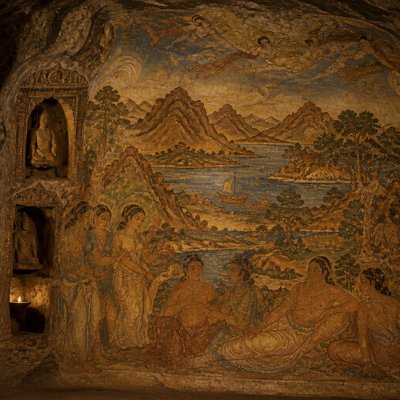
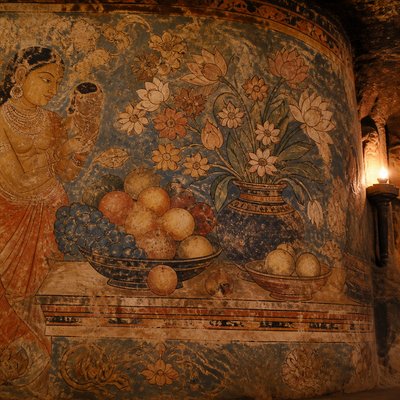
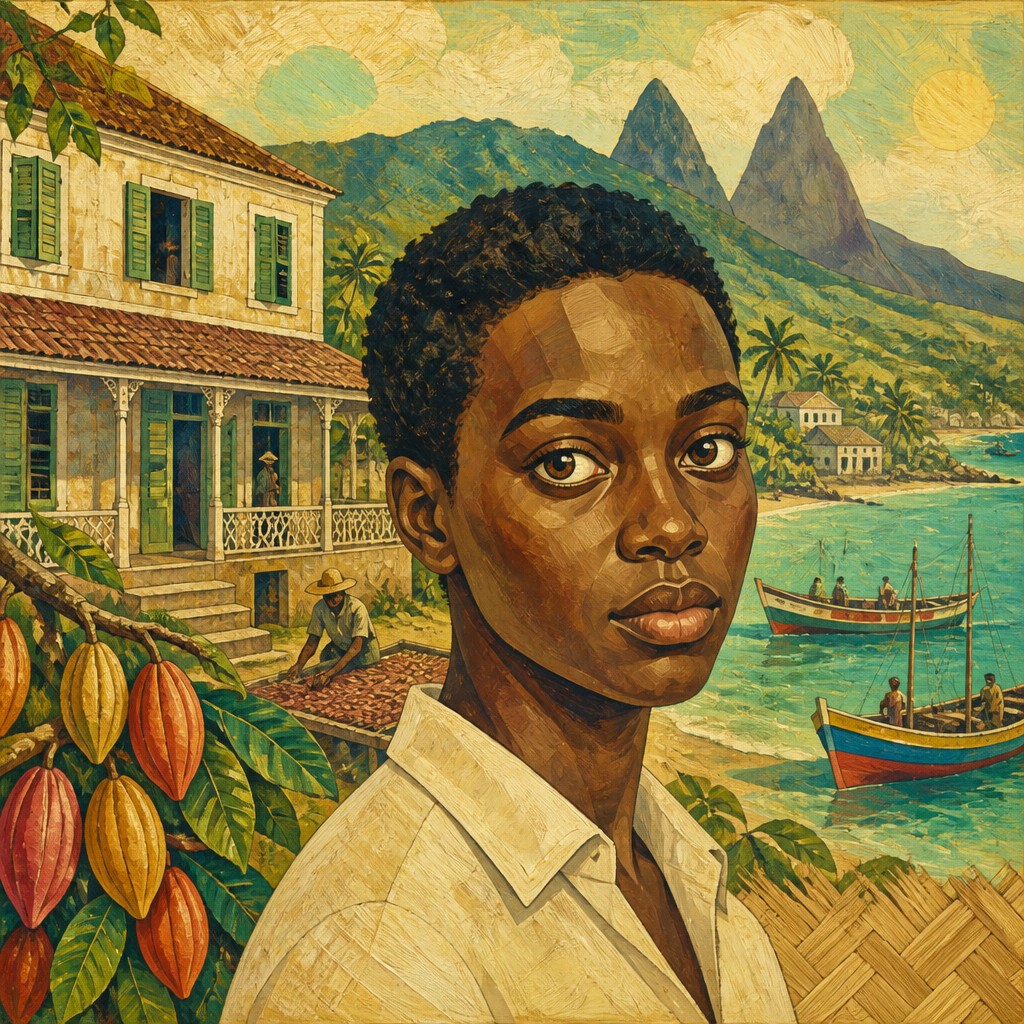
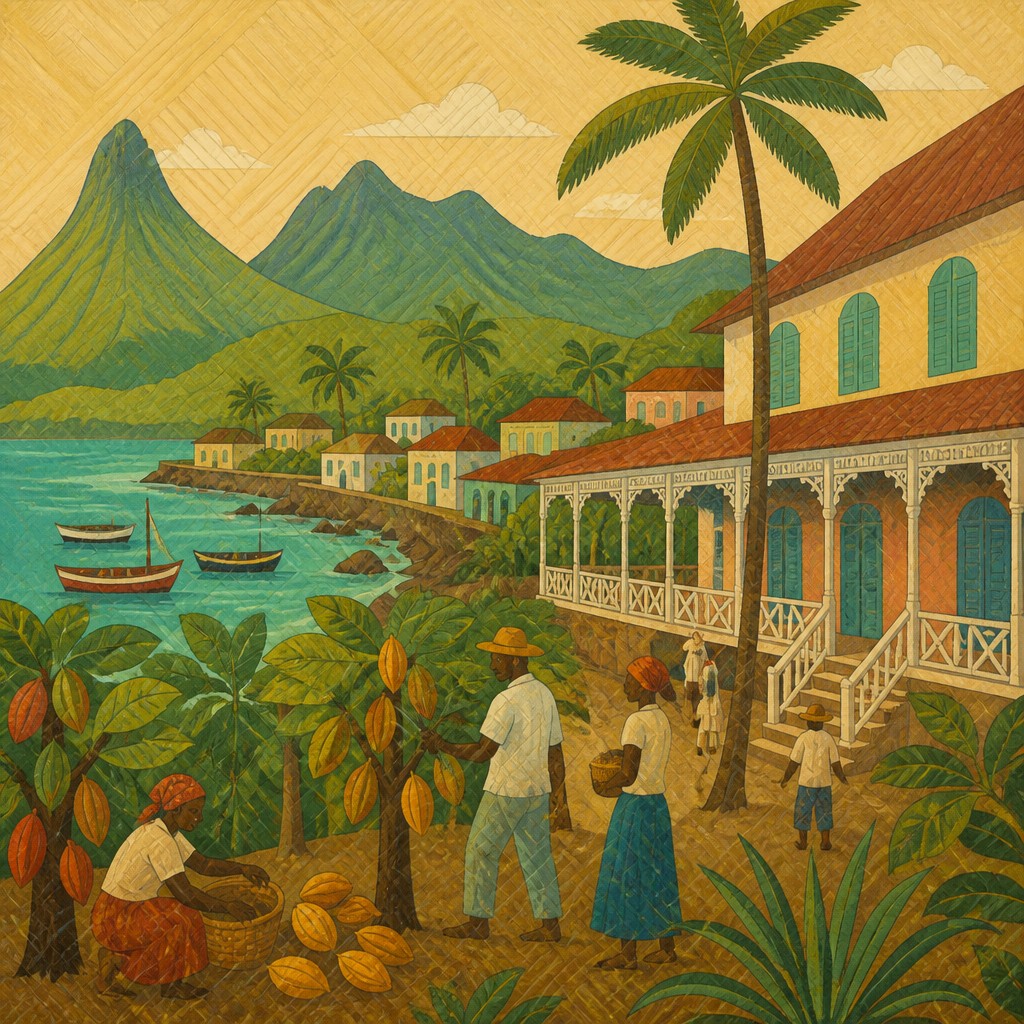
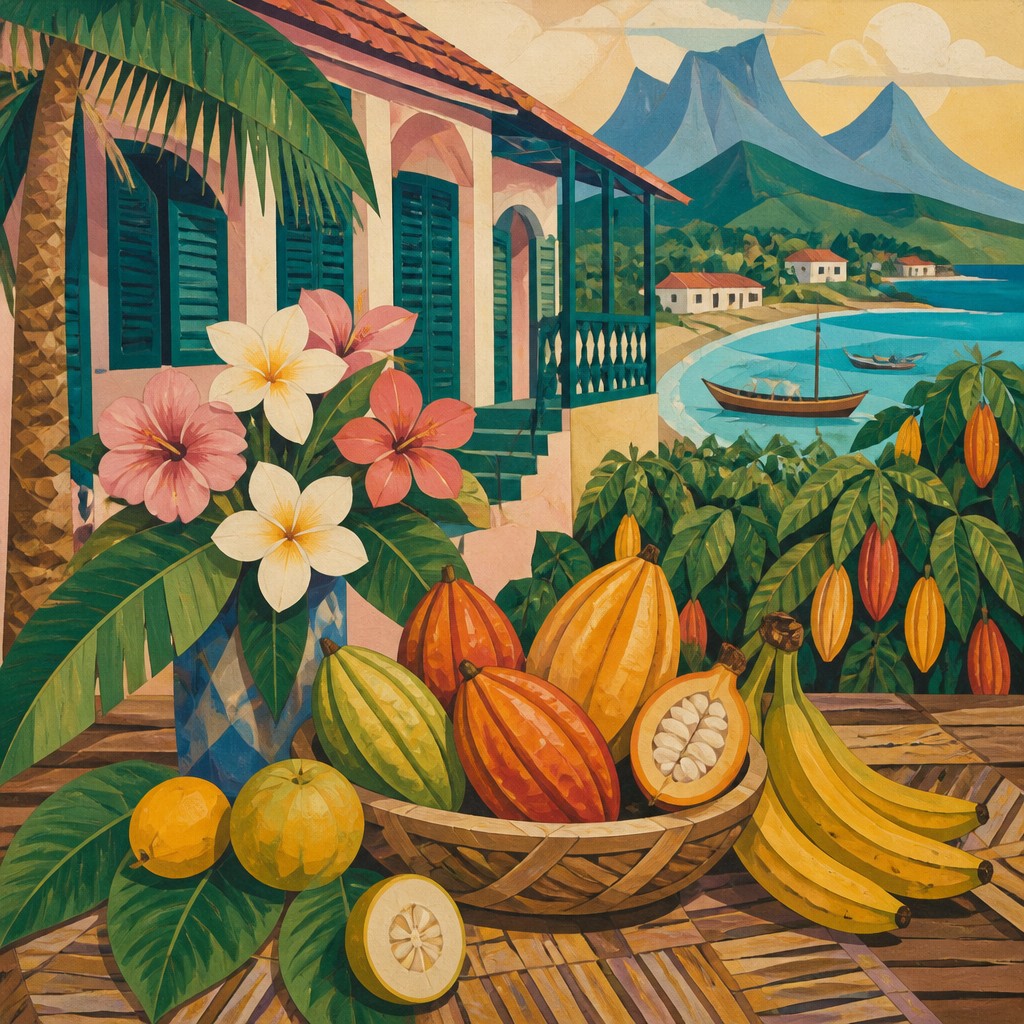
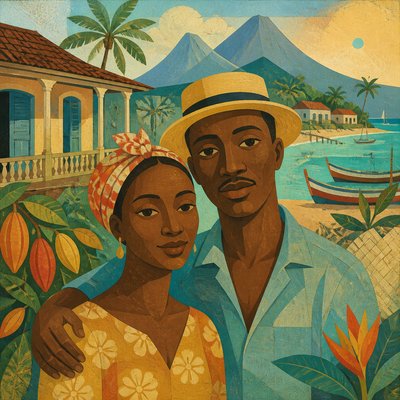
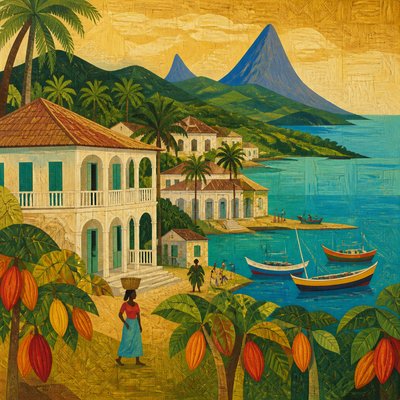
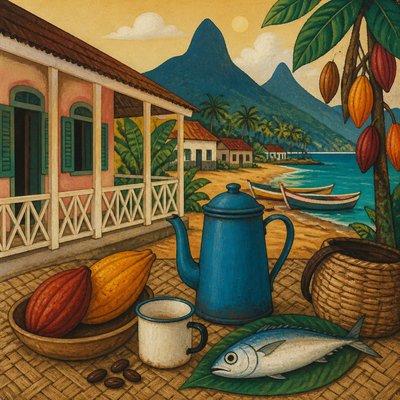
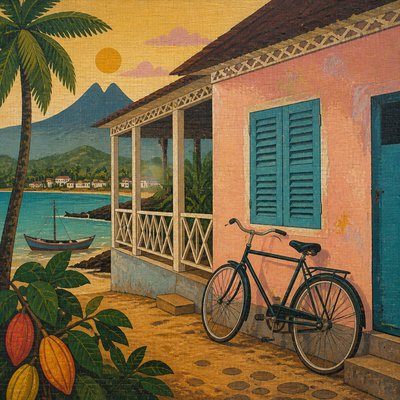
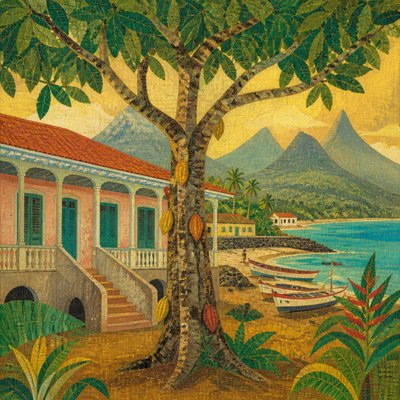
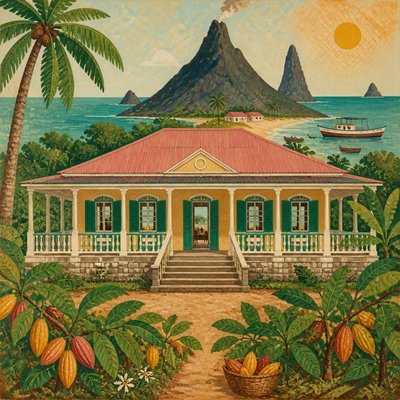
São Tomé art style is a contemporary, place-inspired visual synthesis centered on the landscapes and built heritage of São Tomé and Príncipe. Its imagery combines pastel-washed roça plantation buildings, broad verandas, shuttered windows, cacao groves, fishing boats, volcanic ridges, and turquoise coastal water under strong equatorial light.
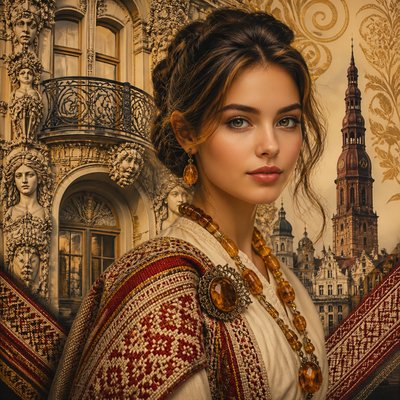
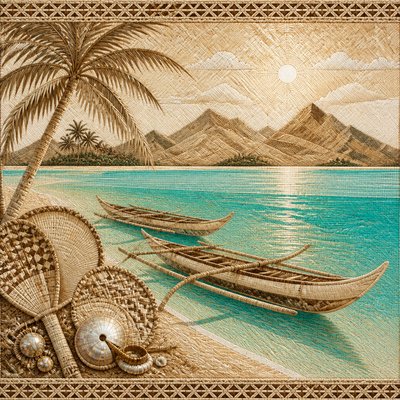
The style is defined less by a documented historical school than by a carefully constructed island atmosphere. Naïve tropical painting, flat blocks of warm and cool color, and the tactile irregularity of woven palm fronds turn architectural and landscape subjects into decorative, sunlit compositions. The result balances the weathered geometry of plantation structures with the vivid color and open horizons of maritime life.
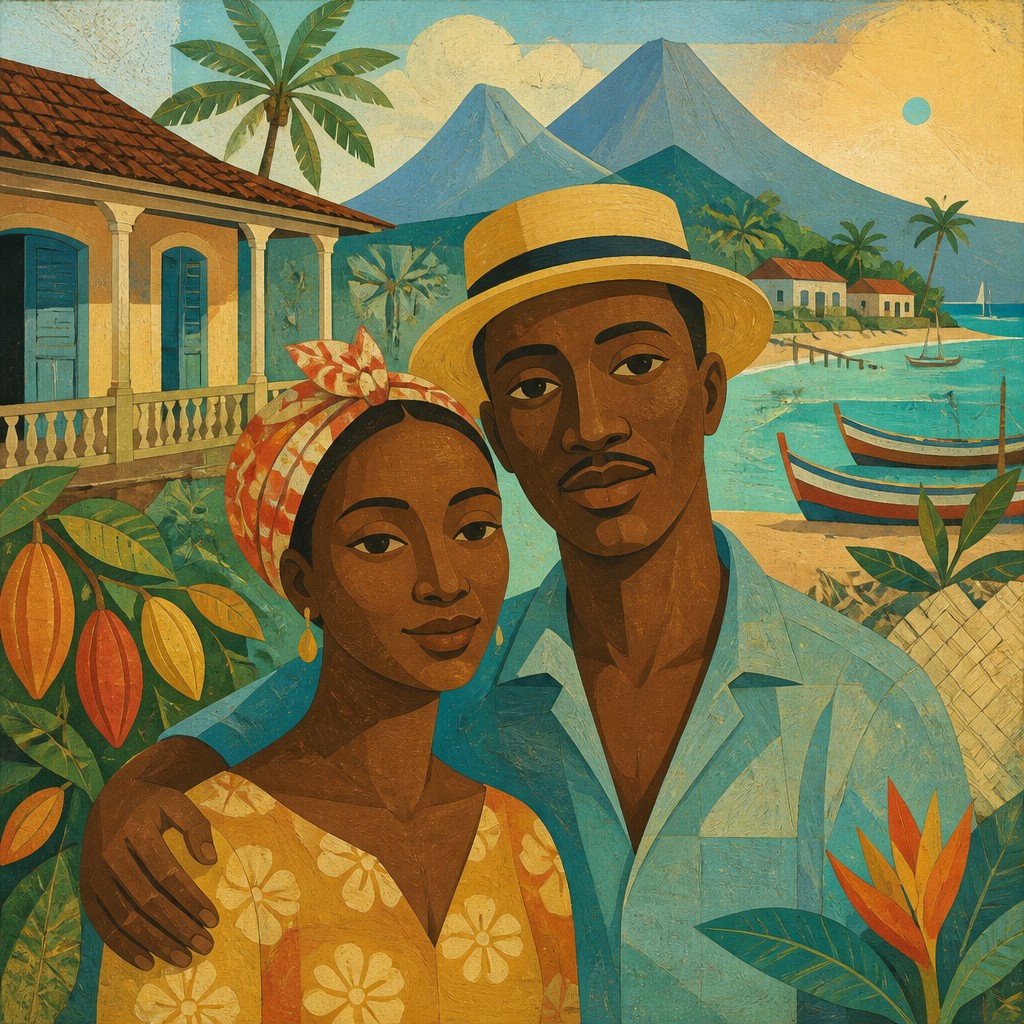
Try It On Your Photos
Upload any photo and convert it into Sao Tome Art Style — drag the sliders to compare before and after.
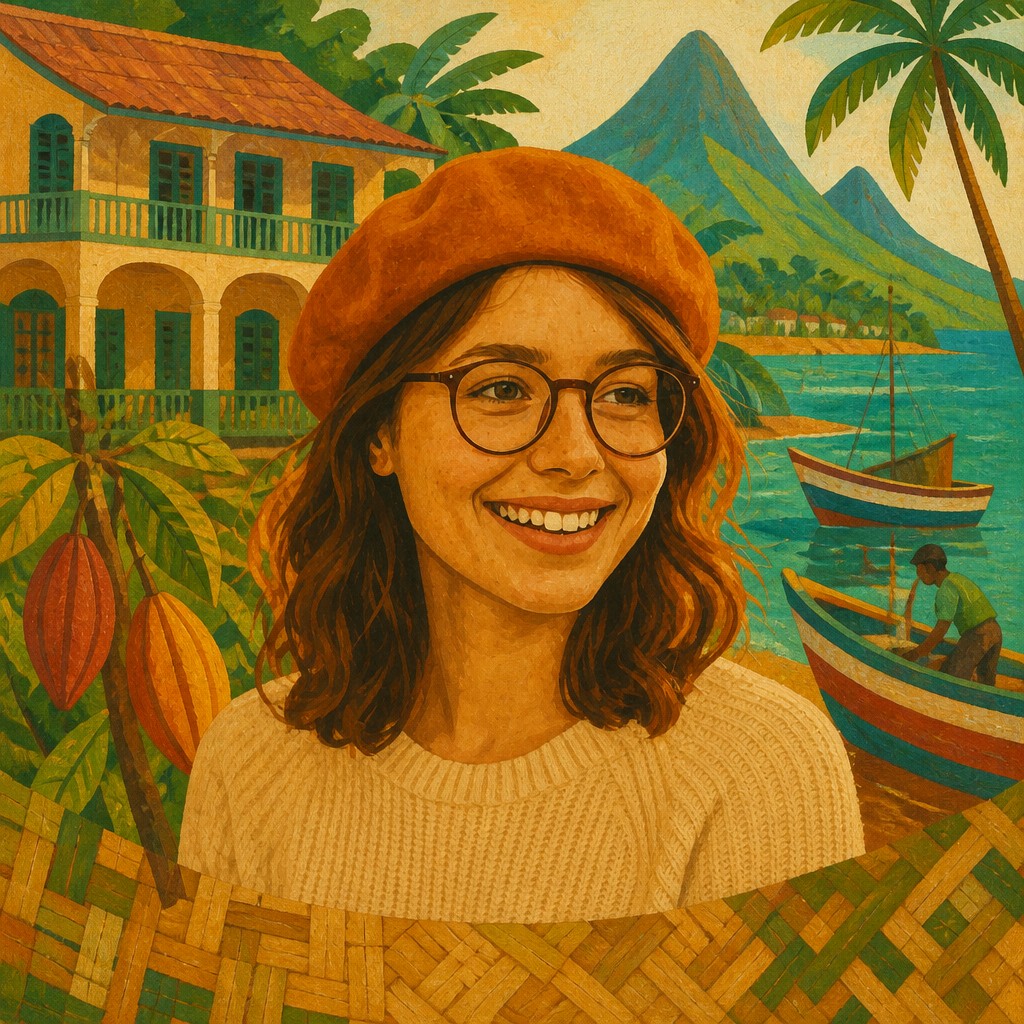

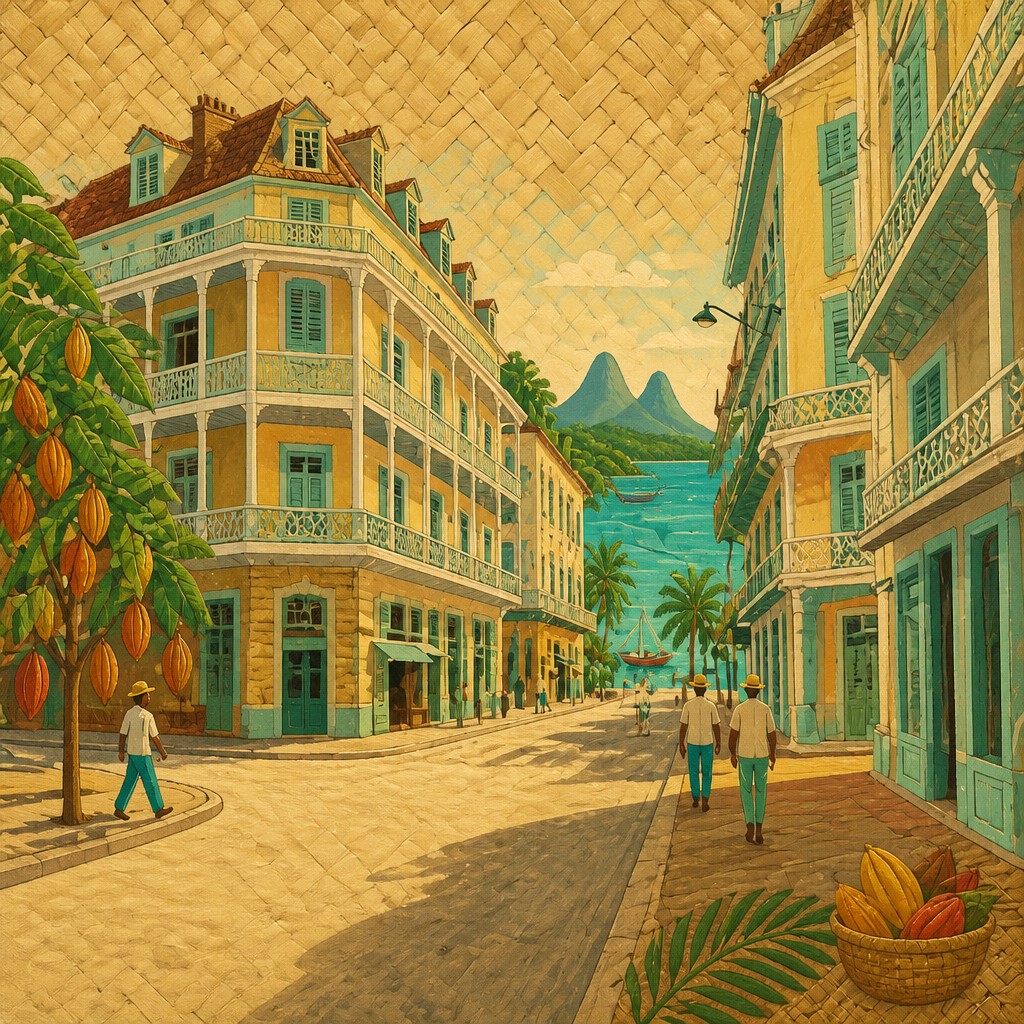

What Defines Sao Tome Art Style
The signature details, up close
Pastel roça architecture
Plantation houses and estate buildings appear in faded coral, cream, mint, ochre, and dusty blue. Wide verandas, raised structures, timber posts, and shuttered windows provide strong horizontal and vertical rhythm.
Naïve tropical simplification
Cacao trees, palms, boats, and houses are rendered with simplified contours and direct, readable shapes. The deliberately unschooled appearance favors charm, clarity, and visual pattern over strict naturalism.
Flat, luminous color
Large areas of turquoise, lagoon blue, leaf green, coral, yellow, and warm terracotta create a poster-like image structure. Shading is restrained and often replaced by adjacent color fields.
Palm-frond weave texture
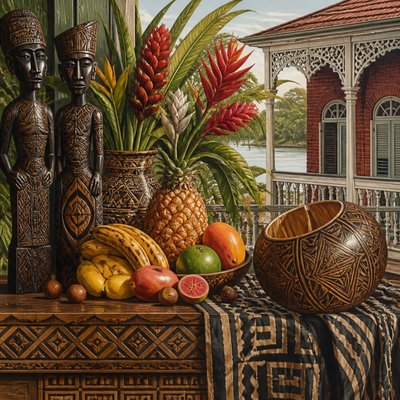
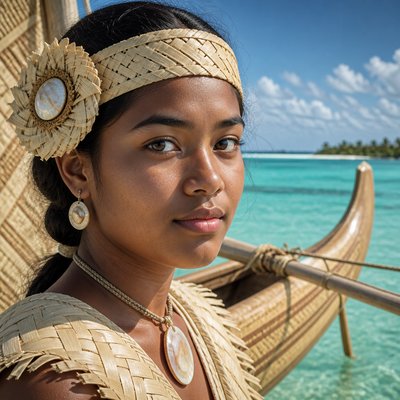
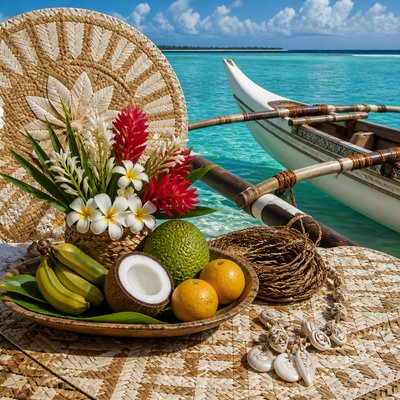
Fine crossing lines and fibrous patterns evoke woven palm leaves, mats, baskets, and handmade surfaces. This texture may overlay the entire image lightly or concentrate on roofs, borders, walls, and foreground elements.
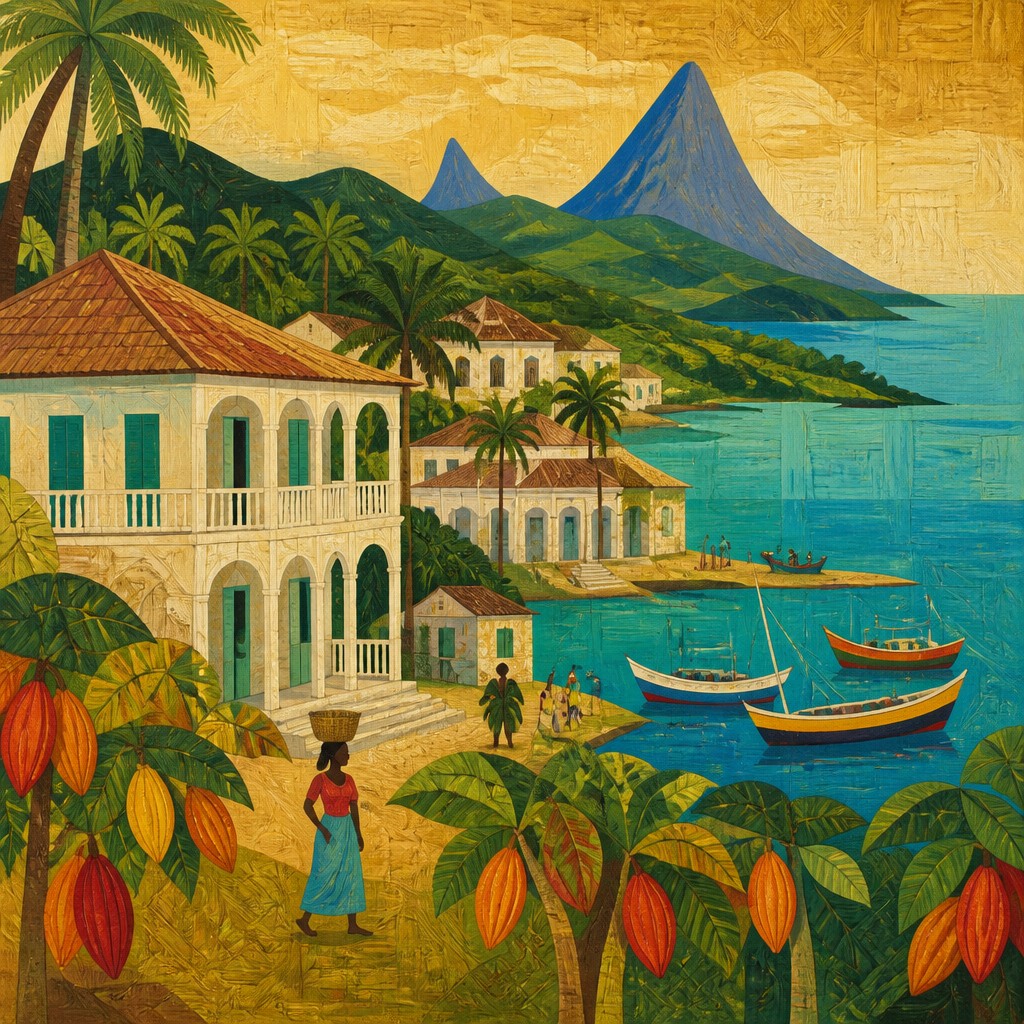
Equatorial island light
The lighting is warm, humid, and radiant, with a soft glow around roofs, vegetation, and water. Highlights feel sun-washed rather than sharply photographic.
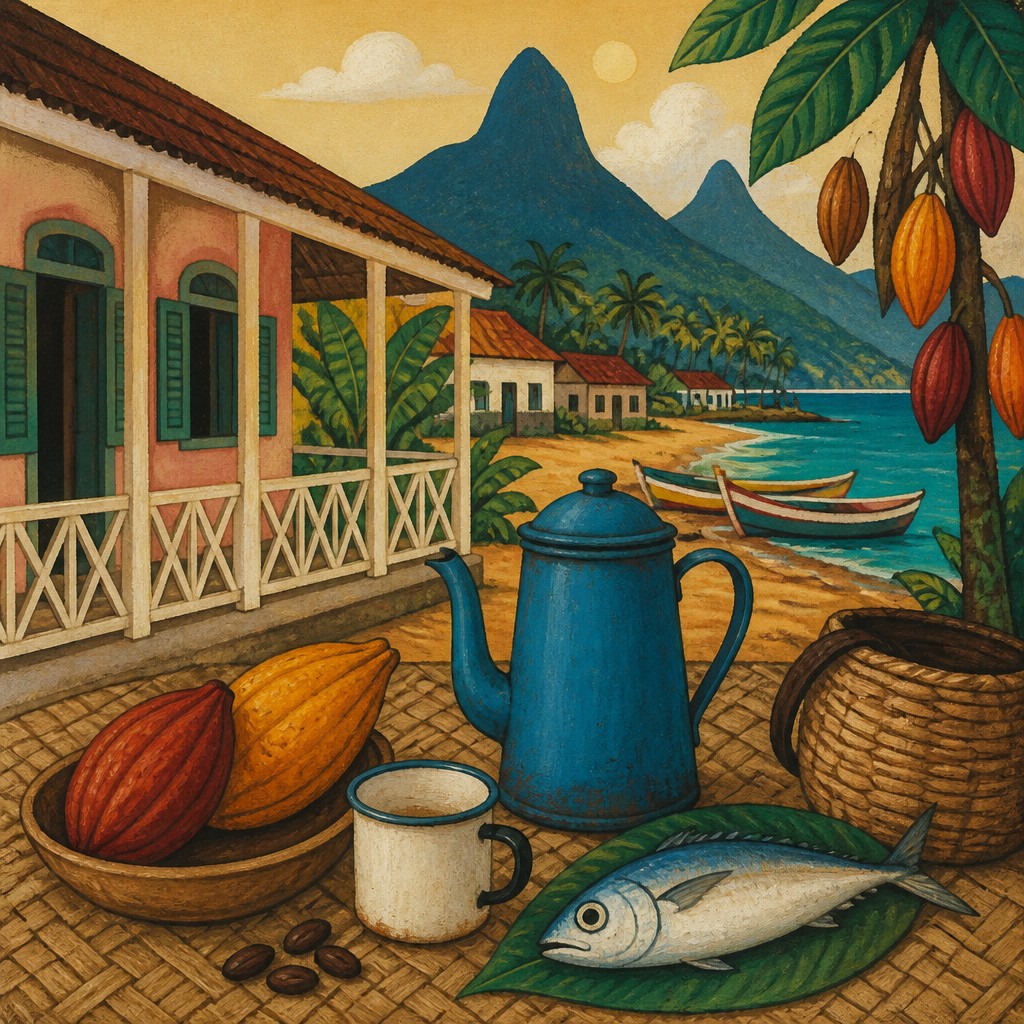
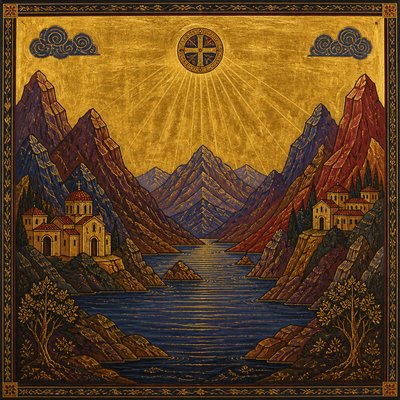
Volcanic and maritime horizons
Dark green or blue-black volcanic peaks often anchor the background, while fishing boats and bright coastlines establish a strong sense of scale. Layered horizons keep the composition open and atmospheric.
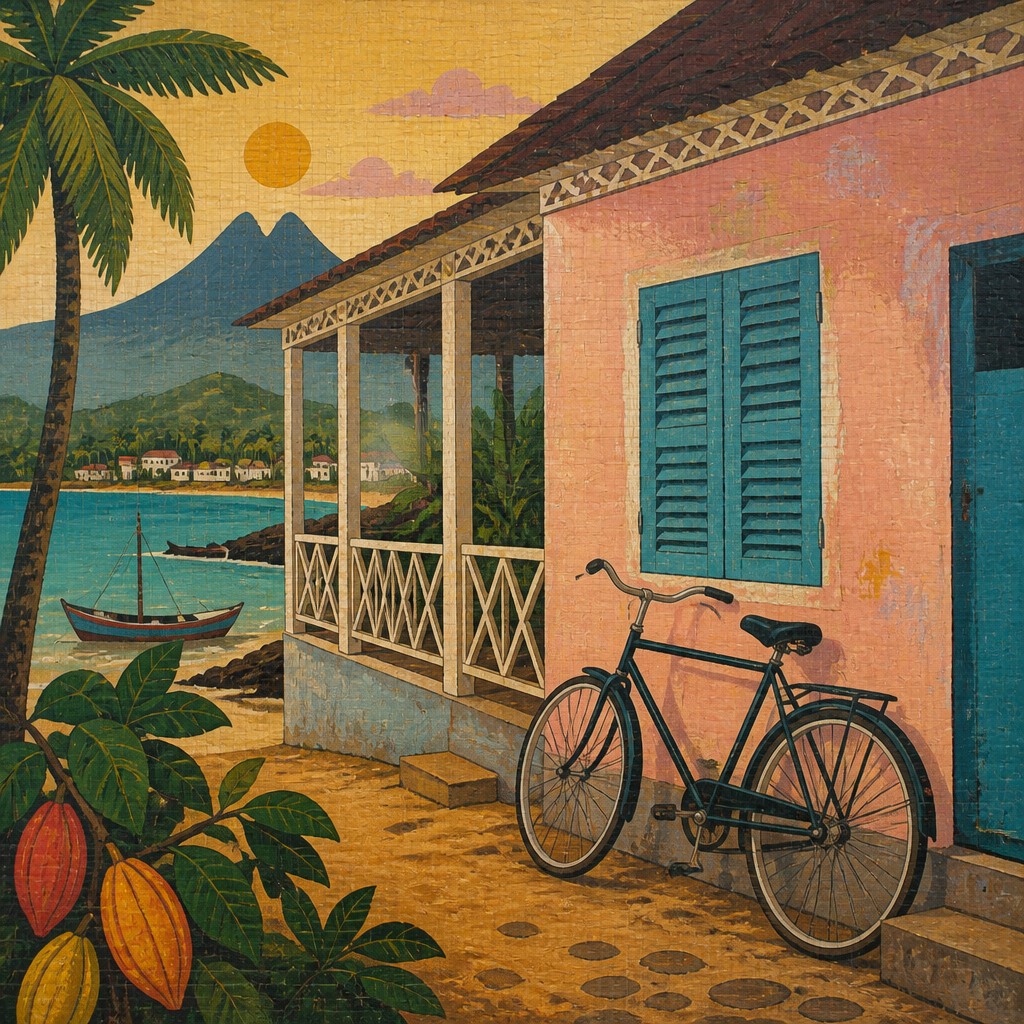
Weathered decorative surfaces
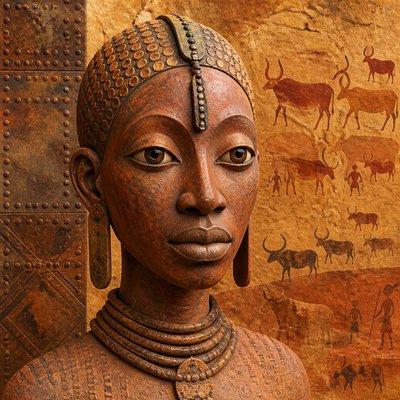
Peeling paint, softened plaster, wood grain, and slight irregularity lend age and tactility to otherwise simplified forms. The surface should feel handmade and lived-in rather than glossy or hyperreal.
Sao Tome Prompt Ideas
Start from an idea — each one opens the generator with the style ready to go. See all 40 Sao Tome prompts →
How to Create Sao Tome Art
Master the craft step by step — or skip straight to creating. Read the full guide →
- 1
Build a flat-color composition
Begin with a few broad color masses for sky, sea, vegetation, architecture, and volcanic background. Use overlapping shapes and selective dark accents instead of detailed modeling or photographic gradients.
- 2
Design the architecture first
Establish a clear roça structure with a veranda, repeated posts, shuttered windows, and a pitched or corrugated roof. Slight asymmetry, faded paint, and weathered edges help prevent the building from looking like a generic resort.
- 3
Add tactile weave
For traditional work, use dry-brush strokes, scratch marks, or thin ink lines to suggest palm fibers over paint or paper. Digitally, apply a low-opacity woven texture and mask it selectively so it supports rather than obscures the main forms.
- 4
Control the island light
Use warm highlights on sun-facing walls and vegetation, then balance them with turquoise shadows and deep blue-green silhouettes. Keep contrast moderate so the image retains its pastel, humid atmosphere.
- 5
Use layered subject prompts
For prompt-based generation, specify the subject, roça architectural details, naïve flat-color treatment, palm-frond texture, volcanic backdrop, and equatorial lighting in that order. Add constraints such as 'no photorealism,' 'simplified shapes,' or 'hand-painted surface' when the result becomes too glossy.
- 6
Adapt photographs selectively
When transforming a photograph, preserve recognizable composition while simplifying small details, softening perspective, and introducing broad pastel color fields. A separate woven-texture pass and restrained edge weathering can unify architecture, people, vegetation, and water.
The Story
History & Origins of Sao Tome
São Tomé art style is an invented, AI-native and contemporary aesthetic lineage rather than a recognized historical movement. It draws visual material from São Tomé and Príncipe’s roças, Portuguese colonial-era plantation architecture, cacao-growing landscapes, coastal fishing culture, and the islands’ volcanic geography. The roças were part of an exploitative plantation economy sustained by coerced and contract labor, so their picturesque architectural presence should be understood alongside that difficult social history.
Its formal language also develops from broader traditions: naïve and folk painting, tropical landscape illustration, vernacular architectural documentation, textile and basket-weaving textures, and modern digital image-making. The style organizes these references into a cohesive visual vocabulary of softened architecture, simplified forms, woven surfaces, and radiant island color without claiming to represent a single indigenous or historically unified São Toméan art school.
Influences: The style relates to naïve and folk painting, tropical landscape illustration, vernacular architectural imagery, postcolonial visual studies of plantation landscapes, and decorative textile traditions using palm or other plant fibers. Its color logic also touches on modernist simplification and poster design, while its weathered surfaces recall handmade painting, travel sketching, and digitally composited material textures. The architectural subject is specifically informed by the roça estates and coastal environments of São Tomé and Príncipe rather than by a generalized tropical aesthetic alone.
Frequently Asked Questions
What defines São Tomé art style?
It combines pastel roça plantation architecture, simplified tropical painting, woven palm-frond texture, volcanic landscapes, and warm equatorial light. The defining effect is decorative and tactile, with clear flat shapes softened by weathering and atmospheric glow.
Is São Tomé art style a historical art movement?
No. It is best understood as a contemporary, invented aesthetic synthesis rather than a documented movement with a fixed period or canonical artists. Its lineage comes from São Tomé and Príncipe’s built and natural environments, combined with broader naïve, folk, architectural, textile, and digital-art approaches.
What is a roça?
A roça is a plantation estate complex, especially associated with cacao and coffee production in São Tomé and Príncipe. Roças commonly included an estate house, workers’ quarters, processing buildings, agricultural land, and transport infrastructure; their beauty and decay exist alongside the exploitative labor systems that created them.
How does this style differ from generic tropical art?
Generic tropical art may focus mainly on palms, beaches, and saturated color. São Tomé art style adds specific architectural cues such as verandas and shutters, cacao-growing landscapes, volcanic island geography, fishing activity, and palm-weave tactility.
Can photographs be transformed into this style?
Yes. Photographs of coastal villages, plantation buildings, gardens, boats, and volcanic scenery provide strong source material. Simplify detail, flatten the color structure, add warm haze and selective woven texture, and retain distinctive local architecture rather than applying a generic tropical filter.
What subjects work best in this style?
Roça buildings, cacao groves, fishing boats, island markets, coastal roads, volcanic peaks, and village scenes are especially effective. Human figures can be included, but they should be represented respectfully and in context rather than used as anonymous exotic decoration.
Create your first Sao Tome artwork
Describe anything — or upload a photo — and see it in Sao Tome Art Style in seconds.
Related Styles
Discover similar art styles