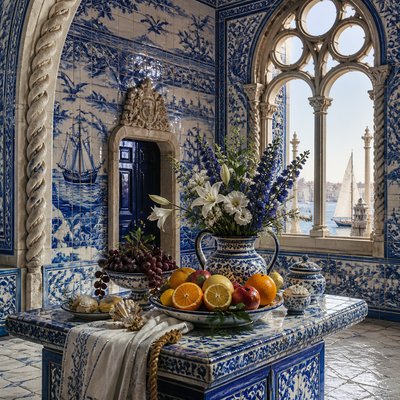
Bengal Art Style
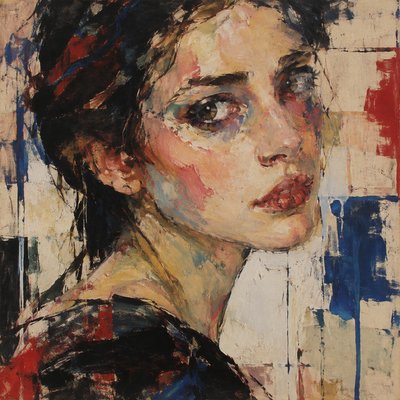
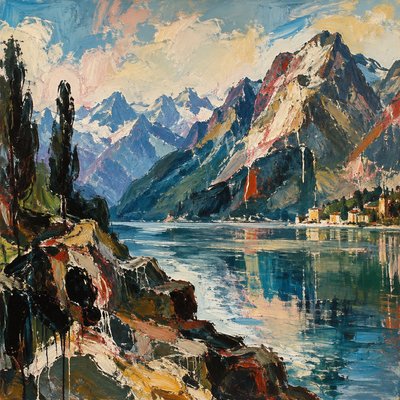
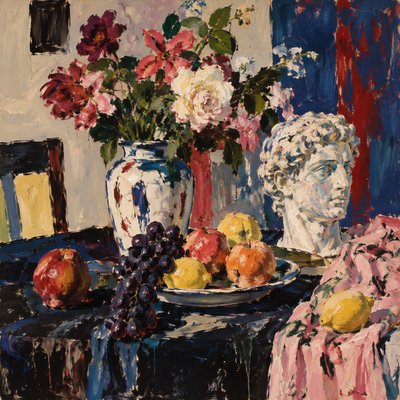
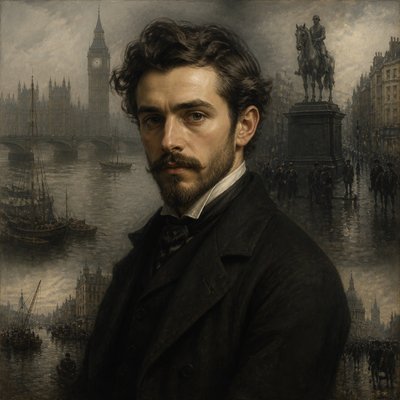
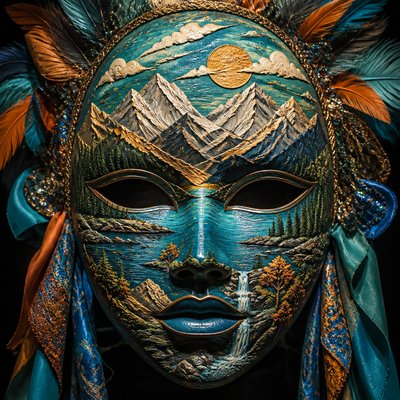
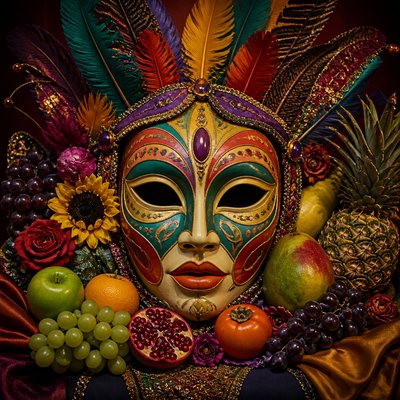
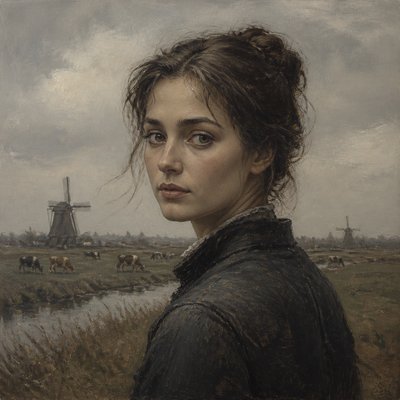
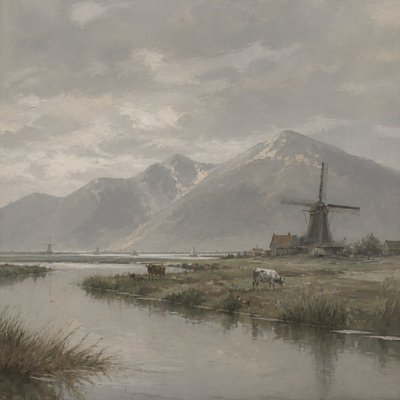
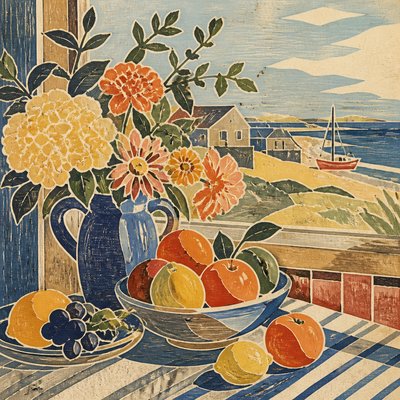
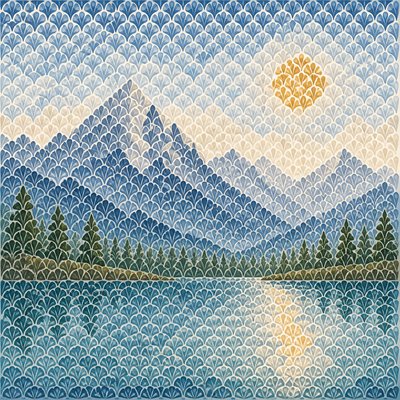
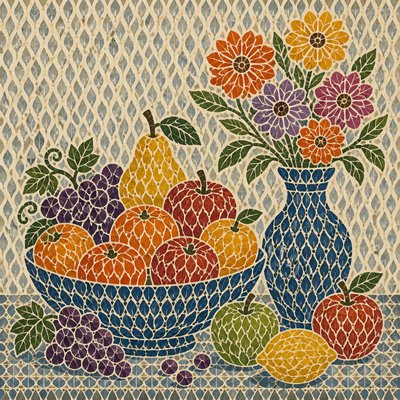
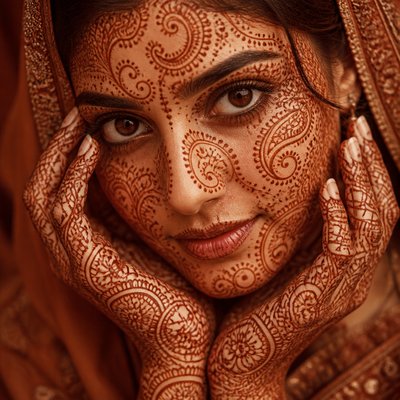
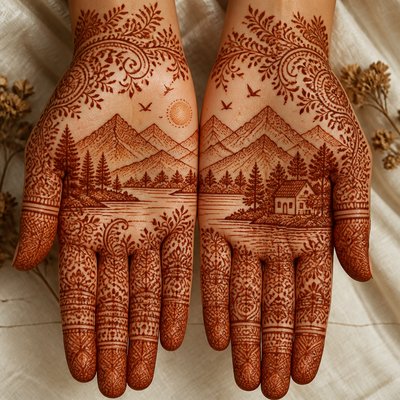
Explore Bengal Art Style: a vivid synthesis of Kalighat lines, patachitra storytelling, Bengal wash painting, and terracotta temple relief.
Instantly rendered in Bengal — or transform a photo
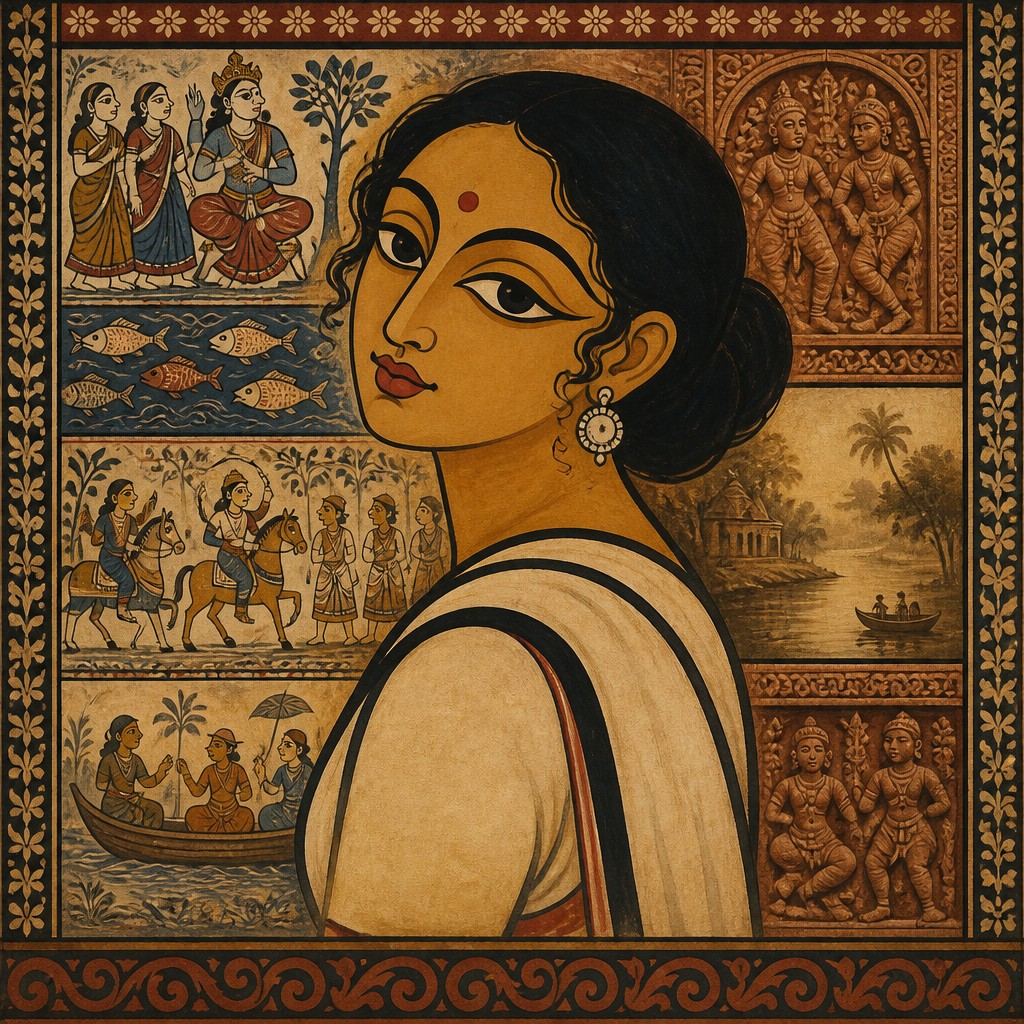
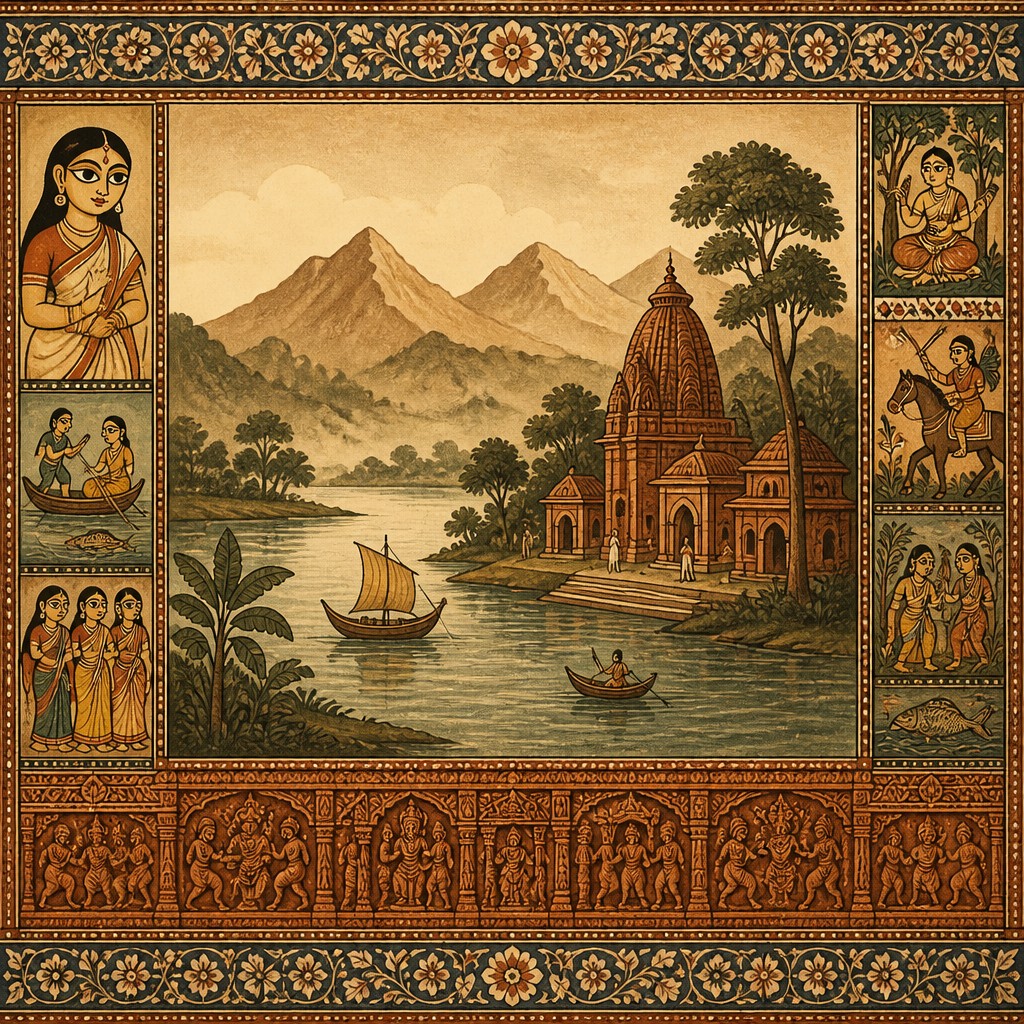
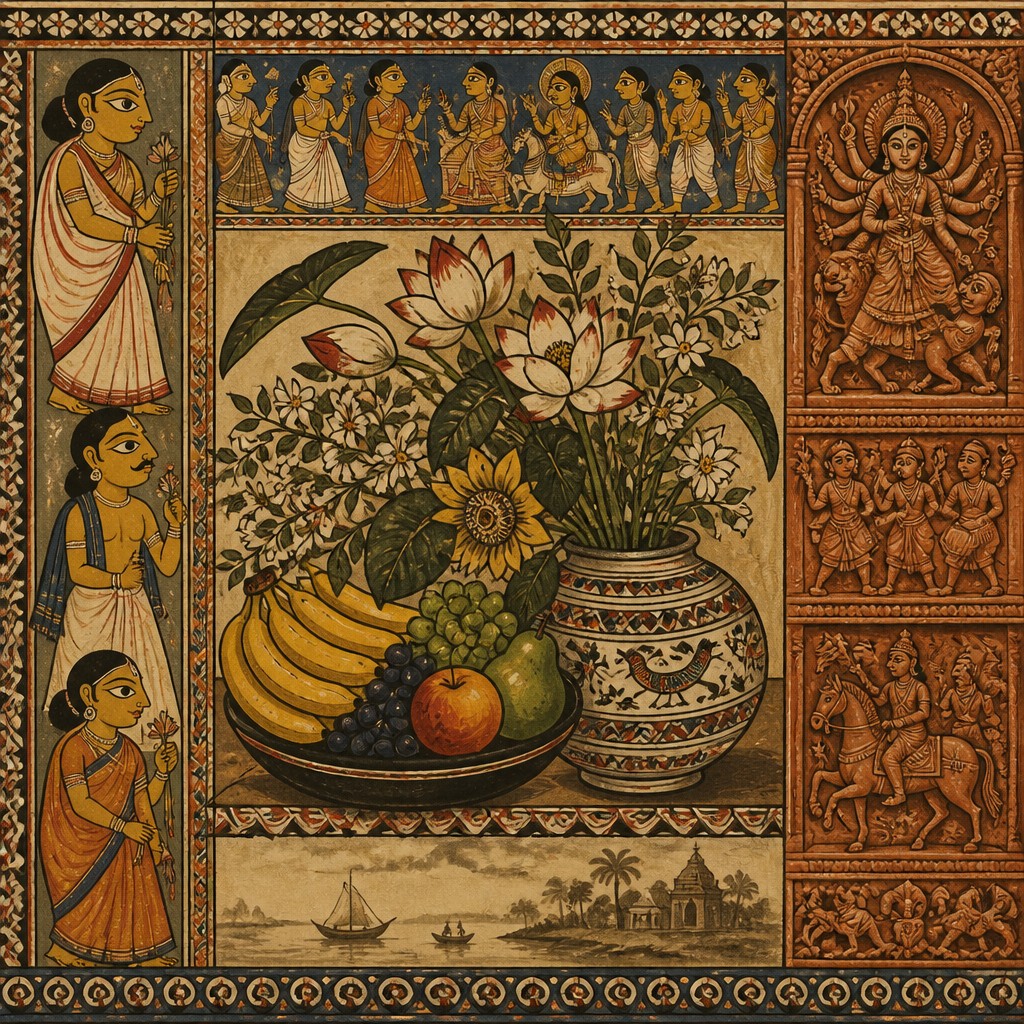
Bengal Gallery
Tap any artwork to explore it
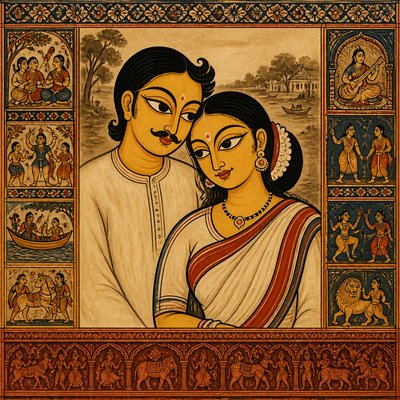
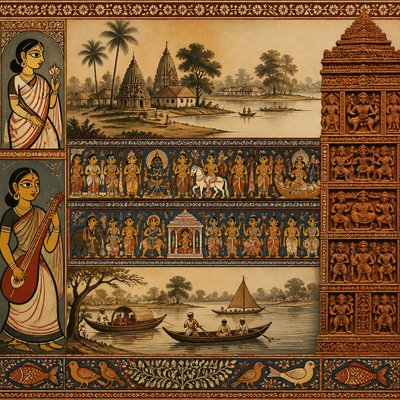
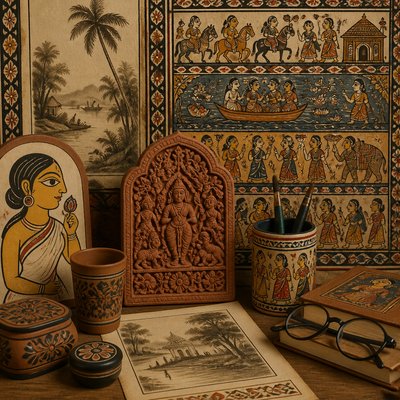
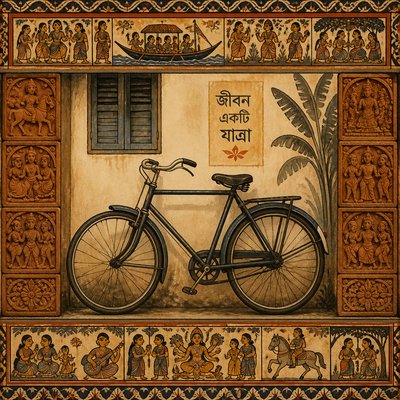
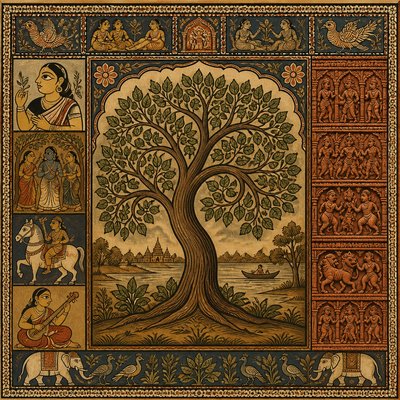
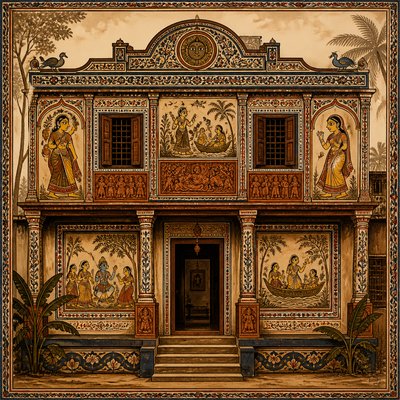
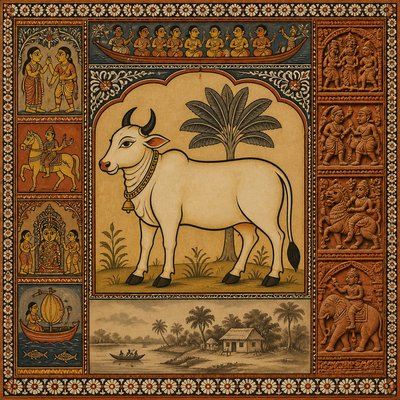
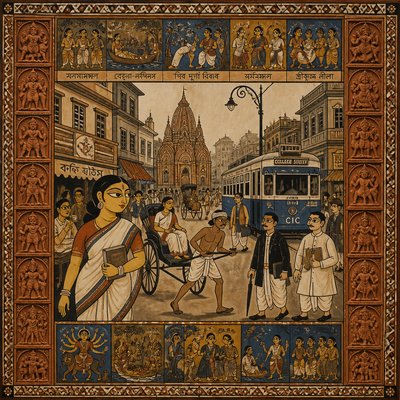
What is Bengal Art Style?
Bengal Art Style is a contemporary umbrella aesthetic that combines several visual traditions from Bengal and eastern India: the sweeping brushwork of Kalighat painting, the sequential narratives of patachitra scrolls, the patterned relief of Bengal’s terracotta temples, and the restrained washes associated with the Bengal School. It is not a single historical movement, but a designed synthesis of regional painting, illustration, craft, and architectural ornament.
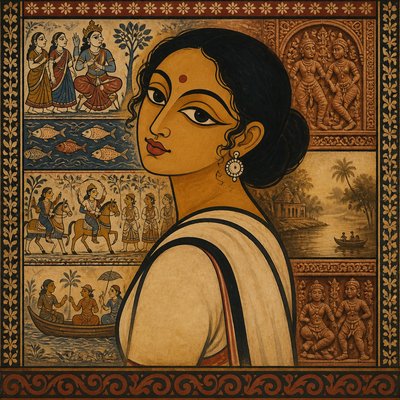
Its visual identity depends on strong silhouettes, economical contour lines, earthy pigments, and dense decorative framing. Figures often appear in expressive profile or three-quarter view, while stories unfold through compact scenes, repeated motifs, and rhythmic borders. The contrast between bold flat color and muted sepia wash reflects the combination of popular urban painting, rural scroll storytelling, devotional imagery, and carved architectural surfaces.
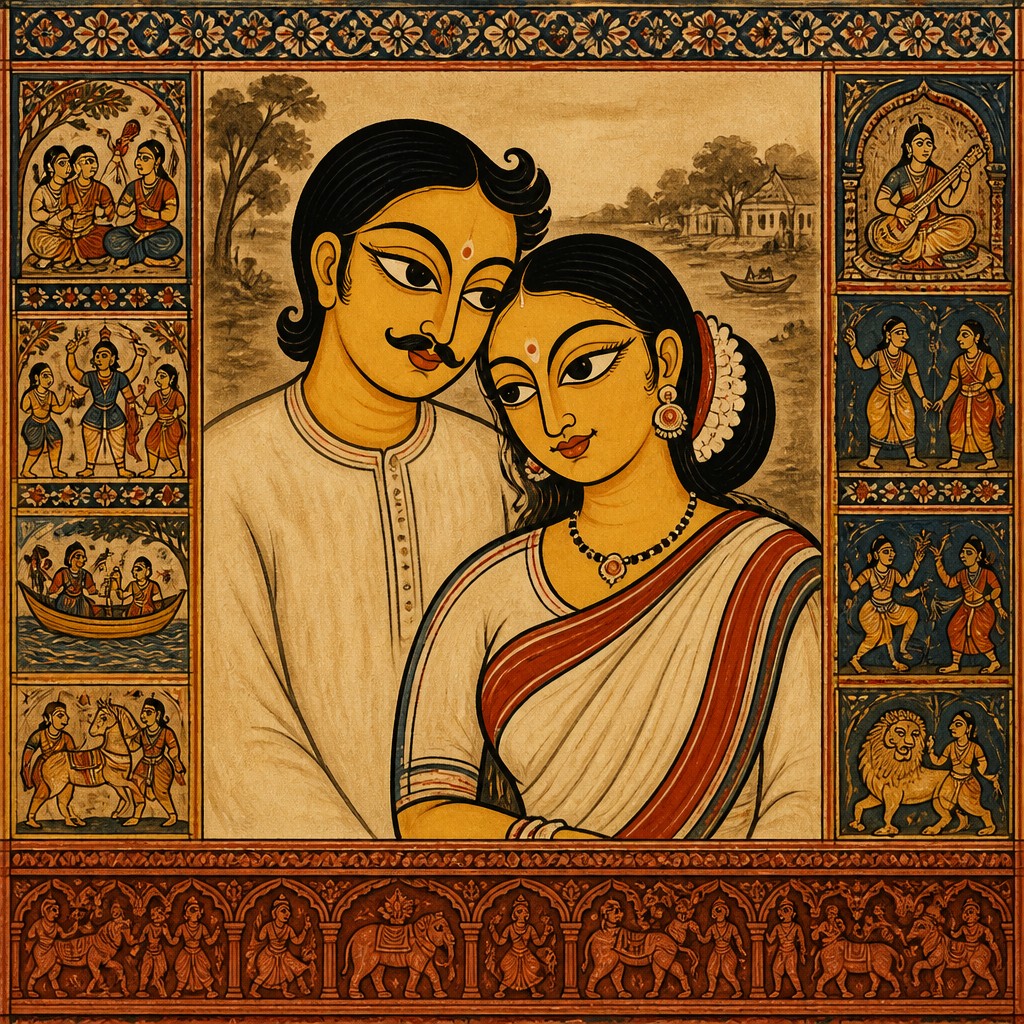
Try It On Your Photos
Upload any photo and convert it into Bengal Art Style — drag the sliders to compare before and after.
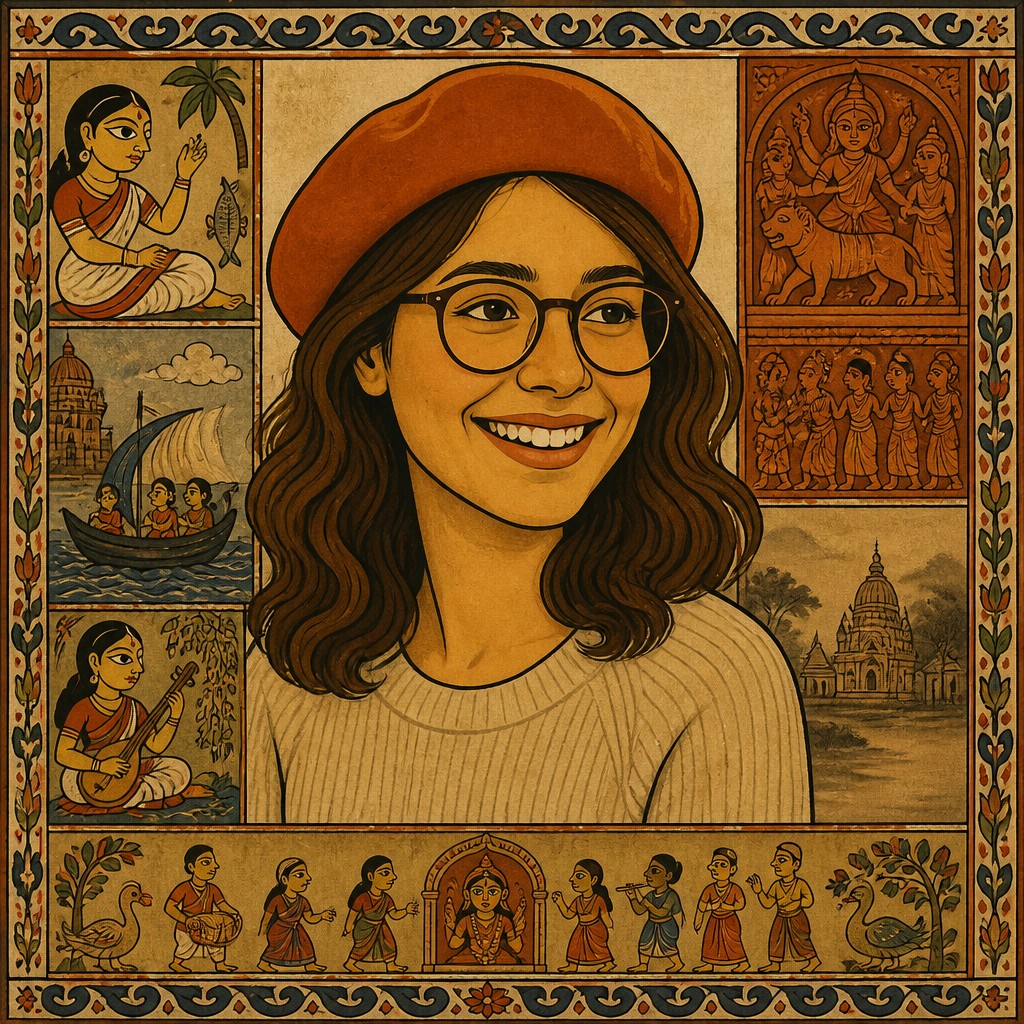

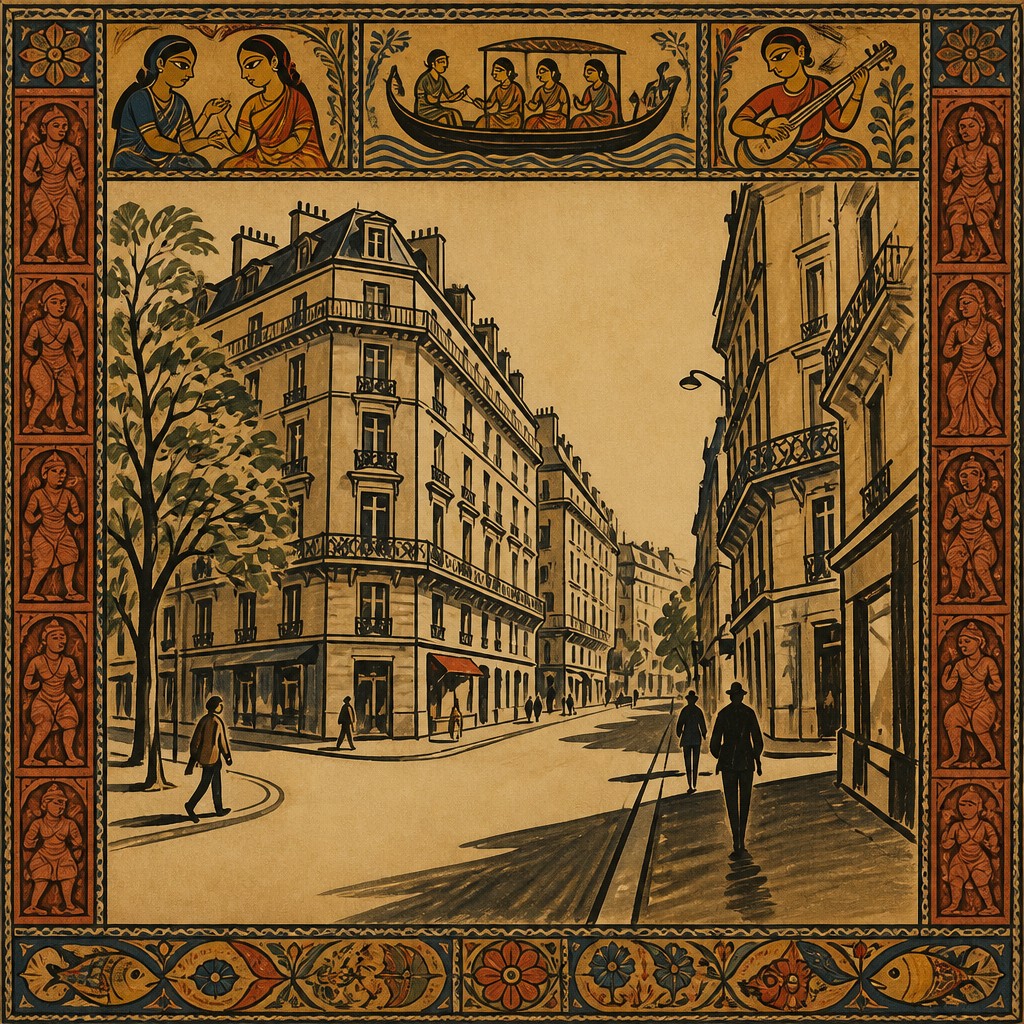

What Defines Bengal Art Style
The signature details, up close
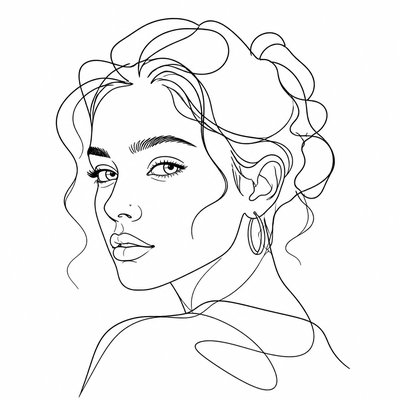
Flowing contour lines
Figures are defined by confident, continuous brush lines with changes in thickness that suggest movement and gesture. Details are selective rather than fully modeled.
Flat, earthy color
Ochre, vermilion, indigo, terracotta, cream, charcoal, and muted green create broad, readable color fields. Shading is limited and often replaced by carefully placed patches of tone.
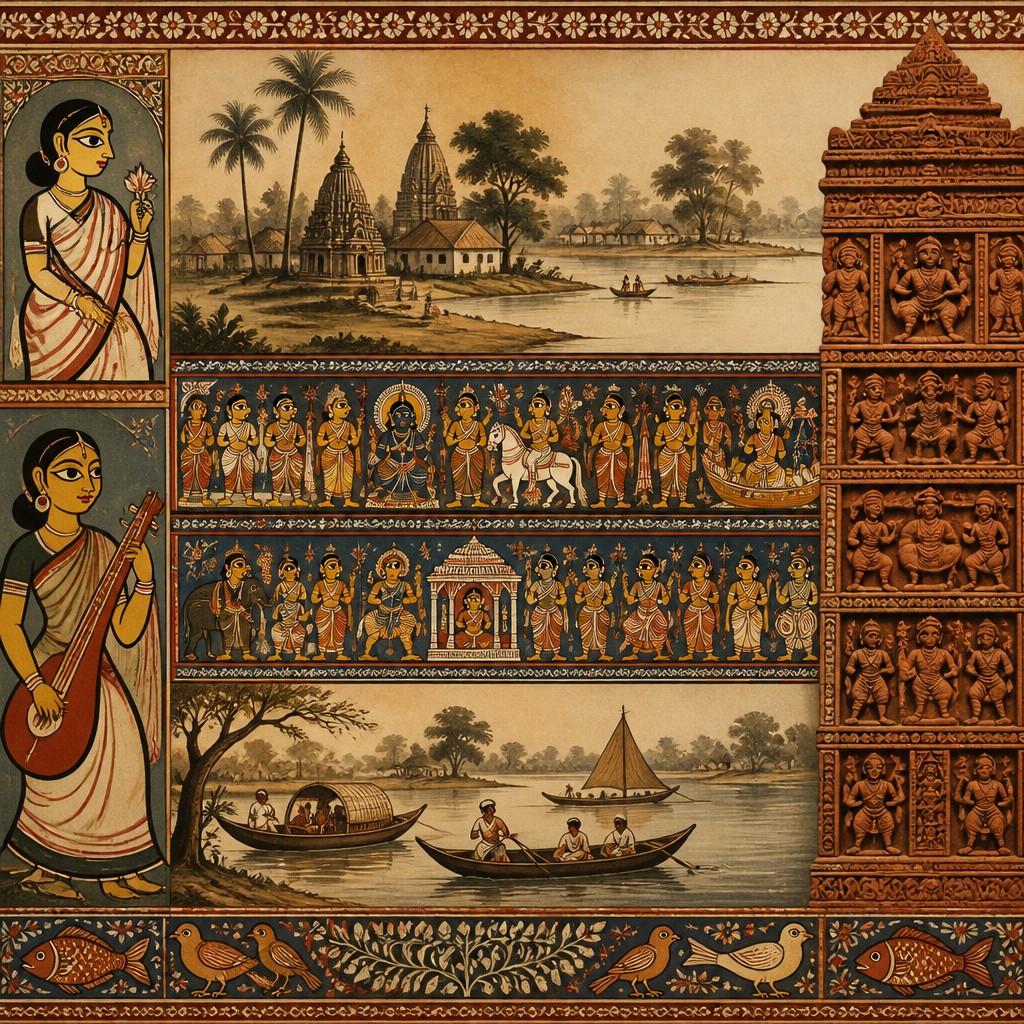
Narrative panel structure
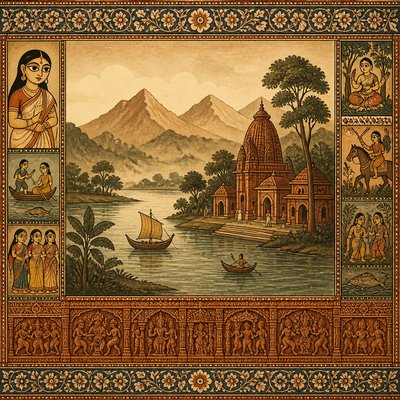
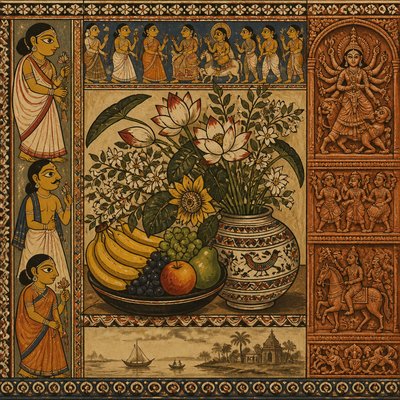
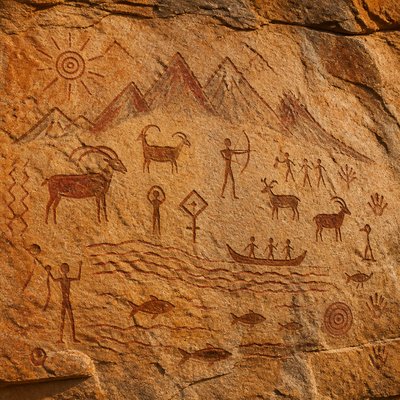
Scenes may be arranged like patachitra scroll episodes, with sequential compartments, repeated characters, or stacked registers. Borders and captions can help guide the viewer through the story.
Terracotta-inspired ornament
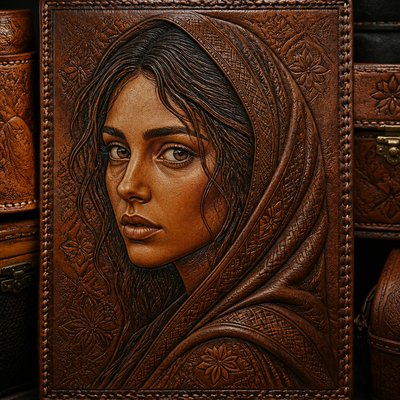
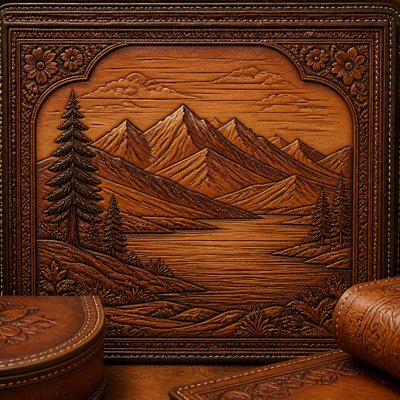
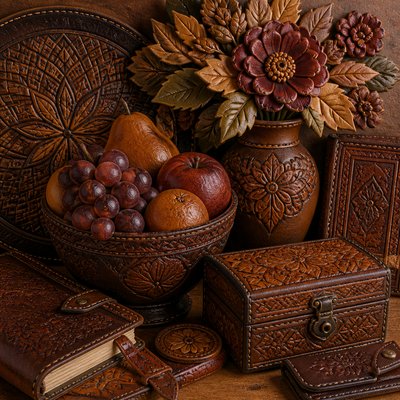
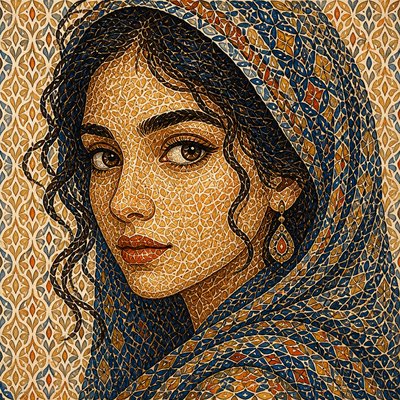
Dense floral, vegetal, geometric, and figural motifs echo the carved plaques of Bengal temples. Repetition gives the image a tactile, architectural rhythm even when it is rendered on a flat surface.
Expressive stylization
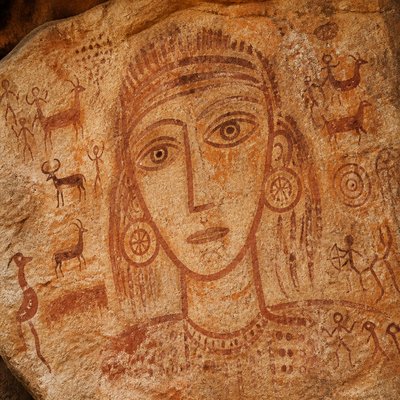
Faces, hands, animals, and garments are simplified into emblematic forms with clear gestures and heightened poses. Proportion serves storytelling and recognition more than naturalistic anatomy.
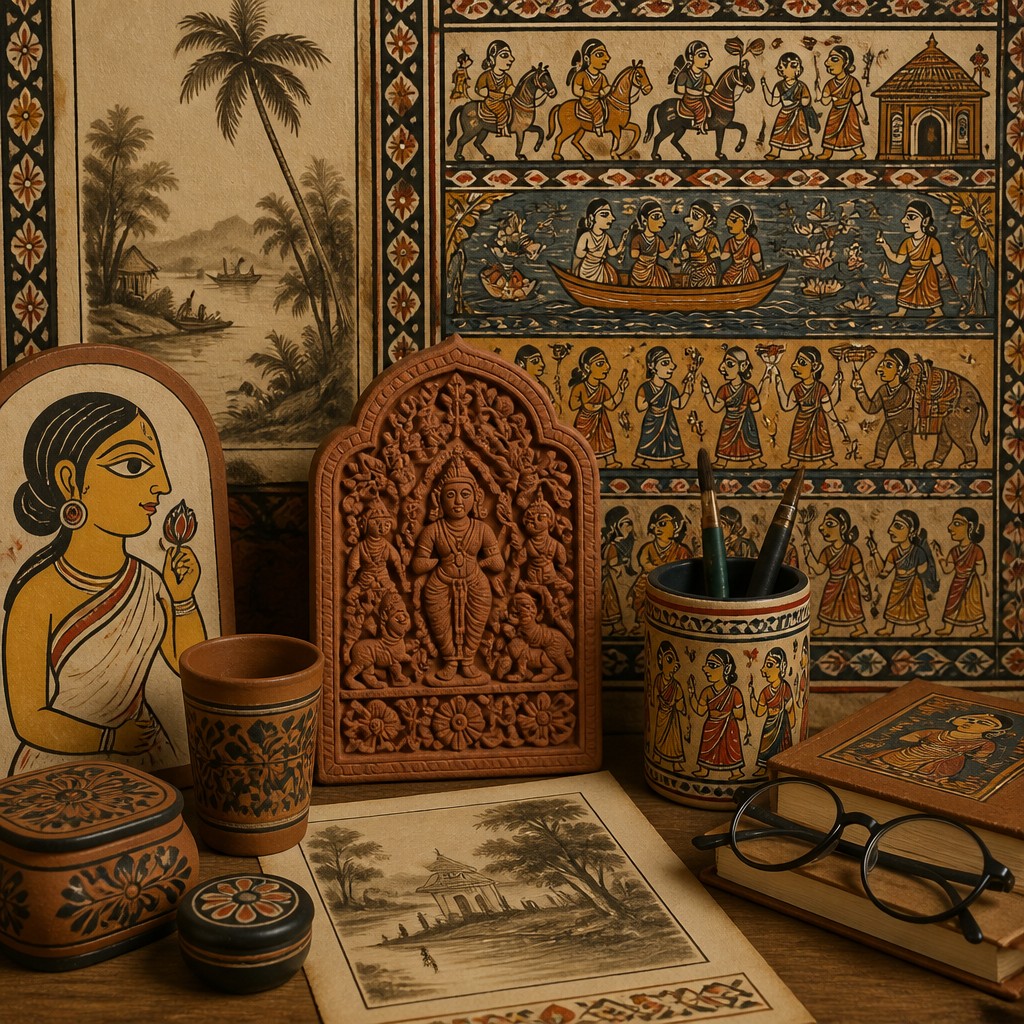
Muted wash passages
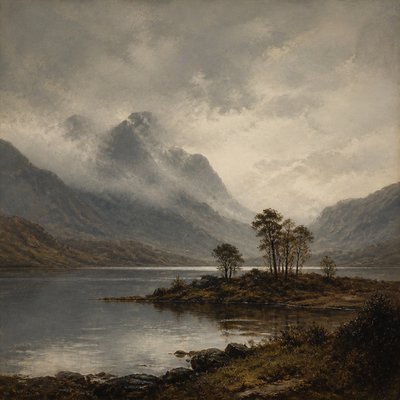
Sepia, sand, and smoke-colored washes can soften backgrounds or create atmospheric interludes. These translucent areas contrast with the harder edges of folk painting and relief-inspired motifs.
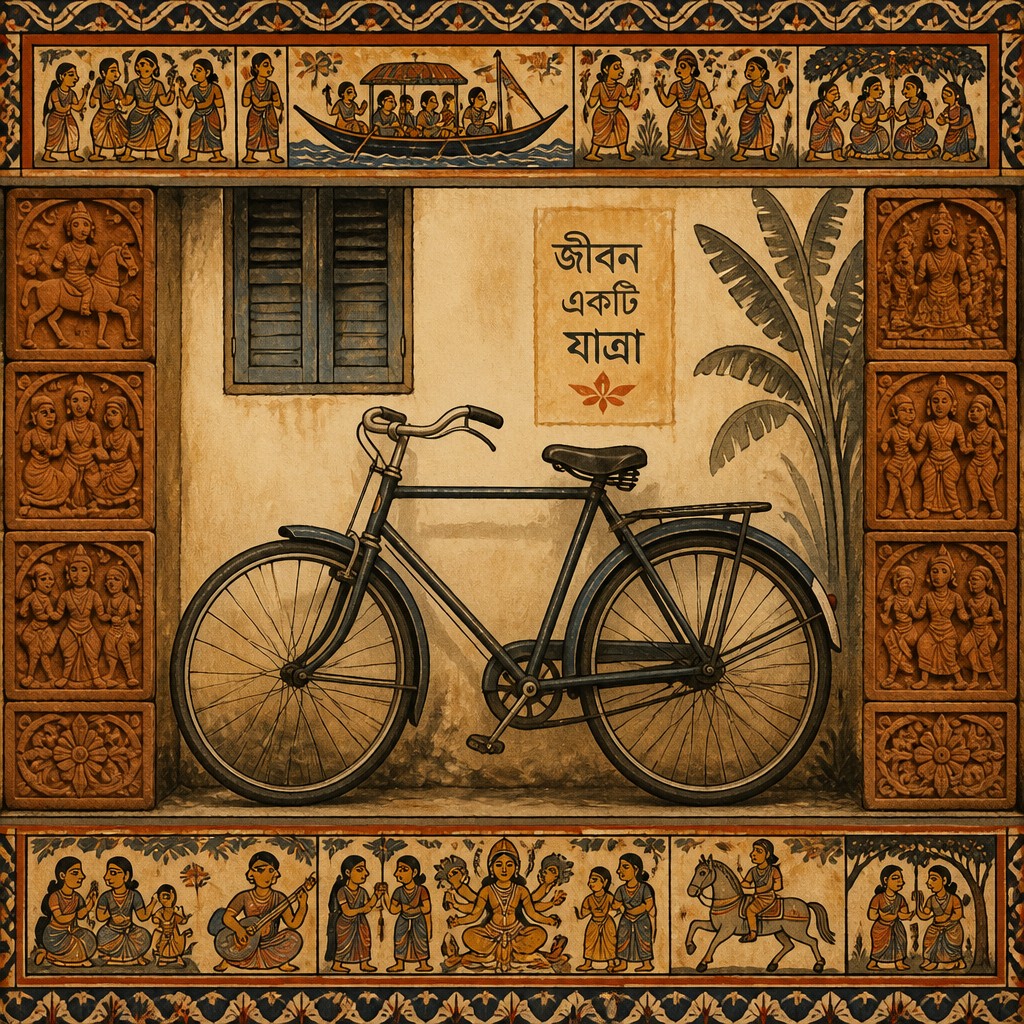
Decorative framing
Every scene may be enclosed by patterned borders, vines, bands, repeated animals, or miniature figures. The frame is an active compositional element rather than a neutral edge.
Bengal Prompt Ideas
Start from an idea — each one opens the generator with the style ready to go. See all 40 Bengal prompts →
How to Create Bengal Art
Master the craft step by step — or skip straight to creating. Read the full guide →
- 1
Establish the line drawing
Begin with a dark brown or black contour sketch using long, assured strokes. Simplify anatomy into expressive silhouettes and avoid excessive interior modeling.
- 2
Build a restricted palette
Use ochre, indigo, terracotta red, cream, soot black, and muted green as the main colors. Apply them in flat washes, reserving diluted sepia for atmospheric backgrounds and secondary forms.
- 3
Plan the narrative layout
Divide the image into one large scene, stacked registers, or sequential scroll-like panels. Keep the figures and actions legible, and use borders or repeated motifs to connect separate episodes.
- 4
Add relief-like patterning
Frame the composition with compact floral, geometric, and mythological motifs inspired by carved temple plaques. Vary scale and density so the ornament supports rather than obscures the focal scene.
- 5
Translate the method digitally
Choose textured brushes that preserve dry-brush edges, pigment irregularity, and hand-painted contours. Work in separate layers for line, flat color, wash, and border pattern, then slightly soften uniform digital edges.
- 6
Write a focused generation prompt
Specify the subject, a flowing folk contour line, flat ochre and indigo washes, sequential scroll panels, terracotta relief ornament, muted sepia passages, and a rhythmic decorative border. Mention the desired composition and readable silhouettes to prevent uncontrolled visual density.
The Story
History & Origins of Bengal
The style draws first on Kalighat painting, which developed around the Kalighat temple area of nineteenth-century Kolkata. These quickly painted works used confident brush lines, simplified forms, broad areas of color, and religious or socially observant subjects. Bengal patachitra, a scroll-based narrative tradition, contributed sequential composition, iconographic storytelling, mineral and vegetable color traditions, and ornamental borders; related scroll practices are also found across eastern India.
Bengal’s terracotta temple architecture, especially from the early modern and colonial periods, supplied the language of repeated figures, floral bands, mythological scenes, and compact relief panels. The late nineteenth- and early twentieth-century Bengal School added a preference for atmospheric washes, subdued color, and themes drawn from regional history and literature. The present label brings these lineages together for illustration and digital image-making rather than describing a historically unified school.
Influences: The style is closely related to Kalighat painting, Bengal and eastern Indian patachitra, terracotta temple architecture, and the wash-based regionalism of the Bengal School. It also intersects with South Asian folk illustration, devotional scroll painting, miniature narrative composition, and relief sculpture. Its bold contours and simplified silhouettes can resemble poster art or comics, but its repeated borders, iconographic scenes, and earthy material vocabulary remain rooted in regional craft traditions.
Frequently Asked Questions
Is Bengal Art Style a historical art movement?
Not as a single, formally defined movement. The name describes a contemporary synthesis of distinct Bengali and eastern Indian traditions, especially Kalighat painting, patachitra, terracotta temple ornament, and Bengal School wash techniques.
What most clearly defines the style?
The combination of flowing dark contours, flat earthy color, narrative panels, and dense decorative framing is its clearest identifying feature. Terracotta-inspired figural patterns and occasional sepia washes reinforce the regional visual character.
How is it different from patachitra?
Patachitra is a specific scroll-painting tradition with its own regional practices, materials, subjects, and performance contexts. Bengal Art Style borrows its sequential storytelling and ornamental language while combining them with Kalighat brushwork, temple relief motifs, and wash painting.
How is it different from Kalighat painting?
Kalighat painting is historically associated with rapidly produced paintings made around a major temple district in nineteenth-century Kolkata. This broader style uses Kalighat’s fluid line and simplified figures but adds scroll panels, terracotta-like patterns, muted washes, and more elaborate framing.
What subjects work well in this style?
Religious and mythological narratives, village life, river journeys, festivals, animals, markets, and historical scenes all suit its storytelling structure. Subjects with clear gestures and repeated figures are especially effective in panel-based compositions.
How can I make an image in this style digitally?
Start with a clear subject and specify the visual ingredients separately: flowing contour lines, flat ochre and indigo washes, scroll-like panels, terracotta relief ornament, and a patterned border. For image editing, preserve the original composition while applying textured brushes, simplified silhouettes, restricted color, and selective sepia washes.
Create your first Bengal artwork
Describe anything — or upload a photo — and see it in Bengal Art Style in seconds.
Related Styles
Discover similar art styles