Salzburg Art Style
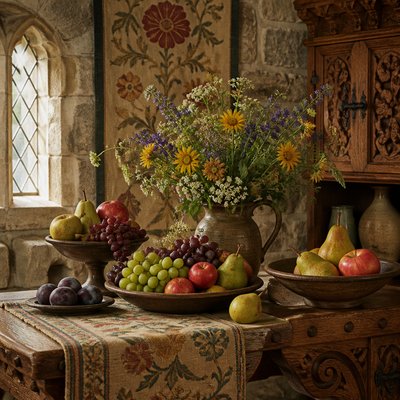
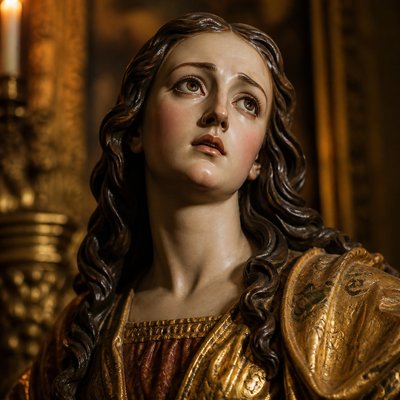
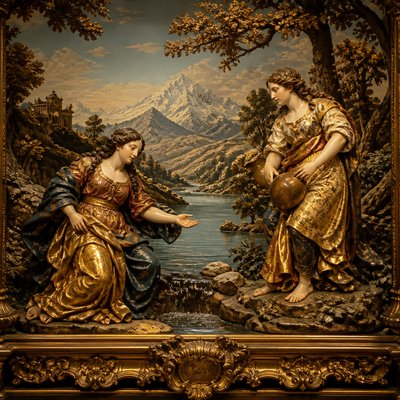
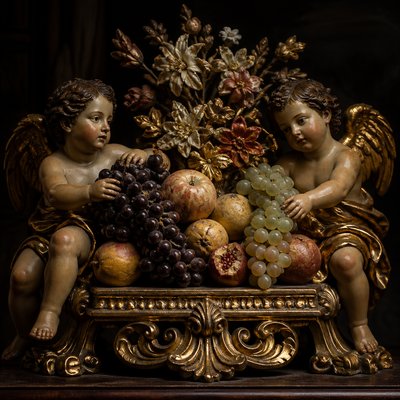
Explore Salzburg Art Style: Alpine Baroque architecture, gilded stucco, frescoed vaults, marble interiors, and dramatic golden light.
Instantly rendered in Salzburg — or transform a photo
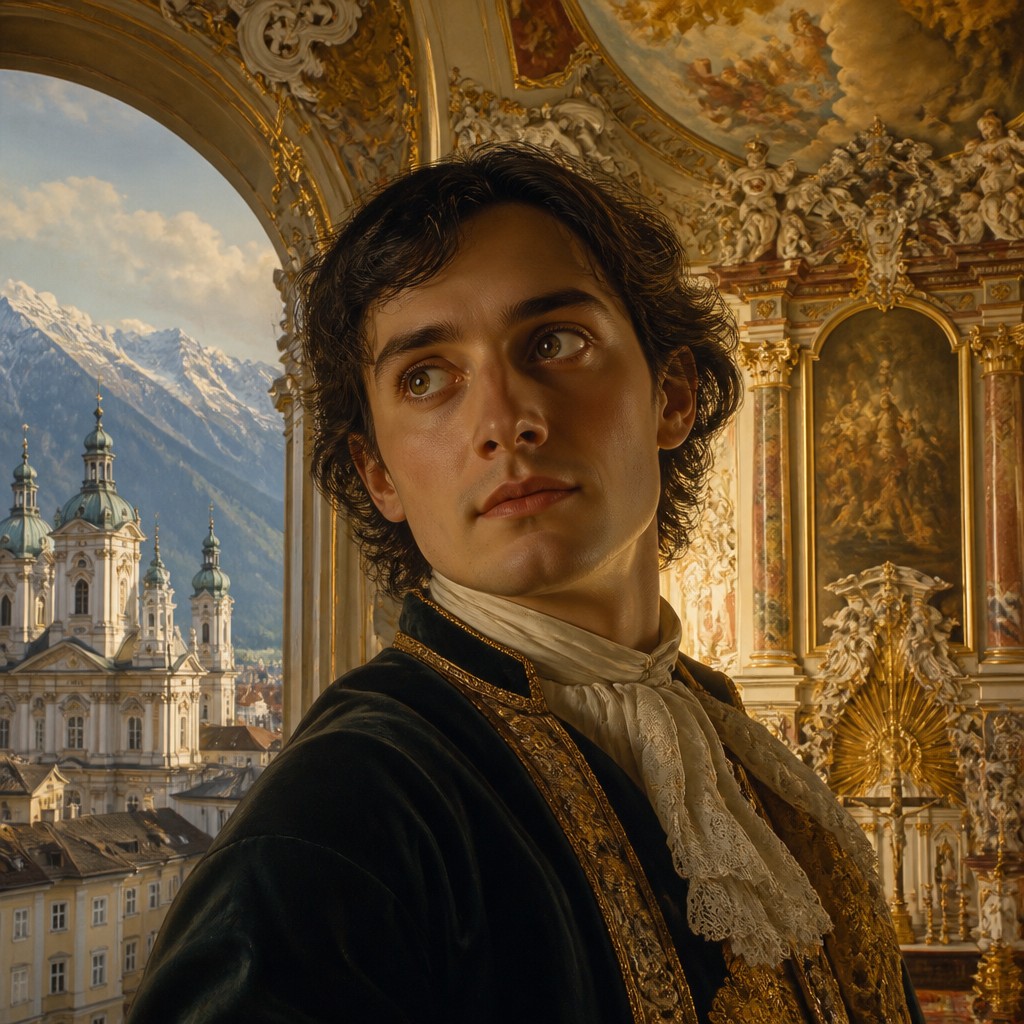
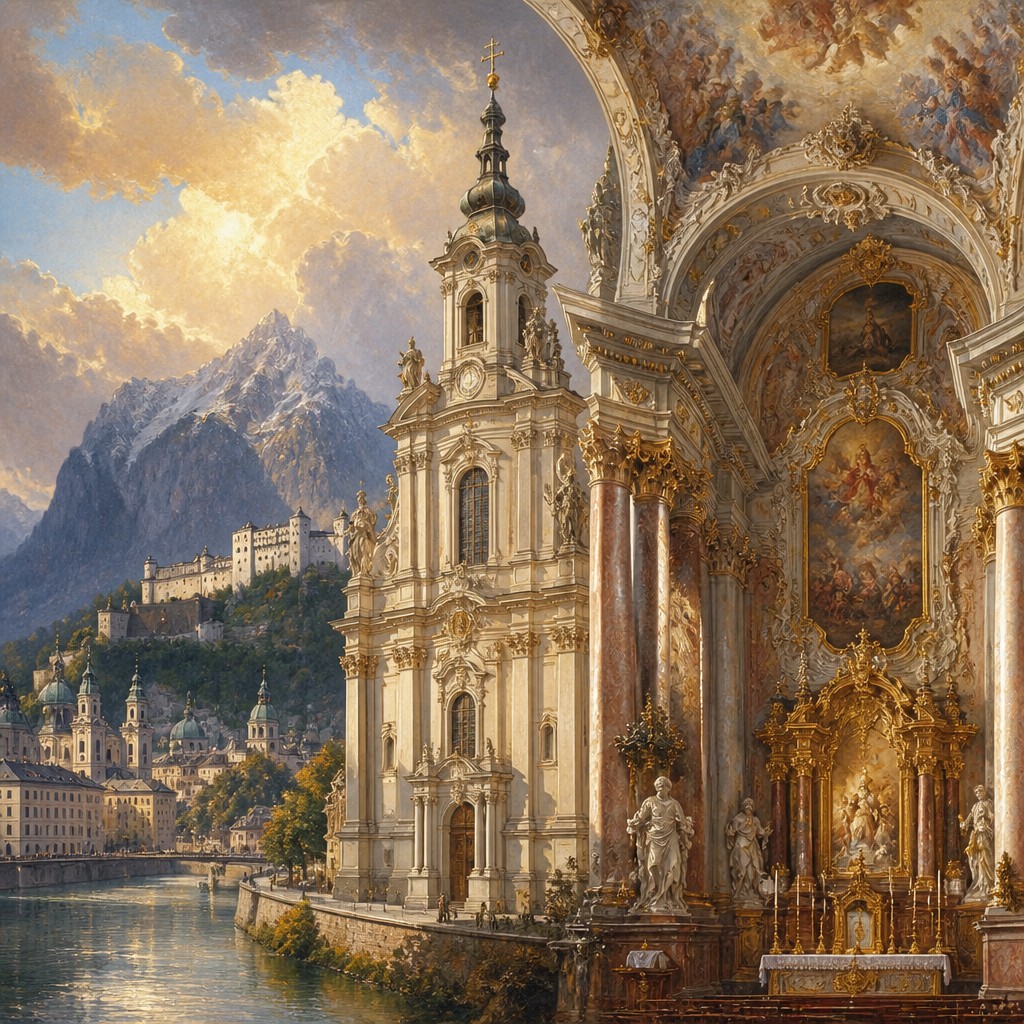
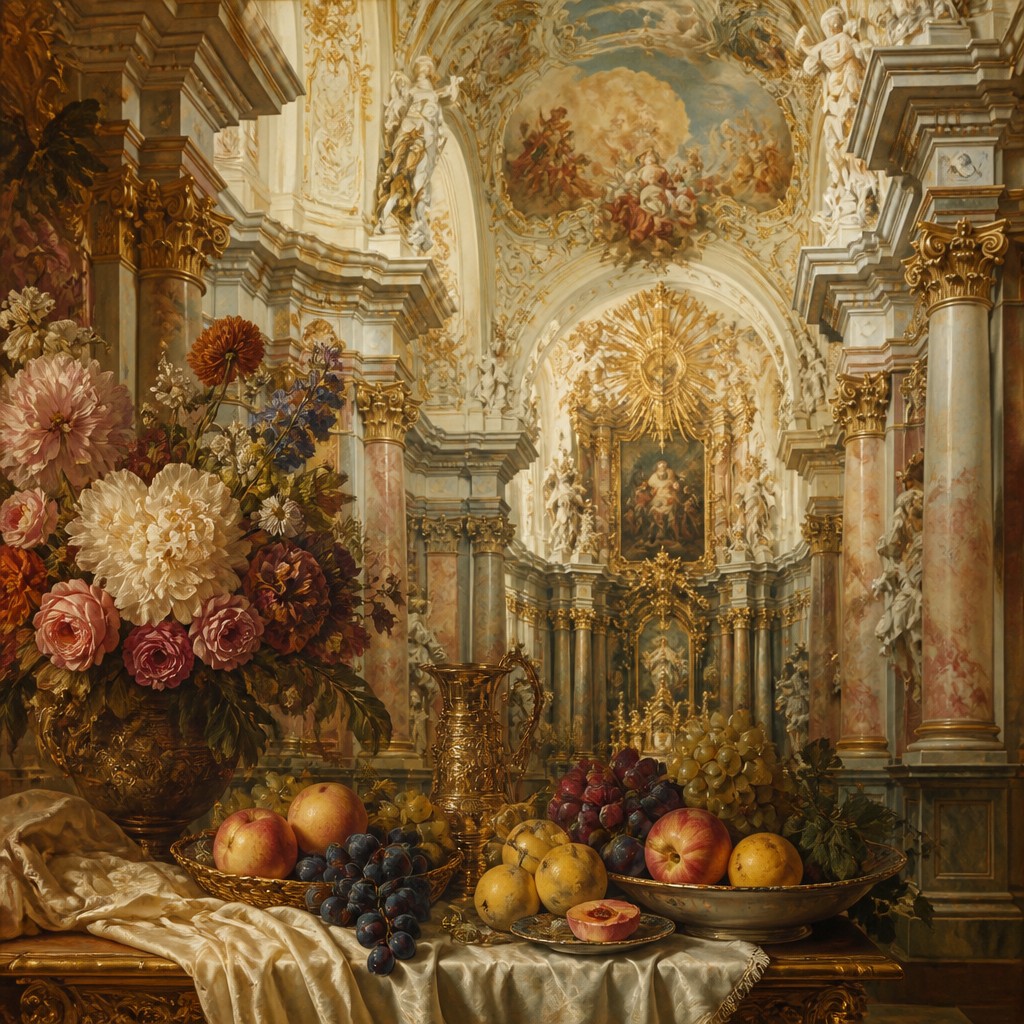
Salzburg Gallery
Tap any artwork to explore it
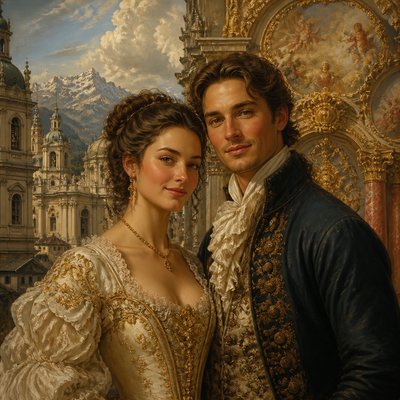
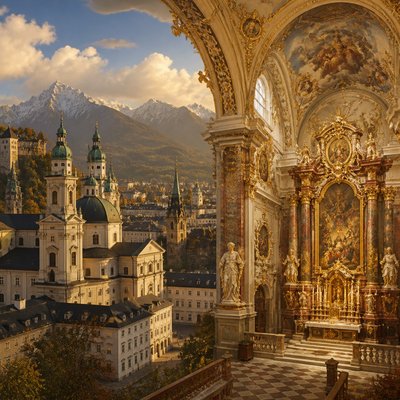
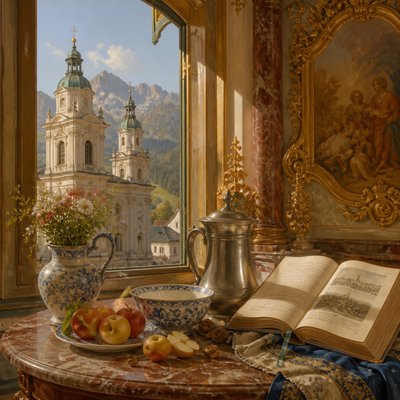
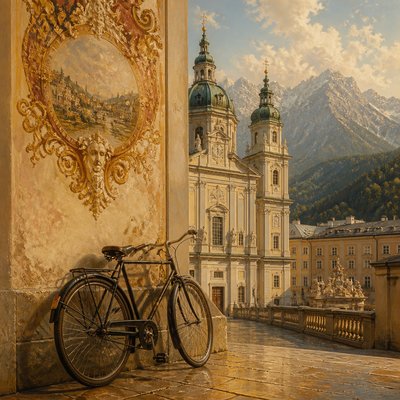
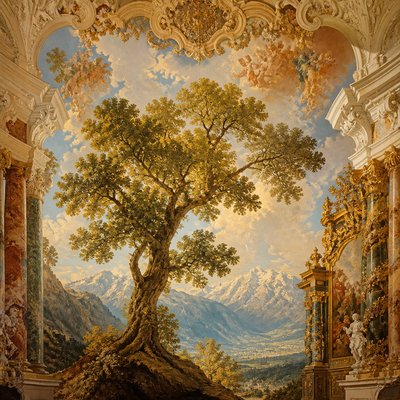
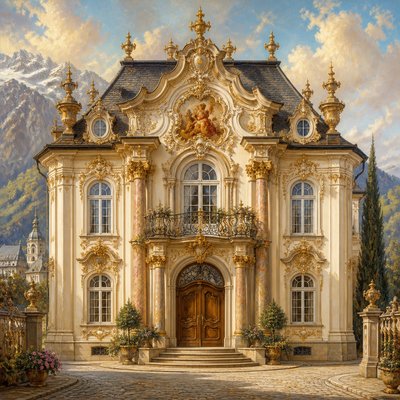
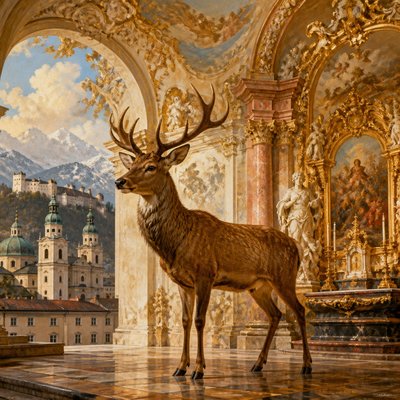
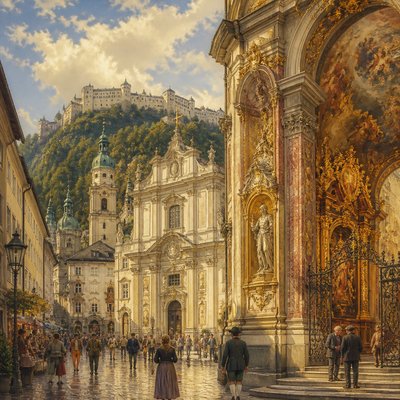
What is Salzburg Art Style?
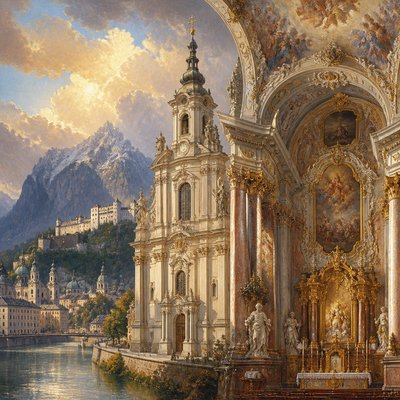
Salzburg Art Style is a regional interpretation of late Baroque and Rococo visual culture associated with Salzburg and the surrounding Alpine world. Its signature combination of creamy monumental architecture, elaborate gilded stucco, frescoed vaults, colored marble, and radiant ecclesiastical light creates an atmosphere of theatrical religious grandeur.
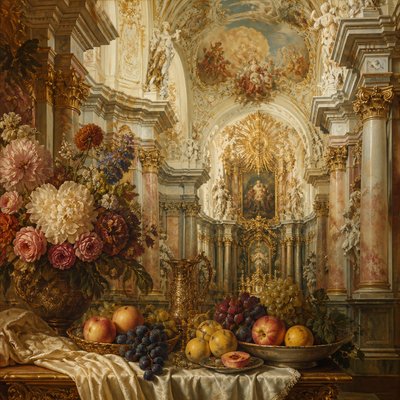
The style unites architecture, painting, sculpture, and interior decoration into a single visual environment. Painted ceilings extend real vaults into illusionistic heavens, sculptural ornament curls across altarpieces and cornices, and polished stone surfaces intensify the play of light. Alpine mountains and local architectural forms provide a distinctive setting for the exuberance of Central European Baroque.
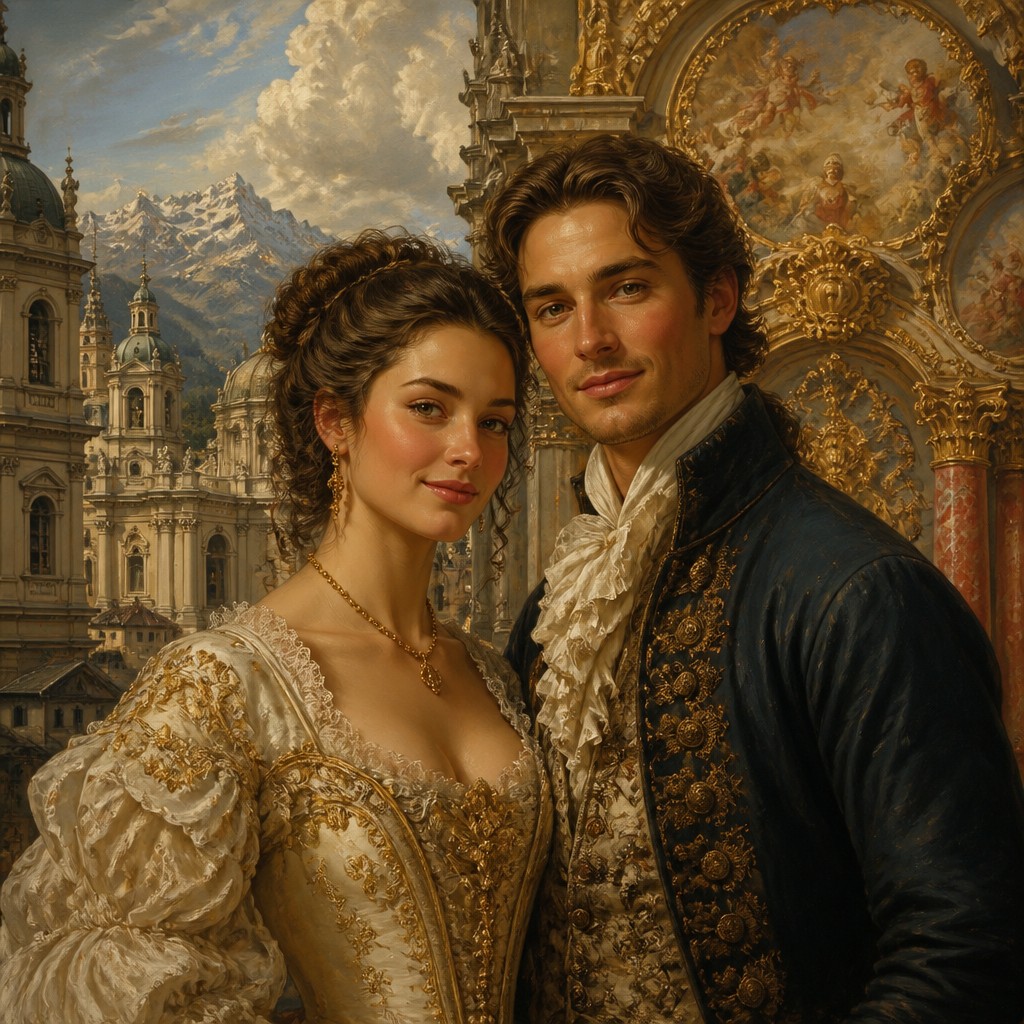
Try It On Your Photos
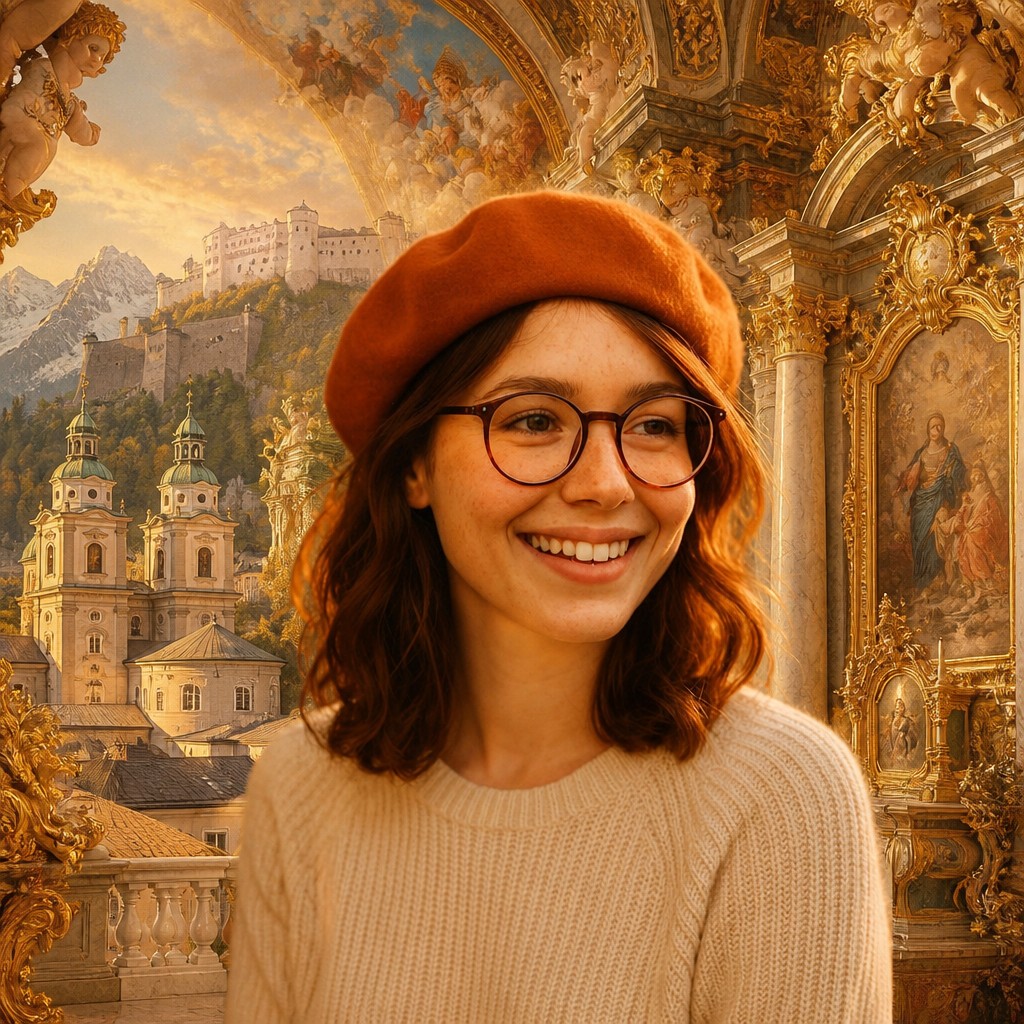
Upload any photo and convert it into Salzburg Art Style — drag the sliders to compare before and after.


What Defines Salzburg Art Style
The signature details, up close
Gilded stucco ornament
Altarpieces, cornices, arches, and ceiling ribs are enriched with gold-toned acanthus leaves, scrolls, shells, garlands, and curling foliage. The ornament is designed to catch light and create continuous movement across the interior.
Illusionistic fresco vaults
Ceiling paintings open architectural spaces into painted skies, heavenly realms, or celestial visions. Foreshortened figures, clouds, and fictive balustrades blur the boundary between the built vault and the imagined world above it.
Creamy stone and polychrome marble
Pale façades and warm plaster are paired with veined marble, colored stone, and carefully controlled architectural symmetry. Rich surfaces provide a calm structural foundation for the more energetic gilded decoration.
Dramatic golden illumination
Light enters as a theatrical element, emphasizing gilded edges, sculptural relief, and the upward sweep of the architecture. Warm highlights contrast with cooler shadows to produce a devotional and ceremonial mood.
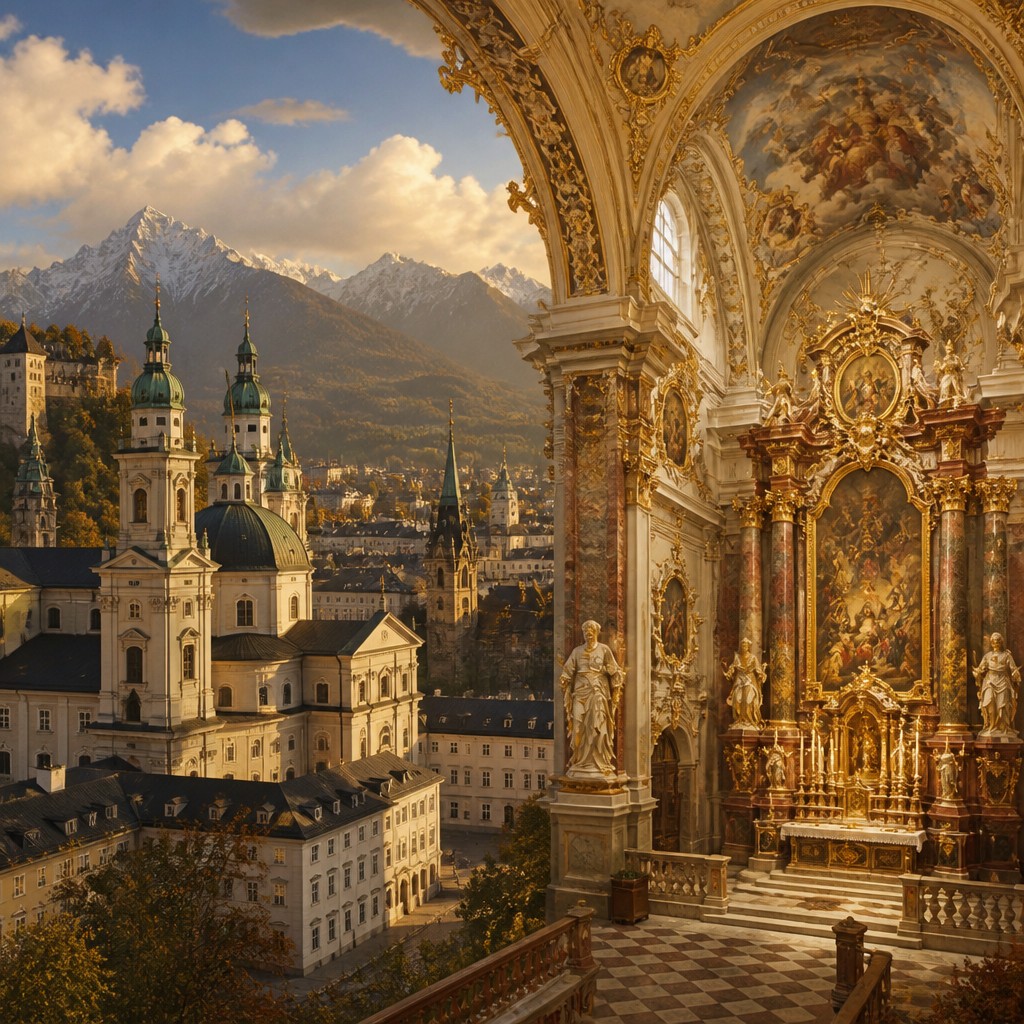
Integrated architecture and sculpture
Columns, altarpieces, statues, stucco frames, and painted backgrounds operate as one coordinated composition. Forms often project outward from walls and then dissolve into painted or ornamental surroundings.
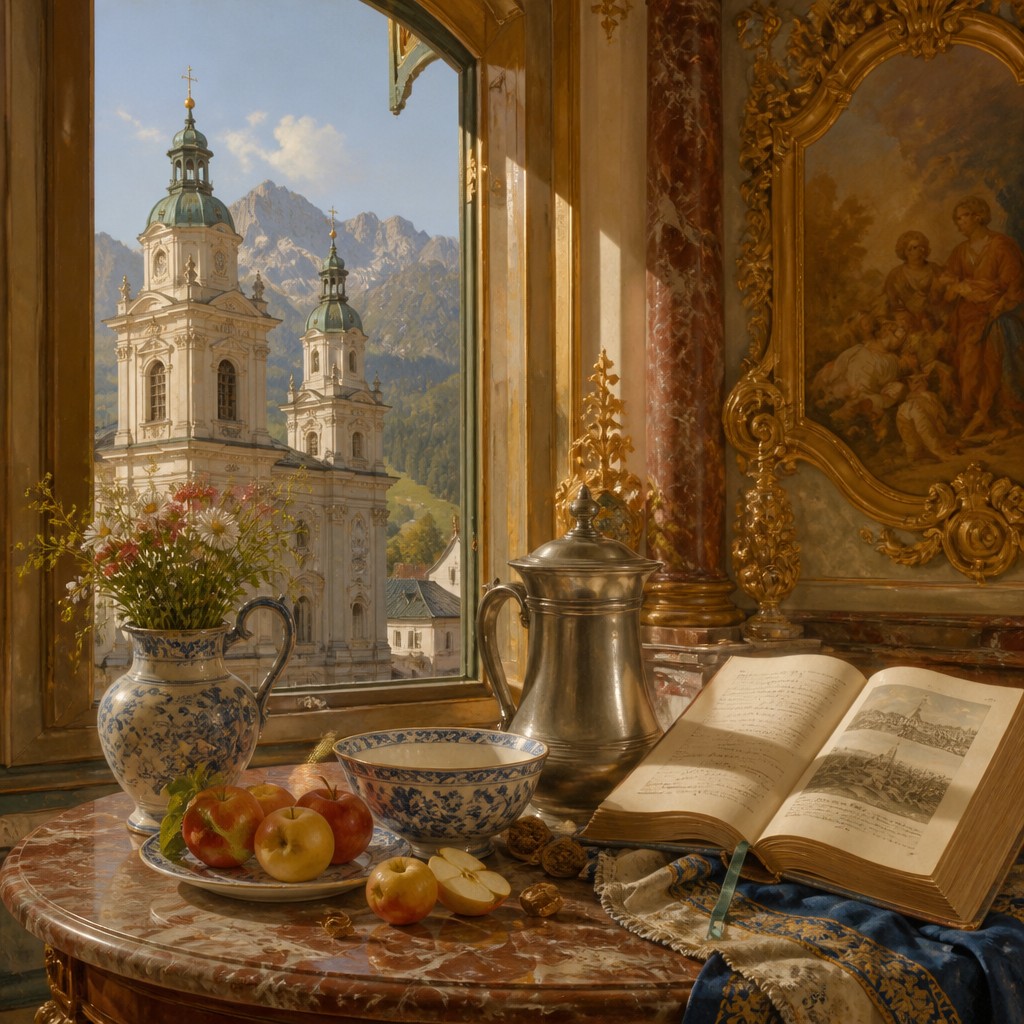
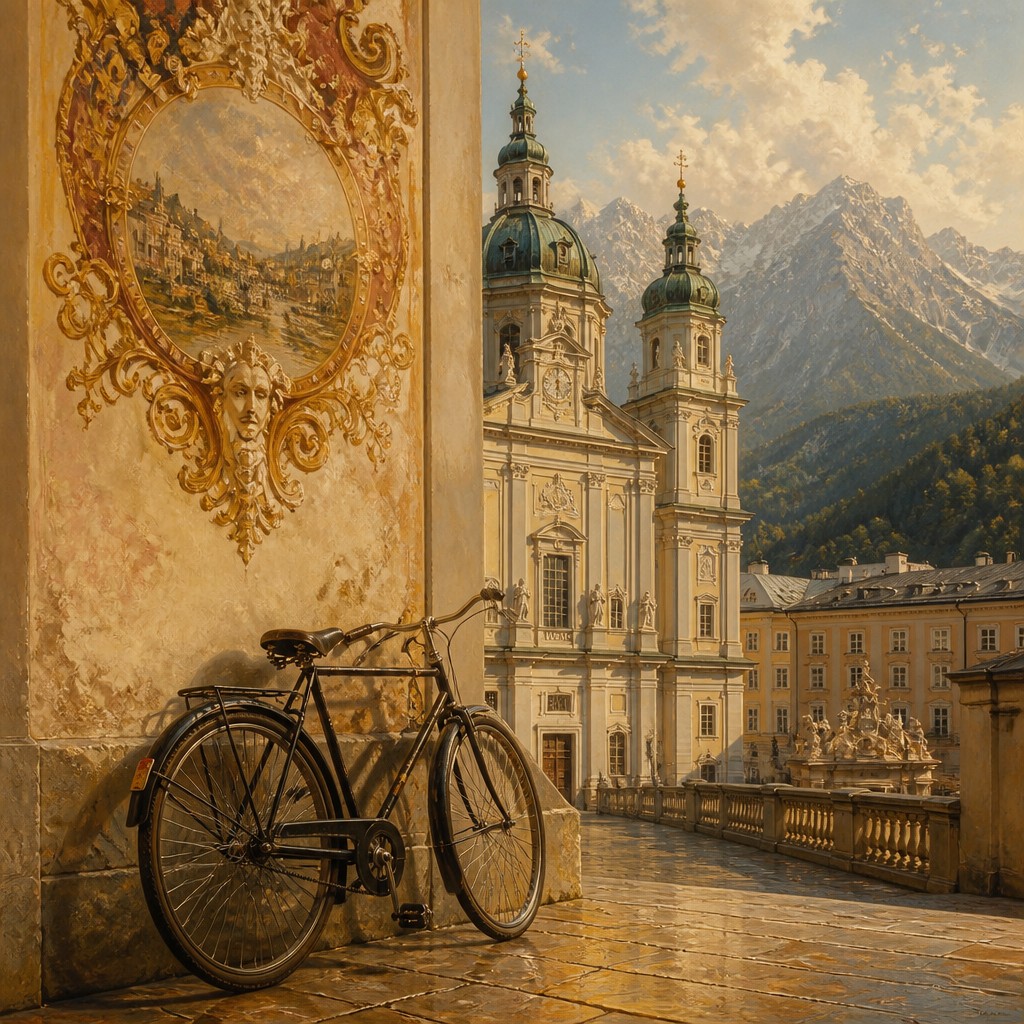
Alpine Baroque setting
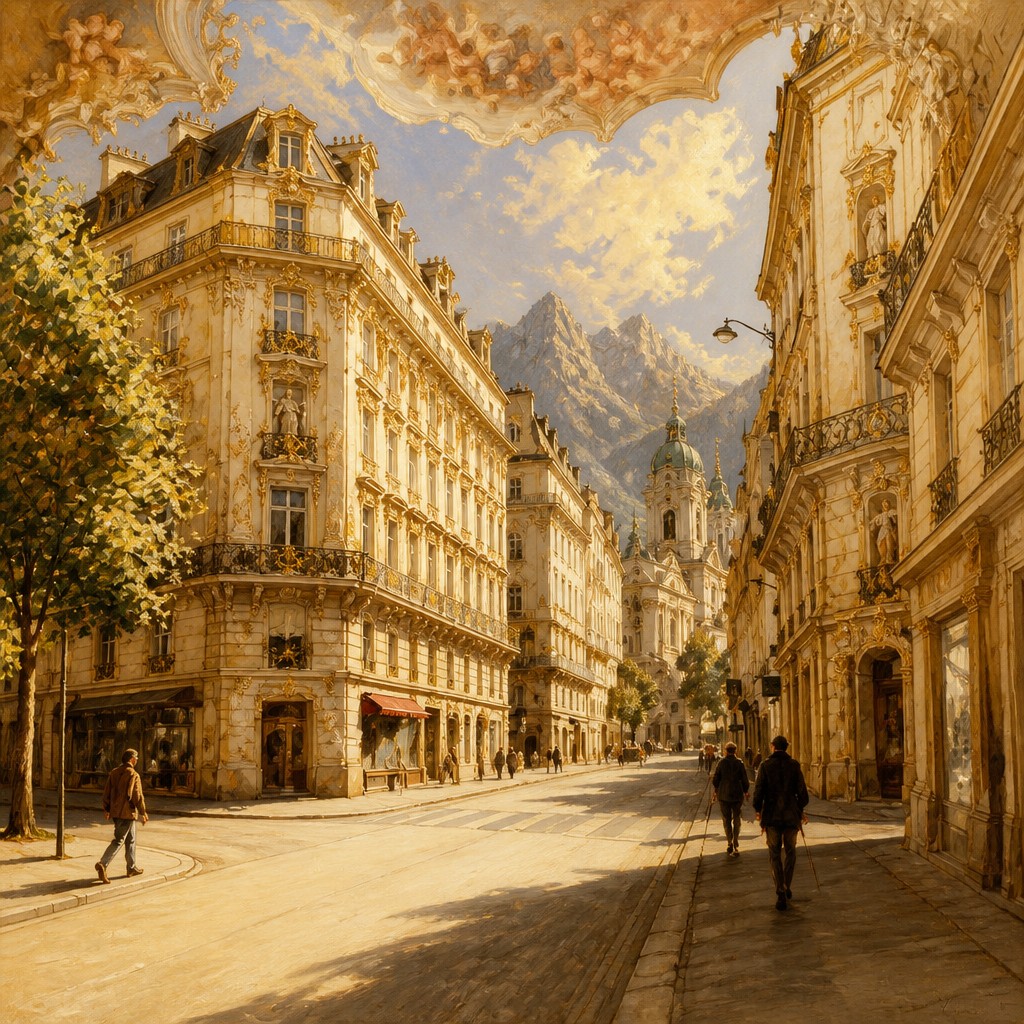
Churches and palaces are frequently imagined against steep mountains, wooded slopes, and clear atmospheric light. The contrast between rugged nature and opulent interiors gives the style its regional identity.
Theatrical upward movement
Compositions favor soaring verticals, expanding vaults, spiraling ornament, and views that guide the eye from earthly architecture toward the heavens. The effect is ceremonial, expansive, and emotionally heightened.
Salzburg Prompt Ideas
Start from an idea — each one opens the generator with the style ready to go. See all 40 Salzburg prompts →
How to Create Salzburg Art
Master the craft step by step — or skip straight to creating. Read the full guide →
- 1
Build a strong architectural framework
Begin with a clear nave, chapel, palace hall, or monumental façade, using symmetry, tall pilasters, arches, and a prominent central axis. Establish the structure before adding decorative density so the ornament remains legible.
- 2
Layer materials and surface effects
Combine creamy plaster or stone with polished marble, gilded relief, painted fresco, and dark recesses. In digital work, use separate texture and lighting layers to distinguish reflective gold, matte walls, and translucent atmospheric paint.
- 3
Use ceiling perspective deliberately
For a convincing frescoed vault, align painted architecture with the real room's vanishing points and exaggerate foreshortening toward the center. A gradual transition from solid vault to luminous sky strengthens the illusion.
- 4
Control the light
Place a warm directional light near windows, candles, or an unseen clerestory and reserve deeper shadows for recesses. Strong highlights on gilded stucco and marble veins create the characteristic ceremonial glow.
- 5
Compose with ornamental rhythm
Repeat acanthus curls, shells, scrolls, garlands, and pilaster divisions at different scales. Vary their density around focal points such as an altar, throne, fountain, or central figure rather than distributing detail evenly.
- 6
Write focused generation prompts
Specify the subject, architectural setting, materials, ceiling treatment, Alpine context, and warm directional light in that order. Request intricate but coherent ornament, visible fresco perspective, and luminous detail to avoid a generic fantasy palace.
The Story
History & Origins of Salzburg
The style developed primarily during the late seventeenth and eighteenth centuries, when Salzburg's powerful ecclesiastical court commissioned churches, palaces, monasteries, and ceremonial interiors. Its visual language grew from Italian Baroque models introduced through cultural and religious networks, then adapted to Central European materials, building traditions, and the dramatic landscape of the Alps.
During the eighteenth century, dense Baroque ornament increasingly incorporated the lighter curves, pastel color, and playful asymmetry associated with Rococo. The resulting regional aesthetic remained especially visible in sacred interiors, where architecture, fresco painting, stucco work, and devotional sculpture were planned as a unified spectacle.
Influences: The style draws from Italian Baroque theatricality, Central European ecclesiastical architecture, Rococo ornament, trompe-l'oeil fresco painting, stucco sculpture, and the devotional traditions of Alpine Catholic culture. It also relates to courtly palace interiors, sacred spatial design, and regional craft practices involving carved wood, colored marble, plaster relief, and gilding. Its distinctive character comes from combining these traditions with the scale, light, and rugged scenery of the Salzburg region.
Frequently Asked Questions
What defines the Salzburg Art Style?
It is defined by the union of Alpine Baroque architecture, gilded stucco, illusionistic ceiling frescoes, marble surfaces, and dramatic warm light. The style treats the entire building interior as a coordinated theatrical composition rather than as separate artworks.
Is Salzburg Art Style the same as Baroque art?
It is a regional expression of Baroque art, not a completely separate historical movement. It shares Baroque monumentality, movement, and religious drama while adding Central European ornament, Rococo refinement, and a strong Alpine setting.
How does it differ from Rococo?
Salzburg Art Style can include Rococo features, especially delicate curves, pastel color, and shell ornament, but it often retains the stronger symmetry, monumentality, and devotional intensity of Baroque architecture. The boundary is fluid because many eighteenth-century interiors combine both vocabularies.
What subjects work well in this style?
Churches, monasteries, palace interiors, altarpieces, mountain towns, ceremonial halls, fountains, and celestial architectural visions are especially suitable. Contemporary subjects can also work when framed with monumental space, ornamental surfaces, and theatrical illumination.
How can I make an image look authentically Salzburg-inspired?
Emphasize a clear architectural structure, pale stone or plaster, gilded acanthus stucco, marble pilasters, and a ceiling that opens into a painted sky. Add warm directional light and Alpine geography, while avoiding random ornament that obscures the main spatial composition.
Where is this style commonly used?
Its historical language is most closely associated with churches, abbeys, chapels, palaces, and ceremonial interiors in Salzburg and neighboring Alpine regions. In contemporary visual practice, it is also used for heritage visualization, fantasy environments, editorial imagery, game settings, and digitally designed architectural scenes.
Create your first Salzburg artwork
Describe anything — or upload a photo — and see it in Salzburg Art Style in seconds.
Related Styles
Discover similar art styles