Romanesque Art Style
Explore Romanesque art: solemn frescoes, hieratic figures, bold outlines, symbolic color, painted arches, and the visual language of medieval churches.
Instantly rendered in Romanesque — or transform a photo
Romanesque Gallery
Tap any artwork to explore it
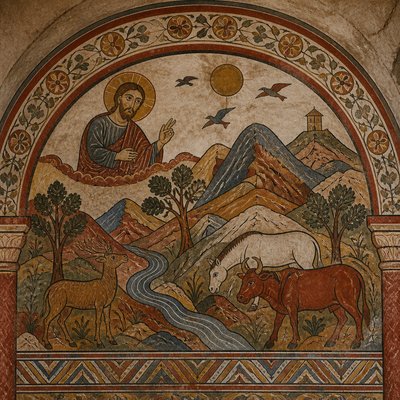
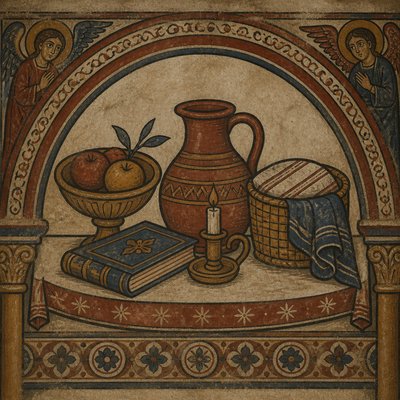
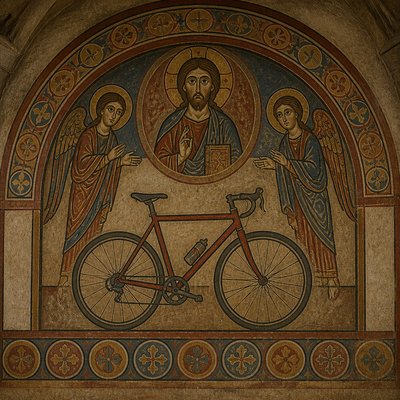
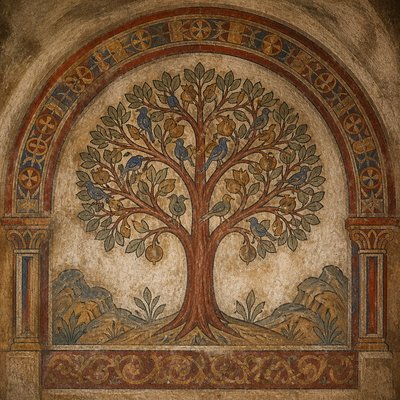
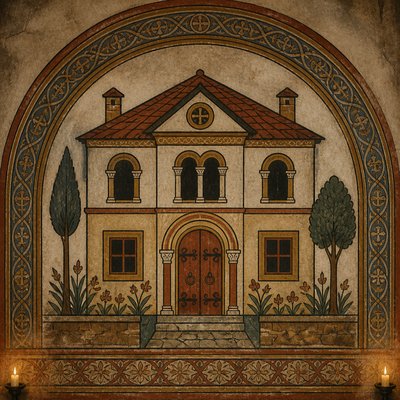
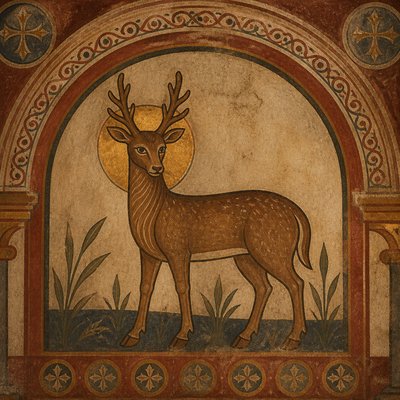
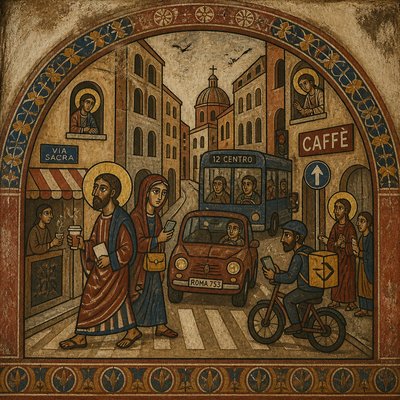
What is Romanesque Art Style?
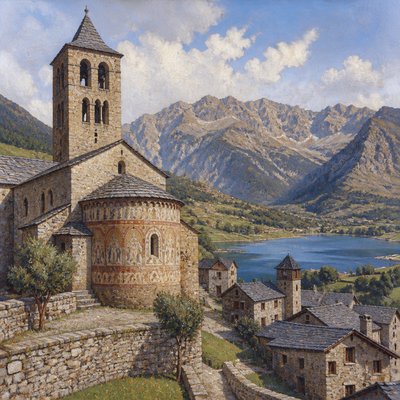
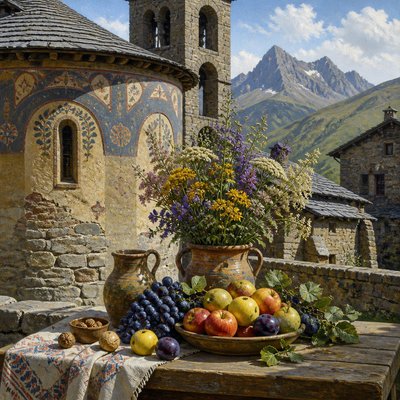
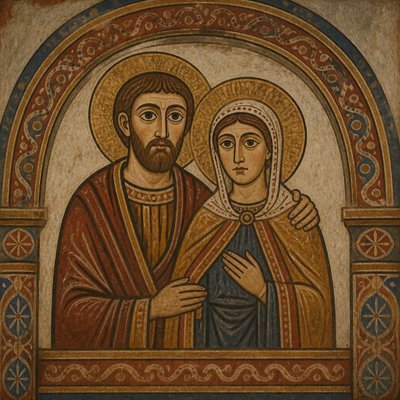
Romanesque frescoes typically use mineral pigments on pale plaster, with earth reds, ochres, muted greens, deep blues, black, and occasional gilding. Strong contours, simplified anatomy, patterned drapery, and shallow spatial settings made biblical narratives legible in dim church interiors. The visual weight of stone architecture, candle smoke, weathering, and uneven plaster is part of the style's enduring character, even when it is recreated in contemporary media.
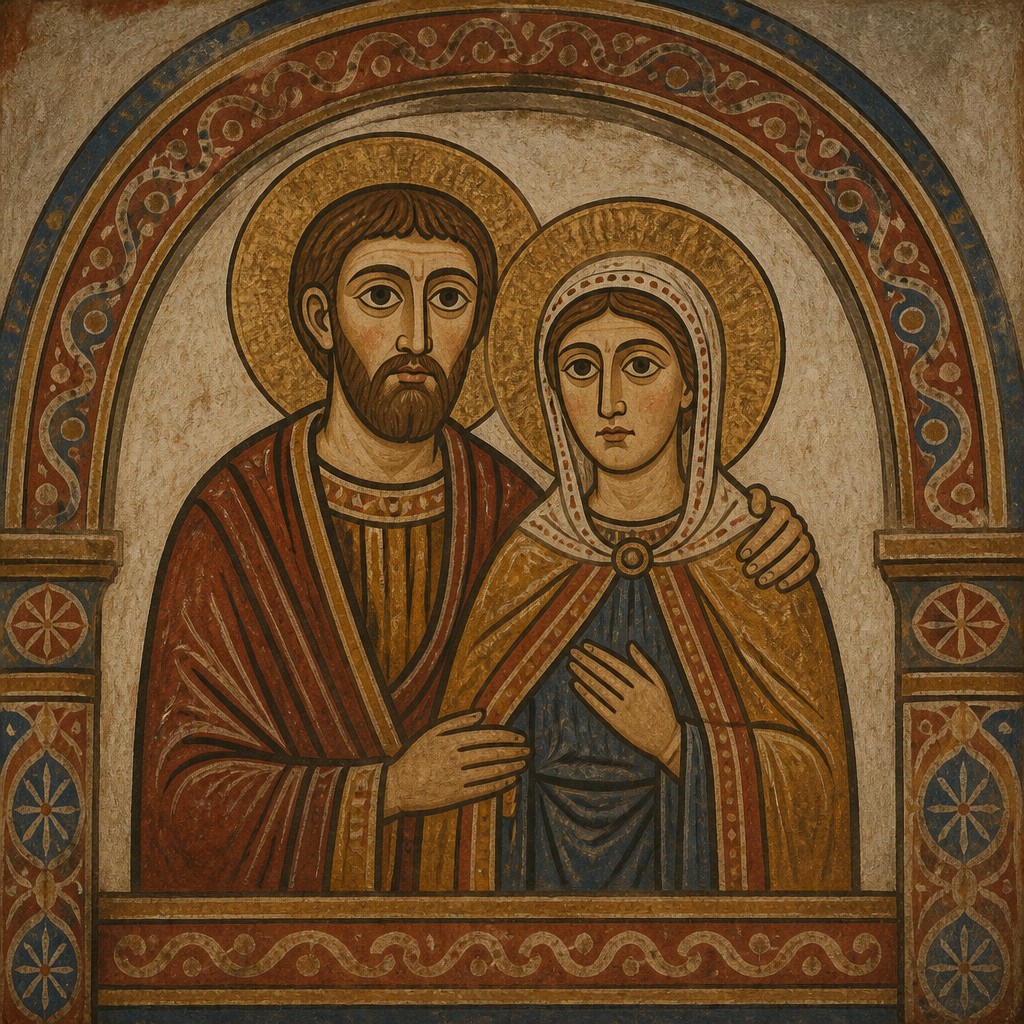
Try It On Your Photos
Upload any photo and convert it into Romanesque Art Style — drag the sliders to compare before and after.
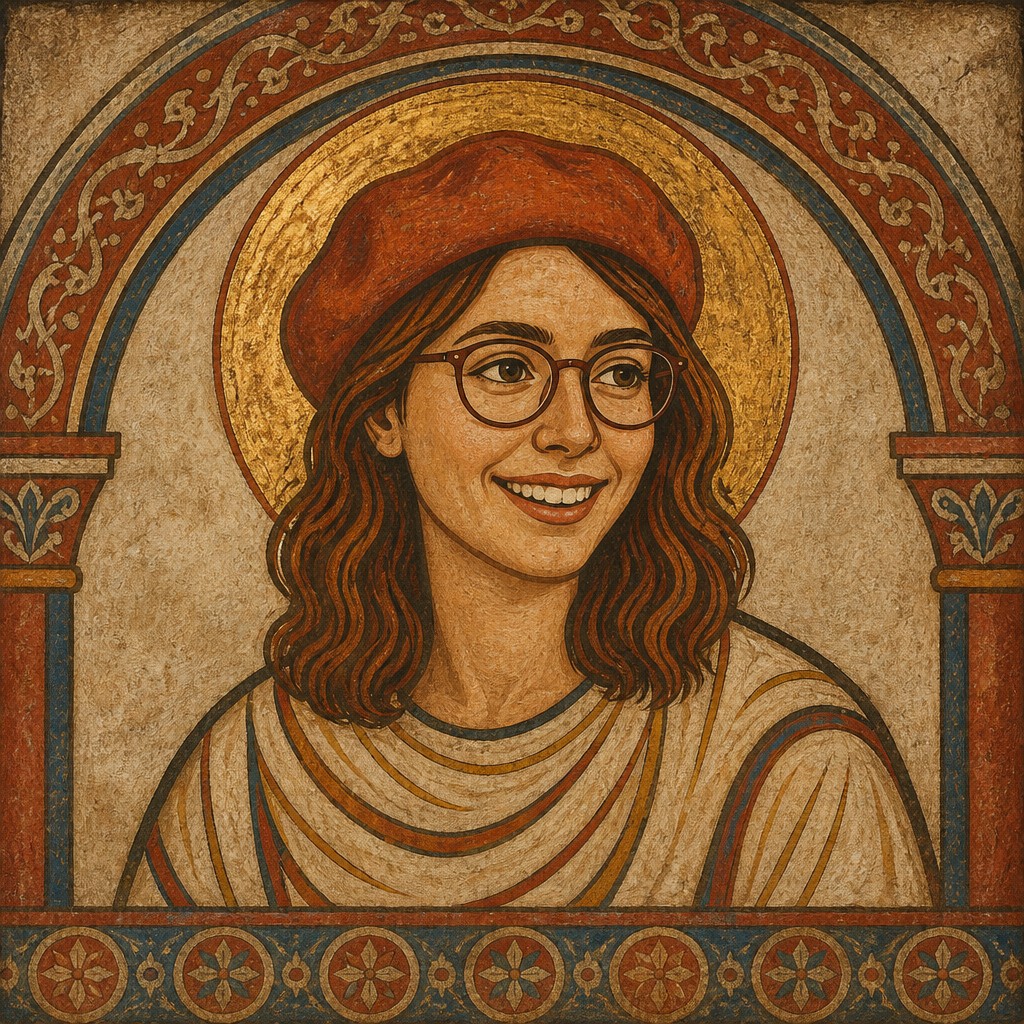

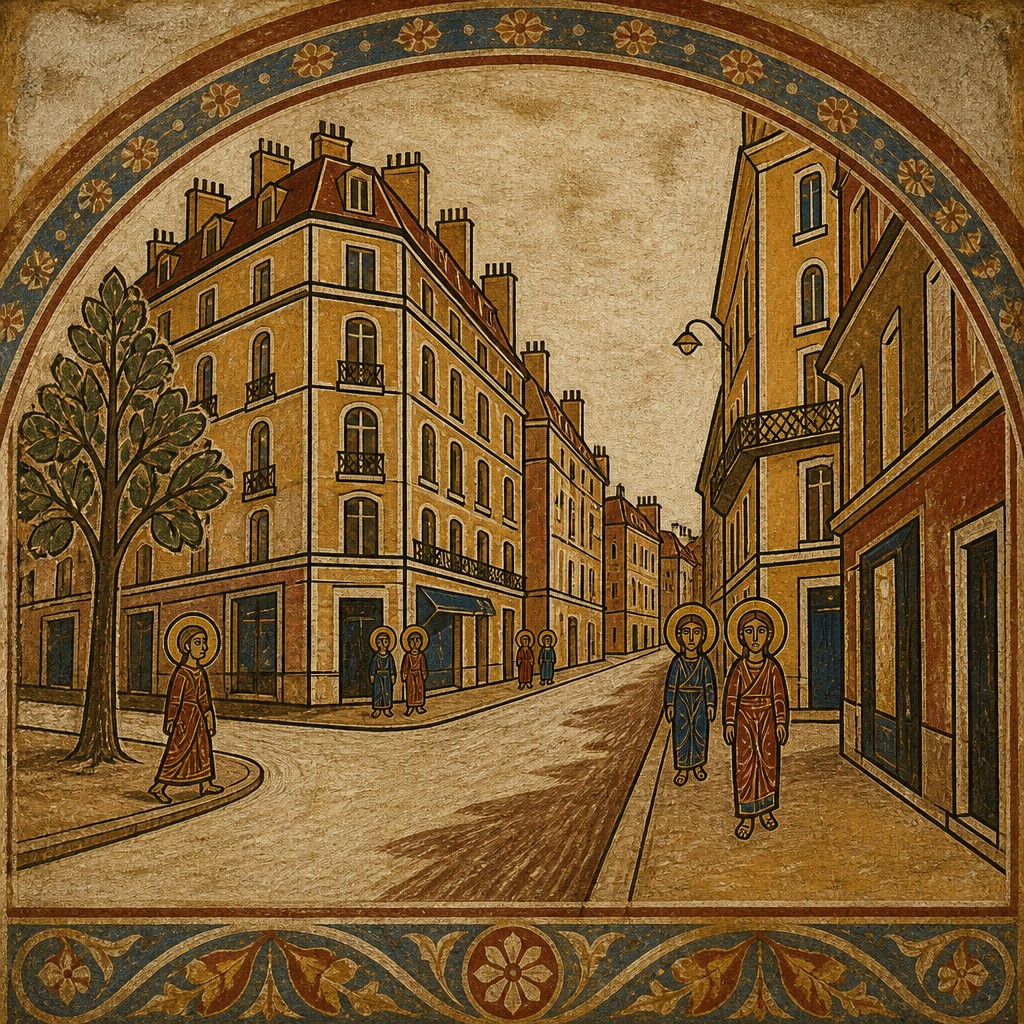

What Defines Romanesque Art Style
The signature details, up close
Hieratic figures
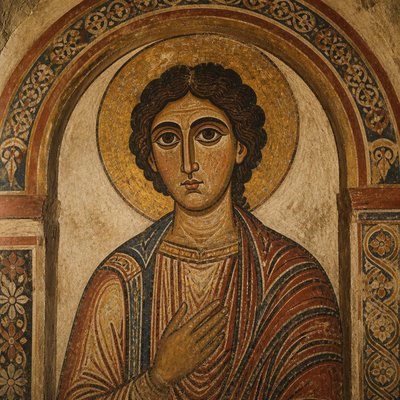
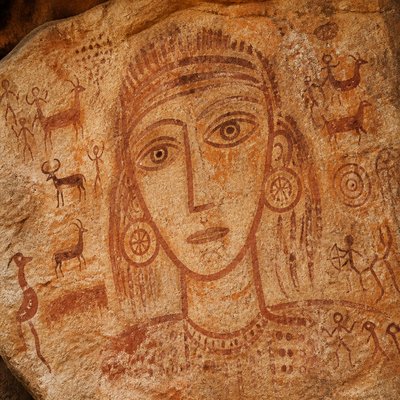
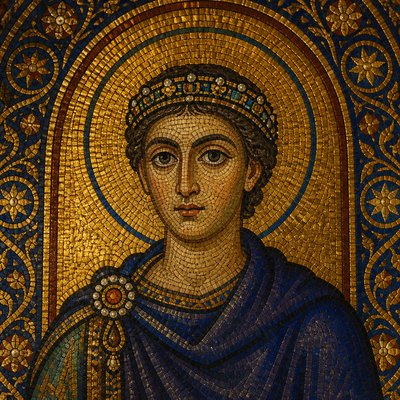
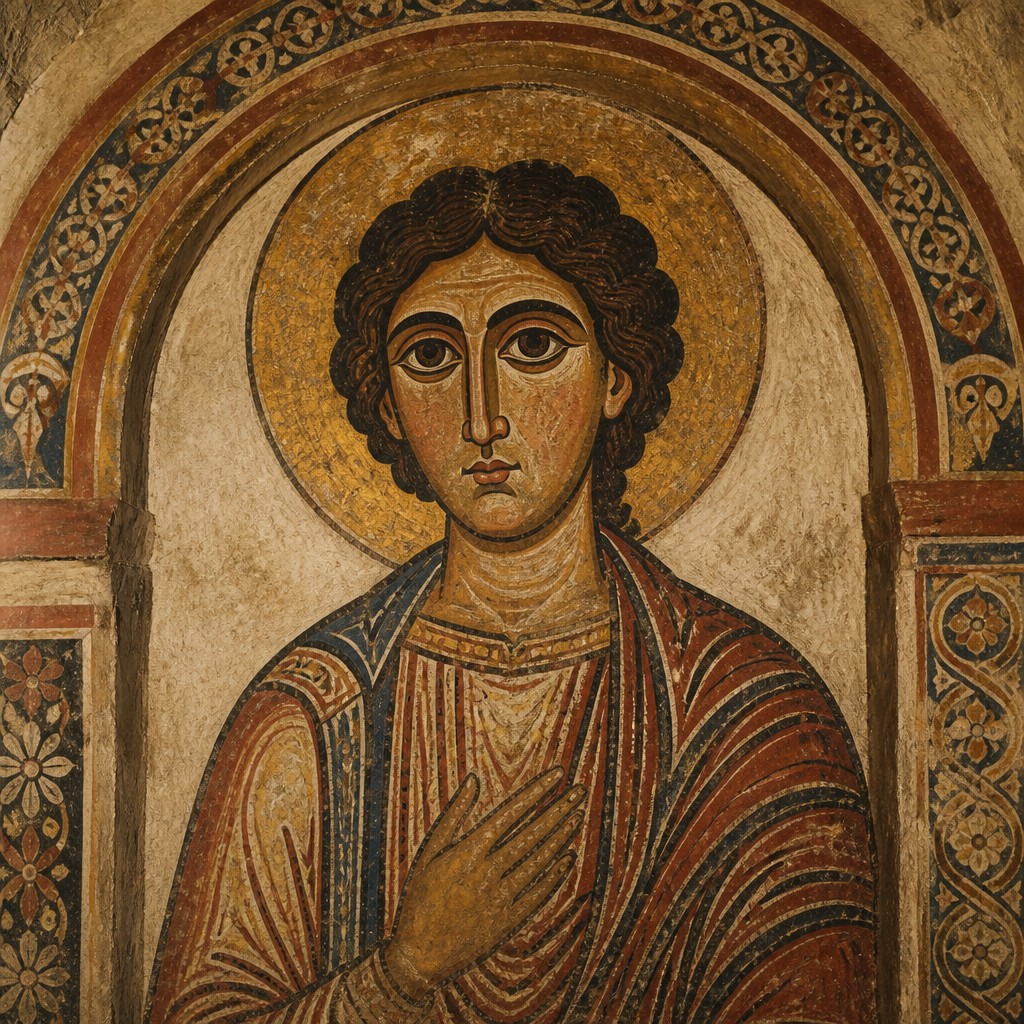
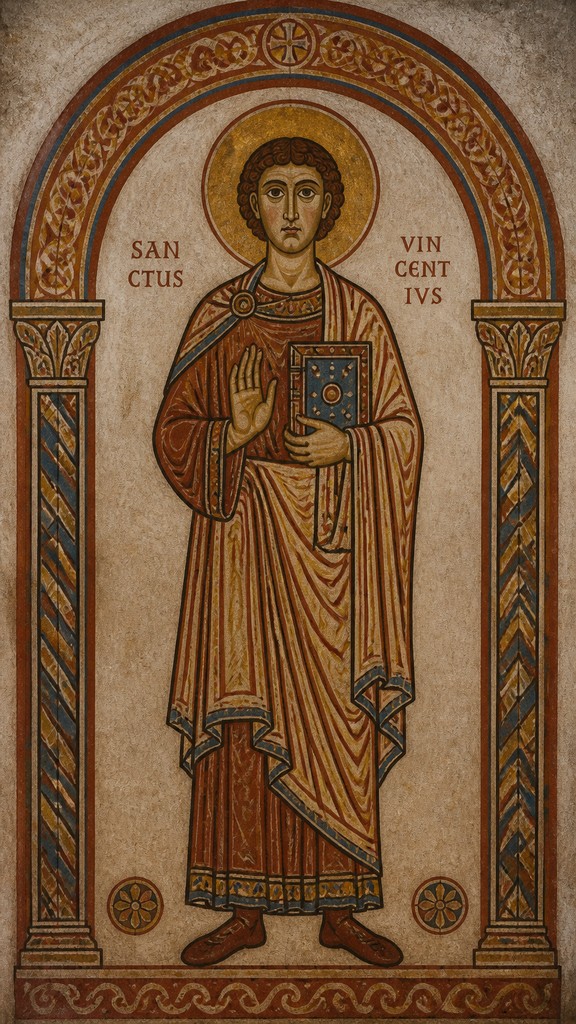
Figures are presented frontally or in deliberate profile, with formal poses and limited bodily movement. Their scale and placement often indicate spiritual importance rather than physical distance.
Large solemn eyes
Enlarged eyes and direct gazes intensify the sense of spiritual presence and emotional gravity. Faces are simplified into clear, memorable types rather than individualized portraits.
Bold contour lines
Dark outlines separate figures, garments, and architectural elements against the plaster ground. This graphic structure improves legibility in large, dimly lit interiors.
Earth-red and ochre palette
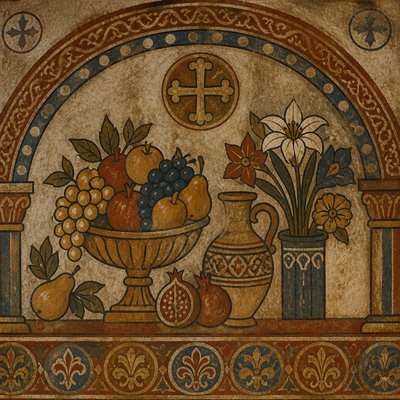
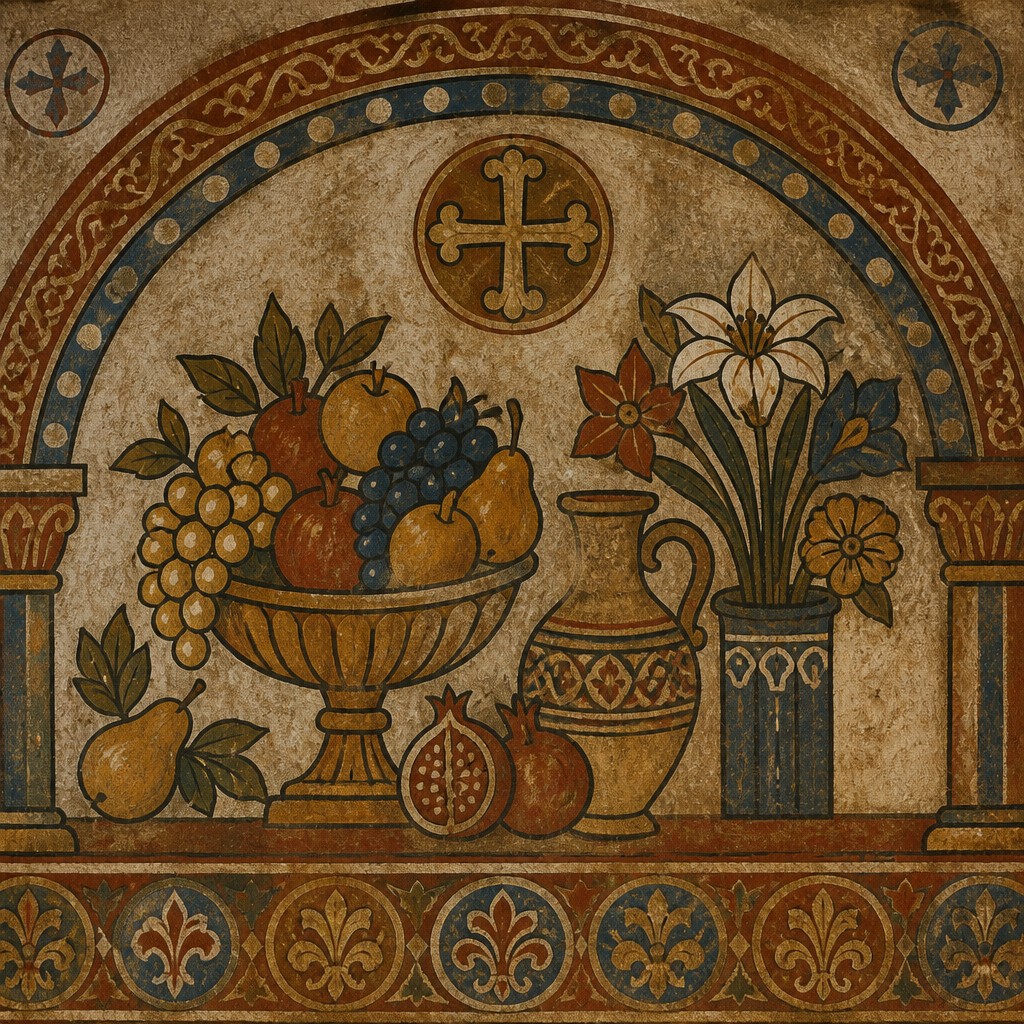
Rust, terracotta, ochre, cream, charcoal, muted green, and deep blue create a restrained mineral palette. Blue accents and gilded details are used selectively for emphasis.
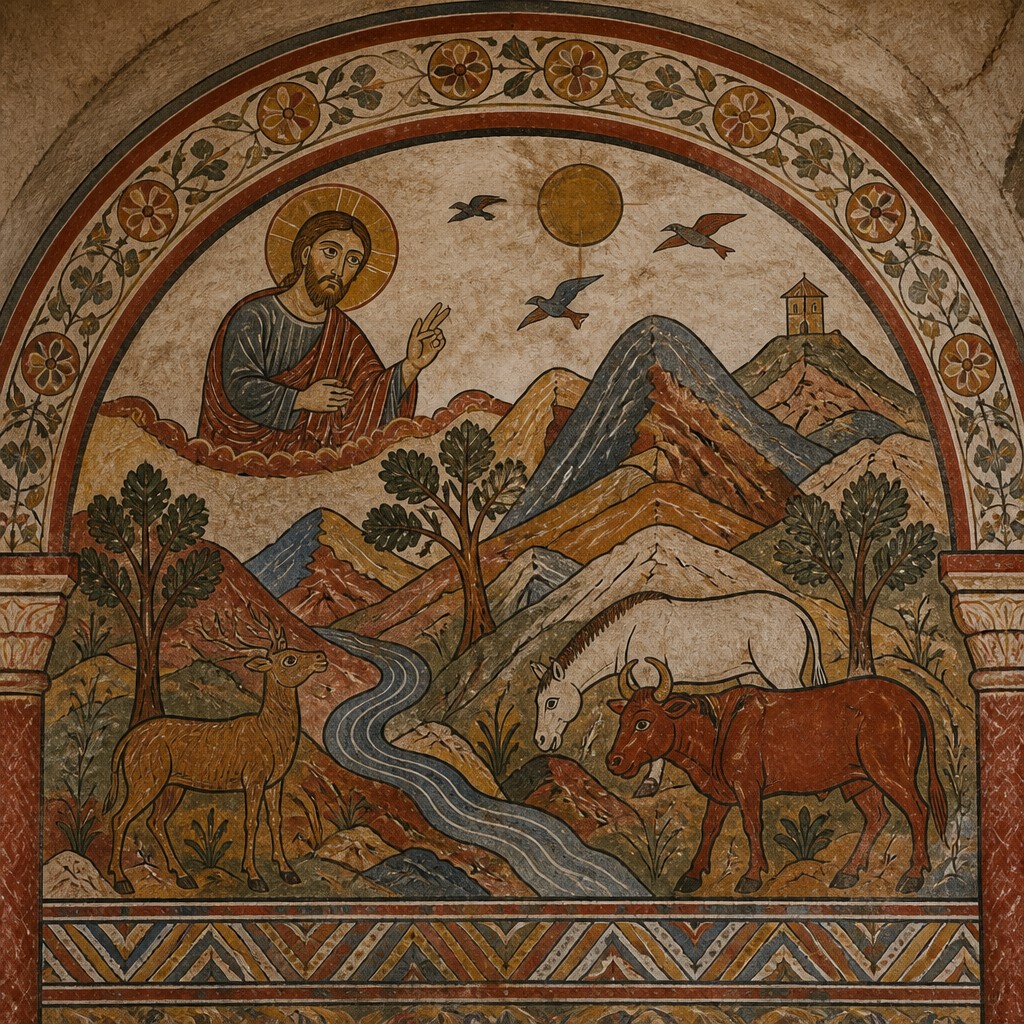
Patterned drapery
Garments are built from rhythmic stripes, angular folds, and repeated decorative motifs rather than smoothly modeled anatomy. Drapery communicates rank, movement, and visual cadence.
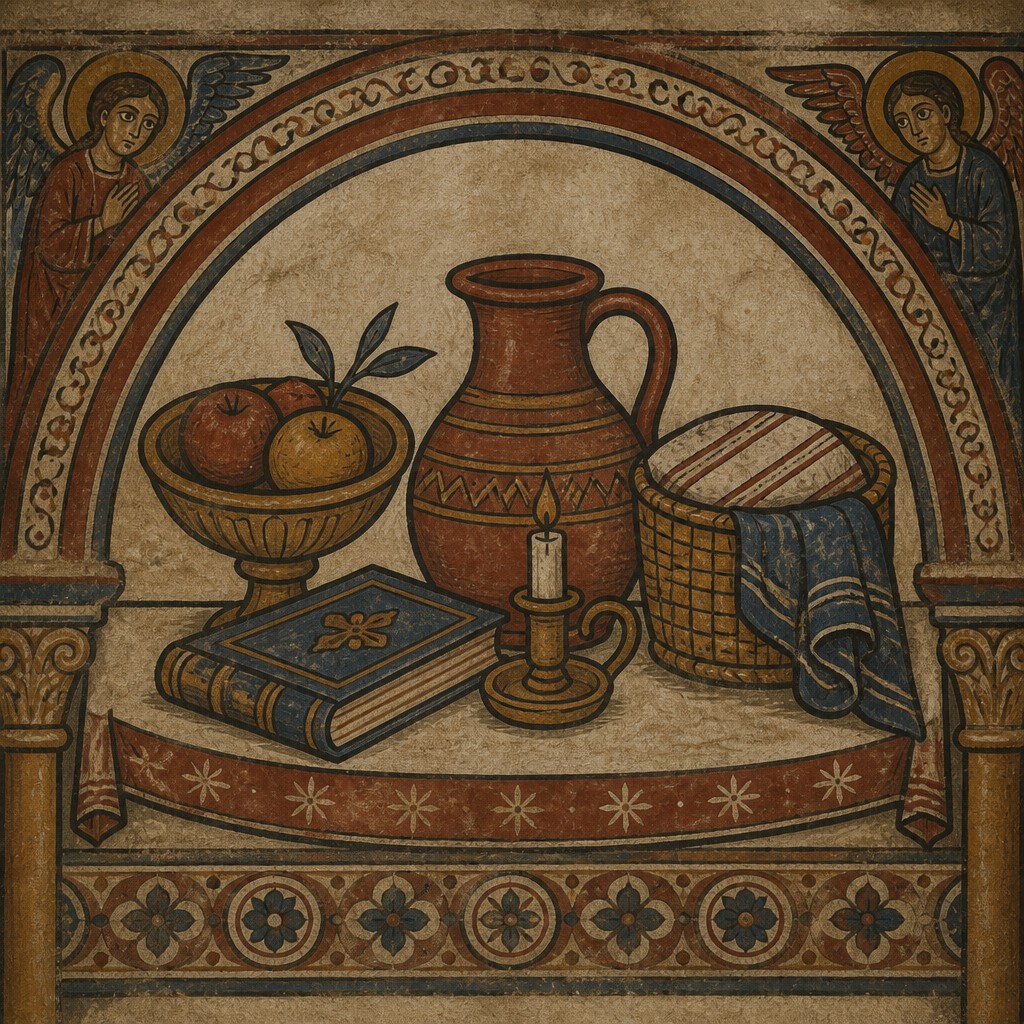
Architectural framing
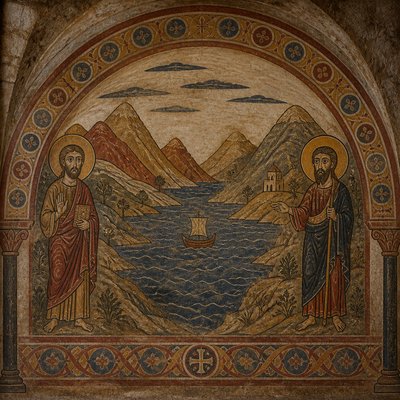
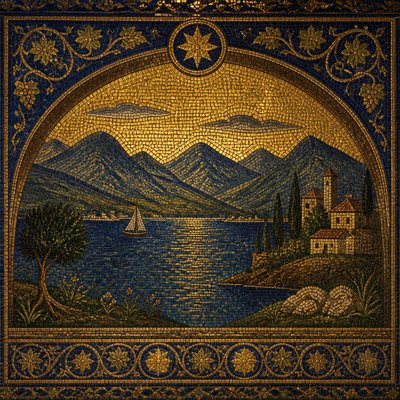
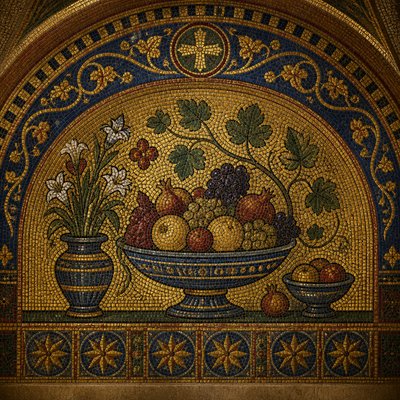
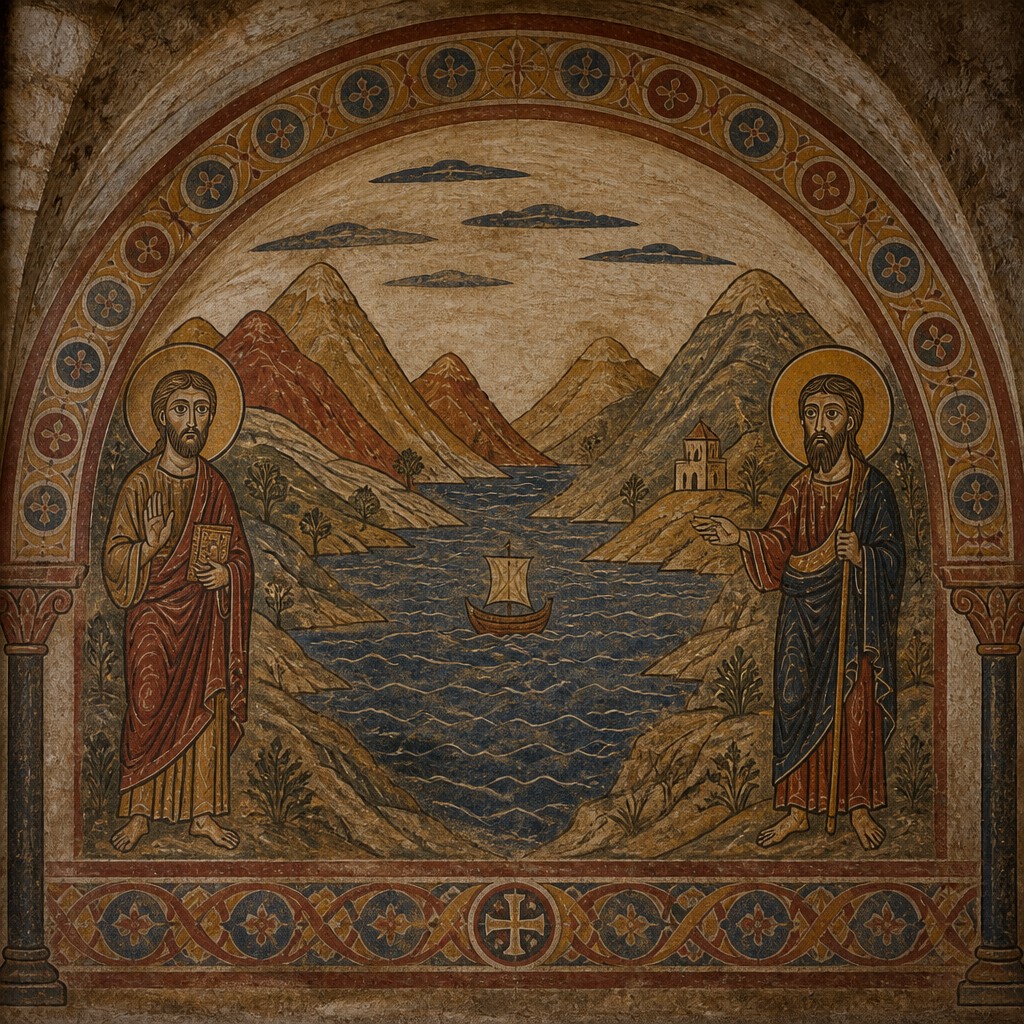
Round arches, arcades, bands of ornament, columns, and painted borders organize scenes into readable compartments. The frame often echoes the actual architecture surrounding the image.
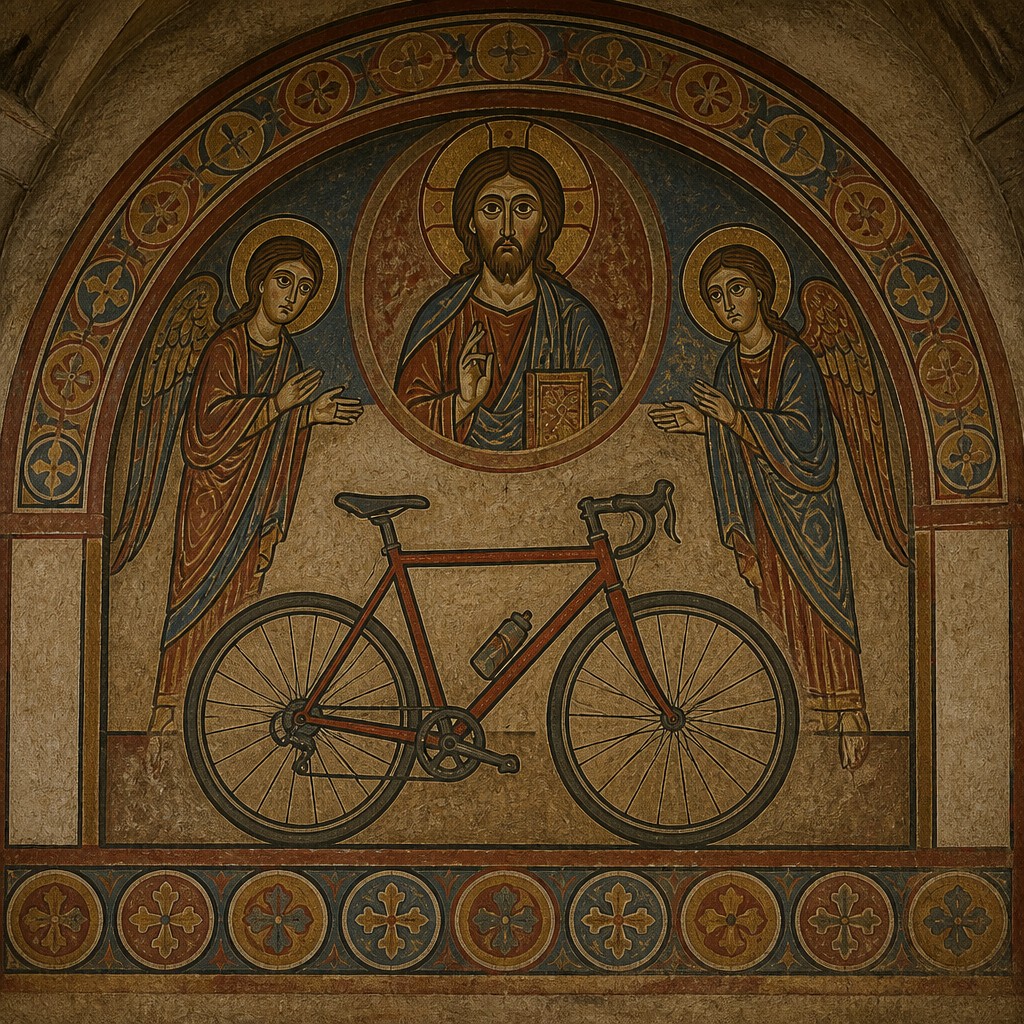
Shallow symbolic space
Overlapping forms and stacked registers replace realistic perspective. Gold, pale plaster, or patterned backgrounds indicate sacred or timeless space rather than a fully observed landscape.
Try It
Create Videos in Romanesque Art Style
Styles aren't just for stills — describe a scene or animate an image and get a short video rendered in Romanesque. Press play to see this pond come to life.
Make a VideoRomanesque Prompt Ideas
Start from an idea — each one opens the generator with the style ready to go. See all 40 Romanesque prompts →
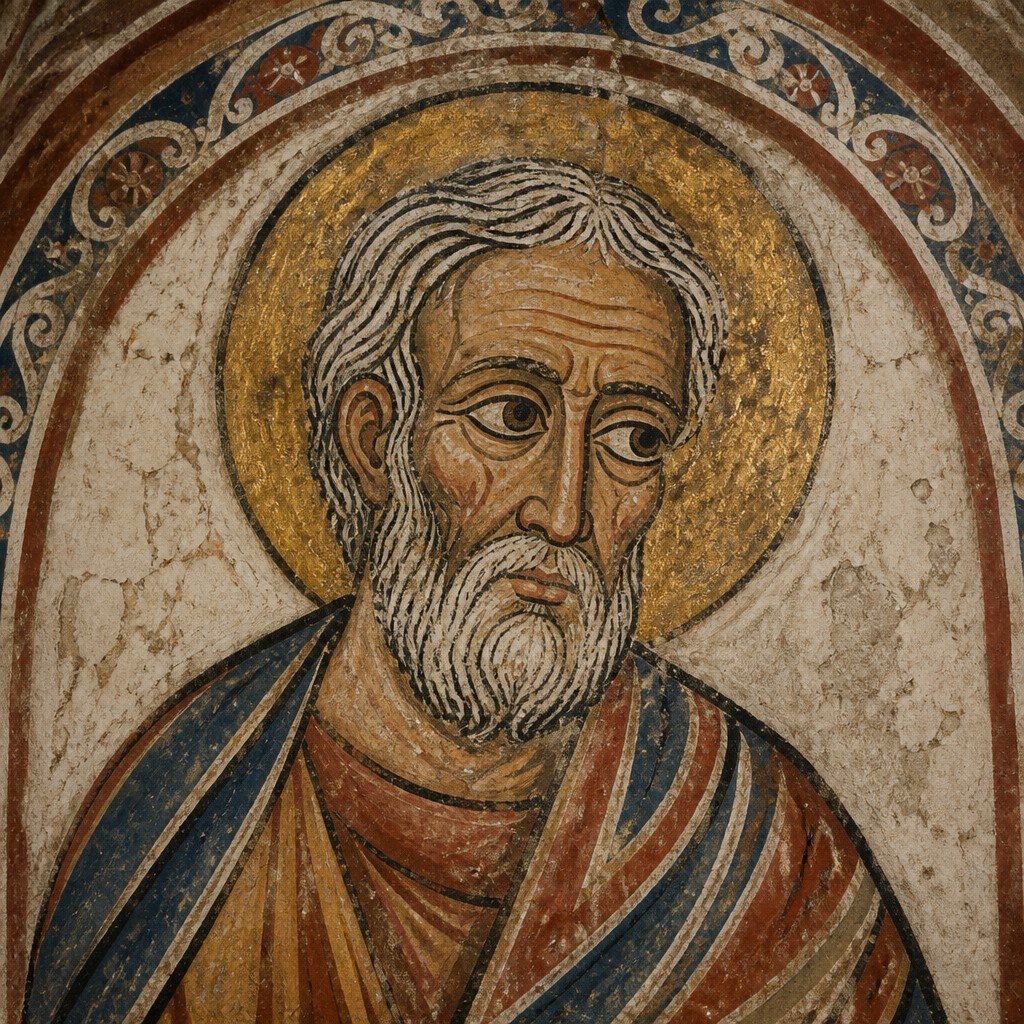
“close-up portrait of an elderly person with expressive weathered features”
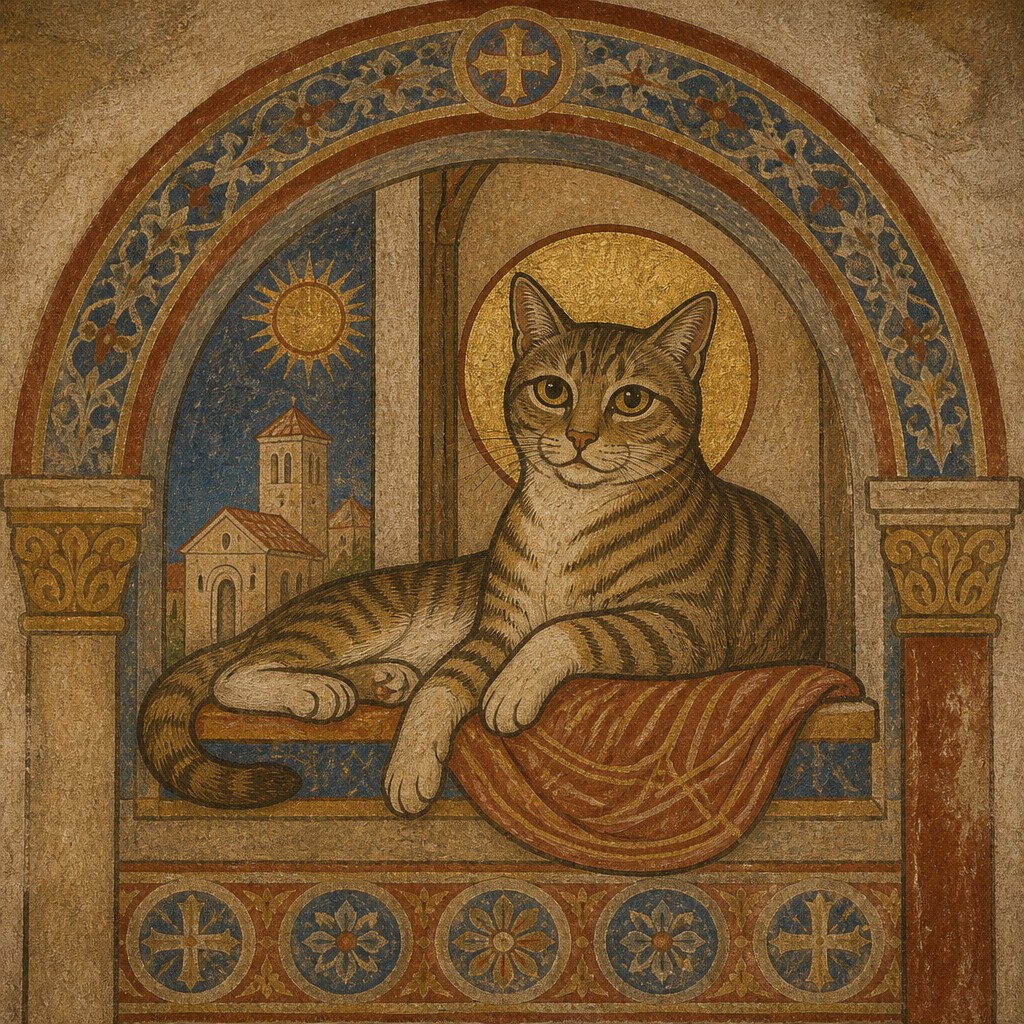
“a cat lounging in a sunlit window”
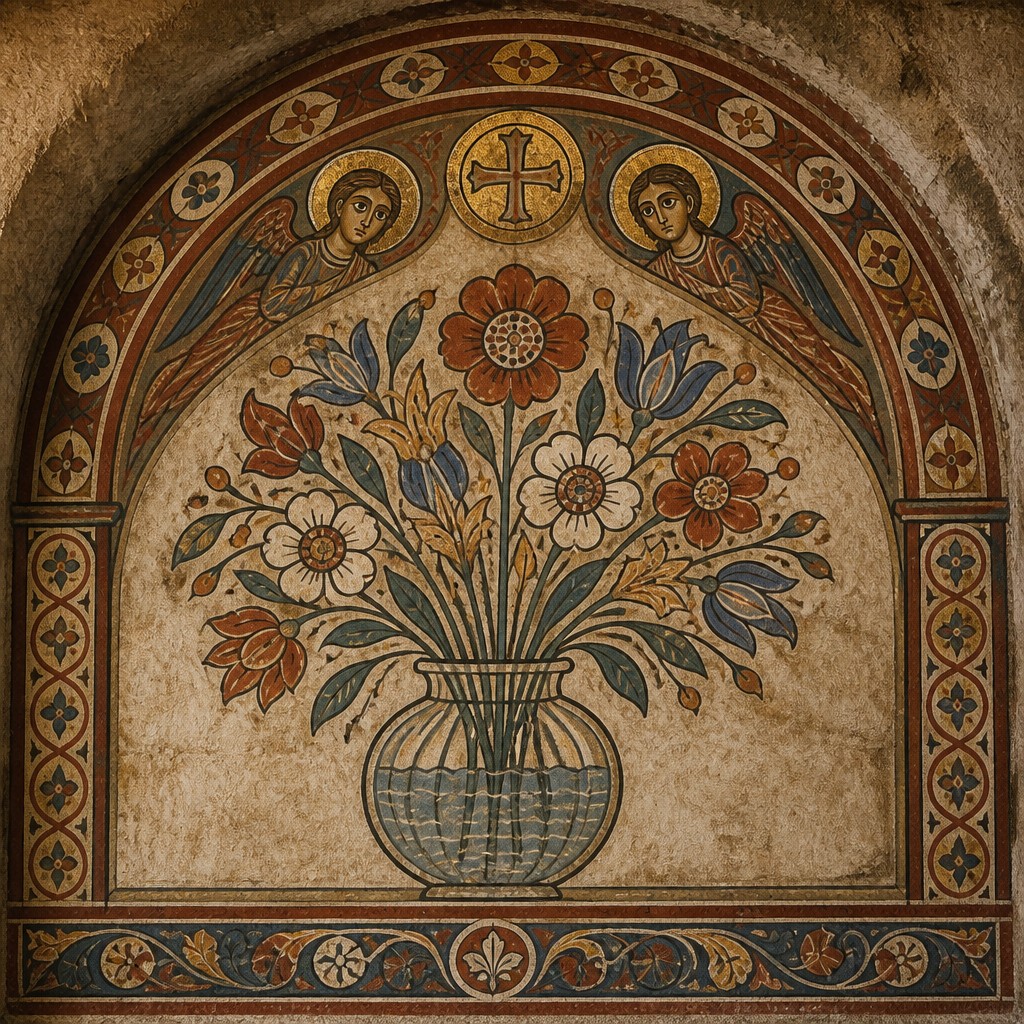
“bouquet of flowers in a glass vase”
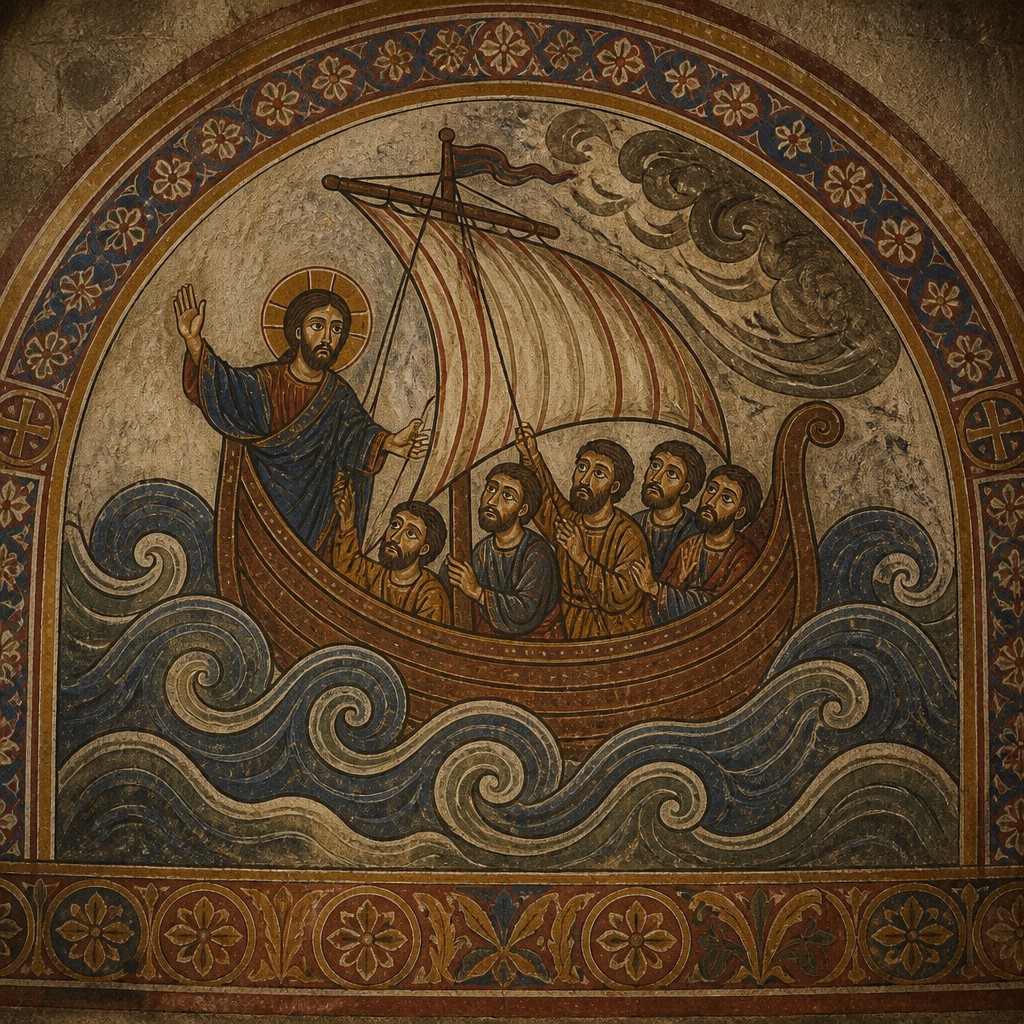
“sailing ship on a stormy sea”
How to Create Romanesque Art
Master the craft step by step — or skip straight to creating. Read the full guide →
- 1
Build a mineral ground
For traditional work, begin with a warm pale ground resembling lime plaster and use earth pigments such as red ochre, yellow ochre, umber, and carbon black. In digital work, add a subtle plaster grain and irregular tonal variation rather than a perfectly smooth background.
- 2
Design the composition as a sacred program
Arrange the subject frontally beneath an arch, in a central medallion, or across stacked narrative registers. Keep the main figure dominant and use borders, columns, and repeated motifs to create architectural order.
- 3
Flatten anatomy and deepen expression
Reduce realistic modeling, enlarge the eyes slightly, simplify facial features, and use deliberate gestures. Emphasize contour and silhouette before adding restrained interior shading.
- 4
Use graphic drapery and selective illumination
Draw folds as angular stripes or rhythmic bands, with dark lines separating major planes. Reserve lapis-like blue, white highlights, and gold accents for halos, trim, sacred objects, or focal details.
- 5
Write a structured generation prompt
Specify the subject, frontal pose, round-arched setting, pale plaster, mineral palette, bold outlines, solemn eyes, patterned drapery, and weathered church-surface texture. For image transformation, describe which facial proportions, framing elements, and colors should change while preserving the source composition.
The Story
History & Origins of Romanesque
The style drew on Late Antique, early medieval, Byzantine, Carolingian, and Ottonian visual traditions, while its monumental programs were closely integrated with Romanesque architecture. Wall paintings and sculpture were arranged to teach scripture, mark sacred space, and guide worshippers through theological narratives. From the mid-twelfth century onward, increasingly naturalistic figure design, more complex spatial organization, and changing architectural forms contributed to the transition toward Gothic art.
Influences: Romanesque art is related to Late Antique Christian imagery, Byzantine icon painting, Carolingian and Ottonian manuscript traditions, early medieval metalwork, and the architectural vocabulary of basilicas and pilgrimage churches. It also shares with medieval manuscript illumination a preference for symbolic scale, ornamental pattern, frontal presentation, and clearly bounded narrative scenes. Later Gothic art retained many of these devotional subjects while introducing greater naturalism, spatial complexity, and fluid movement.
Frequently Asked Questions
What defines the Romanesque art style?
Romanesque art is defined by hieratic figures, strong outlines, simplified anatomy, symbolic scale, shallow space, and a restrained mineral palette. In church painting, round-arched framing, ornamental borders, halos, and narrative clarity are especially characteristic.
When and where did Romanesque art develop?
It developed mainly in Western Europe from about the late tenth century through the twelfth century. Important regional traditions appeared in France, Spain, Italy, Germany, Britain, and neighboring areas, with differences in color, iconography, and technique.
How is Romanesque art different from Gothic art?
Romanesque art generally favors frontal figures, solid silhouettes, limited depth, and geometric organization. Gothic art tends toward more naturalistic anatomy, expressive movement, elaborate spatial settings, and increasingly delicate linear detail, although the two styles overlap during the transition of the twelfth century.
Was Romanesque art only used for frescoes?
No. Romanesque visual culture included monumental wall painting, stone and stucco sculpture, carved portals, illuminated manuscripts, metalwork, ivory, textiles, and architectural ornament. Fresco is one of its most recognizable forms, but the style was fundamentally interdisciplinary.
What materials and techniques were used in Romanesque wall painting?
Painters commonly worked on plaster with mineral and earth pigments, sometimes applying paint to damp plaster and sometimes to a dry surface. Colors were layered in broad areas, then clarified with dark contours, patterned folds, inscriptions, and decorative borders; surviving surfaces often show fading, abrasion, and smoke staining.
How can I create an image with a Romanesque appearance?
Start with a frontal, symbolic composition and specify bold contours, enlarged solemn eyes, patterned drapery, a mineral palette, round arches, and aged plaster. Digital artists can add paper or wall texture, flatten perspective, and use selective gold or blue accents; prompt-based tools respond best when the subject and compositional structure are described separately from the surface treatment.
Create your first Romanesque artwork
Describe anything — or upload a photo — and see it in Romanesque Art Style in seconds.
Related Styles
Discover similar art styles