Qatari Art Style
Explore Qatari art style: coral-stone pearling towns, sadu stripes, dhows, silver jewelry, desert light, and Gulf coastal heritage.
Instantly rendered in Qatari — or transform a photo
Qatari Gallery
Tap any artwork to explore it
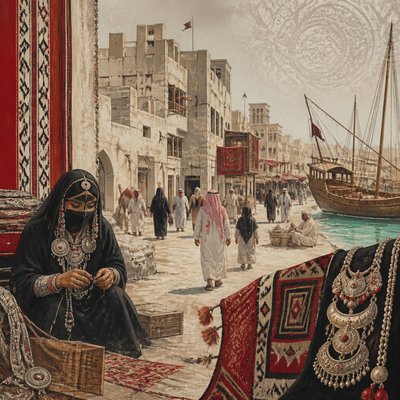
What is Qatari Art Style?
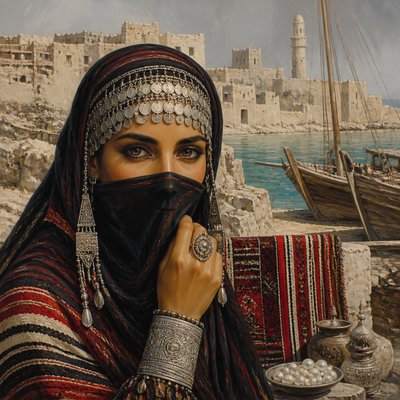
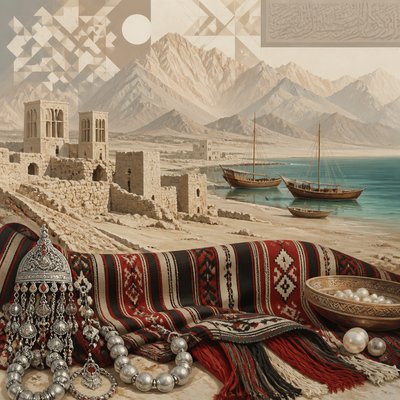
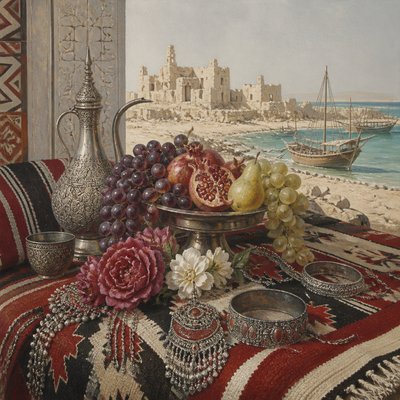
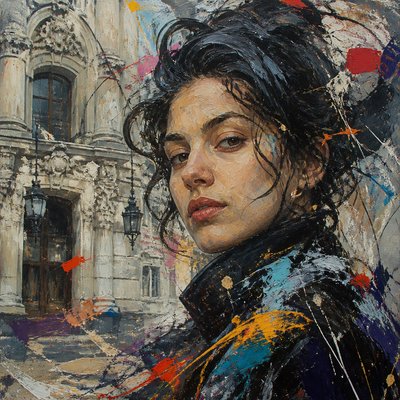
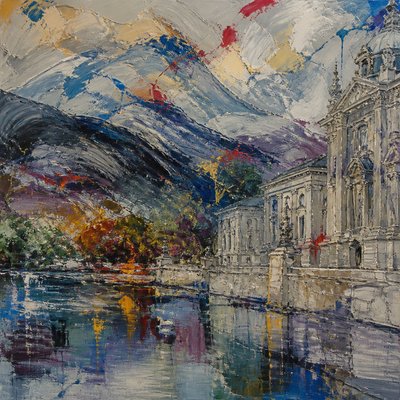
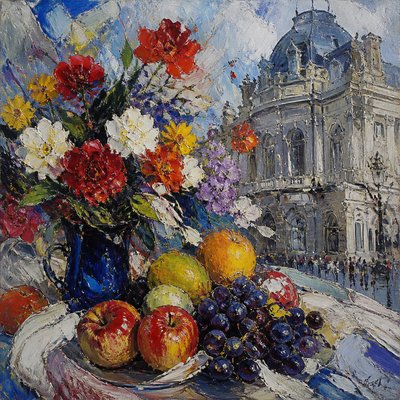
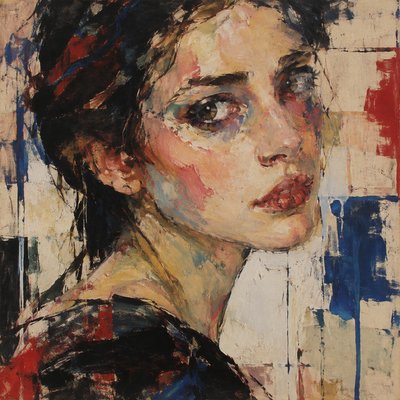
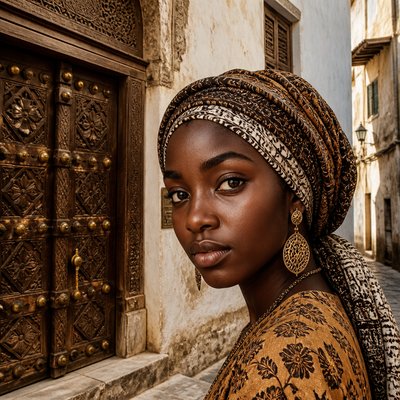
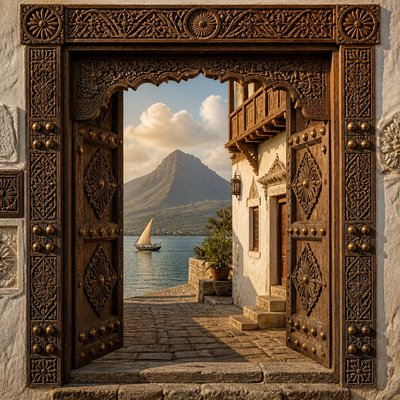
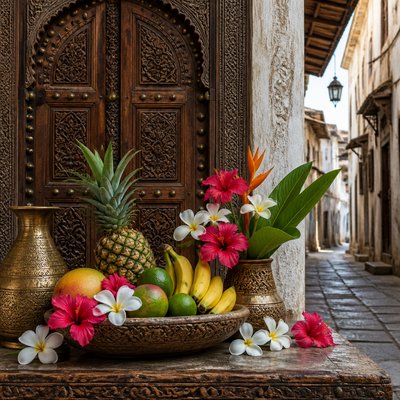
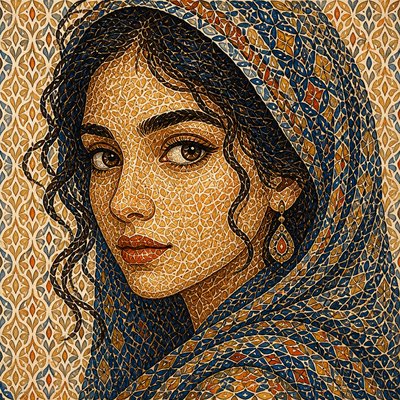
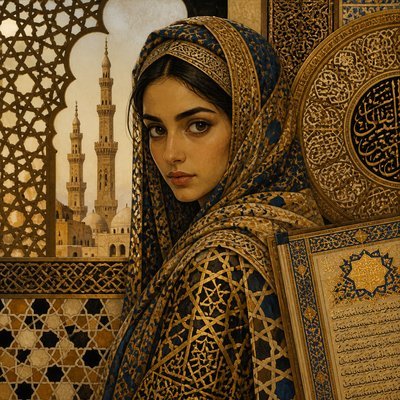
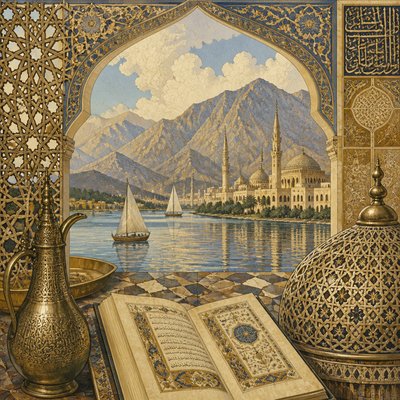
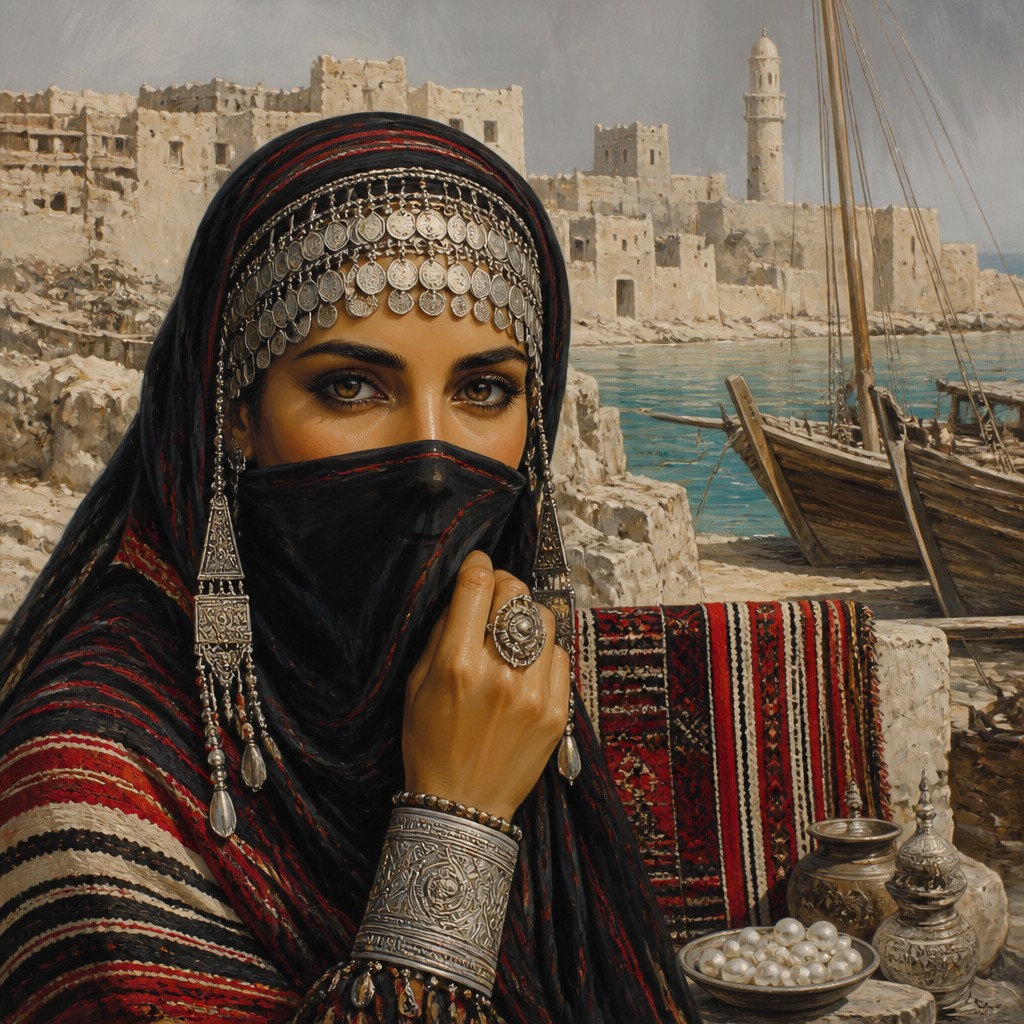
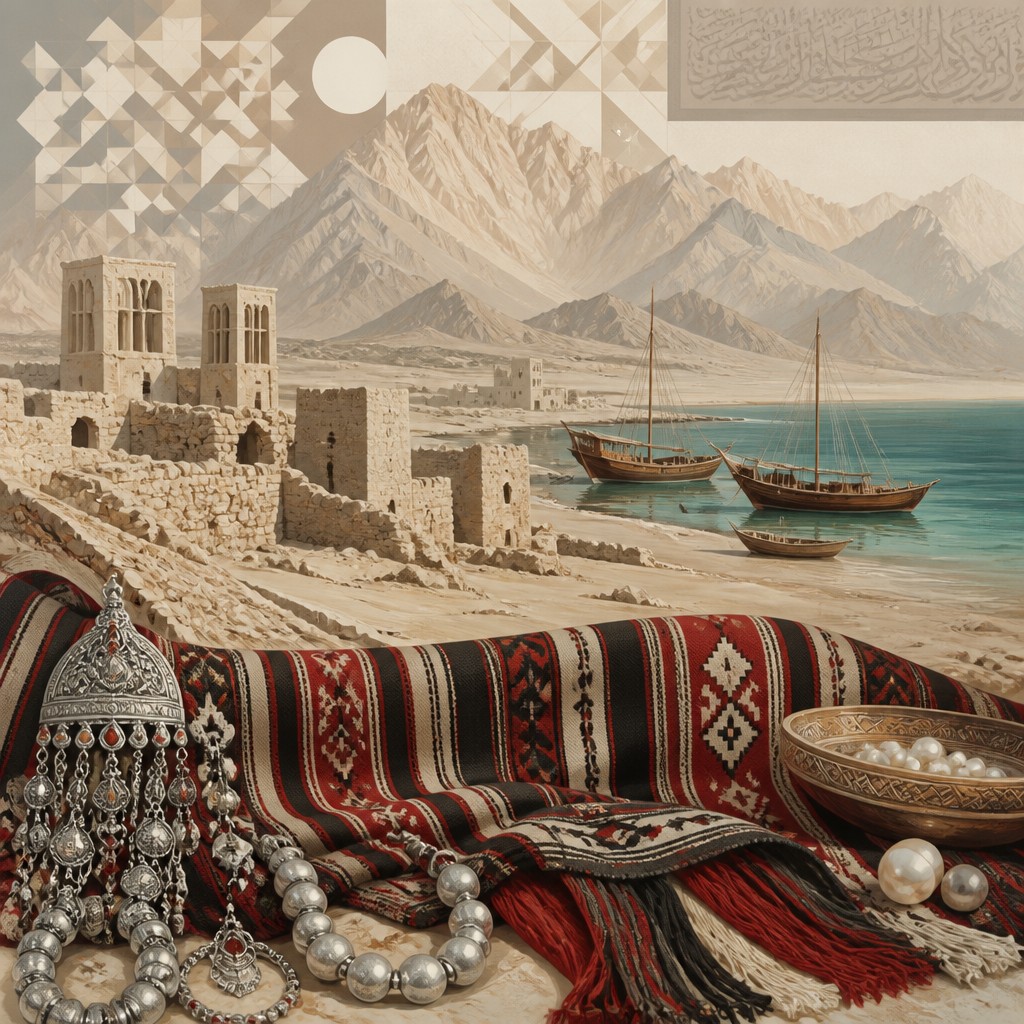
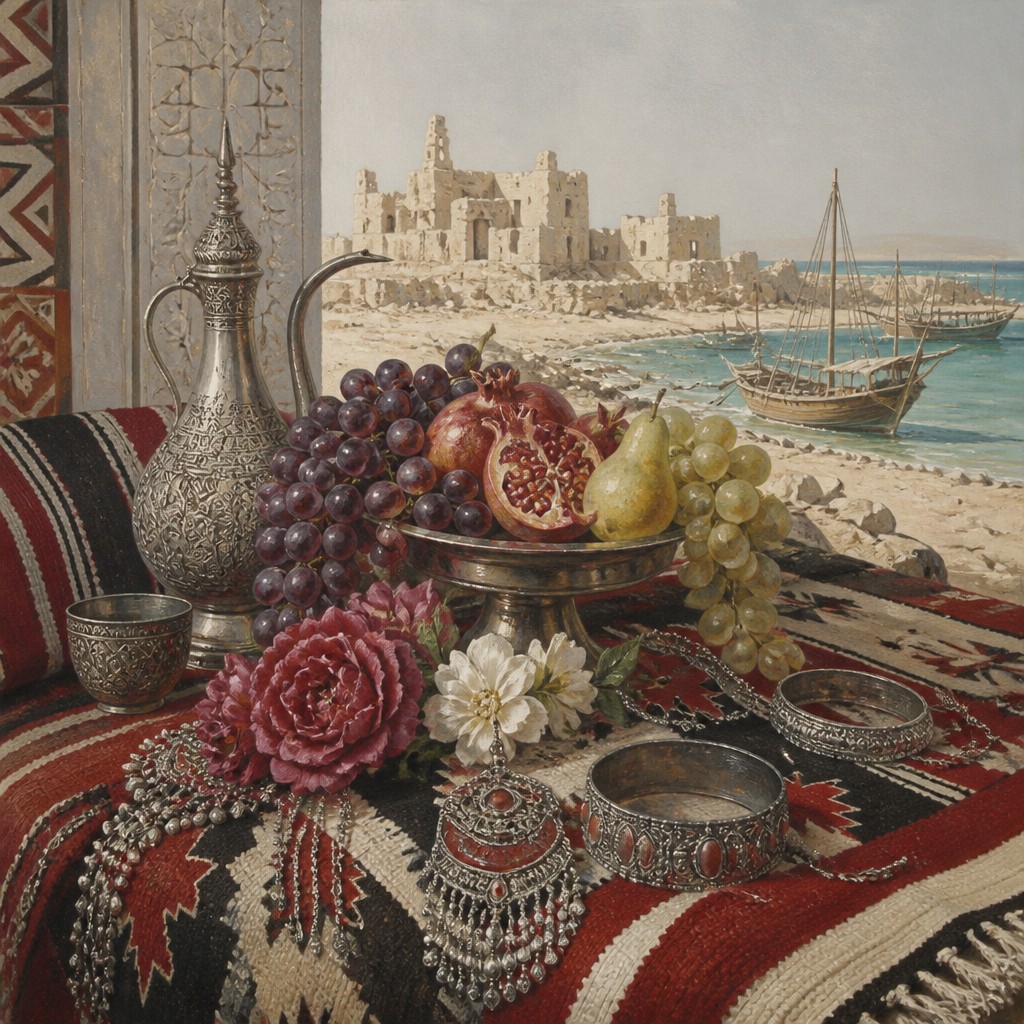
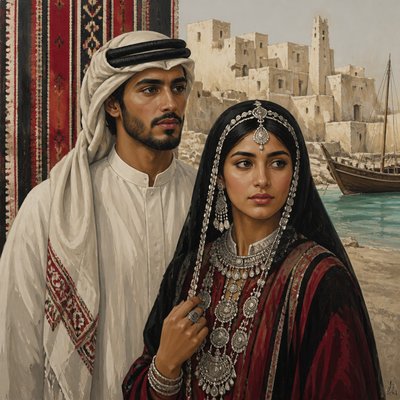
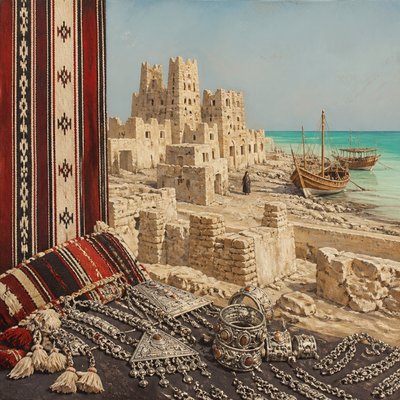
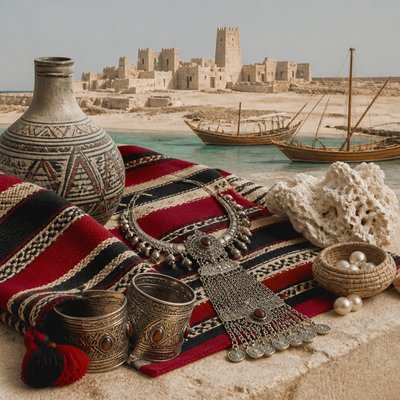
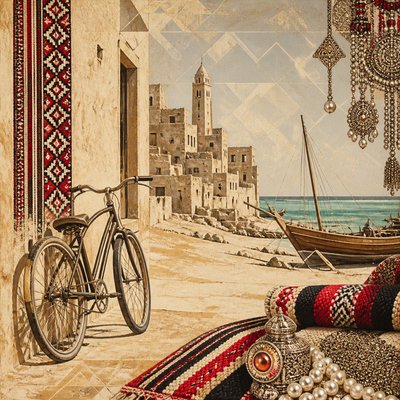
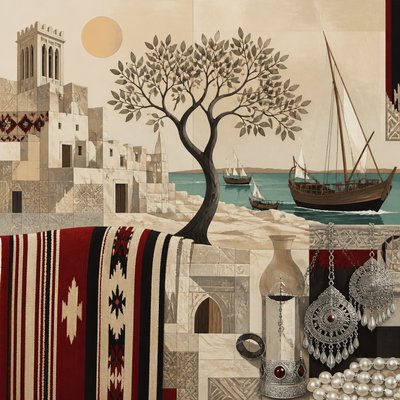
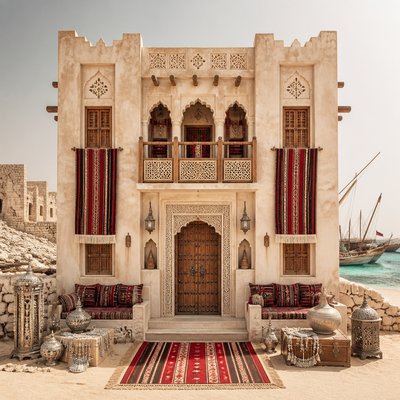
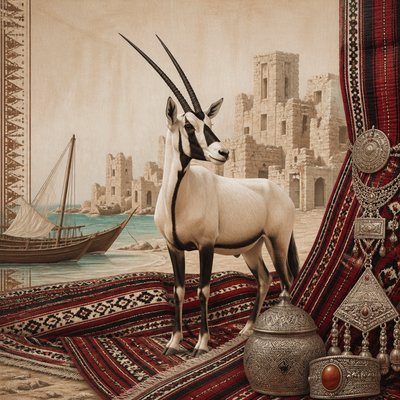
Qatari Art Style is a contemporary descriptive label for imagery rooted in Qatar’s coastal pearling heritage, Bedouin textile traditions, and desert architecture. Its characteristic scenes combine sunbleached coral-stone ruins, low settlements, flat horizons, turquoise shallows, hand-built wooden dhows, and carefully placed details of silver adornment. The palette is restrained and climate-shaped: warm sand, chalky white, coral beige, pearl grey, deep crimson, charcoal black, and sea blue.
The style gains much of its identity from contrast. Geometric sadu weaving patterns bring rhythmic bands of crimson, black, cream, and ochre against spacious desert compositions, while weathered masonry and rough timber provide tactile irregularity. Strong sunlight, sparse vegetation, wind-worn surfaces, and broad negative space create an atmosphere that feels archaeological without requiring a literal historical reconstruction.
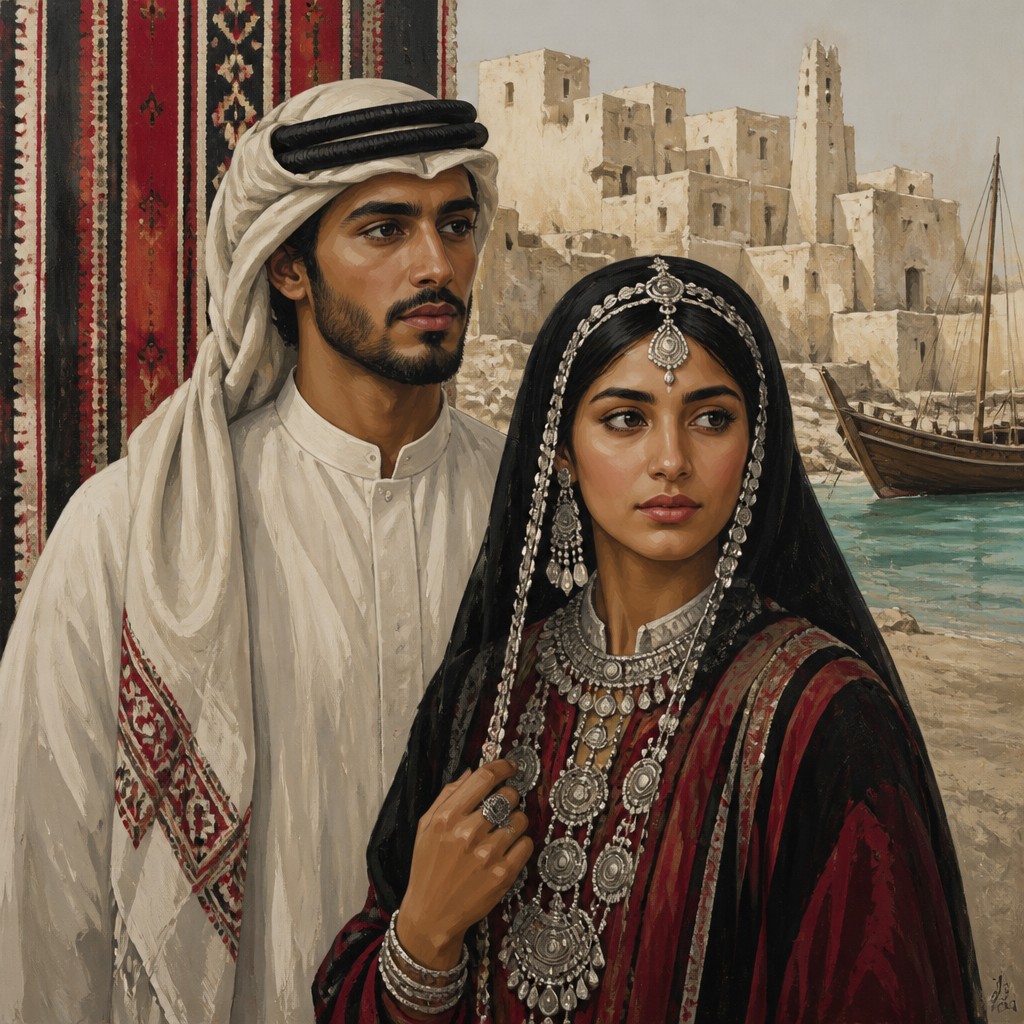
Try It On Your Photos
Upload any photo and convert it into Qatari Art Style — drag the sliders to compare before and after.
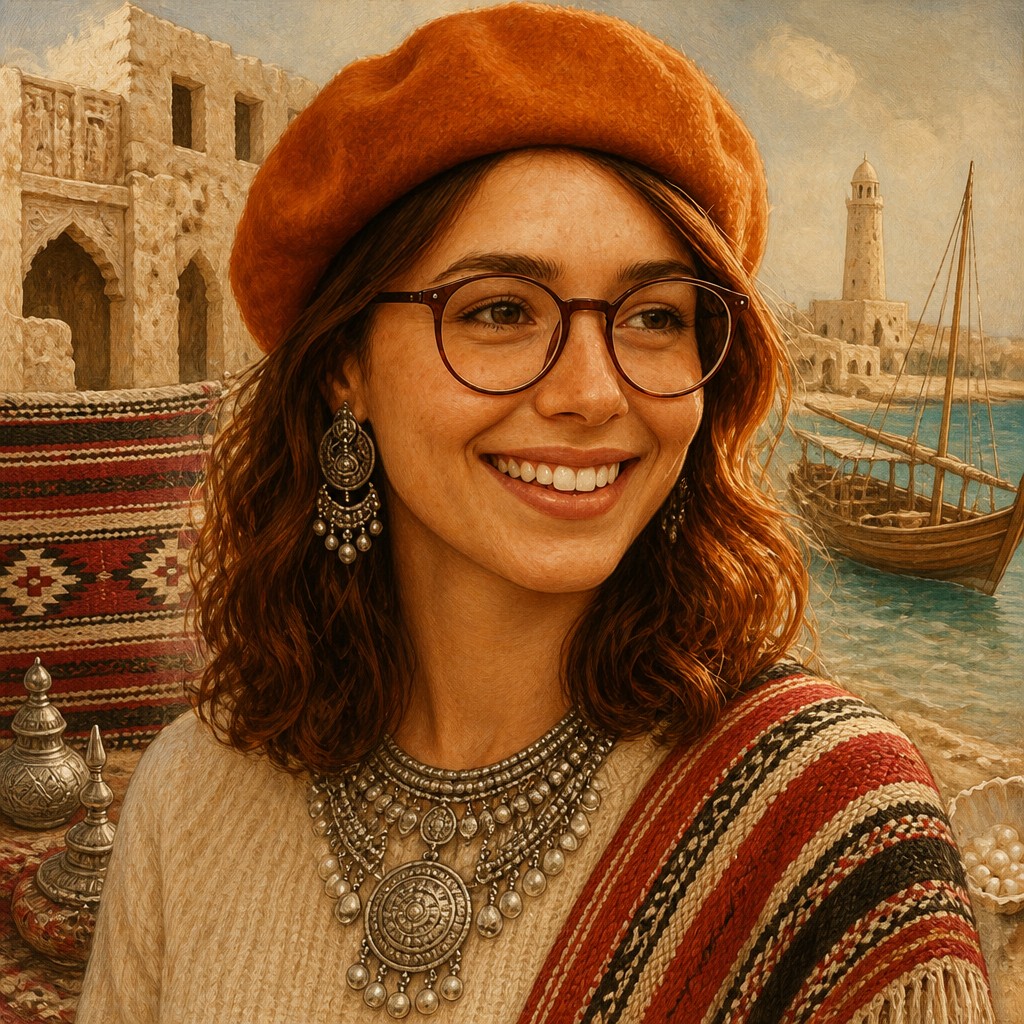

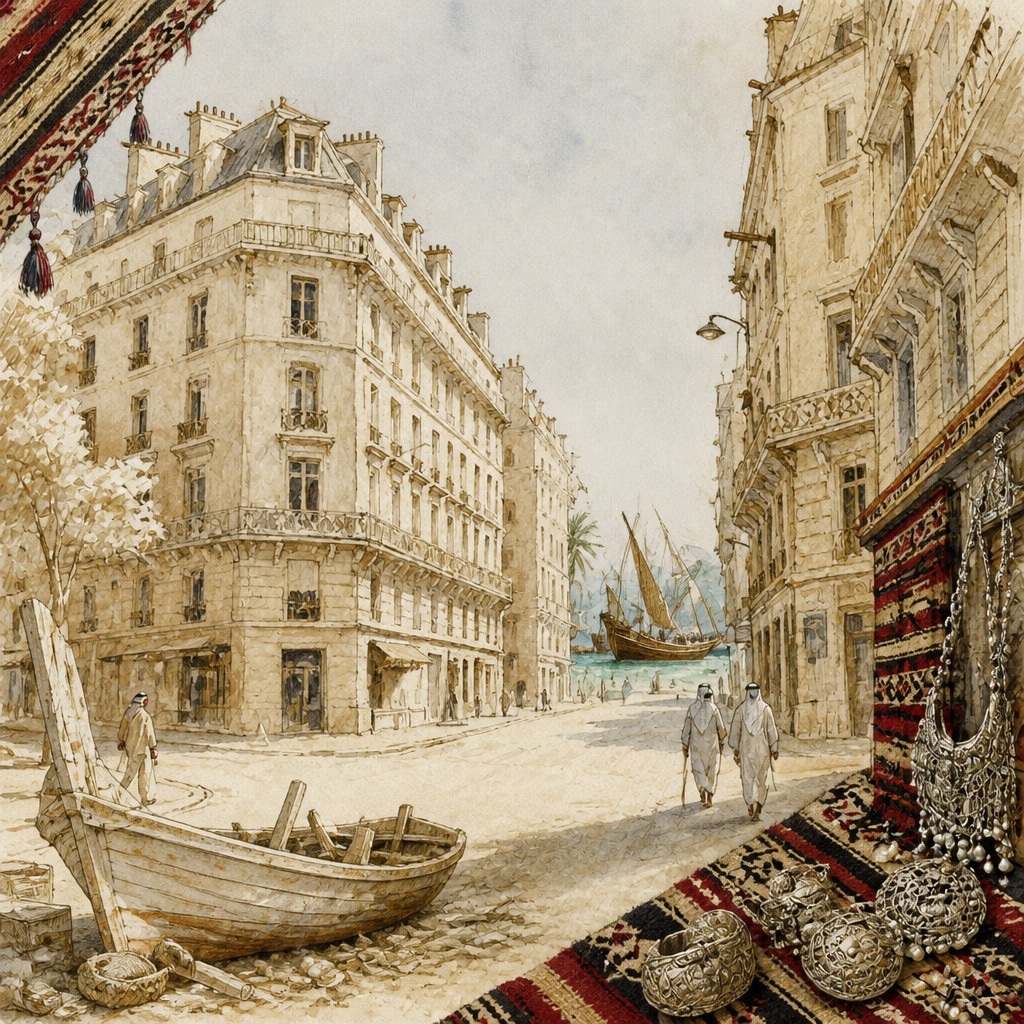

What Defines Qatari Art Style
The signature details, up close
Coral-stone vernacular architecture
Low walls, ruined pearling houses, wind towers, courtyards, and rough plaster surfaces establish a strong sense of place. The masonry is usually rendered in bleached beige, chalk white, or pearl grey with visible erosion and uneven texture.
Sadu geometric bands
Crimson, black, cream, rust, and ochre stripes introduce a graphic rhythm inspired by Bedouin woven textiles. Repeating diamonds, stepped forms, zigzags, and narrow borders work well as garments, rugs, tent panels, or compositional accents.
Pearling and maritime imagery
Wooden dhow hulls, ropes, nets, shells, pearl baskets, tidal flats, and turquoise shallows connect the style to Gulf coastal life. Boats are often shown as simple hand-built forms rather than polished modern vessels.
Desert and coastal light
Hard overhead sunlight creates short shadows, high contrast, and sun-faded surfaces. Atmospheric perspective is limited, allowing the flat desert, pale sky, and distant sea to read as broad horizontal fields.
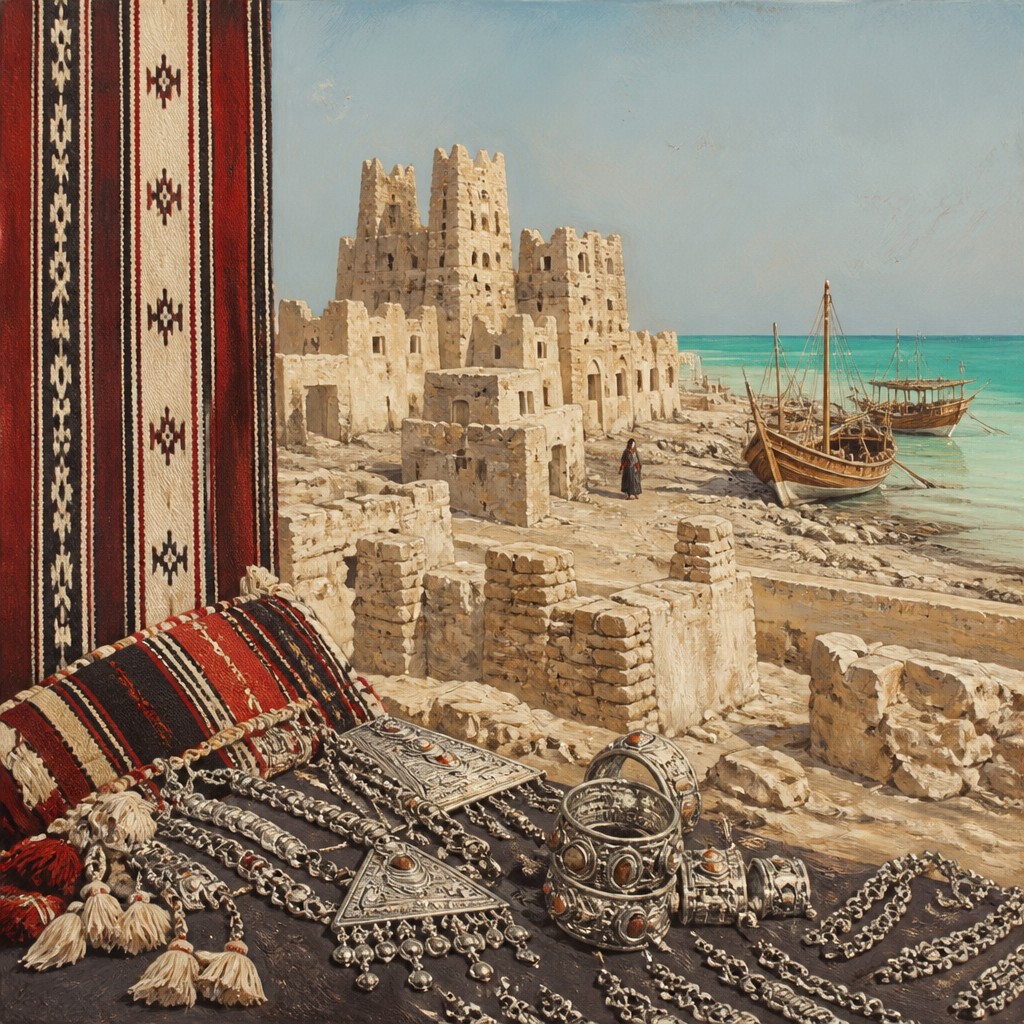
Bedouin silver ornament
Large pendants, chains, cuffs, rings, and amulets can provide concentrated highlights against dark fabric. The jewelry is depicted with engraved, hammered, oxidized, or softly reflective metal rather than bright luxury polish.
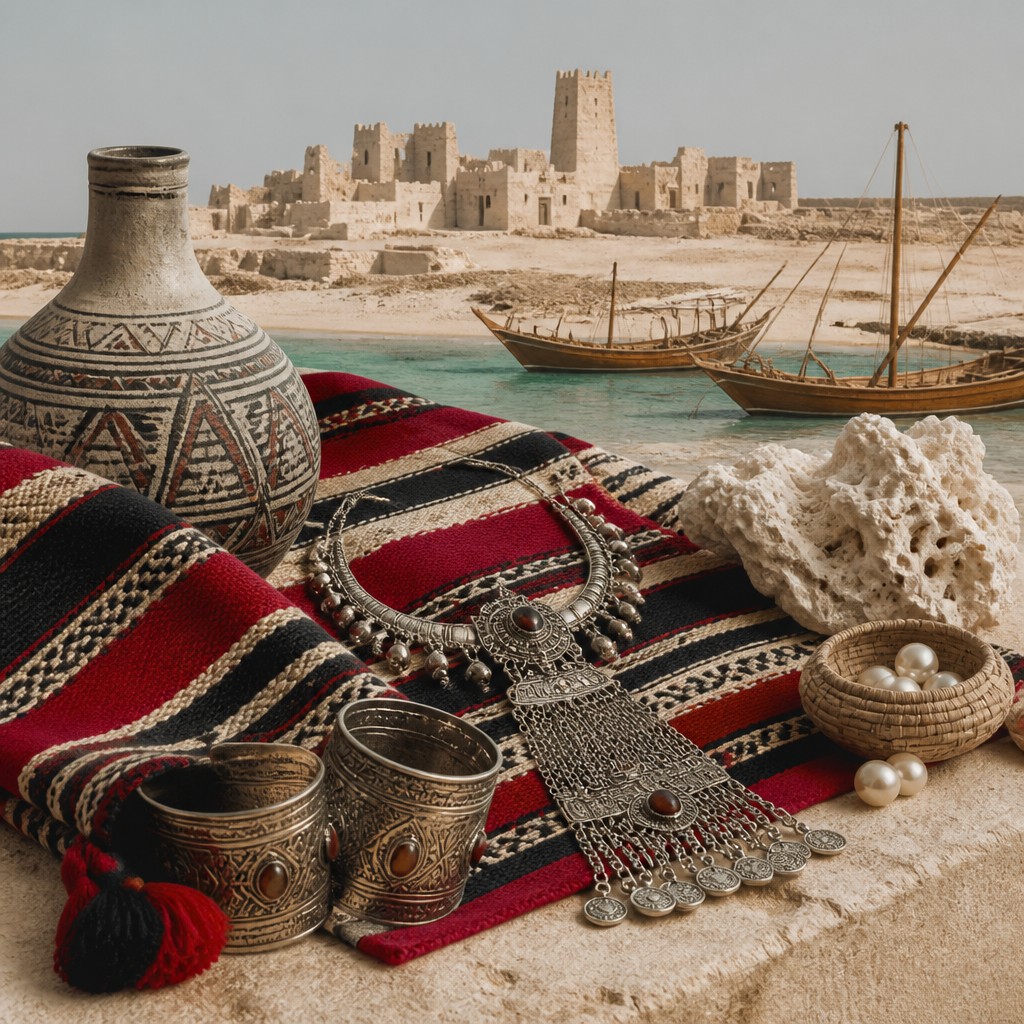
Weathered tactile surfaces
Cracked plaster, salt stains, splintered timber, woven wool, coarse sand, and oxidized metal give the imagery a handcrafted, materially grounded quality. Controlled irregularity is more characteristic than pristine symmetry.
Qatari Prompt Ideas
Start from an idea — each one opens the generator with the style ready to go. See all 40 Qatari prompts →
How to Create Qatari Art
Master the craft step by step — or skip straight to creating. Read the full guide →
- 1
Build a horizontal composition
Begin with a low horizon, a broad sky, and a foreground of sand, tidal flats, or rough masonry. Place one strong architectural or maritime subject off-center and use empty space to evoke the openness of the Gulf landscape.
- 2
Limit and organize the palette
Use sand, coral beige, pearl grey, off-white, and faded blue as the base colors, then reserve crimson, black, and cream for sadu-inspired patterning. Avoid excessive saturation except in small textile or jewelry details.
- 3
Use material-specific marks
In traditional media, layer dry brush, diluted washes, scratched lines, and granular pigments to distinguish plaster, wool, wood, and sand. In digital work, combine matte texture overlays with selective sharp detail on woven patterns and metal ornament.
- 4
Design patterns with restraint
Create repeated geometric bands using diamonds, stepped zigzags, and parallel stripes, but vary scale and wear so the result feels woven rather than mechanically tiled. Keep patterns subordinate to the main scene unless making a textile-focused composition.
- 5
Frame a text-to-image prompt clearly
Specify the subject, Gulf coastal setting, materials, palette, lighting, and level of weathering in that order. Useful terms include coral-stone ruins, sadu geometric stripes, wooden dhow, hammered silver, flat desert horizon, turquoise shallows, and hard midday light.
- 6
Transform a photograph thoughtfully
Choose an image with clear silhouettes and a simple horizon, then preserve its main structure while introducing coral masonry, textile geometry, sun-bleached color, and tactile surface grain. Reduce distracting modern signage or clutter if a period-neutral heritage mood is desired.
The Story
History & Origins of Qatari
Qatari Art Style is not a formally recognized historical movement or a single traditional school. It is an invented, contemporary synthesis of visual traditions associated with Qatar and the wider Arabian Gulf: pearling-town architecture, coastal dhow building, Bedouin sadu weaving, metal jewelry, and desert landscape painting or illustration.
Its imagery draws on Qatar’s pearling economy, particularly the historic coastal settlements that flourished before the expansion of oil-based modernity, as well as vernacular buildings made with locally available coral stone, gypsum, timber, and other materials. Sadu weaving has long been practiced by Bedouin communities across the Arabian Peninsula, where bold geometric bands carried practical, decorative, and cultural significance. Contemporary uses often reinterpret these sources through illustration, photography, graphic design, and digital image-making rather than attempting to reproduce one period exactly.
Influences: The style is related to Arabian Gulf vernacular architecture, Bedouin sadu weaving, traditional dhow construction, pearling and maritime material culture, and documentary approaches to archaeological landscape. It also shares qualities with heritage illustration, desert modernism, craft-based design, and restrained architectural photography. Its geometric accents may recall broader Islamic and regional pattern traditions, but the combination of coral-stone coastal ruins, Gulf maritime imagery, and sadu textiles gives it a specifically Qatari emphasis.
Frequently Asked Questions
What defines Qatari Art Style?
It is defined by a synthesis of Qatar’s coastal pearling heritage, desert environment, vernacular coral-stone architecture, Bedouin sadu textiles, dhow craftsmanship, and silver ornament. Visually, it favors sun-bleached surfaces, broad horizons, tactile materials, and a palette of sand, pearl grey, crimson, black, cream, and turquoise.
Is Qatari Art Style a historical art movement?
No. The term is best understood as a contemporary aesthetic label rather than a documented historical movement or unified national school. It organizes several real cultural traditions into a visual language used in modern illustration, design, photography, and digital art.
How is it different from generic Middle Eastern or desert art?
Generic desert imagery may rely mainly on dunes, camels, and warm color grading. This style is more specifically grounded in Qatar and the Gulf through pearling-town ruins, dhow boats, coral-stone construction, sadu geometry, coastal water, and silver adornment.
What colors work best for this style?
Start with sun-faded sand, coral beige, chalk white, pearl grey, charcoal, and muted sea blue. Add crimson, black, cream, rust, or ochre in narrow geometric textile bands and jewelry details rather than saturating the entire image.
Can I create this style from a photograph?
Yes, especially when the photograph has a clear horizon, strong sunlight, simple architecture, or visible craft materials. Preserve the subject’s composition while introducing weathered masonry, woven geometric accents, restrained colors, and subtle surface grain.
Where is this aesthetic commonly used?
It suits heritage illustration, cultural publishing, museum interpretation, travel imagery, architectural visualization, editorial design, textiles, posters, and atmospheric landscape scenes. It can also support contemporary subjects when traditional motifs are used selectively rather than as decoration on every surface.
Create your first Qatari artwork
Describe anything — or upload a photo — and see it in Qatari Art Style in seconds.
Related Styles
Discover similar art styles