Portuguese Art Style
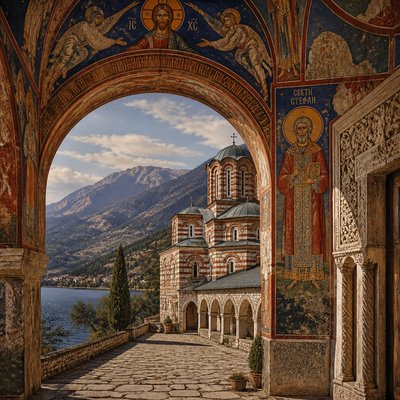
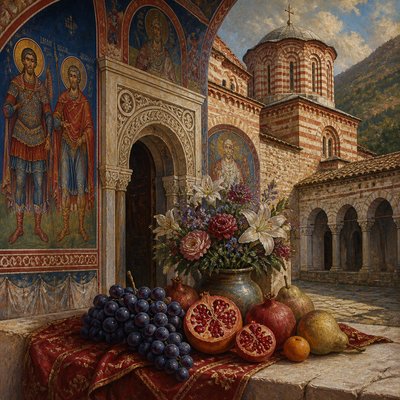
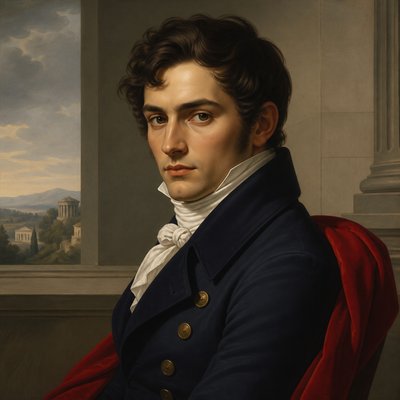
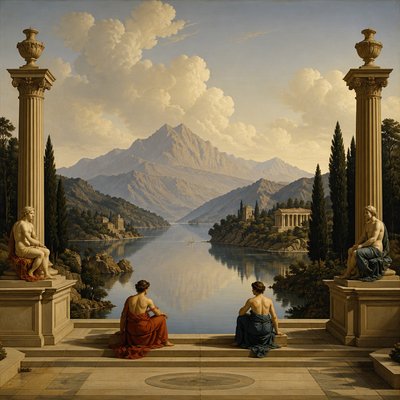
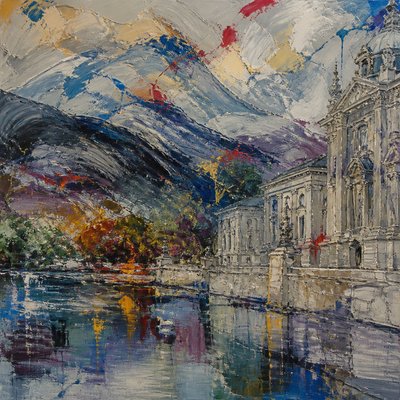
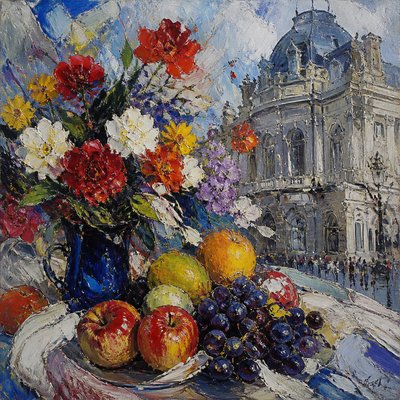
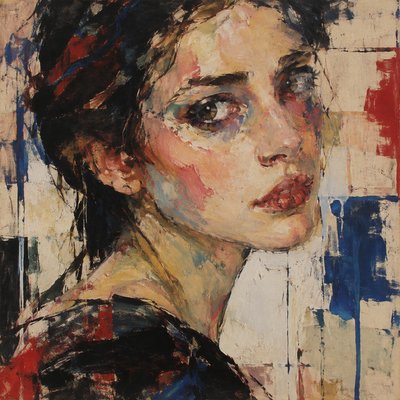
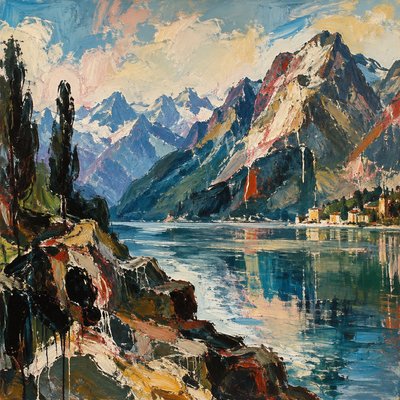
Explore Portuguese art style: cobalt azulejos, maritime symbols, gilt wood, patterned borders, and sunlit Atlantic storytelling.
Instantly rendered in Portuguese — or transform a photo
Portuguese Gallery
Tap any artwork to explore it
What is Portuguese Art Style?
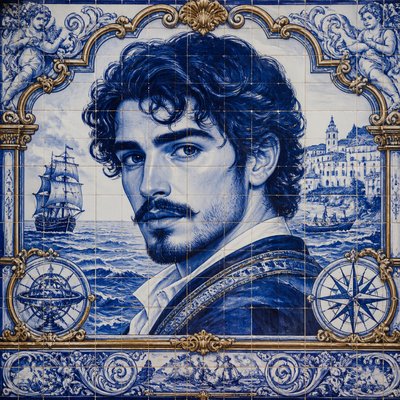
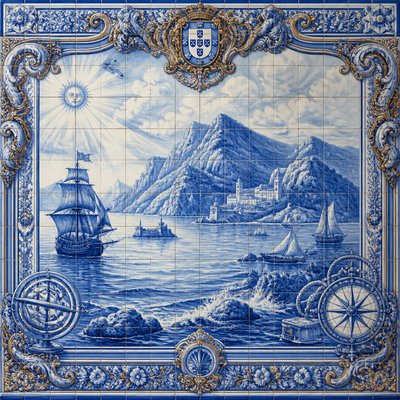
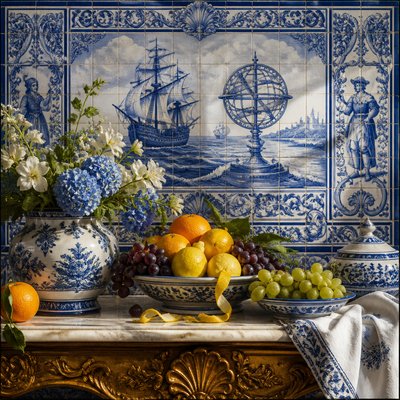
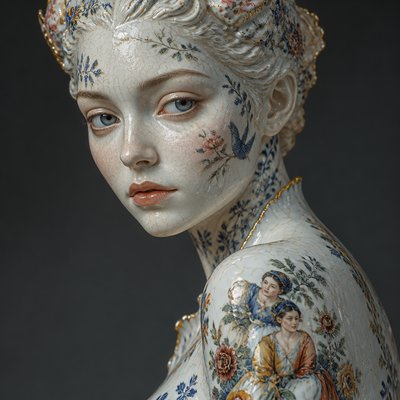
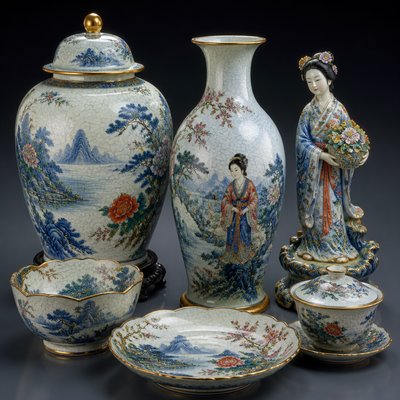
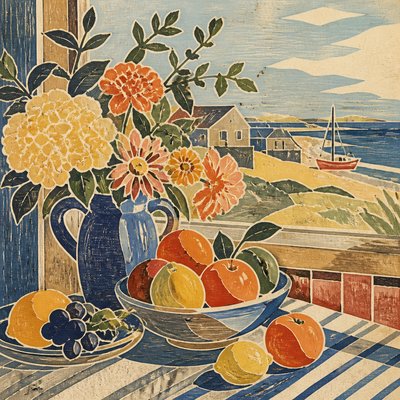
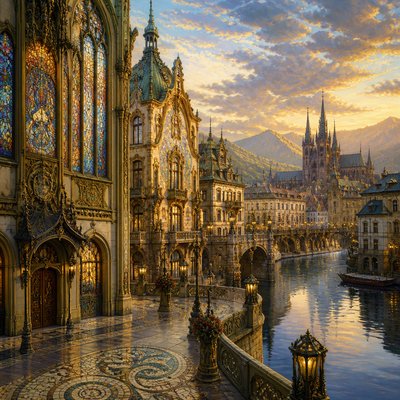
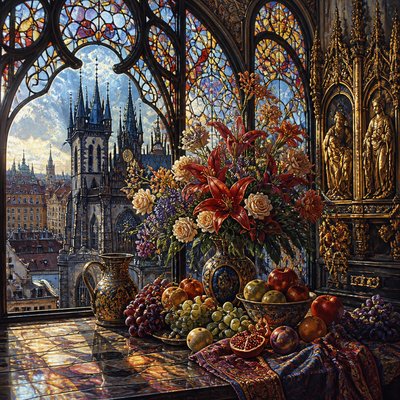
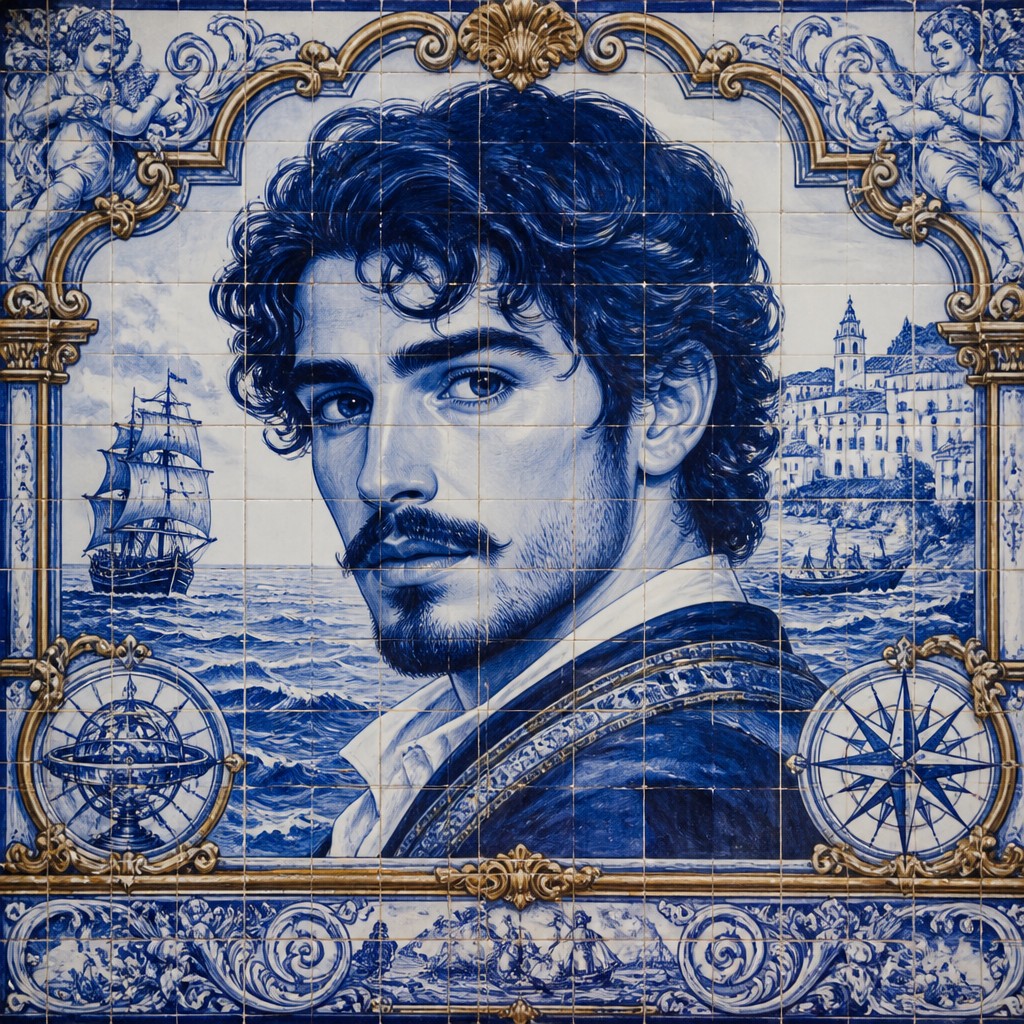
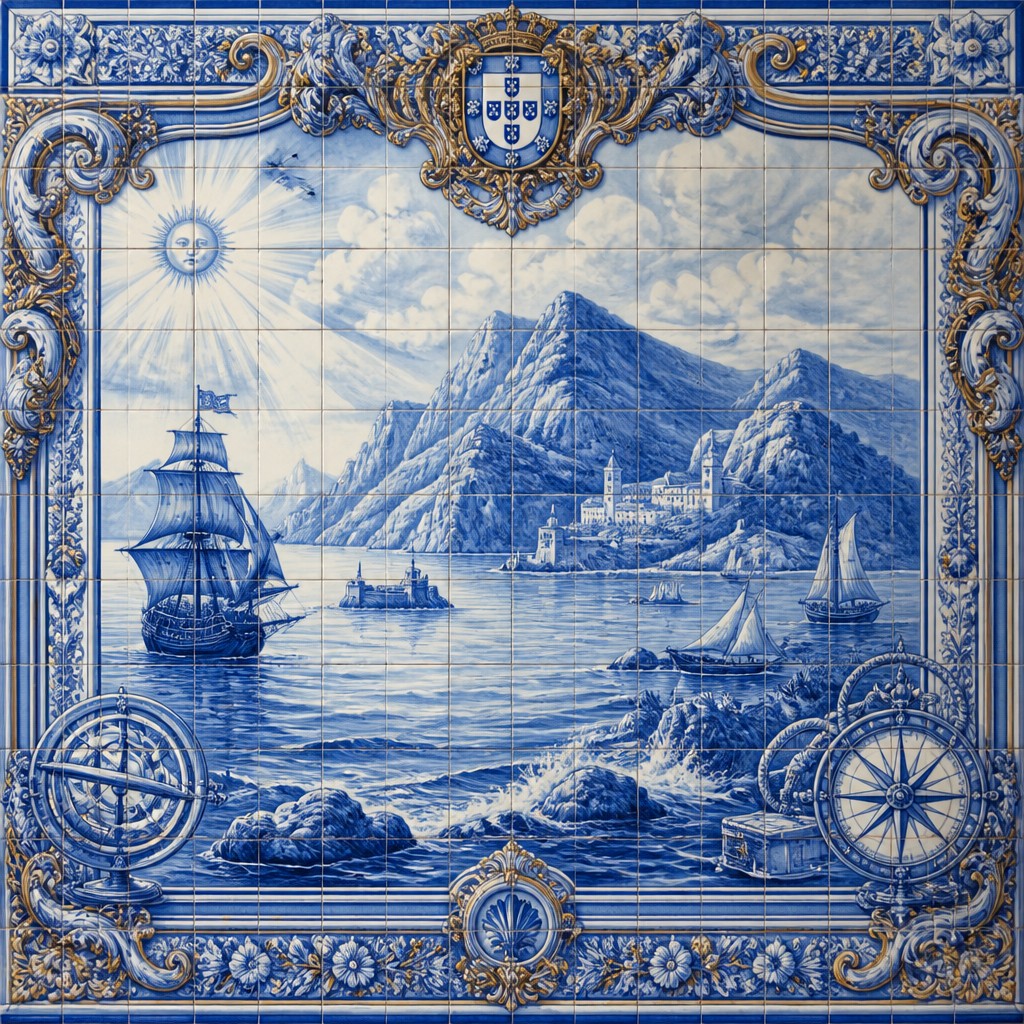
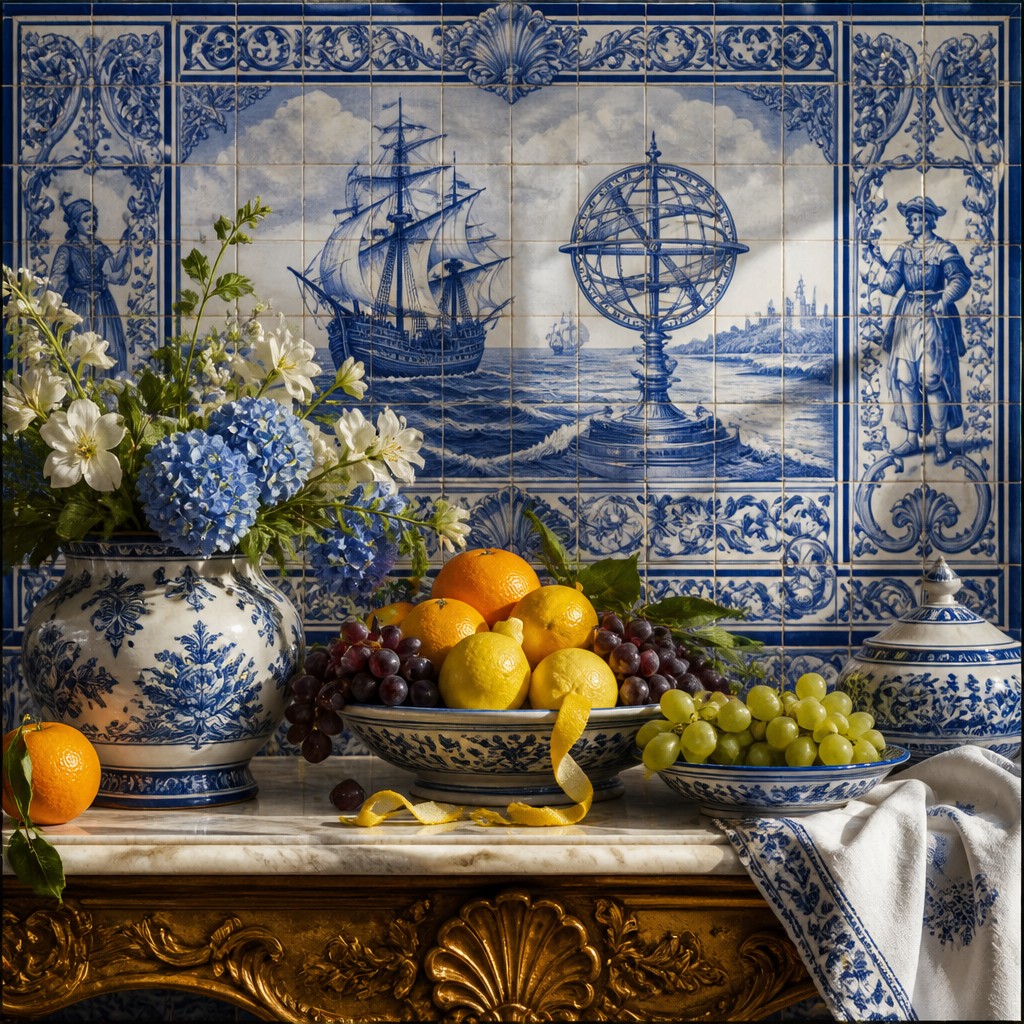
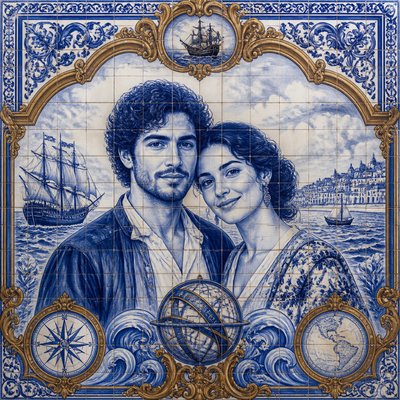
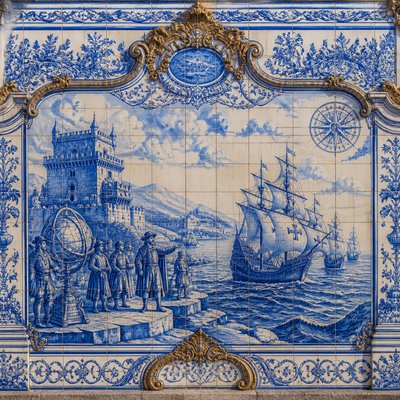
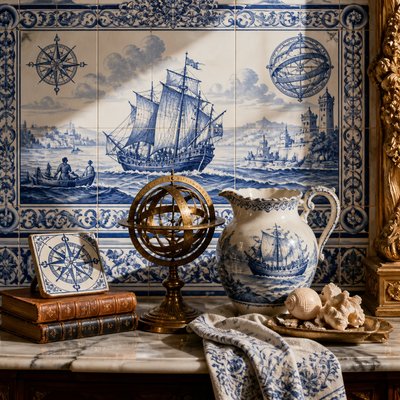
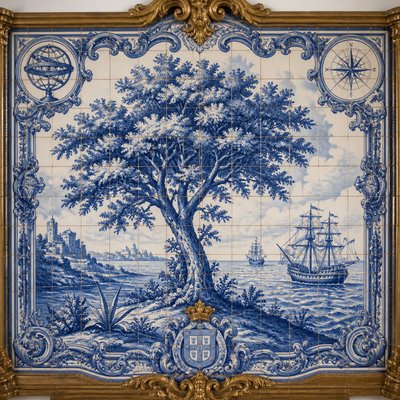
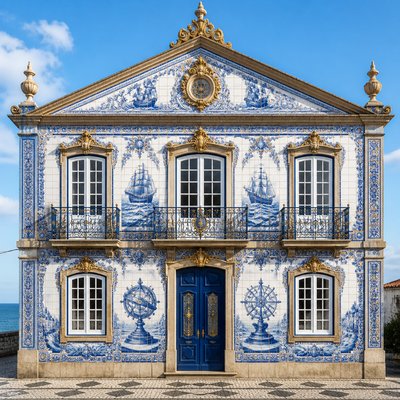
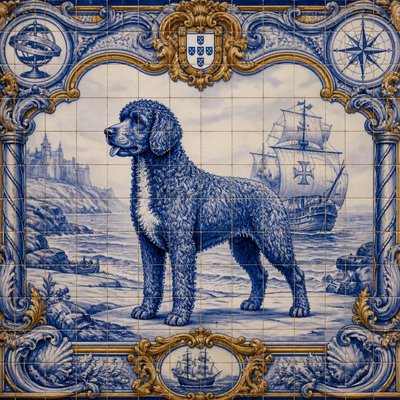
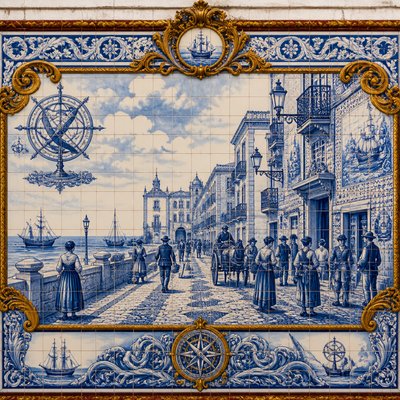
Portuguese art style is a decorative and narrative visual language centered on azulejo tilework, especially cobalt-blue imagery on white glazed ceramic. Its scenes often combine ships, waves, harbors, saints, gardens, armillary spheres, and historical episodes within geometric or botanical borders. Carved gilt wood, painted ornament, and the warm light of the Atlantic coast add richness to the cool ceramic palette.
The style is not a single historical movement but a contemporary synthesis of several Portuguese traditions. It draws on the architectural use of tiled surfaces, the storytelling structure of monumental ceramic panels, maritime imagery associated with Portugal's seafaring history, and the theatrical ornament of Baroque interiors. The result is an art language that feels simultaneously architectural, handcrafted, ceremonial, and vividly narrative.
Try It On Your Photos
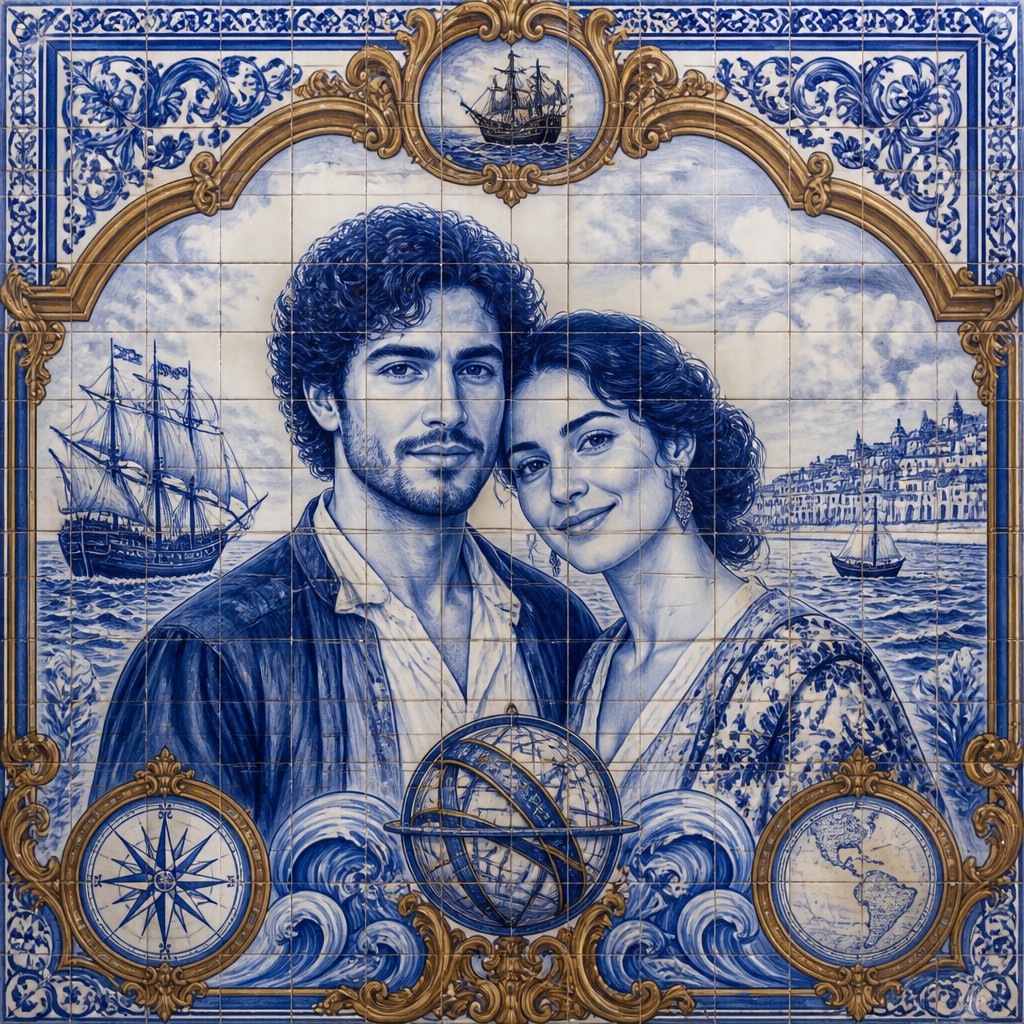
Upload any photo and convert it into Portuguese Art Style — drag the sliders to compare before and after.
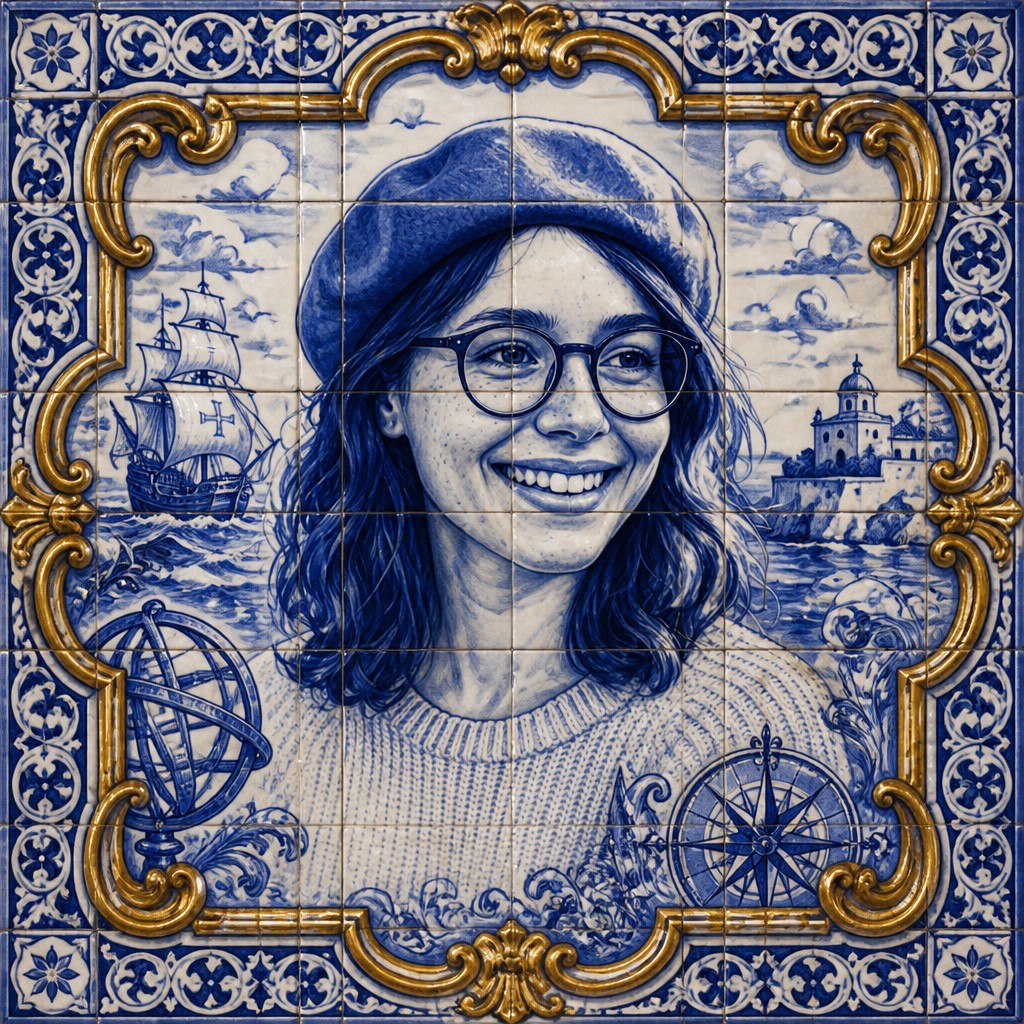

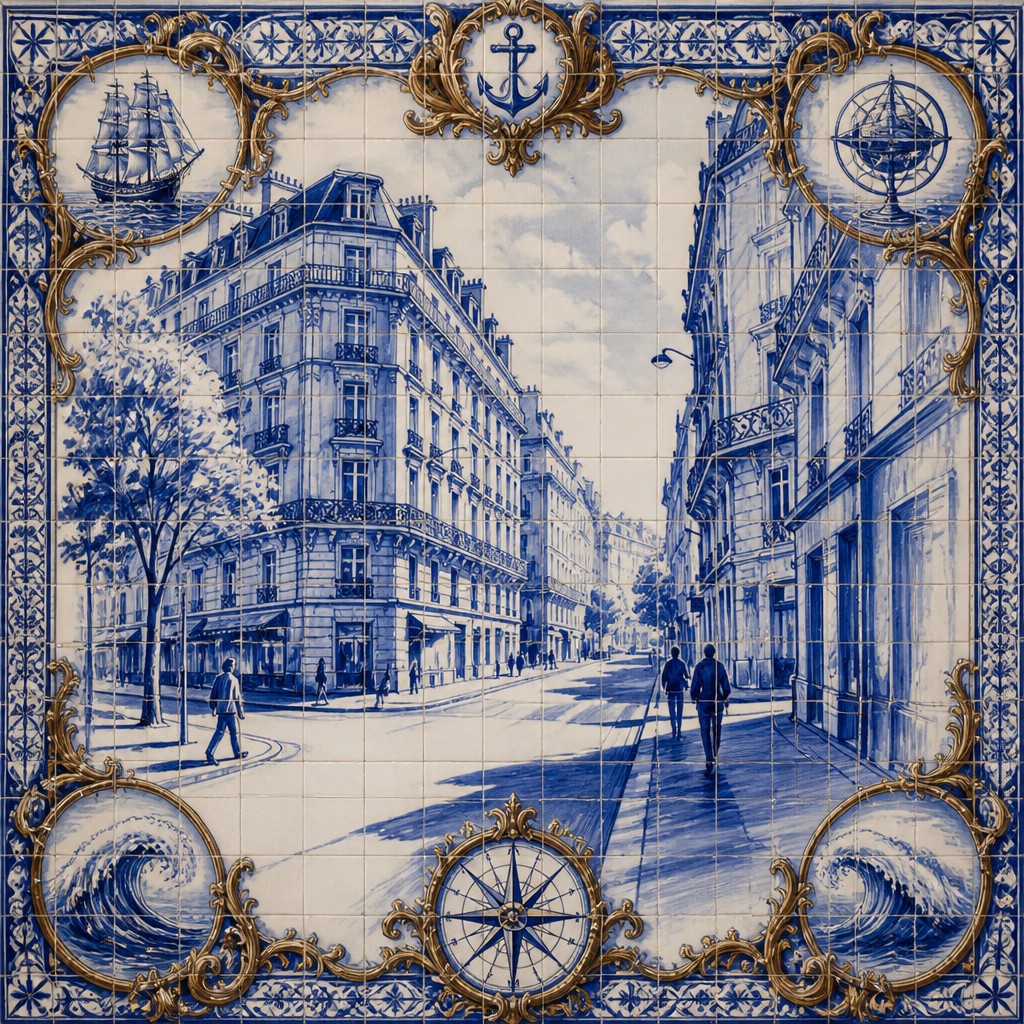

What Defines Portuguese Art Style
The signature details, up close
Cobalt blue and glazed white
The dominant palette uses deep cobalt, porcelain white, and occasional pale blue to suggest painted ceramic. Glossy glaze, crisp contours, and slight tonal variation evoke hand-painted tile surfaces.
Narrative tile panels
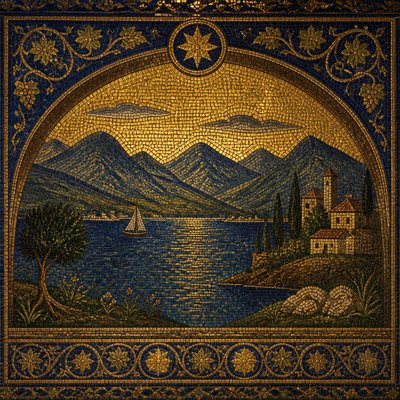
Images are organized as sequential or self-contained scenes, much like murals assembled from individual tiles. Historical episodes, coastal views, processions, legends, and everyday activities can all be framed as visual narratives.
Maritime symbolism
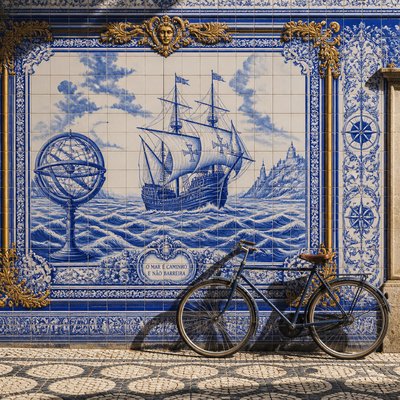
Ships, sails, waves, anchors, seabirds, navigational instruments, and armillary spheres provide a recognizable Portuguese maritime vocabulary. These motifs may function as literal subjects or as symbols of travel, knowledge, and exchange.
Patterned borders
Geometric bands, scrolling foliage, shells, rope-like ornament, and repeating floral motifs frame central scenes. Borders establish rhythm and make a composition feel architectural rather than like an isolated painting.
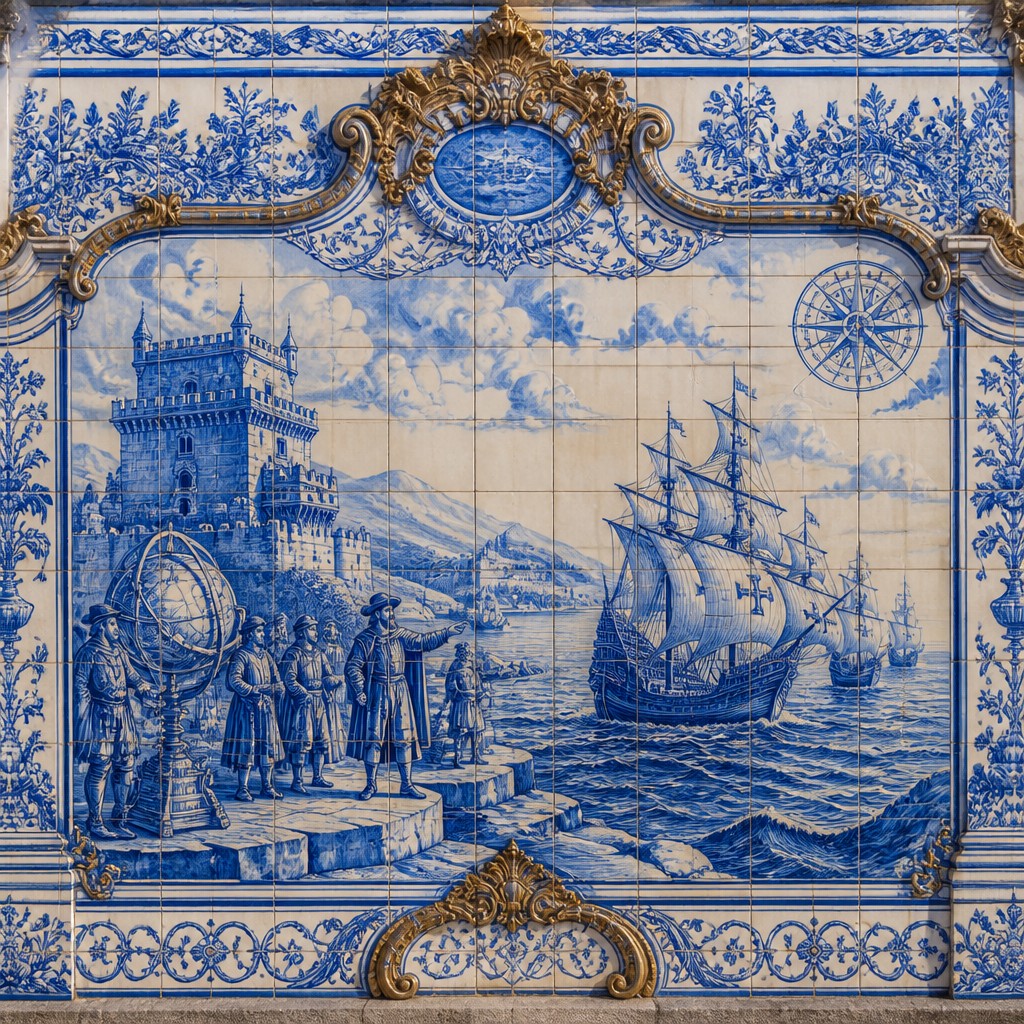
Gilded and carved accents
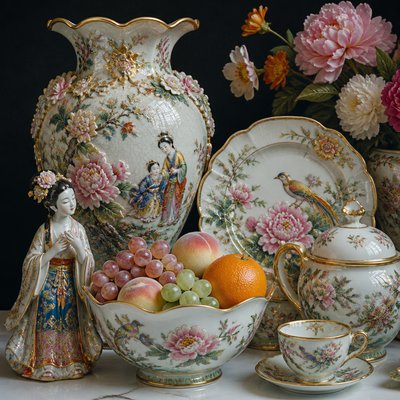
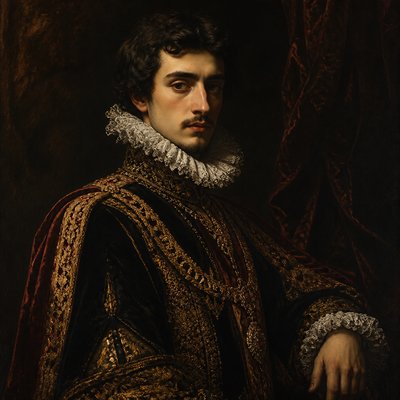
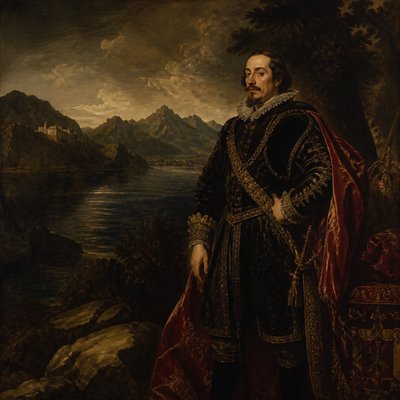
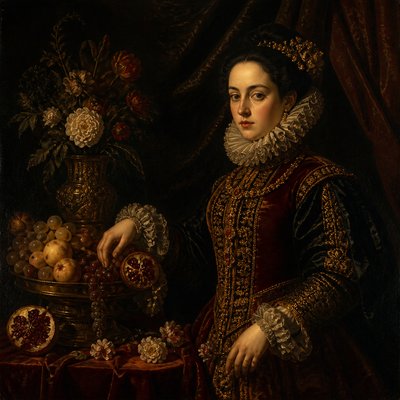
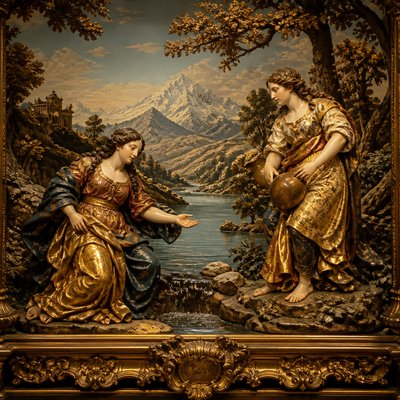
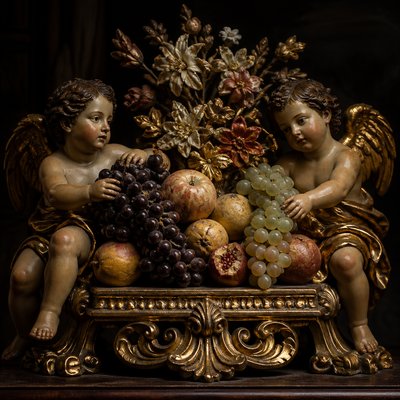
Touches of gold can suggest carved and gilded woodwork found in richly decorated ecclesiastical interiors. The contrast between luminous warm ornament and cool blue ceramic gives the style ceremonial depth.
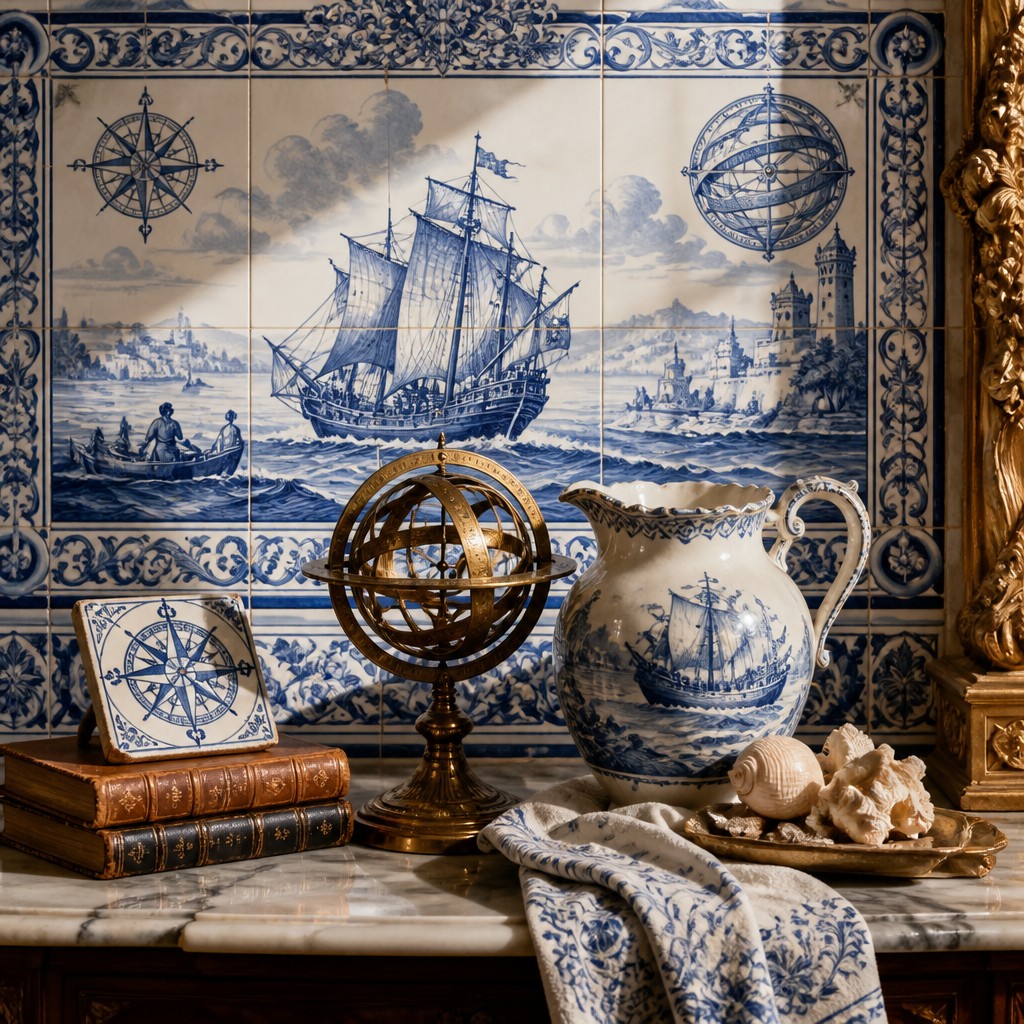
Flat decorative perspective
Forms often favor clear silhouettes, controlled contour, and layered spatial planes over fully naturalistic depth. Repeated pattern and frontal presentation preserve the visual logic of a wall-mounted tile panel.
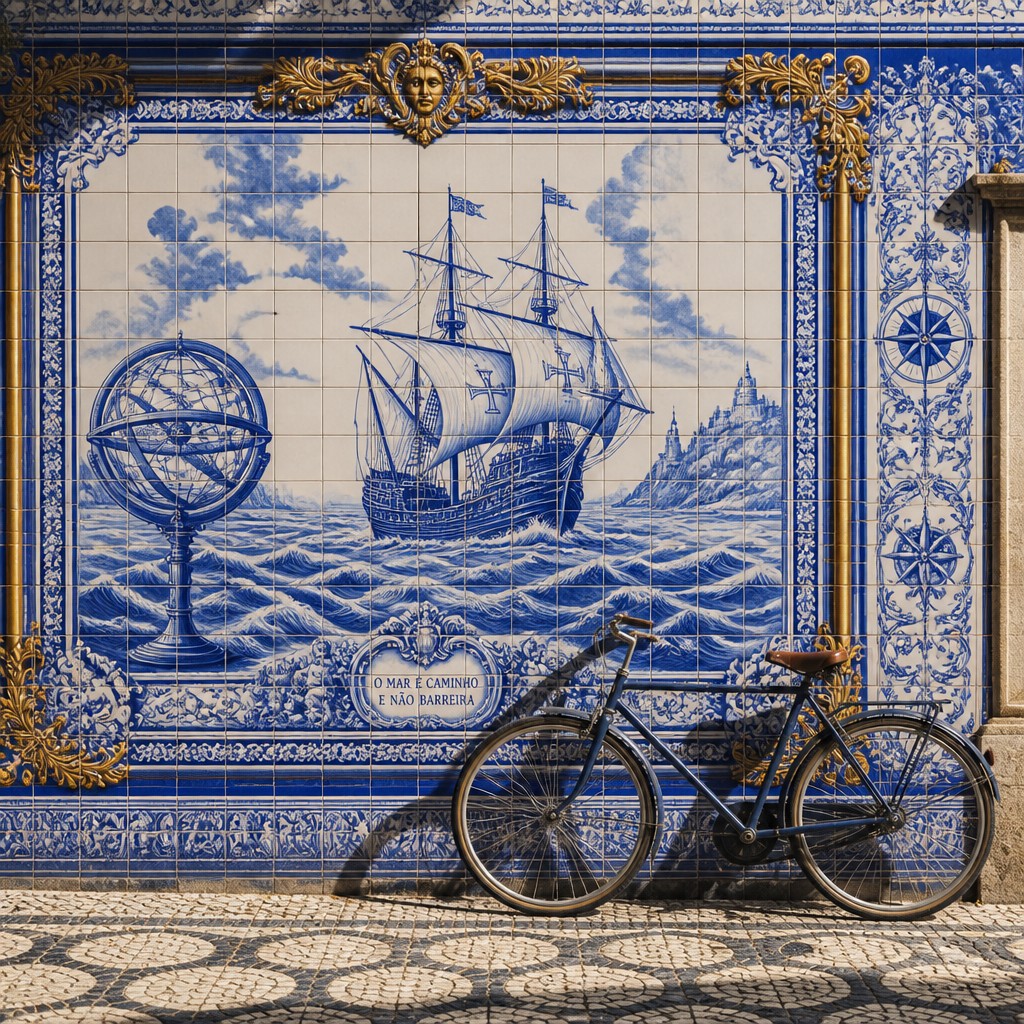
Atlantic light and weathered surfaces
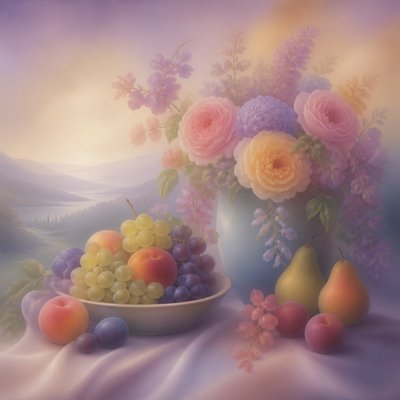
Bright, low-contrast sunlight, white façades, and hints of salt, age, or craquelure connect the imagery to coastal Portugal. Subtle irregularities keep the finish from appearing mechanically uniform.
Try It
Create Videos in Portuguese Art Style
Styles aren't just for stills — describe a scene or animate an image and get a short video rendered in Portuguese. Press play to see this pond come to life.
Make a VideoPortuguese Prompt Ideas
Start from an idea — each one opens the generator with the style ready to go. See all 40 Portuguese prompts →
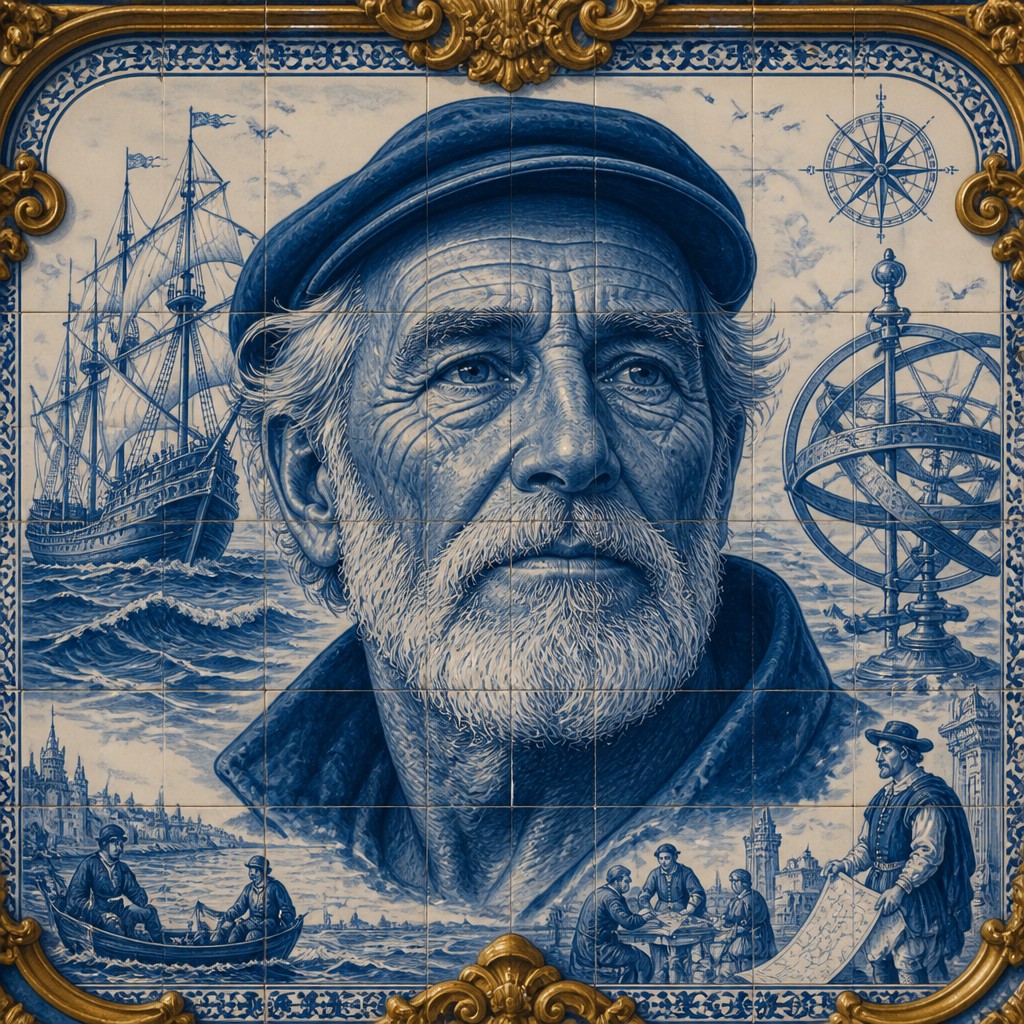
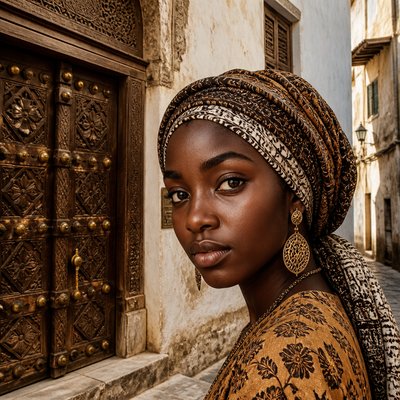
“close-up portrait of an elderly person with expressive weathered features”
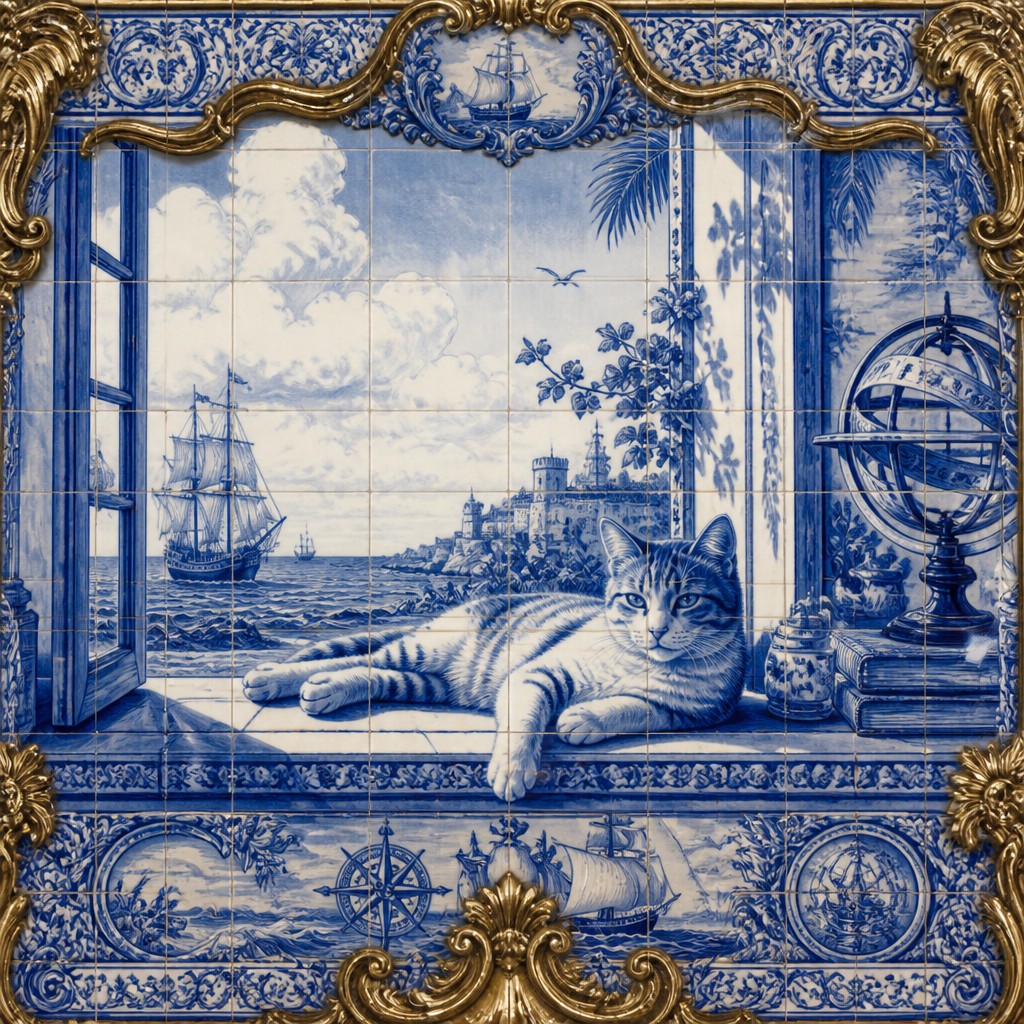
“a cat lounging in a sunlit window”
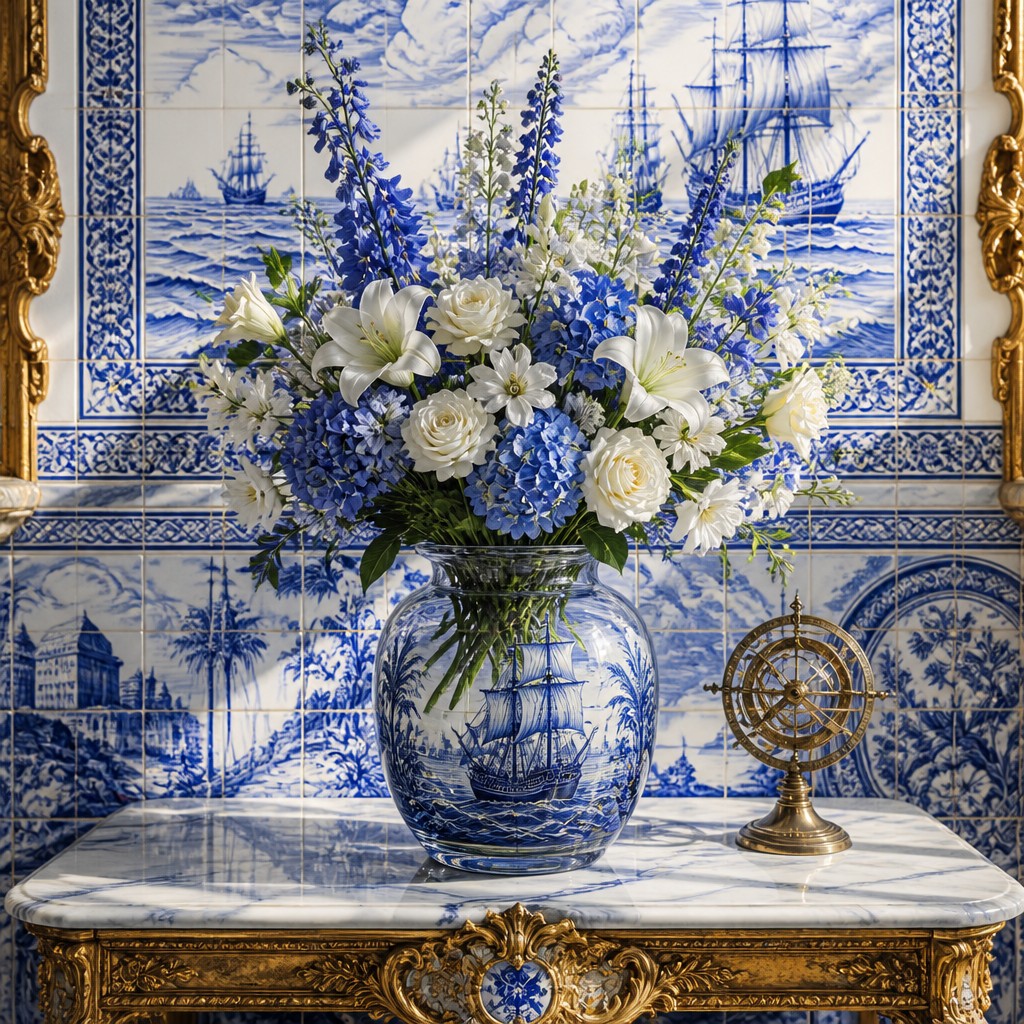
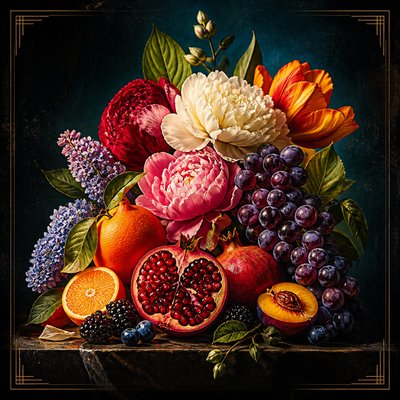
“bouquet of flowers in a glass vase”
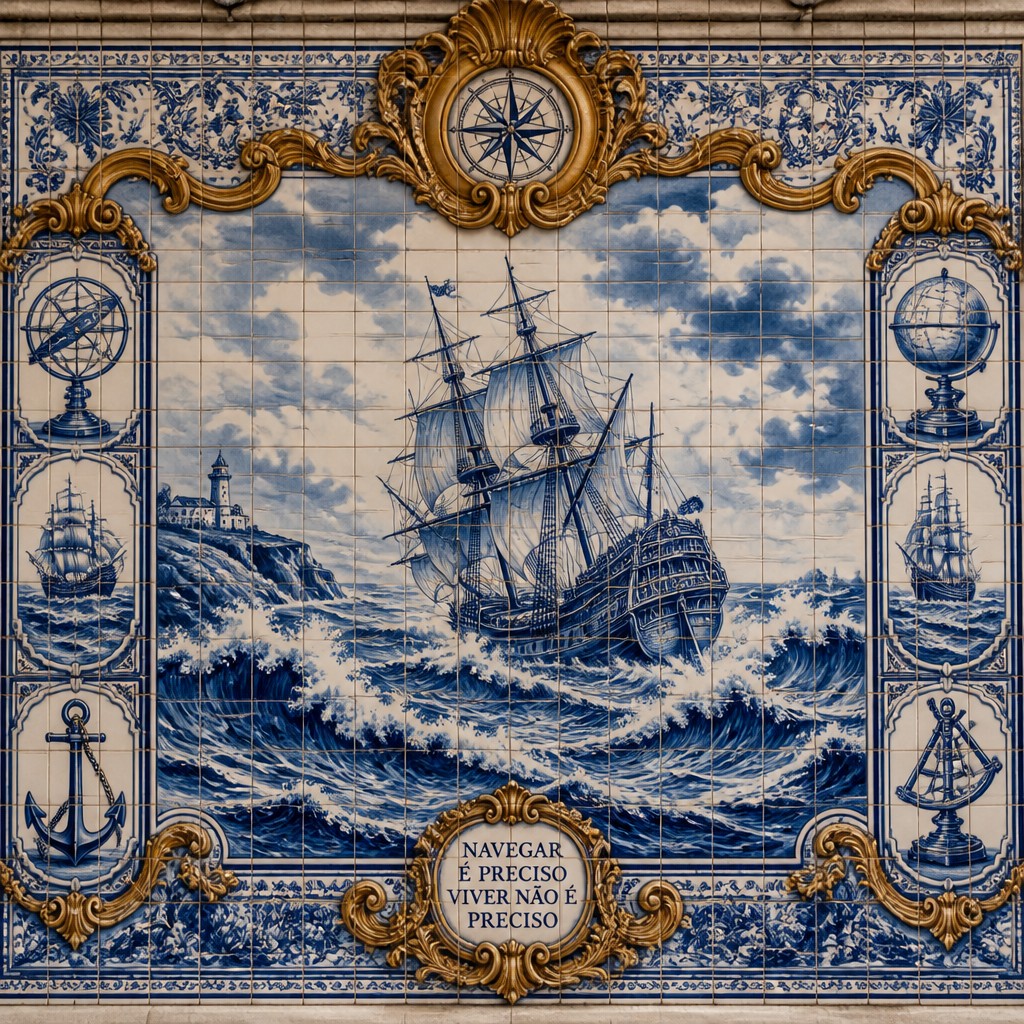
“sailing ship on a stormy sea”
How to Create Portuguese Art
Master the craft step by step — or skip straight to creating. Read the full guide →
- 1
Build the composition as a panel
Start with a central narrative scene and surround it with a deliberate border system. Keep important forms legible at a distance, as if the image will be viewed across a courtyard or interior wall.
- 2
Use ceramic surface logic
For traditional work, paint with underglaze on bisque-fired tiles, apply a transparent glaze, and fire the surface according to the clay and glaze system. Digitally, simulate glossy highlights, grout lines, slight tile-size variation, and hand-painted contour changes.
- 3
Limit and balance the palette
Use cobalt blue and white as the foundation, then reserve ochre, muted terracotta, sea green, or gold for accents. Excessive color can weaken the ceramic identity and make the result resemble generic decorative painting.
- 4
Layer maritime and architectural motifs
Combine one primary subject, such as a ship or coastal settlement, with supporting details such as waves, ropes, shells, arches, or an armillary sphere. Repeat motifs in the border to unify the scene.
- 5
Add restrained material aging
Introduce subtle glaze pooling, edge wear, hairline cracks, and softened pigment without covering the design in artificial distress. In image editing, preserve the original subject while applying the tile grid, blue-white palette, and border structure selectively.
- 6
Write precise generation directions
Specify the subject, a cobalt-blue-on-white glazed tile surface, a framed narrative composition, maritime or Manueline-inspired ornament, carved gilt accents, and bright Atlantic light. For image-to-image work, use moderate transformation strength so faces, architecture, or other essential forms remain recognizable.

The Story
History & Origins of Portuguese
Portuguese azulejo culture developed from Iberian tile traditions influenced by Islamic geometric design and later by Italian maiolica and northern European ceramic painting. Decorative tiles became increasingly important in Portugal from the late fifteenth and sixteenth centuries, appearing on floors, façades, churches, palaces, fountains, and domestic interiors. During the seventeenth and eighteenth centuries, large blue-and-white figurative panels became a defining feature of Portuguese religious and civic architecture.
This style also draws on late Gothic and Manueline ornament, whose carved architectural details frequently reference ropes, foliage, spheres, and maritime themes, as well as the gilded woodwork and dramatic spatial decoration of Portuguese Baroque interiors. The present-day formulation brings these historical lineages together rather than representing a distinct period style, emphasizing tiled poetry, oceanic symbolism, and sun-washed architectural surfaces.
Influences: Related visual traditions include Iberian and Islamic-influenced tile ornament, Portuguese azulejo architecture, late Gothic and Manueline carving, Portuguese Baroque gilt-wood interiors, European maiolica painting, maritime cartography, folk ceramics, and coastal architectural photography. It also intersects with mural painting and decorative arts because its imagery is designed to operate across surfaces, borders, and repeated modules rather than within a single conventional canvas.
Frequently Asked Questions
What defines Portuguese art style?
Its clearest markers are cobalt-blue imagery on white glazed tiles, framed narrative scenes, maritime symbols, patterned borders, and occasional carved-gold ornament. Bright Atlantic light and an architectural sense of composition further distinguish it.
Is Portuguese art style a historical art movement?
No. The label describes a broad contemporary synthesis rather than one officially defined historical movement. It combines several Portuguese traditions, particularly azulejo decoration, Manueline ornament, maritime imagery, and Baroque interior arts.
What are azulejos?
Azulejos are glazed ceramic tiles used decoratively and architecturally across Portugal and other Iberian regions. They may contain geometric patterns, floral ornament, or large figurative scenes assembled into murals.
How is this style different from ordinary blue-and-white ceramics?
The style emphasizes architectural scale, framed storytelling, and Portuguese cultural motifs rather than only a decorative vessel or isolated pattern. Ships, armillary spheres, tiled façades, Manueline details, and gilt accents give it a specific regional identity.
How can I make an image in this style?
Plan the image as a tiled mural with a central scene, repeated border, cobalt-and-white palette, and visible ceramic glaze. In digital or prompt-based work, describe tile segmentation, hand-painted irregularity, maritime motifs, carved ornament, and sunlit coastal architecture.
Where is this visual language commonly used?
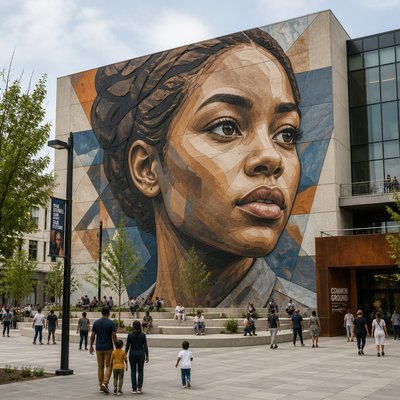
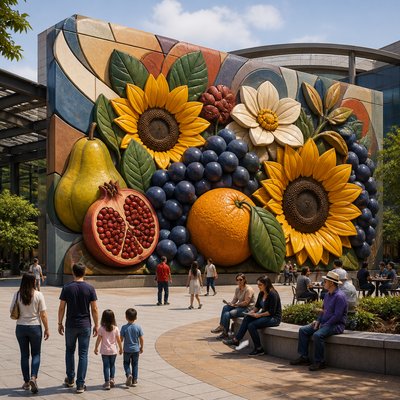
It is especially suited to architectural murals, travel posters, book covers, editorial illustration, ceramic design, heritage interpretation, interiors, and decorative portraiture. It can also frame contemporary subjects while retaining the visual grammar of a historic tile panel.
Create your first Portuguese artwork
Describe anything — or upload a photo — and see it in Portuguese Art Style in seconds.
Related Styles
Discover similar art styles