Paraguayan Art Style
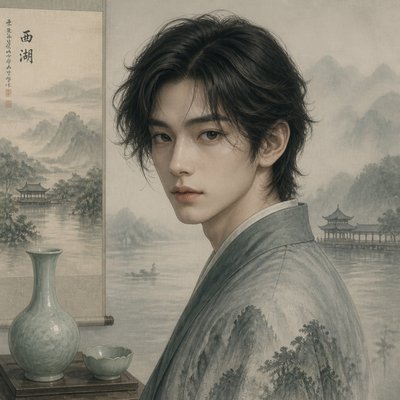
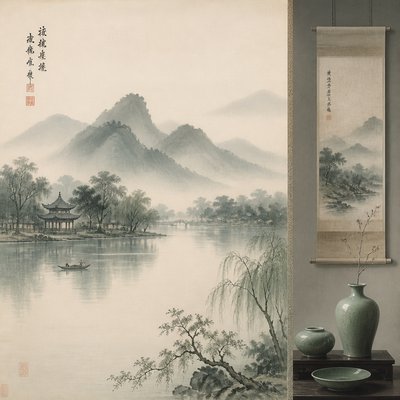
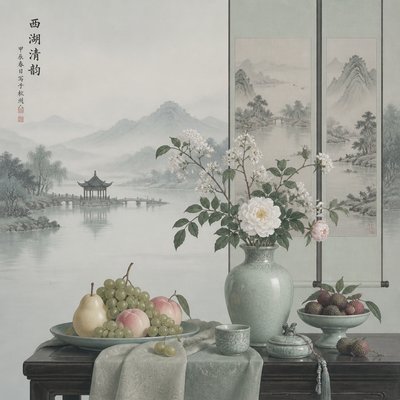
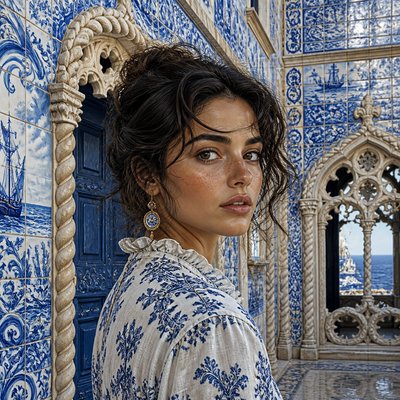
Explore Paraguayan art style through Ñandutí lace, Jesuit-Guaraní mission architecture, red sandstone, and quiet sunlit ornament.
Instantly rendered in Paraguayan — or transform a photo
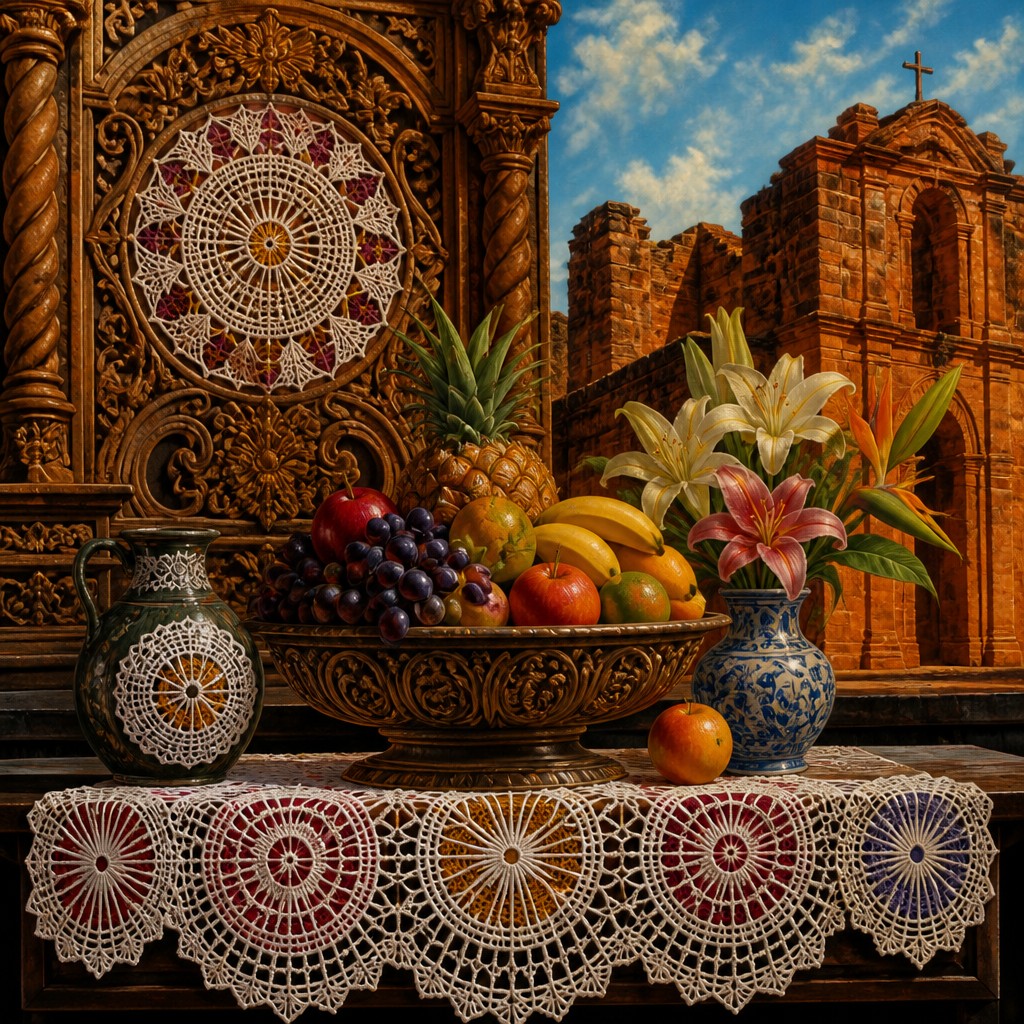
Paraguayan Gallery
Tap any artwork to explore it
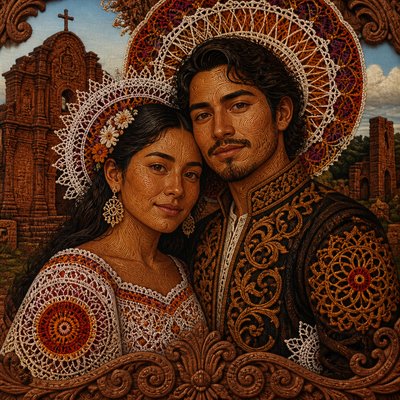
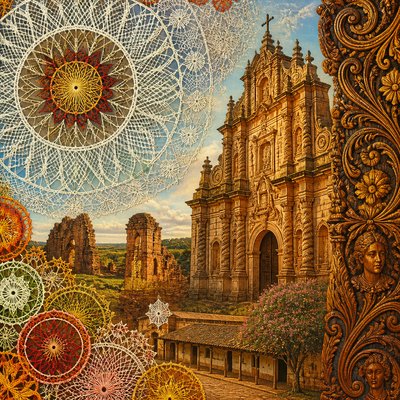
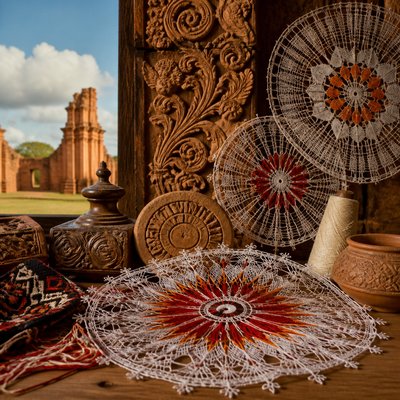
What is Paraguayan Art Style?
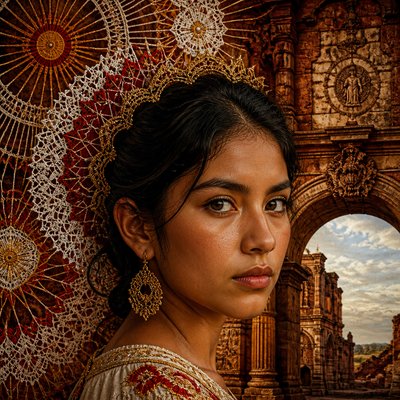
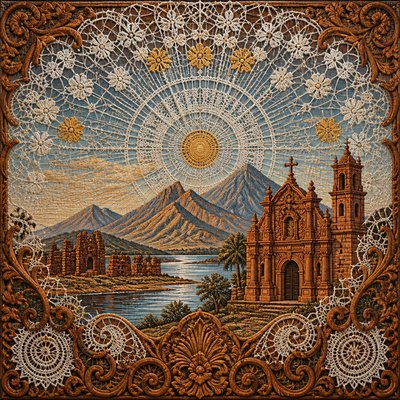
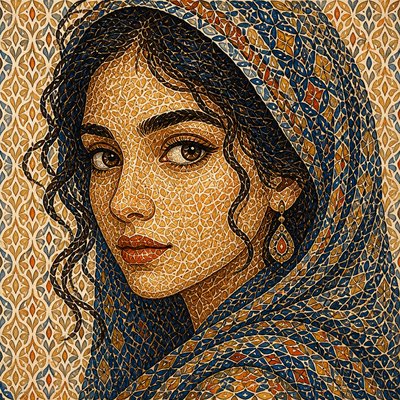
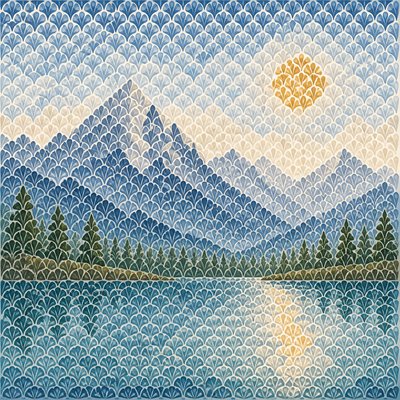
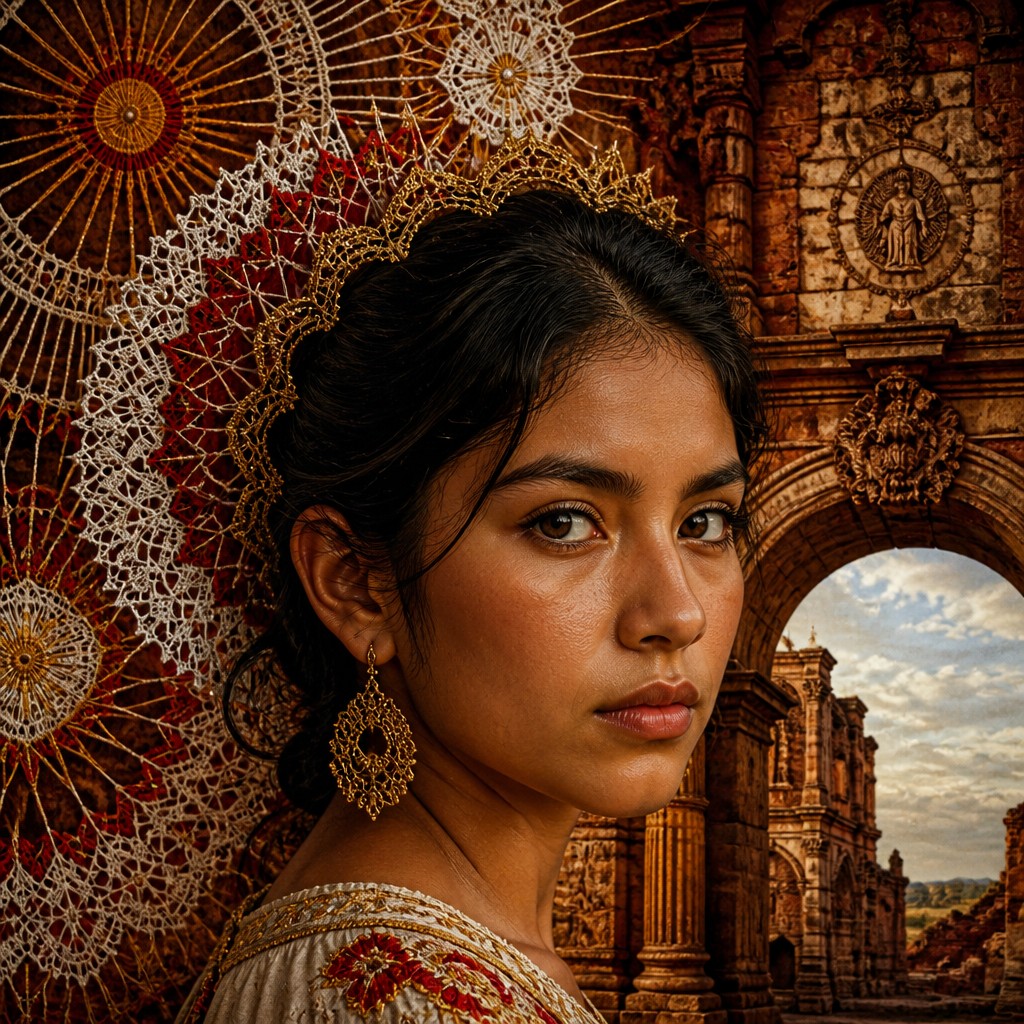
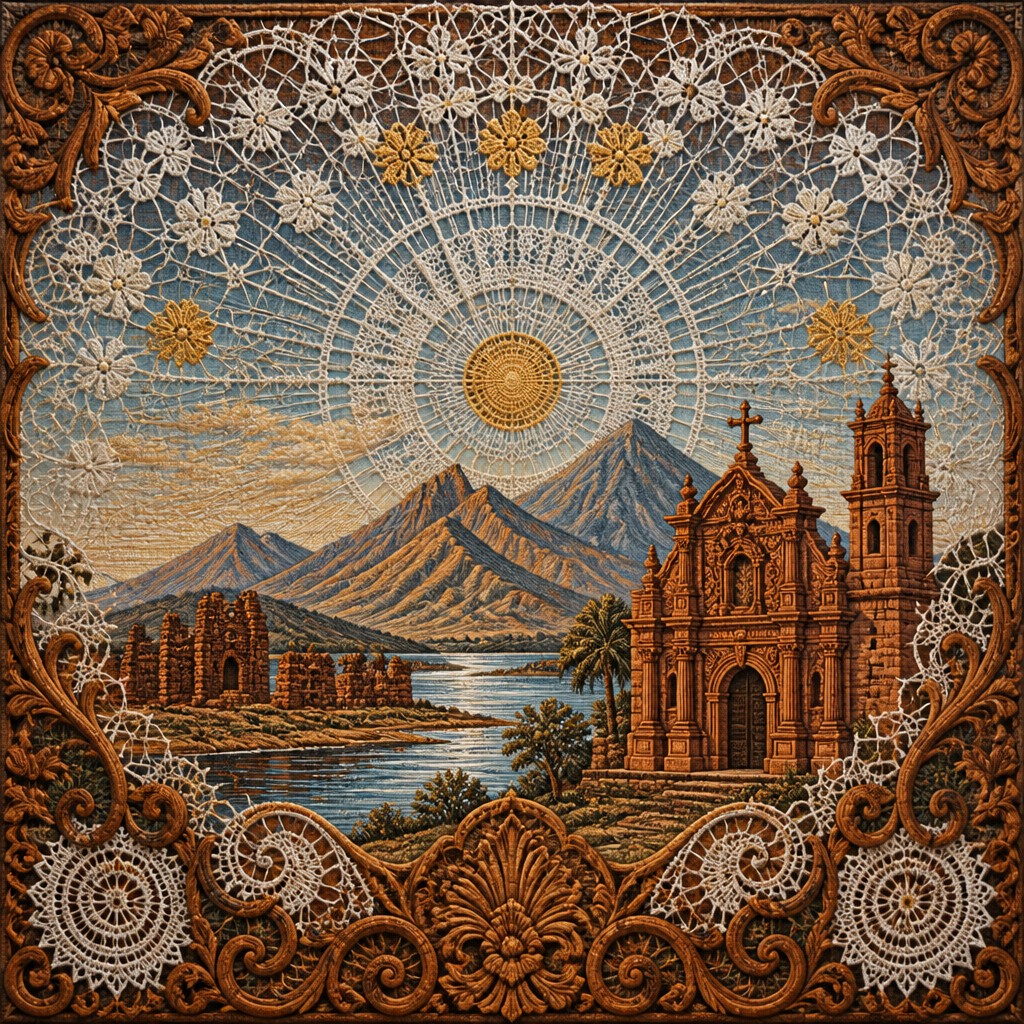
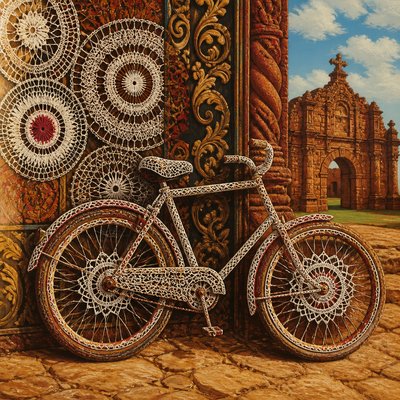
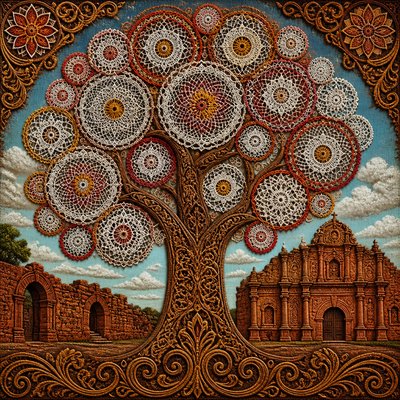
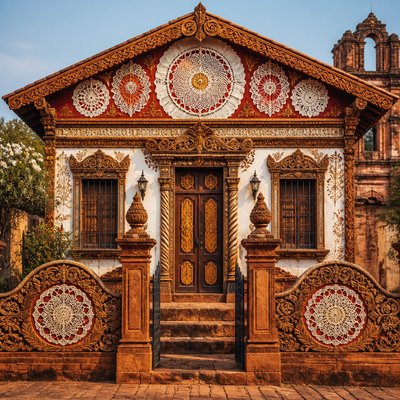
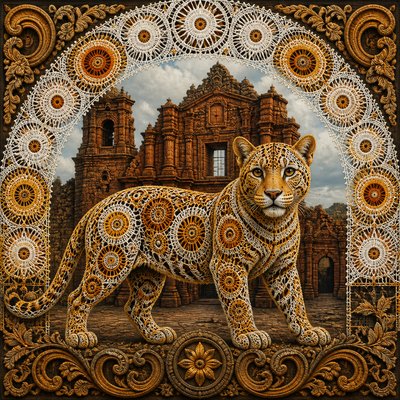
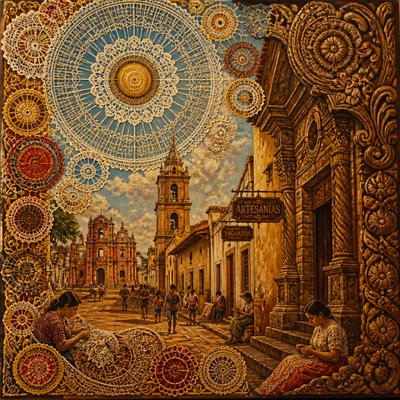
Paraguayan art style is a contemporary descriptive aesthetic rather than a single codified historical movement. It combines the radiating geometry of Ñandutí lace with the carved ornament, structural rhythms, and weathered masonry associated with the Jesuit-Guaraní mission complexes of Paraguay. Sun-worn red sandstone, deep umber, warm gold, white thread, and open blue skies create its characteristic palette.
The style balances intricate craft with spacious calm. Circular lace motifs suggest patient handwork and domestic textile traditions, while monumental arches, columns, carved details, and ruined walls provide architectural weight. Its quiet mission-town light, restrained compositions, and visible material textures evoke Paraguay’s cultural landscape without treating the elements as a single historical art school.
Try It On Your Photos
Upload any photo and convert it into Paraguayan Art Style — drag the sliders to compare before and after.


What Defines Paraguayan Art Style
The signature details, up close
Radiating Ñandutí geometry
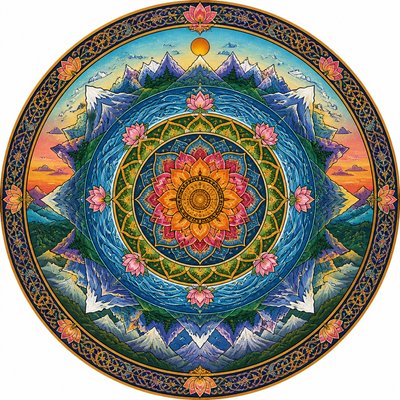
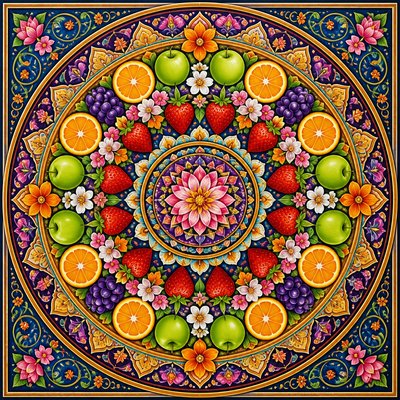
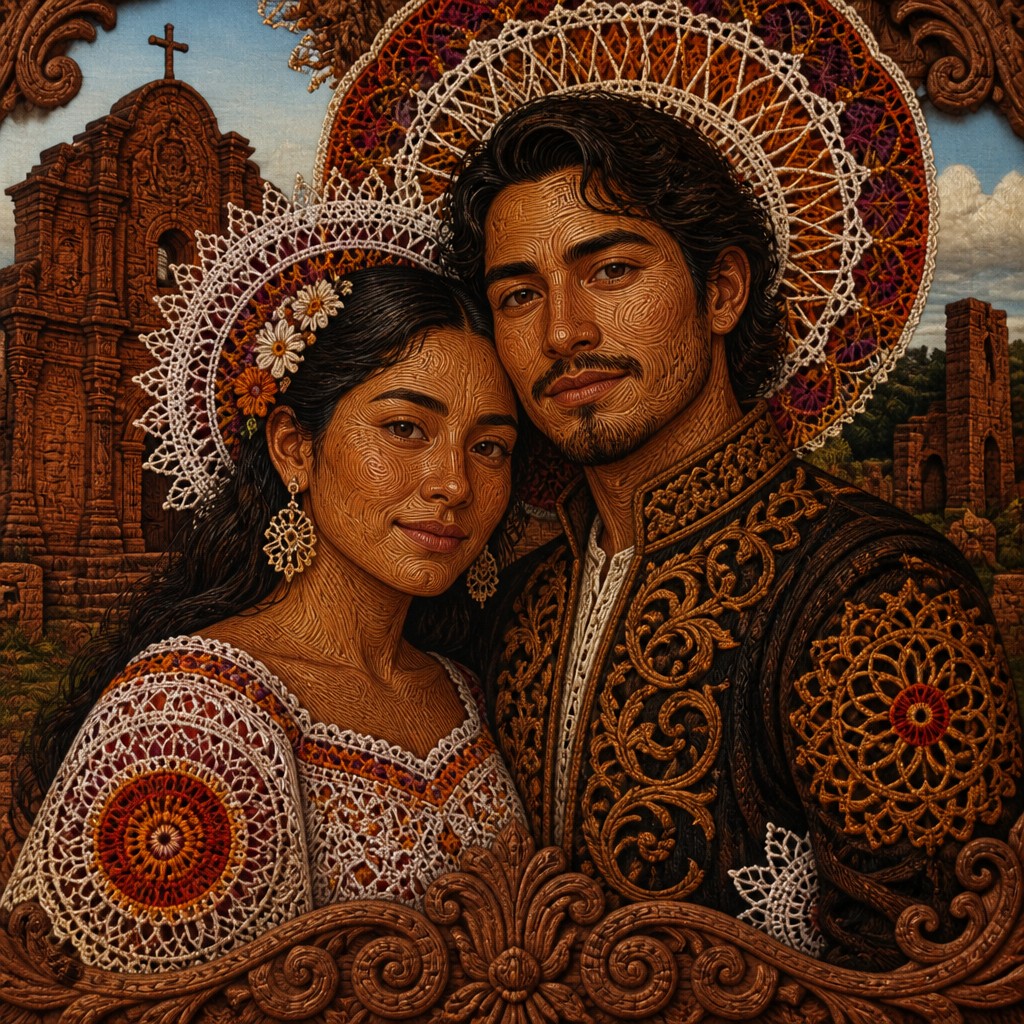
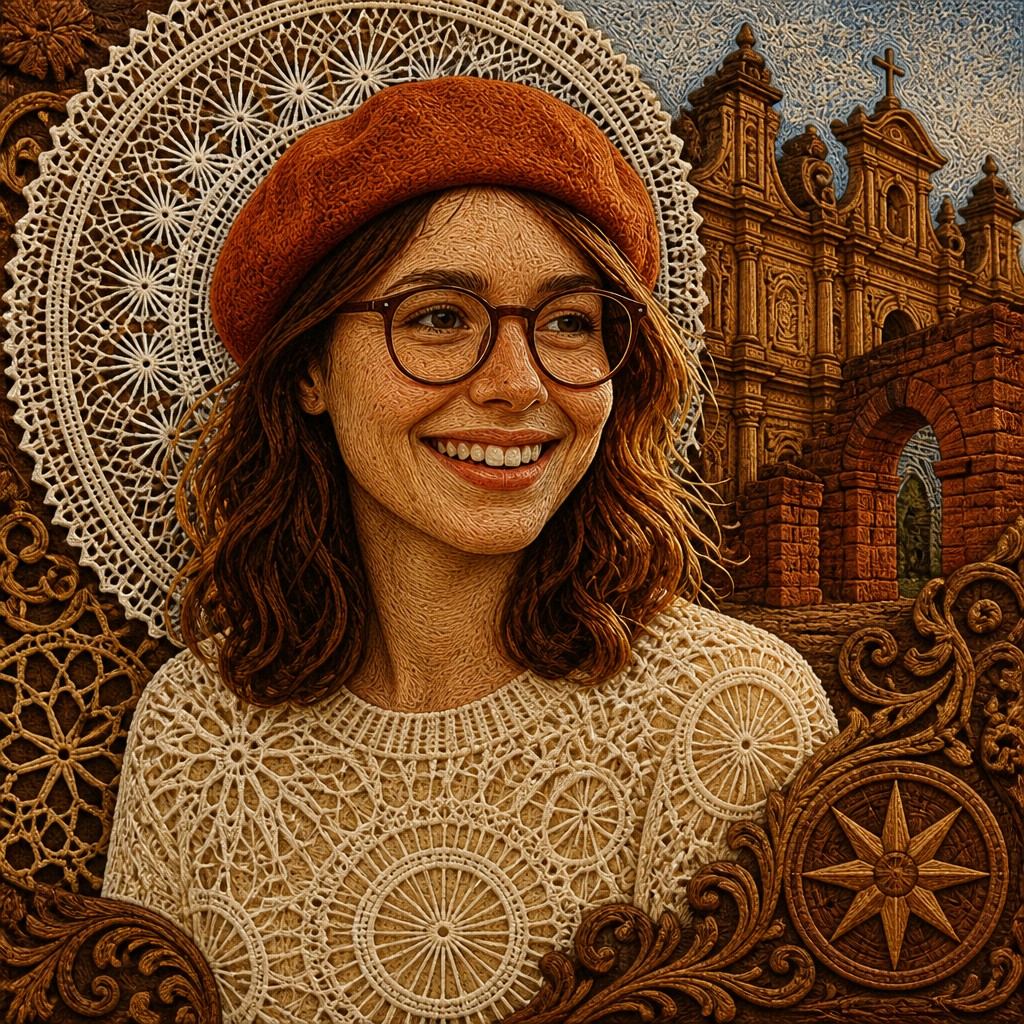
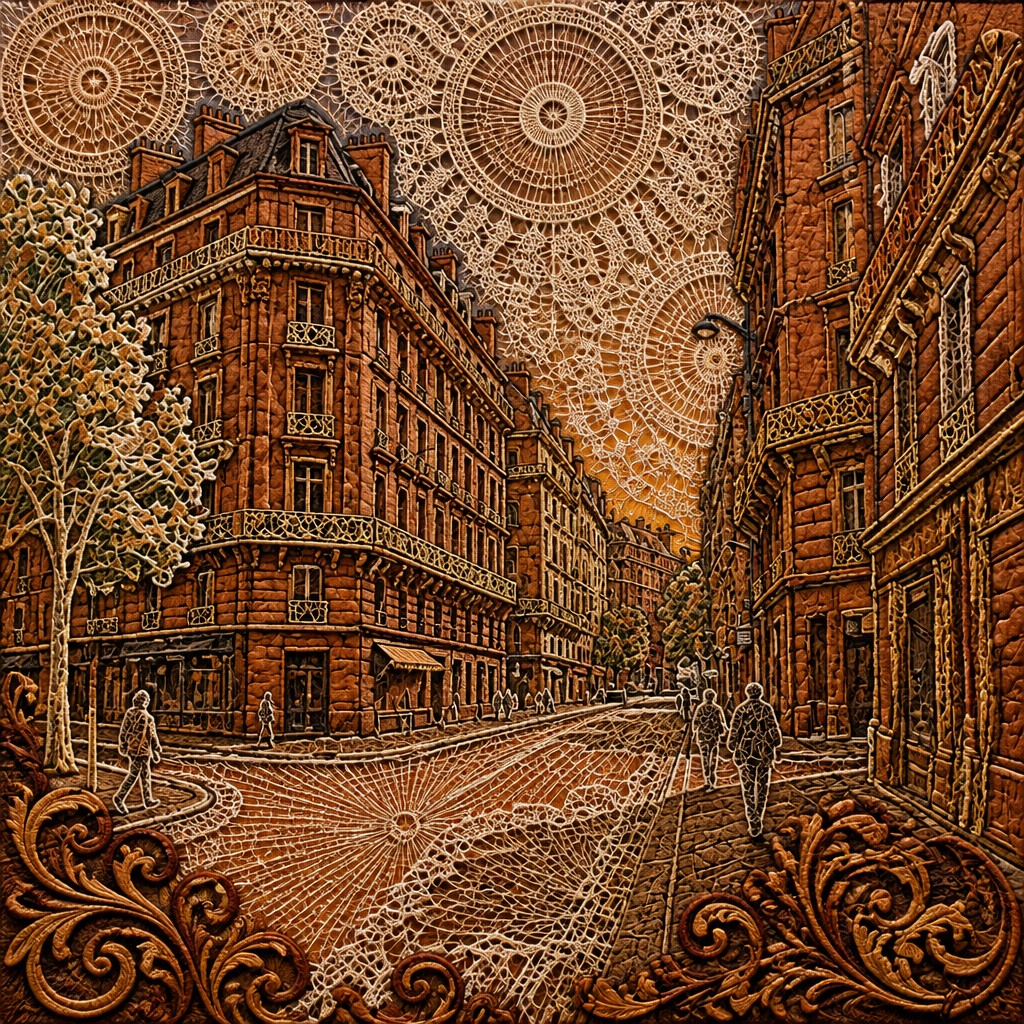
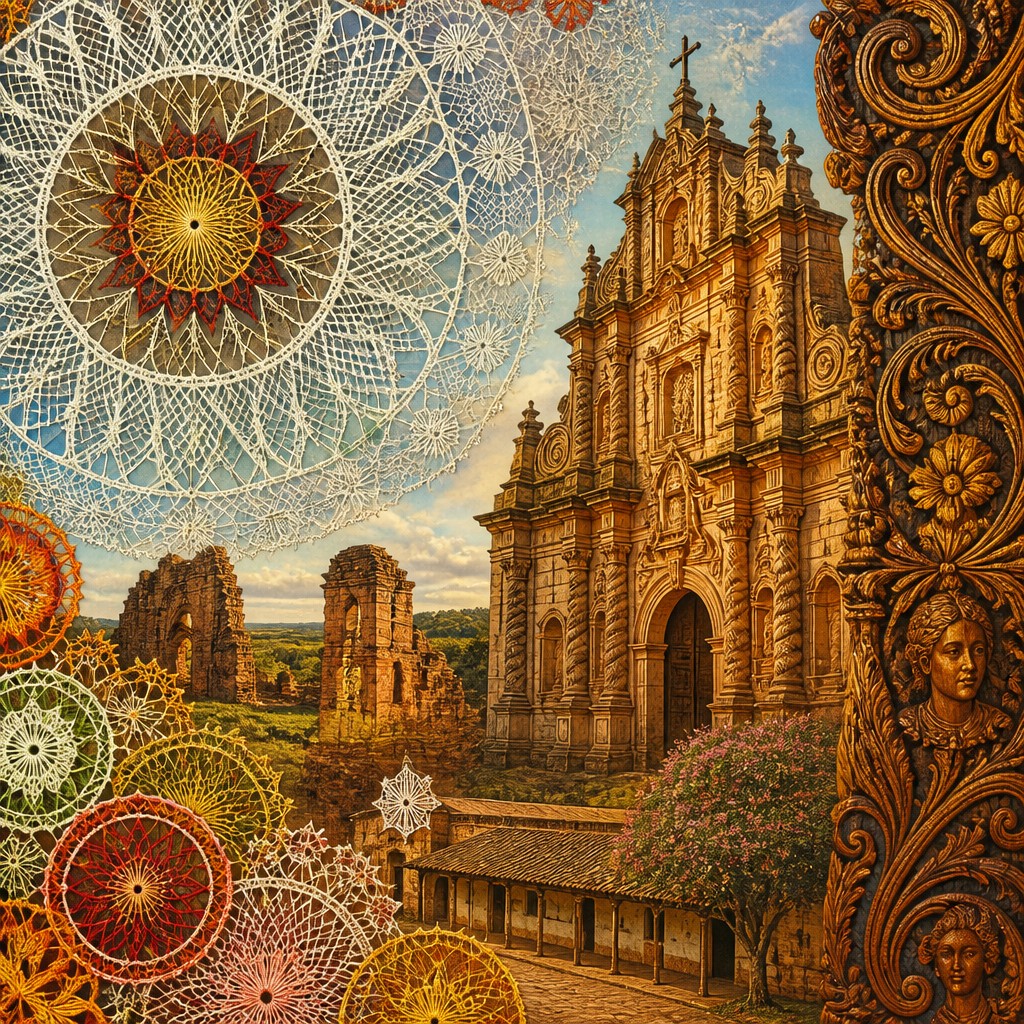
Circular webs, spokes, rosettes, and concentric thread patterns organize the image. The geometry may appear as lace, a border, a halo-like motif, or an expanded background structure.
White and vivid threadwork
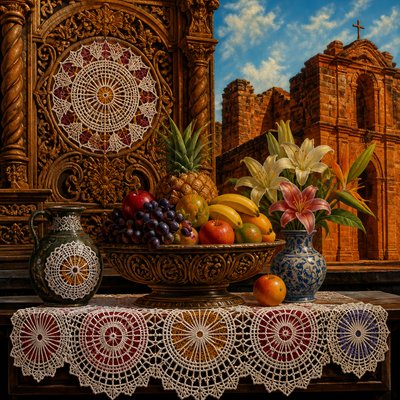
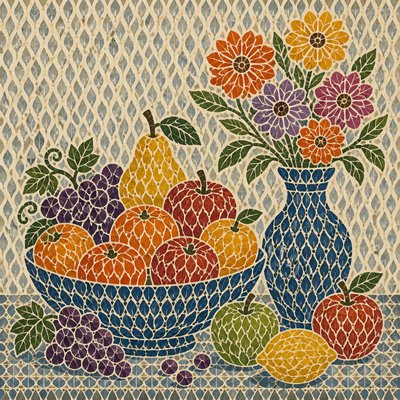
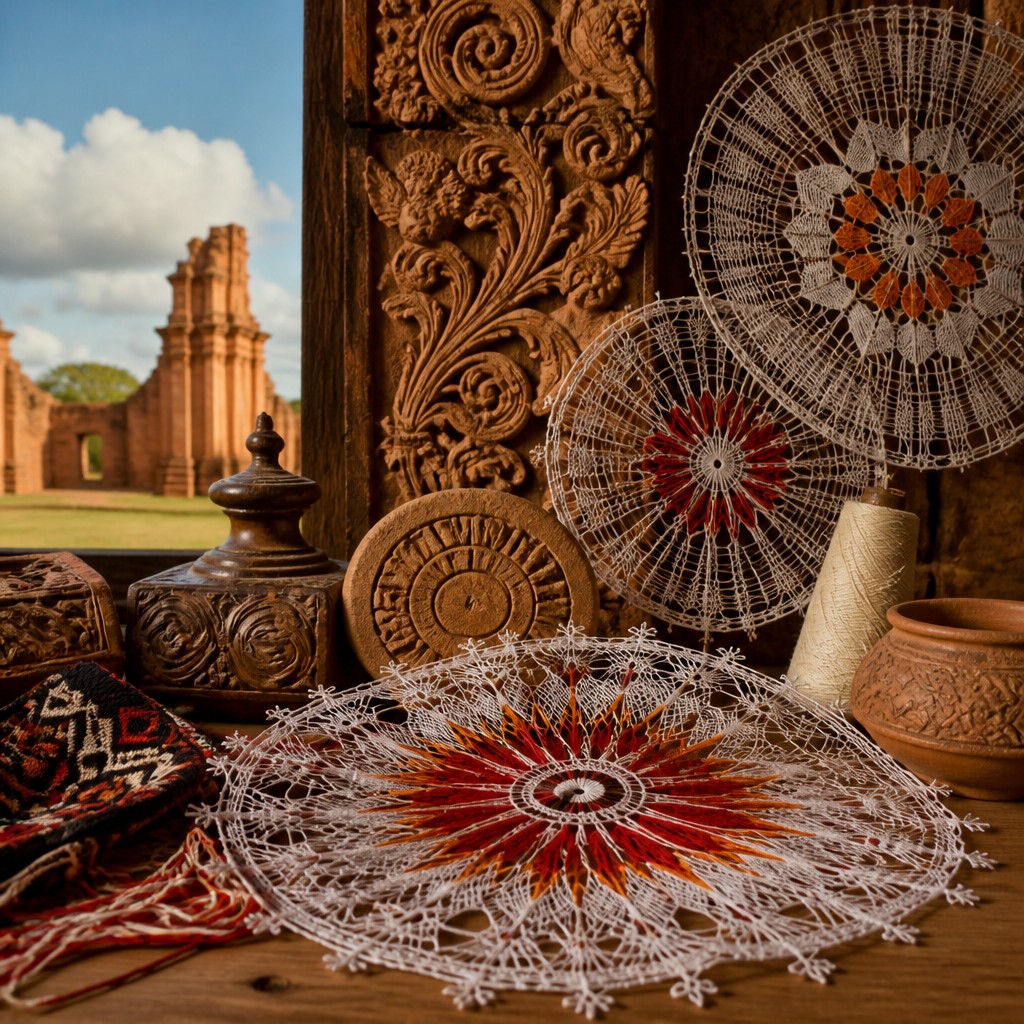
Fine white lace is often joined by saturated red, yellow, blue, green, or orange threads. Delicate linework and repeated knots contrast with heavier architectural forms.
Mission Baroque ornament
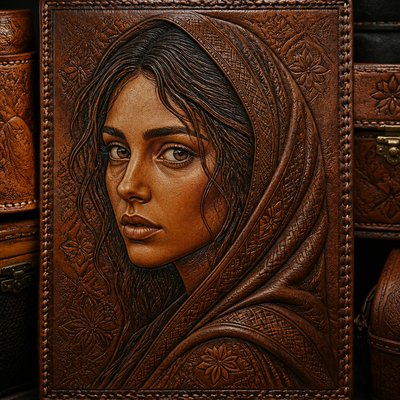
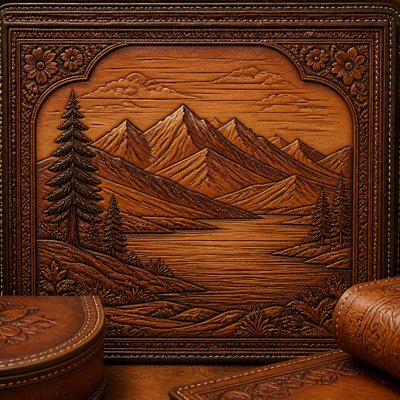
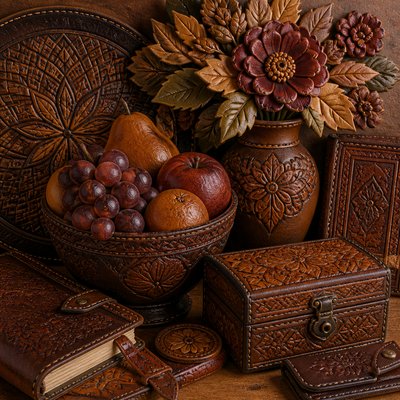
Carved wood, devotional relief, floral scrollwork, arches, columns, and layered façades recall the visual vocabulary of Jesuit-Guaraní mission churches. Ornament is detailed but generally arranged within clear architectural order.
Sun-worn red sandstone
Rust, terracotta, brick red, and dark umber suggest locally weathered masonry and archaeological ruins. Rough grain, chipped edges, lichen, and erosion keep the surfaces tactile rather than polished.
Quiet regional light
Broad daylight, soft shadows, and open skies create a contemplative atmosphere. The lighting favors warm side illumination and long, gentle tonal transitions over dramatic theatrical contrast.
Craft-centered detail
The style highlights evidence of making: thread tension, carved tool marks, masonry joints, uneven pigment, and hand-shaped surfaces. Repetition is precise but not mechanically sterile.
Paraguayan Prompt Ideas
Start from an idea — each one opens the generator with the style ready to go. See all 40 Paraguayan prompts →
How to Create Paraguayan Art
Master the craft step by step — or skip straight to creating. Read the full guide →
- 1
Build a limited material palette
Start with chalk white, thread-bright primary colors, red sandstone, umber, muted gold, and sky blue. Use warm neutrals to connect the delicate lace to the heavier stone and wood.
- 2
Construct radial lace motifs
Draft a central point, divide it into even spokes, and layer rings of loops, petals, knots, and open negative space. In digital work, duplicate and rotate a small hand-drawn unit while preserving slight irregularities.
- 3
Contrast fine and massive forms
Place delicate Ñandutí lines against broad walls, arches, or empty sky. Vary line weight so lace remains intricate without allowing the architecture to disappear.
- 4
Texture the architecture by hand
Use dry-brush, stippling, grain overlays, or broken-edged brushes for sandstone and carved wood. Avoid uniform digital gradients; small variations in color and erosion make the surfaces credible.
- 5
Use calm, directional composition
Frame the subject with a low horizon, open sky, or a quiet courtyard, then guide the eye through arches and radial patterns. Soft sunlight from one side can unify the lace, masonry, and ornament.
- 6
Write precise generation instructions
For text-to-image work, specify the subject first, then request radial Ñandutí lace, Jesuit-Guaraní mission architecture, weathered red sandstone, carved ornament, warm restrained colors, and quiet daylight. For image transformation, preserve the source subject while adding lace geometry, masonry texture, and the limited palette rather than replacing every detail.
The Story
History & Origins of Paraguayan
Paraguayan art style, as used today, is best understood as an aesthetic synthesis rather than a documented period movement. Its principal lineage includes Ñandutí, a Paraguayan lace tradition whose name comes from Guaraní and refers to a spider web. Developed especially around Itauguá, Ñandutí combines European needle-lace precedents with local patterns, techniques, and textile practice; its circular, radial structures are often associated with flowers, suns, and webs.
A second major source is the Baroque architecture and craft of the Jesuit-Guaraní missions established in the region during the seventeenth and eighteenth centuries. Mission churches and settlements used locally available timber and stone, with carved ornament shaped by European Catholic forms and Guaraní craftsmanship. Contemporary interpretations often emphasize surviving ruins and red sandstone surfaces, transforming these historical references into a unified visual language of lace, masonry, ornament, and light.
Influences: The style draws from Ñandutí lace and broader Guaraní textile traditions, colonial Latin American Baroque, Jesuit-Guaraní mission architecture, religious woodcarving, folk ornament, and archaeological landscape painting. It also shares methods with Arts and Crafts approaches that value visible handwork, vernacular architecture studies, textile pattern design, and material-focused illustration. Its combination of radial geometry and weathered masonry can suggest geometric abstraction, but it remains grounded in specific Paraguayan craft and architectural references.
Frequently Asked Questions
What defines Paraguayan art style?
Its defining combination is Ñandutí’s radial lace geometry, Jesuit-Guaraní mission architecture, weathered red sandstone, carved ornament, and quiet sunlit atmosphere. The style is usually tactile and craft-centered, with a deliberate contrast between delicate threadwork and massive masonry.
Is Paraguayan art style a recognized historical art movement?
No. The term is generally a contemporary descriptive or digital-art label, not the name of a formal historical movement with a fixed manifesto or period. It refers to an aesthetic lineage assembled from real Paraguayan textile, architectural, and material traditions.
What is Ñandutí lace?
Ñandutí is a Paraguayan lace tradition named with a Guaraní word associated with a spider web. It is made through radiating and repeating thread structures, often forming circular, floral, or sun-like motifs, and is strongly associated with the town of Itauguá.
How is this style different from Spanish or Latin American Baroque?
It shares Baroque architecture’s arches, carved ornament, and devotional richness, but places stronger emphasis on Paraguayan material culture and landscape. Ñandutí geometry, local red sandstone, Guaraní-inflected craft traditions, and restrained open-sky compositions distinguish the synthesis.
What colors work best for Paraguayan art style?
A useful palette includes chalk white, vivid thread colors, terracotta, rust red, deep umber, muted gold, leafy green, and clear sky blue. Keep the strongest colors concentrated in lace and ornament, while allowing stone and sky to provide calm fields around them.
Where can this aesthetic be used?
It suits textile patterns, editorial illustration, architectural visualization, heritage interpretation, posters, murals, packaging, portraits, and atmospheric landscape scenes. It works particularly well when the design can show both intricate repeated craft and the texture of aged materials.
Create your first Paraguayan artwork
Describe anything — or upload a photo — and see it in Paraguayan Art Style in seconds.
Related Styles
Discover similar art styles